This Small Texas Town Is the Official Bluebonnet City, and Spring Turns It Blue
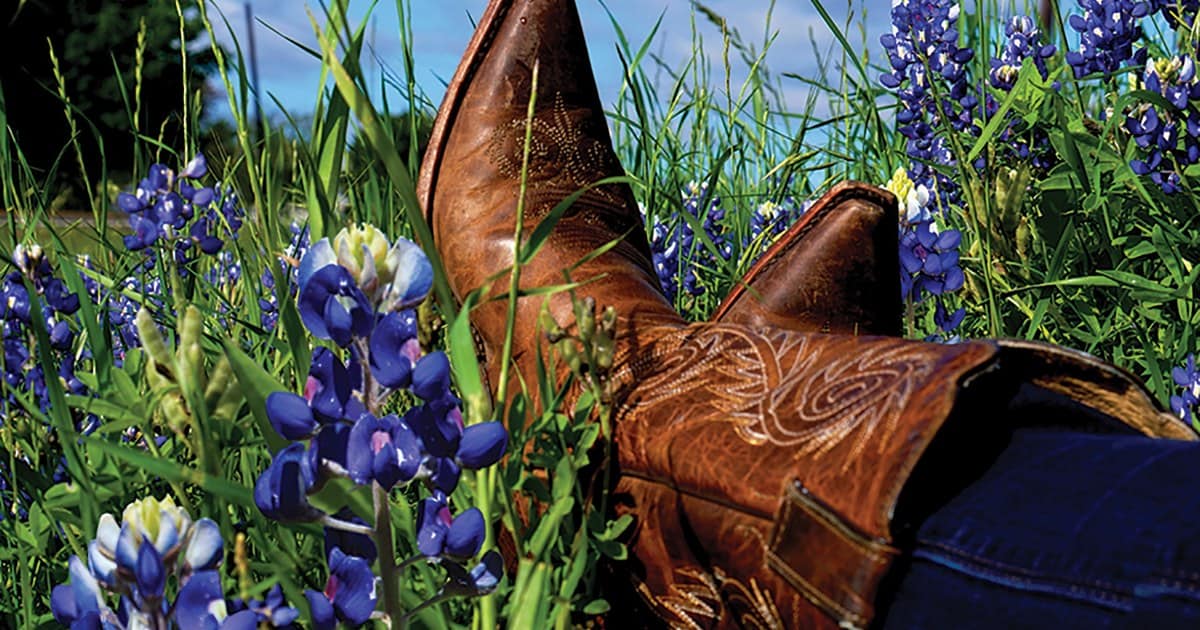
I keep a mental map of where spring shows up first. Not the calendar version, the color version. It is the week the Texas roadsides flip from winter brown to a blue so loud that half the state suddenly remembers it owns a camera.
The best of that blue lives in one small town about 35 miles south of Dallas, in Ellis County, called Ennis. Every April it disappears under a blue tide of bluebonnets. And it holds the paperwork to prove the title.
Below, let’s walk through the driving trails, the town behind them, and the exact week you want to point the car south.
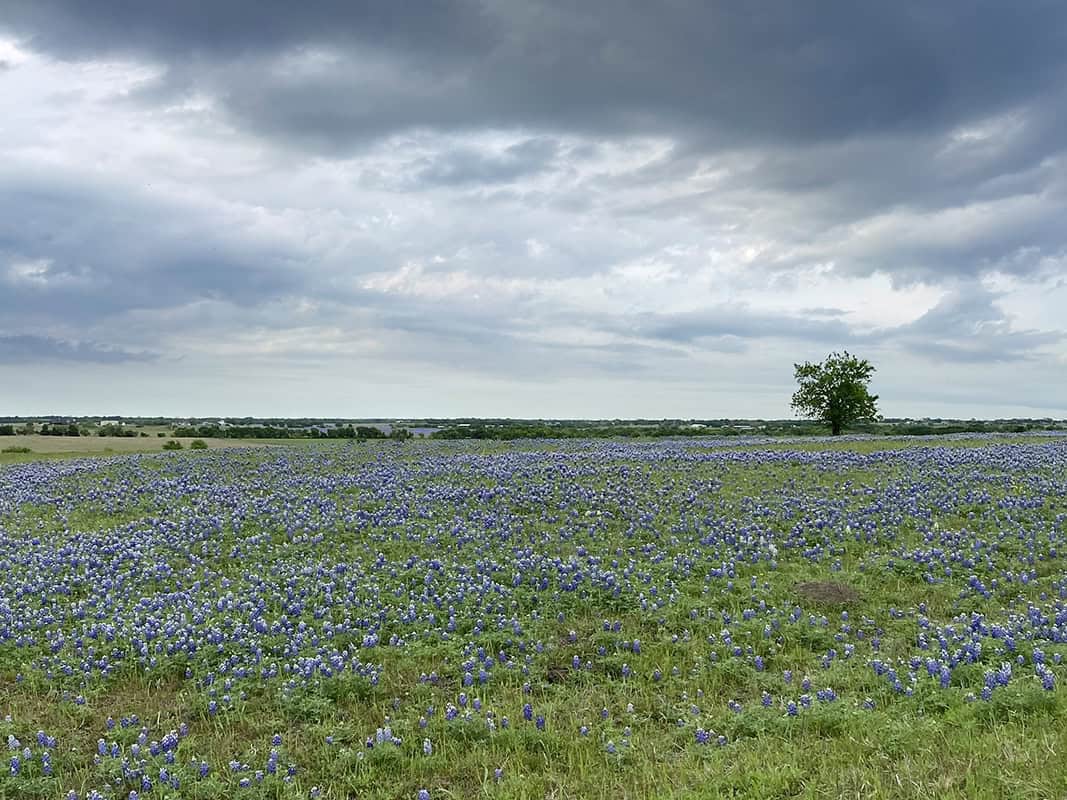
Ennis is not being cute when it calls itself the Bluebonnet City. In 1997 the Texas Legislature named it the home of the Official Texas Bluebonnet Trail, and it wears “Official Bluebonnet City of Texas” like a badge. The town earned the title the honest way.
Forty Miles of Blue You Drive, Not Hike
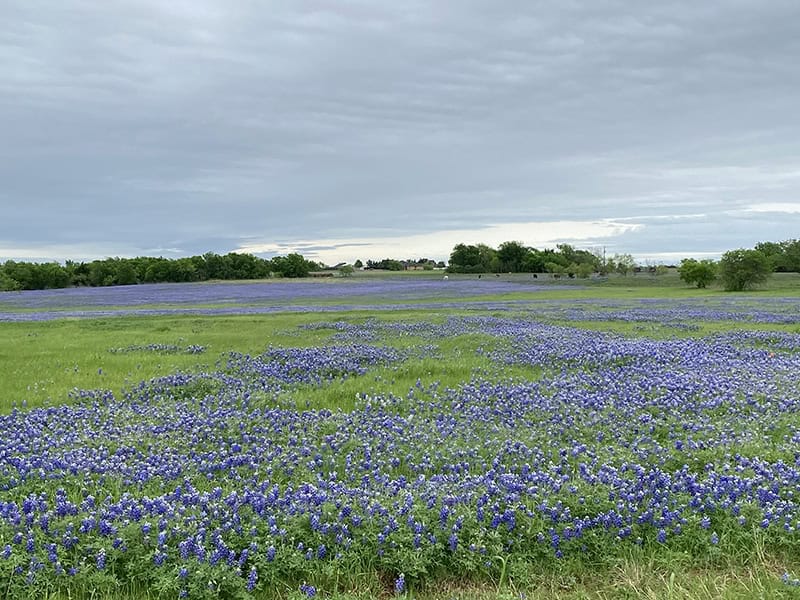
Here is the thing most first-timers get wrong. The Ennis Bluebonnet Trail is not one path you park and walk. It is a driving route, more than 40 miles of mapped country roads that loop through the farmland and ranchland around town.
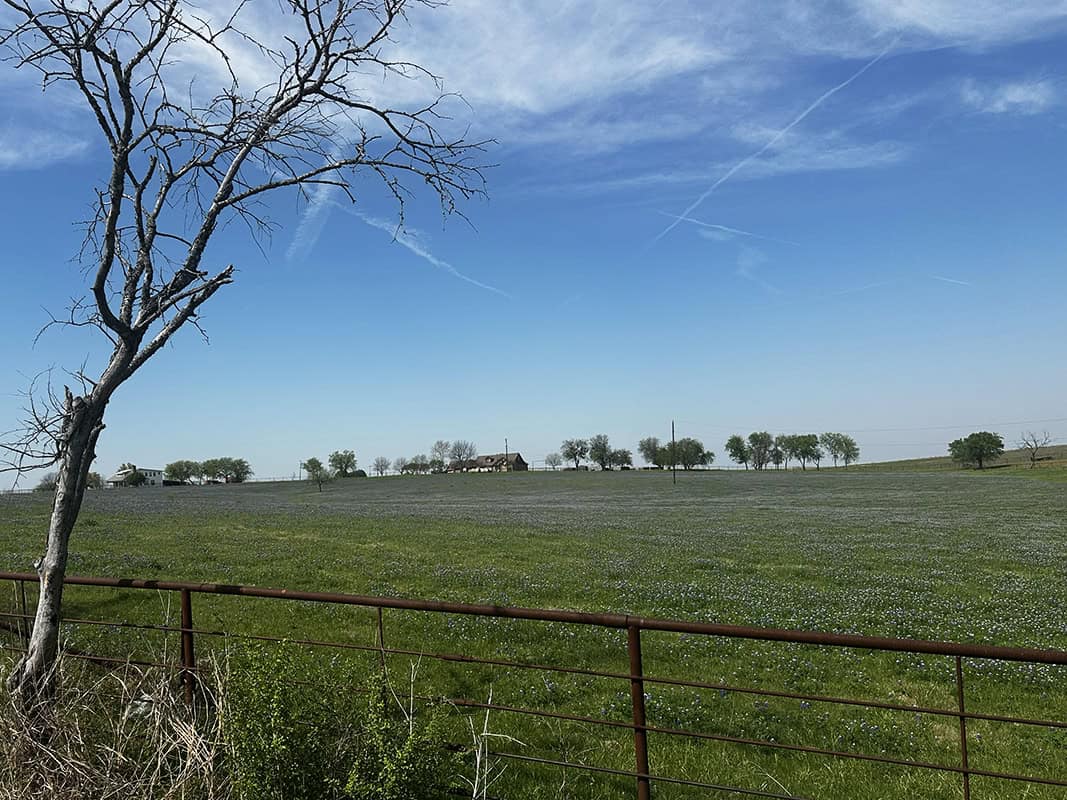
You follow the marked trail signs, windows down, and let the fields do the work. Some stretches are a haze of blue sliding past your side mirror. Others open into a full pasture of it, fence line to tree line.
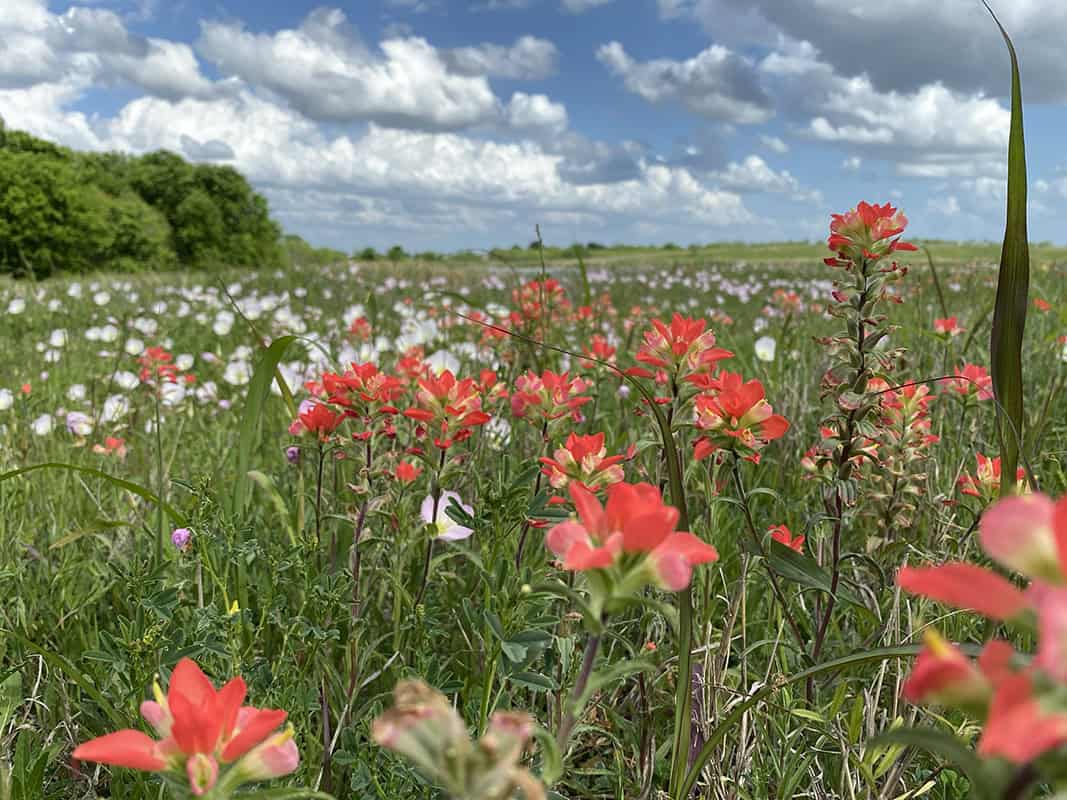
In the best fields, Indian paintbrush throws in streaks of orange and red between the blue, and the two colors together look almost designed. Add a live oak or an old barn in the distance and you have the photo every Texan keeps trying to take.
The Ennis Garden Club maps and sponsors these routes, and they are the oldest known bluebonnet trails in the state. Volunteers check the fields every week through April and report where the color is peaking.
That weekly report is the secret weapon. Bloom moves. A field that looked thin last Tuesday can be at full strength by Saturday, and the club posts current conditions so you point the car at the right roads.
Without it, you drive on rumor and old photos, which is how people end up standing in a mowed pasture wondering where the flowers went. With it, you spend your day in the fields that are actually showing off.
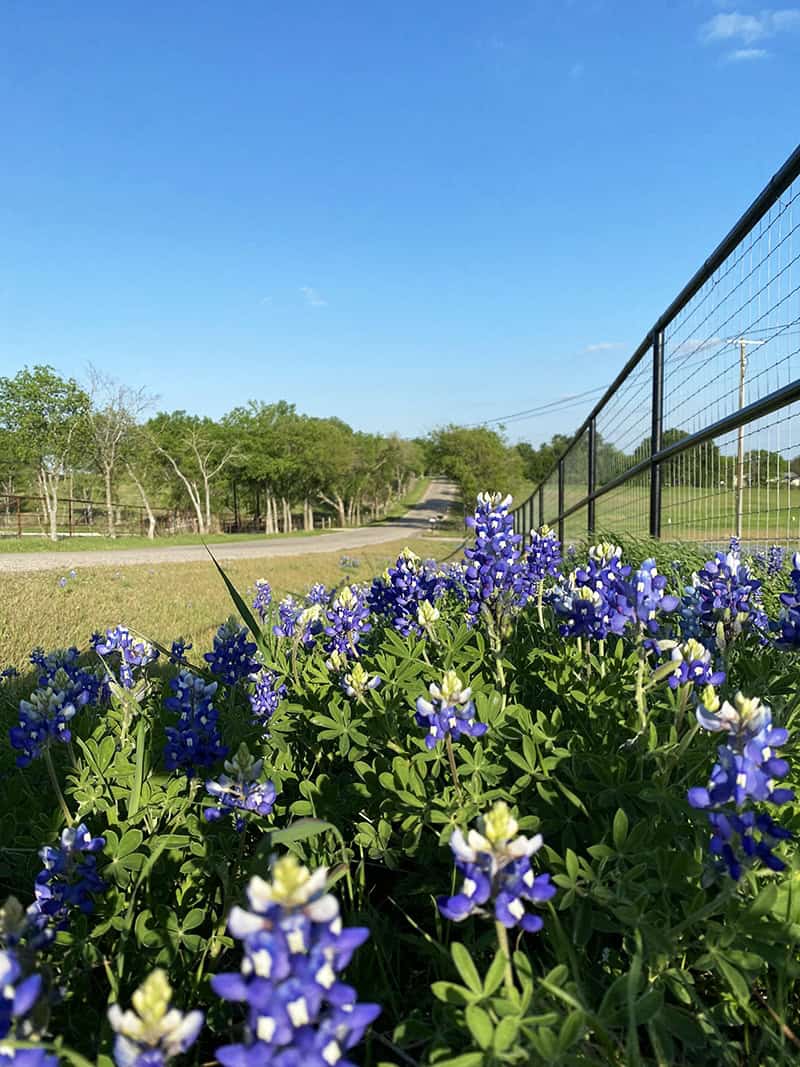
Best of all, you can drive the trails free, any day in April, sunrise to sunset. No ticket, no gate, no schedule. Just a tank of gas and a willingness to pull over a lot.
The trails draw every kind of visitor. Serious photographers with tripods, families in matching outfits, road-trippers who came for one field and stayed for six. There is room on 40 miles of back roads for all of them.
Where the Bloom Puts On Its Best Show
If you only have time for a few stops, aim for the ones that reliably deliver. The North Trail is the longest of the routes and my favorite kind of terrain for photos. It runs gently hilly, with narrow farm roads that curl into the frame behind the flowers.
Kachina Prairie is the one the naturalists get excited about. It is roughly 30 acres of Blackland Prairie that has never once been plowed. That means the bluebonnets and native grasses grow exactly as they would have a century ago, wild and unarranged.
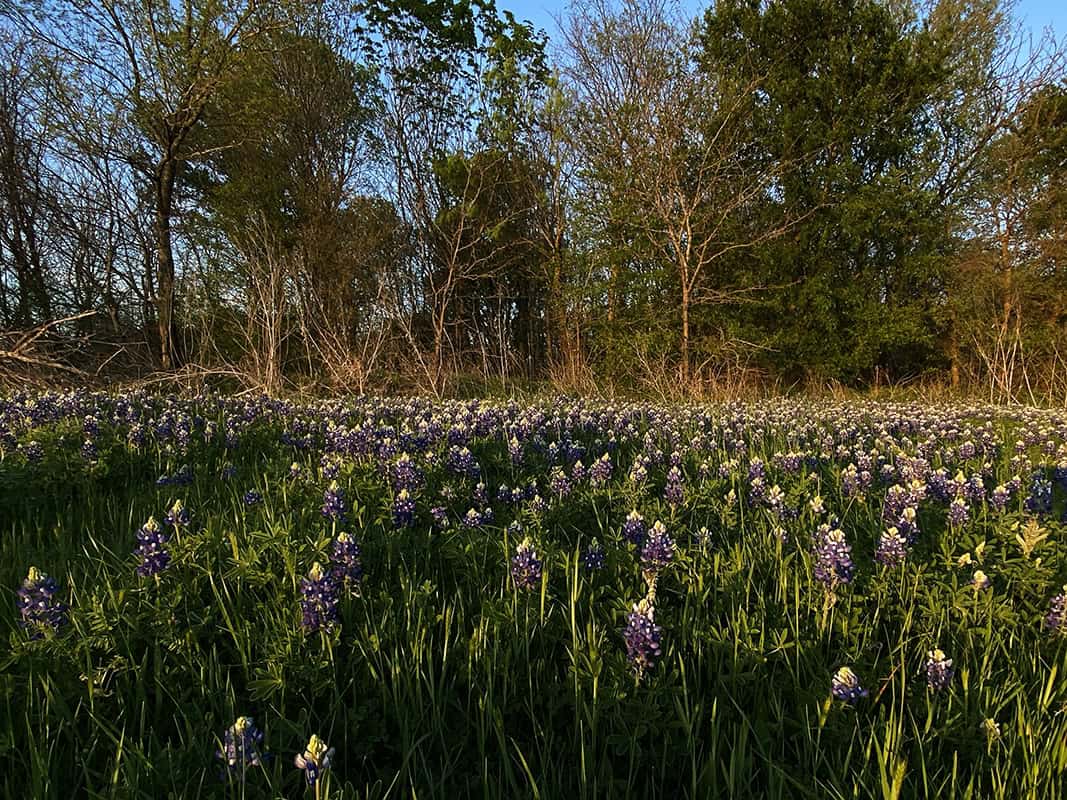
During festival weekend the Indian Trail Master Naturalists lead a short guided walk, about three-quarters of a mile, straight through the middle of it. If you want to understand what you are looking at, that walk is the way.
Sugar Ridge Road is a local favorite for a reason that has nothing to do with botany. The bluebonnet fields there are excellent on their own. But the horses at Sugar Ridge Ranch, grazing behind the blue, are what actually stop the cars.
For clean, wide-open photos, Meadow View Nature Area is hard to beat. It is a 39-acre field with Bardwell Lake sitting in the background. It is the kind of view that makes a phone camera look expensive.
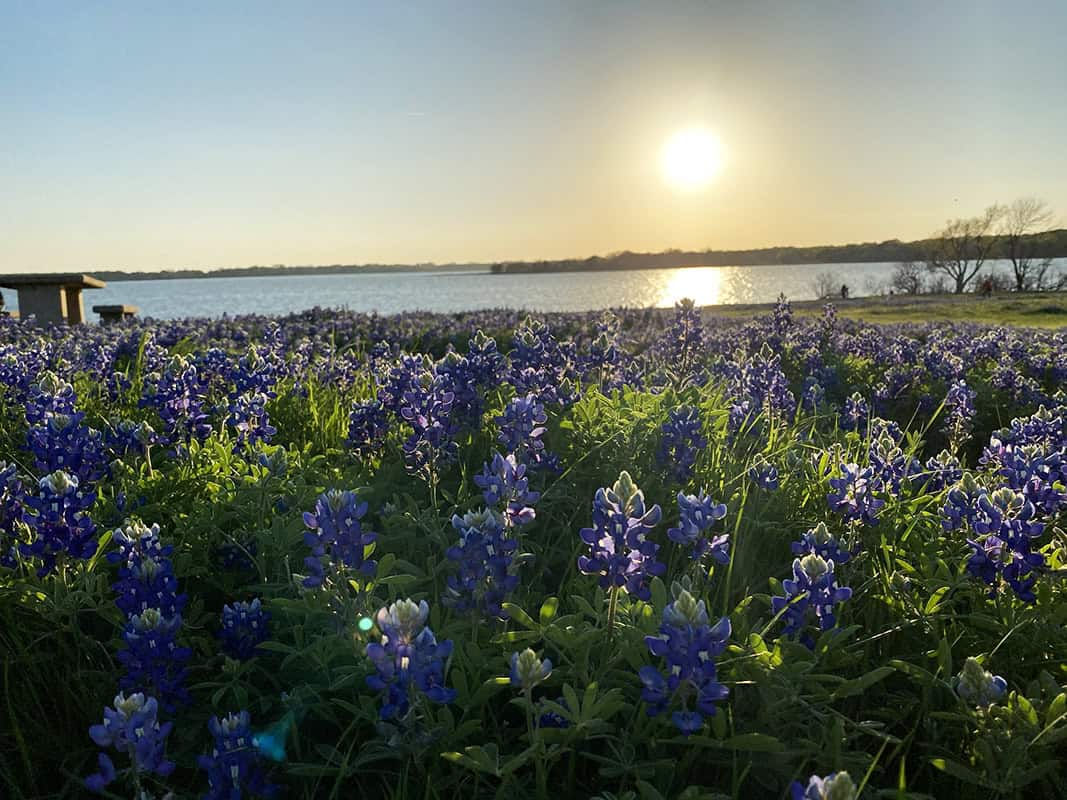
Each of these spots has its own character. Kachina Prairie feels wild and untouched, Sugar Ridge is all pastoral charm with those horses, and Meadow View is the open-sky postcard. Hit all three and you have seen the range of what Ennis does best.
The trails split into a few color-coded loops, so you can string together a north swing one morning and a south loop the next without repeating yourself. The welcome center map lays it all out and marks where the best fields have been reported.
A quick word on the roads. There is often not much shoulder to pull onto, so drive slow, use the marked stops, and give the tractors room. This is working farmland that happens to turn gorgeous for a few weeks a year.
A Whole Festival Built Around One Flower
The trails run all April, but the town saves its big party for one weekend. In 2026 the Ennis Bluebonnet Trails Festival lands on April 17 through 19, and it takes over the historic downtown.

Picture live music on an outdoor stage, food trucks, arts and crafts vendors, bluebonnet souvenirs, and kids’ activities filling the old brick streets. Friday and Saturday run from 10 in the morning to 9 at night, and Sunday winds down by six.
Festival admission is a friendly $5 for adults, and children 12 and under get in free. Bring a card, since the festival gates are cashless now. And remember, the driving trails themselves stay free even on festival weekend.
There is also a Wine Wander, a separate ticketed stroll that pours local and regional wines. The proceeds go to the Ennis ISD Education Foundation, so it is a grown-up afternoon that also does some good between trail drives.
Downtown Ennis is worth your time even apart from the vendors. The old brick main street is lined with local shops and cafes, and it makes an easy, shaded break between long stretches of driving the trails.
This celebration is not a new idea. Ennis has been marking the bluebonnet season with a festival for more than seventy years, and 2026 marks its 74th year of doing it. That is a long time to get good at showing off a flower.
How a Railroad Town Became the Bluebonnet Capital
Ennis started as a railroad town, plain and simple. In 1871 the Houston and Texas Central Railroad reached this spot as it pushed north toward Dallas. The city was formally established on June 8, 1872.
It took its name from Cornelius Ennis, one of the railroad’s founders. The town grew fast on the back of that rail line. Between 1874 and 1890 the population jumped tenfold, from around 300 people to about 3,000.
Many of those settlers were Czech families looking for farmland and a fresh start. The first, led by Jacob Sebesta, arrived in 1873. Their descendants gave Ennis four Czech social halls and the National Polka Festival, held every Memorial Day weekend since 1967.
That heritage still flavors the town. If you time a trip near Memorial Day, you can catch the polka parade, the dancing, and more kolaches than you can reasonably eat. It is a second, very different reason to know this little Ellis County town.
Did you know the bluebonnet has been the Texas state flower since March 7, 1901? Lawmakers first crowned a single species, then in 1971 expanded the honor to cover Lupinus texensis and every other bluebonnet variety, settling a decades-long friendly squabble.
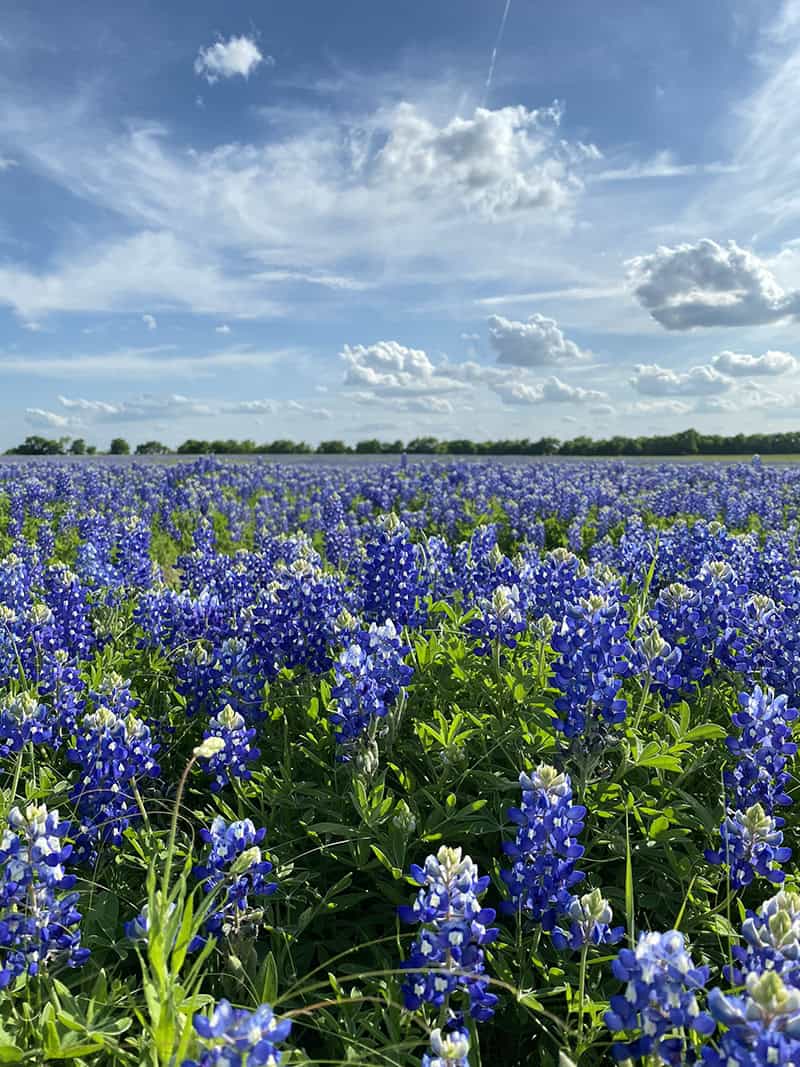
So why does Ennis grow them better than most towns? Credit the ground. This part of North Texas sits on Blackland Prairie, a deep, dark, clay-heavy soil that farmers call “black gumbo.”
That soil holds moisture and suits the bluebonnet almost perfectly. Pair it with the region’s rainfall and temperature swings, and you get a bloom that shows up thick and dependable here year after year, even when other counties come up patchy.
The Garden Club leans into that natural advantage. Its volunteers work with local landowners to protect and encourage the native stands, so the fields you drive past are a mix of nature’s handiwork and a lot of quiet, decades-long stewardship.
Tips for Chasing the Perfect Bloom
Timing is everything with wildflowers, and bluebonnets do not wait for your calendar. Peak color usually hits around the third week of April, though a warm winter can pull it earlier and a cold snap can push it back.
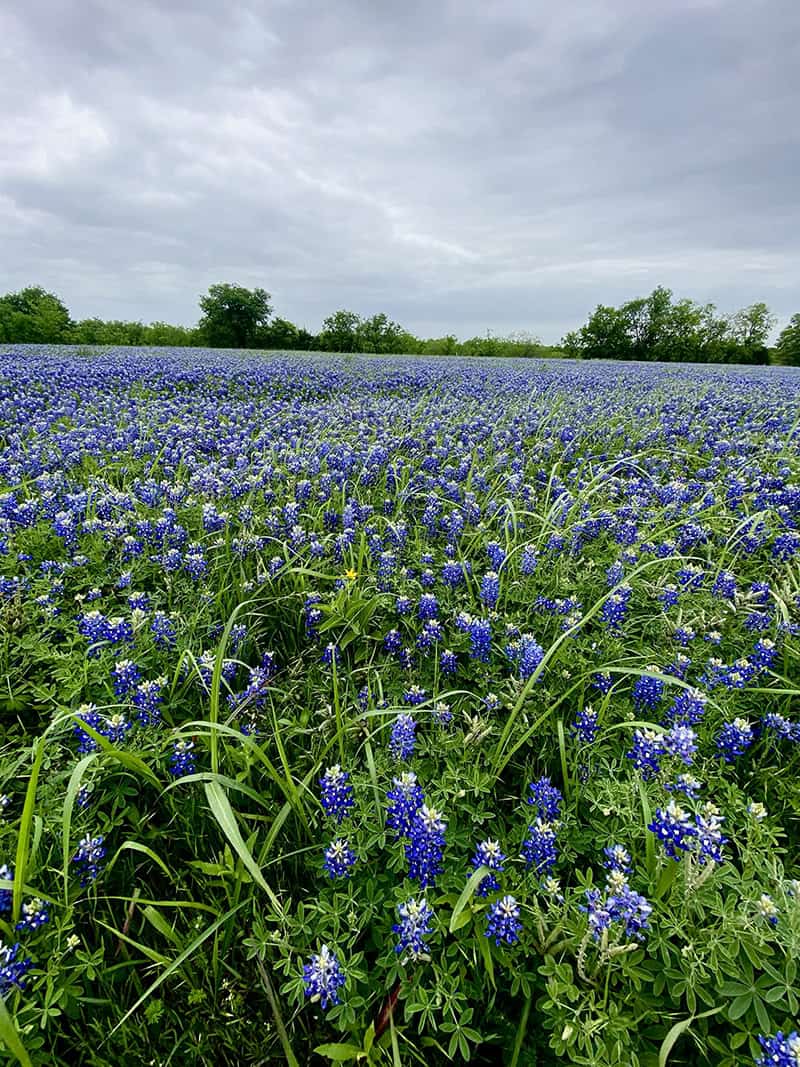
Before you drive out, check the Garden Club’s current bloom report through the Ennis Welcome Center. Ten minutes of homework saves you an hour of driving past fields that already went to seed.
Weekdays are calmer than the festival weekend, so if crowds are not your thing, aim for a Tuesday or Wednesday when the bloom is peaking. You will still get the fields, with far more elbow room for that perfect frame.
Pro tip: go early. Morning light is softer and kinder to photos, the roads are quieter, and you will have your pick of the good pull-offs before the afternoon crowd arrives.
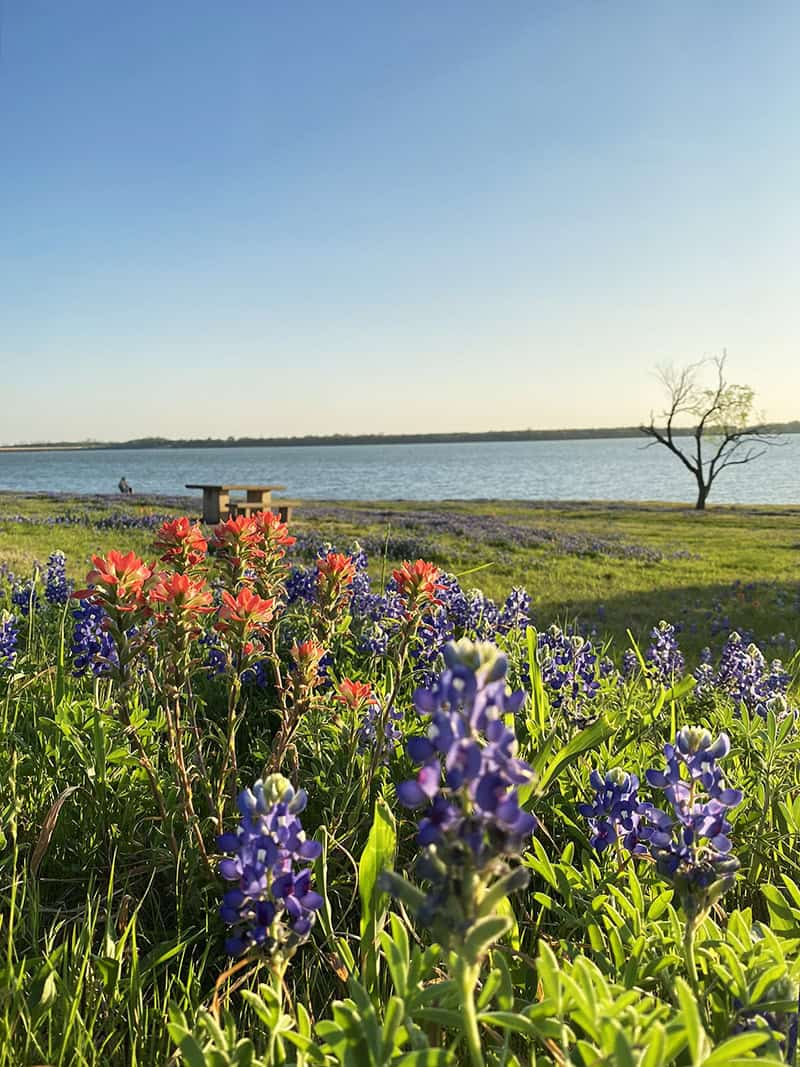
When you stop for the classic photo in the flowers, step carefully and stick to the edges and worn paths. The bluebonnets you leave standing are the ones that reseed next spring, so a light footprint keeps the show going.
Contrary to an old rumor, there is no state law against picking bluebonnets. Still, leaving them be is the kind thing to do, so the family behind you gets the same wall of blue you did.
And it is very much a family thing. A friend from Dallas once told me, “if you grew up in Texas, there’s a bluebonnet photo of you somewhere.” Ennis is where a lot of those photos happen, whether you are young or young at heart.
How to Get There
Ennis sits right off Interstate 45, an easy drive south from Dallas or north from Corsicana. Start at the welcome center to grab a current trail map and the latest bloom report before you head into the countryside.
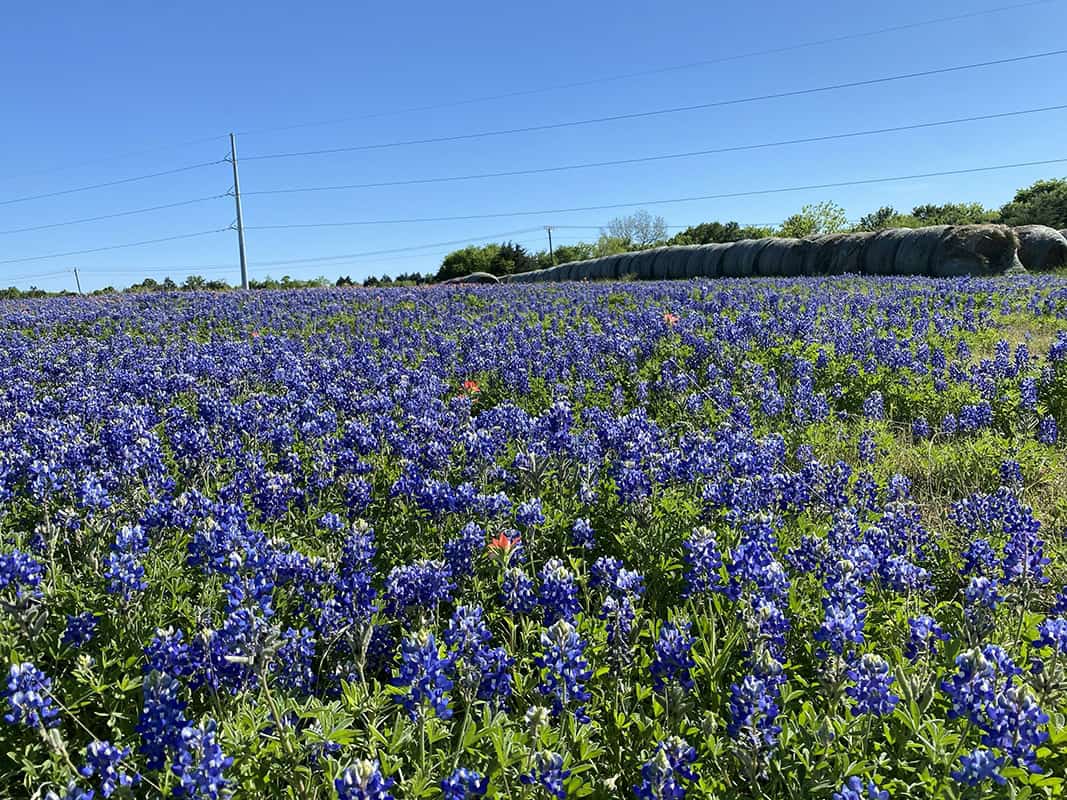
Where: Ennis Welcome Center, 201 NW Main Street, Ennis, TX 75119. Call ahead at (972) 878-4748 for April hours and current trail conditions.
Start Planning Your Spring Drive
Bluebonnet season is short and it is glorious, and it will not hold still for you. Watch the bloom reports, pick a clear morning in mid to late April, and point the car toward Ennis.
Fill the tank, charge your camera, and give yourself the whole day to get happily lost on 40 miles of blue country roads. Spring in Texas does not get much better than this, and you will want to see it for yourself.
Featured image: @ Ennis Bluebonnet Trail

Stella Raines
Editor-in-Chief
Stella brings over a decade of storytelling experience to TX Headlines. With roots in West Texas and a love for road trips, she leads the editorial team with an eye for the hidden stories that make Texas unforgettable.
More Stories
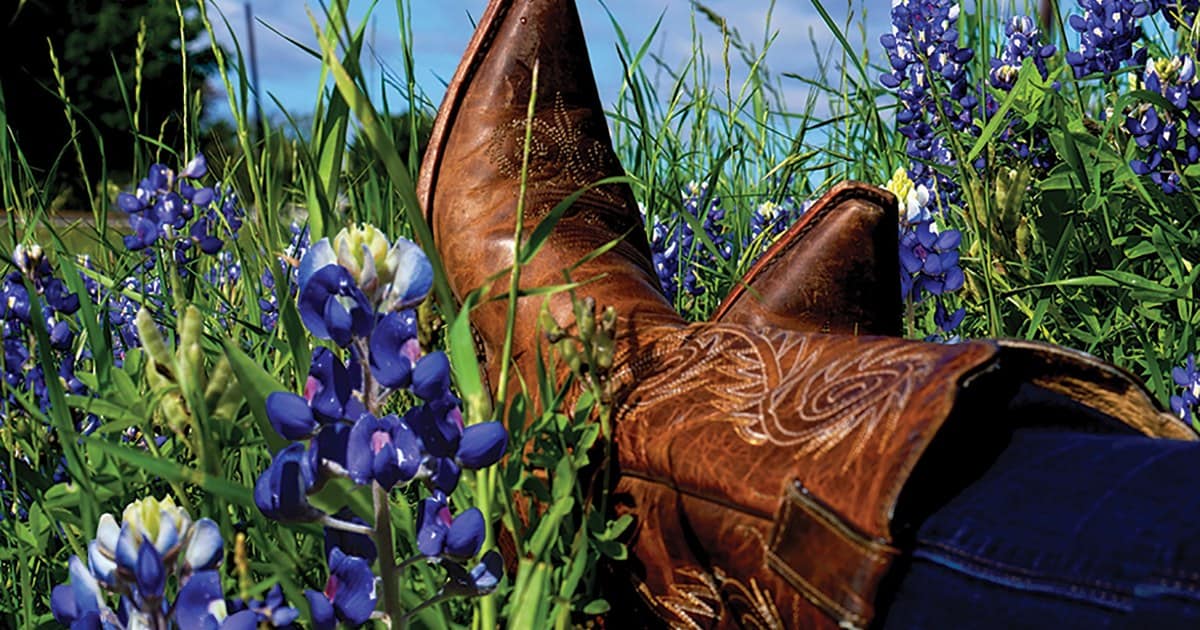
This North Texas Bluebonnet Trail Winds 40 Miles Through Wildflower Country Each Spring
This Short Texas Trail Delivers Jaw-Dropping Canyon Scenery for Barely Any Effort
This Easygoing 2.7-Mile Texas Trail Ends at a Secret Waterfall and Hills Full of Wildflowers
This Free Texas Coastal Boardwalk Is Priceless for Birdwatchers
Tags