This North Texas Bluebonnet Trail Winds 40 Miles Through Wildflower Country Each Spring
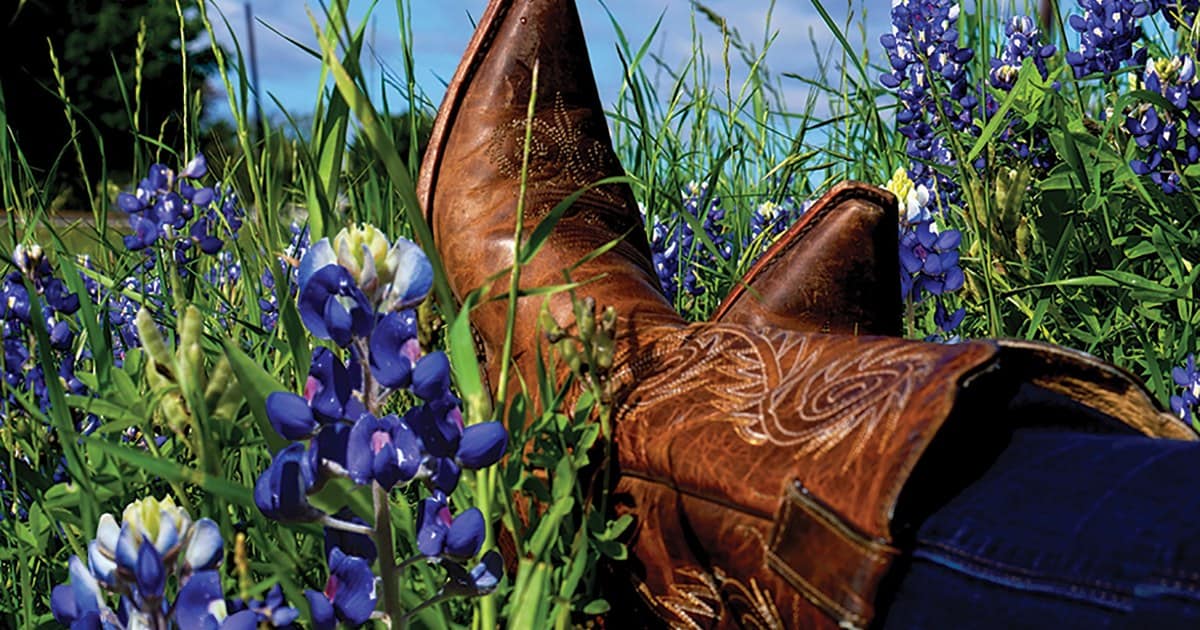
I have a soft spot for the kind of drive where the road itself is the reason you left the house. Not the interstate sprint to somewhere, but the slow crawl with the windows down, letting a county unspool in front of you one pasture at a time.
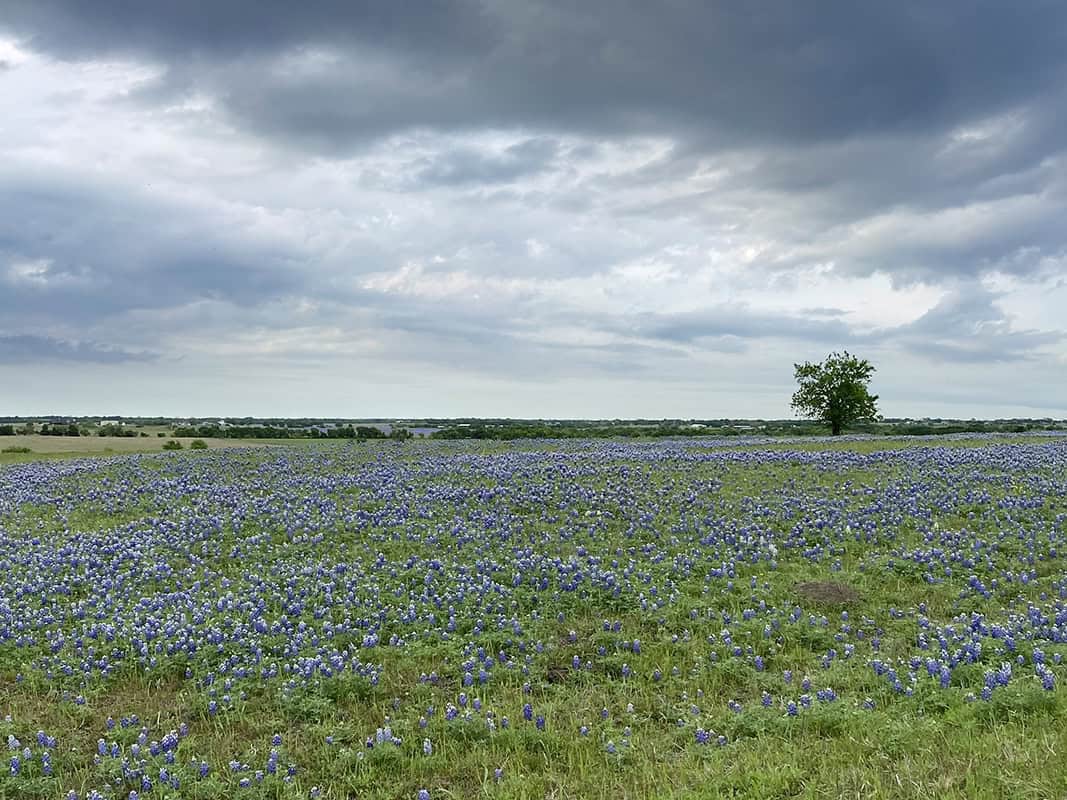
Every spring, one stretch of North Texas countryside pulls that off better than anywhere. For a few short weeks the fields between the fence lines flood with rolling blue, and the whole reason for the trip is to point the car down a backroad and go looking for it.
Below, I will walk you through the forty miles of mapped bluebonnet trails around the town of Ennis, the festival that grew up around them, and how to time a visit so the flowers are actually blooming when you pull up.
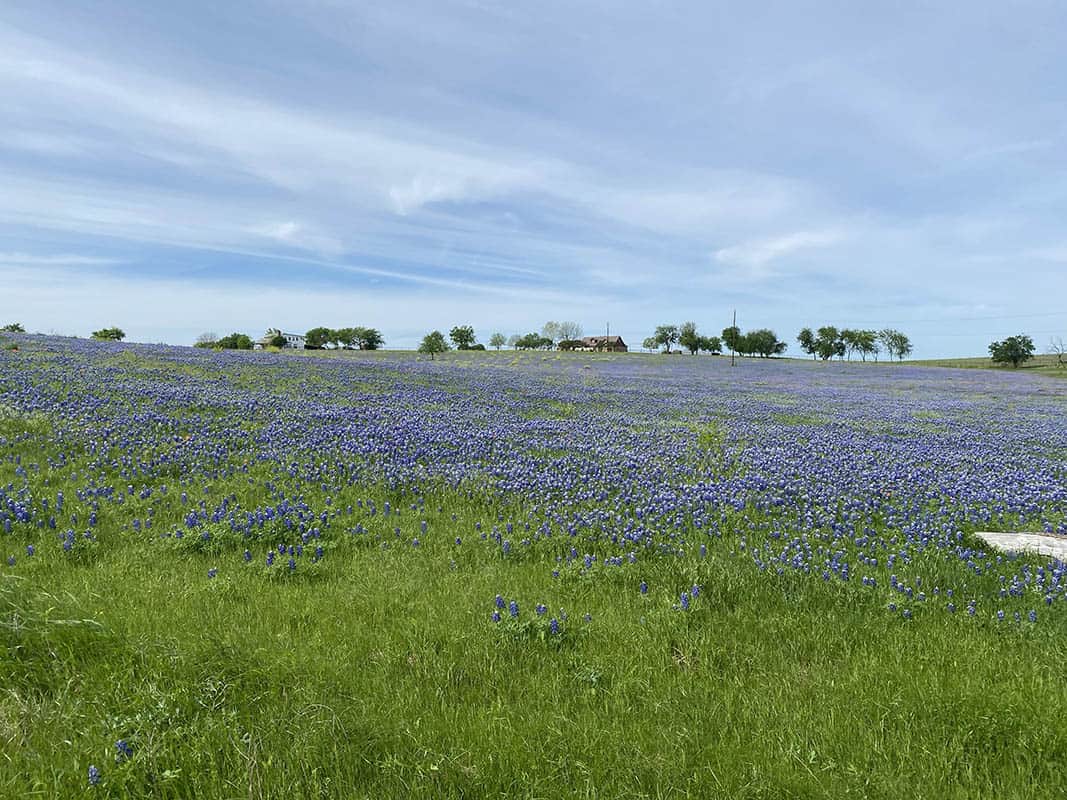
Three Loops, One Very Blue Map
One thing trips people up. This is not a hiking trail, so leave the boots at home. You get in your car, and you drive.
The system covers roughly forty miles of country roads, split into three mapped loops that wind south and east of town. Some sources clock it at 41.8 miles, the kind of precise number you only get when a garden club has been measuring these routes for seventy-odd years.
Each loop threads past working ranches, weathered barns, and long fence lines where the bluebonnets pile up thickest. Roll slowly and you will spot stock ponds ringed in blue and gates half-swallowed by wildflowers.
You can drive a single loop in an easy afternoon, or string all three together for a full day of slow, blue-shouldered backroads. There is no wrong way to do it, and no reason to rush.
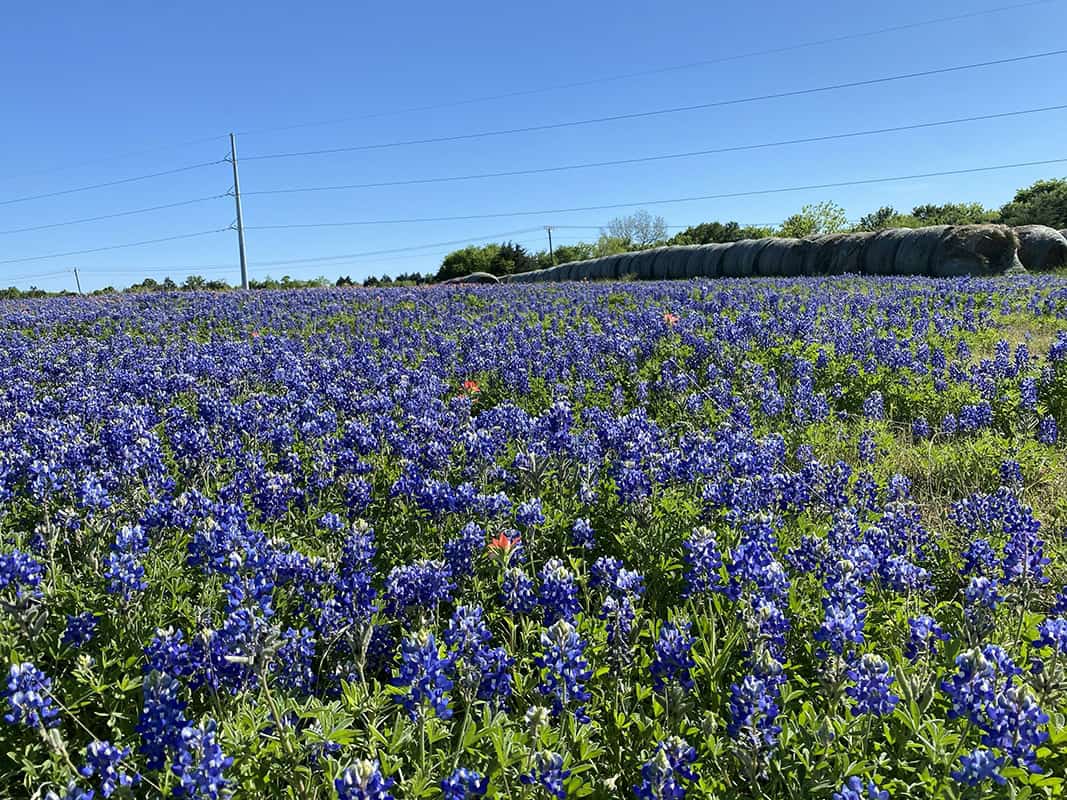
The trails stay open the entire month of April, from the first through the thirtieth. That is your window. Miss it, and you are looking at green pasture and a lot of “you should have been here last week.”
Start at the Welcome Center, Not the Fields
The smartest move is to resist the urge to just wing it. The blooms shift week to week and field to field, so the loop that dazzled on Saturday can fade by the next Sunday while a different one peaks.
That is where the free trail map earns its keep. Grab one at the Ennis Welcome Center on North Main Street, where the staff will point you toward whatever is blooming best that very day.
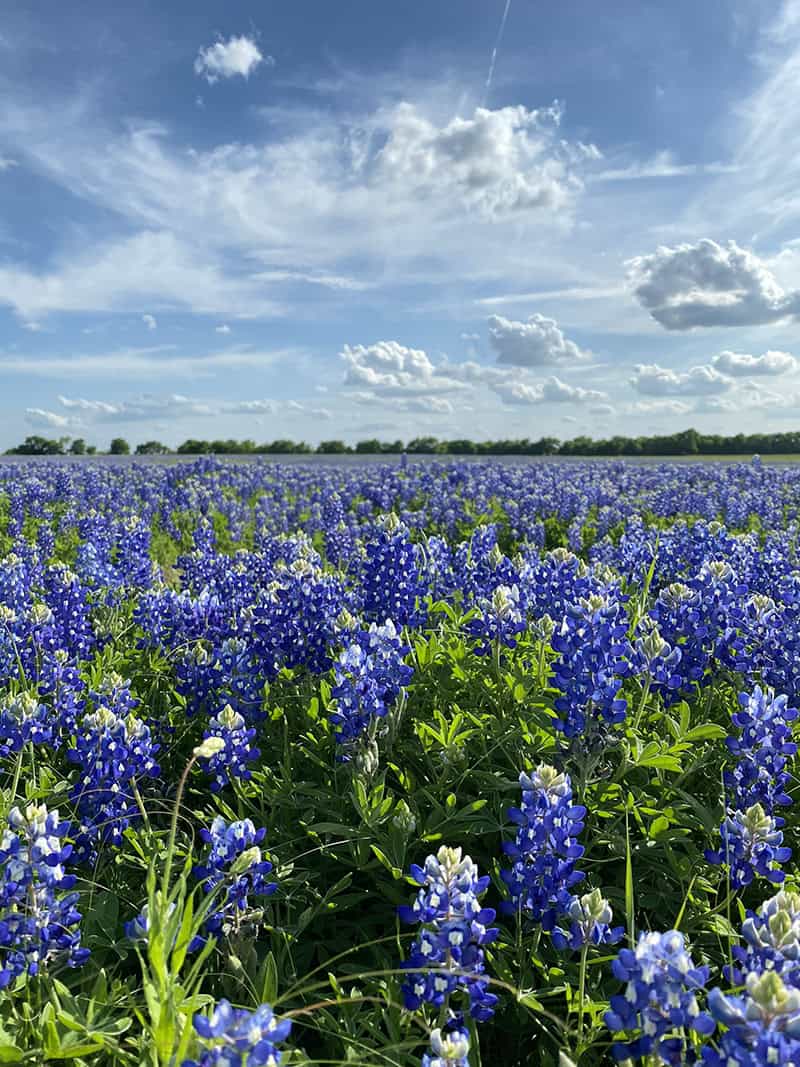
My favorite part is how it actually runs. Members of the Ennis Garden Club drive the trails themselves every week once April arrives, checking which fields are popping and which are still waking up. Then they report back so the Welcome Center can send you to the good stuff.
It is a wonderfully old-fashioned system in an age of apps. Real people, in real cars, looking at real flowers, then telling you where to go.
Did you know? You can check the current bloom status online before you ever leave home, on the official trail-status page. A quick look the night before saves you from a long drive to a field that has not turned yet.
Where the Blue Gets Deepest
Once you have a map in hand, a few stops earn their reputations year after year.
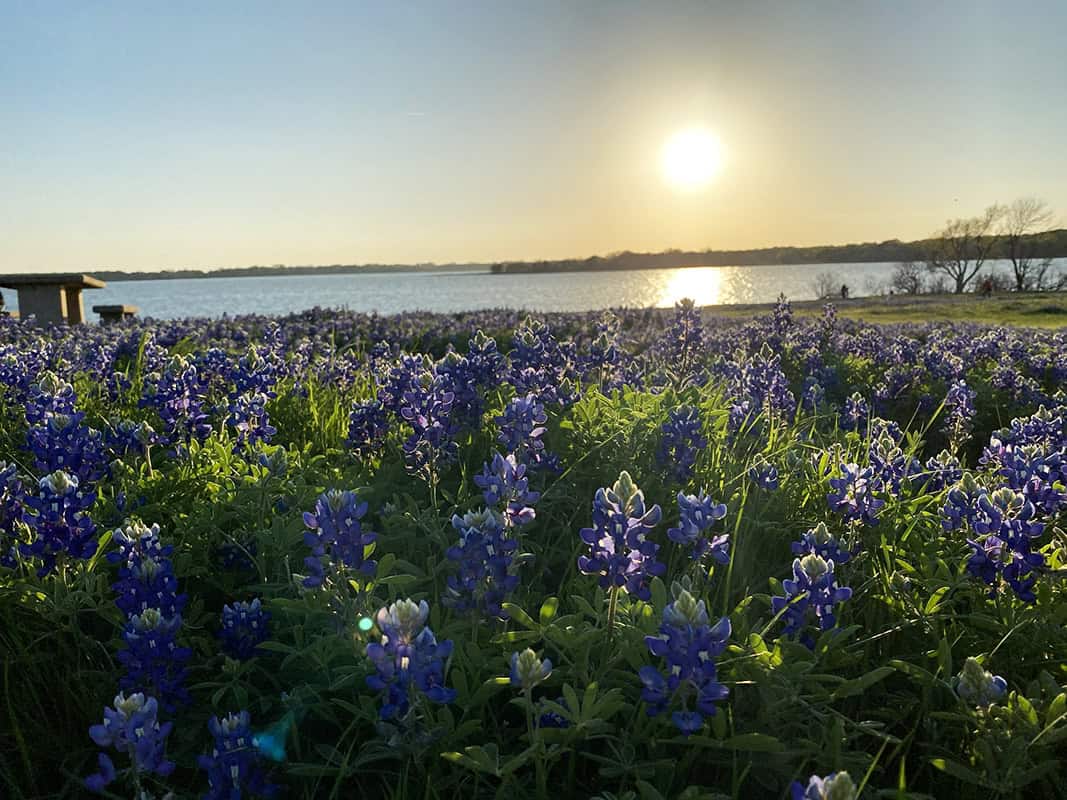
Meadow View Nature Area is the crowd favorite, an easy, family-friendly spot with wide bluebonnet spreads and Bardwell Lake shining in the background. Bring the kids, a picnic, and a camera you do not mind getting grass stains on.
Kachina Prairie is the quieter, wilder pick. This is native, untouched prairie, and during festival weekend the Garden Club leads guided walks through it so you can learn the wildflowers by name instead of just admiring them from the car window.
For something short and simple, Bluebonnet Park and the Ennis Veterans Memorial Park give you accessible blooms without a long drive. That is a real gift on a busy weekend when the loops fill up with slow-rolling cars.
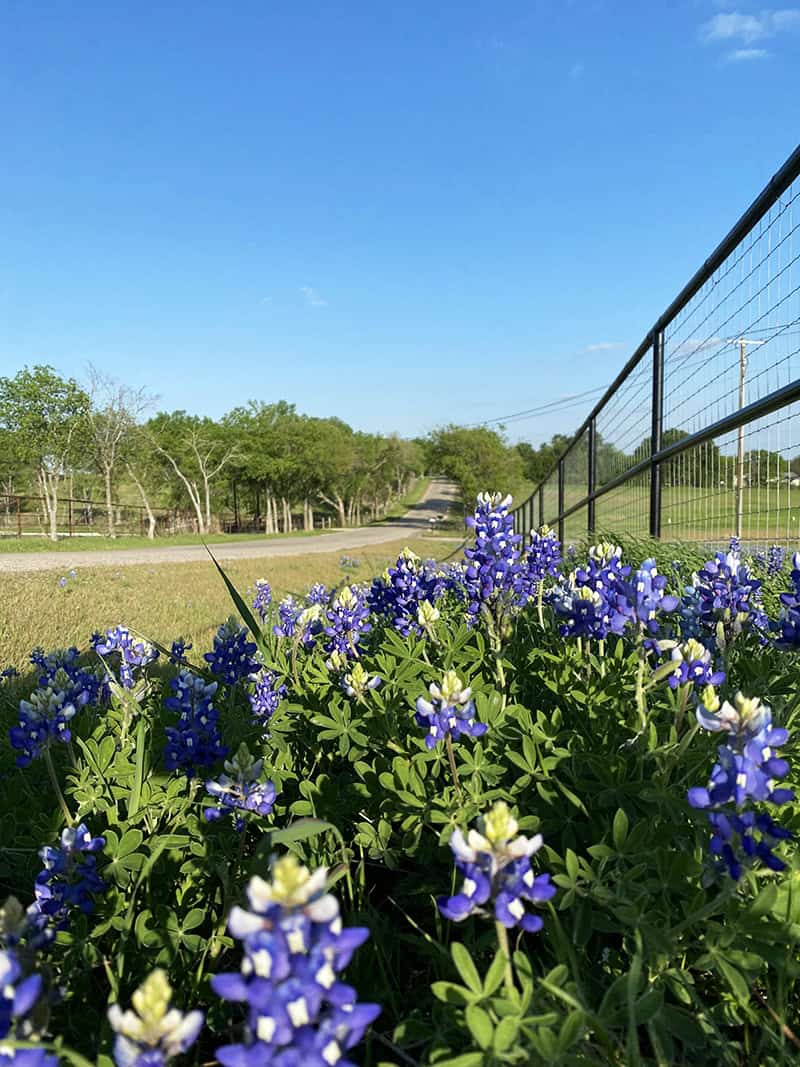
Then there are the moments no map can promise. A single ranch gate framed in blue. A red barn sitting in a lake of it. A lone fence post you will somehow photograph for ten straight minutes. Those are the ones you drive home talking about.
Part of the fun is that the show changes as you move. One loop leans into open ranchland and big sky, another dips toward the water at Bardwell Lake, and a third rolls past small farms and country churches.
Drive them all and you get three different versions of the same blue. Each has its own character, so no single loop tells the whole story.
A Festival That Answers to a Flower
The flowers came first. The festival grew up around them, and it still bends to their schedule.

Because the bluebonnets tend to peak around the third week of April, the Ennis Bluebonnet Trails Festival plants itself firmly on that third April weekend. It is a three-day celebration that takes over historic downtown, and it may be the rare festival whose date is decided by a plant.
Downtown fills with live music on multiple stages, food vendors, and rows of craft and shopping booths. The whole district takes on a Friday-through-Sunday buzz, with gates opening in the late morning each day.
It is a proper small-town street party. You can catch a band, browse handmade goods from local makers, and eat your way down the block, all within a few walkable streets of the old brick storefronts. Kids burn off energy while the grown-ups linger over the tasting tables.
Admission stays easy on the wallet, just a few dollars for adults, and children twelve and under get in free. It runs cashless, so bring a card rather than a pocketful of bills.
Grown-ups get their own fun too. There are beer and wine tastings, plus a separately ticketed Wine Wander that lets you sip your way through the historic district at a stroll.
The beauty of the setup is that you get both halves of the day in one trip. You drive the quiet blue backroads in the morning, then roll into a downtown block party in the afternoon. Nature first, celebration second.
And since Ennis wears its Czech heritage proudly, do yourself a favor and track down a kolache while you are downtown. A warm one, fruit-filled, is the perfect fuel for another loop.
How a Garden Club Put a Town on the Map
This tradition did not appear by accident. It was built, deliberately and lovingly, by a handful of people who thought their corner of Texas deserved to be seen.
Back in 1951, the Ennis Garden Club mapped out the first Bluebonnet Trail, charting the best spots to catch the wildflowers that blanket the countryside each spring.
The following year, in 1952, the club sponsored the first annual trails, with members McMurray and Stout serving as co-chairs. Three routes totaled that famous 41.8 miles and drew around a thousand visitors, a few of them with out-of-state plates.
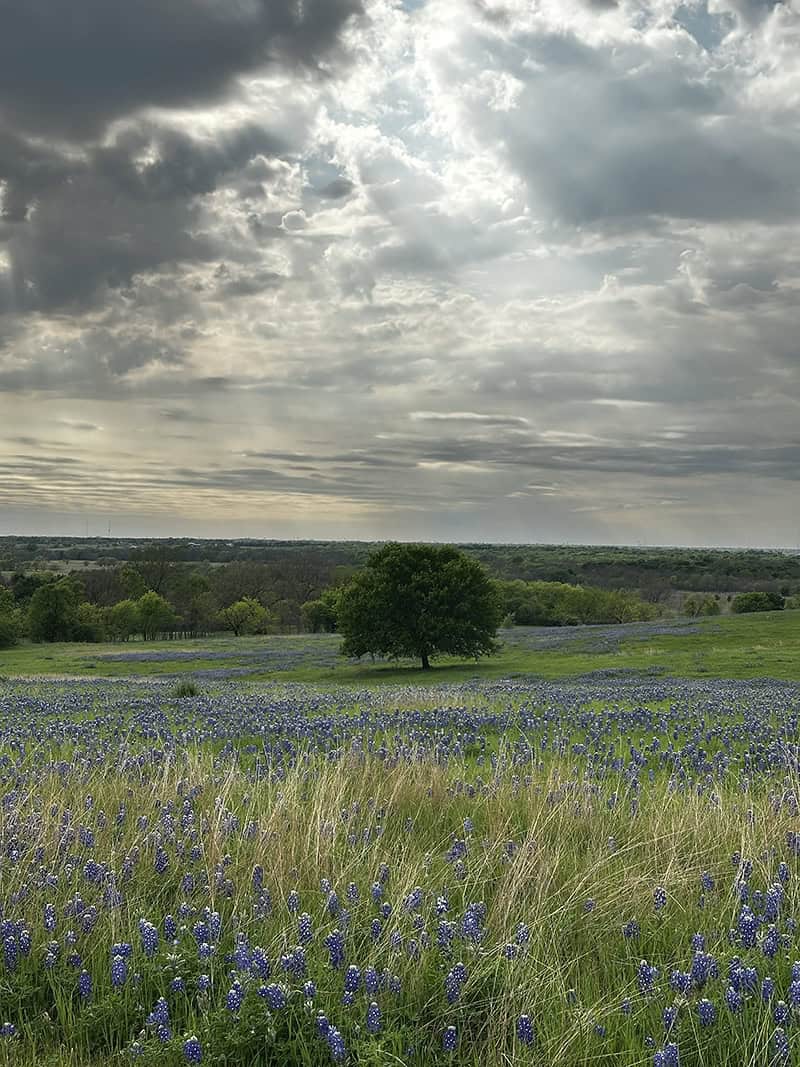
Word traveled fast. Within three years, that thousand had swelled to ten thousand, and the town rallied behind the effort. In 1957, the full Bluebonnet Festival was born to greet the growing crowds.
The real crown came in 1997, when the State Legislature named these routes the Official Texas Bluebonnet Trail and christened Ennis the Official Bluebonnet City of Texas. Not bad for a project that started with a few club members and a paper map.
What I love most is that the same volunteer spirit still runs it. The people driving out to scout the blooms for you are the heirs of the ones who drew that very first map.
Pro Tips for Chasing Peak Blue
A little planning turns a good visit into a great one, so here are the things worth knowing before you go.
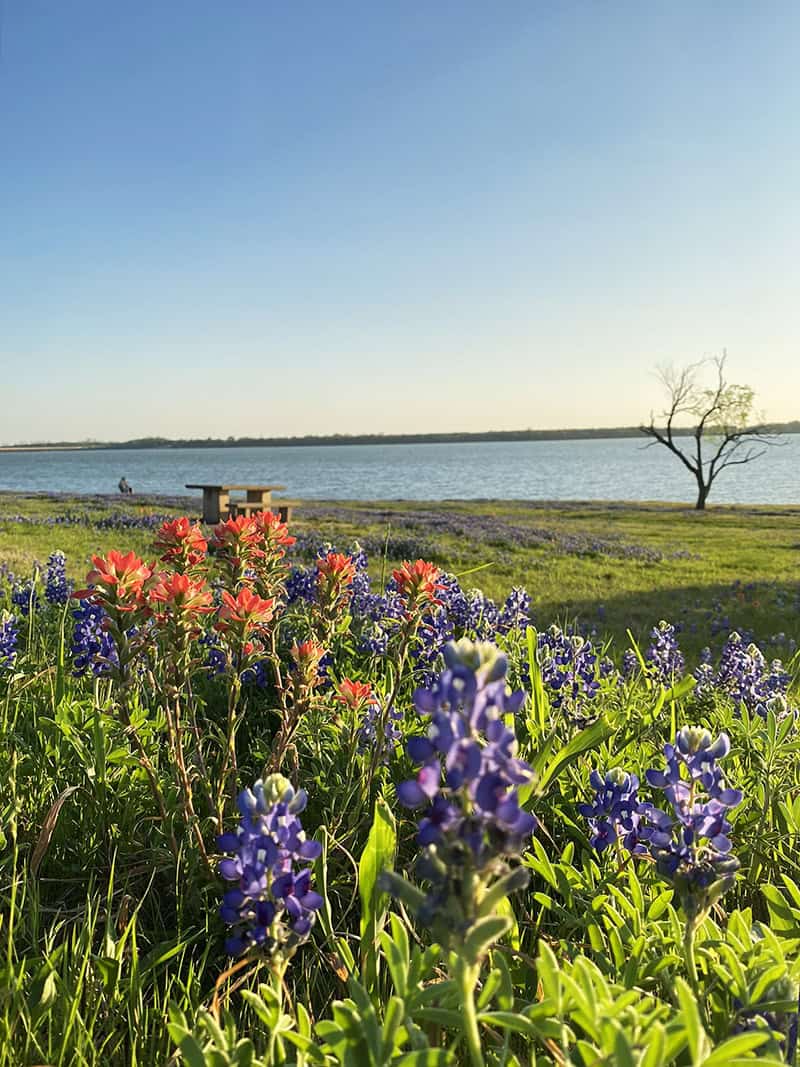
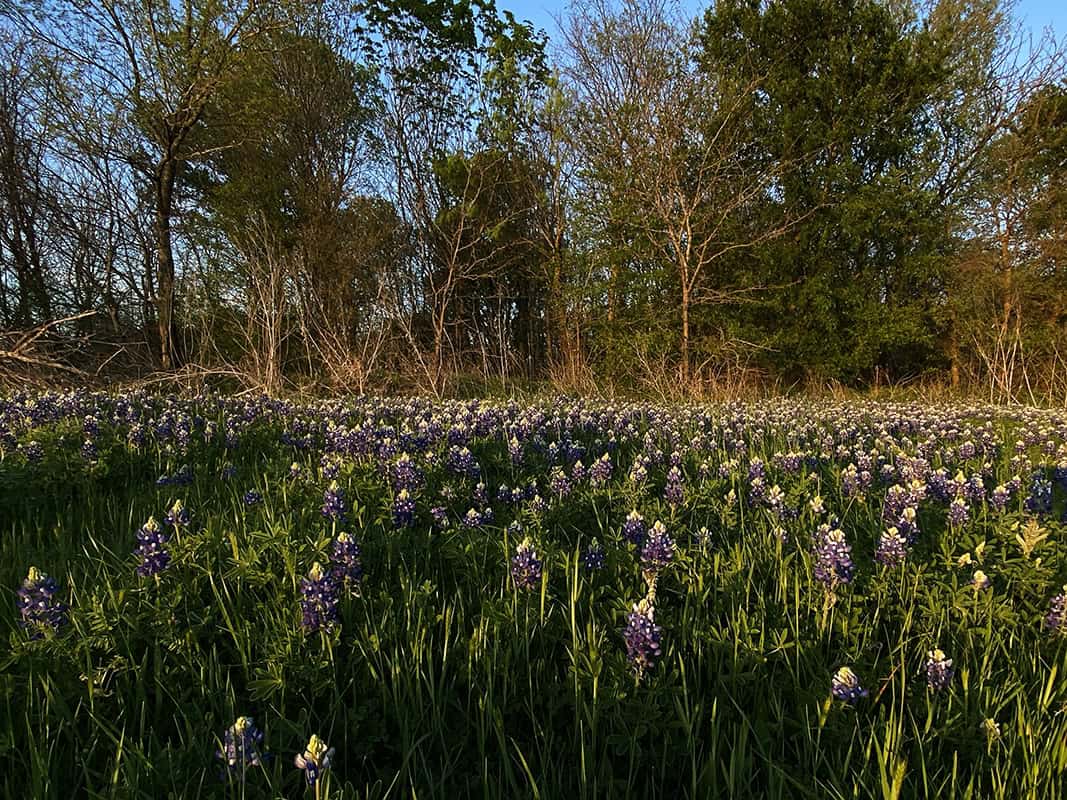
Chase the light. Early morning and late afternoon are golden for photos, when the sun sits low and the blue practically glows. Midday sun flattens everything, flowers included.
Come on a weekday if you can. Festival weekend is glorious but busy, and the loops move slowly when everyone is out at once. A quiet Tuesday in mid-April can feel like the fields are yours alone.
Respect the land, always. The best blooms often sit on private property, so admire and photograph from the roadside, but never cross a fence, open a gate, or trample a patch for a better angle.
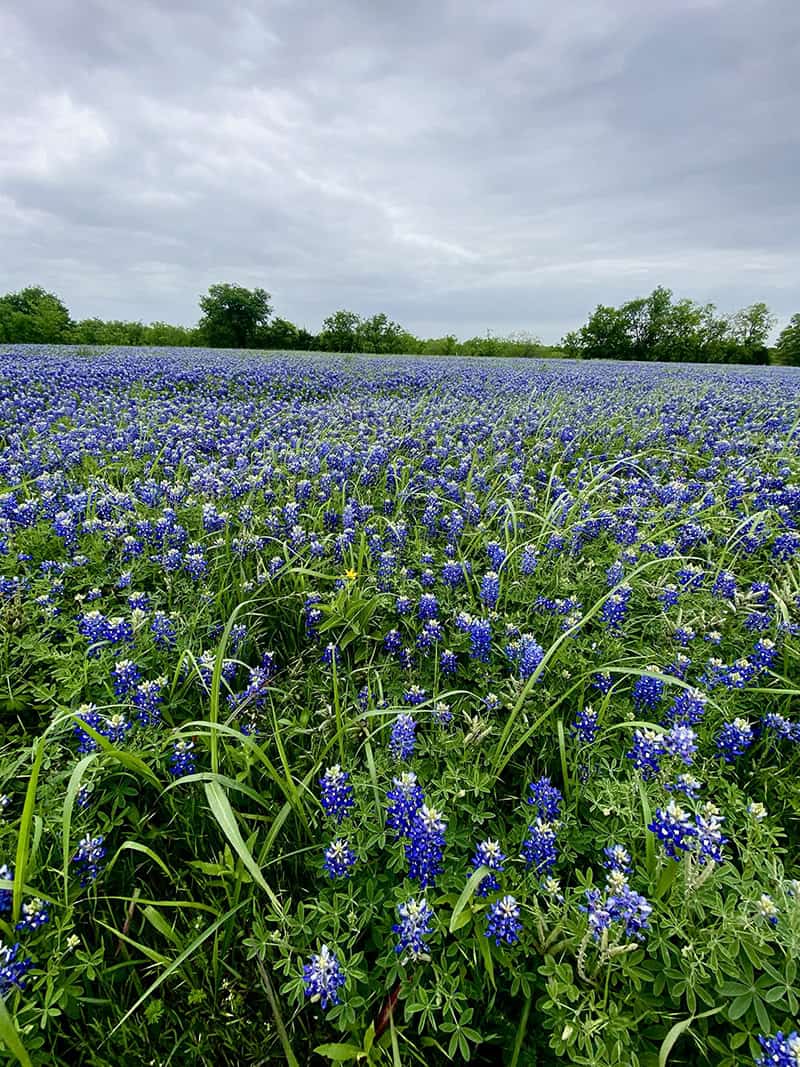
Mind the road, too. Do not stop in a lane of moving traffic to grab a shot, and keep an eye out for other flower-chasers wandering the shoulders.
Pro tip: pack sunscreen and a hat. The trails run through open country with very little shade, and a spring afternoon in Texas can turn warm faster than you expect. A bottle of water in the car never hurts.
Build in time. Between the driving, the stopping, the photographing, and the “oh look, one more field,” a bluebonnet outing takes longer than the mileage suggests. That slowness is the whole point.
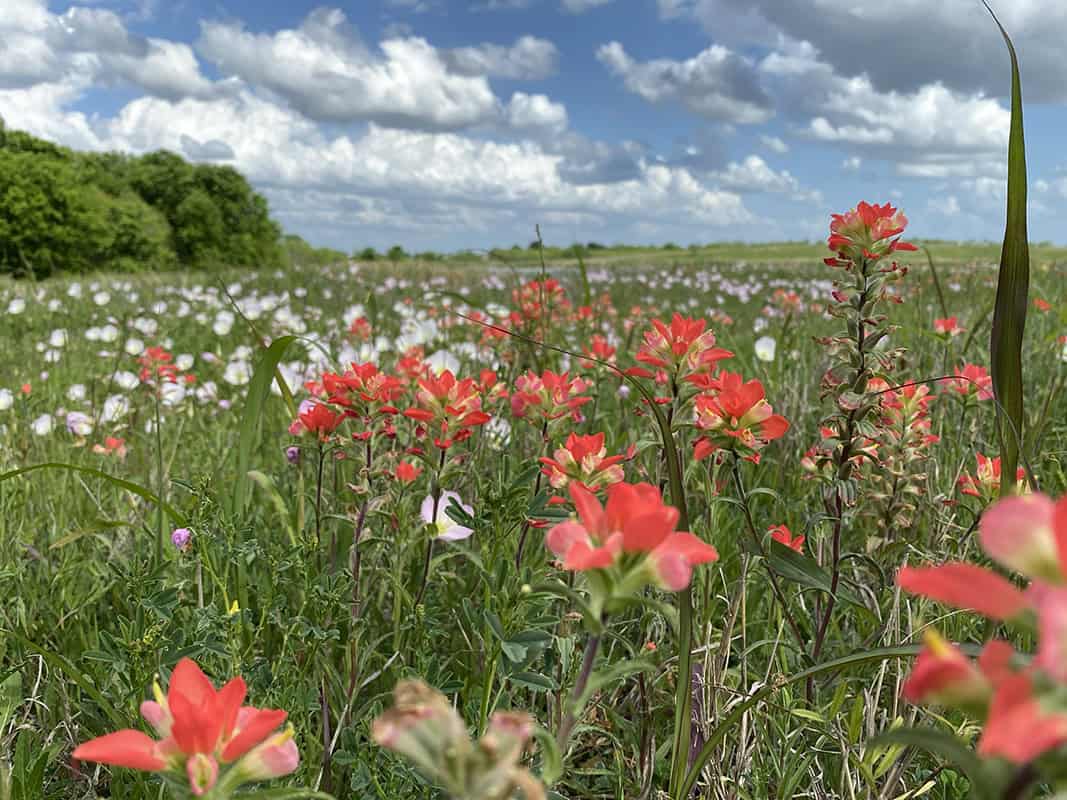
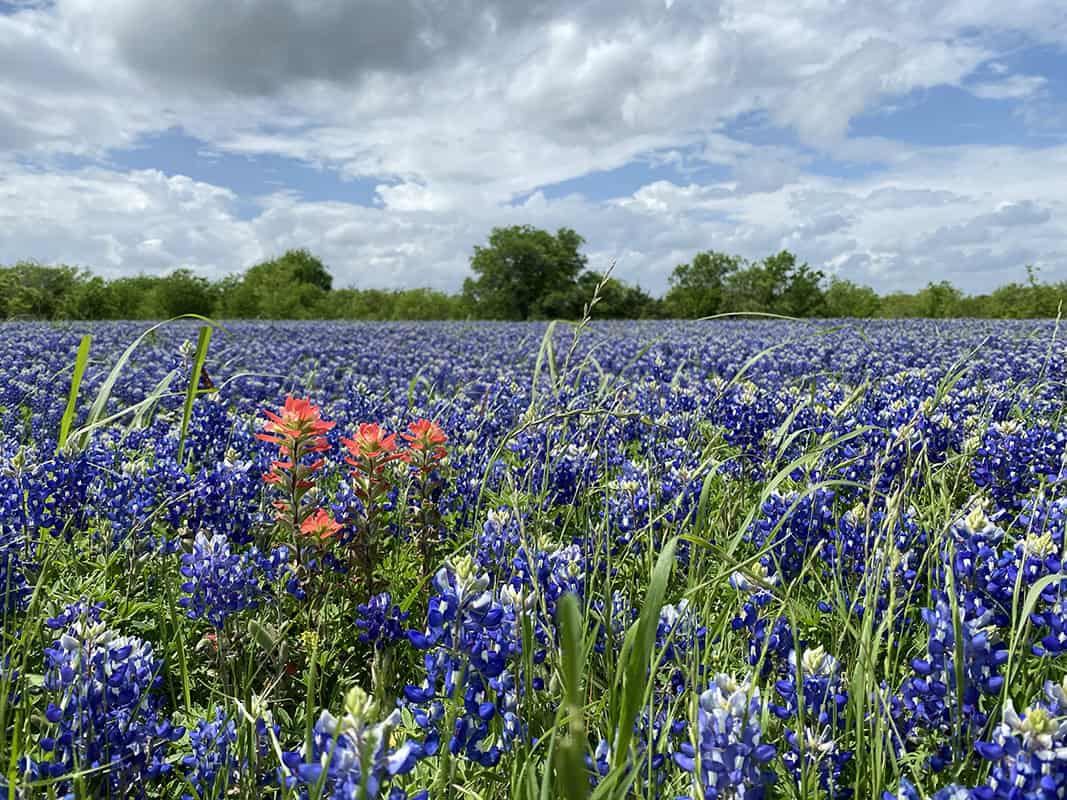
Bring a wildflower eye, too. Bluebonnets get top billing, but the same fields throw in Indian paintbrush, pink evening primrose, and coreopsis, so the “blue” is really a whole spring palette once you slow down and look.
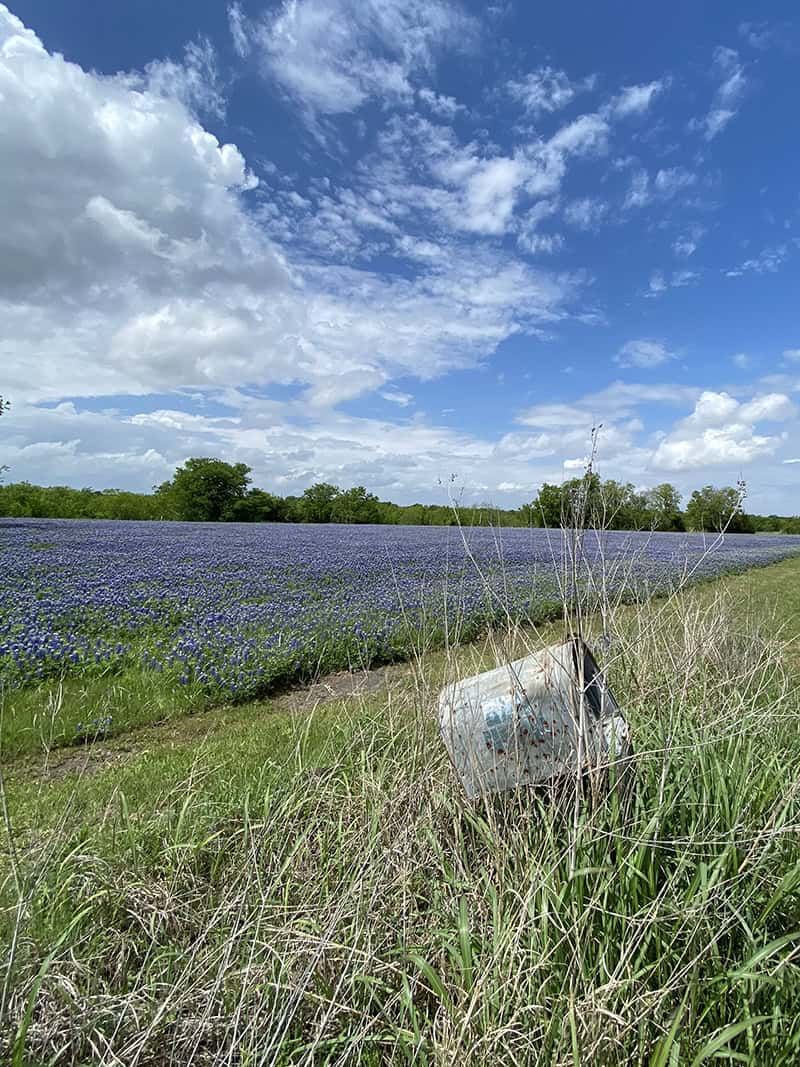
Leave room for the little towns and farm stands along the way. Half the joy of a trail day is the unplanned stops: a roadside stand, a country store, a shady spot to eat your kolache before the next loop.
How to Get There
The trails and festival sit just south of Dallas, an easy day trip from the metroplex and a straight shot down Interstate 45. Start at the Welcome Center to grab your map and the latest bloom report before you head out to the loops.
Where: Ennis Welcome Center, 201 NW Main Street, Ennis, TX 75119.
The driving trails are open April 1 through 30 each spring, and the festival lands on the third weekend of April. Peak timing shifts a little every year with the weather, so treat those dates as your general window rather than a promise.
Before you plan, confirm the exact festival dates and check the live bloom status on the official Ennis Bluebonnet Trail website. Ten minutes of homework is the difference between full fields and a green shrug.
Point the Car Toward the Blue
There is a short, magic stretch of every Texas spring when the roadsides turn the color of a clear sky, and this is the place built to help you find it.
Grab a map, chase the light, and let a slow blue backroad remind you why the drive is the whole point.
So pick an April weekend, fill the tank, and go watch the state flower do what it does best. Just try not to stop at every single field, or you will never make it to the festival.
Featured image: @ Ennis Bluebonnet Trail

Stella Raines
Editor-in-Chief
Stella brings over a decade of storytelling experience to TX Headlines. With roots in West Texas and a love for road trips, she leads the editorial team with an eye for the hidden stories that make Texas unforgettable.
More Stories
This Short Texas Trail Delivers Jaw-Dropping Canyon Scenery for Barely Any Effort
This Easygoing 2.7-Mile Texas Trail Ends at a Secret Waterfall and Hills Full of Wildflowers
This Free Texas Coastal Boardwalk Is Priceless for Birdwatchers
This Small Texas Town Is the Official Bluebonnet City, and Spring Turns It Blue
Tags