Goatman’s Bridge: The Urban Legend That Turned Into Reality
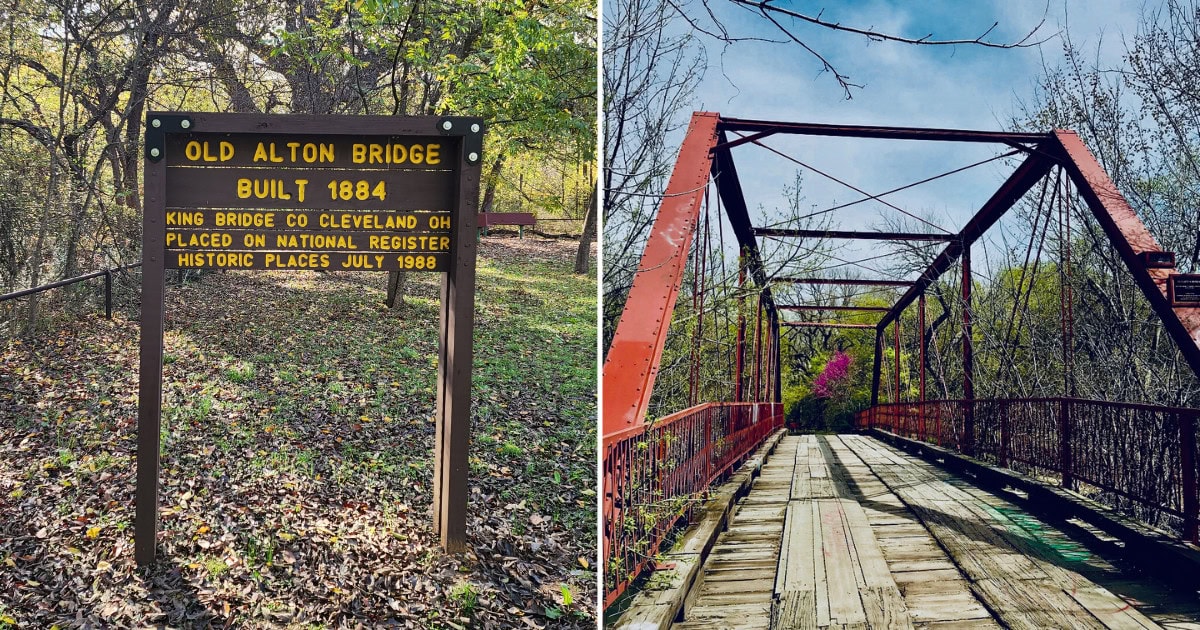
There’s a rusted iron bridge about seven miles south of Denton, Texas, that draws thousands of visitors each year—not for its architecture or scenic views, but for a story that may or may not be true about a man who may or may not have existed.
Old Alton Bridge, better known as Goatman’s Bridge, has become one of Texas’s most visited paranormal destinations.
It’s a place where folklore, racial history, teenage dares, and television cameras have collided to create something stranger than any ghost story.
The Real Place Behind the Legend
Where Goatman’s Bridge Is Located
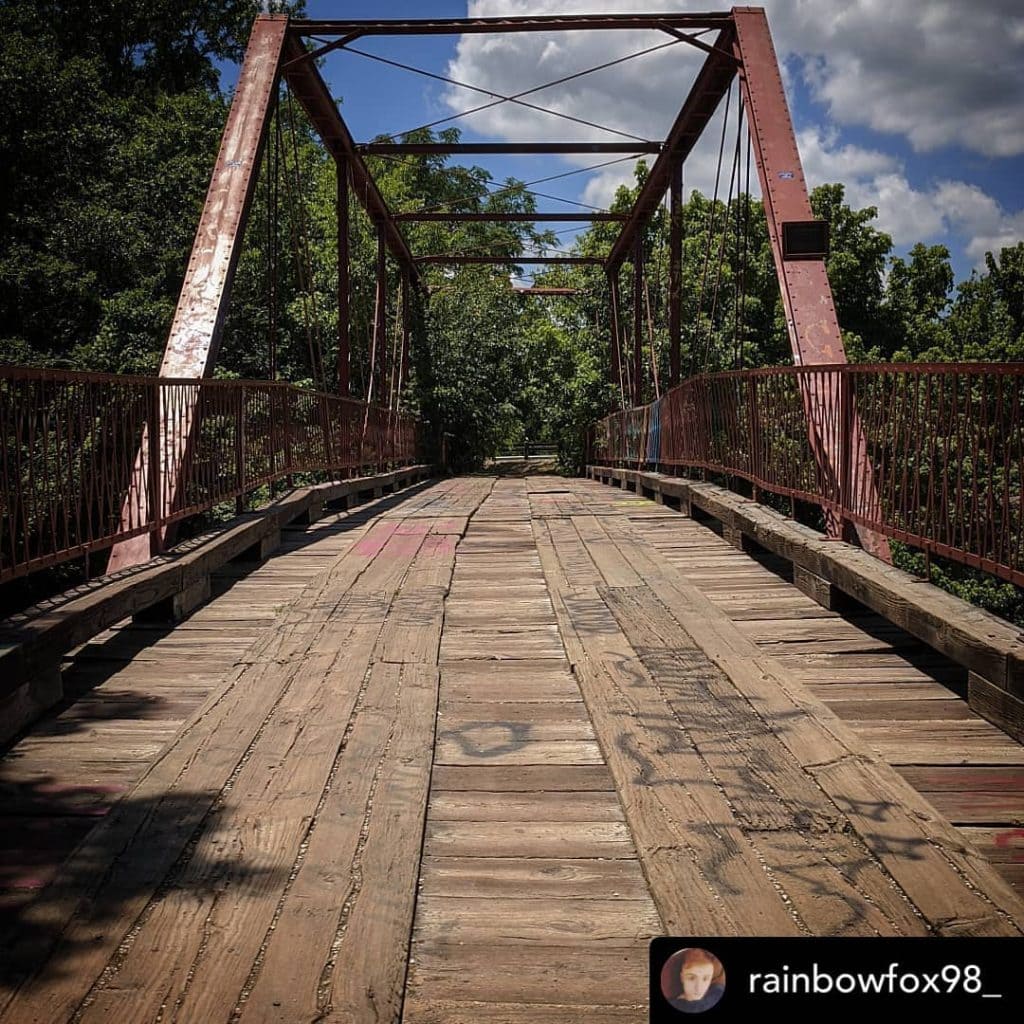
Old Alton Bridge spans Hickory Creek at a shallow spot once used for crossing cattle, connecting the city of Denton to the small town of Copper Canyon in Denton County.
The bridge sits off Old Alton Road, accessible via a gravel parking area about a half-hour drive north of Dallas.
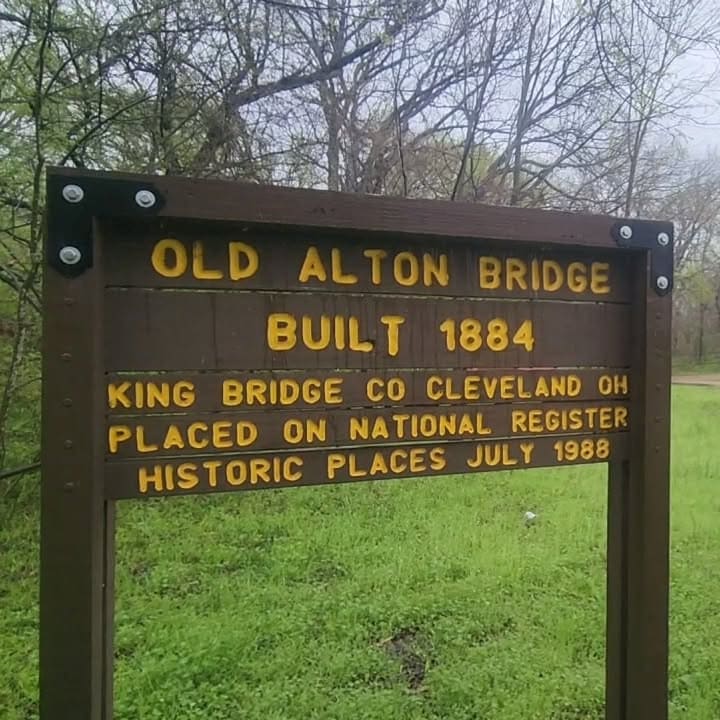
The structure is Denton County’s oldest remaining Pratt-truss iron bridge, built from a kit supplied by the King Iron Bridge and Manufacturing Company of Cleveland, Ohio.
It measures 145 feet long and 14 feet wide, constructed of wrought iron supported by limestone abutments. The final inspection occurred on September 22, 1884.
Historical Use of the Bridge
Old Alton Bridge was named for the nearby settlement of Alton, which served as Denton County’s seat from 1850 to 1856 before residents gradually moved away. County officials hoped the bridge might revitalize the dwindling community; it didn’t.
For over a century, the single-lane bridge served as a vital crossing for wagons, horses, and automobiles.
Before the new bypass opened in 2001, motorists would honk their horns to warn oncoming traffic before crossing the narrow span.
Today, vehicle traffic uses an adjacent concrete-and-steel bridge, while Old Alton Bridge serves as a pedestrian crossing connecting the Elm Fork and Pilot Knoll hiking and equestrian trails.
The bridge was added to the National Register of Historic Places in 1988 and designated a Recorded Texas Historic Landmark in 2010.
Origins of the Goatman Legend
The most widely circulated version centers on Oscar Washburn, described as an African American goat farmer who lived near the bridge in the 1930s.
Washburn was successful—known for quality meat, milk, cheese, and leather goods—and grew popular enough to hang a sign on the bridge reading “This Way to the Goatman.”
That sign, the legend says, drew the attention of the local Ku Klux Klan. One night in August 1938, Klansmen crossed the bridge with their headlights off, dragged Washburn from his home, and hanged him from the bridge.
When they looked over the side, the rope was empty—his body had vanished. In a panic, they returned—and his family was never seen alive again.
Since then, the story goes, Washburn’s spirit has haunted the bridge as a half-man, half-goat creature.
Visitors who cross at night with headlights off—or knock three times on the iron trusses—risk encountering the Goatman. Some versions say he only takes those with Klansmen’s blood in their veins.
When the Legend Met Modern Reality
Trespassing and Safety Incidents
The bridge’s fame has created real-world consequences. Night visitors have increased dramatically, bringing vandalism, graffiti, and risky behavior. Law enforcement patrols have increased accordingly.
The bridge shows the wear of its popularity. Visitors have carved names into the wooden deck, spray-painted the iron trusses, and left debris along the trails.
Private property surrounds much of the area, and trespassing complaints are common.
Paranormal Tourism
Despite—or because of—the legend’s unverified nature, Goatman’s Bridge remains a magnet for paranormal investigators.
Visitors report hearing hoofbeats on the bridge, splashing in the creek below, growling from the woods, and a voice ordering them to “get off the bridge.” Some claim to have been touched, pushed, or had rocks thrown at them.
Visiting Old Alton Bridge Today
What Is Actually Allowed
Old Alton Bridge is open to the public, though daytime visits are strongly encouraged.
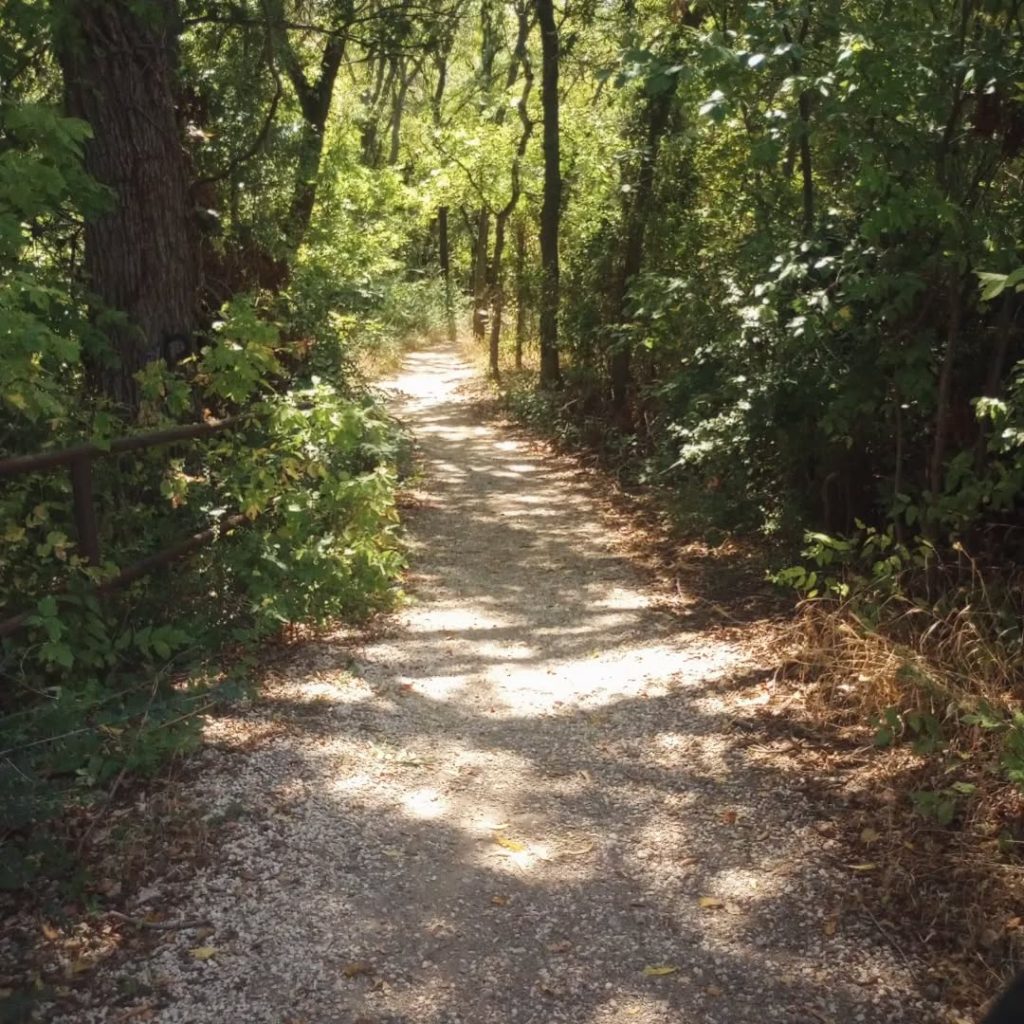
The bridge serves as a crossing point for the Elm Fork Trail, a roughly 6-mile path running north from the Old Alton Road trailhead to Sycamore Bend Park. The trails allow hikers, horseback riders, and dogs on leash.
A gravel parking area sits near the bridge, and the walk from the lot takes only minutes.
Fishing and kayaking occur in Hickory Creek below. The area is scenic during daylight—fall foliage makes it particularly photogenic—and popular for graduation photos and casual walks.
The bridge lies about 25 minutes from downtown Denton and roughly 45 minutes from Dallas.
Rules and Practical Warnings
While the bridge is technically accessible, after-dark visits are discouraged by local authorities. Respect posted signage and private property boundaries; much of the surrounding land is not public.
No camping or fires are permitted. Vandalism is illegal and harms a historic landmark. Bring mosquito repellent in warmer months; the trails can flood after heavy rain.
What Stories Do to Places
Old Alton Bridge is a real place shaped by an unverified story—and that’s the most interesting thing about it.
The bridge stands as a reminder that stories don’t need to be factually accurate to have power.
Enough people believed in the Goatman to make him real—not as a supernatural entity, but as a cultural phenomenon that draws visitors and shapes how a community relates to its own past.
Cross it in daylight, and you’ll see an old bridge over a quiet creek. Cross it at midnight, and you’ll see whatever you brought with you.

Stella Raines
Editor-in-Chief
Stella brings over a decade of storytelling experience to TX Headlines. With roots in West Texas and a love for road trips, she leads the editorial team with an eye for the hidden stories that make Texas unforgettable.
More Stories
This Historic Texas Market Is Full of Handmade Goods You Won’t Find in Any Store

This Pay-What-You-Want Texas Art Store Lets You Fill a Bag and Name Your Price
This Centuries-Old Texas Cathedral Transforms Into a Dazzling Light Show After Dark
This Charming Small Texas Town Guards the World’s Largest Pecan and the State’s Best Barbecue
Tags
1 Comment
This looks exactly like a bridge west of hearne, TX. I mean exactly! That’s why I clicked on this article, because I thought it was that bridge.