This Storybook Texas Town Is a Slice of Old-World Alsace You’d Swear Was in Europe
The first bite of warm apple strudel I ever had came from a paper bag on the hood of a car, in a parking lot off a Texas highway. It was still warm. The pastry shattered into buttery flakes down the front of my shirt.
The apples inside tasted like someone’s grandmother had peeled them by hand that morning. My friend just watched me with a knowing grin. “Told you,” she said.
That bag came from a tiny town called Castroville, and one nibble told me I had wandered into a place with old-world roots. This pocket-sized settlement sits on the banks of the Medina River, all steep roofs and French street names.
Below, discover why a town of a few thousand people, about a half-hour west of San Antonio, feels less like Texas and more like a village someone lifted out of Europe and set down gently in the Hill Country.
A Little Slice of Alsace, 25 Miles West of San Antonio
Drive west out of San Antonio for about half an hour and the strip malls thin out into rolling green. Then the road drops toward a river, the speed limit falls, and suddenly you are among cottages that look like a fairy tale.
The houses have steep, sharply pitched roofs and thick limestone walls, with wooden shutters painted in tidy colors. Some sit low and square with a single dormer poking up top, the way old European farmhouses do.
The streets carry names like Angelo, Florence, Paris, and Fiorella, and half of them honor towns back in the old country. Locals call this “the Little Alsace of Texas,” and it is not a slogan someone dreamed up.
Castroville is widely considered the only surviving Alsatian community in Texas, a living remnant of a corner of France squeezed between Germany and Switzerland. You can still hear echoes of the old Alsatian dialect among the families who have been here longest.
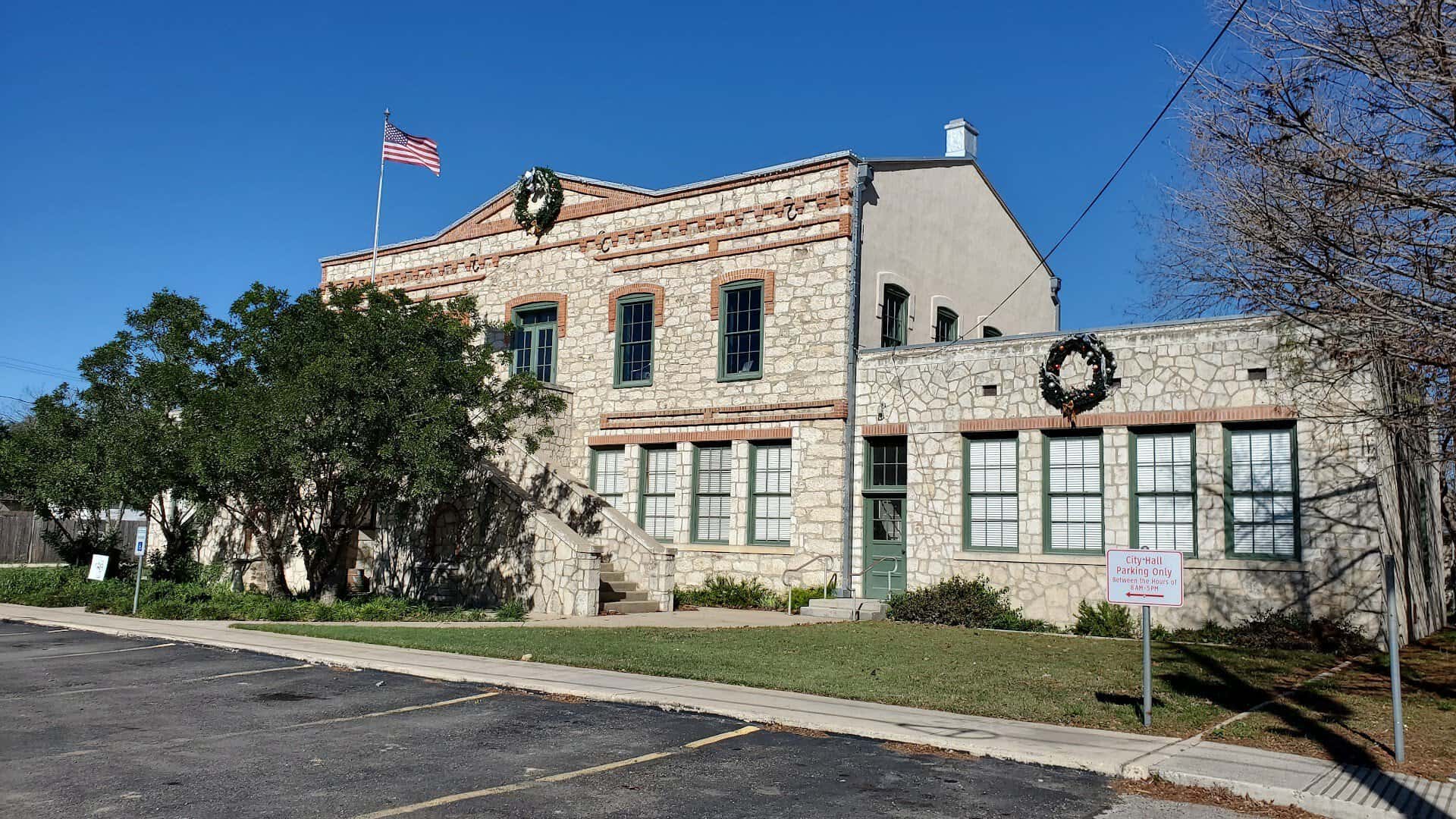
You can wander it on foot, and you should. The town keeps a self-guided historic walking tour that passes more than fifty structures built in the mid to late 1800s. Pick up a map, put your phone away, and let yourself get pleasantly lost among the little stone homes.
Castroville even carries a First Lady’s Texas Treasures Award, a state honor for towns that guard their history well. Walk the blocks near the river and you understand why. Very little here has been paved over or torn down. The past is just standing there, still lived in.
How a French Empresario Built a Piece of Europe on the Medina
Every fairy-tale town has an origin story, and this one starts with a man named Henri Castro. He was born in France in 1786 to a prominent Jewish family. By 1827 he had crossed the ocean to Rhode Island, where he served for a time as a French consul.
Then the young Republic of Texas came calling. On January 15, 1842, Texas signed an empresario contract with Castro. The deal was enormous.
He had to bring at least 600 families or single men to settle the frontier within three years and found towns on the land. In return, a fortune in acreage would be his.
Did you know it nearly rivaled the work of Stephen F. Austin himself? Between 1842 and 1847, Castro brought more than 2,100 colonists across the Atlantic to Texas, a number second only to the “Father of Texas.”
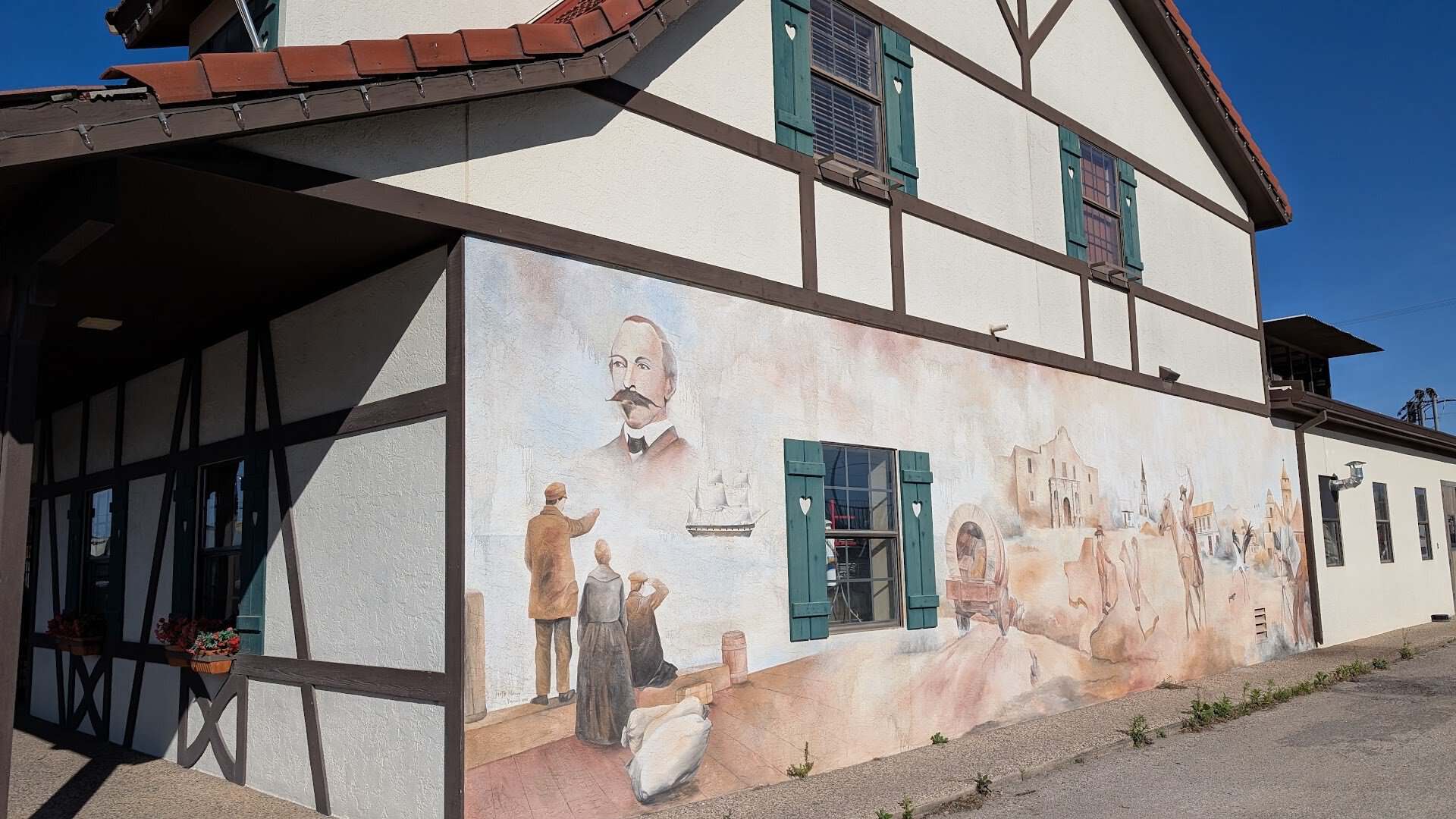
Recruiting hundreds of Alsatian families to sail to a raw frontier was, frankly, an astonishing act of salesmanship. On September 2, 1844, Castro set out from San Antonio with his first group of colonists.
Riding along for protection was the legendary Texas Ranger John Coffee “Jack” Hays and five of his men, because the frontier in 1844 was no gentle place. Ten days later, on September 12, they chose a bend in the Medina River and named the new settlement for its founder.
Castro patterned the town on the villages he knew back home: small town lots clustered together, each ringed by its own farming plot outside the settlement. It was a very European way to lay out a very Texan frontier.
His pioneers built their houses in the “fachwerk” style of the old country, a half-timbered method using native stone, hand-hewn timber, and lime plaster. Nearly two centuries later, those same walls still stand.
The Little Stone Church That Rose Nine Days After the Settlers Arrived
Here is the detail that stops me every time. Construction on Castroville’s first stone church began just nine days after the colonists set foot on the site. Nine days. They had barely built themselves a roof to sleep under, and already they were raising a house of worship.
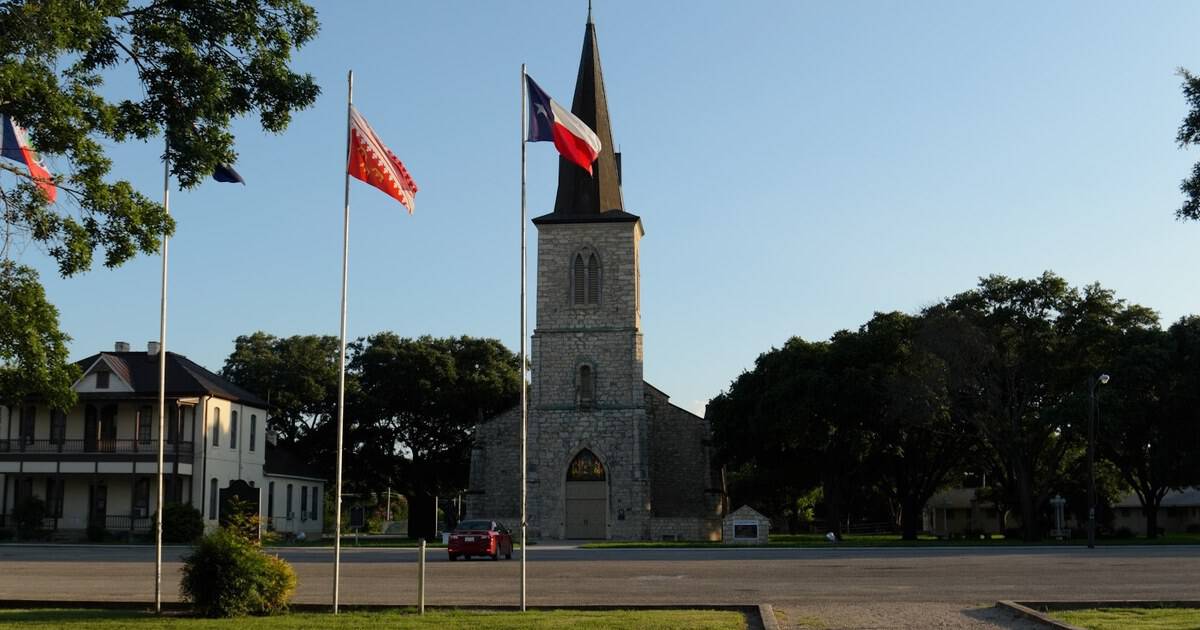
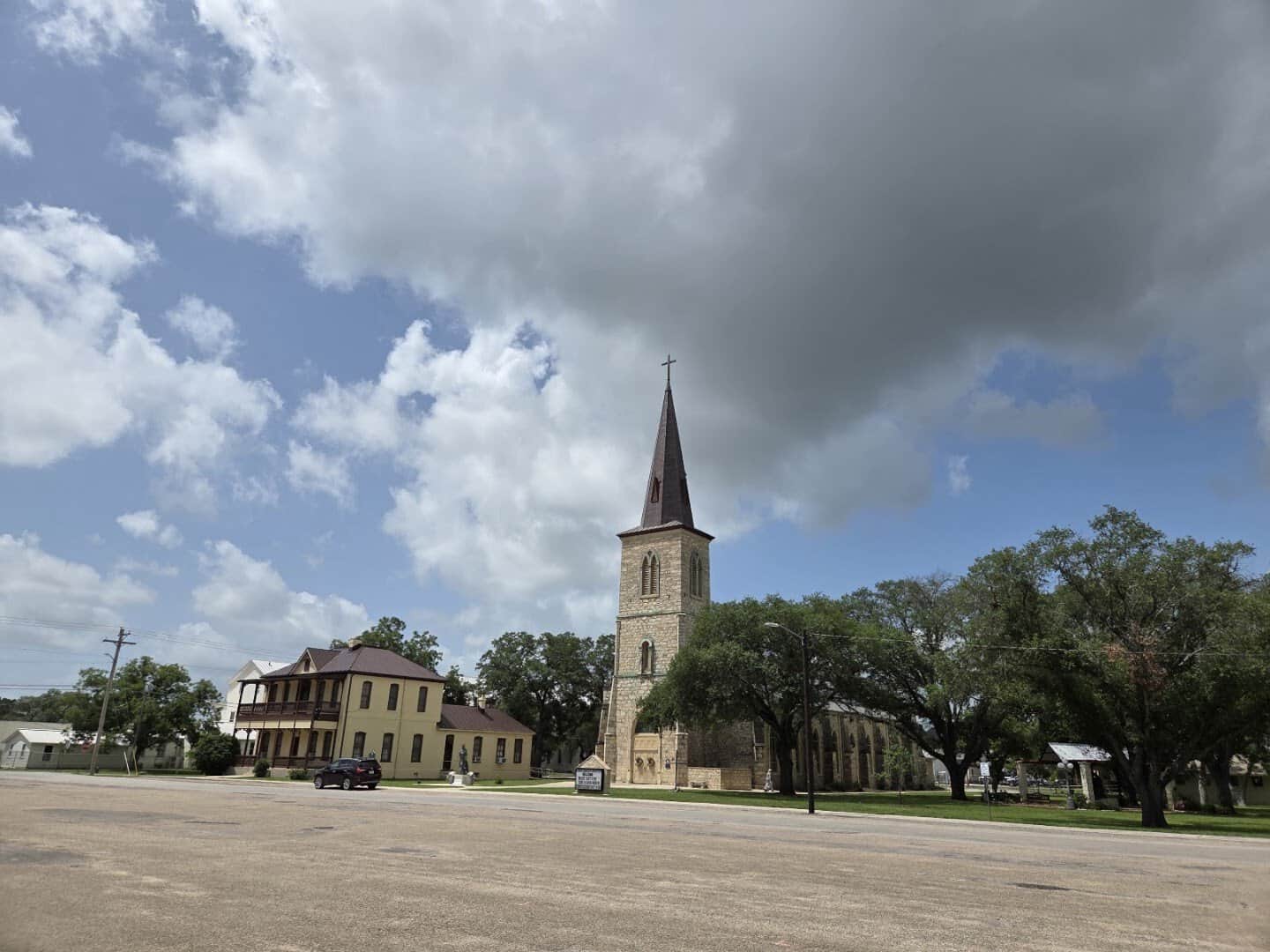
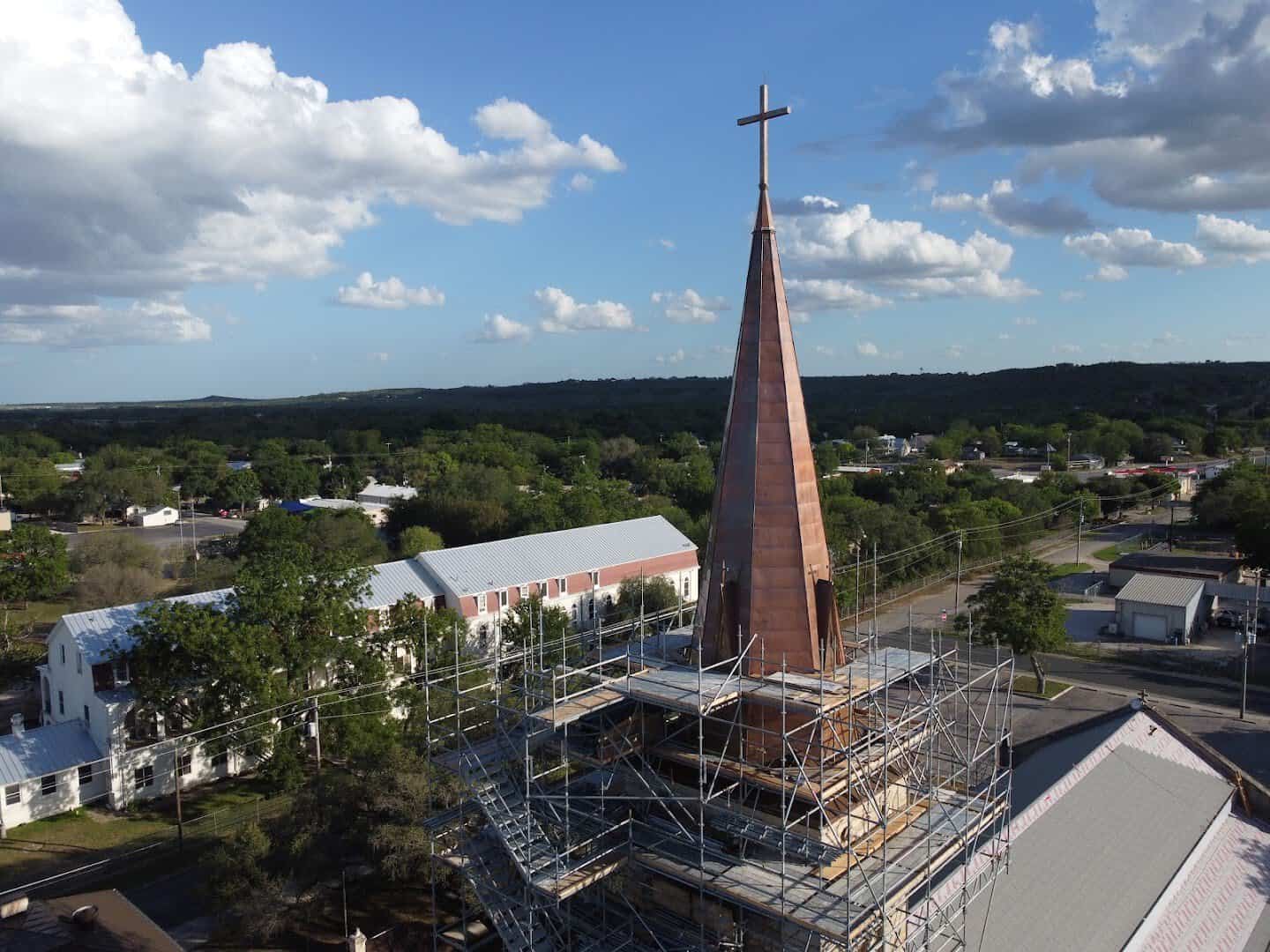
That first humble church is still part of the town’s story, but the one that draws your eye today is the grand St. Louis Catholic Church, built between 1868 and 1870. Its limestone walls and towering spire rise above the low rooftops, visible from blocks away.
Step inside and the ceiling surprises you. Above the ornate altar and the stained glass, the church shows off half-timbered woodwork, that same Alsatian handcraft carried up into the rafters. It is still an active parish today.
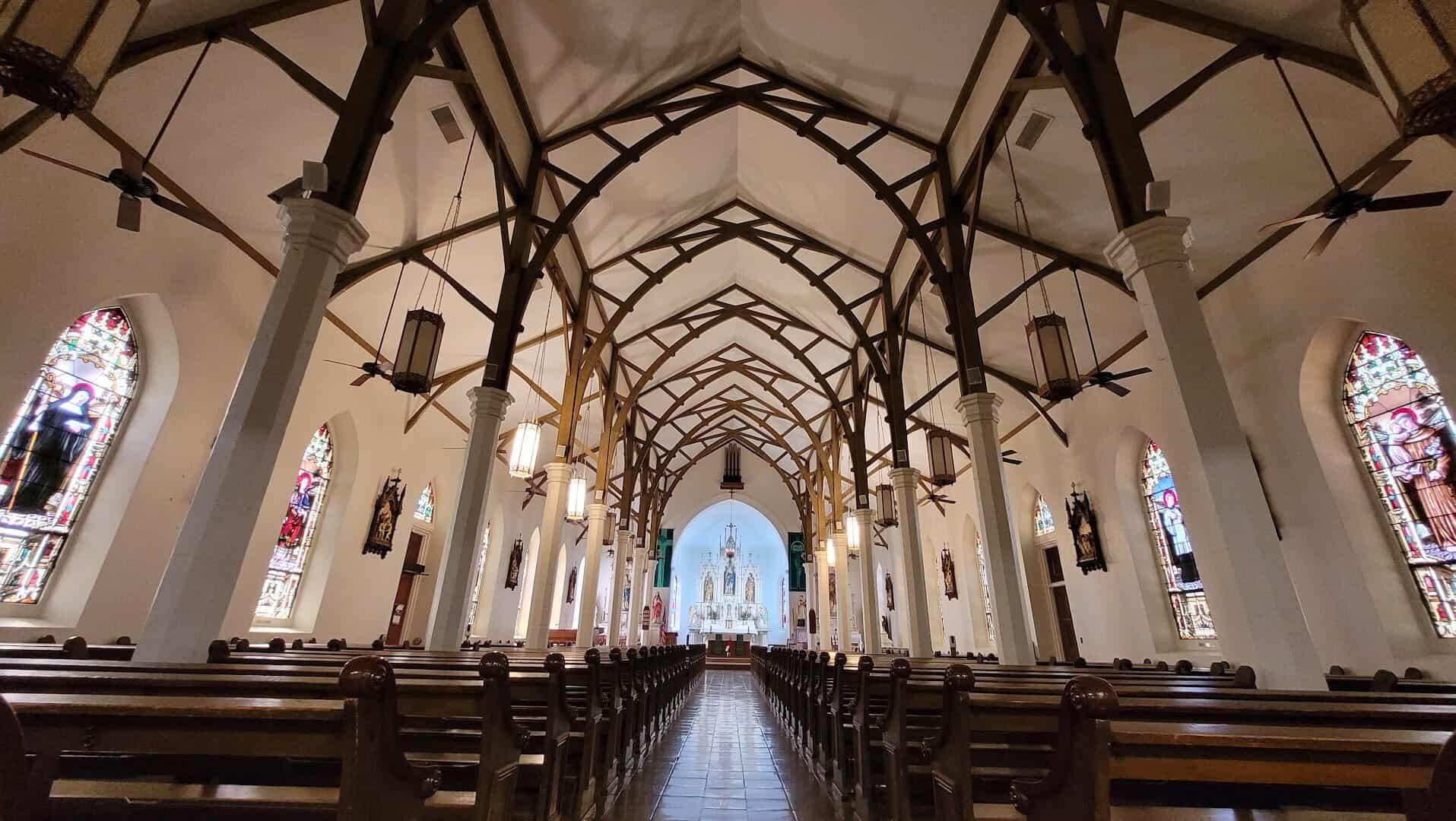
Stand at the back a moment when it is quiet. Light comes through the colored glass and lands on the stone floor.
It is easy to picture the whole brave story of this town beginning right here, nine days in, with a pile of quarried rock and a lot of faith.
A 400-Year-Old Cottage That Sailed the Atlantic to Get Here
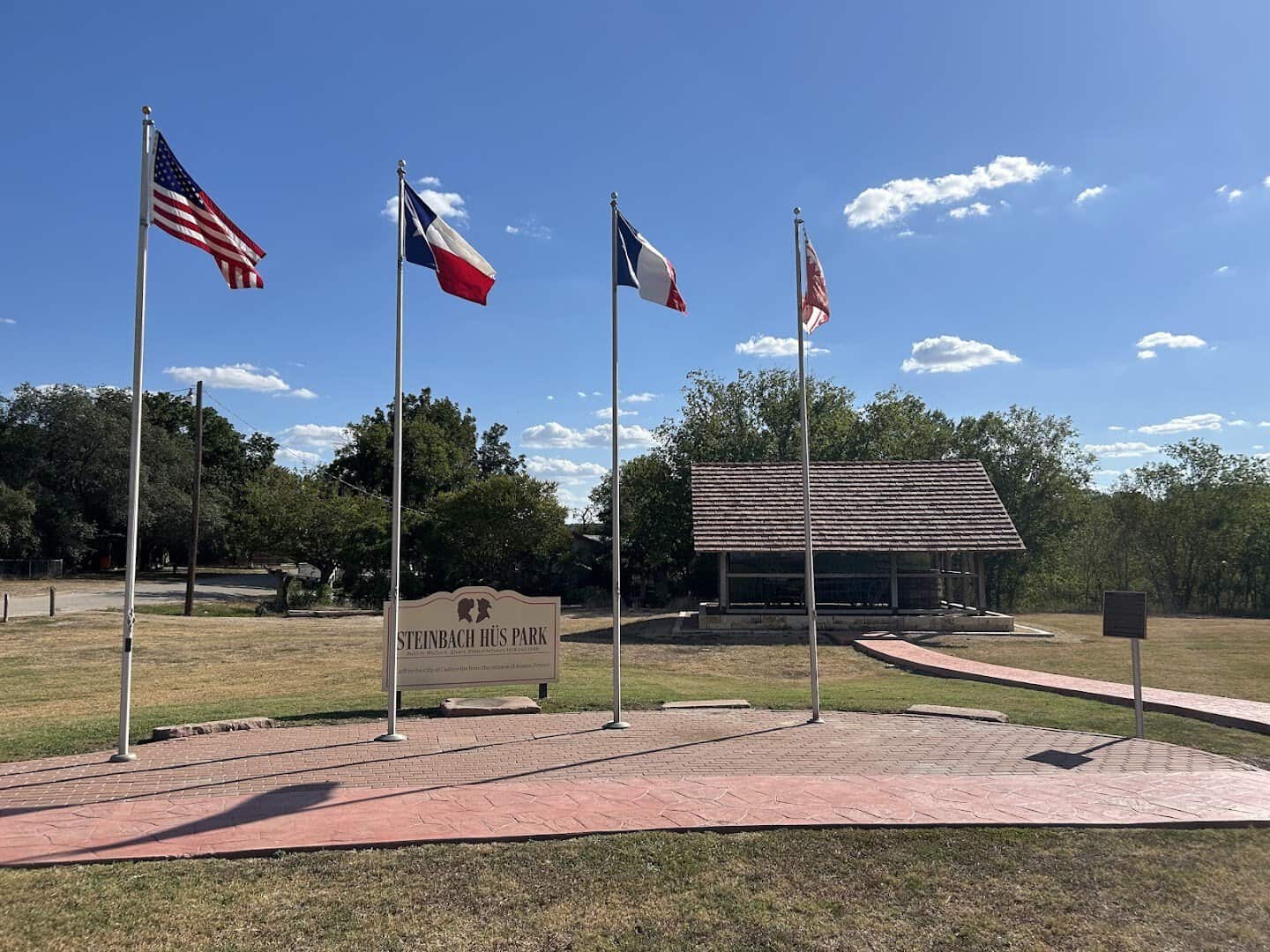
Of all the old buildings in Castroville, my favorite is not even originally from Texas, or from this century, or the last one. It is the Steinbach Haus, and it is roughly four hundred years old.
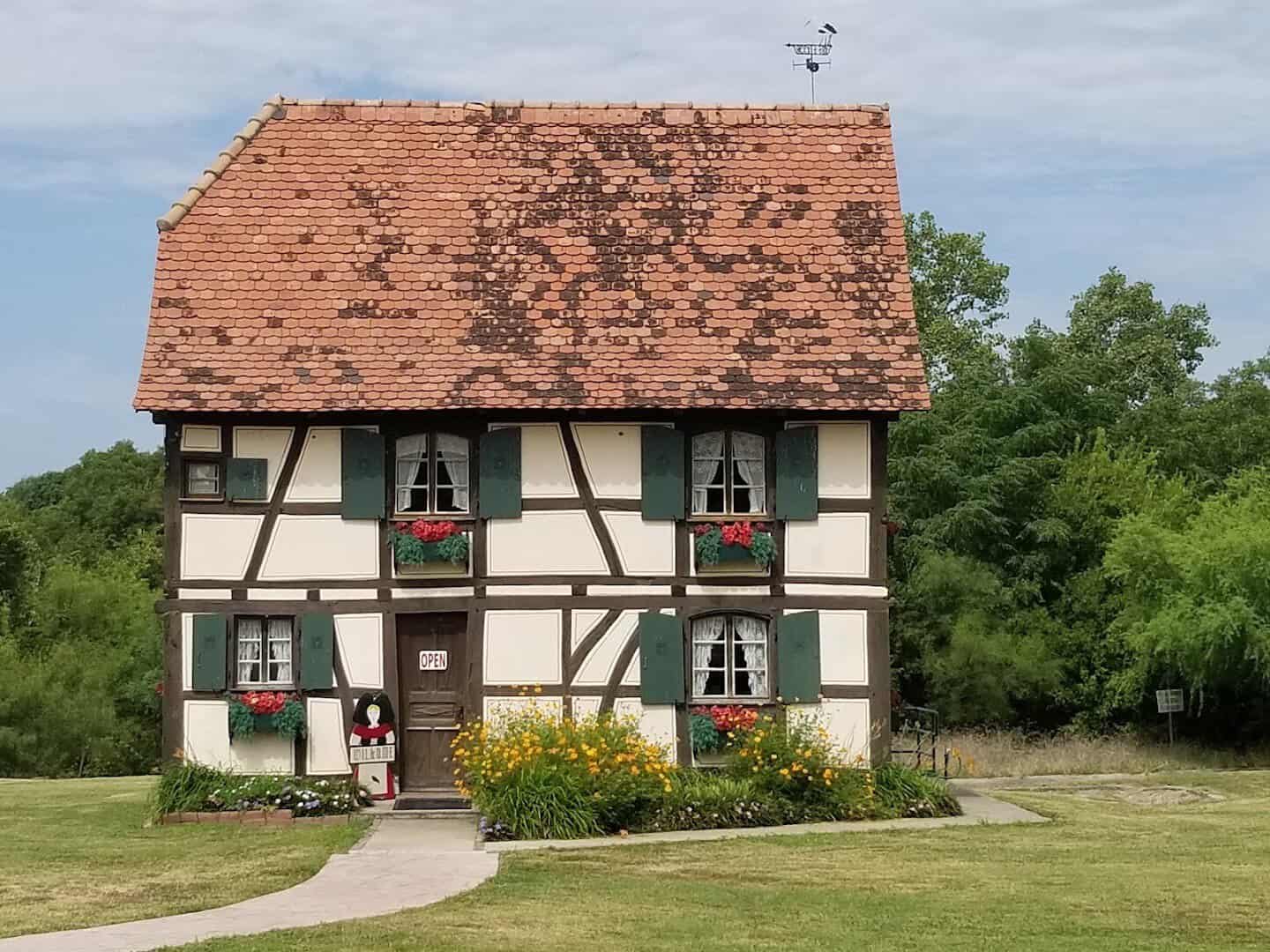
The Steinbach family built this house between 1618 and 1648 in the tiny village of Wahlbach, in the Sundgau region of Alsace. Think about that timeline. It went up while the Thirty Years’ War was tearing across Europe, and the family lived in it, generation after generation, until 1988.
Then something wonderful happened. The people of Alsace decided to give the house to Castroville, a gesture of kinship to the little Texas town that had kept their culture alive across an ocean.
So they carefully took the whole house apart, numbered every beam, and put it in storage until it could make the long trip west.
The pieces shipped to Houston and rolled into Castroville by truck in January 1998. Alsatian volunteers flew over to reassemble their own house, beam by numbered beam, and furnished it with antiques donated by families back home.
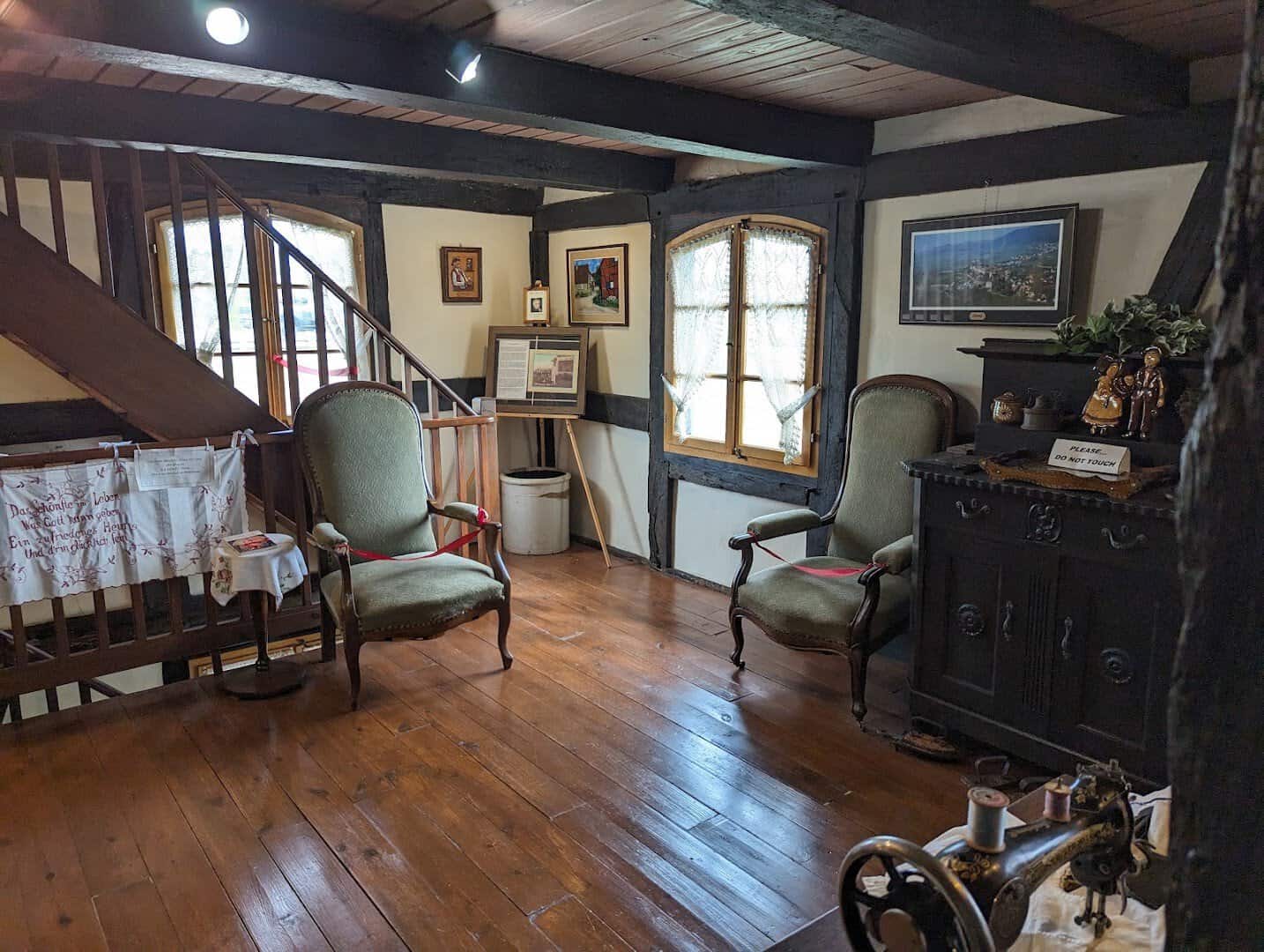
Today the Steinbach Haus is the town’s visitor center and museum. The folks there will happily tell you its story before you step inside a home older than Texas itself.
Sit with that a moment. A whole house, carried across the sea as a thank-you note between two communities that share a heritage and not much else.
Kugelhopf, Strudel, and the Smell That Reaches the Sidewalk
Now, back to that strudel. You cannot talk about Castroville without talking about Haby’s Alsatian Bakery, the butter-scented heart of the town’s food scene. Follow your nose down Highway 90 and it will take you right to the door.
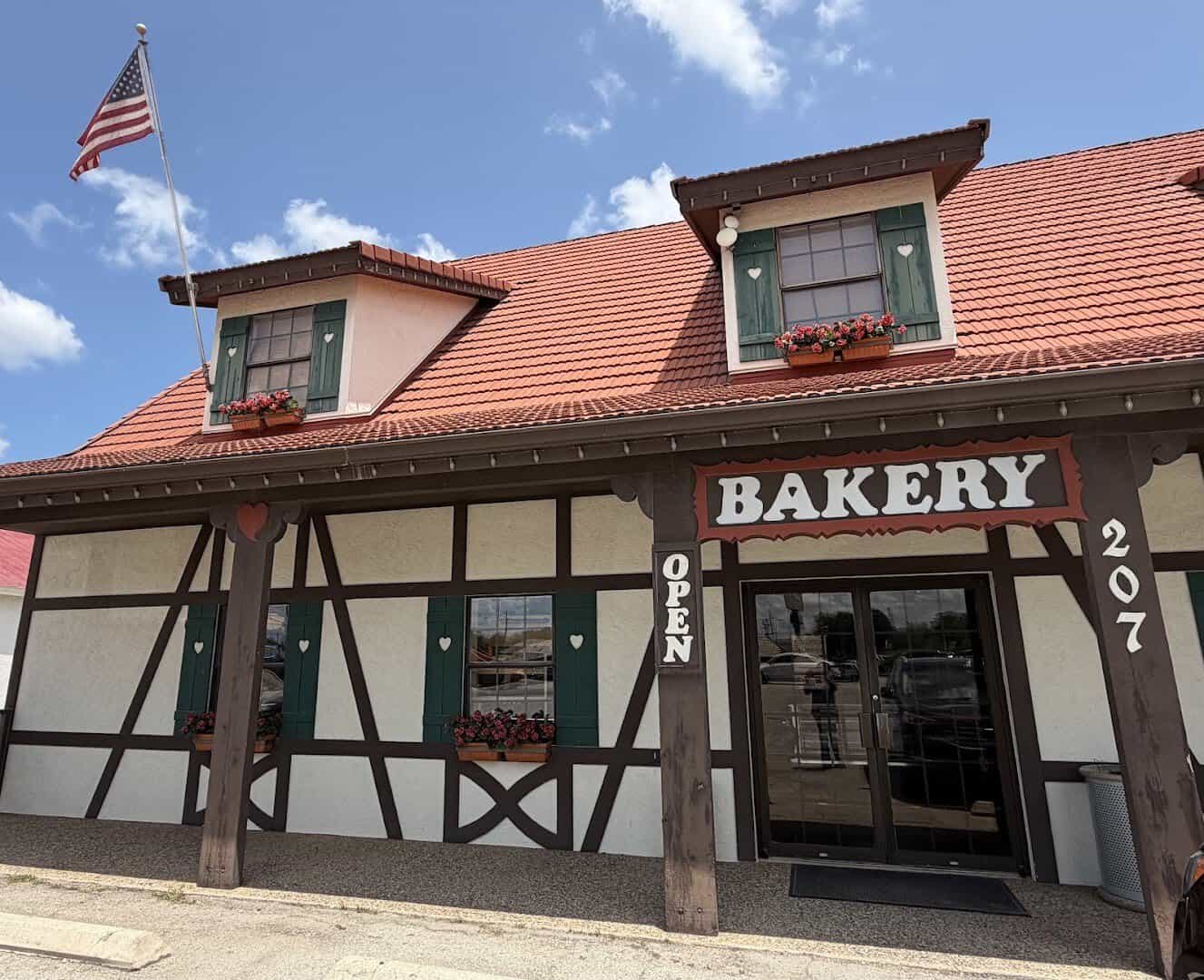
The bakery’s roots go back to 1940, when a baker named Stanley Haby first opened its doors. In 1974, Sammy and Yvonne Tschirhart bought the place and kept the ovens hot, and the family has been turning out Alsatian pastries ever since.
When you walk in, the glass cases go on and on. You will find croissants and Danishes, of course, but the real treasures are the old-country specialties. Fruit-filled stollen. Kugelhopf, a lightly sweet ring cake meant to be sliced for breakfast and eaten with butter and jelly.
Then there are the bear claws, cinnamon rolls, coffee cakes, pies, rack after rack of bread, and yes, those apple and cherry strudels that started this whole love affair. Everything is made fresh daily, and it shows.
One Tripadvisor reviewer flatly called the strudels “incredible,” and I am not going to argue. My vote goes to the apple, warm, eaten in the parking lot, exactly the way I had it the first time.

Pro tip: go early. The best pastries sell out, and there is something about walking in when the racks are still full and the whole shop smells of hot sugar and yeast. Grab more than you think you need. You will finish them before you reach the highway.
Sleeping Like It’s 1850 at the Old Stagecoach Inn
If a strudel run does not feel like enough, you can stay the night, and not in some roadside motel. The Landmark Inn State Historic Site lets you sleep inside Castroville’s history.
The building went up in the late 1840s, built by a Swiss immigrant, and by the early 1850s it had become an inn welcoming travelers along the old road. Nearly two centuries later, it is still doing exactly that.
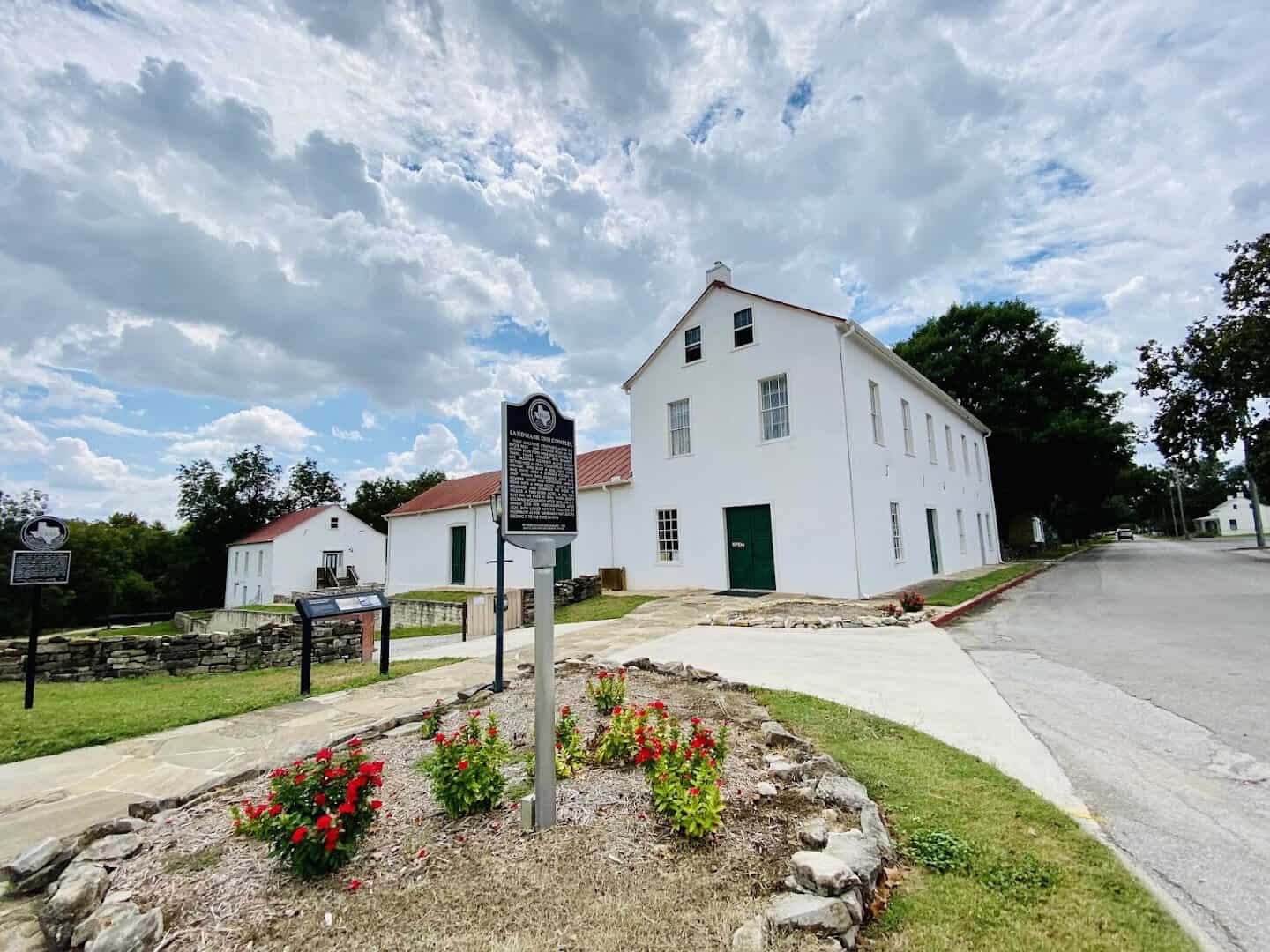
Run today as a Texas Historical Commission site, it offers eight guest rooms plus a handful of suite combinations. The rooms are simple and lovely in the old way: a queen bed, antique wardrobes, and just enough modern comfort to keep you honest.
Rates have run around $100 to $120 a night, which is a bargain for a bed inside a piece of Texas history. Call ahead, because a small inn like this fills up fast on festival weekends.
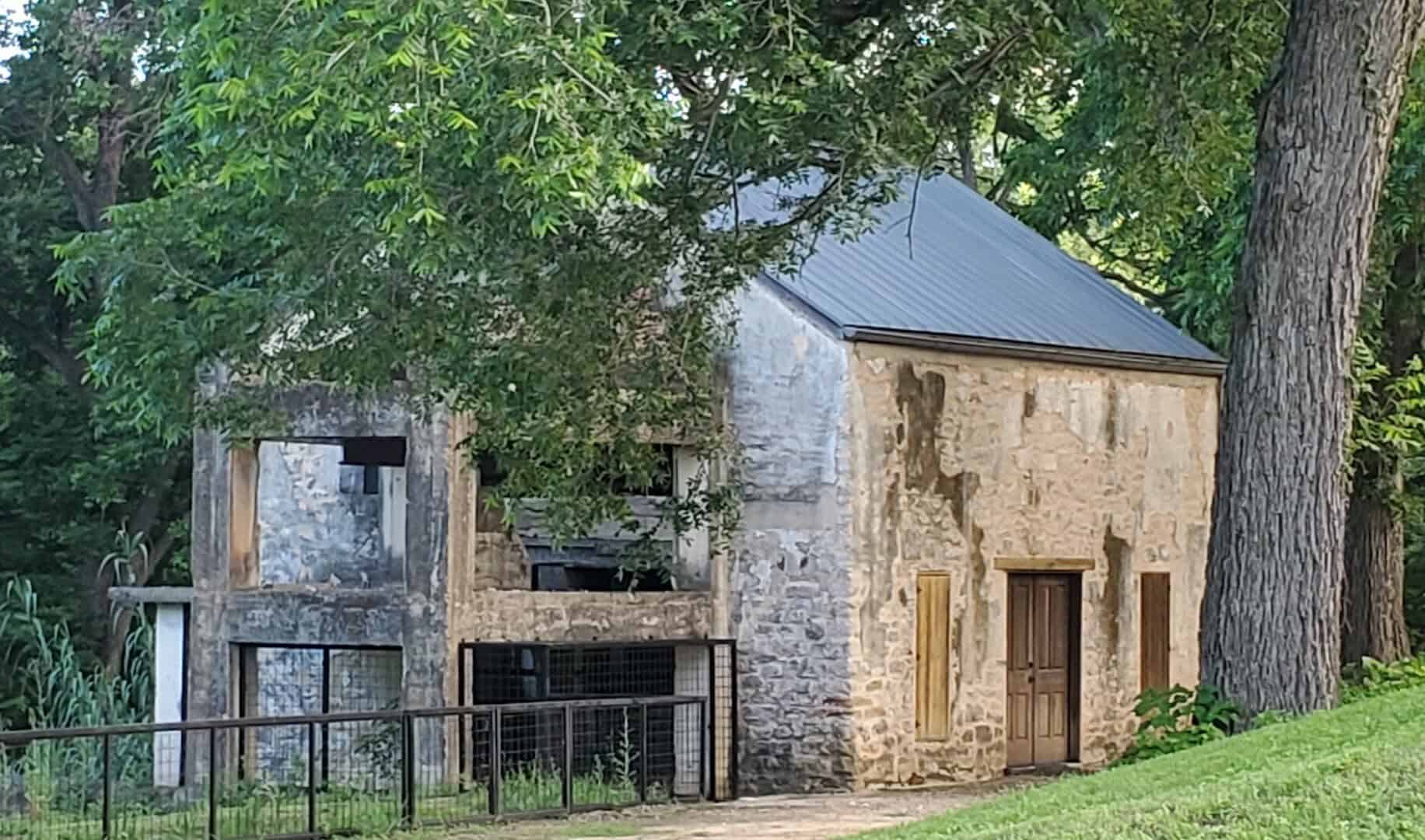
But the real gift is the grounds. The inn sits on several park-like acres along the Medina River, with short walking trails, river access for fishing, and the original 19th-century kitchen and grist mill still standing on the property.
Book a room, walk the trails at dusk, and listen to the river move past the same banks the settlers chose in 1844. It is about as close to time travel as a weekend gets.
The Church Picnic That’s Older Than Most Texas Towns
If you can time your visit for late August, do it, because that is when Castroville throws the party it has been throwing for well over a century. St. Louis Day is the town’s great homecoming, held around the Feast of Saint Louis near the end of August.
Residents have gathered for this holiday since as early as 1847, and the celebration as we know it began in 1882 as a small church homecoming. It has grown a little since then.
Today it draws something like 10,000 visitors to a town you could otherwise walk across in twenty minutes. For one weekend, the sleepy little streets fill with families, folding tables, and the smell of woodsmoke.
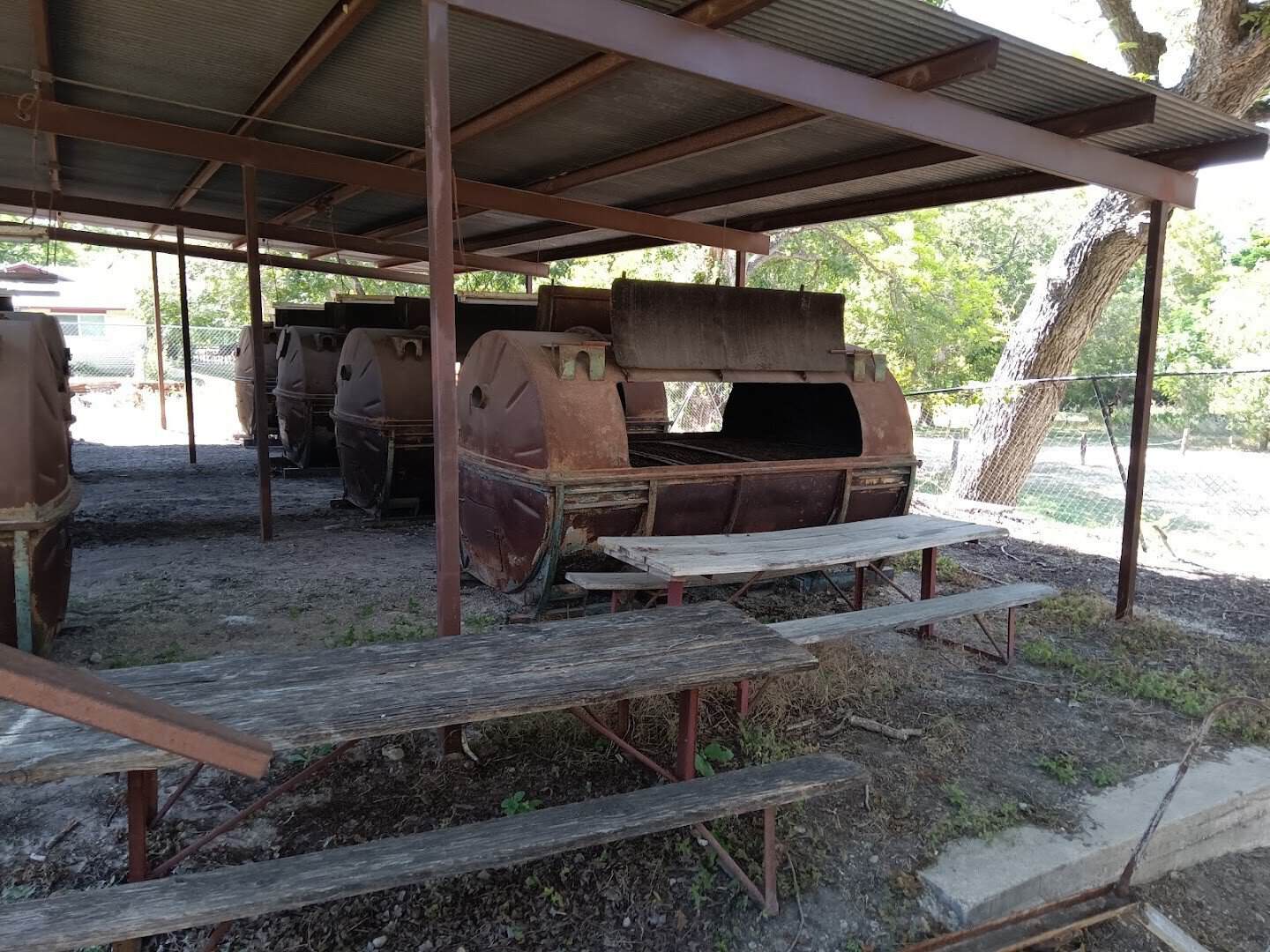
The food is the reason people drive in from all over. Picture great smoking pits of Texas barbecue right alongside homemade Alsatian sausage and sauerkraut, that French-German-Texan mashup you cannot get anywhere else. The whole town turns out to cook.
The 144th celebration lands on August 22 and 23, 2026. If you have never eaten Alsatian sausage under a Texas oak while a whole community catches up with itself, you are missing one of the state’s warmest traditions.
Beyond the Cottages: The River and the Green
Castroville is not only its old stone buildings. The Medina River curls right through town, and the water is the reason the settlers stopped here in the first place. It is still the town’s front porch.
Koenig Park gives you picnic tables and easy river access, a fine spot to spread out a bakery haul and watch the water go by. A little farther out, Castroville Regional Park offers sports fields, walking trails, and room for the kids to run off all that kugelhopf.
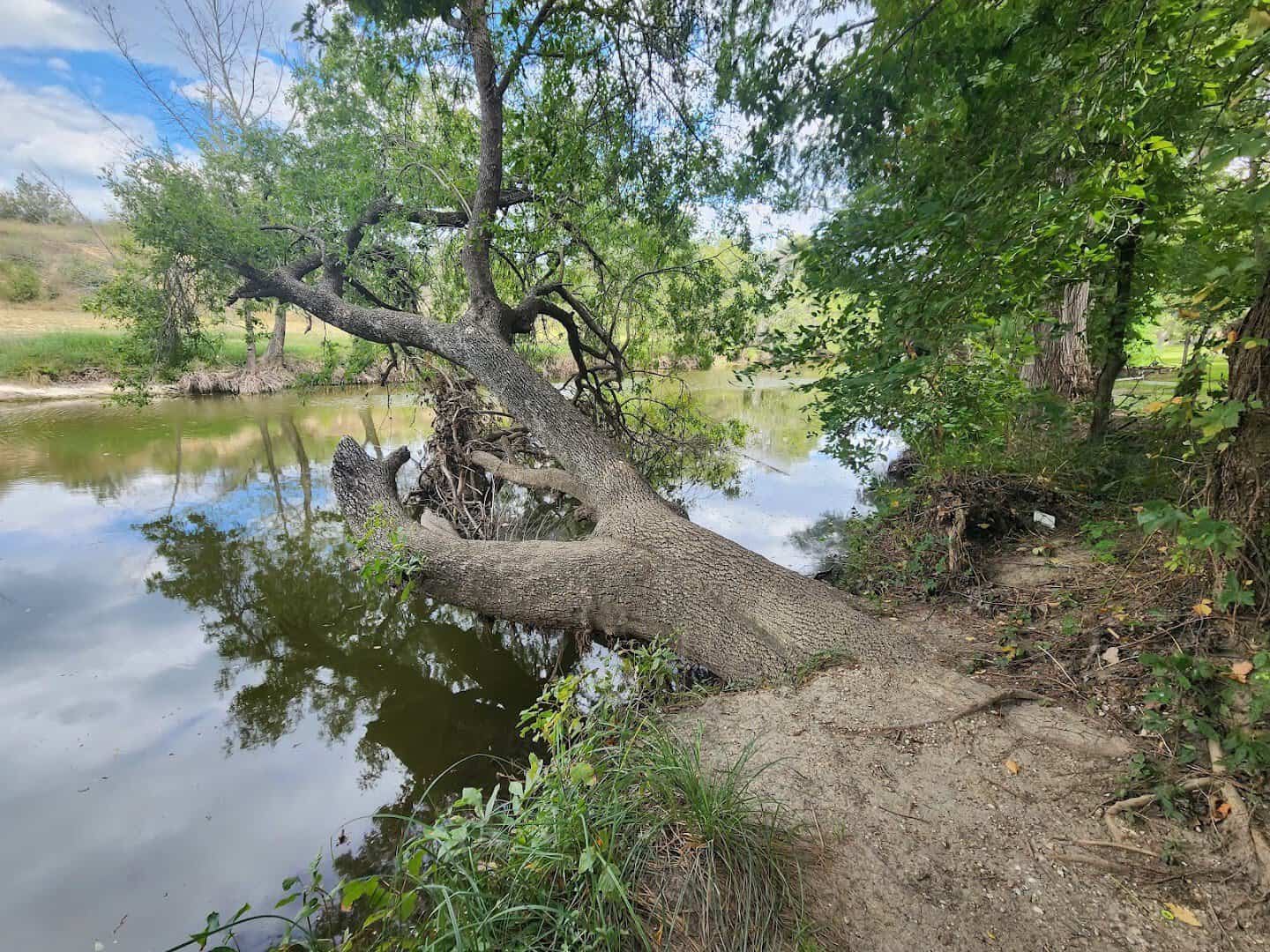
Spend a slow afternoon by the river and you start to feel what the Alsatian families must have felt in 1844: that this green bend in the water, half a world from where they started, was a pretty good place to build a life.
An Afternoon of Antiques and Wandering Downtown
Between the church and the bakery, give yourself an hour to just poke around downtown. The heart of Castroville is lined with independent, locally owned shops, the kind of places with a bell on the door and an owner who actually made the thing you are holding.
Antique hunters do especially well here. The little shops are stocked with the sort of finds you never see in a big-box store: old farm tools, Alsatian keepsakes, dishes with a history, and the occasional piece of furniture worth wedging into the back seat.
Even if you buy nothing, the walking is the reward. Every few steps you pass another 170-year-old stone cottage with a plaque out front, so the whole downtown doubles as an open-air museum you get to stroll for free.
That is the quiet magic of the place. You come for a strudel and a photo of the church, and you leave having spent a whole slow afternoon you did not plan on. Castroville is good at that.
How to Get There
Castroville sits about 25 miles west of San Antonio on U.S. Highway 90, an easy half-hour drive from the city and a natural first stop on any Hill Country loop. Everything downtown is close enough to explore on foot once you park.
Where: Haby’s Alsatian Bakery, 207 U.S. Highway 90 East, Castroville, TX 78009. St. Louis Catholic Church, 1114 Angelo Street. Landmark Inn State Historic Site, 402 Florence Street (reservations 1-830-931-2133). Steinbach Haus Visitor Center, downtown Castroville.
Start Planning Your Little Alsace Escape
Some Texas towns shout for your attention. Castroville just quietly keeps being itself, a four-hundred-year-old cottage and a nine-day-old church and a bakery that still smells like someone’s French grandmother is in the back.
So point the car west, grab a warm strudel before the racks empty, and go wander the little stone streets of the only slice of Alsace in Texas. Just try not to finish the whole bag before you cross the Medina.
Featured image: Jesus “Jess” Sanchez via St. Louis Catholic Church

Stella Raines
Editor-in-Chief
Stella brings over a decade of storytelling experience to TX Headlines. With roots in West Texas and a love for road trips, she leads the editorial team with an eye for the hidden stories that make Texas unforgettable.
More Stories
This Quirky Small Texas Town Is Rich in Charm, History, and a Love of Trains
This Tiny Texas Hill Country Town Is All Pink Granite, Wide-Open Skies, and Easygoing Days
This Tiny Texas Town Was a Ghost Town Until Its 1878 Dance Hall Brought It Roaring Back
This Gorgeous Texas Hill Country Town Is Still Affordable and Largely Undiscovered
Tags