This Unusual Texas Museum Honors Death In Creative Ways
Death has never been so interesting, and Houston’s most interesting museum proves it.
The National Museum of Funeral History in Houston, Texas, creatively turns what most people avoid thinking about into a captivating journey to marvel at.
People don’t typically like to affiliate themselves with the idea of death too early.
To accurately measure how visually stunning this place is, picture the movie, Coco. The National Museum of Funeral History truly presents an expansive, colorful way of celebrating the afterlife throughout Spanish tradition.
This museum allows you all to immerse yourselves in the endless possibilities of what could happen.
The Museum of Funeral History actually displays the largest collection of funeral service artifacts in the entire United States.
The most interesting part, in my opinion, is seeing the variety in which death is treated throughout different time periods and cultures. The culture shock, especially regarding the concept of death, is a huge one.
The moment you enter the facility, you very quickly realize that this isn’t going to be the morbid experience that the western side of the world categorizes death to be.
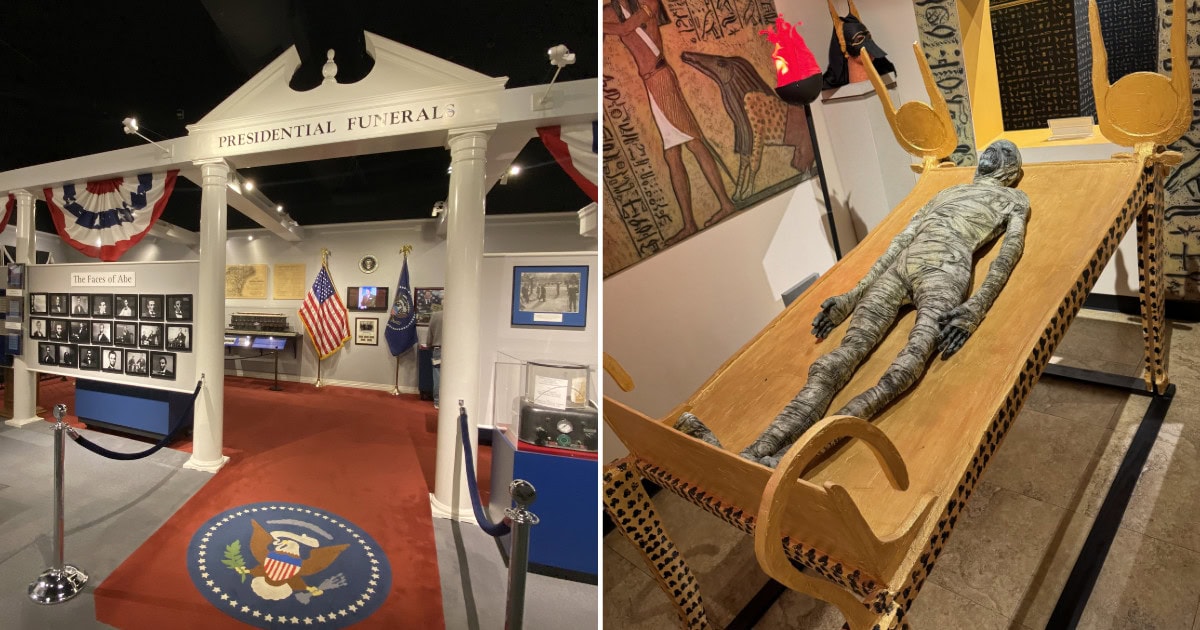
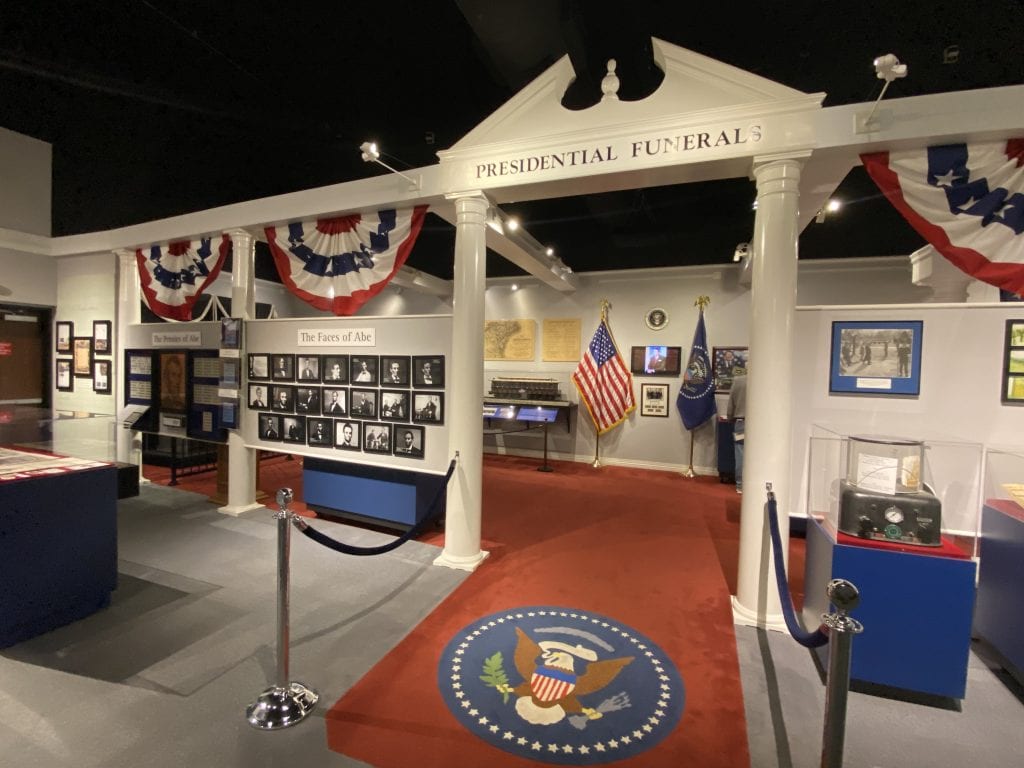
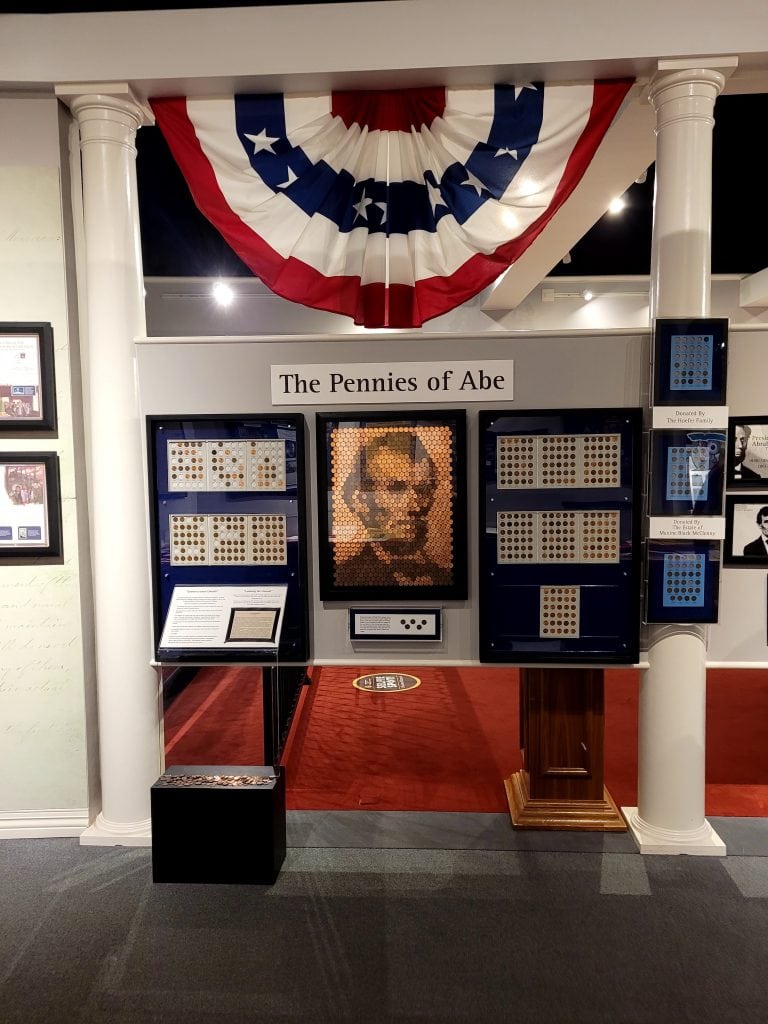
One of the museum’s most popular exhibits is themed around presidential funerals.
You can see a display of Abraham Lincoln’s coffin with notes about his funeral train that was transported from Washington, D.C to Illinois.
Witnessing the intimacy of a nation in mourning is a unique perspective of American experience, never before seen in your elementary history books.
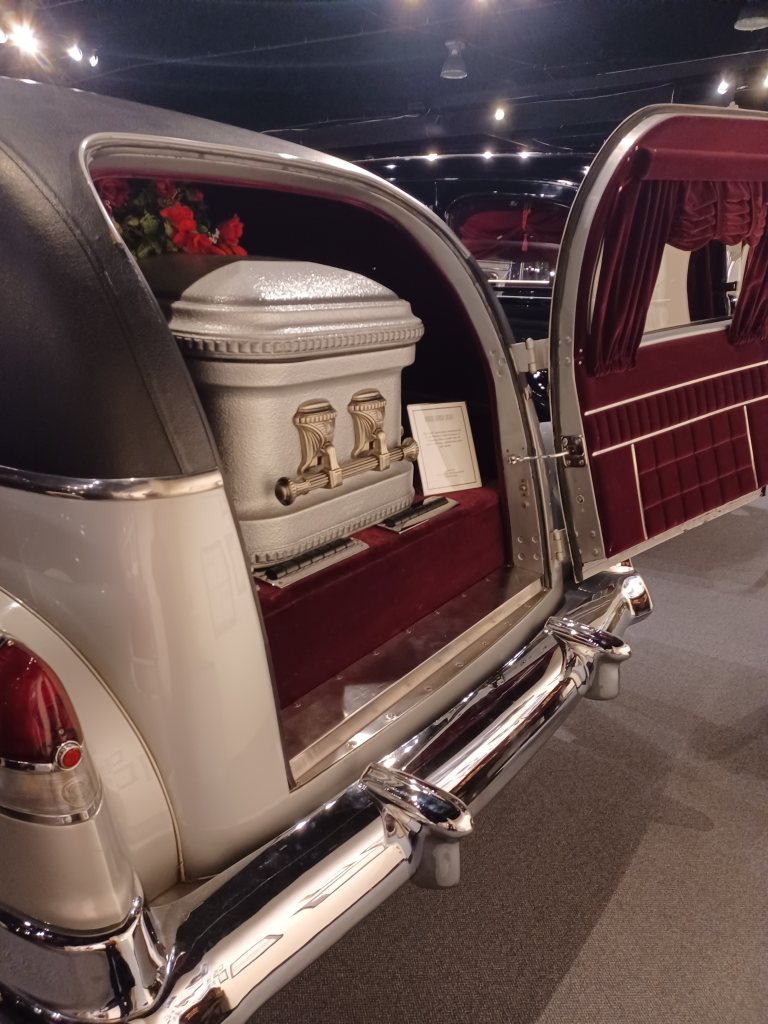
The Museum’s collection of rare funeral service vehicles traces the evolution of funerary tradition. The time frame ranges from horse-drawn funeral carriages of the 19th century to the actual hearses used in the funeral of Grace Kelly and the state funeral services of U.S. Presidents Ronald Reagan and Gerald R. Ford.
Some featured exhibits currently include:
Patent Models, the Shroud of Turin, Marcellus Casket Company, the 19th-century Mourning, and many more.
As far as Patent Models go, it has a long history in the United States of America. The patent office itself, was created Jan. 2, 1775, in Washington, D.C., by Henry Knox, secretary of war, Edmund Randolph, attorney general, and Secretary of State Thomas Jefferson.
The U.S. Patent Act was drafted a decade and a half after, in 1790, granting writers and inventors exclusive rights to their work.
This bill was inspired by Thomas Jefferson and signed into law by George Washington on April 10th.
The first American patent titled “X000001” was granted to Samuel Hopkins of Vermont for “the making of Pot ash and Pearl ash major industrial chemical by a new Apparatus and Process.” The patent was signed by Washington and was good for 14 years. Today, a granted patent is good for 20 years.
One of the most famous burials of all time was the Shroud of Turin.
The curator of this exhibit states, “The exhibit features a certified copy of the Shroud from the Archdiocese of Turin as well as displays discussing the established history and scientific studies of the Shroud. It presents the facts about the Shroud and allows visitors to draw their own conclusions about the identity of the man of the Shroud. The Funeral Museum is a secular setting that provides the opportunity to share the facts and information about the Shroud with a broad cross-section of museum visitors.”
The Marcellus Casket Company was founded in 1872 and has an impressive history of making fine wood caskets, including ones for many U.S. presidents, such as Kennedy, Nixon, Truman, and Reagan.
The company lasted well over 130 years through the early 2000s.
In 2003, the last casket was manufactured and sold, as the company went out of business. This model was titled 710, “The President,” featuring a mahogany wood casket, lined with velvet.
The topic of Mourning Photography may seem strange in our modern days, but it was very common in the nineteenth century to humbly honor death as an inevitable occurrence by photographing the deceased in one’s own home.
It pulls back a curtain on the everyday behaviors of the human race & reveals something truly intimate.
A lot of the photographs displayed are the original versions, adding a sense of nostalgia to your viewing experience.
Through these decades of mourning photographs, we also explore the history of the early camera up to the “Brownie Camera” invented by George Eastman, whose innovation marks the end of the Mourning Photography tradition.
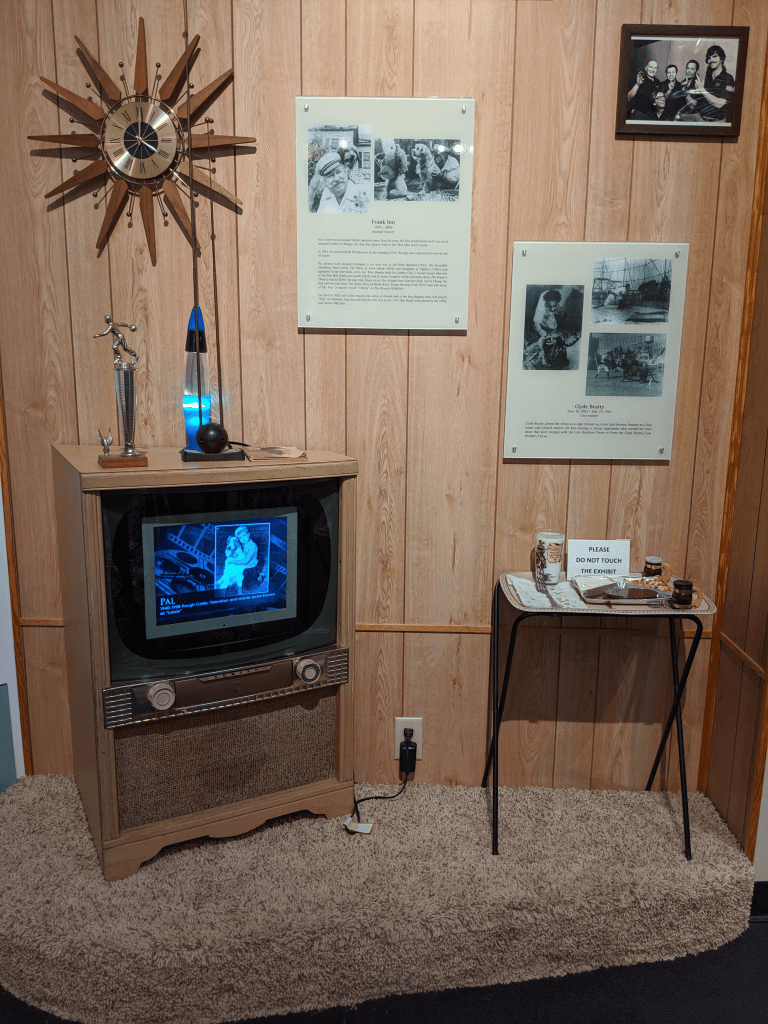
My favorite exhibit in the Museum is: The Jazz Funerals of New Orleans.
This display really exemplifies the unique culture of New Orleans, specifically through its expression of Jazz music.
This is a charming example of a unique tradition right under our noses.
This exhibition focuses on the late 1800s through today, in New Orleans, Louisiana.
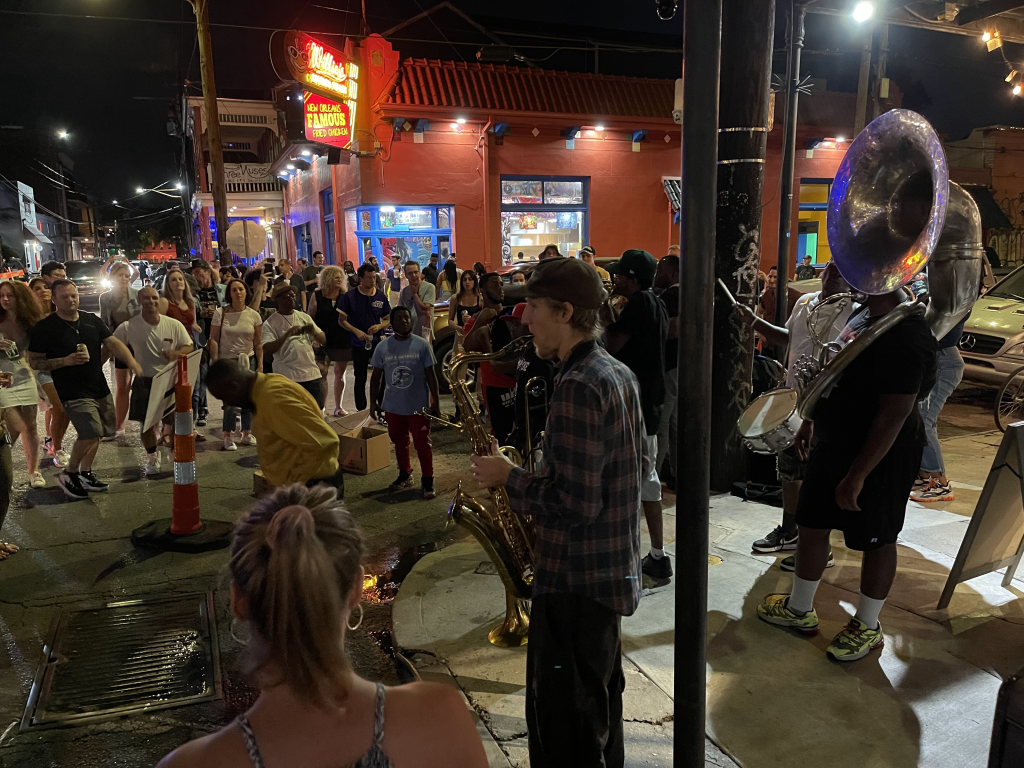
It’s revealed to the viewer how common it is to bid farewell to a loved one using the celebration of jazz. Honoring the deceased with this type of music is unique to the city of New Orleans. This is especially the case among the African American community.
The French, Spanish, and British colonized the area and then inevitably meshed with the West African tribes from the slave trade, giving birth to this colorful culture.
Have you been to the French district in New Orleans? It feels as if you’re suddenly in Europe, once you turn the corner into another country, another time.
Jazz is central, with many clubs featuring live performances, especially around Bourbon and Frenchmen Street.
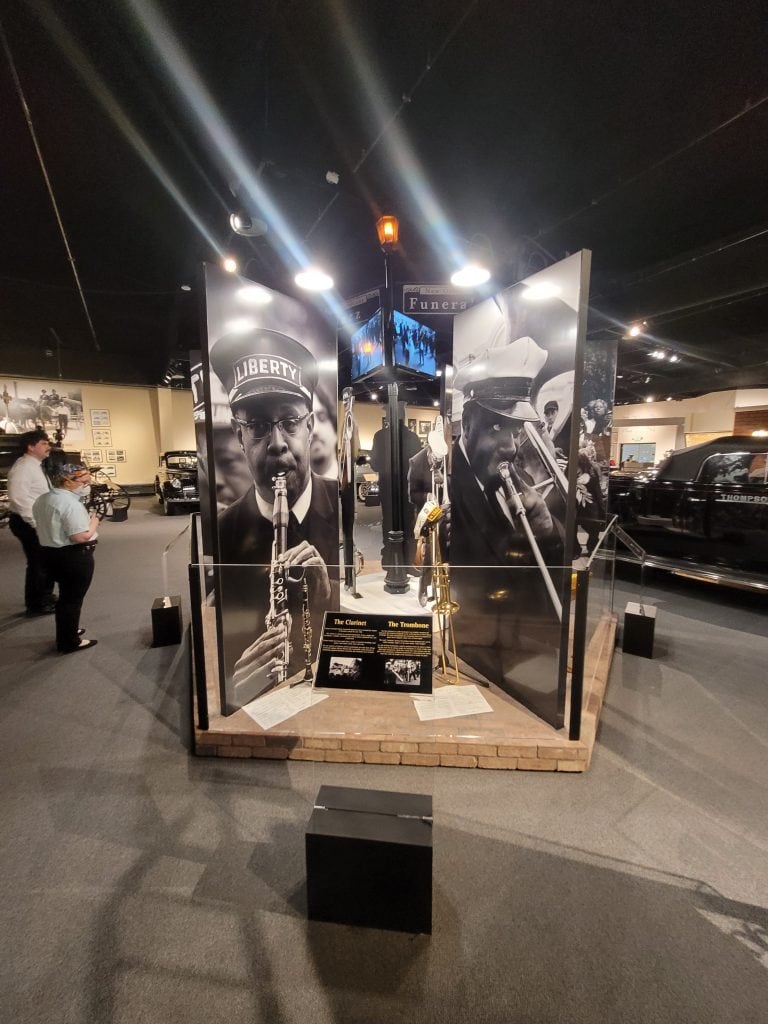
Boetticher said, “Today’s jazz funerals adhere to a strictly defined parade structure. Once the funeral wake ends, the band accompanies the family from the funeral home or church. It leads its way to the cemetery, sometimes using a horse-drawn hearse. The group, also known as ‘the first line,’ plays somber funeral dirges and traditional spiritual hymns.”
Although the majority of jazz funerals are for musicians, anyone can request one.
One of the most visually stunning exhibits focuses on fantasy coffins from Ghana.
In Ghana, craftsmen create custom coffins shaped according to the deceased’s passions.
The designs are unique to each death and reflect a life well lived. For example, a fisherman might be buried in a fish, decorated in ornate scales of some sort. A farmer might be transported into his afterlife in a cocoa pod. A driver, with a passion for sports cars, might take his journey in a Mercedes-Benz.
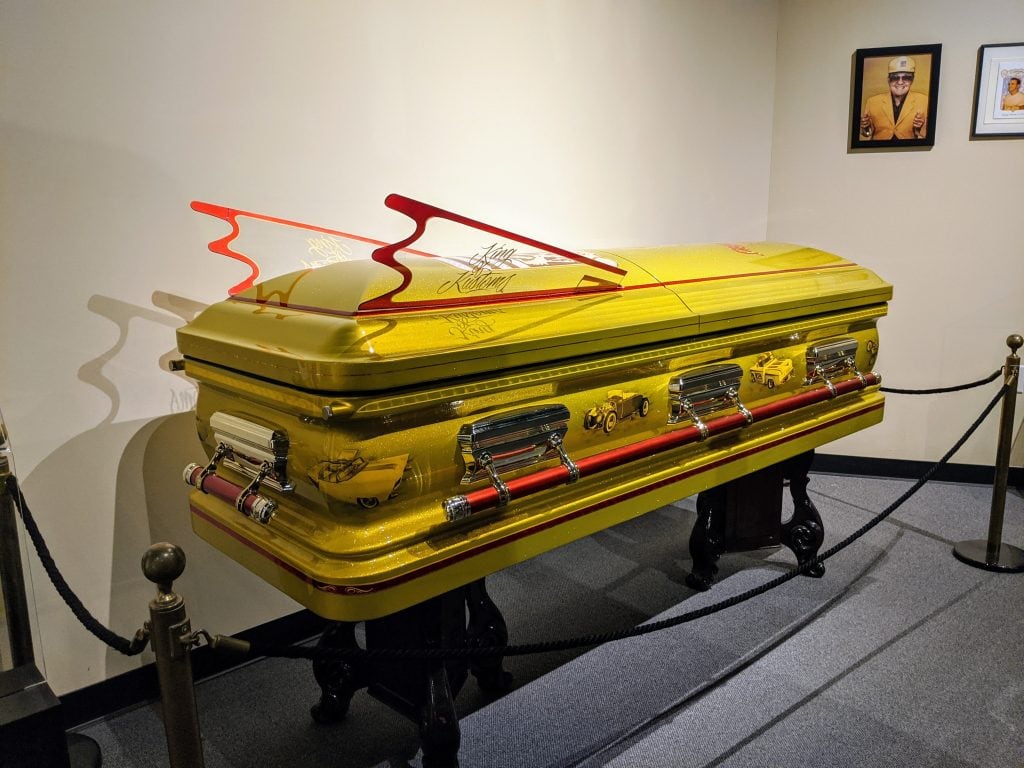
This breathtaking exhibit displays 12 coffins from this culture, illustrating the true breadth of how death can be celebrated.
This culture is huge on the celebration of life through death, and the artistic talent displayed in the process is genius.
The masterpieces are detailed, colorful, and show incredible skill.
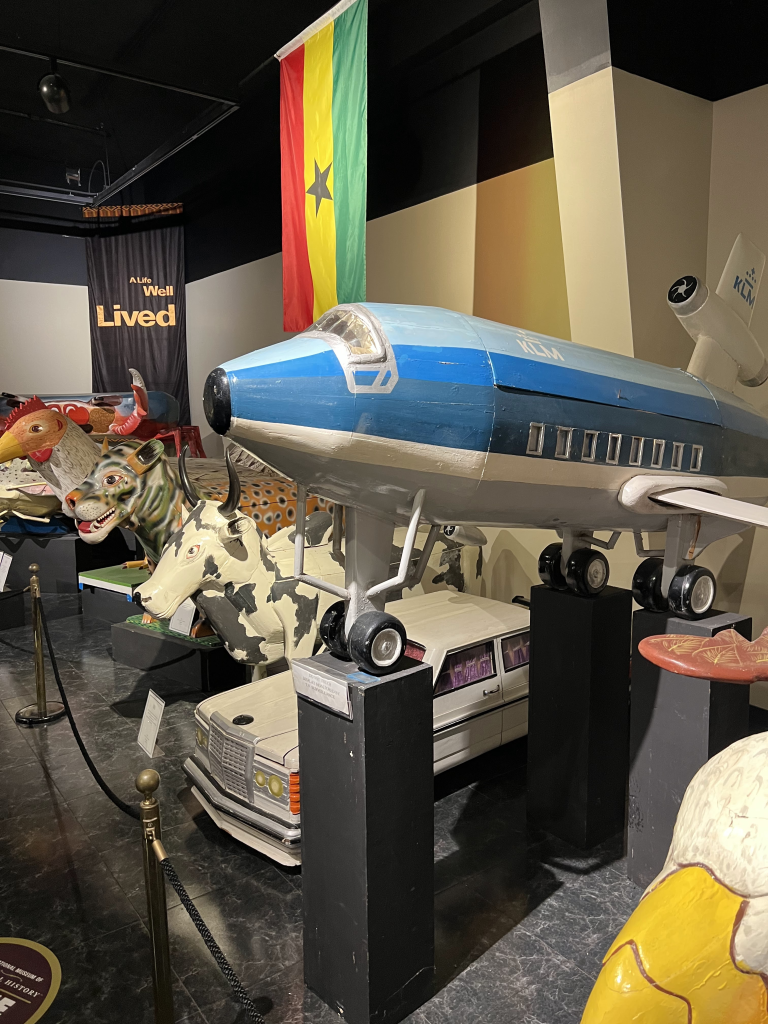
To the people of Ghana, West Africa, death is not an end, but a transformative journey to their ancestors into their next life in the spiritual realm. Ancestors are forever considered members of the family and forever treated with honor.
These coffins signify who the deceased is, acting as an introduction to the ancestral realm. They are believed to represent a “life well lived”.
The tradition began in the early 1900s, created by carpenters like Kane Kwei, who created a cocoa pod coffin for a local chief.
To conclude our journey through the afterlife today, I’d like to dwell on the commemoration of a classic, the Day of the Dead.
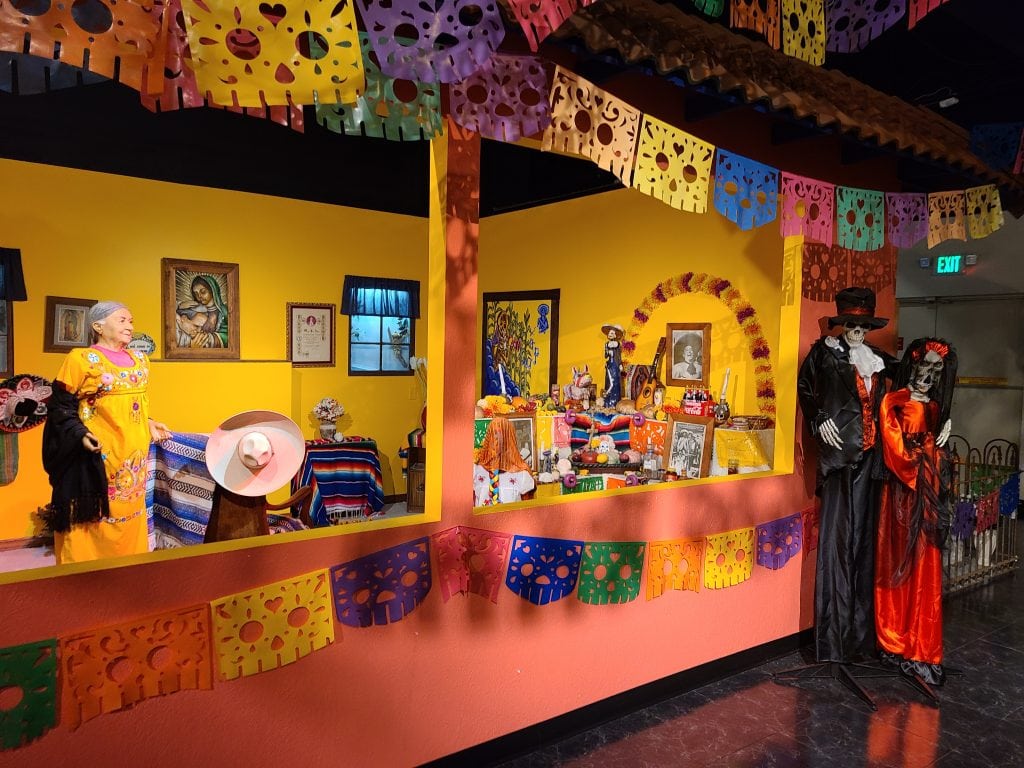
Families of Meso-American cultures gather for festivities on November 1st and 2nd, because it is believed the dead return to visit the living during this period.
Explore the traditions of Dia de los Muertos through the museum’s interactive, full-scale models of a traditional Mexican home and graveyard. Both are typically of equal scale, as neither realm is deemed more important than the other.
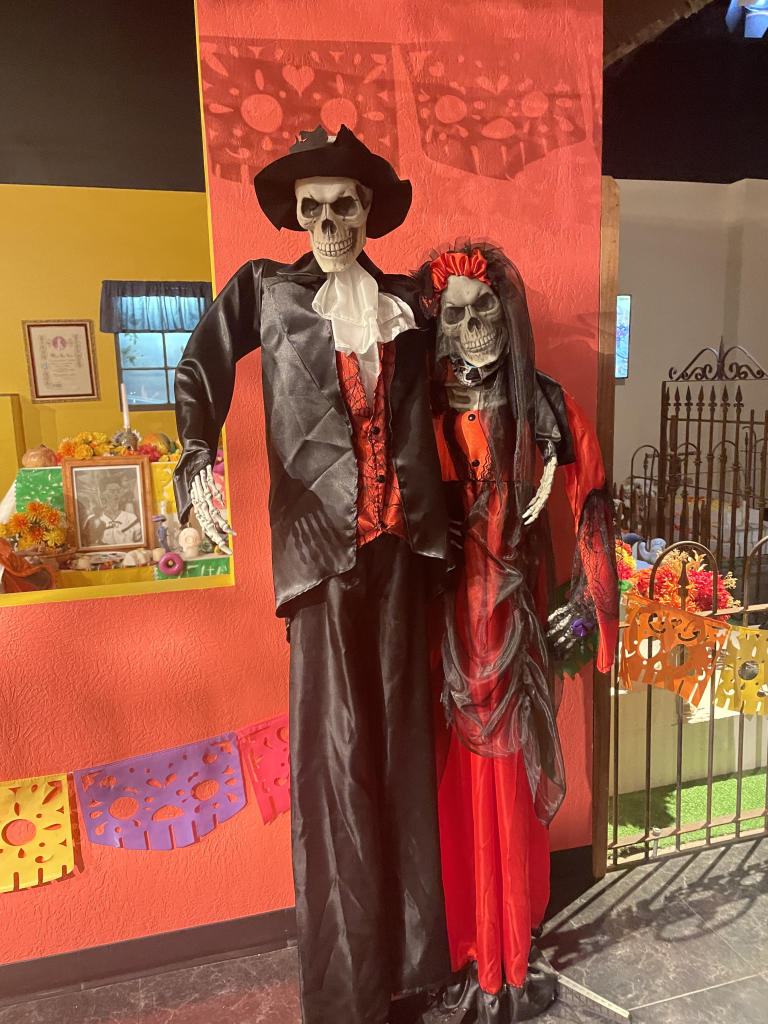
In Mexico, authentic ofrendas are decorated by locals with photos, candles, flowers, breads and other memorial objects for their deceased loved one to enjoy/ experience for their brief period back on the land of the living.
The official website for the Museum can be found here: https://nmfh.org
You can order your tickets in advance before arriving for your trip, to ensure there’ll be space left for you in this popular Houston tourism destination.
You can even get a glimpse of the exhibits and explore the gift shop, on a tab called “Mort Stuff” on the site’s drop-down menu.
The awards this museum has won, as far as entertainment and education go, are endless.
I sincerely hope your visit expands your perspective on what the universe has in store for us in the next life.
Madeleine Gardner
Travel Writer
My name is Madeleine. I’m from Malibu, California. I live in my American van abroad with my two dogs and ship it around the world solo. Before I moved abroad I spent years traveling around the US & Canada up to Alaska and back. I’ve spent time in every single state. My favorite hobbies are hiking in the alpine with my two dogs, backpacking, park backcountry and park snowboarding, skateboarding, yoga, slack lining, surfing, free diving, photography, oil painting and rock climbing.
More Stories

These 11 Breathtaking Texas Churches Look Almost Too Beautiful to Be Real

This Vintage Texas Train Glides Through the Pines for Wine, BBQ, and a Sky Full of Stars

This Sprawling Texas Flea Market Has Over 5,000 Vendors and Food at Every Turn

This Sprawling Texas Bookstore Turns Browsing Into an All-Day Adventure
Tags