This San Antonio Tea Garden Is a Hidden Oasis in Full Summer Bloom
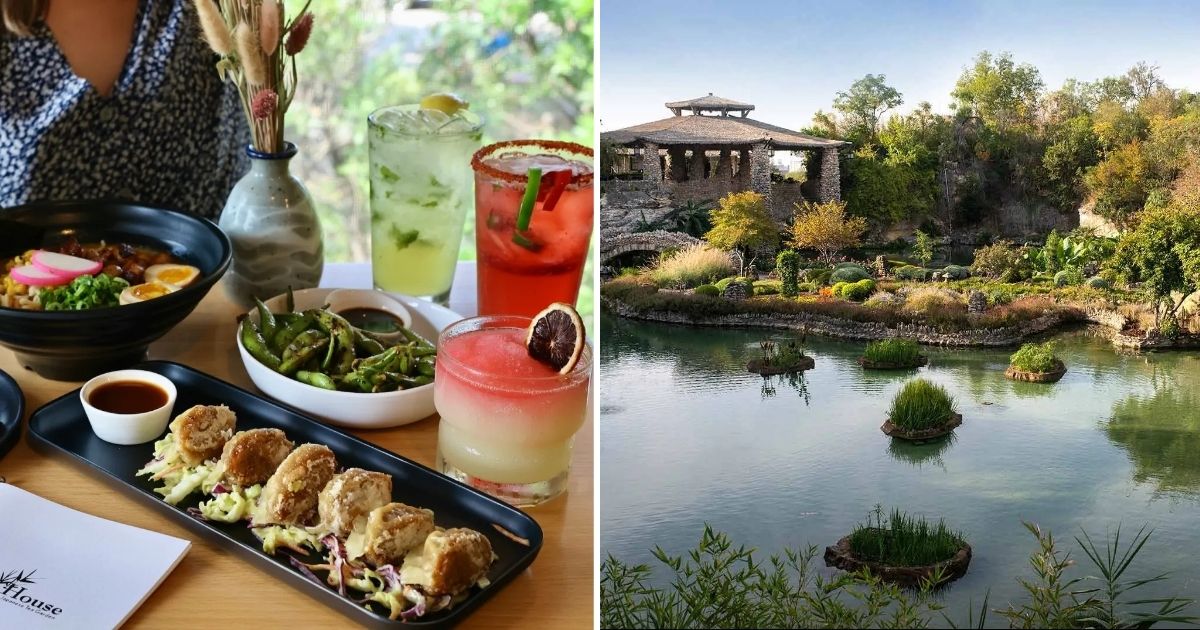
What if you found an oasis in the middle of San Antonio? Picture it this summer: tall plants, lush greenery, and peaceful waters.
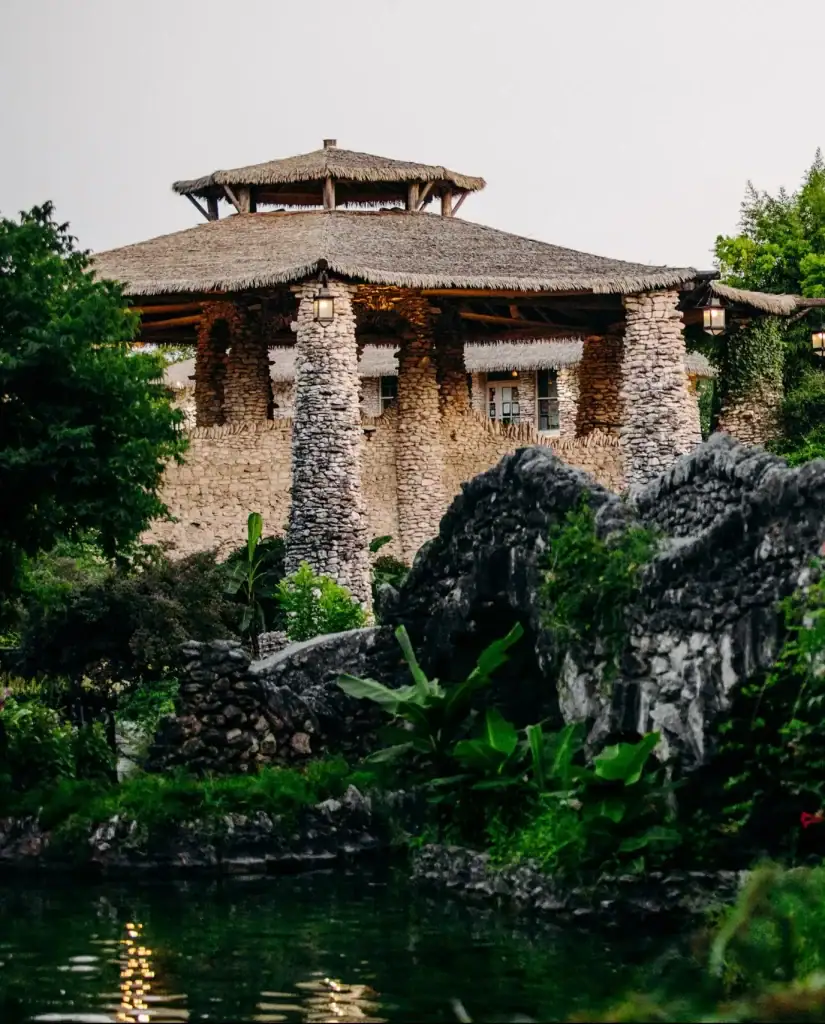
You’ve made your way to the Japanese Tea Garden in San Antonio, Texas.
Many people think of The Alamo or the Riverwalk when they hear San Antonio.
A Japanese tea garden isn’t what you’d expect in San Antonio on a summer road trip through Texas. But here’s why it should make your list of must-sees.
What to Expect
The Japanese Tea Garden is a botanical garden in San Antonio.
But there’s more to the story.
The site of the present-day tea garden in Brackenridge Park, San Antonio, was an abandoned limestone quarry in the early 20th century.

Got a geology enthusiast or a rock-obsessed kid in the family? They’ll love the history of this place.
It’s managed by the City of San Antonio’s Parks and Recreation Department.
Amenities include both a garden and a pavilion. They’re open to reservations if you give them a call at 210-559-3148.
Their hours are 7 a.m. to 5 p.m. daily. Catch them close to sunrise or sunset for stunning views of the gardens.
The best part? It’s free admission!
They’re open to the public, and it’s only a short trip from downtown San Antonio. Though you may not have heard about it before, the Japanese Tea Garden is a historic site to see in San Antonio.

It’s wheelchair accessible, too. The upper garden and pavilion areas are accessible by ramp. The lower garden level is only accessible by stairs, but the parking lot includes accessible parking spaces.
If you’d love to shoot professional photography sessions here, schedule it in advance through the San Antonio Parks Foundation.
Any amenities that aren’t available for rentals or reservations are considered first-come, first-served. Check first if you’re able to rent an area where you’d really like to take photos or visit specifically.
One thing I really like about this tea garden is that they’ve included a Little Free Library. For those of you who’ve never heard of these, or who’ve seen these funny little birdhouse boxes for books in your neighborhood or at your school, they’re a free way to share a love of reading.
Anyone can take a book or drop off a book. It’s more of a system of bringing a book you think others would enjoy and selecting a book from the tiny library to take home and read. It’s supposed to fit right in with a community who have a love for books in common.

Even better, exploring the library — like the garden itself — won’t cost you a cent.
Encourage your kids, who tend to get stir-crazy in the summer, to check out this Little Free Library at the tea garden. It’s not only a new environment in which to read — or even ‘enter’ a library in the middle of nature — but also a wonderful way to keep young minds engaged while school’s out for summer.
But it’s also a sneaky way to learn something, even when school’s out for summer break.
What’s available to rent? The tea garden has a Jingu House and patio, along with a pavilion and a waterfall area. These spots are great for hosting weddings, luncheons, or other special events you’re planning for this summer.
Call ahead to confirm your preferred dates and times are still available.
Note that the Japanese Tea Garden is in its next phase of improvements, which will include adding lighting to the lower garden level. They’ve posted a Master Plan on the city’s website to help you out with knowing what’s happening and when.
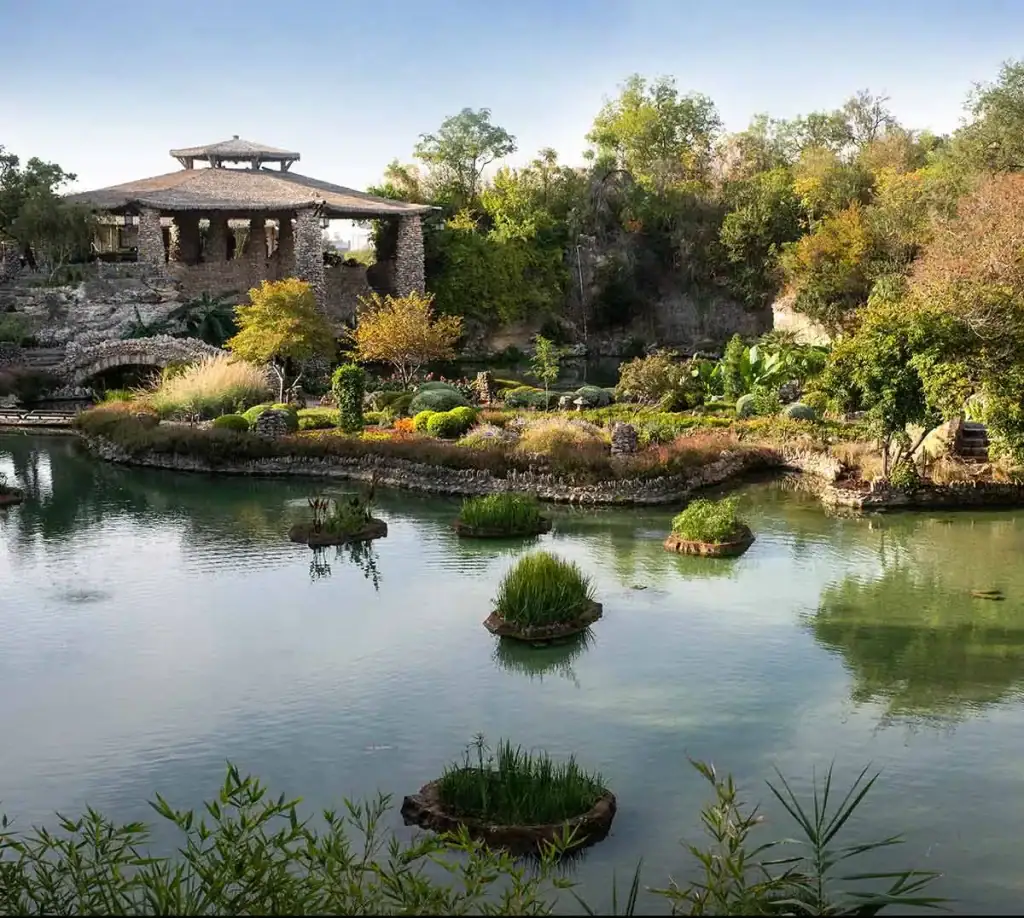
If you’re hoping to take photos or enjoy a quiet view of nature, call ahead to make sure there won’t be any construction or projects underway when you’ll be visiting.
The original renovations started back in 2007. They repaired the ponds and waterfall and installed a recirculation system to help keep the Koi and aquatic plants happy and healthy. It was a public-private partnership with the City of San Antonio, the San Antonio Parks Foundation, and Friends of the Parks.
The Foundation is continuing to raise funds to help revitalize the Japanese Tea Garden. If you have any ideas on how to make it better, let them know!
Before the tea garden opened in 2008, the City underwent considerable work on infrastructure rehabilitation for several of its garden facilities, including walkways, pipes, filtration, wall repairs, and pond sealing.

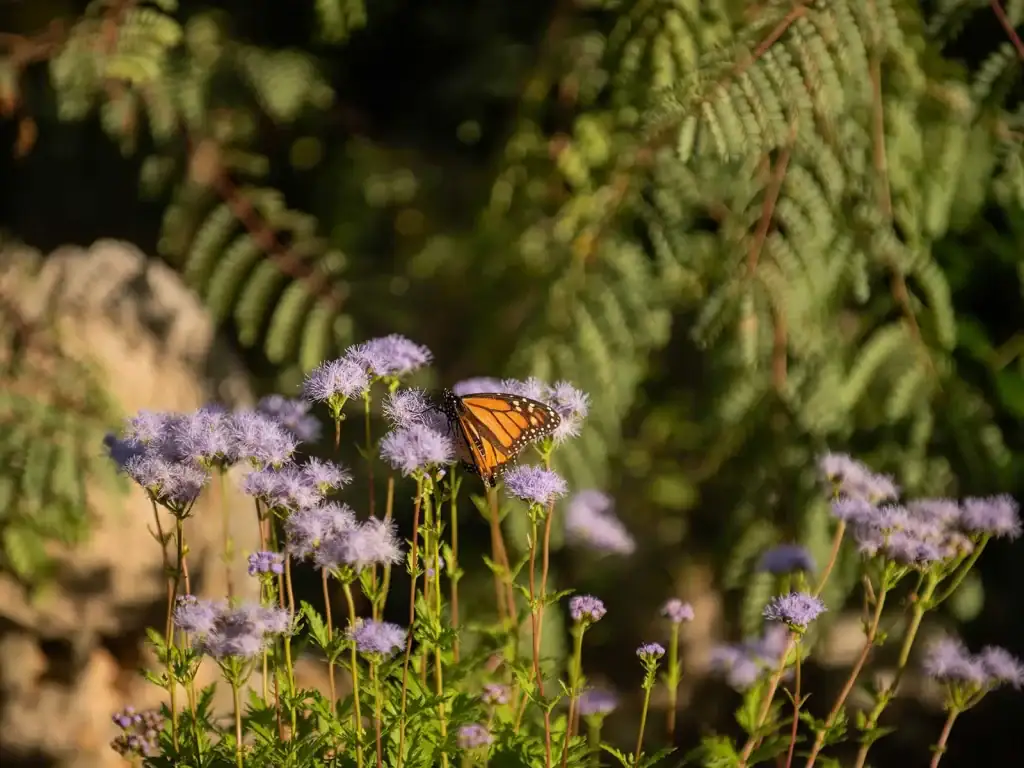
After all this restoration work, the garden is now open year-round and has a beautiful floral display, with shaded paths, stone bridges, a 60-foot waterfall, and ponds teeming with Koi.
History of the Lily Pond
Something special about this place is the history.
Members of the Jingu family lived and worked in the garden in the 1920s, a sweet connection to the Jingu House on the property.
Ray Lambert, a park commissioner, first thought up the idea of turning an abandoned, old rock quarry into a “lily pond.”
The reality is that the garden’s story goes all the way to the late 1800s in Texas.
The San Antonio Water Works Company, through its then-president Brackenridge (namesake for the current park), donated nearly 200 acres to the City of San Antonio for a public park. That original park opened to the public in 1901.
At the time, there was still a rock quarry, fully operating, west of the park on city property. The City of San Antonio had been leasing the quarry to stone cutters since the mid-1800s.
In the latter part of the century, a large cement company began using the quarry, but once they established they’d need rail lines to ramp up production, they moved to another site and closed the Brackenridge Park quarry some years later.
So, how’s the quarry related to the tea garden? A kind lady, Mrs. Emma Koehler, owned 11 acres between the quarry and the San Antonio River to the east.
She donated the land to the city in 1915 for a public park.

That’s when Lambert, a public commissioner, suggested a lily pond (what later became the tea garden).
Of course, all this “lily pond” had in terms of practicality, and not dreams, were plans from a park engineer and no budget.
Still, Lambert was able to build the garden. In the 1900s, the quarry transformed into walkways, stone arch bridges, an island, and a Japanese pagoda.
The term, lily pond, stuck with visitors. And locals even bought and donated bulbs to make the area more beautiful. They wanted to see it come about.
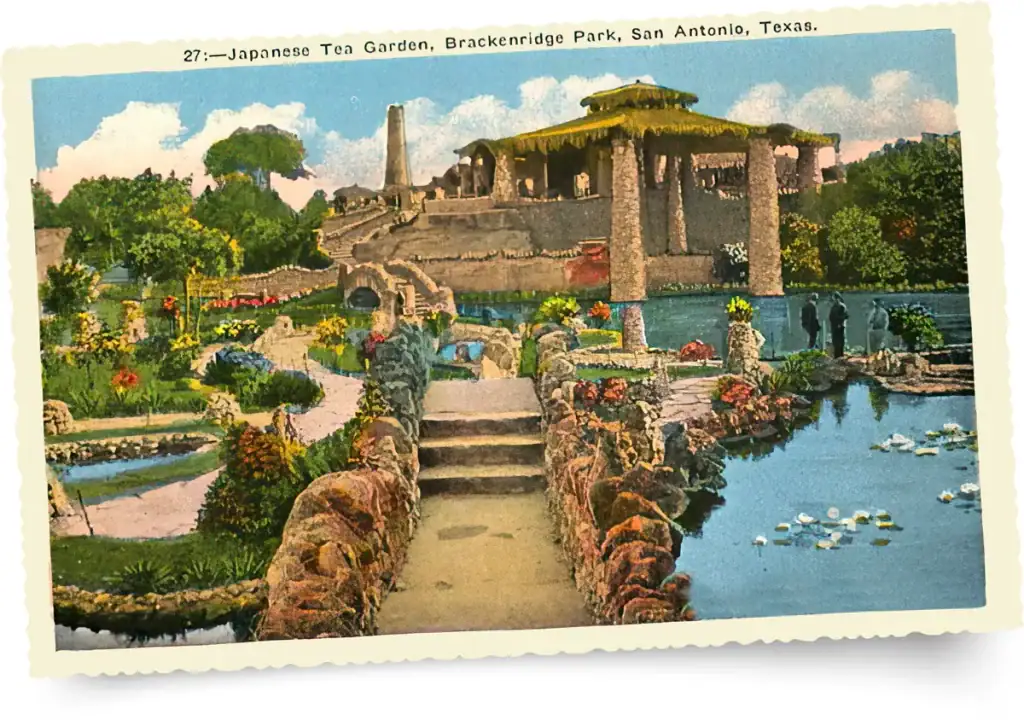
Everyone pitched in. The city nursery provided exotic plants. The City Public Service Company donated a lighting system. And the pagoda’s roof came from palm leaves from trees in the city’s parks.
I like that it didn’t pop up, fully formed, as a lush, relaxing botanical garden. It had an unlikely start as a quarry, which isn’t what you’d think of as a summer destination spot.
And more than a handful of people pitched in to beautify it and add personality to its environment. It’s a reminder of what a community can build when people share a common vision and show up for it.
Improvements continued to be made to the garden. In 1920, a smattering of houses was built at the base of the old cement kilns. That little village was intended to be a tourist destination for Mexican arts and crafts vendors and an outdoor restaurant. At least, that was the vision.
Along this same line of thinking, artist Dionicio Rodriguez created a Japanese torii gate at the garden’s main entrance, with his signature style of concrete work imitating wood. While the village didn’t last, the torii gate is something worth checking out.
In 1926, a local Japanese-American artist, Kimi Eizo Jingu, moved into the garden (a real artist-in-residence) and opened up the Bamboo Room. They held light lunches and tea.
Sadly, Mr. Jingu passed away in the late 1930s, but his family continued to operate the garden lunches and tea until 1942. After many decades, the area was rededicated in 1984 as the Japanese Tea Garden, a ceremony attended by Jingu’s descendants and Japanese government representatives.
Because of the tea garden’s origin story as a rock quarry, which also played a significant role in the cement industry, as well as the later redevelopment as a garden, the area is designated as a Texas Civil Engineering Landmark and a Registered Texas Historic Landmark.
It’s also listed on the National Register of Historic Places.
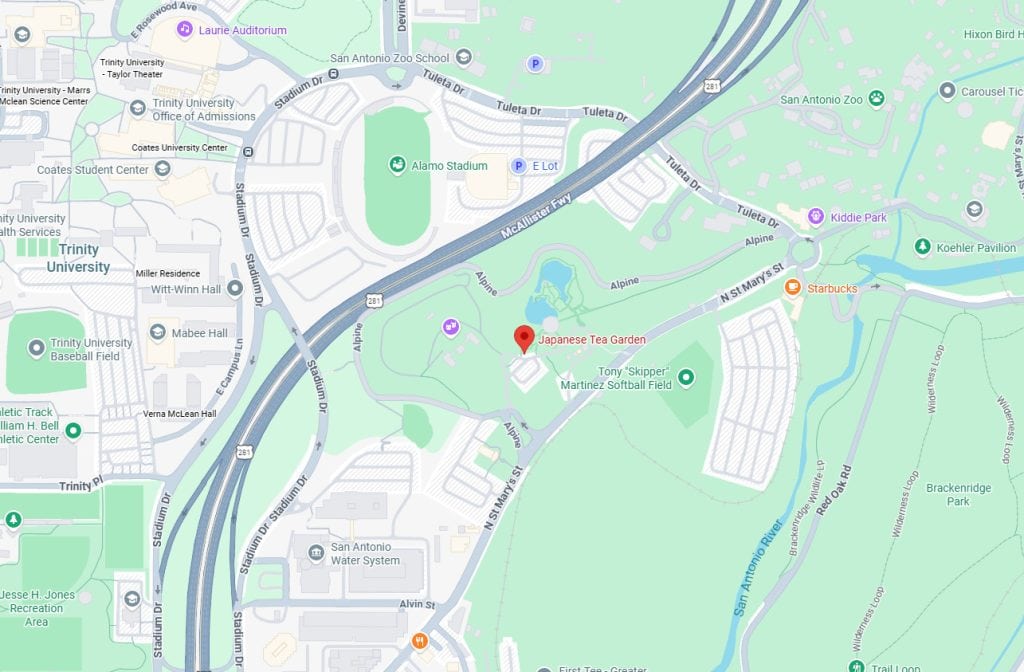
Where can you find this tea garden? Plug in the Japanese Tea Garden in San Antonio into your Maps app.
Where: Japanese Tea Garden, 853 North Saint Mary’s Street, San Antonio, Texas 78212
It’s a romantic place to bring your spouse or partner on a date that’s not the usual dinner out.
It’s open from 7 a.m. to 5 p.m. daily. It’s dog-friendly, as long as you keep pets on a leash.
You don’t have to have a photo permit to take photos in the tea garden. Enjoy snapping photos!
There’s no place to change clothes if you’re hosting an event. And no drones, balloons, rose petals, confetti, props, or wagons are allowed.

Check out the food at Jingu House if you decide on a summer visit to the Japanese Tea Garden.
Find them online at saparks.org, follow along on Facebook and Instagram, and pull up directions on Google Maps before you head out — because a quiet oasis in the heart of San Antonio is always worth the visit.

Shelby Brooks
Travel Writer
Shelby Brooks was born and raised in the North Dallas area. For her studies in creative writing, and later for work as a writer and editor, Brooks lived in Sherman, Fort Worth, Denton, and for many years, Aggieland (College Station). Brooks travels within Texas, to theme parks in Orlando, up to the Big Apple in NYC, and to beaches across the U.S.
More Stories

These 11 Breathtaking Texas Churches Look Almost Too Beautiful to Be Real

This Vintage Texas Train Glides Through the Pines for Wine, BBQ, and a Sky Full of Stars

This Sprawling Texas Flea Market Has Over 5,000 Vendors and Food at Every Turn

This Sprawling Texas Bookstore Turns Browsing Into an All-Day Adventure
Tags