This Lush Texas Garden Lets Seniors Roam 28 Acres for Just $5
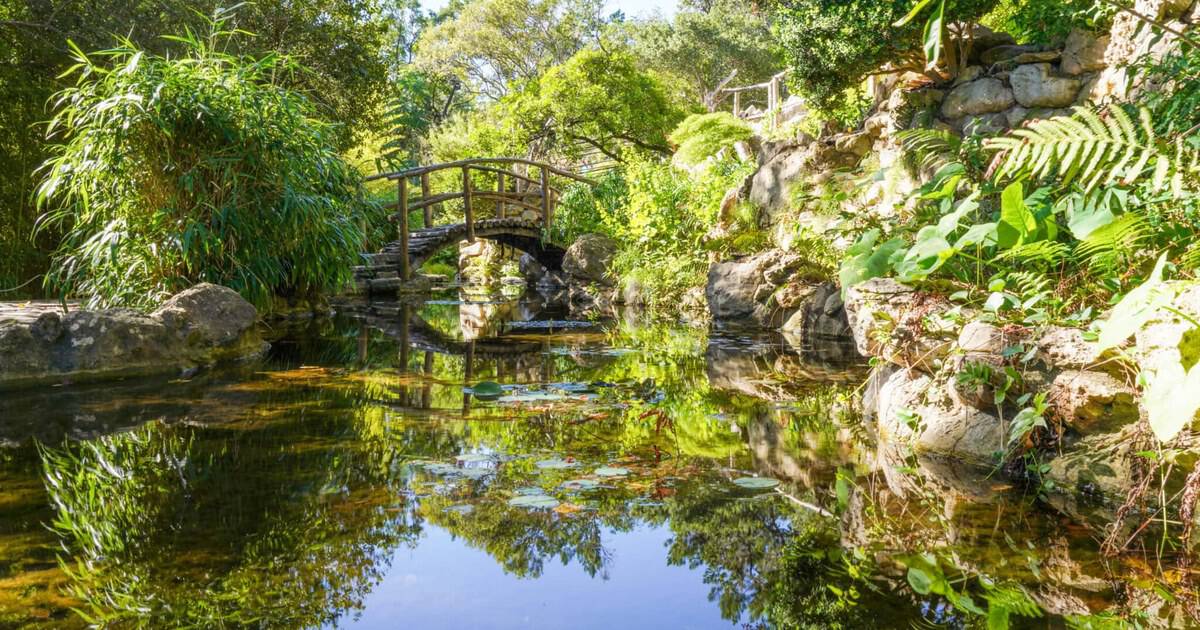
I have a rule about cities: the good ones keep a green escape somewhere near the middle, and the great ones do not charge you a fortune to enjoy it.
By that measure, Austin has quietly nailed it. On the south bank of the Colorado River, a few minutes from downtown, sits a garden that has spent decades being the calm inside a loud, fast-growing town.
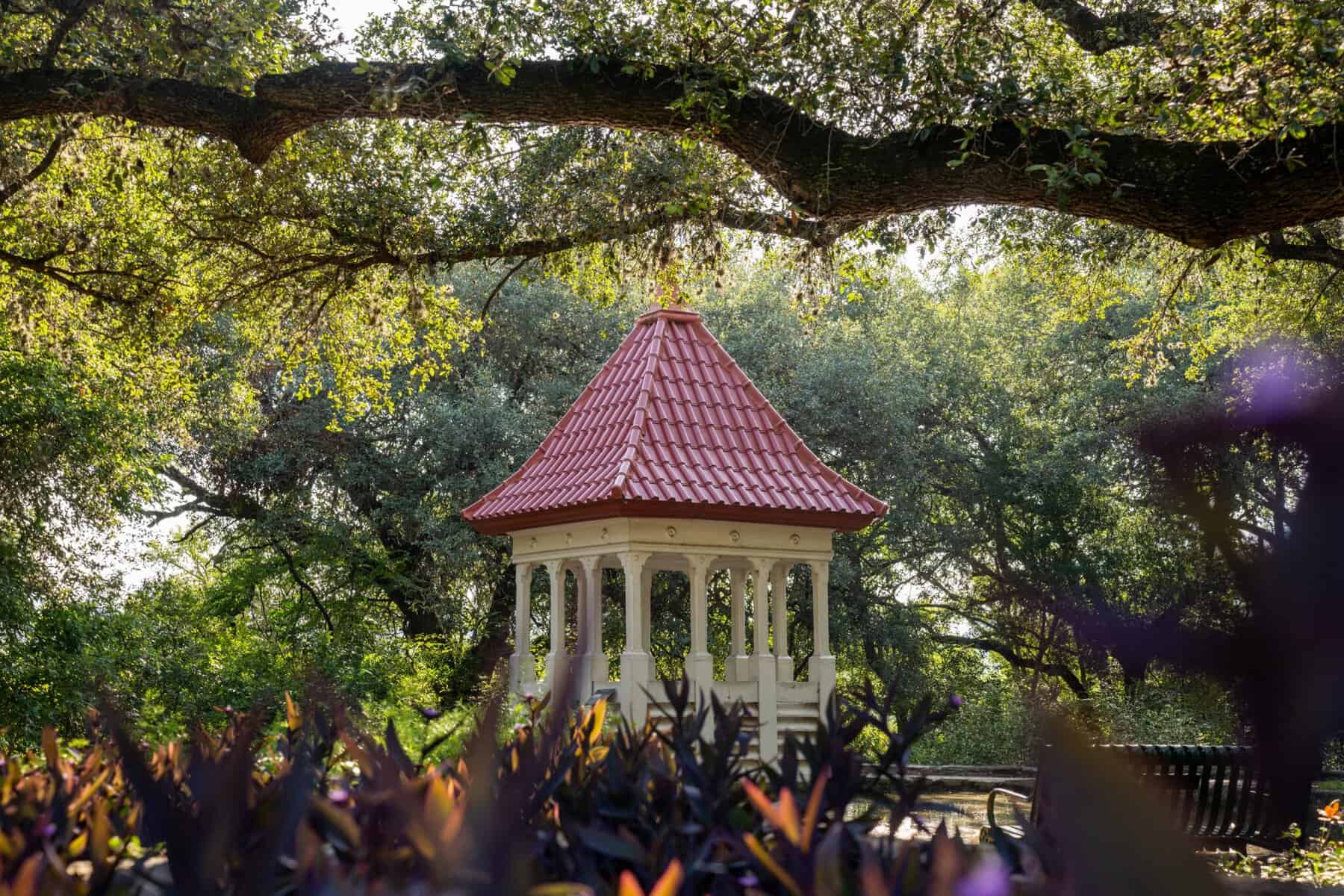
It is a cool green hush of koi ponds, rose beds, and shaded stone paths, tucked where you would least expect it.
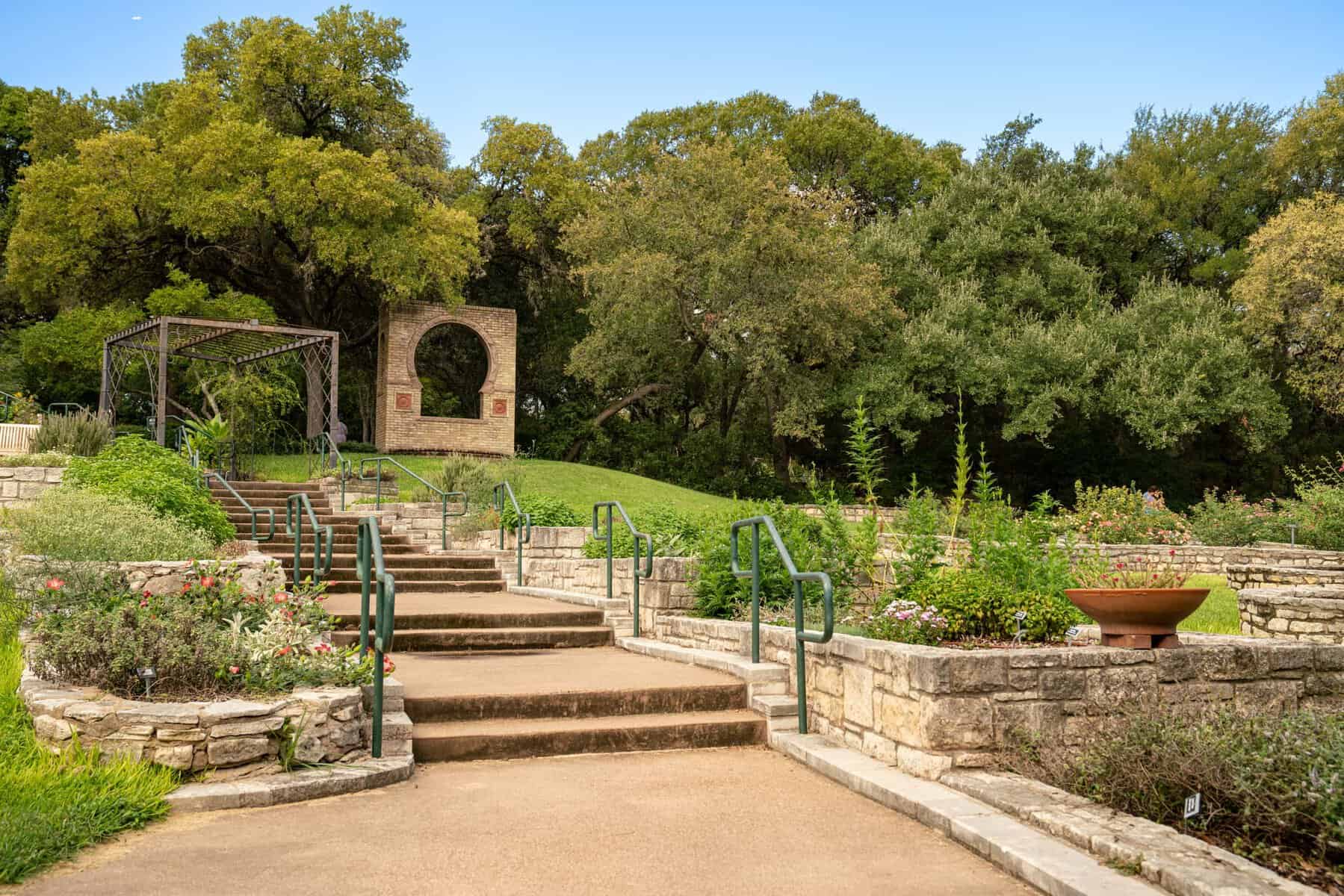
The name is Zilker Botanical Garden, and locals call it the jewel in the heart of Austin. Here is the part that makes it a genuine steal.
If you are 62 or older and live in the Austin area, a full day of wandering its 28 acres costs you just five dollars. That is less than the parking fee at plenty of city attractions.
Below, I will walk you through what that fiver buys. There is a Japanese garden that spells out a word, a patch of ground where dinosaurs left their footprints, and roses named for the woman who dreamed the whole place up.
A Jewel in the Heart of Austin
Twenty-eight acres does not sound huge until you are inside it, following a shaded path that keeps folding into another one you did not see coming.
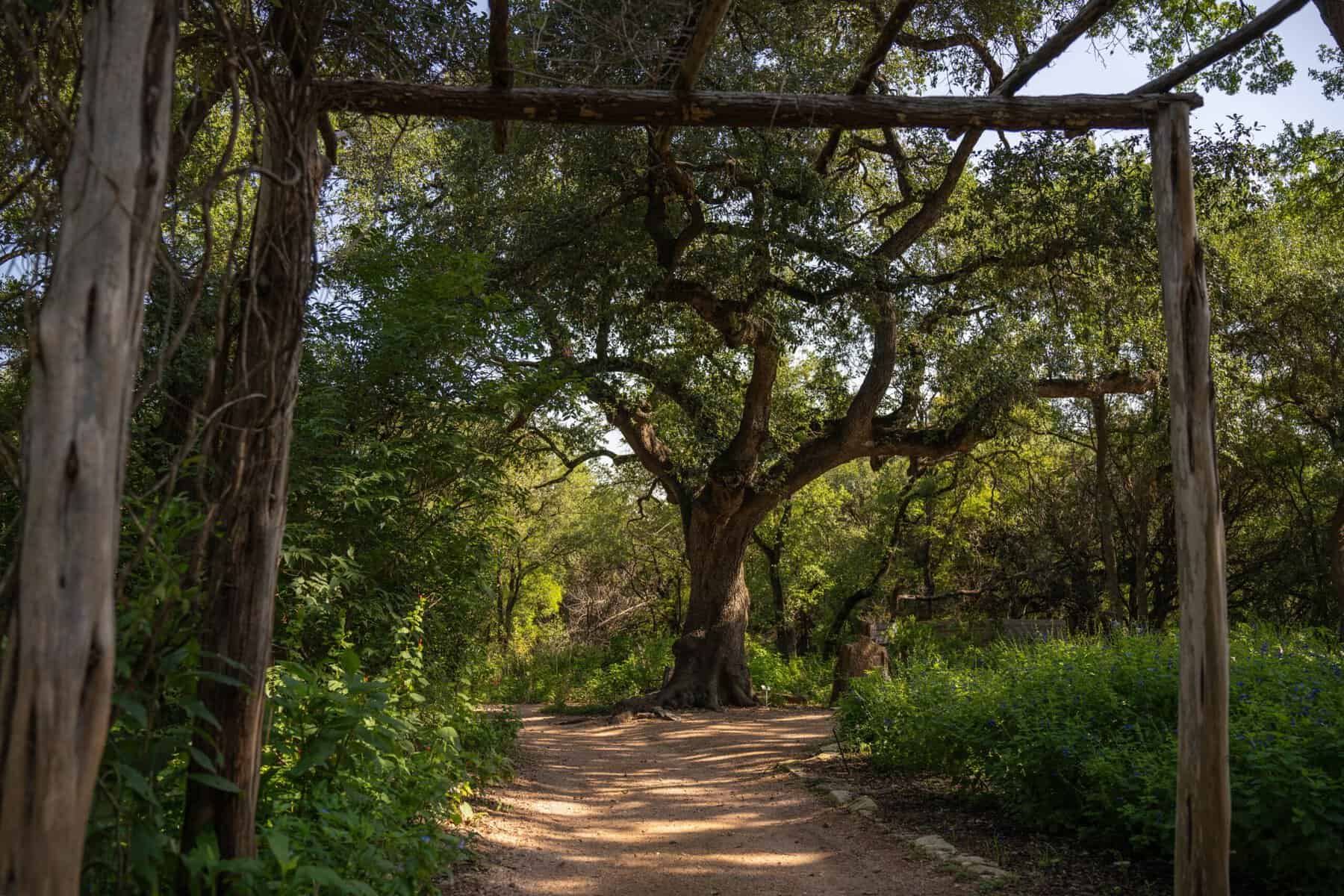
The garden sits within Zilker Metropolitan Park, the big green sprawl that Austin treats as its backyard. Step through the entrance and the traffic noise falls away fast. It is replaced by birdsong, the trickle of water, and the smell of damp soil and blooming things.
More than 150,000 people come through the gates every year, yet the place never feels like a theme park. The paths are mostly flat and paved, and benches sit exactly where your legs start asking for one.
What I love about the design is that it is not one garden but several. Each has its own mood. You drift from a formal rose garden into a wild native meadow, then down a streambed and into something that feels a thousand years old.
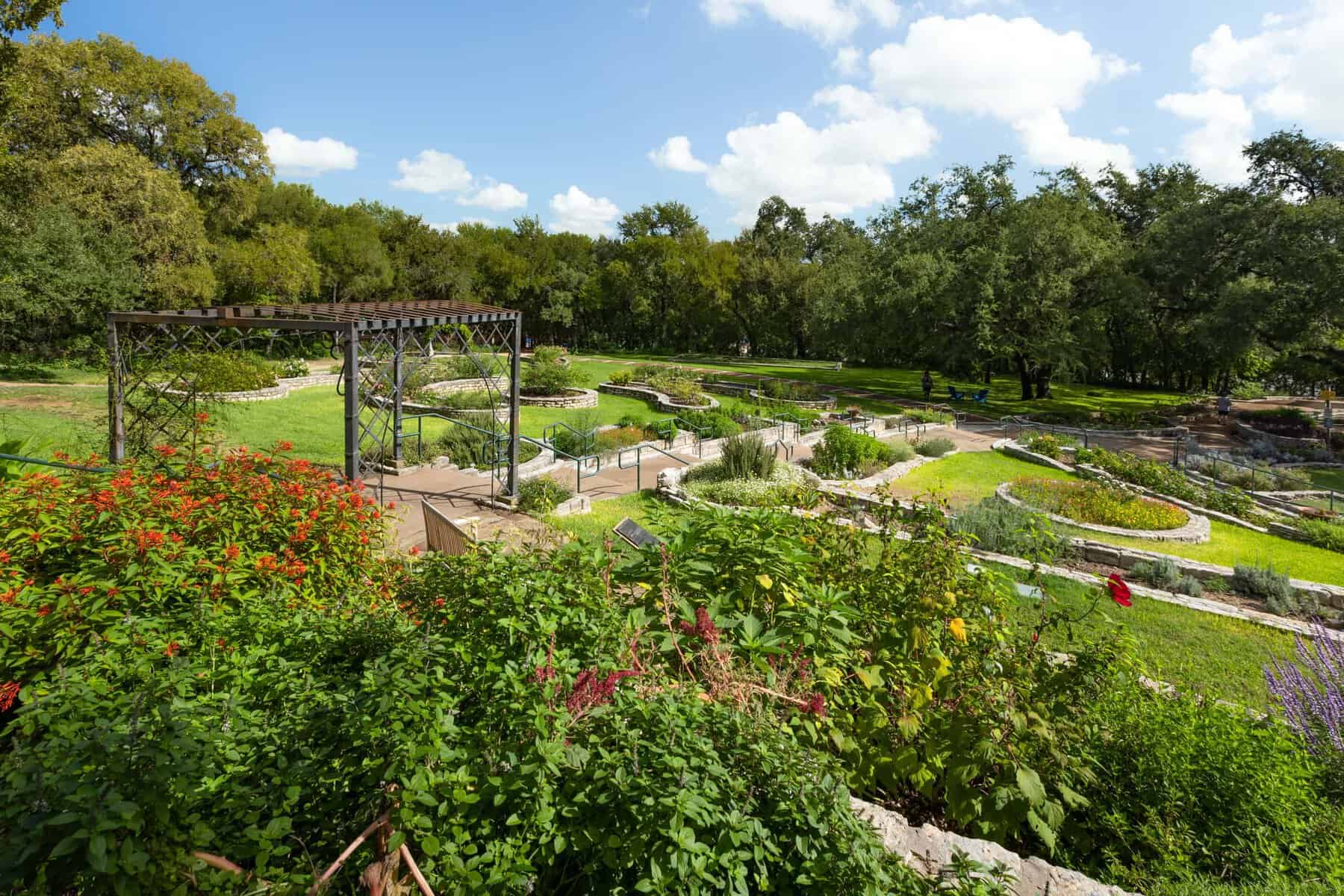
One ticket, four or five completely different worlds. You can see why couples pick it for engagement photos and why school buses unload here on weekday mornings. Whether you are chasing blooms, birds, or just a quiet bench in the shade, there is a corner with your name on it.
One visitor summed it up on Tripadvisor as “a true hidden gem in the city,” and after reading a dozen reviews that all say some version of the same thing, I am inclined to believe them.
The Garden That Spells Its Own Name
The showpiece is the Isamu Taniguchi Japanese Garden, and its story is every bit as good as its scenery.
In the late 1960s, a 70-year-old Japanese immigrant named Isamu Taniguchi asked the city if he could build a garden on three acres of rough caliche hillside. He worked for 18 months, took no pay, and shaped the slope by hand.
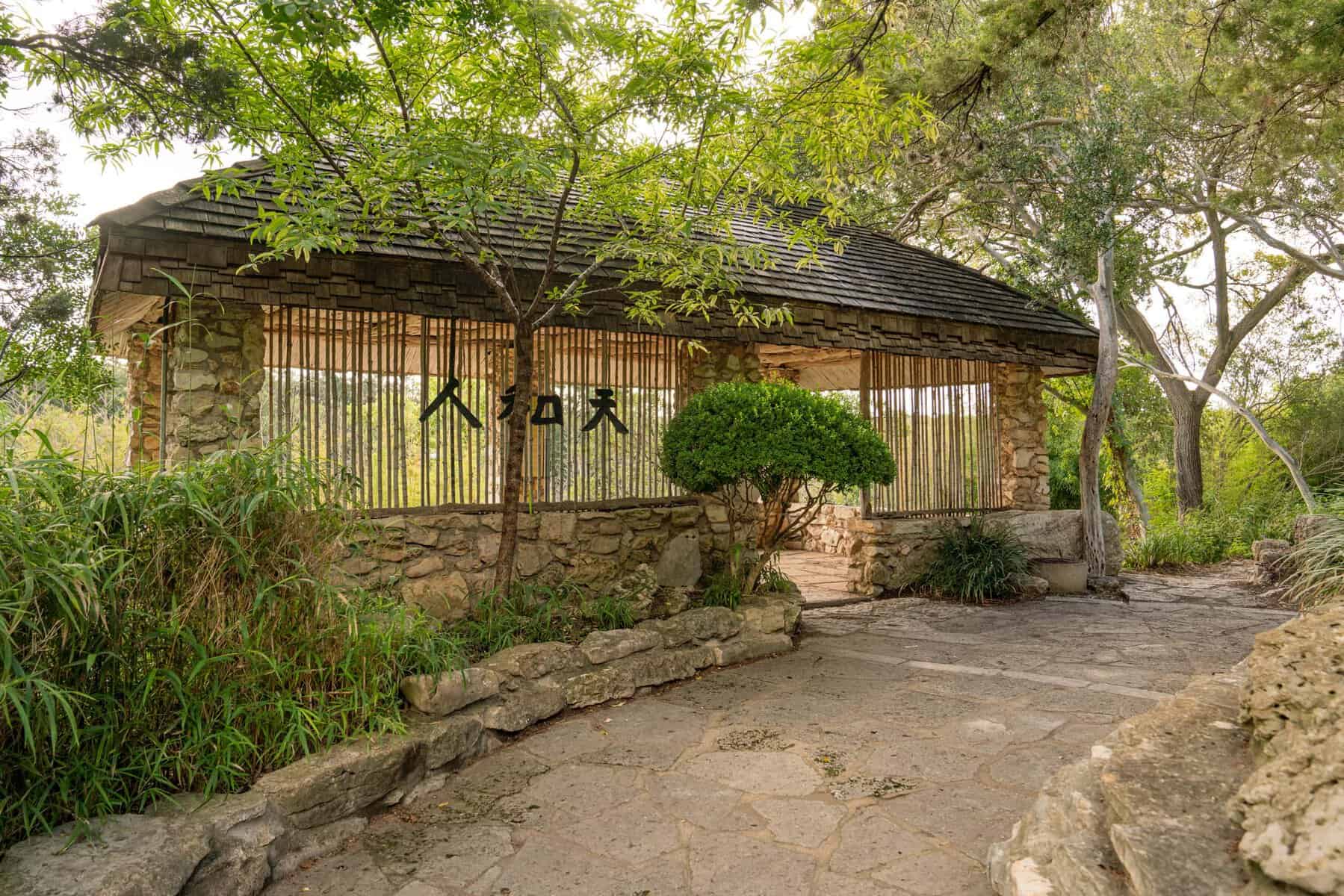
What he made were waterfalls, streams, koi ponds, and arching wooden bridges. Taniguchi had survived a World War II internment camp, and he meant the finished garden as a gift to the city that had become his home.
Here is the detail that gets me every single time. The ponds in the first half of the garden are laid out in the shape of letters, and read together they spell the word AUSTIN. You are literally walking through the city’s name and might never notice.
Wander it in spring and the wisteria drips purple over the water. Japanese maples turn the light red and gold, bamboo rustles overhead, and lotus and water lilies float on ponds where fat orange koi cruise just under the surface.
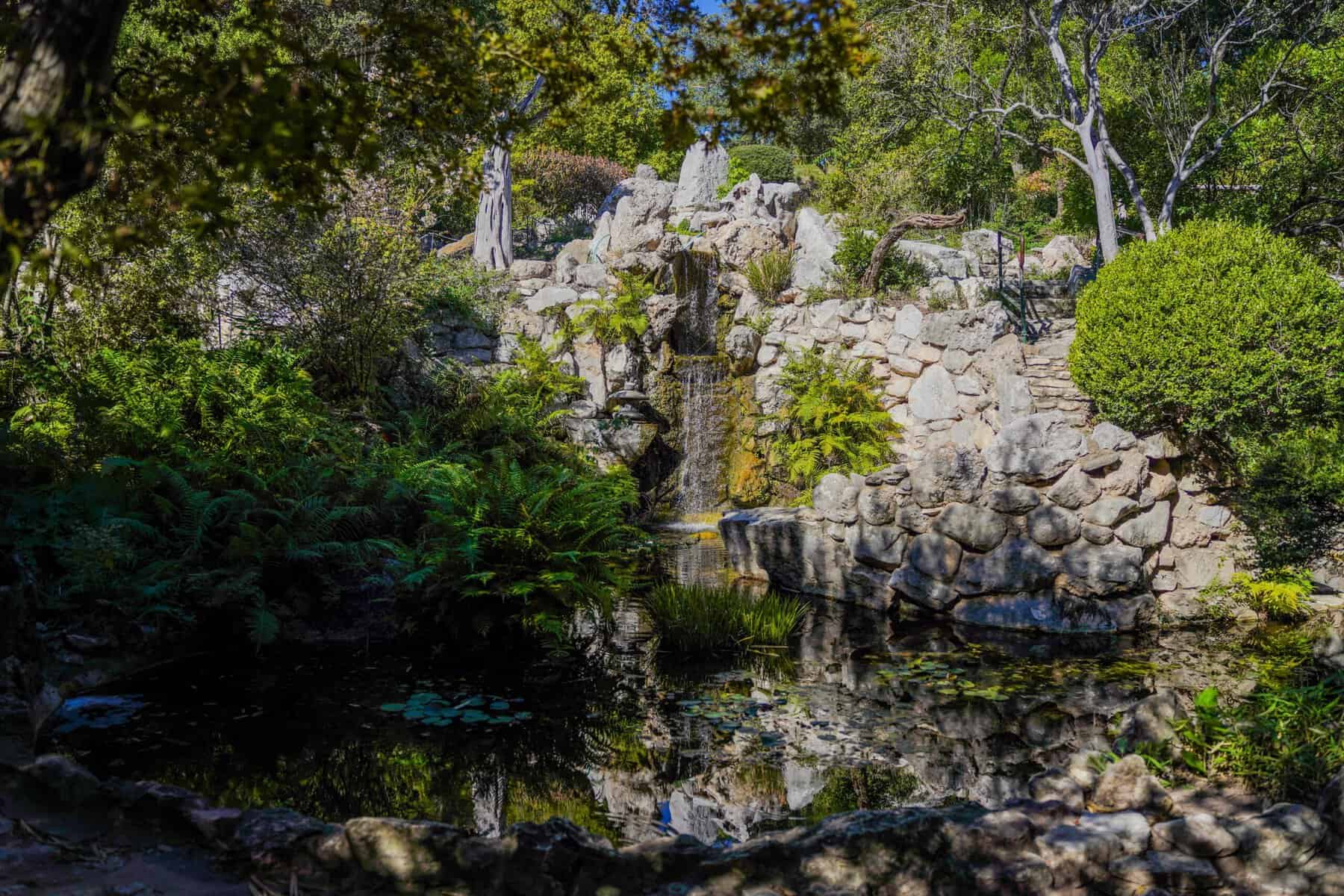
It is the kind of place that makes people lower their voices without being asked. Come early on a weekday and you may get a whole bridge to yourself, which is about the best five dollars can buy in this town.
Dinosaurs Under the Ferns
Now for the part that surprises almost everyone. One corner of this pretty garden happens to be a genuine prehistoric site.
In January 1992, workers clearing an old limestone quarry for a new butterfly garden uncovered something extraordinary. Under the rock lay more than 100 fossilized footprints, pressed into stone by six or seven prehistoric reptiles, along with the bones of an ancient turtle.
The tracks date back roughly 100 million years, to when this stretch of Central Texas sat at the edge of a shallow sea. Experts mapped and cast every print, then reburied the originals to protect them from a century of hard Texas weather.
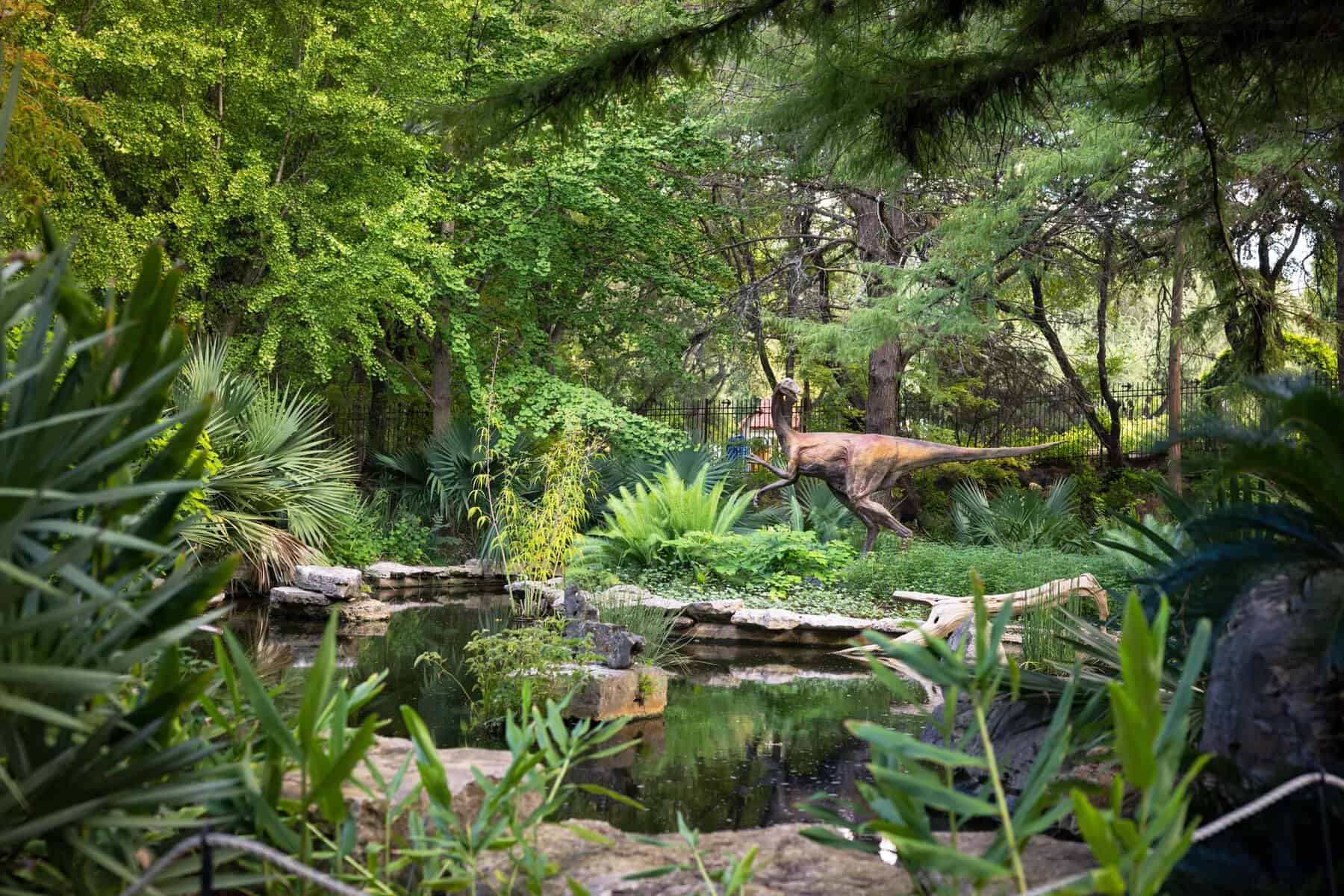
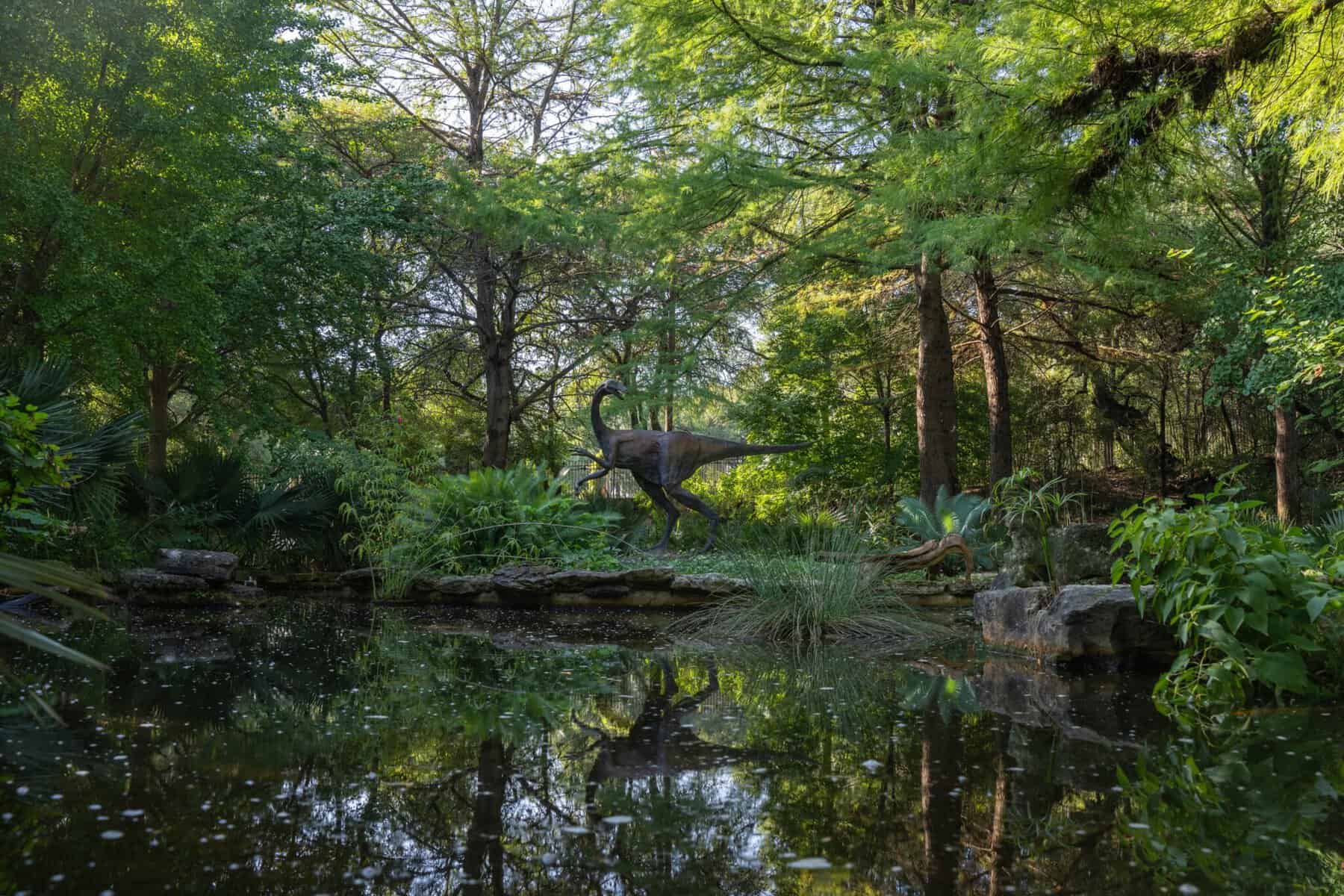
Today that ground is the Hartman Prehistoric Garden, a lush acre and a half planted only with the kinds of greenery that grew in the age of dinosaurs.
Ferns, horsetails, cycads, ginkgos, and magnolias crowd the paths. At the center stands a life-size replica of an Ornithomimus, the ostrich-like dinosaur that likely left the tracks in the first place.
Did you know a botanical garden could double as a fossil dig? Neither did I. It is exactly the kind of only-in-Texas surprise that keeps me recommending this place to friends who think they have already seen Austin.
Roses, Natives, and a Storybook Streambed
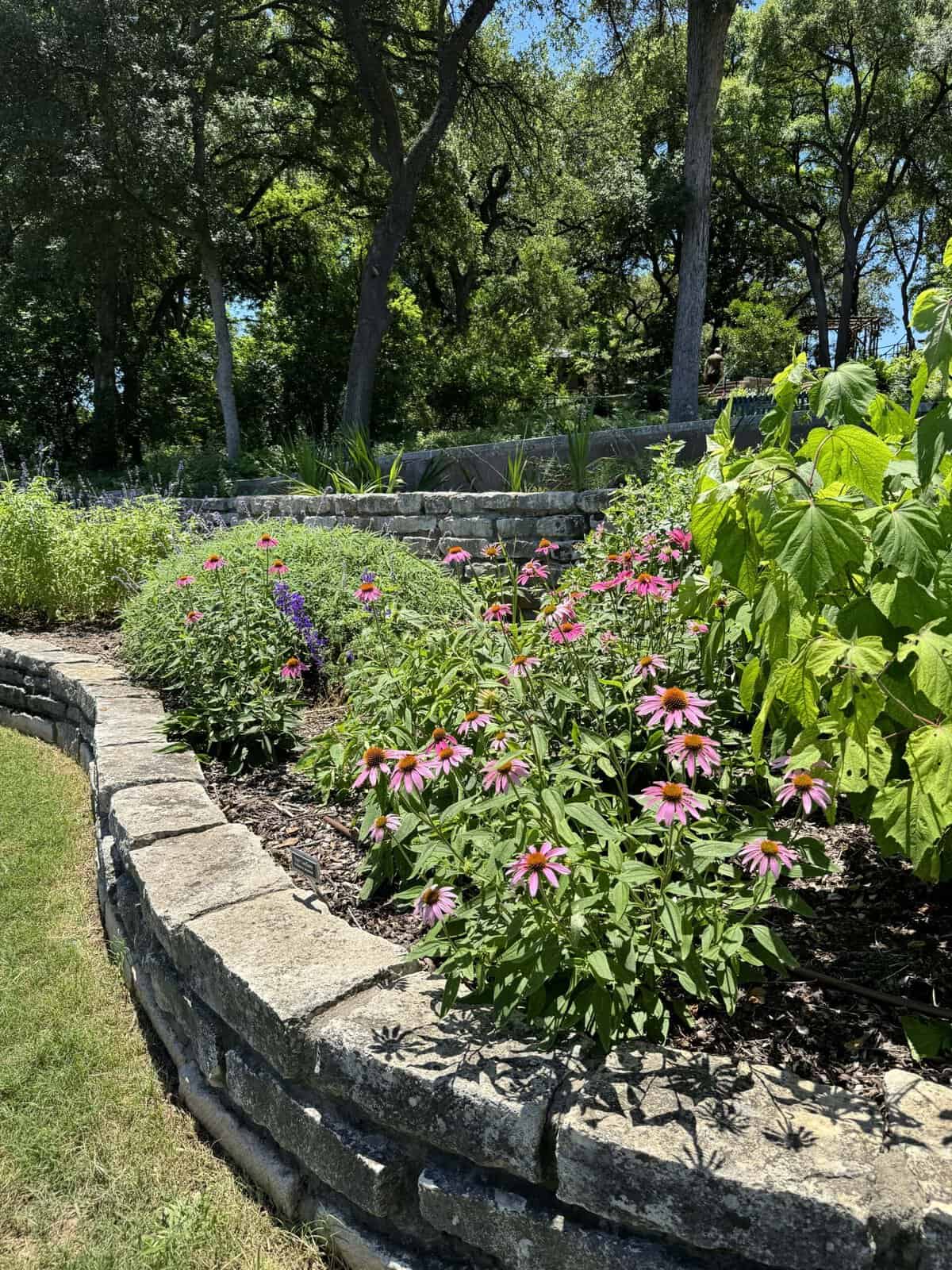
The rest of the garden is no filler. The Mabel Davis Rose Garden bursts with cultivar after cultivar, at its showiest in the warmer months when the whole bed hums with bees.
I have a soft spot for a good rose garden, and this one earns it. Row after row of blooms in every shade, with little plaques so you can learn the names of the ones you fall for.
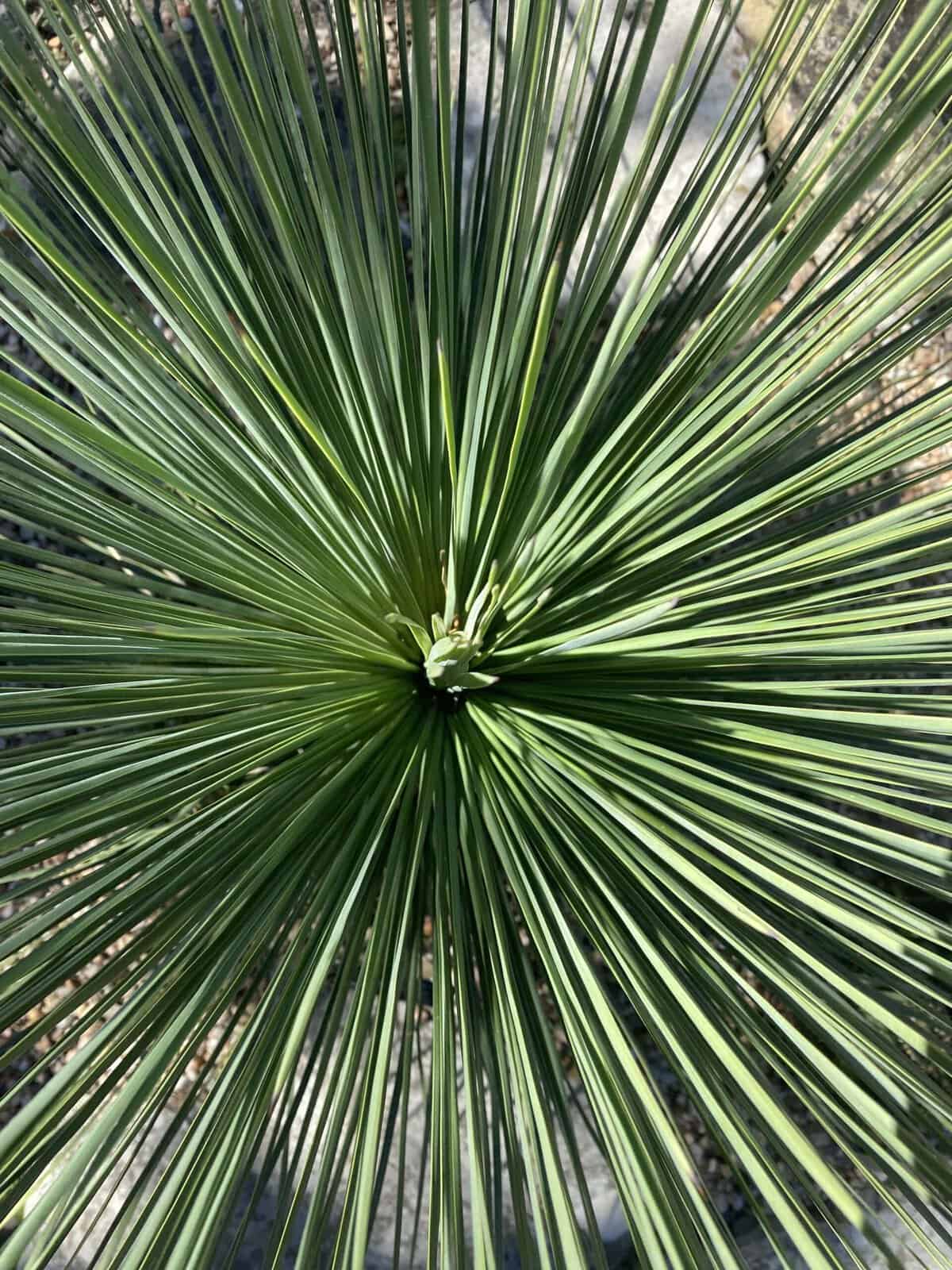
Nearby, a section given over to native Texas plants puts on a homegrown show. Bluebonnets and black-eyed Susans nod in spring, prickly pear cactus holds the line through the summer heat, and the whole patch proves how gorgeous a low-water Texas garden can be.
Then there is the Riparian Streambed, a designed creek that threads water and stone through the grounds. It is the ribbon that ties the separate gardens together into one green whole, and it is my favorite stretch to walk slowly.
Pro tip: twice a month the garden offers free guided walks led by a master gardener, covering everything from edible plants to the best spots for birdwatching. If you like knowing the name of the thing you are looking at, plan your visit around one.
A Different Garden in Every Season
One of the quiet joys of a place like this is that it never looks the same twice. Come back three months later and you are basically visiting somewhere new.
Spring is the headliner. The wisteria and Japanese maples light up the Taniguchi garden, the roses hit their stride, and the native beds fill with bluebonnets and wildflowers. If you only go once, go in April.
Summer leans on shade and water, which is why the early 8 a.m. opening is a gift. Fall brings warm color to the maples and cooler air for the longer walks. Even winter has its charm, with bare branches, structural evergreens, and paths you will often have to yourself.
My advice: pick a season, then pick a second one, because half the fun is watching the same 28 acres reinvent themselves across the year.
How Six Garden Clubs Built It
This place did not appear overnight. It was dreamed up and paid for by ordinary Austinites who simply wanted their city to have a great garden.
It started in 1946, when the Violet Crown Garden Club kicked off fundraising with a single 50-dollar donation. That was a small start for a very big idea.

By 1954, six local garden clubs had banded together and asked the city for permission to build a garden center. Leading the charge was Mrs. Alden Mabel Davis, whose name the rose garden proudly carries to this day.
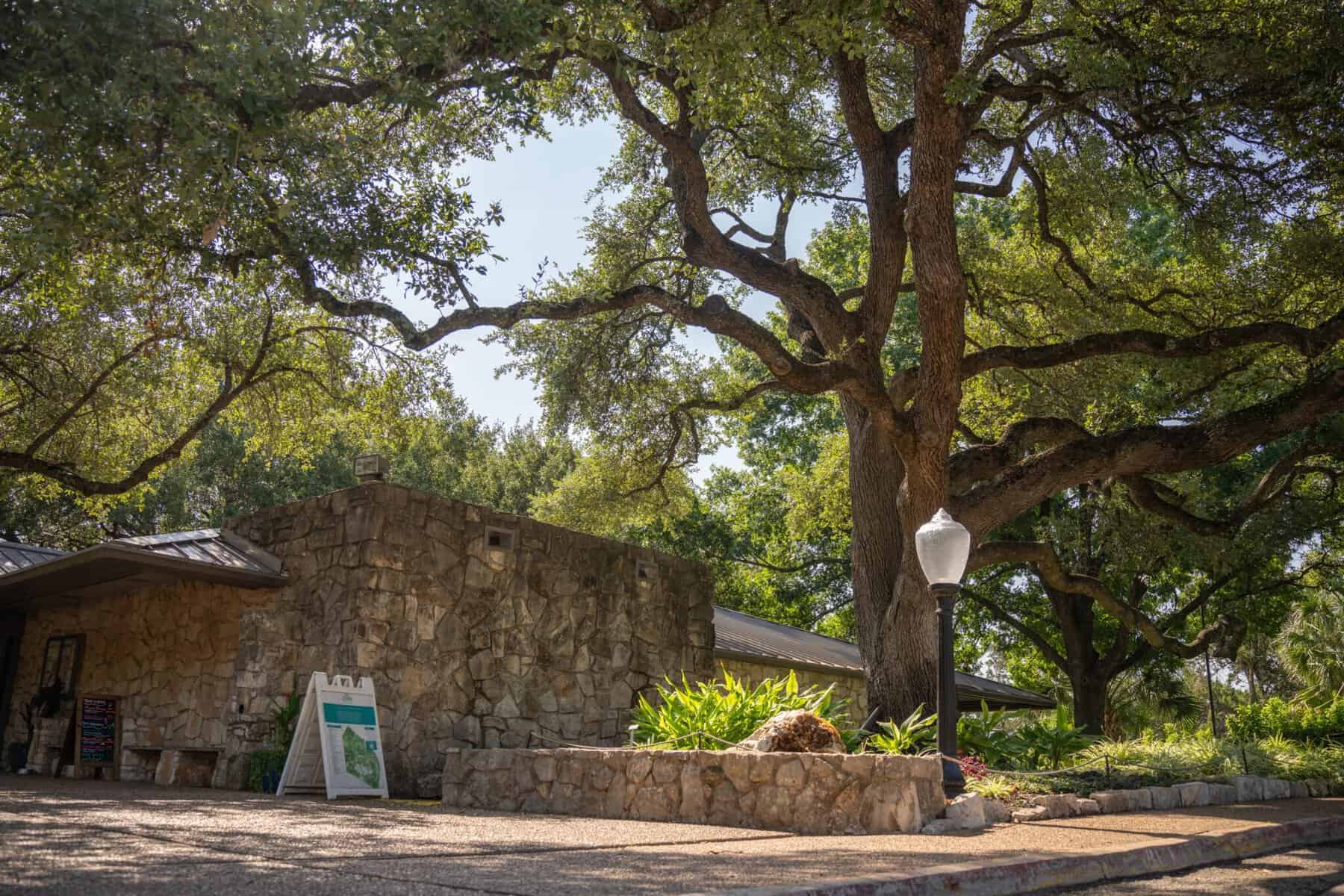
The nonprofit filed its articles of incorporation with the state in 1955. In 1962 the Austin City Council set aside the Zilker Park land, and the stone garden center was finished and dedicated in 1964.
The Japanese garden opened in 1969 and the dinosaur tracks turned up in 1992. Today the Zilker Botanical Garden Conservancy runs the grounds alongside the city Parks and Recreation Department. Nearly eighty years on, the volunteers’ big idea is still blooming.
I find that history genuinely moving. Every rose and koi pond here exists because a handful of people in the 1940s passed a hat and refused to let the idea die.
What Five Dollars Buys
Admission here is refreshingly gentle on the wallet, which is the whole reason this garden landed on my radar in the first place.
For Austin-area residents, seniors 62 and older pay just $5, adults are $6, and kids ages 3 to 17 are $3. Live outside the city and it is $7 for seniors, $8 for adults, and $4 for youth. Children 2 and under always get in free.
The garden is open seven days a week, year-round. From September through May the hours run 9 a.m. to 5 p.m. In the hotter June-through-August stretch it opens earlier, 8 a.m. to 4 p.m., so you can beat the Texas heat.
Did you know several days a year are completely free? In 2026 the free dates include Martin Luther King Jr. Day, Memorial Day, Father’s Day, and the spring Kite Fest, so it is worth a look at the calendar before you buy.
A few small things make the visit smoother. Wear comfortable shoes, because you will walk more than you plan to. Bring water in summer, tuck a camera in your bag for the koi ponds, and give yourself at least two unhurried hours to see it right.
The grounds are largely stroller and wheelchair friendly, with those flat paved paths doing a lot of quiet work. It is one of the rare Austin outings that suits a toddler, a set of grandparents, and everyone in between on the same afternoon.
How to Get There
The garden sits just off Barton Springs Road, an easy hop from downtown and close to Barton Springs Pool and the rest of Zilker Park. You can genuinely make a full Austin day of it without moving your car.
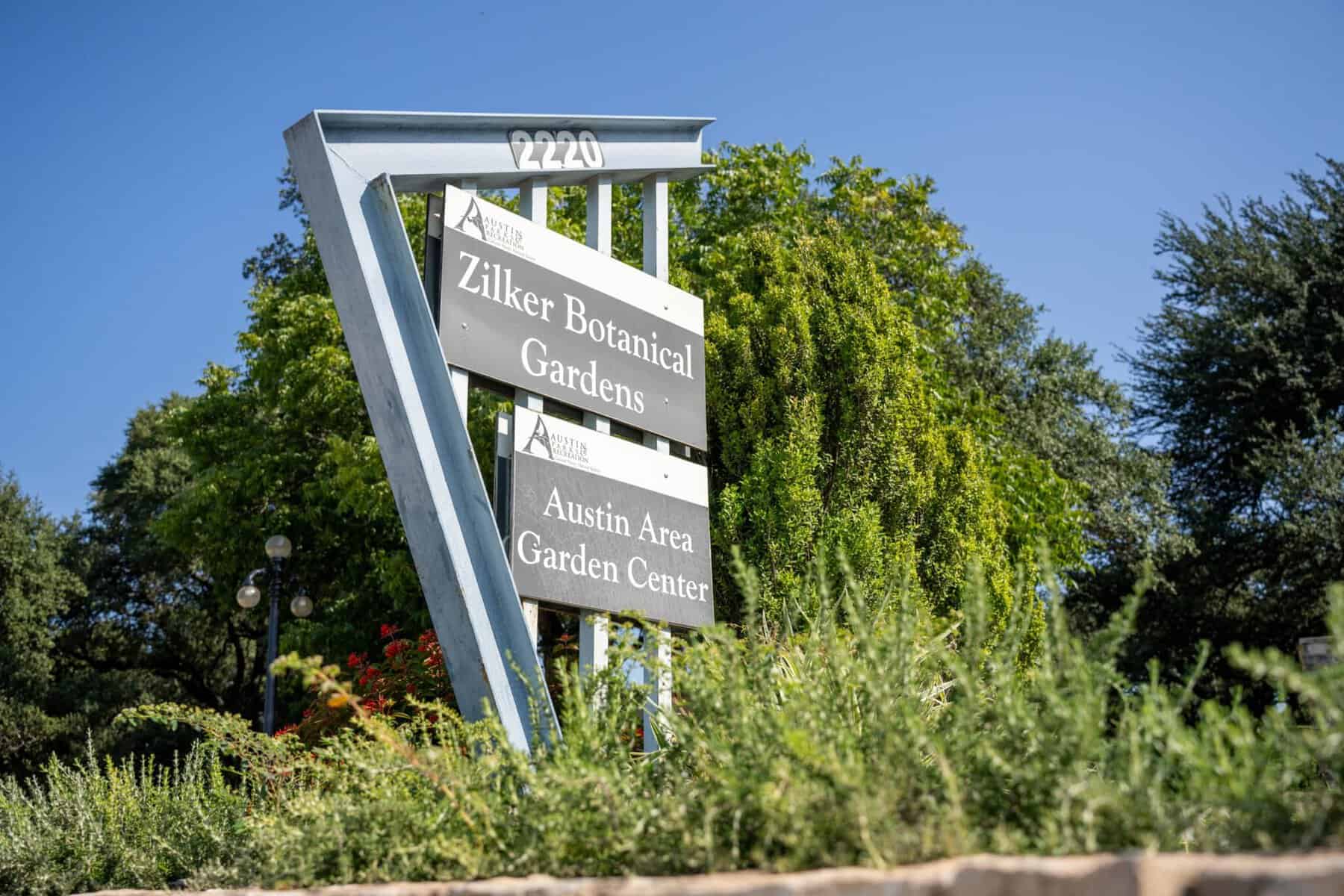
Where: Zilker Botanical Garden, 2220 Barton Springs Rd, Austin, TX 78746
Plan Your Cheap Day in the Green
Not every great Austin outing has to cost what a concert ticket does. For the price of a fancy coffee, you can spend hours among koi ponds, roses, dinosaur tracks, and a garden that literally spells out the city’s name.
So grab a hat, bring a little cash, and let someone else’s decades of quiet work be the best part of your week. Whether you are 62 or nowhere near it, this is one Texas garden worth slowing down for.
Featured image: @ Zilker Botanical Garden

Stella Raines
Editor-in-Chief
Stella brings over a decade of storytelling experience to TX Headlines. With roots in West Texas and a love for road trips, she leads the editorial team with an eye for the hidden stories that make Texas unforgettable.
More Stories
This Short Texas Climb Is Just 218 Steps to One of the Most Incredible Views in the Hill Country
This Crystal-Clear Texas Lake Is So Bright You Can See Straight to the Bottom
This Secret Texas State Park Lets You Camp Right on the Lake for Just $20 a Night
This Secret Texas Canyon Hides a Living Waterfall, and February Is the Perfect Time to See It
Tags