This Serene Texas State Park Was Built by Hand to Help You Leave Your Worries Behind
The first thing I noticed was the quiet. Not silence exactly, but the soft hush that a tall pine forest makes, where the loudest sound is the wind combing through the needles a hundred feet over your head.
I had driven in tense, shoulders somewhere up around my ears after a long week. I parked, stepped out onto a carpet of fallen pine needles, and felt something in my chest let go before I had even reached the water.
That is the strange magic of this pine-ringed park in East Texas. Daingerfield State Park sits just outside the little town of Daingerfield, and it has been quietly helping people leave their worries at the gate for nearly ninety years.
Below, I will walk you through the lake, the trails, the blazing fall color, the history built by hand during the Great Depression, and everything you need to plan your own slow weekend under the pines.
A Lake That Slows You Right Down
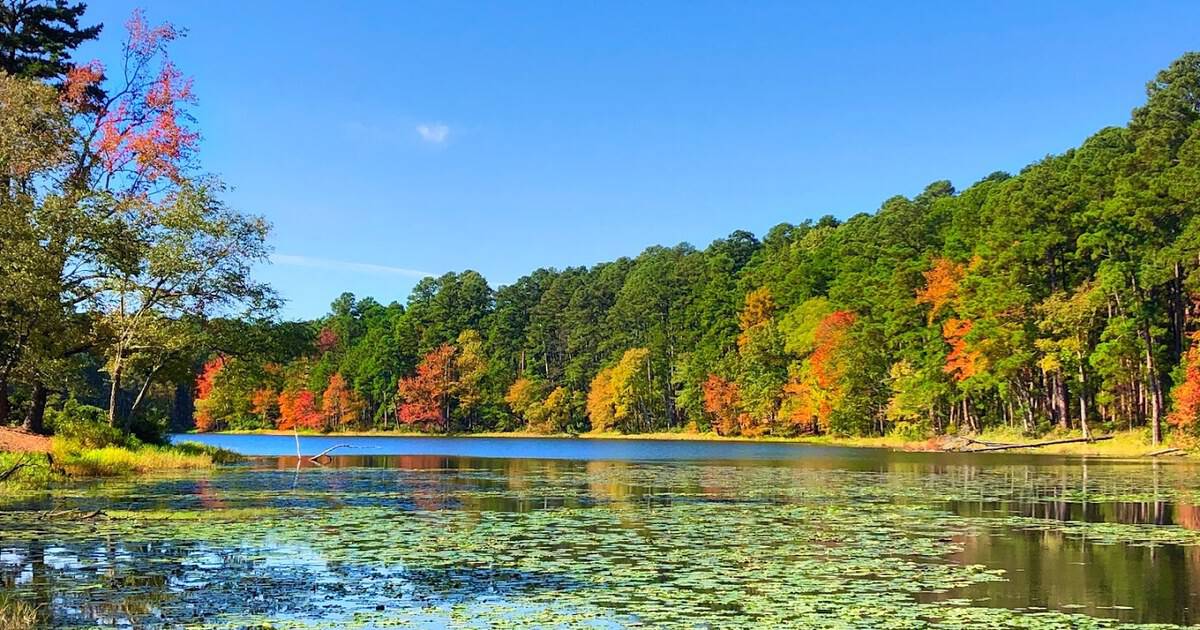
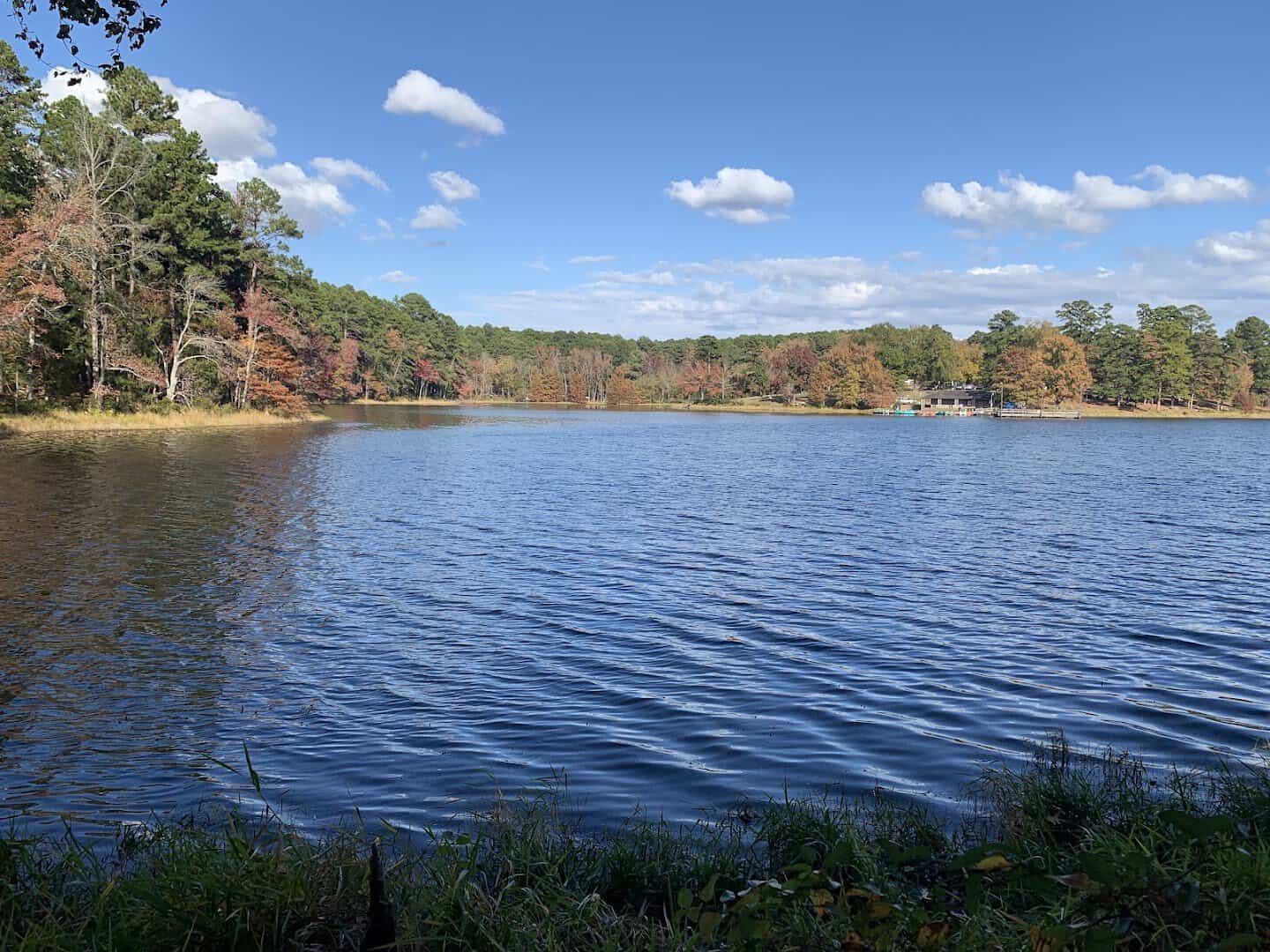
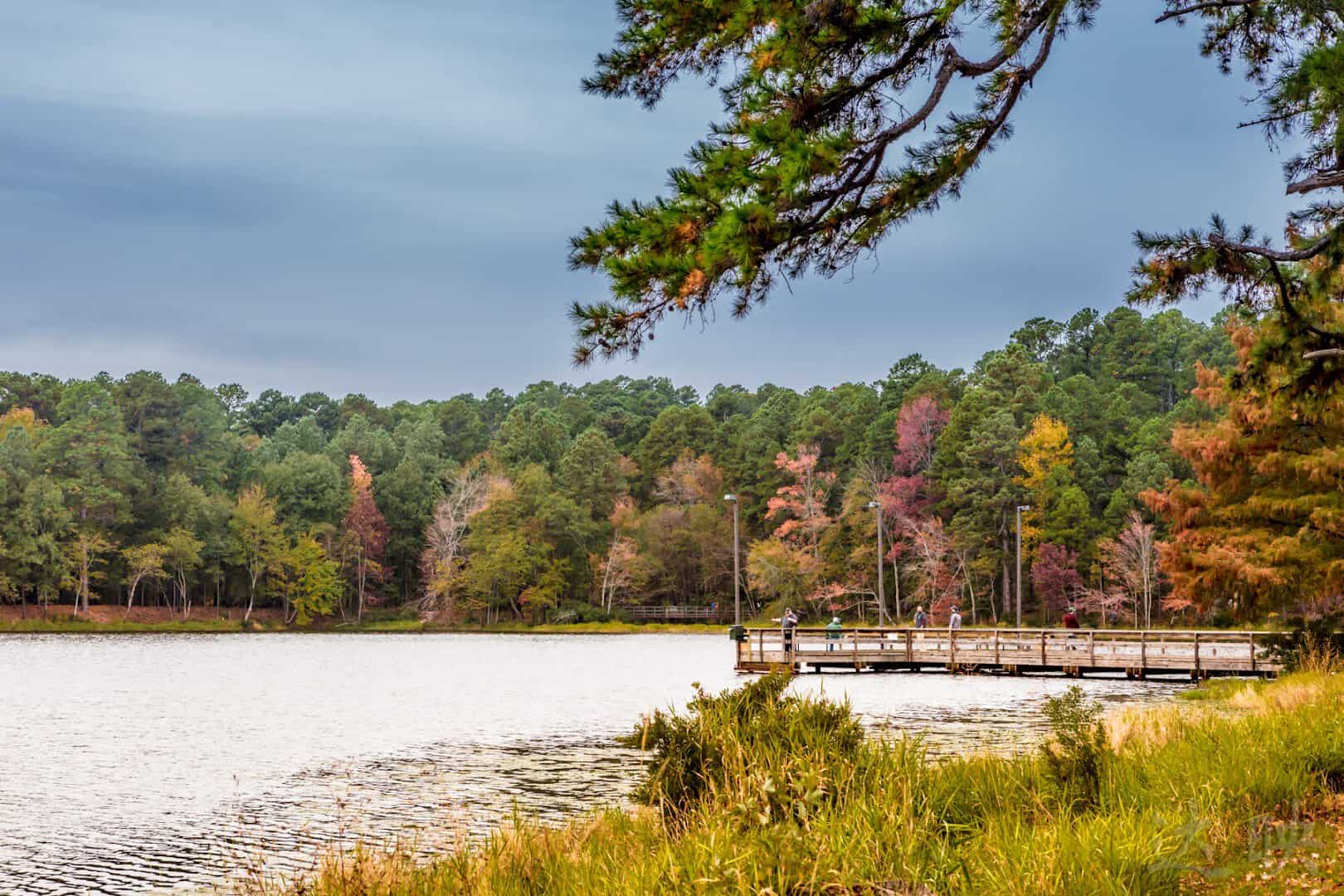
The heart of the park is Little Pine Lake, and it is the first thing that unknots you. Eighty acres of clear, calm water sit cupped inside the forest, ringed by pines that lean out over the surface and double themselves in the reflection.
There is a five mile per hour speed limit on the water, so no roaring engines break the peace. Just the dip of a paddle and the occasional plop of a fish taking a bug off the surface.
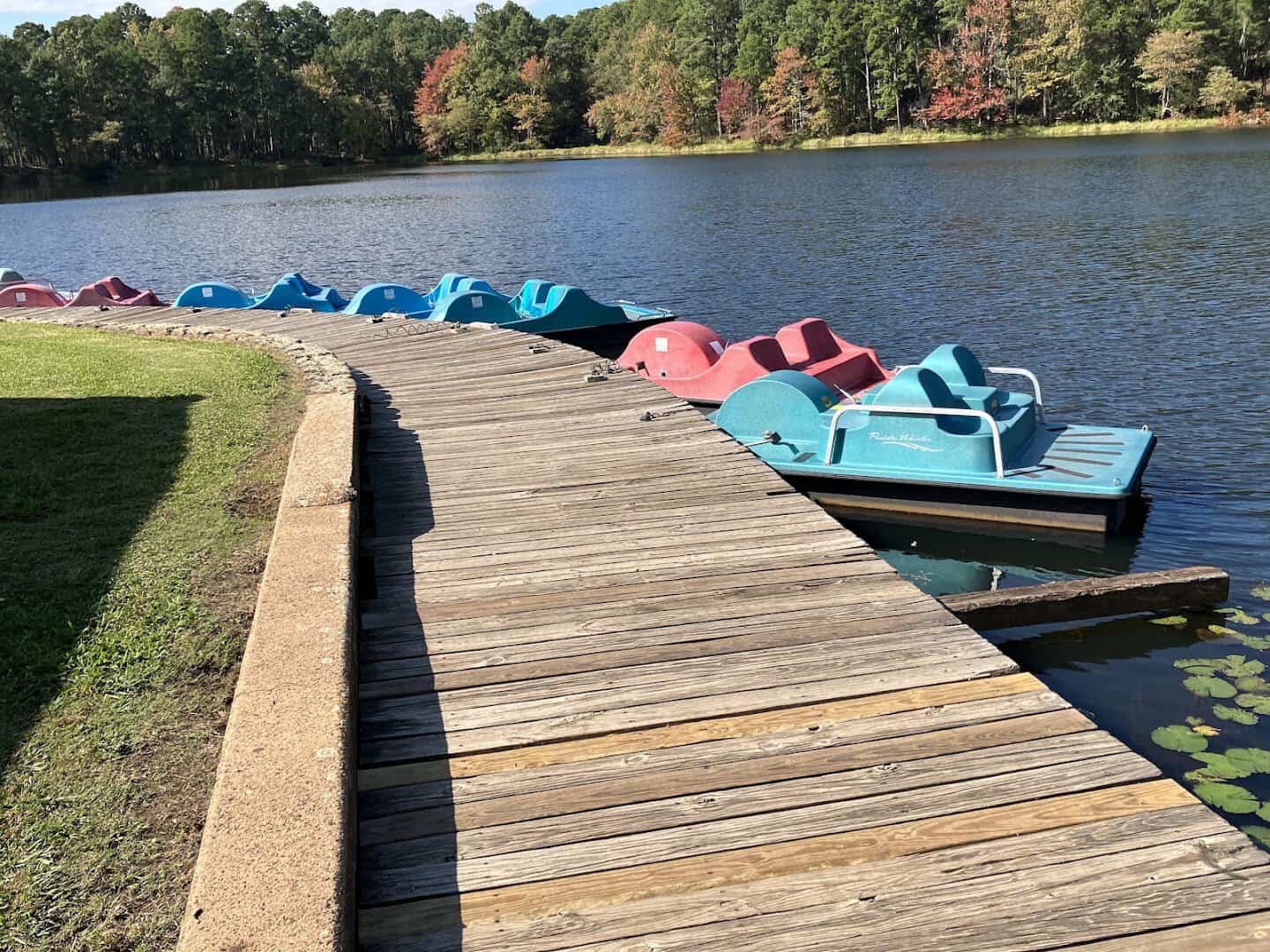
You can rent almost anything that floats. The park keeps paddle boats, paddle boards, canoes, single and tandem kayaks, and flat bottom boats, with life jackets and paddles included, available year round.
My first time out, I took a kayak and traced the whole shoreline in under two hours. I drifted past patches of water lilies while a heron stood frozen in the shallows, pretending it could not see me.
When the Texas heat climbs, the shallow swimming beach is the place to be. Wade in off the sandy edge, float on your back, and watch the pine tops sway against the sky.
The old boathouse still stands watch over the ramp, one of the many pieces of this park that has been in service since the 1930s. It is a handsome thing, low and solid, and it makes the whole shoreline feel like it has always been here.
The water is the whole point here, and it asks nothing of you but to slow down. I sat on the pier one evening and did not check my phone once, which for me is close to a miracle.
Trails for Rustling Leaves and Long Views
Lace up and the forest opens itself to you on foot. The park has two main trails, and they could not be more different in mood.
The Rustling Leaves Trail is the gentle one, a 2.4 mile loop that hugs the edge of the lake almost the whole way. It is flat, shaded, and forgiving.
The loop strings together the swimming area, the playground, the old CCC dining hall, and the interpretive center like beads on a necklace. You can learn the park’s story and stretch your legs in the same easy morning.
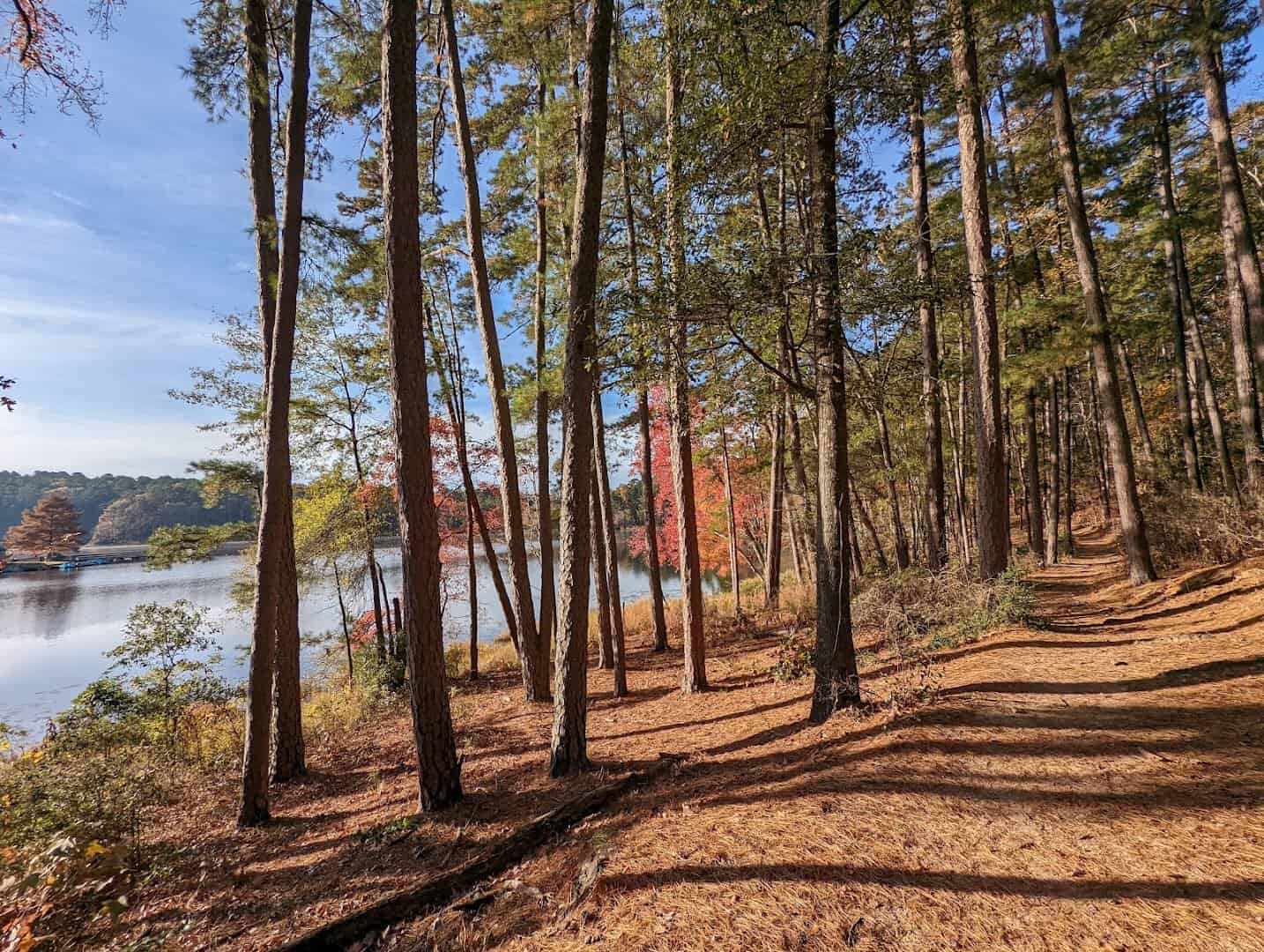
I walked it slowly, on purpose. Every gap in the trees framed a new slice of water, and the name earns itself the moment a breeze moves through the canopy and the whole forest starts to whisper.
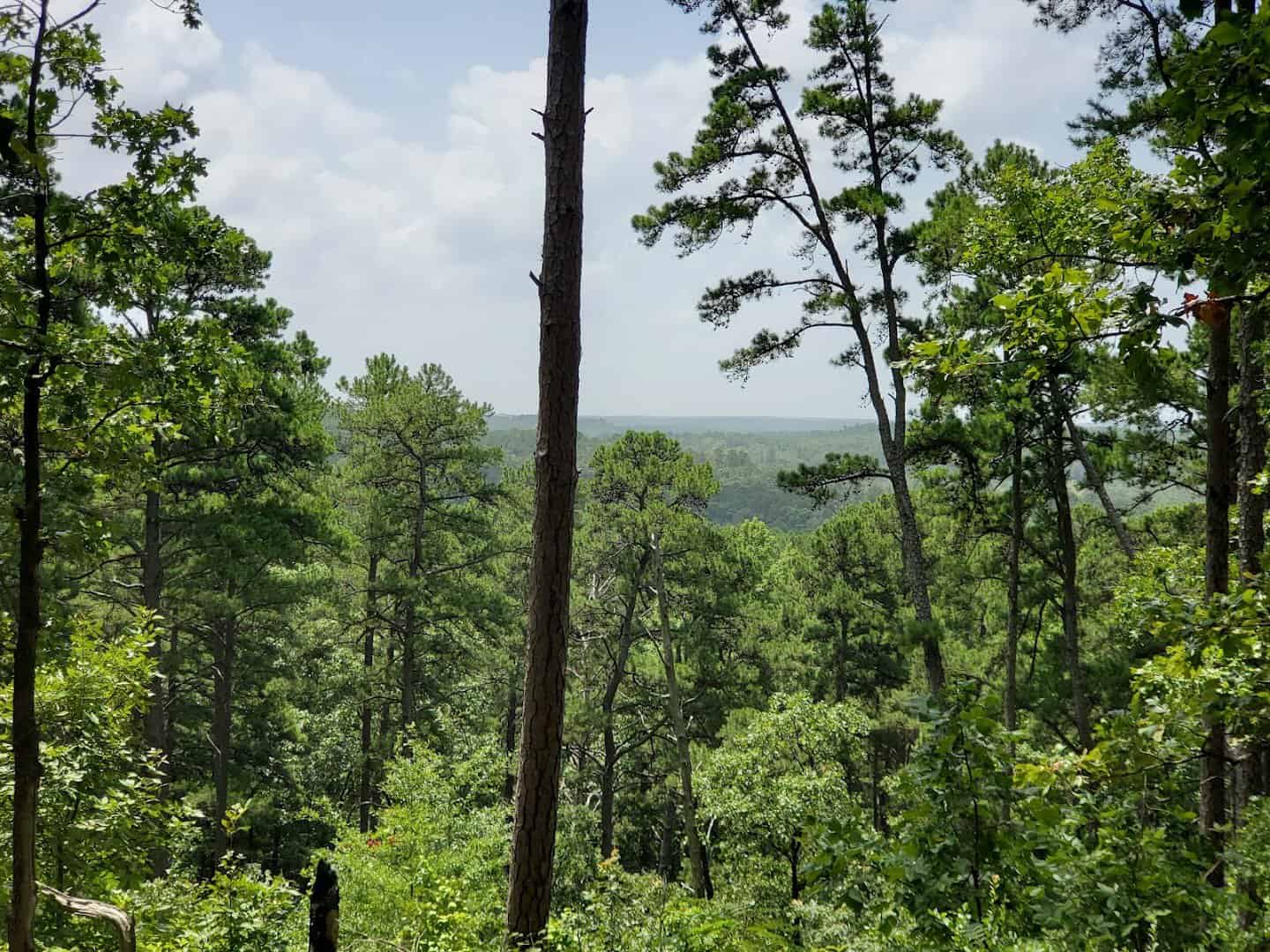
If you want your heart rate up, the Mountain View Trail delivers. It is a shorter 1.2 mile route, but it climbs to the highest point in the park, roughly 400 feet up, and rewards the effort with a long look over the treetops and the lake below.
Pro tip: do the Mountain View climb in the cool of the morning, then reward yourself with the flat lakeside loop and a rented paddle board in the warm part of the afternoon.
The Autumn Show You Do Not Expect in Texas
Here is the secret that East Texans keep a little too well. Come November, this park puts on a fall color show that could hold its own against New England.
Texas is not supposed to do this, and yet it does. Sweet gums, maples, hickories, red oaks, dogwood, sassafras, and flaming sumac all catch fire at once.
They throw red, orange, and gold against the deep green of the pines that stay evergreen behind them. The contrast is what makes the display so striking, and it stops first time visitors in their tracks.
The leaves reach their glorious peak in late October and early November, and word has spread. The park is known across the state as one of the top must see spots for fall foliage, so weekends in autumn fill up fast.
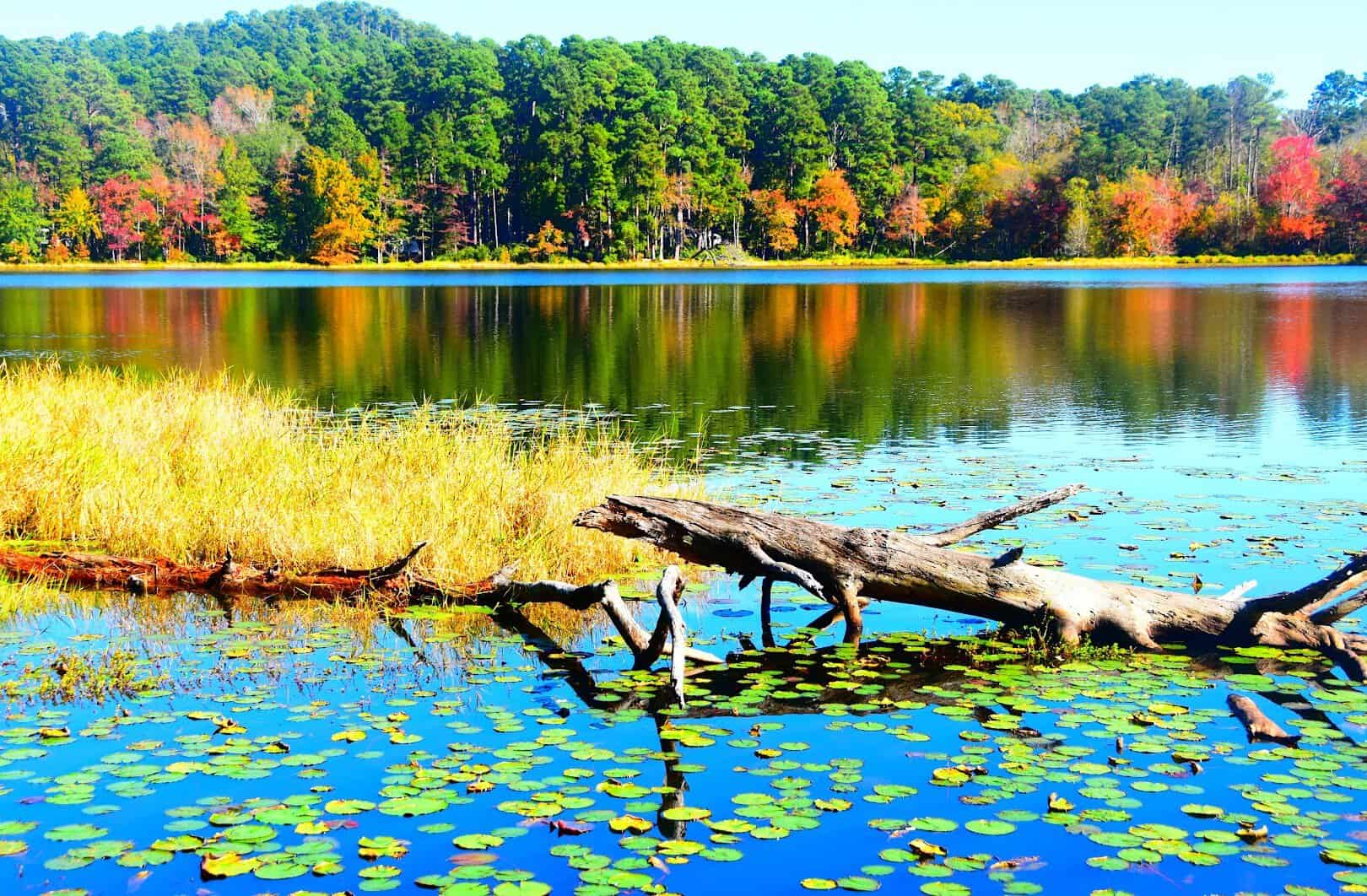
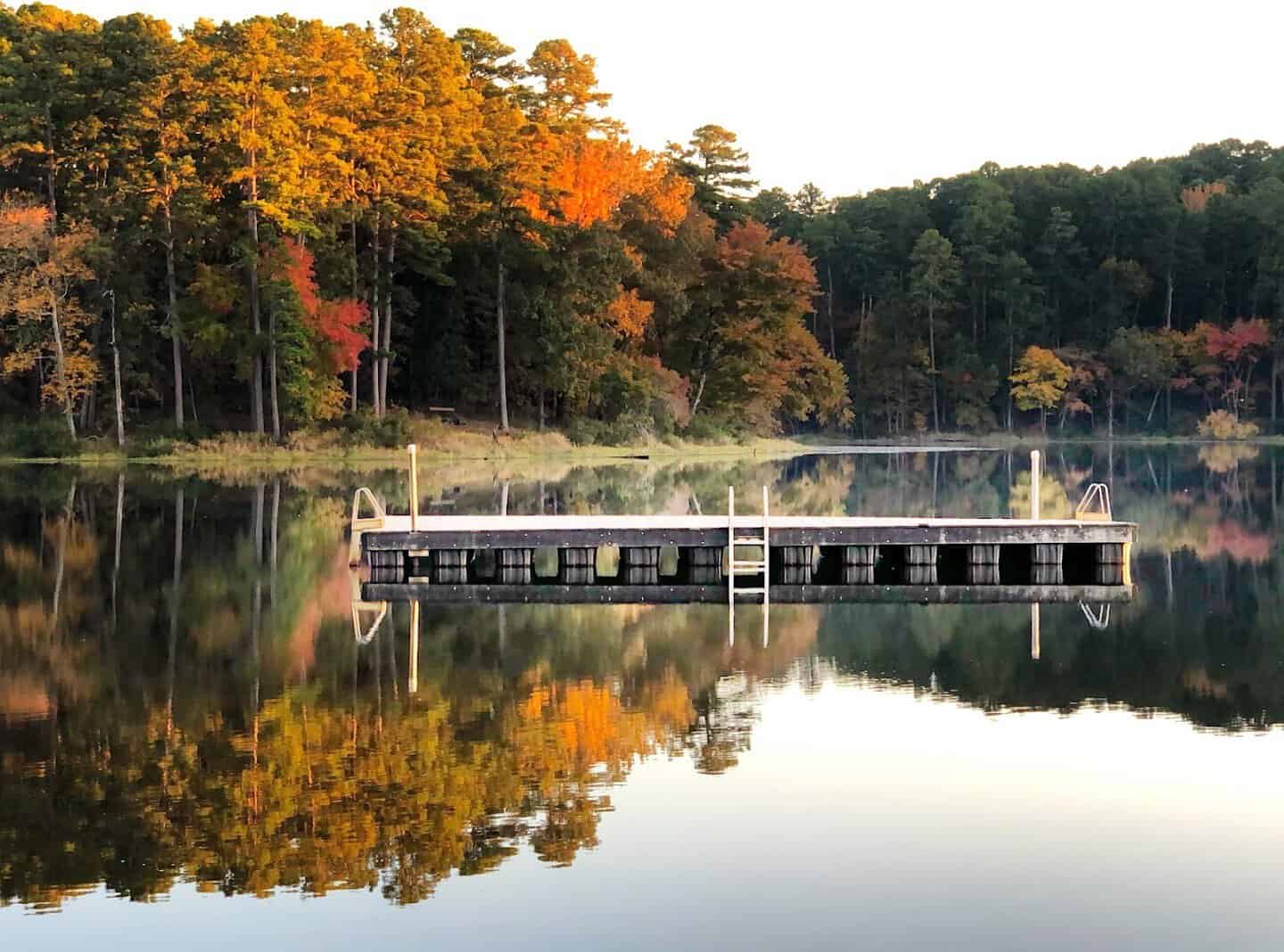
I came one first week of November and walked the lake loop with the whole forest reflected upside down in the still water. Twice the color for the price of one.
It is the kind of thing you drive a long way to see and then cannot quite believe is sitting quietly in East Texas. Bring a camera and give yourself the whole day.
The light changes hour by hour, and every bend of the trail asks you to stop again. By late afternoon the low sun sets the sweet gums glowing, and you will run out of memory card before you run out of things to photograph.
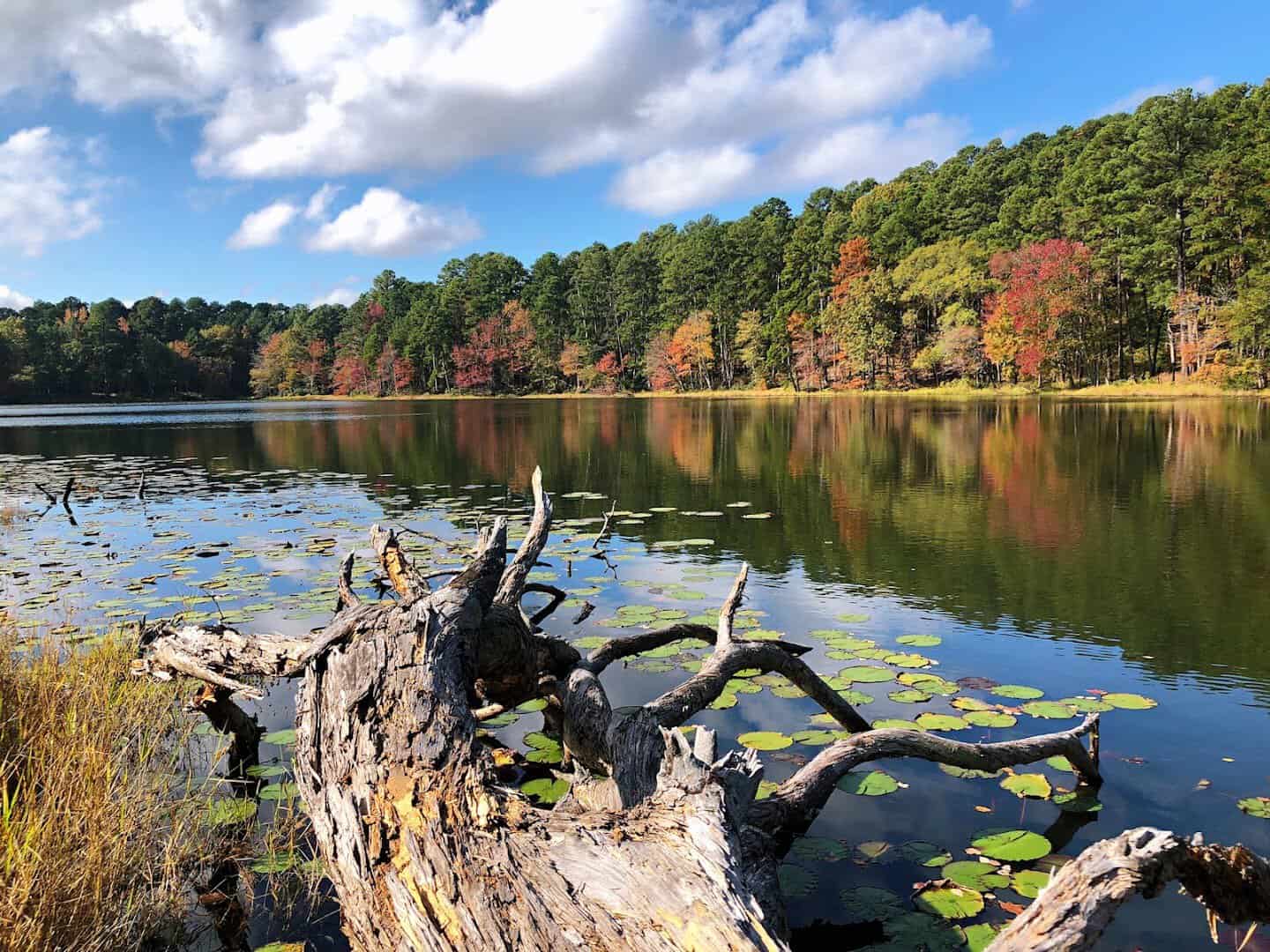
Did you know? The pines you are admiring are not an accident. Much of this forest was replanted by hand in the 1930s, which makes the whole blazing display a kind of living monument.
Built by Hand During the Great Depression
The park you walk through today was carved out of tired, logged over land by young men with hand tools and a paycheck their families badly needed.
Private owners deeded more than five hundred acres to the state in 1935. That same year, Company 2891 of the Civilian Conservation Corps arrived and got to work.
The first thing they built was the earthen dam that impounded Little Pine Lake, turning a creek bottom into the eighty acre centerpiece you paddle today.
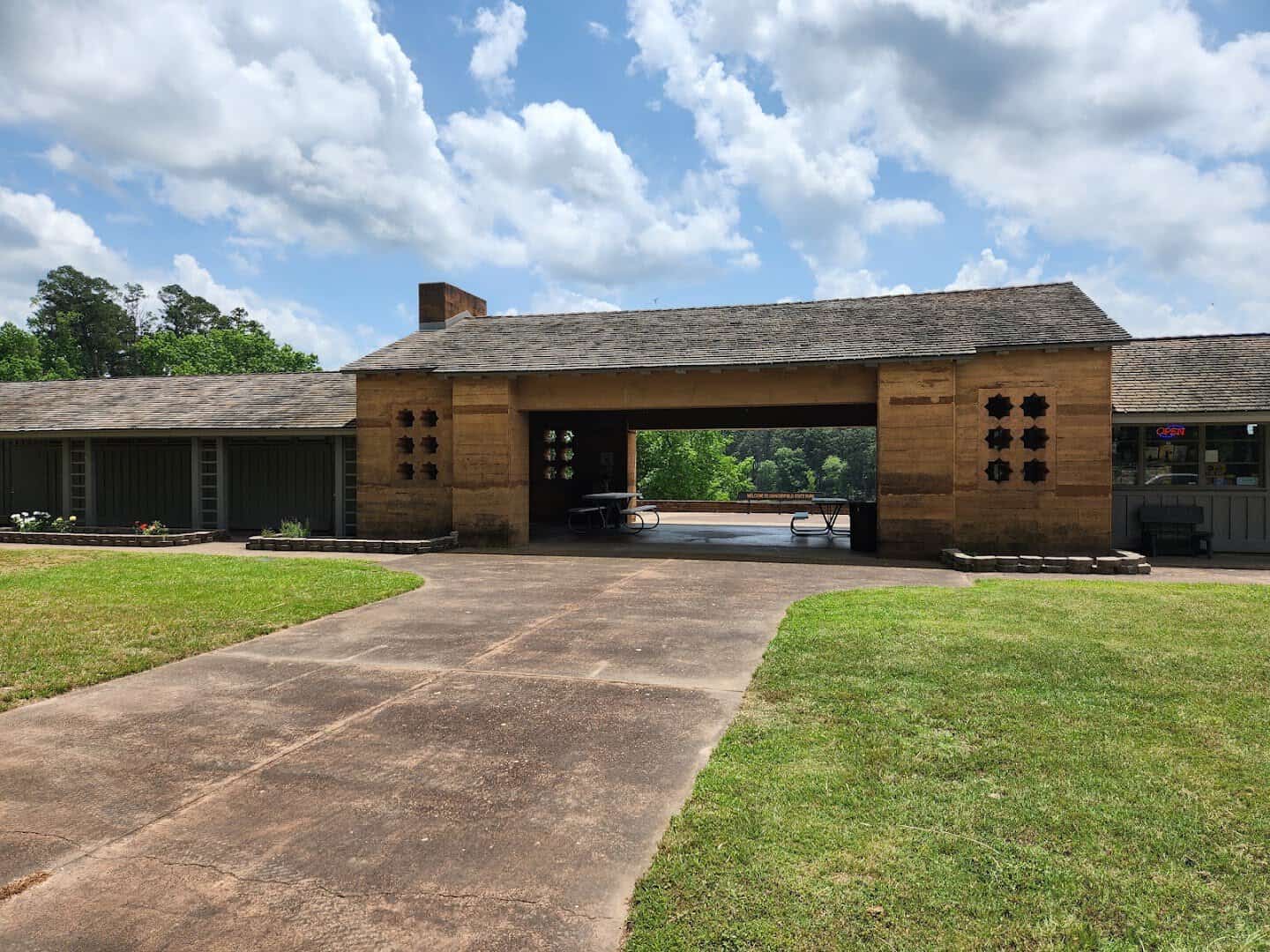
In 1938, Company 1801, an all Black CCC unit, took over and carried the work through to 1940. Between them the two companies built the boathouse, the swimming beach, the cabins, the roads and steps and trails, and the sturdy stone and timber lodge.
They also replanted the forest itself, tucking pines, oaks, and maples back into ground that timber crews had stripped bare. The park opened to the public in 1938 and has welcomed visitors ever since.
The town that lends the park its name has a story of its own. Daingerfield grew up in the early 1840s and was named for Captain London Daingerfield, and by 1877 it had become the seat of Morris County.
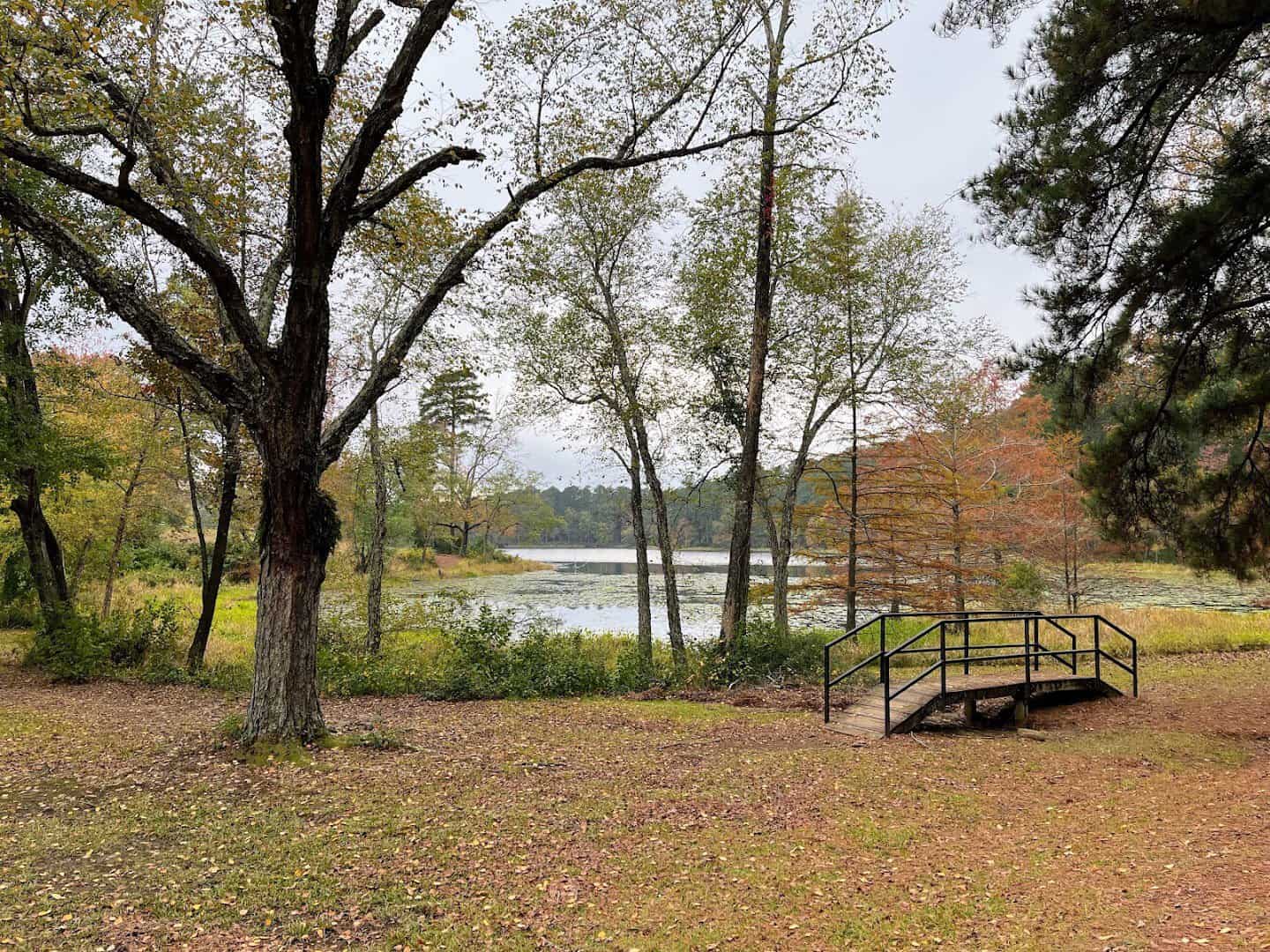
Today the park spreads across roughly 507 acres of the East Texas Pineywoods. Much of what the CCC shaped is still standing and still in use, which is rare and rather wonderful.
The park closed for a spell in 2011 for a careful update to the campground restrooms and hookups, then reopened ready for a new generation. Ninety years on, the bones those young men laid down are still doing their job.
Sleep Under the Pines
You do not have to leave when the sun goes down, and honestly you should not. Spending the night is when the park truly works its calm on you.
There are campsites for every style, from simple water only tent sites to full hookup spots. The pull through sites even carry fifty amp service for the big rigs, so you can roll in, set up, and let the pines do the rest.
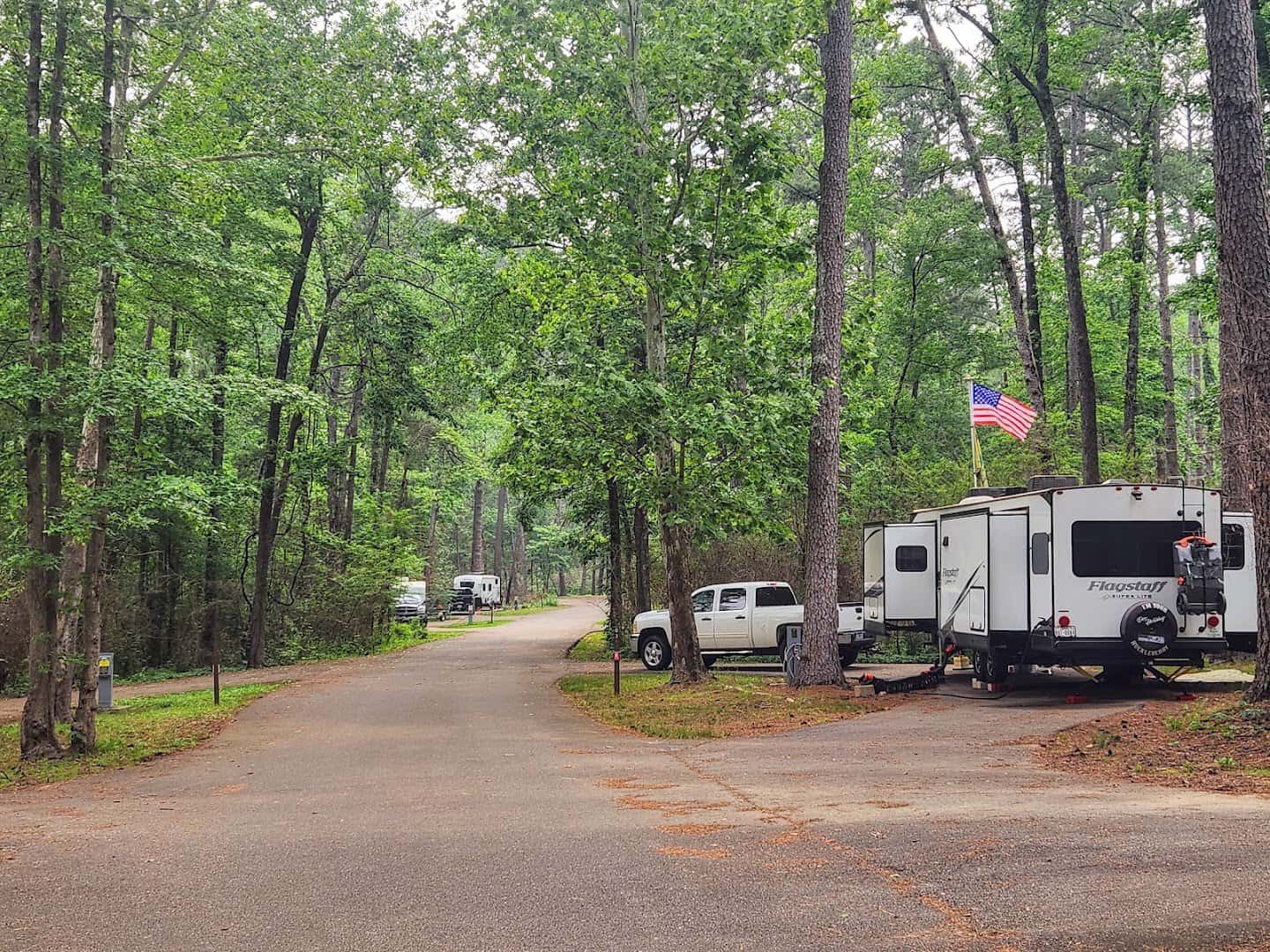
After dark the forest turns into a different place. The lake goes glassy, the frogs start up, and the sky over the water holds more stars than most Texans ever see from home.
If a tent is not your speed, the park rents out four historic cabins, each with its own bathroom and kitchen. Two of them sleep four people, one sleeps six, and all of them carry the handmade character of the era that built them.
The crown jewel is Bass Lodge, a five bedroom, two bath stone lodge that sleeps up to fifteen. Gather the whole family or a pack of friends, light a fire, and you have a Depression era retreat all to yourselves.
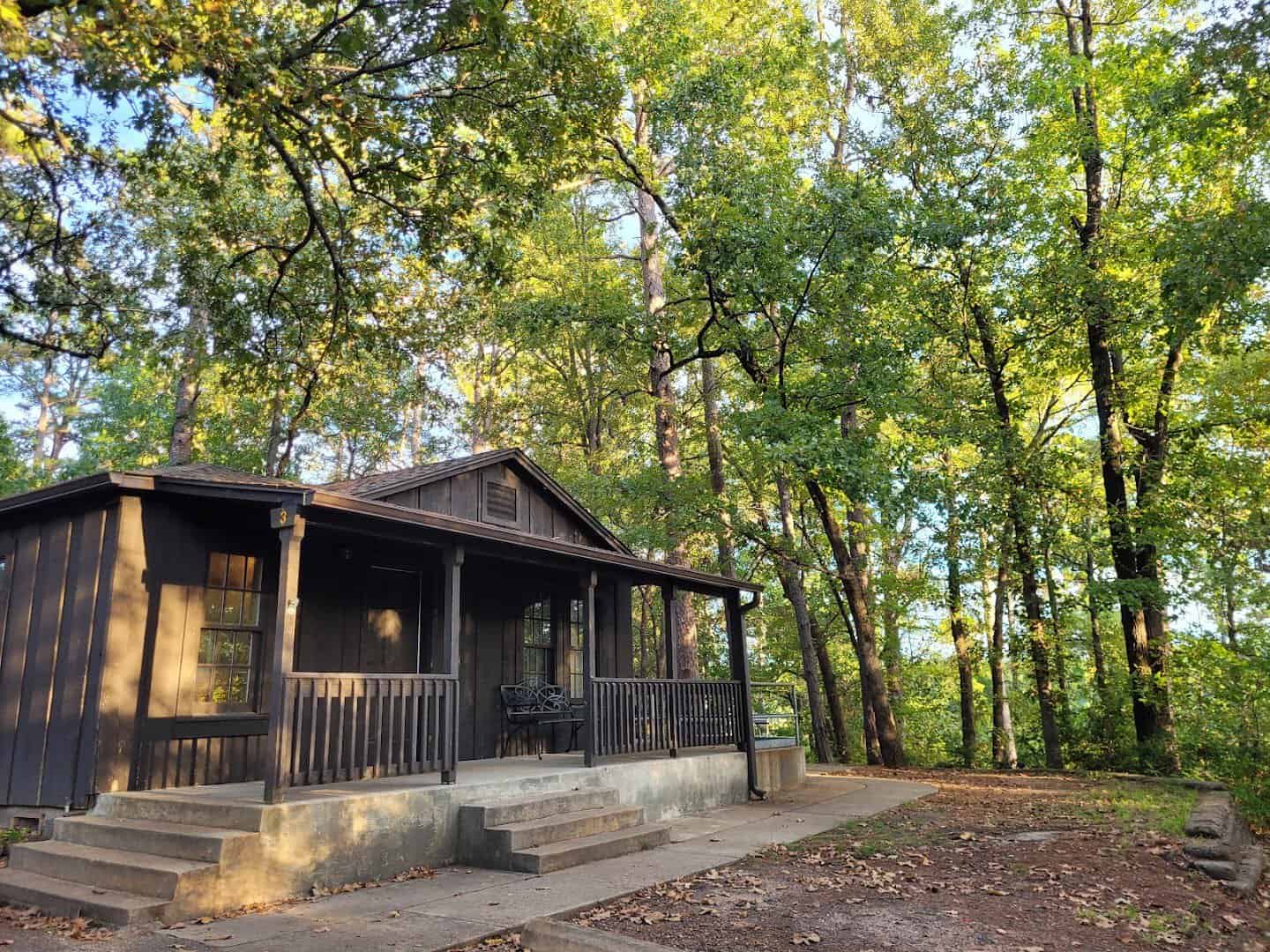
The park fills up often, especially in fall, so book your site or cabin well ahead. This is a place people return to, and they plan around it.
Fishing, Critters, and Four Legged Friends
Anglers, this one is a gift. You do not need a fishing license to fish from the shore or a boat inside the park, so you can hand a kid a rod without a trip to the license counter.
The lake holds crappie, largemouth bass, catfish, perch, and even chain pickerel, and the park store sells worms if you forgot yours. Cast off the pier at dawn and you may have the whole misty lake to yourself.
The forest is full of gentle company. White tailed deer step out at the edges of clearings, rabbits and squirrels dart across the trails, and birders come for the wood thrush and the herons that work the shallows.
There is quieter fun too, for the days you do not feel like doing much. Geocaching hides little treasures along the trails, the picnic tables the CCC built still sit in the shade, and a lazy afternoon of birding by the water counts as a full itinerary here.
Bringing the dog? The park runs a B.A.R.K. Ranger program, so your leashed, well mannered pup is a welcome trail companion. Everyone in the family, four legs included, gets to leave their worries behind here.
How to Get There
Daingerfield State Park sits in the piney woods of Morris County in far northeast Texas, an easy detour off the highways that thread the region.
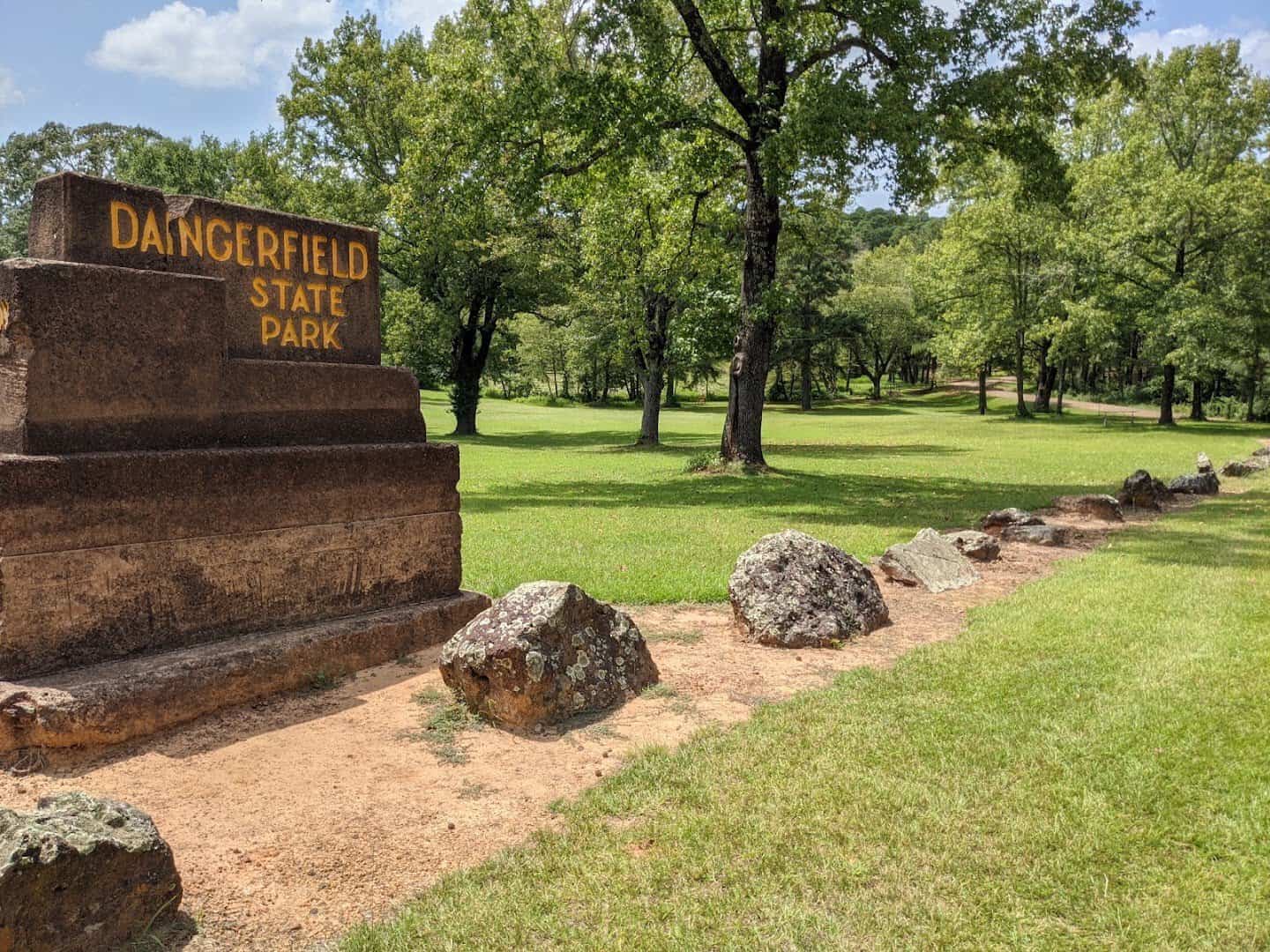
Where: 455 Park Road 17, Daingerfield, TX 75638
The gate is open daily from 6 a.m. to 10 p.m., and entry is a bargain at $4 for adults, with kids twelve and under free. The park store handles rentals and fishing supplies, and reservations for camping and cabins are made online or by phone ahead of your trip.
Start Planning Your Slow Weekend
Some places you visit to see a thing. This one you visit to feel a thing, that loosening in your shoulders as the pines close in and the lake goes still.
So pack a paddle, a picnic, and maybe a fishing rod, point the car toward East Texas, and let almost ninety years of hand built calm do exactly what it was made to do. Leave your worries at the gate. They will keep just fine until you come back out.
Featured image: Wei Wang via Daingerfield State Park

Stella Raines
Editor-in-Chief
Stella brings over a decade of storytelling experience to TX Headlines. With roots in West Texas and a love for road trips, she leads the editorial team with an eye for the hidden stories that make Texas unforgettable.
More Stories
This Easygoing Texas State Park Pairs Blue-Green Water With Billion-Year-Old Pink Granite
These Texas Roads and Gardens Explode With Wildflowers Every Spring
This Secret Texas Cavern Is an Ancient Riverbed That Once Hid a Prohibition Ballroom
This Turquoise Texas Lake Is a Hill Country Escape That Could Pass for the Caribbean
Tags