This Easygoing Texas State Park Pairs Blue-Green Water With Billion-Year-Old Pink Granite
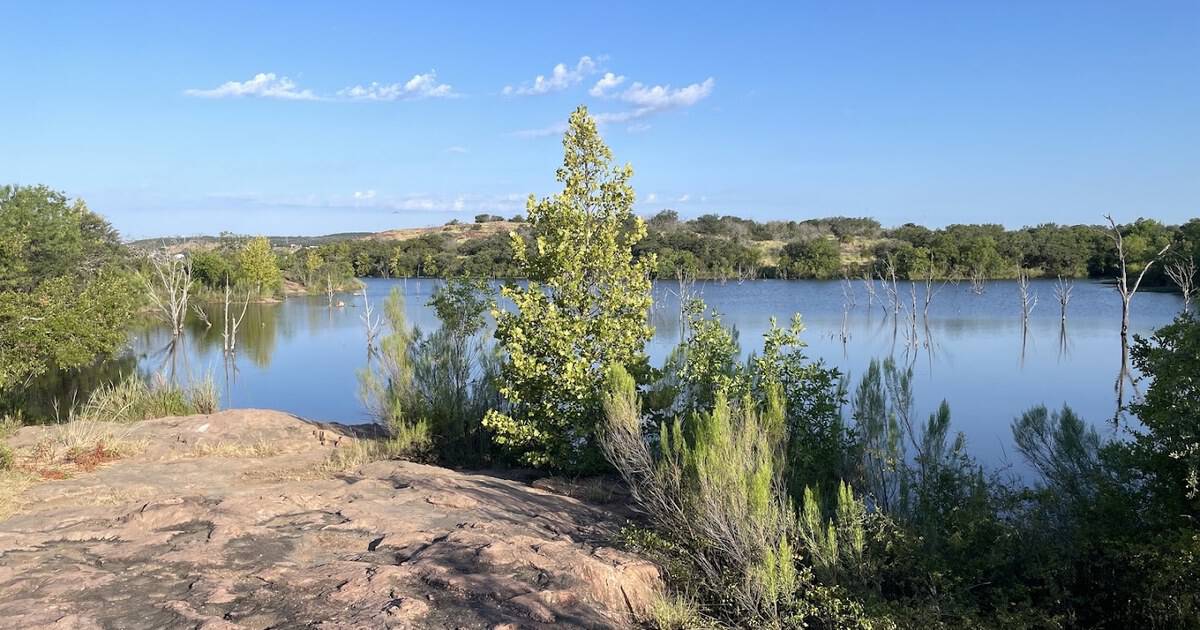
The first time I slid off a warm slab of rock into that lake, I braced for the usual muddy Texas swimming hole. What I got was a shock of clear, cool water in a startling shade of blue-green.
I floated on my back and just looked up at the sky. My kids were already gone, paddling toward a little cove ringed with pink stone, calling for me to hurry up and follow.
That was the moment this Central Texas park stopped being a name on a map and became a place we come back to. It sits about ten miles west of Burnet, and it is called Inks Lake State Park.
The whole place has a sun-warmed granite feel, easygoing and unhurried in a way few busy lakes manage. Below, I will walk you through the water, the ancient rock, the trails, the history, and everything you need to plan a slow family weekend of your own.
The Lake That Never Drops
Walk down to the shoreline and the first thing you notice is the color. The water glows a soft blue-green against rocky banks, so bright it almost looks edited. On a still morning it mirrors the sky and the cedar-covered hills that ring it.
Here is the quiet miracle of this place. The lake holds a constant level all year. Most reservoirs rise and fall with drought and rain, but this one stays put, so the swimming, paddling, and fishing stay reliable every single month.
That steadiness comes from its spot in a chain. The lake covers 803 acres and sits between two dams in the Highland Lakes system, four miles below the big Buchanan Dam. Water flows through it rather than draining down, leaving a calm, no-wake pool.
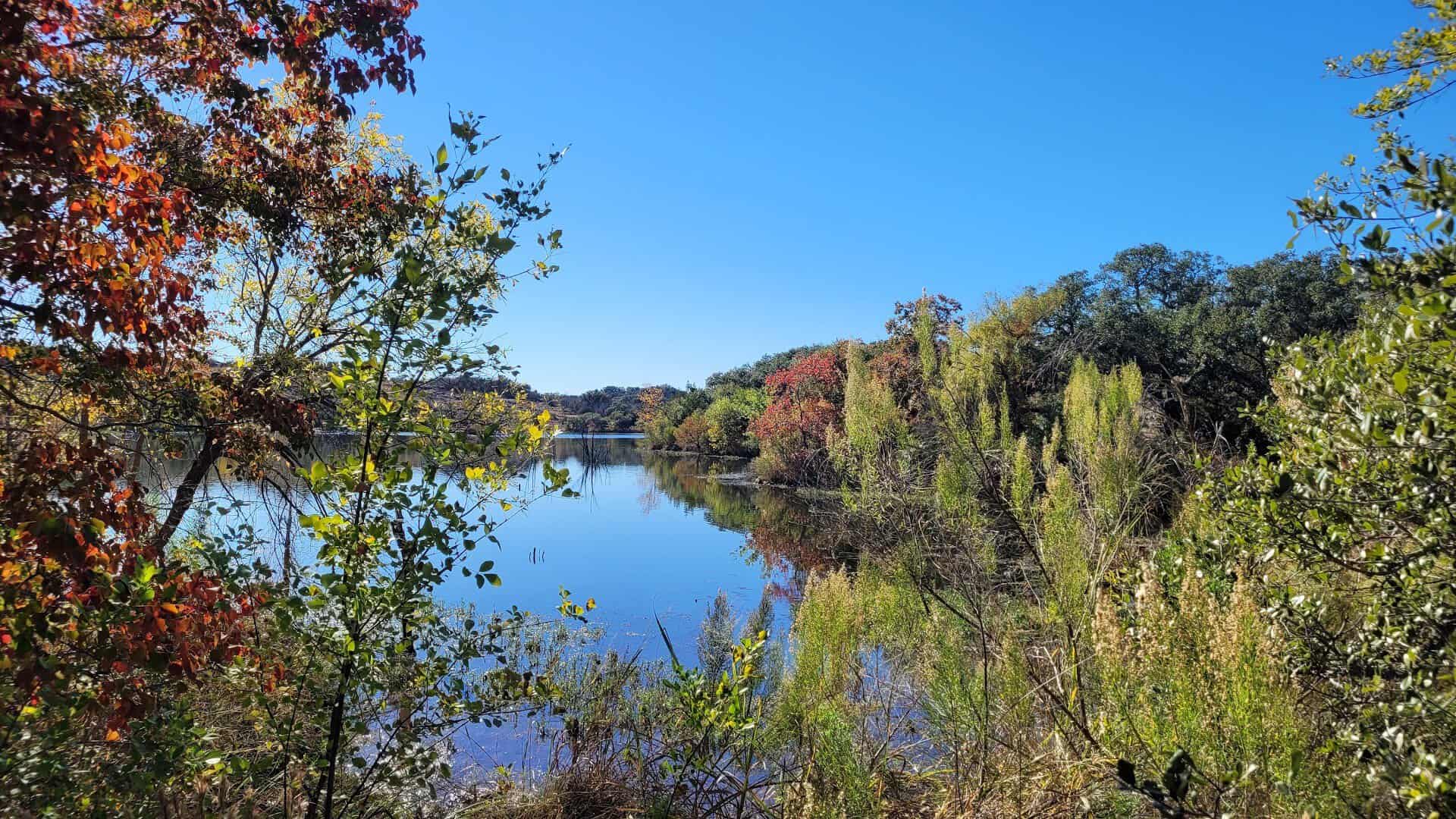
The Highland Lakes are a string of six reservoirs on the Colorado River, and this is the smaller, quieter middle child. While speedboats churn the bigger lakes upstream and down, here the loudest sound is usually a kingfisher or a kid’s cannonball.
The clarity surprises people. On calm days you can see well down into the green, which is why scuba divers train here and swimmers linger past the shallows. There is a designated swimming area with no lifeguards, so young ones stay close and the grown-ups keep count of heads.
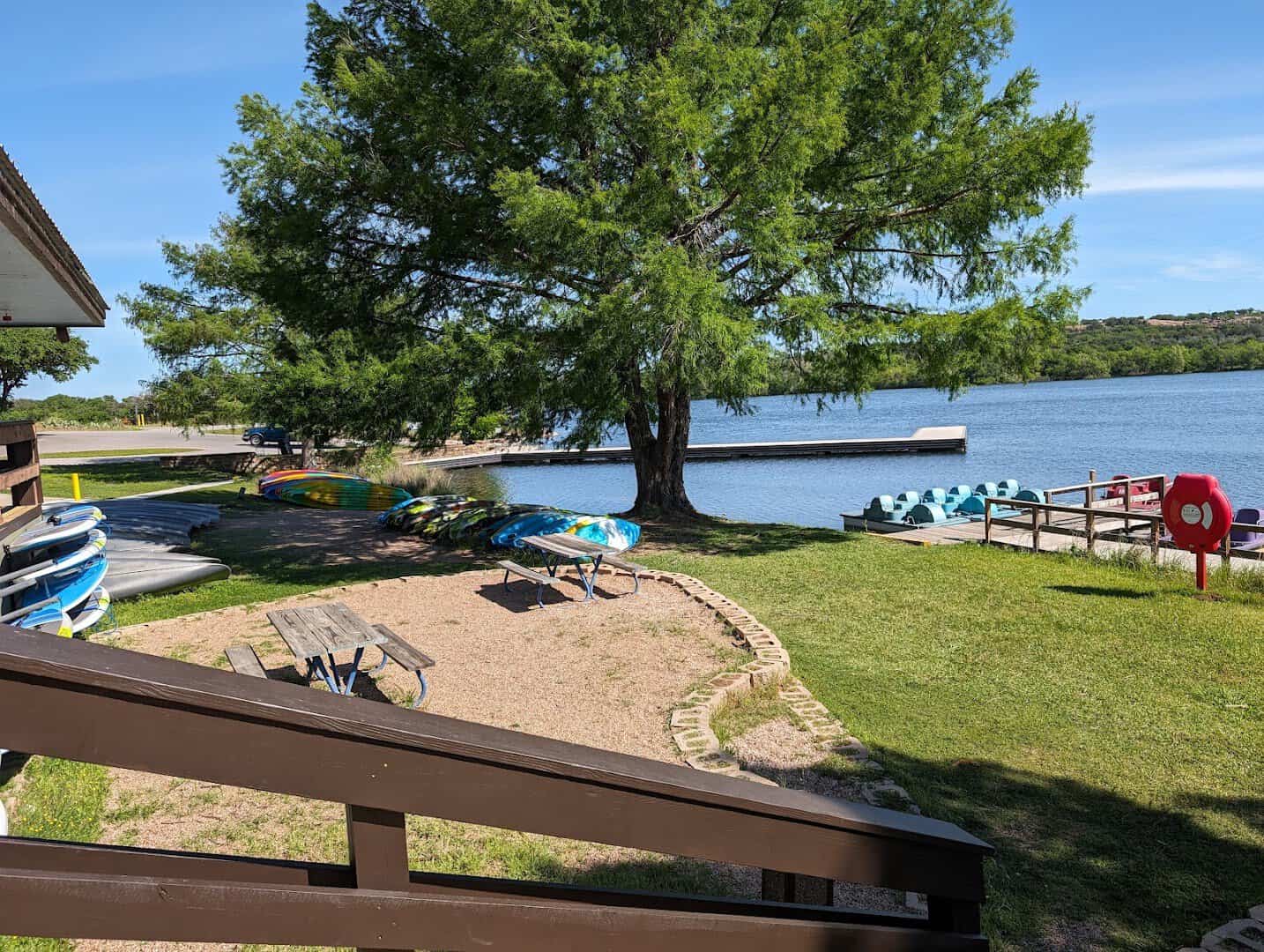
You can rent a ride right at the park store. Paddle boats, canoes, kayaks, and stand-up paddleboards go out for twenty dollars the first hour and ten for each hour after. Renting one is the easiest yes you will give all weekend.
Devil’s Waterhole and the Pink Cliffs
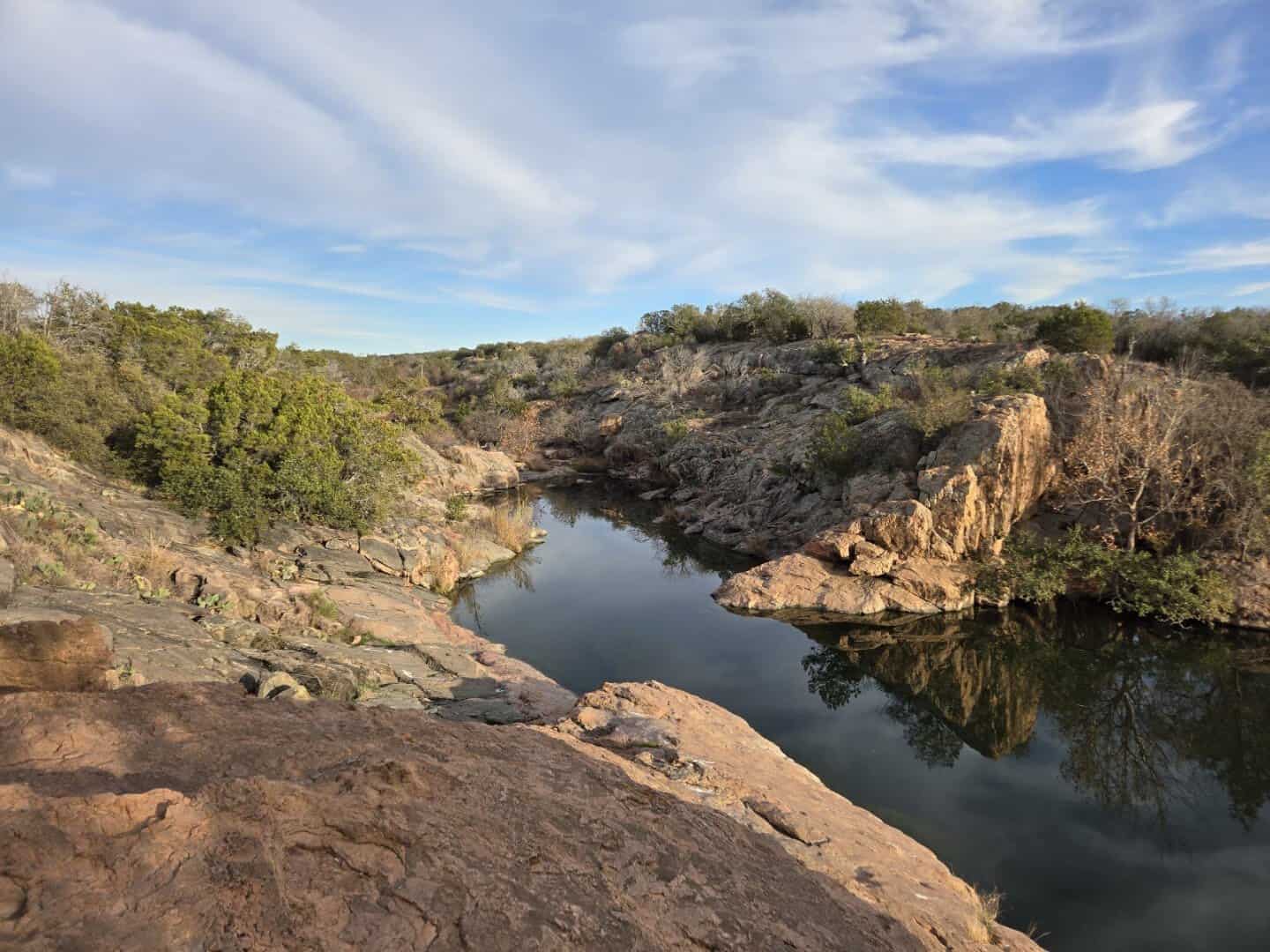
Paddle to the north end and the banks close in around you into a rugged, cliff-lined cove. This is Devil’s Waterhole, and it is the postcard everyone comes for.
Slabs of pink and gray rock rise straight from the water, split by shady crevices and little waterfalls after a good rain. The whole cove feels tucked away, a secret room off the main lake.
Kayakers drift into the shadows here to cool off in the deep shade. Braver visitors scramble up the ledges and leap into the water below, a rite of passage on hot afternoons. My family prefers a lower perch, feet dangling, watching the daredevils with our own breath held.
The cove rewards a slow float. Herons stalk the shallows, turtles sun themselves on half-submerged stone, and the light shifts from blue to gold as the afternoon wears on. Bring water shoes, because that beautiful rock is rough on bare feet.
Rock Older Than Almost Everything
Those pink outcrops are not just pretty. They are some of the oldest exposed stone in the state, and standing on them is a humbling thing once you know their age. Geologists call the pink rock Valley Spring gneiss.
It formed more than a billion years ago, part of the ancient Llano Uplift that pushes this deep basement rock up to the surface. The same forces raised nearby Enchanted Rock, but the stone here is older still, worn smooth by unthinkable stretches of time.
Sharon Mosher, a geologist and emeritus dean at the University of Texas Jackson School of Geosciences, has noted something remarkable. Devil’s Waterhole holds the oldest rock in Texas you can reach on public land. You can walk right up and put your hand on it.
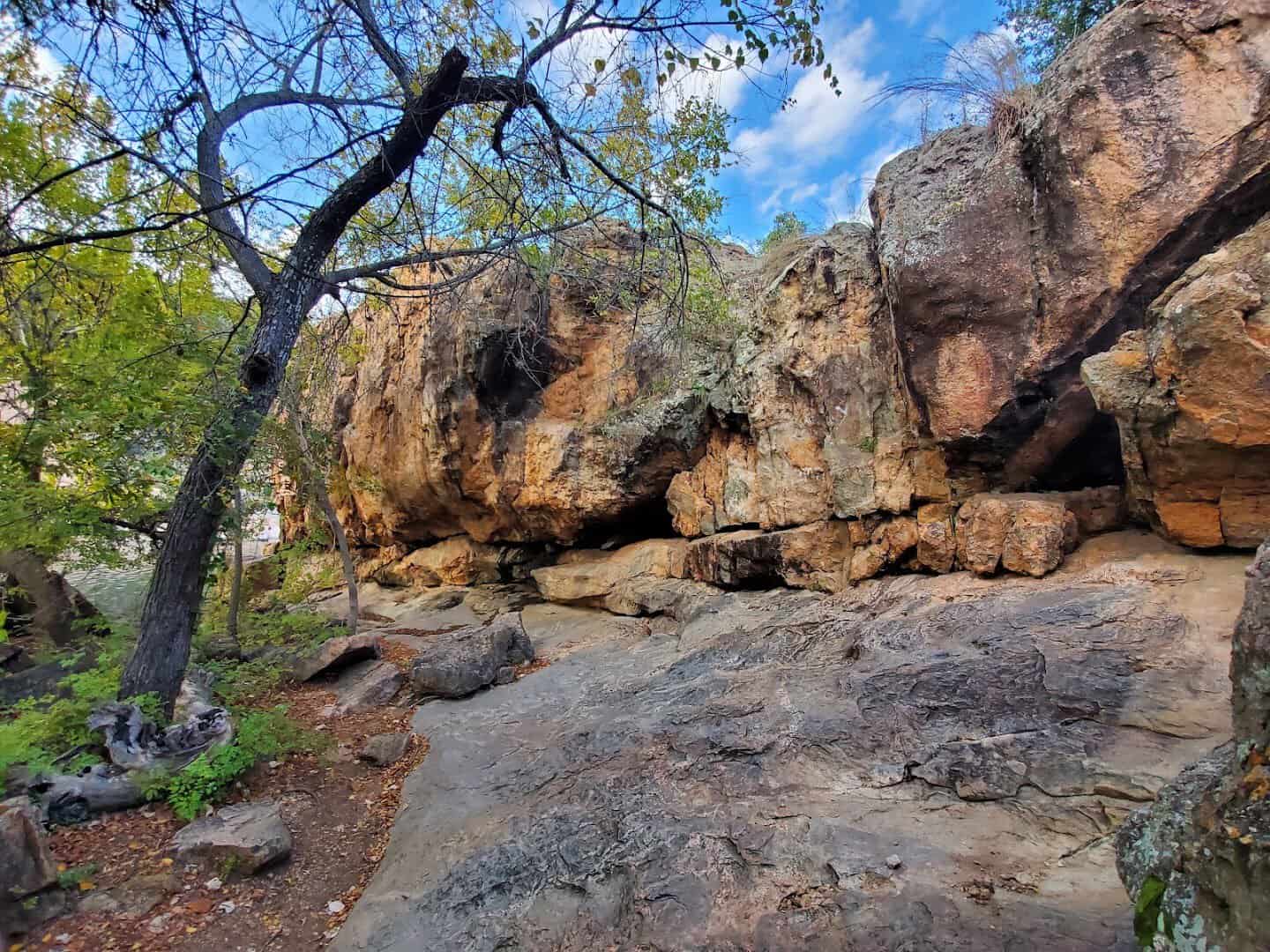
Did you know a lot of people call it pink granite? True granite appears here only as thin veins cutting through the gneiss, though the warm rosy color is much the same.
So you are laying your towel on scenery older than the dinosaurs, older than nearly anything you will ever touch. It is a strange, good feeling once it lands.
I like to sit still on that rock for a minute and let the sheer age of it sink in. Then the kids splash it right back out of my head, which is exactly how a family weekend is supposed to go.
Miles of Trails and a Quiet Bird Blind
Leave the water and the park opens into shady forest and rocky, wildflower-dotted hills. Nine miles of hiking trails thread through it, from easy lakeside strolls to rugged climbs with long views over the water and the Hill Country beyond.
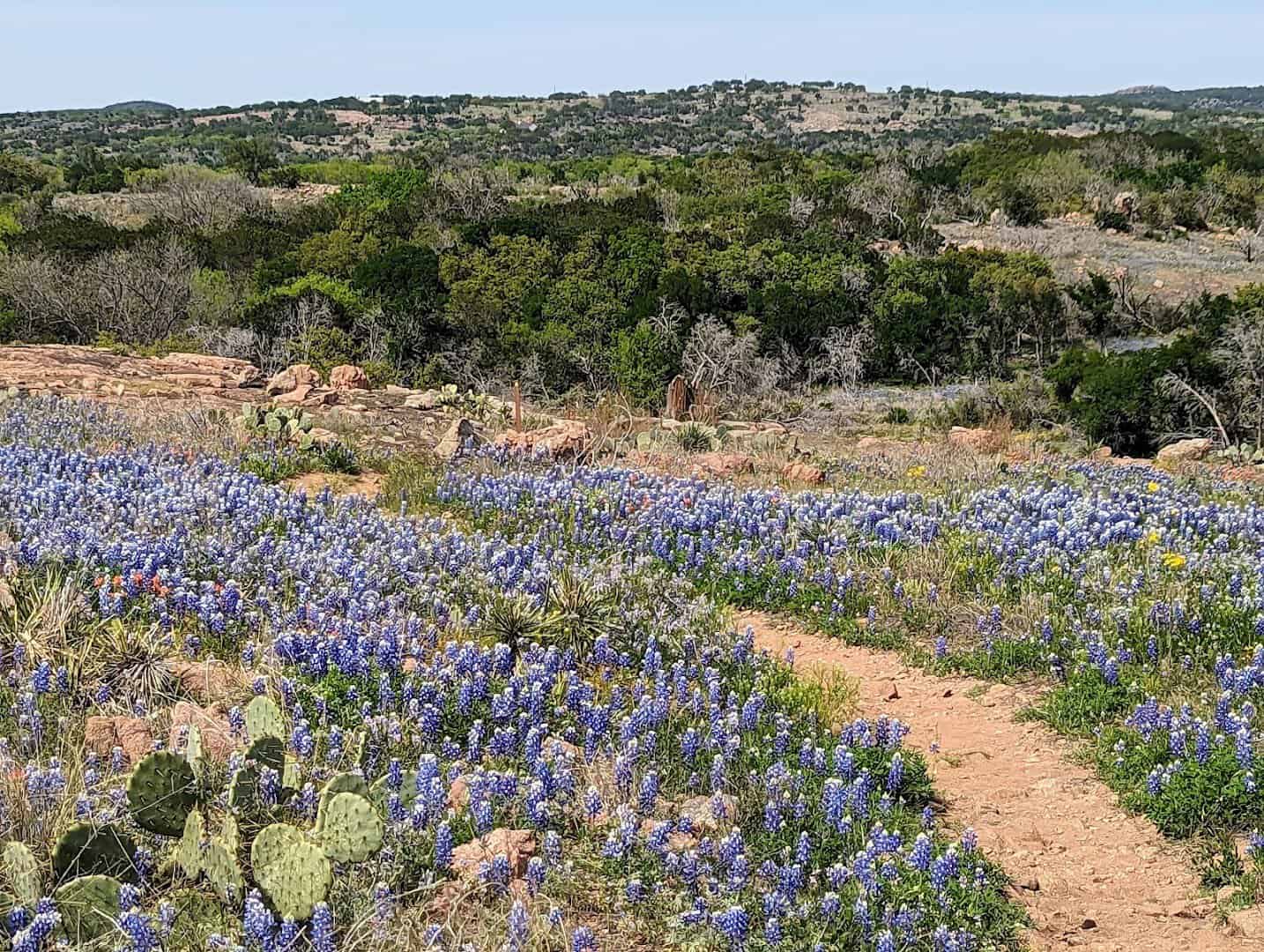
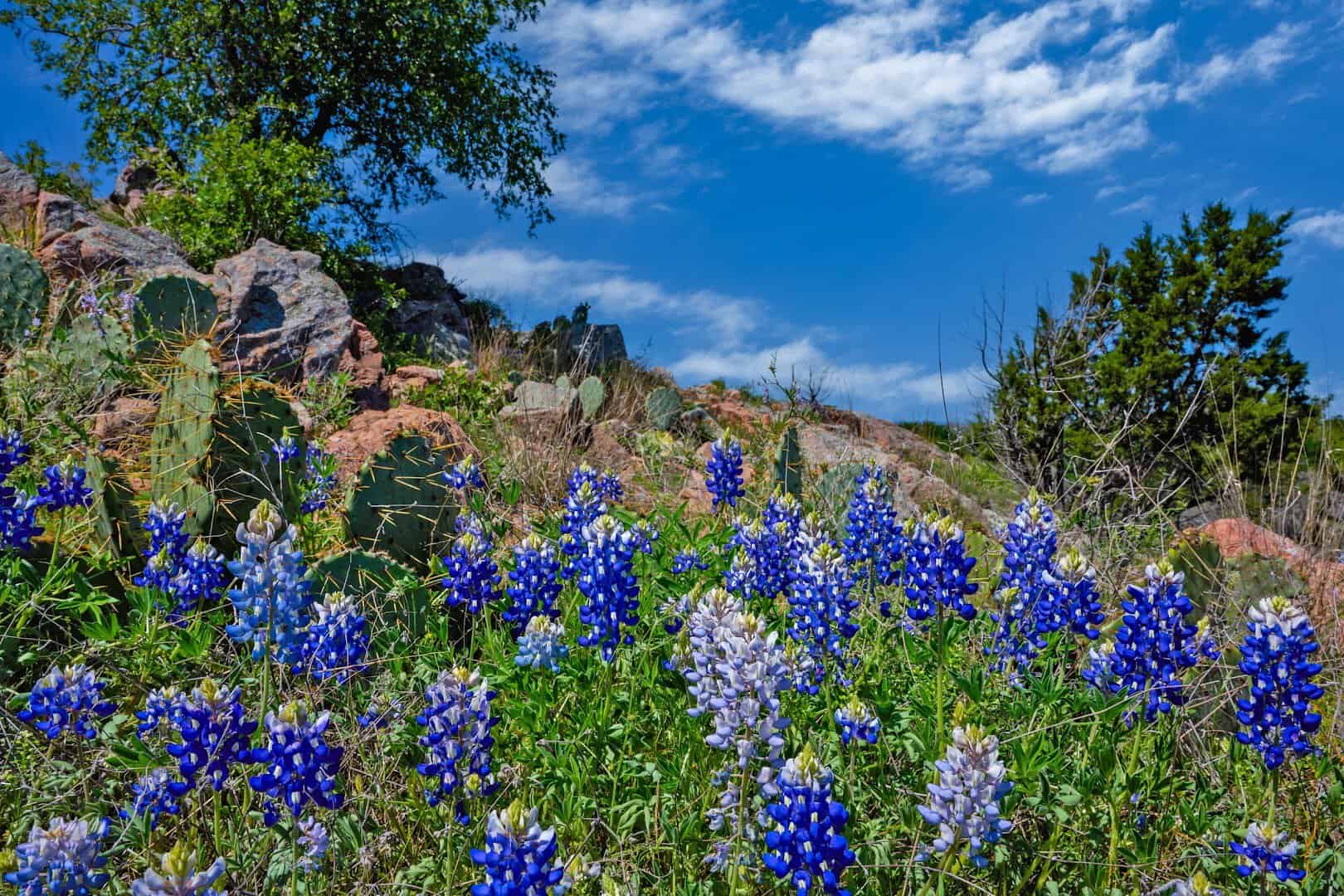
My favorite is the Pecan Flats Trail, a 1.2-mile loop that climbs past prickly pear and granite ledges to an overlook worth the sweat. In spring the ground goes electric with bluebonnets and Indian paintbrush, and the whole family slows down to look.
Watch the brush and you will spot the locals. White-tailed deer graze at dusk, armadillos root along the paths, and a roadrunner sometimes darts across the trail like a wind-up toy. The kids treat every sighting like a prize.
Tucked along the way is a bird-watching blind with feeding stations, a favorite quiet stop. We have watched painted buntings, cardinals, and titmice flit in while the kids whispered and pointed. It is the kind of small wonder that makes a park feel like yours.
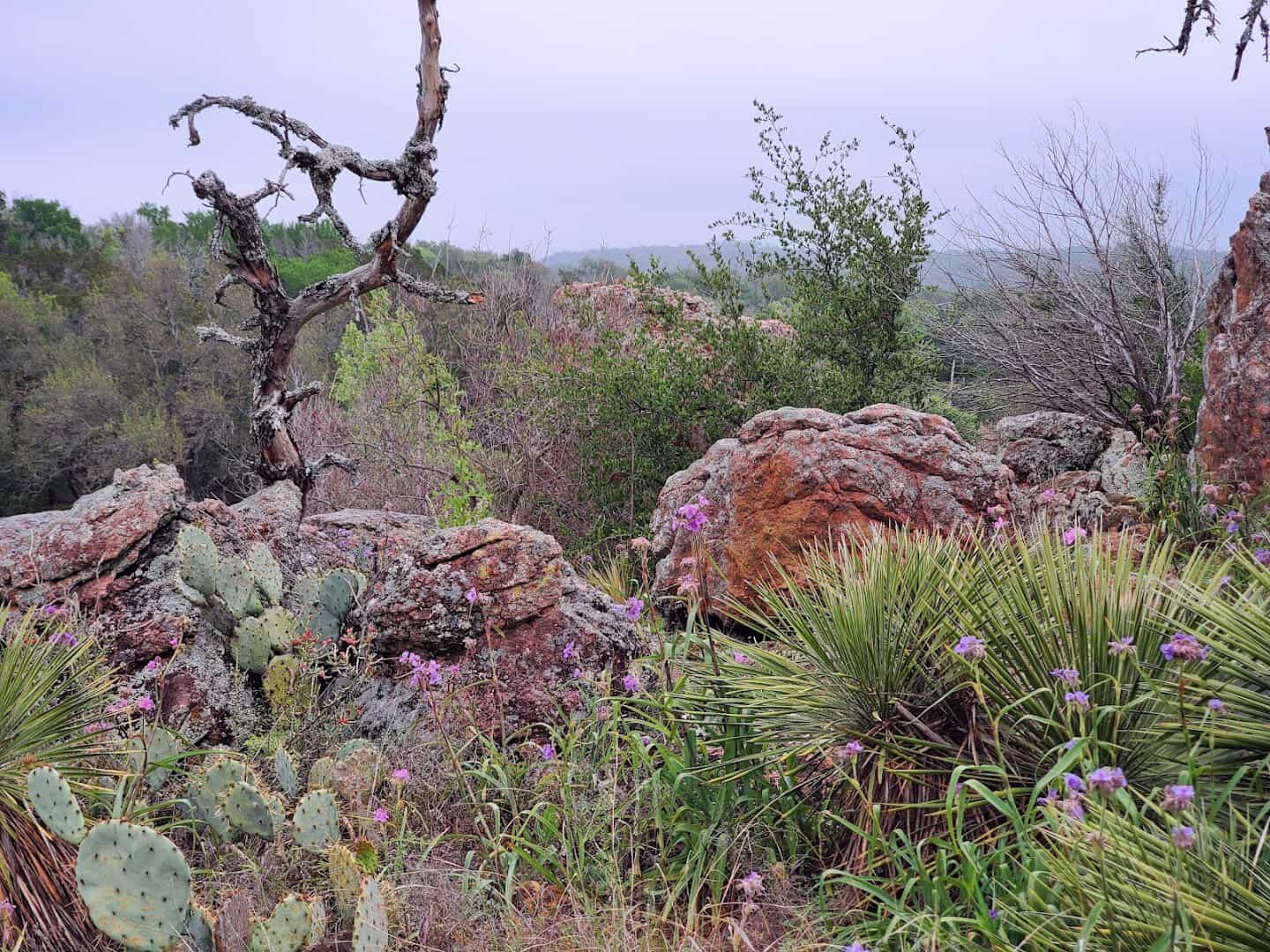
The trails also hide a scattering of geocaches, and hunting them turns a plain walk into a treasure hunt. Give a restless nine-year-old a phone and a mission and suddenly the hot afternoon stretches an extra hour, nobody complaining.
A Park Born in the Great Depression
The rock is ancient, but the park itself has a very human story, and it starts in the depths of the Great Depression. The Lower Colorado River Authority formed in 1934 to tame the flood-prone Colorado River and build a chain of dams and lakes.
Crews built Inks Dam between 1936 and 1938, and the lake filled behind it. Both the dam and the lake honor Roy B. Inks, an original director on that river authority board. The work put paychecks in the hands of local farmers and ranchers when they needed them most.
Then came the young men of the Civilian Conservation Corps. Company 854 moved in during the late 1930s and built the bones of the park. They laid scenic roadways, stone bridges, and culverts, much of it still in use today.
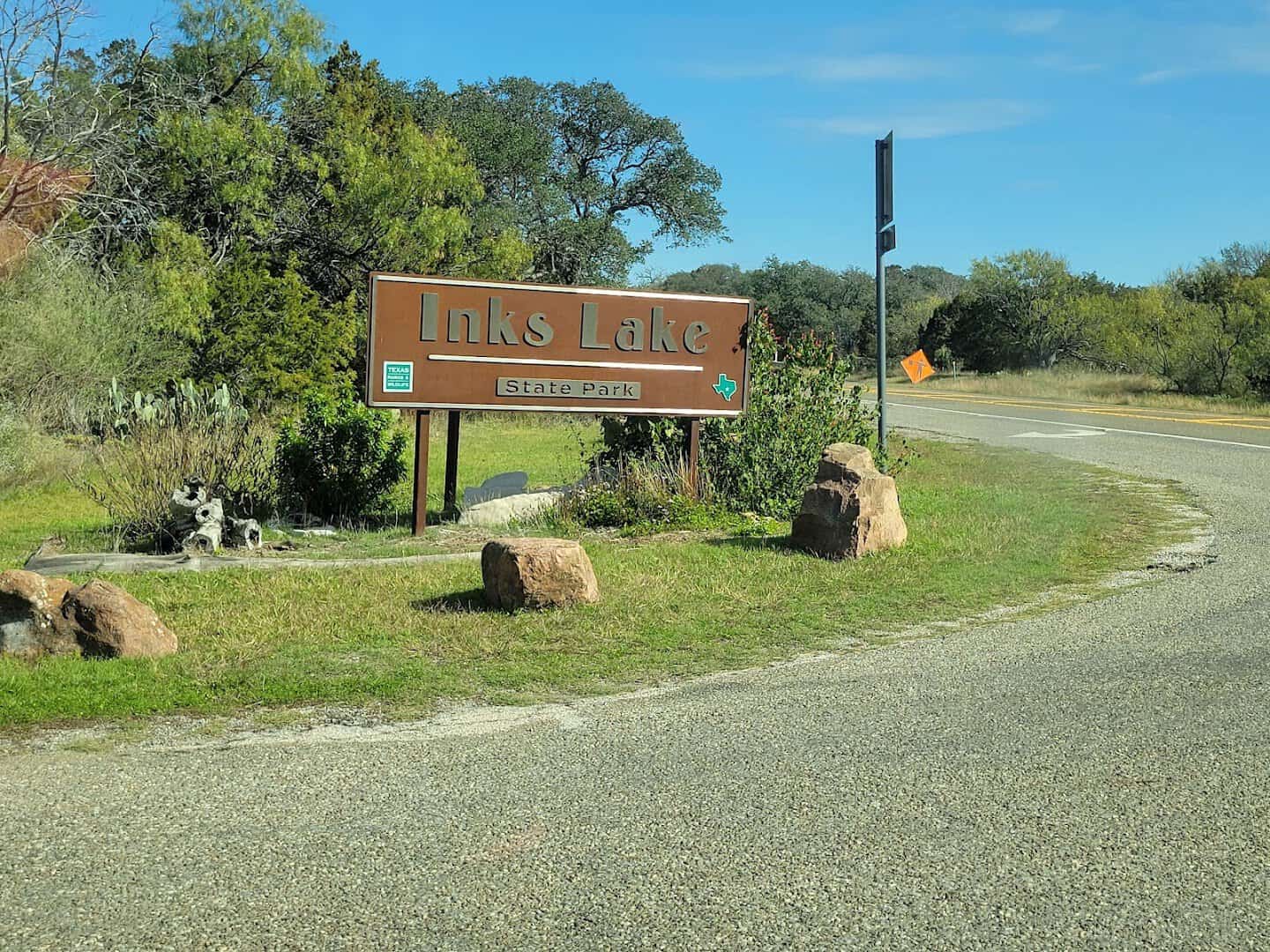
World War II pulled those men away, and the camp closed in 1942 before the work was finished. The state had acquired about 1,200 acres in 1940, yet the completed park did not open its gates until 1950. In 2025 it marked seventy-five years.
I love that the road my family drives in on was cut by hand nearly a century ago. Those stone bridges have carried generations of station wagons and minivans full of sunburned kids. It is history you can walk across on your way to the water.
Cabins, Campsites, and Slow Nights
The lake looks different at dusk, glassy and pink with the last light. The best way to catch it is to stay the night. The park keeps nearly 200 campsites, many of them lakeside or a short walk from the water, and several loops have playgrounds for the little ones.
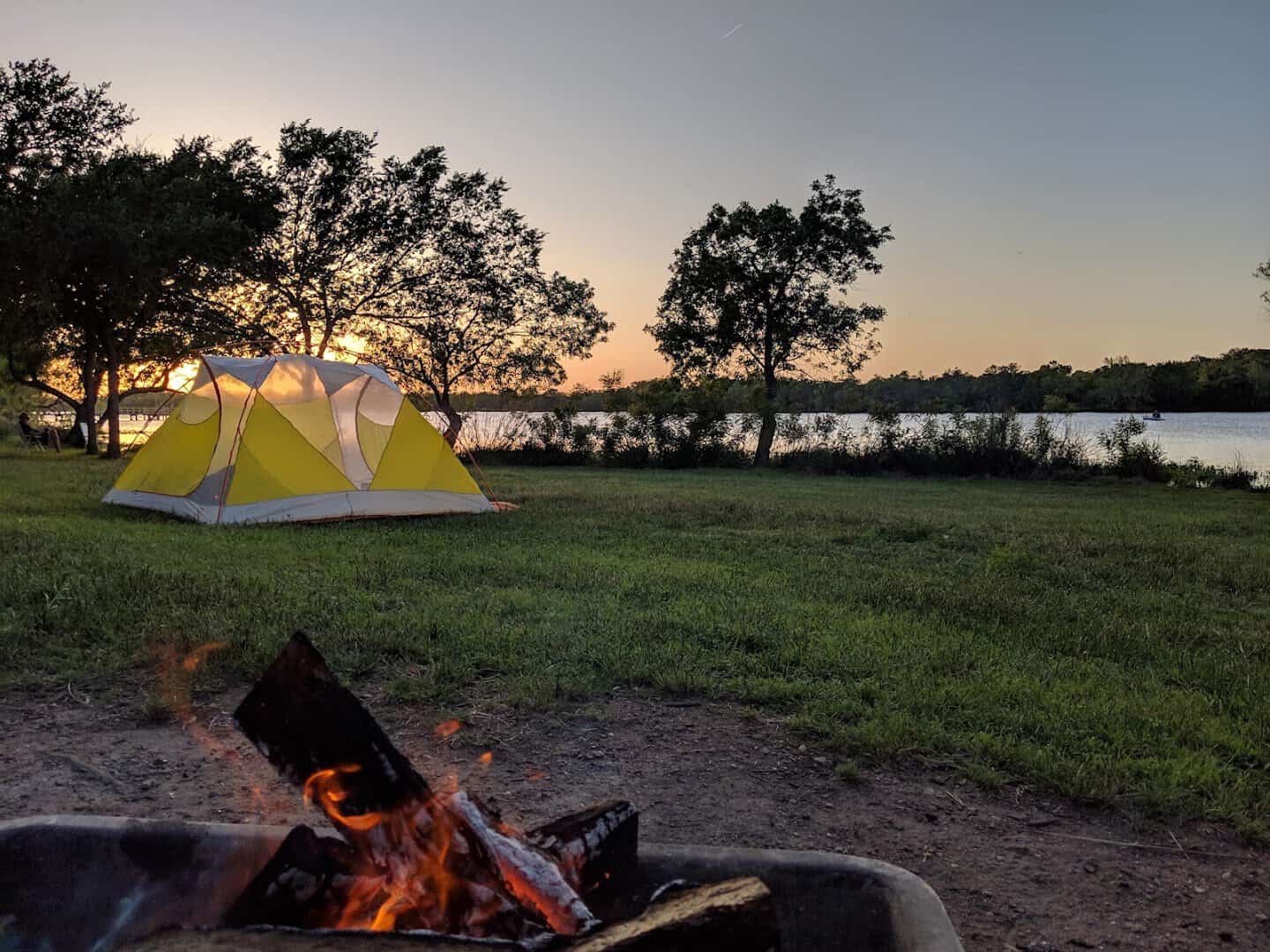
If a tent is not your speed, there are 22 cabins, two of them ADA-accessible. Each sleeps four with bunk beds, air conditioning, and a ceiling fan, plus a grill, fire ring, and picnic table outside. It is camping with the sharp edges filed off.
Pro tip: book early. This is one of the most beloved parks in the Highland Lakes, and summer weekends fill months ahead. A fresh headquarters building and upgraded facilities arrived in 2024, so the welcome is warmer than ever.
Nights here are for slow things. We grill by the water, chase fireflies, and let the kids stay up late for a ranger-led stargazing talk. The Hill Country sky, far from city glow, does the rest.
Cast a Line, Any Month You Like
The fishing is honest and easy. Cast from the bank or a kayak for largemouth bass, catfish, and white bass. Because the water stays put year-round, the fish do too, and a slow morning with a rod is never wasted here.
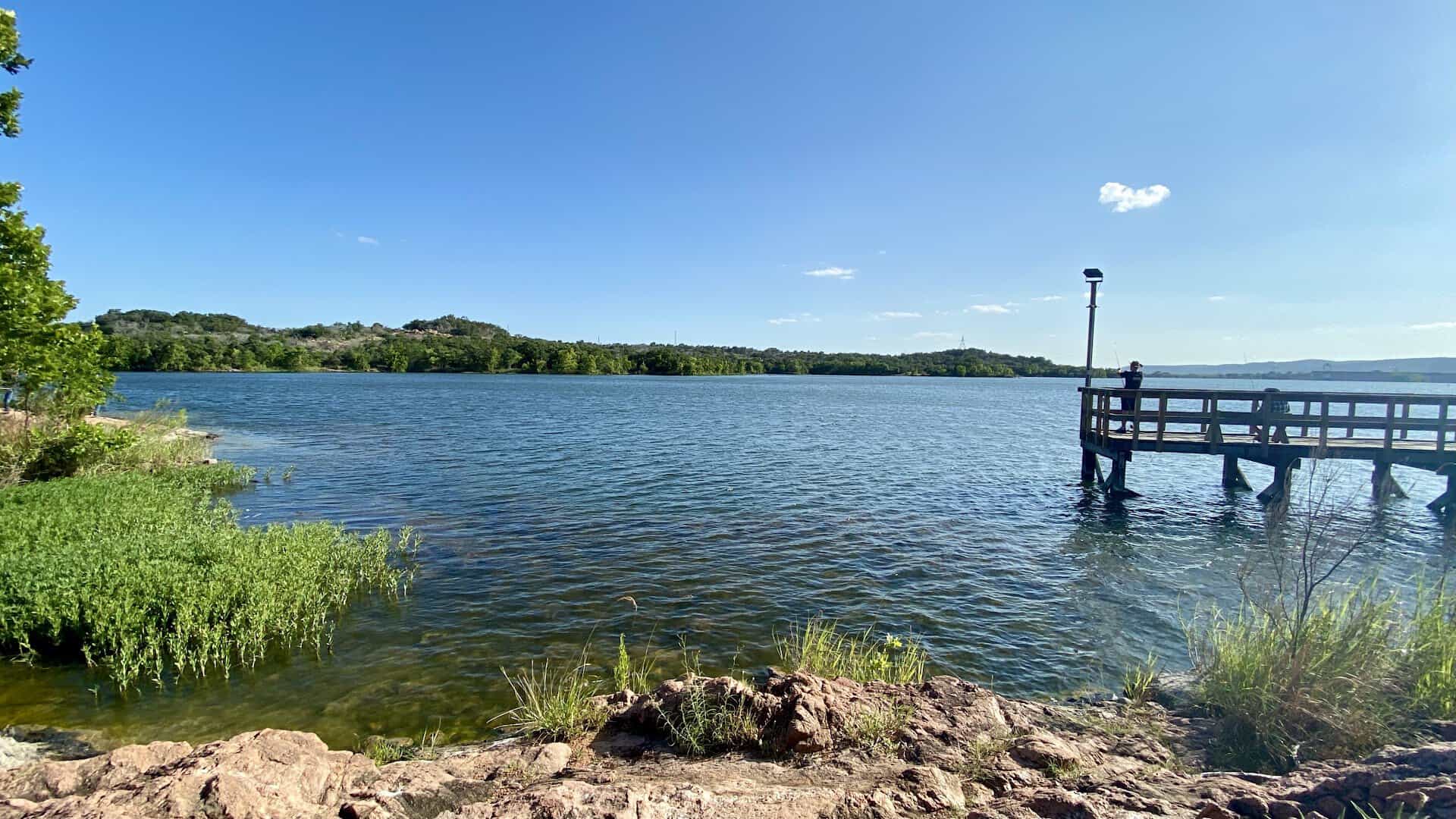
A Texas license is required for anyone over seventeen fishing outside the park’s free waters, so pack yours. The park store sells snacks, ice, and the odd forgotten lure, which has saved more than one of our trips.
The kids like the lazy hours best. We drop a line off the bank, watch the bobber, and I get twenty minutes of something close to quiet. Nobody has caught a trophy yet, and nobody much cares.
What to Bring and Know
Entry runs a small daily fee, around $7 per adult, with children twelve and under free. A family day out here costs less than a couple of movie tickets, and the receipt covers in-and-out the same day.
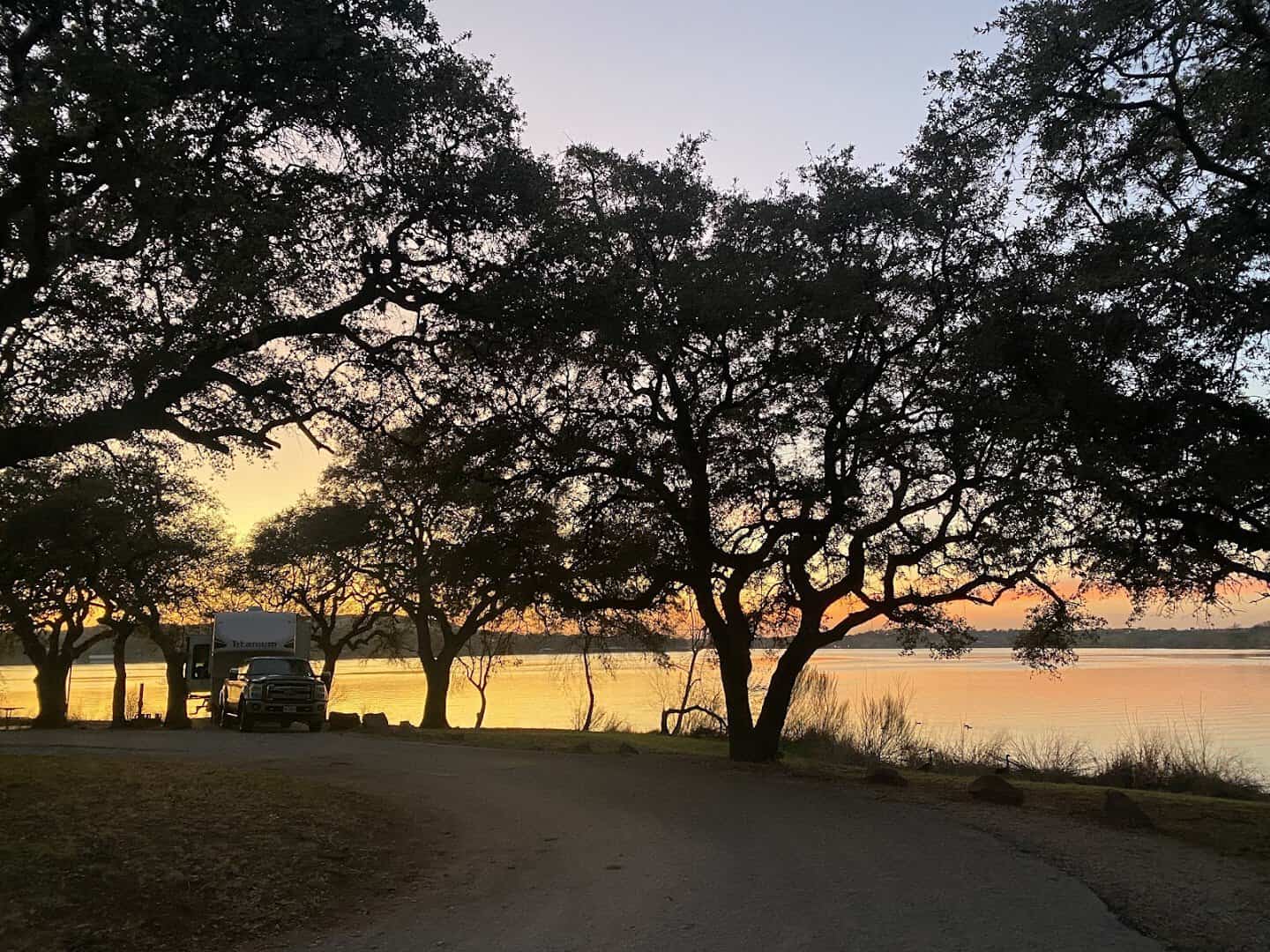
Pack water shoes for the rock and more sunscreen than you think you need. A cooler of cold drinks makes the shoreline hours easy, and a hat earns its keep by noon. Cell service is spotty, which I have come to see as part of the point.
Weekdays and the shoulder seasons are your friend if you want the shoreline mostly to yourself. Spring brings the wildflowers, fall brings cool mornings, and summer brings the swimming crowds and the best cove-jumping weather. There is no wrong month, only different ones.
How to Get There
The park anchors the Highland Lakes region, an easy drive from Austin or Marble Falls and a fine base for a whole Hill Country weekend. Bring the kayaks and give yourself two days at least.
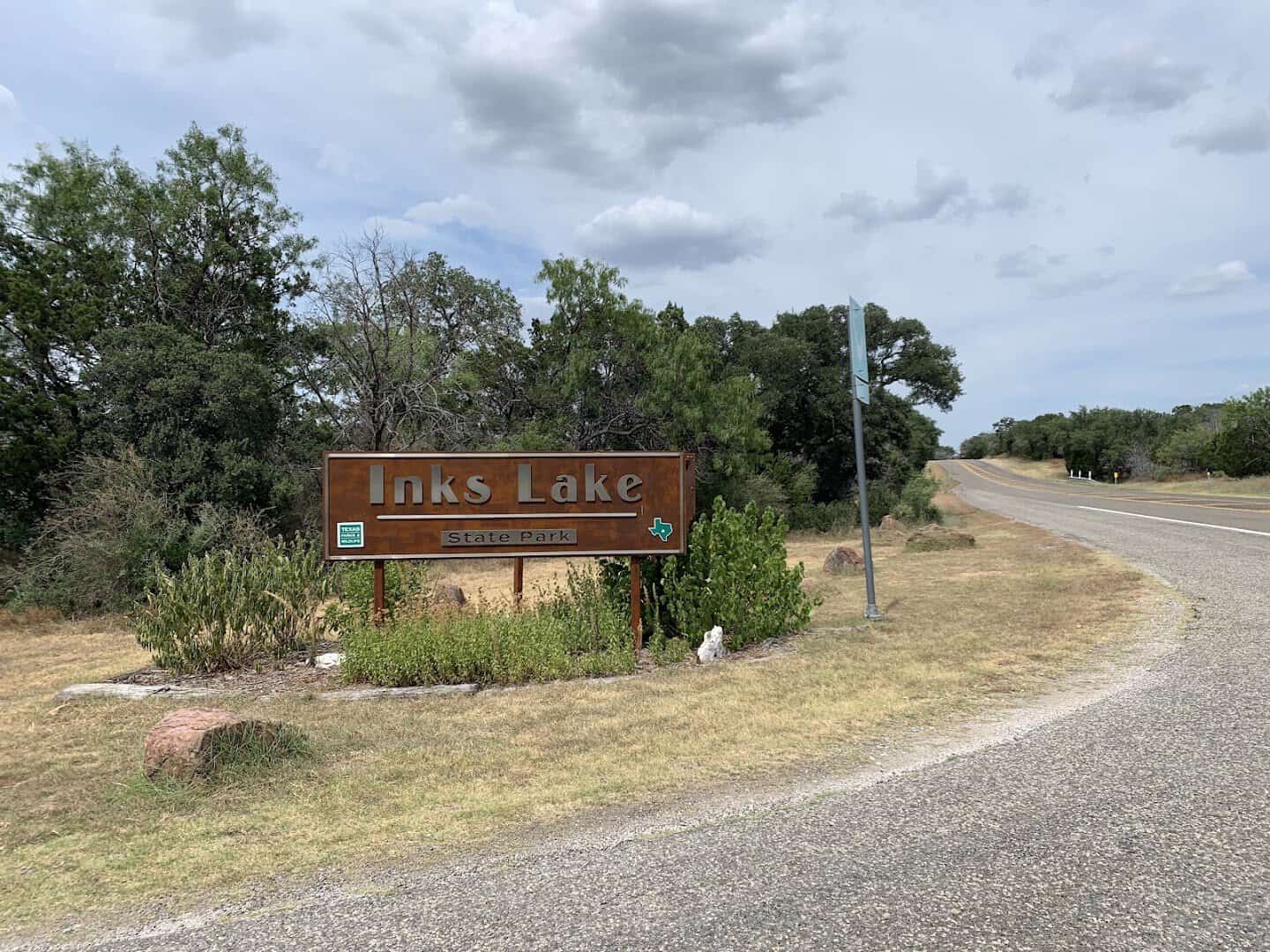
Where: Inks Lake State Park, 3480 Park Rd 4 W, Burnet, TX 78611
Plan Your Slow Texas Weekend
Some parks want to be conquered. This one just wants you to slow down, float a while, and let a billion-year-old view do the talking. Pack the kayaks and book a cabin by the water. The blue-green cove will be waiting, right where it has always been.
Featured image: BradinHK via Inks Lake State Park

Stella Raines
Editor-in-Chief
Stella brings over a decade of storytelling experience to TX Headlines. With roots in West Texas and a love for road trips, she leads the editorial team with an eye for the hidden stories that make Texas unforgettable.
More Stories

These 10 Texas Spots Bloom Into Seas of Bluebonnets Each Spring

This Enchanting Texas Nature Trail Feels Like Hiking Through a Fairytale Forest

This Underrated Texas State Park Gives You a Full Day of Swimming and Hiking for Just $5

This Easy Texas Hike Leads to a Swinging Suspension Bridge Hidden in the Pines
Tags