This Secret Texas Cavern Is an Ancient Riverbed That Once Hid a Prohibition Ballroom
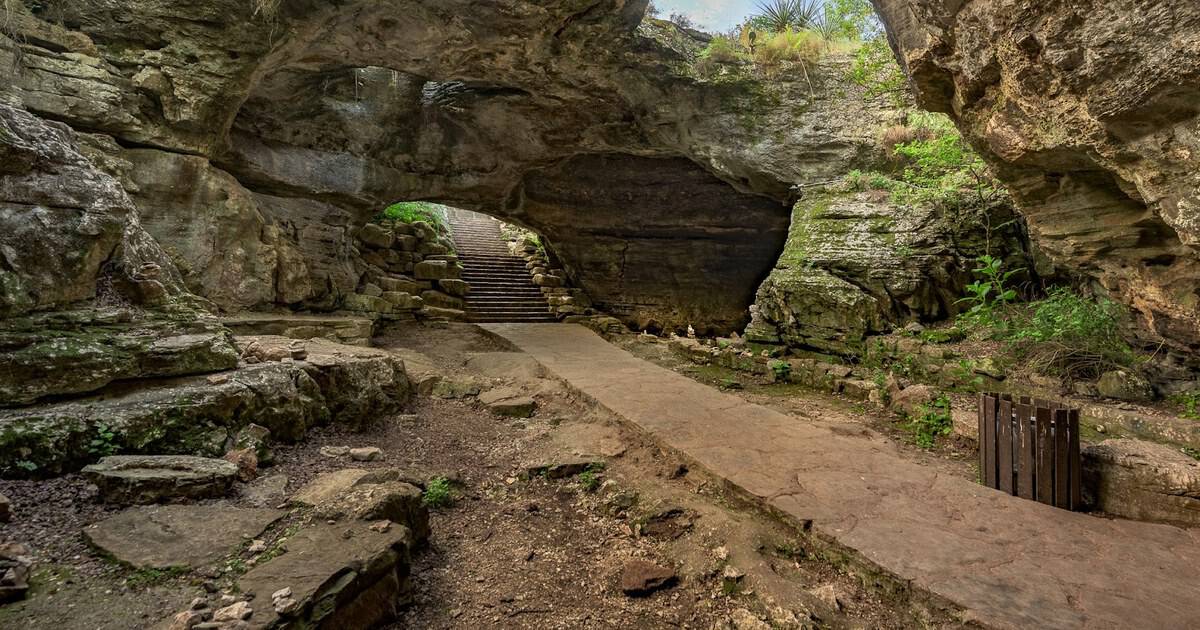
I was eight the first time a grown-up handed me a flashlight and told me to watch my head. We were somewhere under the Hill Country, and the air changed the second we started down the steps.
Cool and damp, and quiet in a way the surface never is.
I remember the smell most of all, wet limestone and cold mineral, like the inside of a rock that had never once been warm. I remember trailing my fingers along a wall that felt polished, almost soapy, and thinking that no chisel had done that.
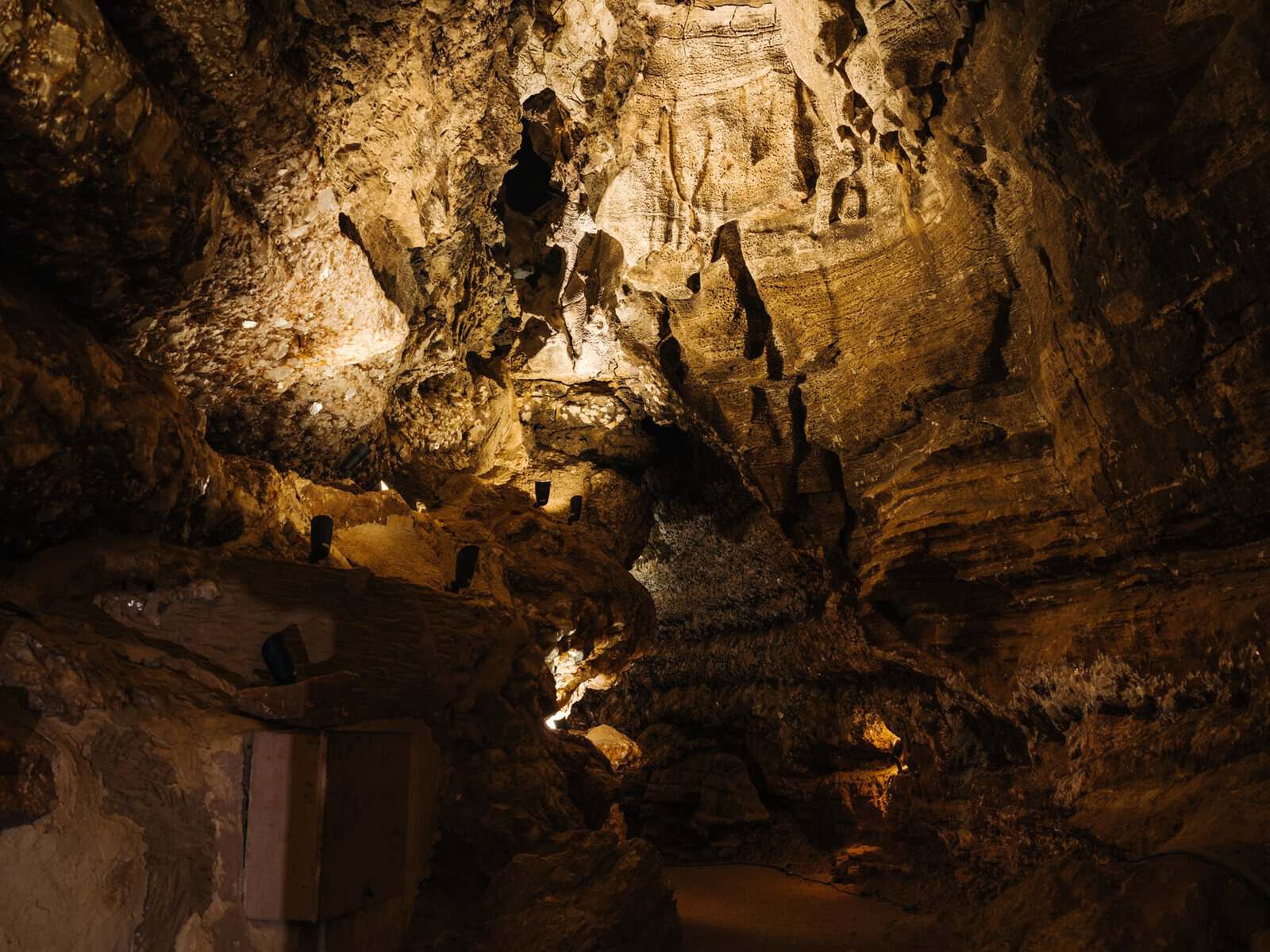
Something else had, and whatever it was had water in it.
That wall lives inside Longhorn Cavern State Park, in the Hill Country south of Burnet. It is the reason I keep dragging visiting relatives out Park Road 4 every summer.
This is not a drippy stalactite cave. It is a drained river, and walking it feels like a cool cathedral hush that somebody carved by accident.
Below, I want to walk you through what is down there, who used it before we started buying tickets, and how to plan the trip so you actually enjoy it.
Fifty-Two Steps Into the Cool
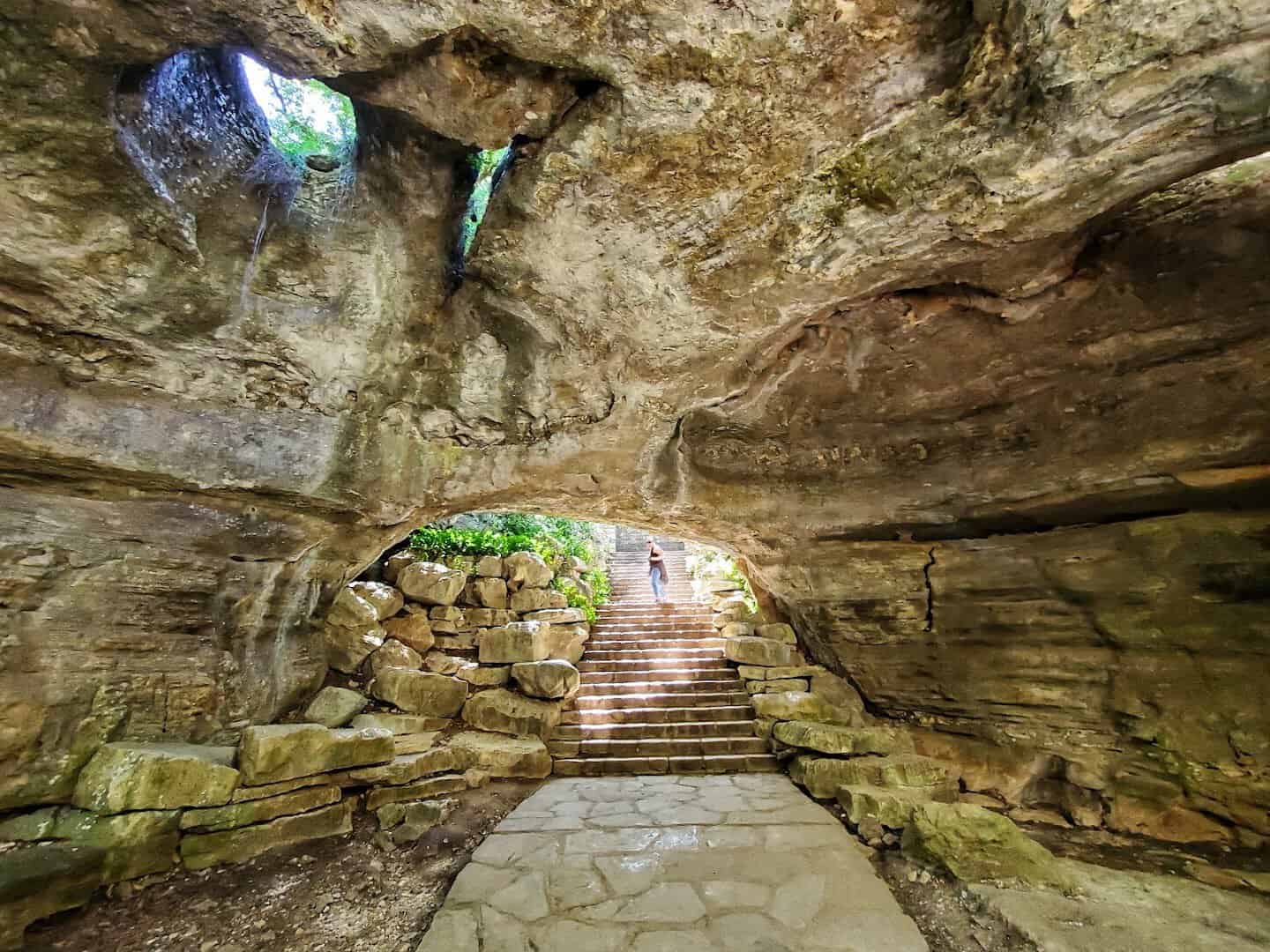
The descent is the best part, and it happens fast. One minute you are standing in Texas sun with a sweaty neck. About a minute later you are in 68 degrees, and it is 68 degrees down there whether it is February or the hottest week of August.
Guides count the way down as 52 stone steps. The stairway drops roughly 130 feet, and by the bottom your ears have popped and your arms have goosebumps.
The walking tour runs about a mile and a quarter and takes roughly 90 minutes at a genuinely slow pace. Nobody is rushing you. There is a lot of stopping, pointing, and answering questions from ten-year-olds.
The route is mostly level once you are down. A few spots ask you to duck. One narrow passage has been called Lumbago Alley for years, which tells you exactly what your back is about to do.
Then it opens up, and you forget about your back entirely.
A River Wrote These Walls
Most Texas caves you tour are decoration caves. Water drips from a ceiling for a hundred thousand years, minerals stack up, and you get stone icicles and popcorn and curtains.
This one started differently. An underground river ran through the limestone and cut the passages the way a knife goes through a cake, and then the water table dropped and left the hallway behind.
That is why so much of it looks sculpted rather than dripped. The walls swoop. They fold. They have the smooth, water-shaped curves of something that was moving fast in the dark for a very long time.
Stand in one of the wider rooms and you can read the current. There are scallops in the rock, shallow spoon-shaped hollows that flowing water leaves behind, and they all lean the same way.
Did you know? Geologists read those scallops like a speedometer. The smaller they are, the faster the water was moving when it made them.
The Rooms That Show Off
The tour has favorites, and the guides do not pretend otherwise.
The Hall of Marble waits at the end of that low crouch, and the payoff is worth the ducking. The walls there are calcite, buffed so smooth by the old river that the lighting makes them glow like the inside of a banquet hall.
Crystal City is the sparkler. Calcite crystals line both sides of the passage and catch every bit of lamp light, and there is always one kid who stops dead and says nothing at all.
Then there is the Queen’s Throne, a big shoulder of flowstone that really does look like a high-backed chair.
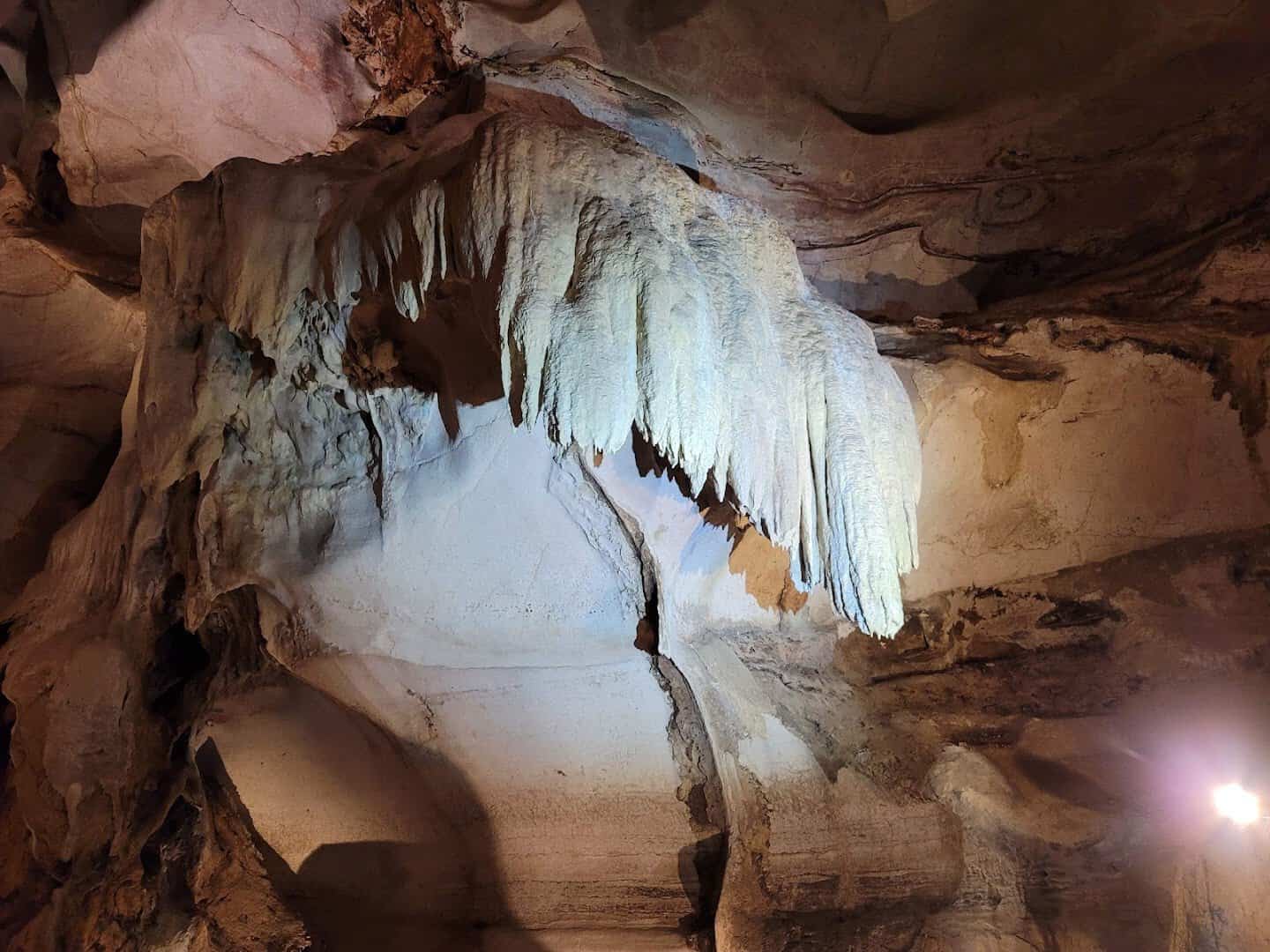
It is one of the largest travertine deposits in the cave, which is a fancy way of saying it is one of the few spots down here that grew instead of getting carved.
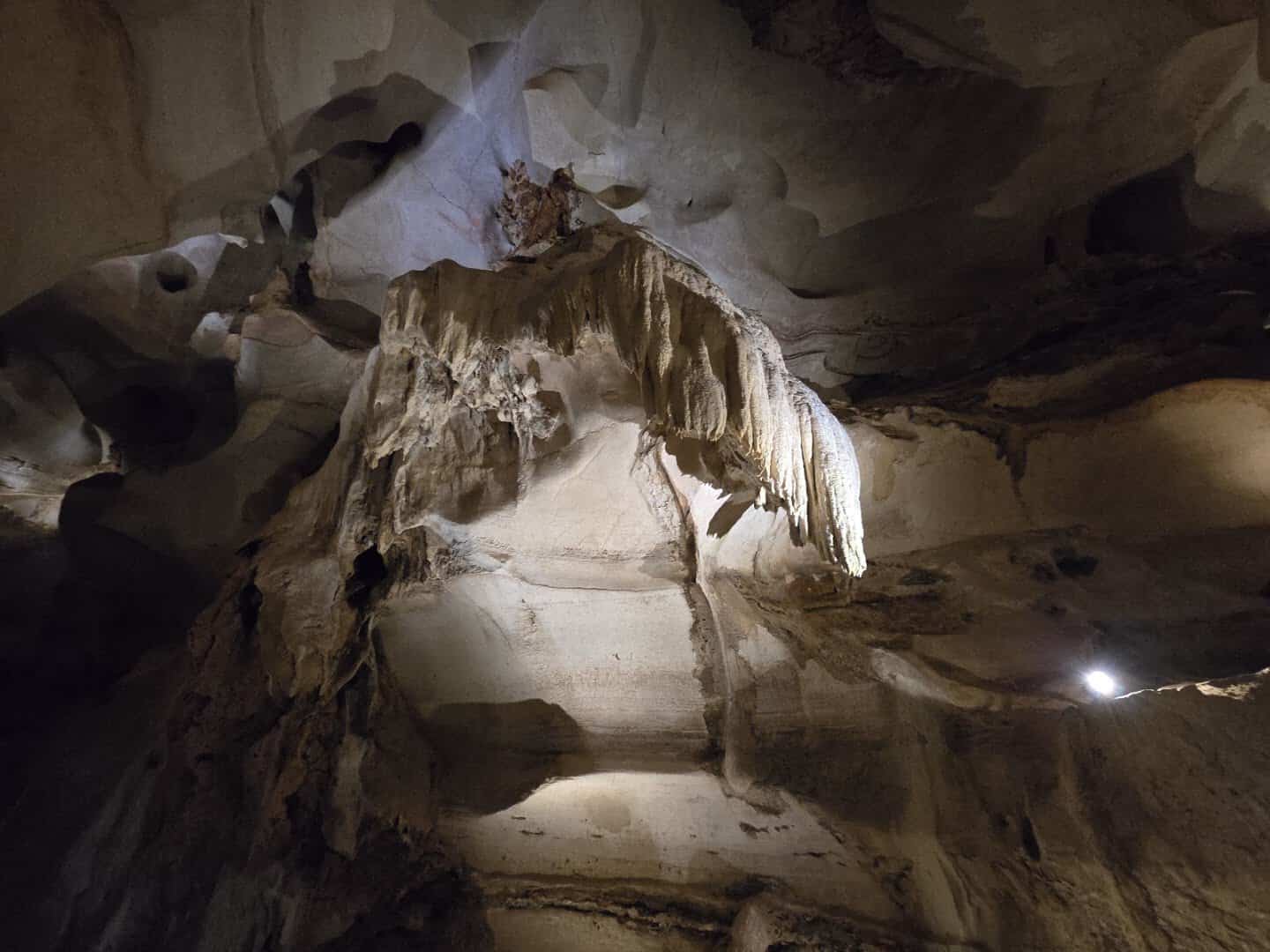
My own favorite is the Giant Icicle, a stalactite about 14 feet long hanging off the ceiling like an upside-down cone of vanilla soft serve. My niece asked our guide whether it was going to fall.
“Not today,” he said. “Ask me again in ten thousand years.”
There is also the Hall of Gems, and the Rainbow Room, where mineral staining throws red and white and blue across the rock. And there is the biggest chamber of all, which has carried the name Indian Council Room for generations.
Why the Cattle Named It
The name is not poetry. It is livestock.
There is a wide sinkhole opening above the cave, and the story that stuck to this place is that Texas longhorns wandering that stretch of Hill Country found the hole the hard way and did not come back out.
Before it was Longhorn Cavern it went by Sherrard’s Cave, after the family whose land it sat on. Before that it had no name at all in English, because no English speaker had been down there.
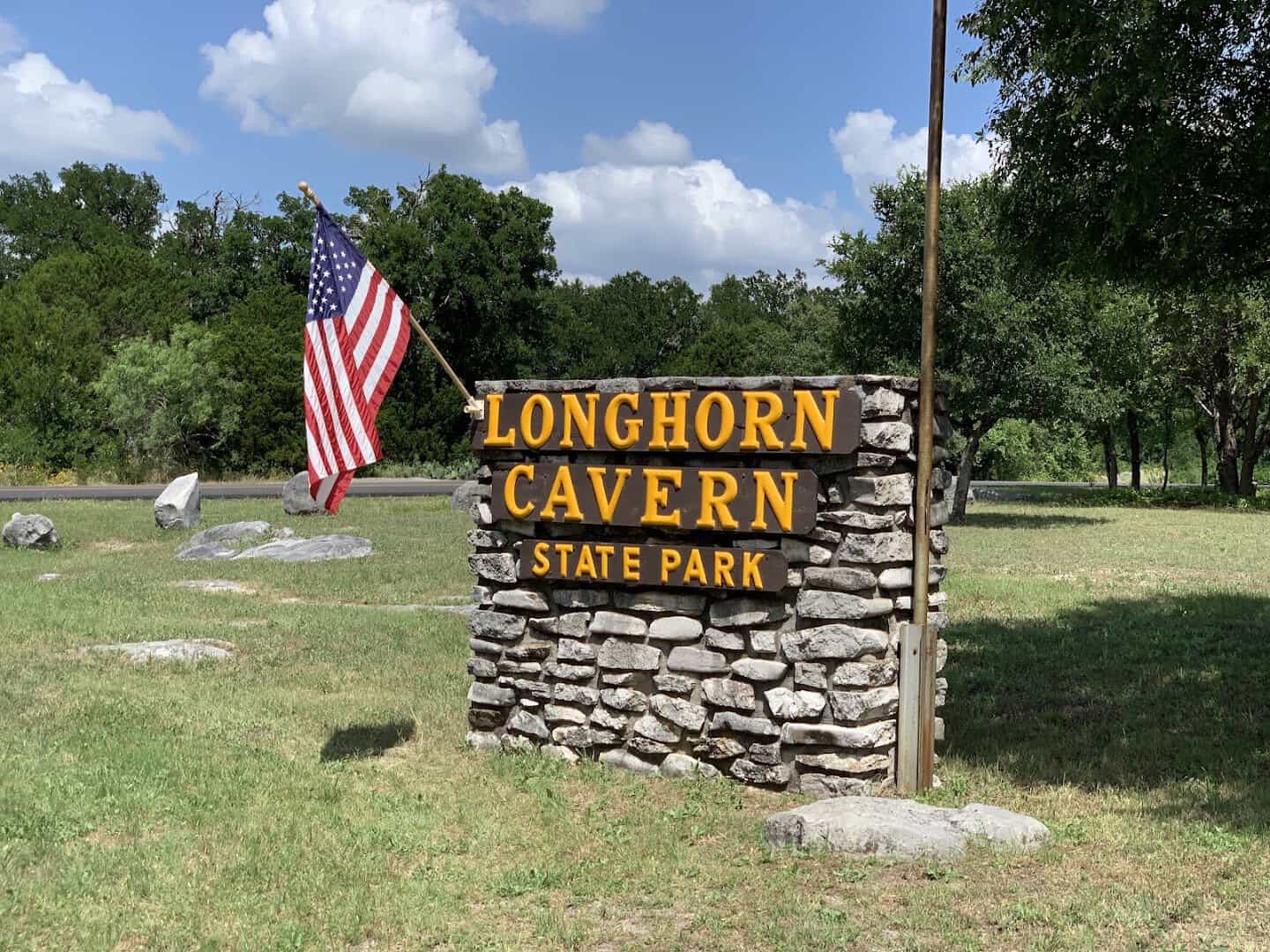
People had, though. Archaeologists have pulled flint tools, worked stone and old fire evidence out of the big room nearest the entrance, which means the cave was doing its oldest job, keeping humans out of the weather, thousands of years before anybody sold a ticket.
Local lore holds that Comanche bands used that same chamber for council. The Texas Parks and Wildlife Department is careful to file that under legend rather than record, and I like that they are honest about it.
Gunpowder, Outlaws, and a Rope Ladder
Here is where the cave gets loud.
Settlers arriving in the mid-1800s found the floor thick with bat guano, and guano is rich in the nitrates you need to make gunpowder. During the Civil War, Confederate hands mined it out of here and turned it into powder underground, where nobody could see the smoke.
Then came the outlaw. Sam Bass robbed his way across Texas in the 1870s and died young after a shootout in Round Rock, and the story that trailed him said he stashed his take in a cave near Burnet.
Rumor put the haul as high as two million dollars in gold. Nobody has ever produced a coin of it, and there is no hard evidence Bass ever set foot down here. The main opening is still called the Sam Bass Entrance anyway, because Texas keeps its good stories.
The best one is Muriel King. As the tale goes, in 1848 a young woman was taken by raiders and held for ransom in the cavern, and three Texas Rangers went down a rope ladder after her.
There was a knife fight and there was gunfire, and then a scramble back up the rope with the girl.
And then the ending nobody would dare write into a movie: she married one of the Rangers who came for her.
The Ballroom That Bootleg Built
My favorite chapter is the one with a band in it.
In the 1920s, with the Volstead Act making a legal drink hard to come by, a businessman named Sherrard looked at the biggest chamber in his cave and saw a floor plan. He called it the Underground Ballroom.
Crews hauled lumber down the steps and laid roughly 2,000 square feet of wooden dance floor over the cave rock. They strung electric lights. They built a bandstand. They put in a bar.
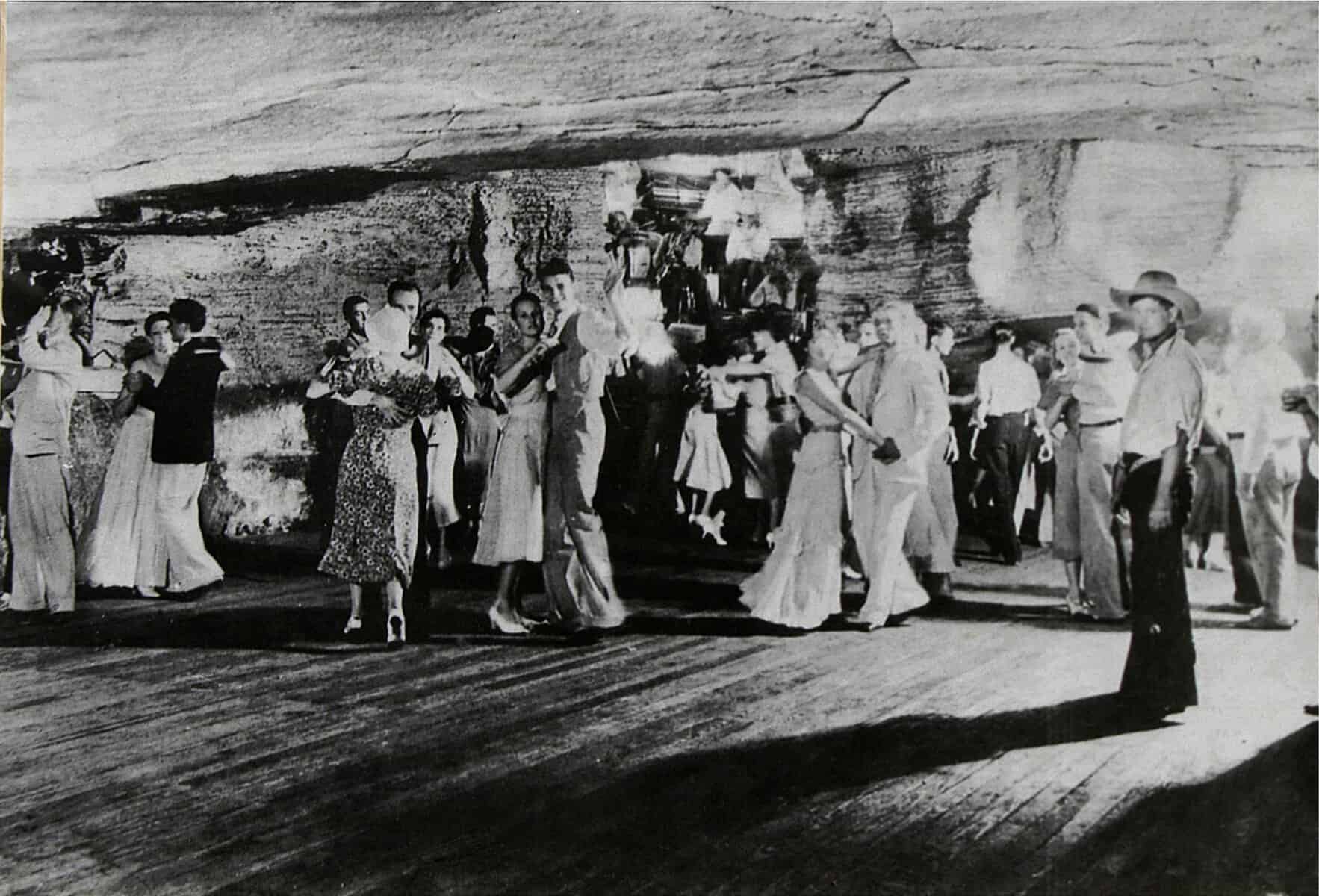
Admission was $1.10, and for that you got a night out that no revenue agent was going to stumble across from the road.
Live musicians played to dancers a hundred feet under the Hill Country, and the sound went out over the radio to listeners in San Antonio, which means people in the city were dancing in their living rooms to a band playing inside a hole in the ground.
The cave won in the end. That constant damp got into the lumber, the floor rotted, and the party moved on.
The room did not stay empty forever, though. It seats more than 250 people today, and couples get married in it, and bands still play down there because the acoustics in a river-carved limestone chamber are ridiculous.
A Brief History of the Boys Who Dug It Out
The cave you walk through is not the cave they found. Somebody had to make it walkable, and that somebody was a few hundred young men with shovels.
The state bought the land in pieces between 1932 and 1937, and the site was dedicated as a state park in November 1933. Then the Civilian Conservation Corps arrived.
Company 854 worked here from 1934 to 1942, roughly 200 enrollees at a time, most of them barely out of their teens and sending most of their pay home to families who needed it.
They dug. By hand, in the dark, in the damp, they cleared more than 20,000 cubic yards of silt, rubble and packed guano out of the passages and pushed the mapped route past two miles.
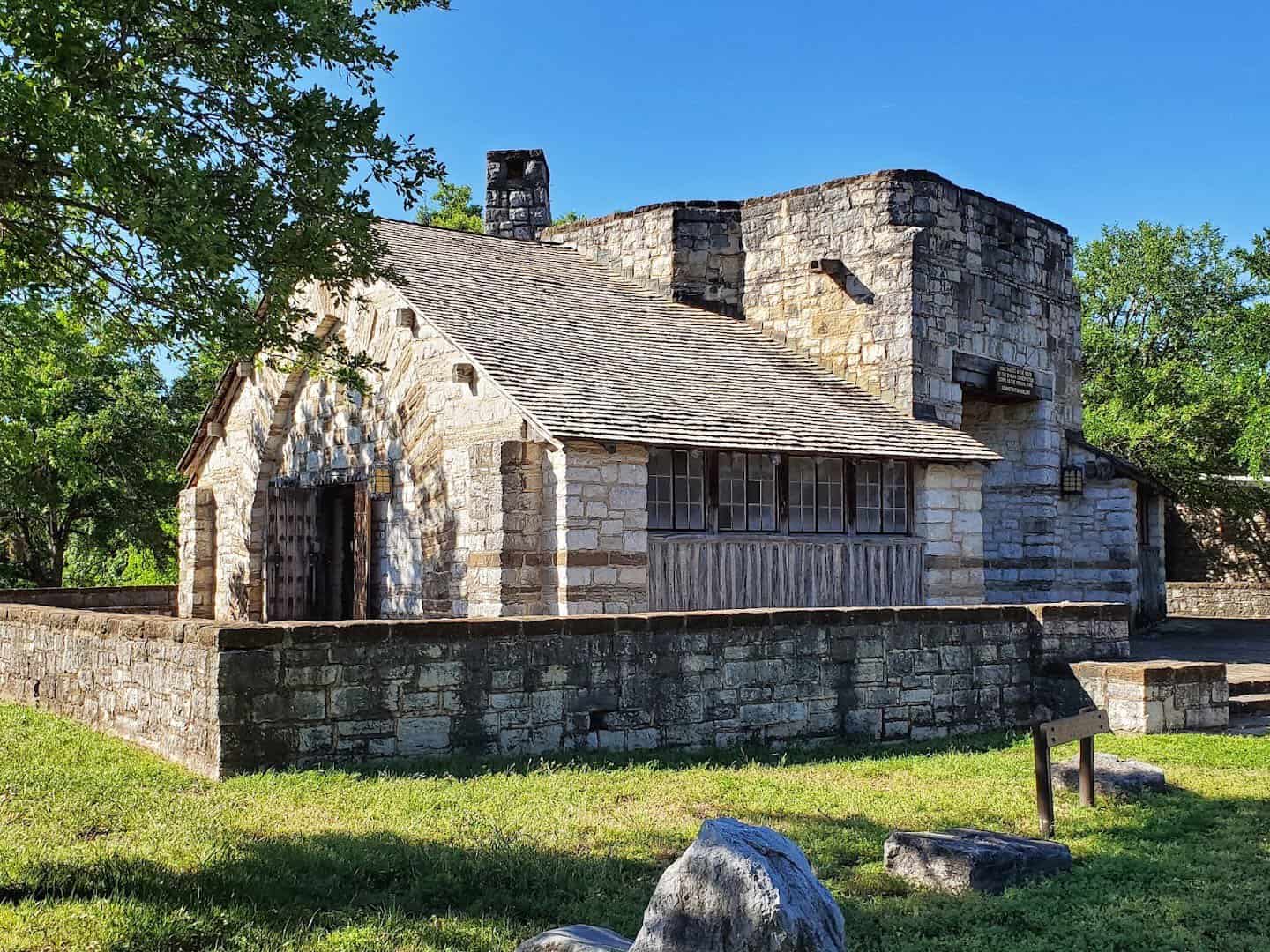
They also built the part you see before you ever go under. The administration building and the observation tower were designed by George Walling and Samuel Vosper.
It is the rustic National Park Service style: native stone, heavy timber, and no straight line anywhere a curve would sit better.
The same crews cut Park Road 4, a six-mile ribbon from US 281 to the park entrance, which is still one of the prettiest approaches in the Highland Lakes.
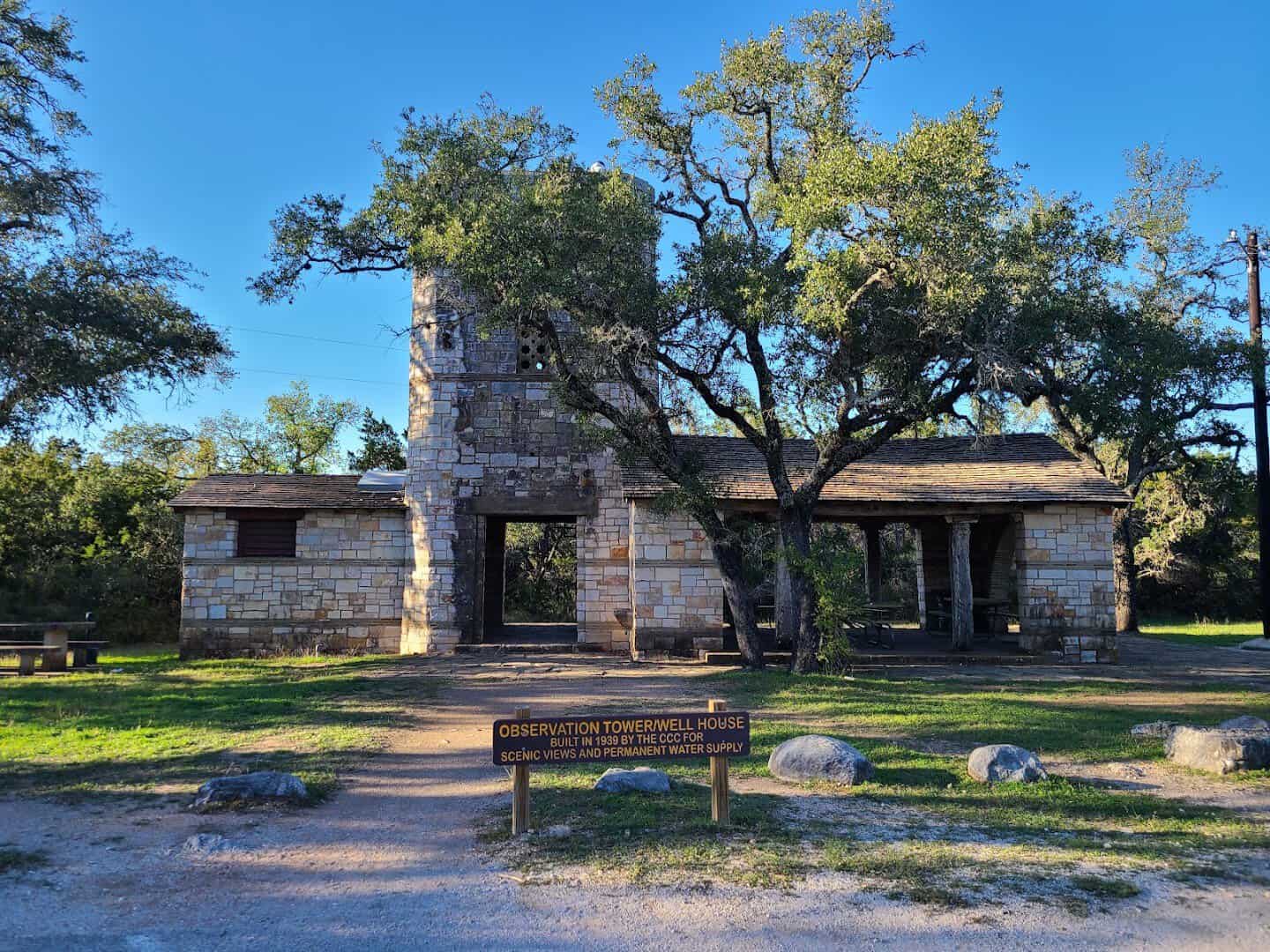
The park opened to the public in 1938. It was named a National Natural Landmark in 1971, the administration building became a Recorded Texas Historic Landmark in 1989, and the whole park was listed as a historic district on February 7, 2011.
Nearly 87,000 people came through in 2025. Not bad for a hole the cows found first.
Up Top: A Tower, a Trail, and a Castle on the Horizon
Do not drive off the second you come back up the stairs. The surface here earns an hour of its own.
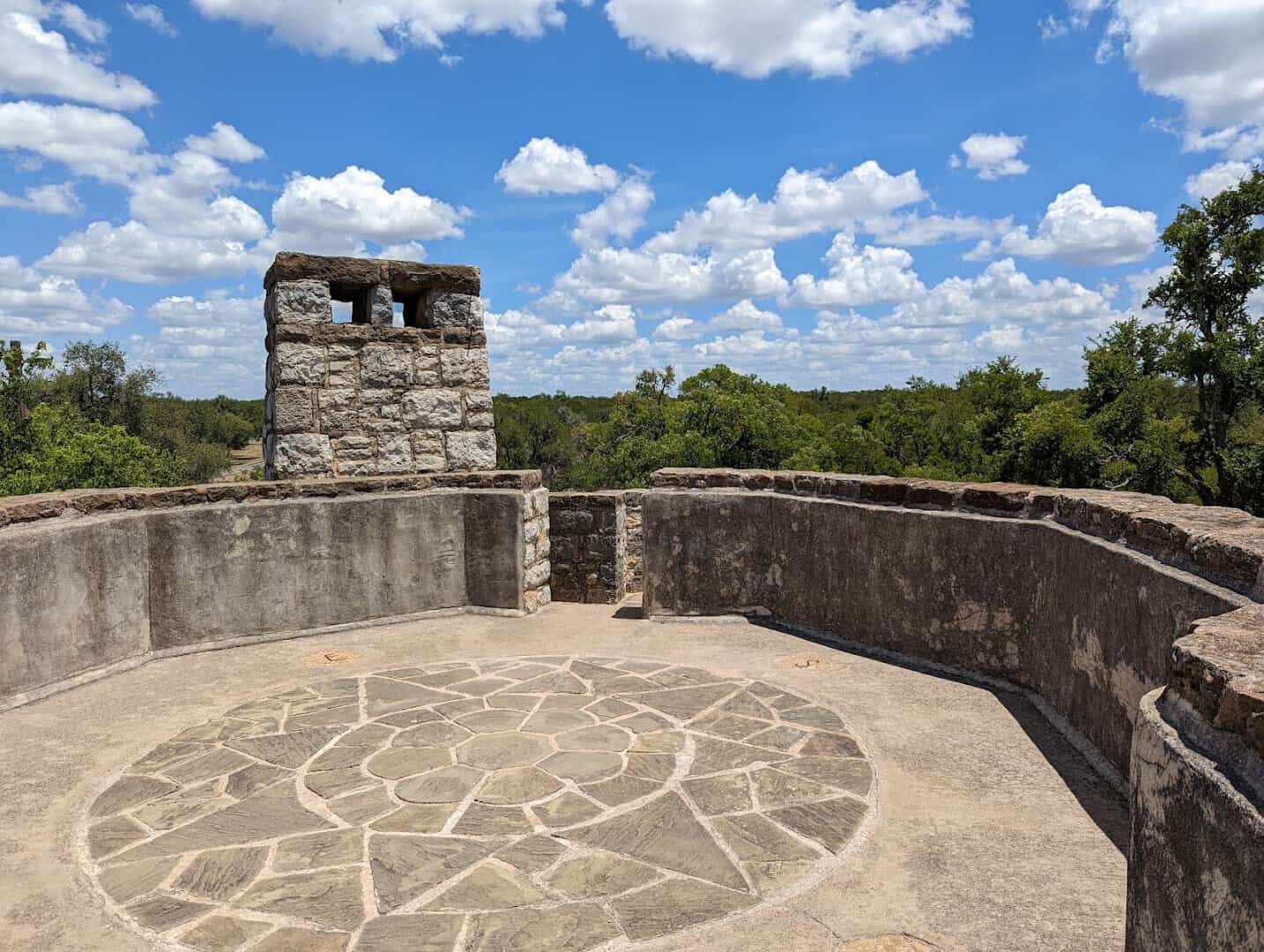
The observation tower has a spiral staircase inside it and a 360-degree view of the Hill Country at the top. On a clear day you can pick out the towers of Falkenstein Castle in the distance, which is a genuinely odd thing to spot from a Texas state park.
The Backbone Ridge trail system runs from the parking area, with a main loop of about two miles and numbered stations along the way so you can walk yourself through the geology. There is a short Three-Minute Loop for people who want the view without the commitment.
Birders should bring binoculars. The golden-cheeked warbler, which nests nowhere on earth except central Texas, turns up in these juniper and oak slopes in spring.
Kids who need a job can pan for gemstones at the sluice or crack open a geode at the visitor center, and I have never once seen a child walk away from that unhappy.
Which Tour Should You Pick?
There are three of them, and they are genuinely different days out, so read past the cheapest one before you book.
The Walking Tour is the classic, about 90 minutes on the lit path with a guide, starting around $24 for ages 12 and up and $17 for ages 4 through 11. Children 3 and under go free.
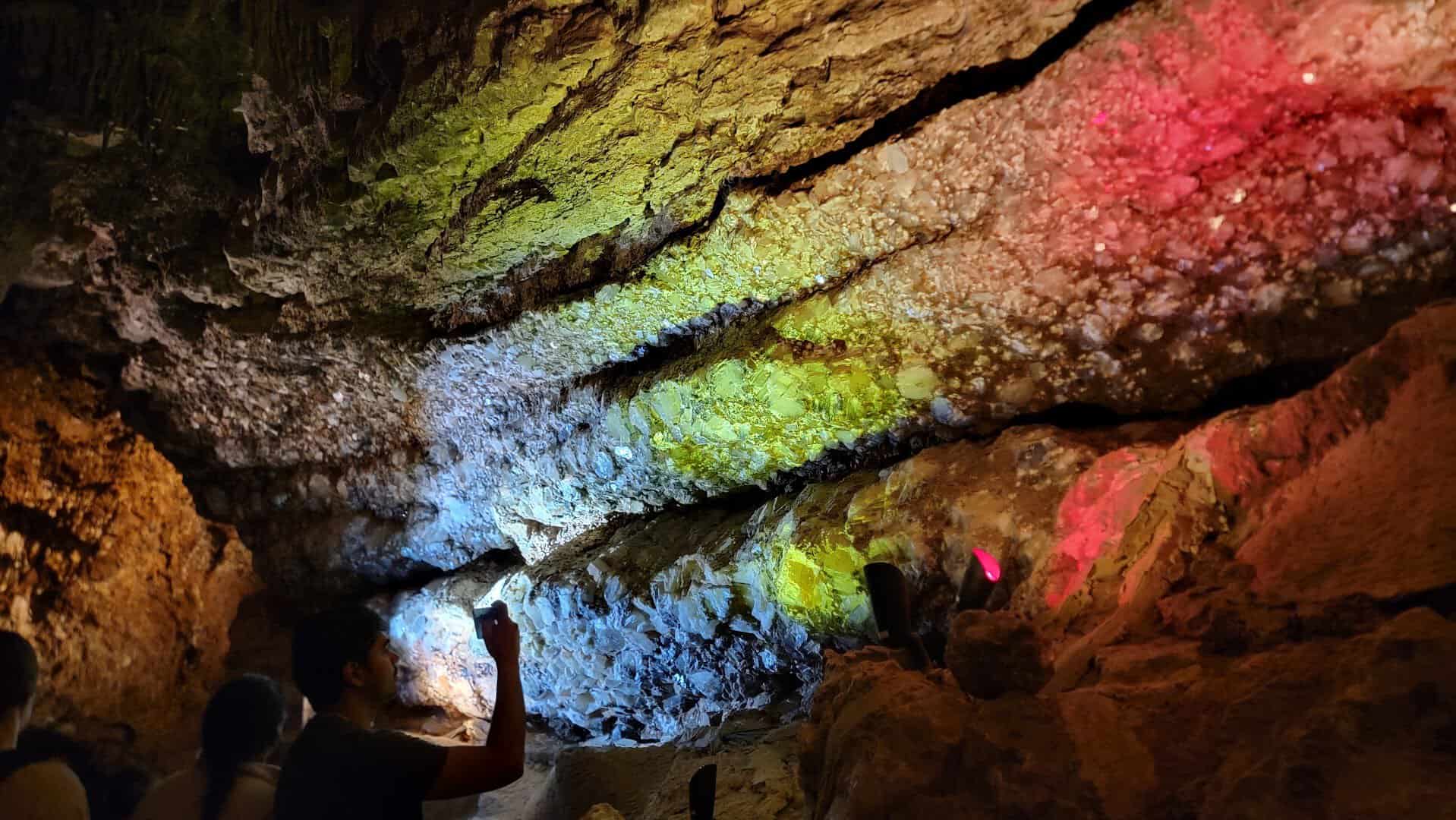
The Blacklight Tour runs about an hour on weekend mornings at 9:30, and it swaps the standard lighting for ultraviolet so the minerals in the rock fluoresce. Formations you walked past on the regular tour suddenly glow.
The Wild Cave Tour is the one for people who want dirt under their fingernails. Three hours, helmets and headlamps, off the paved route entirely, starting around $110, minimum age 8, and there is a girth limit because some of those squeezes are honestly tight.
Prices shift by day and season, and weekends book out, so reserve ahead rather than driving up hopeful.
One recent visitor summed the place up on Tripadvisor better than I can: “The cavern is absolutely breathtaking.”
Pro Tips Before You Head Down
Pro tip: bring a light jacket even in July. It is 68 degrees and humid down there, and the temperature difference will surprise you when you are wearing shorts and sandals.
Wear closed-toe shoes with grip. The path is paved, but it is a cave, and cave floors are damp by definition.
Entry to the park itself and the parking lot are free. You only pay for the cave tour, so there is no penalty for coming out just to hike Backbone Ridge and climb the tower.
Because the walkways are historic CCC stonework, the cave route is not wheelchair accessible, and only ADA service animals can come below. Plan around that if it applies to your group.
There is a gift shop, restrooms in the visitor center, and a snack bar doing pizza, frozen drinks and lemonade, which is exactly the right food for a hot parking lot.
Park hours run 9 a.m. to 6 p.m. daily in high summer, and 9 to 5 on weekdays with 9 to 6 on weekends and holidays the rest of the year. Christmas Day is the only closure.
How to Get There
Where: Longhorn Cavern State Park, 6211 Park Road 4 S, Burnet, TX 78611. Phone (512) 715-9000.
It sits about 50 miles west of Austin, which is roughly a 90-minute drive, and it is an easy add-on to a Highland Lakes weekend. From US 281 south of Burnet, turn onto Park Road 4 and follow it in.
Inks Lake State Park is on the same road, so a lot of families do the cave in the morning and the lake in the afternoon. That is a very good day.
Go Find Your Own Cool Dark
There is a specific feeling you get about ten minutes into this place, when the sun has stopped mattering and the guide turns the lights off for a second so you can meet real darkness.
You will hear people laugh nervously. You will hear one kid shriek. And then the lights come up on a wall that a river spent a few million years polishing for you.
Pack a jacket, book a weekday slot if you can, and give yourself an extra hour up top for the tower and the trail. Texas has plenty of big skies, and you already know what those look like.
Go see what it built underneath.
Featured image: @ Longhorn Cavern State Park

Stella Raines
Editor-in-Chief
Stella brings over a decade of storytelling experience to TX Headlines. With roots in West Texas and a love for road trips, she leads the editorial team with an eye for the hidden stories that make Texas unforgettable.
More Stories

These 10 Texas Spots Bloom Into Seas of Bluebonnets Each Spring

This Enchanting Texas Nature Trail Feels Like Hiking Through a Fairytale Forest

This Underrated Texas State Park Gives You a Full Day of Swimming and Hiking for Just $5

This Easy Texas Hike Leads to a Swinging Suspension Bridge Hidden in the Pines
Tags