These Texas Roads and Gardens Explode With Wildflowers Every Spring
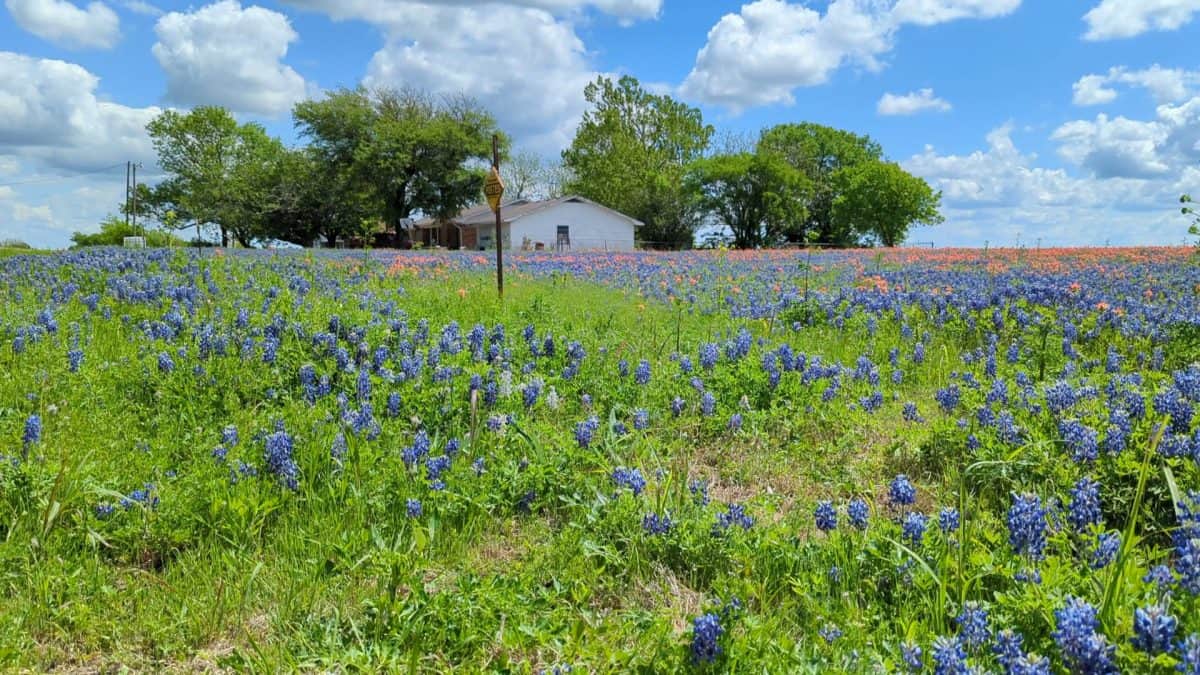
The first time I pulled over for bluebonnets, I was maybe seven years old. My dad killed the engine on a farm road so we could wade in, and I still remember the smell of warm grass and the hum of bees working the blooms.
My mother kept hissing at me to watch for fire ants. I sat down right in the middle of that blue anyway, and I have been chasing the feeling ever since.
That is the thing about a Texas spring. For a few short weeks, the roadsides and ranchlands and canyon floors fill with color, and the whole state turns into a rolling blue sea. Below, I want to hand you my favorite places to go stand in it.
Some are gardens built for it. Some are ranch roads that happen to explode every April. All of them are worth setting an alarm for, because the best light and the smallest crowds both come early in the morning.
A quick word on timing before we go. The bloom sweeps north as spring warms, so Central Texas peaks first and the Panhandle and far west lag by a few weeks. Watch a wildflower report, because a wet winter makes all the difference in how thick the color comes in.
1. Lady Bird Johnson Wildflower Center in Austin
If you only have one morning, spend it here. Lady Bird Johnson and the actress Helen Hayes founded this place in 1982, back when it was a scrappy 60-acre research center on the east side of town.
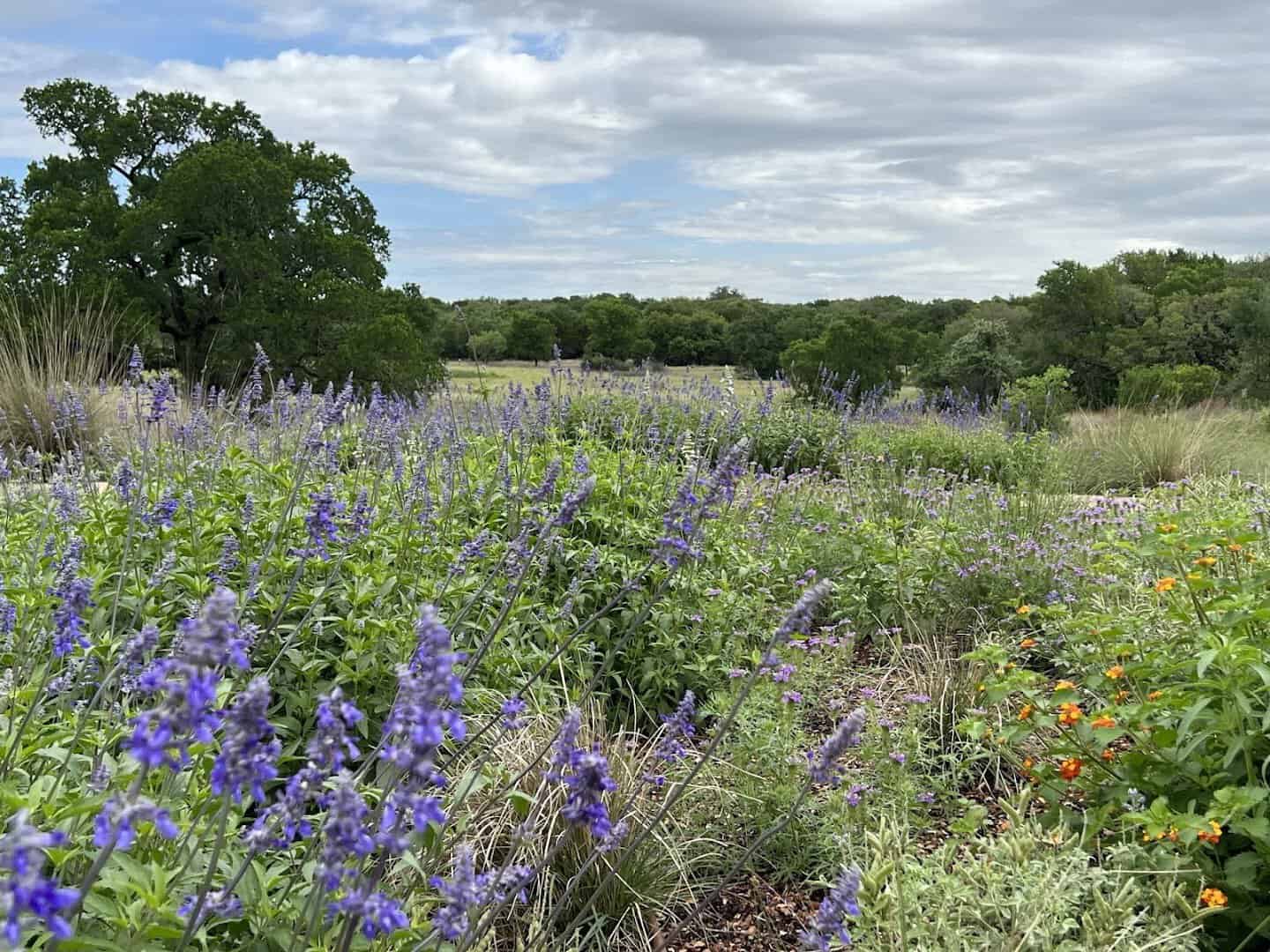
Today it sprawls across roughly 280 acres just southwest of downtown. I love it because nothing is accidental. The meadows are planned to peak, so you get sheets of bluebonnets, Indian blanket, and pink evening primrose without praying for a good roadside year.
Wander the arboretum, climb the observation tower, and let the kids loose on the family garden. One visitor summed up my own feeling in three words on Tripadvisor: “Bluebonnets!!!” Sometimes that is the whole review a place needs.
The center kept growing right along with its crowds. By 2002 it had added another 237 acres through purchase and donation, and today it shows off hundreds of native species across gardens, wildlands, and a proper arboretum.
Aim for March through May, and go on a weekday if you can swing it. The gardens open at nine and the light before ten is worth the early start.
Where: 4801 La Crosse Ave, Austin, TX 78739
2. Wildseed Farms near Fredericksburg
Just east of Fredericksburg sits the largest working wildflower farm in the country, and you can walk right into the fields. John and Marilyn Thomas started Wildseed Farms in Eagle Lake in 1982, then moved the operation to the Hill Country in 1993 to give it room to grow.
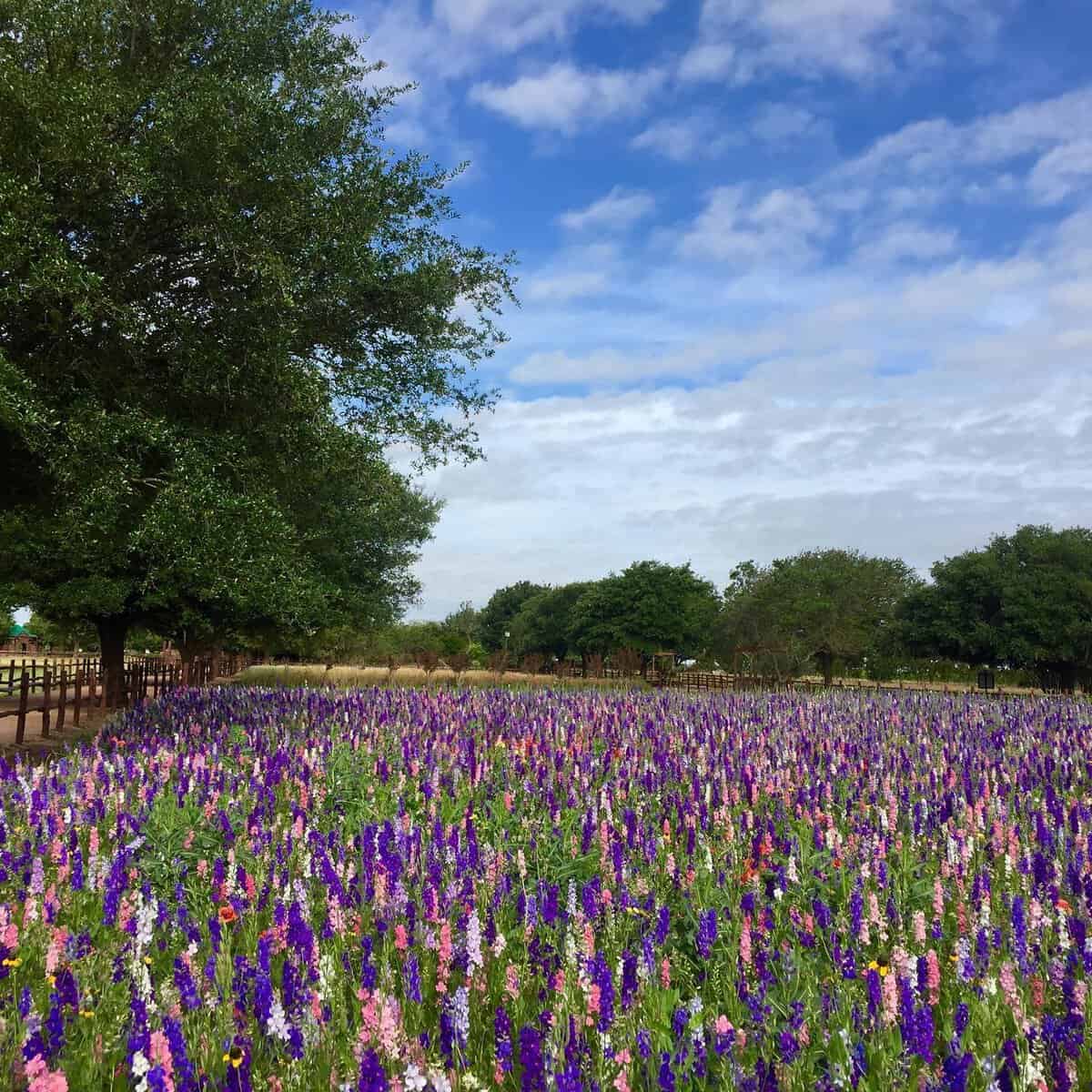
Room to grow is an understatement. The farm cultivates more than 200 acres of blooms at its headquarters and grows 41 different species for seed. In spring you can stand hip-deep in bluebonnets, then buy a packet of that exact seed to take the magic home.
Did you know Lady Bird Johnson herself was friends with founder John Thomas? She would visit about once a week in springtime, and the farm still keeps a “Lady Bird Meadow” planted with her favorites.
Founder John Thomas grew into something of a Texas legend for this work. He harvests several hundred thousand pounds of seed a year and has supplied roadside seed to nearly 30 highway departments, which means some of the bluebonnets you pass on the interstate trace back here.
Grab a peach wine slushie from the biergarten and stay a while. Admission and parking are both free, which makes this one of the easiest yes-trips on the whole list.
Where: 100 Legacy Dr, Fredericksburg, TX 78624
3. The Willow City Loop in the Hill Country
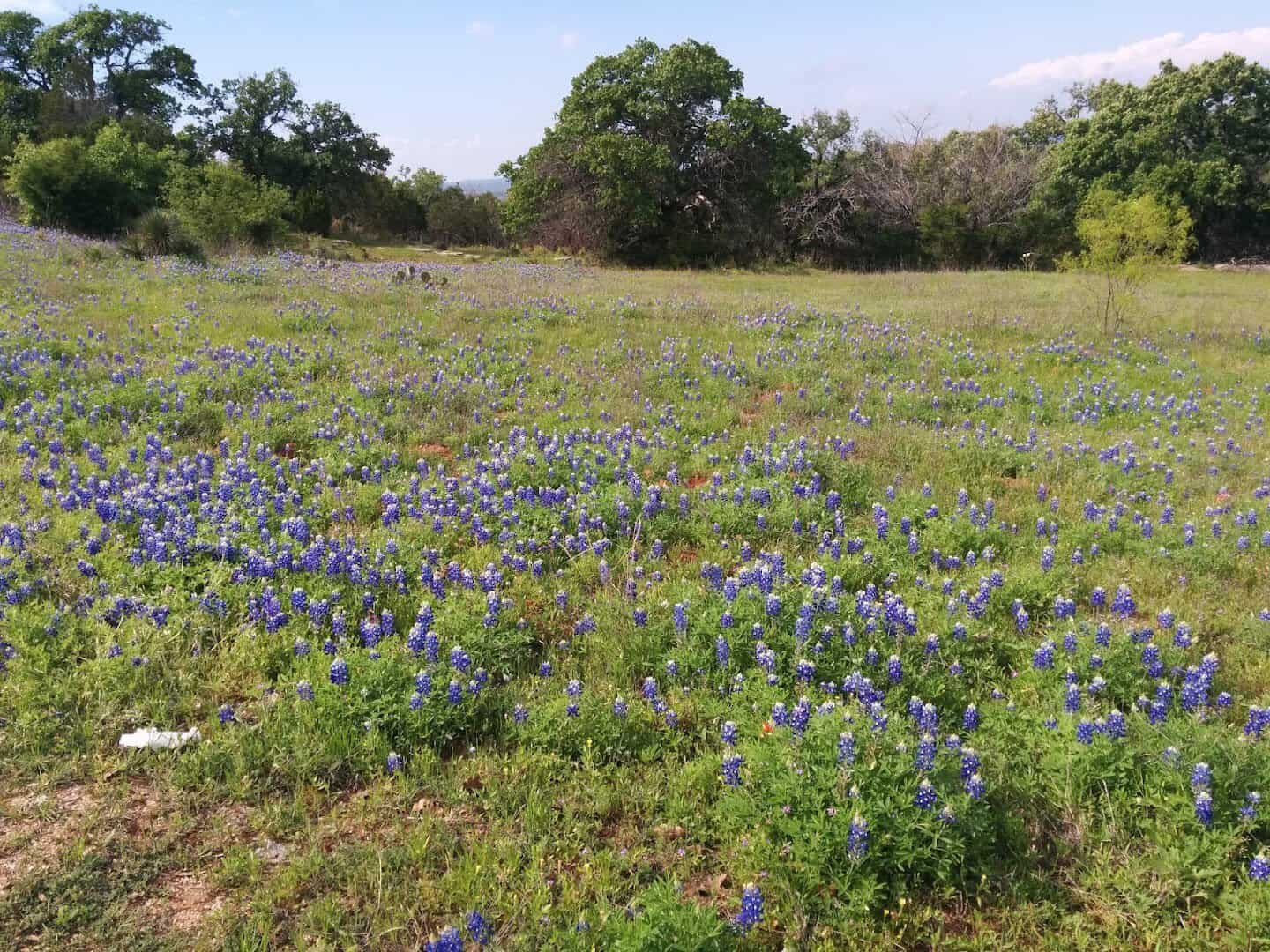
This is the drive Texans mean when they say “bluebonnet season.” The Willow City Loop is a 13-mile ranch road north of Fredericksburg, a ribbon of rocky hills, low-water crossings, and free-range cattle that turns unreasonably pretty every April.
You reach it by taking Highway 16 north out of Fredericksburg, then following Ranch Road 1323 to the loop itself. Go slow. The road is narrow and the views arrive around blind curves, so I always let the truck behind me pass and just crawl.
One gentle rule matters here: the land on either side is private ranchland. Enjoy it from the roadside, shoot your photos from the shoulder, and leave the gates and pastures alone.
Alongside the bluebonnets you will find Indian paintbrush, pink evening primrose, and golden coreopsis crowding the rocky slopes. The mix is what makes the loop photograph so well, layers of blue, red, and yellow stacked up the hillsides.
The blue is just as blue from the edge, and the ranchers who share this view with us have earned that courtesy. Come at sunrise and you may have the whole loop to yourself.
Where: Willow City Loop, Willow City, TX 78675 (north of Fredericksburg via TX-16)
4. The Ennis Bluebonnet Trails
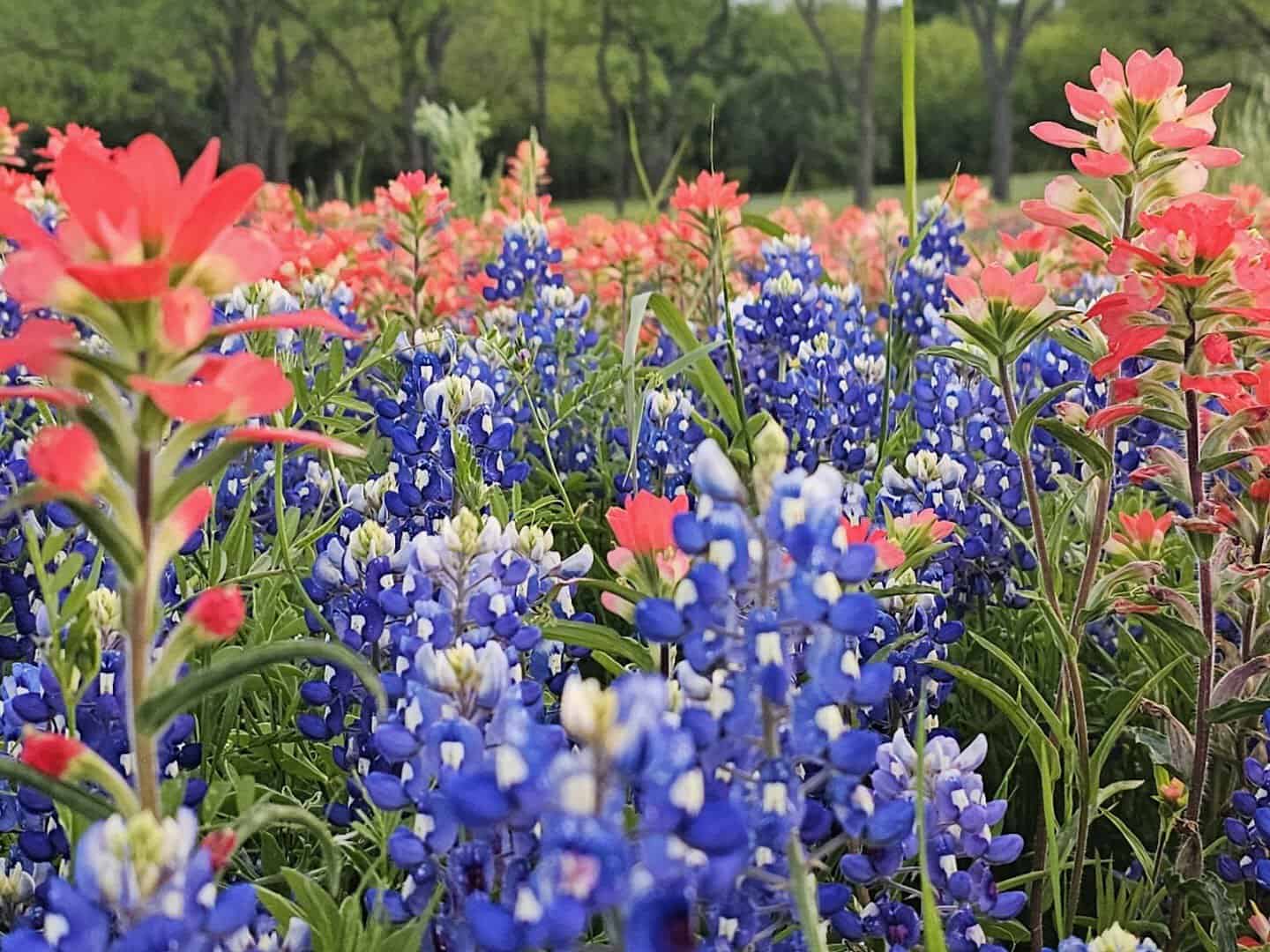
About 35 miles south of Dallas, the little town of Ennis holds a title no other place can claim. The Texas Legislature named it the official Bluebonnet City of Texas, and the Ennis Garden Club maps out more than 40 miles of driving trails every year.
The trails are free and open all through April, winding past pastures where longhorns and horses graze among the blooms. If you want the full festival treatment, the Bluebonnet Trails Festival takes over downtown in mid-April with music and food vendors.
For 2026 the festival runs April 17 through 19, with admission five dollars for adults and free for kids twelve and under. The driving trails themselves stay free every day of the month, which is the part I love most.
Here is my pro tip: check the garden club’s trail map before you drive out, because they update which routes are peaking. Chasing the wrong loop on the wrong weekend is the one thing worth planning around.
I always start early and pack a thermos, then let the map lead me down roads I would never have found on my own. That is half the fun of it.
Where: Ennis Welcome Center, 204 W Knox St, Ennis, TX 75119
5. Muleshoe Bend Recreation Area in Spicewood
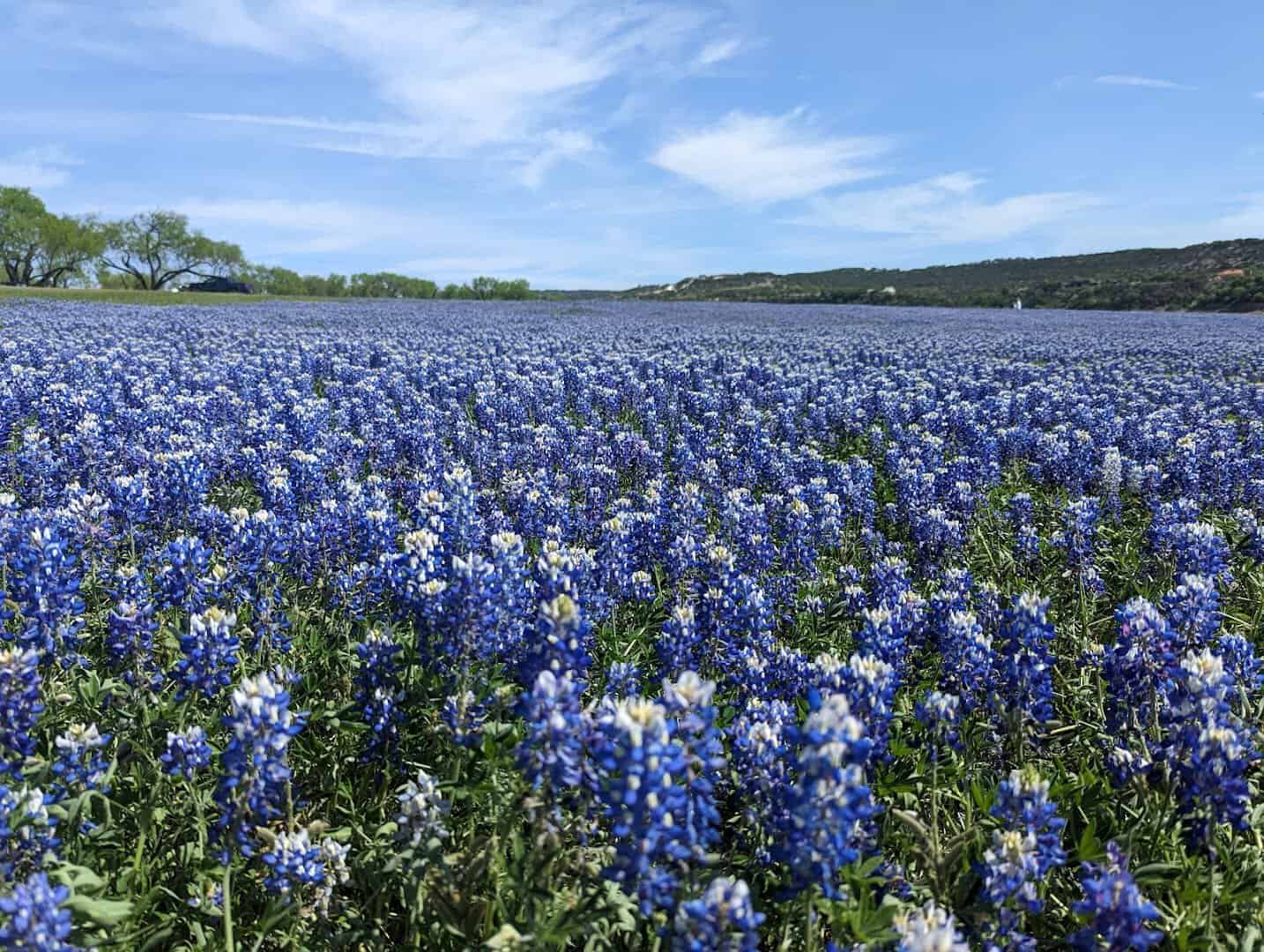
Out on Lake Travis, about 40 miles from downtown Austin, Muleshoe Bend hides one of the densest bluebonnet displays in the state. This 471-acre park is one of the largest in the LCRA system, and for a few weeks each spring the fields near the water go solid blue.
I like Muleshoe because you can turn it into a whole day. There are roughly 10 miles of shaded trails for hiking and mountain biking, primitive campsites right on the lake, and plenty of room to spread out.
The bloom peaks from mid-March into late April, though it swings year to year with the winter rains. Check the park’s wildflower update before you load the car, then bring water and sunscreen.
The park has earned its reputation the honest way, showing up in regional and national magazines for those dense blue fields. On a good year the bluebonnets run right down to the shoreline and reflect in the still water.
My favorite moment here is late afternoon, when the light goes gold and the bluebonnets seem to glow against the lake. Bring a picnic and stay for it.
Where: 2820 County Road 414, Spicewood, TX 78669
6. Turkey Bend Recreation Area near Marble Falls
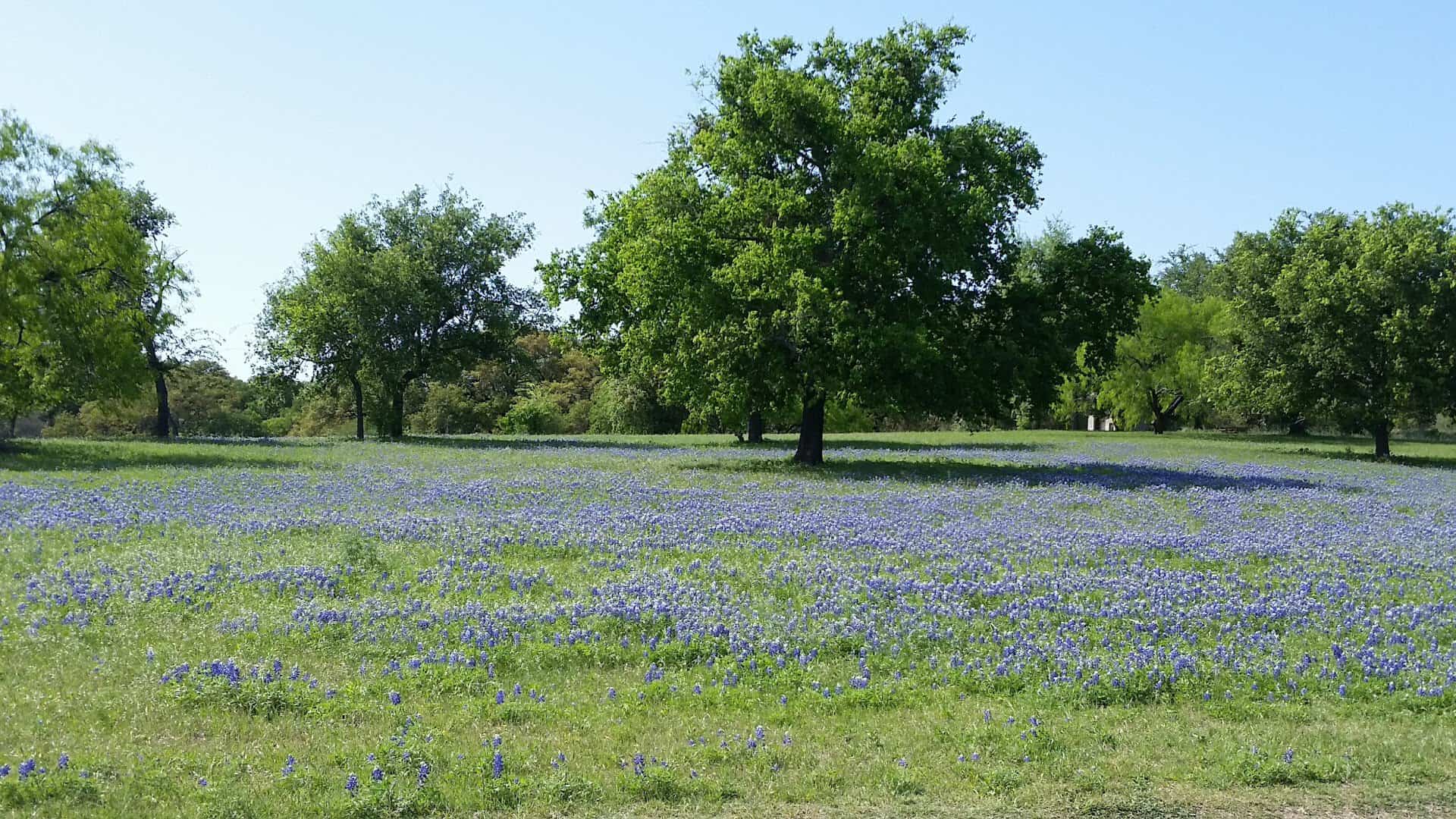
A little upstream from Muleshoe, on the north shore of Lake Travis, Turkey Bend is the quieter cousin that regulars guard like a secret. The 1,146-acre park spreads sprawling meadows across its south side, and those meadows fill with bluebonnets in early spring.
With more than 15 miles of trails open to hikers, bikers, and horseback riders, there is room here to lose the crowd entirely. I have walked out into the meadows on an April morning and heard nothing but wind and birdsong.
Reviewers who know the Highland Lakes swear Turkey Bend holds some of the best blue groves anywhere in the region. I would not argue with them.
Marble Falls is about 25 minutes away for coffee and groceries, so you can make a slow morning of it. Pack in your water, because the park keeps things primitive on purpose.
Where: Turkey Bend Recreation Area, Marble Falls, TX 78654 (north shore of Lake Travis)
7. Inks Lake State Park in Burnet
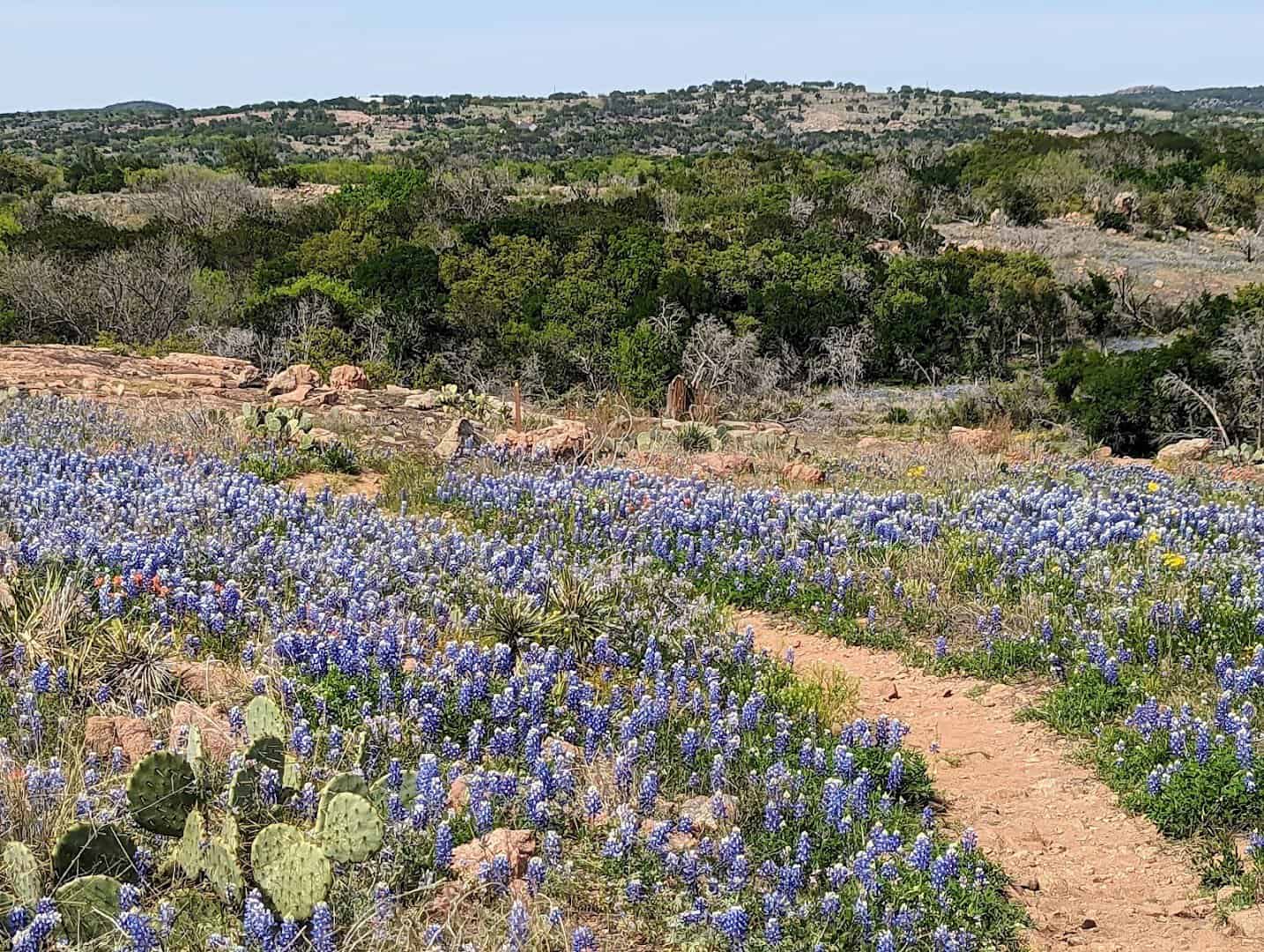
Up in Burnet County, Inks Lake wraps 1,200 acres of pink granite hills around a clear Colorado River lake. In spring those rocky slopes paint themselves with blues, reds, and yellows, and the color against the rose-colored stone is like nothing else on this list.
Rangers here once found a rare cluster of white bluebonnets growing right beside the park headquarters. That pale variation comes from a recessive gene both parent plants have to carry, so spotting one feels like winning a tiny lottery.
Beyond the flowers, the park earns its crowds with the Devil’s Waterhole, a rock-rimmed cove that begs you to jump in once the weather warms. In April, though, the wildflowers are the main event.
The granite here is part of the same ancient pink stone that surfaces all over the Highland Lakes, dotted with live oak and mountain juniper. Wildflowers tucked into those rocky pockets photograph beautifully against the stone.
Hike the granite outcrops for the wide views, then drop down to the water. I always tell friends to bring a swimsuit just in case the day turns hot.
Where: 3630 Park Road 4 W, Burnet, TX 78611
8. Chappell Hill and Washington County
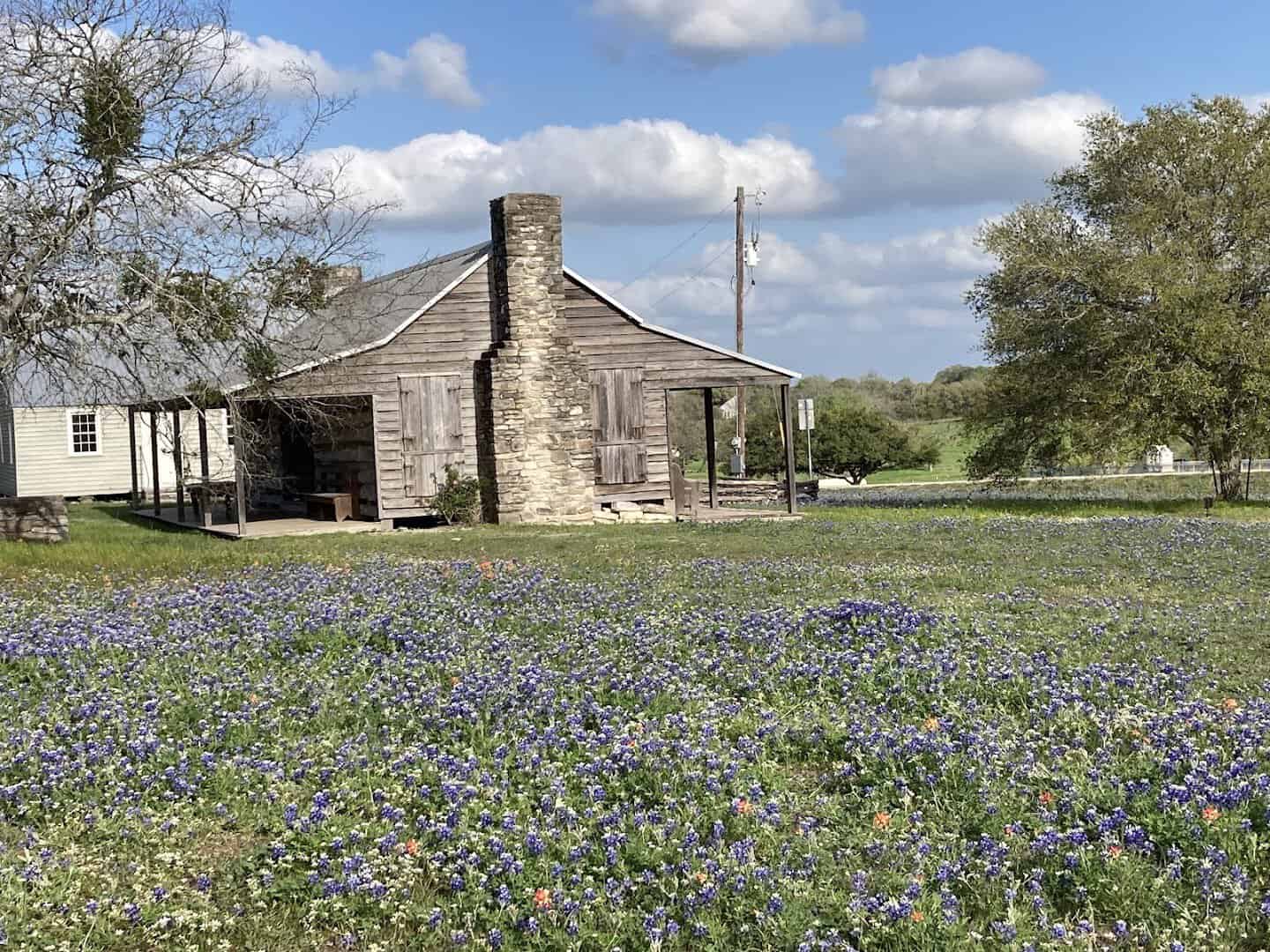
The gentle green hills between Brenham and Chappell Hill are, to my eye, the prettiest bluebonnet country in Texas. The blooms here run thick along the fence lines, and the historic settlement of Chappell Hill gives you something to see between fields.
Chappell Hill hosts the official Bluebonnet Festival of Texas, another legislature-blessed title, and 2026 marked its 62nd year. The whole main street fills with craft vendors and food while the countryside outside town does the real showing off.
My favorite move is to leave the crowds behind and drive the back roads toward Independence, where old ruins and stone chimneys make a gorgeous backdrop for a blue-carpeted field.
Admission to the festival grounds is free, with parking around ten dollars. Saturday runs nine to six and Sunday ten to five, so come Saturday morning early, before the tour buses find their way out here from Houston.
What started as a small-town antique show decades ago has grown into one of the premier spring events in the state. It still feels like a county fair, which is exactly why I keep going back.
Where: Chappell Hill, TX 77426 (about 12 miles east of Brenham on Hwy 290)
9. Big Bend National Park in West Texas
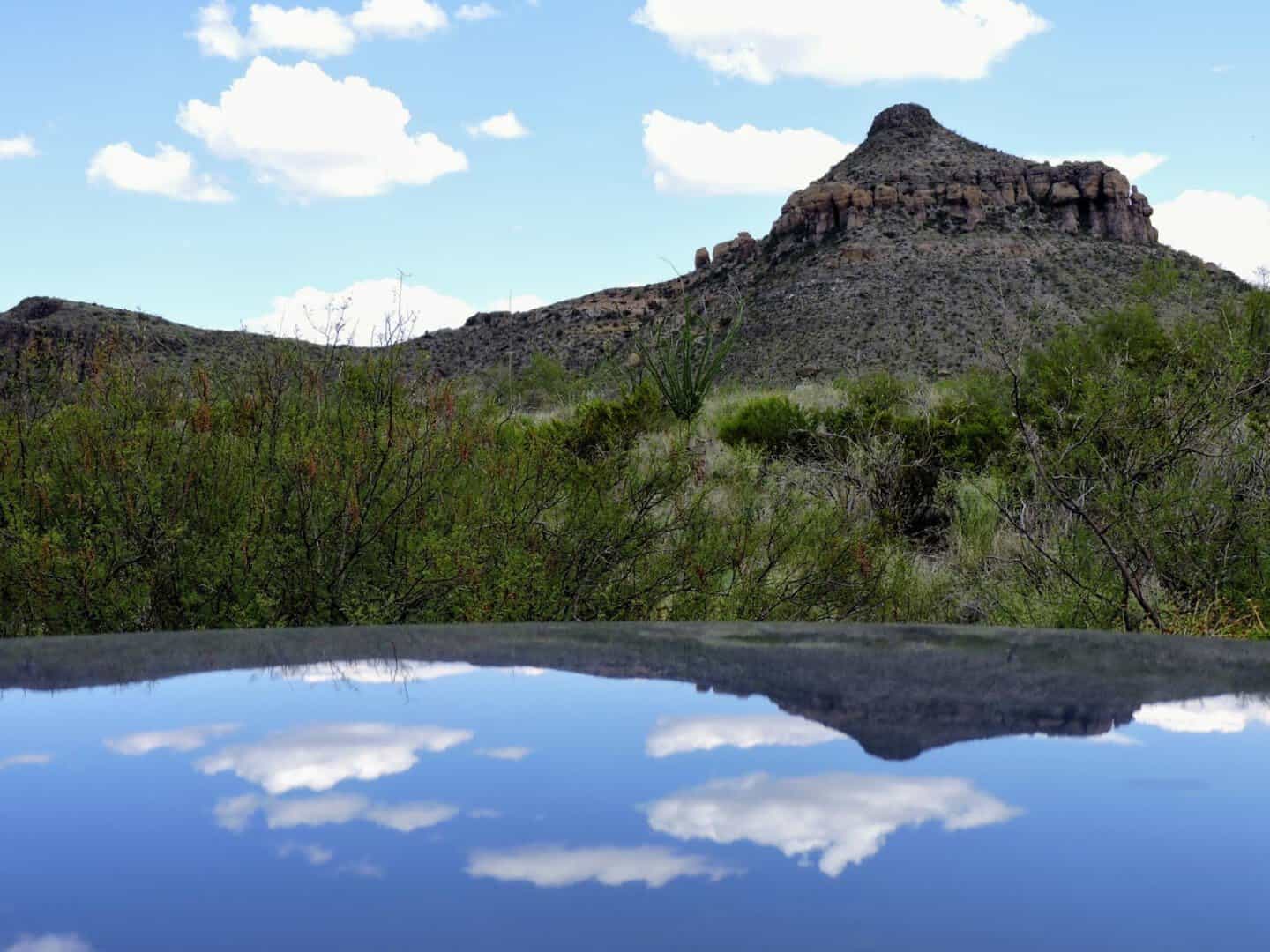
If you think of bluebonnets as a Hill Country thing, Big Bend will change your mind. Out in the Chihuahuan Desert, spring often arrives early, and the Chisos bluebonnet, a giant cousin of the state flower, can grow up to three feet tall along the park road.
Come between March and May and the desert stops looking austere. Desert marigold splashes yellow across the arroyos, cenizo bushes bloom pink, and cactus flowers open in saturated magenta and orange.
One honest note: the desert bloom leans heavily on winter rain, so it varies more than Central Texas. When it hits, though, few places on earth touch it.
Bring more water than you think you need and fill the tank before you go, because the nearest services are a long way off. Mild spring temperatures make hiking here a genuine pleasure.
The drive alone rearranges what you think a desert looks like. Give yourself two days if you can, because the park is enormous and the good bloom is often tucked down a road you did not plan to take.
Where: Big Bend National Park, TX 79834 (far West Texas, south of Marathon)
10. Palo Duro Canyon State Park in the Panhandle
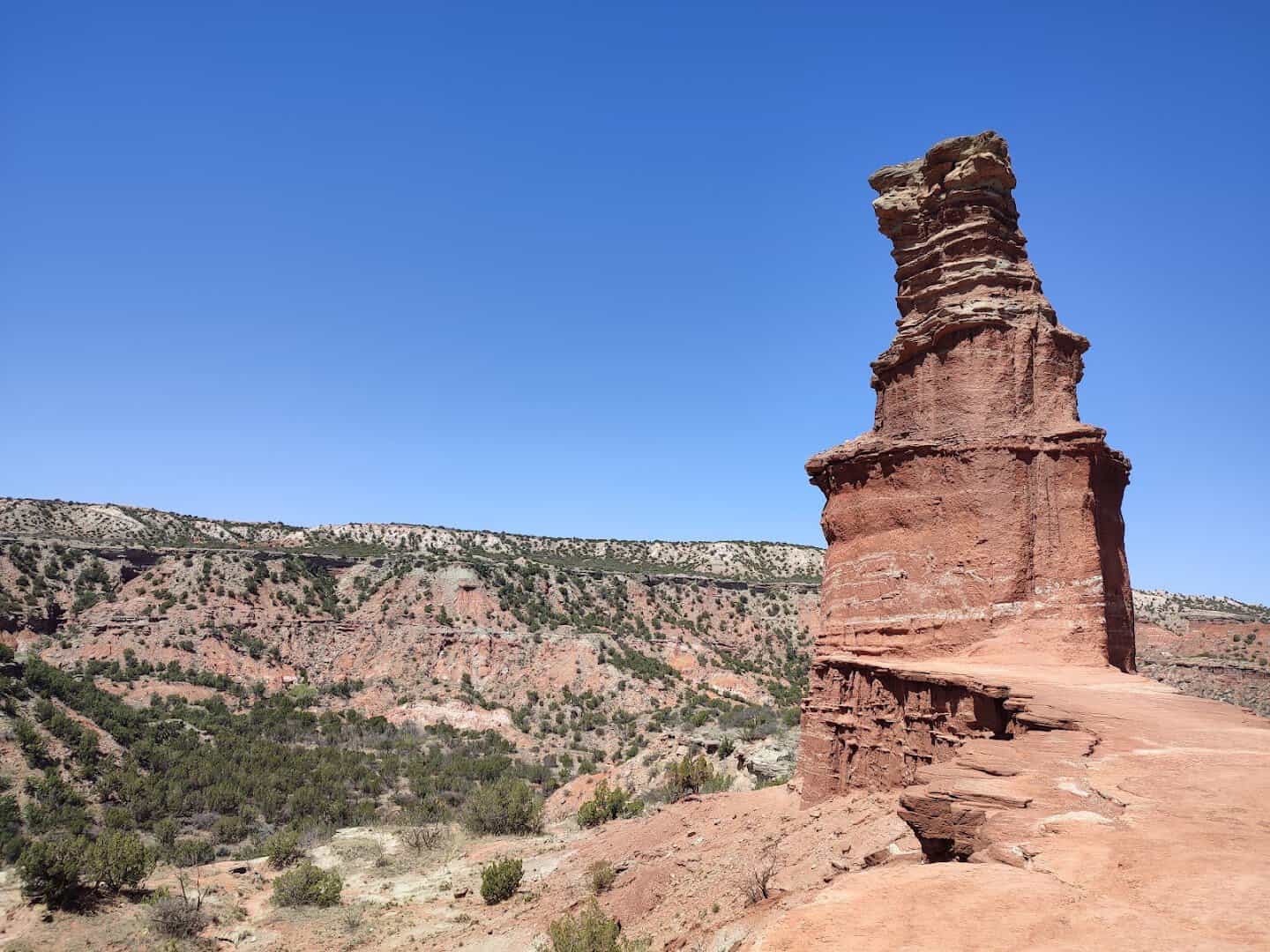
Way up in the Panhandle, the second-largest canyon in the country cuts nearly 800 feet into the High Plains. Palo Duro Canyon State Park covers almost 29,000 acres of red rock, and in spring the canyon floor freckles with color against those rust-colored walls.
The show here leans a little later, peaking from late April into May. Look for Indian paintbrush, winecups, blackfoot daisy, and Indian blanket scattered along the trails that drop down into the canyon.
I always tell first-timers to drive to the rim overlook first, then hike down, because the scale does not register until you are standing on the floor looking up.
For scale, the canyon runs about 120 miles long and 20 miles wide, carved by the Prairie Dog Town Fork of the Red River over a very long time. Standing on the floor, the walls glow in bands of orange, red, and white above you.
Add a few wildflowers to that view and it lands as one of the great sights in Texas. Go early to stay ahead of the Panhandle heat, and carry water on every trail.
Where: 11450 Park Road 5, Canyon, TX 79015
Plan Your Texas Wildflower Chase
The blue never lasts long, and that is exactly what makes it worth chasing. Wildflower season runs roughly March through May, sweeping from the southern Hill Country up toward the Panhandle as the weeks warm, so a little timing lets you catch it twice.
Pick a couple of these spots, set an early alarm, and go while the light is soft and the crowds are still in bed. Pack water, watch for fire ants, leave the private pastures be, and take home nothing but photos and a seed packet. Now go get blue.
Featured image: Sathiskumar M via Ennis Bluebonnet Trails

Stella Raines
Editor-in-Chief
Stella brings over a decade of storytelling experience to TX Headlines. With roots in West Texas and a love for road trips, she leads the editorial team with an eye for the hidden stories that make Texas unforgettable.
More Stories
This Secret Texas Cavern Is an Ancient Riverbed That Once Hid a Prohibition Ballroom
This Turquoise Texas Lake Is a Hill Country Escape That Could Pass for the Caribbean
This Secluded West Texas Basin Is a Mile-High Camp Ringed by Volcanic Peaks and Blazing Stars