This Secluded West Texas Basin Is a Mile-High Camp Ringed by Volcanic Peaks and Blazing Stars
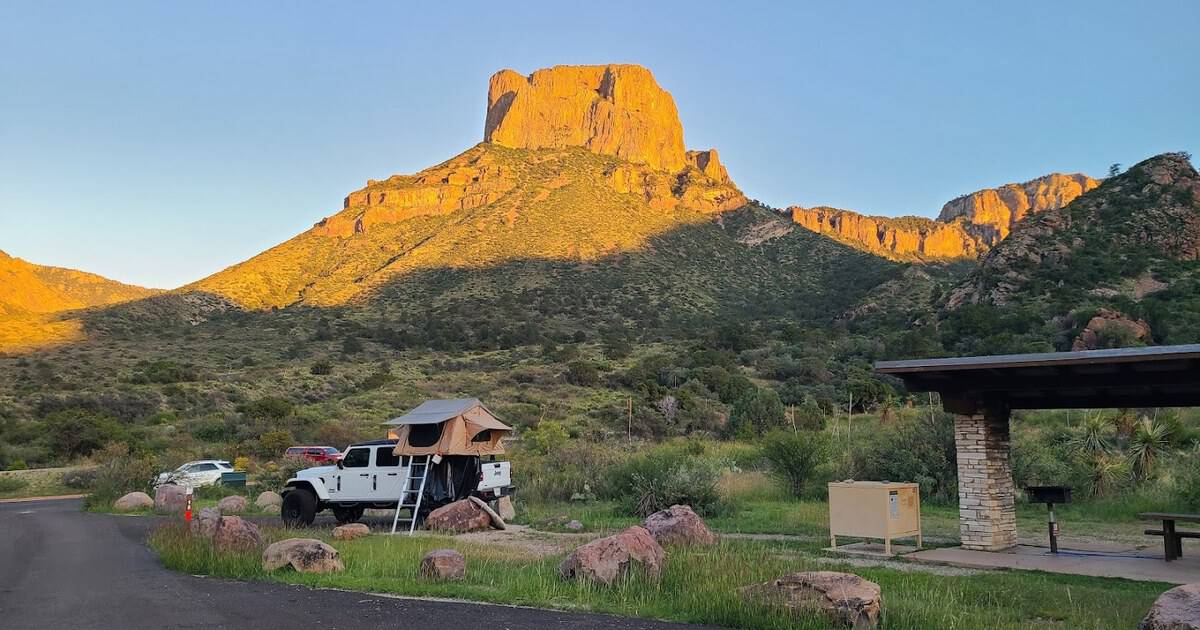
The first time my ears popped in Texas, I was crawling along in second gear with the windows rolled down. Behind me the creosote and the lechuguilla were falling away. Ahead, through a dusty windshield, I could see pine trees.
That climb ends in the Chisos Basin, the high green bowl at the middle of Big Bend National Park, and the campground sitting inside it wakes up every morning in thin pine-cooled air at 5,400 feet. Below, discover why one night up here rearranges what you thought Texas camping was.
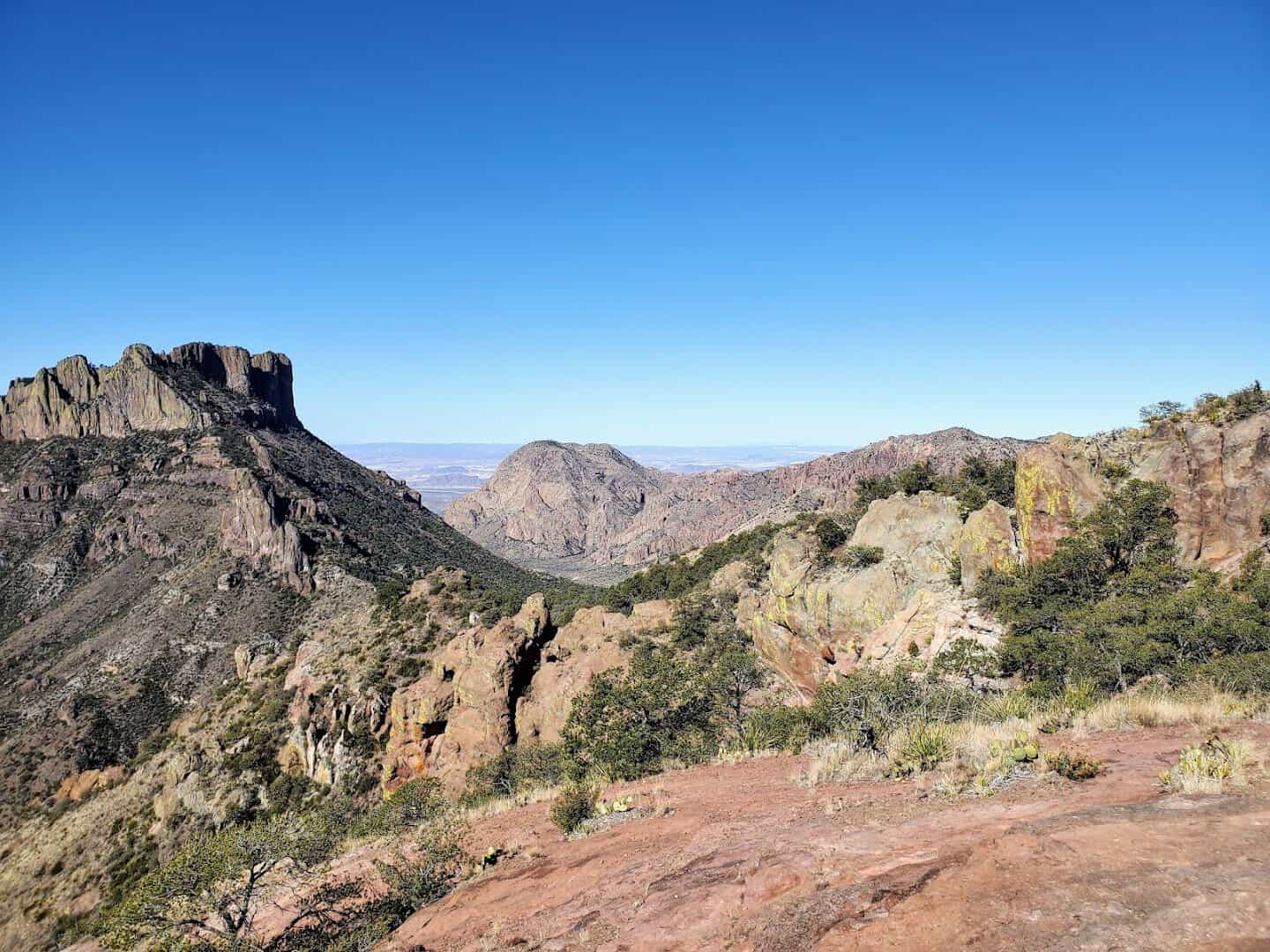
I have pitched a tent in a lot of corners of this state. Nowhere else do mountains stand around your sleeping bag like the walls of a stadium, and nowhere else does the sky go this completely black by nine o’clock.
Up Green Gulch, Where the Desert Turns Into Forest
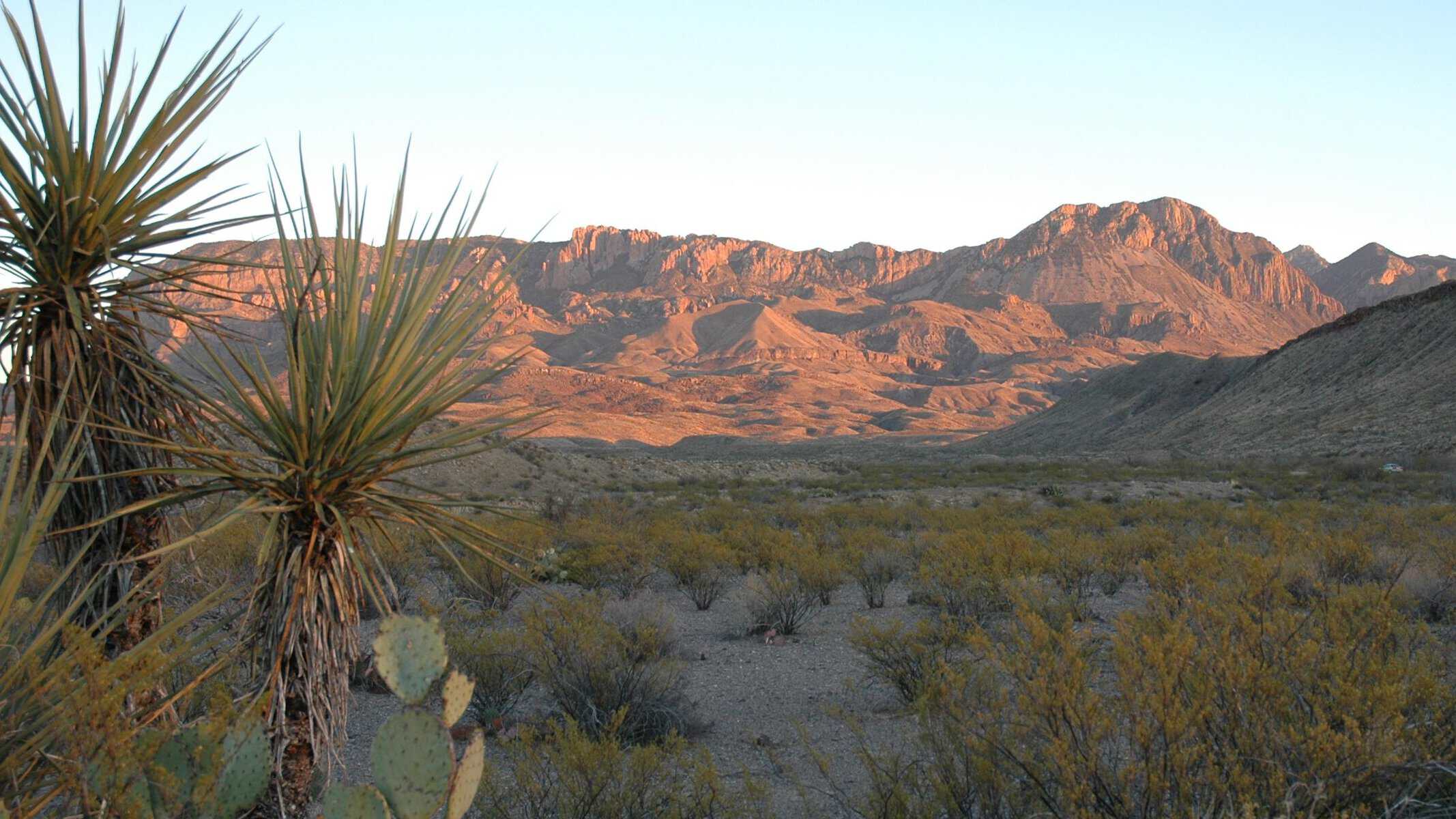
You feel the change before you see it. The Basin Junction Road leaves the desert floor and climbs more than 2,000 feet through a canyon called Green Gulch, and the temperature drops the whole way.
Prickly pear gives way to sotol. Sotol gives way to juniper. By the time the road tops out at Panther Pass, 5,679 feet above sea level and the highest point of pavement in the park, you are driving through oak and pinyon pine.
Then the road tips over the pass and drops into the Basin on a 15 percent grade with hairpins stacked one on top of another. My hands were at ten and two. I loved every second of it.
That grade is why the park asks motorhomes over 24 feet and trailers over 20 feet to stay below. It is not a road for anything long, and the rangers are not being precious about it.
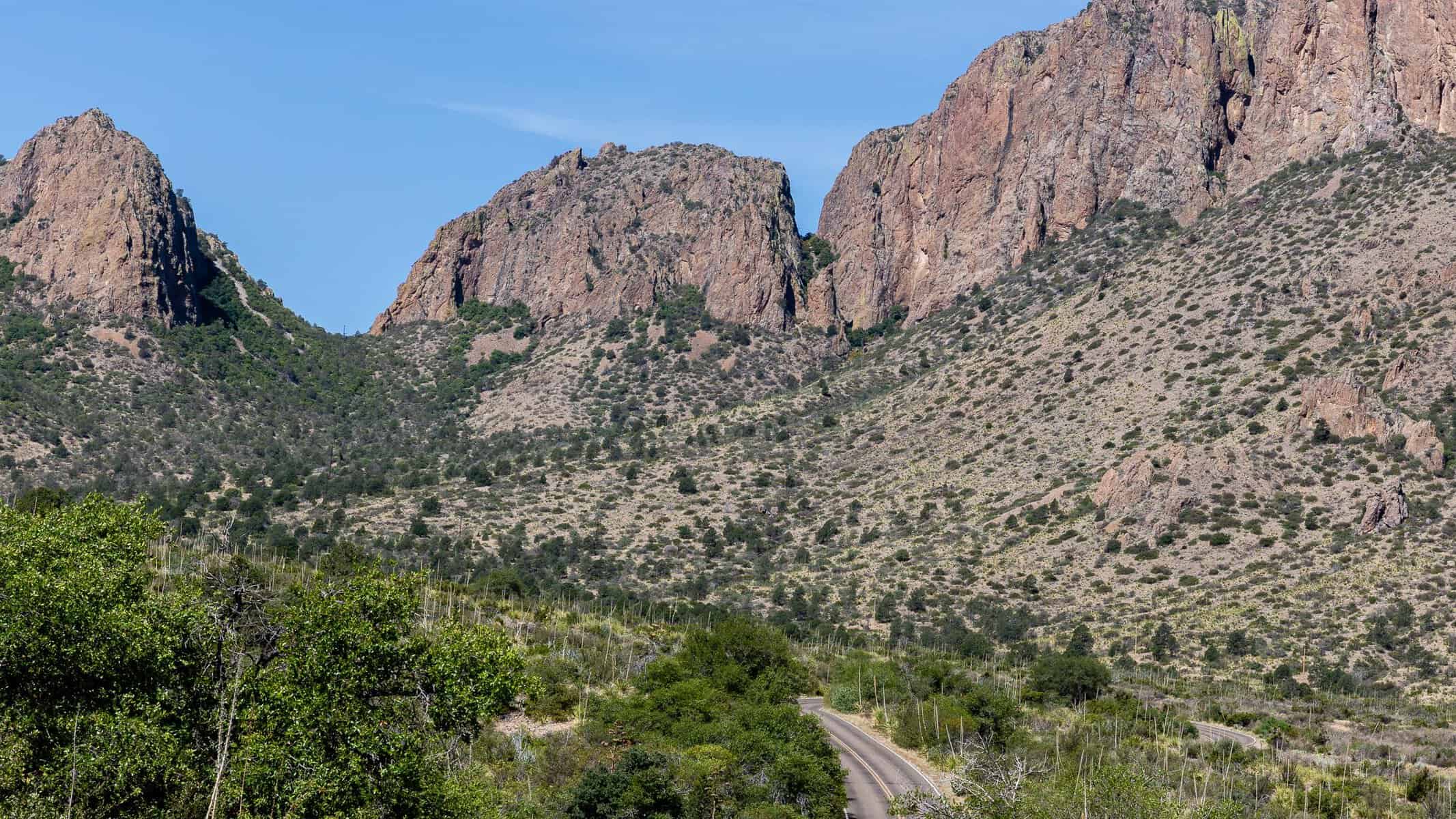
Roll the window down on the way up. The smell shifts from hot dust to something green and resinous, and that shift is the whole story of this place compressed into seven miles.
A Bowl of Mountains With Sixty Campsites Inside It
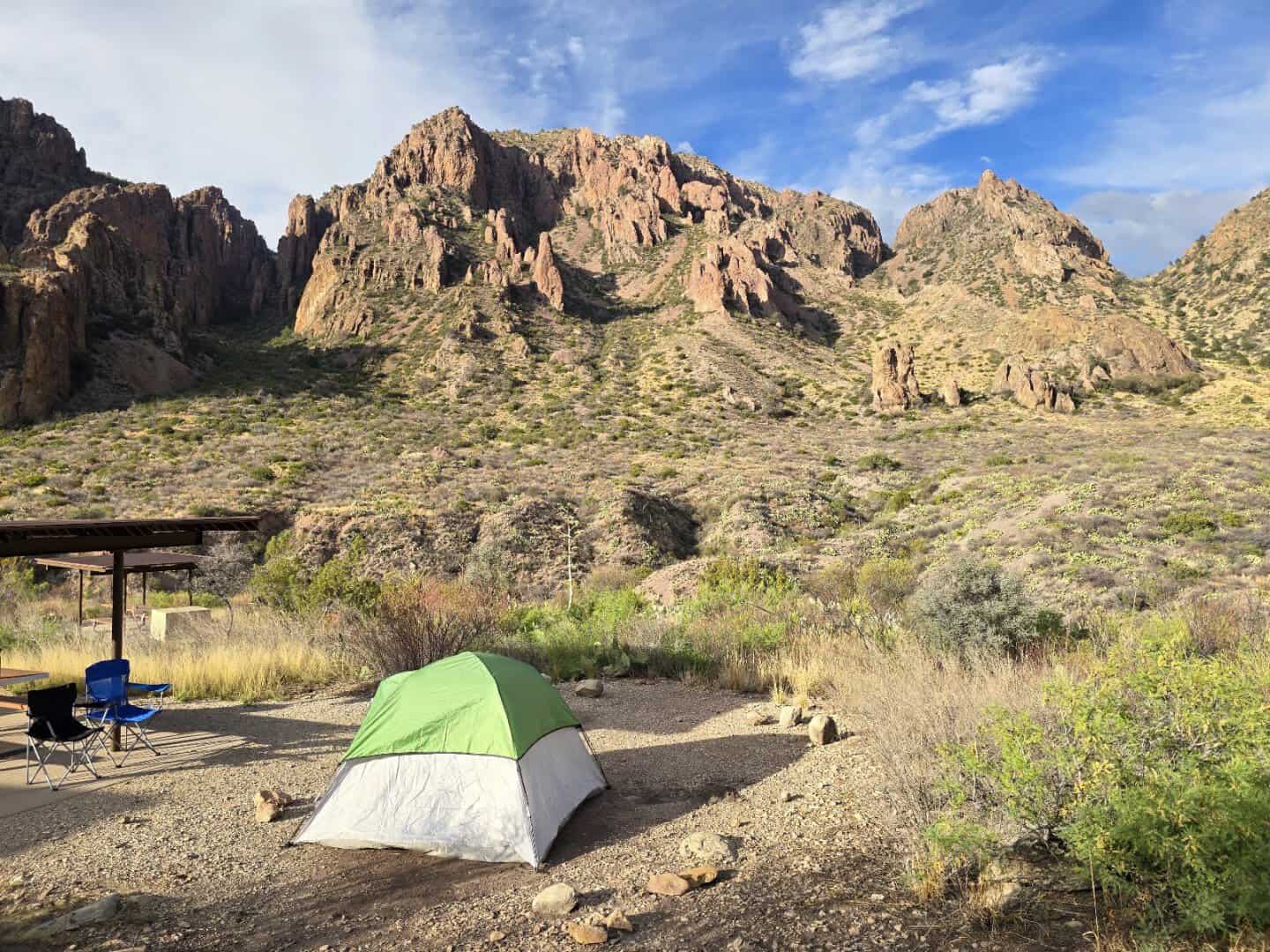
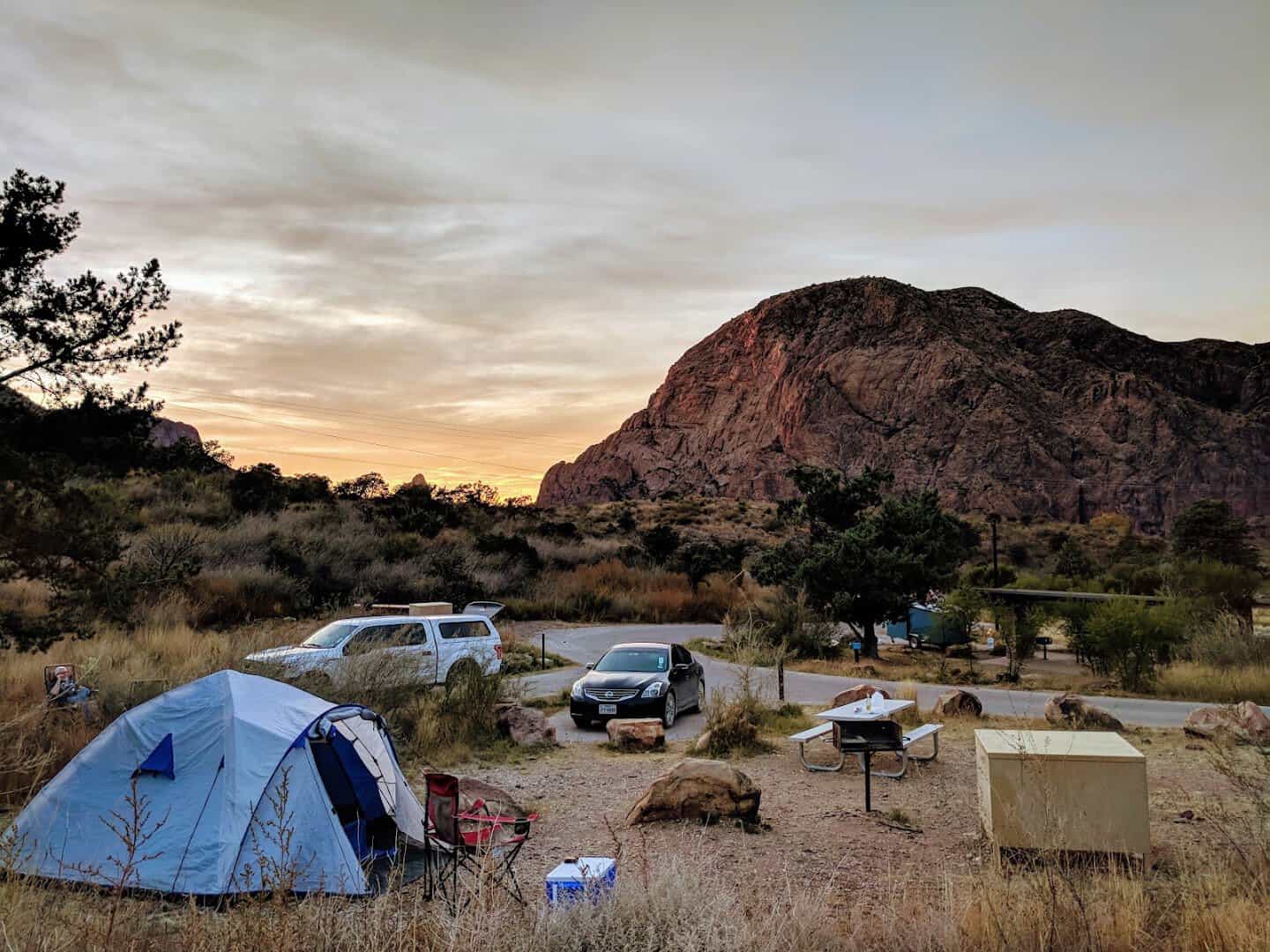
The Basin is a natural amphitheater, a rough circle of rock with an opening on the western side. Sixty individual campsites are scattered through open woodland across the floor of it.
Casa Grande stands over the north side, a great blocky slab of rhyolite that catches the last light. Emory Peak, the tallest thing for hundreds of miles, closes off the southwest.
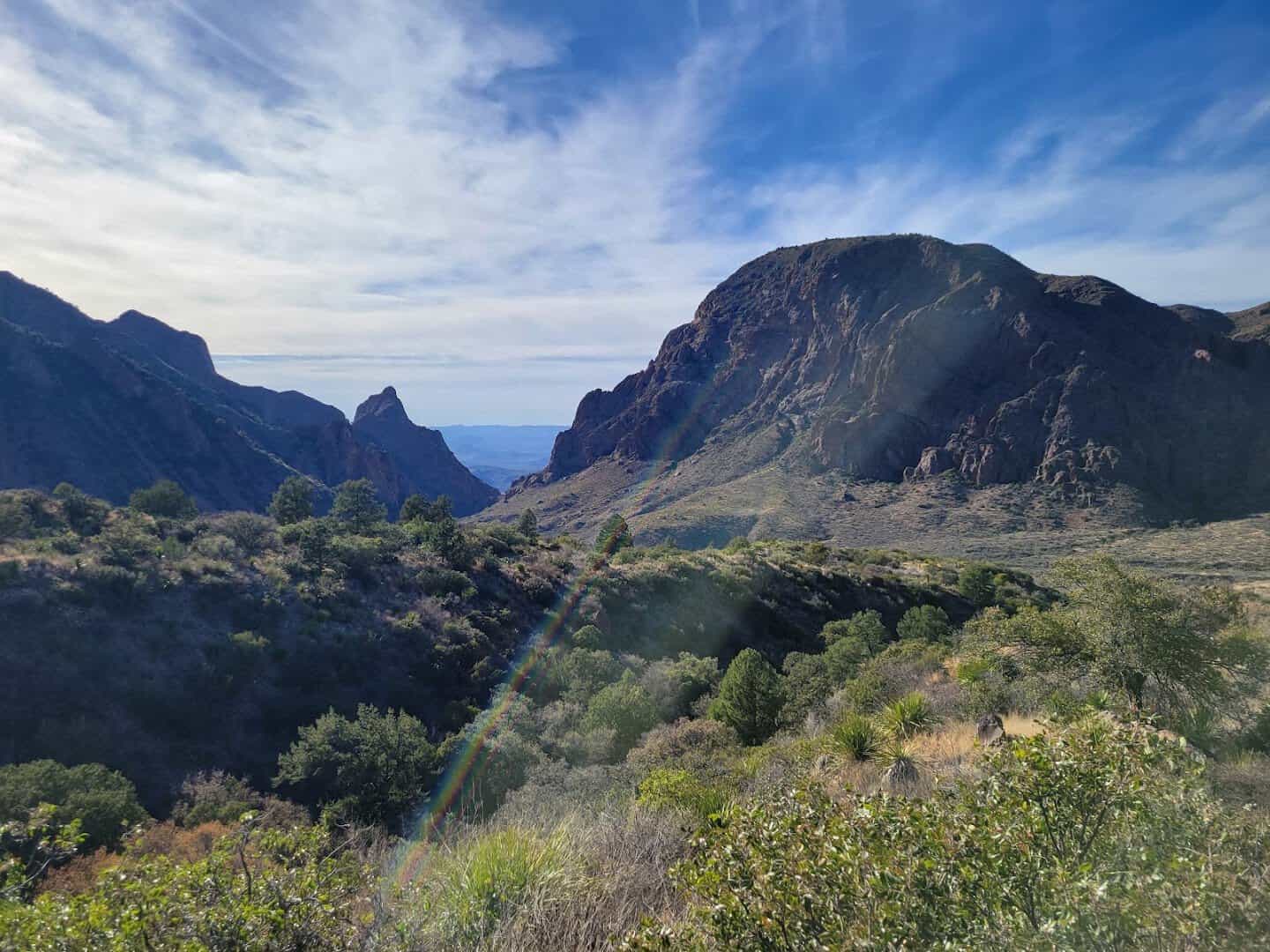
And on the west there is the Window, a V-shaped notch in the rim where every drop of rain that falls in the Basin eventually drains out. Sunset pours through that notch like light through a keyhole.
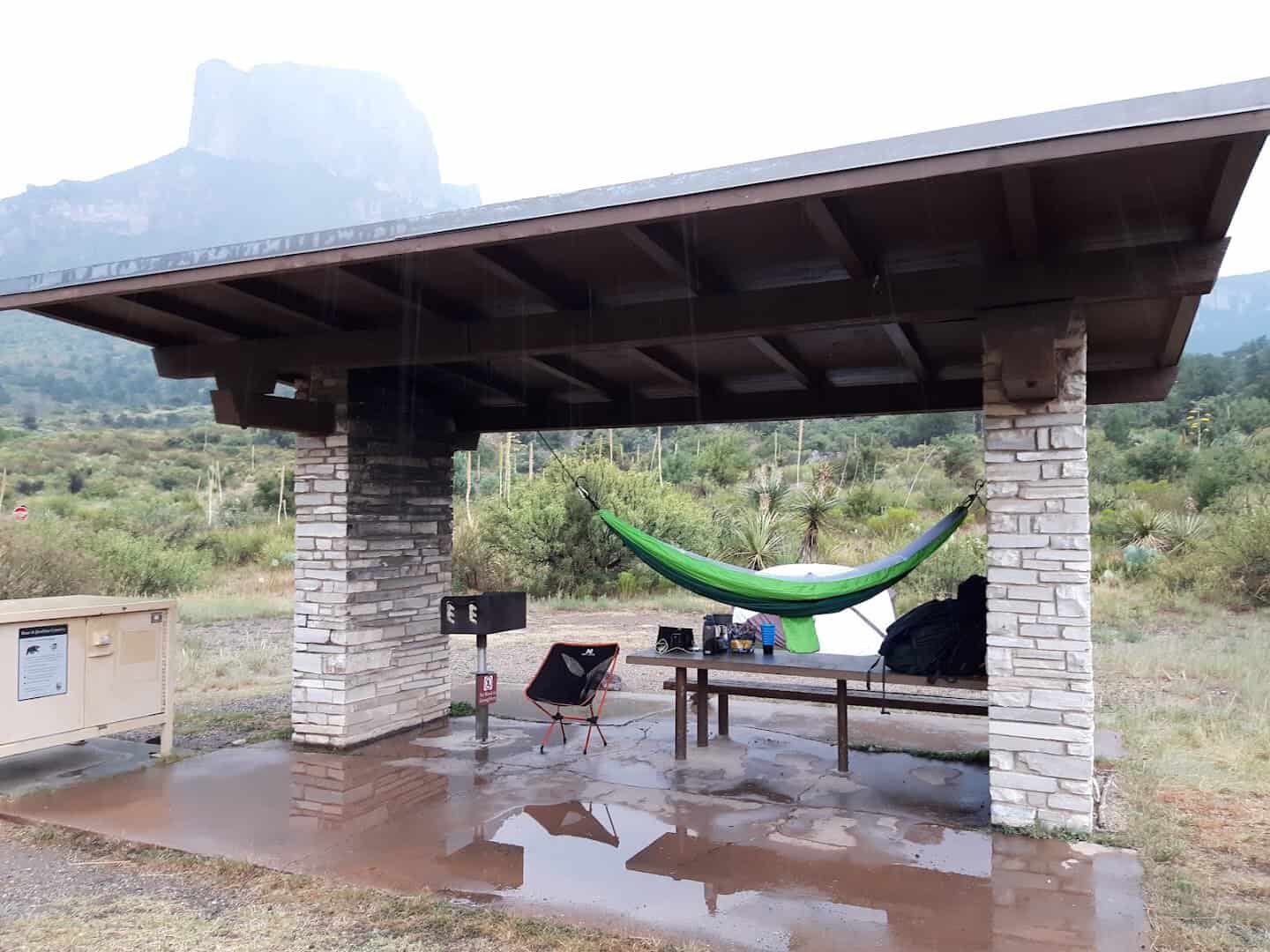
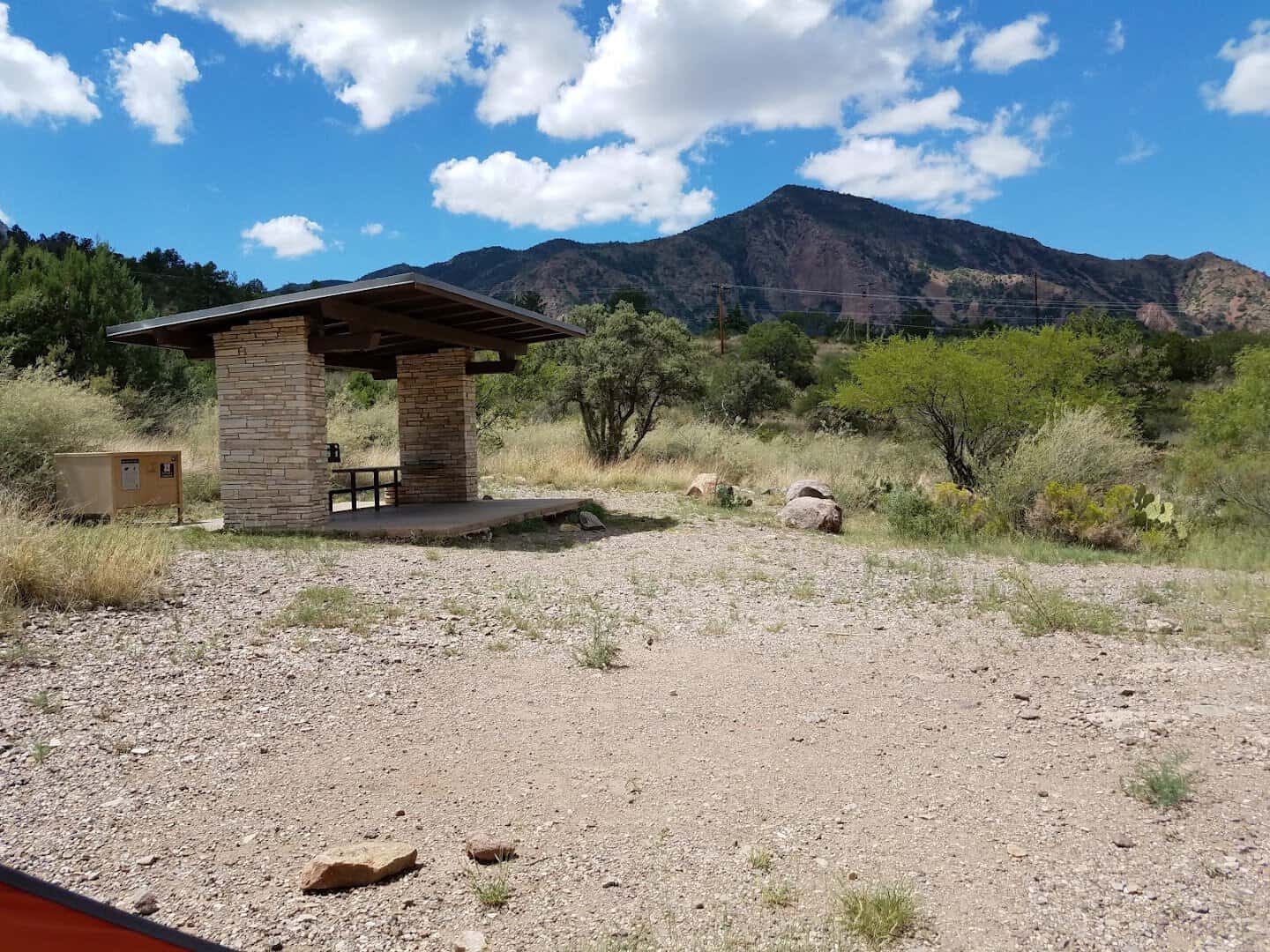
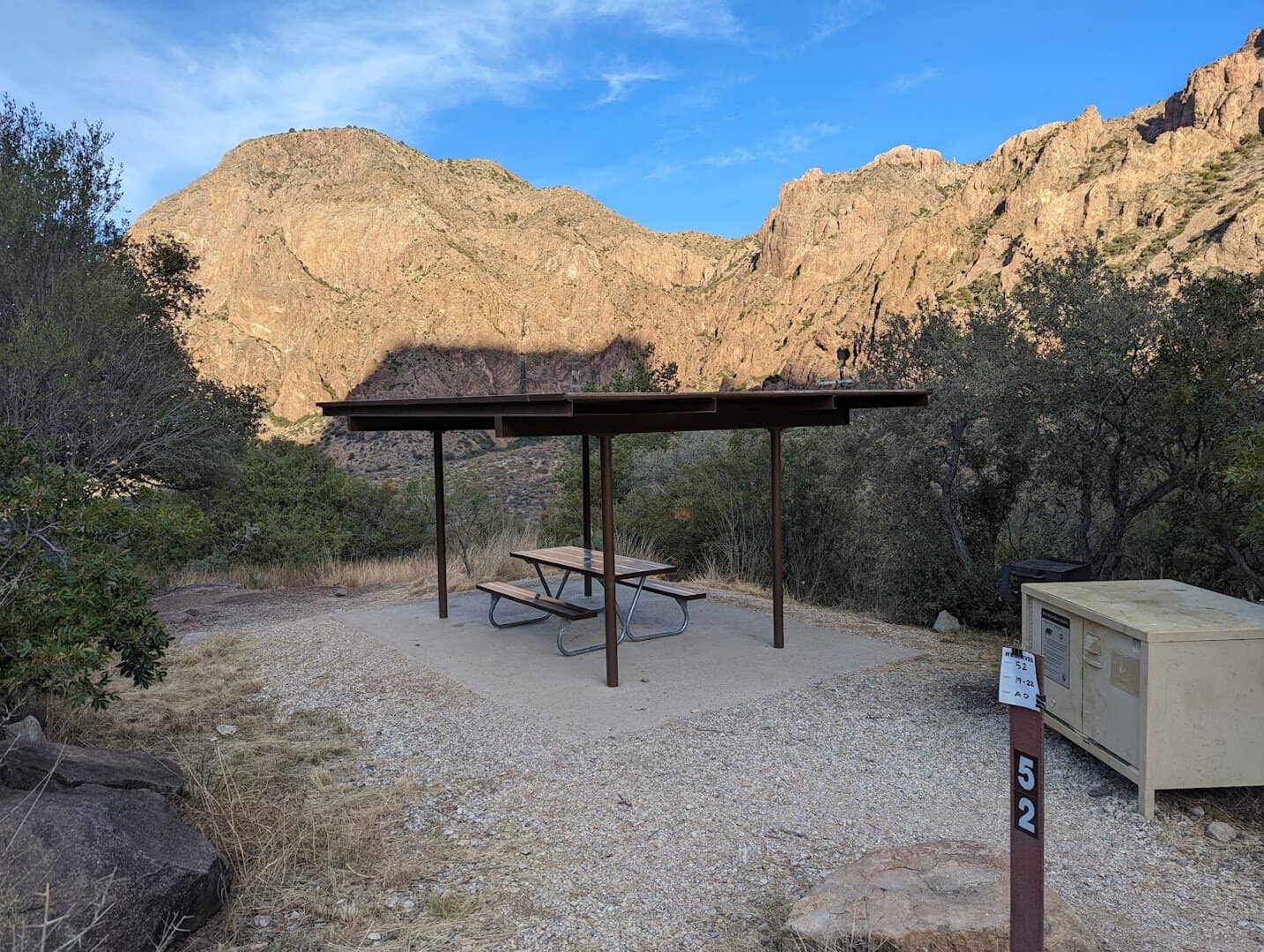
Each site comes with a picnic table, an above-ground charcoal grill, and a bear-certified food locker that you will use, because the bears here are real and they are curious.
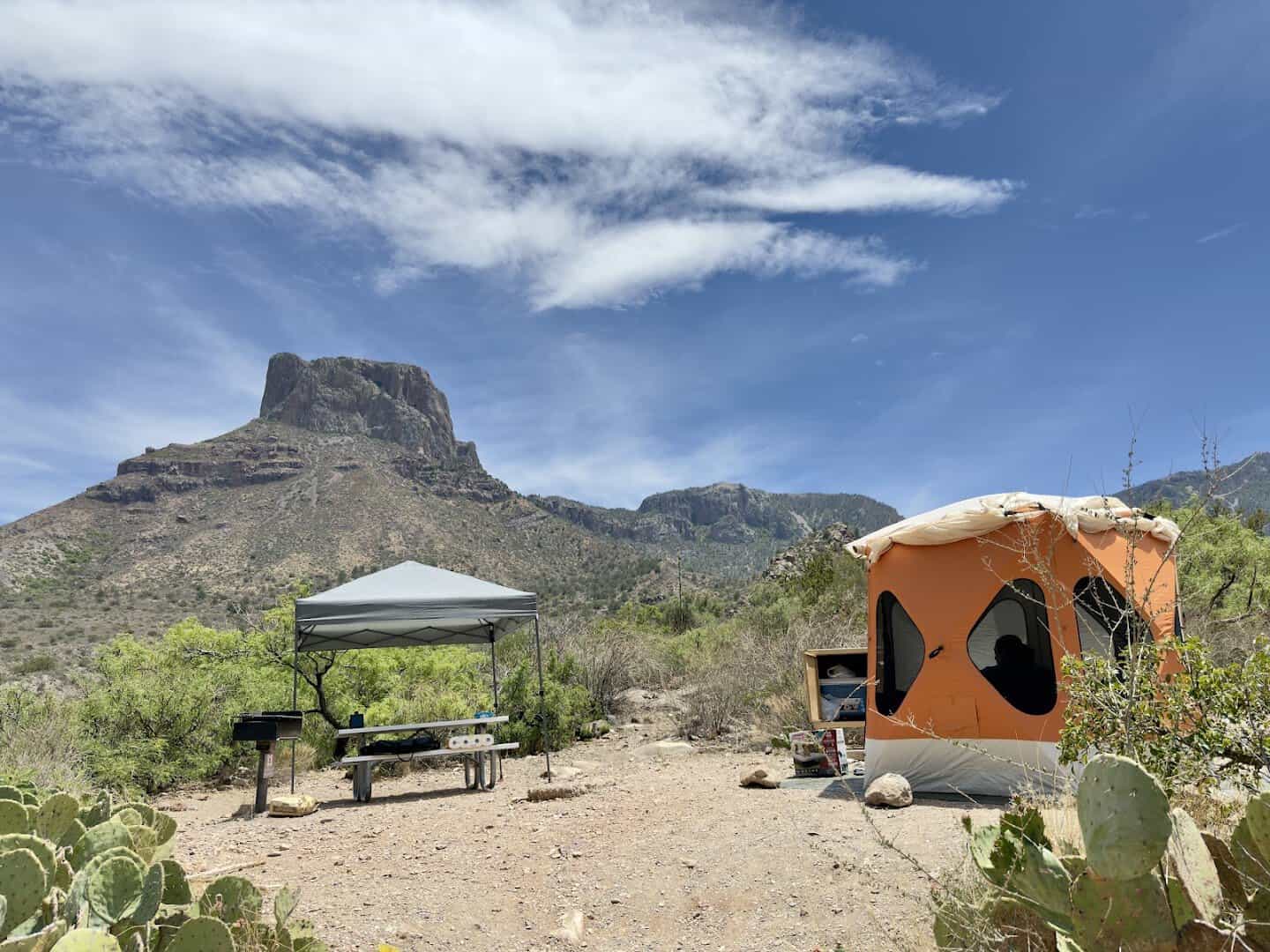
The ground is rocky and the soil is thin. Bring your good stakes, the heavy steel ones, and expect to hunt for a patch that takes them. Flush toilets and water spigots are close by. There are no showers.
One camper on Tripadvisor summed the place up in six words: “The stars and scenery are unmatched.” After a night there I could not improve on that.
Why Such an Enchanted Name?
Say it CHEE-sos. The mountains almost certainly carry the name of the Chisos people, who lived in this country long before anyone drew a park boundary around it.
The folklore is better, though, and West Texans have been trading versions of it for generations. One holds that chisos means ghost, and that the peaks belong to the spirit of the Apache leader Alsate, who sheltered here.
Another traces it to chischás, a clash of arms, because travelers claimed to hear the ghosts of Spanish soldiers fighting again in the dark. A third makes it a worn-down version of hechizos, the Spanish word for enchantments.
Sit in the Basin after sundown, when the wind comes over the rim and the rock ticks as it cools, and you will understand why nobody has ever wanted to settle the question.
Rock That Remembers Being Fire
Every peak you can see from your tent is volcanic. The Chisos went up between roughly 44 and 32 million years ago in a run of eruptions that buried this corner of Texas in ash and lava.
What is left is mostly rhyolite, a hard quartz-rich rock that weathers into cliffs and columns instead of slopes. That is why the skyline here looks built rather than piled.
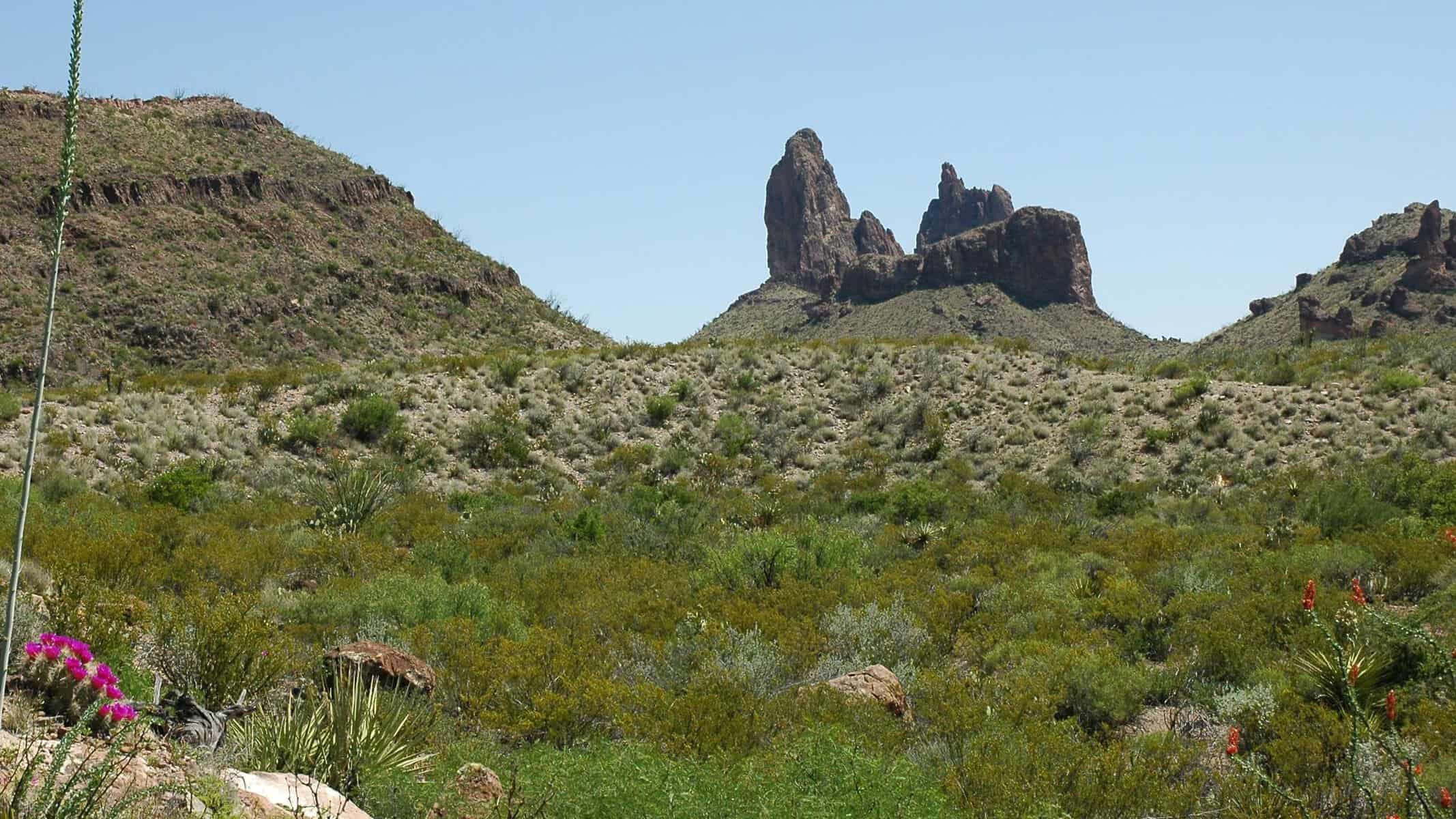
Casa Grande has a stranger past than its shape lets on. Geologists read it as a volcanic dome that pushed up outside the rim of the old Pine Canyon caldera, which means the big square peak over your campsite was once a vent.
Emory Peak tops out at 7,825 feet, making this the third-highest mountain group in Texas. The Chisos also hold a distinction no other range in the country can claim: they sit entirely inside one national park.
Did you know? The Basin is not a crater. It looks like one, and half the visitors assume it is, but water carved it. Millions of years of runoff hollowed out the softer rock and left the hard stuff standing as a rim.
Two Hundred Young Men and Ten Thousand Truckloads
In 1934, about two hundred young men of the Civilian Conservation Corps hiked into these mountains and set up tents in the shadow of Casa Grande. They camped almost exactly where you will camp.
Their assignment was the road. Working with picks, shovels, rakes and a single dump truck, they surveyed and cut the seven miles up Green Gulch that every visitor still drives today.
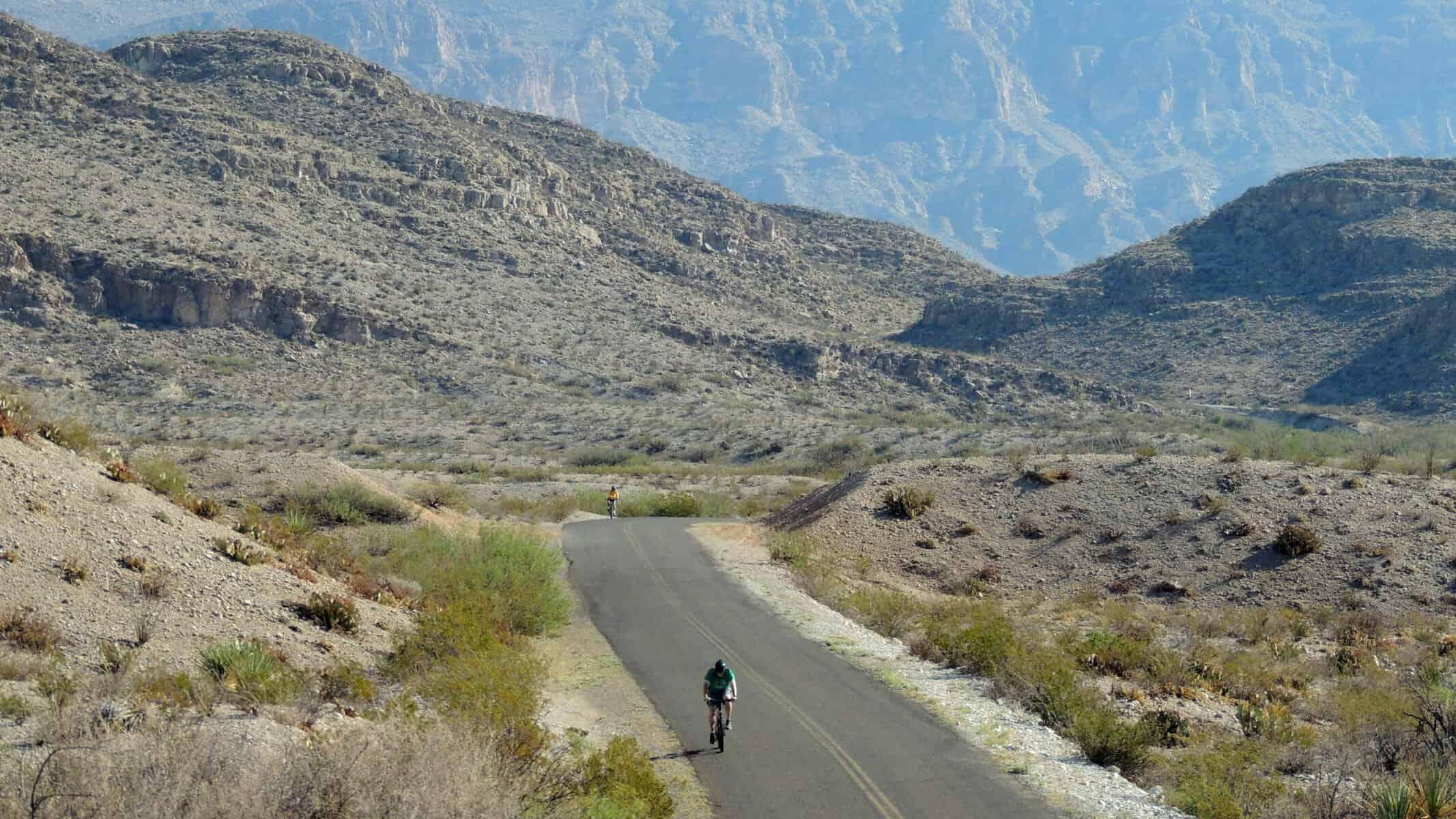
The arithmetic is hard to picture. They moved 10,000 truckloads of earth and rock, and they laid 17 stone culverts along the way. Those culverts are still doing their job ninety years later. Look for them on the drive.
The CCC held the Basin camp from 1934 to 1937 and again from 1940 to 1942, swapping their canvas tents for wooden barracks on the ground the campground now occupies. In 1940 they raised stone and adobe cottages with walls a foot thick and flagstone floors.
Big Bend became a national park on June 12, 1944, and the Chisos went with it. The name on the highest peak is older still.
Emory Peak carries the name of the United States boundary survey run by William Emory, which mapped this country in 1852. It was pinned there by one of his surveyors, M. T. W. Chandler.
Trails That Start Where You Parked
Several of the best hikes in Texas begin within a few hundred yards of the campsites. You can finish your coffee, walk fifty steps, and be climbing before the sun has cleared the rim.
Start with the Window View Trail. It runs 0.3 miles, paved and level, and it ends at what I think is the best sunset seat in the park. Go the first evening, before you have earned it.
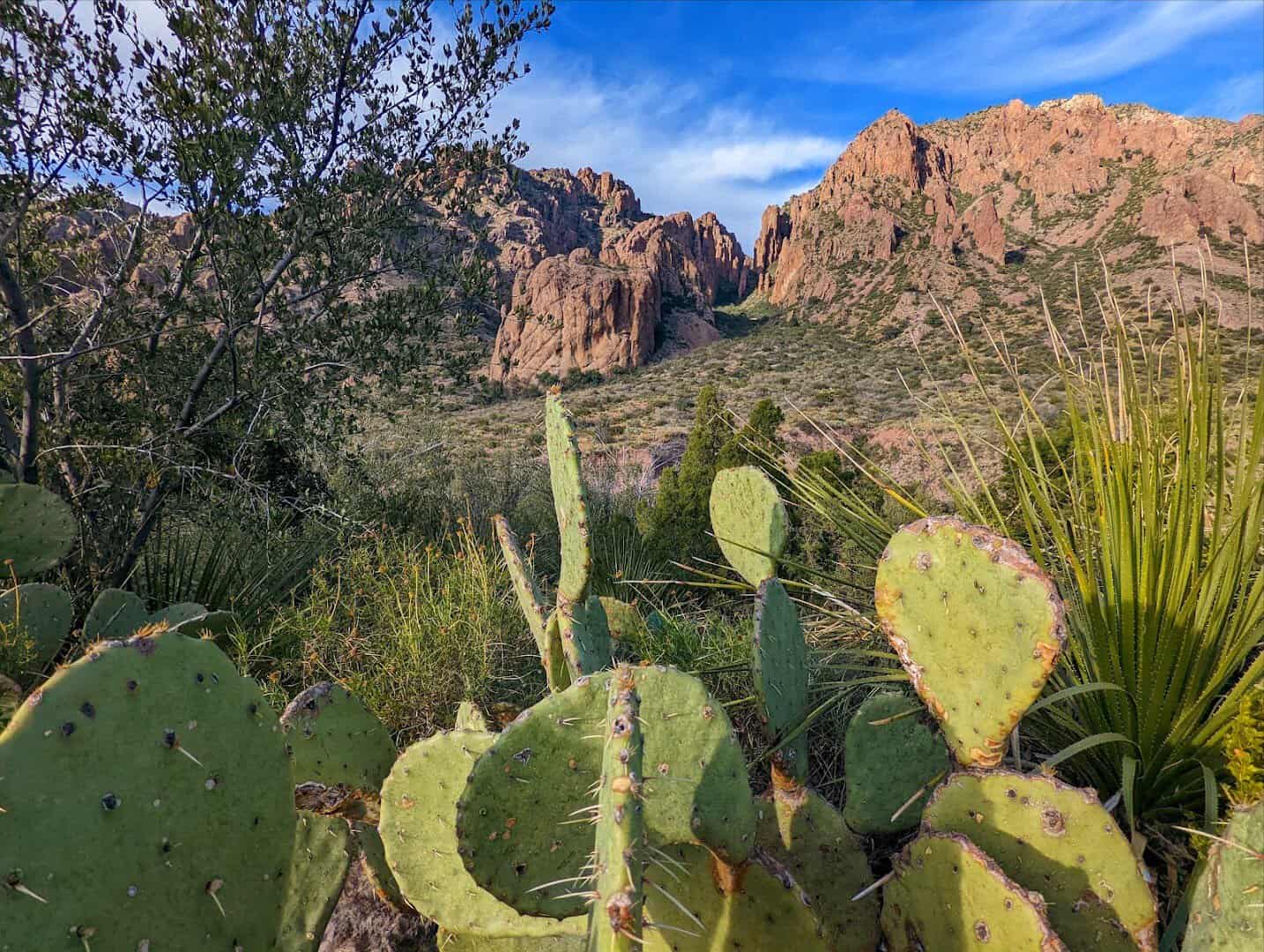
The Basin Loop Trail runs about 1.8 miles with modest climbing and a good deal of shade, which makes it the right call for a warm afternoon or a group with mixed legs.
The Window Trail is the classic. From the campground it is 5.6 miles round trip, dropping through Oak Creek Canyon and crossing the creek again and again until the walls close in and the floor becomes polished stone.
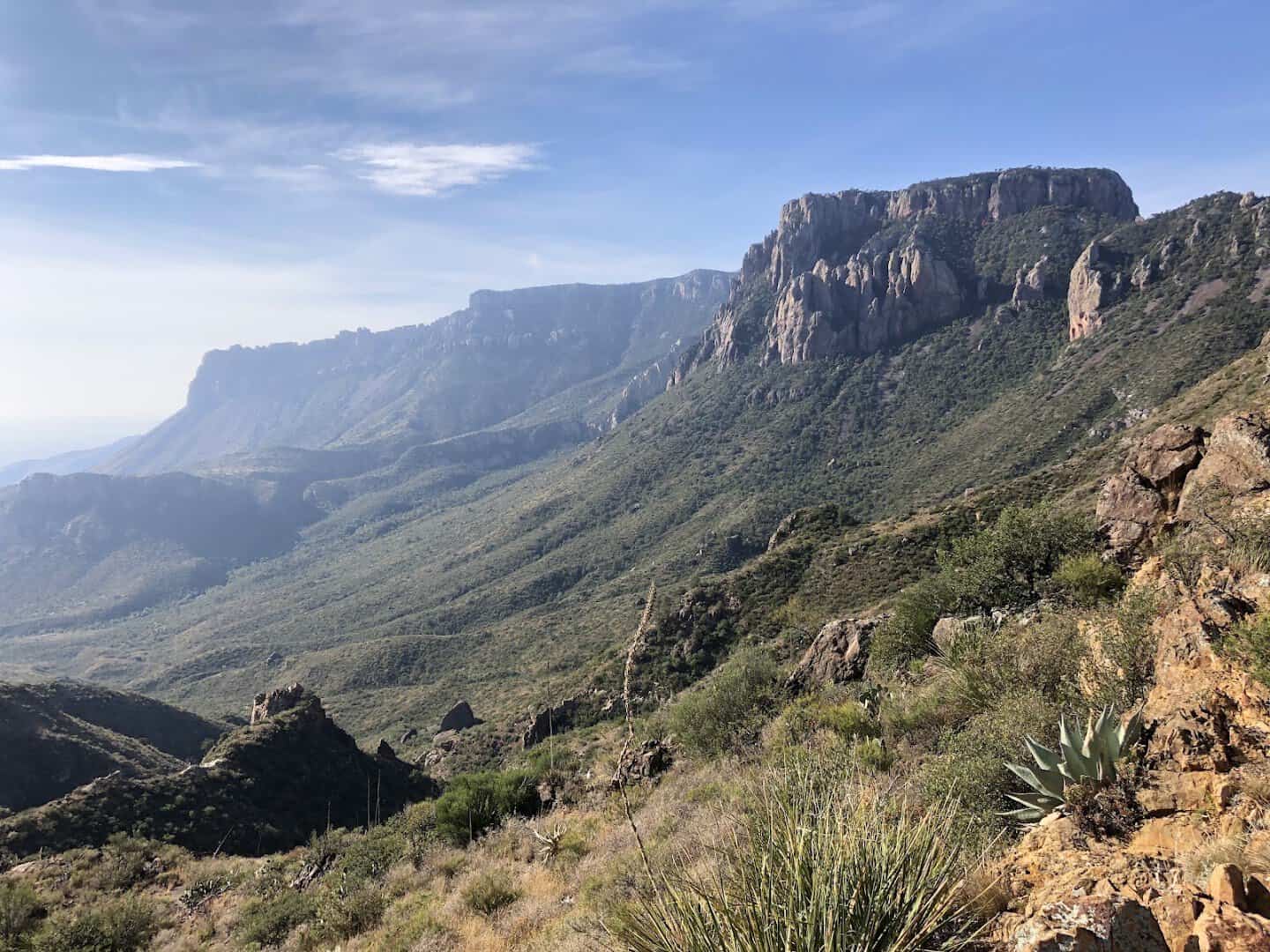
It ends at the pour-off itself, a 220-foot drop with no railing and rock that turns slick without warning. Stop well back, sit down, and let the whole desert open up in front of you.
The Lost Mine Trail climbs 1,100 feet over 2.4 miles each way from a trailhead near Panther Pass, and most people take about three hours. The view from the ridge at the top takes in Juniper Canyon and the Sierra del Carmen in Mexico.
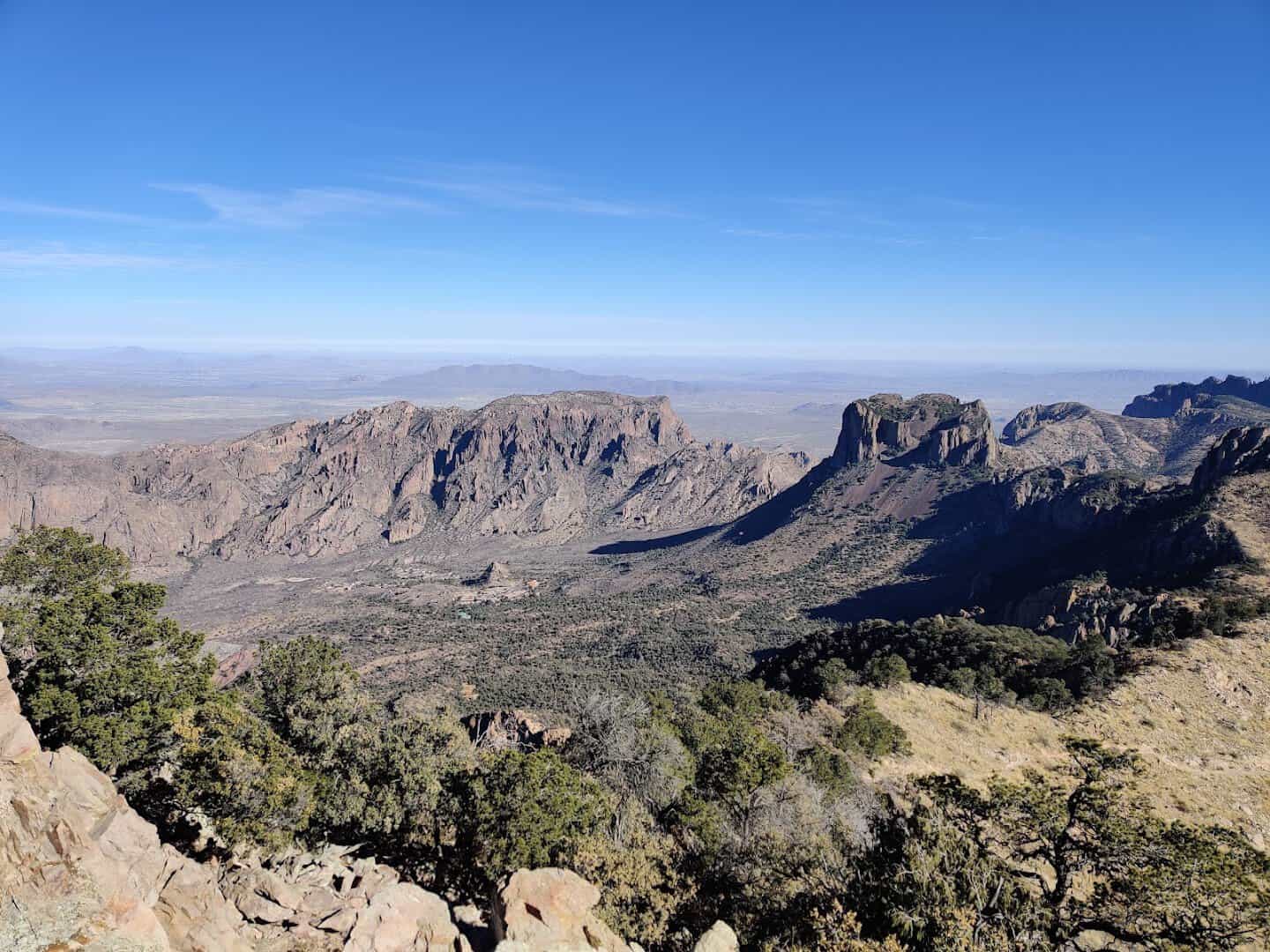
For a full day, Emory Peak runs roughly ten miles round trip and finishes with a genuine scramble up the summit rock. The South Rim loop covers twelve miles or more and drops you at the edge of a 2,000-foot cliff.
Pro tip: the Window Trail goes downhill first. That feels wonderful at eight in the morning and considerably less wonderful on the climb back out, so carry more water than you think you need.
The Bear That Swam the Rio Grande
Black bears once vanished from these mountains completely. Hunting, trapping and predator control had wiped them out by the mid-1940s, right as the park was being born.
Then, sometime in the late 1980s, a female bear left the Sierra del Carmen in northern Mexico. She came down out of those mountains, crossed miles of open desert, swam the Rio Grande, crossed more desert, and climbed into the Chisos.
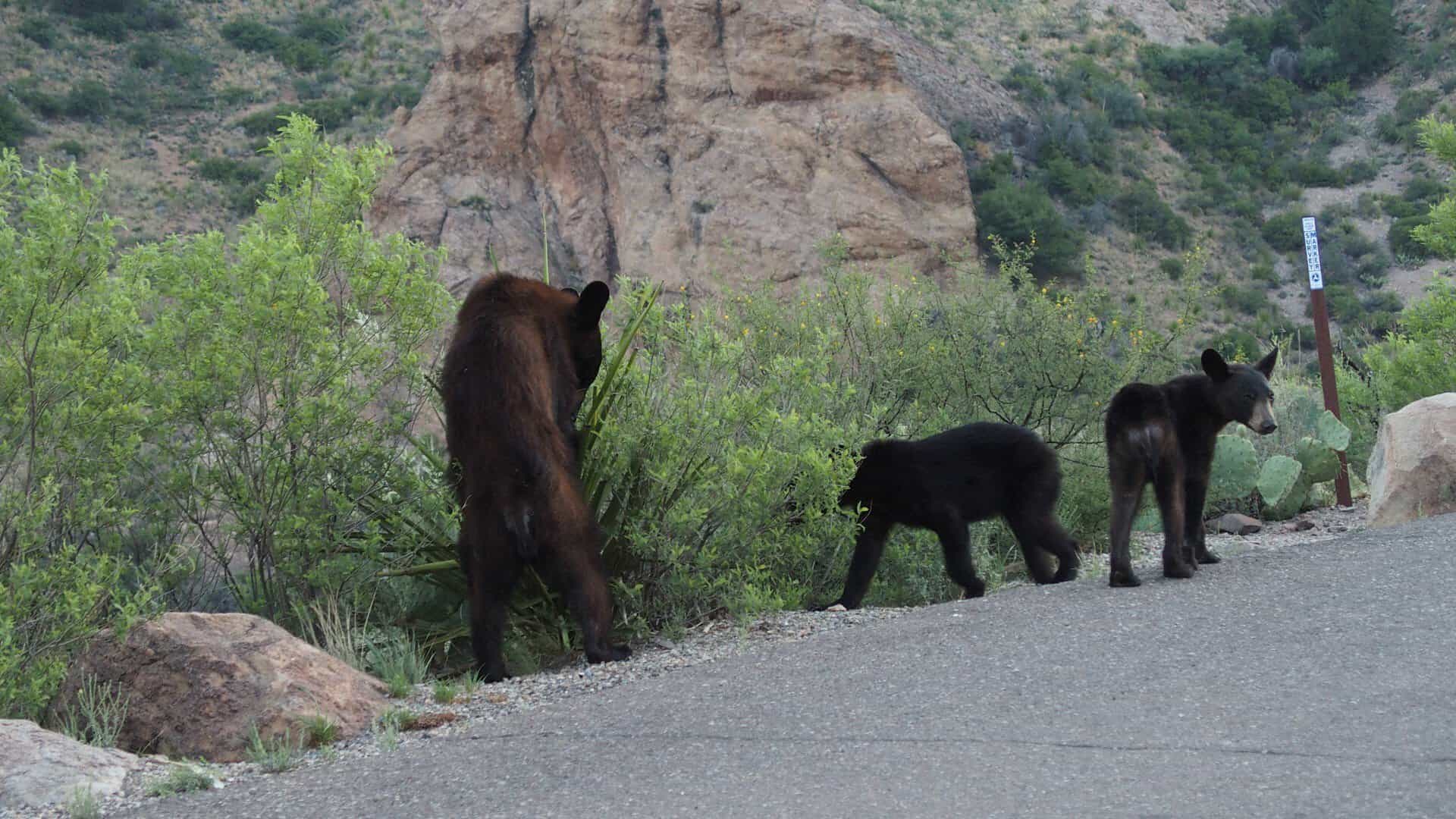
The park had averaged three bear sightings a year from 1944 to 1987. In 1988 there were 21, and a visitor photographed a sow with three cubs. The next year brought 29. They had walked home on their own.
That is the reason for the steel locker at your site, and it is not optional. Everything with a smell goes in it: food, coolers, toothpaste, the trash from dinner.
You may also meet javelina rooting through the oak litter at dusk, Carmen Mountains white-tailed deer that are small enough to look like fawns even when full grown, and, if you are extraordinarily lucky, a mountain lion crossing the road at first light.
A Bird That Nests Nowhere Else in the Country
Every spring, birders fly into Midland or El Paso, drive several hours, and hike uphill for one small gray warbler with a rusty patch on its head.
The Colima warbler breeds in the Sierra Madre of Mexico, and the only place it nests inside the United States is right here in the Chisos. A few dozen pairs cross the border each year and stop.
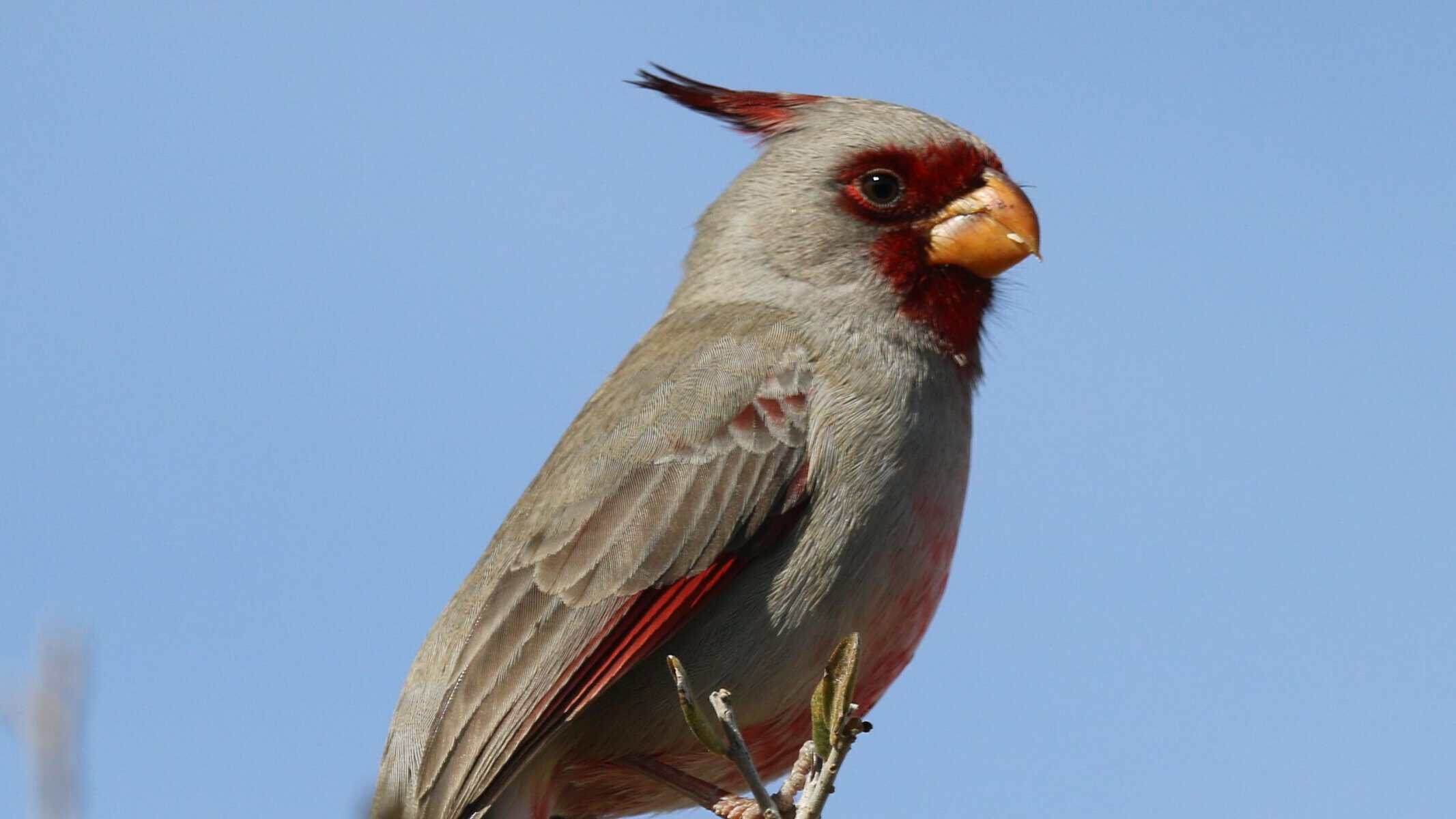
They want humid north-facing slopes above 6,000 feet with oak, maple, pinyon pine and a deep layer of leaf litter. In practice that means Boot Canyon, reached by a long hike out of the Basin, in April and May.
You do not have to chase the warbler to enjoy the birding here. Sit at your picnic table with coffee and you will pick up acorn woodpeckers, Mexican jays that have no fear of anybody, and canyon wrens singing their falling scale off the rock.
Lights Out at Five Thousand Four Hundred Feet
Nothing prepared me for how dark the Basin gets. I grew up with a permanent orange glow somewhere on the horizon, and up here there simply is not one in any direction.
Measurements by the National Park Service night sky team put this region among the darkest skies in the lower 48 states, and the park was certified a Gold Tier International Dark Sky Park back in 2012.
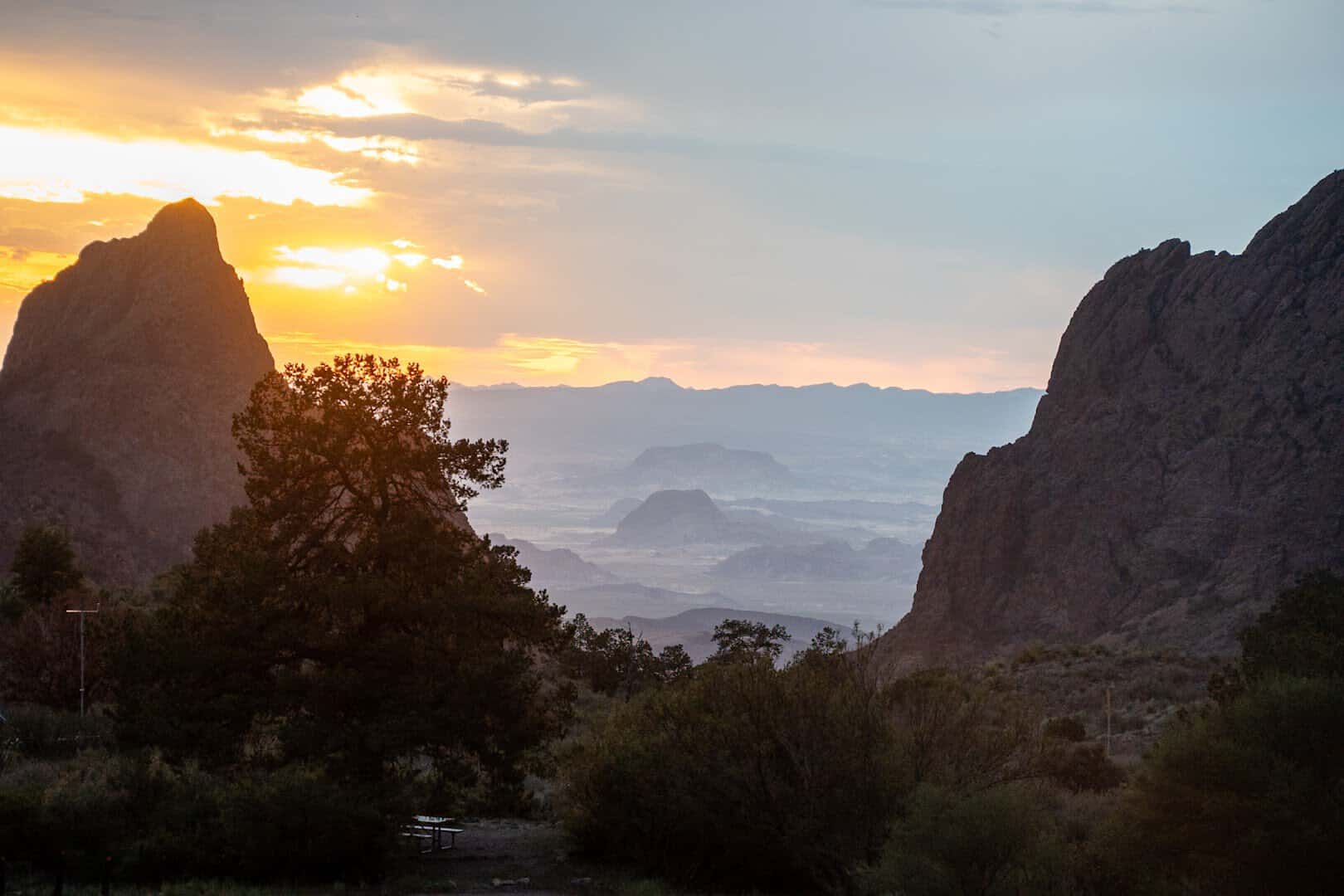
Gold Tier means the sky is essentially free of light pollution. The Milky Way does not appear as a faint smudge. It arrives as a bright, textured band with dark lanes running through it, and it casts enough light to walk by.
Time your trip near a new moon and give your eyes a full twenty minutes to adjust with no phone screen, no headlamp, nothing. Then lie back on the picnic table and let it happen.
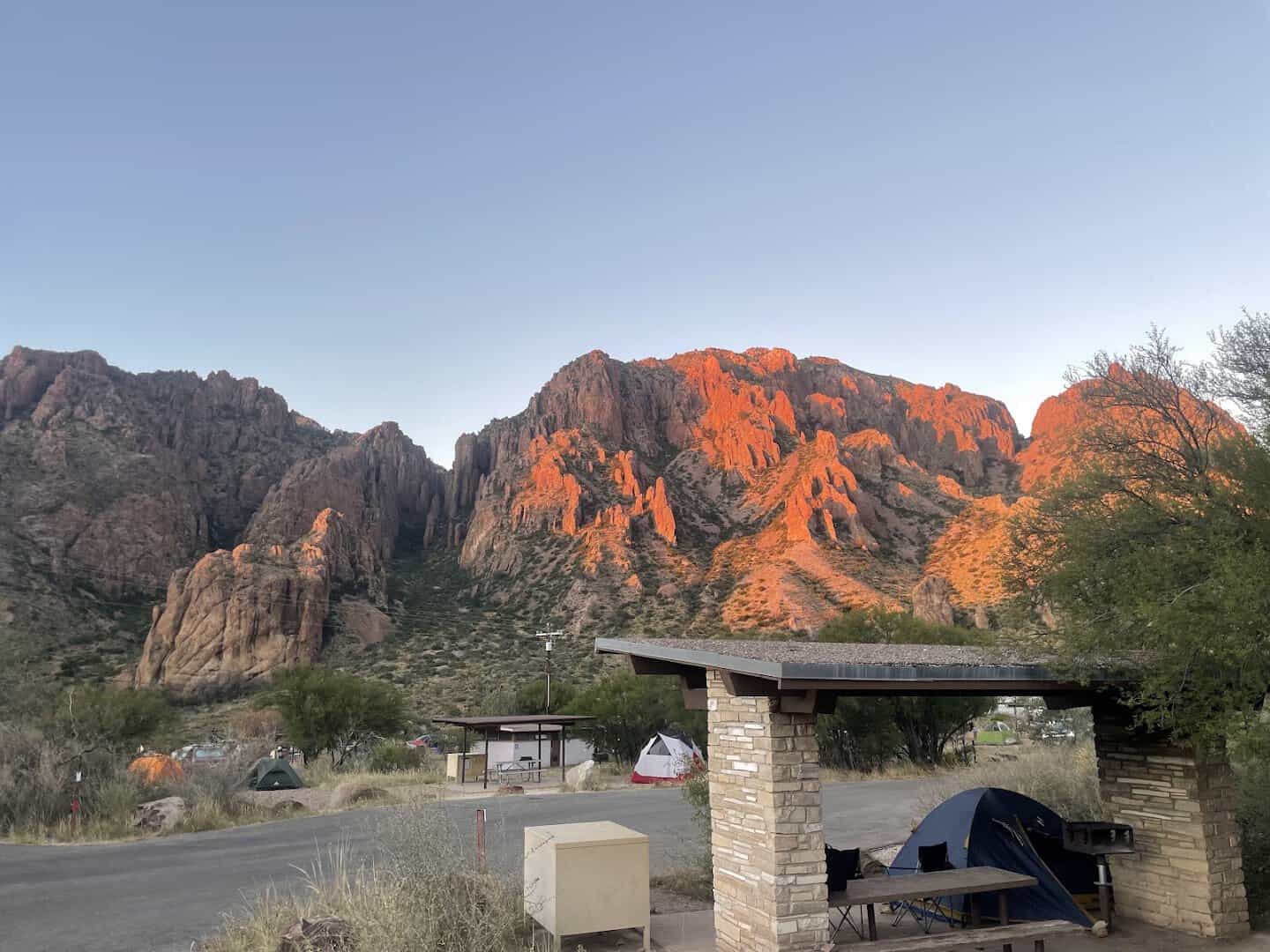
My favorite sequence is the simplest one available. Watch the sun drop through the Window, walk back to camp in the blue hour, and look up. The whole show costs nothing.
Booking a Site Without Losing Any Sleep
Reservations are required year-round through Recreation.gov, and there is no first-come, first-served camping in the Basin. Show up hoping and you will be turning around.
Most sites open six months ahead. A smaller group of sites, including 8 through 10, 12 through 15, 31, 37 and 48 through 60, is released two weeks out, which is a real second chance if you missed the first window.
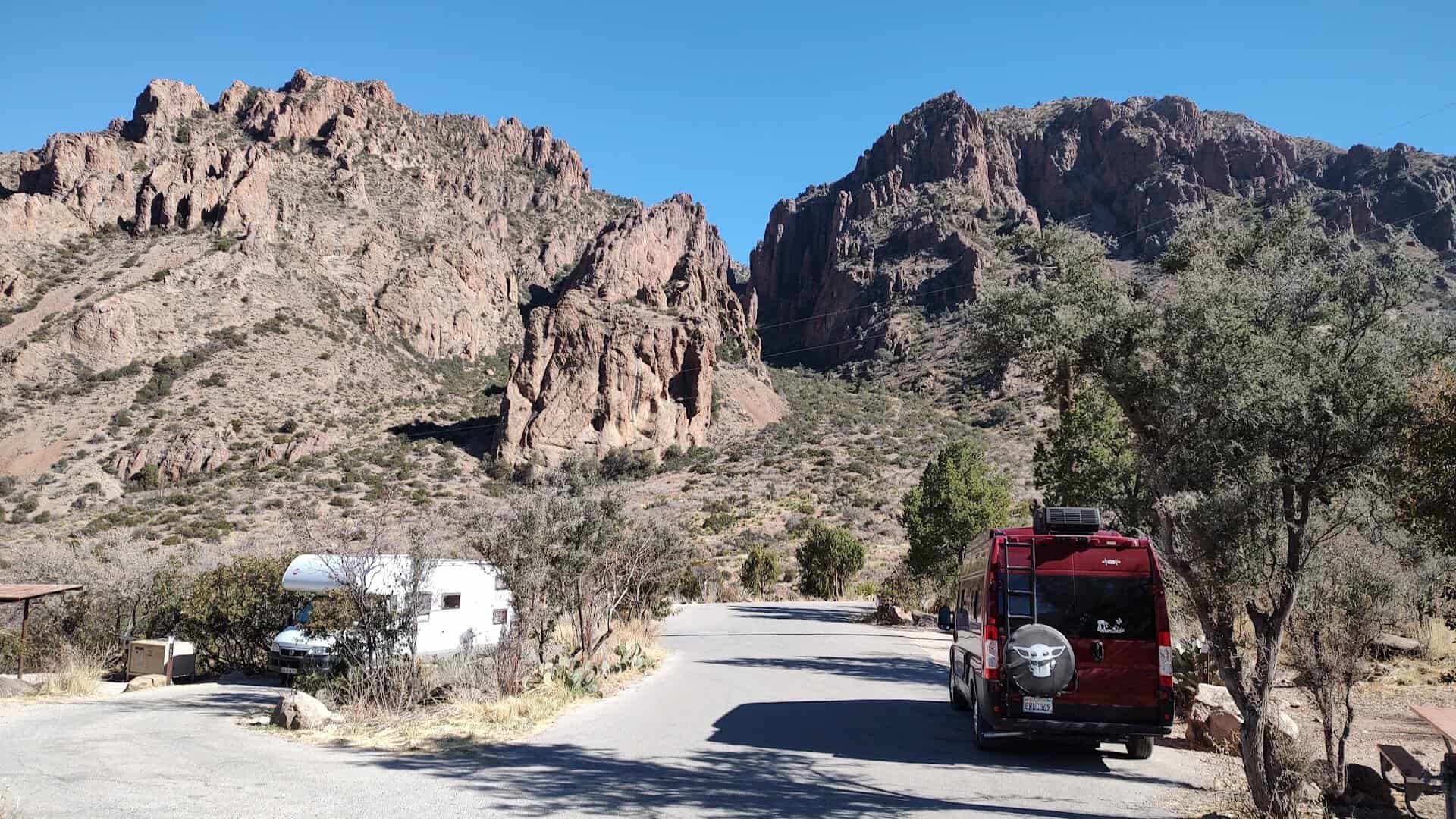
A site runs $16 a night, or $8 with a Senior or Access pass. Seven tent-only group sites handle parties of nine to twenty for $40 to $60 a night.
Park entrance is separate: $30 per vehicle for seven days, $25 for a motorcycle, $15 per person on foot or bicycle, and $55 for an annual pass to Big Bend alone.
One practical detail catches people out every year. Big Bend takes cards only, with no cash accepted at entrance stations or visitor centers, so make sure you have plastic on you.
Fall, and especially October and November, brings the best combination of comfortable temperatures and long golden light. Spring break fills the Basin fastest.
What to Pack for a High-Desert Night
Start with heavy-duty stakes. The camp store has sold them for years for a good reason, because standard aluminum pins bend the moment they meet that rocky ground.
Then layers. At 5,400 feet the Basin runs a good deal cooler than the desert floor below, and a March night that felt mild at four in the afternoon will have you digging for a fleece by eight.
Cooking has its own rules here. Wood and ground fires are prohibited, charcoal is allowed only in the above-ground grill, and you pack your ashes out with you. Liquid fuel and canister stoves are permitted and simpler anyway.
Leave the generator at home, because they are not permitted here, and honestly you will be glad of the quiet. The loudest thing I heard all night was wind moving through pine needles.
Plan your showers around the trip rather than into it. The nearest ones are down at Rio Grande Village, about an hour away across the park.
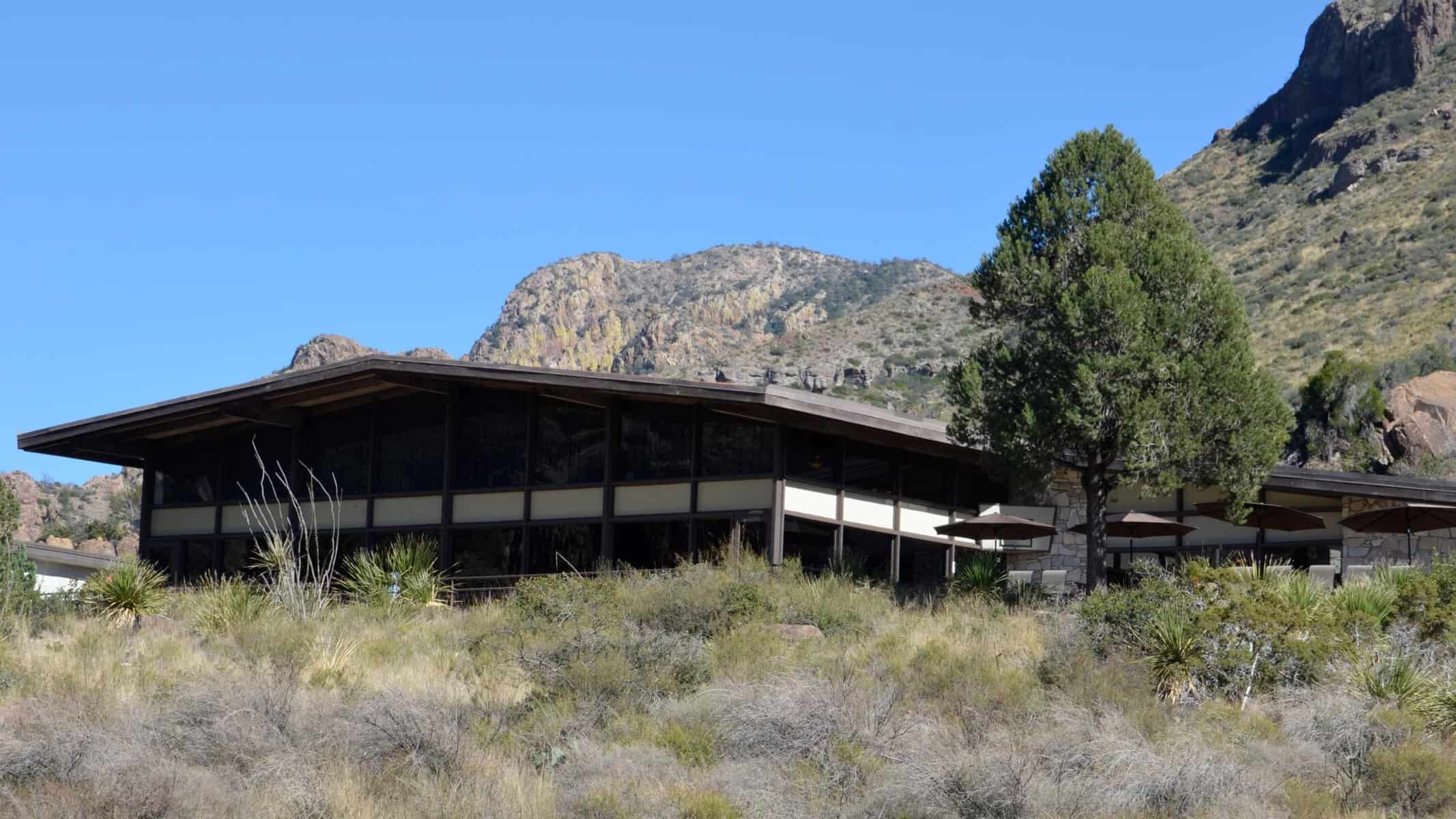
Before you go, check nps.gov for the current status of Basin facilities. The park has major improvement work planned for the lodge and water system, and dates have moved more than once, so a two-minute look saves surprises.
How to Get There
Where: Chisos Basin Campground, Window View Drive, Big Bend National Park, TX 79834
From Panther Junction, the park headquarters, the Basin is about ten miles by way of Basin Junction Road, and the drive takes something close to half an hour once you factor in the pass.
Fuel up before you commit. Gas stations inside and around the park are few and far apart, and the nearest full grocery run is a long way in any direction.
Cell service in the Basin is thin at best and usually absent, which I count as part of the appeal. Download your maps and tell somebody your plans before you lose bars on the way up.
Start Planning Your Night in the High Chisos
Everybody who loves this park has a moment when it clicked for them. Mine was standing in a gravel campsite at 5,400 feet, watching the last orange light slide up the face of Casa Grande while somebody two sites over laughed at something.
You can have yours for the price of a campsite and a tank of gas. Book six months out or gamble on the two-week release, pack your warm layer and your good stakes, and point the car toward the far corner of West Texas.
Get there in time for sunset through the Window. Then stay up late, because the best part of this campground happens after the light goes.
Featured image: Nick Brinson via Chisos Basin Campground

Stella Raines
Editor-in-Chief
Stella brings over a decade of storytelling experience to TX Headlines. With roots in West Texas and a love for road trips, she leads the editorial team with an eye for the hidden stories that make Texas unforgettable.
More Stories

These 10 Texas Spots Bloom Into Seas of Bluebonnets Each Spring

This Enchanting Texas Nature Trail Feels Like Hiking Through a Fairytale Forest

This Underrated Texas State Park Gives You a Full Day of Swimming and Hiking for Just $5

This Easy Texas Hike Leads to a Swinging Suspension Bridge Hidden in the Pines
Tags