This Turquoise Texas Lake Is a Hill Country Escape That Could Pass for the Caribbean
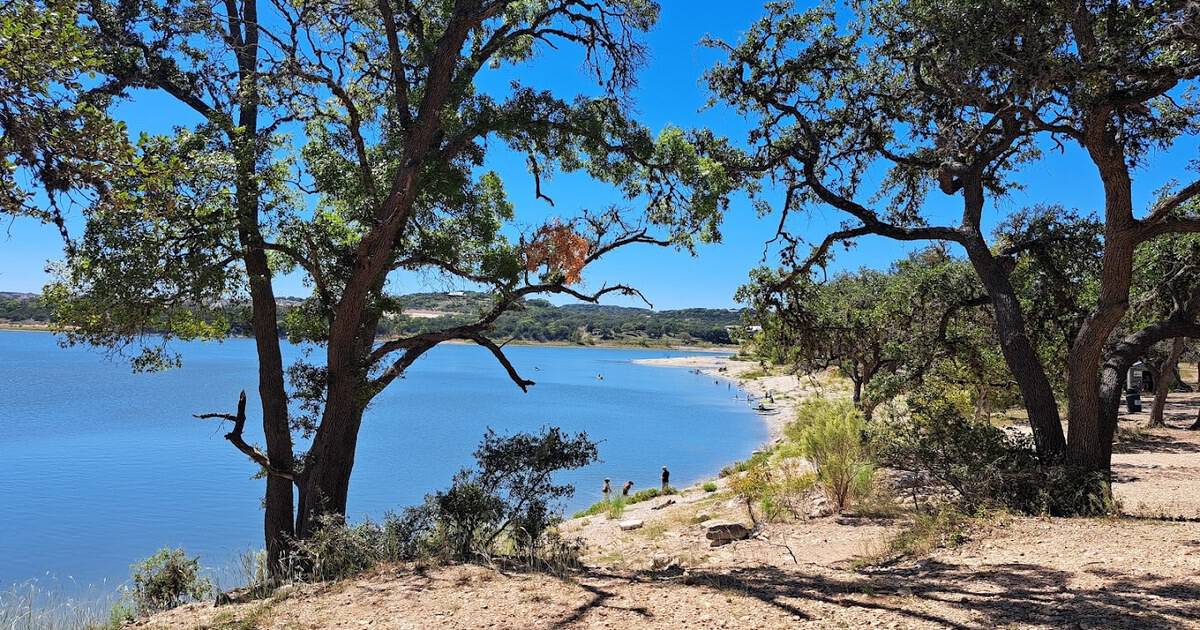
The first time I saw the water, I stopped the car in the middle of the road. I had driven up from San Antonio expecting a muddy green Hill Country puddle.
Instead there was this band of pale turquoise glowing between the cedars, bright enough that my sunglasses did not know what to do with it. A guy in a pickup behind me honked, then pulled alongside, looked at my face, and laughed. “Yeah,” he said. “It does that.”
That was Boerne City Lake, about a mile northwest of downtown Boerne in Kendall County. The color comes from the limestone underneath it.
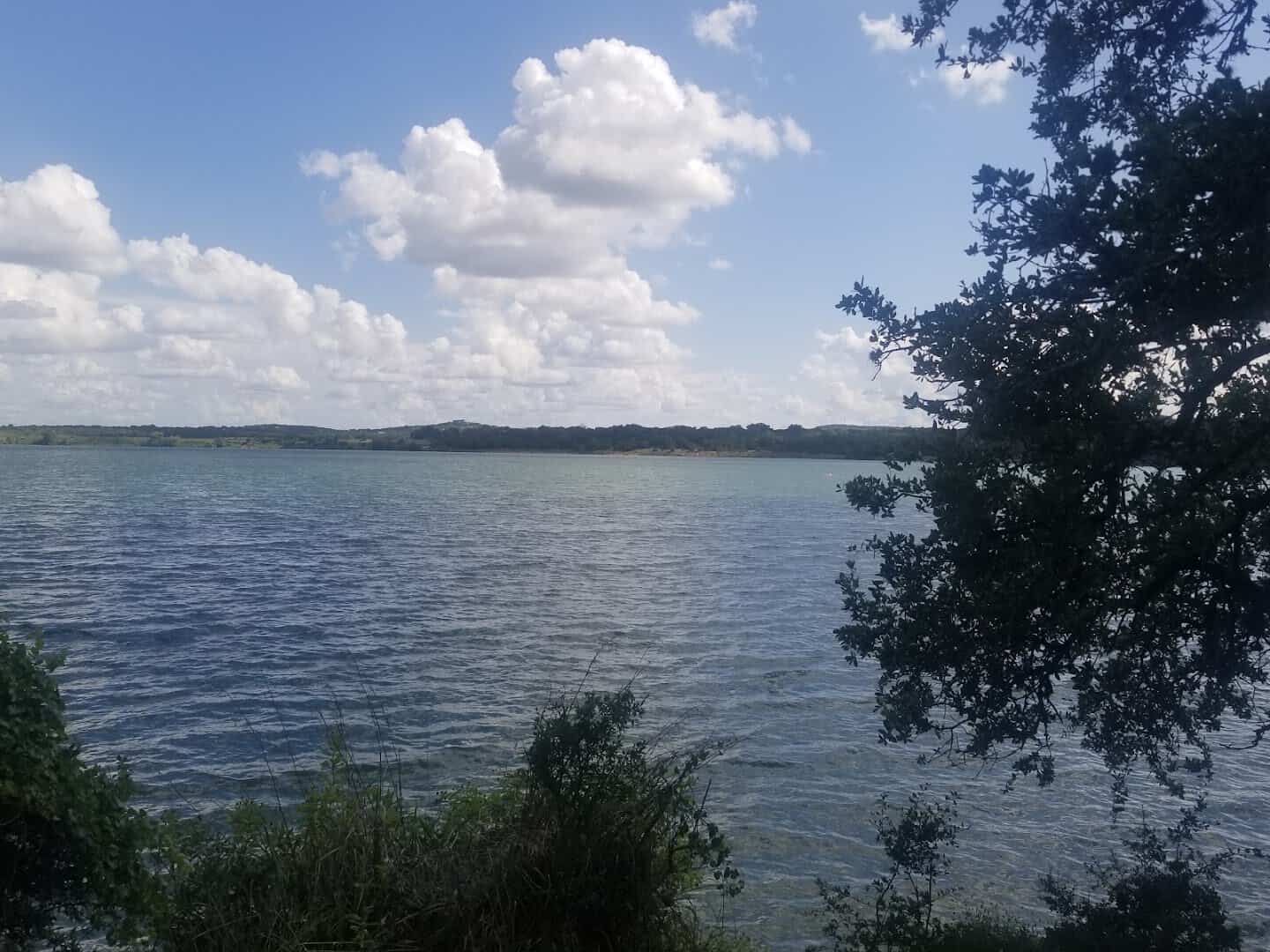
Cibolo Creek runs off the Edwards Plateau through a bed of pale rock, and by the time it pools behind the dam it has turned into clear turquoise shallows that could pass for somewhere with palm trees.
Below, I want to walk you through the whole place: the water, the paddling, the fishing pier, the disc golf course hiding in the cypress, the dinosaur tracks that a flood uncovered at the spillway, and exactly what it costs to spend a day there.
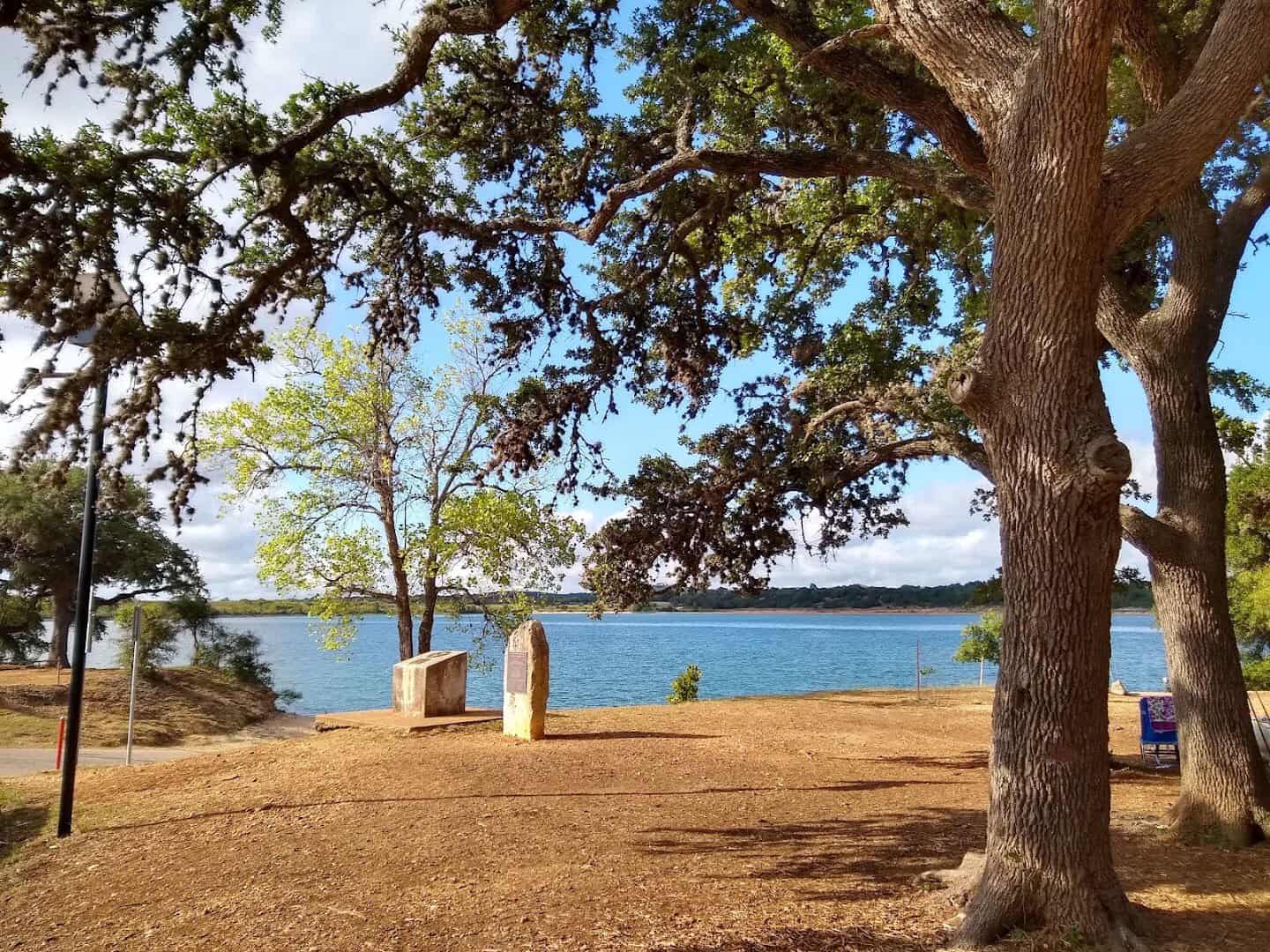
Why the Water Glows Like That
Texas lakes have a reputation. Most of the big ones are the color of strong tea, stirred up by wind, silt, and a few hundred outboard motors.
This one stays clear for two reasons, one geological and one bureaucratic.
The geology comes first. Cibolo Creek is spring fed, cold, and clear, running roughly 96 miles from its start about ten miles northwest of town. It travels over and through limestone the whole way, and limestone filters as it goes. Sediment drops out. Minerals go in.
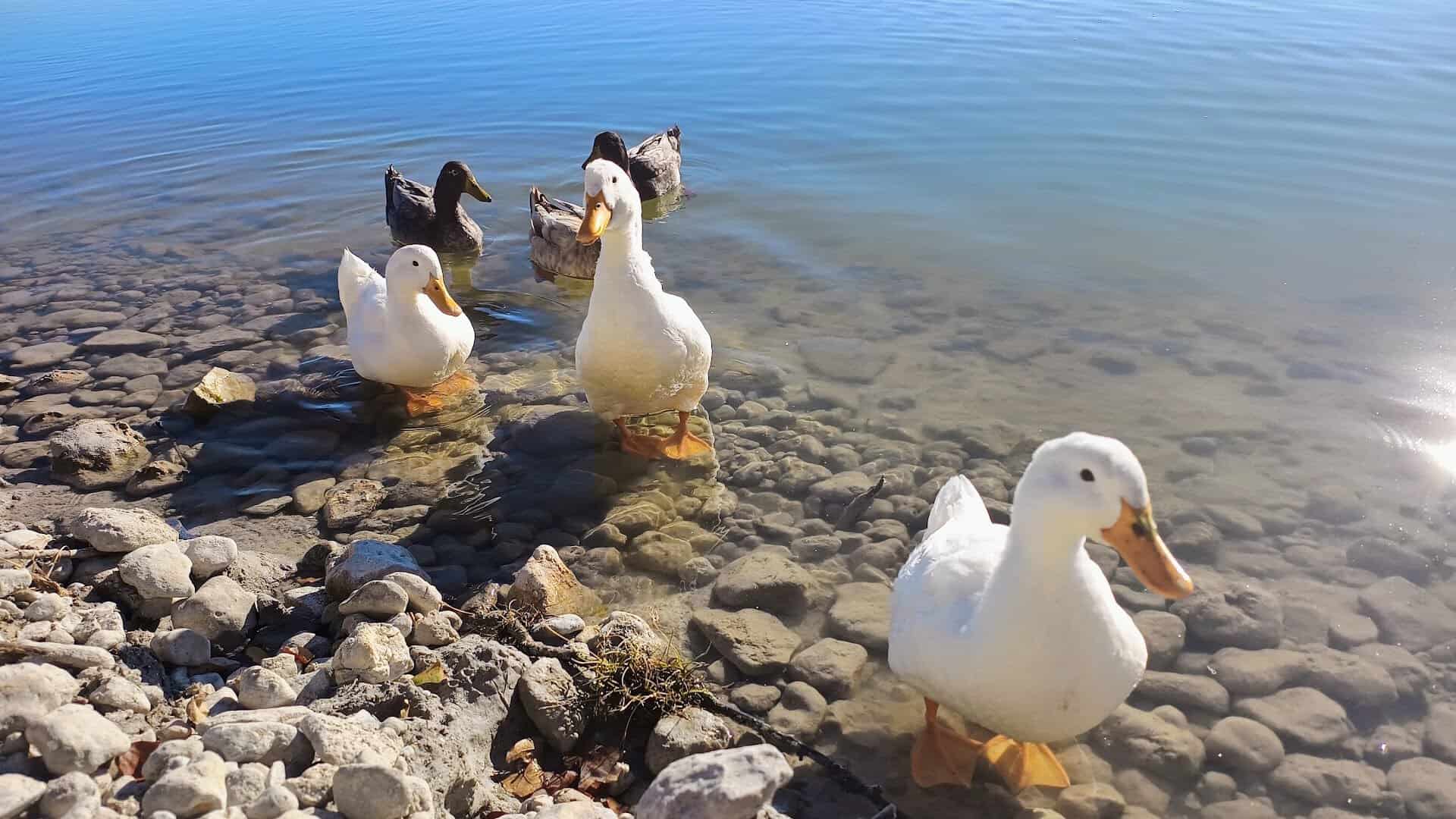
The result is that shade of green blue you normally have to fly somewhere to see. On a bright afternoon in the shallows near the shore, I could count individual pebbles under a foot of water and watch a perch spook off one of them.
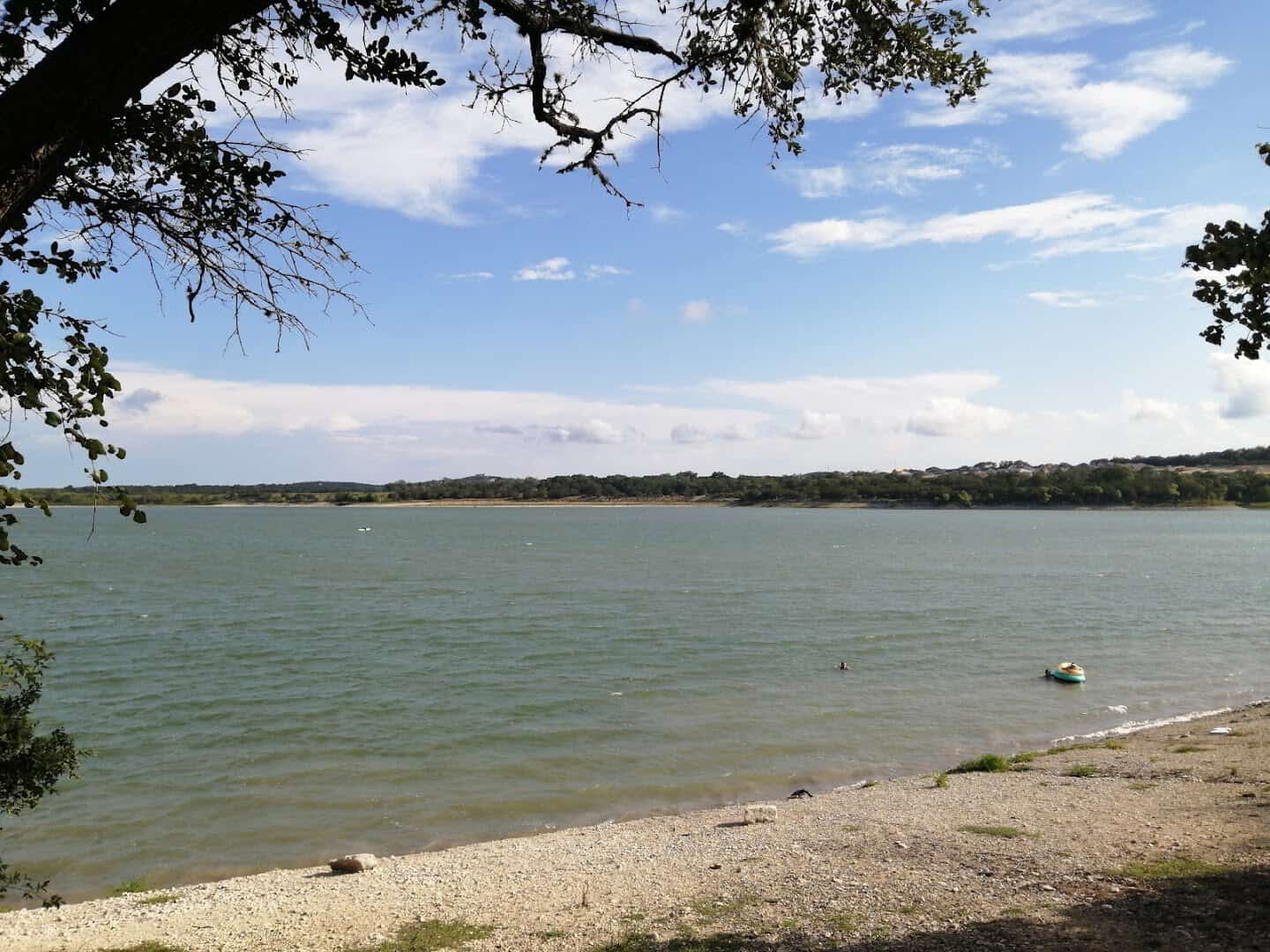
Then the bureaucracy. Boerne City Lake is a municipal drinking water reservoir first and a park second, so gas powered motors are not allowed on it. Electric trolling motors are fine.
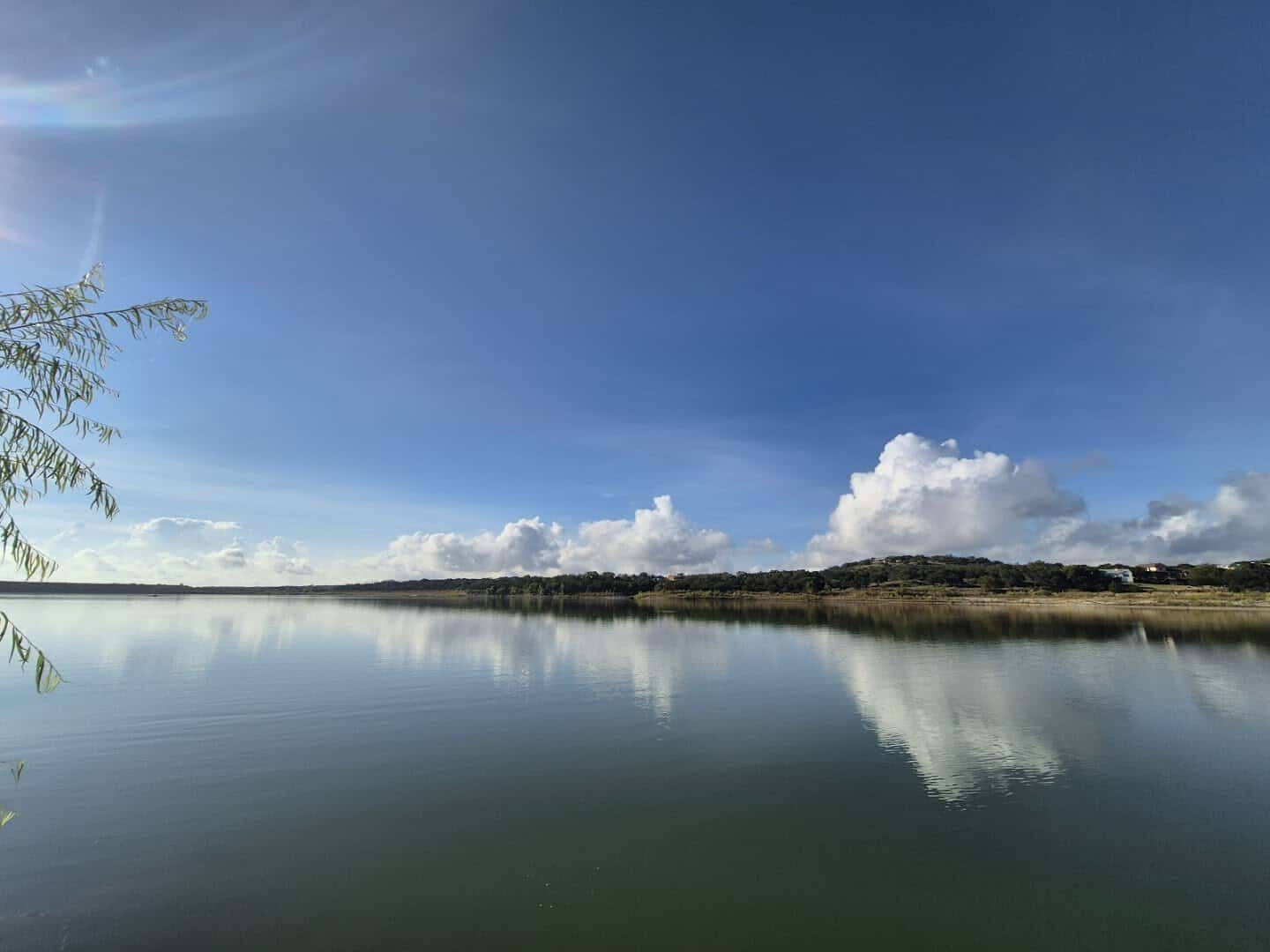
Nothing throws a wake or stirs the bottom up, so the surface stays glassy most mornings and the color holds instead of going brown by ten o’clock.
The lake sits behind a dam on Cibolo Creek and runs about 42 feet deep at full pool. The park around it covers roughly 200 acres, and something close to half of that is water.
Bald Cypress, Big Roots, and Real Shade
The banks are lined with bald cypress, which is the tree that makes Hill Country water photograph the way it does. They lean out over the creek arms with their knees poking up out of the shallows like something from a storybook.
Old cypress smell faintly of resin and wet stone, and the air under them runs cooler than the parking lot.
In an August that had already hit triple digits, I sat on a root the size of a bench and felt the temperature drop the second I stepped into the shade.
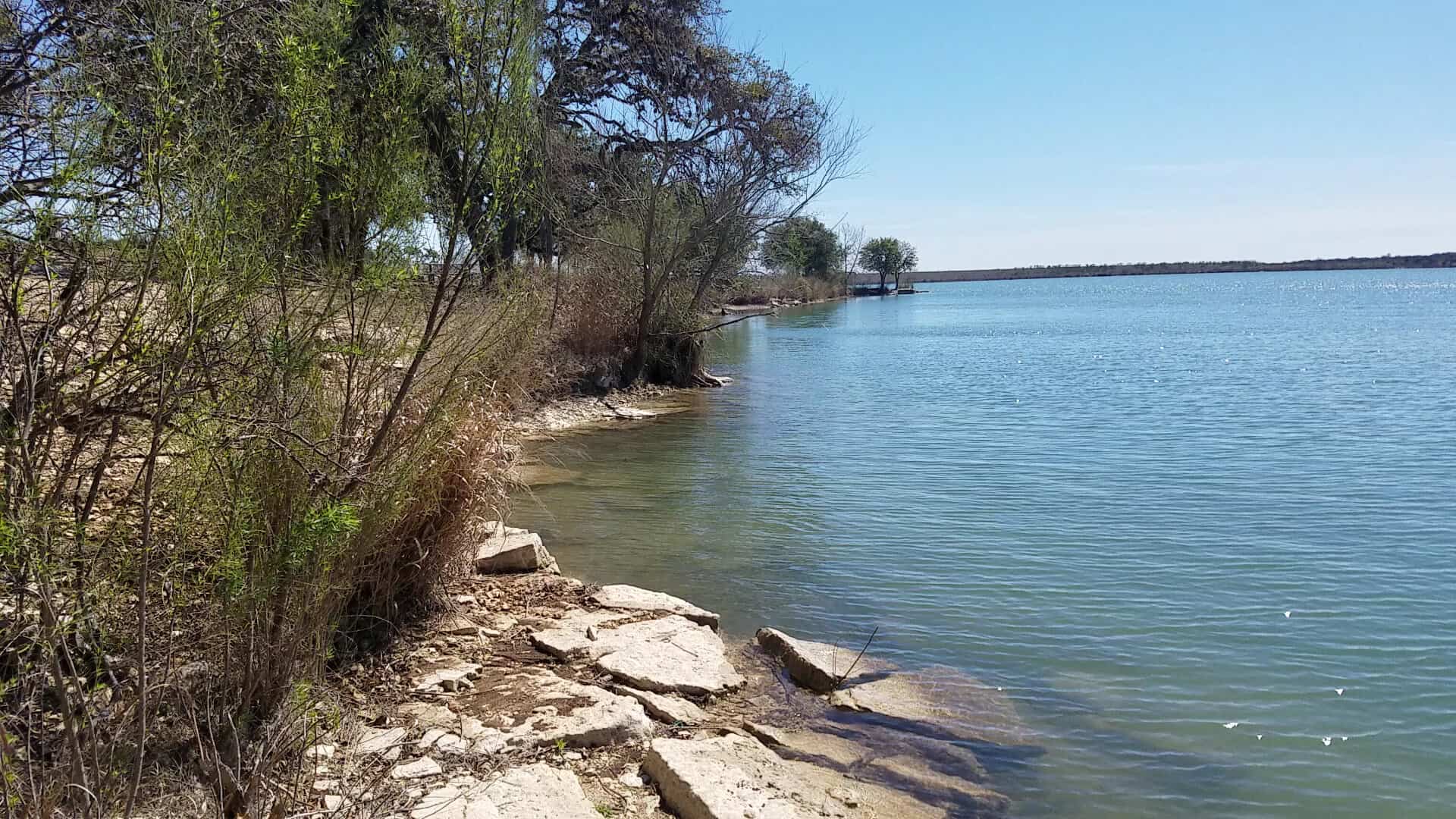
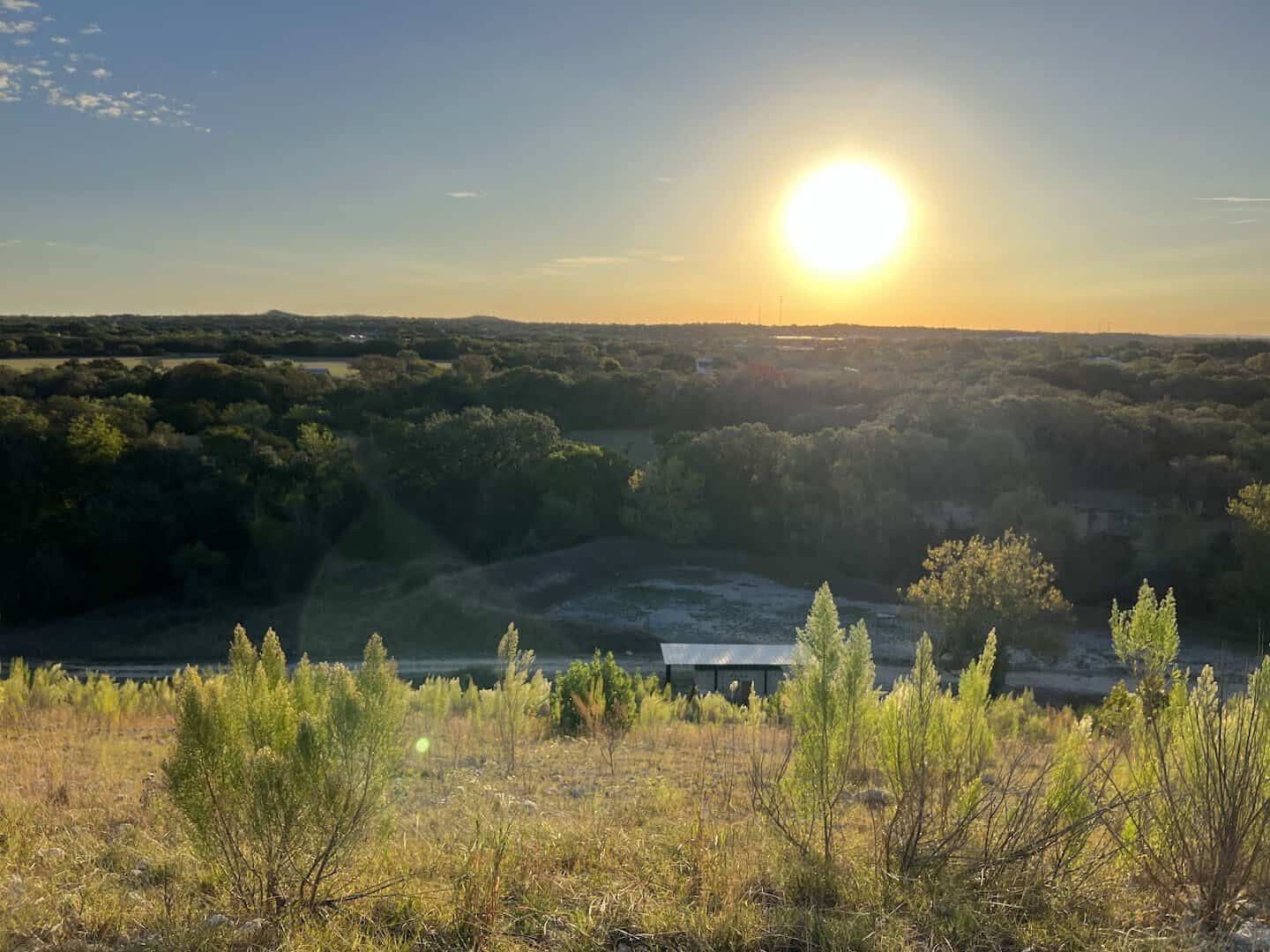
Pecan and elm fill in behind them. Deer come down to drink in the last hour of light and mostly ignore you if you sit still.
Did you know? “Cibolo” comes from a word for buffalo, borrowed into Spanish from Native languages and applied to the people who hunted them. Before 1721 the creek carried an older Coahuiltecan name, Xolotan. Buffalo really did water here.
Quiet Water, Which Is the Whole Point
Paddling this lake is the closest thing to silence I have found within an hour of San Antonio.
Because the engines are banned, a kayak is the fastest thing on the water. You hear your own paddle, the drip off the blade, a kingfisher rattling somewhere ahead of you, and not much else.
The lake has fingers and coves that wander back into the trees, and the far arms feel genuinely remote even though you are minutes from a grocery store. My favorite hour is early, before eight, when the water goes to glass and the cypress reflect upside down in it.
You can bring your own boat and use the boat dock and launch.
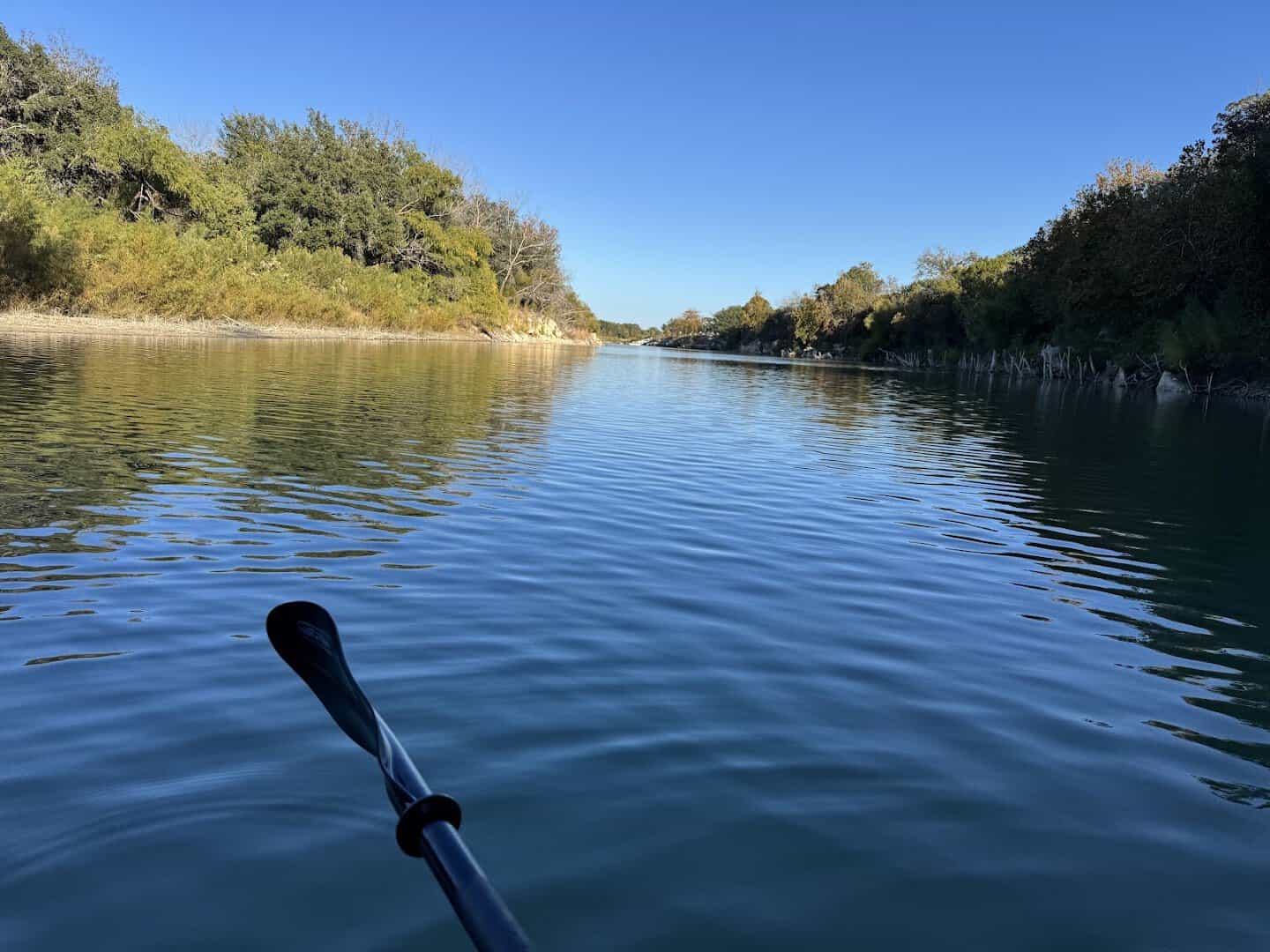
If you would rather not strap anything to your roof, Hill Country Paddle Sports rents kayaks and stand up paddleboards right at the lake. They also teach classes for people who have never stood on a board. Their number is (210) 842-4057.
Trisum Sailing runs sailing lessons here too, at (210) 793-2278. Watching a small sail cross that turquoise water against a wall of green cedar is a genuinely strange and lovely sight in Texas.
Pro tip: the wind picks up most afternoons and pushes you toward the dam end. Paddle out into it and let it carry you home, not the other way around.
Swimming, and How to Do It Smart
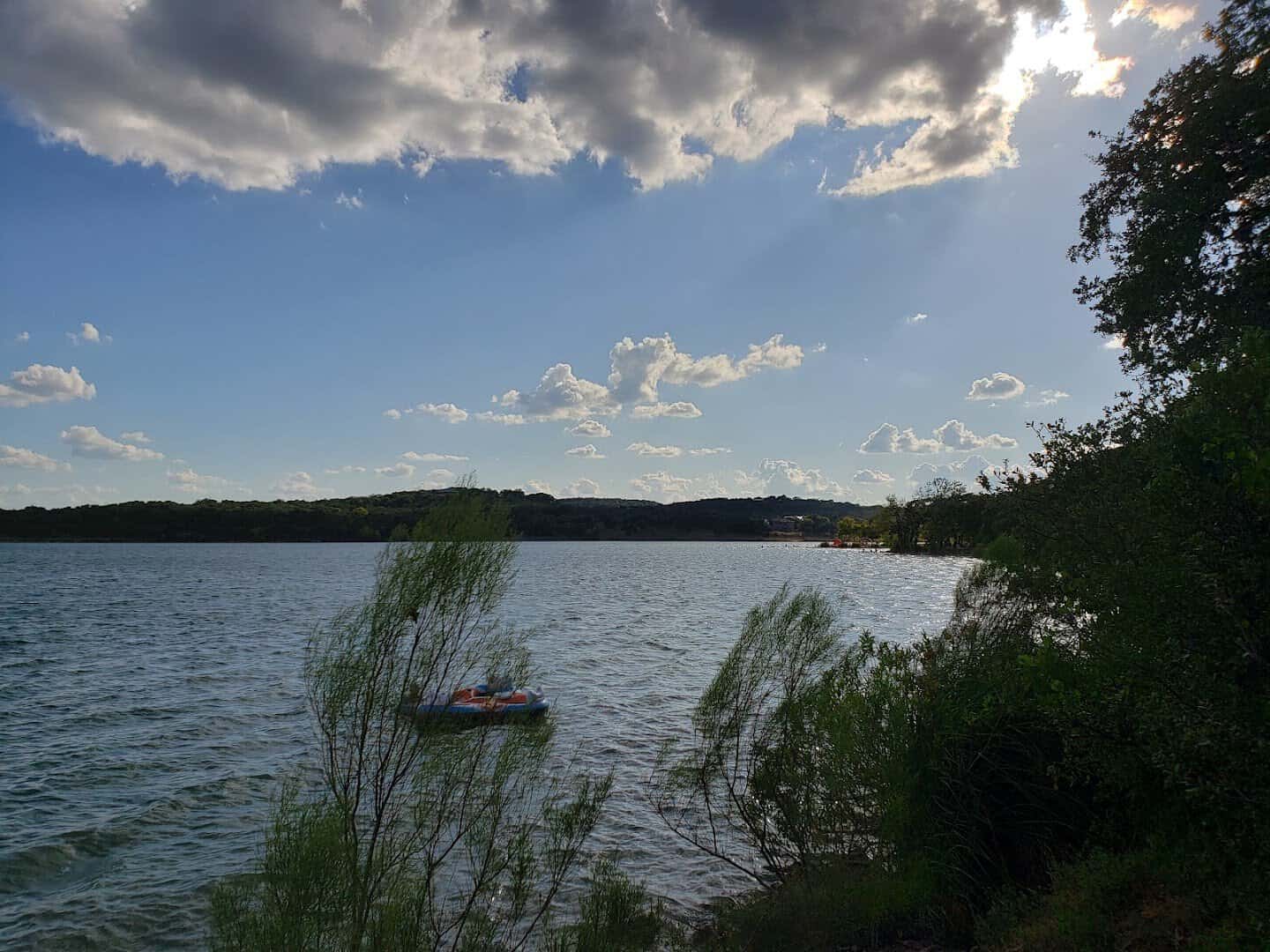
Swimming is allowed, and on a hot Saturday the shoreline fills up with families wading in the shallows where the bottom is bright and visible.
There is no lifeguard, and the bottom drops off in places once you wade out a way. Strong swimmers and life jackets, both. I keep a bright vest on anybody in my group who is not a confident swimmer, and I never regret it.
The shallow edges are the best part anyway. That is where the water reads most Caribbean, where the light bounces off pale rock, and where a toddler can splash for two hours and go home happy.
Cast a Line From the Pier
The fishing pier is one of the more relaxed places in the county to spend a morning, and on a weekday you may well have it to yourself.
Largemouth bass, channel catfish, bluegill, and assorted sunfish all live here. The bass carry a 14 inch minimum length and a daily bag limit of five black bass in any combination, and every angler over the licensing age needs a valid Texas Parks and Wildlife fishing license.
Texas Parks and Wildlife has also relocated fish into this lake from nearby state natural areas, moving in a fresh mix of sizes rather than only fingerlings.
Cypress shade along the banks means the fish hold close in summer. I have watched more than one kid pull bluegill after bluegill off the pier with nothing fancier than a hook, a split shot, and a piece of hot dog.
Pro tip: bring your license on your phone. The Texas Parks and Wildlife app stores it, and cell signal at the lake is good enough to pull it up if anyone asks.
Eighteen Holes Hidden in the Cypress
Almost nobody expects a full 18 hole disc golf course at a drinking water reservoir, and yet there it is, playing like two different courses stitched together.
The front nine was finished in 2008 and threads through the wooded lakefront, tight and shaded, with the water sitting right there to punish a bad release.
The back nine came much later, completed in 2021, and opens up into a more exposed stretch of the park where young trees are still filling in. It rewards distance the way the front nine rewards accuracy.
It is free to play once you are inside the gate, which makes an afternoon here absurdly good value. Bring water. The front nine is shaded and the back nine is not.
Butterflies, a Bird Blind, and Slow Walking
The park keeps a butterfly garden and a bird observation blind, which are the two amenities I did not expect from a city lake and now recommend hardest.
The blind lets you sit behind a screen and watch waterfowl and songbirds work the shoreline without sending them all into the air. Herons stalk the shallows, kingfishers go past at knee height, and in the afternoon the vultures ride thermals off the dam.
Walking and hiking trails run through the park, unpaved and easy, more of a wander than a workout. Paved roads and parking areas make the shoreline itself simple to reach if you are pushing a stroller or using a wheelchair.
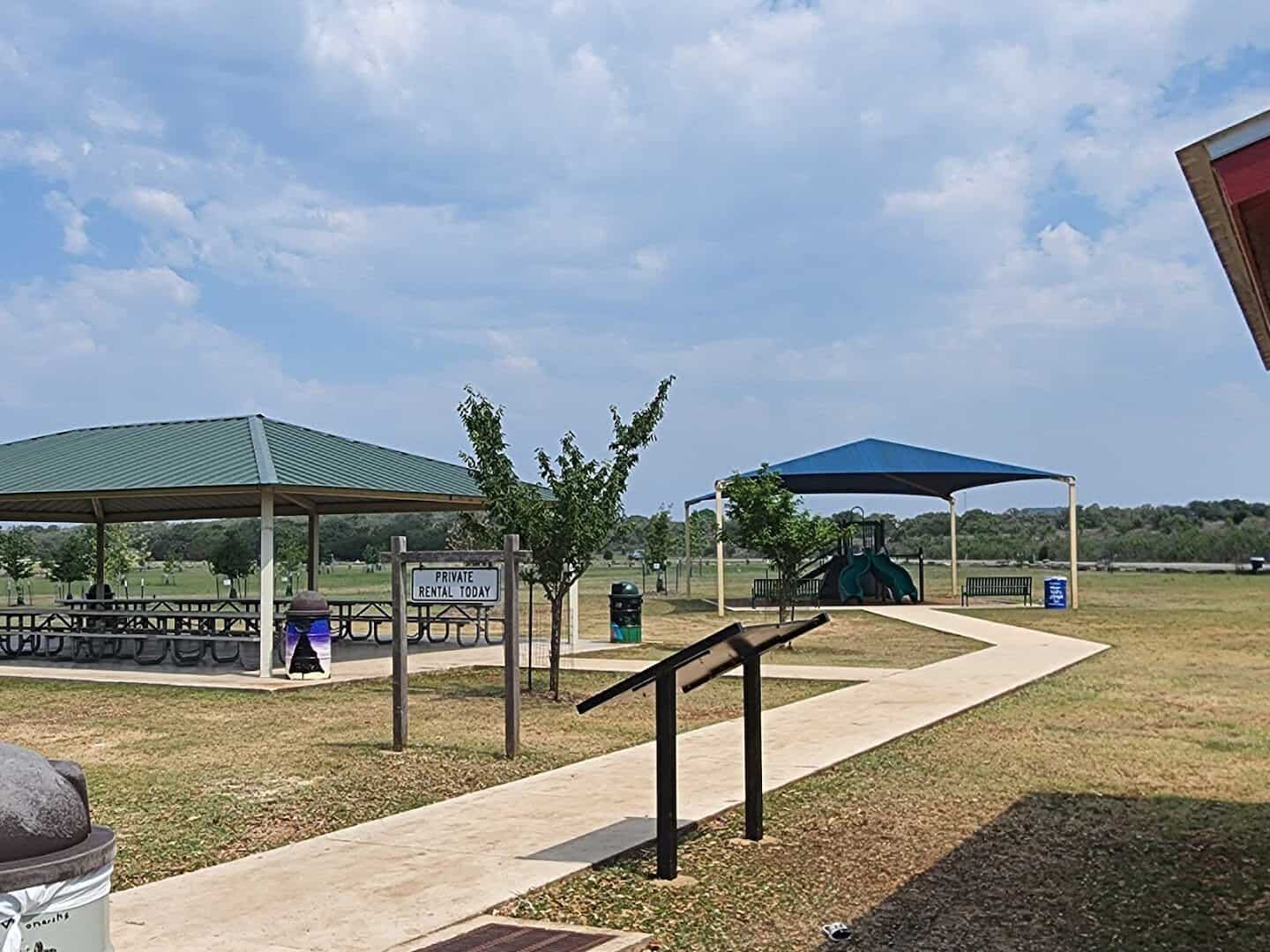
There is also a covered playground, a volleyball court, picnic units with grills, restrooms, and a covered pavilion that seats about 75 and can be reserved for a party. The grills go out of service during burn bans, which the Hill Country gets most summers.
Dinosaurs at the Spillway
On June 22, 1997, a heavy flood tore through Boerne and scoured the Boerne Lake Spillway down to bare rock. What it exposed was an 80 foot stretch of dinosaur footprints pressed into the limestone.
They belonged to Acrocanthosaurus, a big bipedal meat eater roughly 35 feet long, and they are somewhere around 100 million years old. The animal walked across soft carbonate mud when this part of Texas was the edge of a shallow sea, and the mud set like concrete.
Think about that the next time you are floating over the same rock. The lakebed you are looking through is the same stone that held a footprint for a hundred million years and then handed it back after one bad storm.
The tracks themselves are fragile and exposed to weather, so the Cibolo Center for Conservation made exact replicas. Visitors can stand over those at the nature center in town.
That organization was founded in 1988 by Carolyn Chipman Evans, her husband Brent, and a handful of friends who wanted a stretch of Cibolo Creek protected.
From 75 acres of leased city land, the group grew into a conservation corridor covering more than 850 protected acres along the creek. The nature center is free and open dawn to dusk, and it makes an easy second stop on the same day.
A Brief History of the Water and the Town
The lake is younger than it looks.
The City of Boerne received approval from the Texas Water Commission in 1972 to build and maintain a dam and reservoir on Cibolo Creek, for municipal water supply and flood control. The recreation came second.
City Council approved development of City Lake Park in 2005, and that is when the boat launch, the pier, the pavilion, and the rest of the park as visitors know it took shape.
The town itself is much older. German immigrants settled on the banks of Cibolo Creek in 1849 and first called the place Tusculum, after Cicero’s country home outside Rome.
In 1852 they renamed it for Ludwig Borne, the German poet and journalist. Many of these settlers were Forty Eighters, liberals who left Germany after the failed revolutions of 1848 looking for room to think and speak freely.
Kendall County was carved out of Kerr and Blanco counties in 1862 and named for the journalist George Wilkins Kendall. Boerne won the county seat by a margin of 67 votes.
You can still read that history off the street signs. The main drag downtown is Hauptstrasse, which is simply German for “main street,” and it is ten minutes from the lake.
What a Day Here Costs
Entry is charged per vehicle, and the rate depends on the day of the week.
Monday through Thursday it is $10 per vehicle. Friday through Sunday it is $15. Holidays run $20.
Seniors 65 and older, active and retired military, and disabled citizens pay $5. Disabled veterans at 60 percent or higher get in free. City of Boerne residents get in free as well, with two windshield stickers per household and additional stickers at $25 each.
If you are coming back all summer, a non resident season pass runs $125 for the first sticker and $25 for each additional one. Seniors, military, and disabled visitors pay $75 for that first sticker.
Passes are sold at the lake attendant booth or at the Parks office, 1017 Adler St. in Boerne.
Everything inside the gate is included. The disc golf, the pier, the playground, the trails, the blind, the butterfly garden. You pay once at the booth and then spend nothing else all day unless you rent a board.
Rules Worth Knowing Before You Load the Car
A few of these caught me out the first time, so learn them before you load the truck.
No gas powered boat motors, because this is drinking water, though electric motors are welcome. No alcohol and no glass containers anywhere in the park.
Dogs are welcome on a leash, and plenty of them are. No overnight camping except during city sanctioned events. Standard Texas Parks and Wildlife regulations apply to everything you catch.
The park is open 5 a.m. to 10 p.m., every day of the year, subject to weather and the occasional event closure. Those 5 a.m. hours are a gift if you fish, because you can be on the pier for first light.
How I Would Spend the Perfect Day
Get there early, ideally before eight, when the lot is empty and the water has not been touched.
Paddle first, while the surface is still glass and the wind has not woken up. Take the coves at the back of the lake and let yourself drift for a while under the cypress.
Come in around eleven, eat at a picnic table in the shade, then walk the front nine of the disc golf course while everything is still cool under the trees.
Spend the middle of the afternoon in the shallows where the color is best. Finish at the bird blind as the light goes gold, because that is when the herons come out and the lake turns from turquoise to copper.
Then drive ten minutes into town and eat on Hauptstrasse. It is a very good day, and it costs less than a movie ticket for two.
What Other Visitors Say
I am not the only one who thinks this place punches above its weight. The park holds a 4.6 star average across more than 1,600 Google reviews, which is a high number for anything with a gate fee.
One reviewer, Sammy B, put it plainly: “Beautifully kept park, with picnic benches and nearby restrooms. Great for family gatherings and parties.”
That matches what I saw. The trash bins were empty, the restrooms were clean, and the grass around the pavilion had clearly been cut that week.
How to Get There
Where: 1 City Lake Rd, Boerne, TX 78006
If your phone is an iPhone or Android and the address above confuses it, try 21 Upper Cibolo Creek Rd, Boerne, TX 78006 instead. Both point at the same gate, and the city lists both for exactly that reason.
The park sits about a mile northwest of downtown Boerne, off Upper Cibolo Creek Road, west of U.S. 87. From San Antonio it is a straight run up Interstate 10, roughly 35 minutes from the northwest side of the city.
The park office number is (830) 248-1635. Call ahead on a holiday weekend or if a big event is on the calendar, since the lake occasionally closes to general entry.
Go See the Color for Yourself
You do not need a passport to stand in water that looks like this. You need a tank of gas, a swimsuit, and about fifteen dollars.
Pack the cooler, throw the kayak on the roof or leave it home and rent one at the dock, and get there before the sun is high enough to flatten the color out.
Then find a cypress root wide enough to sit on, put your feet in the shallows, and watch the pebbles shimmer under a foot of turquoise water.
The Hill Country has been quietly hiding its own little piece of the Caribbean this whole time, and it is waiting for you about a mile out of town.
Featured image: Hai Thai via Boerne City Lake Park

Stella Raines
Editor-in-Chief
Stella brings over a decade of storytelling experience to TX Headlines. With roots in West Texas and a love for road trips, she leads the editorial team with an eye for the hidden stories that make Texas unforgettable.
More Stories
This Secret Texas Cavern Is an Ancient Riverbed That Once Hid a Prohibition Ballroom
This Secluded West Texas Basin Is a Mile-High Camp Ringed by Volcanic Peaks and Blazing Stars
This Spring-Fed Texas Park Is Built Around the Largest Springs in the Southwest
This Beloved Texas Lake Is 63 Miles of Limestone Cliffs, Hidden Coves and Unbeatable Sunsets
Tags