This Spring-Fed Texas Park Is Built Around the Largest Springs in the Southwest
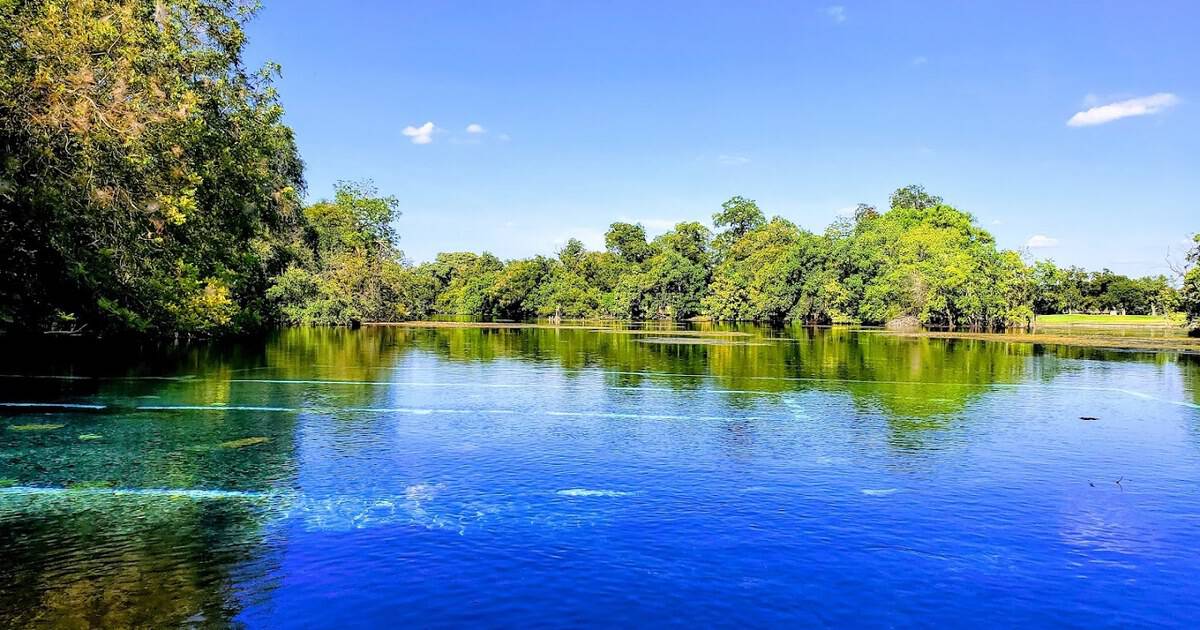
I am not a morning person. But one August in New Braunfels I set an alarm for five thirty, walked down a slope of wet grass in flip flops, and stopped at the edge of a lake that was quietly steaming in the cool air.
This is Landa Park, and what I was looking at was spring-fed clarity so complete that I could count pebbles under four feet of water. A great blue heron stood in the shallows and ignored me entirely.
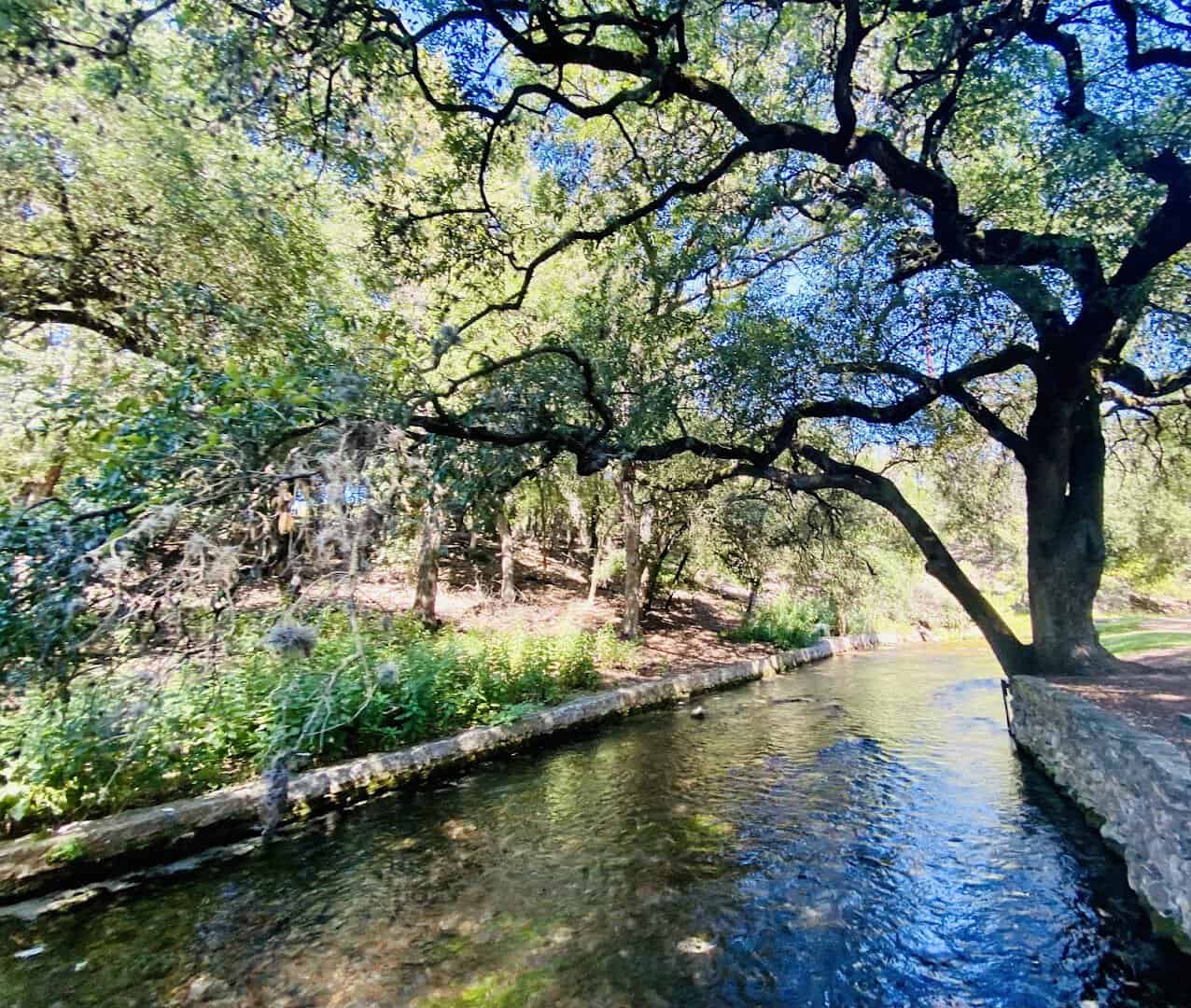
Just under 200 acres of park sit here beside downtown, fed by the largest group of springs in the American Southwest. Below, we will explore the water, the trails, the little train, and the century and a half of history running underneath all of it.
Water That Has Been Rising Here Forever
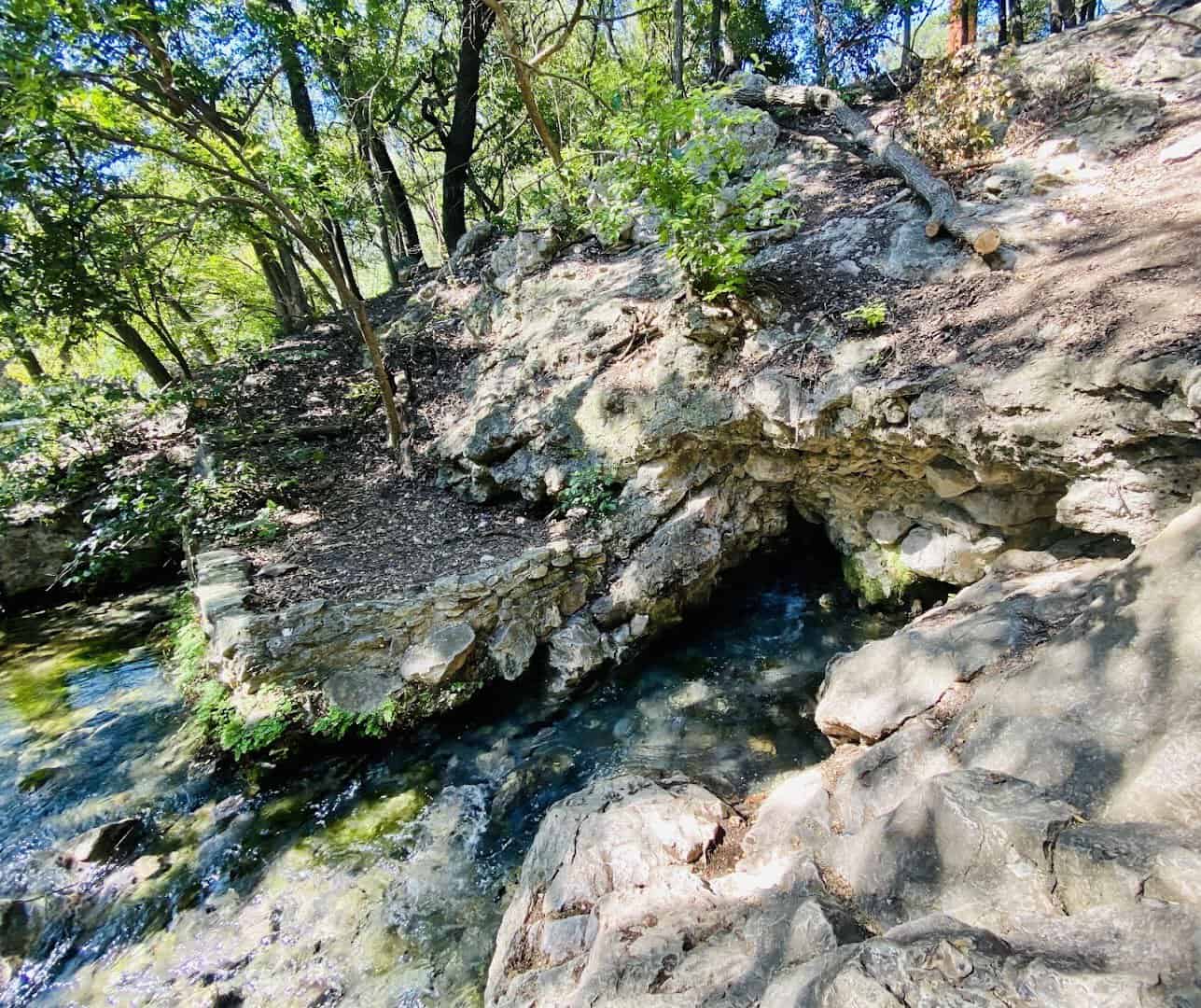
Comal Springs is the biggest spring complex in Texas, and in the whole southwestern United States. Seven major springs and dozens of smaller ones surface along roughly 4,300 feet at the base of a limestone bluff on the park’s western edge.
Most of the water never makes a dramatic entrance. Roughly 78 percent of the flow seeps up quietly through the lake bottom and along its shores, from hundreds of small openings you would walk right past on the bank.
The water arrives at about 72 degrees and stays there, in January and in August alike. Put your hand in on a 100 degree afternoon and it feels like someone left the refrigerator door open.
Everything that leaves the lake becomes the Comal River, which runs roughly two and a half miles before it joins the Guadalupe. That makes it one of the shortest rivers in the country, and easily one of the prettiest.
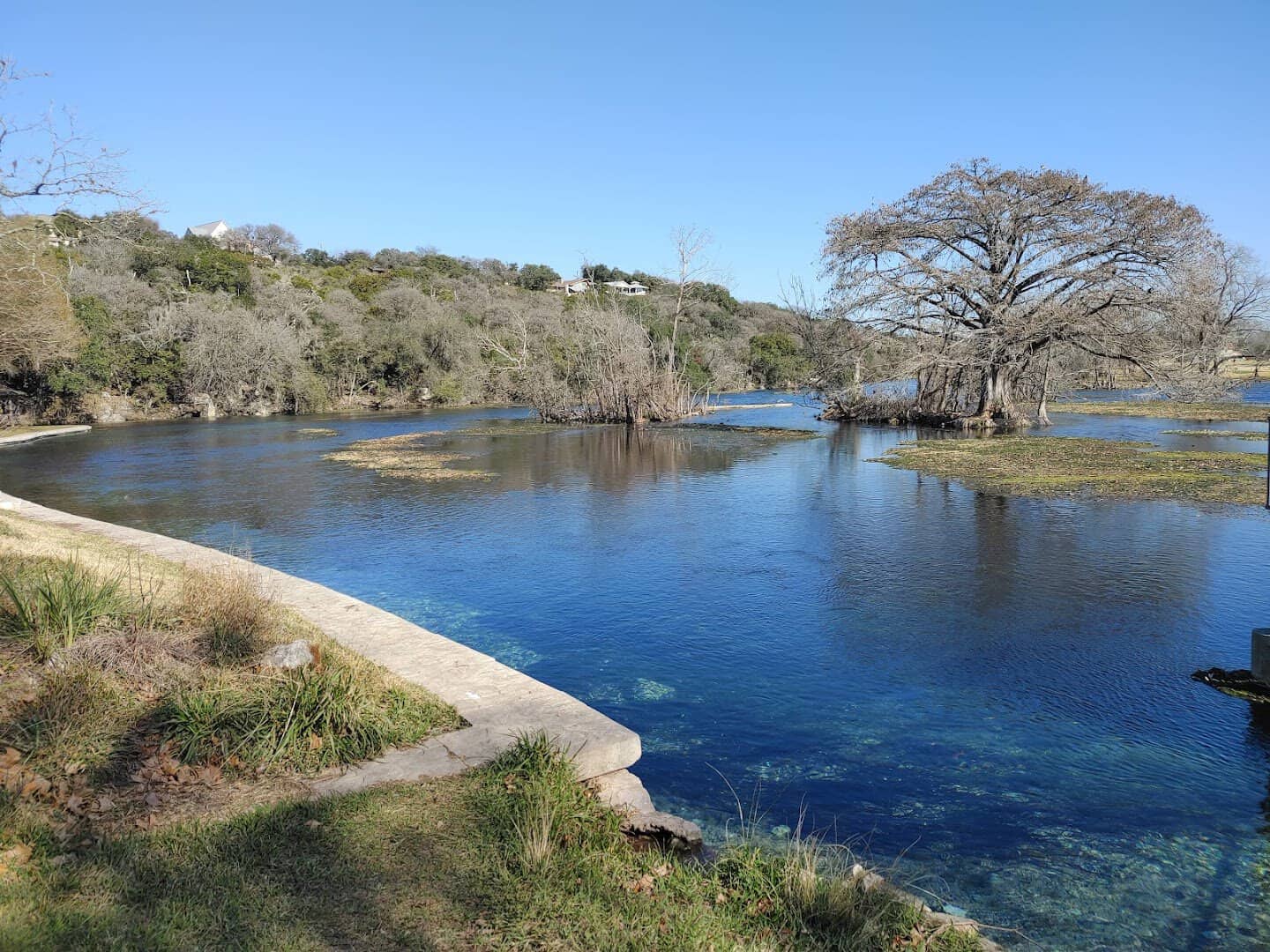
The springs can be spectacular when the Edwards Aquifer is full. The highest discharge ever recorded here topped 350 million gallons in a single day, back in 1977. I could not picture that number until I stood at the bluff and listened to it.
They have also gone quiet. The springs nearly stopped from June to November of 1956 during the drought of that decade, and the tiny endangered fountain darter was later brought back here from the San Marcos River. It is thriving again, which I find genuinely moving.
The Lake, the Ducks, and a Paddle Boat With My Name on It
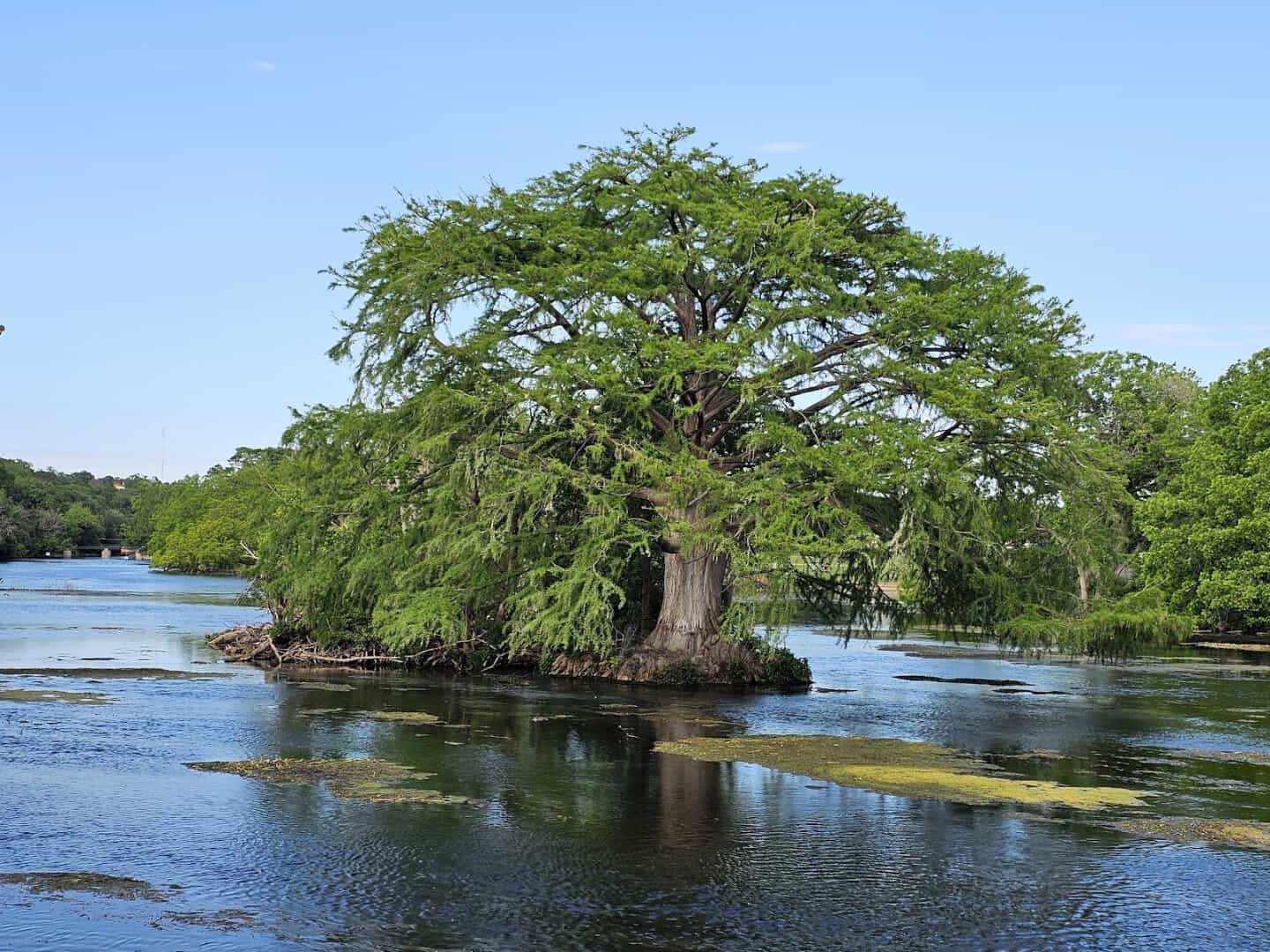
Landa Lake covers about 14 acres, and it is the heart of the whole place. Cypress and pecan lean over the banks, the surface holds the sky, and the current is so gentle you can watch a leaf take five minutes to cross.
Paddle boats are the classic way to see it. You sit low, your legs do the work, and within about three minutes you are far enough out that the parking lot disappears behind the trees and it is just you and the water.
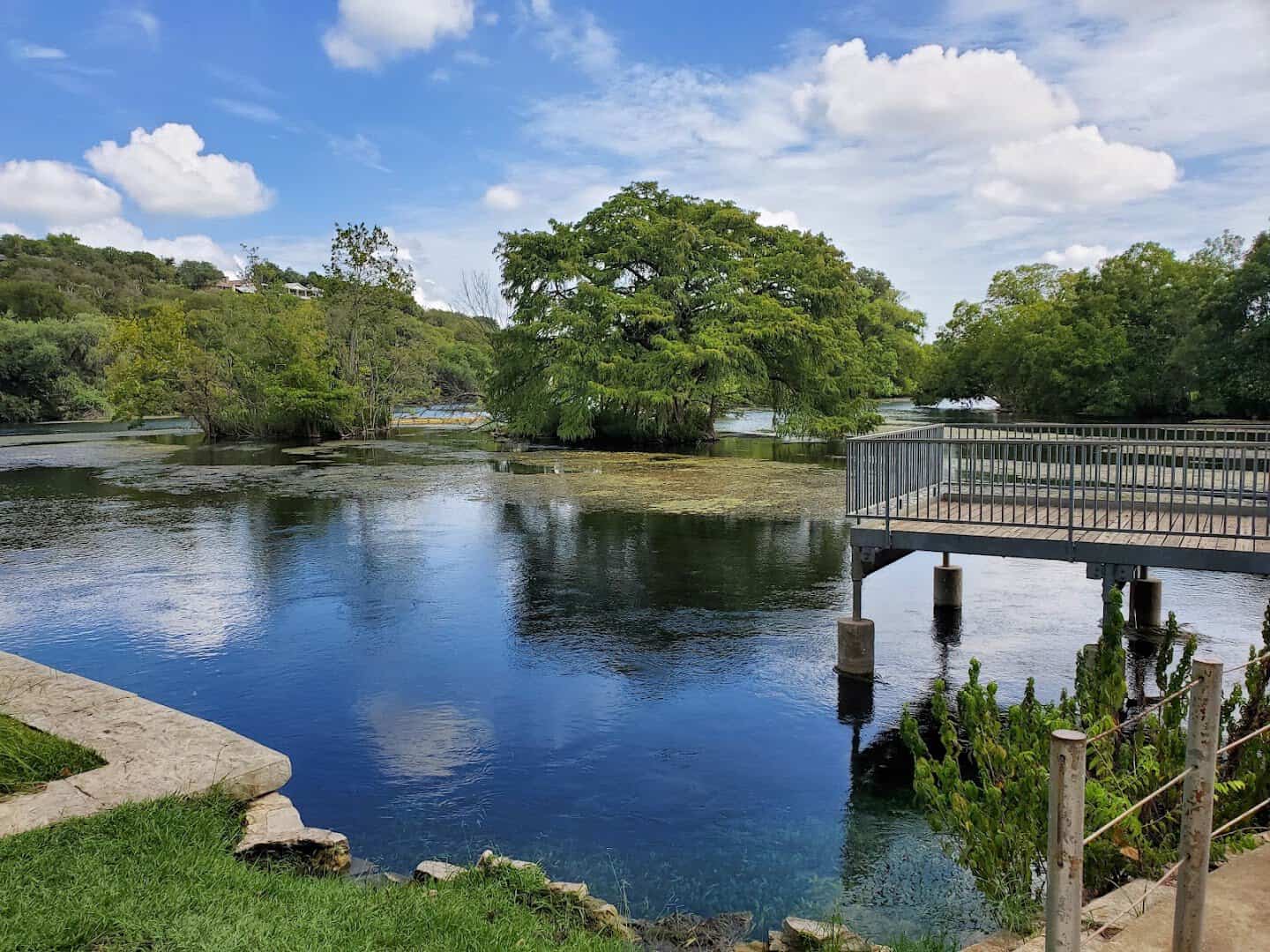
You will not be alone for long. The ducks and geese here have generations of experience with picnic baskets, and they will paddle straight over the moment you slow down. My advice is to enjoy them and keep your kolache in your lap.
Look down instead. Bass hang in the shadows near the bank, turtles stack themselves on half sunk logs like poker chips, and the water is clear enough that you can watch all of it happen without leaning over the side.
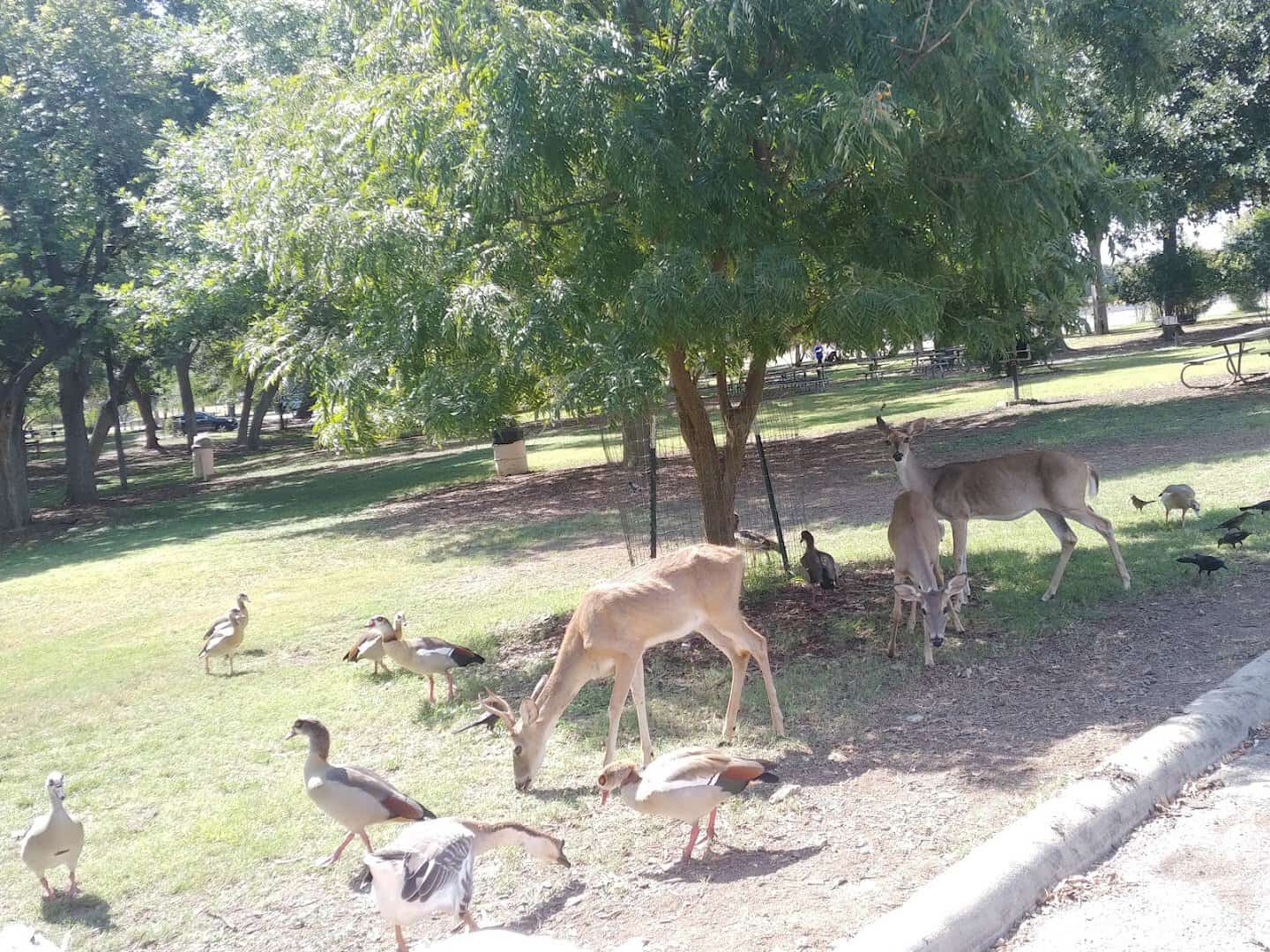
Stay until the light goes gold and the park changes shift. White tailed deer come out of the tree line and graze the open lawns, entirely unbothered. Squirrels work the picnic tables. Herons take up their posts in the shallows again.
One traveler on Tripadvisor titled a review “Beautiful Park at the Headwaters of the Comal River.” That is a plain description rather than a rave, and it is still the most accurate sentence anyone has written about the place.
All Aboard the Little Green Train
You hear it before you see it. A small whistle carries across the lawns, and then a miniature train comes around a bend through the trees with about forty people aboard, most of them grinning, plenty of them well past sixty.
The train has been part of the park for longer than most visitors realize. In 1959, park manager Harley Schulz and Mayor Joe Faust leased the concession to Samuel Helm of Victoria, and the little engines have been running here ever since.
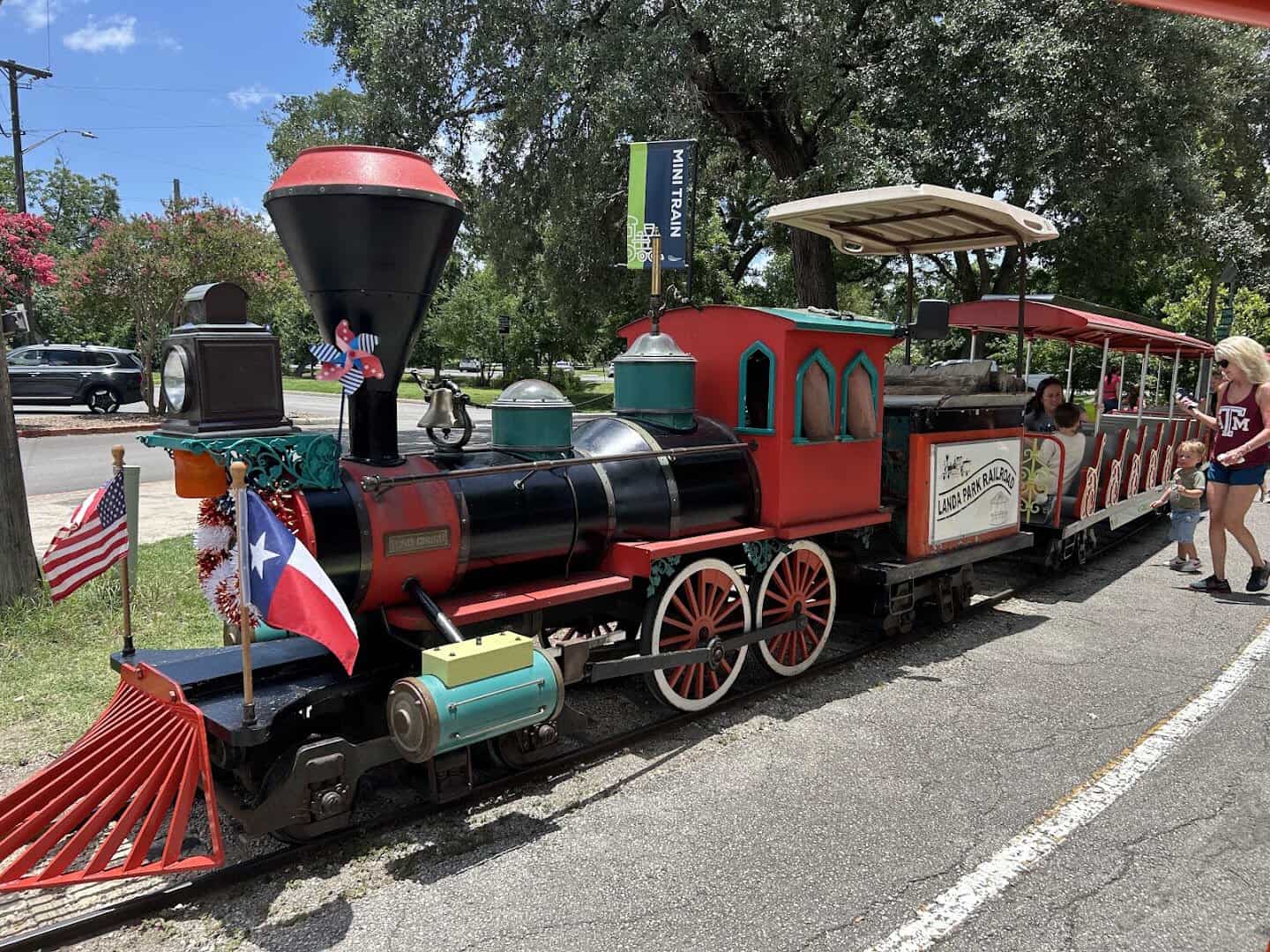
The current train dates to 1969, which means five decades of Texans have taken the same slow turn under the same branches. Grandparents ride it with grandchildren and point out where they sat when the seats felt enormous.
The loop is about a mile and a half. It ducks under limbs, runs alongside the water, crosses toward the golf course side of the park, and gives you a tour you simply cannot get on foot in the same twenty minutes.
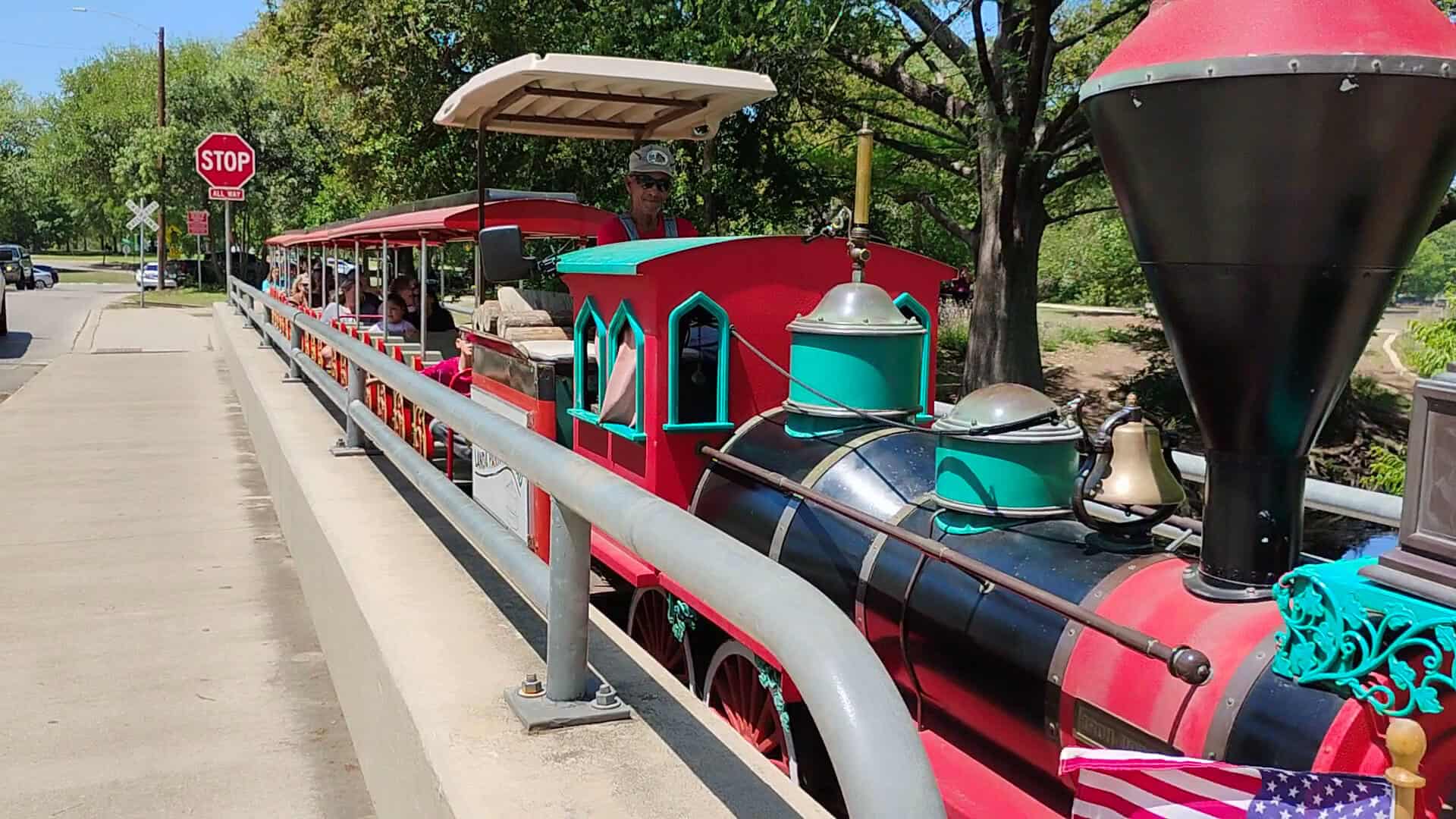
Tickets have run about $6 a person, with babies under one riding free and an annual pass available for around $40. The schedule shifts with the season, so call 830-625-8285 before you build the afternoon around it.
Pro tip: ride it first, not last. You will spot the picnic pavilion you want, the playground your kids will refuse to leave, and the shady stretch of bank where nobody else has set up yet.
Panther Canyon, Where the Park Turns Wild
Walk to the far side of the lawns and the park stops being a park. The ground tilts up, the mowed grass ends, and you step onto a rocky path into a limestone canyon that feels a hundred miles from a paddle boat.
Panther Canyon Nature Trail runs about 1.7 miles through Edwards Limestone, climbing the Balcones Escarpment onto the edge of the Edwards Plateau. This is the exact geological seam that makes the springs possible, and here you get to walk up it.
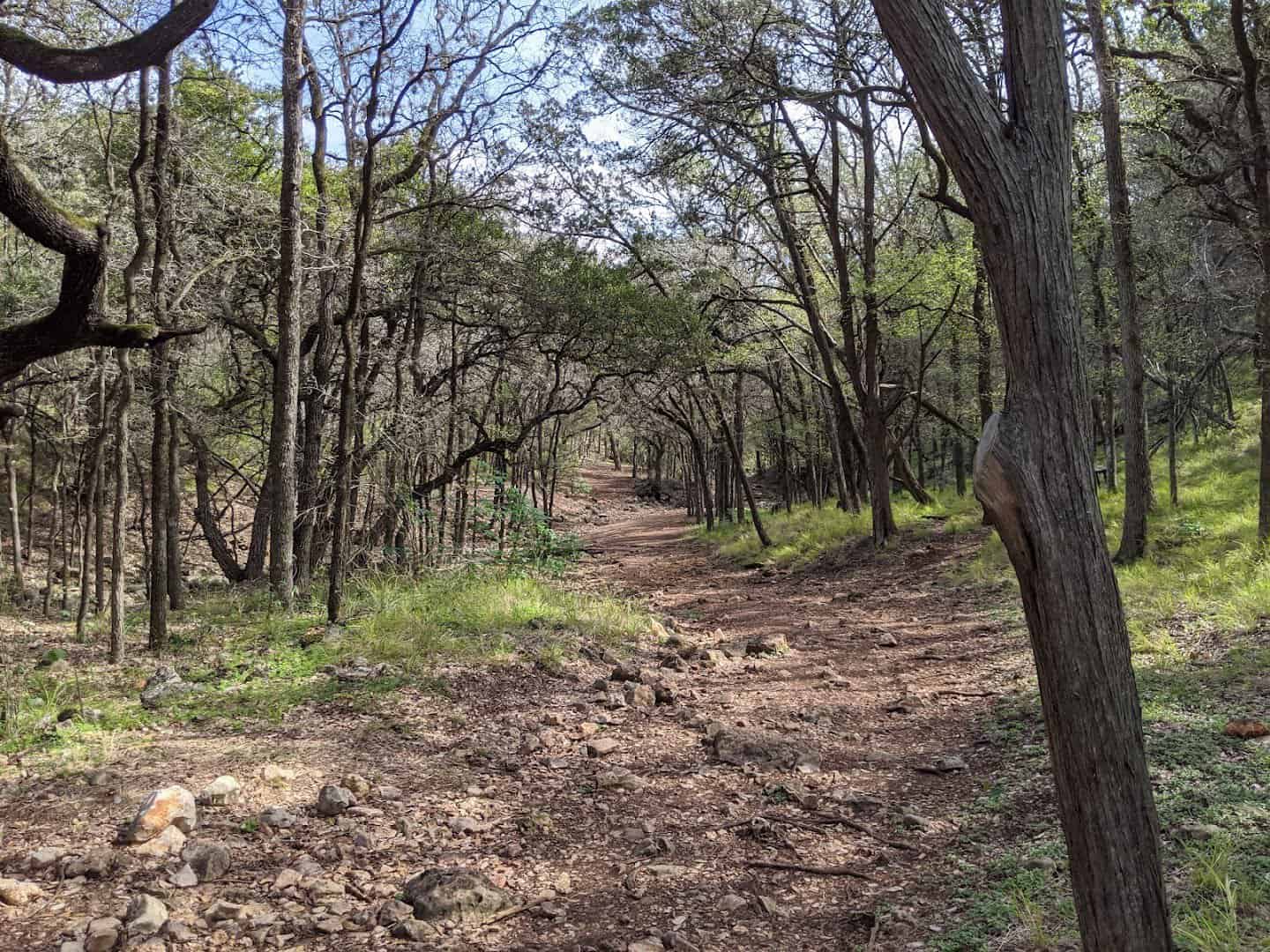
The shade comes from live oak and Ashe juniper, with cedar elm mixed in and an understory of Mexican buckeye, kidneywood and Texas persimmon. In spring the buckeye throws out pink blooms before its leaves, which is a small event worth timing a trip around.
The trail crosses a dry creek bed most of the year. It only runs after rain, and when it is empty you can step off and poke around the bed itself, where the limestone opens into a few small caves and shelters.
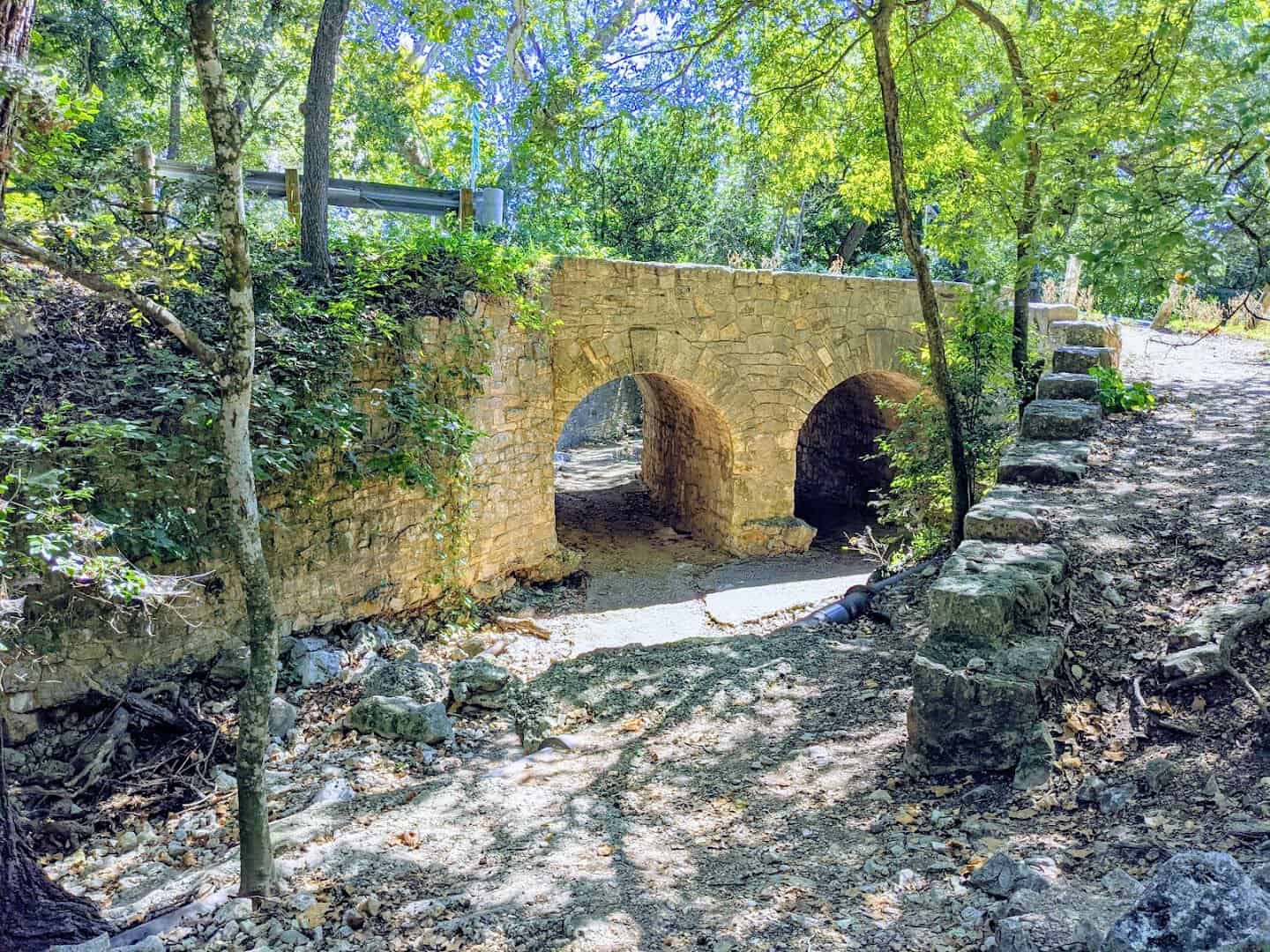
There are benches, a couple of information kiosks, and a steady rocky grade that is honest work without being punishing. Give yourself an hour and a half if you want to walk all of it and still stop to look at things.
Did you know? The water surfacing in this park fell as rain far to the west, in Medina and Bexar counties, and traveled underground through the aquifer to get here. What you are admiring at the bank is somebody else’s weather from years ago.
From Las Fontanas to the People’s Park
People have been stopping at this water for a very long time. Archaeology puts human presence at this campsite around 13,000 years back, and later Spanish visitors called the place Las Fontanas, the fountains.
A Spanish mission, Nuestra Senora de Guadalupe, operated on the site briefly from 1756 to 1758. It did not last, but the name of the springs stayed in the records long after the mission itself was gone.
New Braunfels was founded in 1845 by Prince Carl of Solms-Braunfels, whose German colonists crossed the Guadalupe on Good Friday that March. Two years later, William H. Merriweather bought the Comal Springs tract.
Then came the family whose name is still on the gate. Joseph Landa purchased the tract from Merriweather in a sale recorded on May 15, 1860, and he put the river to work, powering gristmills, cotton and woolen factories, an ice plant and a brewery.
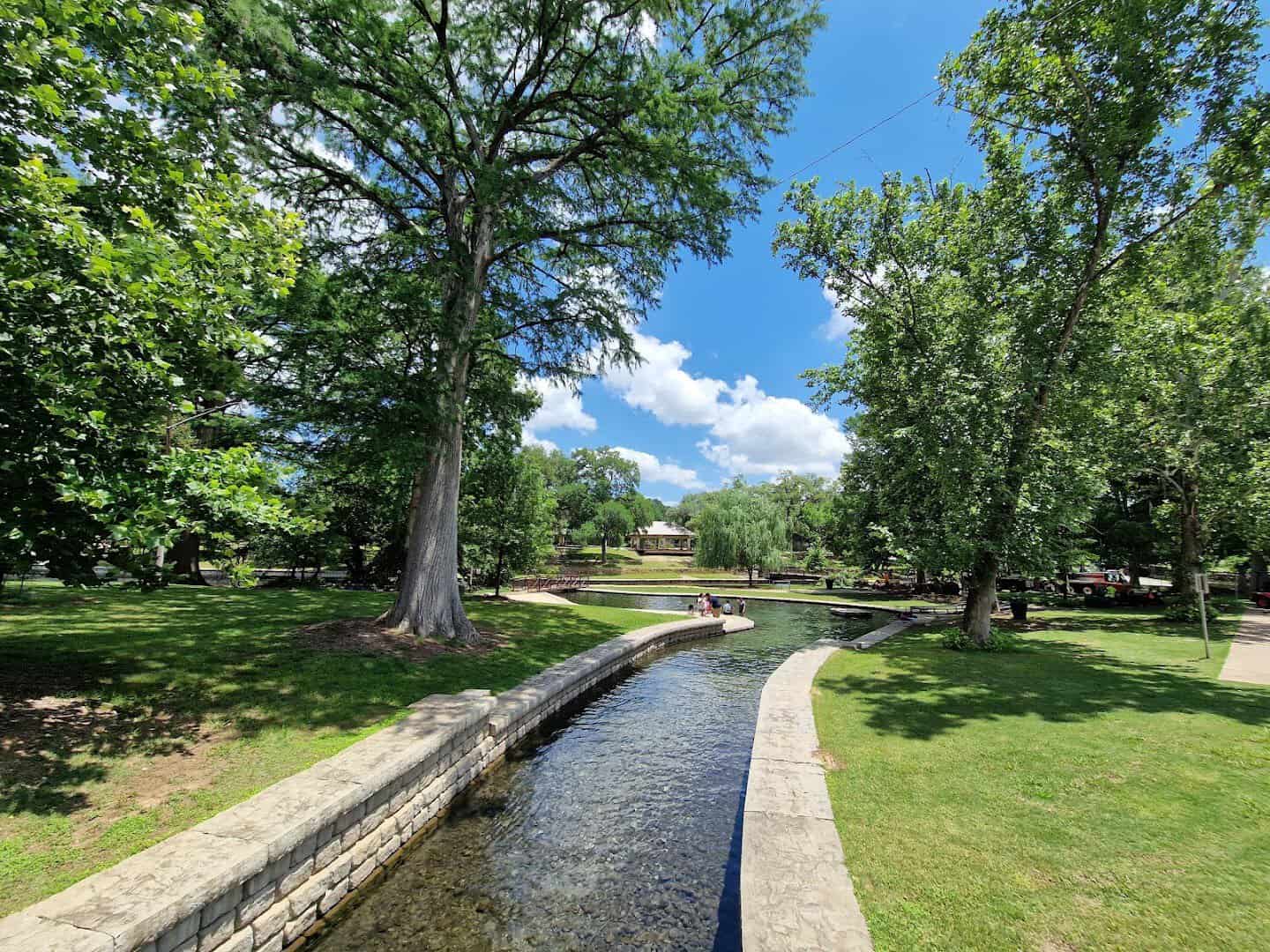
His son Harry took over operations in 1896. When Helen Gould suggested rail access in 1897, Harry ran with it, and by 1898 Landa’s Park was open with excursion trains rolling in from San Antonio and Austin. Texans have been coming here on purpose ever since.
The rail spur came up in 1927. Then on May 25, 1936, the City of New Braunfels bought 128 acres including the headwaters and springs, plus the De Paw Farm, for $80,000. Five days later, more than 1,000 volunteers turned up to clean it.
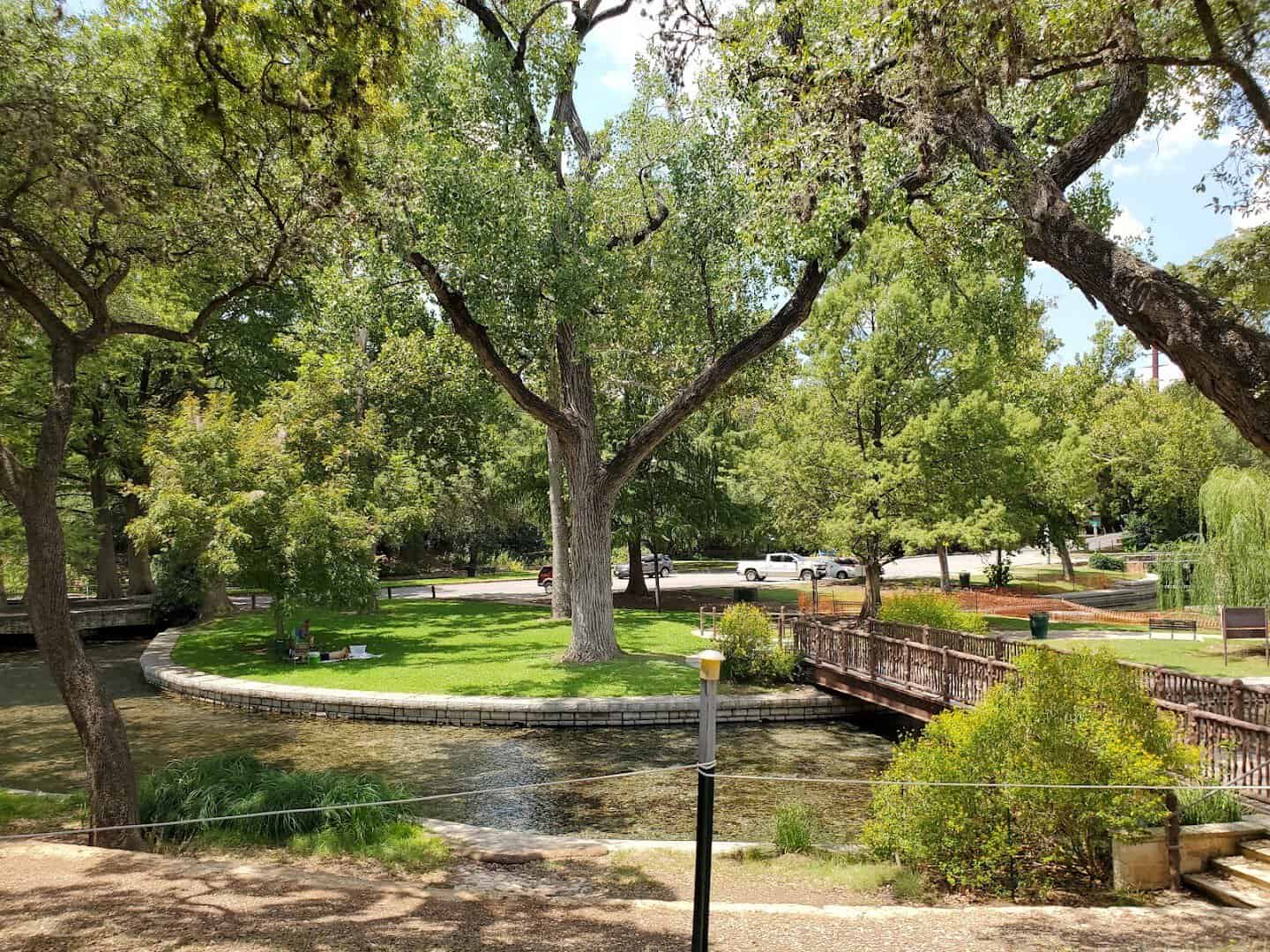
Works Progress Administration crews built concession stands, restrooms, parking areas and retaining walls in that same decade, and a good deal of their stonework is still holding. The city added 30 acres from the Lower Colorado River Authority in 1984 and leased 18 more in 1991.
Seventy-Two Degrees, All Year
The swimming here is why a lot of families come, and the historic spring-fed pool is why they come back. It is filled straight from Comal Springs, so it sits at that same steady 72 degrees no matter what the thermometer says outside.
The first ten seconds are their own event. You lower yourself in, everything on you tightens, and then something clicks and you never want to get out. Central Texas in August makes converts of people very quickly.
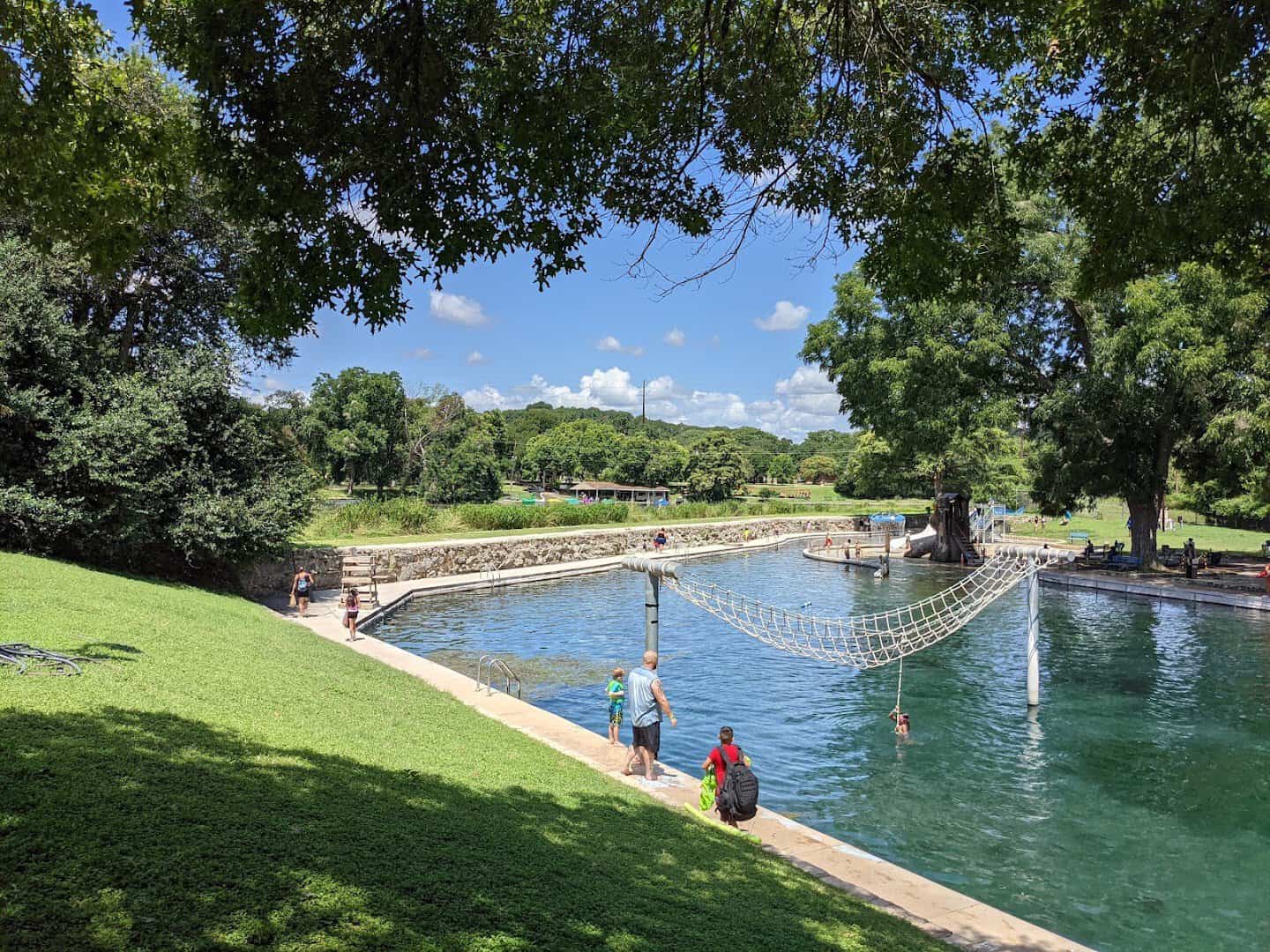
Next to it is the Bud Dallmann pool, an Olympic sized rectangle measuring 25 yards by 50 meters, running between about four and seven feet deep with proper lap lanes. Swimmers who actually train have somewhere serious to do it.
For the smallest members of the group there is a zero depth splash area, where the water starts at nothing and gets deeper as their confidence does, plus slides, climbing features, and lifeguards watching all of it.
Pool seasons and hours move around from year to year, so check the City of New Braunfels parks page before you load the towels. The lake, the lawns and the trails are open regardless, which is a good backup plan.
Ninety-Six Kinds of Shade
In 1981 the park was registered as an arboretum, with roughly 96 species of trees identified inside its boundaries. That is a serious number for a city park, and it explains why the place feels so much cooler than the streets around it.
Much of it is gathered in the William and Dolores Schumann Arboretum, where dozens of species are labeled and a printed trail map walks you through them. Ginkgo, goldenrain tree, possumhaw and a Canary Island date palm all live within a short stroll of each other.
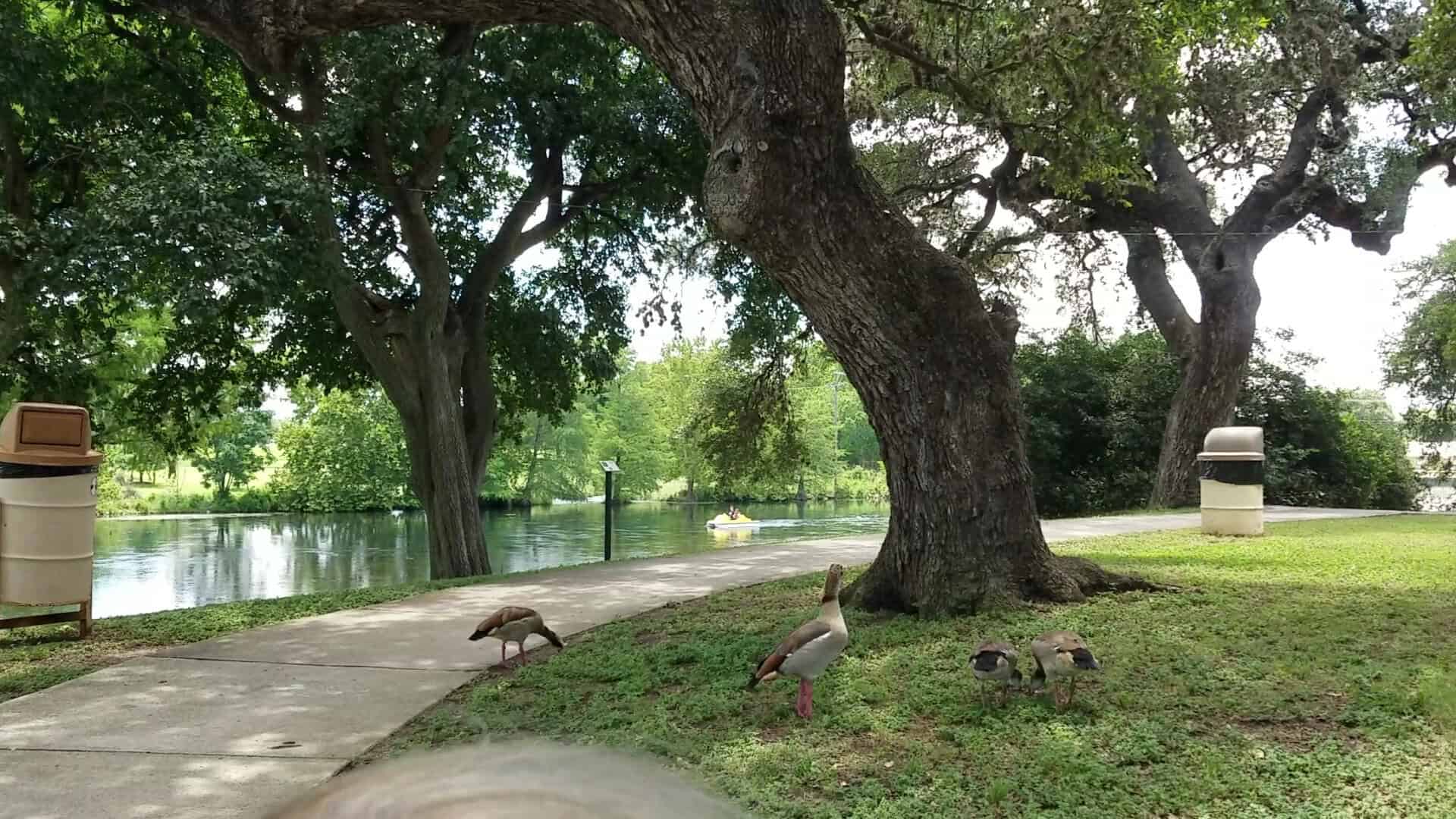
The one everybody photographs stands on the bank of the lake. Founders’ Oak is a live oak better than 300 years old, about 64 feet tall, and recognized by the Texas A&M Forest Service as a Famous Tree of Texas.
Standing under it rearranges your sense of time a little. This tree was already old when the first German colonists came over the Guadalupe, already old when Joseph Landa built his mill, and it has shaded picnics through every version of this park since.
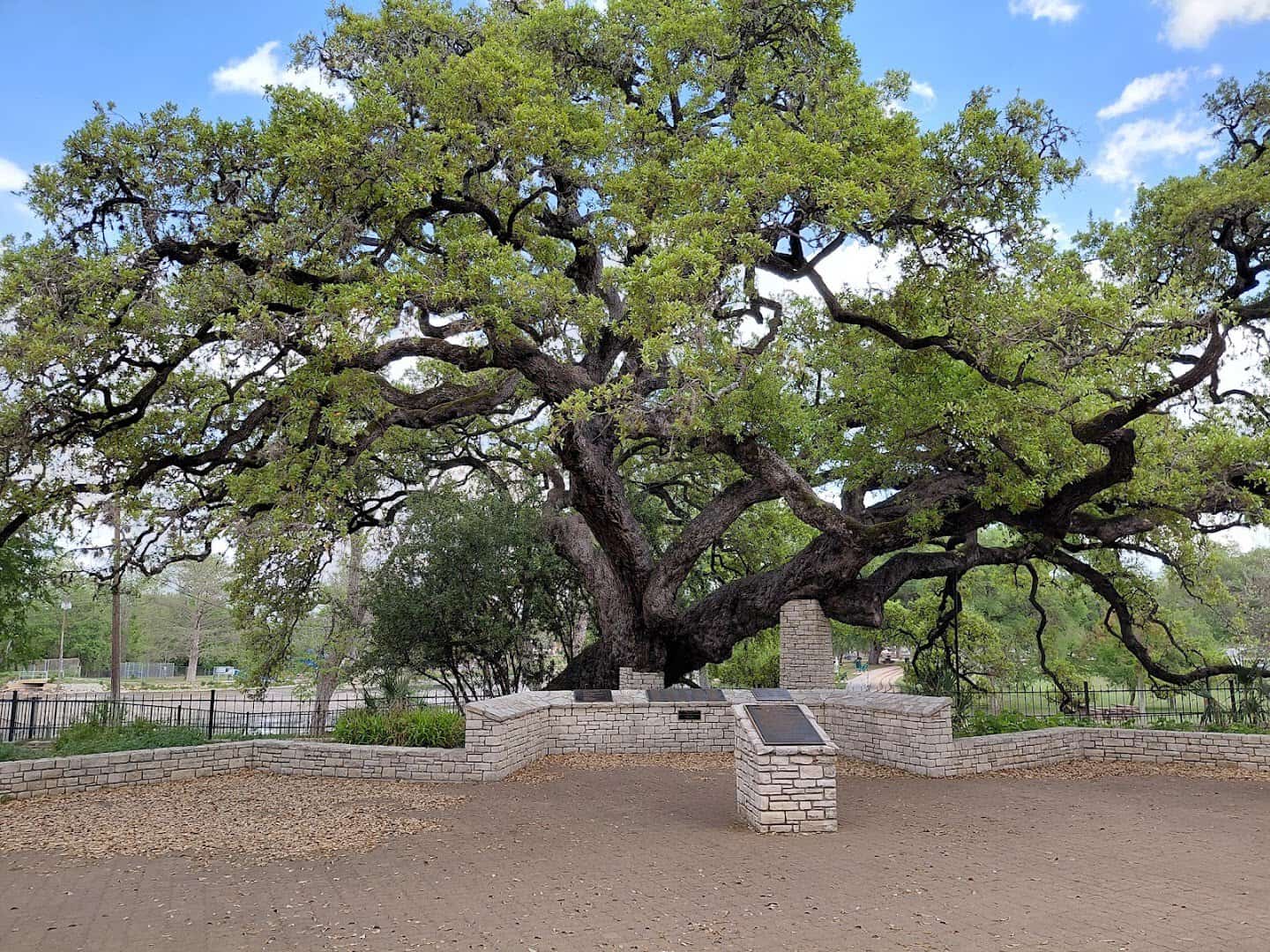
Tip: grab the arboretum trail map from the city’s website before you arrive, then walk it in the last hour of daylight. The labels turn an ordinary stroll into a self guided tour, and the low sun through those canopies is the best light in the park.
Golf Balls, Windmills, and the Best Picnic Table in Comal County
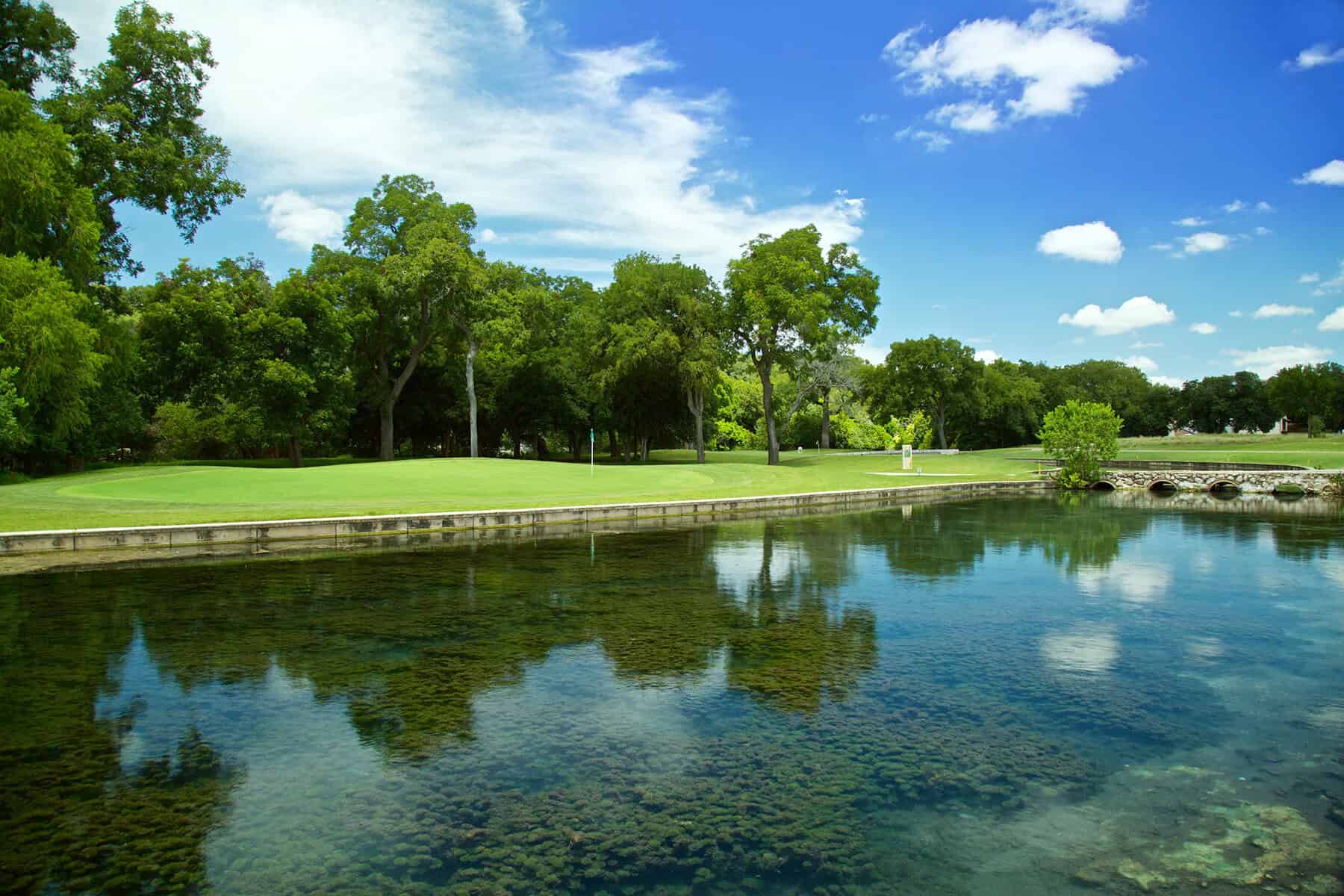
Landa Park Golf Course at Comal Springs opened in 1938 as a nine hole layout on 61 acres, and the city still owns and runs it. The trees lining those fairways have had almost ninety years to grow into the job.
In 1972 the course was redesigned as a full 18 holes, taking in another 52 acres. It plays under mature hardwoods with the spring water never far away, which is a very pleasant way to spend a morning even if your scorecard disagrees.
There is miniature golf too, which is the version my own family actually plays. It is exactly as goofy as it should be, and I once watched a nine year old sink a hole in one and take a full victory lap around her grandparents.
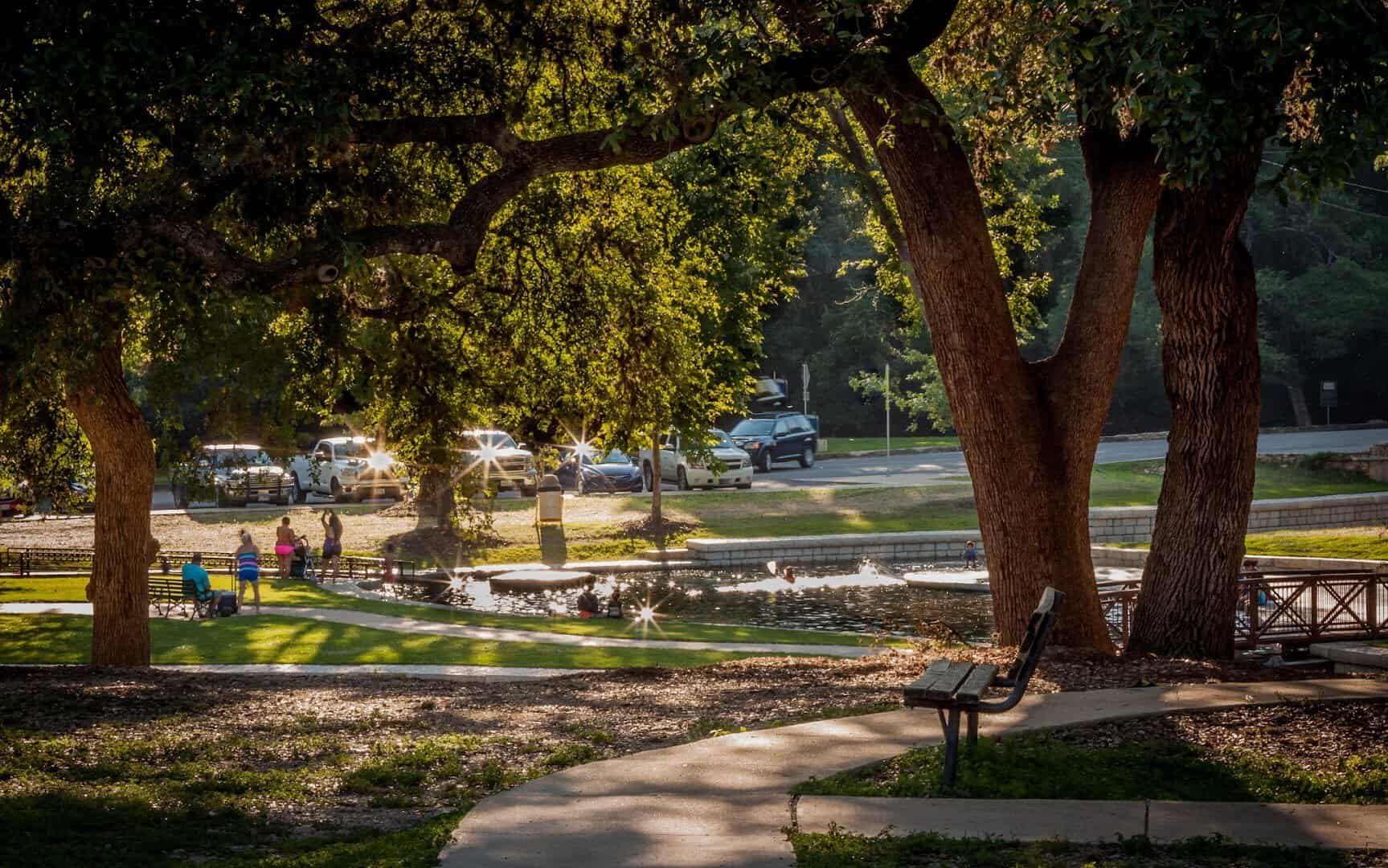
Everything else is here as well. Volleyball, fishing spots, several playgrounds sorted roughly by age, picnic tables and barbecue pits scattered through the shade, and pavilions you can reserve if you want a birthday with a roof over it.
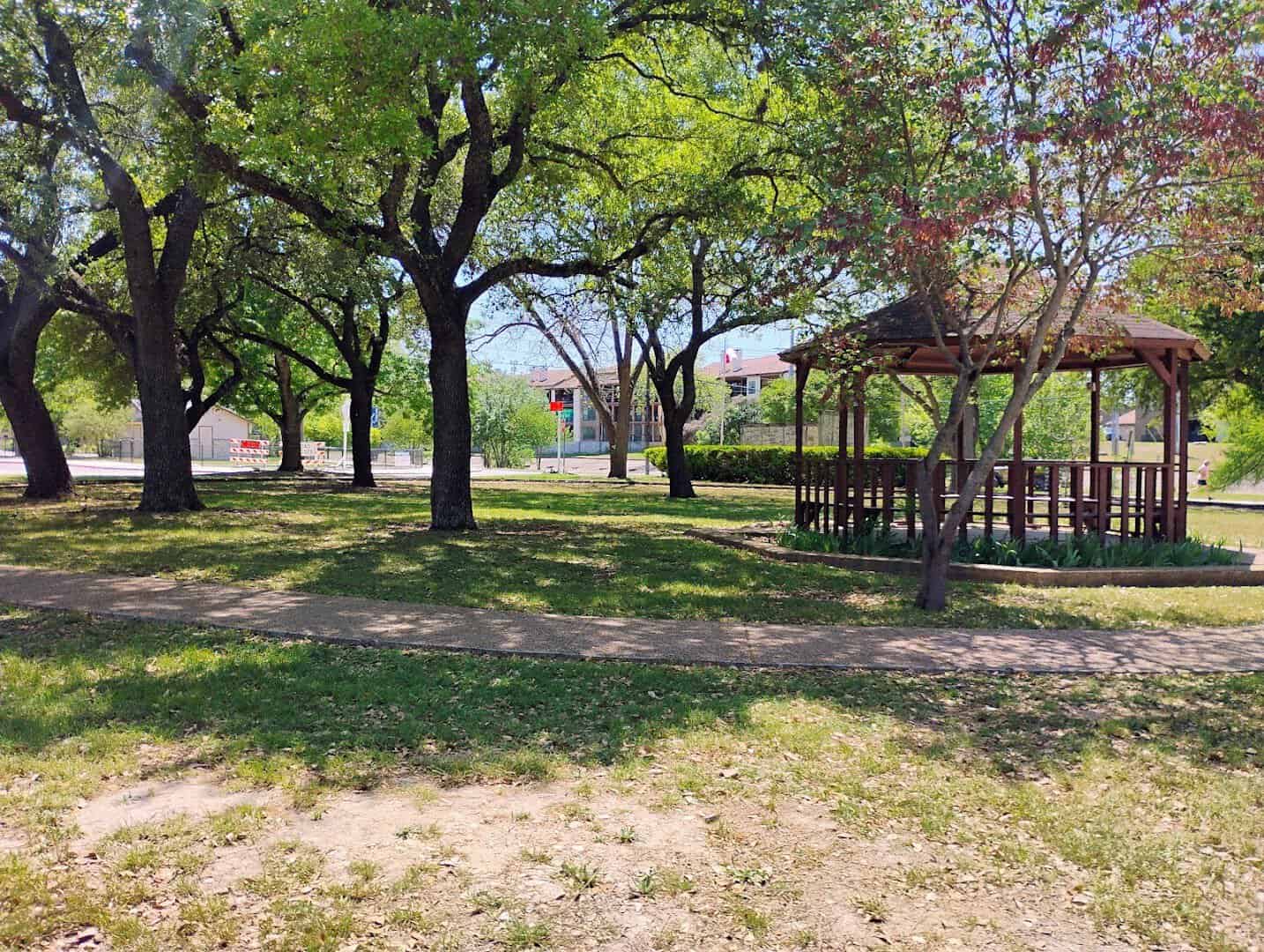
The park is woven into the town’s calendar, too. Wurstfest fills the grounds beside it every fall, car shows roll through, and on any given Saturday you will pass at least one wedding party posing under the oaks.
How to Get There
Where: Landa Park, 164 Landa Park Dr, New Braunfels, TX 78130. The Panther Canyon trailhead sits separately at 15 Gazebo Circle, on the Landa Park Drive side of the canyon.
New Braunfels sits on Interstate 35 between the two big cities, roughly half an hour up from San Antonio and about an hour down from Austin. Houston is a straight three hour run west, which makes this an easy day trip from a surprising amount of Texas.
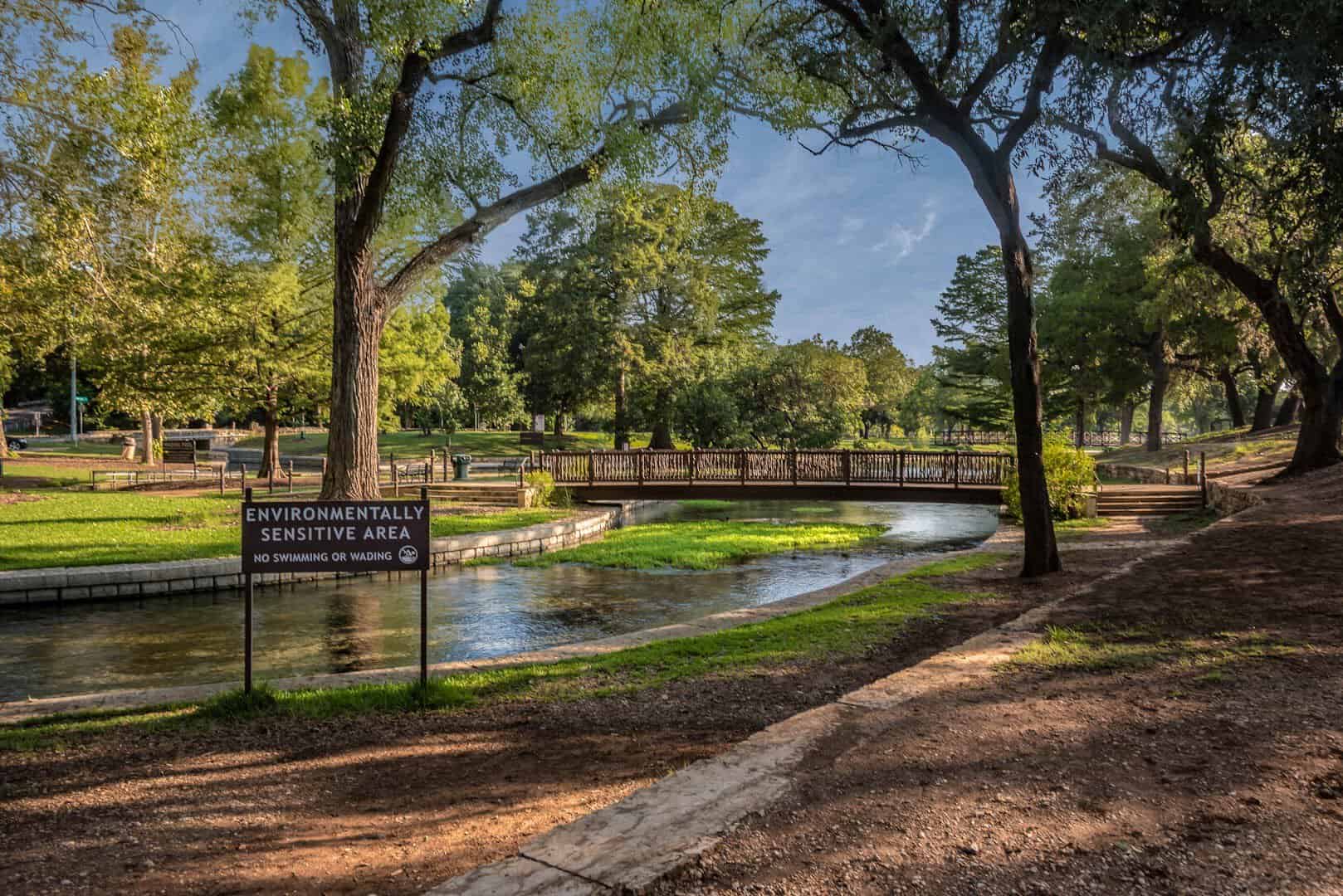
Entry to the park is free, and it is generally open daily from 6 a.m. to midnight. Individual attractions like the train, the pools and the golf course keep their own hours and charge their own fees.
Leashed dogs are welcome on the trails, and the main facilities are ADA accessible. On a summer Saturday the lots near the lake fill early, so aim for before ten in the morning or after four in the afternoon.
Pack the Sandwiches and Point the Car
What gets me about this place is how many completely different days it will hand you. You can spend one paddling in circles and feeding nobody, and the next climbing a limestone canyon, and it is the same 200 acres both times.
Bring a blanket, a cooler and shoes you do not mind getting wet. Ride the train, walk the arboretum, put your feet in water that has been rising out of this ground since long before anyone thought to give it a name.
Then find a table under a 300 year old oak, unwrap your sandwiches, and see if you can talk yourself into leaving before dark. I never can, and I have stopped trying.
Featured image: Juanita Bermudez via Landa Park

Stella Raines
Editor-in-Chief
Stella brings over a decade of storytelling experience to TX Headlines. With roots in West Texas and a love for road trips, she leads the editorial team with an eye for the hidden stories that make Texas unforgettable.
More Stories
This Secret Texas Cavern Is an Ancient Riverbed That Once Hid a Prohibition Ballroom
This Turquoise Texas Lake Is a Hill Country Escape That Could Pass for the Caribbean
This Secluded West Texas Basin Is a Mile-High Camp Ringed by Volcanic Peaks and Blazing Stars
This Beloved Texas Lake Is 63 Miles of Limestone Cliffs, Hidden Coves and Unbeatable Sunsets
Tags