This Secret Park Will Make You Feel Like You’re in a Rainforest
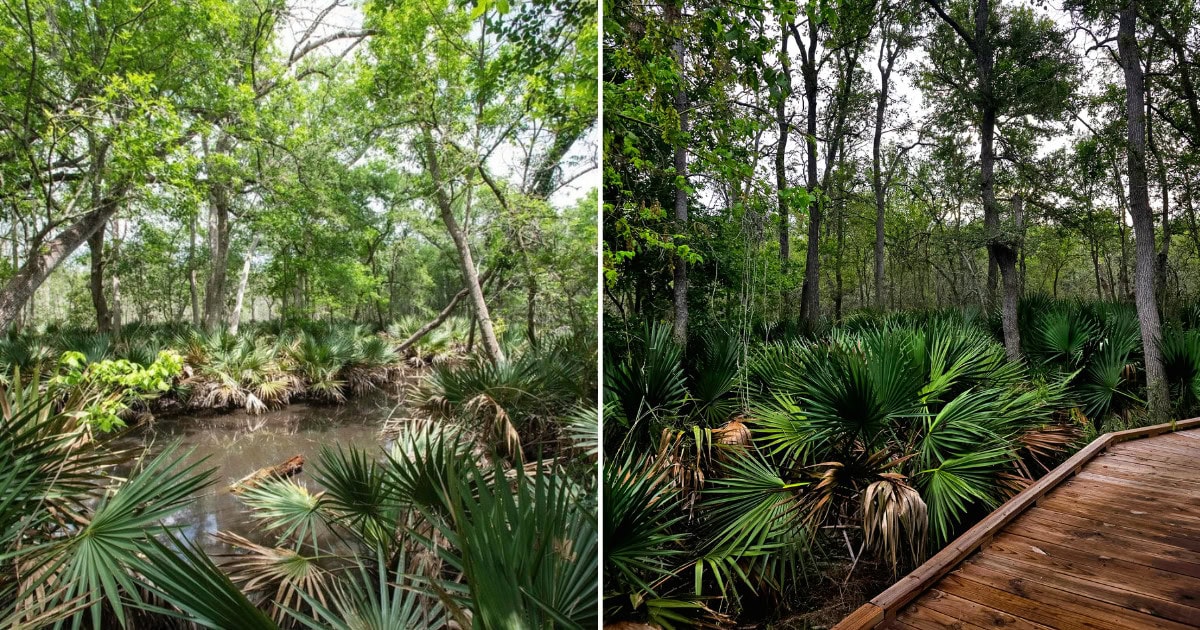
Something strange happens when you drive into Palmetto State Park.
The Central Texas countryside—dry ranchland, mesquite, scrubby oak—gives way without warning to dense vegetation, black-stained pools, and towering trees draped in Spanish moss.
Dwarf palmettos carpet the forest floor. The air turns humid. It feels less like Texas and more like you’ve somehow wandered into the Gulf Coast lowlands of Louisiana or the swamps of Florida.
This 270-acre park near Gonzales is the only palmetto swamp in the Southwest, and walking its trails is one of the most unexpected nature experiences in the state.
Where Palmetto State Park Is Located
The park sits in Gonzales County, about ten miles northwest of the city of Gonzales and southeast of Luling, just six miles from Interstate 10.
That puts it roughly an hour from both Austin and San Antonio, making it an easy day trip or weekend destination from either city. Houston visitors can reach it in about two hours.
The landscape here is part of what’s called the Ottine Swamp, named for early settlers Adolph and Christine Otto.
The swamp formed partly from overflow of the San Marcos River, which runs through the park, and partly from a group of warm sulfur springs that once bubbled up from underground.
The Dwarf Palmetto Forest
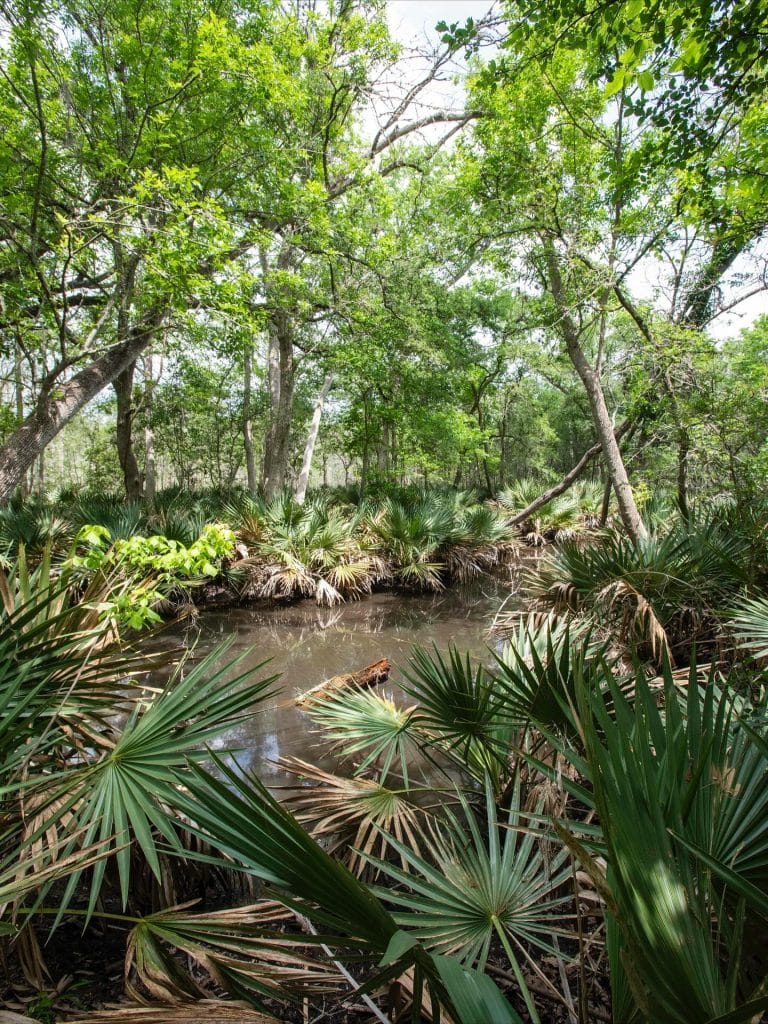
Dwarf palmettos (Sabal minor) grow throughout East Texas and the southeastern United States, but only scattered individuals or small clumps appear west and north of this park.
Here, they form dense groves that transform the landscape into something that looks almost prehistoric—thick fronds rising from the forest floor, creating a green canopy that blocks the sun and holds in moisture.
Walking through feels like entering another world, which is exactly the reaction superintendent Nathan Reynolds says most visitors have.
Walking the Trails
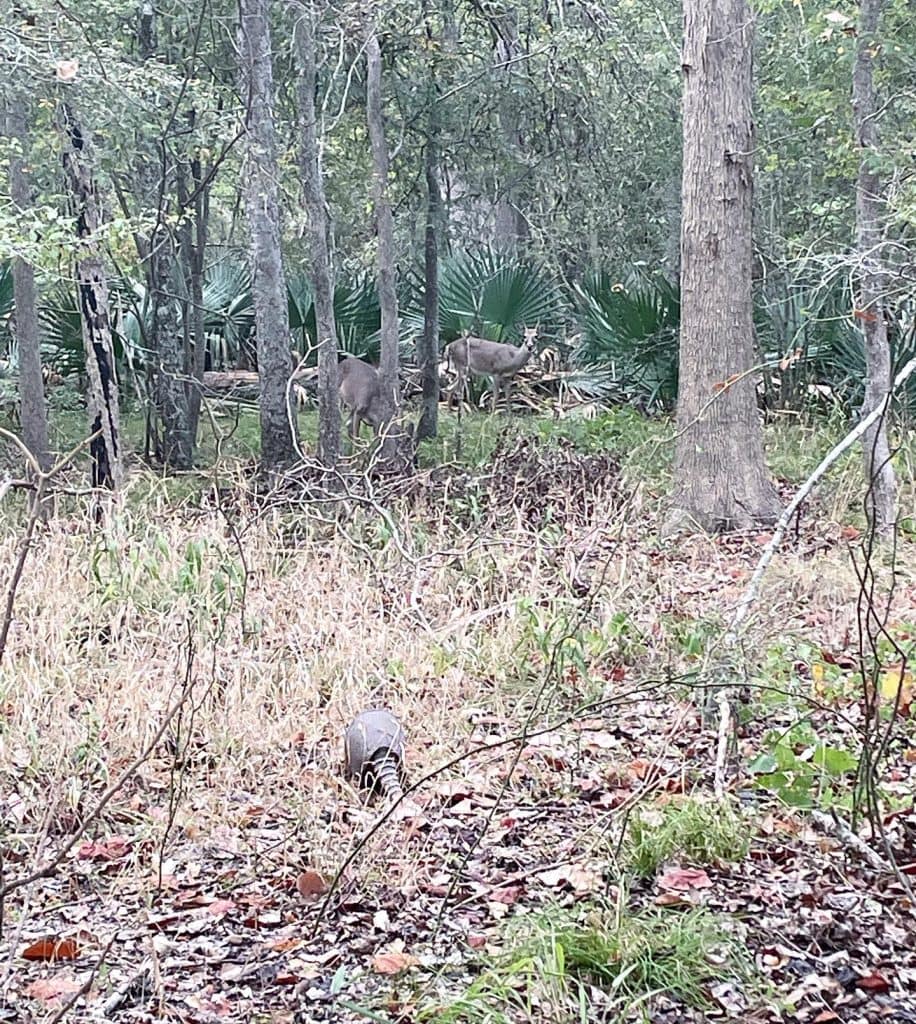
Palmetto State Park offers roughly five miles of interconnected trails, all flat and covered in crushed granite—easy walking for families, kids, and anyone who prefers a gentle hike to a demanding climb.
The Palmetto Interpretive Trail (0.3 miles) showcases the densest concentration of the park’s namesake plants and includes educational signage about the area’s geology and ecology.
The Ottine Swamp Trail (1 mile) winds through the swamp to the park’s southwestern boundary, with boardwalks over standing water and views into the eerie, moss-draped interior.
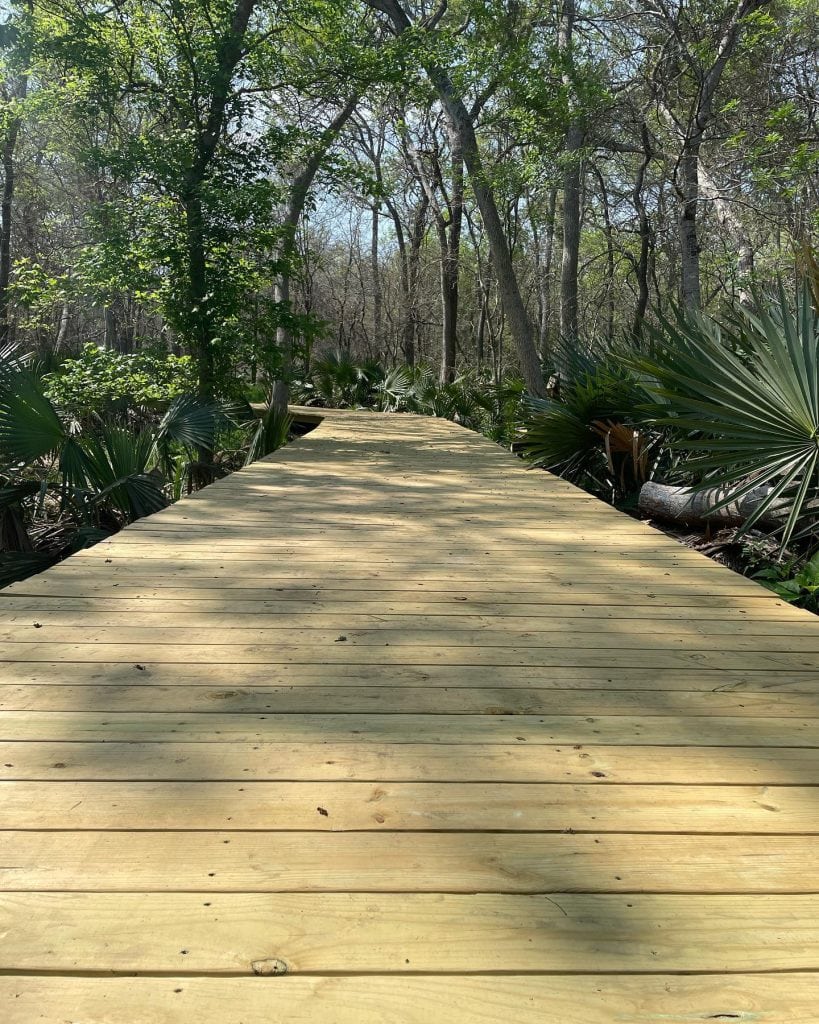
The San Marcos River Trail (1.25 miles) follows the river through bottomland hardwoods—oaks, pecans, elms, cottonwoods, and hollies.
The Mesquite Flats Trail (1 mile) opens up into drier grassland that feels more like typical Central Texas before circling back into the forest.
String them together, and you can cover 3.4 miles or more in a single outing, experiencing the full range of habitats the park protects: swamp, woodland, riverside, and prairie.
The San Marcos River and Oxbow Lake
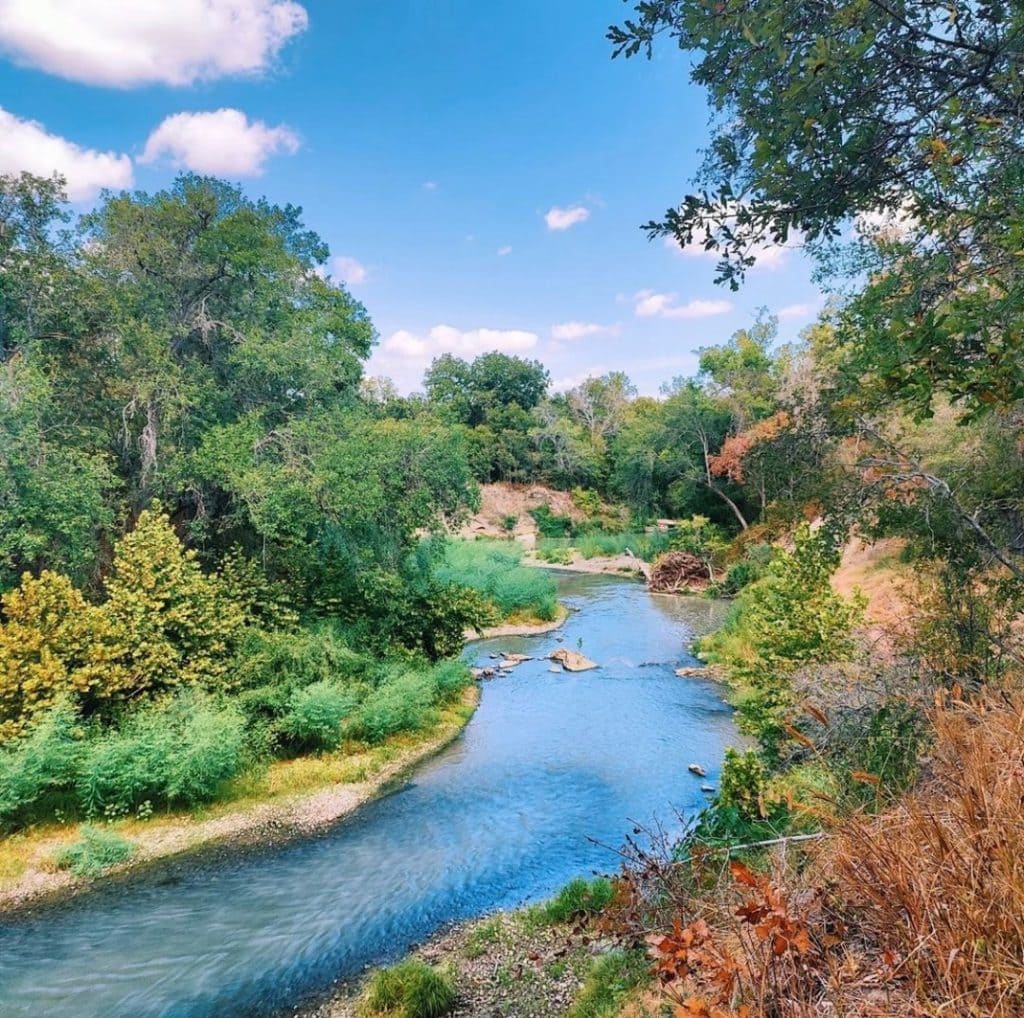
The San Marcos River runs through the park without a containment dam upstream, which means it’s wild and subject to flash flooding—something to check before visiting after heavy rains.
When conditions are calm, visitors can wade in, fish from the banks, or put in kayaks and canoes. Experienced paddlers can travel 14 miles from Luling City Park to Palmetto, portaging around one dam along the way.
The four-acre Oxbow Lake was carved from the river’s former channel when erosion cut off a wide meander.
It’s now spring-fed and independent of the river—calm, still water perfect for swimming, fishing, or renting pedal boats, kayaks, and paddleboards from the park.
Texas Parks and Wildlife stocks the lake with channel catfish and, in colder months, rainbow trout. You can borrow fishing tackle from the park headquarters if you didn’t bring your own.
Planning Your Visit
The park is open daily and charges $3 per adult for day use, with children under 12 free.
Camping options include 17 RV sites with water and electricity, 17 tent sites, a group site, and one cabin—book well in advance, as the park fills up on weekends and holidays.
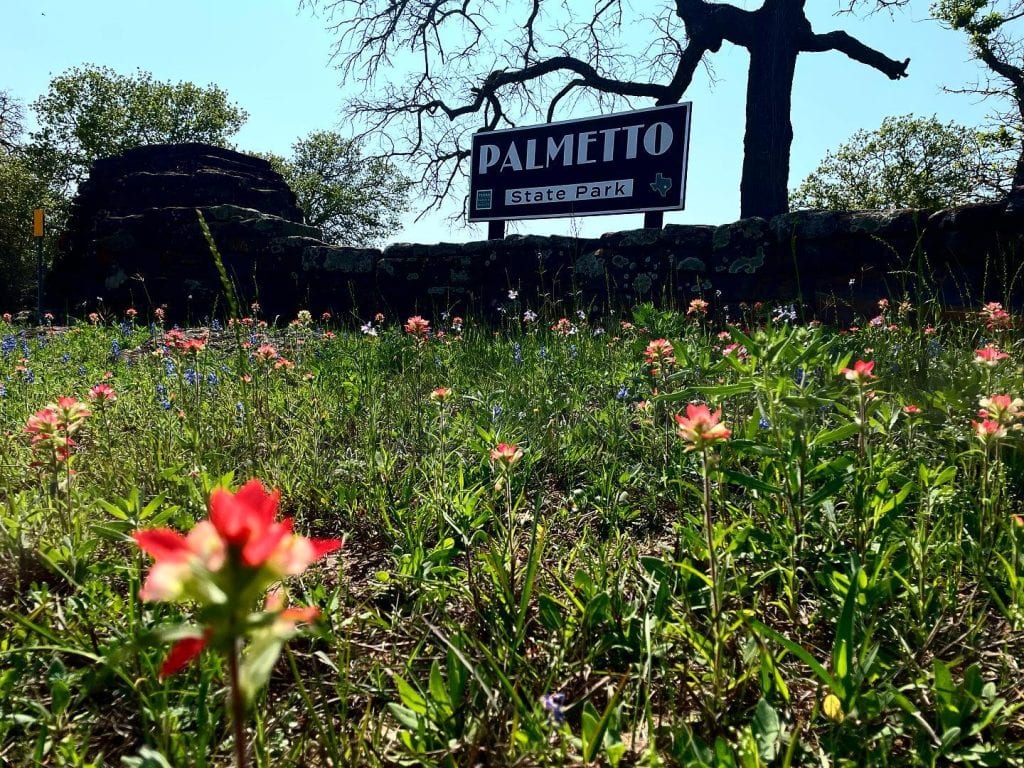
Spring and early summer showcase the park at its greenest, with wildflowers blooming and the palmettos at their lushest. Summer also brings humidity and mosquitoes—bring bug spray.
Trails can be muddy after rain, and the park warns of venomous timber rattlesnakes, so watch your step.
Gonzales is nearby for history buffs—it’s where the first shot of the Texas Revolution was fired in 1835. Luling, five miles away, offers legendary barbecue.
Where the Swamp Hides in Plain Sight
Palmetto State Park is tiny by Texas standards—270 acres compared to the thousands that characterize most state parks.
But what it lacks in size it makes up for in strangeness. This is a landscape that shouldn’t exist here, a pocket of tropical swamp tucked into Central Texas farmland, hidden in plain sight just off I-10.
Walk the boardwalks through the palmettos, listen to the water tower release its slow trickle into the wetlands, and understand why the superintendent likes keeping this place a word-of-mouth secret.
FB post credit: Richard D

Stella Raines
Editor-in-Chief
Stella brings over a decade of storytelling experience to TX Headlines. With roots in West Texas and a love for road trips, she leads the editorial team with an eye for the hidden stories that make Texas unforgettable.
More Stories
This 2-Mile Texas Trail Follows One of the Last Pristine Creeks in the State
This Hidden Texas Trail Leads to Limestone Waterfalls and Spring Wildflowers
This Rugged Texas Ranch Has Nearly 30 Miles of Twisting Mountain Bike Trails That Keep Riders Coming Back
This Epic Texas Rail-Trail Stretches 130 Miles Past 19 Small Towns and Over 100 Old Trestles
Tags