This Secret Park Is A Kayaker’s Paradise With 14 Miles Of Trails
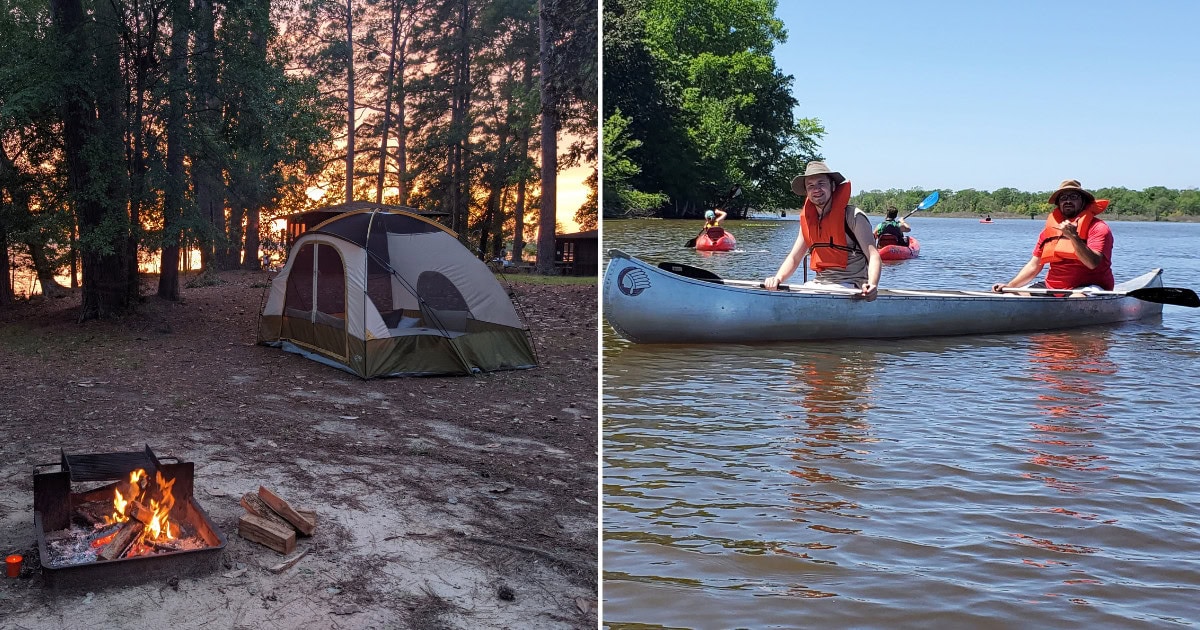
The first time I ever took a kayak out on a river, I felt freer than ever before. I felt strong, each stroke of the paddle sending me further, but also small amid the water, trees, and open sky. I found myself singing “Just Around the River Bend” from Disney’s Pocohantas for the first time in years.
You can capture a similar feeling when you explore the almost prehistoric, cypress-shaded sloughs where two large rivers meet at the edge of the heavily forested Big Thicket. This is Martin Dies, Jr. State Park.
Where The Park Is Located

There’s So Much to Explore
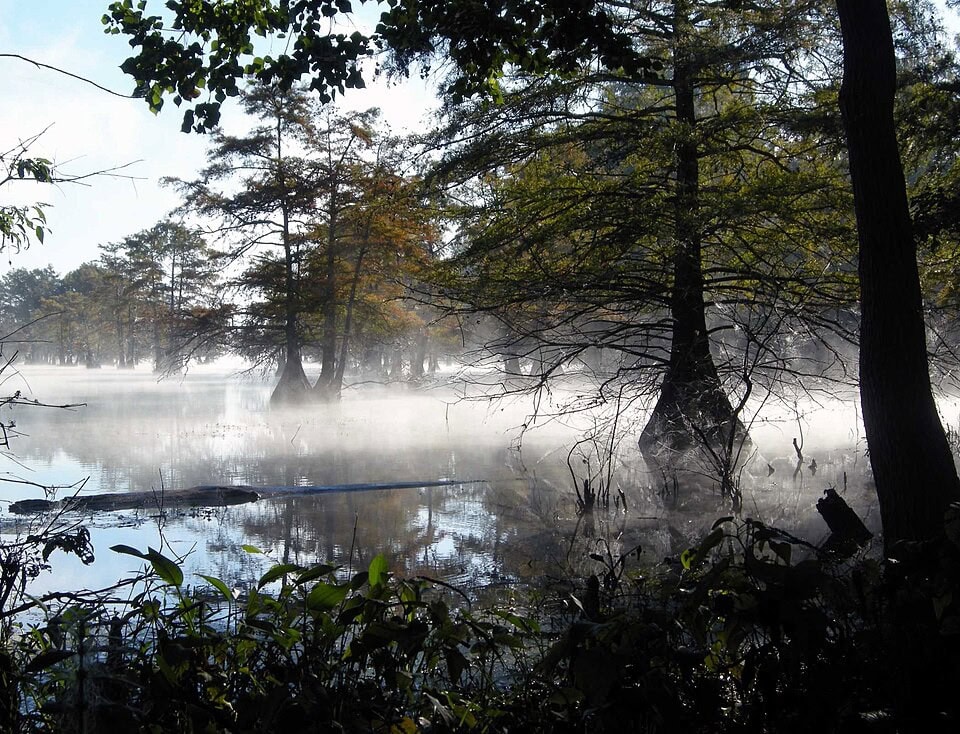
Martin Dies, Jr. State Park consists of 705 acres of water, swamps, and forested land. It’s rich in wildlife and outdoor activities.
But before you start exploring, let’s review some park vocabulary. The park consists of three “units.” Each unit is an area of land with unique amenities.
The Hen House Ridge Unit to the south and the Walnut Ridge Unit to the north are separated by the B.A. Steinhagen Reservoir. Hen House Ridge has cabins, campsites, a designated swimming area, and a nature center.
Walnut Ridge Unit also has cabins as well as camping loops. The units are conveniently connected by Park Road 2.
The Cherokee Unit is sometimes considered part of the Walnut Ridge Unit. Also known as the Cherokee Day Use Area, it features boat ramps and paddling trails.
You’ll also see the term “slough” all over the park. Pronounced “sloo,” it refers to a muddy or swampy area. Sloughs are great for paddling, and campsites near sloughs offer direct, if muddy, access to the water.
Paddling Martin Dies Jr. State Park
Travel influencers have called the park a “boater’s paradise” because of the readily available canoe and kayak rentals and dedicated paddling trails in the Cherokee Day Use area.
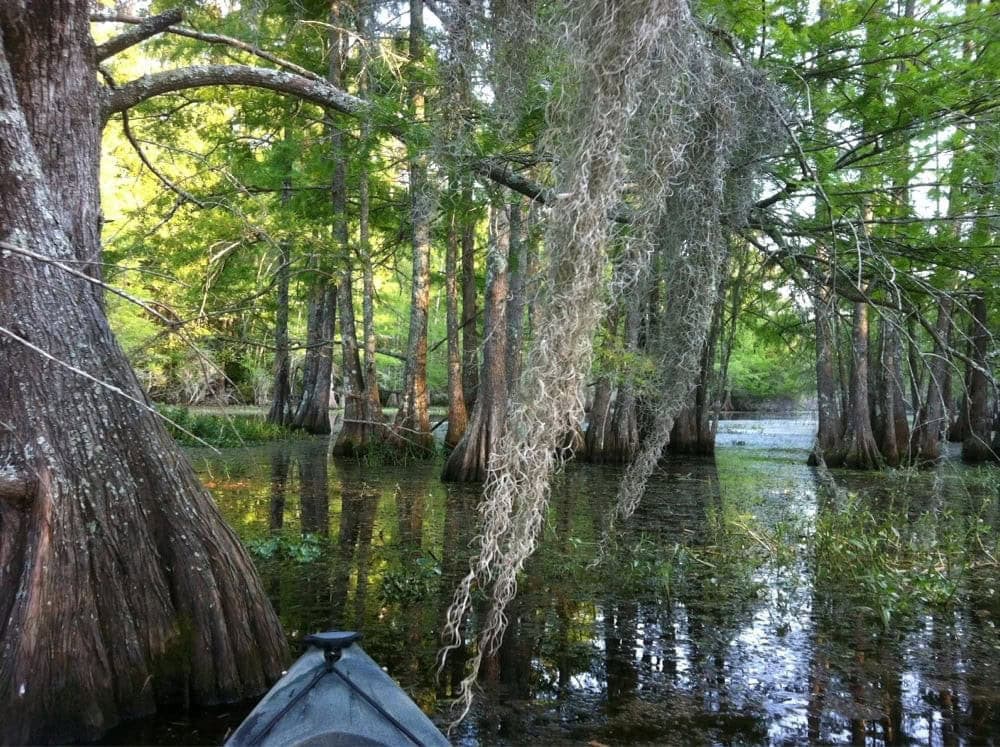
Three marked routes total nearly fourteen miles kayak trails. On the Walnut Slough Trail, you’ll glide through 4.3 miles of towering bald cypress forests, winking between open water and shaded passages.
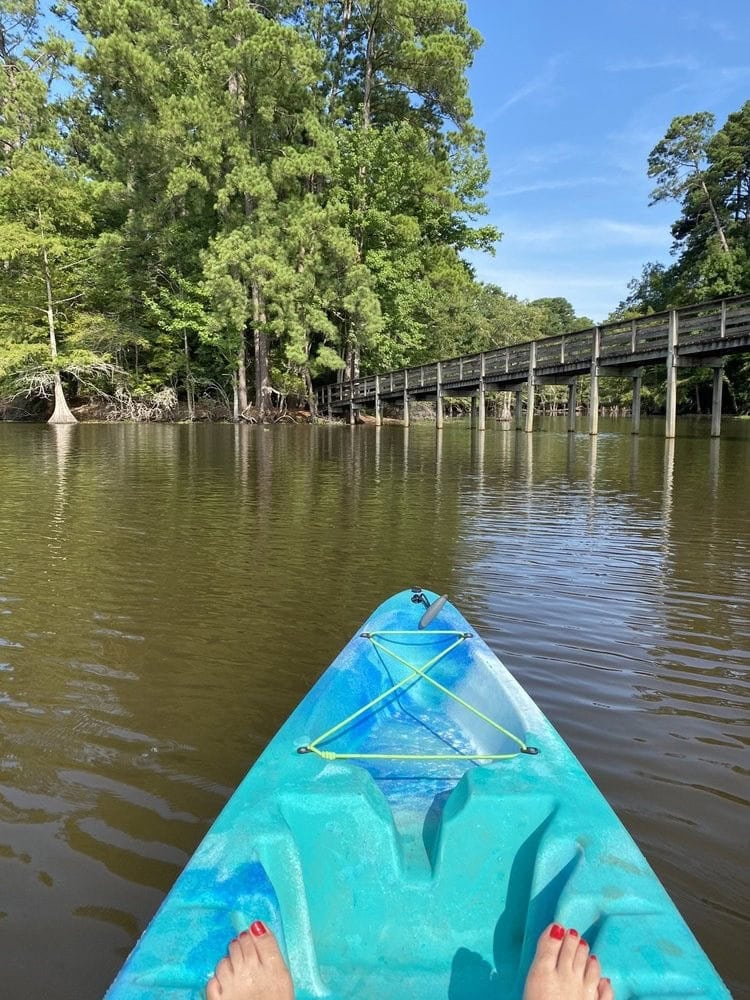
Sandy Creek contains 4.9 miles of slow-moving water. This route is perfect for beginners, as it does not require shuttle or portage—that is, you don’t have to leave a vehicle at the end to drive back to the beginning, nor do you have to carry your kayak over land. The area is also rich in wildlife.
For a more adventurous day on the water, check out the Neches Paddling Trail. Buoys will guide you through the faster currents of the Neches River. You can choose to paddle as little as 3.2 miles or as much as 16 miles.
The Neches is the park’s most challenging as well as most rewarding paddling experience. Depending on conditions and how much you explore, expect the longer journey to take two to eight hours, and pack accordingly.
Fishing in the Park
In addition to kayaking, you can explore the waterways by paddleboard. If you bring along the right gear, the fishing can’t be beat. You might bring home a haul of largemouth bass, six other bass species, blue catfish, channel catfish, crappie, and various species of perch, including sunfish.
The deeper waters of the B.A. Steinhagen Reservoir have produced especially large blue catfish up to 41 inches in length.
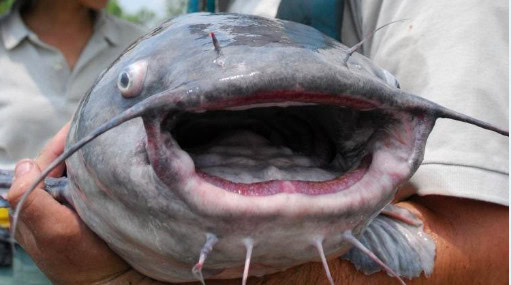

There are boat ramps on the Neches and Angelina rivers, but you don’t need a boat or a board to fish from. The park contains fishing piers in the Hen House Ridge Unit, and bank fishing is also popular. Lighted piers allow convenient use even after dark.
Fishing licenses are not required within the park when fishing from the banks or piers.
And, if you’d like to clean and cook your catch, you can. Barbecue grills are available near the park headquarters and Forest Trailhead.
Other Activities to Enjoy
We drew you in with promises of a kayaker’s paradise, but there’s plenty for land lubbers to enjoy as well.
The park contains more than seven miles of hiking trails. If you just want to look at the water without getting out on it, the Island trail offers stunning lake views.
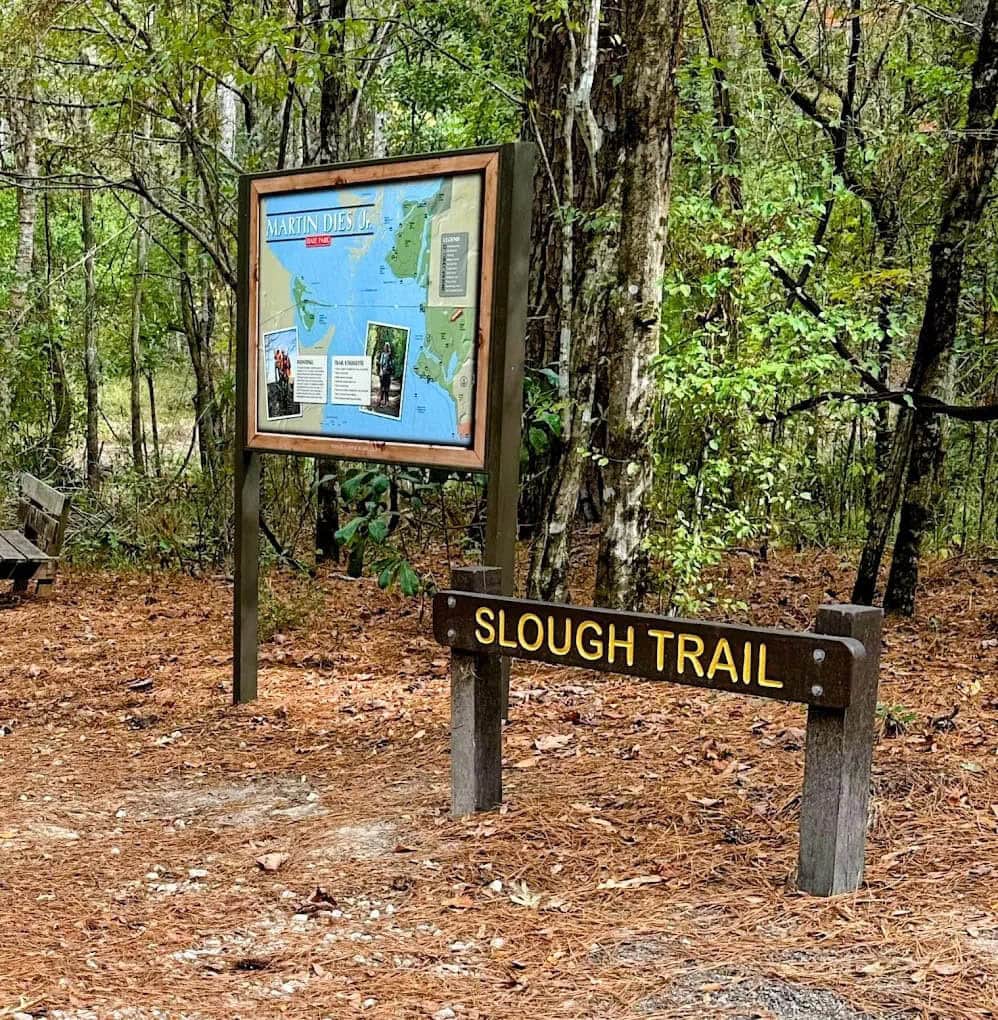
The 2.2-mile Slough Trail crosses sixteen bridges, providing an on-the-water experience without a kayak. If the forest is more your speed, check out the Forest, Whitetail, and Wildlife Trails.
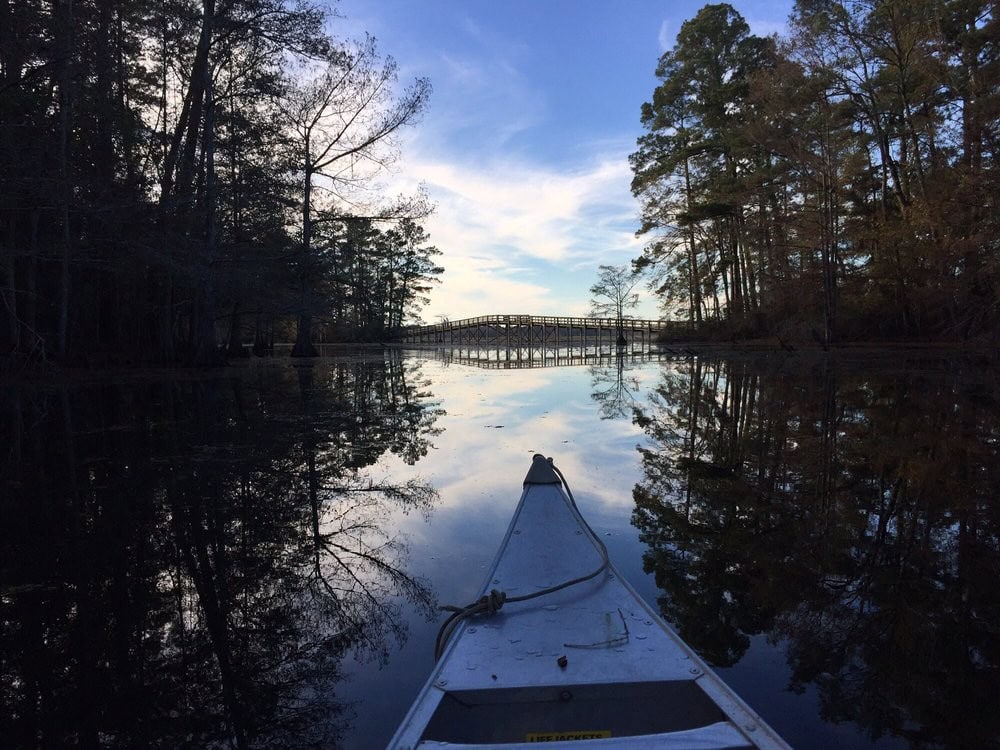
In the heat of summer, the calm waters are inviting to swimmers. The Hen House Ridge Unit has a designated swimming area. Enjoy your swim, but exercise due caution: no lifeguards are present, but alligators may be.
Speaking of wildlife, many species can be observed in the park, often from the comfort of your kayak. You might see white-tailed deer, raccoons, opossums, foxes, bobcats, or armadillos.
Birders can keep an eye and ear peeled for pileated woodpeckers, anhingas, herons, and egrets. There are also alligators and previously mentioned, and snakes including timber rattlers and coral snakes.
Ecologically, the park is truly unique. It has been called a “legendary biological crossroads where eastern forests, Gulf Coast prairies, and southwestern deserts blend into something found nowhere else on Earth.”
Finally, as your day draws to a close, don’t forget to look up. The park’s distance from big cities provides a dark sky environment that is ideal for stargazing.
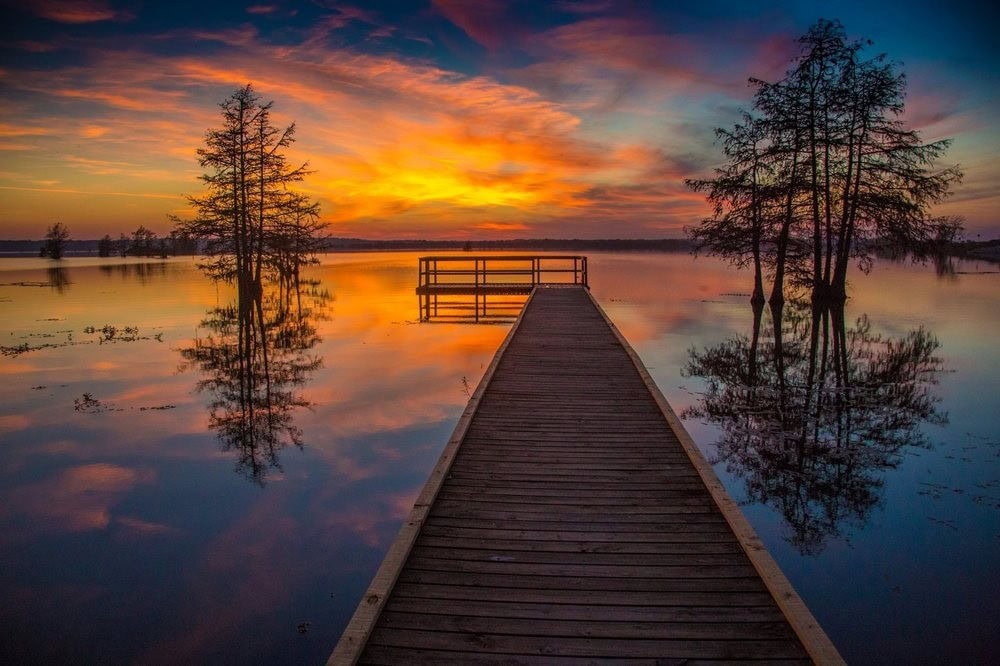
Check the park’s calendar for stargazing events. Rangers host events where you may learn to identify constellations or experience a rare sight invisible in urban areas.
Staying Overnight in the Park
Martin Dies Jr. State Park provides ample opportunities for exciting day trips, but it can also be an overnight destination—especially if you crave more paddling or fishing than a single day can hold.
You can choose your own adventure and your level of amenities: basic tent sites, electric and water hookups for campers, and screened shelters and cabins are available.
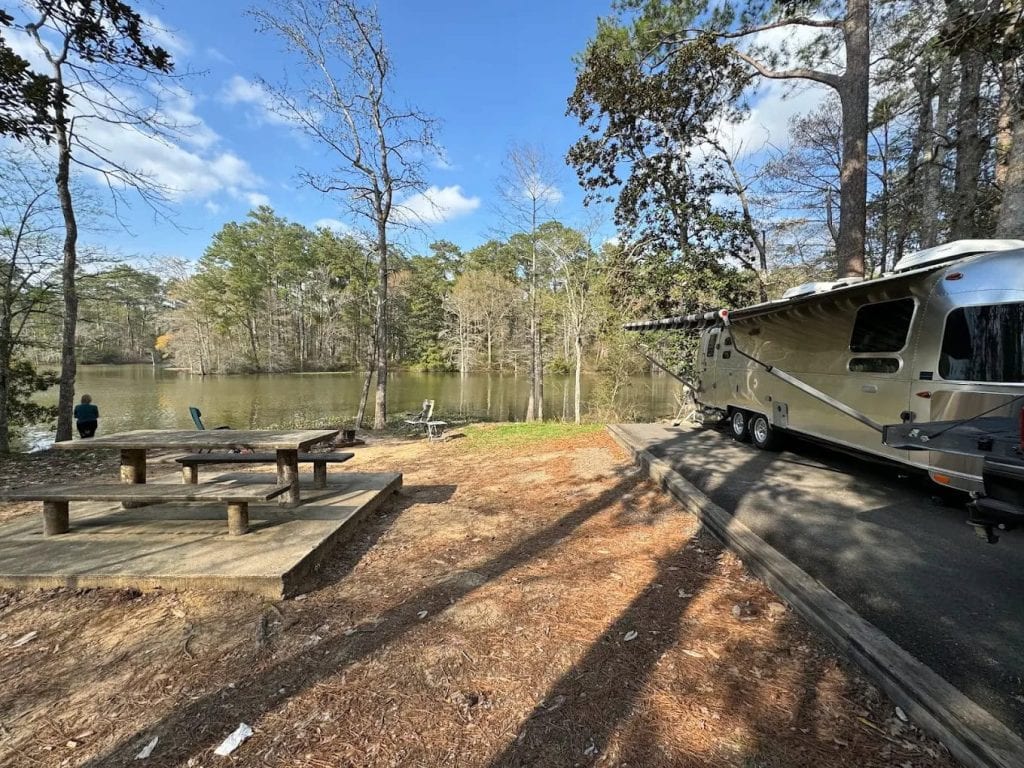
More than 200 campsites are available. Many have lake access.
Guided Tours
If you’d prefer a knowledgeable guide on your adventures, the park hosts a number of ranger programs. You can check the Events page of the Texas Parks and Wildlife official website for day hikes, night hikes, paddling tours, star parties, geocaching, and more.
The Nature Center in the Hen House Ridge Unit hosts frequent activities for all ages. Kids can pick up a free Junior Ranger Activity Journal at the park headquarters and complete tasks to earn a badge.
They can also borrow a Junior Rangers Explorer Pack loaded with binoculars, a magnifying glass, an animal tracking key, a pencil, crayons, watercolors, a journal, a sketchbook, and guides to wildflowers, trees, birds, butterflies, and rocks.
If they love the Explorer Pack, your little adventurer can take home a Mini Explorer Pack from the park store. This will allow them to keep exploring nature in their own backyard and beyond.
Why Such a Morbid Name?
When I first laid eyes on the “Martin Dies” sign, it was startling. It almost seemed like a threat to anyone named Martin! I knew there must be a story behind it, and I was determined to track it down.
The park got its start in 1964, when the state leased parkland from the United States Army Corps of Engineers. In 1965, it opened under the name Dam B State Park.
Later that same year, the park was renamed in honor of State Senator Martin Dies, Jr. He had been serving in the Texas Senate since 1959. Before that, he and his father had served in law and politics.
So, no one died to give this park its name. In fact, its namesake lived on until 2001.
How to Get There
Martin Dies, Jr. State Park is located along U.S. Route 190 in Jasper and Tyler counties. You can use the map below to navigate to the Martin Dies, Jr. State Park Headquarters. You’ll find easy access to the Forest Trailhead from Park HQ.
Image: https://txheadlines.com/wp-content/uploads/2026/03/image-9.jpg
Where: 634 State Hwy 48 Park Rd South, Jasper, Texas 75951
On the far eastern edge of Texas, it is an easy drive from Louisiana or the Gulf Coast. It’s a few hours’ drive from Houston and roughly 55 miles north of Beaumont, between Jasper and Woodville.
The park is open daily from 6 am to 10 pm. Kayak and canoe rentals are available from 8:30 am to 4:30 pm at the park headquarters or an automated kiosk in the Hen House Ridge Unit. Rentals include life jackets and paddles.
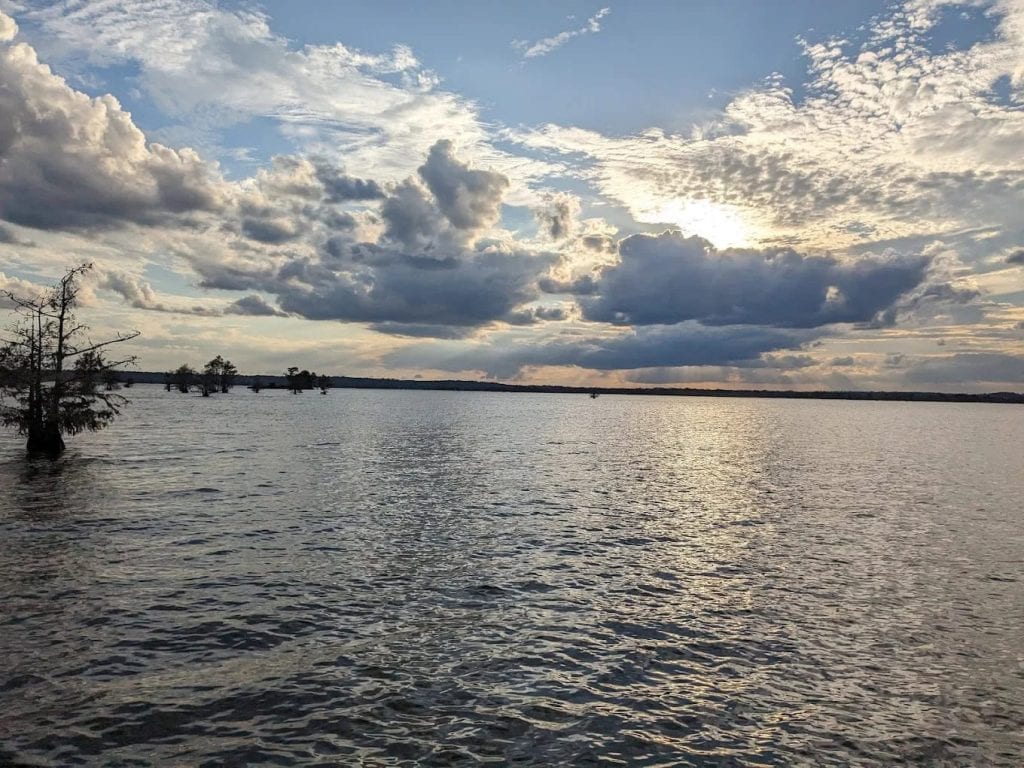
A day or a weekend at Martin Dies State Park is like stepping into another world—a world where wildlife reigns and you can’t help but be in awe of the beauty of nature.
Don’t let your adventures stop there. The region is home to much natural beauty. Check out the nearby Angelina National Forest and Big Thicket National Preserve.
For more information about visiting Martin Dies, Jr. State Park, check the Texas Parks and Wildlife Department’s official website for current hours, fees, trail conditions, and event schedules.
Use the map to plan your route to this East Texas paddling paradise, and consider exploring nearby attractions like the Big Thicket National Preserve and Angelina National Forest—every stop deepens the adventure.
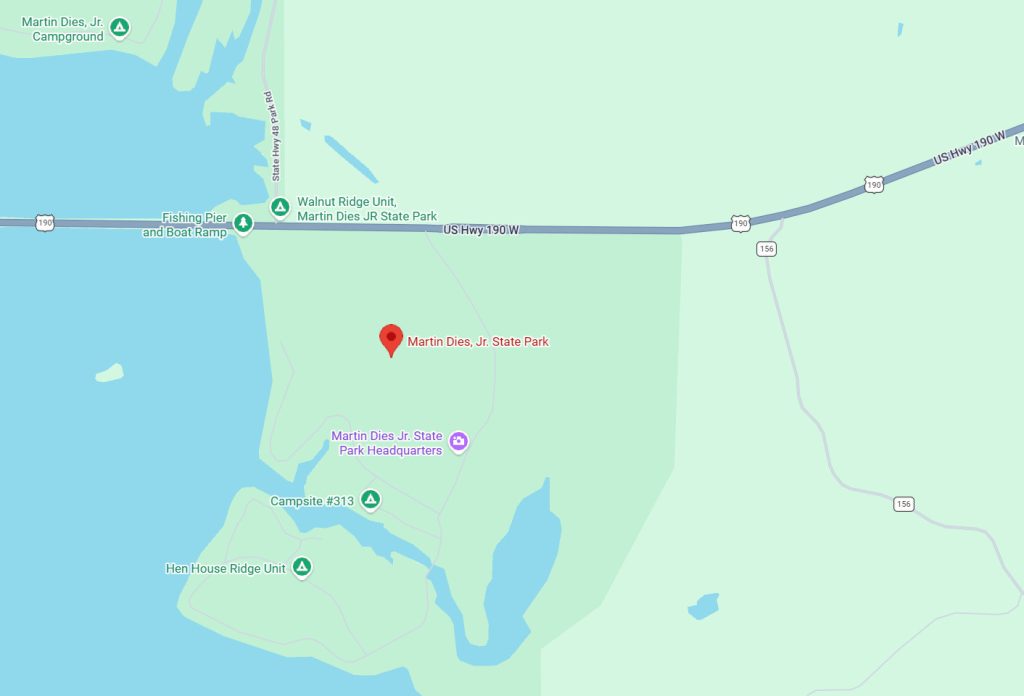
Where: 634 Park Road 48 South, Jasper, TX 75951

Cara Siera
Travel Writer
Cara Siera has a passion for travel, nature, and trying new foods, and she's been sharing her best stories as a freelance career and travel writer for over a decade. Her favorite memories revolve around family, friends, hole-in-the-wall restaurants, and unexpected animal encounters.
More Stories

These 10 Texas Spots Bloom Into Seas of Bluebonnets Each Spring

This Enchanting Texas Nature Trail Feels Like Hiking Through a Fairytale Forest

This Underrated Texas State Park Gives You a Full Day of Swimming and Hiking for Just $5

This Easy Texas Hike Leads to a Swinging Suspension Bridge Hidden in the Pines
Tags