This Historic Texas Church Was Built by 100 Sicilian Families and Glows With Painted Arches
I have a confession. I will pull off the highway for an old church faster than I will for a barbecue sign, and I live in Texas, so that is saying something. Brick, bells, colored glass, a story on a plaque. I am in.
Which is how I ended up reading everything I could find about St. Anthony Catholic Church in Bryan, a 1927 Romanesque Revival church founded by roughly 100 Sicilian immigrant families. Inside, visitors describe jewel-toned light pouring across painted arches and a relic that traveled all the way from Padua, Italy.
It is a little piece of Sicily planted in the Brazos Valley, and most people drive right past it. Below, I will walk you through who built it, what to look for once you are inside, and how to time a visit so the doors are actually open.
A Church That Sicily Built
Every good church has a founding story, and this one starts across an ocean. In the 1880s, families from three Sicilian villages, Poggioreale, Corleone and Salaparuta, began arriving in the Brazos Valley. Sicily was desperately poor at the time, and Texas cotton land looked like a future.
They came as tenant farmers, working cotton and corn in the river bottoms. Then, bit by bit, they bought land of their own, often the flood-prone bottomland other settlers had passed over. By the late 1800s, an estimated 2,400 to 3,000 Italians were living along the Brazos.
In 1896, about 100 of those families organized a parish in Bryan and named it for St. Anthony of Padua. I love that detail. These were people who had crossed the Atlantic with almost nothing, and one of the first things they built together was a church.
A river flood in 1899 pushed roughly 200 Italian families south toward Galveston County, but the Bryan community held on. By one account, Bryan’s population in the early 1900s was about 5,000 people, and the majority of them were Sicilian. The parish was their anchor.
From a Fire to a Brick Landmark
The first St. Anthony’s was a white frame church on Polk Avenue, the kind of simple wooden building you can picture in any turn-of-the-century Texas town. It served the parish for about three decades. Then, in 1926, a fire destroyed it.
Here is the part I find remarkable. Instead of rebuilding in wood, the parish went straight to brick and stone. Within a year, in 1927, a new church stood at 306 South Parker, and it was built to last.
They chose Romanesque Revival, a style churches loved in that era because it looks ancient and immovable. Rounded arches. Thick walls. A bell tower that says “we are staying.” For immigrants who had just lost their church to flames, that message mattered.
The parish also runs a mission church, San Salvador, named for the patron saint of Cefalu, Sicily, the hometown of another wave of Italian families who arrived in 1894. Even the outposts here carry a Sicilian passport.
Nearly a century later, the building is still the parish’s home, and it is still holding Mass every week. That kind of continuity is rare in Texas, where we tear things down and start over on a whim.
Rounded Arches and a Brick Facade
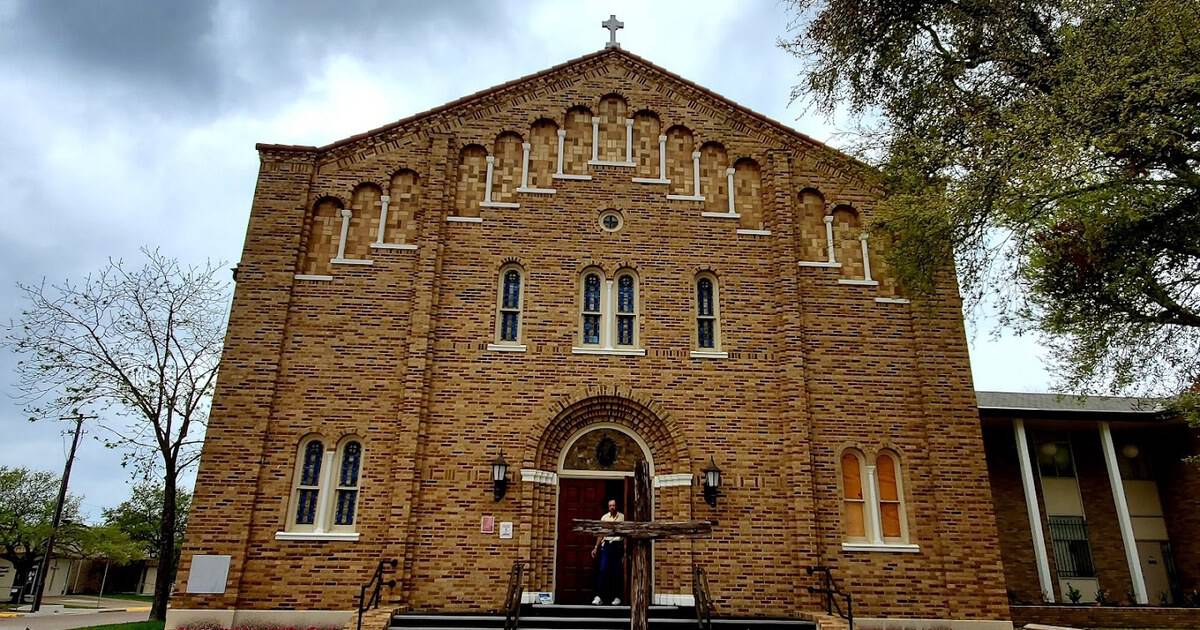
Walk up Parker Avenue and the church announces itself before you reach the steps. Above the main entrance sit round-arched recessed openings, the signature move of Romanesque design, and a row of little arches marches across the gable like a stone necklace.
The building stands two stories tall in warm tan brick, with a two-tiered bell tower and decorative details worked into the facade that reward a slow look. I am a sucker for old brickwork. Someone laid every one of those bricks by hand in 1927, and the pattern still holds.
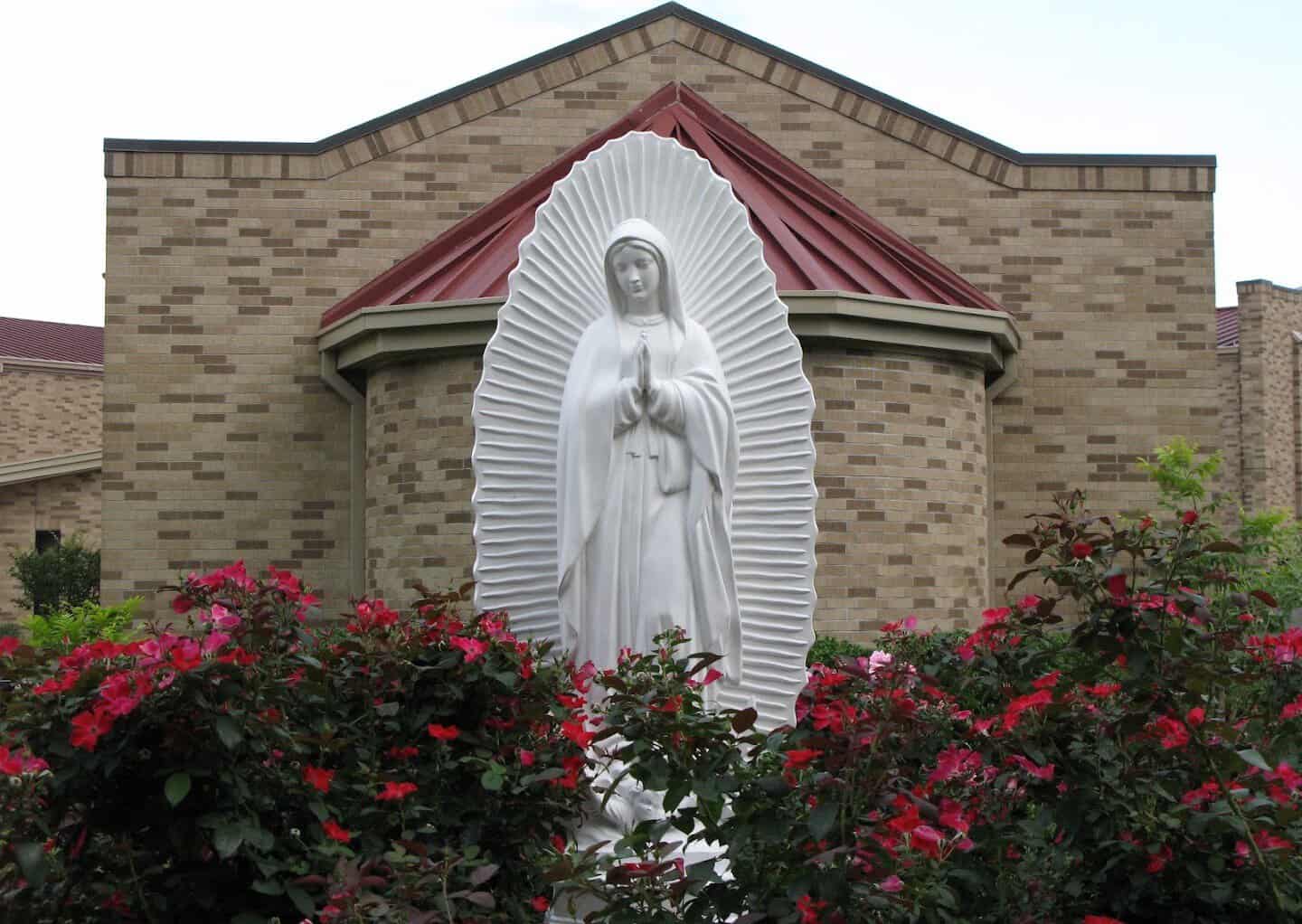
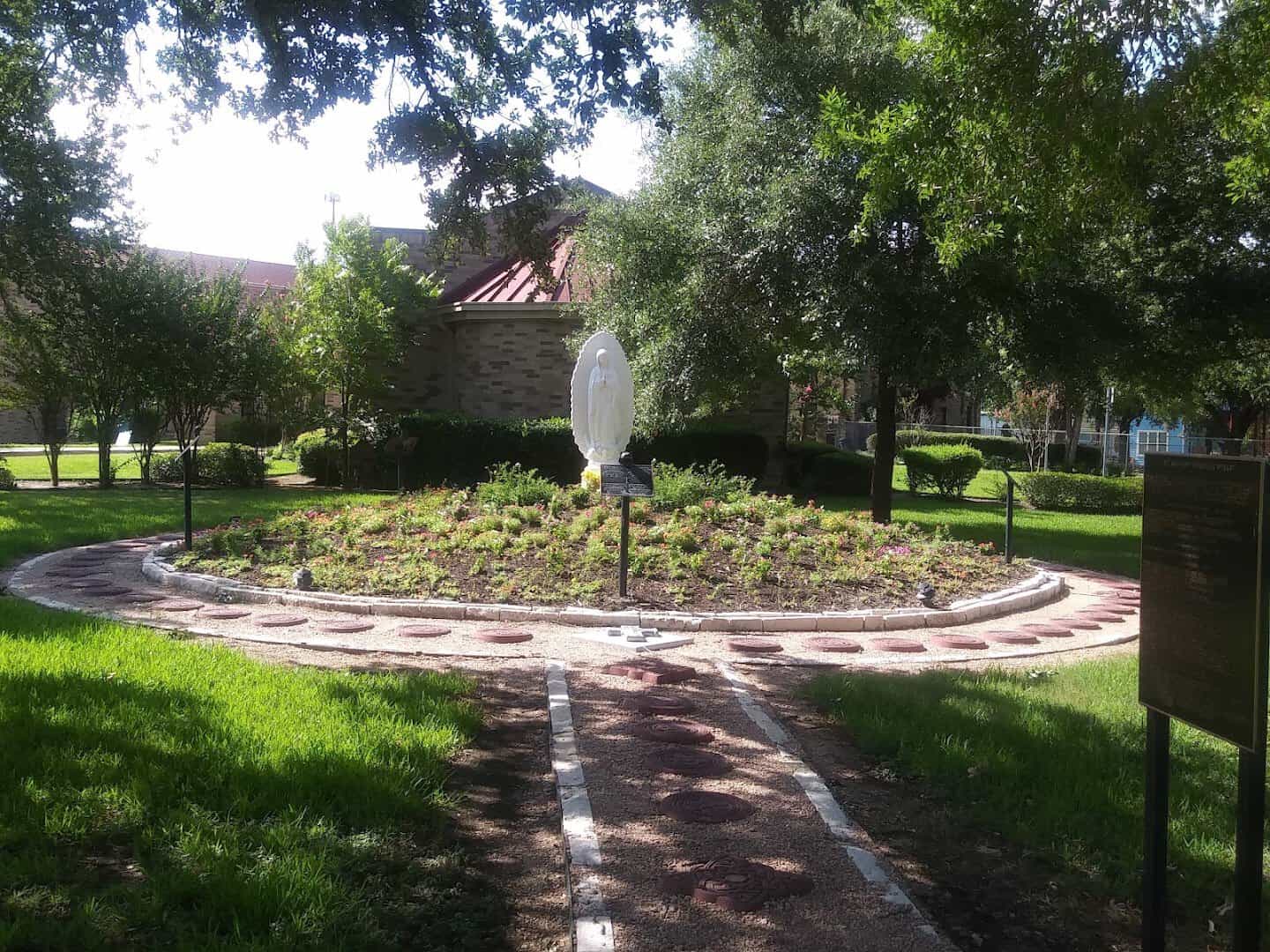
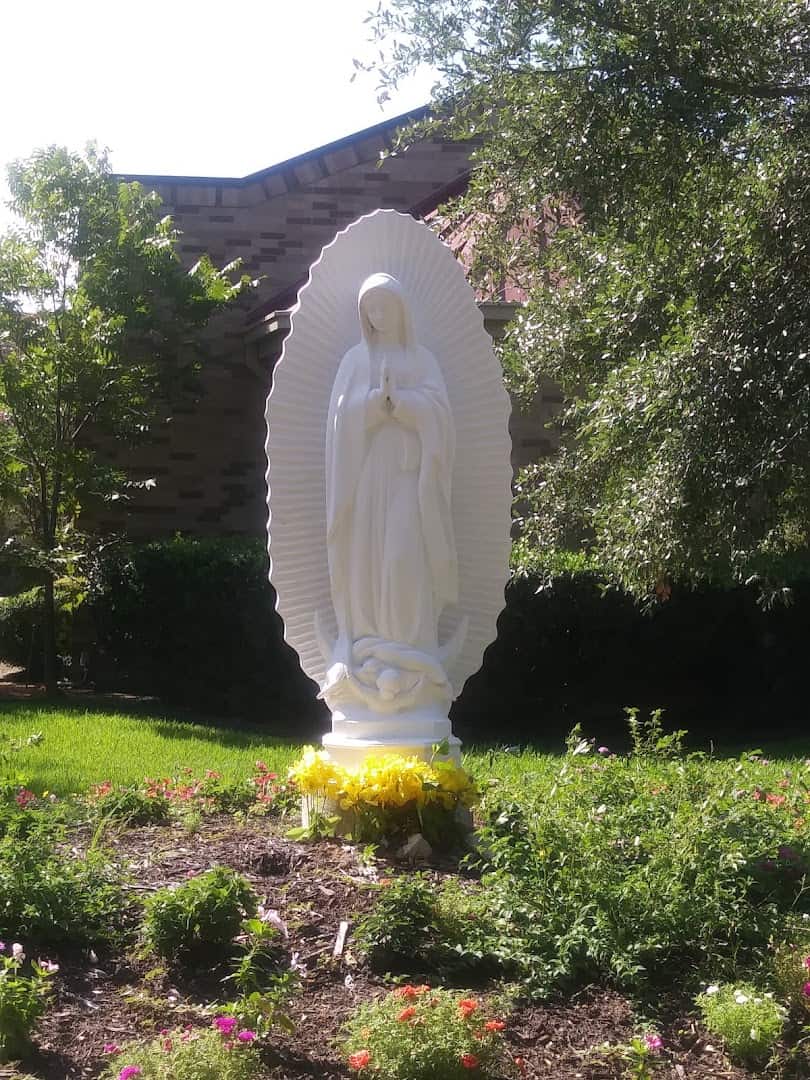
Take a lap around the outside before you go in. The arched windows line up in a rhythm that photographs beautifully in late afternoon light, when the brick goes copper, and a grotto of Our Lady of Guadalupe waits around the side, ringed with roses.
Step Inside for Painted Arches and Colored Light
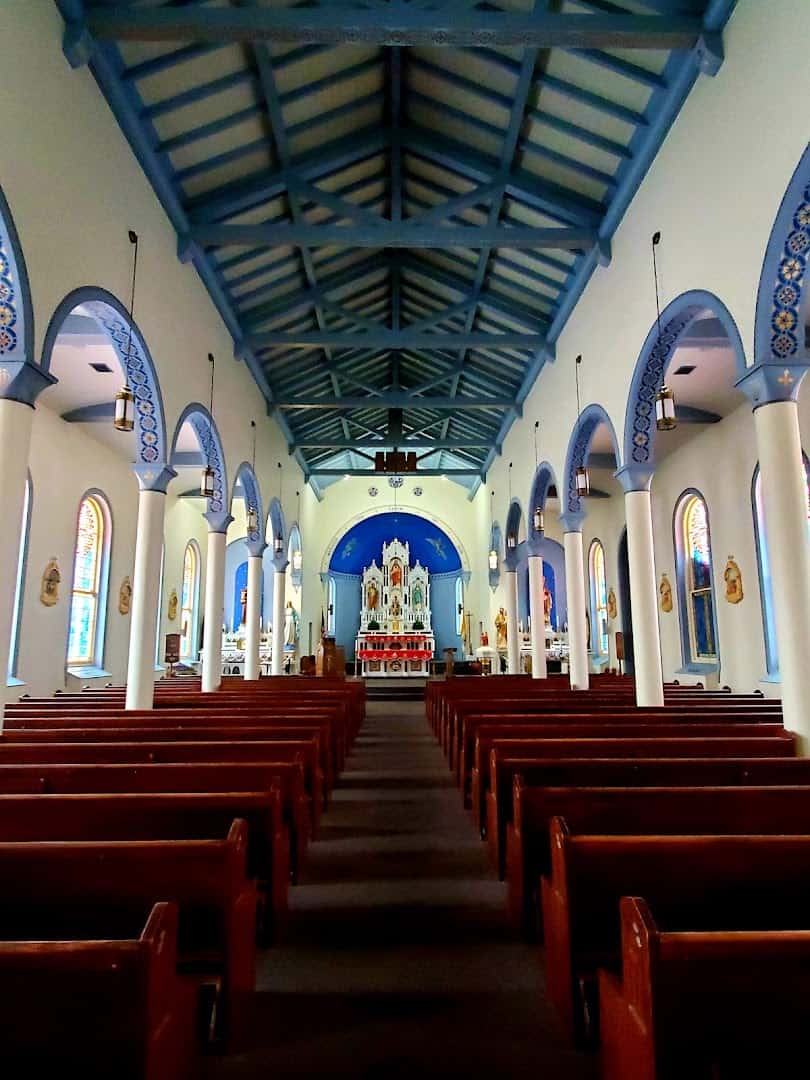
The exterior is handsome, but the interior is the reason to plan your visit around an open door. Reviewers on Tripadvisor keep landing on the same three things: the stained glass, the painted ceiling, and the altars.
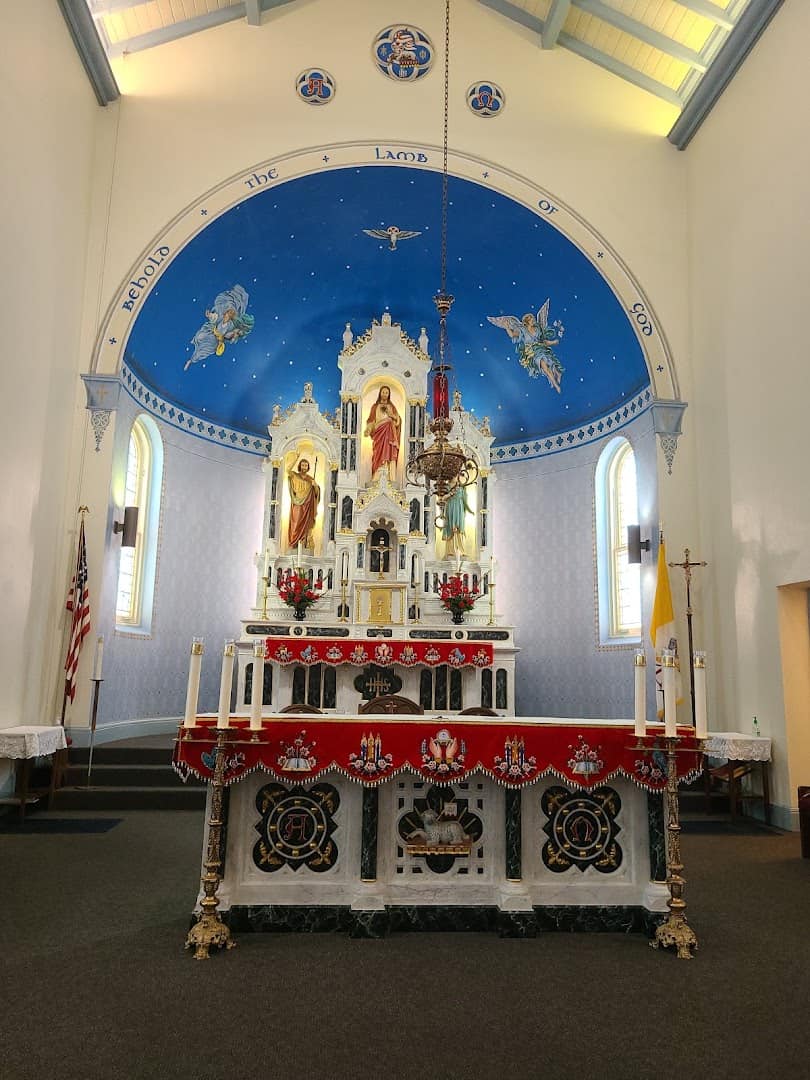
One visitor summed it up as “beautiful painted arches, ceiling and altars.” Another wrote that when you walk in, “it’s hard to believe you’re in Bryan, TX.” That one made me laugh, because it is exactly the reaction a small-town landmark should get.
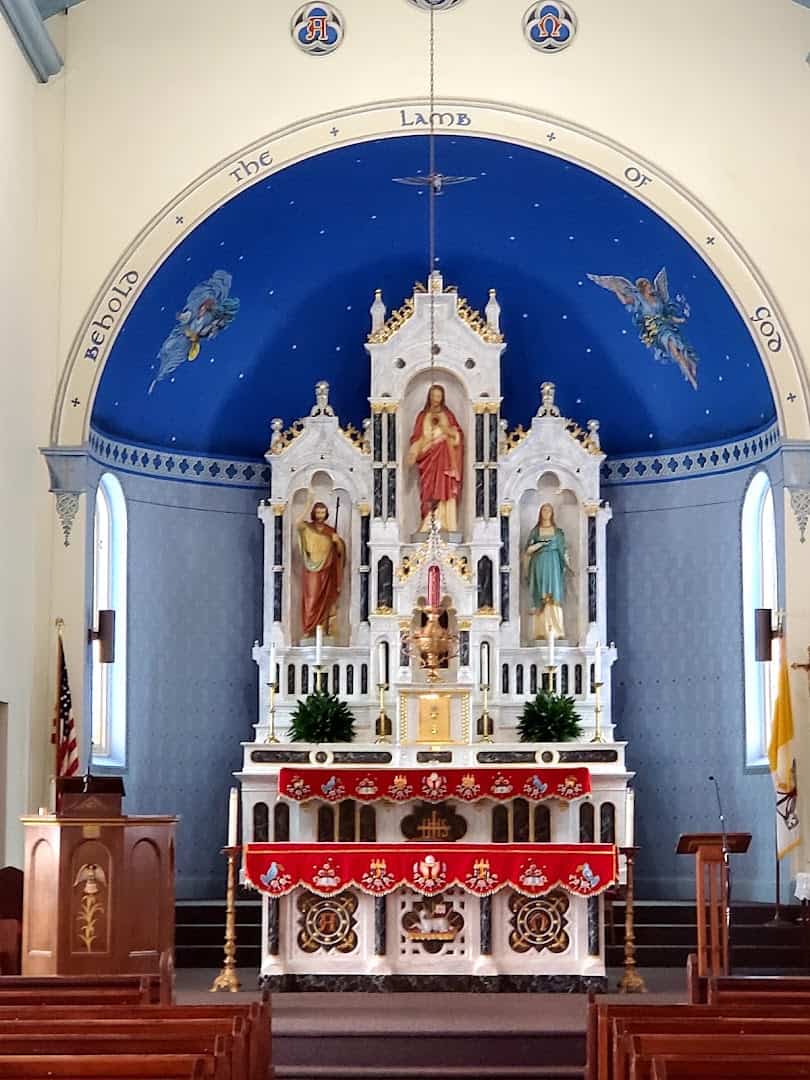
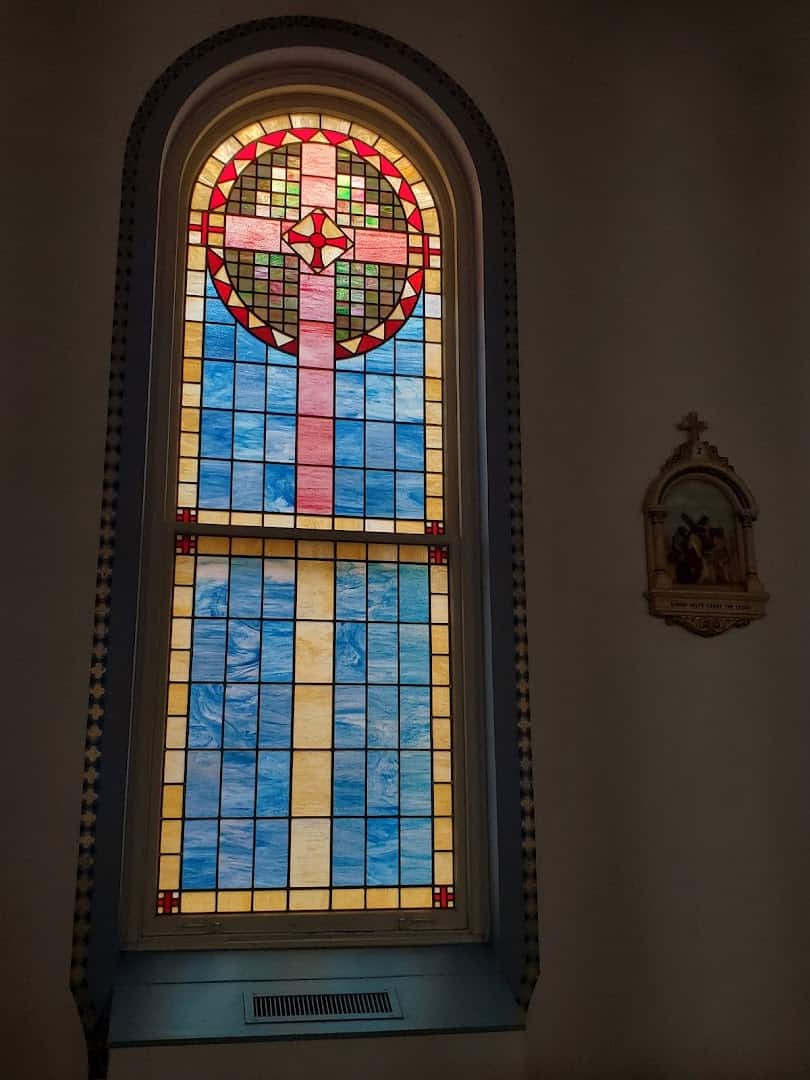
On a bright Texas afternoon the stained glass throws pools of color across the pews. Amber here, cobalt there, a wash of red that slides along the wall as the sun moves. It is the kind of light that makes people whisper without being asked.
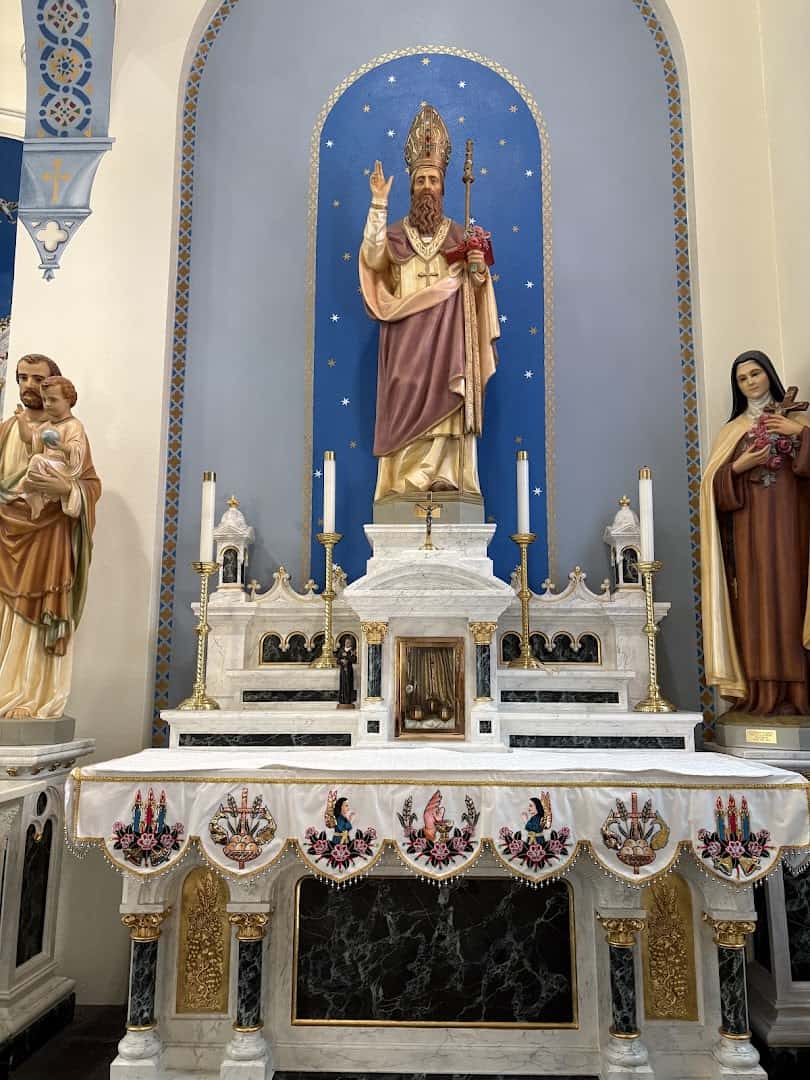
Look up. The arches over the nave are painted, not plain, and the ceiling carries the same ornate treatment. Statues line the walls. It is traditional, unapologetically so, with the “ornate trim and paint” one reviewer praised as the past brought lovingly into the present.
Pro tip: sit toward the middle of the nave rather than the front. From there you can take in the altar, the painted arches, and the side windows in one view, which is the shot every visitor ends up trying to capture.
A Relic Straight From Padua
Now for the part that turns a pretty church into a pilgrimage stop. Since October 19, 2017, St. Anthony’s has been the permanent home of a first-class relic of St. Anthony of Padua, a small piece of the saint himself, brought from Italy.
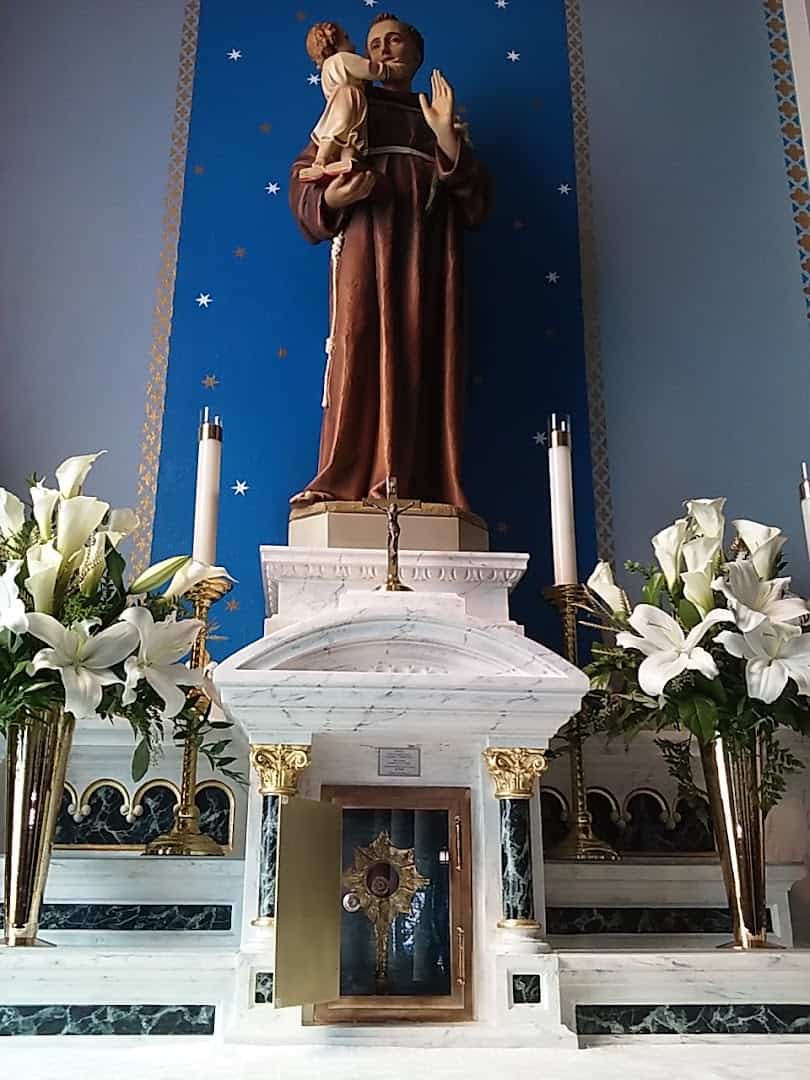
The pastor at the time, Father Joseph Varickamackal, petitioned to bring it to Bryan after the parish hosted several traveling relics earlier that year. It worked, and the relic arrived to a crowd. “I noticed some people were crying when they were coming out of the church,” he told KBTX.
Parishioner Becka Landry put it more plainly. “That’s just a big, big gift to this little parish,” she said. For a church founded by Sicilians and named for an Italian saint, a relic from Padua closes a loop that started in 1896.
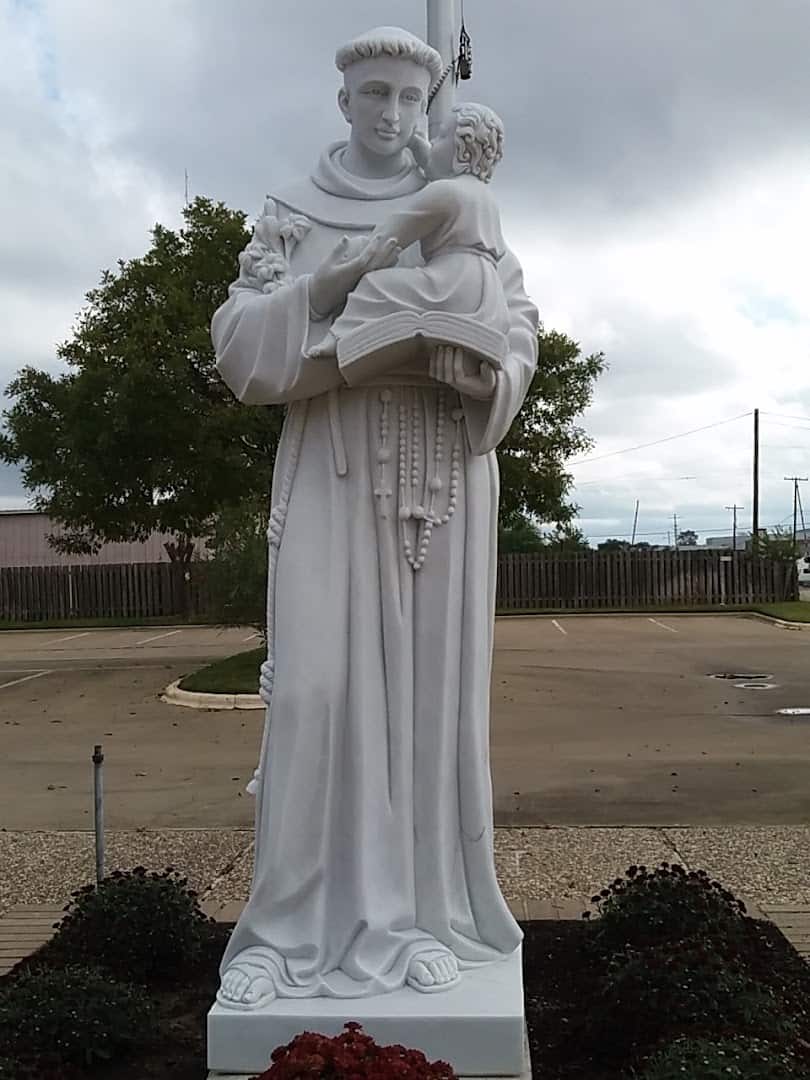
Did you know? St. Anthony of Padua is the saint people ask to find lost things, from car keys to lost causes. He was born in Lisbon in 1195 and died near Padua in 1231, and his feast day is June 13.
When the relic arrived, the parish set aside regular viewing hours on Tuesdays and Saturdays so visitors could stop in and pray. Those hours can change, so check with the parish office before making a special trip for the relic alone.
The Little Chapel Inside the Church
Tucked inside the larger building is a smaller space that surprises first-time visitors, the daily Mass chapel. Weekday morning Masses are held here rather than in the main nave, and the scale is intimate, the kind of room where you can hear your own breathing.
I think this is my favorite thing about big old churches. There is always a quieter room somewhere, built for the ordinary Tuesday rather than the Easter crowd. If you visit on a weekday, this chapel is the part of the church most likely to be in use.
It is also, from what I have read, where the parish’s Tuesday adoration hour takes place. If you want a still hour in a beautiful room, that is the one to aim for.
St. Joseph’s Altar and the Taste of Sicily
The Sicilian heritage here is not a museum exhibit. On March 19, the parish still keeps the St. Joseph Altar, a tradition the founding families carried from Sicily and never dropped.
The custom goes like this. A tiered table is built and covered with blessed food, breads baked into shapes, cookies, fruit, and meatless Lenten dishes. It is a thank-you to St. Joseph for answered prayers, meant to be shared with anyone who is hungry.
The Texas Almanac singles out St. Anthony Parish in Bryan as one of the places where this observance is still kept. If your visit lands in mid-March, you will smell it before you see it. Fresh bread and fig cookies have a way of announcing themselves.
The wider Brazos Valley leans into this heritage too. Bryan has hosted an Italian heritage festival celebrating the Corleone and Poggioreale families who settled here, complete with a pasta eating contest and bocce. Pair it with the church and you have a full Sicilian day in Texas.
A National Register Landmark Since 1987
On September 25, 1987, St. Anthony’s Catholic Church was added to the National Register of Historic Places, as part of a group of historic Bryan buildings documented together. The listing cites its Romanesque Revival architecture and its ties to the local Italian community.
What that means for you as a visitor is simple. The building has been studied, documented and judged worth protecting, and the parish has kept it a working church rather than a roped-off exhibit. You get the history and the living community in one stop.
It sits in a town that takes its past seriously. Bryan celebrated its 150th birthday with a citywide history project, and the church shows up in that story as one of the early congregations that shaped the place.
Tips for Visiting
The most useful thing I can tell you: the church is usually locked on weekdays. Several visitors mentioned this, and it is the difference between a great visit and a photo of a closed door. Plan around a Mass.
Weekend Masses are your best bet for seeing the full interior, with a Saturday evening vigil and Sunday morning Masses. Weekday morning Mass is held in the smaller chapel. Schedules shift, so confirm the current times on the parish website before you drive.
If you can only make one trip, make it a sunny Sunday. The stained glass does its best work with strong light behind it, and the 10 a.m. Mass tends to land right when the sun is high enough to light the whole nave.
There is no admission fee. This is a working parish, not an attraction, so dress respectfully, keep your voice down, and skip flash photography during services. Arriving a few minutes before Mass or lingering a bit after is the polite way to look around.
The church sits a short walk from Downtown Bryan, which is worth the rest of your afternoon. Historic storefronts, coffee shops and restaurants are all within a few blocks, which feels exactly right after this visit.
How to Get There
Where: St. Anthony Catholic Church, 306 S. Parker Ave, Bryan, TX 77803. The parish office is just up the street at 401 S. Parker, and the phone number is (979) 823-8145.
Bryan is about 100 miles northwest of Houston and roughly 100 miles east of Austin, right next door to College Station and Texas A&M. From Highway 6, follow the signs for Downtown Bryan; the church is a few blocks from the historic Main Street.
Plan Your Sicilian Detour
I think the best Texas landmarks are the ones that make you wonder how you never heard of them. A brick church built by cotton farmers from Corleone, lit up with painted arches and colored glass, holding a saint’s relic from Padua. That is a story worth a Saturday.
So check the Mass schedule, pick a sunny afternoon, and go stand in that light. Bring your grandmother if you can. She will understand the place before you do.
Featured image: Dr Y via St. Anthony Catholic Church

Stella Raines
Editor-in-Chief
Stella brings over a decade of storytelling experience to TX Headlines. With roots in West Texas and a love for road trips, she leads the editorial team with an eye for the hidden stories that make Texas unforgettable.
More Stories
This Unusual Texas Store Is Packed With Treasures Confiscated at Airport Security

This Quiet Texas Peninsula Is Best Reached by a Free Ferry Ride With Dolphins
This Hilltop Texas Sculpture Garden Feels Like a Piece of the Holy Land
This Quiet East Texas Site Is a Hauntingly Beautiful Portal to an Ancient Ancestral World
Tags