This Unusual Texas Store Is Packed With Treasures Confiscated at Airport Security
Every frequent flyer has a small grudge. Mine is a red Swiss Army knife that I forgot was in my purse until a TSA agent held it up like evidence. I said goodbye to it in Houston and figured it went in a landfill somewhere. It probably didn’t.
It probably went to the State Surplus Store in East Austin. It’s a no-frills warehouse run by the Texas Facilities Commission, and the pocket knives, sunglasses, power tools and snow globes surrendered at Texas airports get sorted, priced and sold back to the public here.
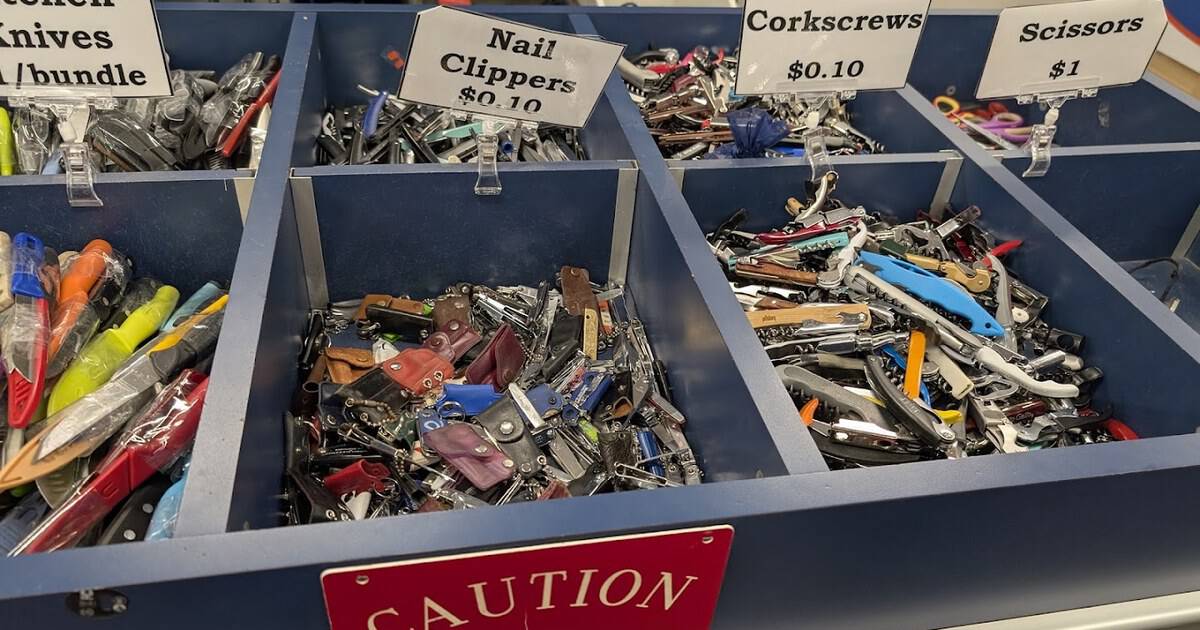
Picture bins of glinting blades and shelves of somebody else’s forgotten gear, most of it under five dollars.
Below, I’ll walk you through what actually ends up here, how the pricing works, the giant warehouse of retired state property hiding behind a glass door in the back, and how to plan a weekday treasure hunt of your own.
A Thrift Store Stocked by Airport Security
The store sits on Bolm Road, a few miles east of downtown Austin, and it makes zero effort to look like a boutique. Warehouse lighting, concrete floors, metal shelving, rolling carts. The charm is in the bins.
Walk in and the front room is the airport room. This is where everything that never made it past a Texas security checkpoint lands.
Kristy Fierro, who directs the State and Federal Surplus Property Program, summed up the inventory in one line to Spectrum News: “Basically, it’s anything left behind that TSA can’t reunite with the owner.”
Most of it comes from Houston. Between Bush Intercontinental and Hobby, the program picks up roughly 3,000 pounds of surrendered and abandoned items every month, with more arriving from Dallas and Fort Worth. Crews haul it back to Austin, dump it into huge bins, and sort it by hand.
The result is a shopping floor unlike anything else in Texas. One bin might be nothing but pocket knives. The next is corkscrews. Then multi-tools, then scissors, then a heap of tangled headphones, then a rack of belts that people unbuckled at the scanner and simply walked away from.
Did you know? The store cannot advertise, so most customers find it by driving past or by word of mouth. Regulars treat it like a secret and I can see why.
Bins of Blades and Ten Cent Bargains
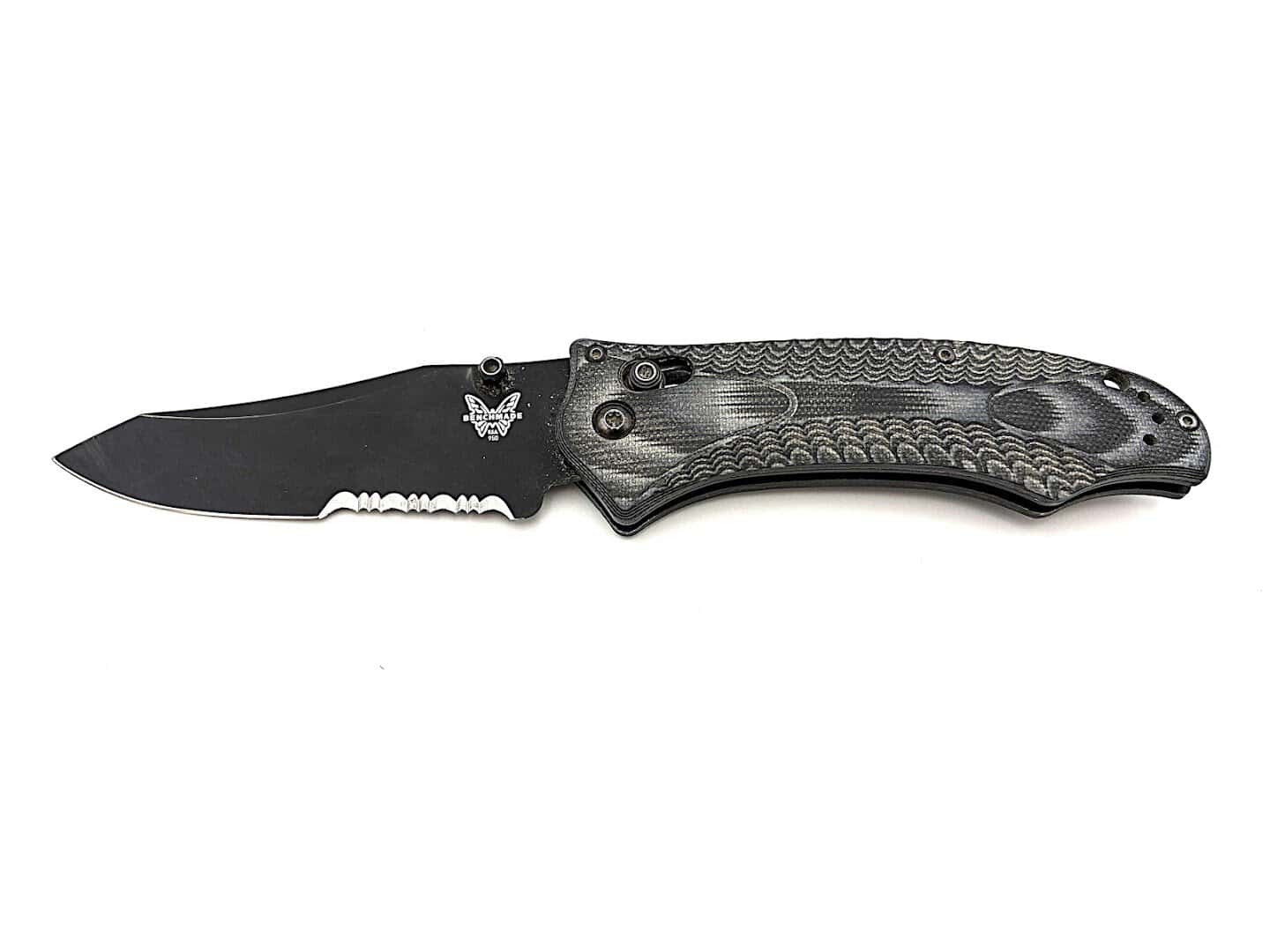
Pocket knives are the headline act. Cheap folding utility knives sit in bins priced at a dollar, and the program has listed knives from $1, multi-tools from $2 and power tools from $5. Nicer brand-name blades cost a bit more, still well below new.
The little stuff is where the prices get silly. Nail clippers and corkscrews have been spotted at ten cents apiece. Scissors go for about a buck. One visitor walked out with a brand new compact umbrella for five dollars, which is less than the airport gift shop charges for water.
Then there is the jewelry case. Fierro has said the steady stream of rings, watches and sunglasses is what pulls certain regulars back almost daily. Somebody sets a watch in the gray bin at security, forgets it, and months later it sparkles under a glass counter on Bolm Road.
I have a rule for any store like this: buy the thing you’ll actually use, then allow yourself exactly one ridiculous purchase. A throwing star qualifies. So does a snow globe someone tried to carry on from Galveston.
What Actually Turns Up Here
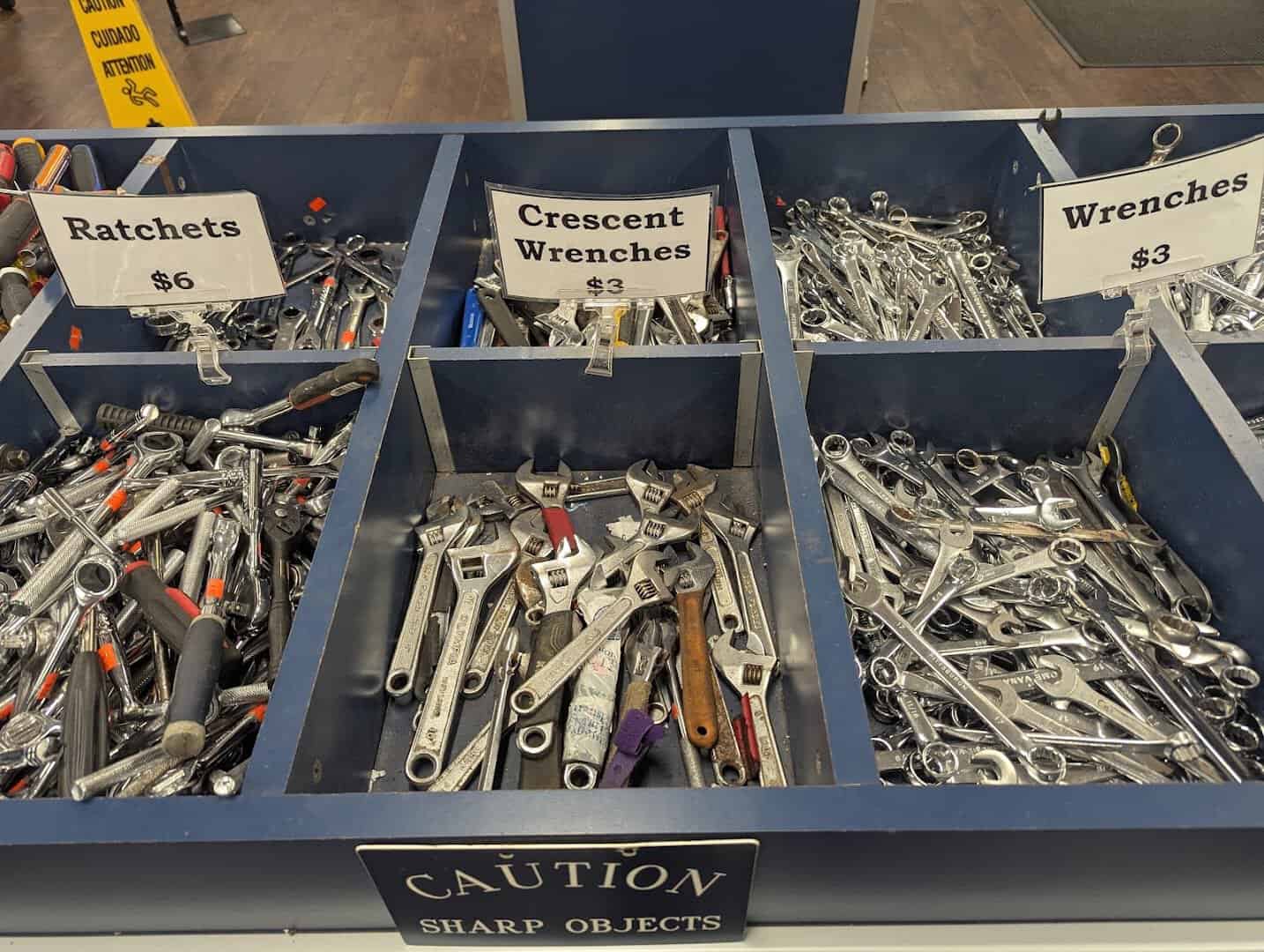
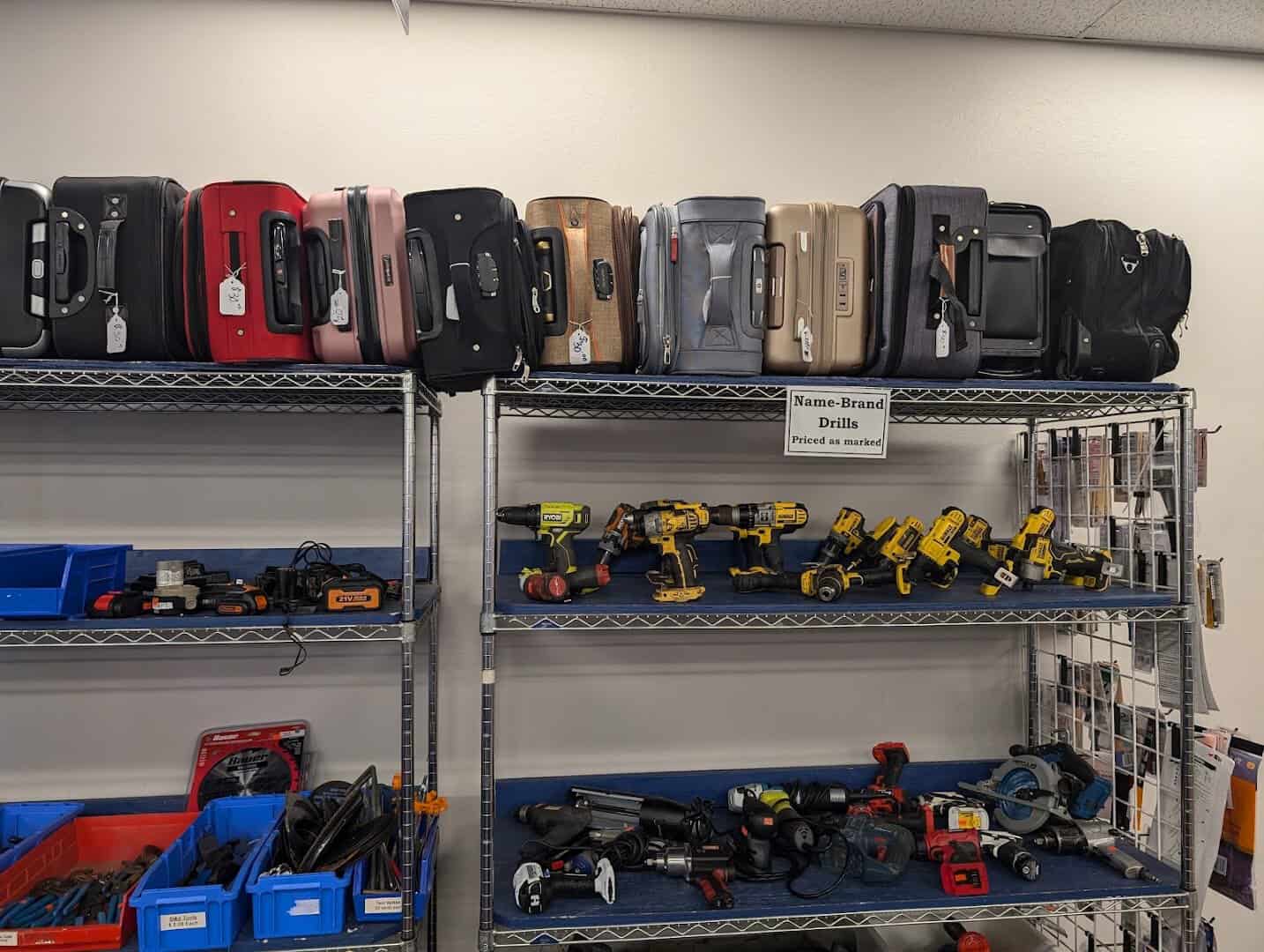
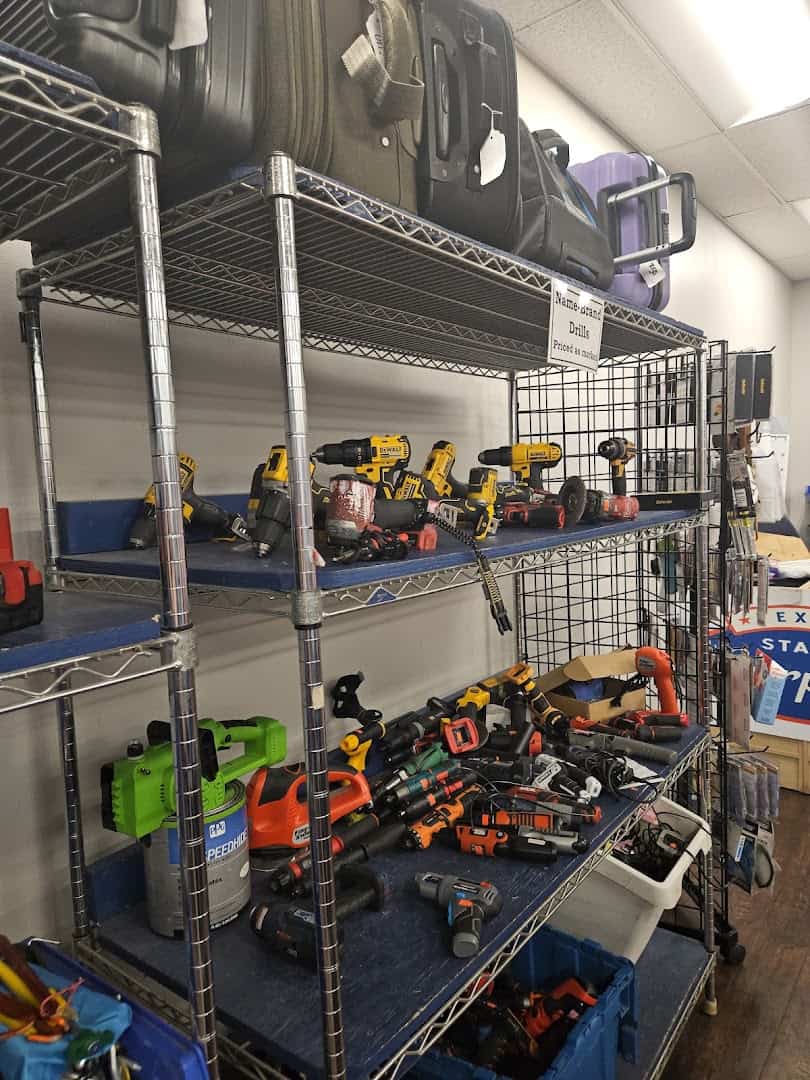
Every bin tells you something about how people pack. The tool section is a monument to optimism. Hammers, wrenches, drills, box cutters and full socket sets, all of them abandoned by someone who honestly thought a cordless drill was carry-on material.
Then it gets weird. Reporters and visitors over the years have logged baseball bats, nunchucks, throwing stars, toy guns, wooden fraternity paddles, compact blenders, bullet-shaped keychains, DSLR cameras and even a “Pump Action Marshmallow Raider.”
Where else can you cross-shop a garden trowel and a marshmallow gun?
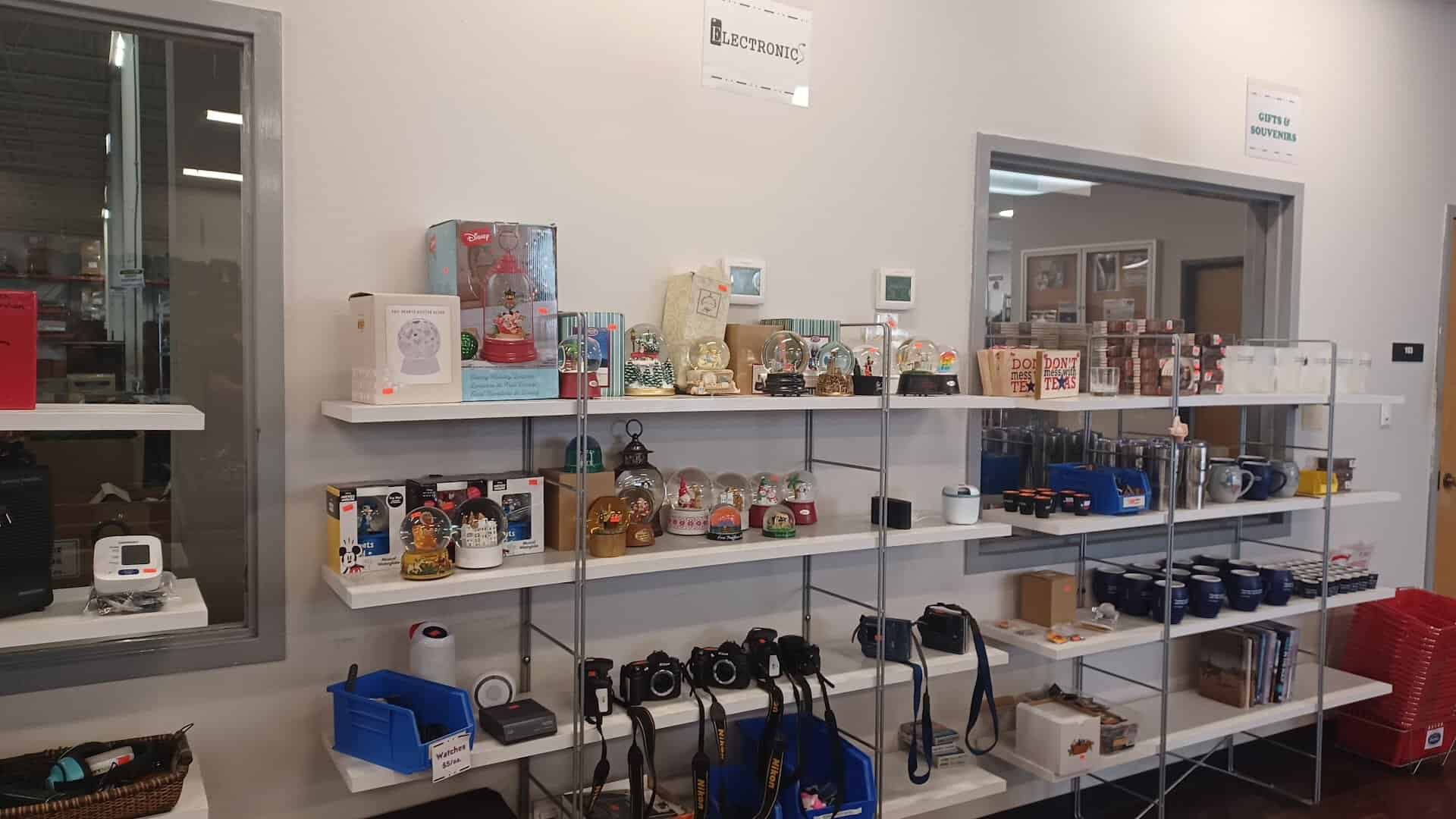
The everyday stuff is honestly the better haul. Reading glasses people set down on the X-ray belt. Umbrellas. Lighters. Headphones. Belts and shoes. Small rolling suitcases and duffels that were abandoned whole. If you have ever lost something in an airport, you’ll understand the strange thrill of walking these aisles.
And it all changes constantly. New pickups arrive from the airports on a regular schedule, so the shelves you see on a Tuesday will not be the shelves you see two weeks later. That is the whole appeal. This is a hunt, not a catalog.
One Yelp reviewer put it perfectly: it’s “like going to a museum with a $0 admission fee, and you might be able to leave with something.” Another wrote in April 2026 that “this place is the real thrift store.” I’m inclined to agree with both.
The Case of Curios and the Smelting Vat
Not everything the crews collect makes it to a bin, and the story of what doesn’t is my favorite part. The store sells anything that is legal. Anything that isn’t, like double-edged daggers, garrotes and spiked brass knuckles, goes into a big vat and gets melted down.
For a while the staff kept a display called the Case of Curios, a little museum of the oddest finds. Fierro told Free Press Houston it once held a rattlesnake in a jar.
The snake got retired when the team decided the case should only show things they could put a price on. The store’s job is selling, not teasing.
The staff will even try to track down an item’s owner when there’s a name attached, and help ship it home. What can’t be returned gets sold, and the money goes back into the state and federal surplus programs that run the store. Your bargain pays for the next pickup.
Through the Glass Door in the Back
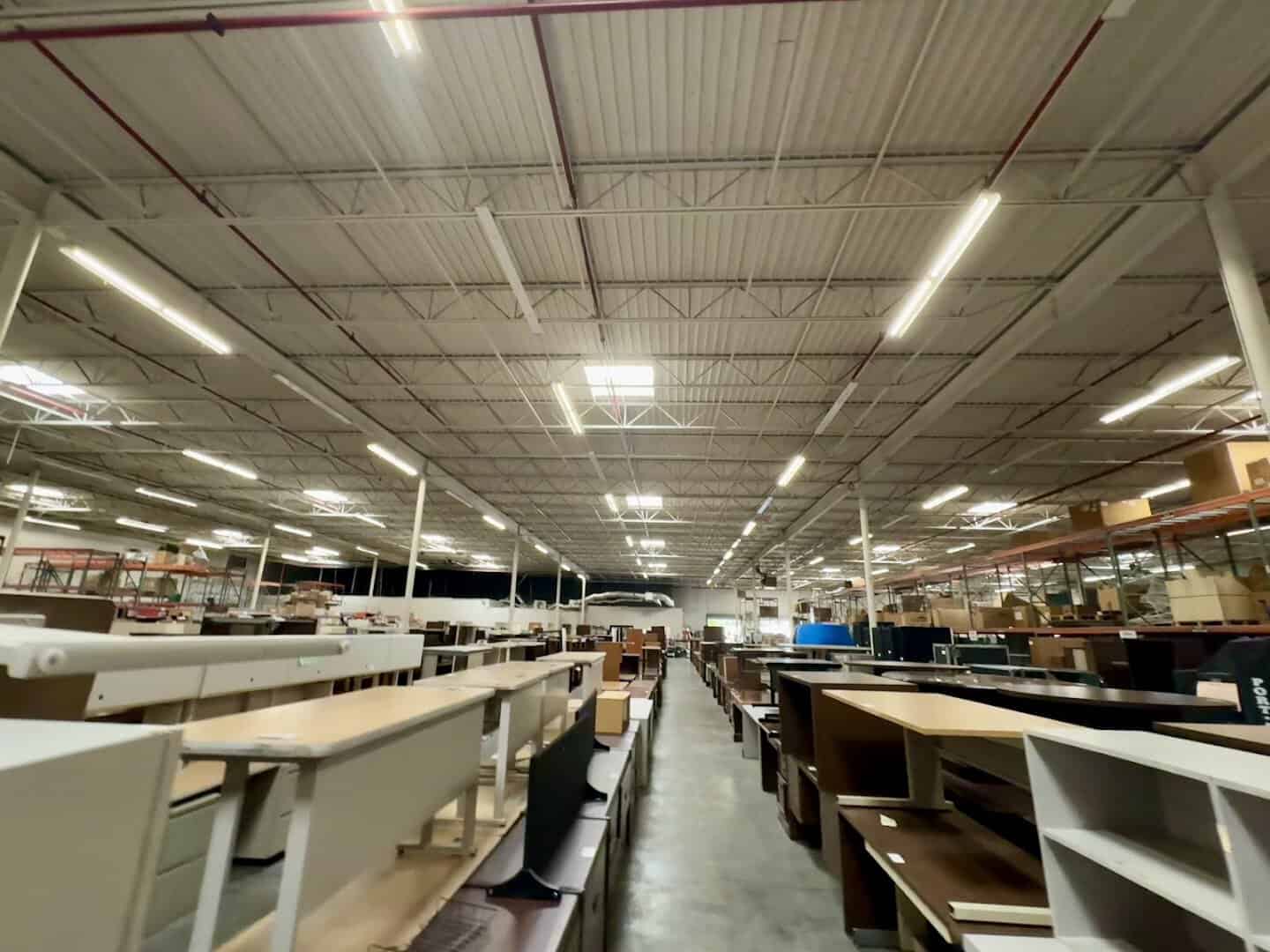
The airport room is only the opening act. At the back of the shop there’s a glass door, and on the other side of it sits an enormous warehouse of what the state calls retired assets. Roughly 50,000 square feet of it, by one local publication’s count.
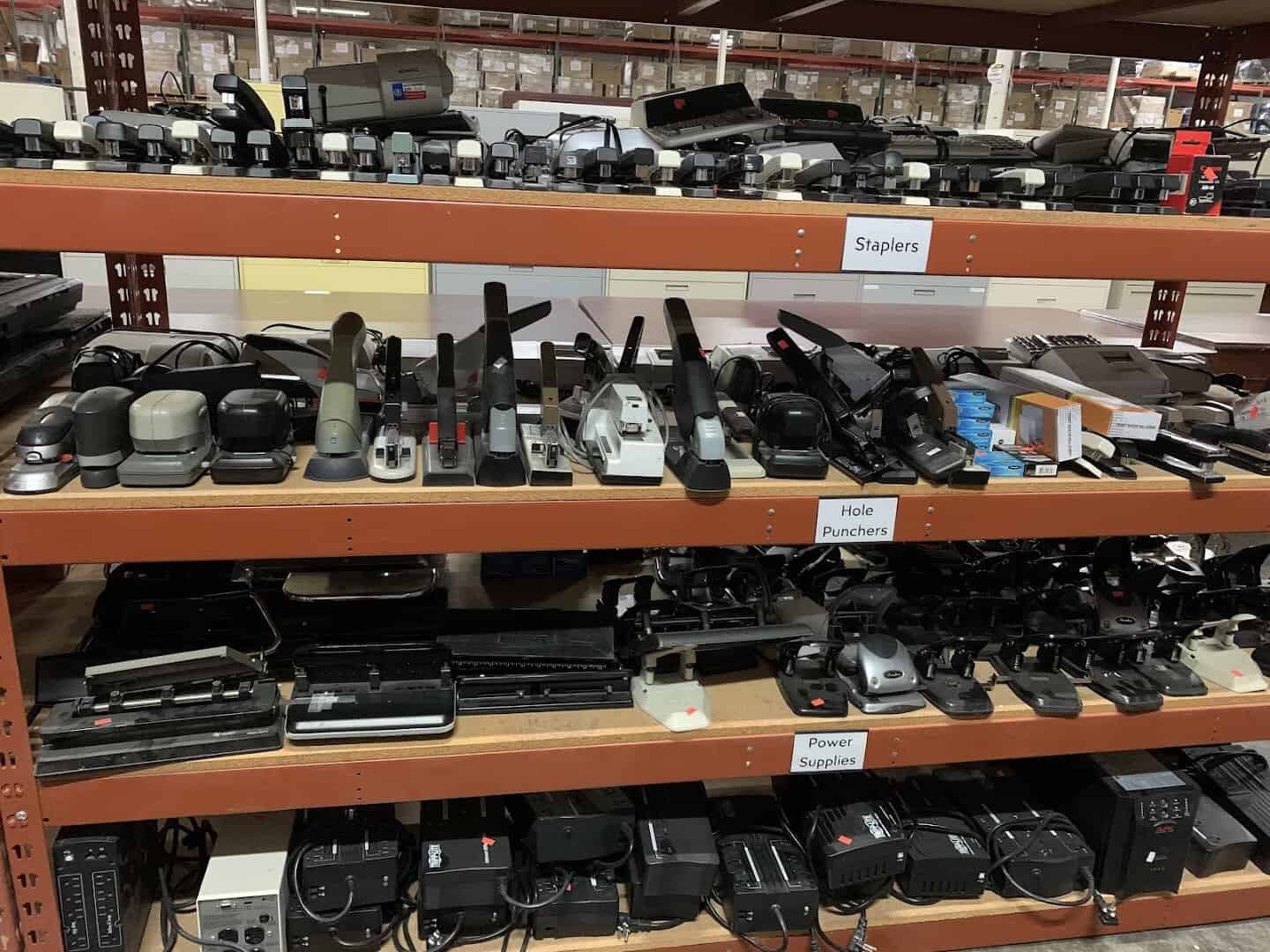
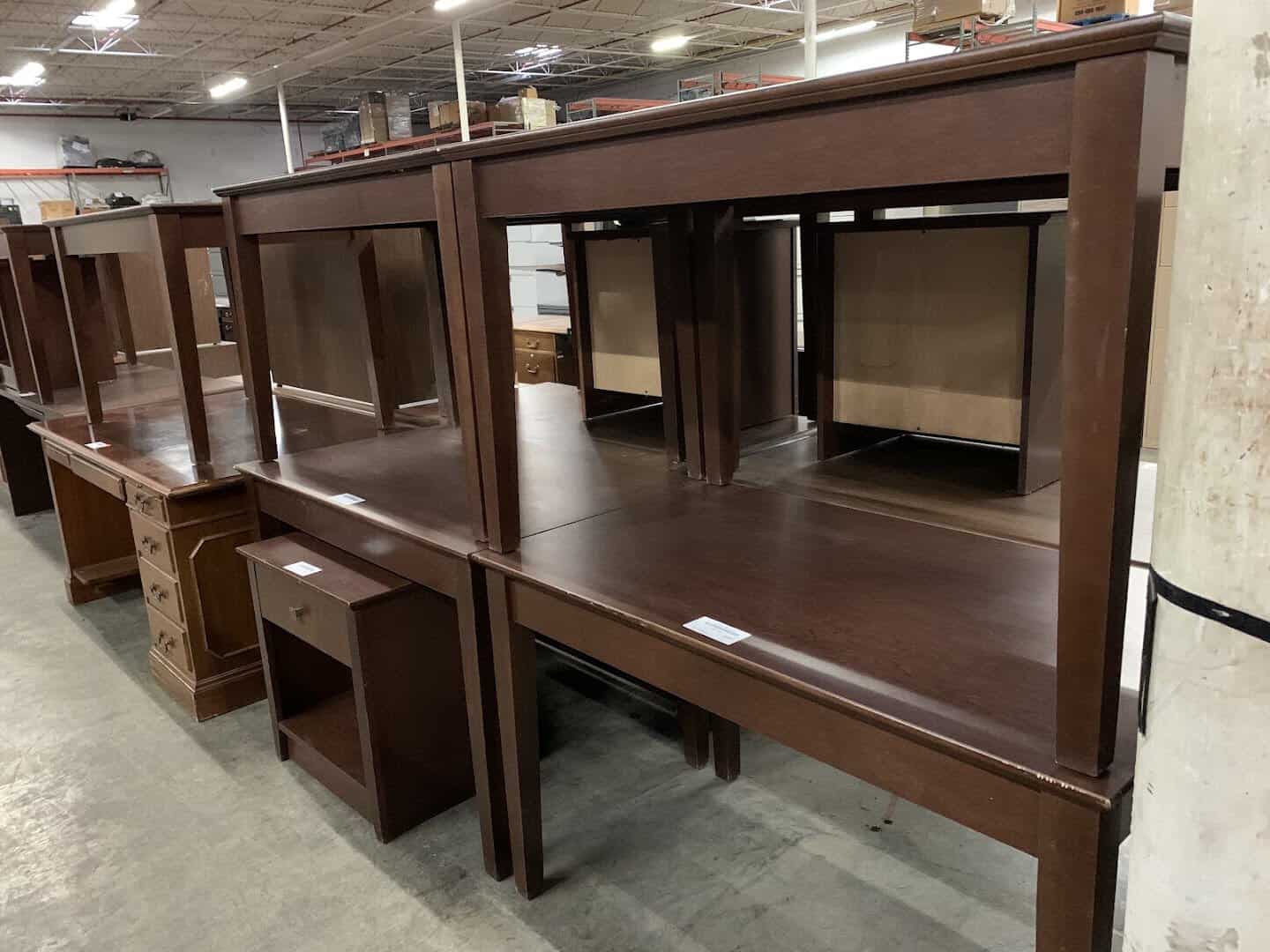
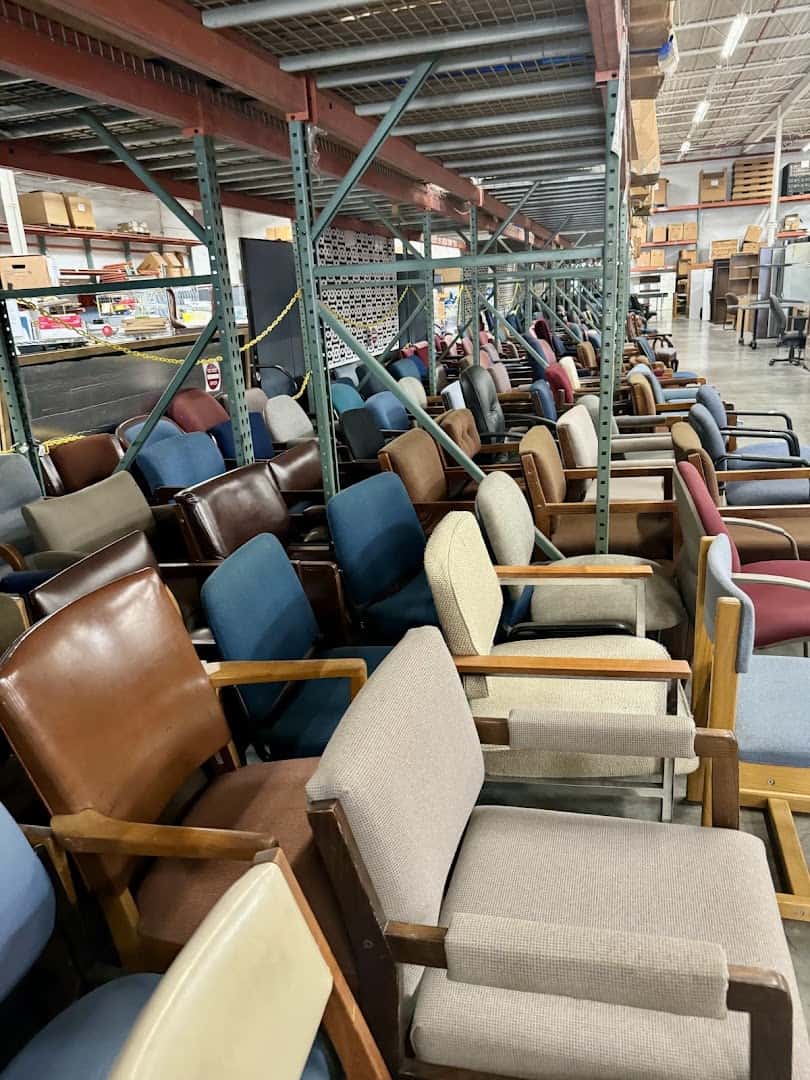
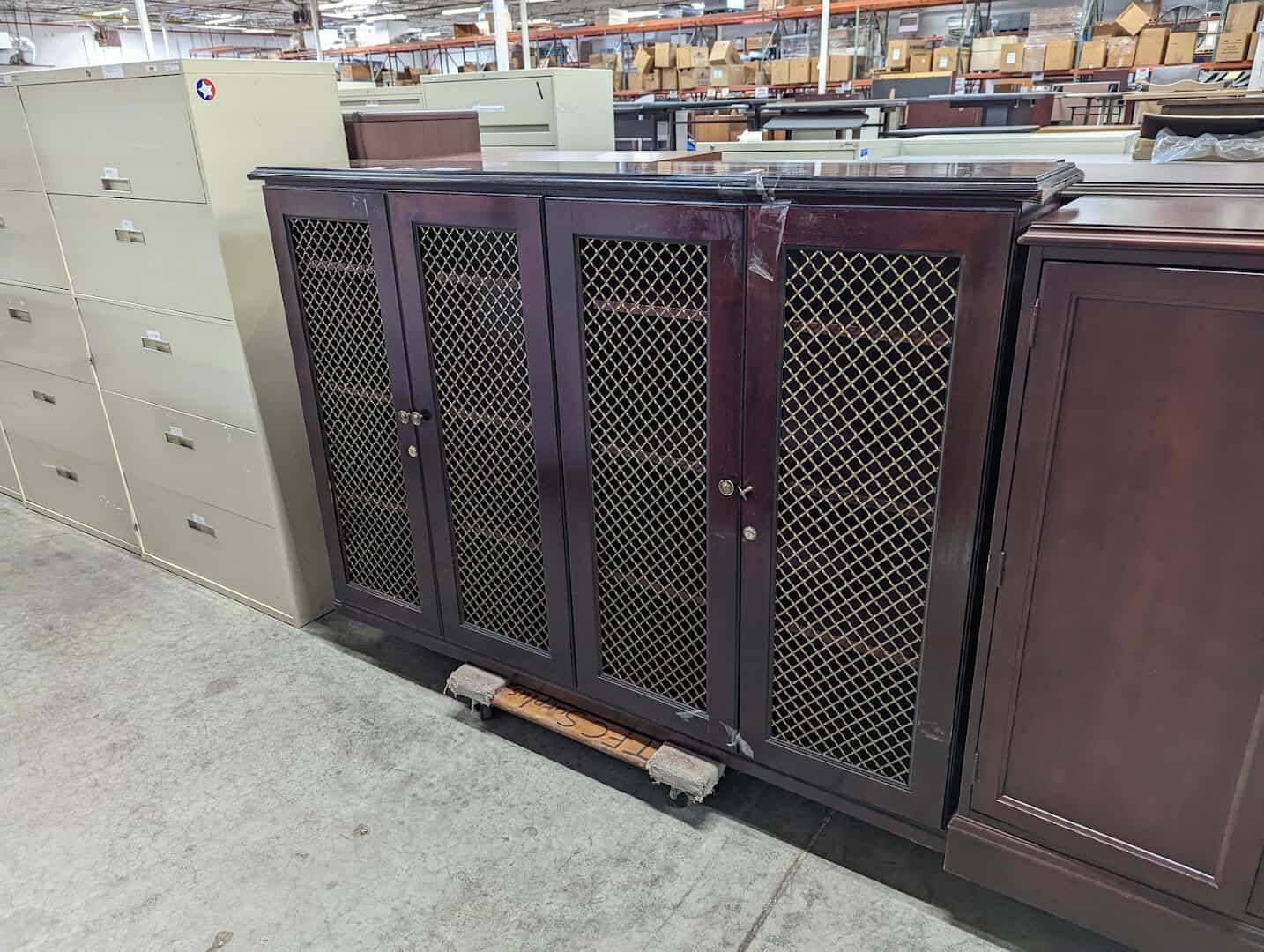
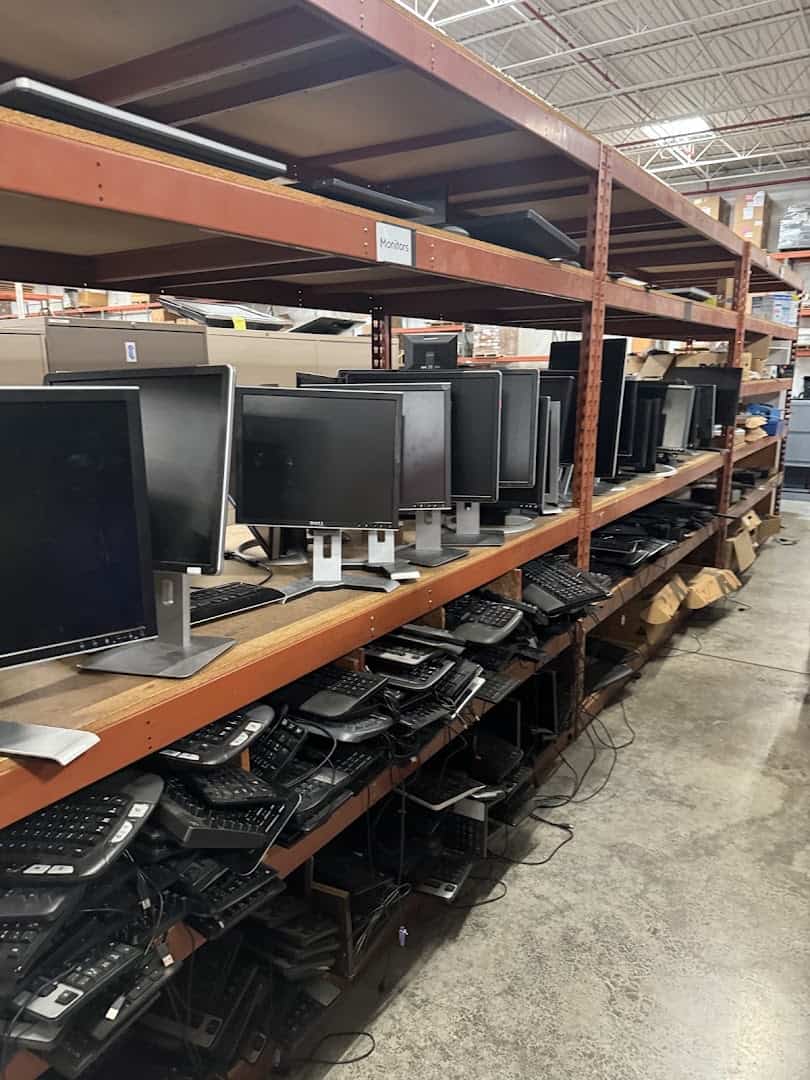
This is where Texas agencies, universities and some cities send the things they no longer need. Rows of desks and office chairs. Credenzas and sofas that have been priced around $125. Filing cabinets, shelving, monitors, keyboards, printers, projectors and cables by the armload.
The fun is in the odd corners. Visitors have found electric typewriters, framed artwork that once hung in a government hallway, racks of work uniforms and safety vests, treadmills from rec centers, and a text telephone that predates the smartphone by decades.
One December the store was reportedly full of Christmas trees. I have questions, and I would still buy one.
Bigger things sell through online auctions. The program moves hundreds of vehicles a year, including retired police cruisers you can bid on from your couch, plus forklifts and heavy equipment. It has even sold an airplane. So yes, you could leave with a plane, though the parking lot has limits.
Pro tip: the online auction page on the Texas Facilities Commission website lists what’s coming up, so check it before you drive in if you’re chasing a vehicle rather than a corkscrew.
A Brief History of Texas Surplus
The idea of the state reselling its leftovers goes back to World War II. In 1945 Texas set up the Texas Surplus Property Agency to receive surplus war property from the federal government and route it to schools and public health institutions. Army desks became classroom desks.
That stand-alone agency was abolished in 1993 and its work folded into the state’s facilities agency. That agency’s own roots reach back to 1919, when the State Board of Control was created to consolidate purchasing and property management.
After a series of renamings, the 80th Legislature turned it into the Texas Facilities Commission in 2007, with salvage and surplus property written into its duties.
The airport stream is the modern twist. Once federal screening arrived after 2001, checkpoints across Texas began collecting mountains of surrendered items with no practical way to give them back. Texas already had a surplus program with a warehouse, a sorting crew and a retail counter.
Today the program runs both the state surplus operation and the federal surplus program for Texas, and the Bolm Road store is the retail face of it all.
Items reach the shelf only after the airport’s own hold period has passed, so nothing here is something an owner is still chasing. That hold is the difference between a surplus store and a lost and found.
Know Before You Dig
Pro tip: bring gloves. The tool bins are the best part of the store and also the greasiest, and you will want to dig to the bottom. A small flashlight helps for reading tiny engraved brand names on knives.
Prices are marked on tags or posted by category. Expect a couple of dollars for airport odds and ends and up to a few hundred for furniture and gym equipment. Recent visitors report the store takes cash and cards but not checks, so come prepared either way.
Go early in the week if you can, and go often. Inventory turns over quickly, and the regulars who score the best knives and jewelry are the ones who swing by on their lunch break every couple of weeks rather than once a year.
One more thing: the store closes for a stretch every late summer for annual inventory and training. Check the Texas Facilities Commission site before you make a special trip, especially in late August and early September.
Parking is free in the lot out front, and there’s no admission. You pay only for whatever quirky haul you carry to the counter.
My shopping list, for what it’s worth: a decent multi-tool for the glovebox, a pair of sunglasses I won’t cry over losing, and whatever the strangest thing in the building is that day.
How to Get There
Where: State Surplus Store, 6506 Bolm Road, Austin, TX 78721
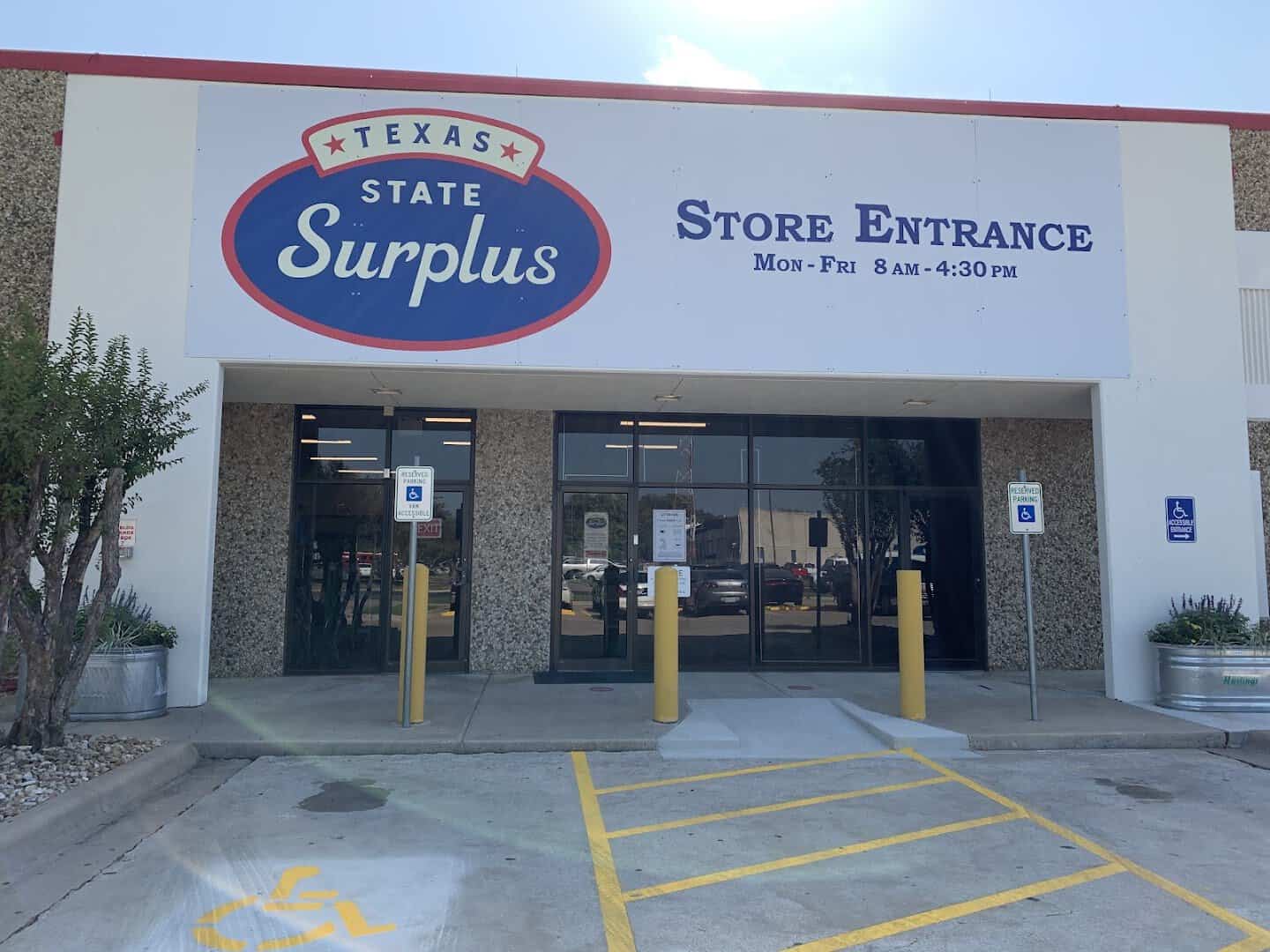
The store is about a 15 minute drive east of the Texas Capitol, just past the railroad tracks in East Austin. It’s open Monday through Friday from 8 a.m. to 4:30 p.m. and closed on weekends, so plan a weekday visit.
From San Antonio it’s a little over an hour up I-35. Houston is closer to two and a half hours, and Dallas just under three. It makes an easy detour on any Central Texas road trip, especially paired with the food trucks and murals of East Austin.
Go Reclaim Somebody’s Lost Treasure
I still think about that red Swiss Army knife. Somewhere in a bin on Bolm Road there’s a version of it, and a hundred others like it, waiting for a new pocket to ride in.
So next time you’re in Austin on a weekday, skip one more taco stop and point the car east. Bring gloves, bring a few dollars, and bring a willingness to leave with something you never knew you needed. Just remember to check it in your bag on the way home.
Featured image: Perry Williams via State Surplus Store

Stella Raines
Editor-in-Chief
Stella brings over a decade of storytelling experience to TX Headlines. With roots in West Texas and a love for road trips, she leads the editorial team with an eye for the hidden stories that make Texas unforgettable.
More Stories
This Historic Texas Church Was Built by 100 Sicilian Families and Glows With Painted Arches

This Quiet Texas Peninsula Is Best Reached by a Free Ferry Ride With Dolphins
This Hilltop Texas Sculpture Garden Feels Like a Piece of the Holy Land

This Quiet East Texas Site Is a Hauntingly Beautiful Portal to an Ancient Ancestral World
Tags