This Quiet East Texas Site Is a Hauntingly Beautiful Portal to an Ancient Ancestral World
Seventh grade Texas history gave me the Alamo, the oil boom and a lot of cattle. Nobody told me that a thousand years before any of that, a city of grass houses stood in the East Texas pines. I still feel a little cheated.
That city is Caddo Mounds State Historic Site, six miles southwest of Alto in Cherokee County. Three earthen mounds rise out of a wide mowed field, and the place carries a hushed, ancient stillness you feel from the parking lot.
Below, I will walk you through the mounds, the grass house and how to plan the drive.
Three Mounds and a Thousand Years of Quiet
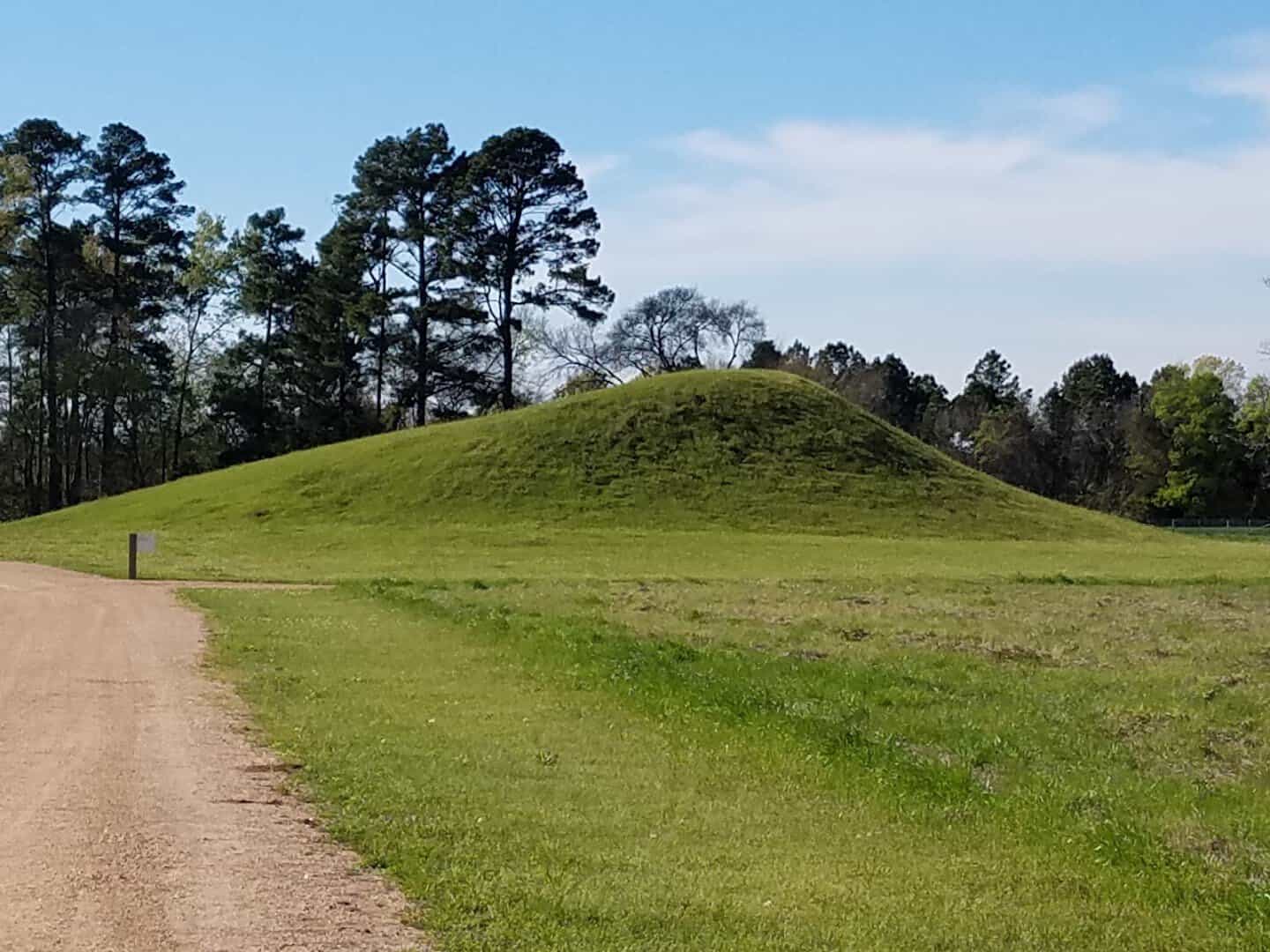
The mounds come first, because they are the reason the place exists. There are three, and they look nothing like the pyramids your brain wants to picture. They are soft, green and rounded, as if the land took a slow breath and held it.
The Caddo began raising them around A.D. 850 to 900. Basket by basket, generation after generation, people carried earth to this spot and built platforms for their temples and their leaders.
Archaeologists believe the settlement held about 140 grass houses at its peak, arranged around these mounds. Imagine that many thatched domes glowing in the evening light. It was a real town, with a real skyline.
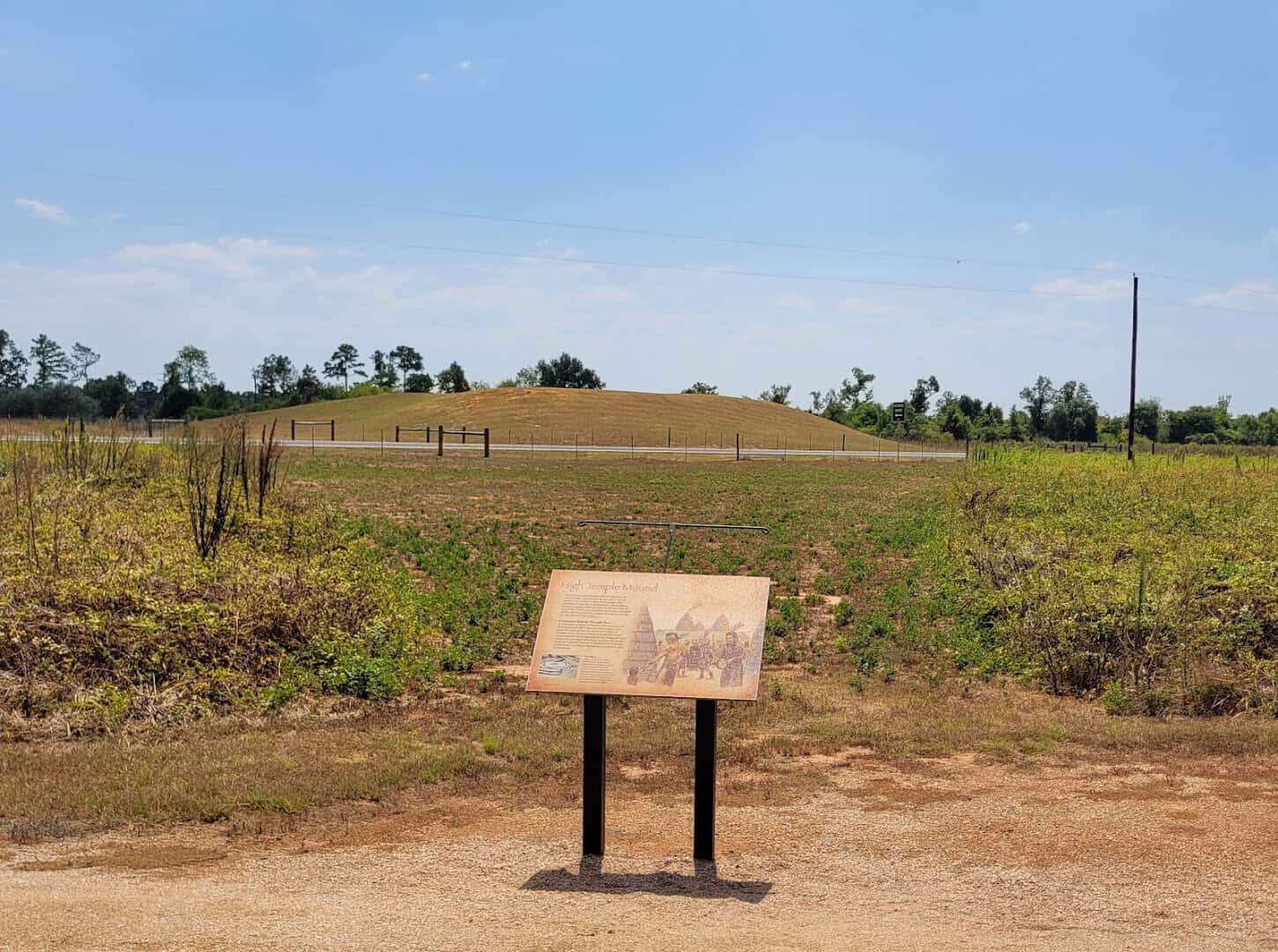
The High Temple Mound sits at the southern edge of the site. This was the center of community life, where the Caddo built their most important structures. Their leaders lived and worshipped on top of it.
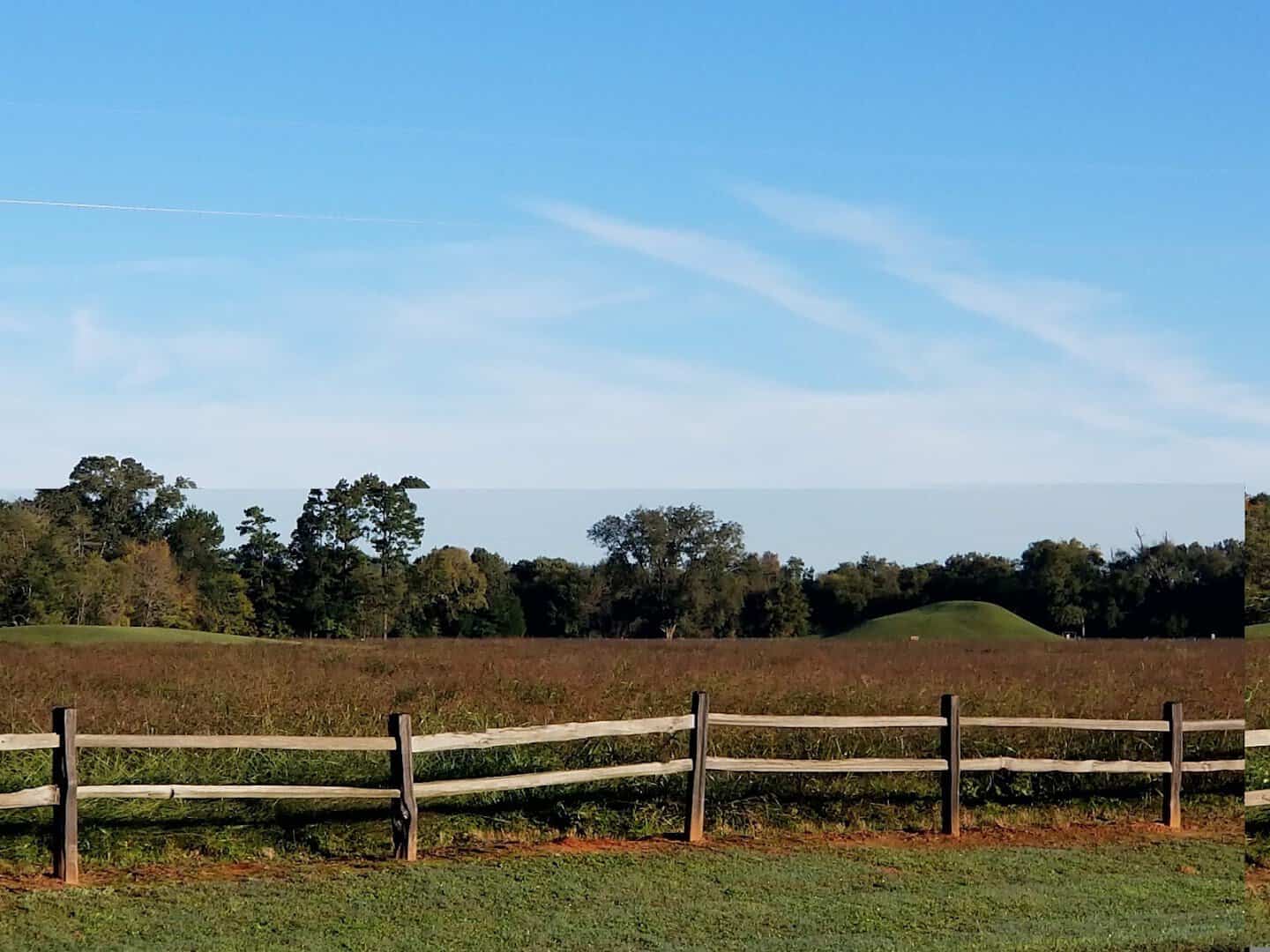
The Low Platform Mound in the middle was a ceremonial plaza, roughly 175 feet by 115 feet. Work on it began around A.D. 1100, which means people were still adding to it two centuries after the first baskets of dirt went down.
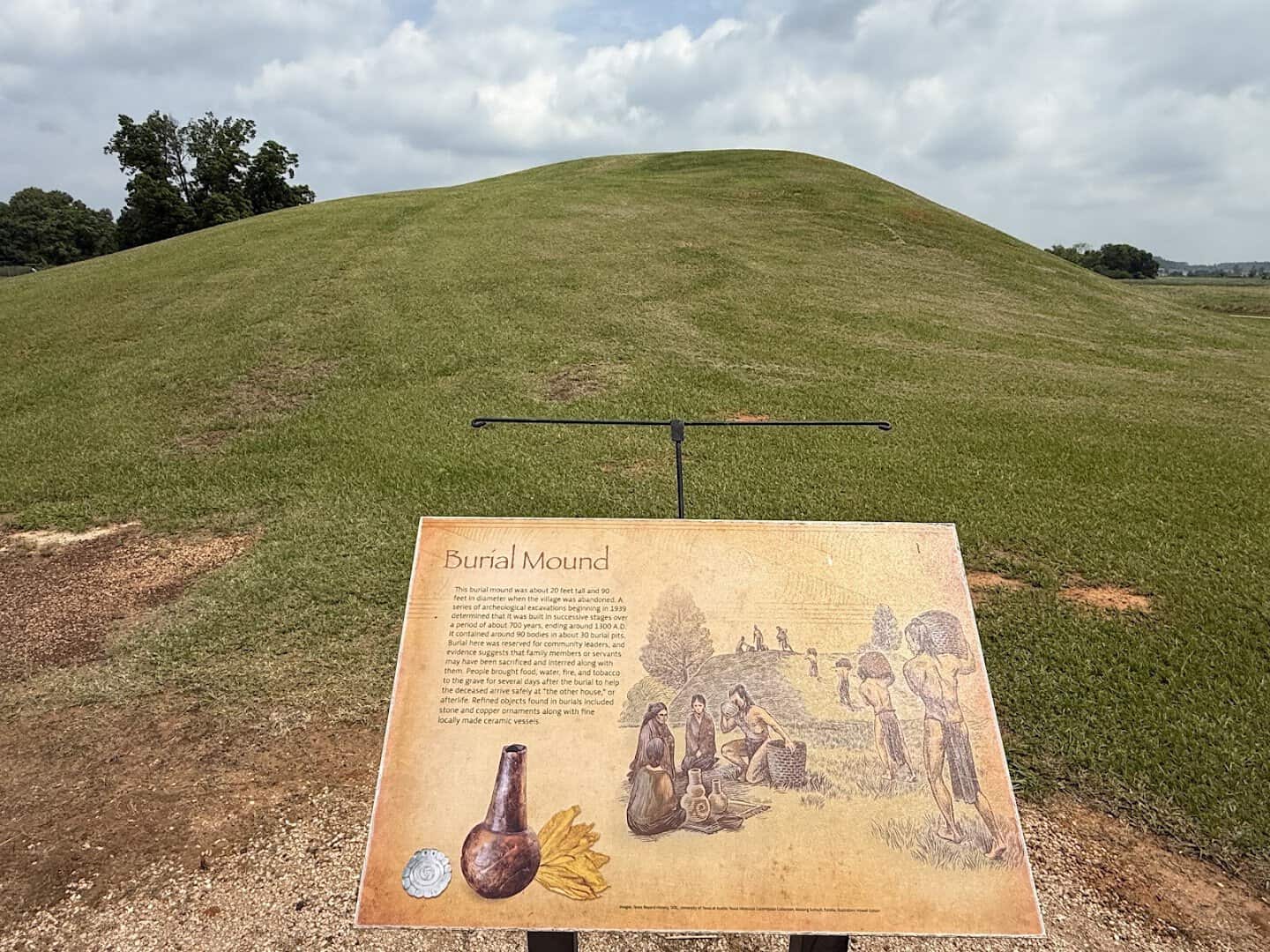
The third is the Burial Mound, at the northern end. Caddo religious and political leaders were laid to rest here, and the mound grew over the centuries as burials were covered with fresh earth.
Please treat it with the respect you would give any cemetery. The Caddo Nation still considers this ground sacred, and the site asks visitors to stay on the path around it.
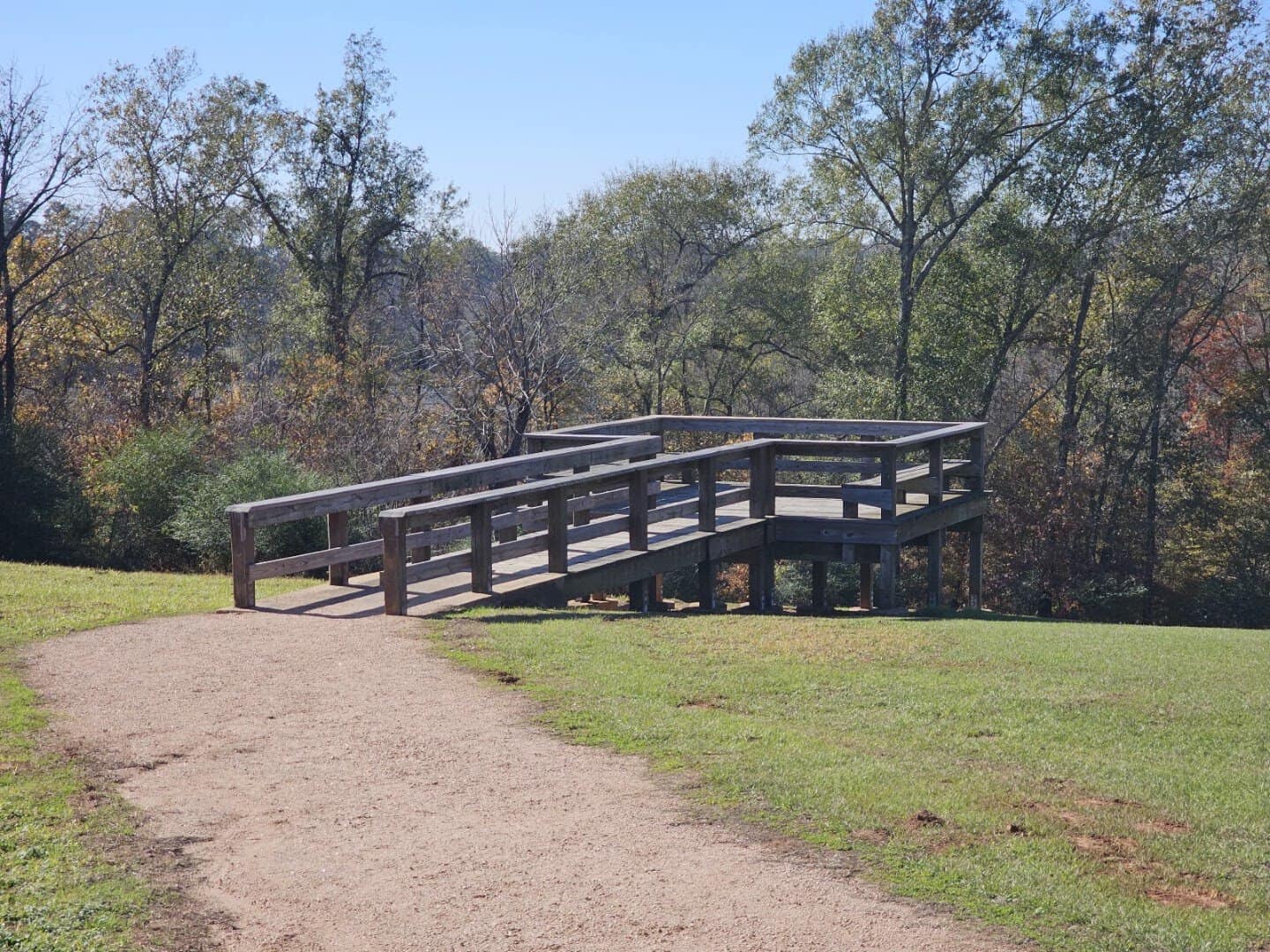
A 0.7 mile self-guided trail loops around the mounds on crushed granite, with interpretive markers at every stop. It is flat, easy and open to the sky. Walk it slowly. Somewhere between the second and third mound, the highway noise fades and all you hear is wind and mockingbirds.
One visitor put it better than I can: the site is “just so peaceful and just standing at the place makes you think how it was back then.” That is the spell it casts. The mounds do not shout. They wait.
Inside the Grass House
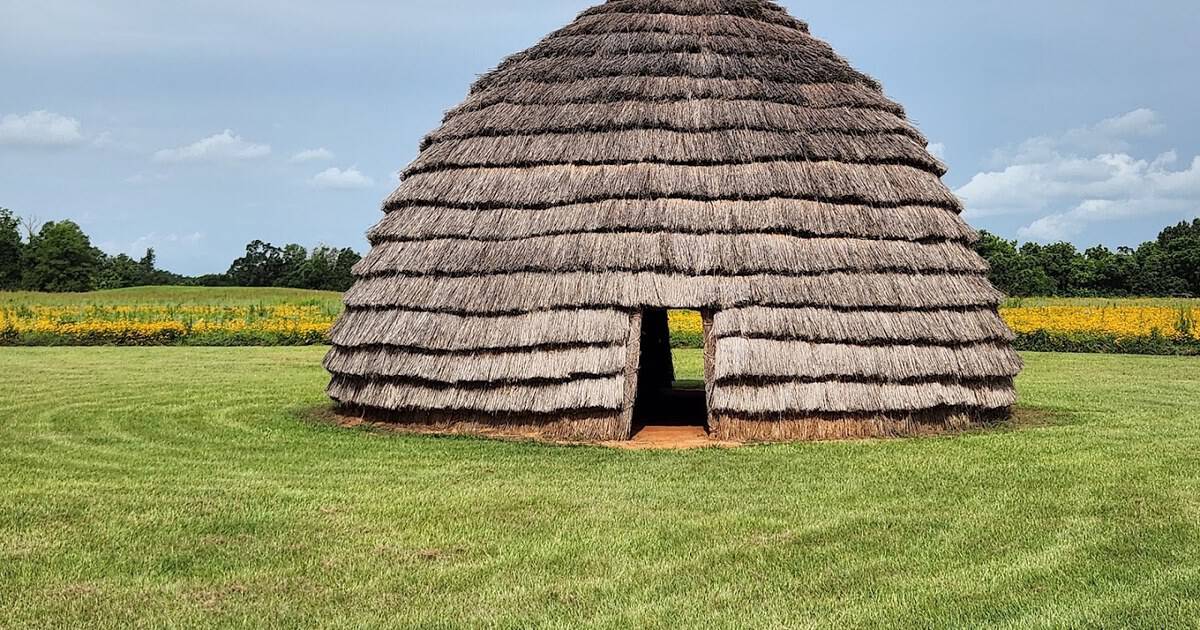
The grass house is the photo you will take home, and it is the part of the site I cannot stop thinking about. Picture a tall beehive of golden thatch, two stories high, rising from the grass like something out of a dream. The Caddo call it Koo Hoot Kiwat.
It is built the way the Caddo built their homes a thousand years ago. Pine poles were sunk into the ground, bent together at the top and lashed with horizontal runners of willow.
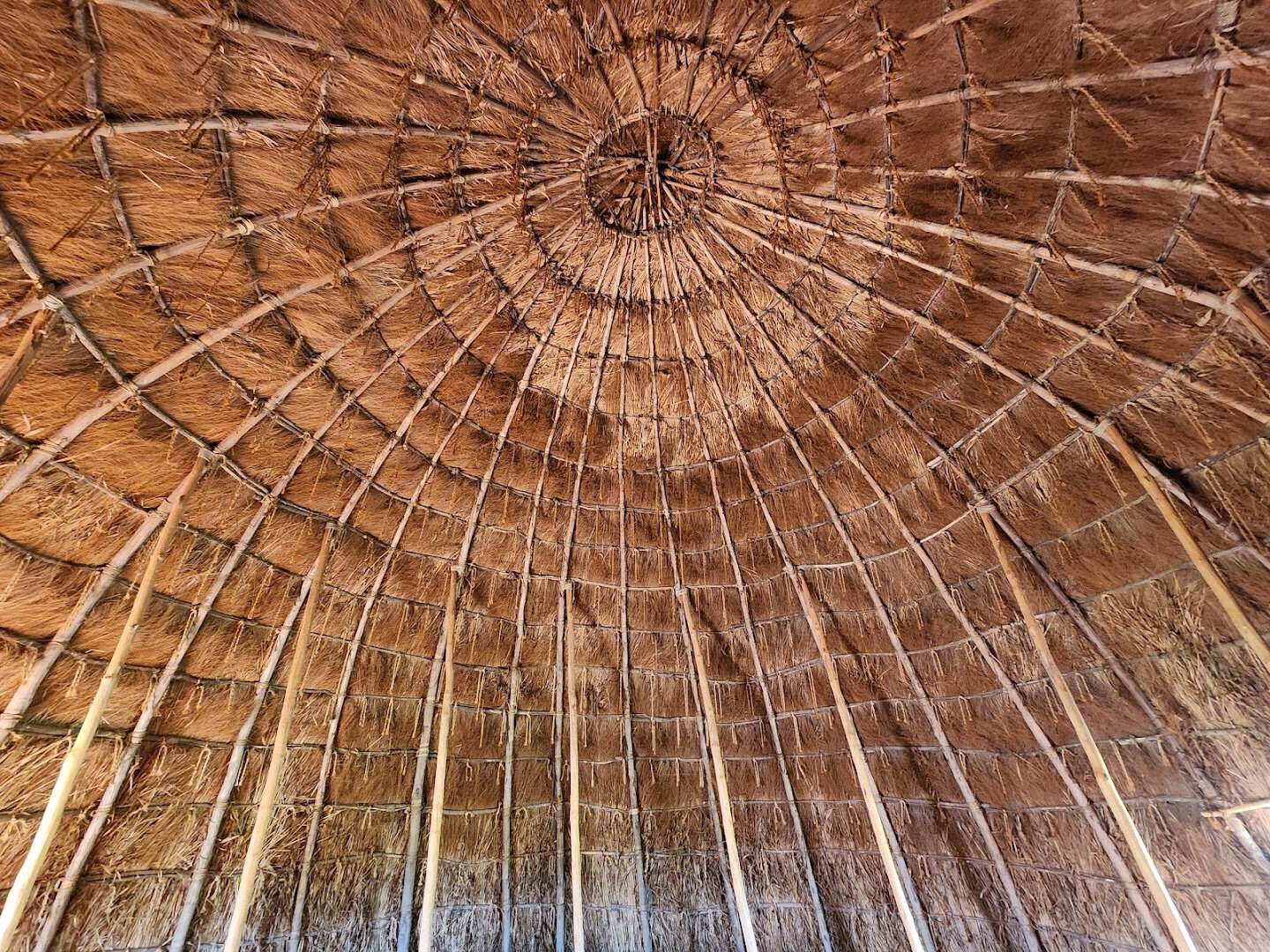
Then layer after layer of native switchgrass was tied on, overlapping like shingles, until the walls and roof became one waterproof dome. No nails, no metal, no plastic. Just wood, grass and patience.
Step through the low doorway and the temperature drops. Visitors say it is noticeably cooler inside than in the August sun, which tells you the Caddo knew exactly what they were doing. The thatch smells like a hayfield after rain, and light comes in soft and gold through the door.
The current house was built by Kay O’Neal and a team of Caddo women, working alongside Friends of Caddo Mounds volunteers and Texas Master Naturalists. They gathered and peeled the pine poles, tied the willow lathing and thatched it by hand.
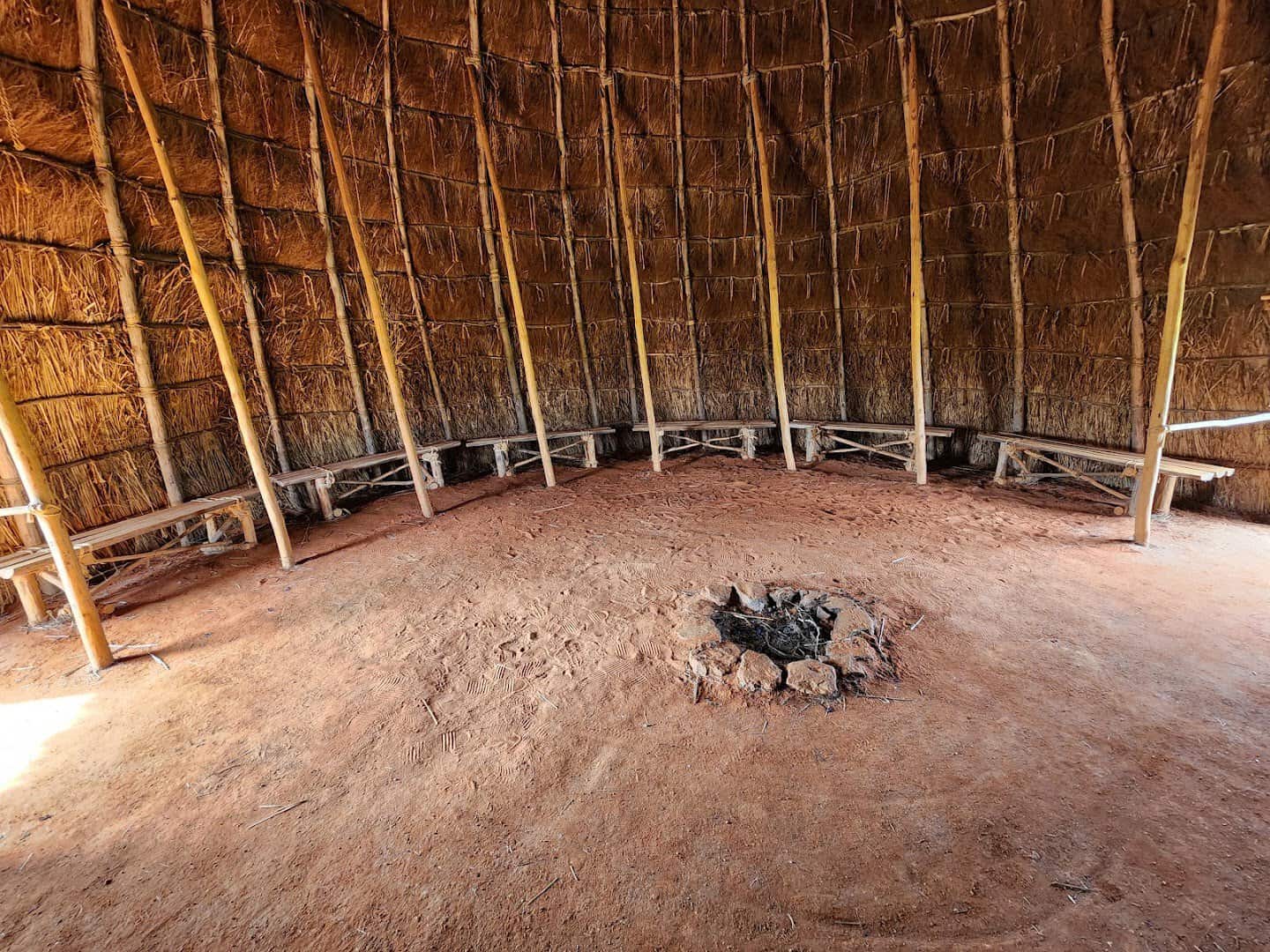
Roughly 100 volunteers helped over about 18 months, and the thatching wrapped up in late 2022. The switchgrass itself was grown at the Texas A&M AgriLife Research and Extension Center in Overton.
O’Neal has said the point of building it the traditional way is to pass the skill on to future generations of Caddo people. Standing in front of it, that mission feels very real.
Snake Woman’s Garden
Just beyond the grass house is a 50 by 50 foot garden with a beautiful name. In Caddo tradition, Snake Woman brought seeds to the people of the world, and the garden is named for her. In the Caddo language it is Keekah Nattee Toots’ah Naht’ooh.
The garden was planted in 2016 after site staff visited a similar Native heritage garden in Arkansas. It traces Caddo agriculture from the days of the mound builders to the present, using knowledge from Caddo citizens as well as scientists and historians. Volunteers keep it going through the growing season.
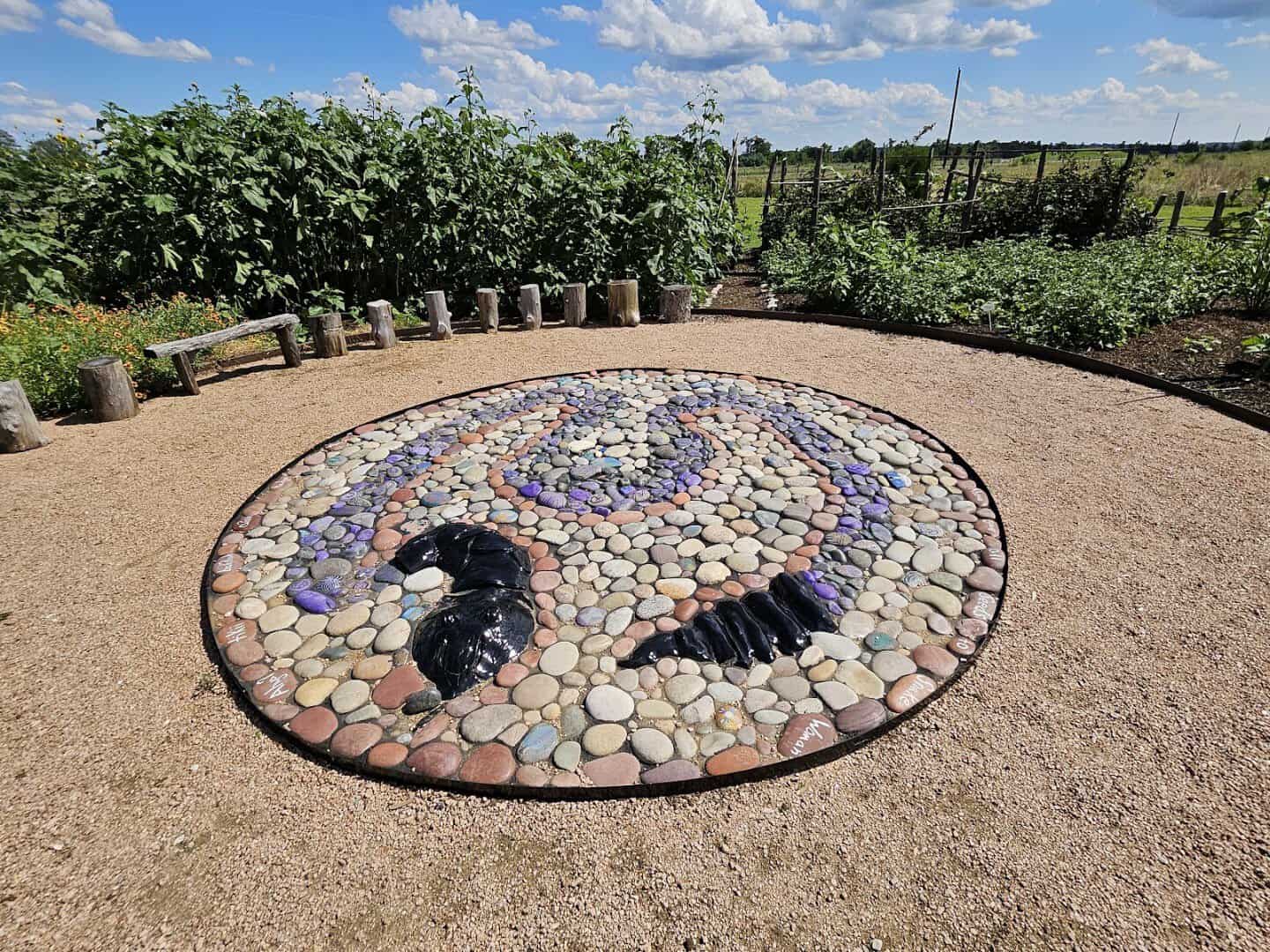
I love that this is not a museum case with a plaque about corn. It is corn. It is living, growing, going to seed. In summer the sunflowers tower over the fence and the whole plot hums with bees.
Did you know the Caddo were farming this land while Europe was still in the Dark Ages? That fact alone is worth the drive.
A Museum Shaped Like a Grass House
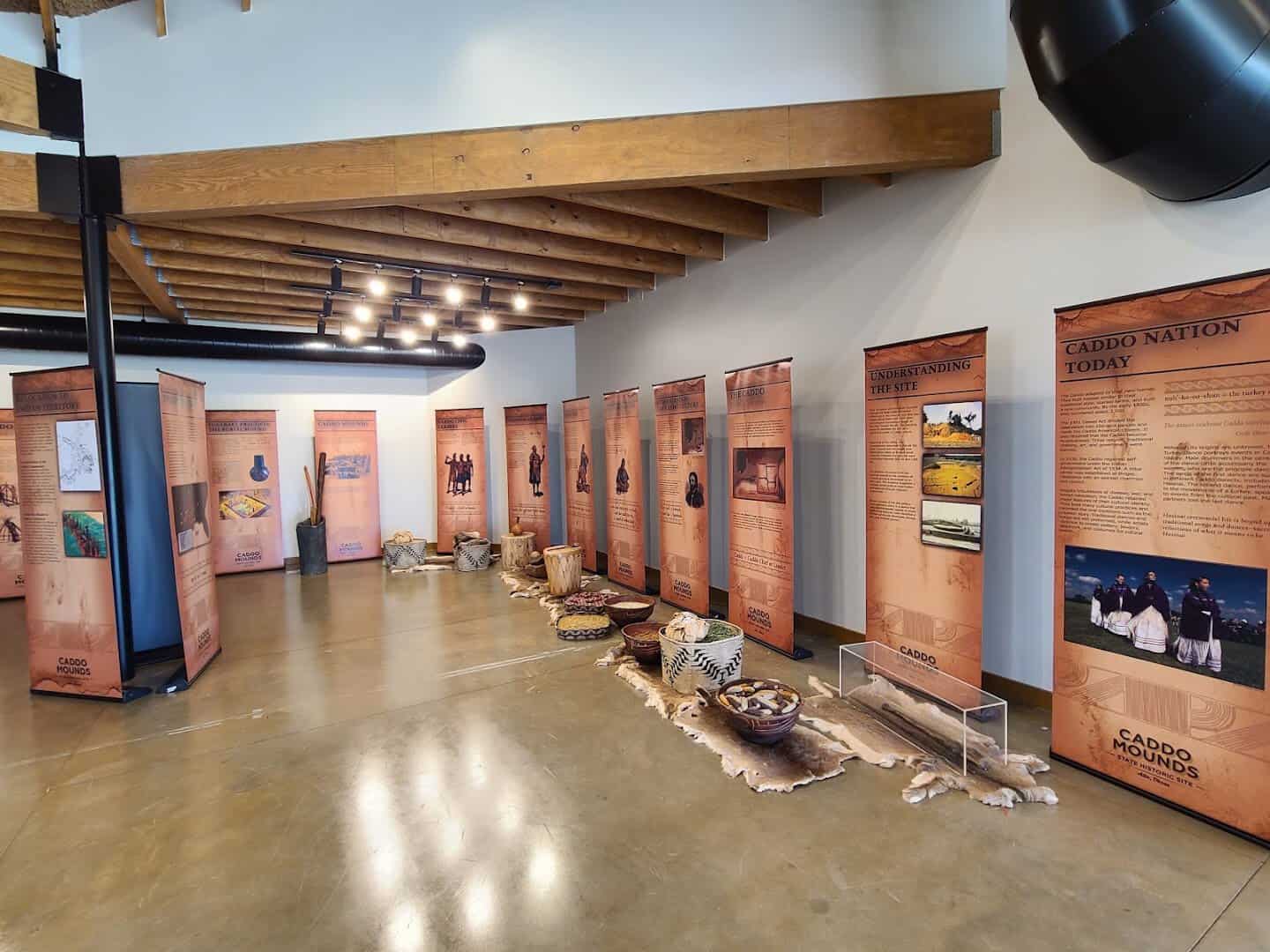
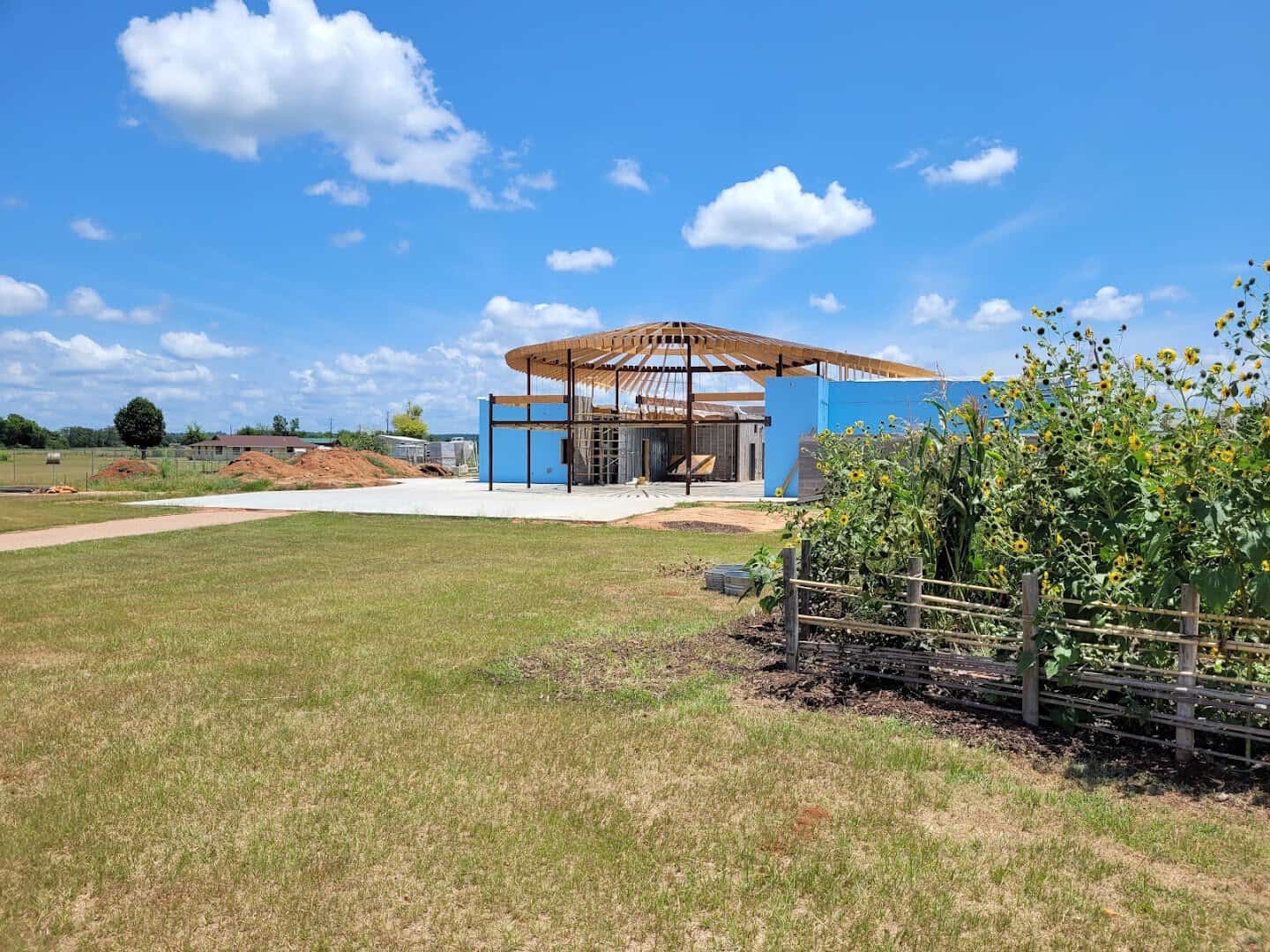
The visitor center is new, and it is a beauty. It opened on May 18, 2024, at a cost of about $2.5 million. Its conical dome roof echoes the shape of the grass house across the field, so from the trail the two buildings look like family.
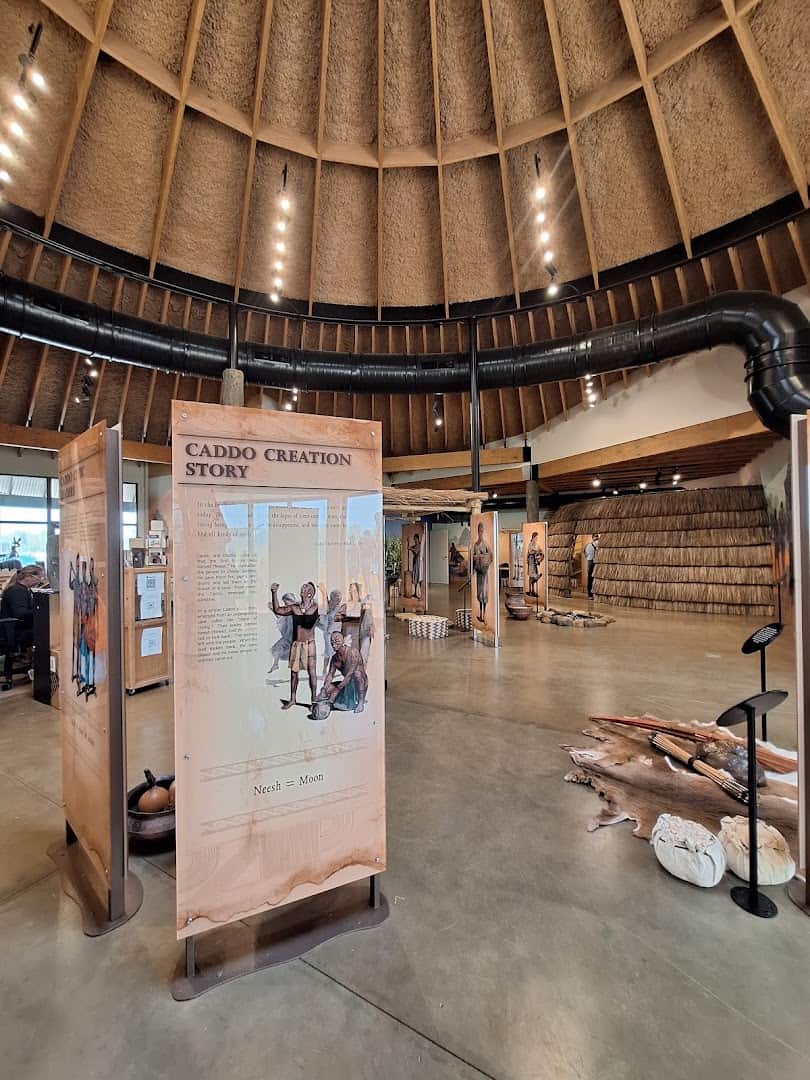
Inside you will find exhibits on Caddo history and daily life, an introductory video and artifacts recovered from the site. The Caddo were extraordinary potters. Look for the engraved bowls and bottles with their swirling designs. Some of those patterns are still used by Caddo artists today.
There are displays on the trade networks too. From this spot in the East Texas woods, the Caddo traded with people as far away as the Gulf Coast, the Ouachita Mountains of Arkansas and the Appalachians. Copper, shell and stone traveled hundreds of miles to end up here.
This was no backwater. It was a hub, and the museum makes that case with real objects instead of wall text.
The building is fully accessible and air conditioned. On a hot day, plan to do the museum last so you can cool off after the trail. The staff are the kind who will happily talk Caddo history for as long as you want to listen.
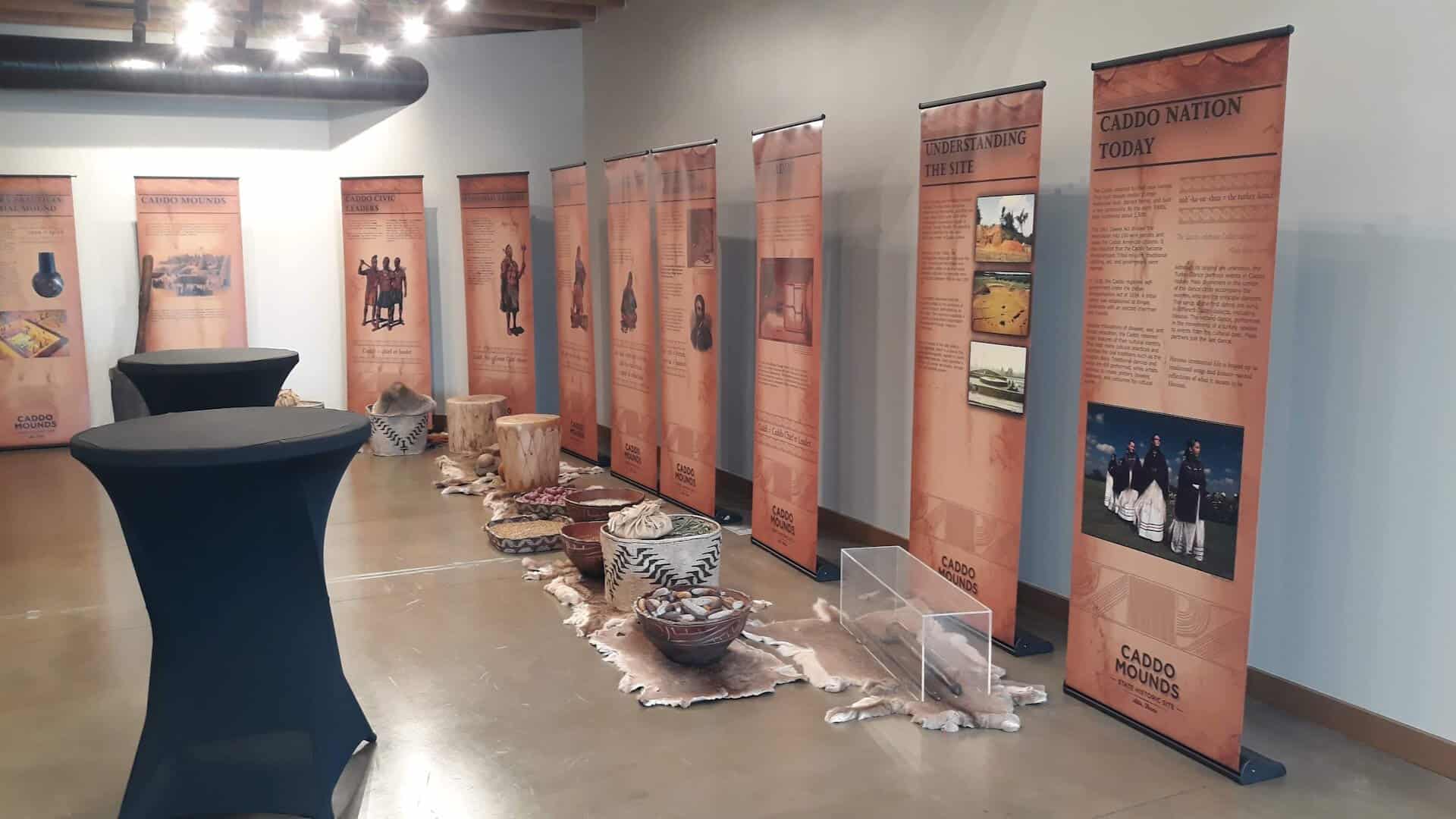
A Brief History of the Mound Builders
The people who built this place were ancestors of today’s Caddo Nation. They arrived from the Red River country to the northeast and founded a permanent settlement here around A.D. 850 to 900. It was a religious and governmental center, and it thrived for roughly 500 years.
They lived well. The Caddo farmed corn, beans and squash, hunted with the bow and arrow and made some of the finest pottery in North America. Their influence stretched from East Texas into southern Missouri, built on trade and farming rather than conquest.
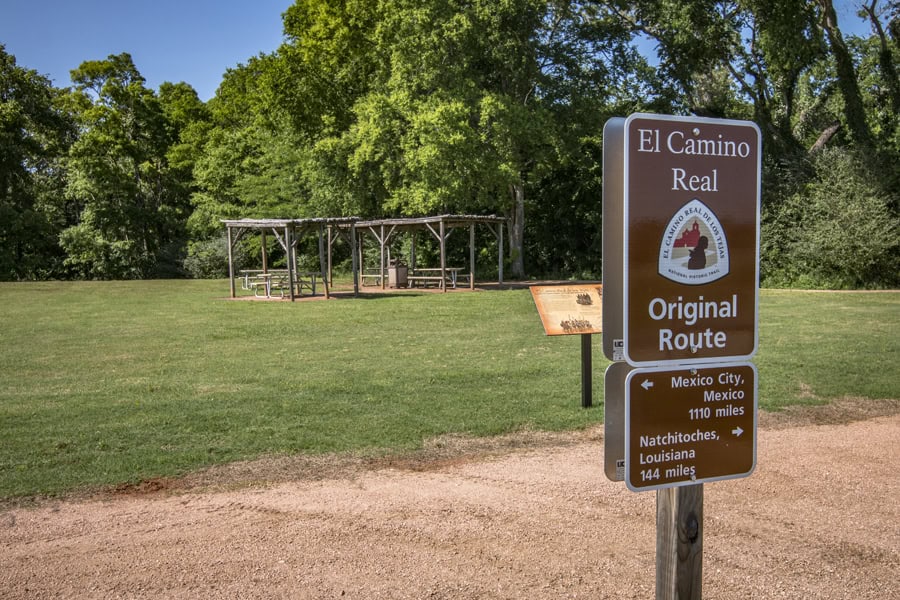
Sometime around A.D. 1300, for reasons nobody has pinned down, the people moved on. The mounds stayed. Spanish travelers later passed right by them on El Camino Real de los Tejas, the old royal road from Mexico City to Louisiana. A stretch of that road still crosses the site.
The first professional record of the site came in 1919 from archaeologist James Edwin Pearce. The big dig came later. From 1939 to 1941, University of Texas archaeologist H. Perry Newell led a Works Progress Administration excavation that revealed the size of the community.
Dee Ann Story’s work in the late 1960s and early 1970s pinned the timeline to about A.D. 780 to 1260. Her digs are the reason we can put dates on the mounds at all.
Texas Parks and Wildlife bought the first 70 acres in 1974 and opened it as a historic park, adding 23 more acres in 1981. In 2008, the Legislature handed the site to the Texas Historical Commission, which runs it today in partnership with the Caddo Nation of Oklahoma.
The Caddo were forced out of Texas in the 1840s and now make their home near Binger, Oklahoma. They have never stopped coming back. Tribal members bless the grass house, teach at the site and dance here every fall, which is the loveliest part of this whole story.
The Storm and the Comeback
This part gets me. In April 2019, a tornado tore across the site during the annual Caddo Culture Day and destroyed both the museum and the original grass house, which Caddo elder Phil Cross had helped build in 2016. The mounds, all three of them, came through untouched.
What happened next is why I want you to visit. The Caddo Nation and the Texas Historical Commission decided to rebuild everything, and to rebuild it better. The grass house went up first, thatched by Caddo hands. Then came the new visitor center, with hardened storm shelters built in.
Assistant site manager Rachel Galan has also rolled out what she calls a braided land conservation plan, weaving Western science together with Caddo ecological knowledge to care for the prairie and woods.
The site drew 6,756 visitors in 2024, a third more than the year before. Word is getting out, but you will still often have the mound trail to yourself.
Trails, Tips and the Best Time to Go
Give yourself two hours. The mound loop takes about 45 minutes at a lingering pace, and the museum and grass house fill the rest.
If you have the legs for it, the 0.4 mile El Camino Real trail and another 1.5 miles of scenic paths cross Weeping Mary Road to an old barn, a wildflower plot and a quiet pond.
Pro tip: there is no shade on the mound trail, so bring a hat and water, and go early. Spring is the sweet spot, when the wildflower plot blooms and the prairie is green.
Fall brings cooler air and Caddo Culture Day, a free celebration with storytelling, dancing and hands-on demonstrations, usually in November. If you can only come once, come then.
Come on the first Saturday of the month and join a guided walk at 10 a.m. for no extra charge. The guides know where the houses stood and what the pottery meant. The whole site opens up when someone points at empty grass and tells you what was there.
The mound trail and part of the Camino Real trail are crushed granite and work well for most wheelchairs and strollers. The other trails have steps, steep grades and natural surfaces.
Kids under five get in free, and the grass house is the kind of thing a seven year old talks about for weeks.
How to Get There
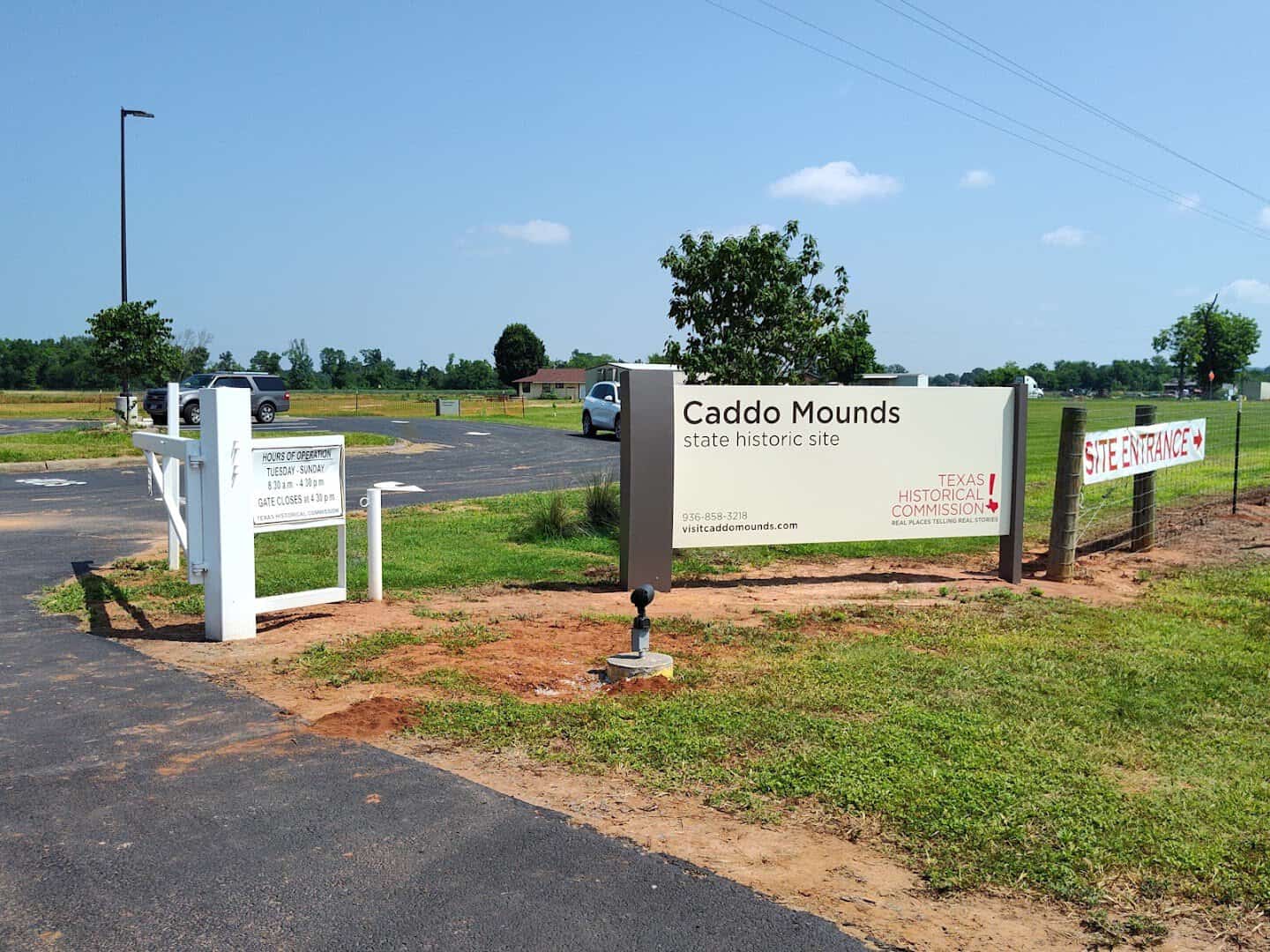
Where: Caddo Mounds State Historic Site, 1649 State Highway 21 West, Alto, TX 75925.
The site sits right on Highway 21, about six miles southwest of Alto and 30 minutes from Nacogdoches or Lufkin. From Houston it is roughly two and a half hours north. Mission Tejas State Park is seven miles up the road if you want a full day.
Hours are Tuesday through Sunday, 8:30 a.m. to 4:30 p.m., closed Mondays. Admission is $5 for adults, $3 for seniors, teachers, veterans and first responders, and $2 for kids 6 to 17. Under 5 is free.
A family of two adults and one child gets in for $8. Call 936-858-3218 with questions, and check the Texas Historical Commission site for holiday closures before you go.
Go Stand Where the Old World Still Hums
You do not need to be a history buff to feel this place. You just need to stand at the base of the High Temple Mound, look up at a slope people built with their hands a thousand years ago, and let it sink in that this was somebody’s home.
So point the car toward the pines. Walk the loop, duck into the grass house and sit a minute in the cool dark. Then drive home knowing that Texas is a whole lot older, and a whole lot more interesting, than your seventh grade textbook ever let on.
Featured image: John Perdue via Caddo Mounds State Historic Site

Stella Raines
Editor-in-Chief
Stella brings over a decade of storytelling experience to TX Headlines. With roots in West Texas and a love for road trips, she leads the editorial team with an eye for the hidden stories that make Texas unforgettable.
More Stories
This Historic Texas Church Was Built by 100 Sicilian Families and Glows With Painted Arches

This Unusual Texas Store Is Packed With Treasures Confiscated at Airport Security

This Quiet Texas Peninsula Is Best Reached by a Free Ferry Ride With Dolphins
This Hilltop Texas Sculpture Garden Feels Like a Piece of the Holy Land
Tags