10 Otherworldly Landscapes That Feel Like Another Planet
I gave up on becoming an astronaut somewhere around the fourth grade, right about the time I learned how much math it takes. The dream of standing somewhere that looks nothing like Earth, though, never really left me.
Turns out you do not need a rocket. Scattered across this country are places so strange your brain insists you have been dropped onto another world entirely. Salt that runs white to the horizon. Stone spires that look grown, not carved. Hills striped like a science fiction poster.
Below are ten American landscapes that feel borrowed from somewhere far away, with a note on exactly how to reach each one. Pack the good camera. Nobody at home is going to believe these are real photos.
1. Bonneville Salt Flats, Utah
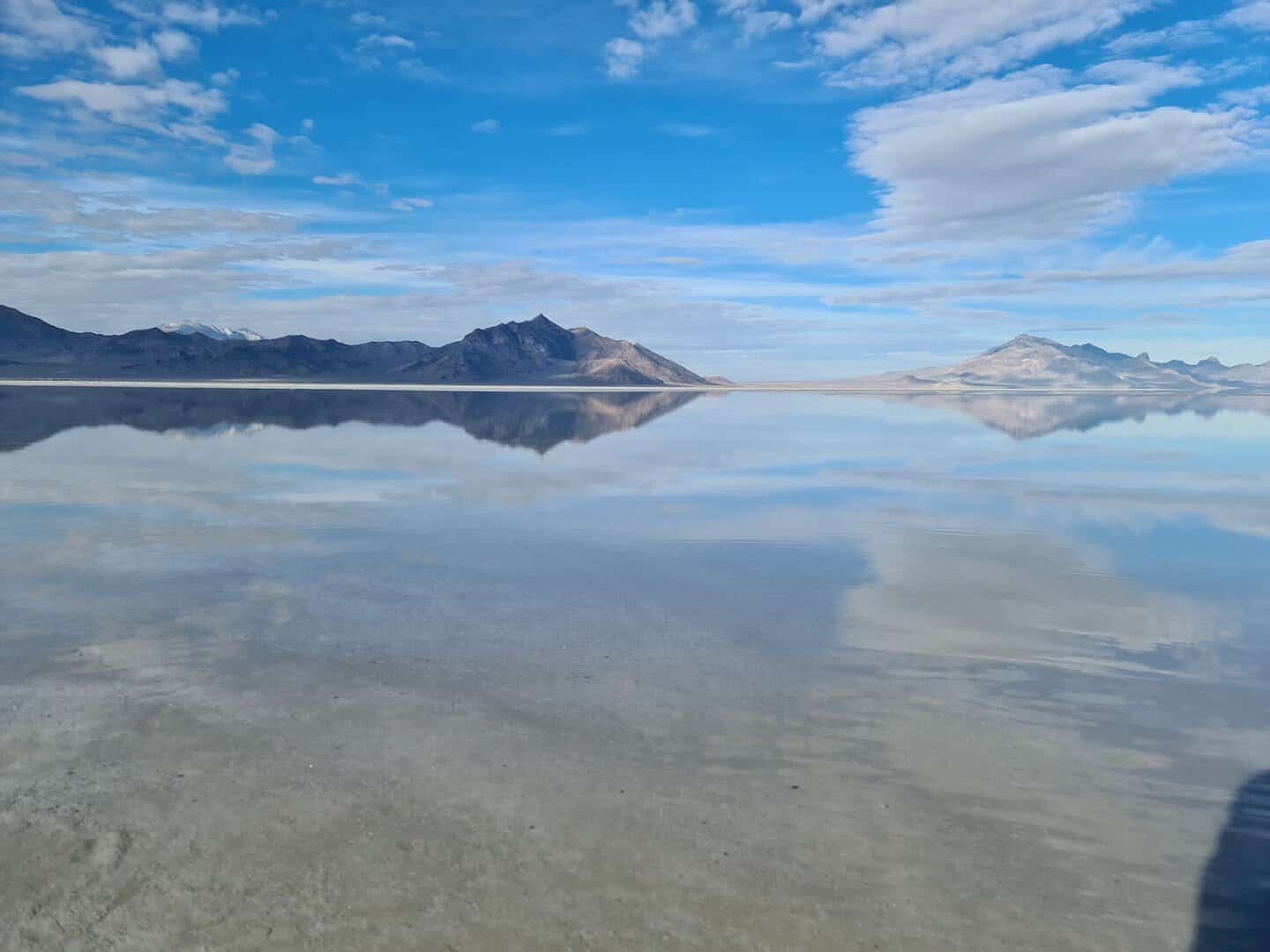
Imagine standing on a sheet of pure white that runs flat for miles, so bright and level it erases every sense of distance. That is the Bonneville Salt Flats, the dried floor of an ancient lake that evaporated and left the salt behind.
The crust is nearly five feet thick at the center and holds an estimated 147 million tons of salt, about 90 percent of it plain table salt. After a thin rain, the whole plain turns to a mirror and the sky doubles under your feet.
Speed chasers have raced here since 1914, and land speed records have fallen on this salt for over a century. You can just walk out and stand in the middle of all that white, feeling gloriously small.
In summer, hexagon patterns crack across the surface like tile. Bring sunglasses, because the glare off the salt is startling even on a cloudy day.
Where: Bonneville Salt Flats, off Interstate 80 near Wendover, Utah. Use the marked rest area at Exit 4.
2. Mono Lake Tufa State Natural Reserve, California
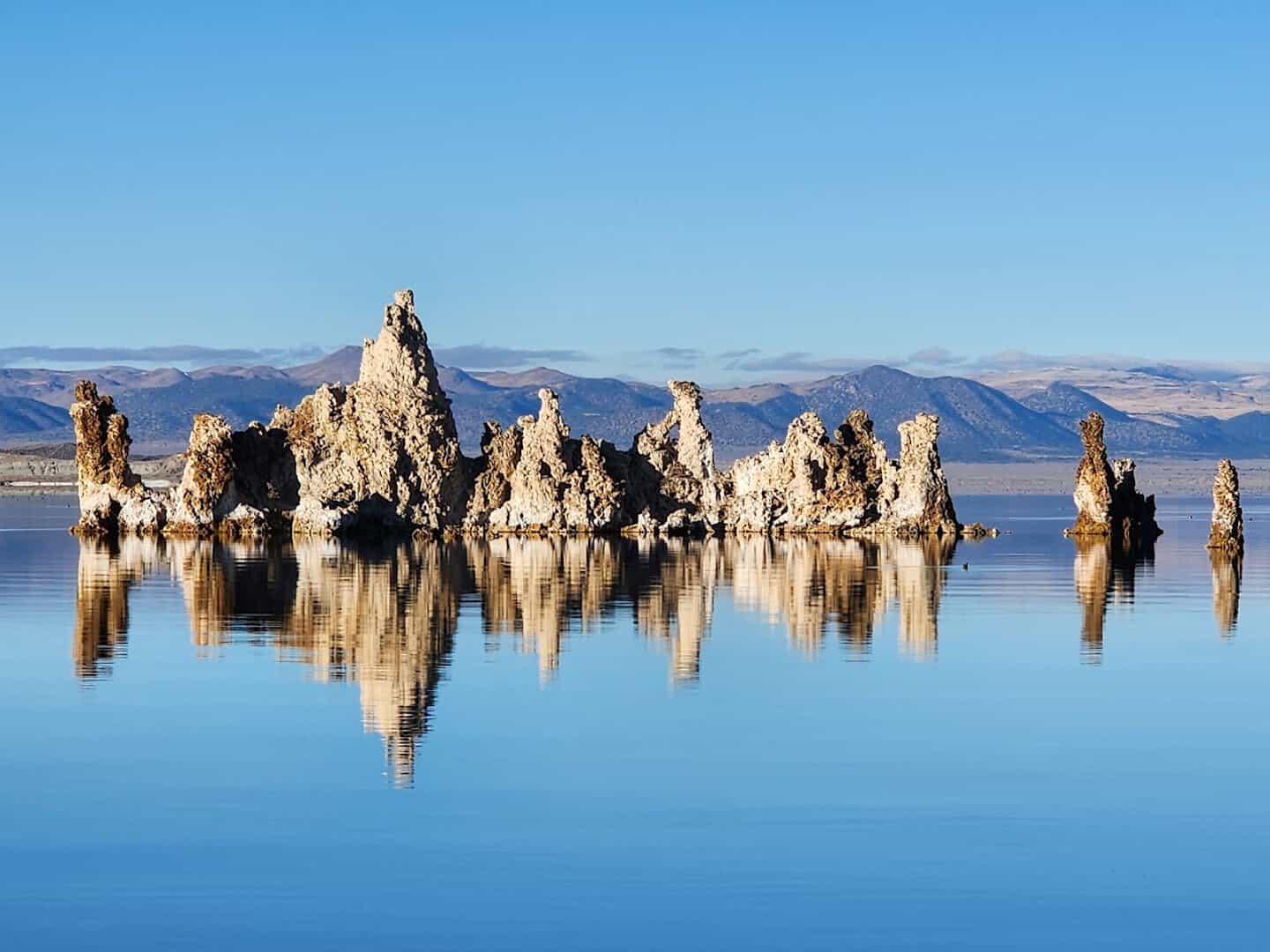
On the eastern edge of the Sierra sits a salty, ancient lake studded with knobby stone towers that rise straight out of the water. They look like something a coral reef would build on land.
These are tufa towers, calcium carbonate spires formed where freshwater springs bubble up through the mineral-rich lake. Every one of them grew underwater, some to thirty feet or more, over decades and centuries.
The reason you can see so many now is that the lake level dropped, revealing the forest of pale towers along the shore.
The South Tufa area has the thickest cluster of them, reached by an easy loop trail from the lot. Come at sunrise, when the light turns them gold and the water goes perfectly still.
The lake is so salty that brine shrimp and alkali flies thrive in it, and they feed millions of migrating birds each year.
Where: Mono Lake Tufa State Natural Reserve, South Tufa area off Highway 395, near Lee Vining, California.
3. Bisti/De-Na-Zin Wilderness, New Mexico
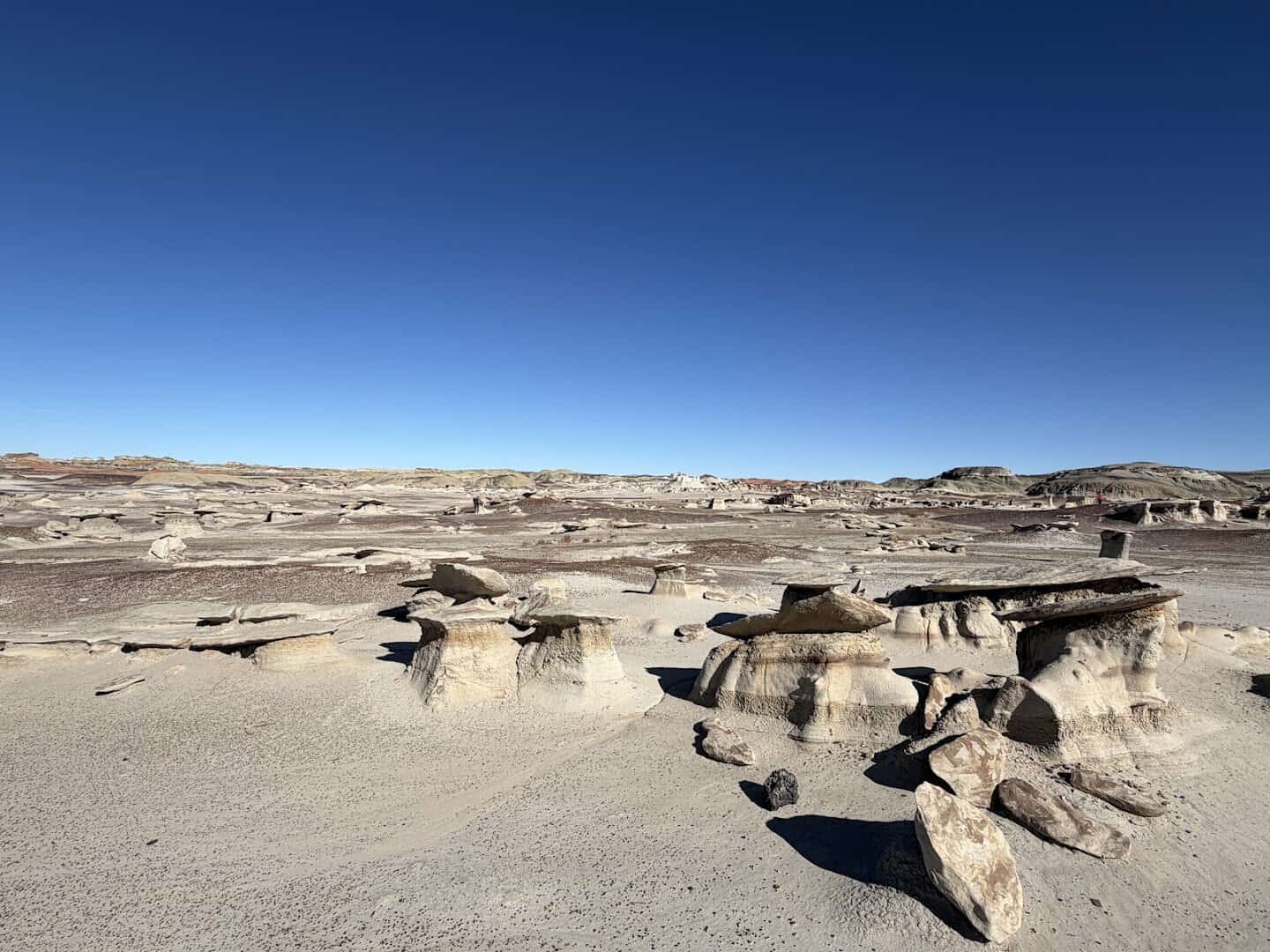
There are no trails here, no signs, no railings. You park on a gravel lot and walk out into a silent maze of clay hills, and within minutes the ordinary world is entirely gone.
The Bisti Badlands protect 45,000 acres of eroded hoodoos and mushroom-capped rock left over from a Late Cretaceous river delta. Wind and water have sculpted the soft stone into shapes that look almost deliberate, like a garden of stone eggs and spires.
Photographers chase this place at dawn and dusk, when low light rakes across the formations and every rock throws a long shadow. Bring water, a map, and a good sense of direction, because the landscape happily swallows landmarks. Fossil hunters have pulled dinosaur bones from these washes.
The most famous formations, the cracked-egg mounds and petrified stumps, sit a mile or two from the lot.
Where: Bisti/De-Na-Zin Wilderness, off NM-371 about 36 miles south of Farmington, New Mexico.
4. Great Sand Dunes National Park, Colorado
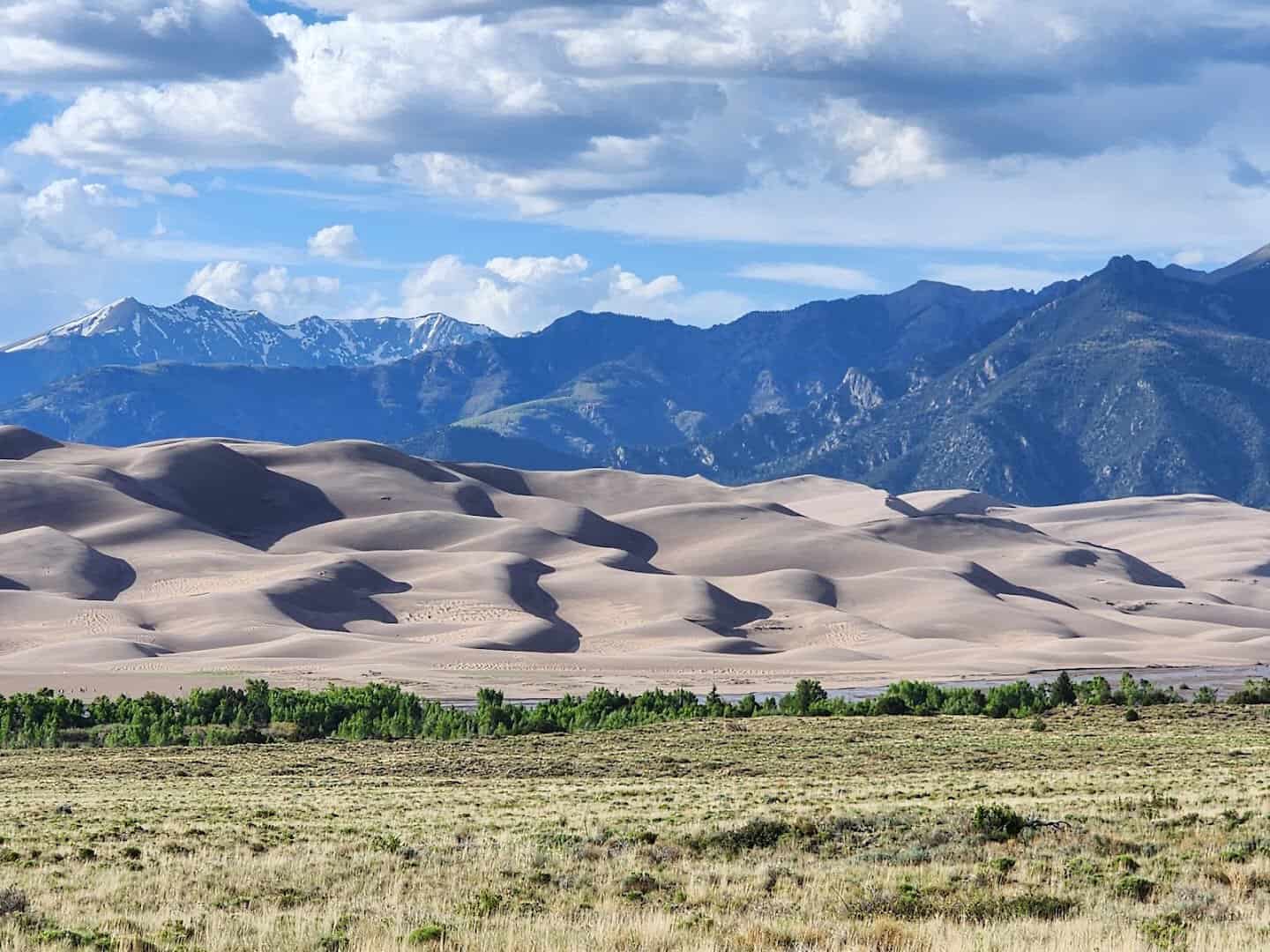
Nothing prepares you for the sight of the tallest sand dunes in North America piled against a backdrop of snowcapped peaks. The scale simply does not compute at first glance.
The Star Dune climbs about 750 feet above the valley floor, taller than the Statue of Liberty. You can hike to the crests, then sandboard back down the slopes like a kid who found the world’s biggest playground.
In late spring, Medano Creek runs along the base in rhythmic surges, pulses of water rolling in every fifteen seconds or so. Kids splash in it while the dunes glow behind them. Sand, water, and mountains all in one impossible frame.
Go barefoot early or late, since the sand can get scorching by midday.
Where: Great Sand Dunes National Park and Preserve, 11999 CO-150, Mosca, Colorado, near Alamosa.
5. Craters of the Moon National Monument, Idaho
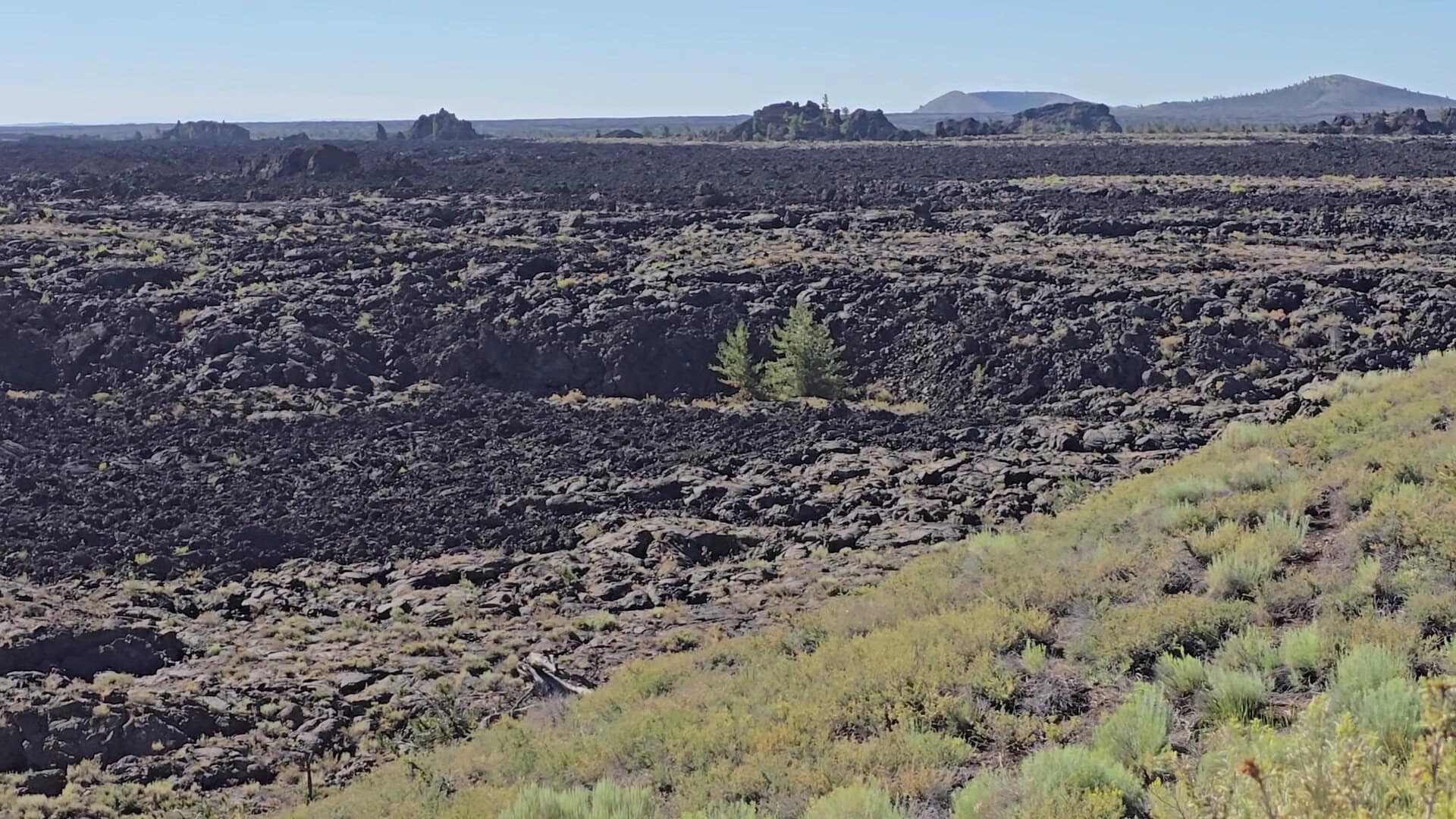
NASA once sent Apollo astronauts here to practice walking on the moon, and the moment you step onto the black lava you understand exactly why. The ground looks scorched, rippled, and freshly poured.
This is the largest young basaltic lava field in the lower 48, covering more than 600 square miles of cinder cones, spatter cones, and frozen rivers of stone. The most recent eruptions were only about 2,000 years ago.
In 1969, Apollo 14 crew members studied this ground to prepare for collecting rocks on the lunar surface. Walk the trails and you are following literal moonwalkers.
You can even climb into lava tube caves that stay cool all summer. A short loop road links the cinder cones, so you can see a lot without a long hike.
Where: Craters of the Moon National Monument, off US-20 between Arco and Carey, Idaho.
6. Mammoth Hot Springs, Wyoming
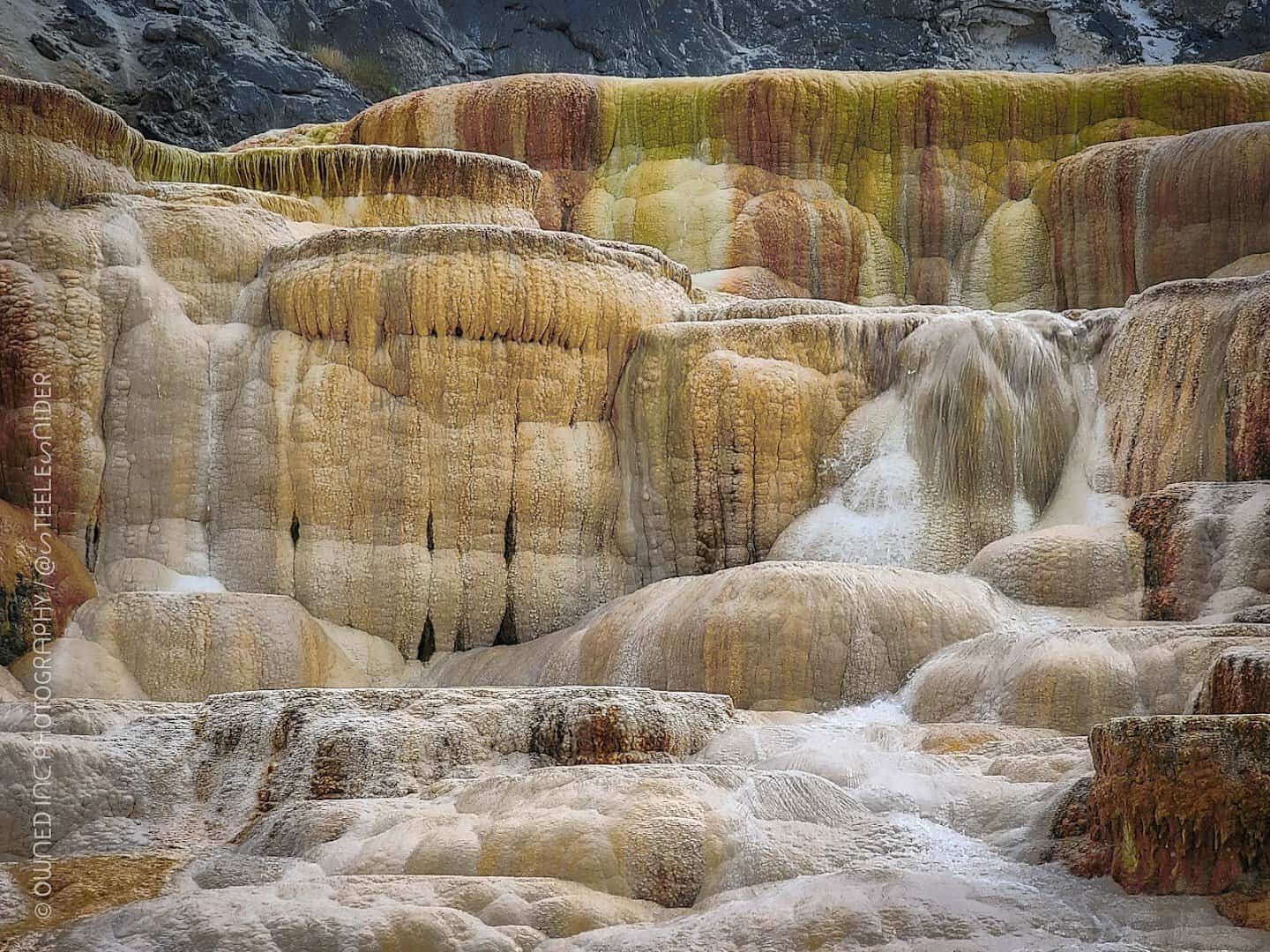
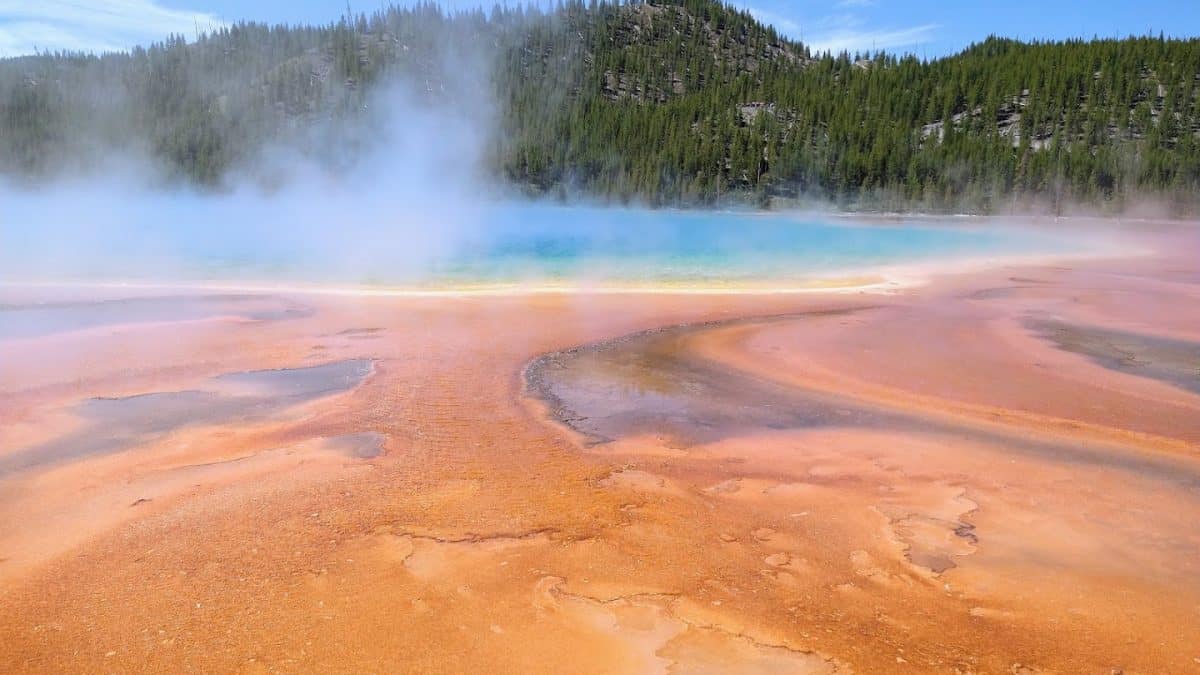
At the north end of Yellowstone, mineral water spills down a hillside and freezes it into tier after tier of pale terraces. It looks like an inside-out cave turned to face the sky.
These are travertine terraces, built as hot spring water rises through limestone and deposits chalky white calcium carbonate at the surface. They shift and grow so quickly that the shape of the springs changes from year to year.
Early explorers in the 1870s were astonished by these terraces, and they still stop visitors in their tracks. Boardwalks wind through steaming pools tinted orange and cream by living microbes.
Come early and you may have the upper terraces almost to yourself. Elk often nap on the lawns of the old fort buildings just below the springs.
Where: Mammoth Hot Springs, north Yellowstone near Gardiner, Montana, just inside the Wyoming boundary.
7. Monahans Sandhills State Park, Texas
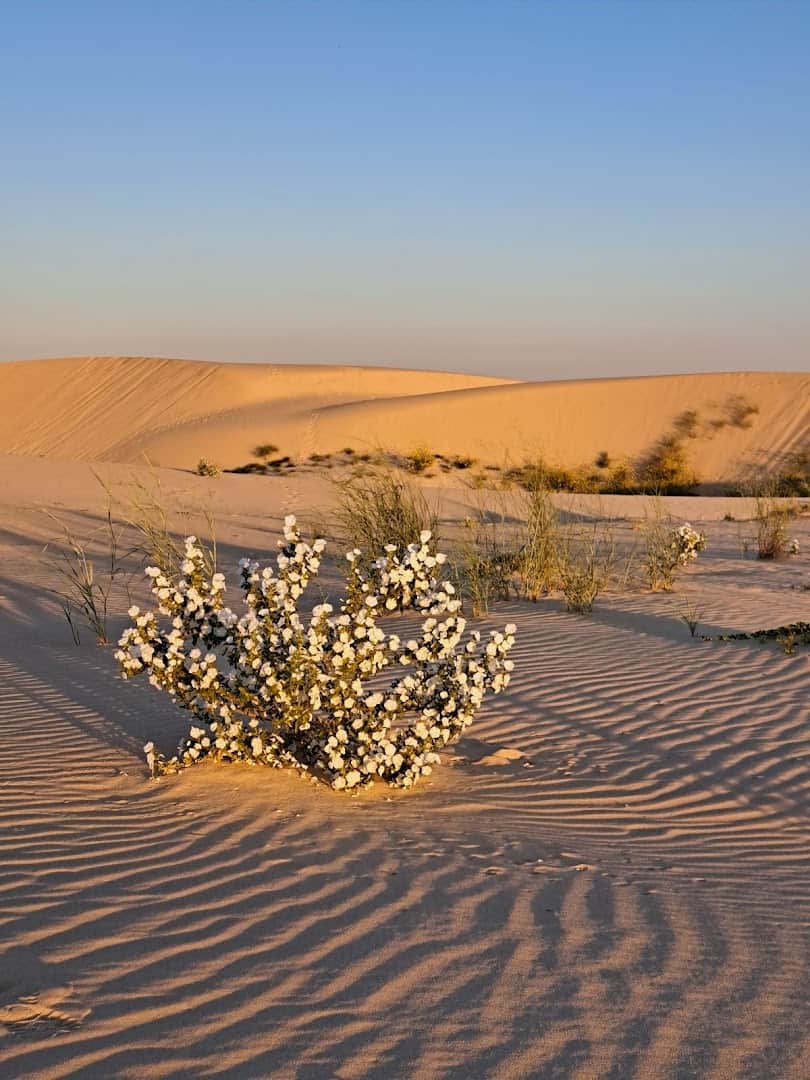
Out in West Texas, the flat oil country suddenly heaves up into rolling hills of pale, wind-drifted sand. It feels like a slice of the Sahara parked improbably beside Interstate 20.
Monahans Sandhills protects 3,840 acres of active dunes, some rising up to 70 feet, and it is only a small piece of a dune field that runs 200 miles into New Mexico. The sand blew here over ages, some of it from as far as the Rockies.
Rent a sand disc at the headquarters and surf the slopes, a favorite with kids of every age. At golden hour the ripples throw long shadows and the whole park glows.
People have camped in these dunes for thousands of years. Under the sand, small oak trees grow only knee-high, a hidden forest hiding in plain sight.
Where: Monahans Sandhills State Park, 2500 East Interstate 20, Monahans, Texas.
8. Badlands National Park, South Dakota
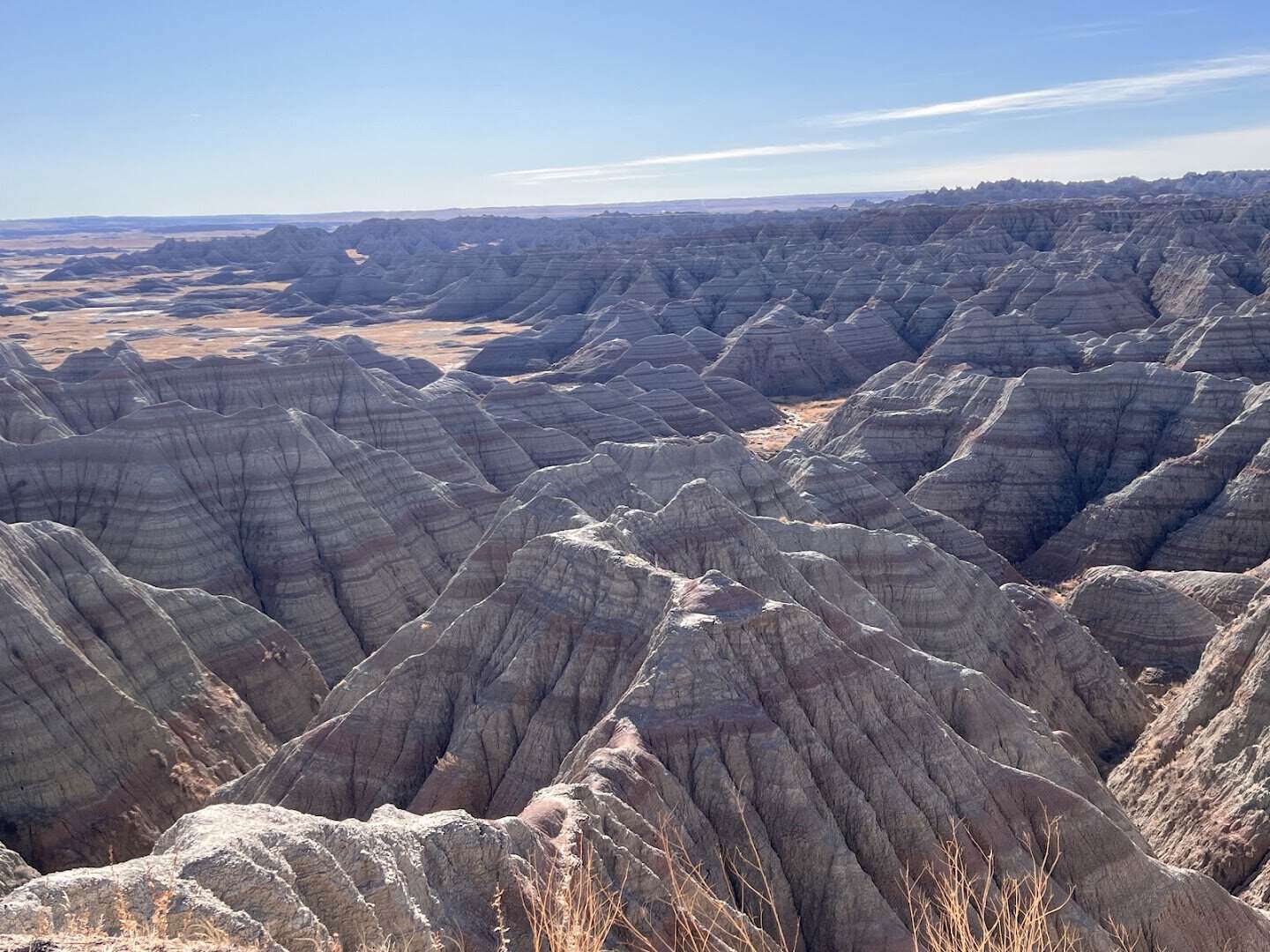
Drive across the calm South Dakota prairie and the earth abruptly falls away into a jagged maze of spires, pinnacles, and banded ridges. It is one of the great “wait, what is that” moments in American travel.
The formations wear delicate stripes, white ash, rusty iron oxide, and soft purple bands of oxidized manganese, layered over millions of years. The whole wall erodes about an inch a year, so the sculpture is always changing.
Sunrise and sunset set the ridges on fire with color, and the 30-mile loop road strings the best overlooks together for an easy first visit. Fossils of ancient creatures still wash out of these slopes.
Bighorn sheep pick their way along the rock as if they own it. Watch for them near the pinnacles at dawn.
Where: Badlands National Park, Ben Reifel Visitor Center near Interior and Wall, South Dakota.
9. Painted Hills, Oregon
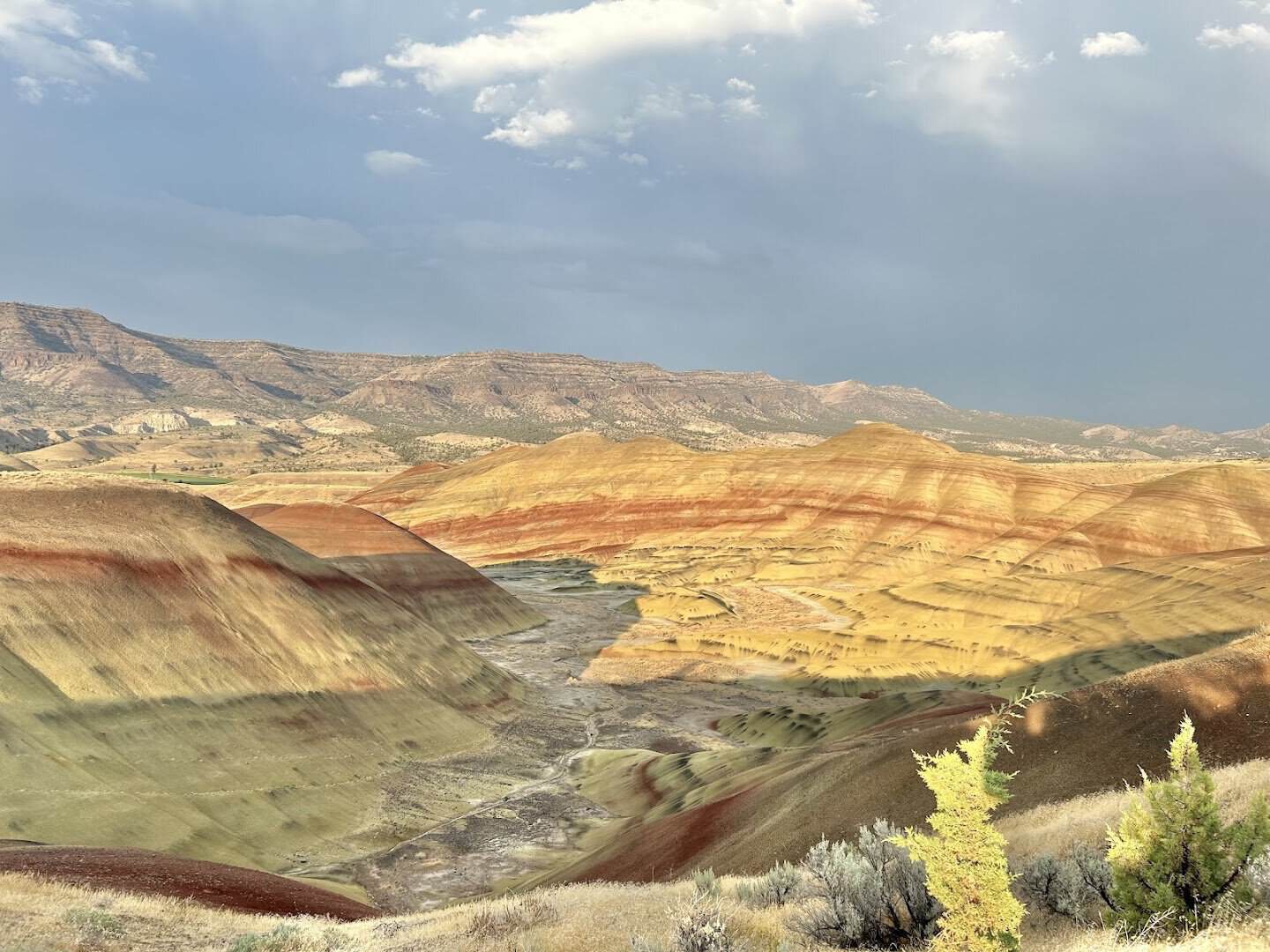
Some landscapes look painted, and this one truly does. Low mounds ripple across the valley in bands of gold, red, black, and tan, so smooth and vivid they seem brushed on by hand.
The Painted Hills preserve a 35-million-year record of ancient climates in their layers. Red bands mark old dry soils rich in iron, gold and yellow mark wetter times, and the colors shift with the light and the weather.
After rain the reds deepen toward pink and the whole hillside changes mood. It is one of the Seven Wonders of Oregon, and the short boardwalk trails keep the view close and the fragile ground safe.
Late afternoon light makes the stripes richest of all. Stay on the paths, because a single footprint on those hills can last for years.
Where: Painted Hills Unit, John Day Fossil Beds, about 9 miles northwest of Mitchell, Oregon.
10. Valley of Fire State Park, Nevada
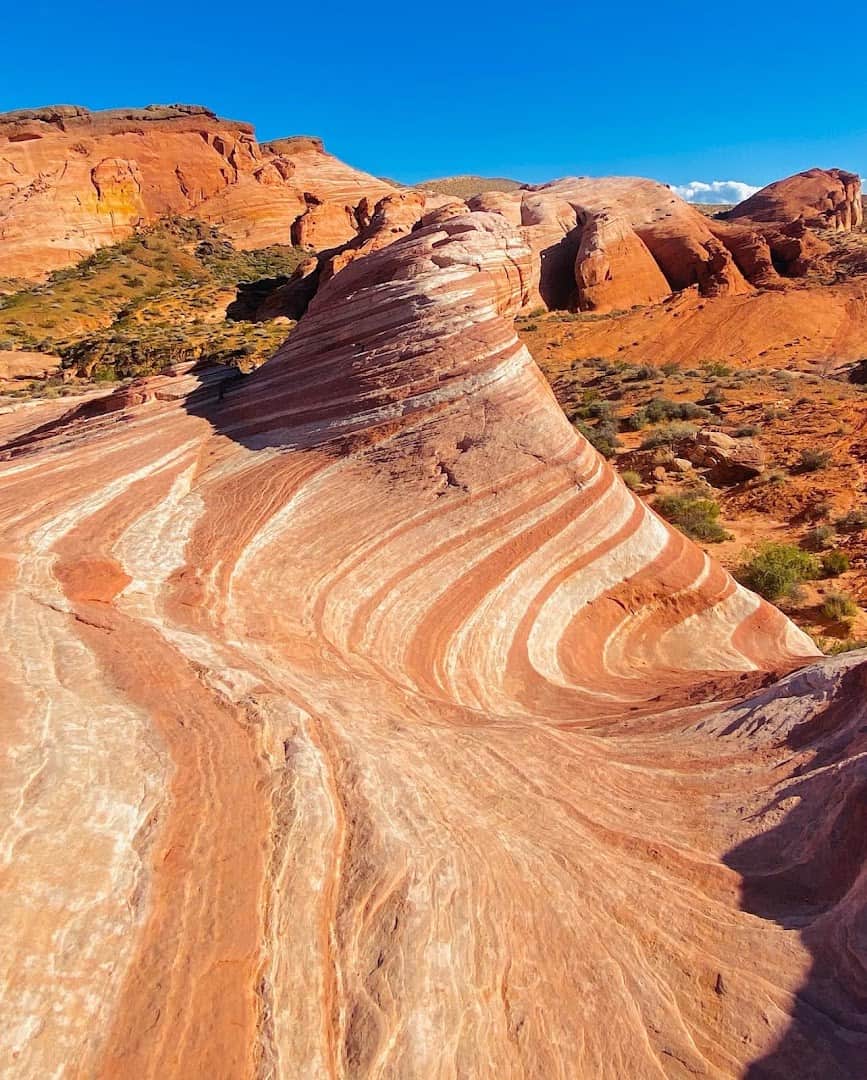
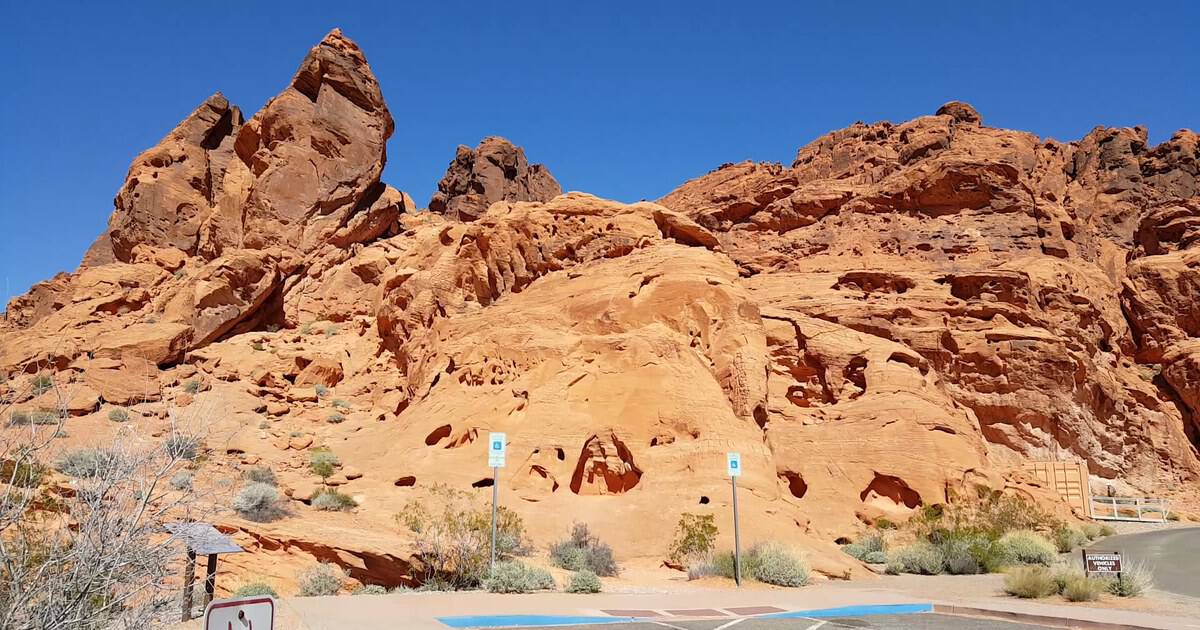
An hour from the neon of Las Vegas, the desert bursts into flame colored stone. Waves and fins of bright red sandstone glow so hot at sunset that the park’s name feels like a plain description.
These formations are Aztec sandstone, shifting dunes turned to rock some 150 million years ago, their fiery color drawn from iron oxide. Ancient petrified wood and 2,000-year-old petroglyphs are tucked among the rocks.
As Nevada’s oldest state park, it opened in 1934 and still feels like a secret. Drive the scenic road, then wander the short trails to Fire Wave and Rainbow Vista for the boldest color.
The swirling stripes on Fire Wave look poured, not eroded. Movie crews love it here, and the red rock has stood in for Mars on the big screen.
Where: Valley of Fire State Park, about 16 miles south of Overton, Nevada, off Interstate 15 northeast of Las Vegas.
Start Planning Your Trip to Another Planet
You will not need a spacesuit for a single one of these, only a full tank, comfortable shoes, and a little sense of wonder. Each of these landscapes rewards an early start, when the light is soft and the crowds are still asleep.
Check the season too, since a salt mirror or a flowing spring creek shows up only at certain times of year. A quick call to the ranger station saves a wasted drive.
So pick the one that pulls at you hardest, map the drive, and go stand somewhere that looks like it fell off another world. Then come home and tell everyone the photos are not edited. They will not believe you, and that is half the fun.
Featured image: Naphatchanan Ninkaew via Valley of Fire State Park

Stella Raines
Editor-in-Chief
Stella brings over a decade of storytelling experience to TX Headlines. With roots in West Texas and a love for road trips, she leads the editorial team with an eye for the hidden stories that make Texas unforgettable.