10 Covered Bridges in the USA That Are Stunning in Fall
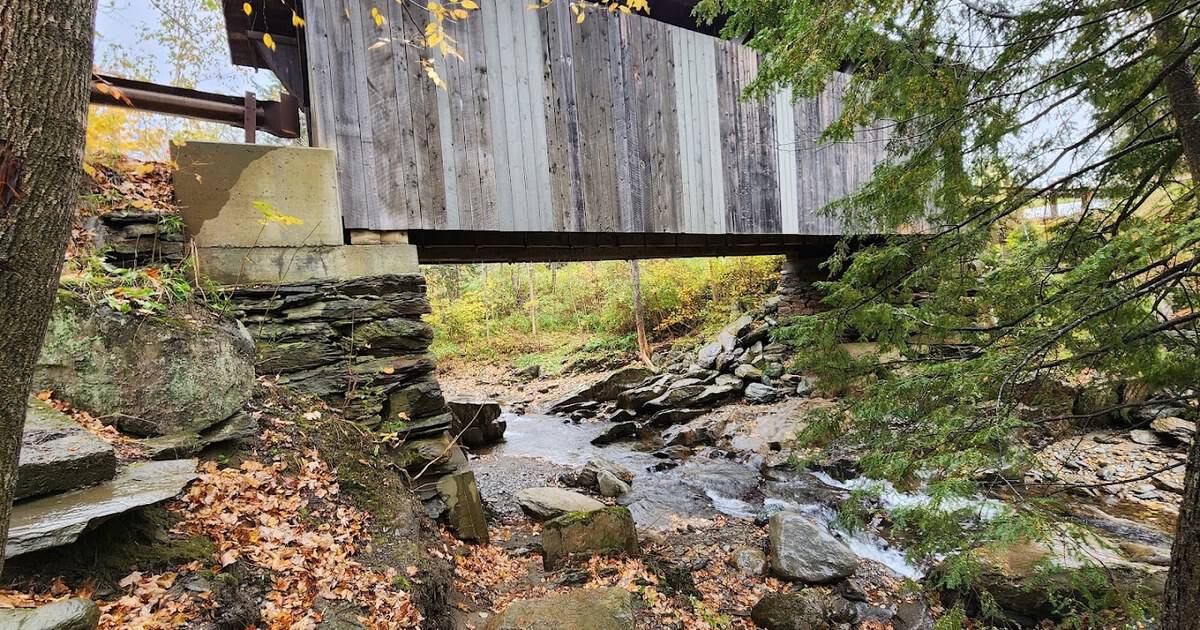
Every single October, I get the same familiar itch. Something about the cold morning air and the smell of woodsmoke makes me want to find a road that ends somewhere surprising, one with a creek, a canopy of red leaves and a little wooden tunnel waiting at the far end.
Covered bridges are one of America’s most photogenic secrets, wooden time capsules that turn an ordinary river crossing into something worth stopping the car for. Most were built in the 1800s to protect the trusses underneath from rain and snow, and the roof happened to make them last.
Set against a smoldering autumn glow, they might be the single best subject for a fall road trip anywhere in the country. Here’s where to point the car this season.
1. Cornish-Windsor Covered Bridge, New Hampshire
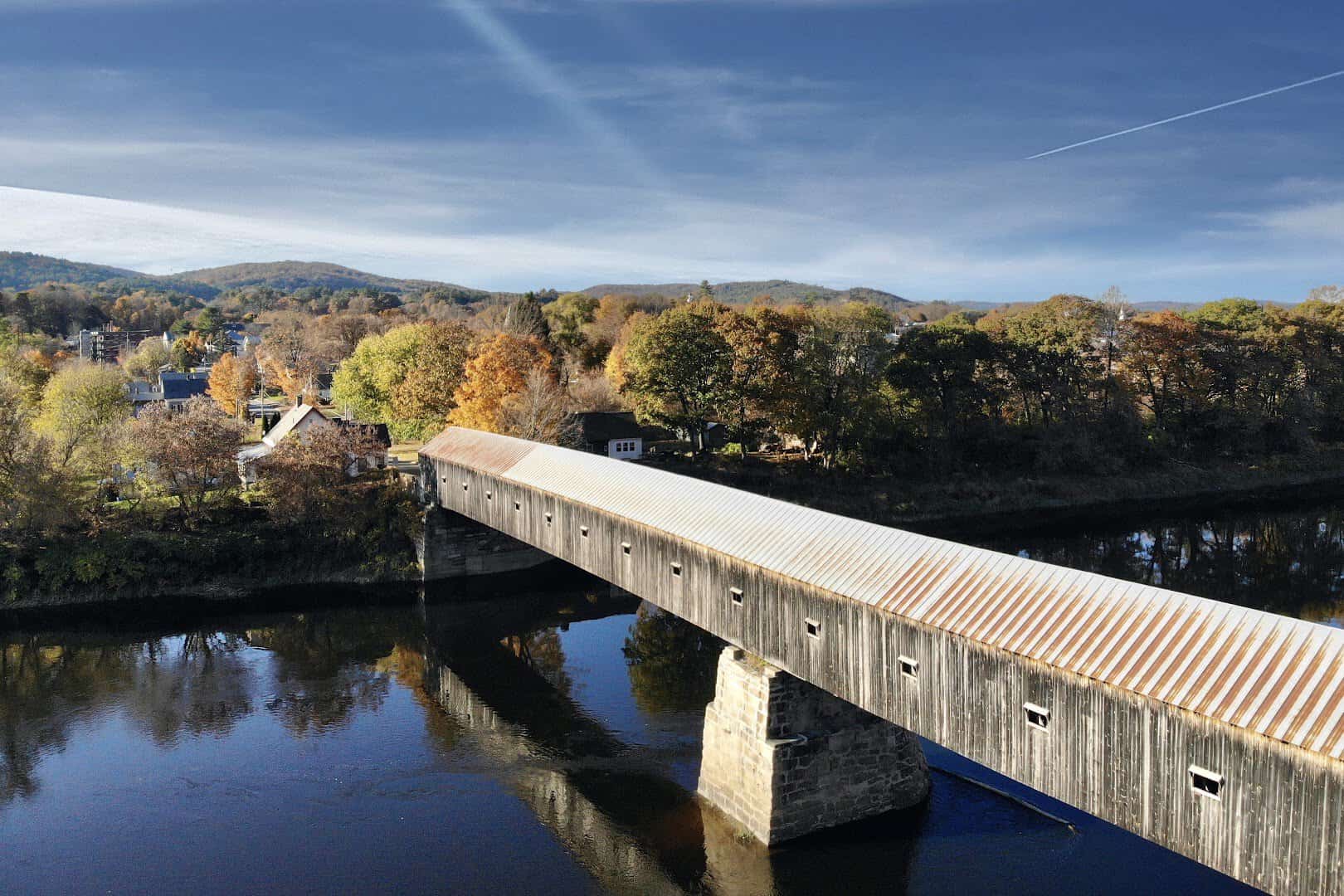
At 449 feet, this is the longest wooden bridge in the United States, a two span lattice truss completed in 1866 after three earlier crossings washed away in floods. It links Cornish, New Hampshire to Windsor, Vermont over the Connecticut River.
The design comes from an 1820 patent by architect Ithiel Town, whose wooden lattice pattern spread the load evenly enough that this bridge has carried traffic for more than 150 years without needing to be rebuilt from scratch.
The hills on both banks turn a deep, layered red and gold every fall, and the slow water below mirrors the whole scene back at you. It is still open to daily traffic, which somehow makes it feel even more alive.
A small tollhouse museum sits on the New Hampshire side, and the short walk across gives you a clean view of Mount Ascutney rising over the Vermont bank, especially striking once its slopes turn orange.
Where: NH Route 12A, Cornish, New Hampshire, crossing to Windsor, Vermont.
2. Bridgeton Covered Bridge, Indiana
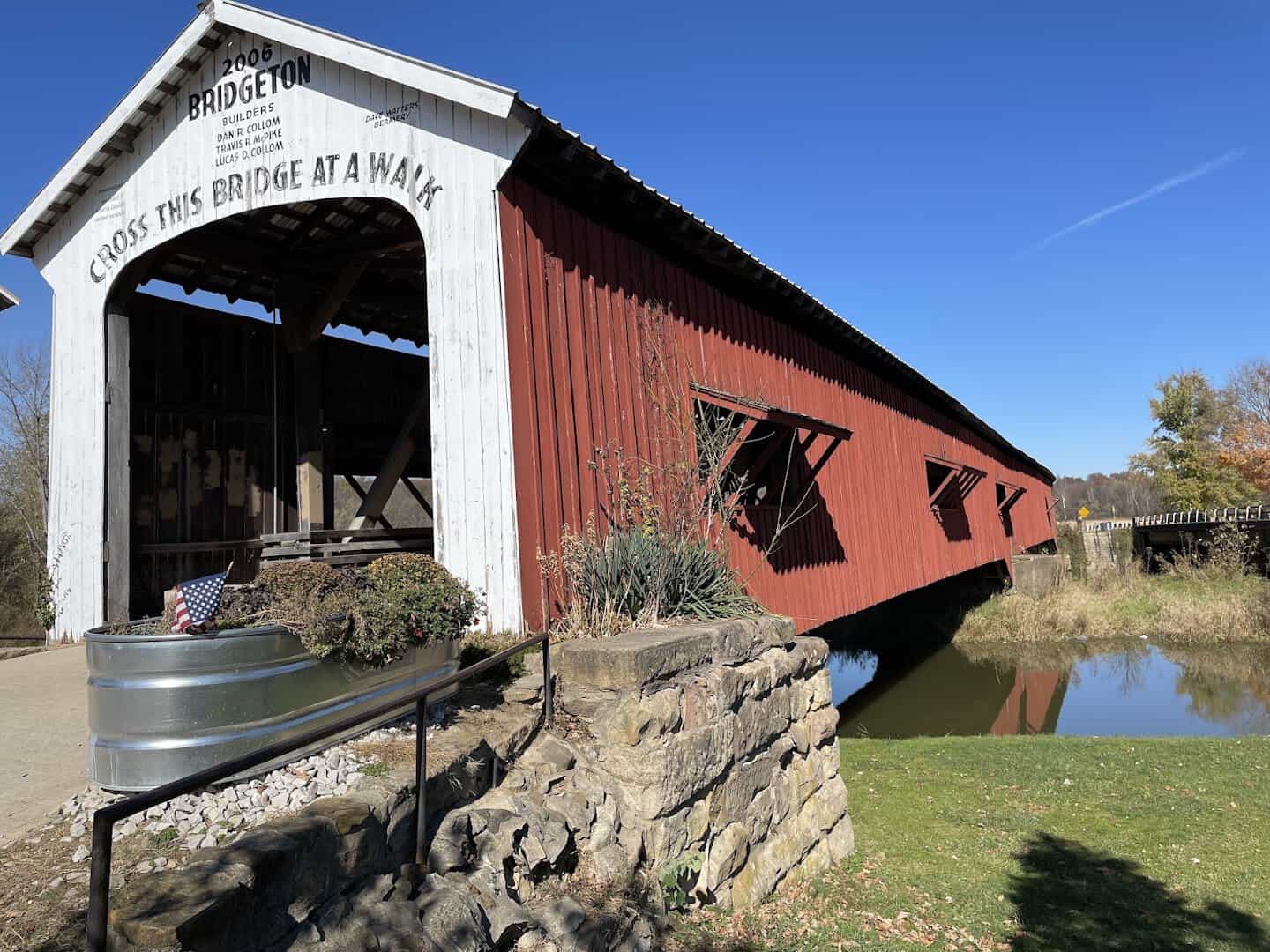
Parke County calls itself the Covered Bridge Capital of the World, home to 31 covered bridges, and this 1868 span is its most photographed. It sits beside a working gristmill and a nine foot dam that spills into a real waterfall.
The original bridge burned down in 2005, and the town rebuilt it by hand the following year rather than let the crossing disappear. That kind of stubbornness is part of why people love this place.
Every October, the town leans hard into the season for the Parke County Covered Bridge Festival, when more than two million visitors pass through nine communities and the mill pond runs gold with reflected maple leaves.
Walk past the bridge to the working gristmill next door, still grinding cornmeal the old fashioned way, and pick up a bag on your way back to the car.
Where: Bridgeton, Parke County, Indiana, just off State Road 47.
3. Cutler-Donahoe Covered Bridge, Iowa
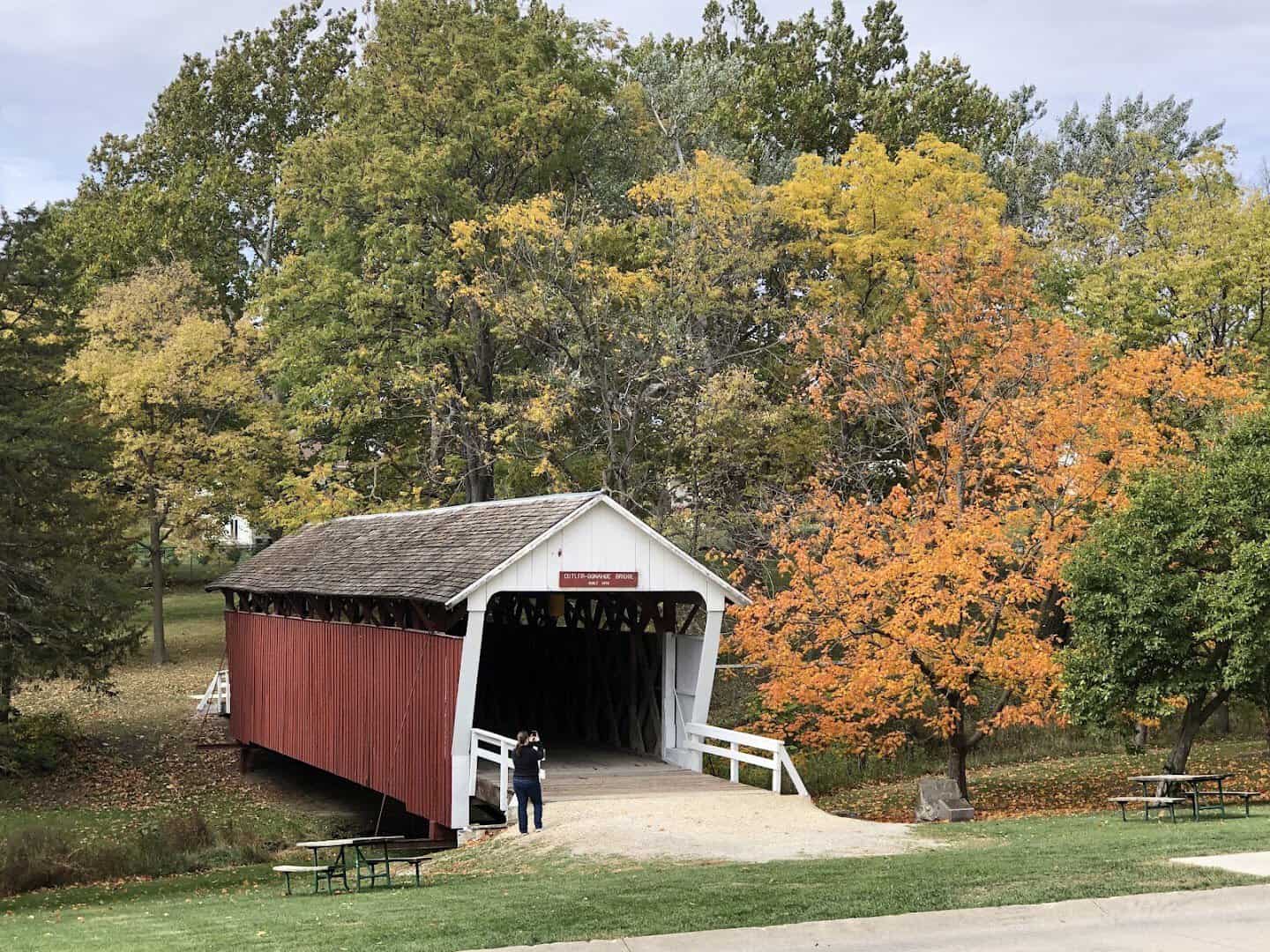
Designed and built in 1870 by Eli Cox, this Town lattice bridge with a queenpost frame originally crossed the North River about a mile and a half east of Winterset, fastened together with wooden pegs and iron bolts.
Madison County is famous for its covered bridges, made a household name by “The Bridges of Madison County,” and this is one of the easiest to visit since a bridge mover named Clyde Bower relocated it into Winterset City Park in 1970.
It now sits beside picnic tables and a stand of maples that turn a rich gold and orange each October, right in the middle of town rather than out on a gravel road.
That makes it an easy stop between Winterset’s historic town square and the rest of the county’s covered bridge driving loop, with no long gravel backroad detour required to see it.
Where: Winterset City Park, Winterset, Madison County, Iowa.
4. West Cornwall Covered Bridge, Connecticut
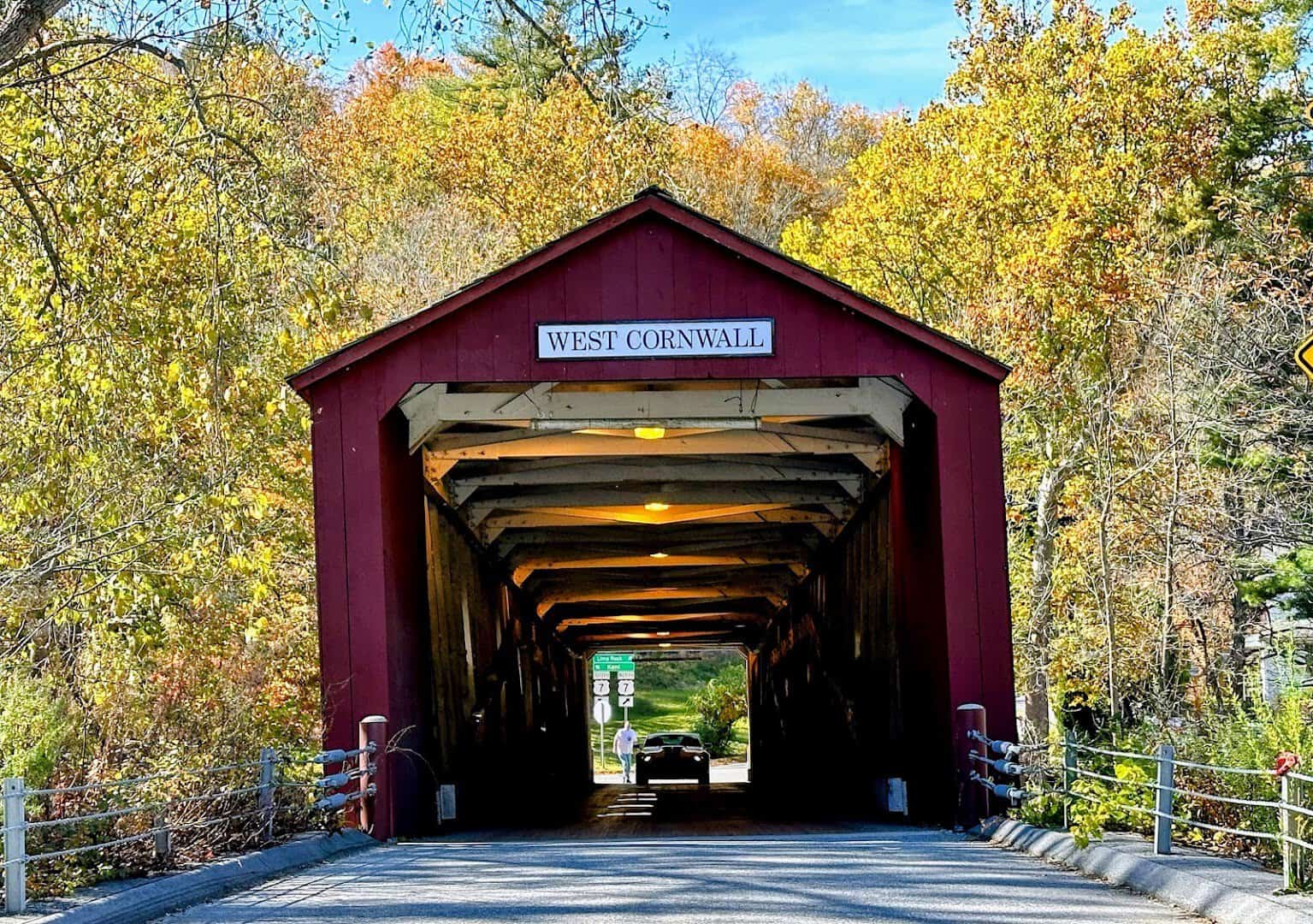
Built around 1864 of sturdy red spruce, this lattice truss bridge still carries cars across the Housatonic River on Route 128. Builders had been trying to bridge this exact spot since 1762, only to lose each attempt to ice and floodwater.
It has since survived a 20 ton oil truck crashing through its floor in 1945 and a full steel reinforcement project in 1973 that let it keep carrying modern traffic without losing its original frame.
In fall, the Litchfield Hills around it turn bright orange and rust, and the river below catches every bit of the color, doubling it.
The village around it is barely more than a general store and a handful of houses, the kind of blink and you will miss it stop that somehow anchors half of Litchfield County’s postcards.
Where: Route 128, West Cornwall, Connecticut.
5. Gold Brook Covered Bridge, Vermont
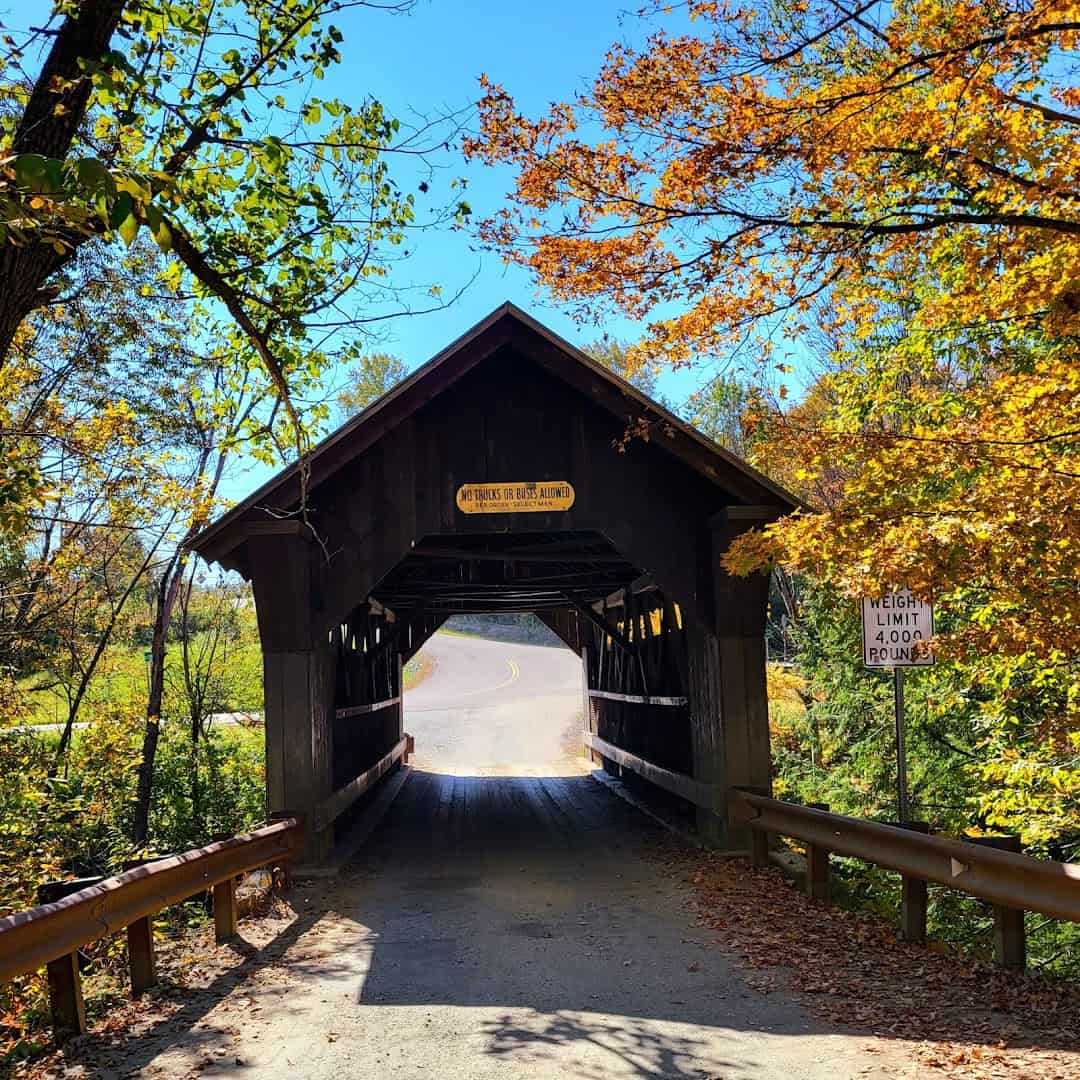
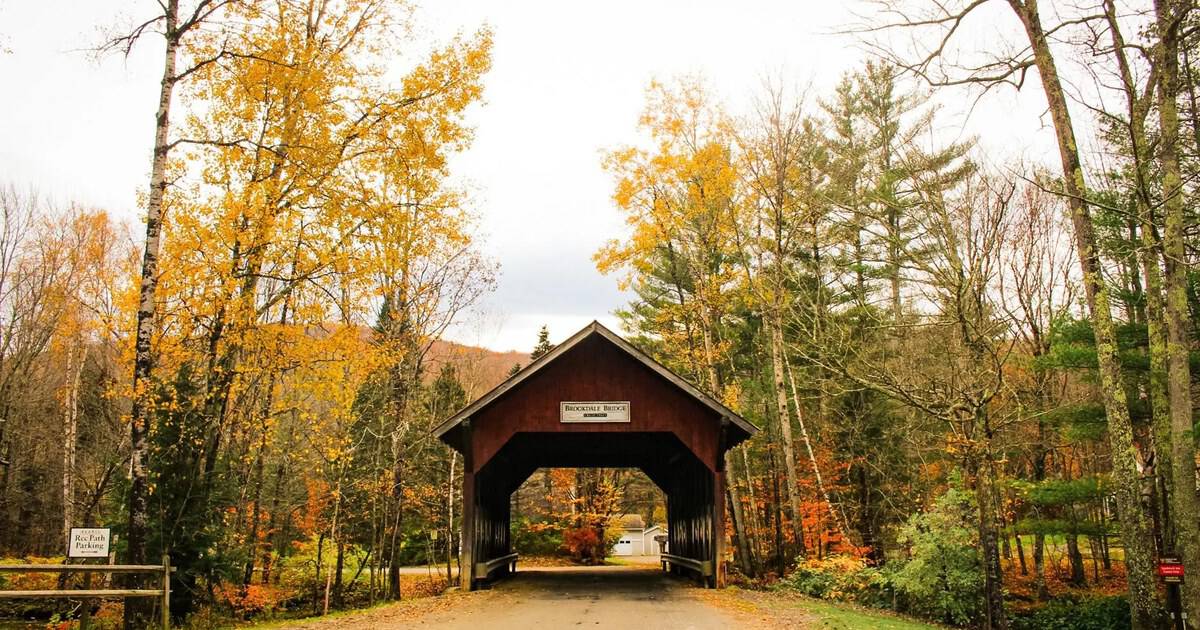
Also known as Emily’s Bridge, this 1844 Howe truss span over Gold Brook is one of Vermont’s most photographed structures, built by John W. Smith and added to the National Register of Historic Places in 1974.
Its fame mostly comes from a ghost story about a jilted bride named Emily, a legend that historians trace to the 1960s rather than any real 1920s tragedy.
Whatever you believe about Emily, the setting itself needs no embellishment. The Green Mountains rise around it, and by mid October the brook runs beneath a full canopy of red and gold.
Stowe itself turns into one of New England’s busiest leaf peeping towns every fall, so arrive early if you want the bridge to yourself before the crowds find it too.
Where: Covered Bridge Road, Stowe, Vermont.
6. State Road Covered Bridge, Ohio
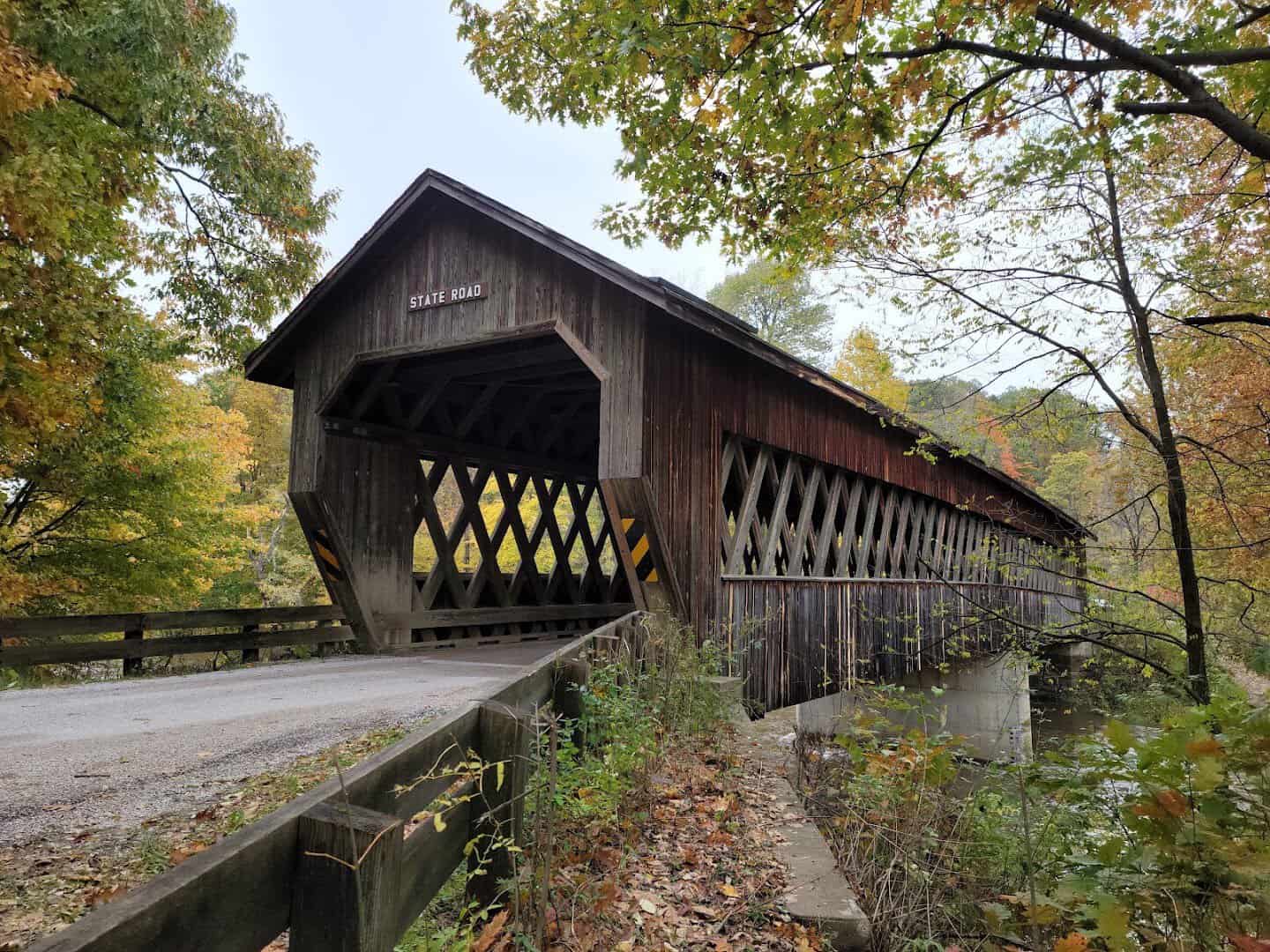
Ashtabula County calls itself Ohio’s covered bridge capital, and this 1983 Town lattice bridge over Conneaut Creek is one of the newer ones, built by local bridge maker John Smolen to the same wooden craft as its 1800s neighbors.
At 157 feet long and 140 feet of clear span, it still carries a real, working road, Monroe Township’s County Highway 354, rather than sitting retired and roped off inside a park somewhere.
The oaks and maples packed in around the creek turn deep gold and rust by early to mid October, framing the dark wood siding from almost every angle.
Ashtabula County holds nineteen covered bridges within a fairly compact loop, so this one makes a natural first stop before continuing on to see the rest along the county’s wine trail.
Where: County Highway 354, Monroe Township, Ashtabula County, Ohio.
7. Hyde Hall Covered Bridge, New York
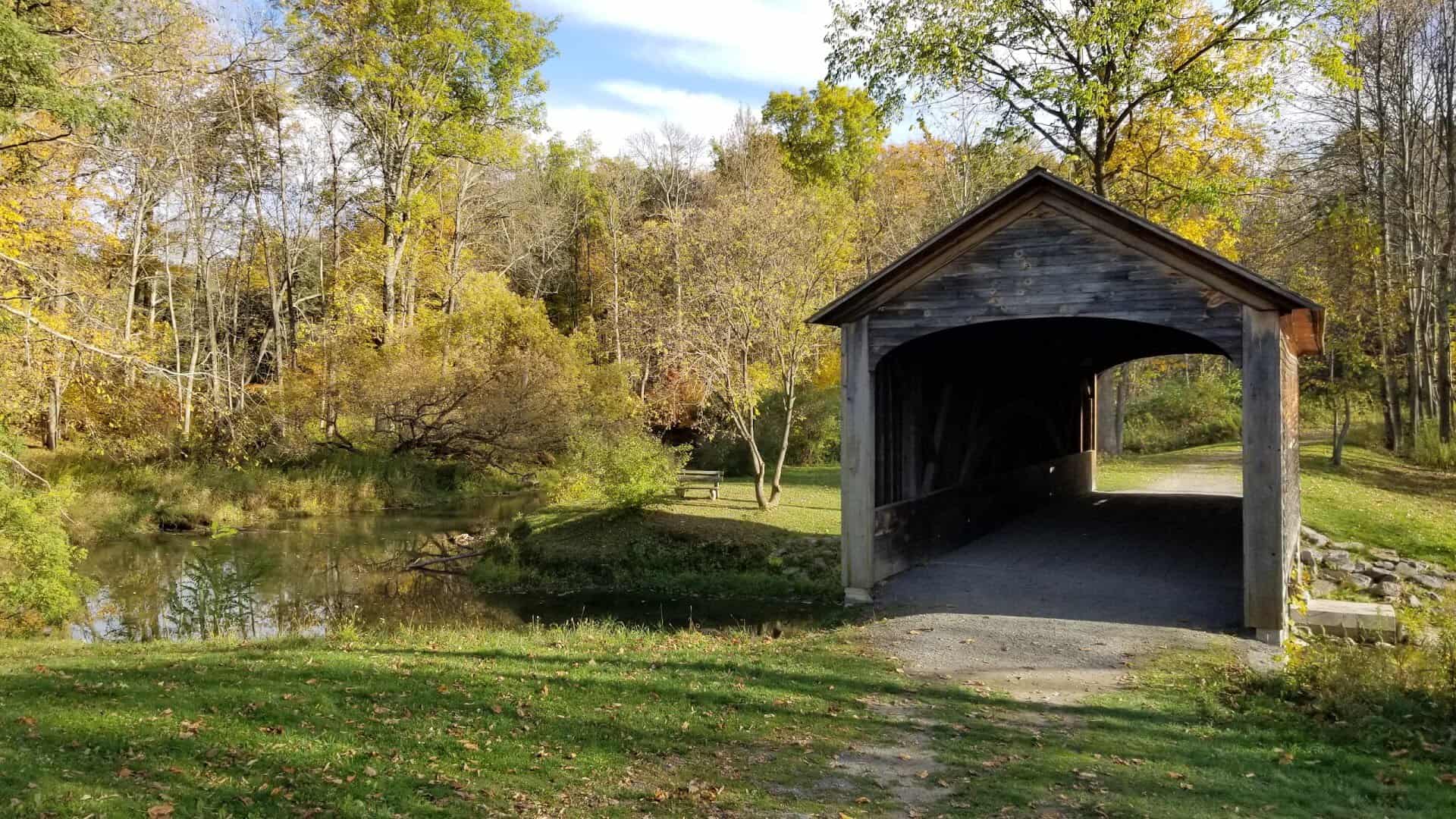
Built in 1825 by Cyrenus Clark, Andrew Alden and Lorenzo Bates as part of a country estate project, this 53 foot single span is recognized as the oldest surviving wooden covered bridge in the entire United States.
It uses a Burr arch, a combination of an arch and a lattice truss patented in 1817, and it still stands on the same stone footings it was built on two centuries ago.
The bridge crosses a quiet stretch of Shadow Brook a short walk from Otsego Lake, inside Glimmerglass State Park near Cooperstown, with maples turning gold and rust all around it by early October each year.
Cooperstown itself is a short drive away, so a stop here pairs easily with a longer weekend of lake views and small town New York in autumn.
Where: Glimmerglass State Park, East Springfield, New York.
8. Office Covered Bridge, Oregon
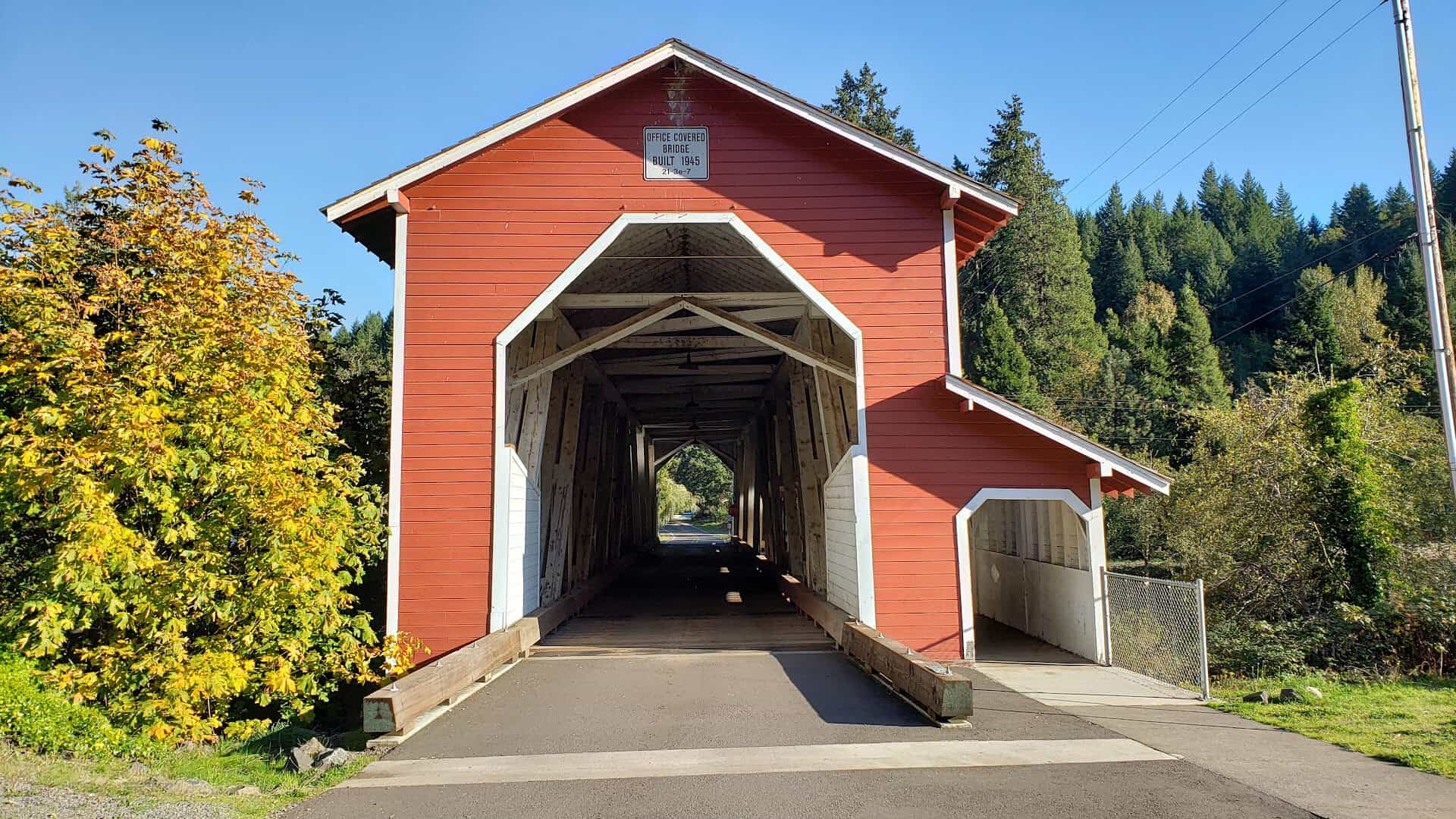
At 180 feet, this 1945 triple Howe truss span is the longest covered bridge in Oregon, built by the Westfir Lumber Company to move heavy logging equipment across the North Fork of the Middle Fork Willamette River.
It even carries its own separate pedestrian walkway, a rare feature for any covered bridge west of the Mississippi, and it earned a spot on the National Register of Historic Places in 1979.
The name comes from the mill company offices that once stood nearby, now converted into a small bed and breakfast.
Cascade foothills surround it, turning gold and rust through October while the river underneath stays a startling, almost unreal shade of green year round.
Westfir itself grew up entirely around the old lumber mill, and walking the bridge’s covered walkway still feels a little like stepping into a company town frozen sometime in the 1940s.
Where: North Fork Avenue, Westfir, Oregon.
9. Fallasburg Covered Bridge, Michigan
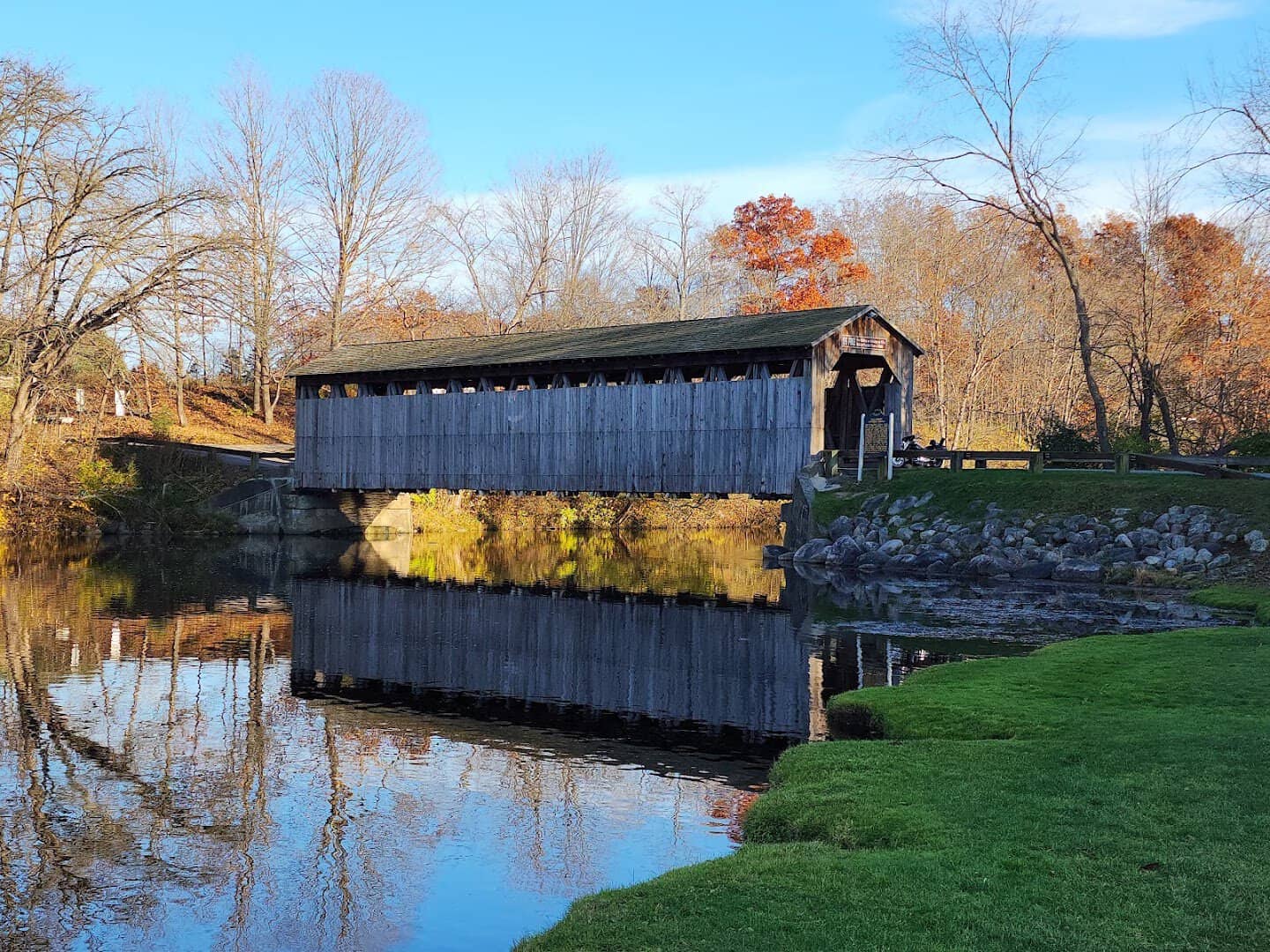
Bridge builder Jared Bresee put this one up in 1871 for about fifteen hundred dollars, using white pine lattice trusses, after a string of earlier wooden bridges kept losing the fight against spring ice jams on the Flat River.
It is Michigan’s oldest covered bridge still sitting in its original spot, and the oldest one in the state still open to regular car traffic, repaired in 1905 and again in 1945 to keep it that way.
The pond just upstream turns the whole scene into a mirror each fall, doubling the bare branches and rust colored maples that ring the water by mid October.
It anchors the small Fallasburg Historic District just north of Lowell, with a pioneer schoolhouse and a cluster of white clapboard buildings nearby worth the short walk once you cross over.
Vergennes Township is quiet farm country most of the year, which only makes the sudden crowd of red maples along the riverbank feel more like a reward for finding it.
Where: Fallasburg Park Drive, Lowell, Michigan.
10. River Plantation Covered Bridge, Texas
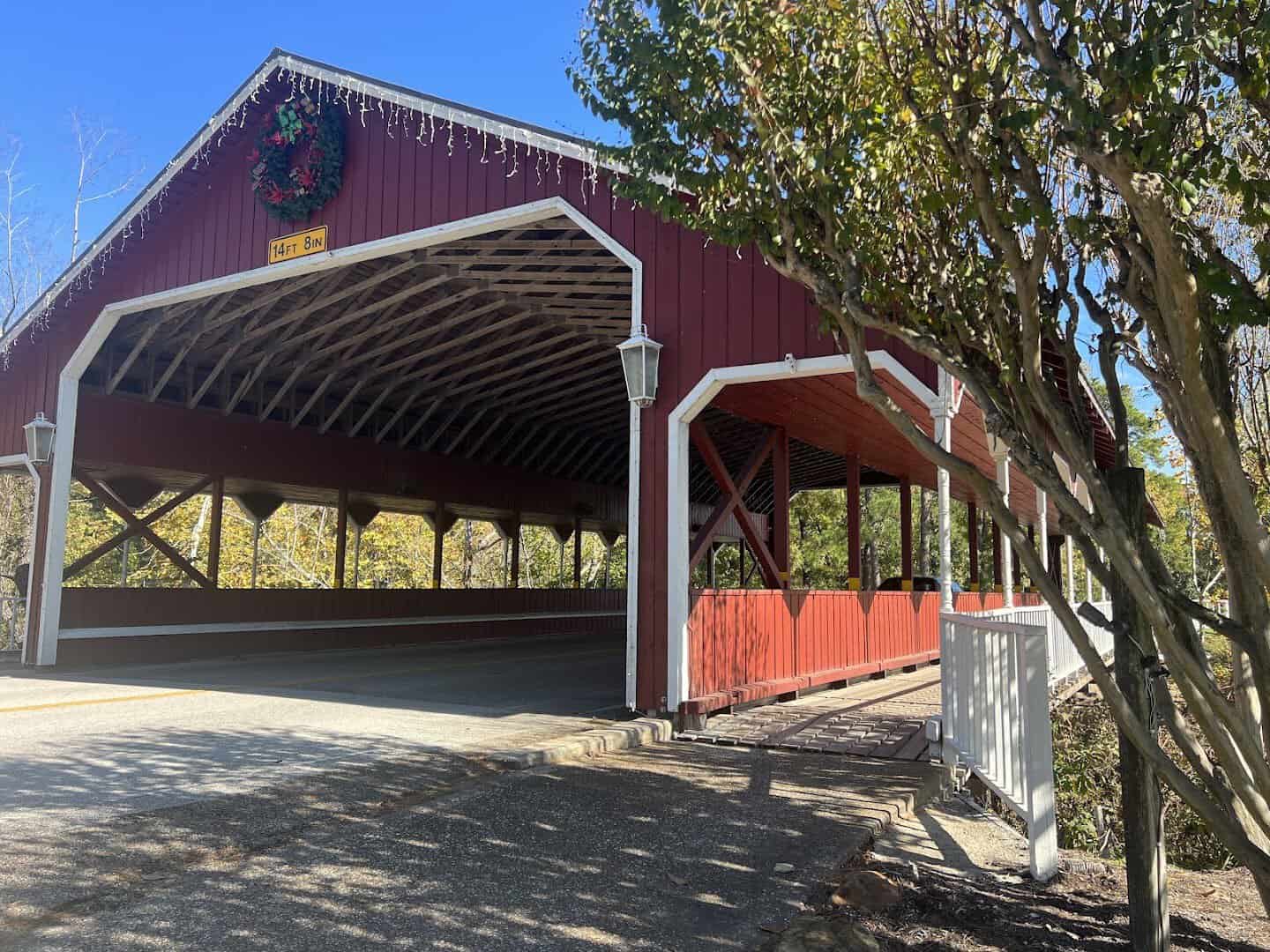
Texas lost its shot at original covered bridges to bad timing. The state spent the 1825 to 1875 covered bridge era fighting for independence, then statehood, then a civil war, with little time left over for wooden river crossings.
This modern red span, built along the San Jacinto River in the 1960s as River Plantation grew from a flood recovery community into a full residential neighborhood, brought that old fashioned charm back on purpose, one plank at a time.
It still marks the entrance to River Plantation near Conroe, and the sweetgums and elms lining the riverbank put on a real, if quieter, East Texas fall show by late November.
It will never rival Vermont for sheer volume of color, but a bridge like this proves the whole covered bridge tradition can still find a foothold somewhere Texas never expected it to land.
Where: River Plantation Drive, Conroe, Texas.
Start Planning Your Covered Bridge Road Trip
Ten bridges, ten states and one very good excuse to chase fall color further than your usual loop this year. Pick a cluster near you, or string a few of these together into a real multi state road trip.
Pack a thermos, watch the leaves turn from green to gold to red as you drive, and let a little wooden tunnel over a river be the reason you finally pulled the car over.
None of these bridges require anything fancy to enjoy, just a good pair of walking shoes, a warm jacket, a camera and a willingness to slow down for a minute or two. That is usually the whole point of a covered bridge anyway.
Featured image: Michelle via Historic Gold Brook Covered Bridge

Stella Raines
Editor-in-Chief
Stella brings over a decade of storytelling experience to TX Headlines. With roots in West Texas and a love for road trips, she leads the editorial team with an eye for the hidden stories that make Texas unforgettable.