This Tiny Texas Church Is Covered Inside With Thousands of Hand-Painted Frescoes
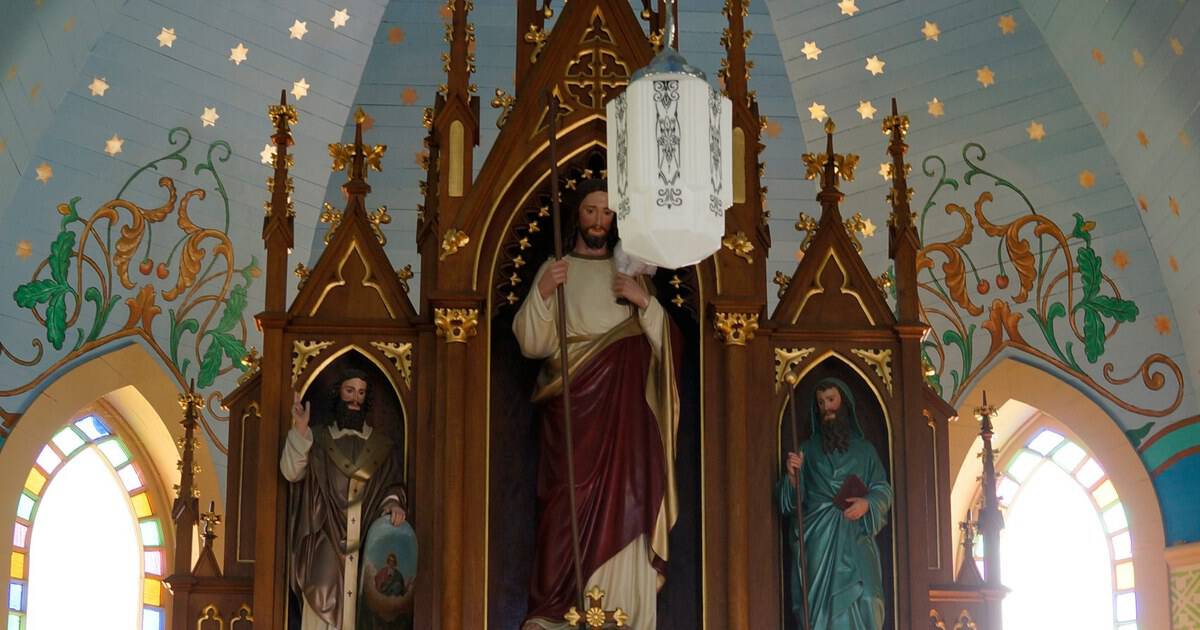
I have a theory about country churches: the plainer the outside, the better the surprise waiting inside. A whitewashed box on a back road nobody drives on purpose is exactly the kind of place that turns out to be hiding something spectacular.
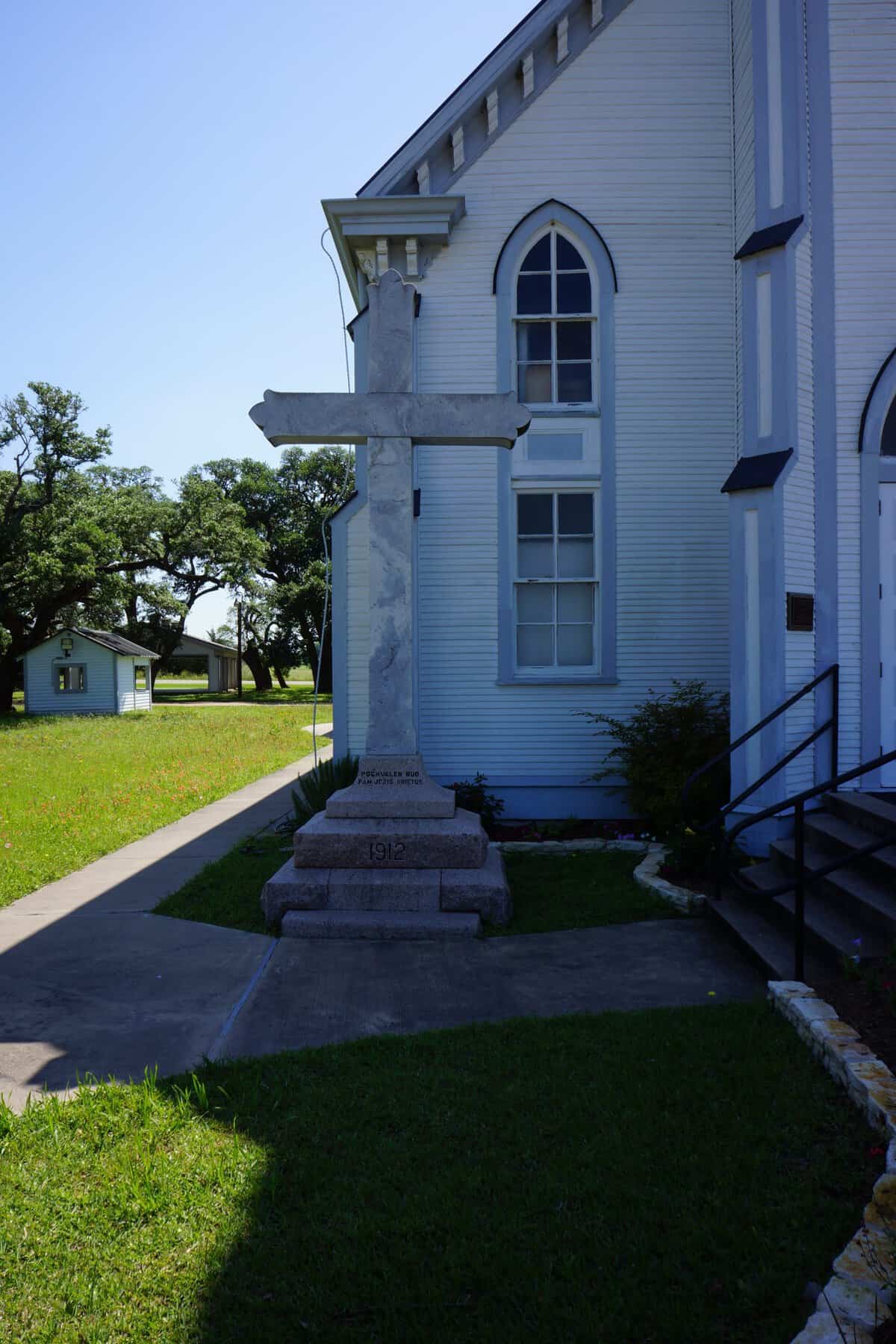
This one proves the theory better than anywhere else in Texas. From the gravel lot it reads as a modest white steepled church on a quiet Fayette County prairie, the kind you would blow right past on the way to somewhere louder.
Then you step inside, tip your head back, and find a sky-blue heaven scattered with gold stars, angels, and twisting vines running across every surface. It stops people in the doorway every single time.
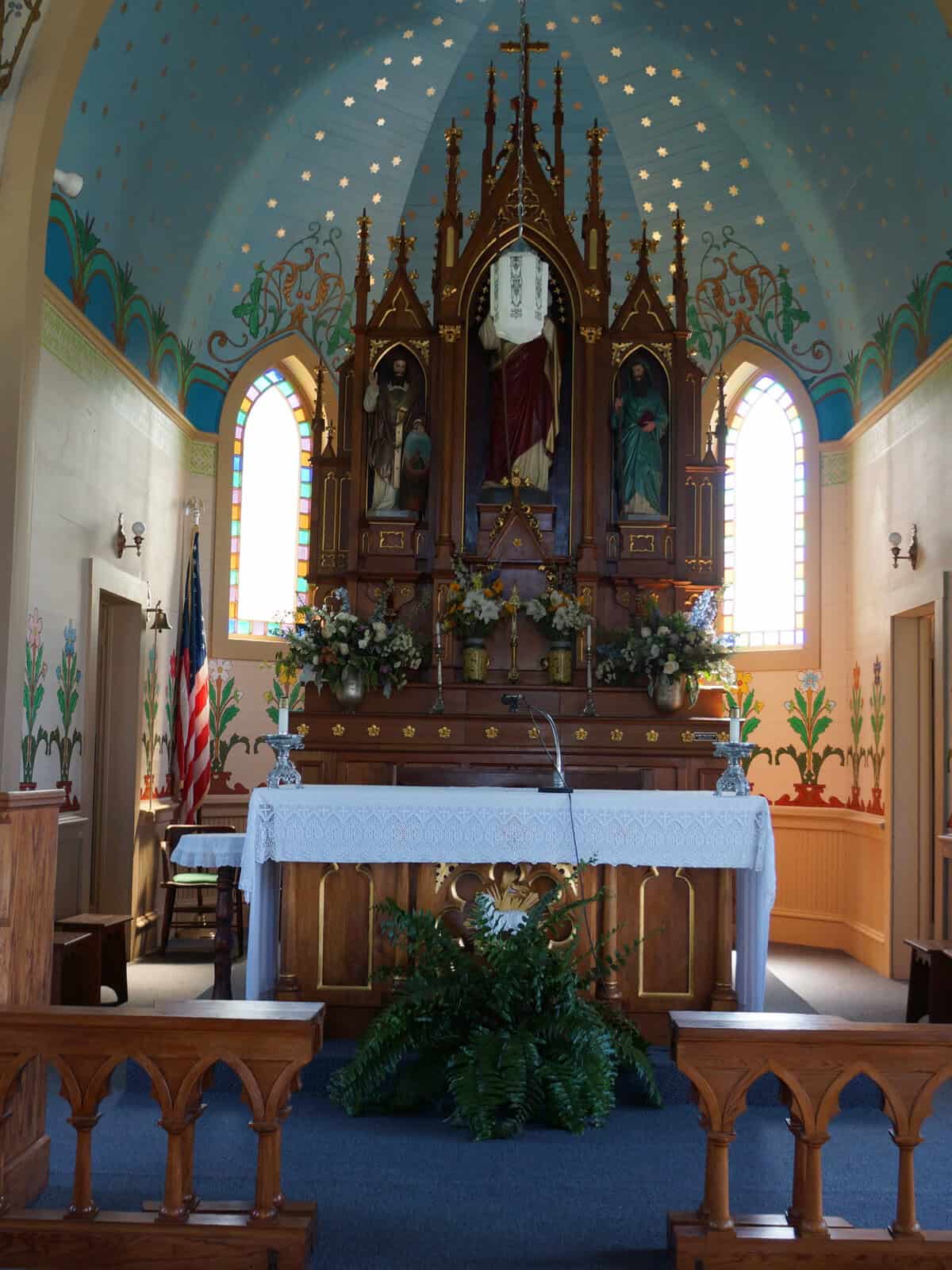
This is Saints Cyril and Methodius Catholic Church in tiny Dubina, and it is one of the most quietly astonishing rooms in the state. Here is why this little church near Schulenburg belongs on your next road trip, and how to see it for yourself.
Look Up First, Always Look Up
Walk through the door and your eyes go straight to the ceiling. It arches overhead in a soft robin’s-egg blue, and it is covered, corner to corner, in golden six-pointed stars.
People who count these things say there are more than three thousand of them up there. You will not count them. You will just stand in the aisle with your neck craned back like everyone else does, grinning at a sky built out of paint.
Between the stars, angels peek out from the plaster with individually painted feathers on their wings. Some hold scrolls lettered in Czech, a quiet nod to the immigrant families who built the place and prayed here in their own language.
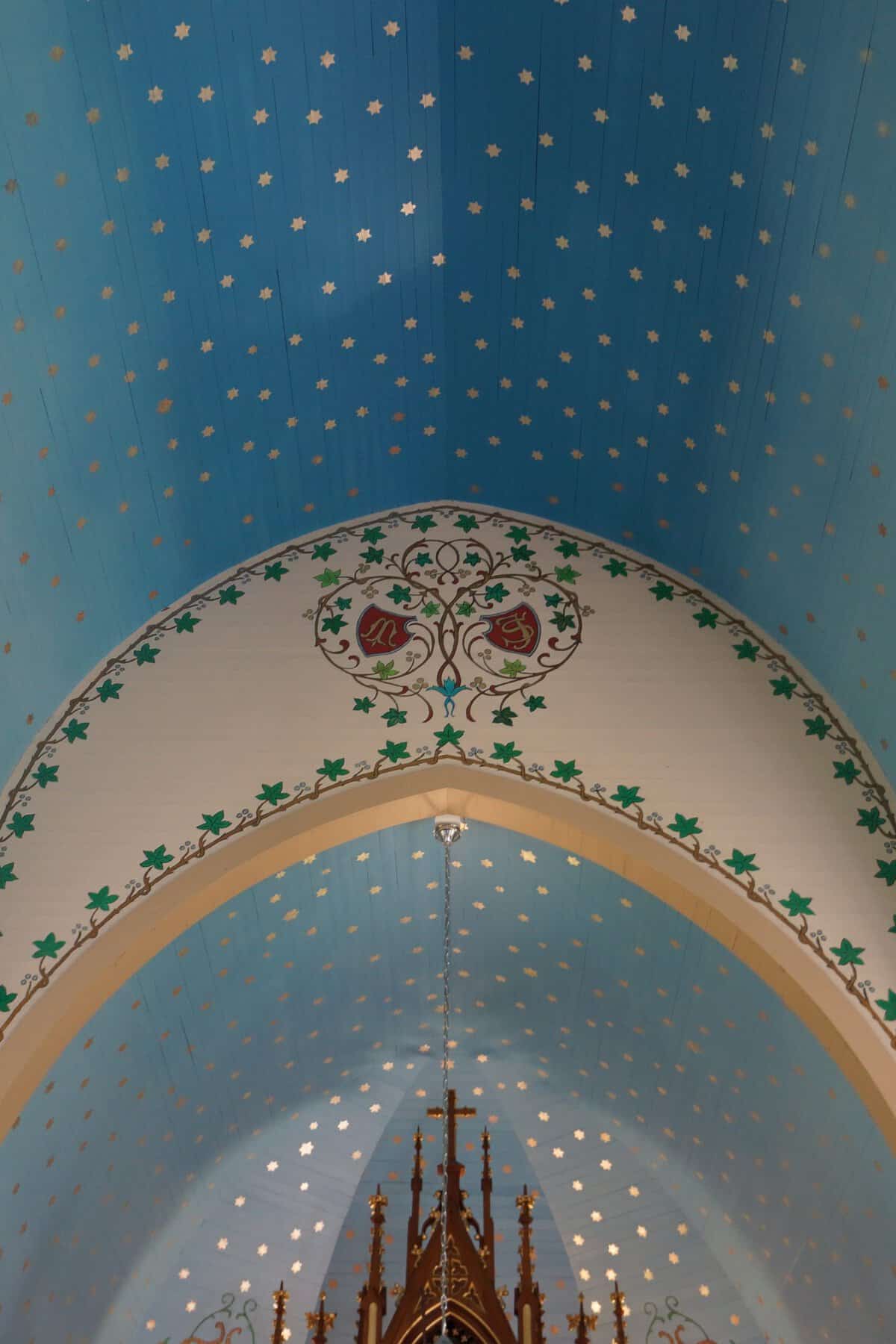
Vines climb the columns. Oak leaves trail along the arches, which is a fitting touch, since Dubina means “oak grove” in Czech. Painted flowers wind their way up the walls toward that starry ceiling.
It is a lot to take in, and it rewards the visitor who slows down. Most people walk the center aisle once, then double back to catch everything they missed the first time.
A Whole Garden Painted on Plaster
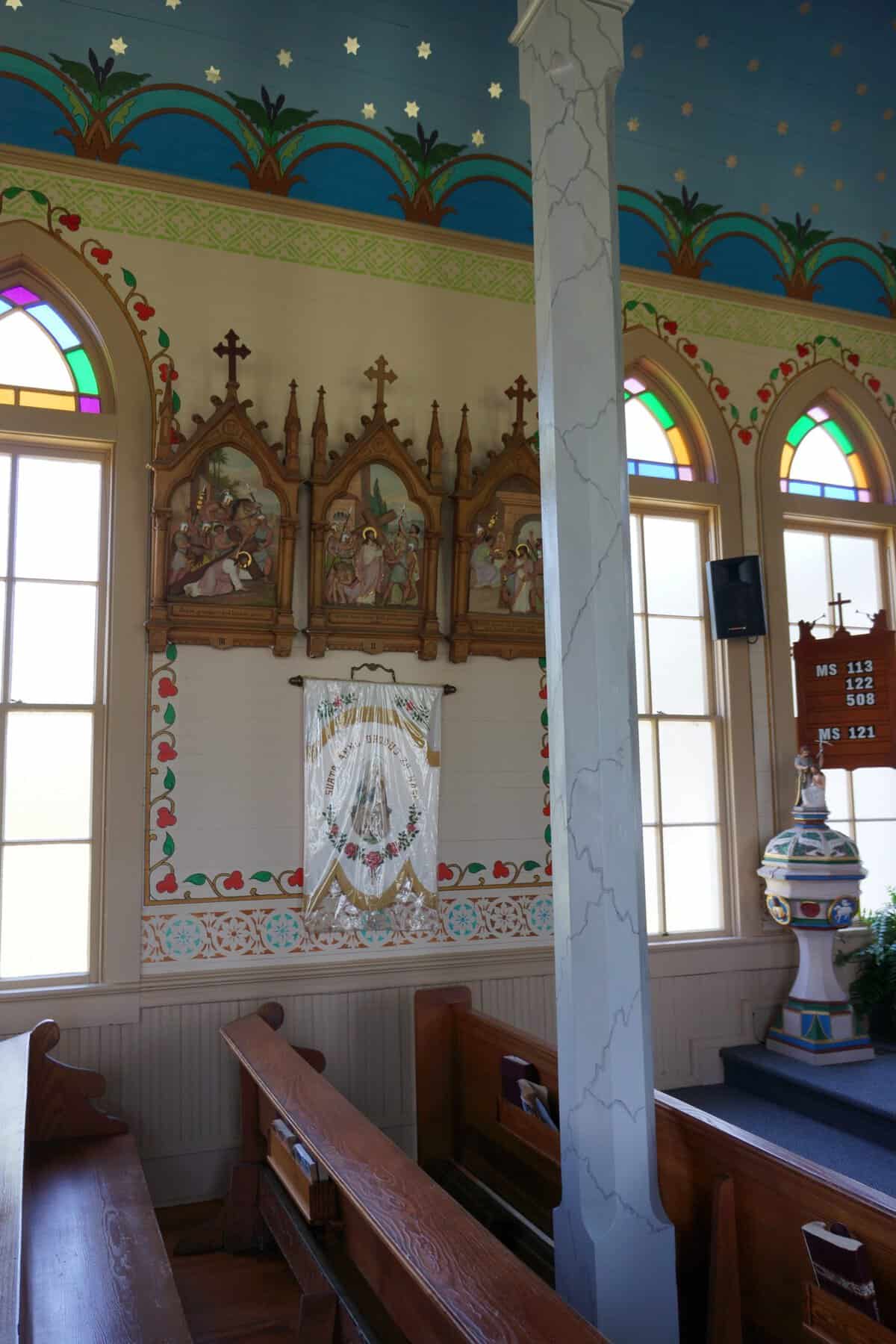
The closer you look, the more the room gives up. Those flowers are not generic decorator shapes. They are recognizable blooms, roses and lilies and wildflowers, the kind that would have grown in a Czech grandmother’s garden back in the old country.
Someone carried the memory of those gardens across an ocean and painted them onto a Texas ceiling. That is the detail that sticks with you long after you leave.
The colors have held for more than a century. Deep reds, warm gold leaf, and that rich cornflower blue are all still vivid enough to make you wonder how paint from the 1910s can possibly look this fresh.
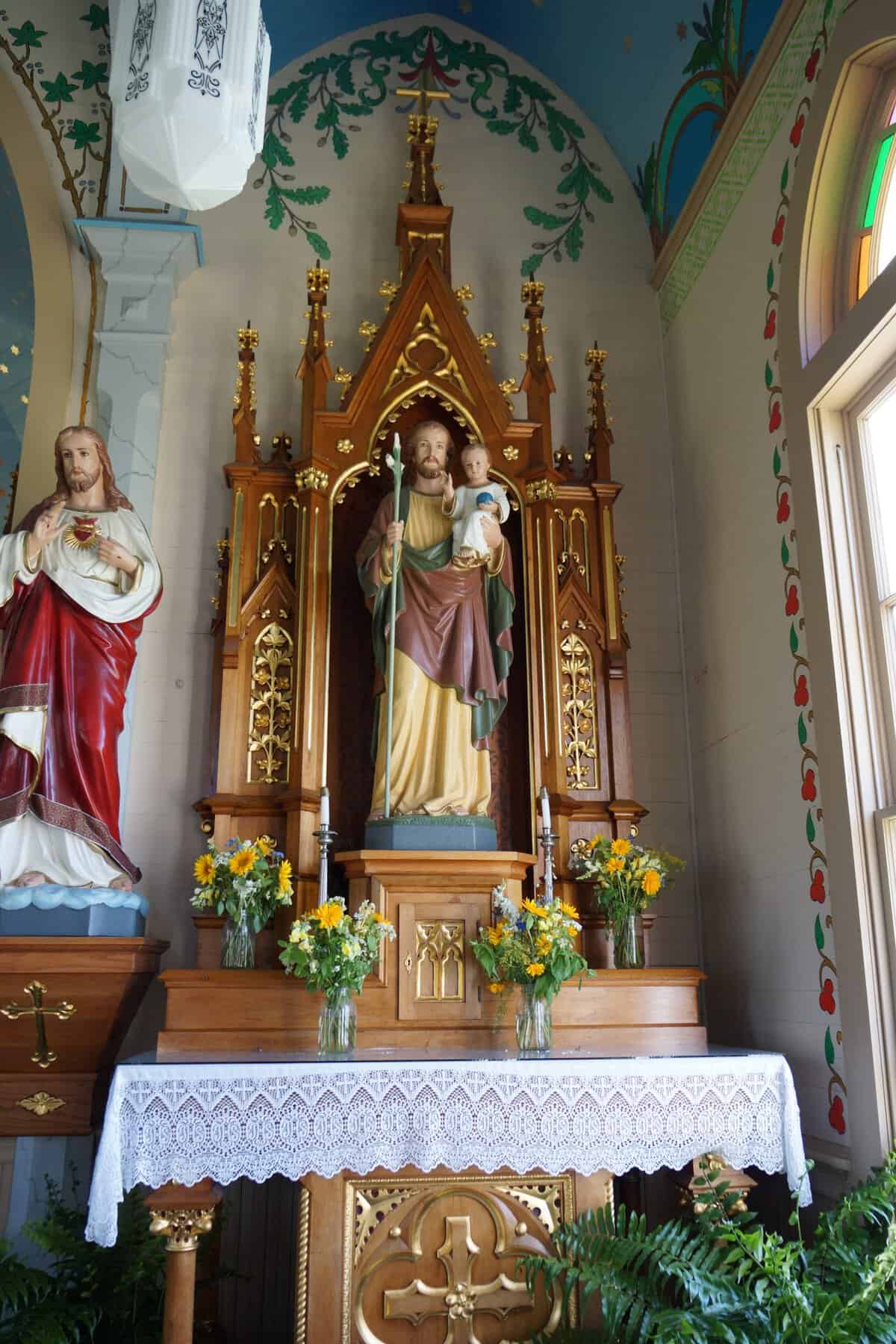
Up front, the sanctuary carries a mural of Christ in the Garden of Gethsemane. It is a quiet centerpiece for a room that is otherwise a full-on celebration of color and light.
And the light pours in. Locals will tell you this church has more windows than any of the other painted churches in the area. On a bright morning the whole interior glows and those gold stars catch the sun.
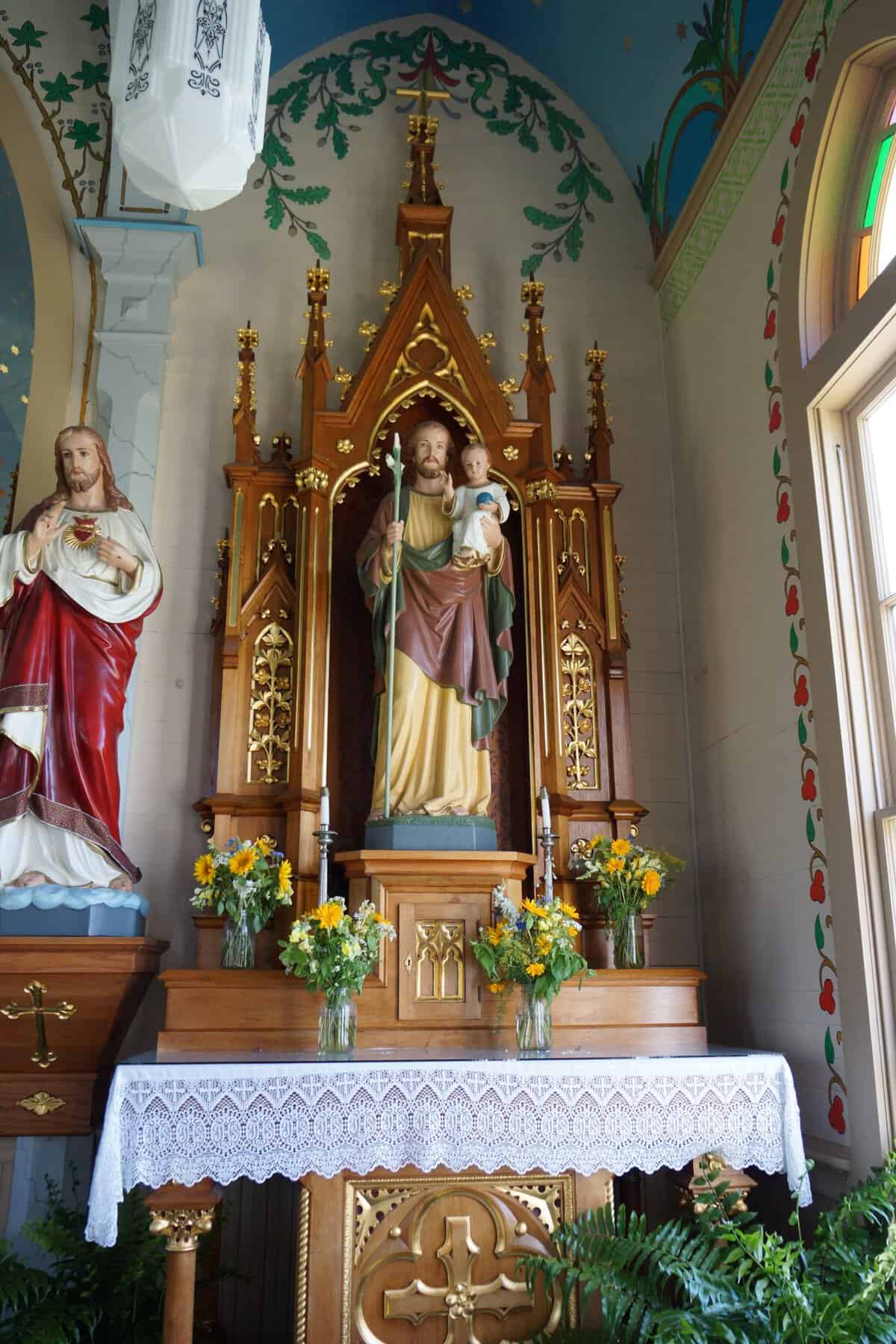
Did you know? One angel near the choir loft is a little more colorful than the rest. The restorers could not fully recover the original design in that spot, so they painted their own, a tiny modern signature tucked into a century-old room.
The stenciling is worth a close look too. Geometric borders frame the windows and run along the arches, each pattern repeated by hand with a patience that is hard to imagine now. There is no printing here, only steady wrists and a lot of time.
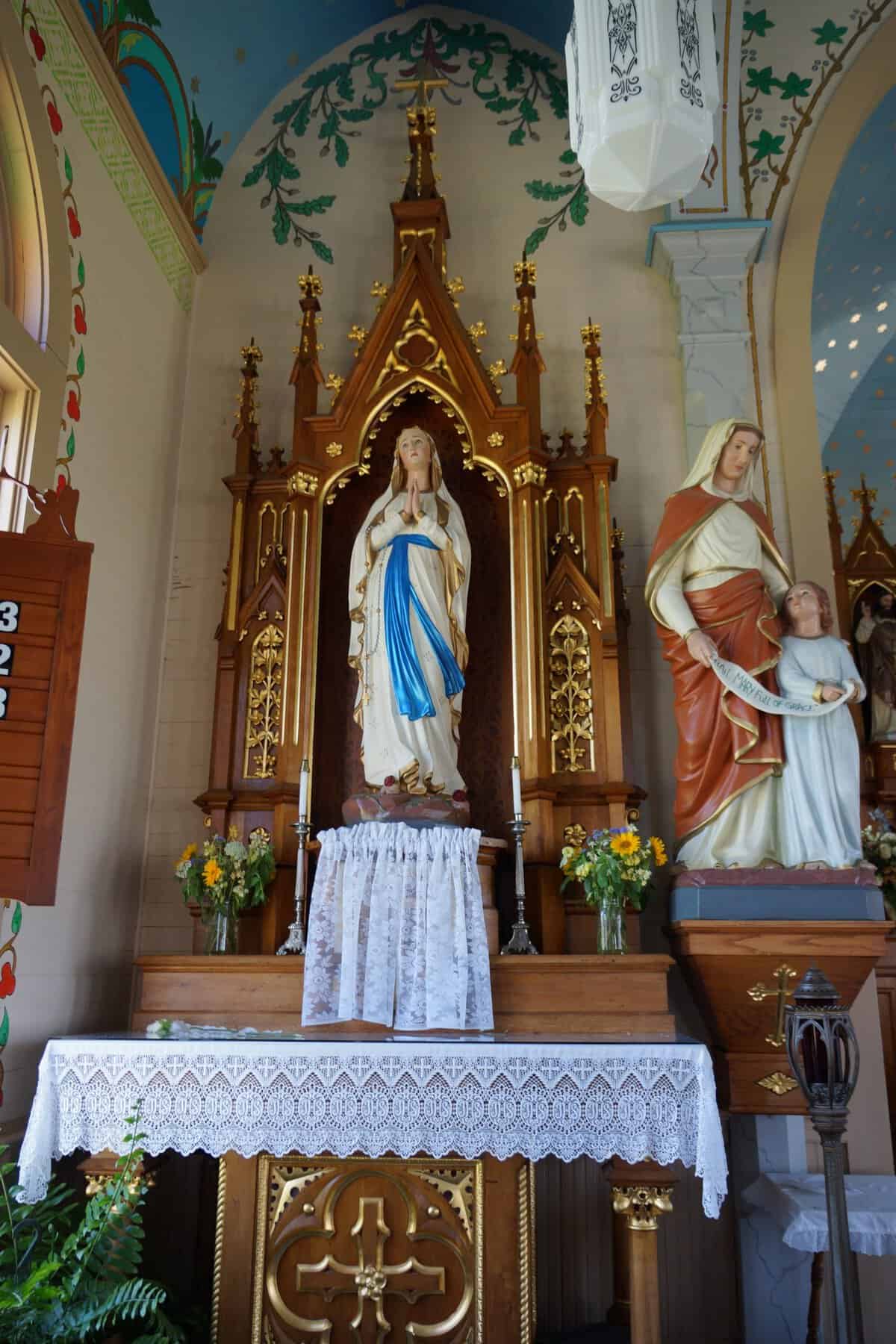
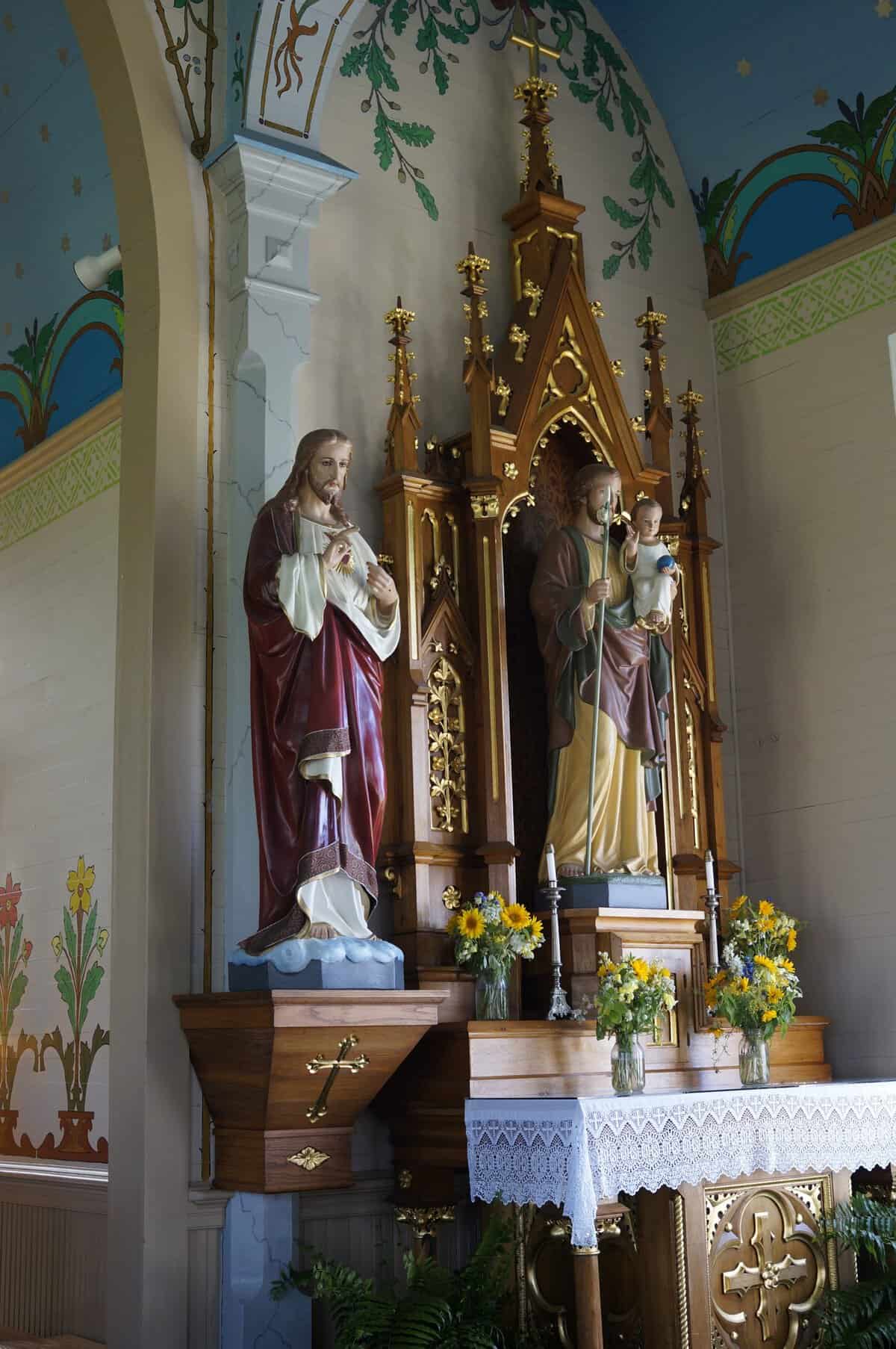
What surprises most first-timers is the scale. From outside you brace for a plain little chapel, so the ambition of the interior lands harder. It is folk art and formal church decoration at the same time, made by people who wanted their small prairie parish to feel like heaven.
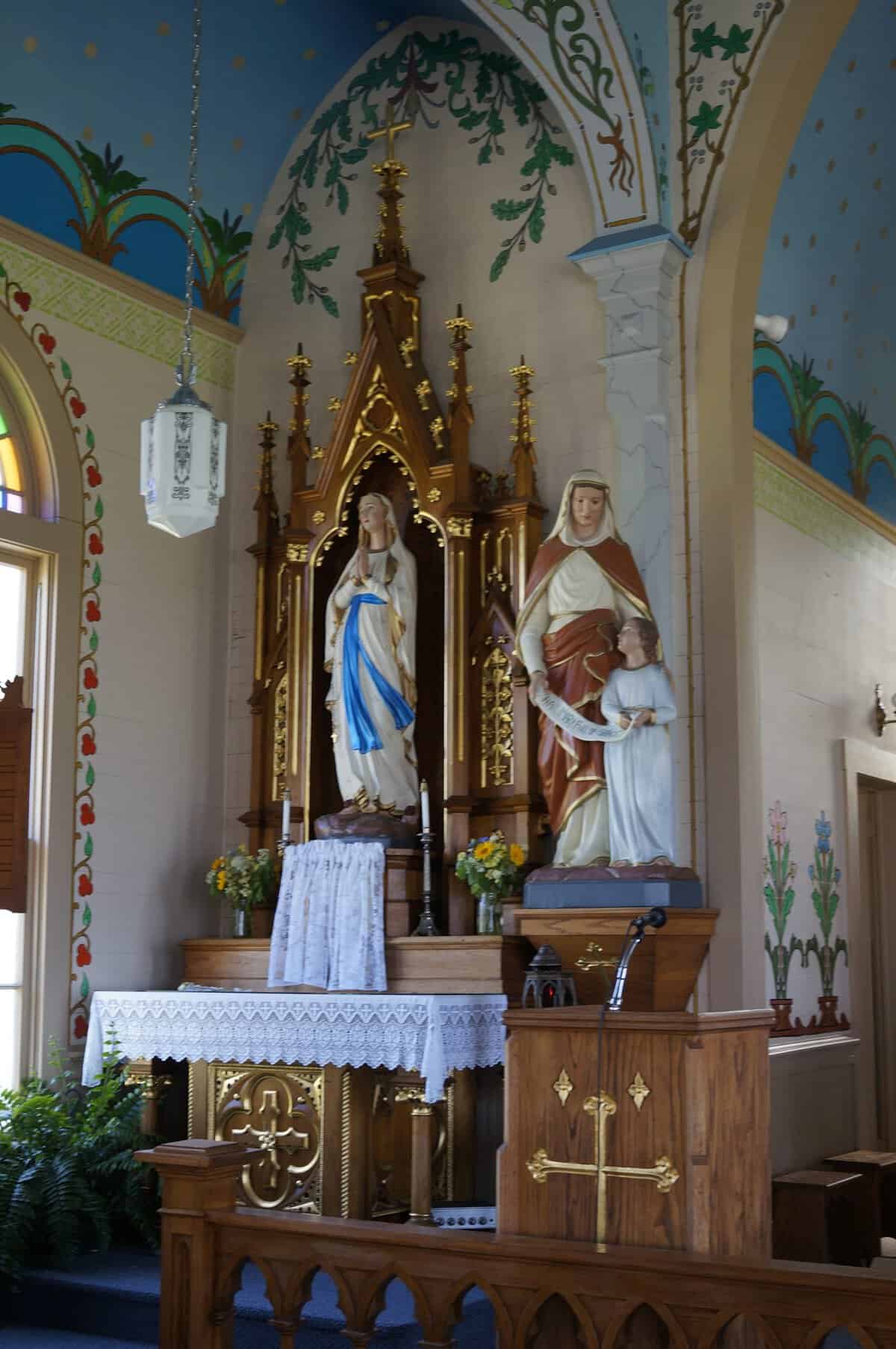
The Oak Grove the Czechs Built
The story starts on a cold November day in 1856, when a group of Czech immigrants from Moravia settled this patch of prairie and named it Dubina. It is remembered as the first Czech settlement in Texas.
They arrived with almost nothing and built a community out of oak timber and stubbornness. Farming took hold, families grew, and a church was always going to be the heart of the place.
You can still feel that in the town today. Dubina never grew into a city, and its population sits in the low hundreds, so the church remains the landmark everyone points to. It is the reason anyone from out of town knows the name at all.
They raised their first one in the 1870s, on land donated by a settler named Joseph Peter, and dedicated it to Saints Cyril and Methodius, the brothers who brought Christianity and a written alphabet to the Slavic peoples.
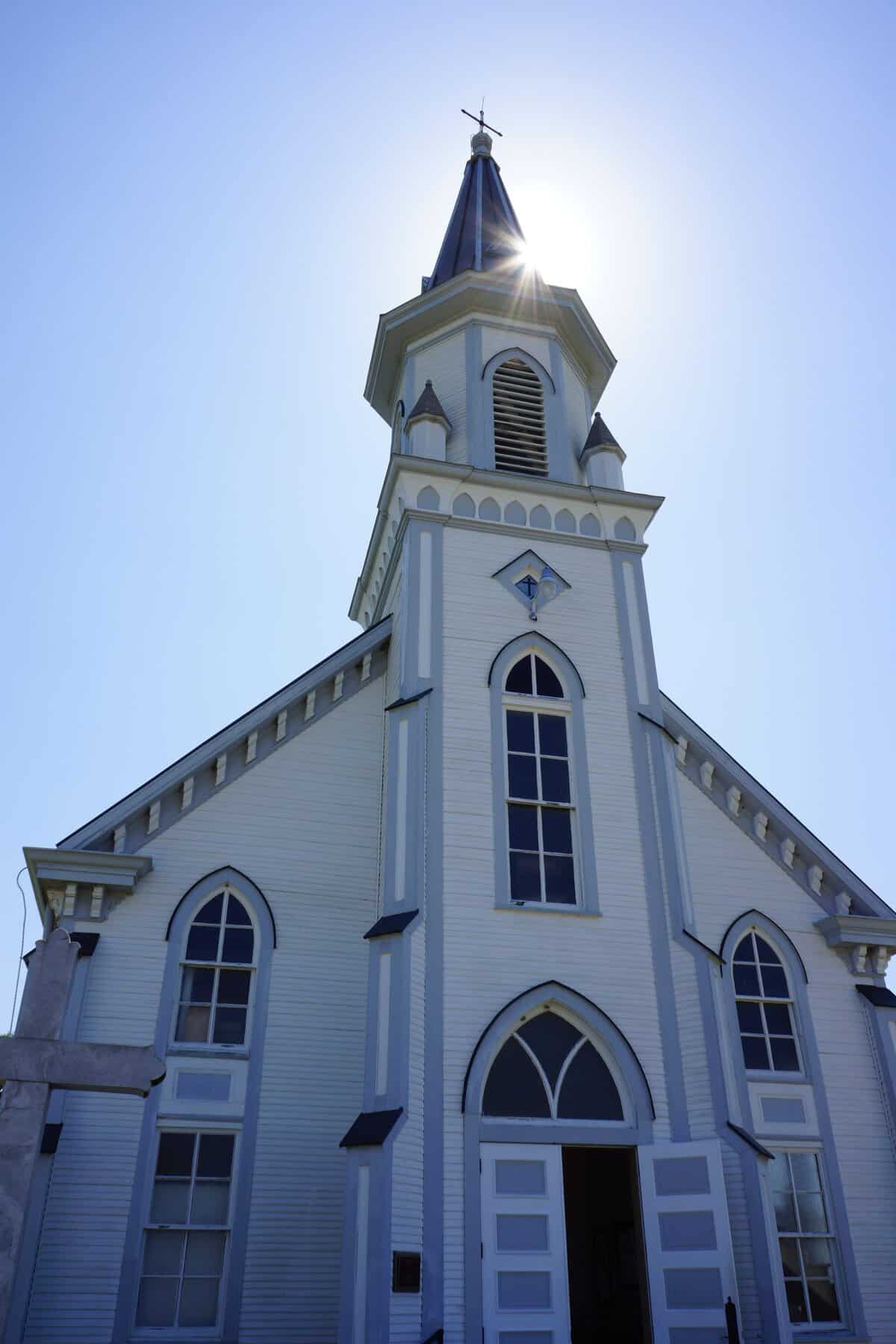
Then, in July 1909, a hurricane roared up from the Gulf and flattened it. For a young farming community, losing the church was a gut punch. Even so, they started planning the next one almost immediately.
The families pulled together about $5,571.90, raised from insurance money and by selling the salvageable lumber from the ruins. The new church was designed by Leo Dielmann, a prominent San Antonio architect, and it stood finished by 1912.
One piece of the old church made the journey to the new one. The iron cross on the steeple was forged by Tom Lee, a formerly enslaved blacksmith in the community.
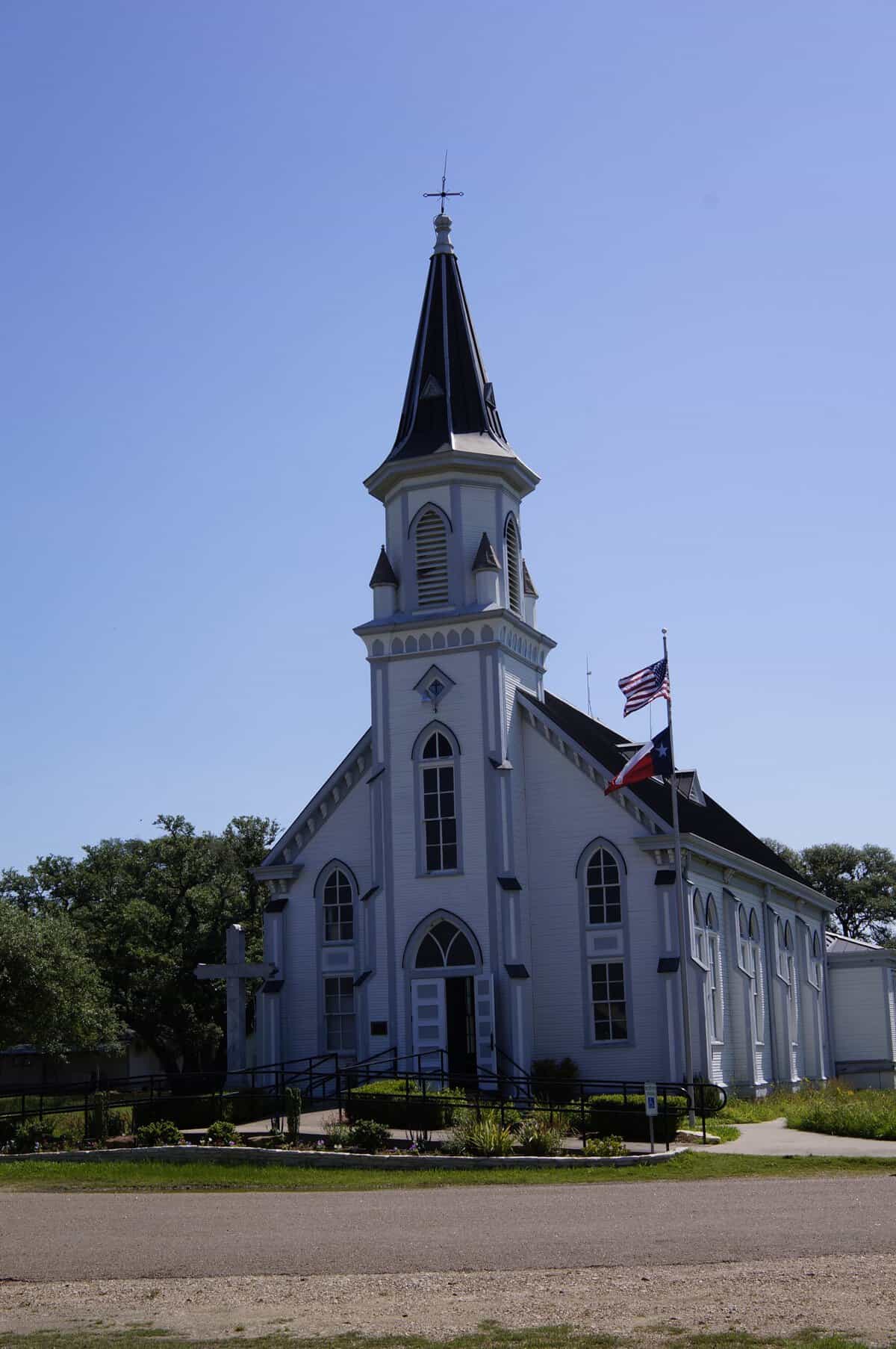
It survived the storm, was pulled from the debris, and was set atop the rebuilt steeple, where it still stands today. Small details like that turn a building into a family record you can walk inside.
The Painter Nobody Can Name
Here is the part that gives the place its mystery. Nobody knows who painted the frescoes. The artist who filled this ceiling with stars and angels left no signature and no records behind.
More than a hundred years later, the name is simply lost. A single person, or maybe a small crew, created one of the most beautiful rooms in Texas and then vanished from the story entirely.
What makes that stranger still is that the artwork very nearly disappeared along with the painter. In the 1950s, following the fashion of the day, the whole glorious interior was whitewashed over. For decades, the stars and angels sat hidden under a coat of plain paint.
The room might have stayed that way forever. Instead, in the early 1980s, a group of locals decided to bring it back.
The effort was led by Fayette County Judge Ed Janecka, a former altar boy at the church, alongside a volunteer named Butch Koenig. They worked from faint traces of the old designs that showed through in raking sunlight, and from a handful of original stencils they managed to rediscover.
Where the evidence ran out, they made careful, respectful guesses, which is how that extra-colorful angel by the choir loft came to be. Bit by bit, a small community uncovered its own ceiling and gave the stars back their sky.
A Shrine on the Prairie
Word of the little painted church spread. It landed on the National Register of Historic Places, and it became a fixture on the guided Painted Churches Tour that pulls visitors to this stretch of Fayette County from all over the country.
Then, on February 14, 2022, the feast day of Saints Cyril and Methodius, the church earned a new honor. Bishop Brendan Cahill of the Diocese of Victoria designated it a Diocesan Shrine, a place the faithful are invited to visit on pilgrimage.
So this humble country church, built by immigrants and nearly painted out of existence, is now a formal destination for prayer as well as for wonder. Not bad for a building most people outside the county have never heard of.
One Tripadvisor reviewer summed it up as “a must see painted church in Dubina.” Stand under that ceiling for five minutes and you will nod along.
What Else Is Down These Country Roads
The Dubina church rarely travels alone on an itinerary. It is one of a cluster of famous painted churches tucked into the little Czech and German communities around Schulenburg, and half the fun is seeing several in one afternoon.
The tour route also takes in the churches at Ammannsville, High Hill, and Praha, each with its own painted interior and its own personality. High Hill is often called the queen of the group, and Praha’s ceiling is a jaw-dropper in its own right.
Schulenburg itself sits right at the crossroads of Interstate 10 and U.S. 77, roughly halfway between Houston and San Antonio. That makes this an easy detour off a drive plenty of Texans are already taking.
Pro tip: come hungry. This is Texas Czech country, which means kolaches and klobasniky are never far, and a bakery stop pairs perfectly with a morning of ceiling-gazing.
How to Get There
The one thing to know before you go: the Dubina church is opened to visitors by guided tour only. You cannot just drop in on a weekday and let yourself inside, so a little planning goes a long way.
Tours are arranged through the Schulenburg Chamber of Commerce. You can call them at (979) 743-4514 to book, and a local guide meets your group and walks you through the churches on the route.
Tours generally run Monday through Saturday rather than Sundays, when these are still active parishes holding Mass. Plan a weekday or Saturday visit and reserve ahead so a guide is ready for you.
Pricing runs around $18 per person to see one or two churches, plus a guide fee, with a small deposit to hold your date. Rates step up a little as you add more churches, which most visitors happily do.
Where: Saints Cyril and Methodius Catholic Church, 4148 FM 1383, Schulenburg, TX 78956. Book tours through the Schulenburg Chamber of Commerce at 618 N. Main Street, Schulenburg.
Start Planning Your Painted Churches Drive
Some of the best places in Texas are the ones that do not announce themselves. This one hides a sky full of hand-painted stars behind the plainest of white walls, and it has been quietly waiting out here on the prairie for over a century.
So book a tour, point the car toward Schulenburg, and give yourself a slow morning under that ceiling. Bring the family, bring your camera, and do not forget to stop for kolaches on the way home.
You will leave looking up at every country church you pass, wondering what it might be hiding. That is the best kind of souvenir a road trip can hand you.
Featured image: @ Saints Cyril and Methodius Catholic Church

Stella Raines
Editor-in-Chief
Stella brings over a decade of storytelling experience to TX Headlines. With roots in West Texas and a love for road trips, she leads the editorial team with an eye for the hidden stories that make Texas unforgettable.
More Stories

This Colorful Texas Fabric Shop Is a Creative Wonderland for Quilters
This Glowing Texas Museum Lets You Wander Through Hundreds of Antique Stained-Glass Windows
This Under-the-Radar Texas Craft Store Is Where Artists Hunt Down Supplies for Next to Nothing
This Tiny Texas Town Is Home to One of the Most Beautiful Painted Churches in America
Tags