This Tiny Central Texas Town Hides a Sky-Blue Ceiling Scattered With Gold Stars
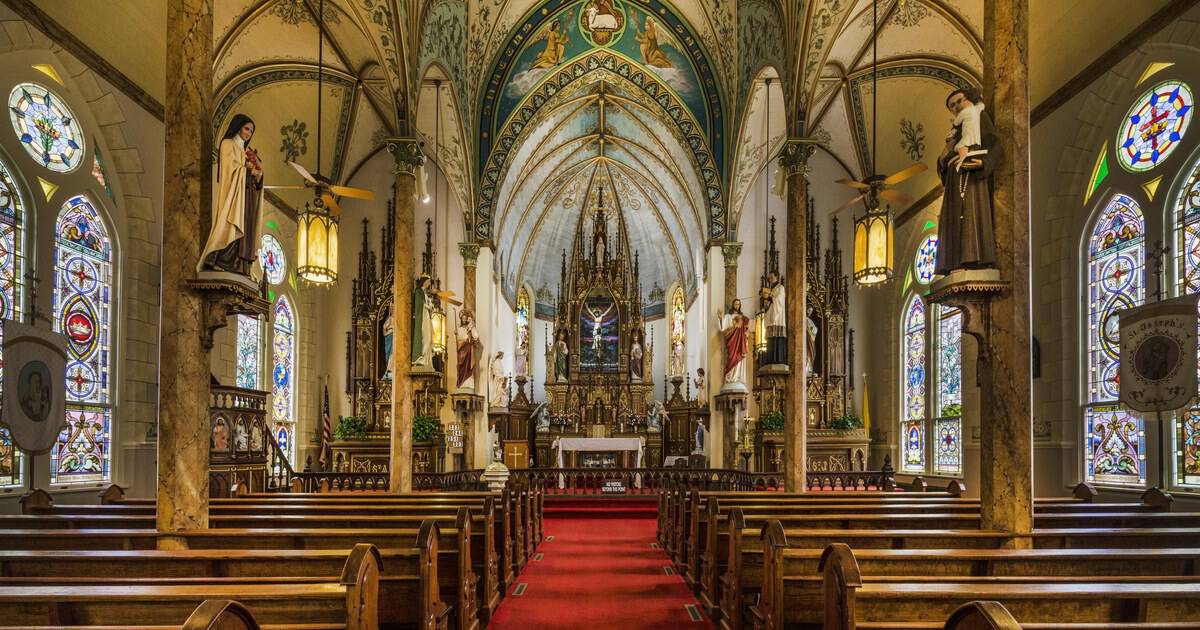
I pushed open a heavy wooden door expecting a plain little country church, the kind you drive past a hundred times on a Texas farm road. Instead I looked up and forgot to keep walking.
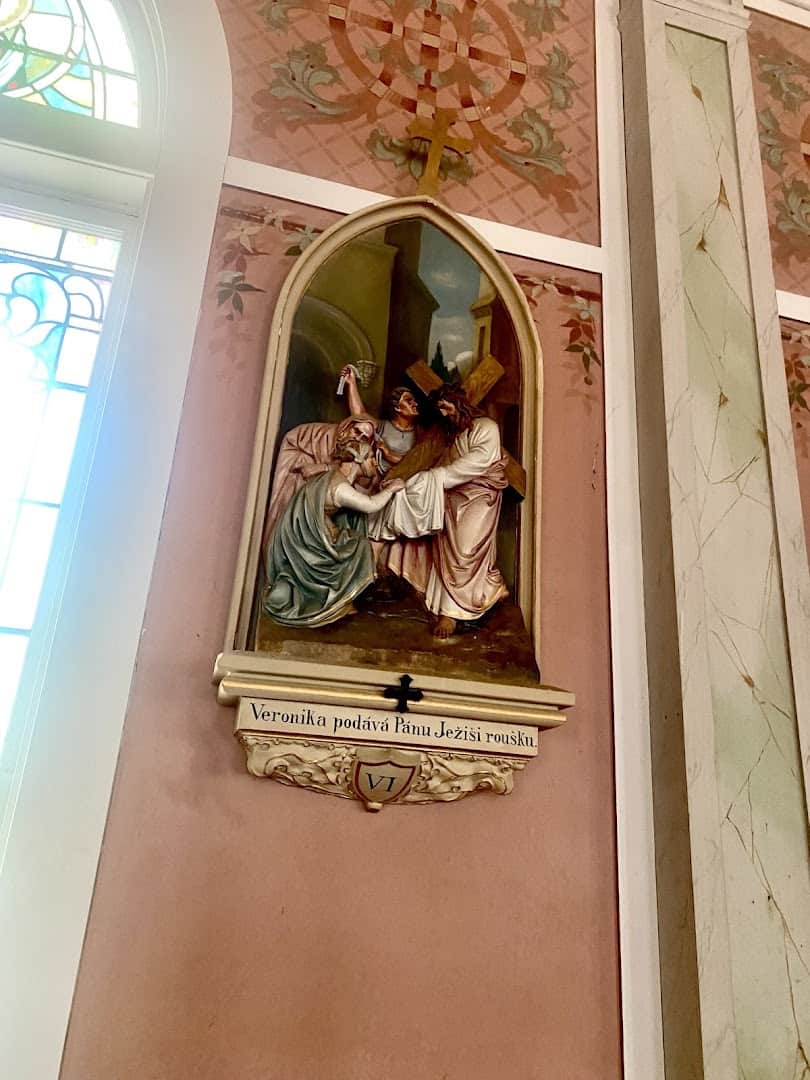
The ceiling above me was painted the soft blue of a June sky, ribbed in gold, scattered with stars. Slender columns marched down the aisle in swirling marble, and every inch of wall carried vines, flowers, and angels.
This is the Nativity of Mary, Blessed Virgin, better known as St. Mary’s Catholic Church, tucked into the tiny farming community of High Hill near Schulenburg. Locals call it the painted queen, and one look up tells you why.
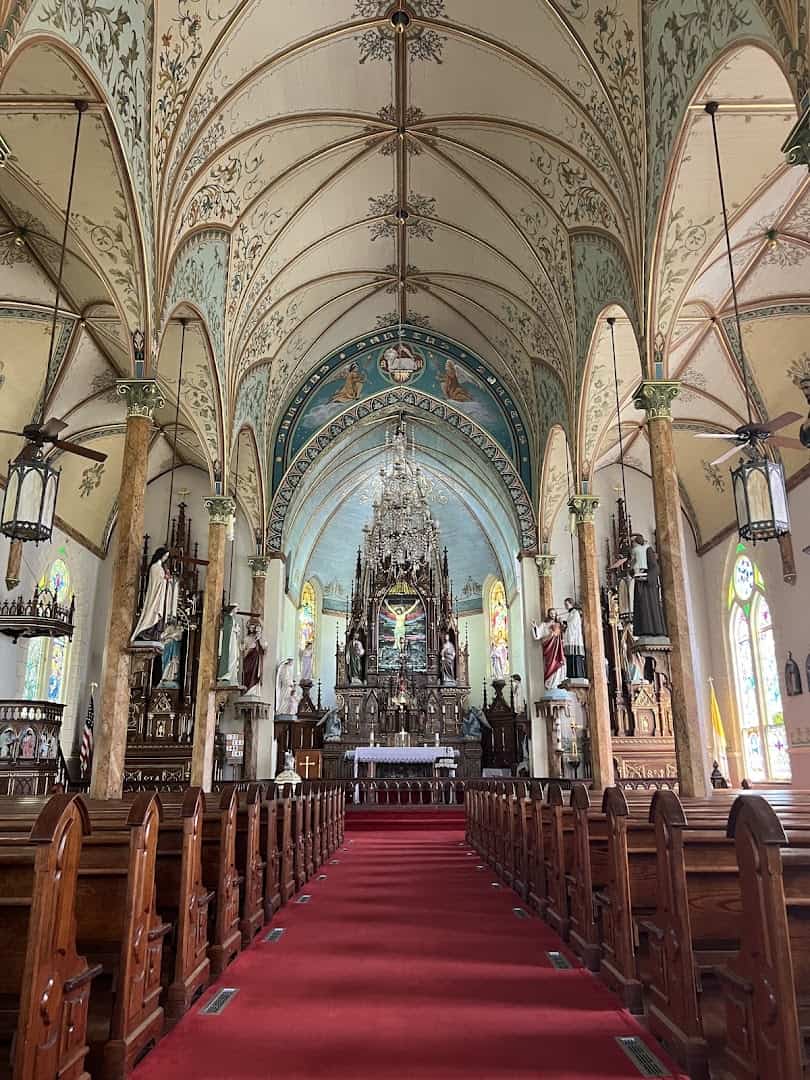
It is the grandest of the famous Painted Churches of Texas, a cluster of ornate country chapels in the rolling green heart of Central Texas. Below, I’ll walk you through what to see inside, who painted it, and how to find your way there.
What still gets me is how ordinary the outside is. Plain red brick, a tall steeple, a gravel lot, a fence line of oaks. Nothing out there warns you about the color waiting on the other side of the door.
That gap between plain and glorious is the magic of the place. You come in braced for a modest farm church and you get a hand-painted sky. Every visitor I watched did the same slow, wide-eyed pivot upward.
The Columns That Fool Your Eyes
Walk down the center aisle and count eighteen columns rising toward the roof. They look like polished stone hauled in from some European quarry, veined in pink and cream and gray.
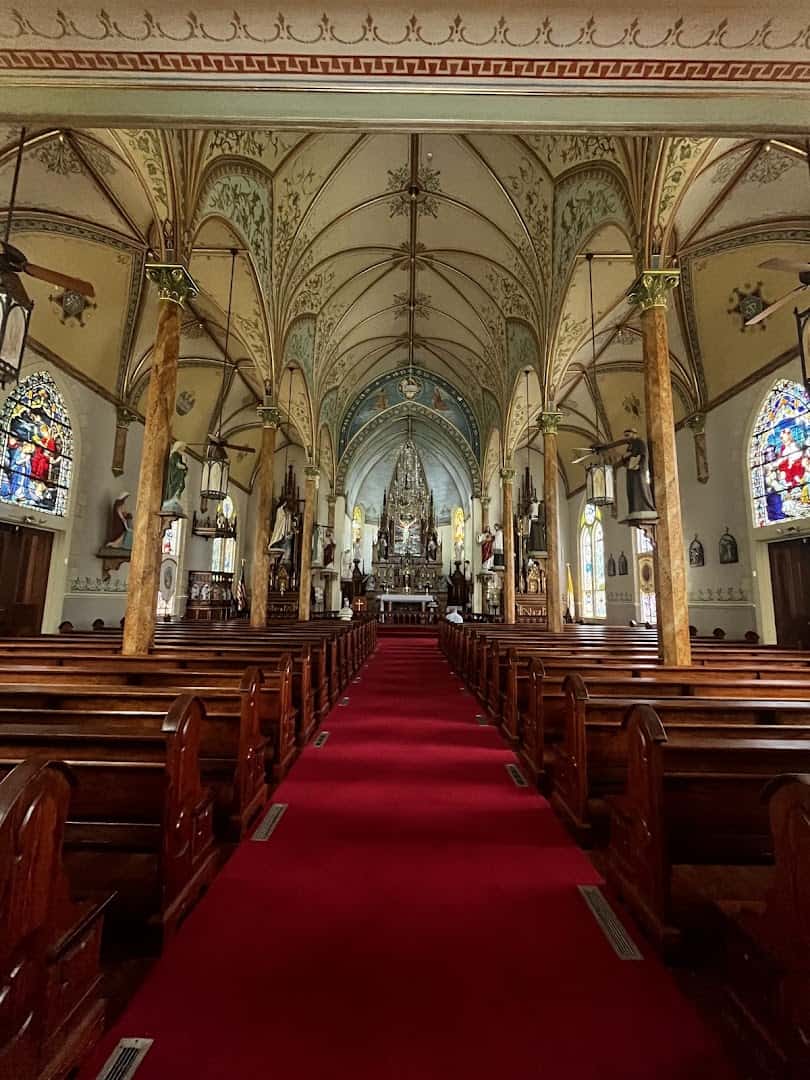
Rap one with a knuckle and the truth comes out. They are wood. Every marble swirl was painted by hand, a trick called faux marbling that turns humble pine into cathedral stone.
I ran my fingers along one and could not feel the seam between real and painted. The artists studied how light moves across marble, then faked it so well your brain simply believes them.
It is the whole church in miniature. Farmers with modest means wanted the beauty of a great cathedral, so they painted their way to it, one brushstroke at a time.
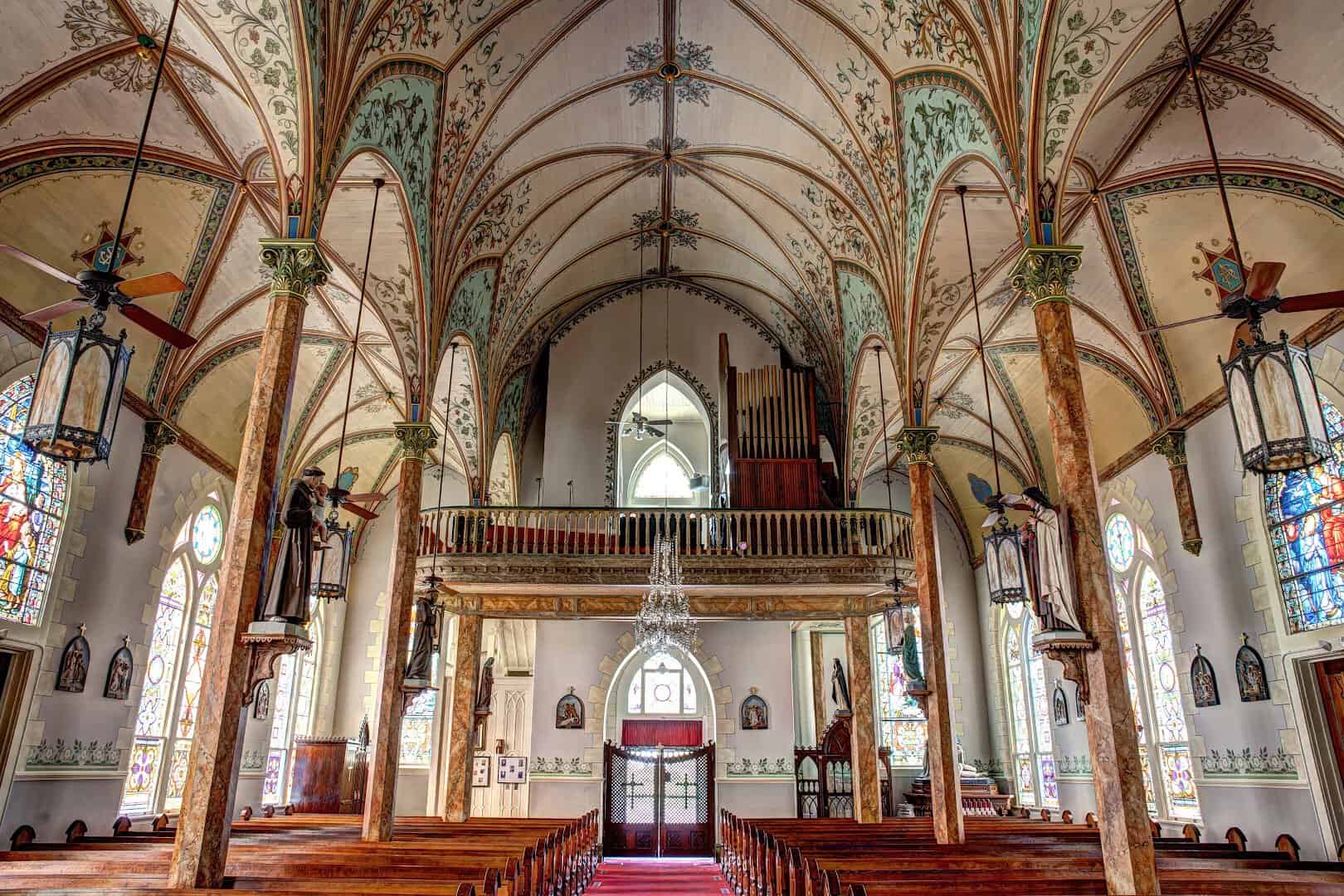
Stand back and the columns do something clever. They pull your eye upward and make the modest space feel taller and grander than a small country church has any right to feel. That is the illusion they were built to sell.
A Ceiling Like a Summer Sky
Now tip your head all the way back. The cupola overhead glows a gentle sky blue, gathered up in ribs of gold that meet at the peak like the ribs of an umbrella.
Gold stars dot the blue. Stenciled flowers and curling vines run along every border, and painted angels watch from the corners, wings tucked, faces calm.
On a bright morning the sun slides through the windows and the gold ribbing catches fire. I stood in an empty pew and just watched the color shift as a cloud passed outside.
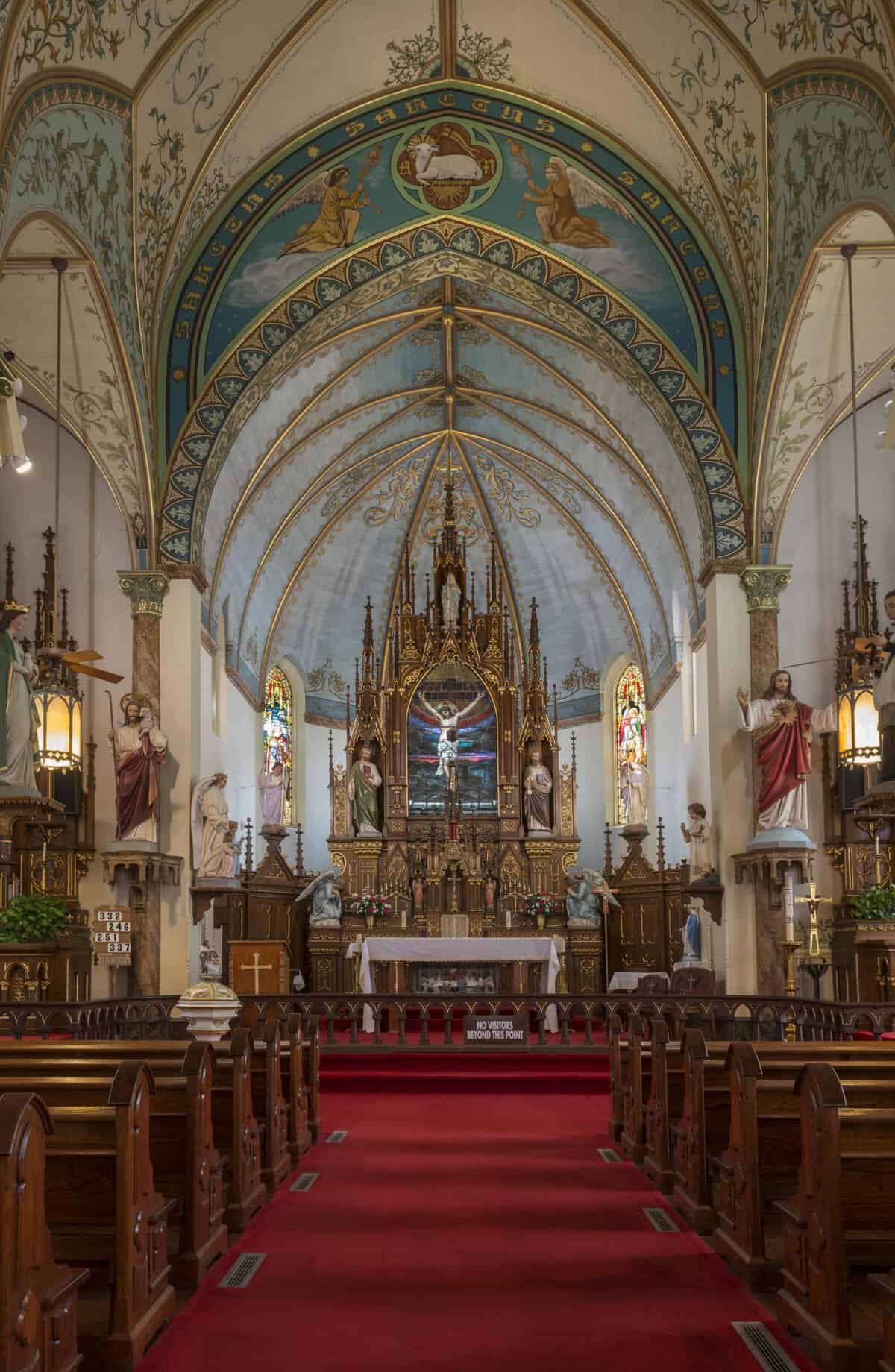
The effect is exactly what the builders wanted. You feel small in the good way, the way you do under real sky, except this sky was mixed in paint pots more than a century ago.
Look closely at the borders and you can spot where a stencil ended and a free hand took over. The pattern repeats, then breaks into a flourish that only a human wrist could make. The whole ceiling is that dance between careful and loose.
The Windows That Color the Room
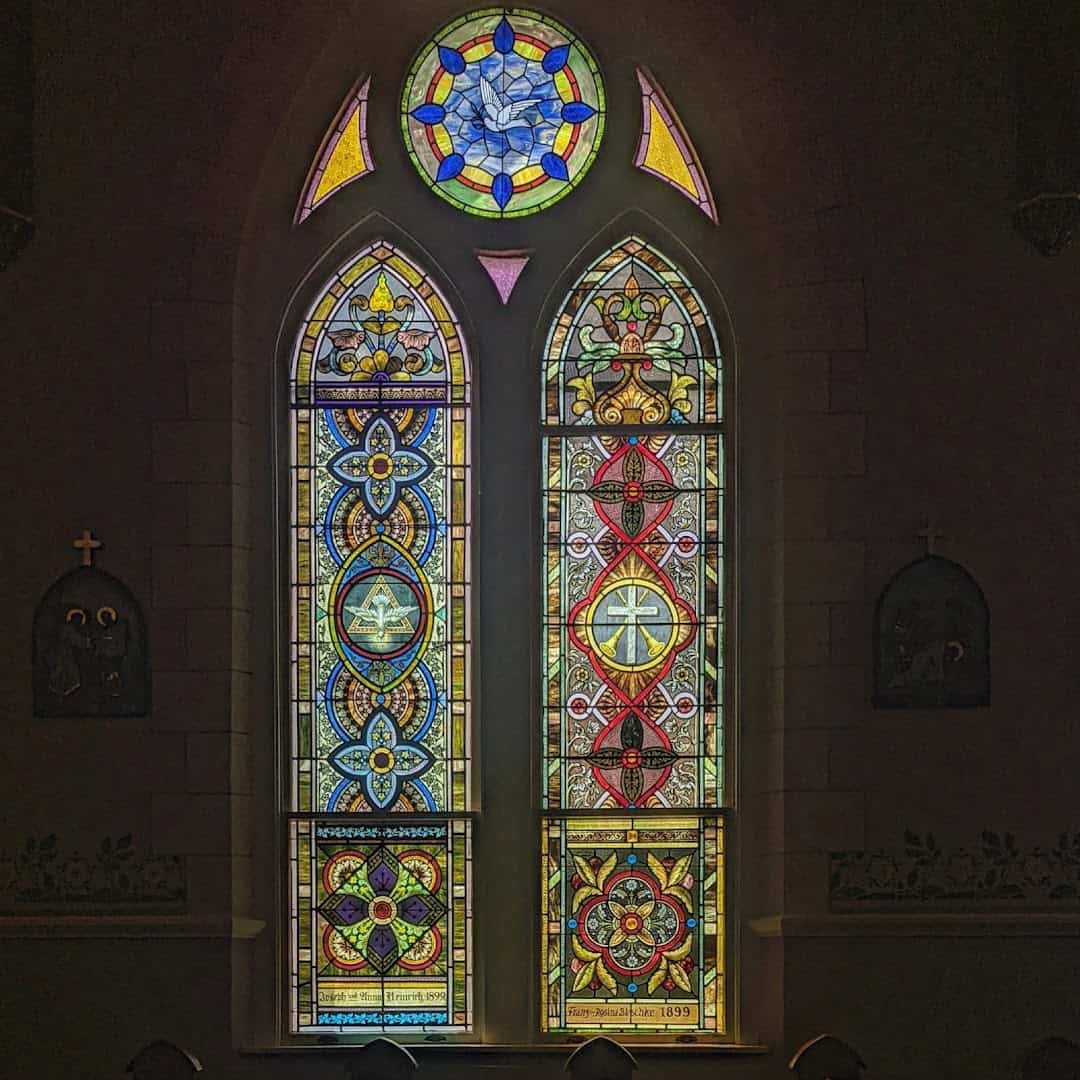
Roughly twenty-five stained glass windows line the walls, and together they throw pools of ruby, sapphire, and amber across the floor. Move through the church and the colors move with you.
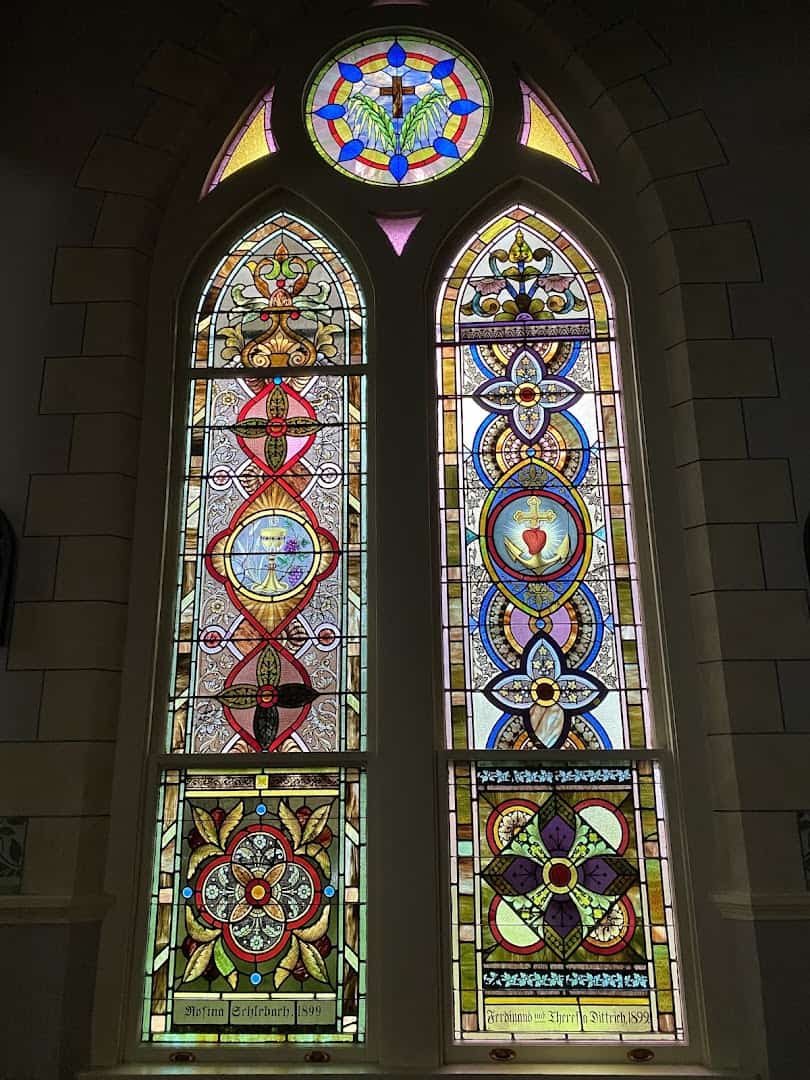
Some of the glass is older than the building itself. When the current church rose, the congregation carried over stained glass from an earlier chapel, so a few windows have been coloring prayers here for well over a century.
Each window frames a saint or a scene, and the light does the storytelling. In the late afternoon the west windows glow so warmly that the whole nave turns the color of honey.
I found myself tracing the little painted details in the glass, the folds of a robe, a lily, a scroll of text. Each one rewarded a closer look, the way good stained glass always does, hiding small stories in plain sight.
Did you know the best light show is free and changes by the hour? Come at different times of day and the church you photograph in the morning looks like a different room by dusk.
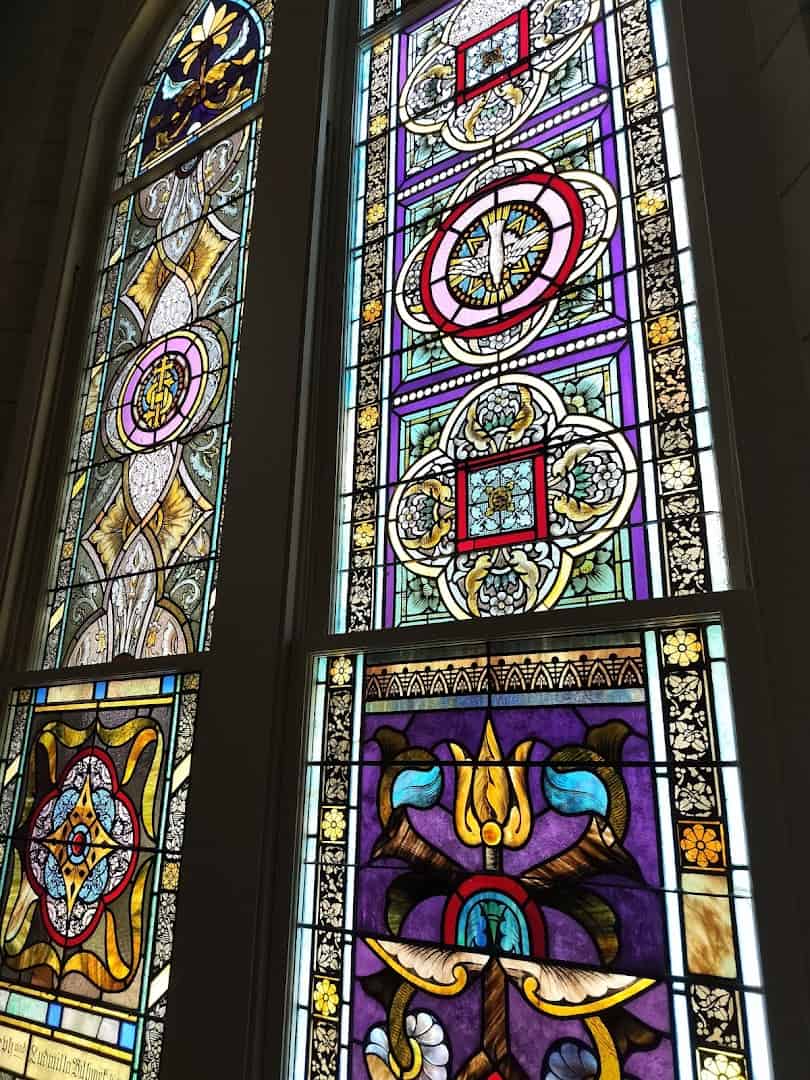
I slid into a pew and just sat for a while. The room was quiet enough to hear the building settle, and colored light crept slowly across the floorboards as the sun moved. It is a hard place to hurry through.
Painters Who Wandered Church to Church
The interior did not appear overnight, and it was not the work of one lonely genius. It came from traveling decorative painters, European-trained craftsmen who moved from parish to parish across Central Texas doing exactly this kind of work.
They arrived with pattern books, brushes, and the know-how to make pine look like marble and a flat ceiling look like heaven. A congregation would save up, the painters would roll in, and weeks later the plain walls bloomed.
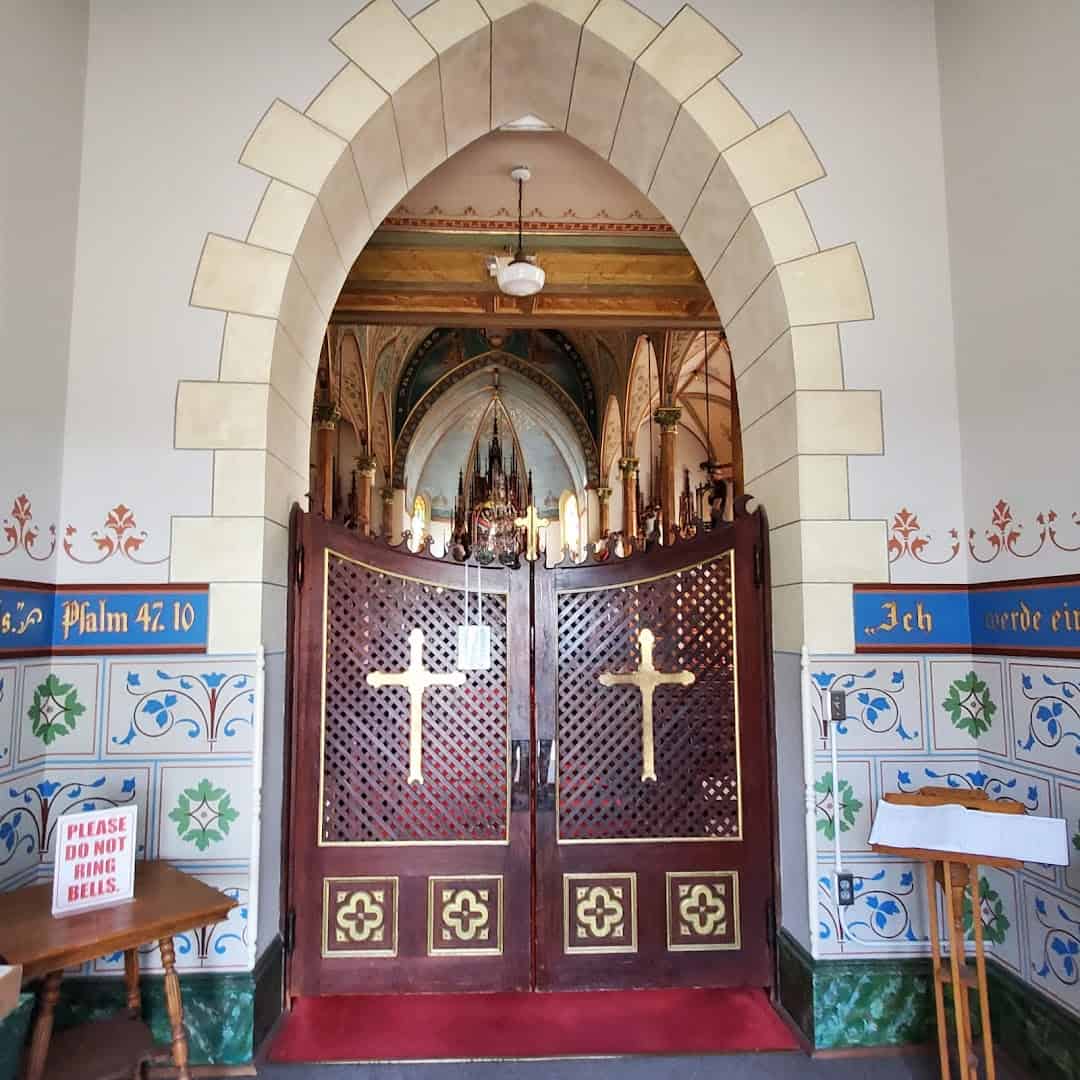
That is why the painted churches of this region share a family resemblance while each keeps its own palette and personality. The same hands, or hands trained alike, left their mark from one small town to the next.
Knowing that changes how you look up. Those angels and vines were not shipped from Europe in a crate. They were made right here, on scaffolding, by people who chased this craft across the Texas countryside.
Meet the Queen of Her Court
St. Mary’s does not stand alone. It anchors a circle of painted country churches around Schulenburg, and among them it wears the crown as the largest and most lavishly decorated.
Travelers stitch together a self-guided loop through several of these chapels in a single afternoon, each one a different palette, each one built by the same kind of immigrant farm families.
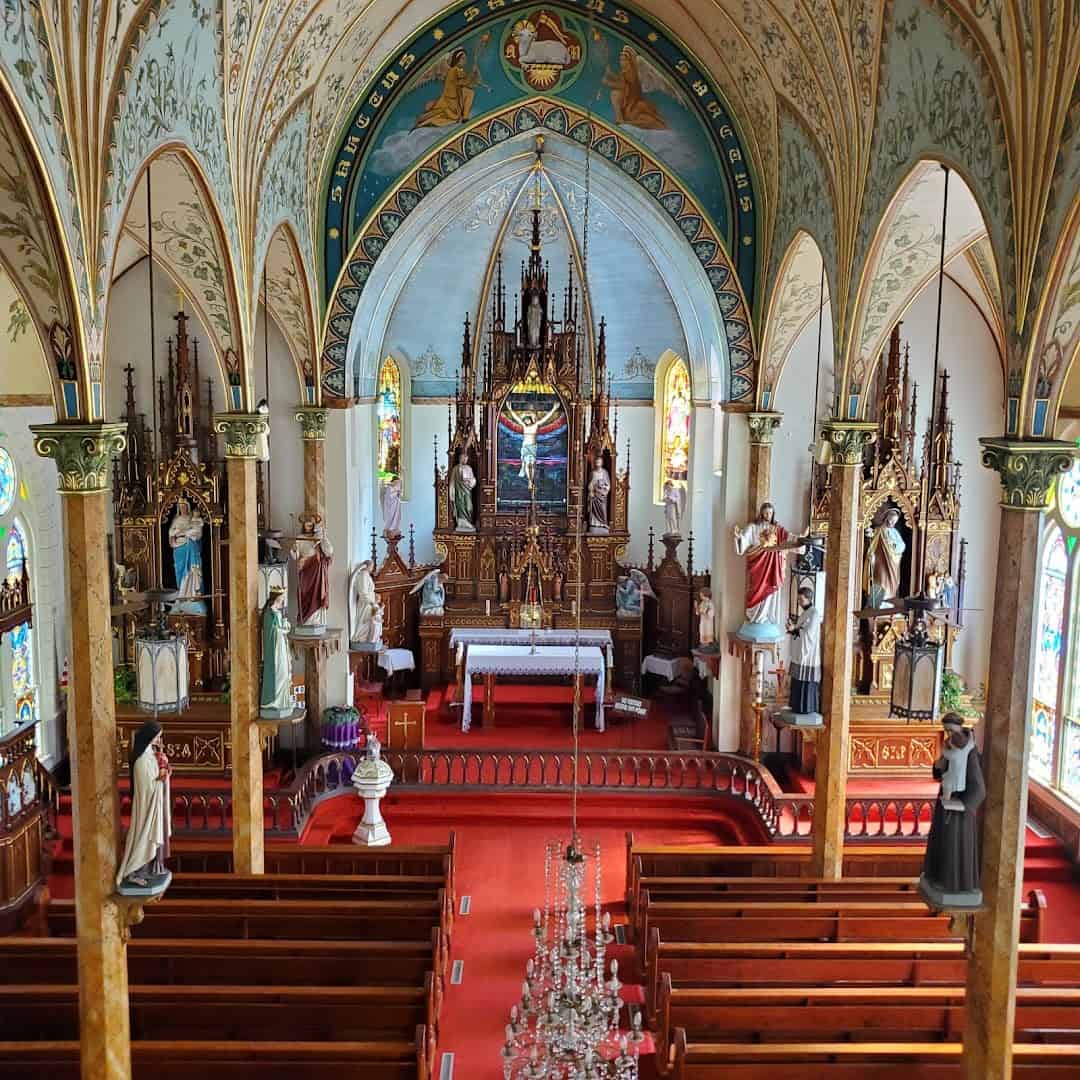
One visitor wrote simply, “The interior was breathtaking!” Another said stepping inside “sent us straight to 19th Century Europe.” I felt the same tug the moment the door swung shut behind me.
What makes it land is the contrast. Outside sits a plain red-brick church on a quiet rise of Texas farmland. Inside waits a burst of color that would not look out of place in Bavaria.
Make a day of it if you can. The drive between chapels rolls past cotton fields, grazing cattle, and little Czech and German towns where a bakery or a meat market makes an easy lunch stop. The countryside is half the reward.
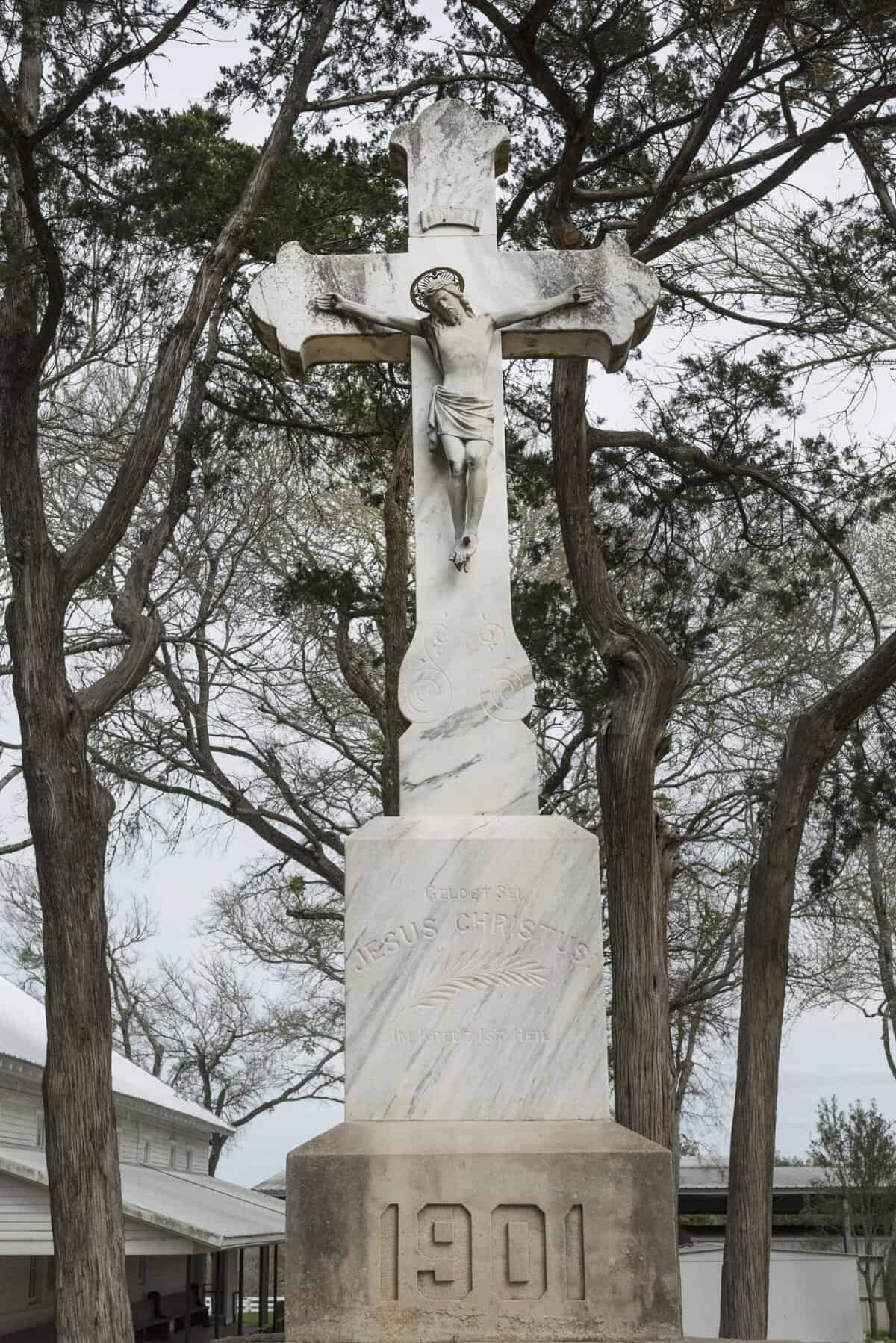
How Farm Families Built a Cathedral
German and Austrian immigrants settled High Hill in 1858, drawn by good farmland and cheap acreage. Three little settlements, Blum Hill, Wursten, and Oldenburg, eventually folded together into the one community you visit today.
Their faith came with them, and so did their memory of the grand churches of home. An early chapel went up in 1869, another around 1875, each one a step toward something bigger.
Picture what that took. These were farm families, not wealthy patrons. They pooled crops, labor, and small savings, then hired real talent to build and paint something meant to outlast every one of them. It did.
The church you stand in now was built in 1906. The cornerstone was laid on September 8 of that year, and the Gothic Revival design came from San Antonio architect Leo M. J. Dielmann, with Frank Bohlmann as builder.
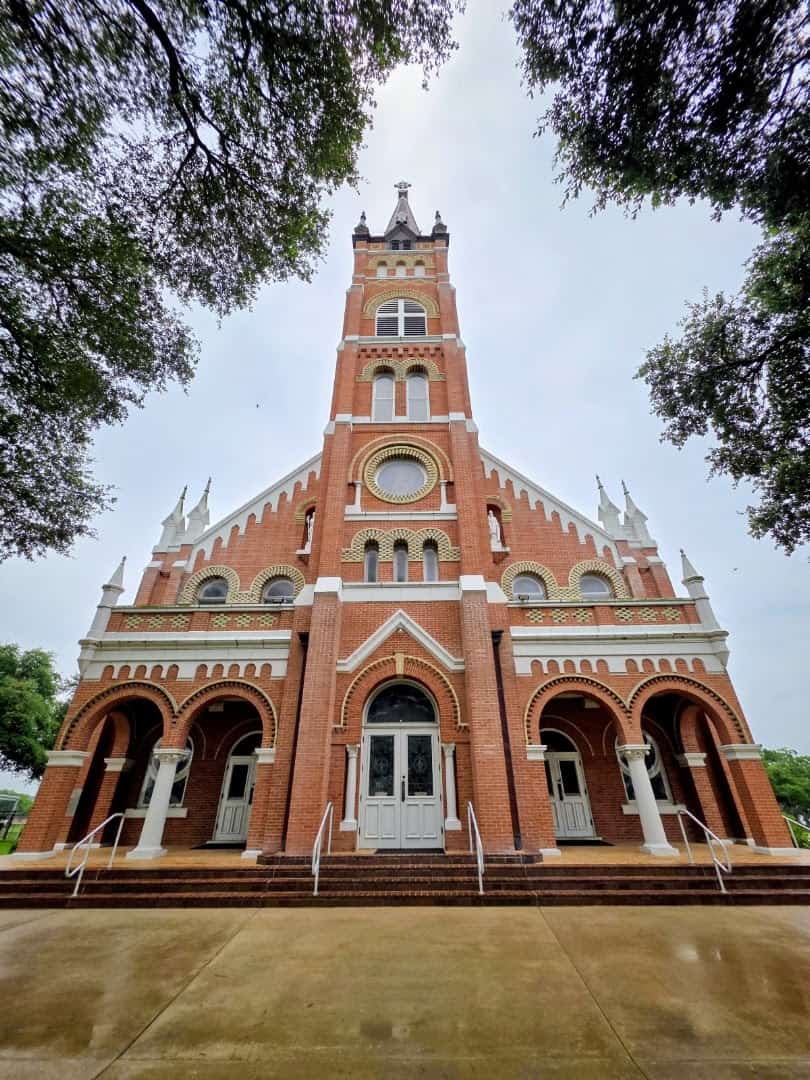
The soaring spire climbs roughly 175 feet, a slender needle you can spot across the fields long before you reach the door. It was a bold thing for a small farm parish to raise.
The paintwork came a few years after the walls. In 1912 two German-born artists, Ferdinand Stockert and Hermann Kern, transformed the plain interior into the wonder it is now.
They worked partly on canvas, painting panels in the studio and gluing them to the wood, then finishing the rest freehand and with stencils right there on the walls and columns. Steady hands, months of work, one small country church.
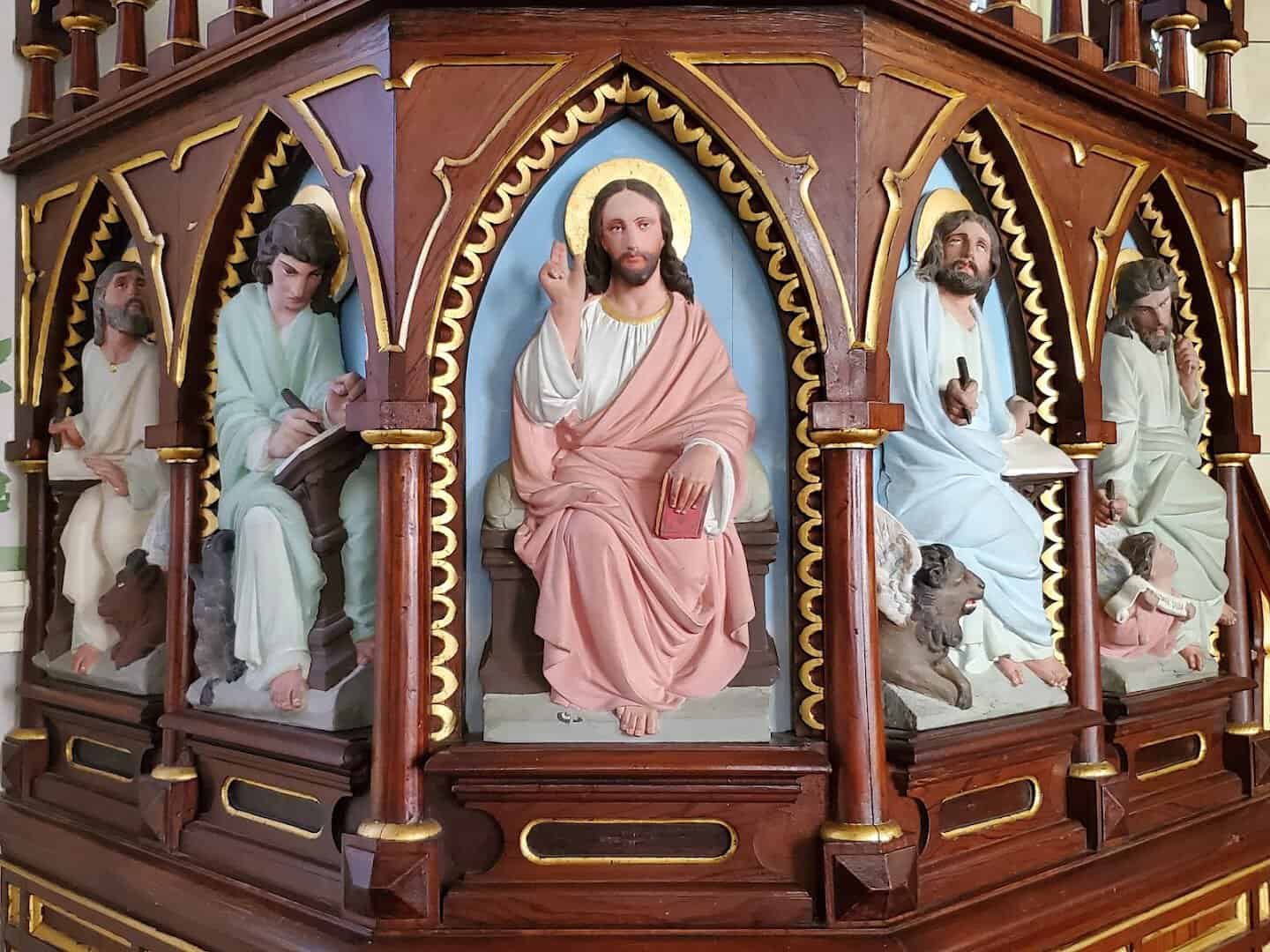
The nation noticed eventually. St. Mary’s was added to the National Register of Historic Places in 1983, official recognition of what the congregation had known for generations.
Sit with those numbers a moment. A settlement founded in 1858, a church raised in 1906, a ceiling painted in 1912, and it all still stands, still holds services, still stops travelers cold. That is a lot of care handed down through a lot of hands.
A Few Things to Know Before You Go
This is a working parish, not a museum, so a quiet, respectful visit is all it asks of you. Step softly, keep your voice low, and be mindful that Mass or a service may be underway.
Pro tip: photography is welcome, but leave the flash off. The natural light through those windows is the reason you came, and a flash flattens the very colors you drove out to see.
The church is often open during the day for visitors, and the surrounding grounds and cemetery are worth a slow wander too. Bring a little cash if you would like to leave a donation toward the upkeep of all that paint.
If you want the full loop with context, the folks in Schulenburg can point you to the other painted churches and help you plan a route that fits your afternoon.
How to Get There
High Hill sits just a few miles from Schulenburg, roughly halfway between Houston and San Antonio along Interstate 10, which makes it an easy detour off a longer Texas road trip.
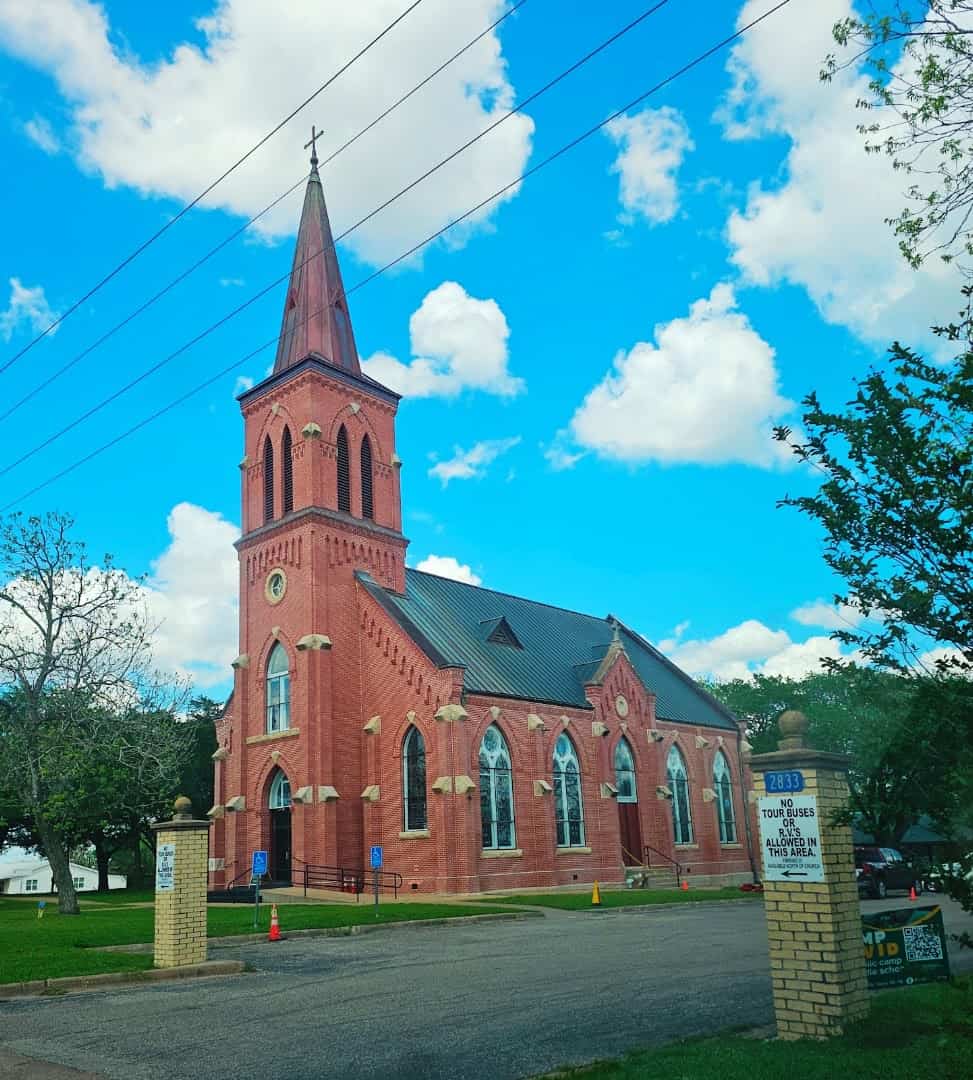
Where: St. Mary’s Catholic Church (Nativity of Mary, Blessed Virgin), 2833 FM 2672, Schulenburg, TX 78956.
To arrange a guided Painted Churches tour or check current visiting details, reach the Schulenburg Chamber of Commerce at 618 N. Main Street, or give them a call at (979) 743-4514 before you drive out.
Plan Your Painted Churches Detour
Some Texas wonders shout at you from a billboard. This one waits quietly behind a plain door on a farm road, and rewards anyone curious enough to pull over and step inside.
Bring a friend who thinks they have seen every kind of Texas, and watch their face when they look up. That first glance at the painted ceiling is a small gift you get to hand someone else.
So next time you are threading across Central Texas on I-10, take the High Hill exit, push open that heavy wooden door, and look up. Just try not to gasp too loudly in someone else’s church.
Featured image: Carol M. Highsmith, Library of Congress

Stella Raines
Editor-in-Chief
Stella brings over a decade of storytelling experience to TX Headlines. With roots in West Texas and a love for road trips, she leads the editorial team with an eye for the hidden stories that make Texas unforgettable.
More Stories
These 5 Surreal Texas Places Are So Stunning You Won’t Believe They’re in Texas
5 Abandoned Texas Places That Are Eerie, Empty, and Still Open to Explore
8 Hidden Texas Bookstores That Book Lovers Will Want to Get Lost In
This Abandoned Texas Zoo Closed Nearly 90 Years Ago, and You Can Still Walk Through Its Ruins
Tags