5 Abandoned Texas Places That Are Eerie, Empty, and Still Open to Explore
I will admit to a strange hobby. There is a particular thrill, for me at least, in standing where a whole town used to be.
Not a sad thrill. A curious one. The kind that makes you wonder who lived here, what they built, and why they up and left it all behind.
Texas is full of these places. Frontier forts surrendered to the wind, mining towns emptied in a single hard year, rock shelters painted thousands of years before anyone drew a state line.
Together they are the state’s gloriously weathered backroads, and the best part is that most of them are still yours to wander.
A couple sit inside working state historic sites. One is a true ghost town near the border. One is a field of stone columns from a university that packed up and left for good. All of them are open to visitors, and none of them will rush you.
Below are five abandoned Texas places that trade the crowds for quiet. Here is where to find each one, and what to look for once you arrive.
1. Fort Phantom Hill near Abilene
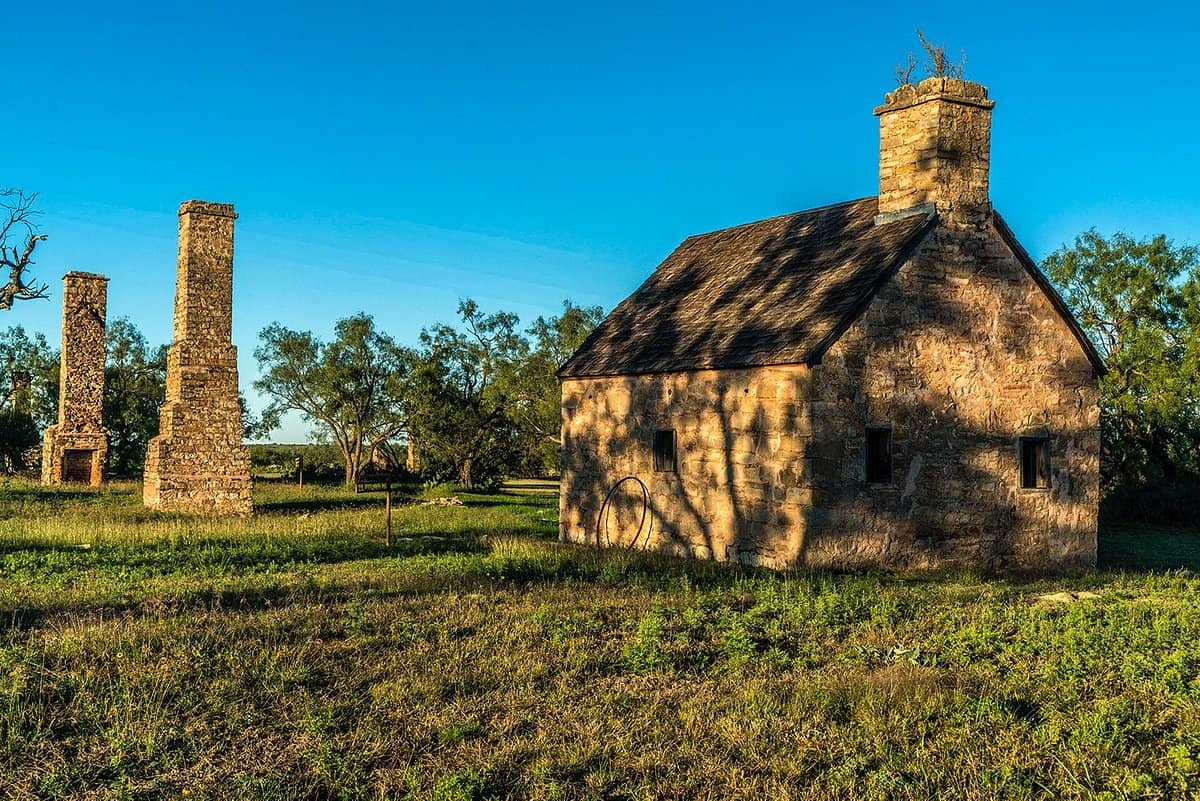
The Army raised this outpost in 1851 and called it the Post on the Clear Fork of the Brazos. The soldiers were not thrilled. Water ran scarce, the wind never quit, and by 1854 they marched off and left it.
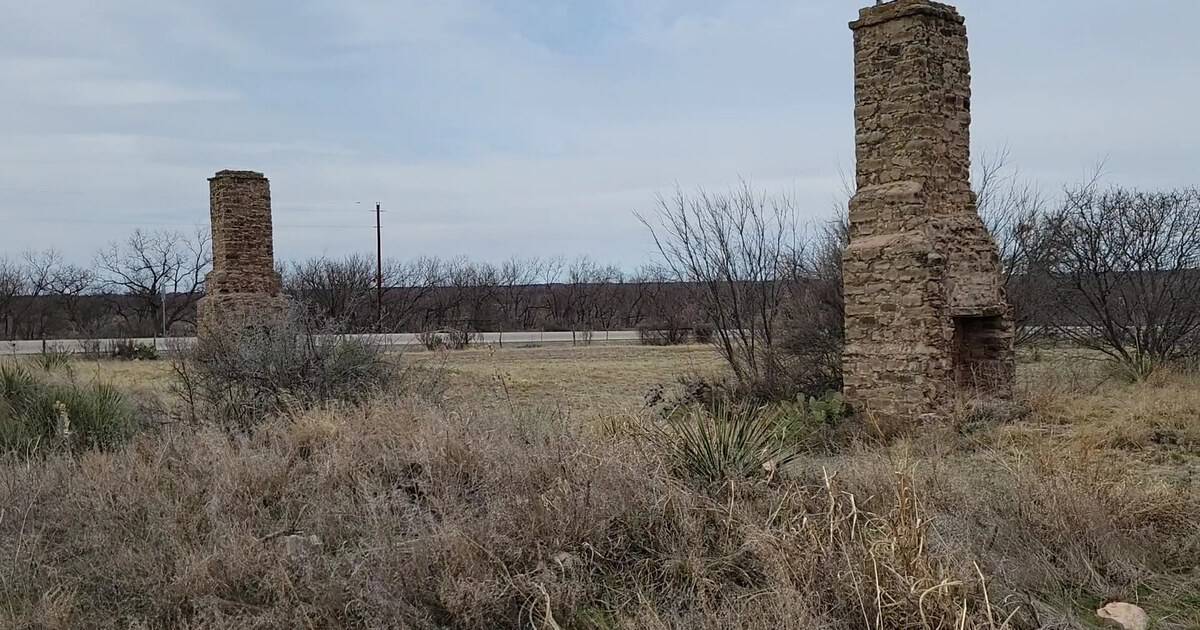
Fire took the roofs not long after. What remains is the eerie part. More than a dozen tall stone chimneys stand alone on the open prairie, joined by three surviving stone buildings and a scatter of foundations. From a distance they read like a field of gray monuments.
Nobody is entirely certain how the place earned the name “Phantom Hill,” which only sweetens the mood. The ruins later did a second life as a stop on the Butterfield Overland Mail stagecoach line and a Confederate post before falling quiet for good.
Because it sits so far off the interstate, you will often have the whole prairie to yourself. Bring water and watch your step around the old foundations.
The site is on the National Register of Historic Places, and a local nonprofit keeps the grounds mowed and the interpretive signs fresh. You get real context here without a gift shop or an entry gate anywhere in sight.
The fort went up to guard emigrants heading west, many of them bound for the California gold fields, along one of the era’s main overland trails. Standing among the chimneys now, it is hard to picture the traffic that once passed this way.
It is open every day during daylight hours, free to visit, with brochures on site and the major ruins clearly marked. Come close to sunset, when the low light turns the chimneys gold and the whole prairie goes silent. It is one of the most photogenic spots in West Texas.
Where: FM 600, about 11 miles north of Interstate 20 in Jones County, north of Abilene.
2. Terlingua Ghost Town near Big Bend
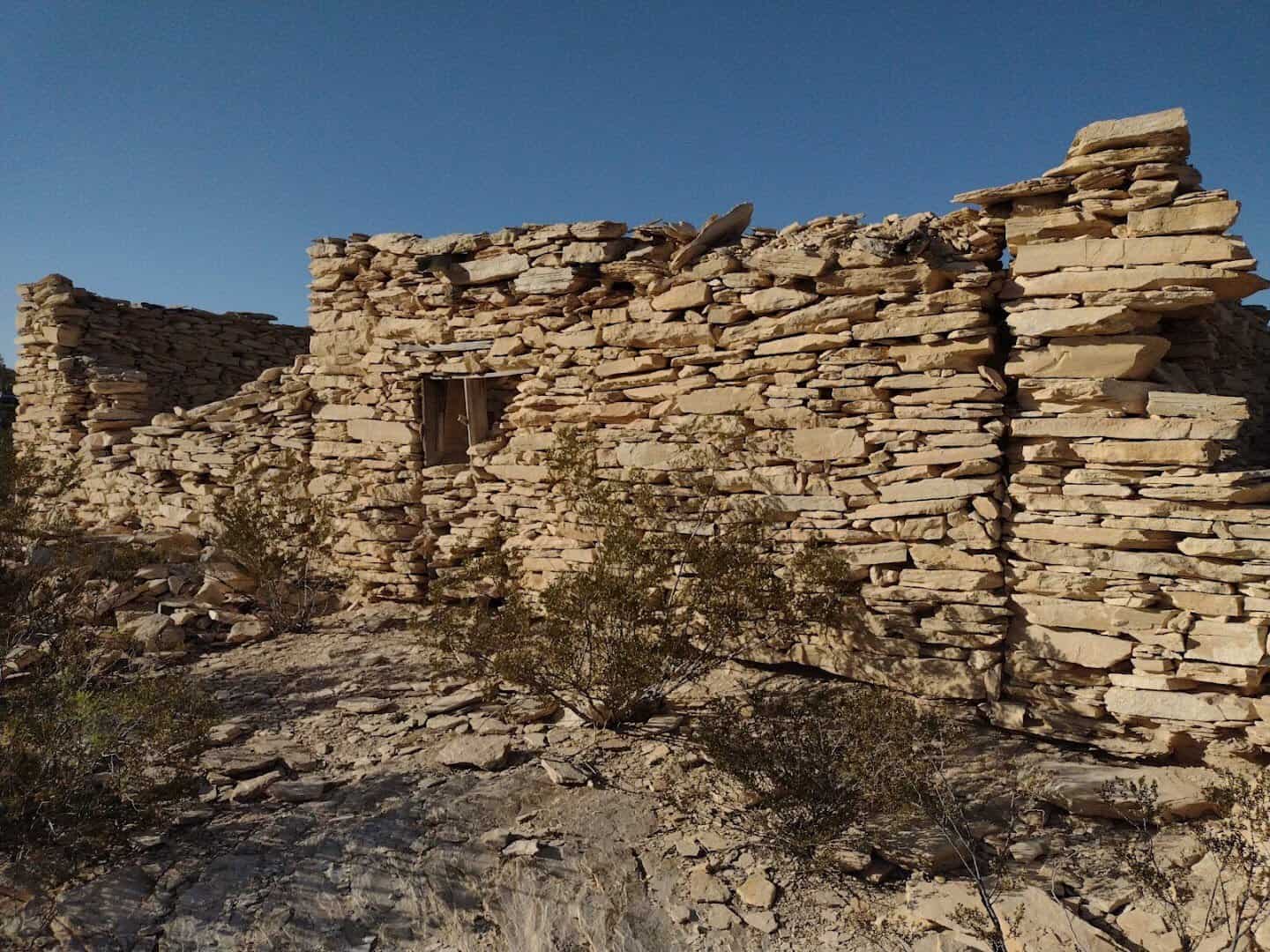
Roughly eight miles from the entrance to Big Bend National Park sits the skeleton of a mercury boomtown. The Chisos Mining Company set up here in 1903 under a Chicago industrialist named Howard E. Perry, digging cinnabar from the hills to smelt into quicksilver.
For three decades it was one of the country’s leading quicksilver producers. As many as 2,000 people lived here at the peak. Then the ore played out, the company went bankrupt around World War II, and the miners drifted away.
Here is the fun twist. Terlingua never fully died. Adobe ruins and the old company store still line the hill, but people trickled back in the 1960s, and today the porch of the Terlingua Trading Company is one of the great front-row seats in Texas.
Did you know? Every November the town throws one of the biggest chili cook-offs in the country, and the population balloons for a weekend before shrinking back to a handful.
The old Starlight Theatre sat roofless for decades before it reopened as a restaurant, which tells you everything about how this place recycles its ruins. Wander the weathered cemetery, poke through the ruins, then grab a cold drink and watch the desert light do its thing.
From the porch you look straight across the desert toward the Chisos Mountains, and the crumbling old church nearby glows pink at dusk. It is the rare ghost town where the ghosts kept the best real estate.
High on the hill sit the ruins of the old Perry mansion, once home to the mine’s absentee owner and now partly reborn as a small hotel. It remains the best perch in town for watching a desert sunset unfold.
Where: Terlingua, Brewster County, on FM 170 just west of the Highway 118 junction near Big Bend National Park.
3. Fort Griffin near Albany
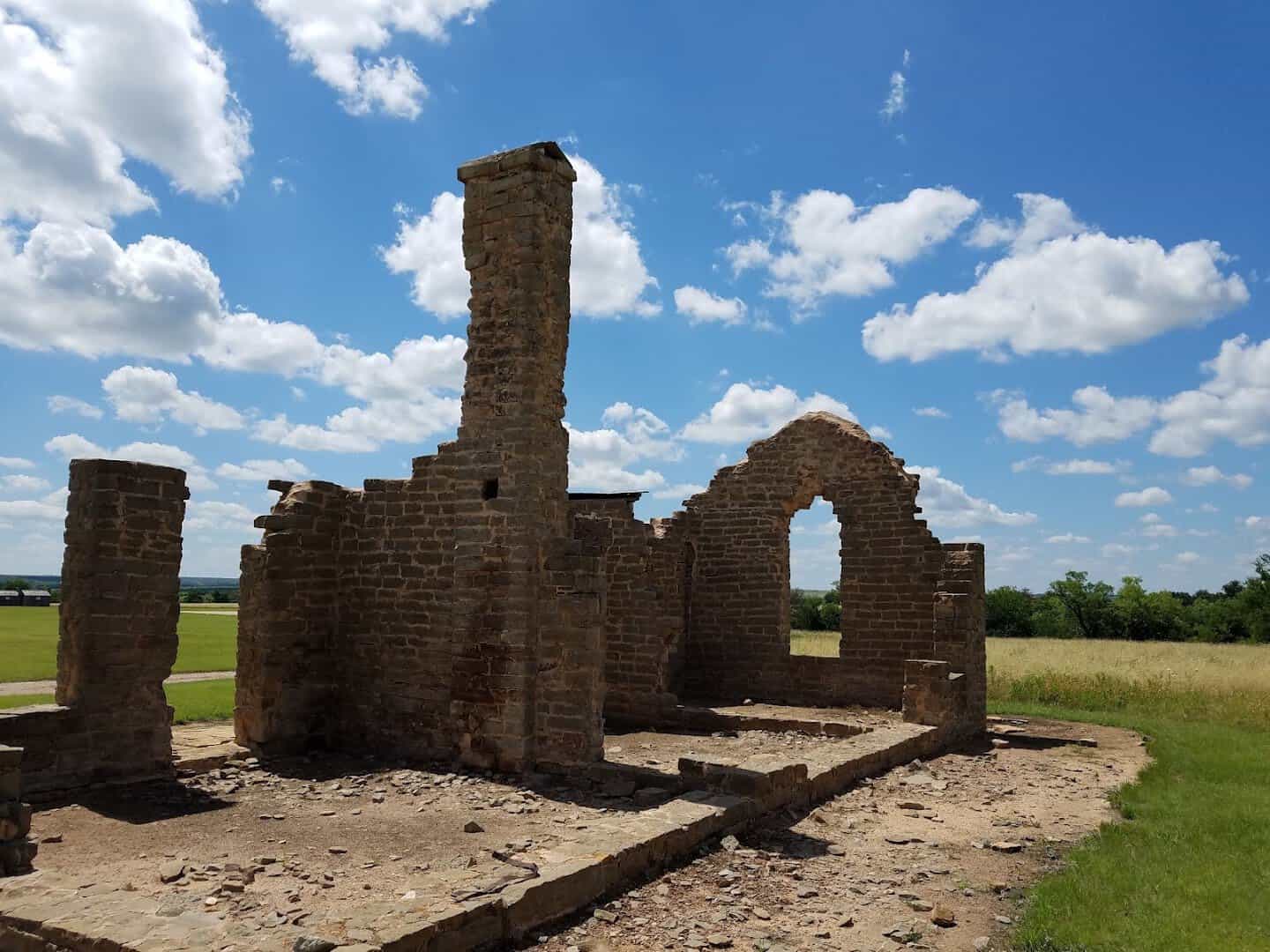
If Fort Phantom Hill is a lonely chimney field, Fort Griffin is its bigger, busier cousin. Established in 1867, it grew into the most important frontier fort in Texas after the Civil War, perched high above the Clear Fork of the Brazos.
The ruins spread across the hilltop. You can walk past a hand-dug well, the mess hall, a powder magazine, barracks, the administration building, a restored bakery, and the stone foundations of the officers’ quarters. It gives you a real sense of how big the post once was.
Below the fort sits The Flat, the rowdy trail town that grew up to serve the soldiers and the cattle drives. The original jail still stands there among a few reconstructed buildings, a quiet reminder of a place that was anything but quiet in the 1870s.
Did you know? This 506-acre site is also home to the Official State of Texas Longhorn Herd, descendants of the cattle that once churned up the Great Western Trail. You can camp, hike, and picnic here too, so it makes an easy overnight.
On select weekends, living-history programs and reenactments bring the old parade ground back to life, which is a fun way to see the fort as more than a set of foundations.
From the hilltop the view stretches for miles across the Clear Fork valley, the same country the buffalo hunters and trail drivers once crossed. Bring binoculars and you may spot the longhorns grazing far below.
In the 1870s The Flat roared as a center of the buffalo-hide trade, a crossroads for hunters, gamblers, and cattle drivers on the Western Trail. Legend has it even Wyatt Earp and Doc Holliday passed through during its wild heyday.
Where: 1701 N US Highway 283, Albany, TX 76430, about 15 miles north of town in Shackelford County.
4. Hueco Tanks near El Paso
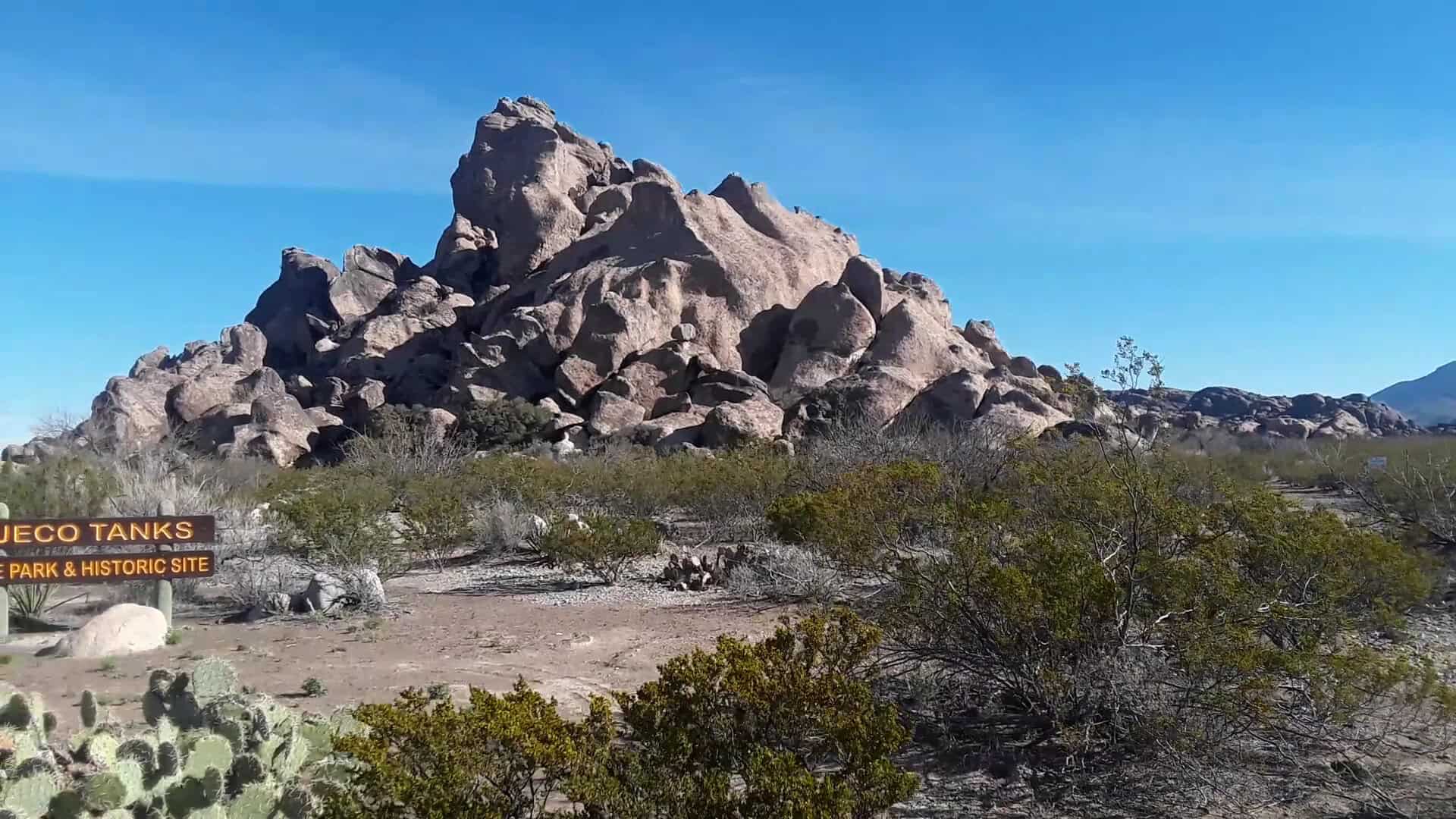
Out in the desert northeast of El Paso, a cluster of dark rock hills rises from the flat like something dropped there by accident. The rock formed about 34 million years ago, and weather carved it into strange, rounded hoodoos full of natural basins.
Those basins, the “huecos,” trapped rainwater, which turned this into a refuge for people for more than 10,000 years. The result is astonishing. More than 3,000 pictographs hide in the crevices, shelters, and shadowed caves.
The Jornada Mogollon people, the Mescalero Apache, and the Tigua all left their mark, including the famous painted masks that stare back at you from the dim rock. Standing in a quiet shelter with those faces overhead is a genuinely spine-tingling moment.
The park is also world-famous among rock climbers, who come from all over for the bouldering. Access is limited to protect it all.
Only 70 people per day are allowed into the self-guided North Mountain area, and guided pictograph tours run Wednesday through Sunday by reservation. Book ahead before you drive out, and pack water and sun protection, because there is almost no shade once you are out among the rocks.
The name comes from the Spanish word for hollow, a nod to those water-holding basins. In a region this dry, that water made the rocks a magnet for wildlife too, so the birding here is surprisingly good.
Those same tanks once drew Butterfield stagecoaches and California-bound travelers, some of whom scratched their names into the rock beside paintings thousands of years older. Few places layer so much history onto a single pile of stone.
Where: 6900 Hueco Tanks Road No. 1, El Paso, TX 79938, about 32 miles northeast of the city.
5. Old Baylor Park in Independence
Here is a fact that surprises most Texans. Baylor University did not start in Waco. It was chartered in 1845 by the Congress of the Republic of Texas and opened the next year in the tiny community of Independence, where it stayed until 1886 before moving away for good.
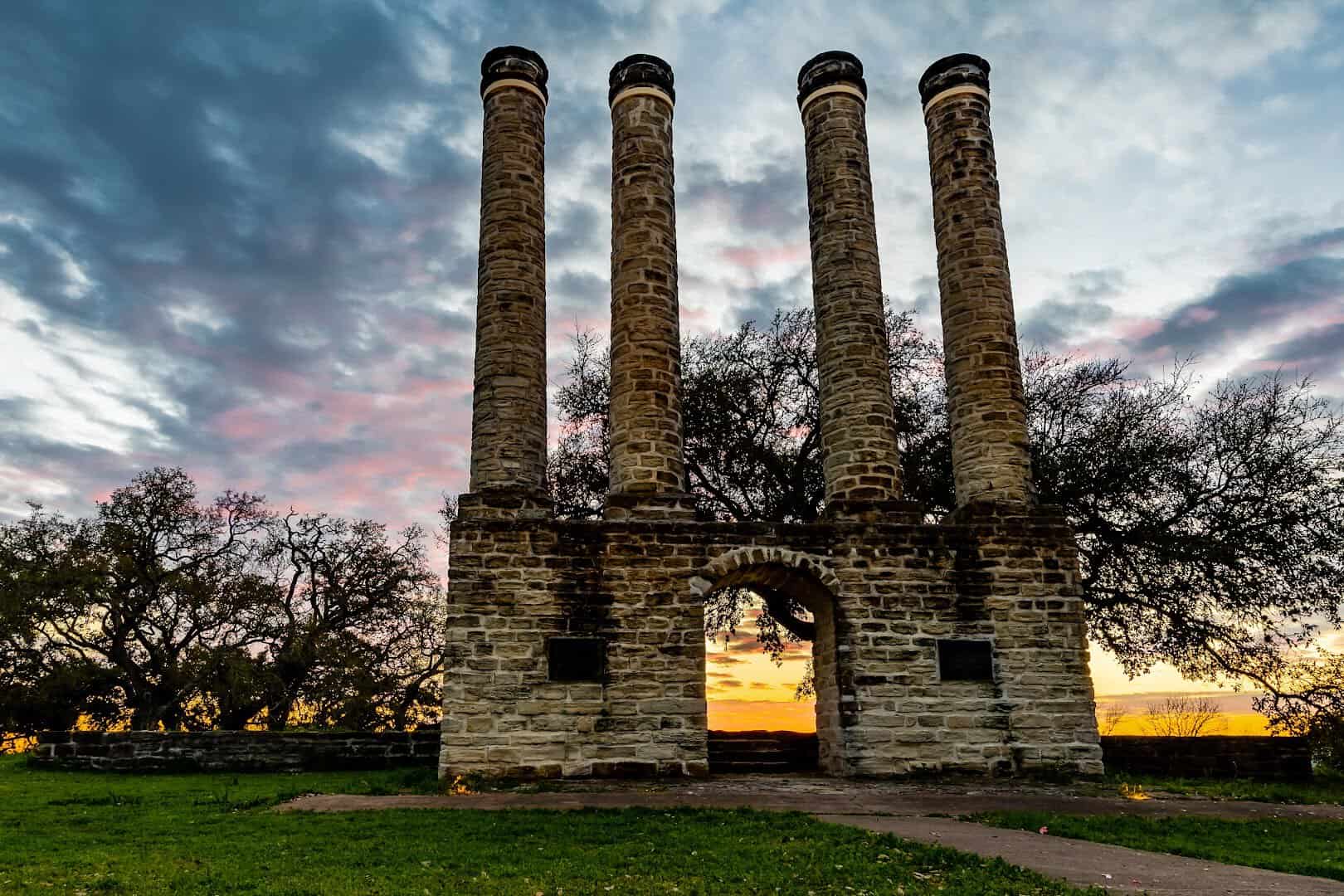
What it left behind is striking. On a low hill stand four massive stone columns, all that survives of the grand Female College building raised in the 1850s. Foundations of the old stone kitchen linger nearby.
The columns rise out of the grass like the ruins of some forgotten temple, and in spring the whole hillside floods with bluebonnets, which makes this one of the most photographed spots in the county.
It is a free public park, quiet almost any day of the week, and a short drive from historic Washington-on-the-Brazos, where Texas declared its independence. Pair the two and you have a full day of the state’s oldest stories.
Sam Houston himself worshipped at the nearby Independence Baptist Church, and his family ties to this little crossroads run deep, which is a nice bit of trivia to have in your pocket as you stand among the columns.
Across Independence Creek, the men’s campus at Windmill Hill left its own foundations and markers behind. History buffs can walk both halves of the vanished college in one easy afternoon.
The little community nearby still guards its Baptist roots at the Texas Baptist Historical Center, and come spring the whole area turns into one of the best bluebonnet drives in the state. Bring a camera and plan to linger a while.
Where: FM 390 at Independence, Washington County, near the junction with FM 50.
Plan Your Texas Backroads Adventure
The great thing about abandoned places is that they never rush you. There is no line, no ticket window, no closing bell at most of these spots. Just you, the wind, and the stories baked into old stone.
Pick one that fits your next drive, throw a cooler in the trunk, and go see what Texas left behind. Most of these spots are free, none are far from a good roadside meal, and every one rewards a slow afternoon.
And please, look and photograph all you like, but leave every chimney, column, and painted mask exactly as you found it, so the next curious traveler gets the same thrill you did.
Featured image: Lance Green via Fort Phantom Hill

Stella Raines
Editor-in-Chief
Stella brings over a decade of storytelling experience to TX Headlines. With roots in West Texas and a love for road trips, she leads the editorial team with an eye for the hidden stories that make Texas unforgettable.
More Stories
These 5 Surreal Texas Places Are So Stunning You Won’t Believe They’re in Texas

8 Hidden Texas Bookstores That Book Lovers Will Want to Get Lost In
This Abandoned Texas Zoo Closed Nearly 90 Years Ago, and You Can Still Walk Through Its Ruins