This Texas County’s Water Makes People Age Slower
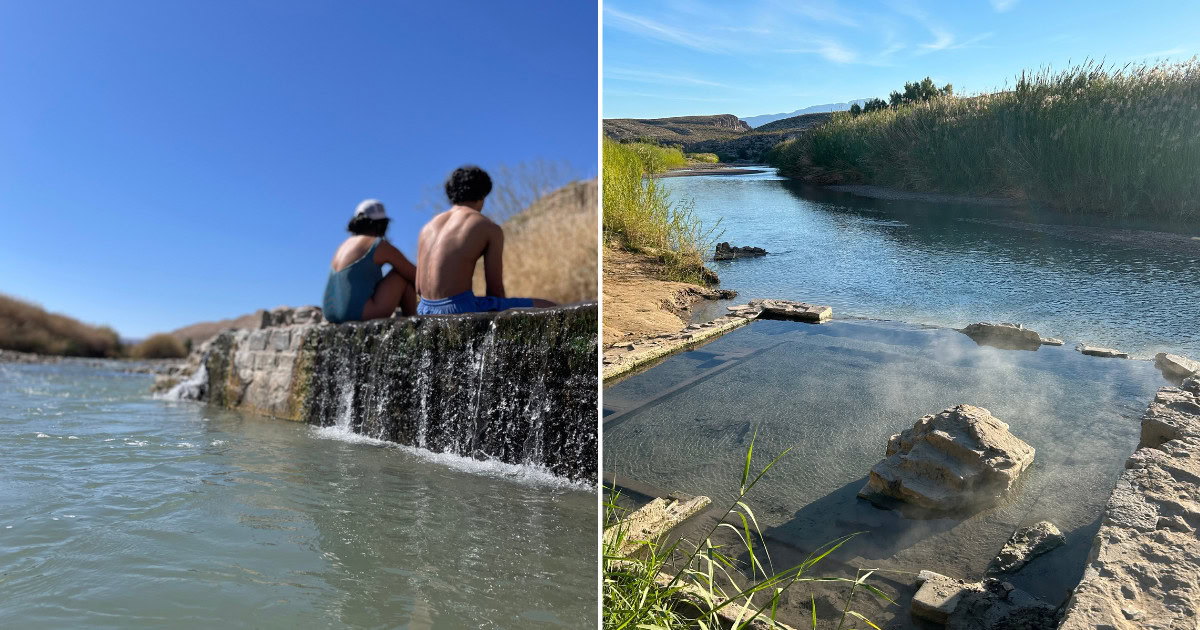
There’s a place in Texas where roughly 9,000 people are spread across 6,000 square miles of desert, and something in the water might be keeping them healthier than the rest of us.
Brewster County has a median age of 42.2 years, notably higher than Texas’s 35.5 years, and yet the people here seem to thrive in ways that defy the harsh landscape around them.
Scientists are starting to pay attention to what locals have known for generations: the water here is different.
Brewster County is the largest county by area in Texas at 6,192 square miles — over three times the size of Delaware and more than 500 square miles bigger than Connecticut.
But it’s not the size that makes this place remarkable. It’s what lies beneath the ground and bubbles up through ancient limestone: mineral-rich spring water that’s been drawing people to these remote corners for thousands of years.
What Makes Brewster County Different
This is one of the remotest places in Texas, hands down.
With a population of about 9,437 spread across those thousands of square miles, you’re more likely to see a roadrunner than another human on most drives.
That works out to just 1.5 people per square mile, making it one of the least densely populated counties in the entire country.
Brewster County is home to Big Bend National Park, the largest park in the state, and that means vast stretches of protected wilderness where the air is so clean you can see stars that city dwellers have never witnessed.
The desert climate here is extreme but pure, with zero industrial pollution and an environment largely unchanged from what indigenous peoples experienced thousands of years ago.
What really sets this place apart, though, are the natural hot springs scattered throughout the region.
These aren’t your typical hot tubs — they’re ancient geothermal springs that have been bubbling up from deep underground for millennia, carrying with them a cocktail of minerals that science is only beginning to understand.
The Water Secret
The most famous spring in Brewster County is Langford Hot Springs, also known as Boquillas Hot Springs, located where Tornillo Creek meets the Rio Grande inside Big Bend National Park.
The springwater maintains a constant temperature of 105°F year-round and contains calcium carbonate, calcium sulfate, sodium sulfate, sodium chloride, and lithium.
That last mineral — lithium — is where things get interesting.
The water at these springs contains sodium, potassium, calcium, magnesium, sulfate, chloride, and smaller concentrations of arsenic, lithium, rubidium, strontium, thallium, uranium, and tungsten.
Before you worry about that list, understand that we’re talking about trace amounts that occur naturally in spring water around the world. What matters most is the lithium.
The spring’s original owner, J.O. Langford, believed the water cured him of malaria in the early 1900s.
Langford reported that he completely recovered after following the treatment used by Native Americans — bathing in the springwater and drinking it.
During the next fifteen years, Hot Springs became widely known for its mineral water, with Langford building cabins to serve overnight visitors and health seekers.
Was Langford onto something? Modern science suggests maybe.
The underground aquifers feeding Brewster County’s springs have been untouched by industrial runoff or agricultural chemicals.
The water filtering through limestone over thousands of years picks up minerals naturally, creating what some researchers believe could be one of nature’s most beneficial drinking water sources.
How to Experience It Yourself
You can visit the hot springs and see what all the fuss is about.
Langford Hot Springs emerges at 105°F on the north bank of the Rio Grande, and though the grand bathhouse is long gone, you can still soak in the foundation remains while enjoying views of Mexico across the river.
Drinking from natural springs requires caution — not all spring water is safe to consume without treatment, and Big Bend National Park has specific rules about water usage.
However, several local businesses bottle spring water from the region, and you can purchase mineral-rich water sourced from West Texas aquifers.
The hiking trails locals frequent offer more than exercise — they connect you to the same landscape that’s sustained life here for thousands of years.
The clean air, the mineral water, the endless horizons — experiencing Brewster County isn’t about a weekend getaway.
It’s about understanding what happens when humans live in harmony with one of the planet’s most ancient and unforgiving environments.
Nature’s Longevity Secret

Maybe the secret to Brewster County’s healthy population isn’t just the lithium-rich spring water, though that certainly doesn’t hurt.
Maybe it’s the combination of clean air, low stress, strong community bonds, daily outdoor activity, and yes, water that’s been filtering through limestone for millennia, picking up minerals our bodies evolved to need.
The people here have figured out something that the rest of us are only beginning to understand: sometimes the fountain of youth isn’t a myth — it’s just hidden in plain sight, bubbling up from the ground in the remotest corners of Texas.
If you’re looking for a place where life moves more slowly and people seem to age better, maybe it’s time to make the drive out to Brewster County and see what’s really in the water.

Stella Raines
Editor-in-Chief
Stella brings over a decade of storytelling experience to TX Headlines. With roots in West Texas and a love for road trips, she leads the editorial team with an eye for the hidden stories that make Texas unforgettable.
More Stories

These Charming Texas Towns Feel Like a Trip to Europe

This Charming Small Texas Town Guards the World’s Largest Pecan and the State’s Best Barbecue

This Tiny Texas Town Hides a Hand-Painted Church Locals Call the Queen

This Small Texas Town Is the Official Bluebonnet City, and Every Spring 40 Miles of Wildflower Trails Bloom Around It
Tags