This Secret Texas Slot Canyon Is a Spring-Fed Swimming Hole Worth a 14-Mile Hike
I have a rule about swimming holes: the best ones make you earn them. The easy ones get a parking lot, a snack bar, and a line out the gate by ten in the morning, and I have floated plenty of them happily.
There is nothing wrong with that on a hot day. But every so often I hear about a place that asks for a whole day of your legs before it shows you anything, and I cannot let it go.
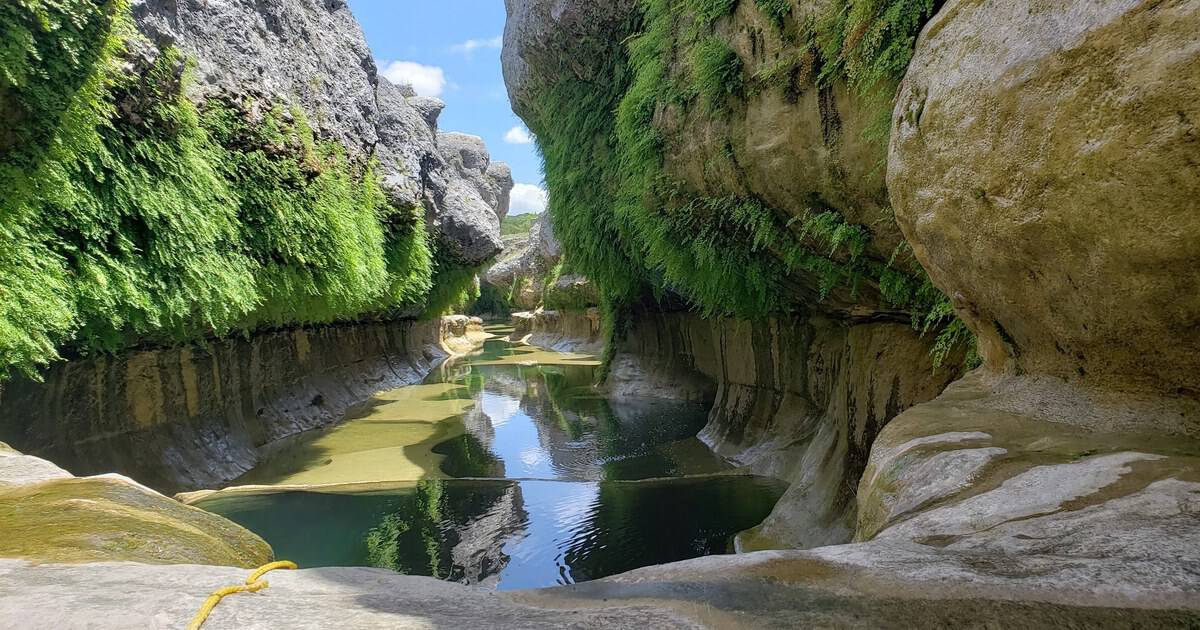
This is one of those places. Tucked into a limestone gorge on the Blanco River in southwest Hays County sits a quarter-mile stretch of deep, glassy pools. The walls squeeze in to arm’s reach, and the water in the deepest spots reads almost black.
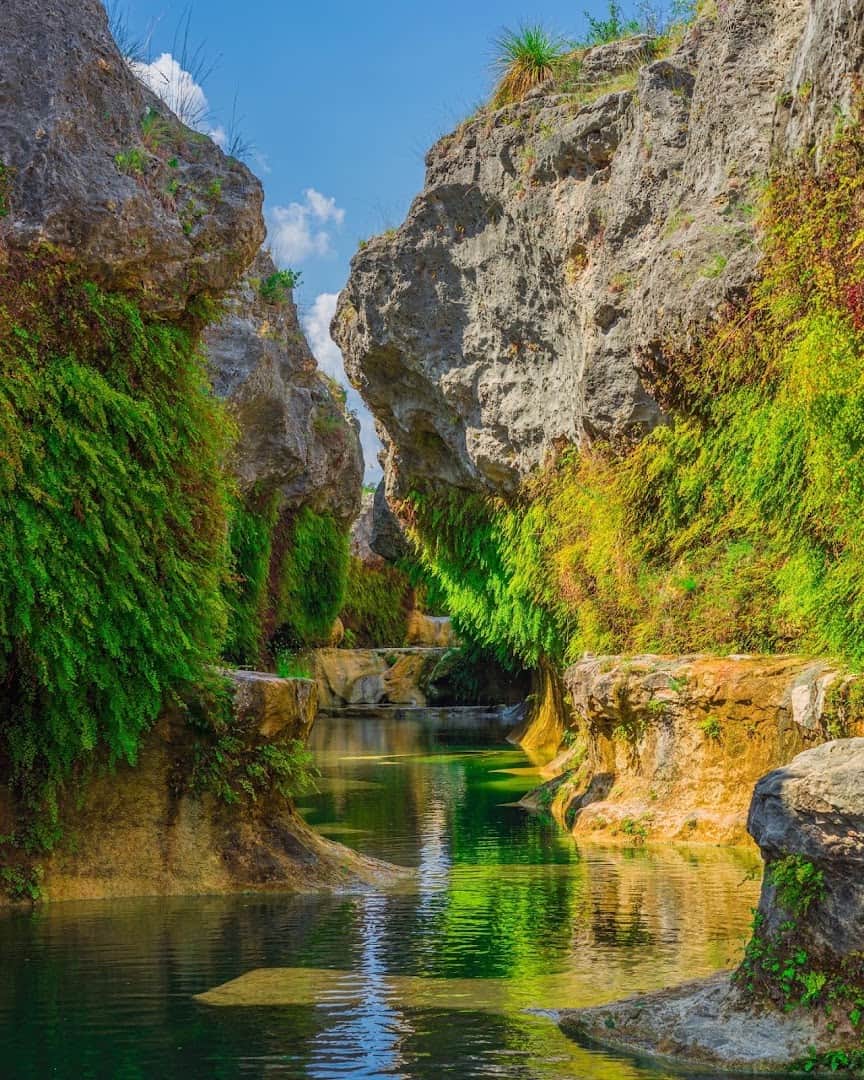
Locals call it the Narrows. Reaching it means walking about seven miles up a riverbed with no trail and no sign to tell you that you have finally arrived.
Below, here is what waits at the end of that walk, how the canyon came to look this way, and how to plan the trek so the reward is worth every mile.
A Canyon That Bedrock Pulled Apart
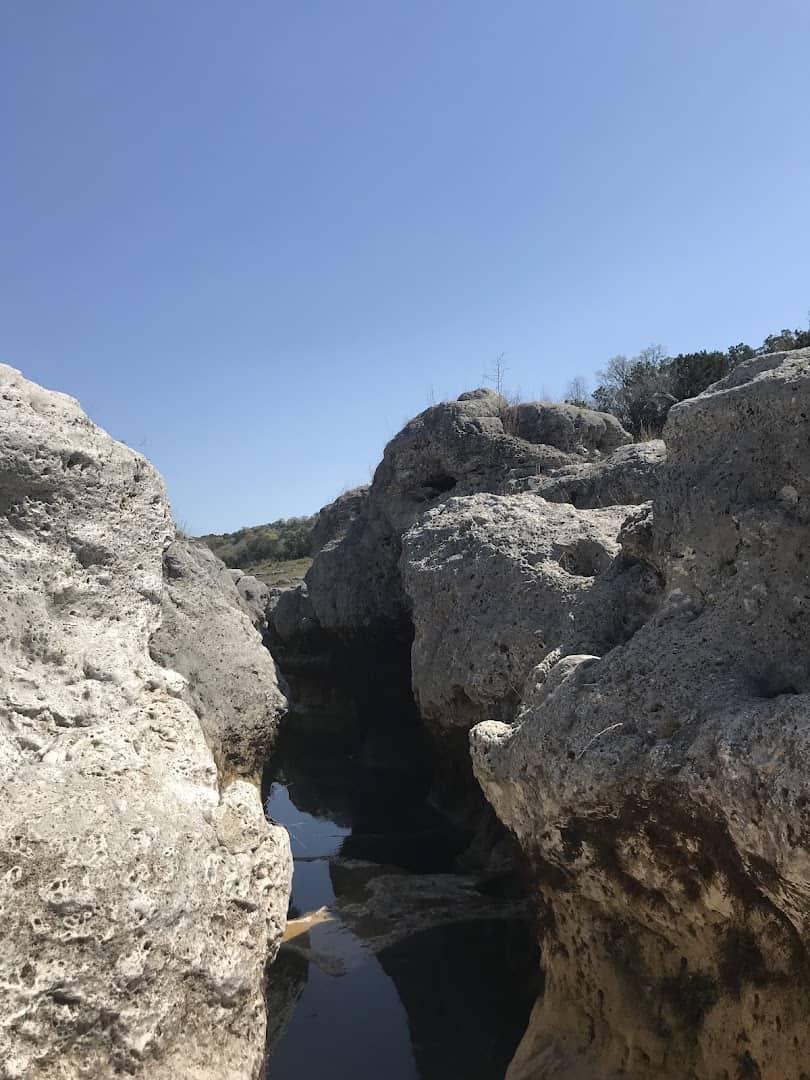
Picture a stretch of river where the rock itself splits open. The cliffs here climb about seventy-five feet, and in places the two walls pinch to roughly ten feet apart.
That is close enough to reach out and touch both sides at once. Close enough, too, to feel the temperature drop the moment you slip into the shade between them.
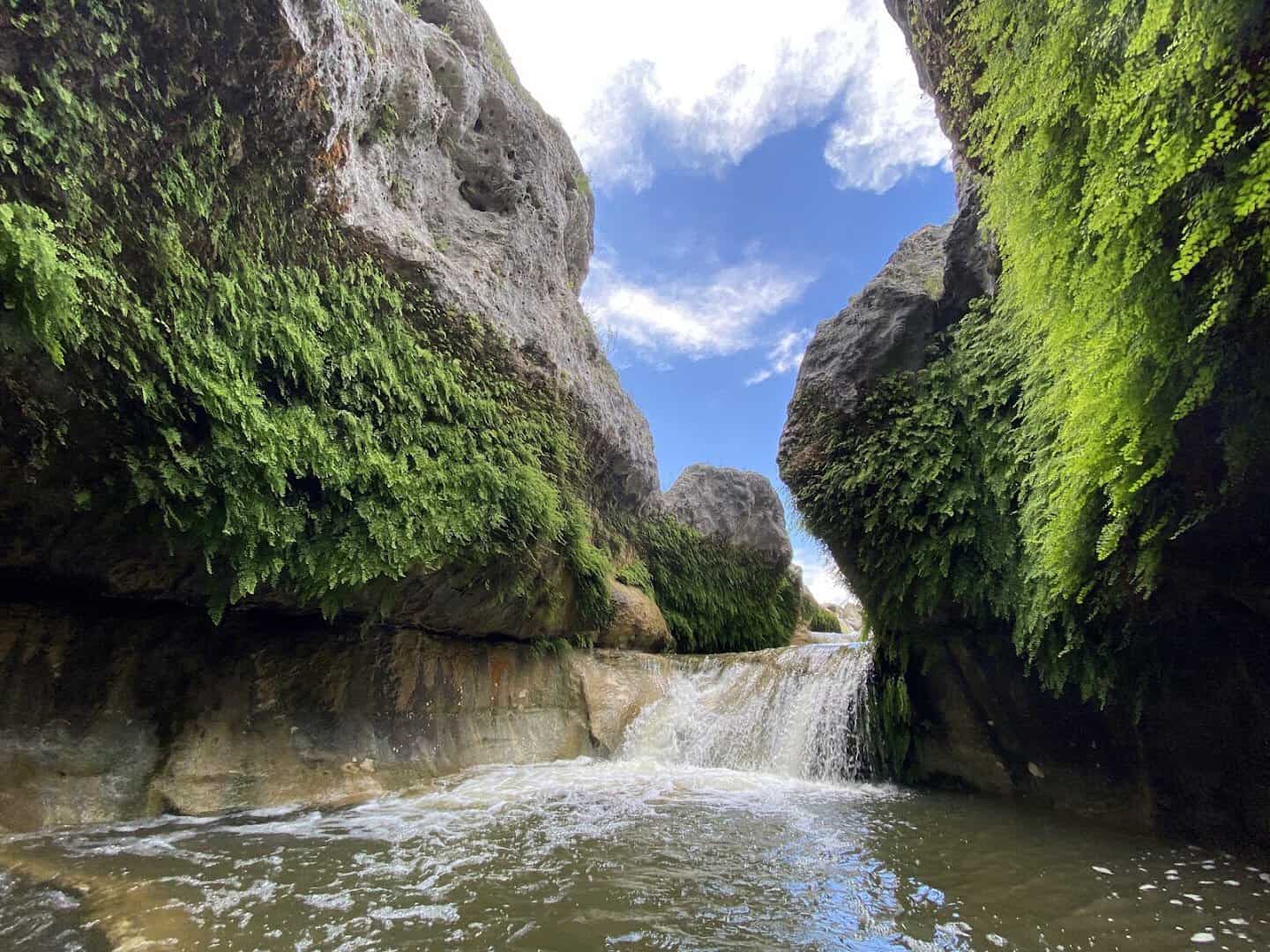
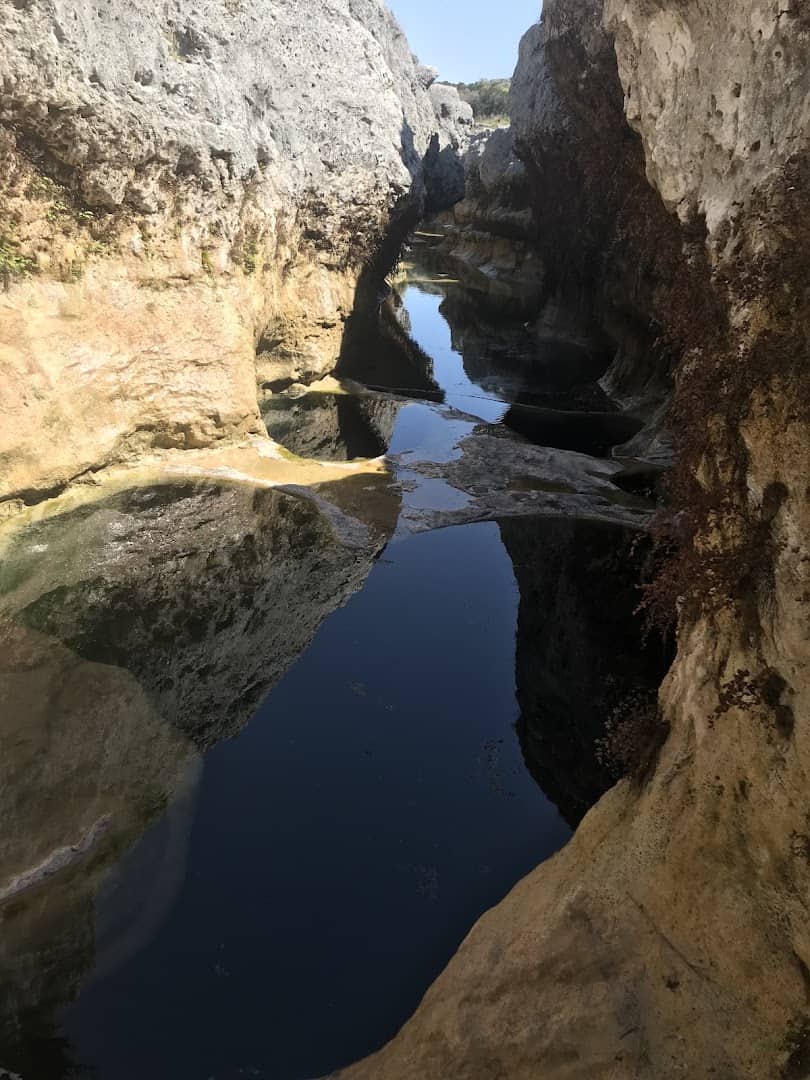
The gorge runs about a quarter of a mile. Down its length the Blanco slows into a chain of pools, one after another, each with its own color and mood.
The first ones you meet tend to be cool, green, and shallow. Keep going and they deepen fast, until the surface stops reflecting the sky and turns to something closer to ink.
Maidenhair ferns skirt the honeycombed walls. Watercress trails in the shallows, and sycamores lean out over the channel. When afternoon light drops in and hits clear water over pale limestone, the whole gorge seems to glow from the inside.
Pools So Deep They Look Black
Depths here run anywhere from twenty to fifty feet. Stand at the edge of the deepest basins and you cannot see the bottom, which is exactly how a swimming hole earns a reputation.
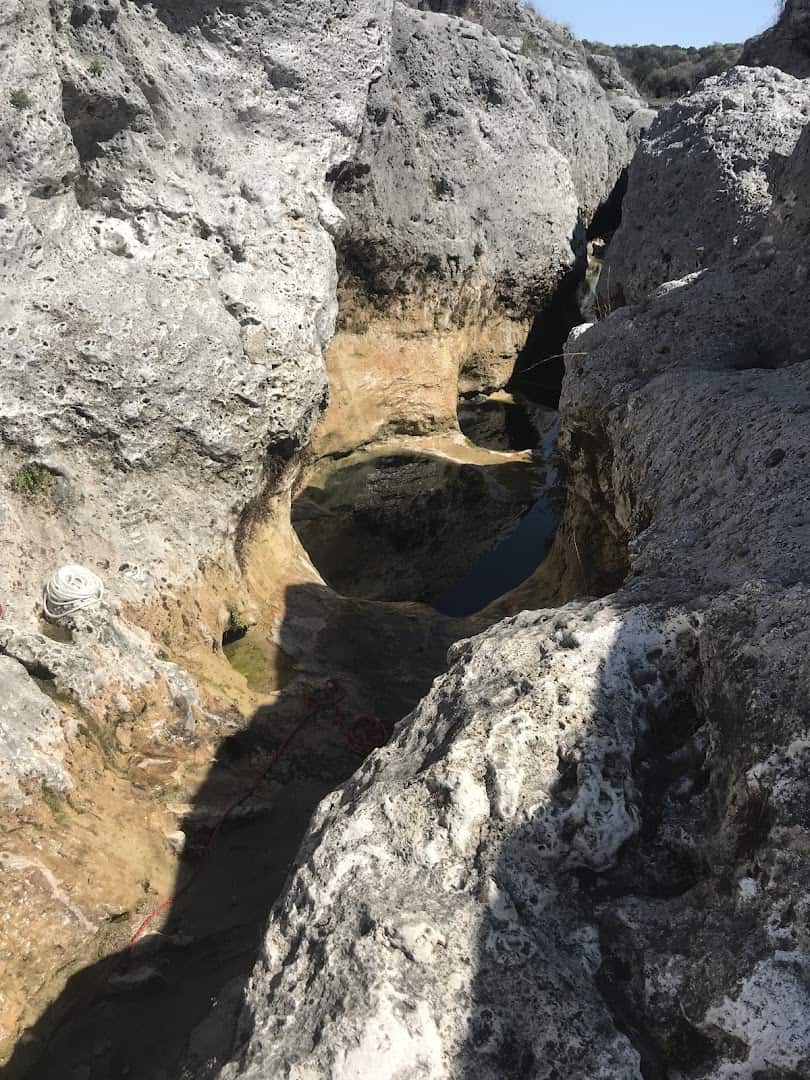
Certain pools connect to one another through submerged arches. A confident swimmer can duck beneath the rock and surface in the next chamber, the kind of detail that makes this feel less like a river and more like a flooded cathedral.
The strange shapes did not happen fast. Author Wes Ferguson, who wrote a whole book about this river, describes how the potholes formed over thousands of years as trapped stones spun in place.
Every time the water rose, those stones swirled and ground the limestone a little deeper. Do that for a few thousand years and you get smooth bowls, curved channels, and basins that look bottomless.
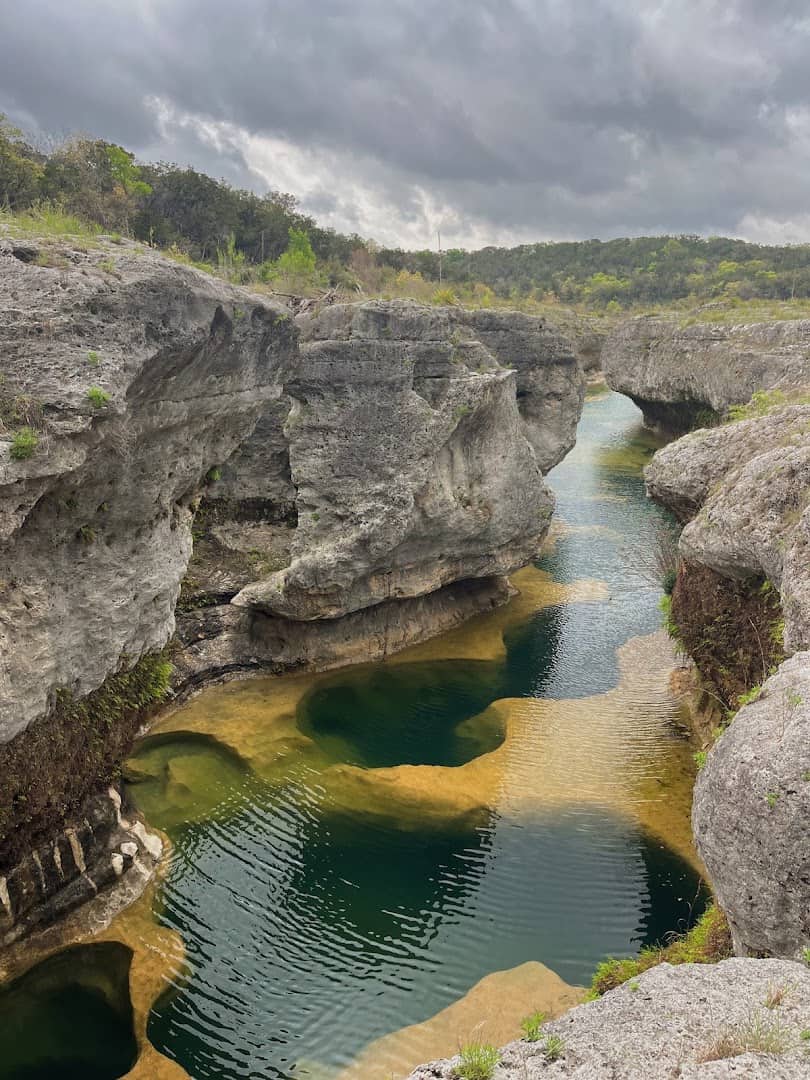
The rock is Cretaceous limestone. The springs that keep the pools topped up seep straight out of the cliff faces, fed by the aquifer behind the stone.
That spring water is the secret to the whole place. Cool, clear, and always moving, it is why the Narrows stays inviting when much of the river runs low and lazy by late summer.
A Swim Worth the Sore Legs
When you finally reach the canyon, the swim is the reward for every mile behind you. The water is spring-fed and clear, so you can watch your own shadow slide across the pale rock below.
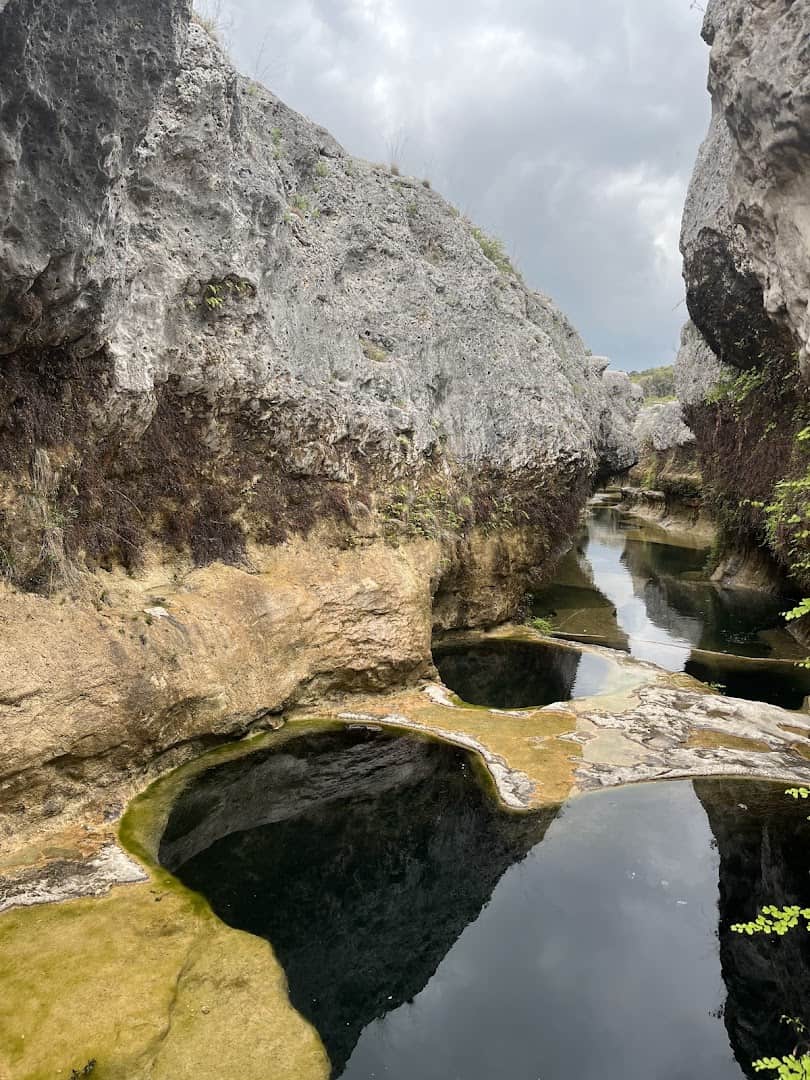
You can float on your back in the deep sections and stare straight up at cliffs that block out most of the sky. Down in the gorge the air stays cool even when the Texas afternoon is baking the world above.
Some visitors treat the pools like a natural water park, easing into the cold and then working their way from one chamber to the next. Others just find a smooth ledge, dry off in a warm patch of sun, and listen to the springs trickle down the walls.
There is no lifeguard and no rope swing, and that is the appeal. The Narrows is not built for you; it simply exists, and you get to visit it on the river’s terms.
Bring a mask if you have one. The clarity of the water rewards a look below the surface, where the swirled potholes and carved shelves are even stranger up close than they are from the bank.
Why They Call It the Blanco
Did you know? The river got its name back in 1721. Members of the Aguayo expedition looked at the white limestone lining the banks and the streambed and called it “blanco,” the Spanish word for white.
Three centuries later, that same pale rock is still the star of the show. It is the canvas the water carved, and the reason the pools take on those unreal shades of green and blue.
The name fits the whole river, but nowhere wears it better than the Narrows. Here the limestone is polished smooth and stacked in honeycombed shelves, dripping springs from a hundred small holes.
When This Was a Roadside Park
Here is the part most people never hear. The Narrows was once a place you could simply drive up and enjoy, no seven-mile hike required.
It sat on the Hermann Schlameus ranch. Through the 1930s, 40s, and 50s, it appeared on local tourist maps as a scenic park worth a Sunday afternoon.
Families came for the pools, the shade, and the wild beauty of the canyon. For a couple of decades it was simply the pretty spot down the road, marked right there on the map.
The ranch changed hands in the early 1960s. After that the canyon closed to the public and slipped back into legend.
What was once a mapped roadside park became the hidden reward it is today. Now it belongs mostly to the hikers willing to work for it, which is a large part of why it feels so untouched.
There is something fitting about that arc. A place this rare probably should ask a little more of the people who want to see it, and the long walk keeps the crowds thin and the canyon quiet.
The upside for you is a swimming hole that looks much the way it did on those old tourist maps. No pavilions, no concession stand, just water and rock and the ferns that have been there all along.
The Walk That Guards the Water
The trek is the whole story here. There is no maintained trail and no map waiting at a trailhead. You follow the bed of the Blanco itself, and the river decides the terrain.
Expect miles of uneven river stone underfoot. Then stretches of gravel and thorny brush, a few boulder-hopping scrambles, and at least a couple of miles through water.
Those water sections range from ankle-deep crossings to pools long enough that you swim them with your pack held high. It is roughly seven miles each way, about fourteen round trip.
Fit hikers reach the canyon in around four and a half hours, then turn around and face the same distance back. This is a full day on your feet, not a morning stroll.
Cell service is thin to nonexistent out there. So this is a day you plan for in advance, start early, and tell someone about before you go.
Pro tip: pack more water than you think you need, real food, and sturdy shoes you do not mind soaking through. Many hikers carry a length of rope, around fifty feet, to help float packs across the deeper pools.
A dry bag for your phone and keys earns its keep too. So does an honest look in the mirror about your own fitness, because the return miles are the ones that test you.
How to Do It Right
The Narrows sits in the middle of private ranch land, and the canyon rewards people who respect that. The legal path in is the riverbed itself.
Texas keeps the beds of its navigable rivers open to the public. So hikers stay down in the channel of the Blanco the entire way and leave the banks and the ranches alone.
Watch for purple paint on trees and fence posts along the sides. In Texas, a purple stripe carries the same meaning as a posted no-trespassing sign, so treat it as your cue to keep to the water.
The friendliest way to learn the current route is the community that loves this place. A private Facebook group built around the trek has grown to several thousand members.
They trade water levels, timing, and hard-won tips with anyone planning to go. Reading through it before you lace up is honestly half the preparation.
Timing Your Trek
Season makes or breaks this hike. Spring is the sweet spot, when mornings are cool and afternoons stay mild.
Longtime visitors point to early May as close to ideal. The river is more likely to be walkable then rather than raging, and the pools are already warm enough to enjoy.
You want a dry spell, not a wet one. The same riverbed that gives you a path turns impassable and genuinely dangerous after heavy rain.
So you check the forecast, read the group’s latest reports, and wait for the right window. Patience is part of the price of admission here.
Get the timing right and the payoff is enormous: a canyon nearly to yourself, clear pools at a swimmable temperature, and the deep quiet that only comes from a place this hard to reach.
How to Get There
The usual jumping-off point is a low-water crossing on Chimney Valley Road, where a bridge spans the Blanco upstream of the canyon.
From there the route is simple to describe and hard to do. Walk up the riverbed, stay in the channel, and keep going until the walls close in around you.
Where: The Narrows of the Blanco River, southwest Hays County, Texas, reached on foot up the riverbed from the low-water crossing on Chimney Valley Road near Wimberley. There is no address, no gate, and no ticket booth, which is exactly the point.
Plan the Trek, Earn the Water
Not every great Texas swimming hole is meant to be easy, and this one might be the finest argument for that. The best rewards in the Hill Country tend to sit at the end of a long walk.
So pick a cool spring morning, pack smart, and respect both the land and the river. Then set out early up the Blanco while the light is still soft.
Miles later, when the cliffs pinch shut and those deep green pools open in front of you, you will understand exactly why people keep coming back for the walk that guards the water.
Featured image: Simple Rick via The Narrows

Stella Raines
Editor-in-Chief
Stella brings over a decade of storytelling experience to TX Headlines. With roots in West Texas and a love for road trips, she leads the editorial team with an eye for the hidden stories that make Texas unforgettable.
More Stories
These 5 Surreal Texas Places Are So Stunning You Won’t Believe They’re in Texas
5 Abandoned Texas Places That Are Eerie, Empty, and Still Open to Explore

8 Hidden Texas Bookstores That Book Lovers Will Want to Get Lost In
This Abandoned Texas Zoo Closed Nearly 90 Years Ago, and You Can Still Walk Through Its Ruins
Tags