This Picturesque Texas Train Ride Steams Through the Piney Woods for a Relaxing Spring Day Trip
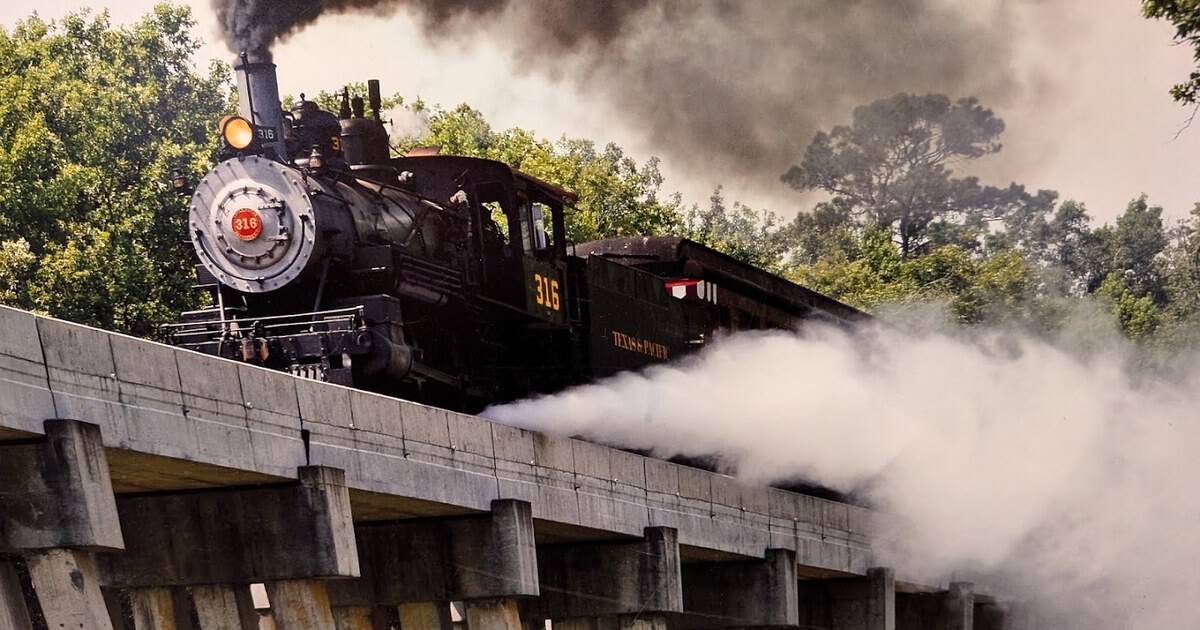
Nobody tells you how much you miss the sound of a steam whistle until you hear one again. It is a big, mournful, wonderful noise. The first time it rolled over me as a kid, I was completely hooked.
Cars honk. Planes whine. A steam engine sounds like the whole nineteenth century clearing its throat, and there is nowhere in Texas better to hear it than deep in the pines.
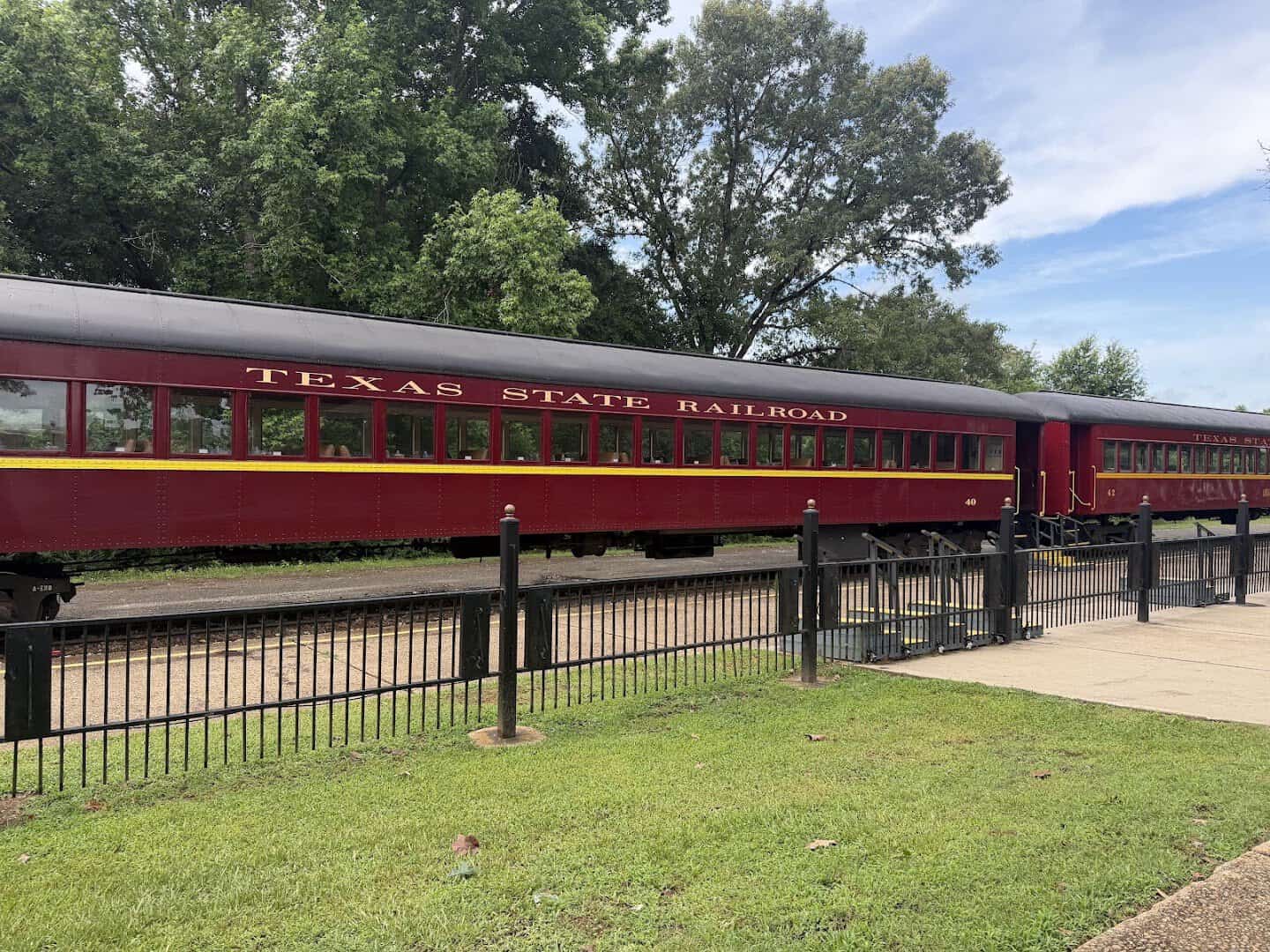
That noise waits for you in the Piney Woods, where the Texas State Railroad still runs restored early-1900s locomotives between the historic depots at Palestine and Rusk.
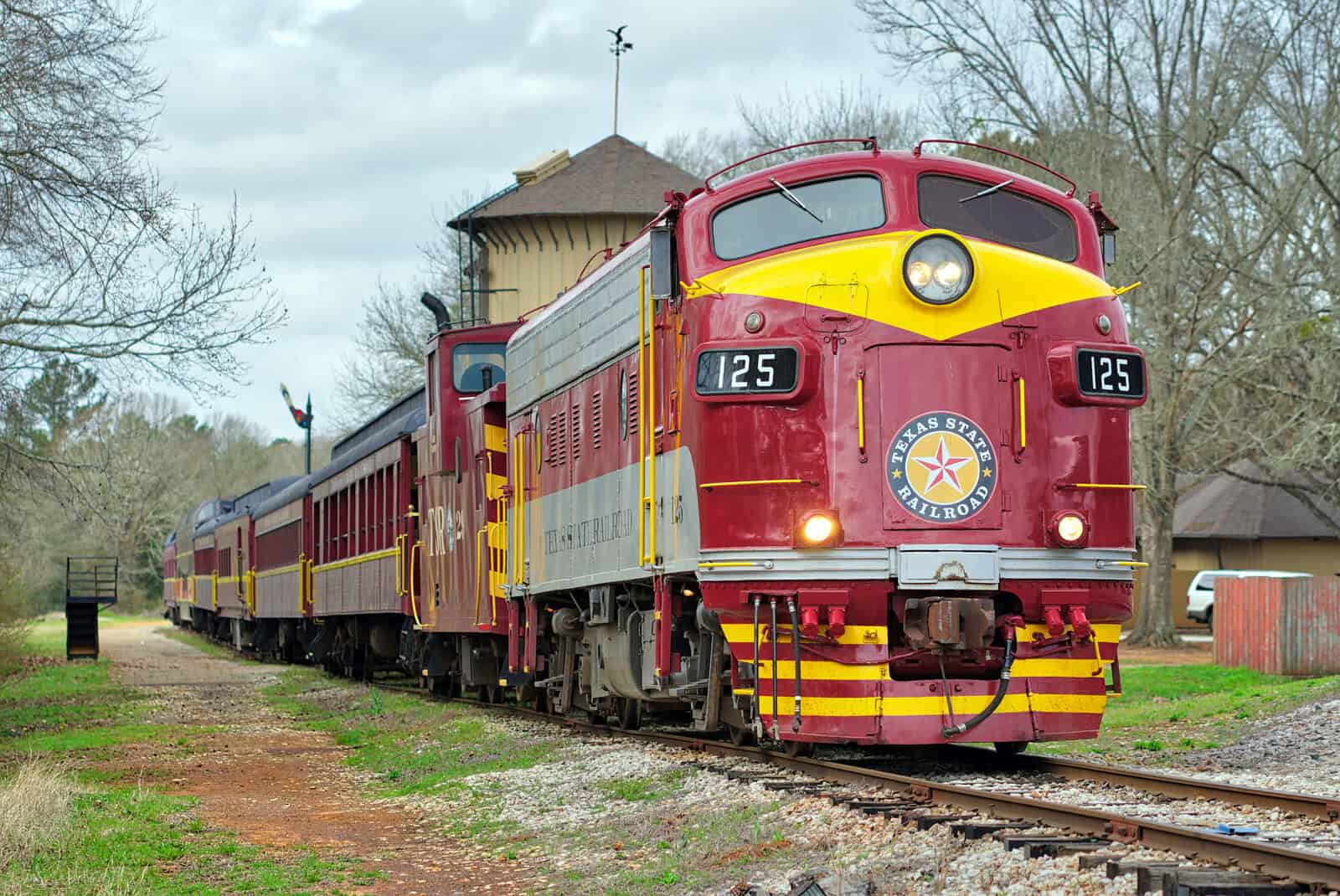
Here is why this slow 50-mile round trip through East Texas is the spring day trip I keep pushing on anyone who will listen.
Twenty-Five Miles of Slowing Down
The whole point of this train is that it is not in a hurry, and neither are you once you climb aboard. The ride runs 25 miles each way, Palestine to Rusk, and takes about four hours round trip counting the layover.
You are not getting anywhere fast. You are getting somewhere better.
The tracks cut straight through the dense pine forest of East Texas. For most of the trip there is no road, no parking lot, and no cell signal fighting for your attention. Just tall pines, dappled light, and the steady clack of the wheels underneath you.
Keep your eyes on the treeline. Riders regularly spot white-tailed deer, hawks circling overhead, darting squirrels, and the occasional wild hog crashing through the brush. The train moves slowly enough that you actually see them before they are gone.
The showstopper is the crossing over the Neches River. The train eases onto a long steel trestle and the forest suddenly opens to water below. It is the kind of view you cannot get from a car window, because no car goes where these tracks go.
Between the big moments, the ride settles into a rhythm that is almost hypnotic. The wheels tick, the whistle sounds at the crossings, and the pines roll by in an endless green blur that quietly resets your whole nervous system.
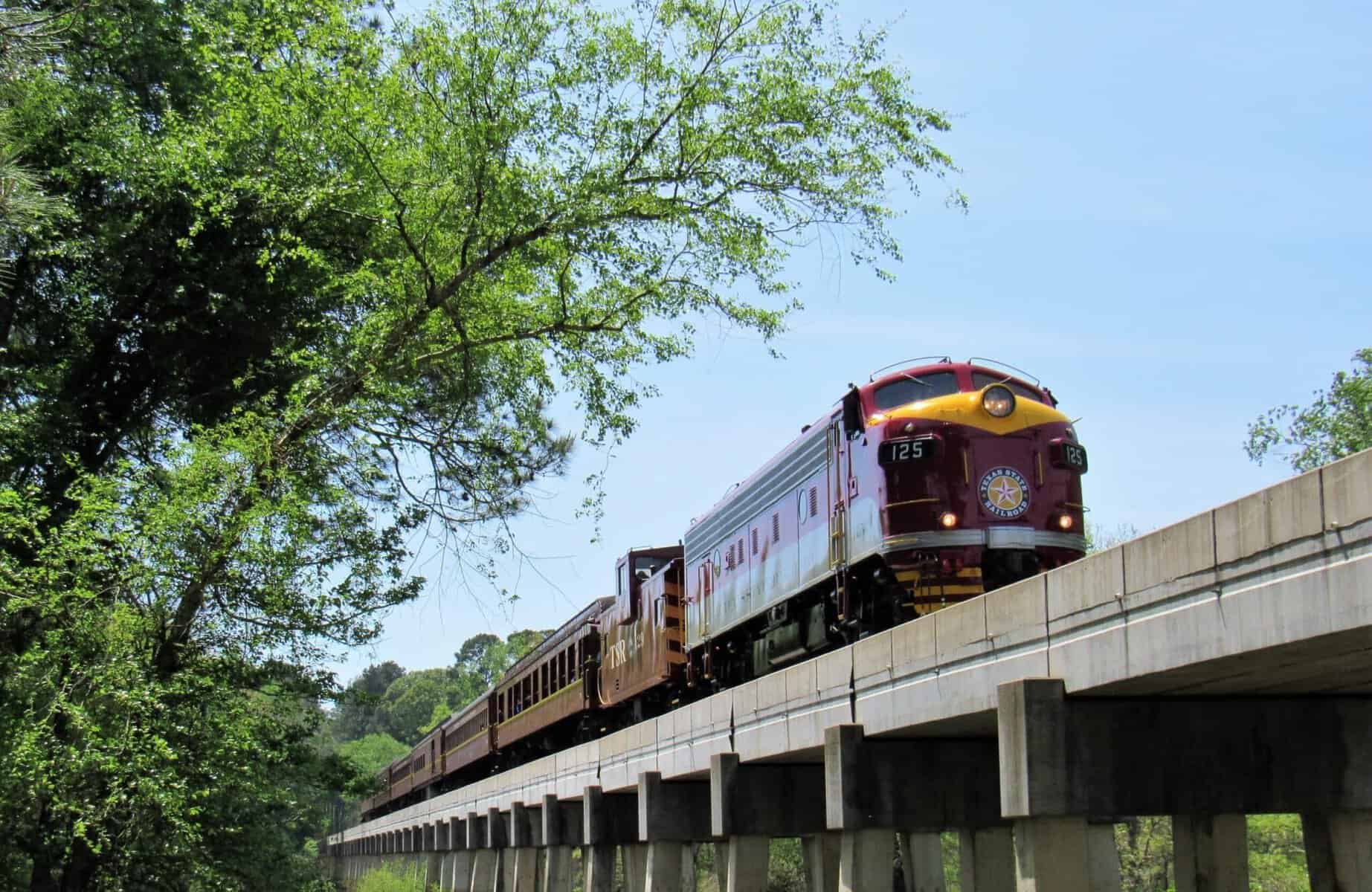
It is the rare kind of trip where doing nothing is the entire point. Nobody checks the time. The train knows the way, and all you have to do is watch the woods go by and let the afternoon happen.
Pick Your Perch
The seat you choose shapes the whole ride, and there are more options than you would expect. The railroad runs everything from a private caboose to Art Deco presidential cars to a booth-style observation dome with a bird’s-eye view of the woods.
My vote, especially in spring, will always go to the Open-Air Coach. These are vintage cars with wooden bench seats and no windows at all, so the East Texas air pours straight through and the smell of warm pine comes with it. Nothing sits between you and the forest.
There is a whole different feeling to a train when the wind is in your hair and you can hear the engine working up front. You lean out a little, the trees blur close, and for a second you are riding the same way people did a century ago.
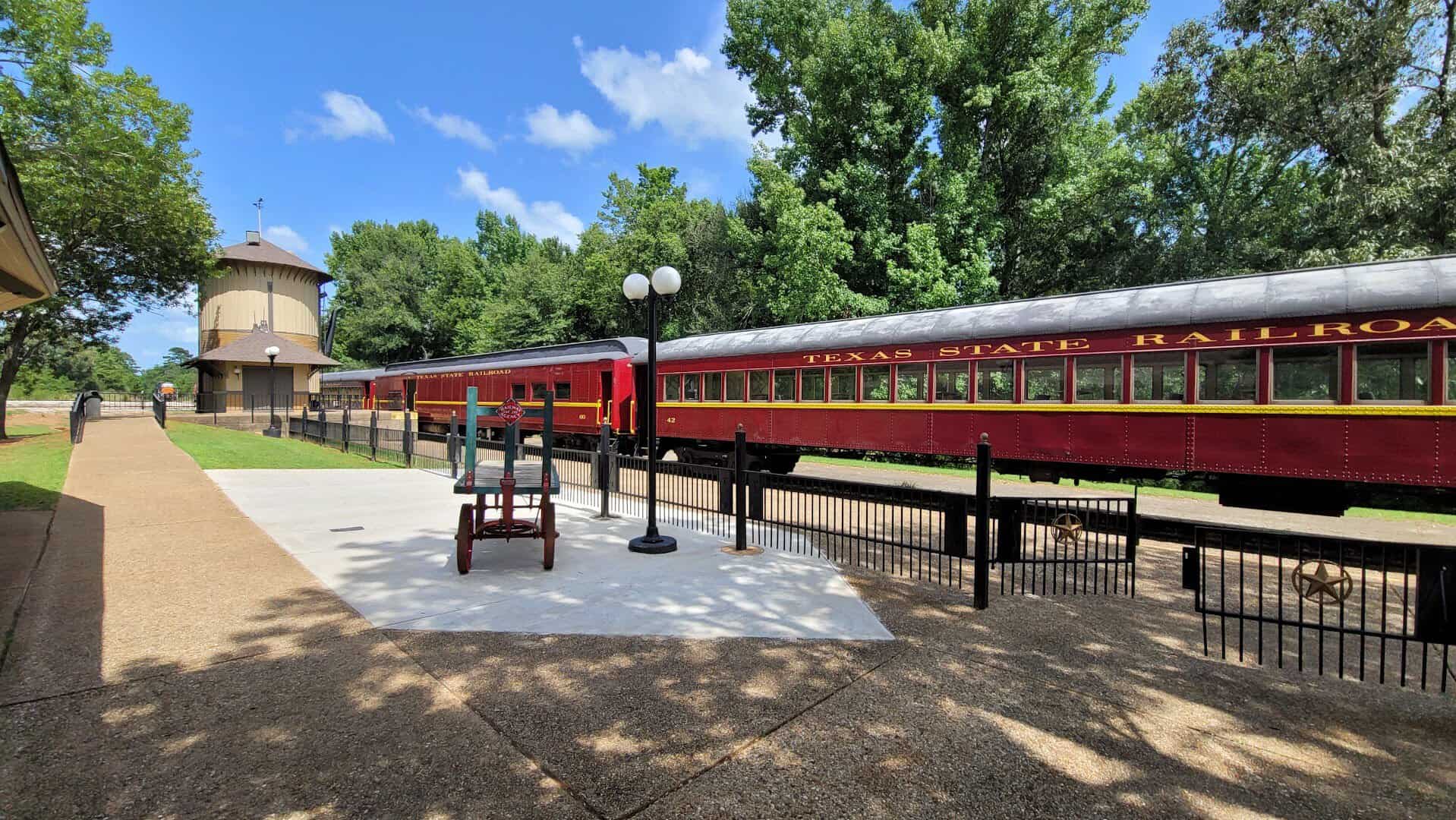
If you want the woods with a little more comfort, First Class puts you at a tabletop for four with table service, light snacks, and a bottle of water. Most of the enclosed cars are temperature-controlled and have restrooms, so you can pick your exact balance of breeze and comfort.
Feeling fancy? The presidential cars add couches, big picture windows, and a private outdoor viewing platform, while the caboose seats a small group up in the cupola for a rooftop view of the whole train.
Every car, whichever you pick, comes with historic narration and music piped through as you roll. The story of the line unspools while the scenery does, so you learn the place while you watch it slide by.
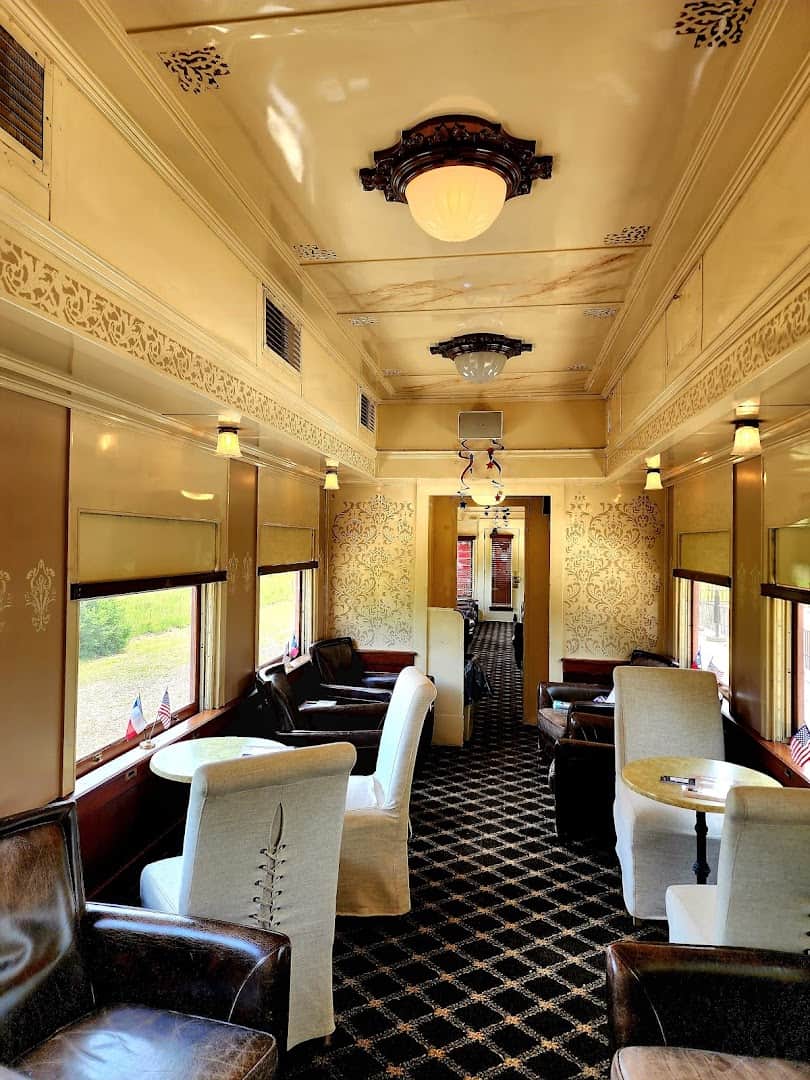
Pro tip: the open-air cars run seasonally, and spring is prime time for them. If a fresh-air ride is the point, book one of those dates before they fill up.
Why Spring Is the Sweet Spot
You can ride this railroad from March through October, but spring is when East Texas shows off. The Piney Woods trade their winter gray for new green, and the light through the pines turns soft and golden in a way that feels made for a slow train.
This corner of the state is dogwood country. When they bloom, the forest fills with clouds of white blossoms tucked between the dark pines, and the contrast is genuinely stunning from a moving window.
Roadside patches of bluebonnets and Indian paintbrush pop up along the right-of-way too, so the famous Texas wildflower show comes right to you without a single mile of driving to chase it. Have your camera ready, because the best blooms slide past fast.
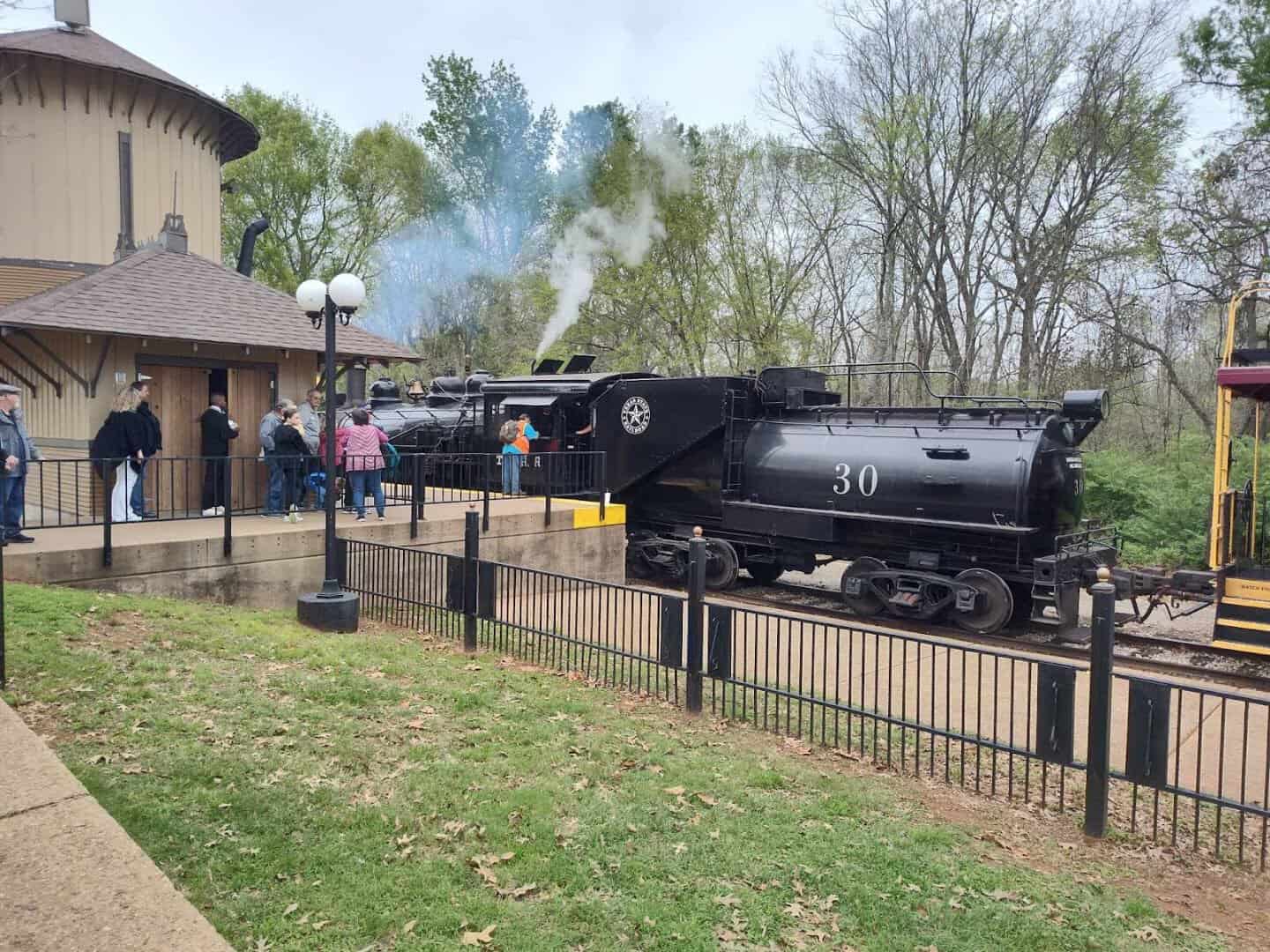
The temperature helps as much as the flowers. A March or April morning in the open-air car is crisp and comfortable, long before the East Texas summer turns thick and humid.
Come at midday and the whole ride feels like an afternoon someone deliberately stretched out. The pace, the season, and the scenery all agree with each other in spring.
Did you know the same route runs themed excursions all year, from a Fall Harvest Lunch Train to THE POLAR EXPRESS at Christmas? Spring just happens to be when the scenery does the heavy lifting for free.
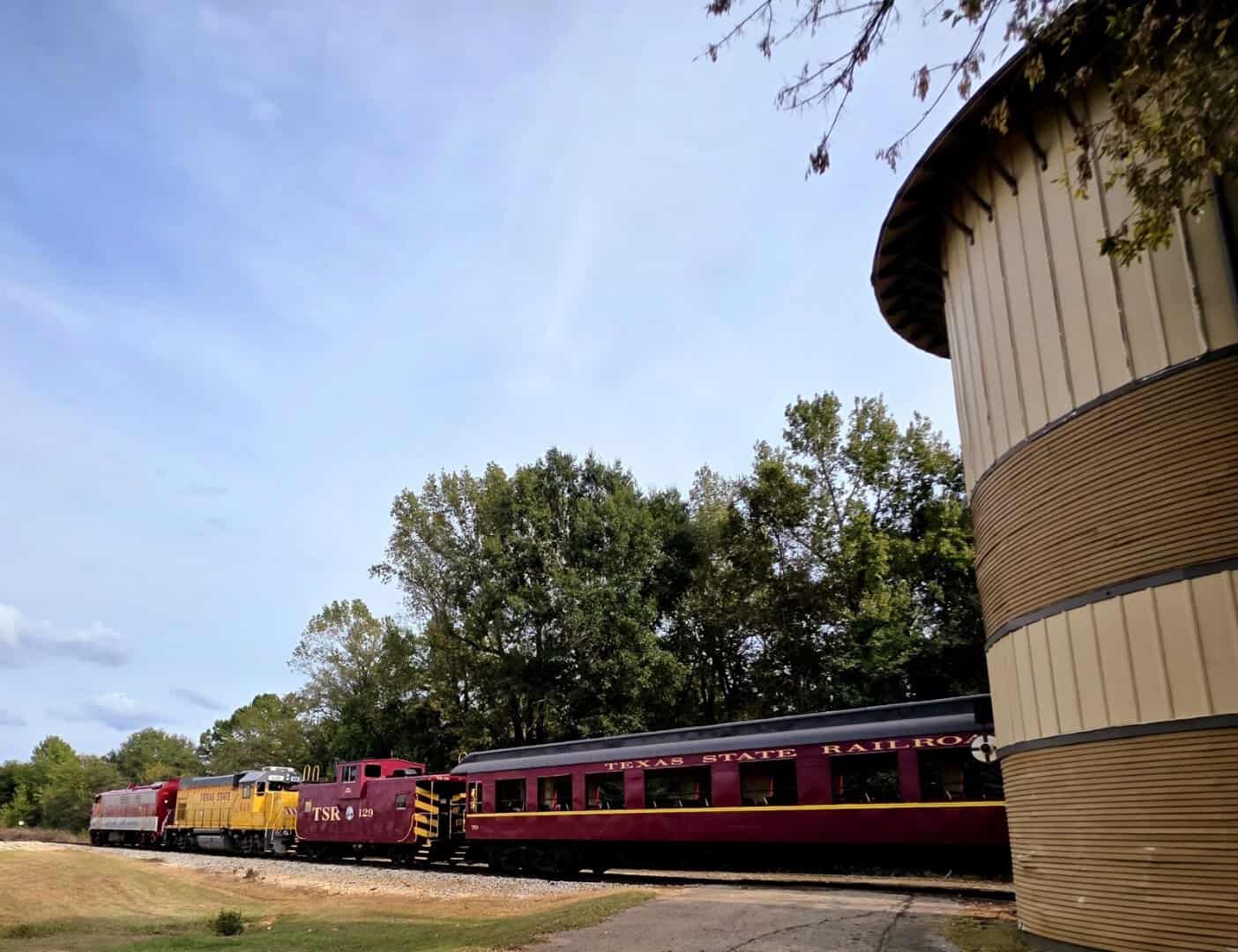
Forged in Iron: A Brief History
This is not a tourist track someone laid down last decade. The story starts in 1884, when the state of Texas built an iron smelter at the Rusk state penitentiary and needed a way to haul wood and iron ore to feed it.
In 1896, convict labor built the first five miles of track running west from Rusk toward the smelter. Prisoners kept extending it, reaching the little community of Maydelle in 1903 as the operation grew.
The big push came next. The line stretched a further 22 miles west and, on April 15, 1909, finally connected all the way to Palestine. For a while it carried freight and passengers both, until regular state service wound down around 1921.
The rails could have rusted away entirely. Instead, in 1972 the Texas Legislature handed the line to the Parks and Wildlife Department.
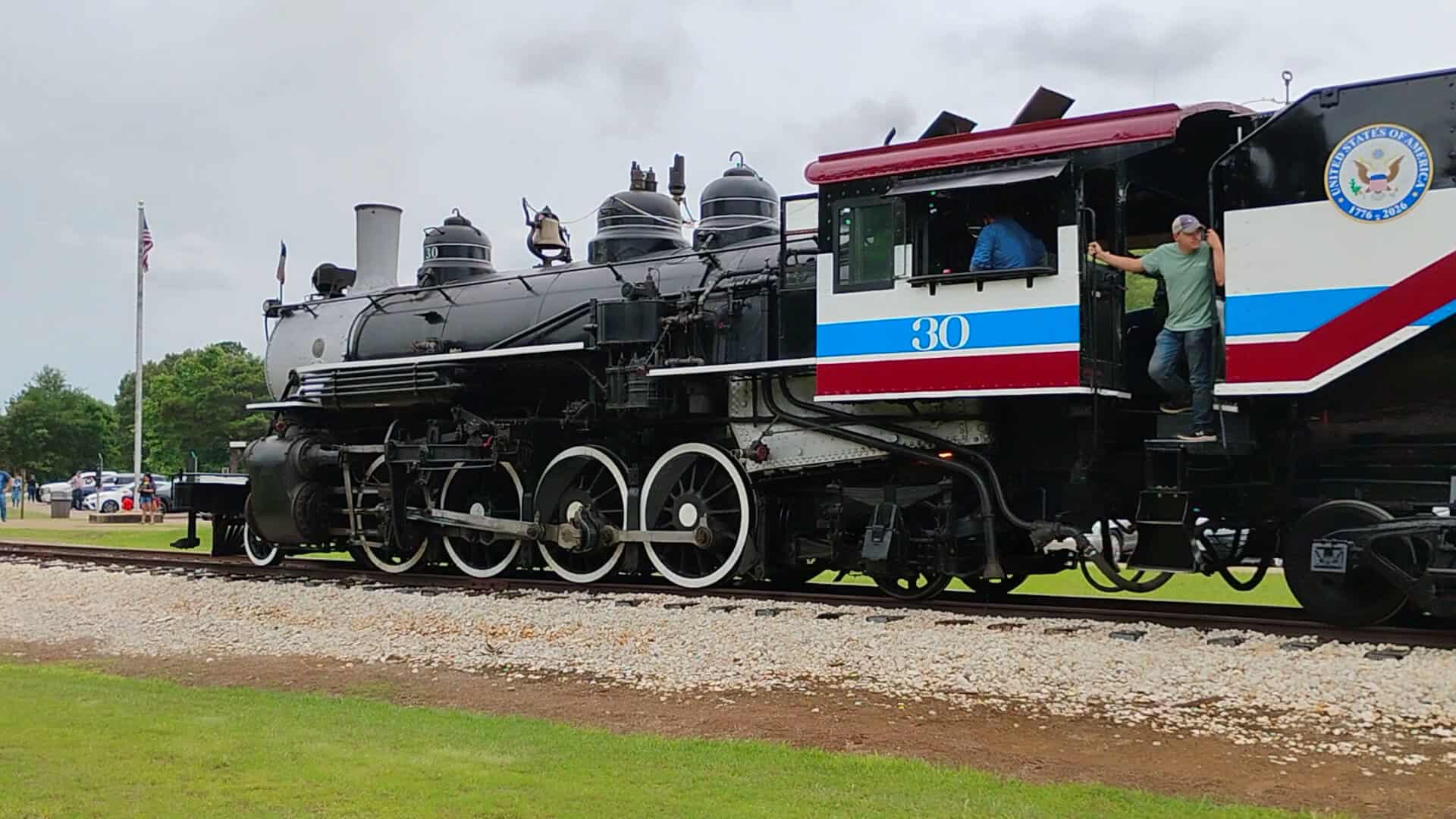
On July 4, 1976, the Texas State Railroad reopened as a state historical park, timed to the nation’s Bicentennial. A railroad built to feed an iron furnace now exists to give you a slow, beautiful afternoon in the woods.
Iron Giants at the Depot
The locomotives here are the real draw, and railfans make the trip just to see them. Over the years the roster has included steam engines like No. 201, a Cooke built in 1901, plus a set of Baldwins: No. 500 from 1911 and Nos. 300 and 400 from 1917.
The heavyweight of the collection sits at Palestine. Texas and Pacific No. 610 is a massive 2-10-4 “Texas” type built by the Lima Locomotive Works in 1927, one of the biggest steam engines the state ever ran.
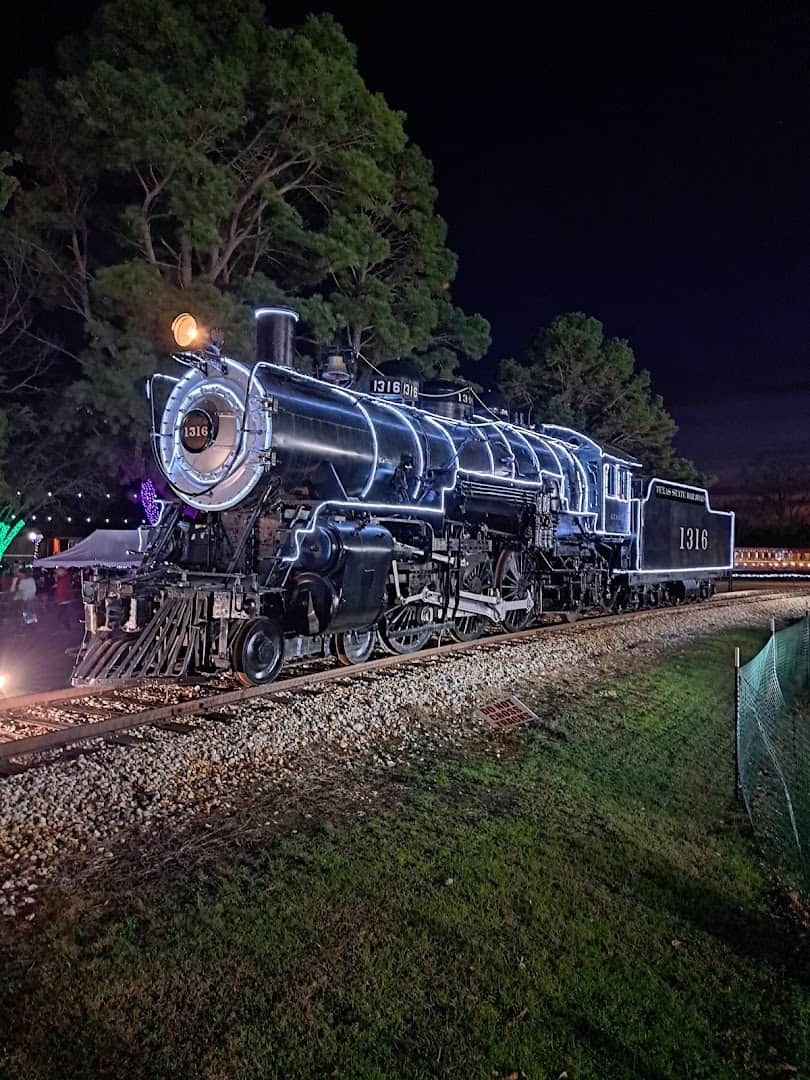
In 1976, that very engine pulled the American Freedom Train across Texas for the Bicentennial before eventually coming home to the railroad, where it rests today as a giant piece of the state’s history.
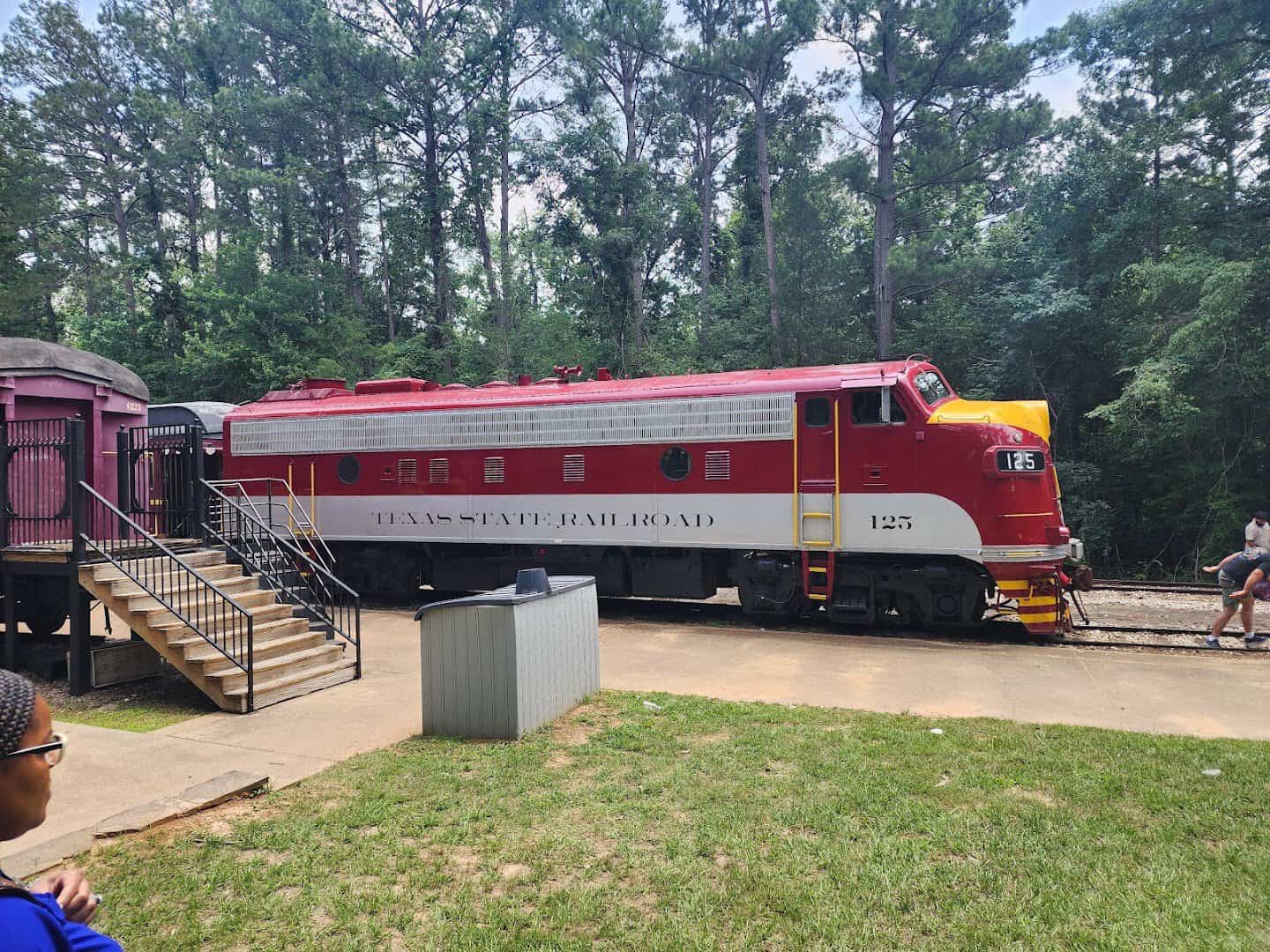
Depending on the day and the excursion, your train might be led by a vintage steam locomotive or one of the line’s diesels. The schedule tells you which, so if steam is a must, book a steam date on purpose.
Kids tend to go quiet in front of them, then loud, then quiet again. It is a good reminder that these machines once did the hard, hot work of an entire region, not just posed pretty for a camera.
Even parked, these engines are worth the walk-around. There is something about standing next to that much riveted black steel that a photo on your phone never quite captures.
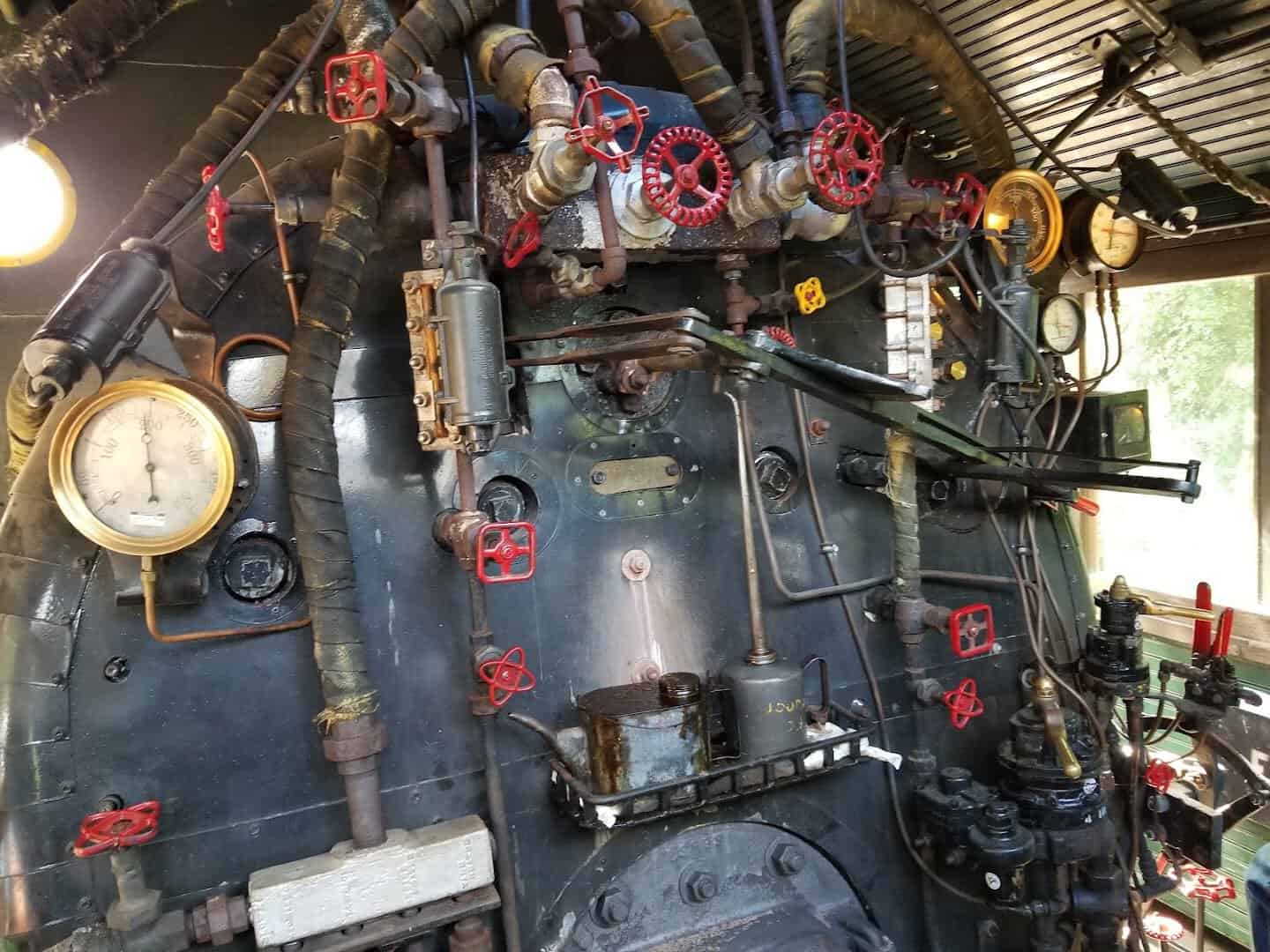
The Depots and the Layover
Both ends of the line anchor the ride with grand Victorian-style depots, built when the park opened in the 1970s to look every bit the part. They are half the fun before you have moved an inch.
At the depot you can wander the historic grounds, learn about the communities that built the railroad, grab a bite with your travel crew, and dig through the gift shop for a souvenir. It is a proper old-fashioned send-off.
Once you reach the far end, the train pauses for a layover before turning back. That gives you time to stretch your legs, snap photos of the engine, poke around the depot, and let a picnic or a snack settle before the return leg.
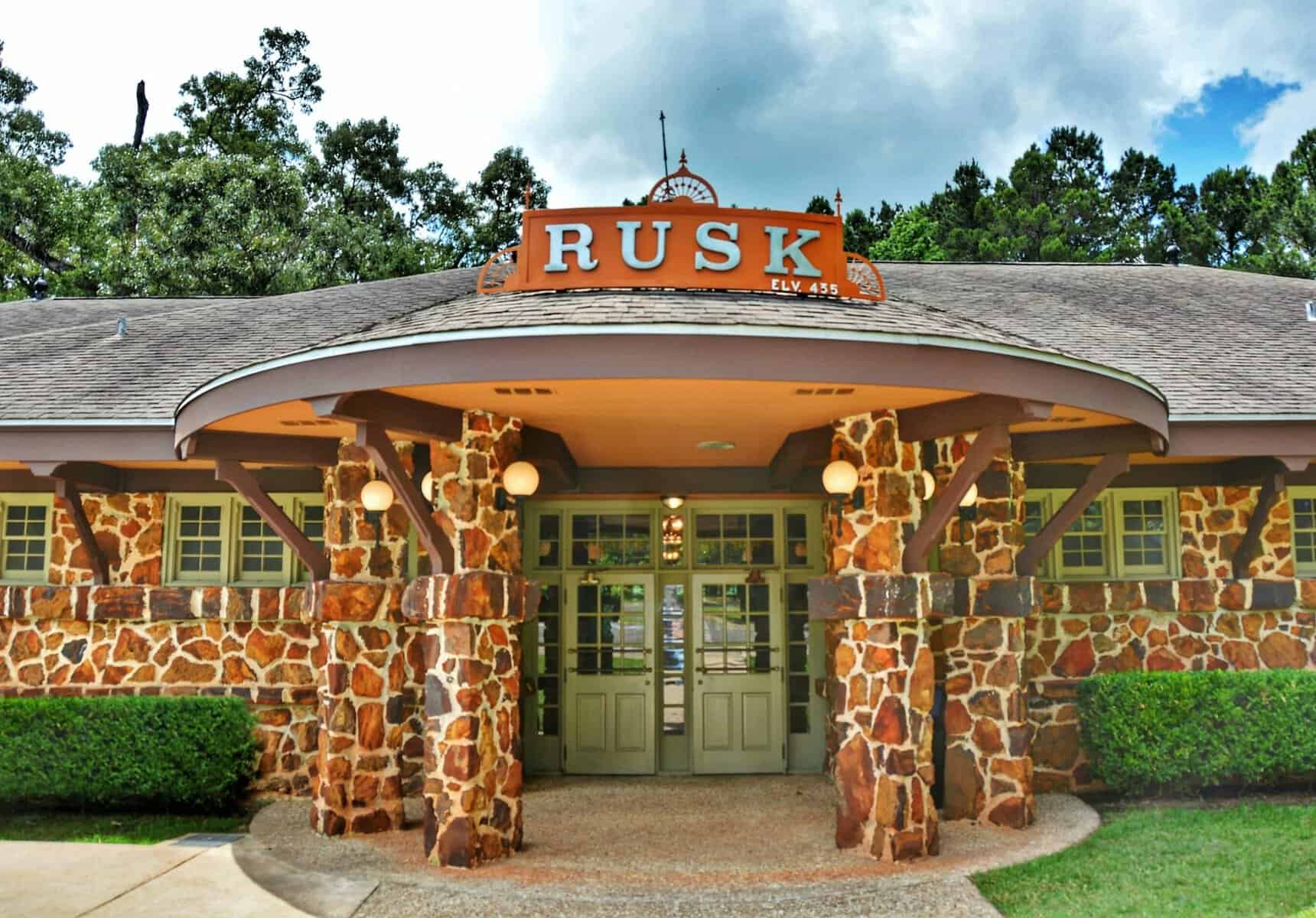
“Come for the nostalgia of riding behind a real live steam locomotive,” one traveler wrote in a Tripadvisor review, and that nostalgia is exactly what the layover lets you soak in before you climb back aboard.
Before You Book
A few practical notes make the day go smoother. Tickets are priced by the excursion and the car you choose rather than one flat fare, and a small historical preservation fee is added at checkout to help keep these old engines rolling.
Departures generally run Thursday through Saturday during the operating season, and the starting depot alternates between Palestine and Rusk depending on the month, so double-check where your particular train leaves from.
Reservations are the move, especially for spring weekends and the open-air cars, which sell out first. Book online ahead of time or call the railroad’s reservations line at 1-855-632-7729 to lock in your seats.
Bring water, sunscreen, and a light layer for the open-air car, pack a picnic for the layover, and give yourself the whole afternoon. This is not a ride to squeeze between two other stops.
How to Get There
The main Palestine depot sits just off the highway in Anderson County, an easy drive from the Dallas and Houston metros for a day trip into the Piney Woods.
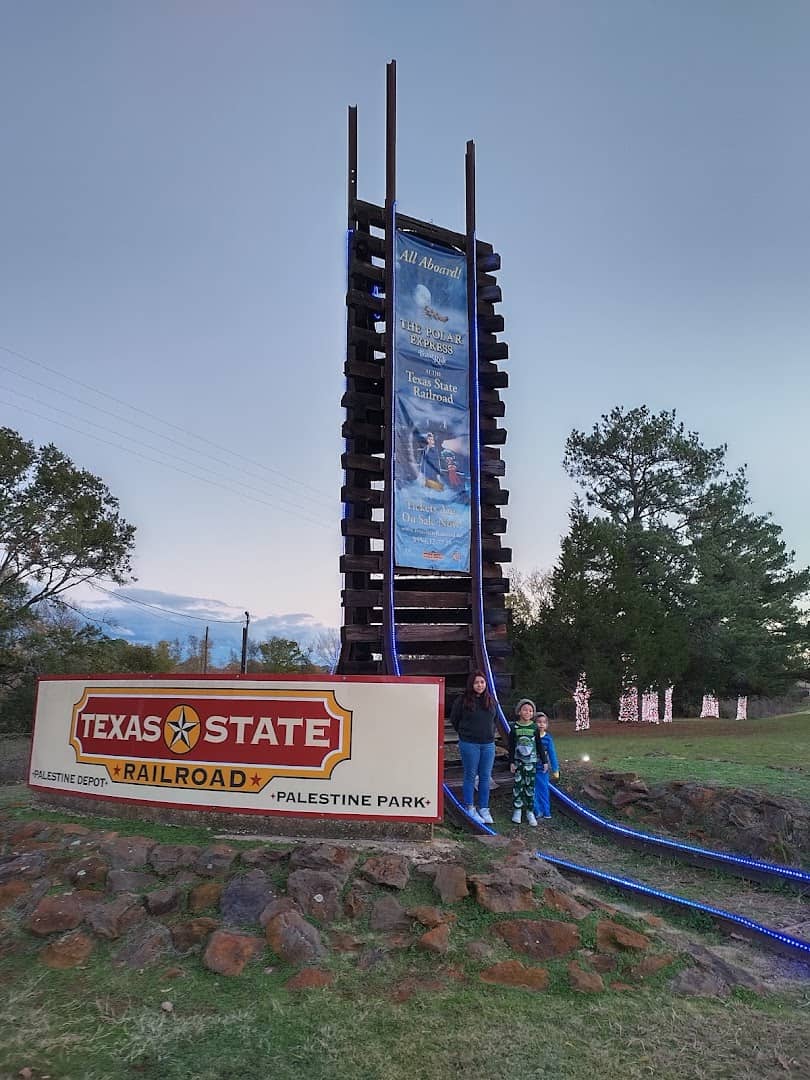
Where: Texas State Railroad, Palestine Depot, 789 Park Road 70, Palestine, TX 75801. The Rusk Depot anchors the eastern end at Park Road 76, Rusk, TX 75785.
Roll Into Your Slowest, Best Spring Day
Some day trips leave you more wound up than when you started. This one does the opposite. You climb aboard, the whistle blows, the pines slide past, and by the time the train eases back into the depot you have remembered what an unhurried afternoon actually feels like.
So pick a bright spring morning, grab a seat in the open air, and let a hundred-year-old locomotive carry you slowly through the East Texas woods. You will step off the train quietly convinced that sometimes the whole point of a trip is the going, not the getting there.
Featured image: SH96 via Texas State Railroad

Stella Raines
Editor-in-Chief
Stella brings over a decade of storytelling experience to TX Headlines. With roots in West Texas and a love for road trips, she leads the editorial team with an eye for the hidden stories that make Texas unforgettable.
More Stories
This Overlooked Texas Aviation Museum Is Home to a Real Spacecraft and the World’s Only Flying Pancake
This Giant Texas Flea Market Has 490 Booths You’ll Want to Wander Again and Again
This Underground Texas River Cavern Was Once a Secret Speakeasy and an Outlaw’s Hideout
This Nostalgic Texas Open-Air Cinema Plays Two First-Run Movies for Less Than One Multiplex Ticket
Tags