This Old-School Texas Bakery Stone-Mills Its Own Grain and Won’t Touch a Preservative
The smell reached the sidewalk before I did. Warm crust, toasted grain, a whisper of butter turning gold behind the counter. I had only come for a loaf of bread. Instead I stood outside the door, breathing it in, the way you do when a kitchen smells like a promise.
Inside, a small northwest Houston bakery was turning out croissants, sourdough, and pastries with a kind of quiet stubbornness. Everything hand-shaped. Everything organic. And underneath all of it, that fresh-milled warmth you only get when the flour was grain a few days ago.
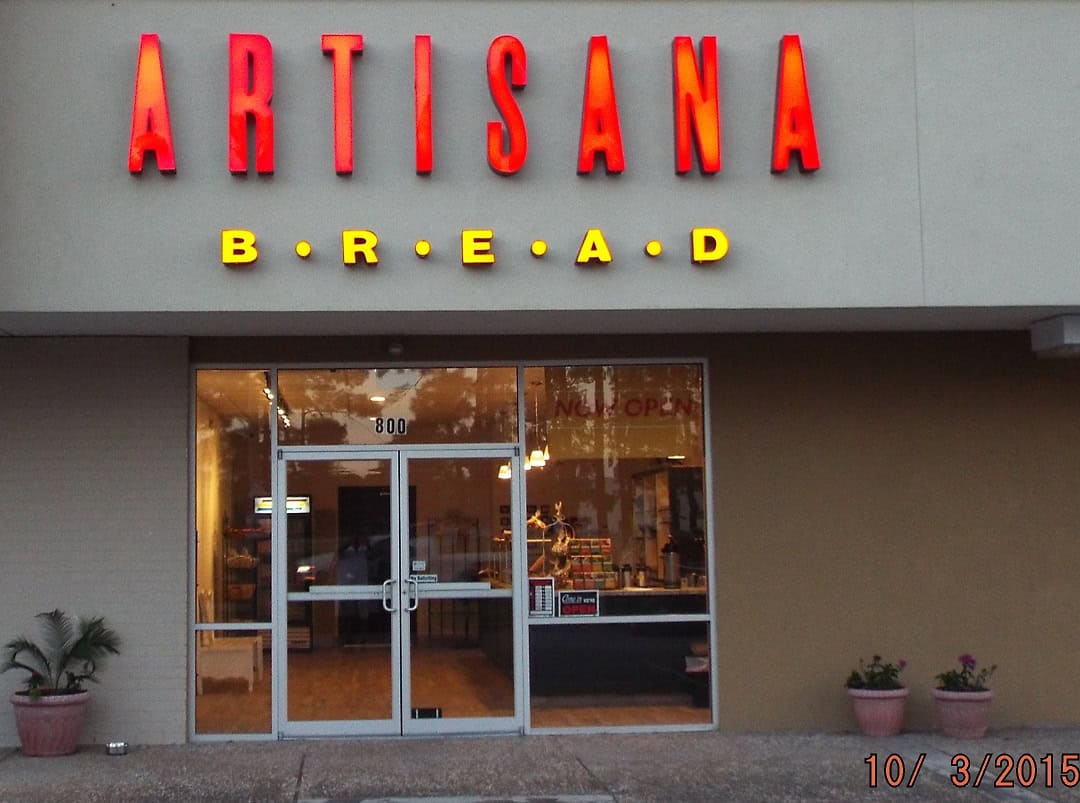
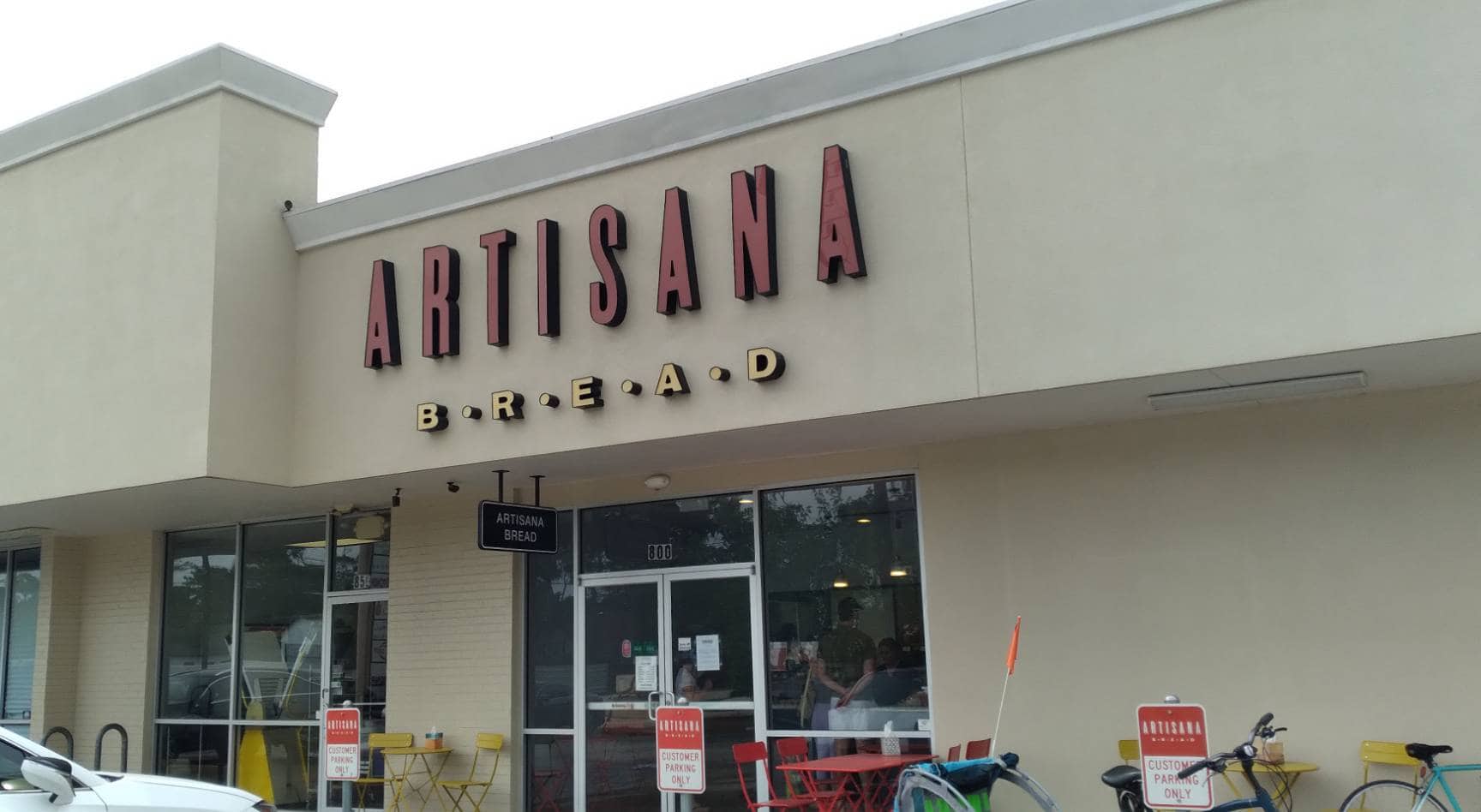
The place is Artisana Bread, tucked into the Independence Heights neighborhood on Pinemont Drive. Here’s why a bakery this small keeps pulling Houstonians across town on a Saturday morning, and why you should point your car at it too.
A Little Bakery That Bakes Like It Has Something to Prove
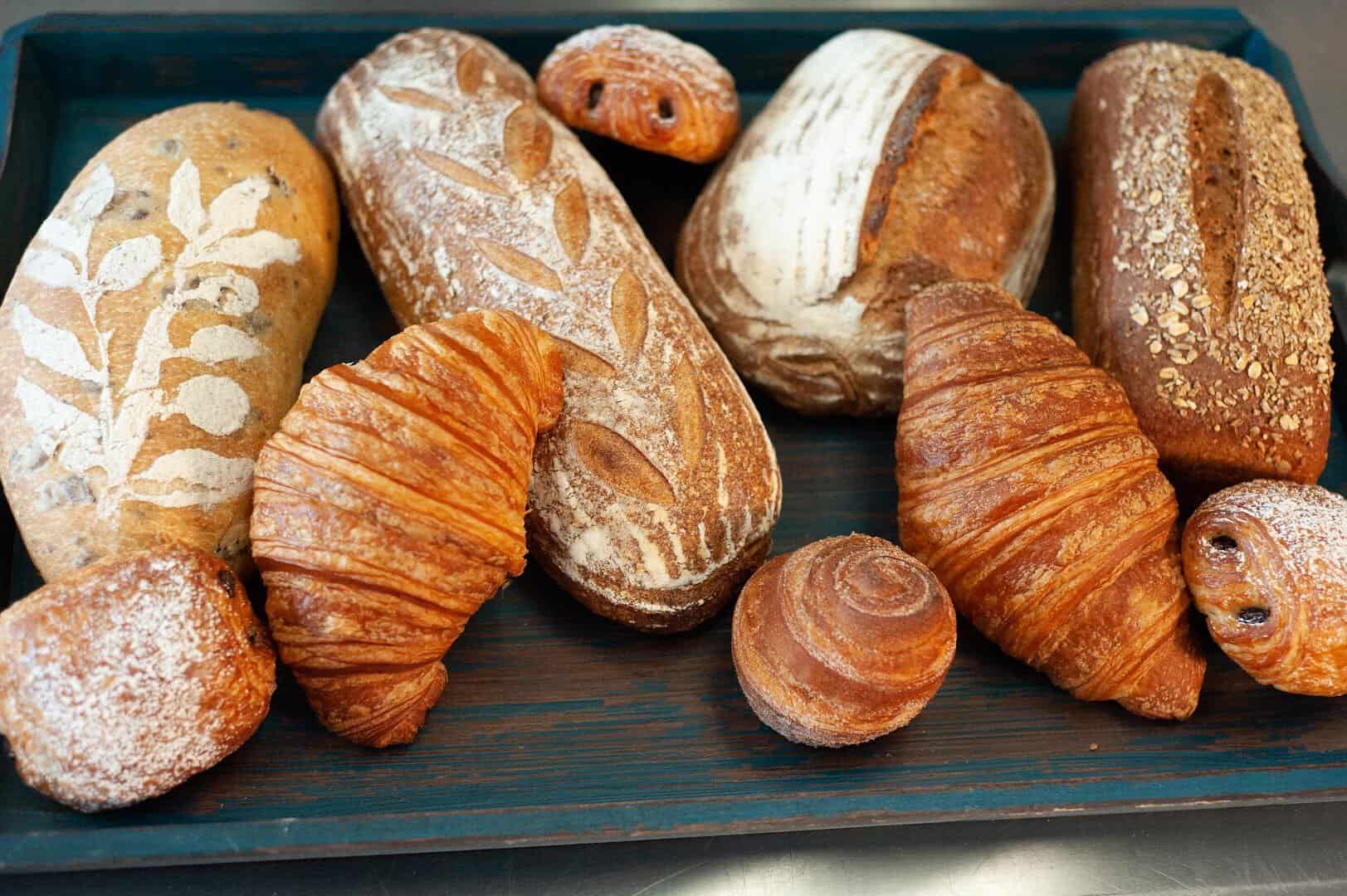
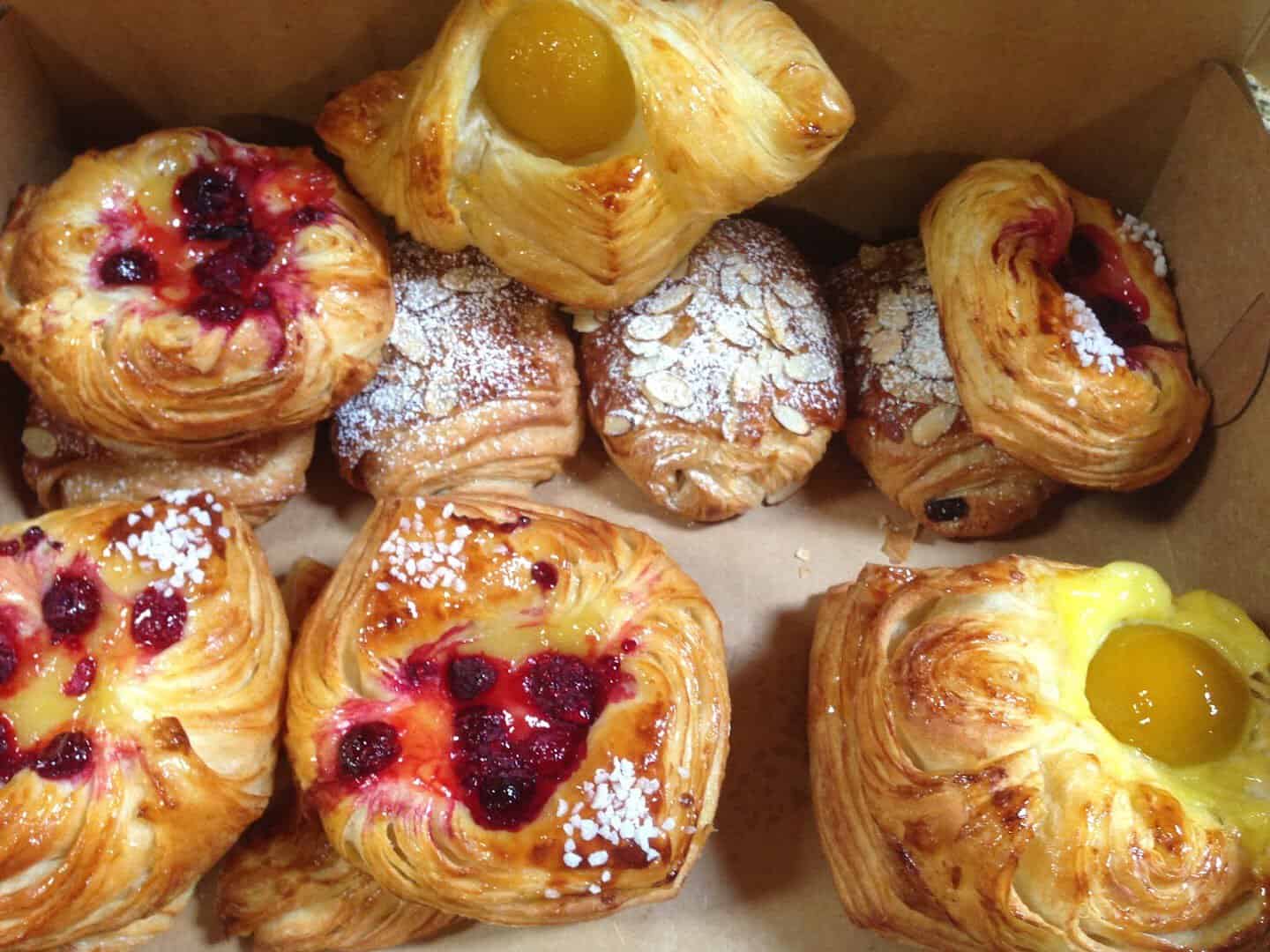
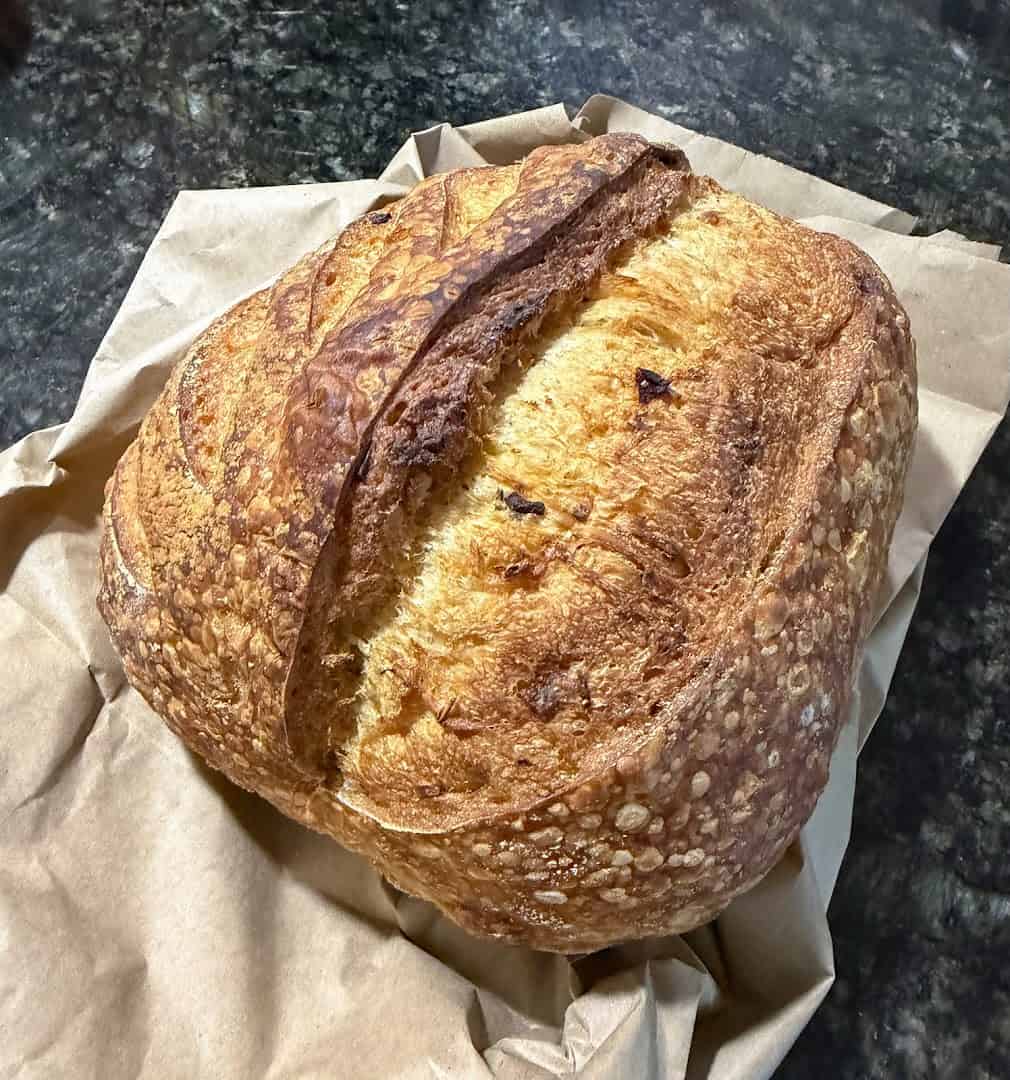
When you step through the door, the case does the talking. Croissants stacked in burnished rows. Danishes with fruit set into the center like little jewels. Loaves of sourdough with crackled, dark-gold crusts leaning against each other like they are tired from a long night.
It is not a big room. It does not need to be. You order at the counter, the staff are genuinely happy you came, and the whole thing feels less like a shop and more like a neighbor who happens to bake.
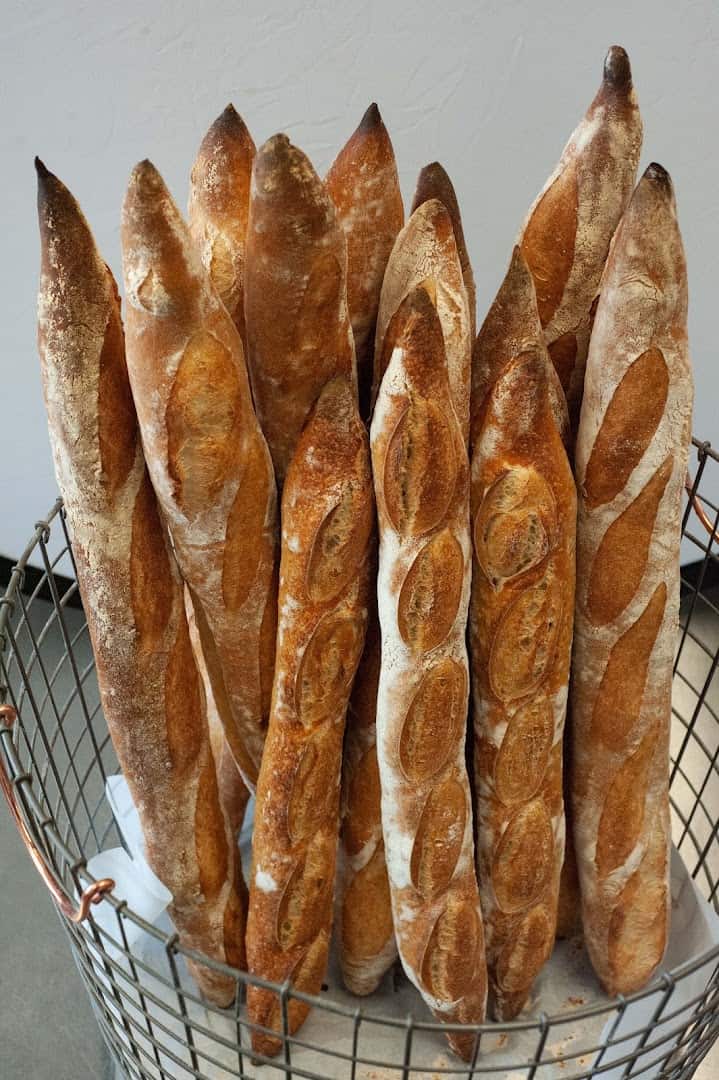
The morning I visited, a regular ahead of me was picking up a standing order of demi baguettes. “Every week,” she told me, tucking the bag under her arm like a football. I understood completely by the time I got to my car.
What makes it worth the drive is not just that the bread is good. It is that almost nothing here is made the easy way. No shortcuts, no mixes, no preservatives, no oils standing in for butter. Just flour, water, salt, wild yeast, and a lot of patience.
Croissants That Flake All Over You
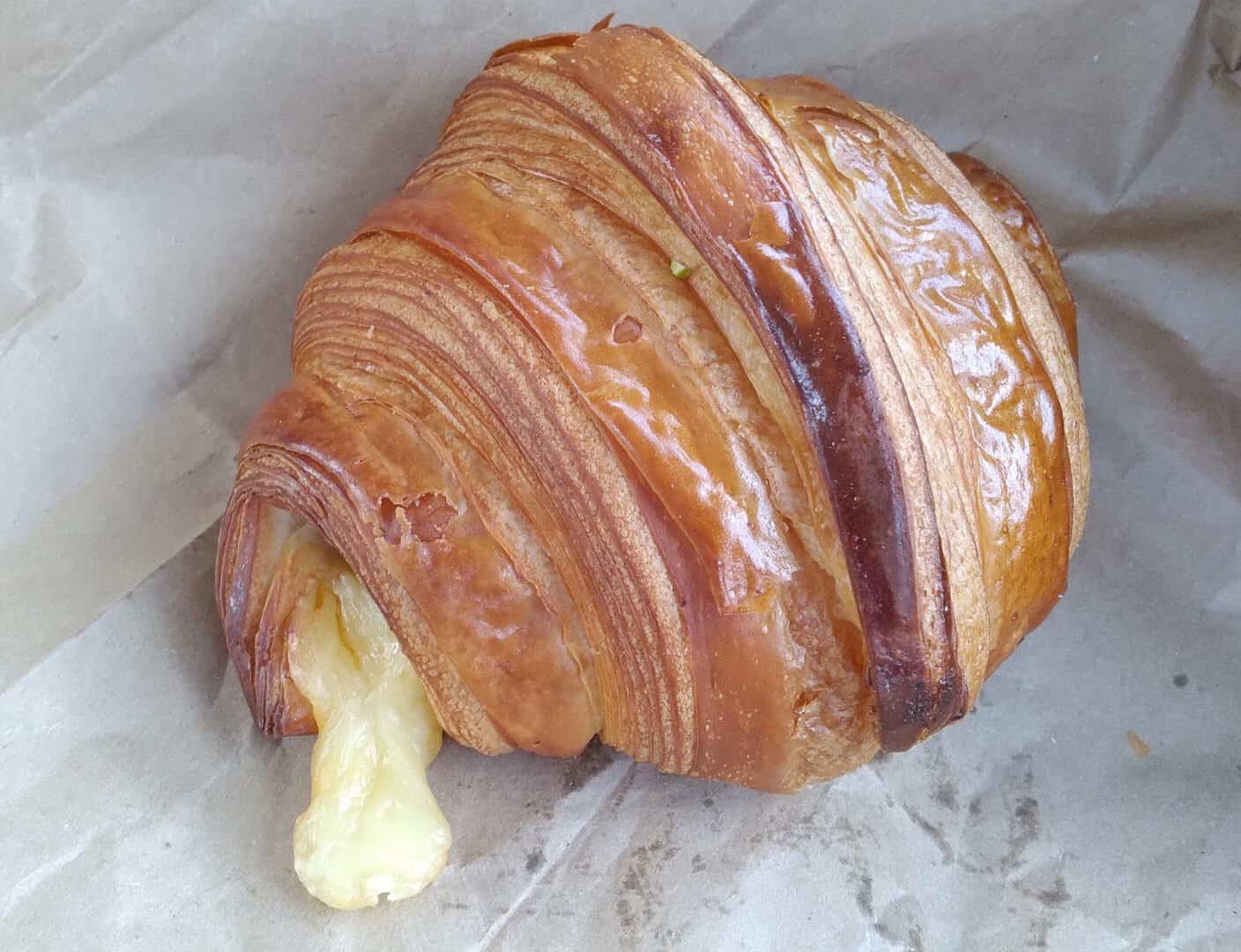
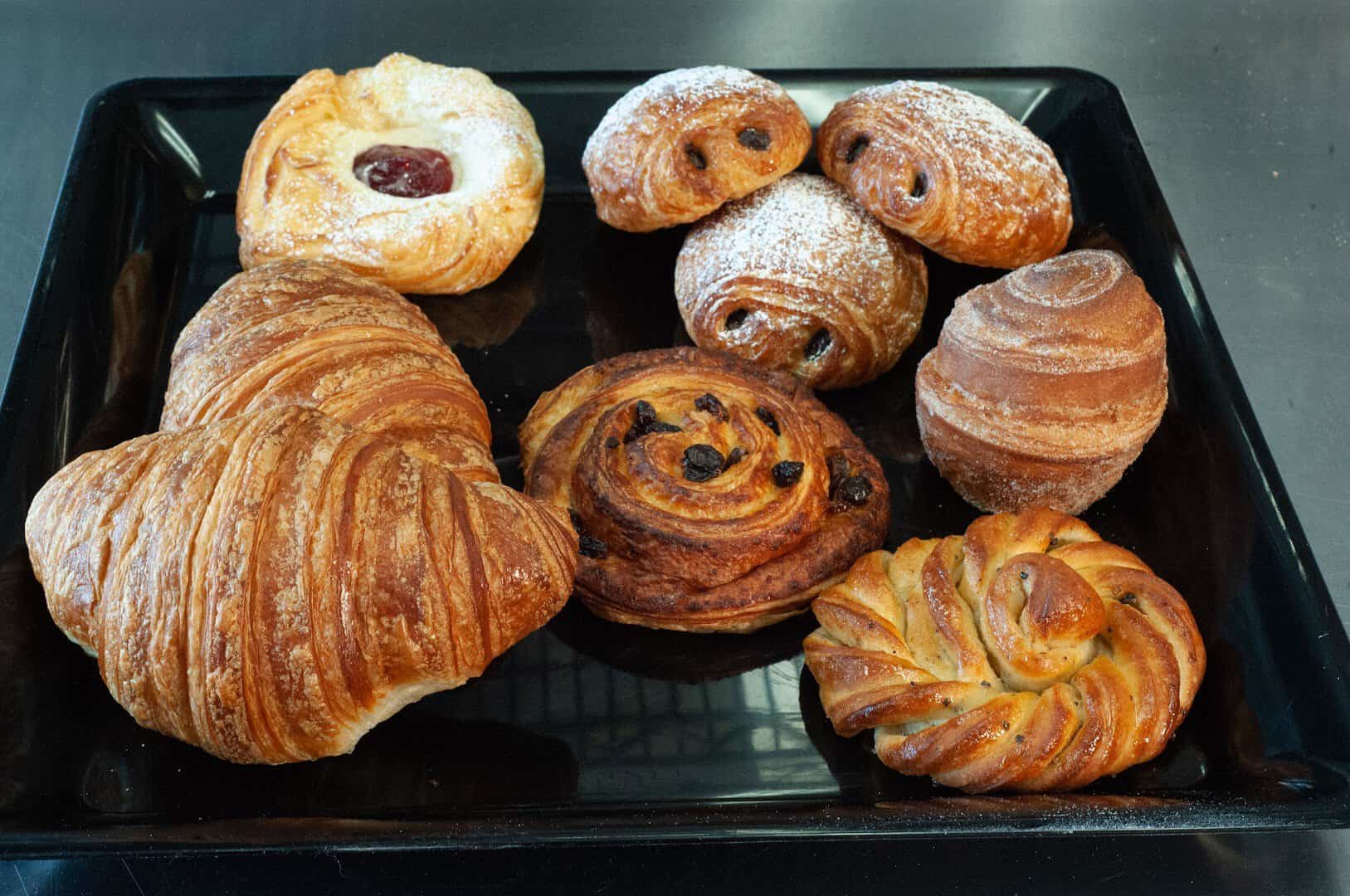
Let me start where most people start: the croissants. They are laminated by hand, folded and folded again until the dough hides dozens of thin sheets of butter, and they bake up shatteringly crisp on the outside and soft as a cloud within.
One local reviewer put it better than I could: “The croissants are perfect. When you bite into them they flake all over you exactly as a great croissant should.” I can confirm the flaking. My shirt can confirm it too.
The pastry case rewards a slow look. Buttery, crisp Danish with a bright dab of fruit. Pains au lait, those soft little milk-and-butter breads that taste like the inside of a good memory. Brioche with a tender, feathery crumb.
On Fridays and Saturdays there is focaccia, dimpled and glossy with olive oil, the kind you tear rather than slice. My advice is to buy a piece “for the road” and accept that it will not survive the road.
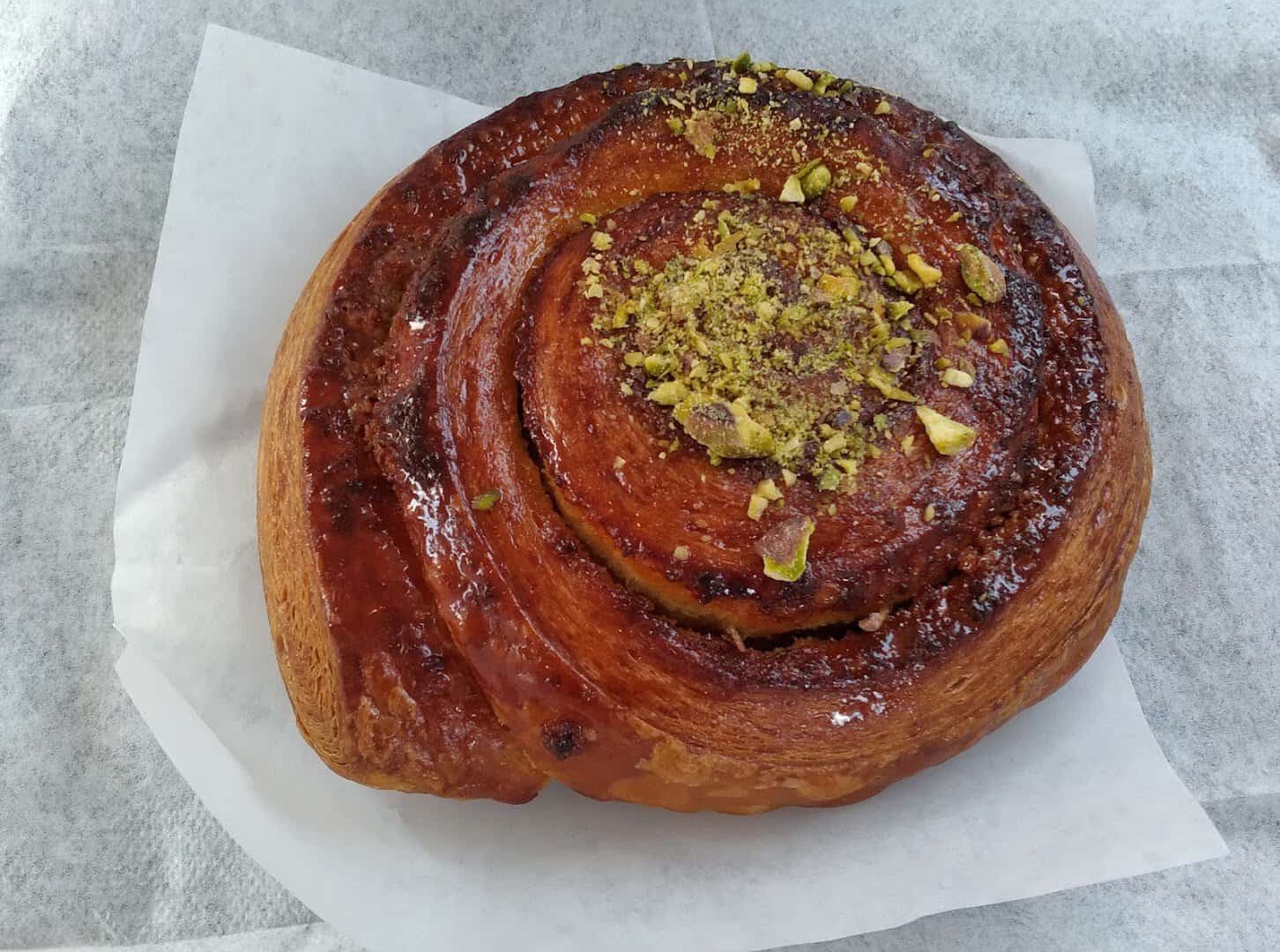
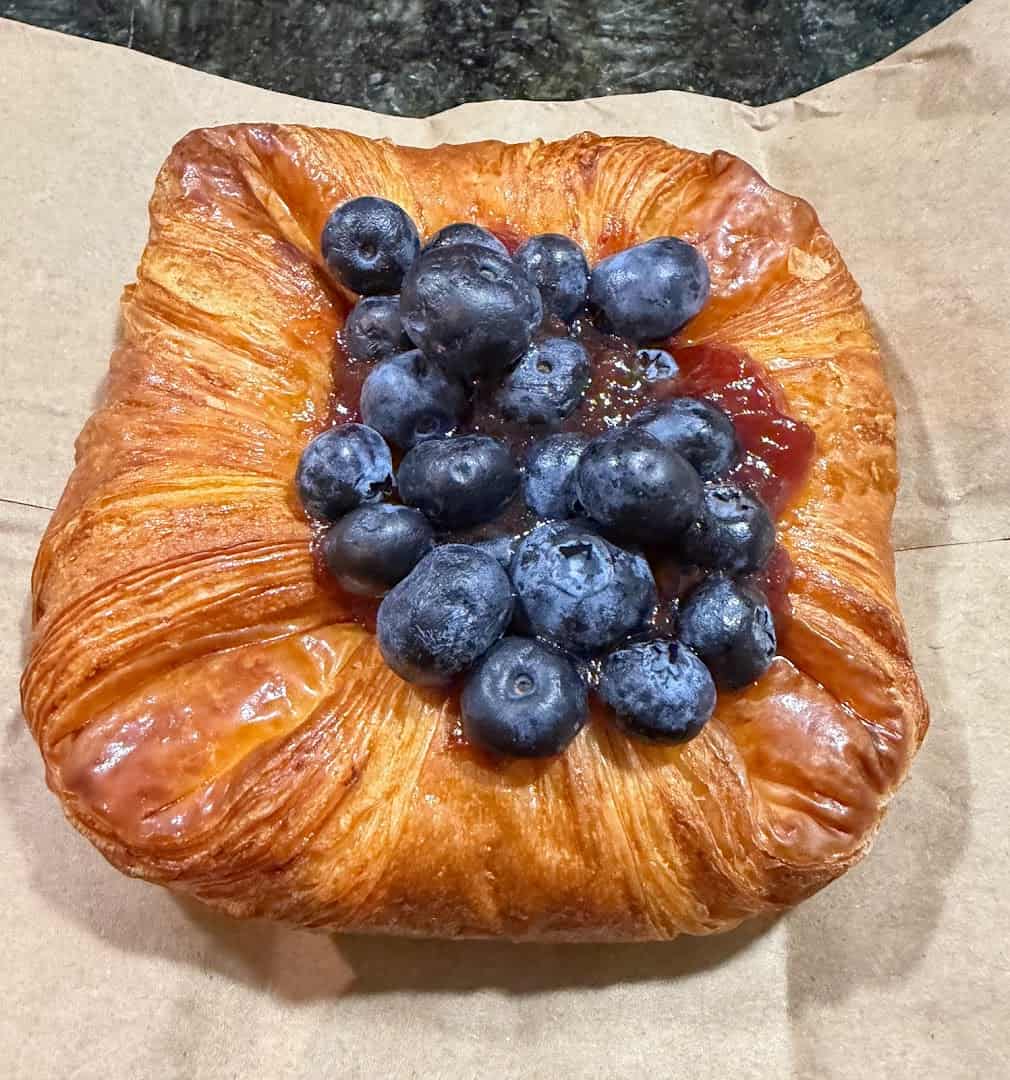
The danishes deserve their own mention. Some come crowned with fresh blueberries under a glossy glaze, others with a custard center or a swirl of pistachio. There are sticky morning buns too, caramelized at the edges. Order two, because one is never the right number.
What I love is that nothing in the case looks factory-perfect. The croissants curve a little differently from one another. The loaves have their own freckles and blisters. You are looking at food made by human hands that morning, and it shows in the best possible way.
Everything in the pastry case is made with real butter, never margarine, never oil. You can taste the difference in the first bite, and you can feel it in how a croissant behaves. Butter is what makes those layers snap.
The Bread Is the Whole Point
As lovely as the pastries are, the bread is the heart of this place. The organic sourdoughs are the stars, several of them built on ancient grains like einkorn, spelt, and kamut, which many people find easier to digest than modern wheat.
There is a pain de mie made with whole wheat and local honey, soft enough for a child’s sandwich and honest enough for an adult’s toast. A Scottish oatmeal bread. Soft-baked demi baguettes. Flax and multigrain loaves for people who like a little chew and a lot of seeds.
For the Francophiles there is pain à l’ancienne, the rustic French baguette with the wild, irregular holes. For the Italian side of the family there is pane integrale con miele, a wholegrain loaf sweetened with honey. The menu reads like a passport.
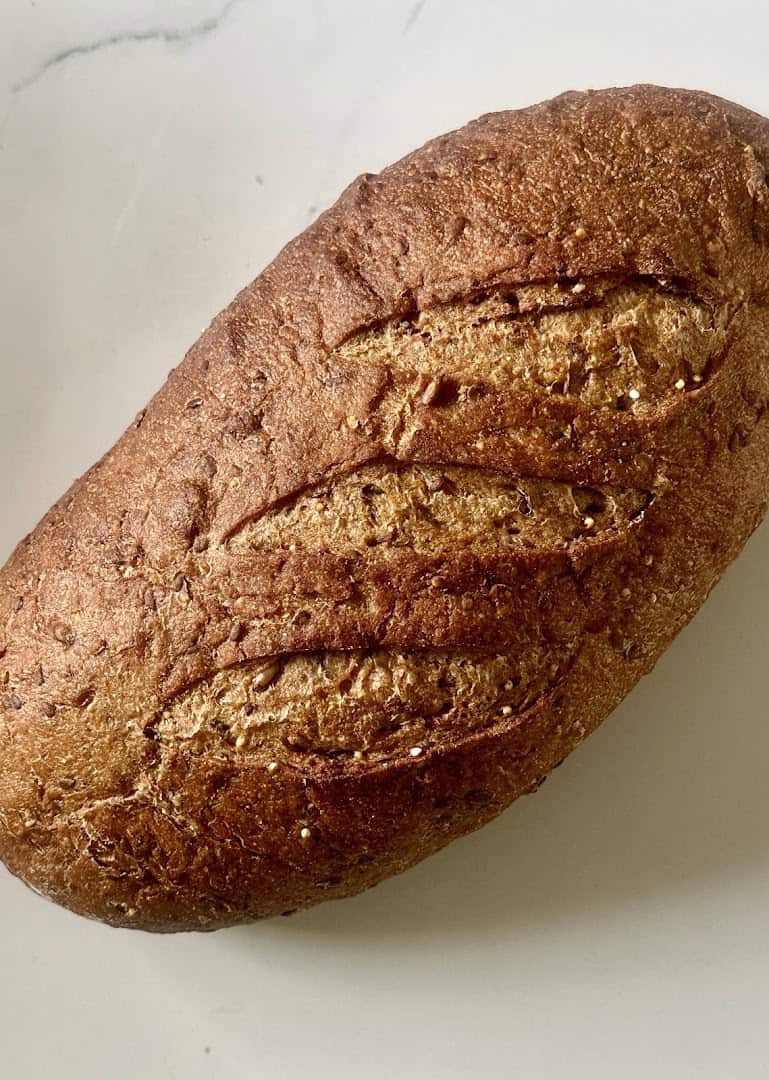
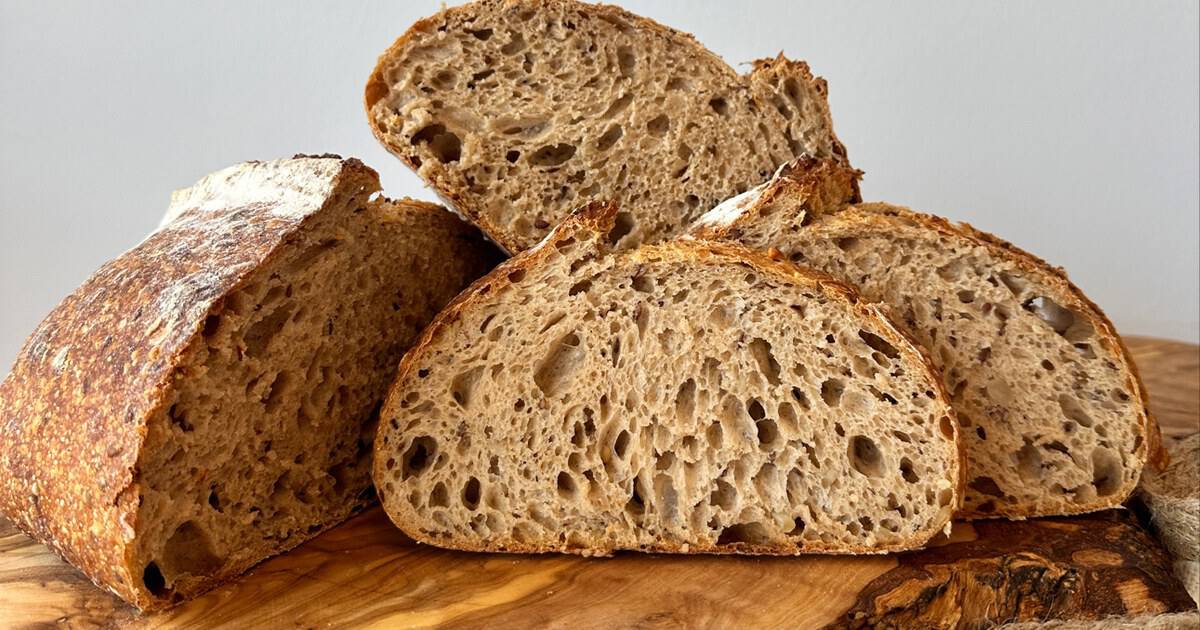
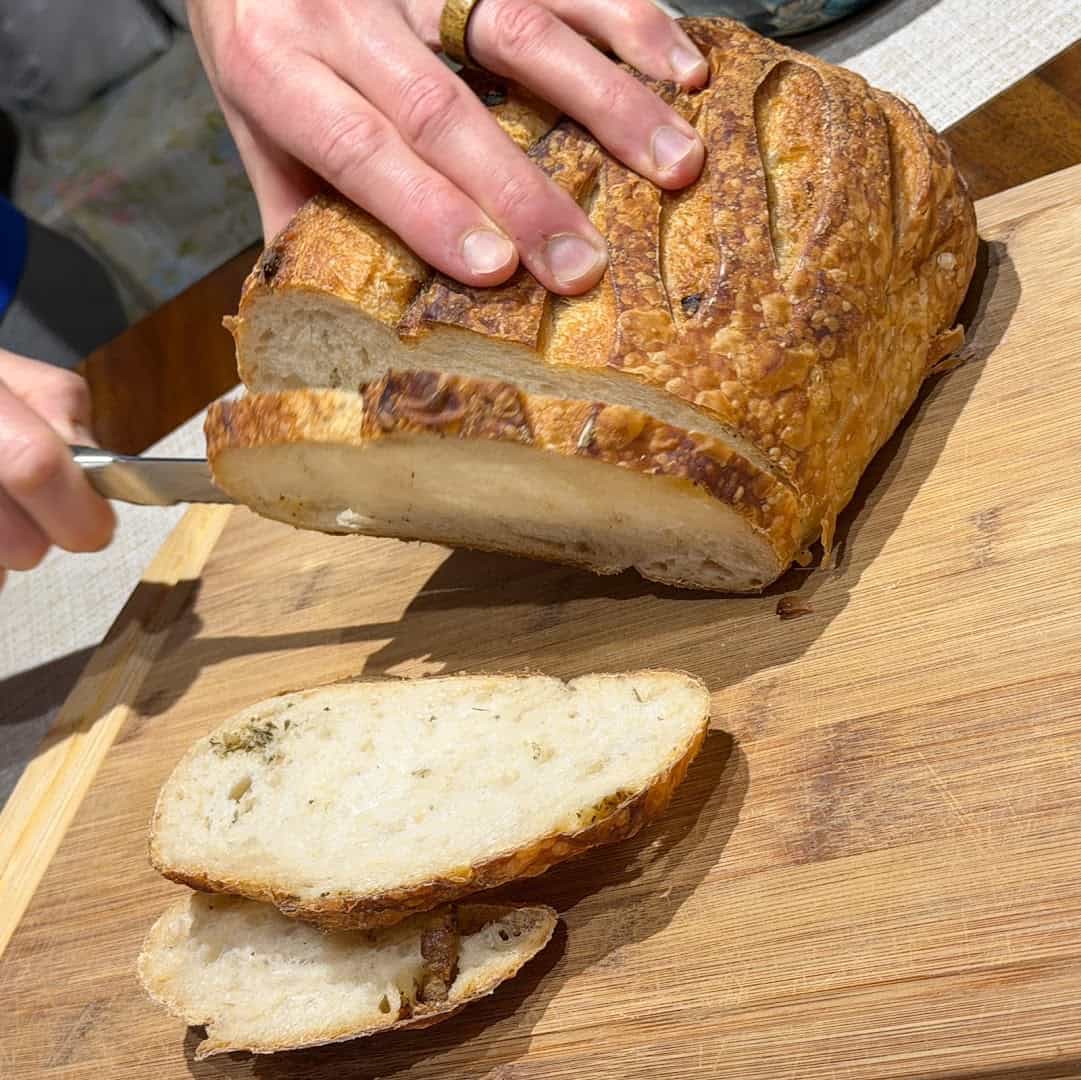
Cut into one of the sourdough loaves and you get the whole reward at once. A crackle from the dark crust, then an open, custardy crumb full of holes. The smell is somehow both nutty and a little tangy. It needs nothing. A smear of butter is showing off.
The secret is time. A long, slow, cold fermentation, some of it running far longer than any commercial bakery would tolerate, paired with wild yeast starters that have been kept alive and fed like a pet. That is where the flavor lives, and part of why the bread sits easier.
Did you know? A true sourdough gets its rise from wild yeast and bacteria captured from the air and the flour, not a packet. It takes days, not hours. Artisana leans all the way into that old, slow method.
Flour So Fresh It Was Grain Last Week
Here is the detail that turns a good bakery into a special one. Artisana does not just buy the best flour it can find. It mills a lot of its own.
The bakery chooses organic heirloom rye and wheat and grinds them on a stone mill, some of it at Barton Springs Mill in the Hill Country. Fresh flour, made close to home.
Fresh-milled flour is a different animal from the bleached, shelf-stable stuff in a grocery bag. It still carries the whole grain, the germ and the bran and all the flavor and nutrition that industrial milling strips out to make flour last for years.
When possible, the wheat is Texas-grown, which means some of these loaves are close to a straight line from a Texas field to your kitchen table. That is a rare thing to be able to say about a loaf of bread in a city this size.
All of the bread flours are organic and unbleached. There are no preservatives, no dough conditioners, no chemicals to stretch the shelf life. As the bakery puts it plainly, they believe in doing things the old-fashioned way and making everything from scratch.
Pro tip: bread with no preservatives is telling you the truth about how bread actually keeps. Eat it fresh in the first day or two, then slice and freeze the rest. It toasts up beautifully straight from the freezer.
The Accountant Who Followed the Smell of Bread
The person behind all this is Rosemarie Abbouchi, and her path here is my favorite part of the story. She was an accountant. Numbers by day. But she had always loved to cook, and bread kept pulling at her.
“I’ve always loved to cook and baking comes naturally,” she has said. “I like to think that somewhere in my gene pool there was a baker.” Her family is Italian, so the theory checks out.
She started at home, baking for school fundraisers and for friends who could not stop asking for more. Then she spent four years quietly mastering the craft before she would sell a single loaf under her own name.
She is largely self-taught, with just a couple of classes at the San Francisco Baking Institute. Everything else she learned the slow way, one batch at a time.
Before she had a storefront, she sold at the Urban Harvest Eastside farmers market and baked out of Sinfull Bakery, a local vegan spot, borrowing oven time until she was ready. Artisana Bread finally opened as its own place in 2011.
That slow, deliberate climb is written into the bread itself. This is not a bakery that appeared overnight chasing a trend. It is the second act of someone who left a safe career to chase a smell across her own kitchen.
Beyond the Everyday Case
Artisana rewards the calendar as much as the craving. Around the holidays the case fills with things you cannot get any other week of the year, and they go fast, so plan ahead.
There is stollen, the dense German Christmas bread heavy with fruit and dusted in powdered sugar. Panettone, the tall, cloud-light Italian holiday loaf that people wait all year for. Sweet potato rolls that belong on a Texas holiday table.
Come Mardi Gras season, king cakes appear, braided and glazed and colored in purple, green, and gold. It is the kind of seasonal rhythm that makes you want to become a regular, just to see what shows up next.
Rosemarie has talked about wanting the bakery to grow into a true neighborhood gathering place, with espresso, pastries, and eventually evening baking classes. Sitting in that warm, bread-scented little room, you can absolutely picture it.
How to Make the Most of a Visit
A few things worth knowing before you go. This is a bakery that bakes fresh daily and sells until it sells out, so morning is your friend. The best selection is early, and the croissants especially have a way of vanishing.
The bakery keeps tight, focused hours, open Wednesday through Saturday from 7:30 a.m. to noon. It is dog-friendly out front, so your morning walk can end with a warm loaf. Bring cash or card and a little patience on a busy Saturday.
If Pinemont is not on your usual path, you have a second shot every week. Artisana also sets up at the Urban Harvest Farmers Market on Saturdays from 8 a.m. to noon, where you can grab bread alongside your vegetables and flowers.
Whatever you do, do not leave with only one thing. A sourdough loaf for dinner, a croissant for the car, and a Danish you will pretend you bought for someone else. That is the honest math of a good bakery.
How to Get There
Where: Artisana Bread, 965 Pinemont Dr, Suite 800, Houston, TX 77018
You will find it on Houston’s northwest side, in the historic Independence Heights neighborhood, an easy hop off the 610 Loop. Look for the small storefront and follow the smell of warm bread from the parking lot. It will not steer you wrong.
Plan Your Fresh-Bread Run
There is something quietly radical about a bakery that mills its own grain, folds its own butter, and refuses to let a preservative near the place, all so a loaf can taste the way bread should. In a world of shortcuts, that patience is a gift you get to eat.
So set your alarm early, drive out to Independence Heights, and get there while the case is full. Grab a warm sourdough, a croissant that will flake all over your shirt, and something for the road you will finish before you get there. Your Saturday will never be the same.
Featured image: @ Artisana Bread

Stella Raines
Editor-in-Chief
Stella brings over a decade of storytelling experience to TX Headlines. With roots in West Texas and a love for road trips, she leads the editorial team with an eye for the hidden stories that make Texas unforgettable.
More Stories
This Old-World Texas Butcher Shop Has Been Making Sausage by Hand Since 1961
This Waterfront Texas Seafood Spot Serves Gulf Shrimp So Sweet the Sunset Comes Free
This Waterfront Texas Seafood Shack Fries the Gulf Shrimp Its Own Boats Bring In
This Tiny Texas Kitchen Serves Mofongo So Good It Feeds You Twice
Tags