This Narrow Texas Suspension Bridge Is the Only One You Can Drive Across, and It Sways the Whole Way
There is a particular kind of brave you only discover about halfway across a bridge that moves. I always assumed I was perfectly fine with heights and fine with back roads. Then I learned that a few Texas bridges do not bother to hold still while you cross them.
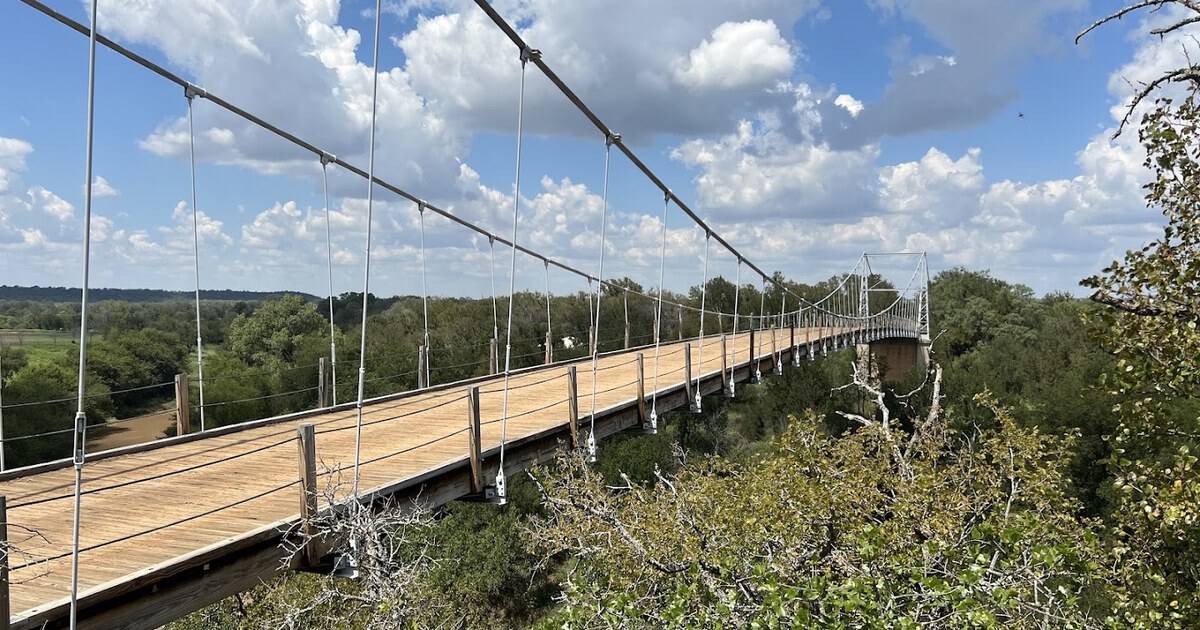
Out in the northern Hill Country, the Colorado River carves a line between San Saba and Mills counties. One skinny wooden roadway hangs there from steel cables and gives a little shiver underfoot every time a pickup eases onto it.
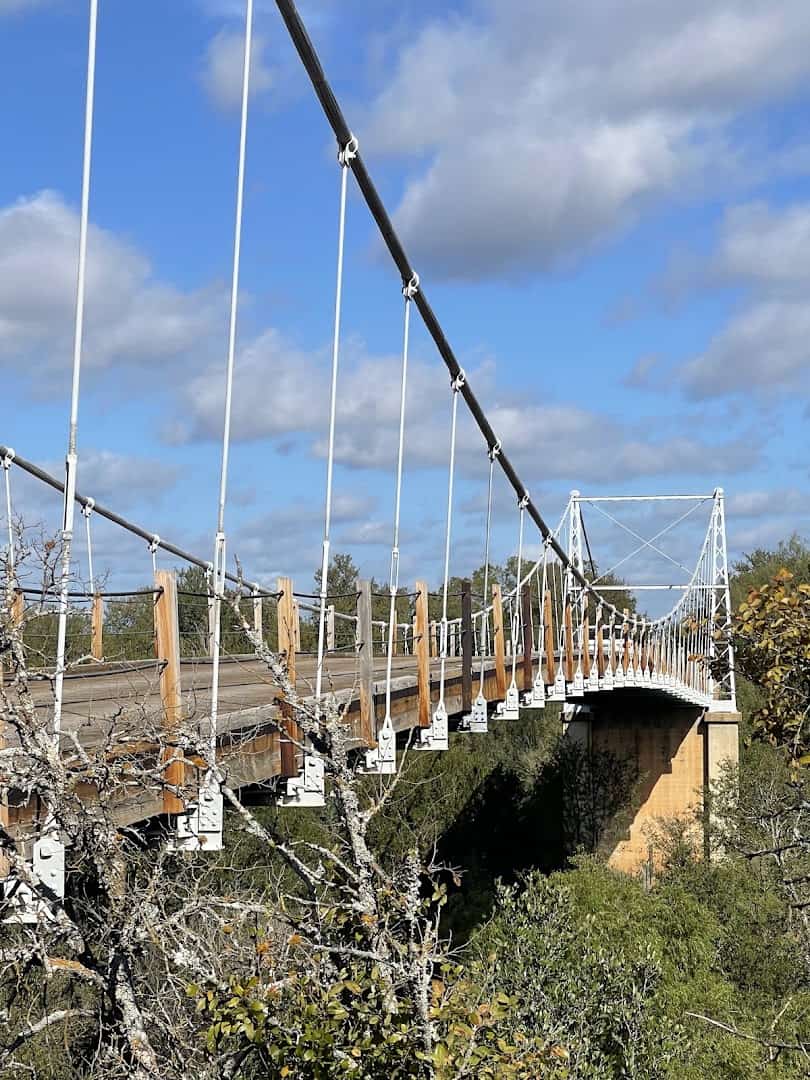
Locals call it the Swinging Bridge. On the map it is the Regency Suspension Bridge, and it is the last one in the whole state you can still point a car at and drive across.
Below, here is what makes this 1939 crossing worth the long gravel drive, how it came to be, and exactly how to find it out in the middle of ranch country.
The Drive That Talks Back
Most bridges are a non-event. You cross, you forget them. This one you remember, because it answers you.
The roadway is a single lane of wooden planks, sixteen feet wide, slung from steel suspension rods and cables strung between two towers. It runs more than 400 feet from bank to bank.
Roll onto it and the whole deck flexes under the weight. It sways gently, side to side, while the boards creak and pop beneath your tires the entire way over.
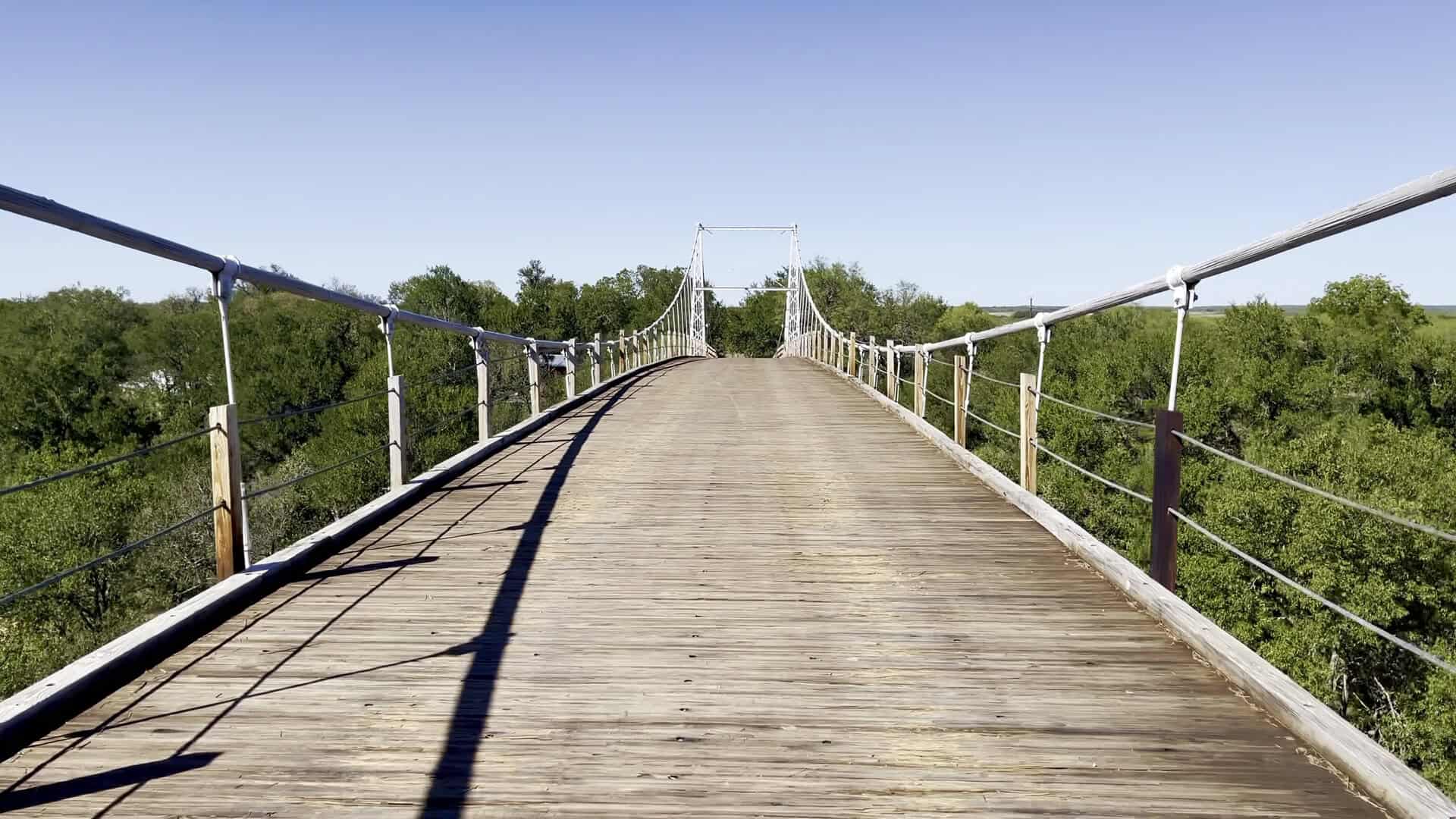
Chet Garner, who hosts the travel show “The Daytripper,” drove across and said he felt like “a squirrel on a power line.” That is about right. Out each side window there is nothing but the cables and the open air.
Below all of that the green Colorado River sits roughly seventy-five feet down. It is a long way to look while your car is quietly rocking under you.
Take it slow. There is no reason to hurry, one car at a time is the rule, and the whole point of coming this far is the slow, swaying, faintly ridiculous minute it takes to get across.
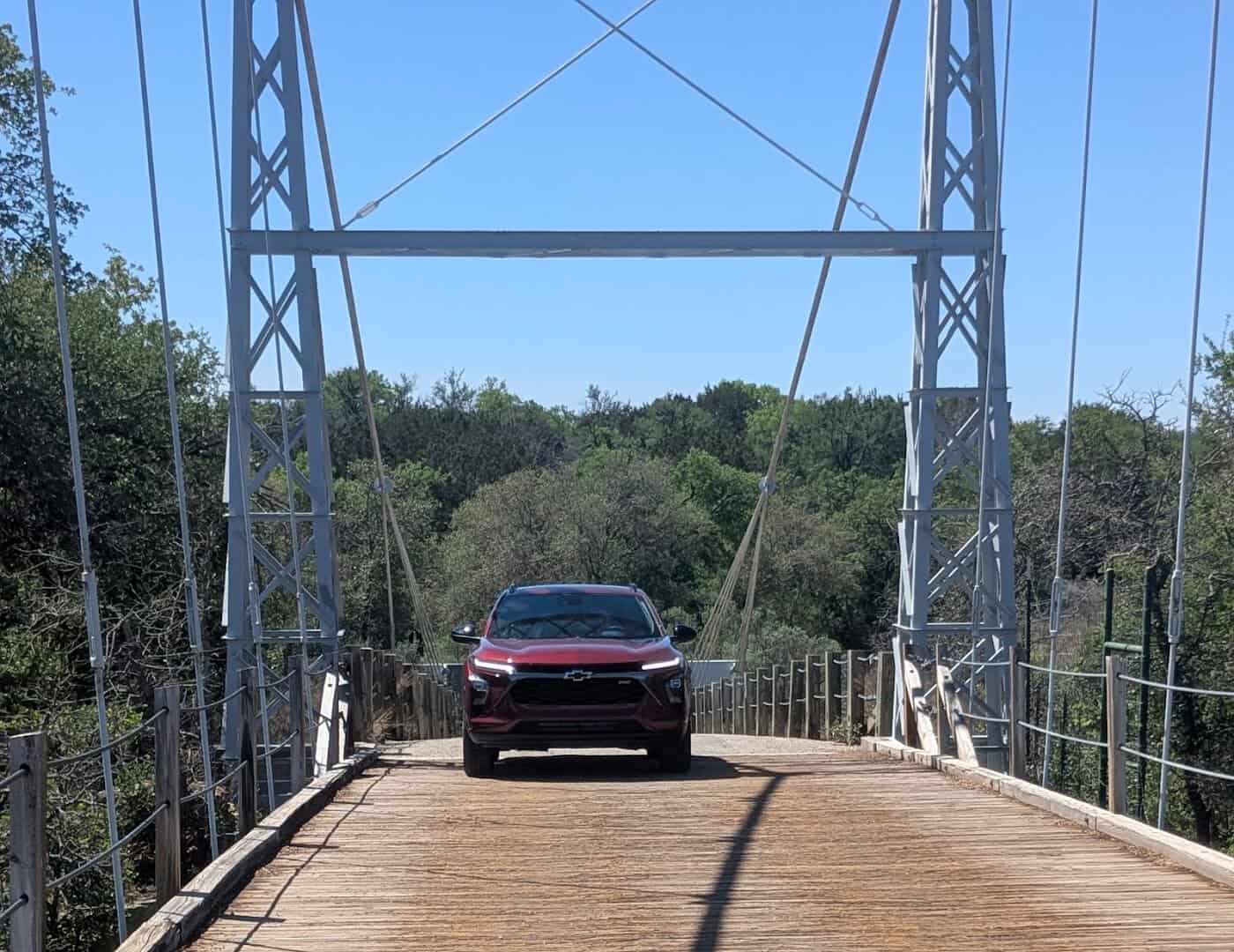
You will grip the wheel. Everyone grips the wheel. Then you will reach the far bank, let out a breath, and immediately want to turn around and do the whole thing again.
What You See From the Middle
The driving gets all the attention, but the real reward here is the stopping.
Pull off on the far side, walk back out onto the planks on foot, and stand in the dead center of the span. From there the view opens up in every direction at once.
High limestone bluffs shoulder up on both banks. The river runs slow and clear underneath, and open fields roll out for what feels like miles with almost no sign of another person.
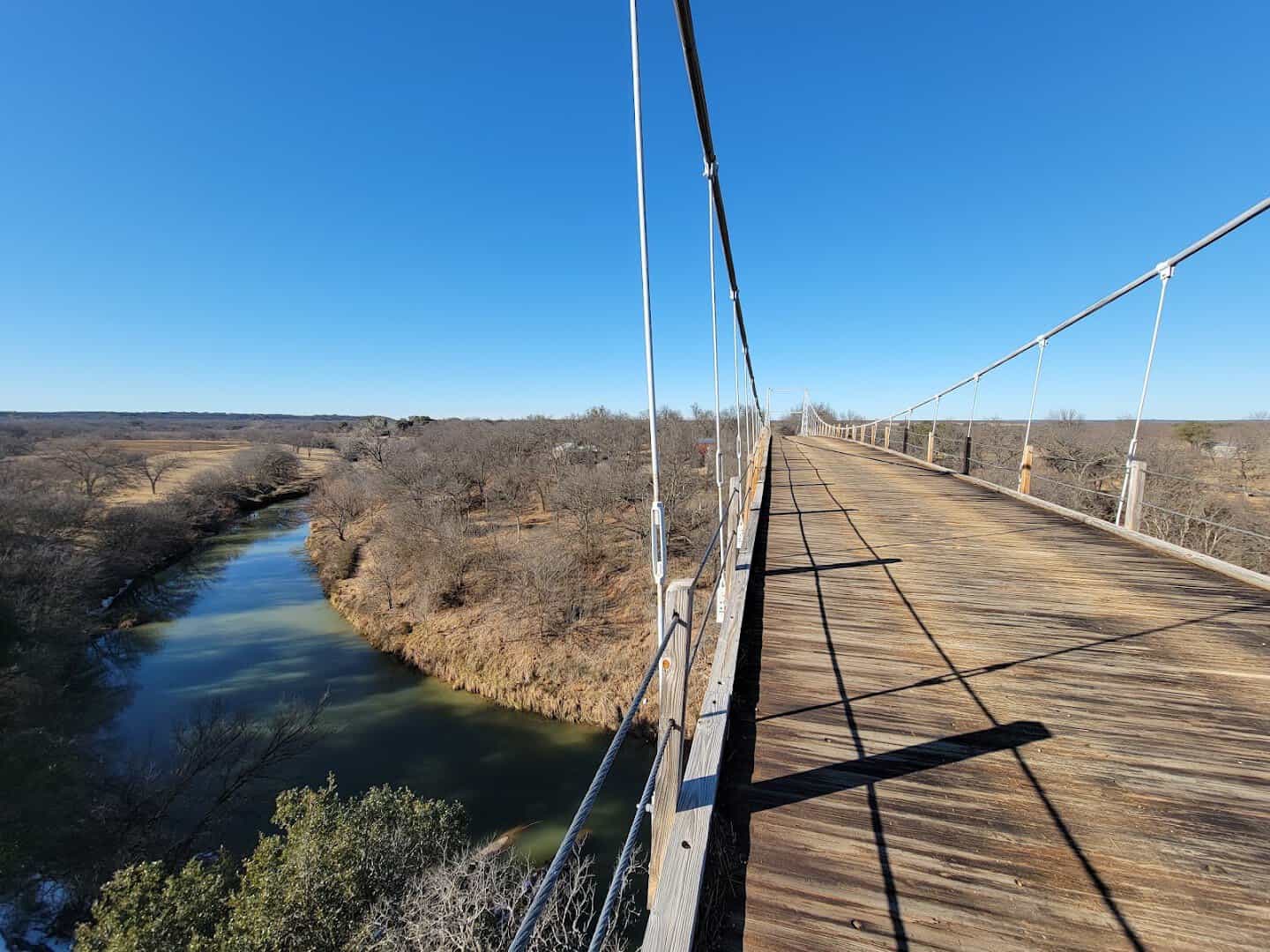
It is quiet in a way that is genuinely hard to find anymore. Just the water below, the wind moving through the cables, and the soft groan of the wood settling under your feet.
There is a nice patch of rocks down on the south side of the river. It is a good spot to sit, dangle your feet, and watch the water go by for a while before the drive home.
Bring a camera. This is one of those places where an ordinary phone photo comes out looking like a postcard, all cables and bluffs and big Texas sky.
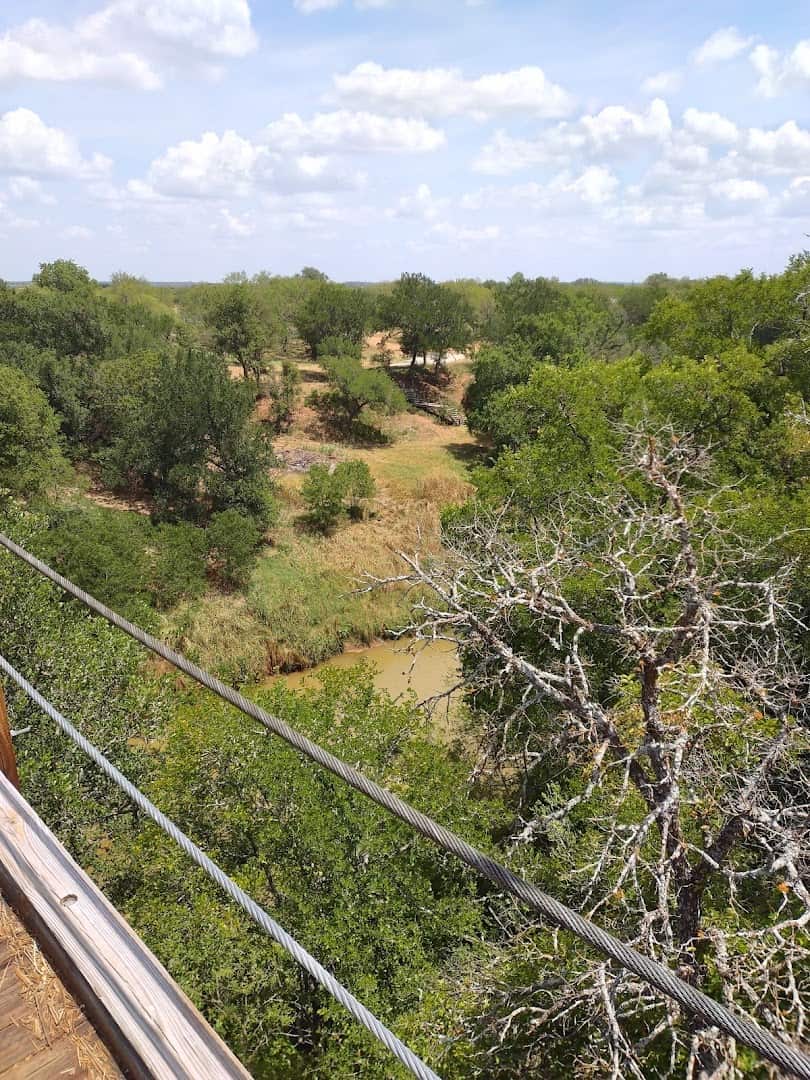
Come at golden hour if you can. The low sun warms the pale limestone to honey, the cables catch the last of the light, and the whole crossing turns into the kind of picture you will want to frame.
Built by Hand in 1939
The story of how this bridge got here is really a story of stubbornness. People wanted to cross the Colorado at Regency, and the river kept saying no.
An earlier crossing went up in 1903 to link ranchers and farmers to the markets over in Brownwood and San Saba. It served the community for years before it was lost.
A later replacement did not fare any better. A flood in 1936 swept it away, and for a few years the people here were cut off from the far bank all over again.
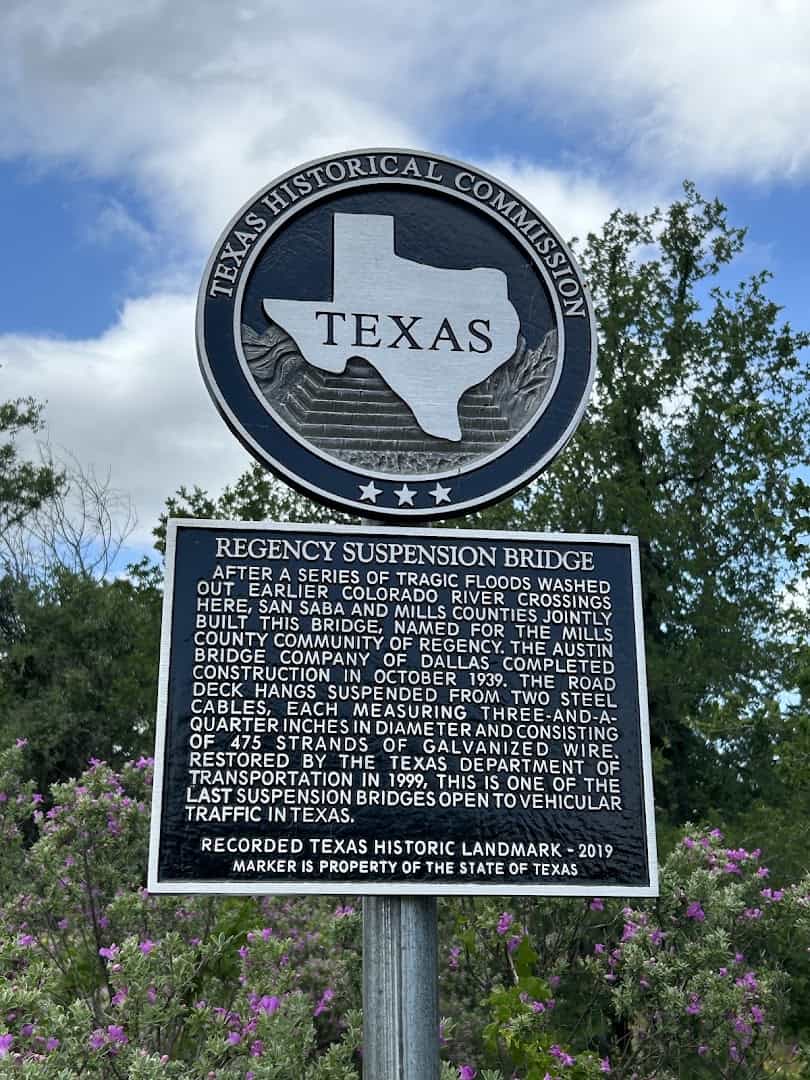
So in 1939 the two counties tried once more, and this time they built it to last. The Austin Bridge Company of Dallas took the job, with Mills and San Saba counties splitting the cost between them.
The work ran from spring into the fall of that year. Here is the detail that gets me: roughly ninety percent of the labor was done by hand.
There was no fleet of heavy machines out in this remote river bottom. Just crews stringing cable and laying plank across the water the hard, slow, old-fashioned way.
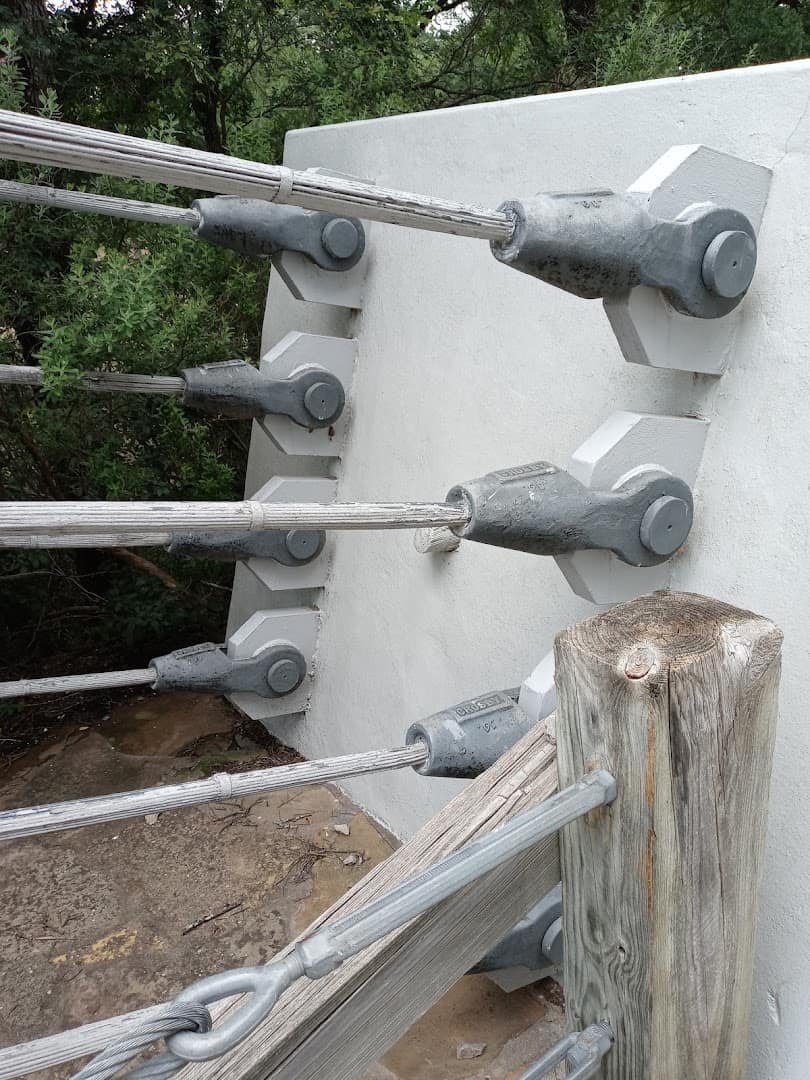
That effort bought something rare. Today it is one of only a handful of suspension bridges left standing in Texas, and it is the sole survivor of the group that still carries cars rather than just sightseers on foot.
What they built has held up remarkably well. The span reaches about 340 feet from one tower to the other, and more than 400 feet once you count the approaches on either end.
The honors piled up over the decades. It earned a place on the National Register of Historic Places in 1976 and became a Texas State Antiquities Landmark in 1981.
A full restoration came in 1997, and the rededication ceremony two years later drew a crowd, including then Governor George W. Bush. The Texas Department of Transportation still inspects and overhauls the bridge, most recently in 2021.
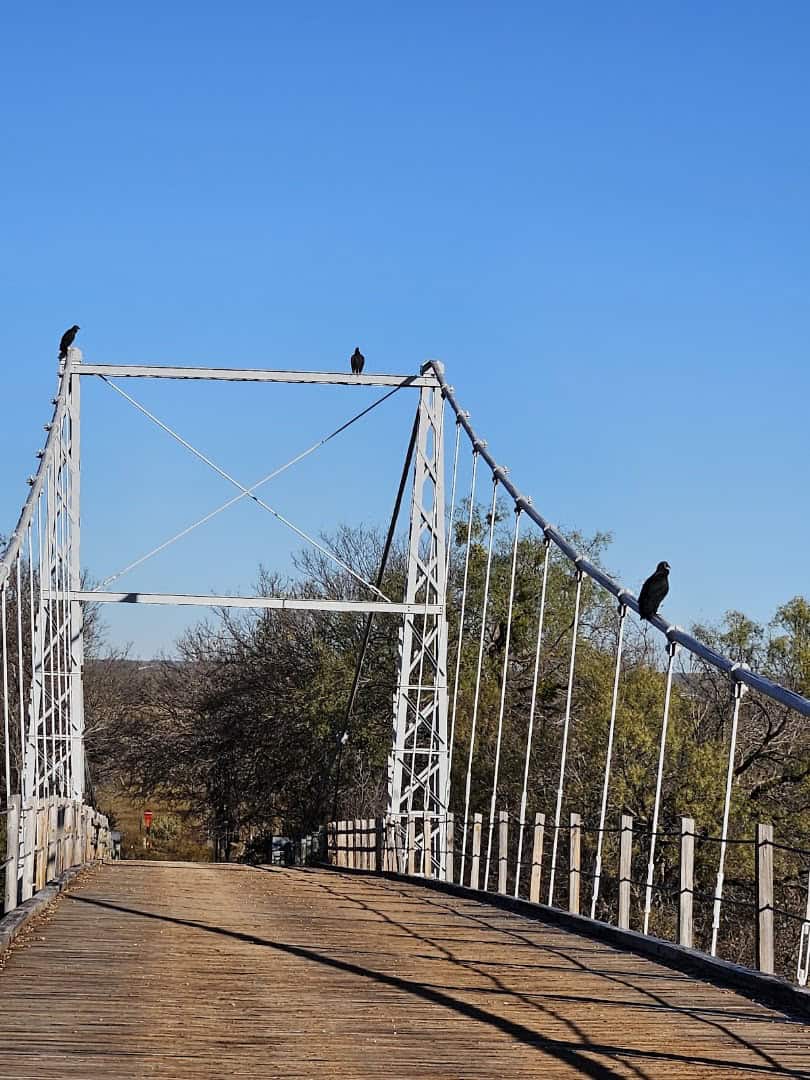
Did you know? For a stretch of the 1940s this bridge was the local hangout. Young people would gather out on the deck on warm evenings to picnic, dance, and sing over the river.
The Ghost Town on the Far Bank
Part of the magic here is how much nothing surrounds it. The bridge is named for Regency, a community that once had a real reason to exist right at this crossing.
When the river was the only thing in your way and this bridge was the way over it, Regency mattered. It sat about twenty two miles southwest of Goldthwaite and served the ranches and farms all around.
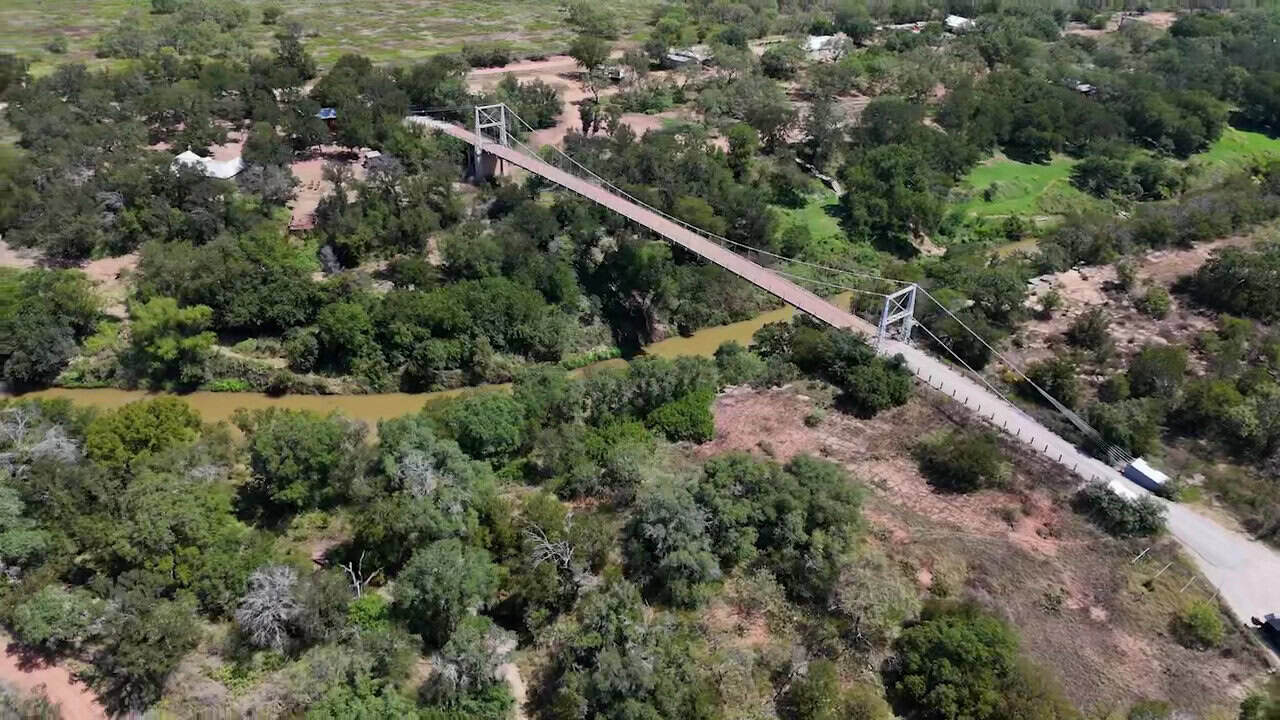
Then the state paved the farm roads. Traffic found faster, straighter routes, and the little town slowly emptied out until it became one of Texas’s many quiet ghost towns.
What is left today is the bridge, the river, the bluffs, and a whole lot of sky. That emptiness is not a drawback. It is the reason the crossing survived at all.
As Chet Garner put it, the bridge may only still be standing because it connects two sleepy gravel roads that almost nobody uses. The lack of traffic is exactly what saved it from being replaced by concrete.
A Working Piece of History
It is easy to treat a spot like this as a museum piece, but the Regency bridge is still very much on the job.
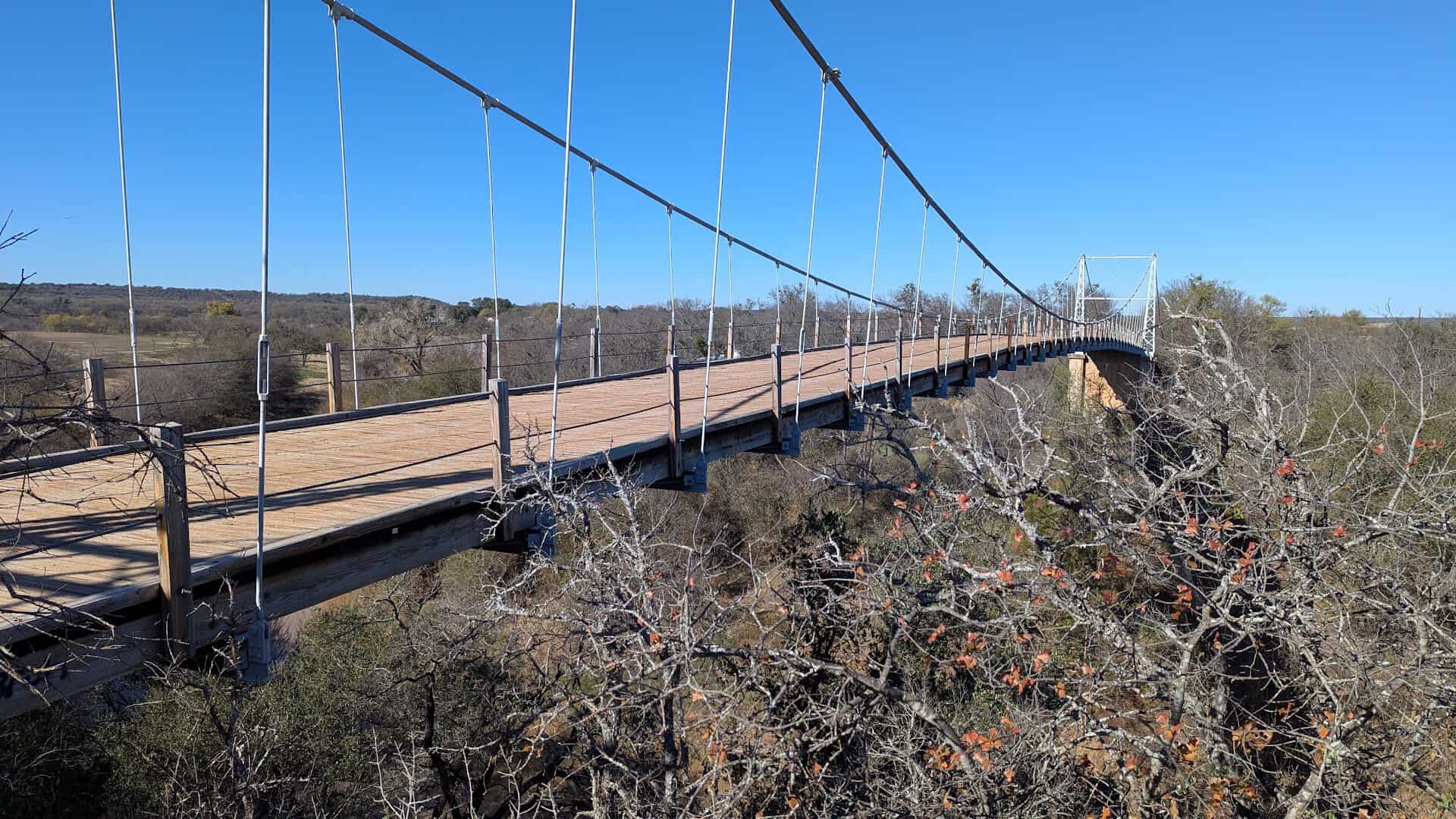
Ranchers, mail carriers, and the occasional carload of curious travelers all still use it to get from one side of the Colorado to the other. In its long life it has carried everything from horse buggies to cattle drives to modern electric cars.
It has had its rough patches. On a December night in 2003 vandals set the wooden surface on fire and burned a hole clean through some of the planks.
The damage ran to around twenty thousand dollars, and the bridge closed while crews repaired it. It reopened a little over a year later, patched up and swaying again like nothing had happened.
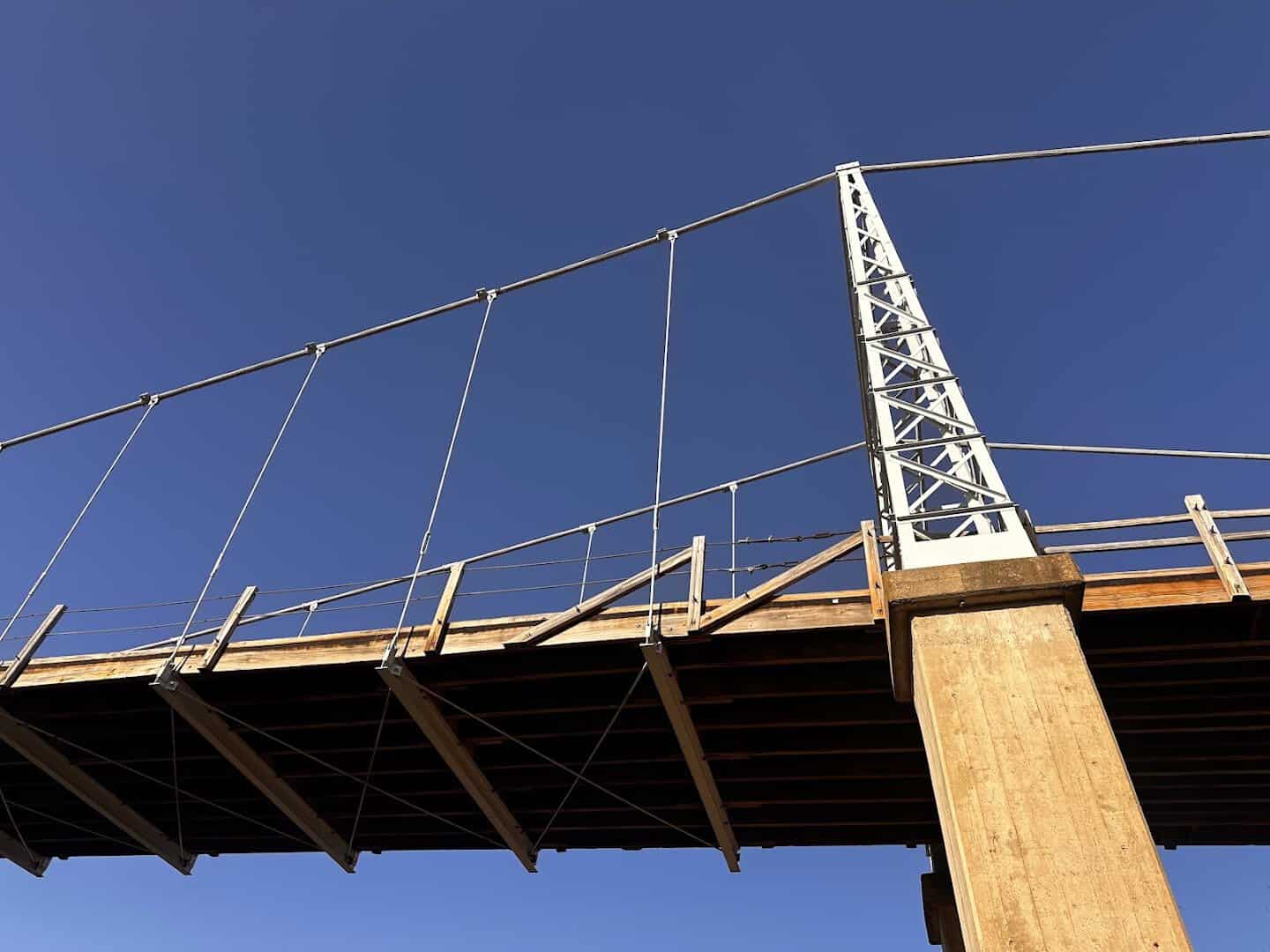
That resilience is a big part of the charm. This is not a replica or a restored showpiece behind a rope. It is the real thing, still doing the exact job it was built to do more than eighty years ago.
It has even had its close-up. Over the years the bridge has turned up in commercials and as a scenic backdrop for television, which is no surprise once you have seen how photogenic the cables and bluffs are together.
What to Know Before You Go
This is a genuine back-roads adventure, so a little planning makes the whole day go smoother.
The last several miles in are unpaved. The roads are well maintained gravel and any regular car handles them fine in dry weather, but take it easy and give yourself some extra time.
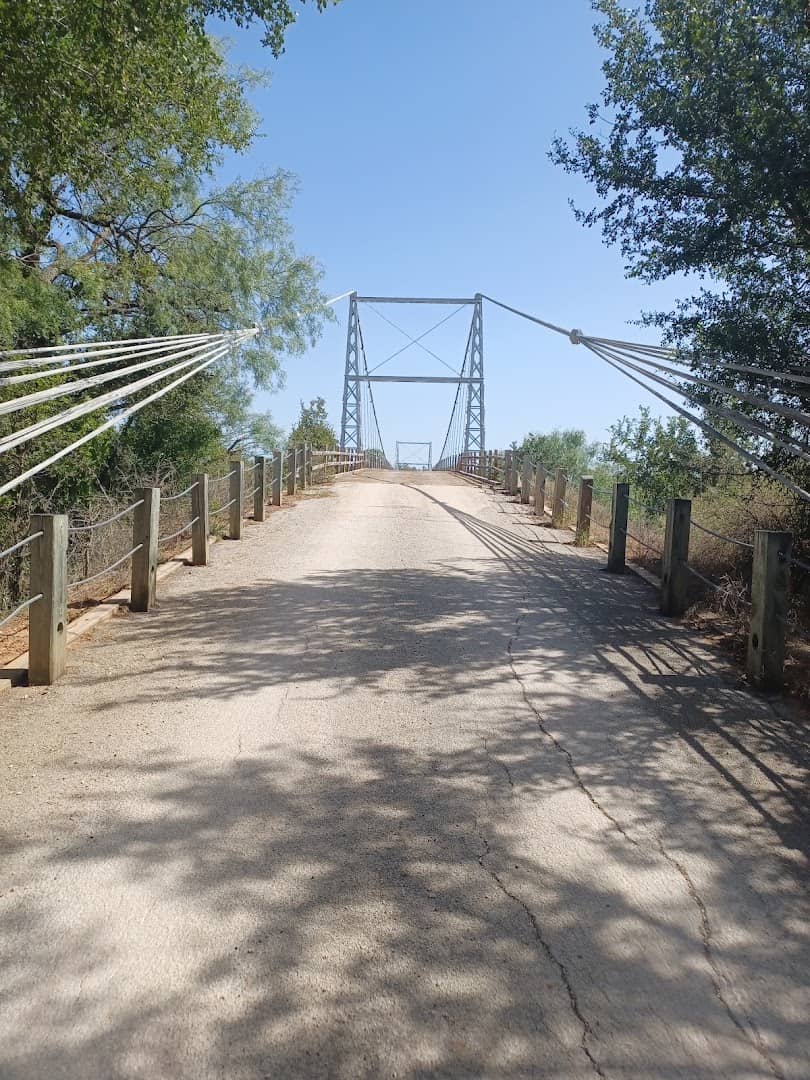
After heavy rain, it is worth checking conditions before you commit to the drive out. Low water crossings and gravel roads can get sloppy, and this is not a place you want to get stuck.
Pro tip: fill the gas tank and pack water and snacks before you leave San Saba or Goldthwaite. You are heading into open ranch country with no store, no gas station, and spotty cell service once you turn off the highway.
It is a real working bridge, so yield to any vehicle already on the deck and cross one car at a time. There is room to pull off and park on either side.
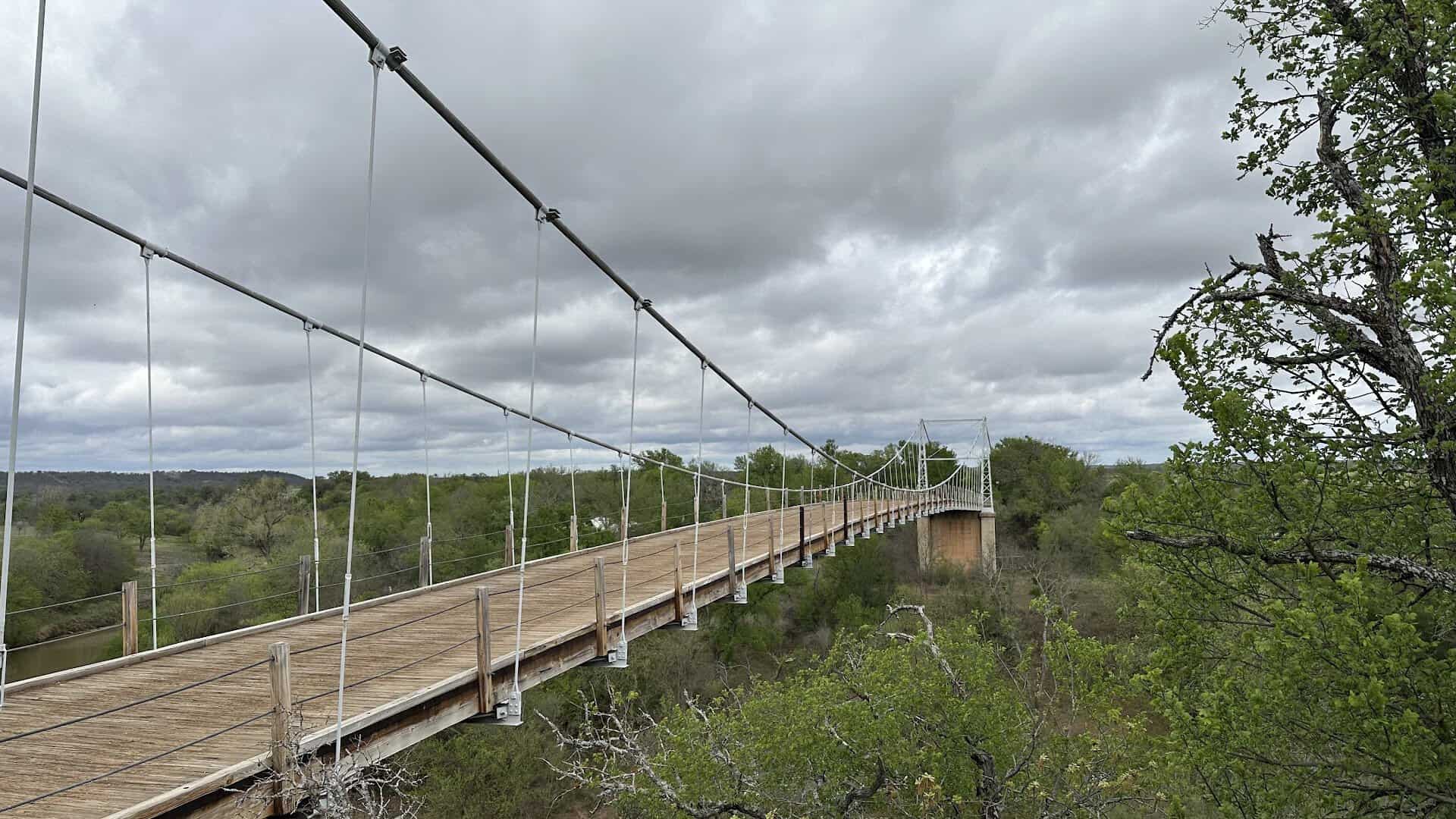
Walking out onto the planks on foot is free, welcome, and honestly the best way to feel the whole structure move. Kids tend to love the wobble, and it makes for a great story on the way home.
How to Get There
The bridge sits over the Colorado River between San Saba and Mills counties. You will find it at the meeting point of San Saba County Road 137 and Mills County Road 433, near the old community of Regency.
Where: Regency Suspension Bridge, CR 137 at the Colorado River, near Regency, TX (between San Saba and Goldthwaite).
From downtown San Saba, where Highways 190 and 16 meet, head north on Highway 16 for about 1.9 miles to FM 500. Turn left there and drive roughly 15 miles to County Road 137.
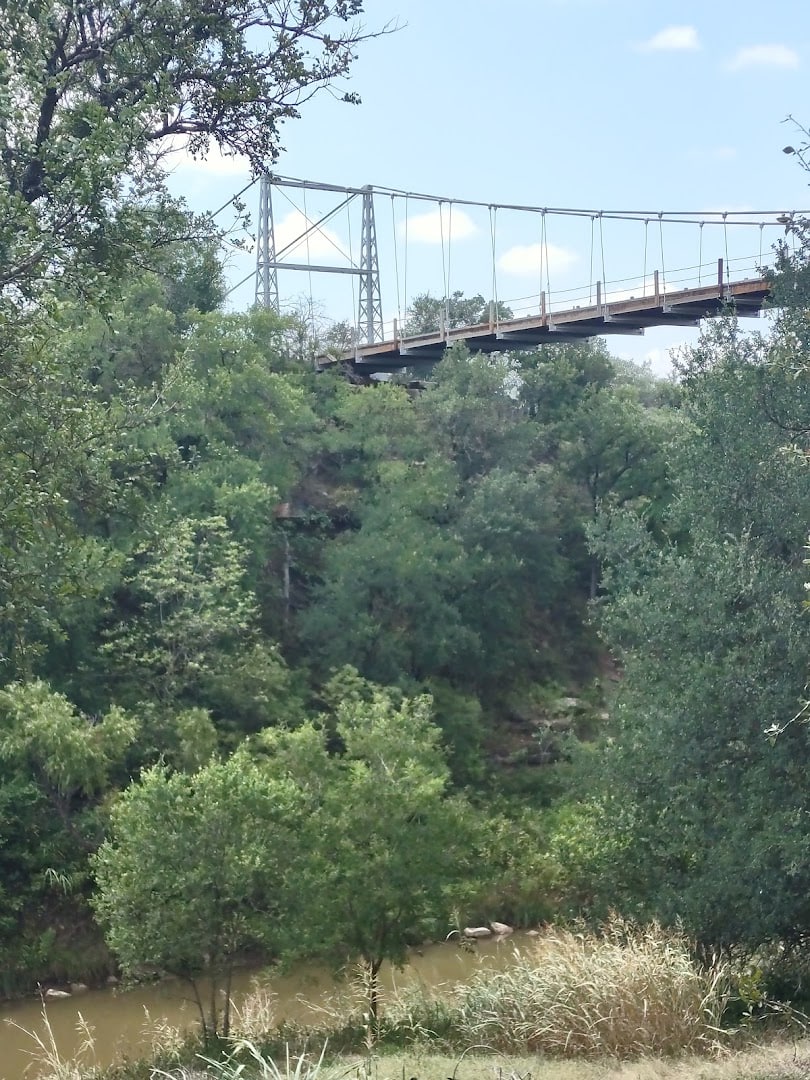
Turn right, and the bridge is about 0.8 miles down the road. All told it is about a twenty mile trip from either San Saba or Goldthwaite, and that last scenic stretch is the gravel.
Point the Car Toward the River
Some Texas landmarks you visit once, tick off a list, and never think about again. This is not one of them.
It is a piece of hand-built 1939 engineering that still does its job and still sways when you ask it to. It also frames one of the prettiest quiet stretches of the Colorado River you will find anywhere in the state.
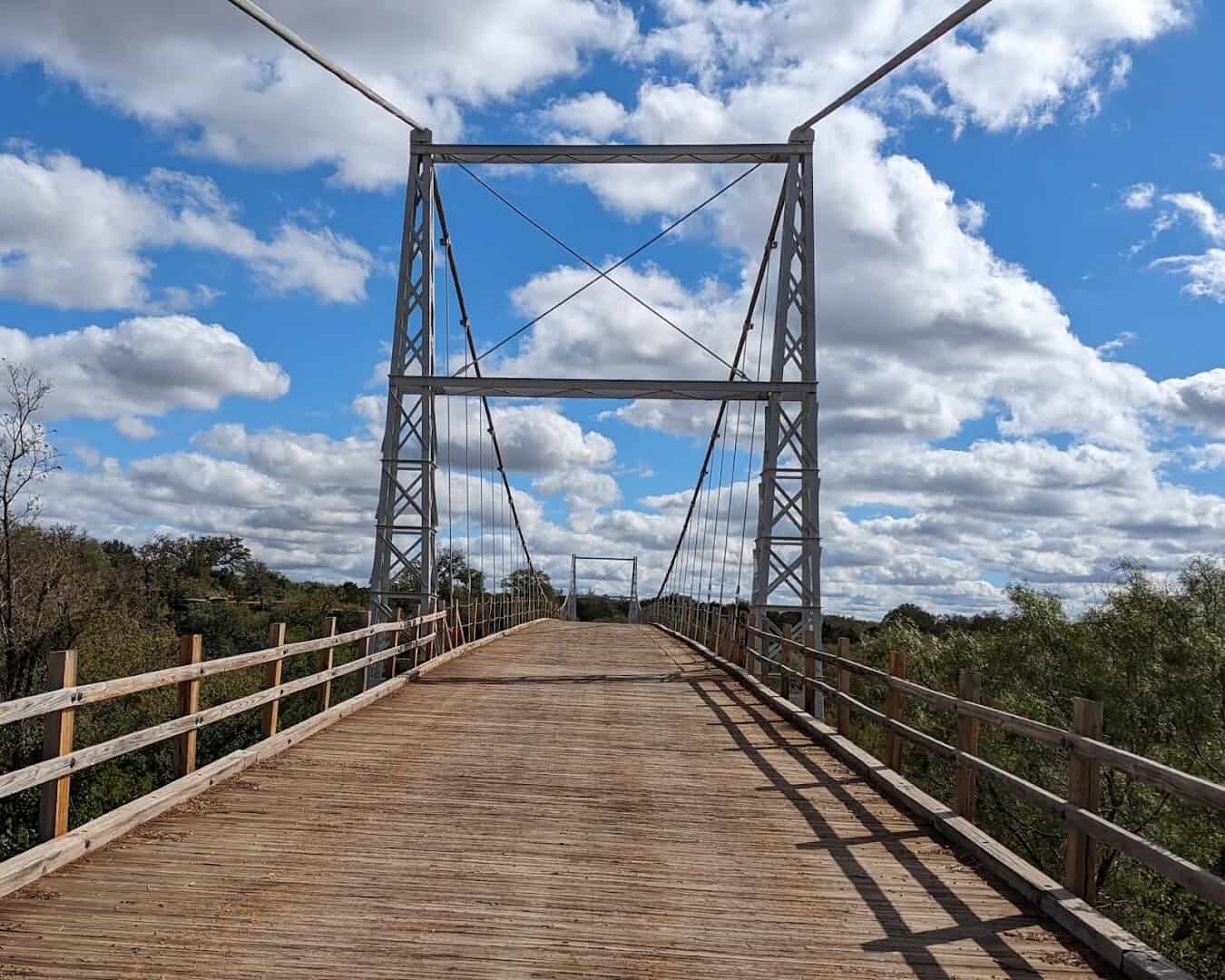
So pick a clear day, air up the tires, and point the car toward the river. Drive out slow, cross even slower, and give yourself a minute in the middle to feel a piece of Texas history swing gently under your feet.
Then, because you absolutely will want to, turn around and cross it one more time before you head home.
Featured image: John Rose via Regency Bridge

Stella Raines
Editor-in-Chief
Stella brings over a decade of storytelling experience to TX Headlines. With roots in West Texas and a love for road trips, she leads the editorial team with an eye for the hidden stories that make Texas unforgettable.
More Stories
These 5 Surreal Texas Places Are So Stunning You Won’t Believe They’re in Texas
5 Abandoned Texas Places That Are Eerie, Empty, and Still Open to Explore
8 Hidden Texas Bookstores That Book Lovers Will Want to Get Lost In
This Abandoned Texas Zoo Closed Nearly 90 Years Ago, and You Can Still Walk Through Its Ruins
Tags