This Hill Country Park Has the Best Fall Foliage in Texas
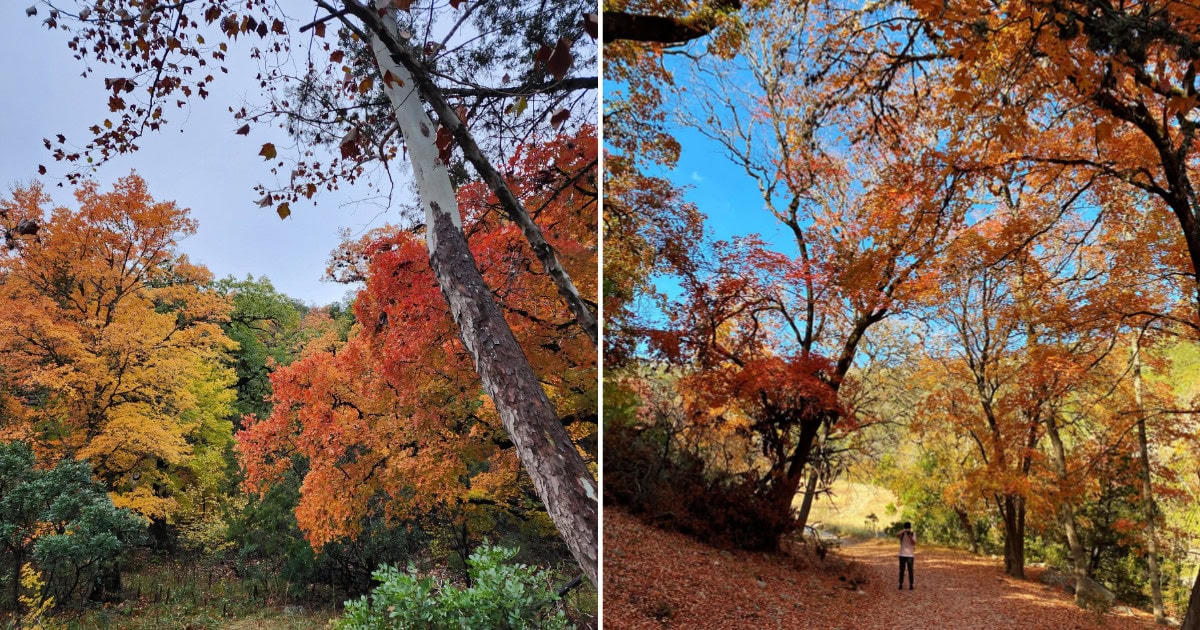
Texans who think they need to book a flight to New England for autumn colors have clearly never driven to Vanderpool.
Lost Maples State Natural Area is the closest thing the Lone Star State has to a classic fall foliage destination.
The park draws thousands of visitors every fall, creating lines of cars that spill from the entrance gates on peak weekends. But for those willing to plan ahead, Lost Maples delivers something genuinely unexpected: real fall color, right here in Texas.
Why These Maples Exist at All
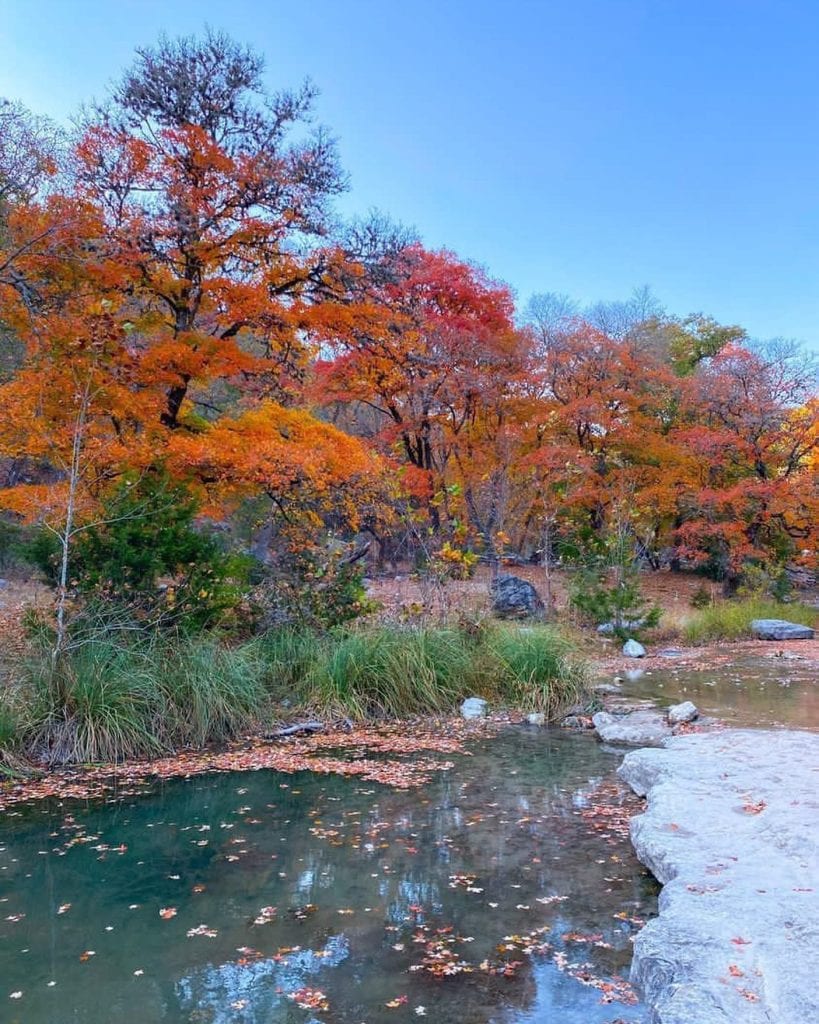
The bigtooth maples at Lost Maples aren’t just rare—they’re ancient survivors. Scientists believe these trees are relics from the last glacial period, when cooler, wetter conditions allowed maples to flourish across a much wider range.
As the climate warmed and dried, most populations died off. But the steep, sheltered canyons along the Sabinal River created a microclimate cool and moist enough for a small stand to hang on.
The result is a population of roughly 200 Uvalde bigtooth maples, a subspecies found only in this region of Texas and parts of Mexico.
They’re smaller and more deeply lobed than their northern cousins—adaptations to the local ecosystem—but they produce the same spectacular show when temperatures drop, and daylight shortens.
Trails That Earn the Views
East Trail: The Main Event
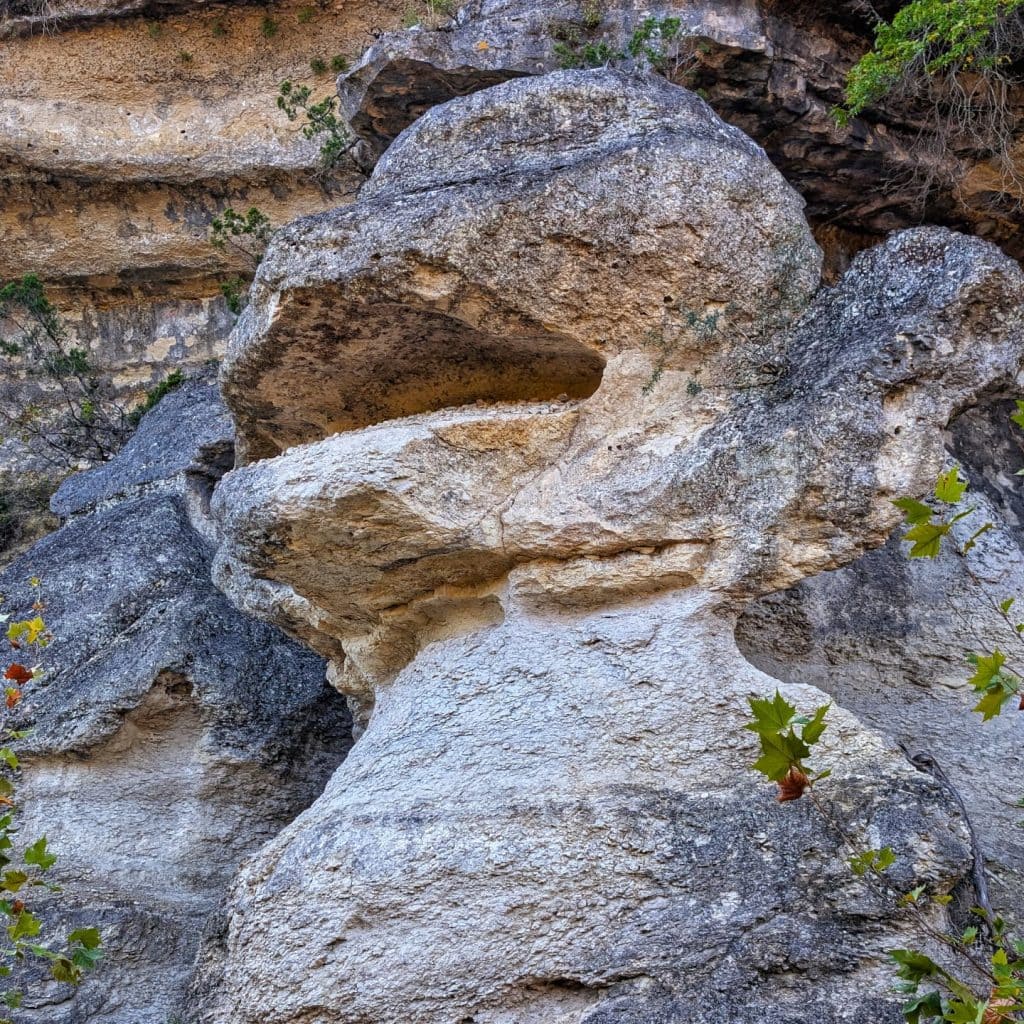
The East Trail is where most visitors head, and for good reason.
This 4.9-mile loop offers the park’s most dramatic scenery: Monkey Rock (a limestone formation), the Grotto (a fern-draped overhang with dripping springs), and overlooks that stretch across the canyon from elevations around 2,200 feet.
The payoff is a series of scenic overlooks at the canyon rim, where the entire park spreads out below. Many hikers connect to the East-West Trail for a roughly 5-mile loop back to the parking area, adding more fall color views along the way.
West Trail and Maple Trail
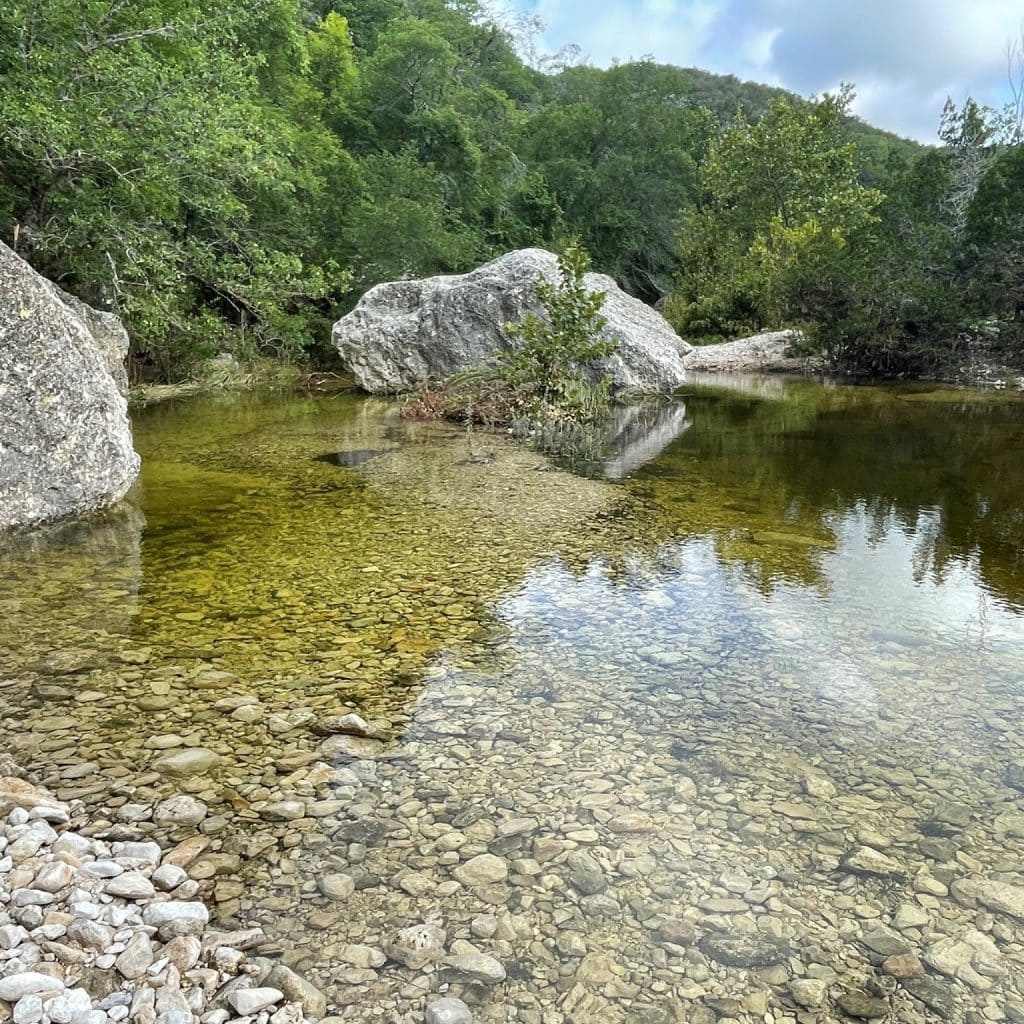
The West Trail offers a slightly less punishing alternative, winding 4.5 miles through canyons to a scenic pond and several primitive camping areas.
It’s still rocky and features some elevation change, but the crowds thin considerably once you leave the East Trail junction.
For those who just want to see leaves without earning them, the Maple Trail provides an easy 0.8-mile loop through prime foliage territory right from the parking area.
It’s flat, accessible, and frequently packed during peak season—but when you only have an hour, and the colors are popping, it delivers.
The park maintains over 10 miles of trails in total, with options ranging from quick riverside strolls to full-day expeditions covering both canyon loops.
Timing Your Visit
Peak Season: A Moving Target
Fall color at Lost Maples typically peaks between late October and mid-November, with the first two weeks of November historically being the sweet spot.
The park updates its Fall Foliage Report weekly starting in mid-October (available on the TPWD website or by calling the park’s recorded line), providing real-time assessments of which trees are turning and how vibrant the display looks.
Weather plays a fickle role in the equation. Warm falls delay the color change; early cold snaps can accelerate it. In some years, peak color arrives in late October; in others, visitors are still finding good displays into late November.
Checking the foliage report before driving several hours is essential.
Camping Under Dark Skies
Lost Maples offers 30 drive-up campsites with water and electricity, plus multiple primitive hike-in areas scattered along the trail system.
Reservations can be made up to five months in advance, and fall weekends book solid almost immediately when the window opens.
The park’s remote location delivers exceptionally dark skies—Bortle Scale 3, where the Milky Way stretches clearly, and thousands of stars become visible. The canyon rims and Maple Trail parking area offer the best viewing spots.
Getting There
Lost Maples State Natural Area sits at 37221 FM 187, about five miles north of Vanderpool. From San Antonio, the drive takes roughly 90 minutes; from Austin, expect about 2.5 hours.
The final approach winds through classic Hill Country terrain—hilly, curving ranch roads that are half the experience. Garner State Park lies 25 minutes south as a backup if Lost Maples hits capacity.
Where the Seasons Still Change
Texas doesn’t do autumn the way other states do. Most of the landscape shifts from summer green to winter brown with barely a pause for color.
But in the sheltered canyons along the Sabinal River, where Ice Age trees somehow survived, and steep limestone walls create their own weather, fall arrives on schedule.
Lost Maples won’t remind anyone of Vermont. The displays are smaller, more concentrated, and maddeningly variable.
But for Texans who thought real fall foliage required a plane ticket, this hidden preserve proves otherwise—right here, where the maples have been putting on their show for thousands of years.
FB post credit: barbara sosa

Stella Raines
Editor-in-Chief
Stella brings over a decade of storytelling experience to TX Headlines. With roots in West Texas and a love for road trips, she leads the editorial team with an eye for the hidden stories that make Texas unforgettable.
More Stories
6 Incredible Texas Waterfalls That Are Worth the Drive
This North Texas Bluebonnet Trail Winds 40 Miles Through Wildflower Country Each Spring
This Short Texas Trail Delivers Jaw-Dropping Canyon Scenery for Barely Any Effort
This Easygoing 2.7-Mile Texas Trail Ends at a Secret Waterfall and Hills Full of Wildflowers
Tags