This Hidden Texas Cave Is a Hand-Carved Fairy Tale Most Visitors Stroll Right Past
I have always been a sucker for the door everyone else walks past. Give me the quiet corner off the beaten path over the marquee attraction with the line out front, every time. That is where the crowd thins out and a place suddenly feels like it belongs to you.
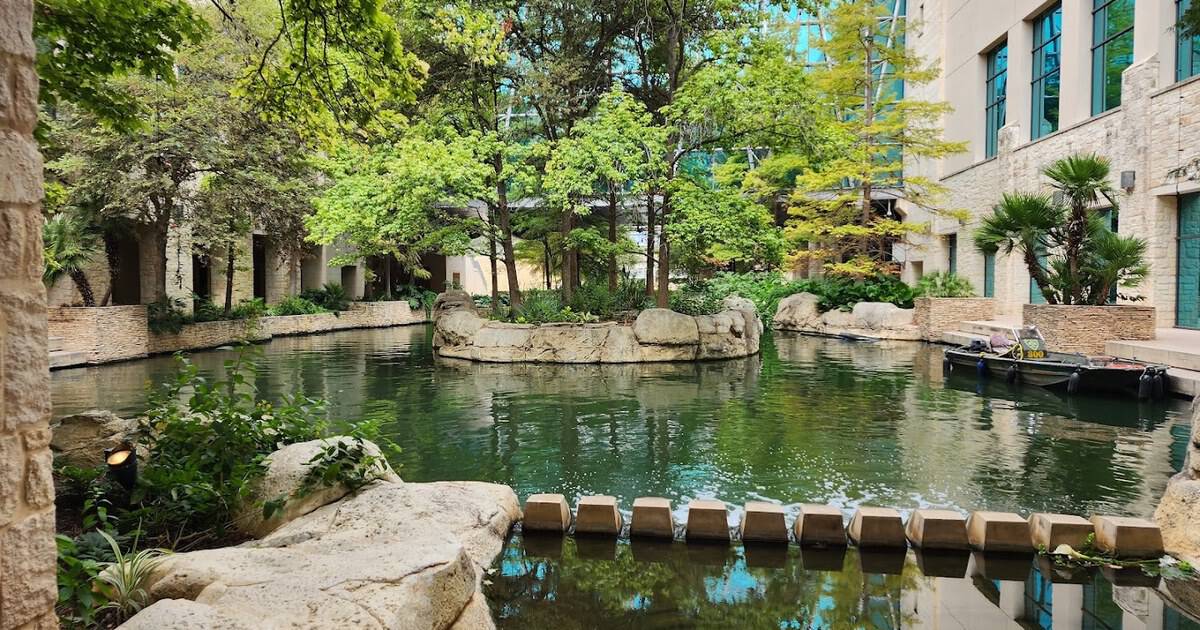
Texas hides more of these than people give it credit for. And one of the best is sitting in plain sight on the northern stretch of a very famous river, where thousands of visitors drift right past it every single day without ever looking up.
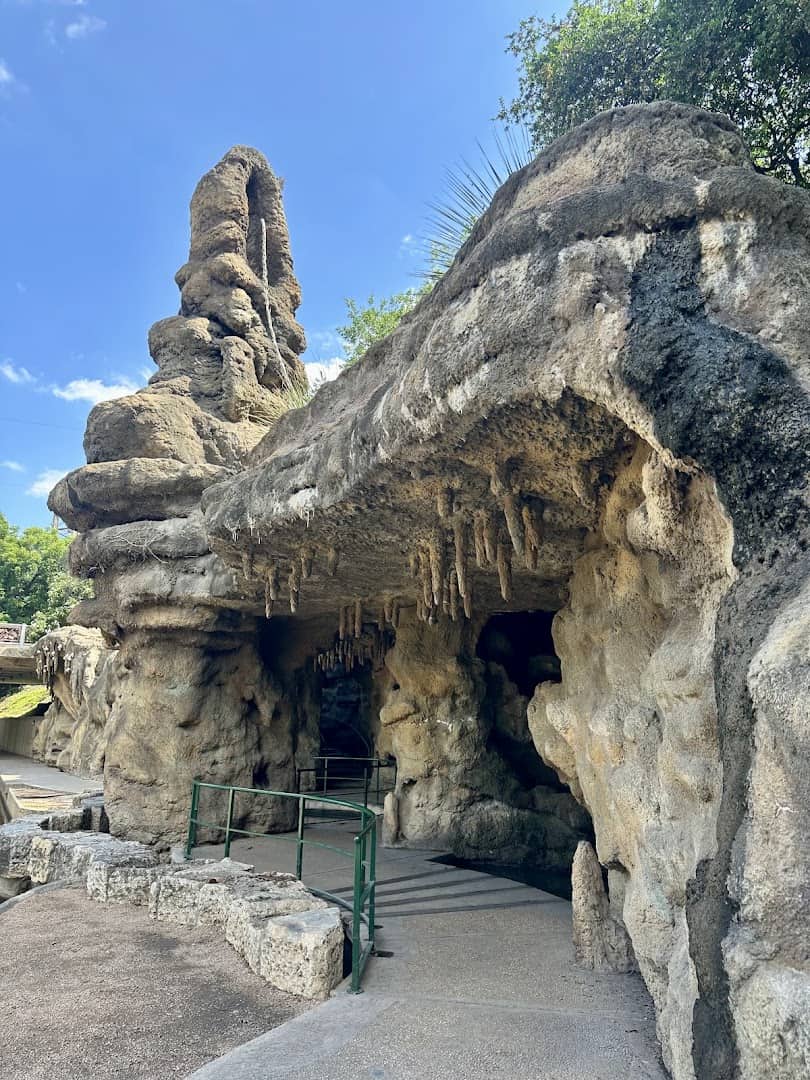
It is a cave that no geologist ever mapped. A storybook cavern of waterfalls, winding passages, and faces watching from the stone, carved entirely by hand out of concrete. Locals simply call it the Grotto.
Below is what makes this hidden pocket of the San Antonio River Walk worth the short detour, who dreamed it up, and exactly how to find the jaguar that guards the door.
Into the Mouth of the Jaguar
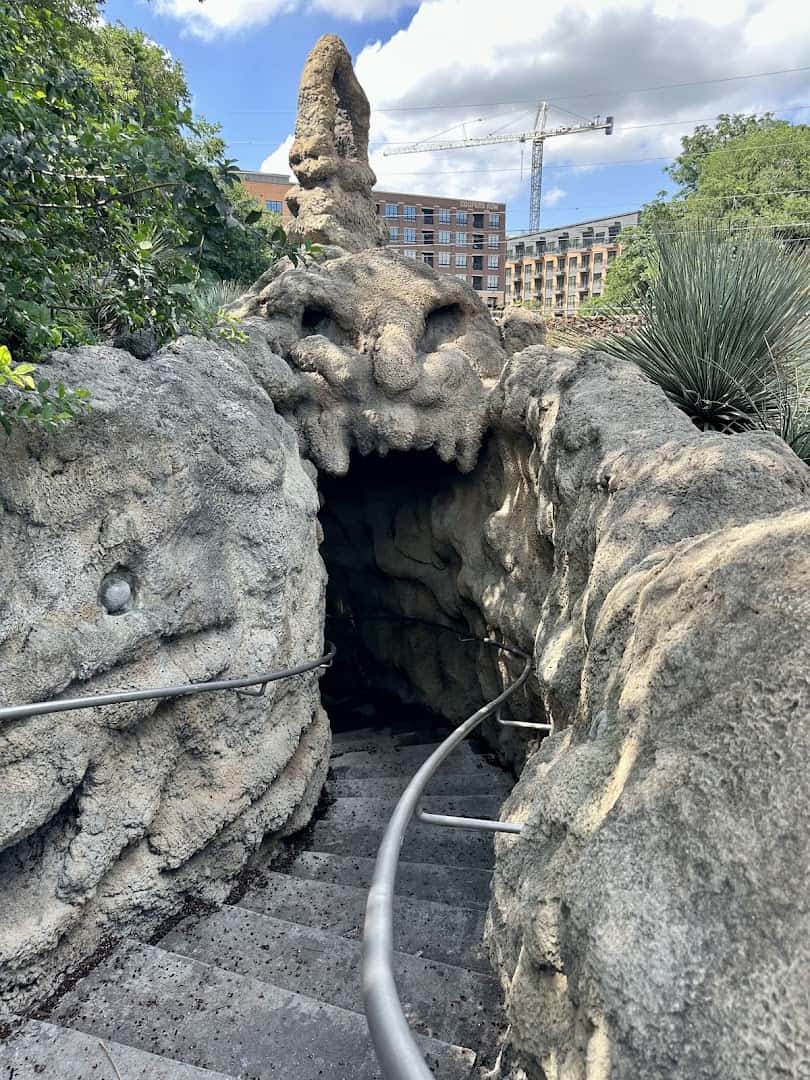
The first surprise is the entrance. At street level, where Camden Street meets Newell Avenue near the Pearl, you do not step down into a cave so much as step into the open jaws of a giant jaguar, its stone teeth framing the stairway that spirals down toward the water.
It is theatrical in the best way. One moment you are on an ordinary sidewalk under the highway. The next you are descending into something that feels lifted from a fable.
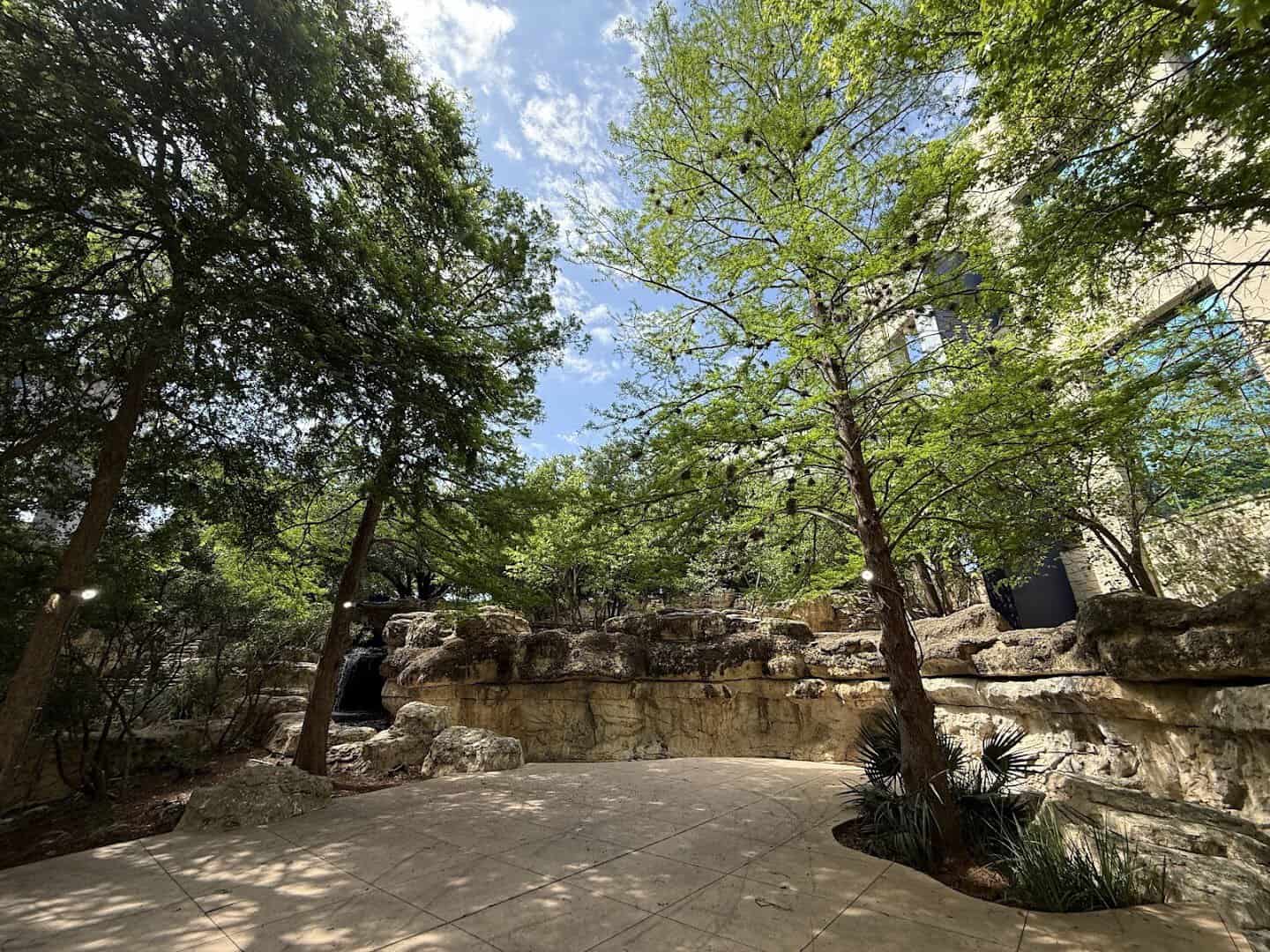
Down at river level, the world changes. Craggy grey walls close in overhead, dripping with stalactites that look centuries old. Water trickles and splashes over the rocks. The traffic noise fades, replaced by that specific hush you only get in a cave.
Except none of it is real, and all of it is. Every stalactite, every ledge, every ripple in the “rock” was sculpted by a person, not by a million years of dripping water.
You can walk straight through the passages, duck under the low overhangs, and settle onto a bench when you want to sit and take it in. The whole space is small enough to feel intimate and layered enough to reward slow looking.
Recessed lighting is tucked into the rock, so the cave glows softly rather than glaring, and the mood shifts through the day as the sun moves. Come at the right hour and the shadows do half the storytelling for you.
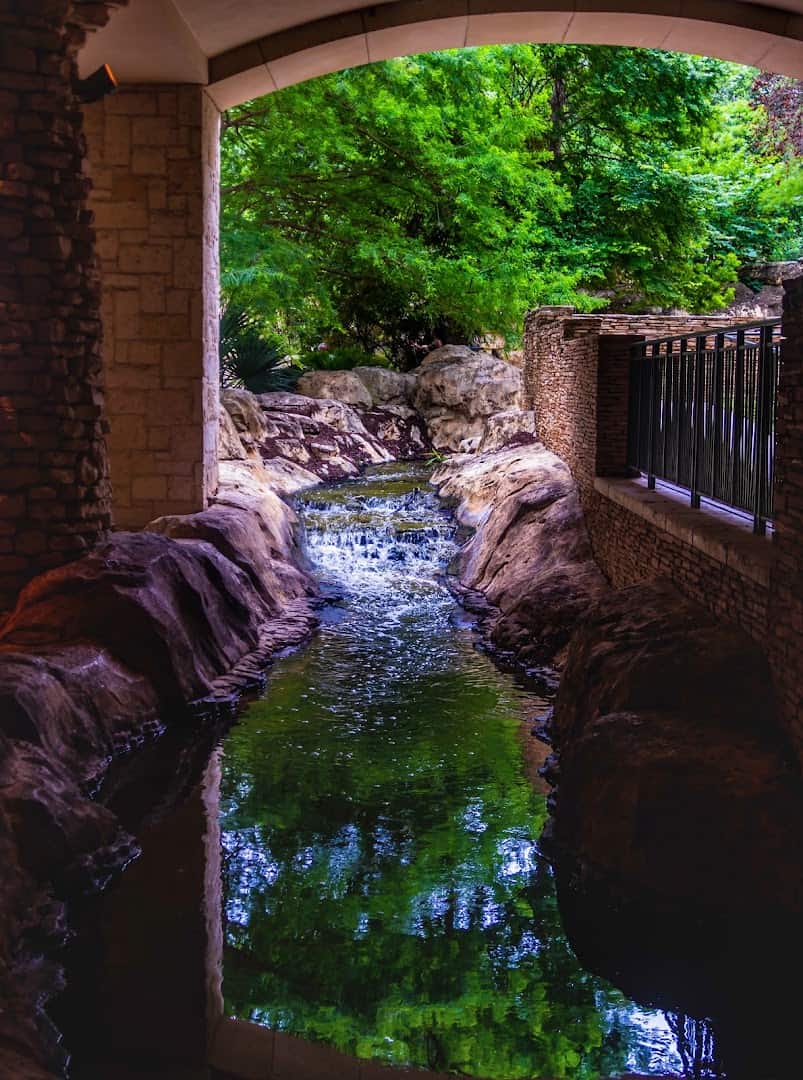
There is a picnic area worked into the design as well, which means this is not just a photo stop. Grab a coffee from the Pearl up the path, carry it down, and you have yourself a shaded riverside table that no guidebook sent you to.
The Faces in the Stone
Spend a few minutes and you start to notice you are not alone. Faces peer out of the walls. Some are craggy and mischievous, half hidden in the texture of the rock, easy to miss until your eye catches one and then suddenly you see them everywhere.
Finding them is half the fun, and it turns a five-minute stop into a little scavenger hunt. Kids love it. So, honestly, do the adults who arrived thinking they were too cool for a scavenger hunt.
The details keep coming the longer you linger. Look for fossils pressed into the walls, curling vines and leaves worked into the concrete, and benches shaped to look exactly like stacked logs. It is folk art and fantasy poured into one shaded riverside nook.
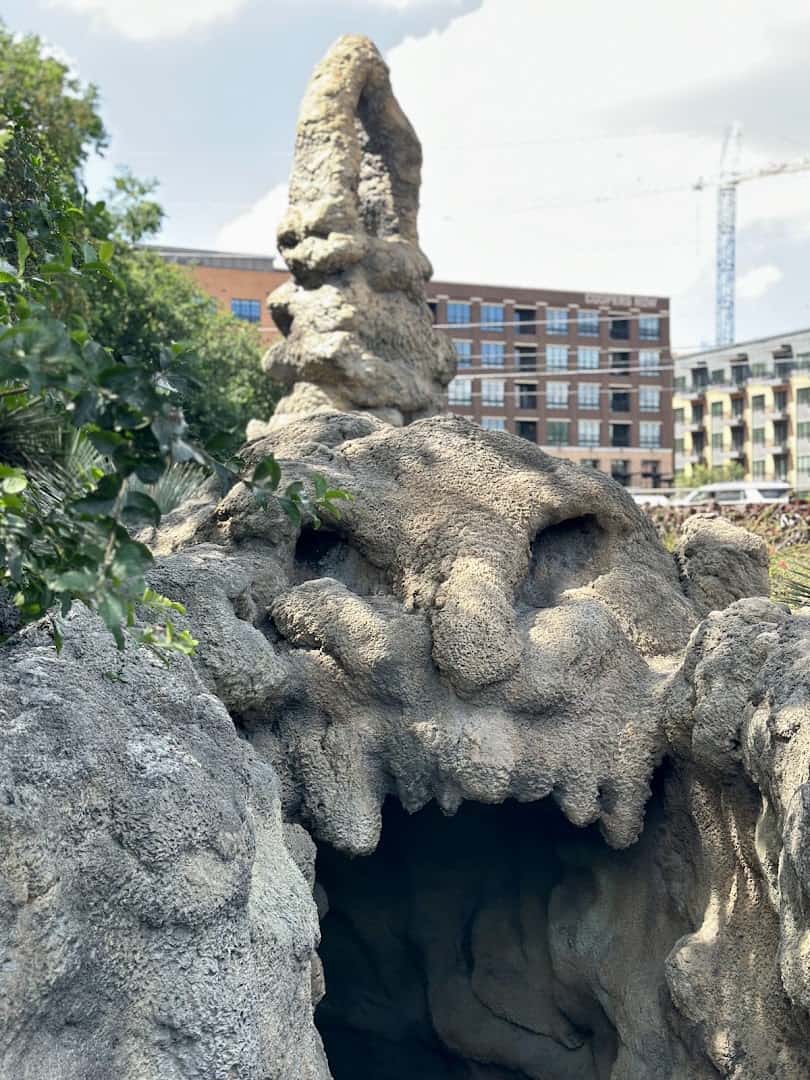
Nobody hands you a map of where the faces are, and that is the point. Part of the joy is that the grotto keeps a few secrets no matter how many times you come back, so regulars still catch a carved grin they had somehow never noticed before.
Pro tip: bring your phone flashlight. As one visitor wrote, “The light from my phone illuminated the beautiful cave walls and the sound of the water flowing over the rocks was so soothing.” A little raking light makes the carved textures pop and helps you spot the shyer faces.
The Family Secret Behind the Magic
The artist is Carlos Cortés, and he is not making it up as he goes. He is the third generation of his family to practice a craft with a wonderful name: trabajo rústico, better known as faux bois, French for “false wood.”
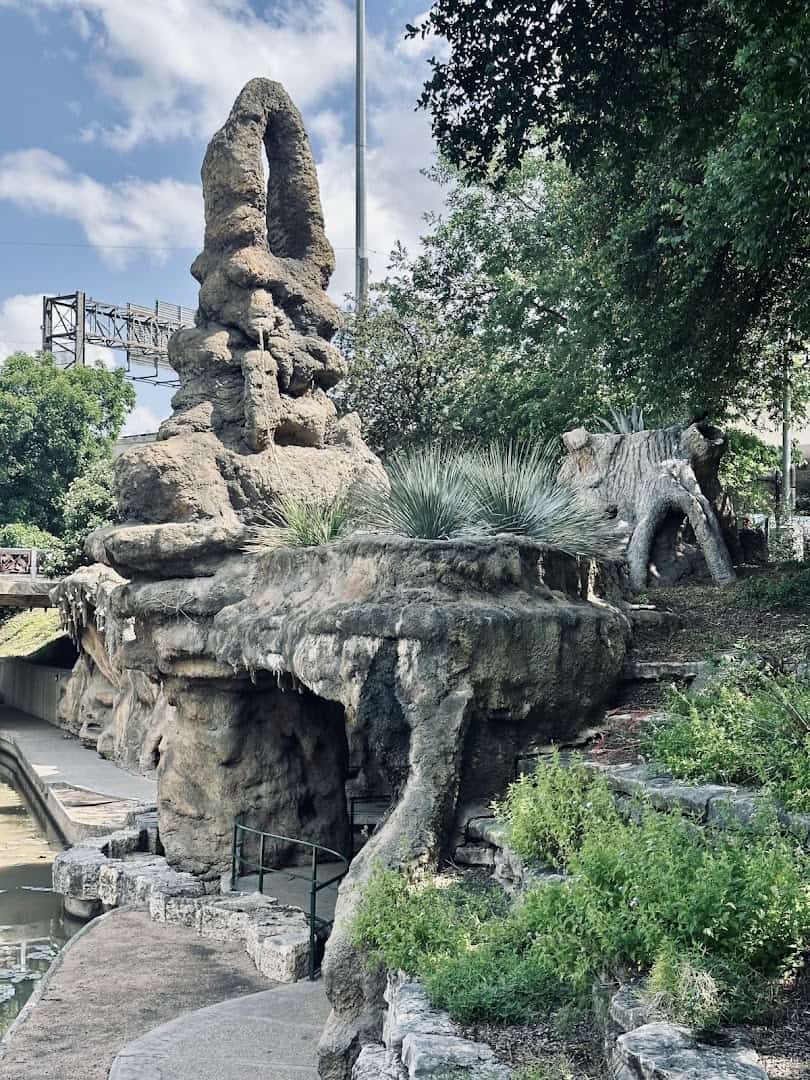
The technique is a kind of sculptural magic. You build a skeleton of steel rebar, wrap it in wire mesh, then trowel on coat after coat of cement and carve it by hand into wood, bark, and stone so convincing you want to knock on it to be sure.
“You sculpt a lot of it with your hands,” Cortés has said of the process. “You start with fingers then a trowel and a chip brush.” The final touch is staining, which is where dull grey concrete turns into the warm, mottled color of real cave rock.
The roots run deep, too. The tradition came to San Antonio in 1924, carried from Mexico by Cortés’s great-uncle, a legendary artisan named Dionicio Rodriguez. His father, Máximo Cortés, apprenticed under Rodriguez and worked alongside him on major commissions.
So the hands that shaped this grotto were trained by hands that were trained by the man who brought the whole art form north a century ago. That lineage is the real hidden layer of the place, and it is why the work feels so alive.
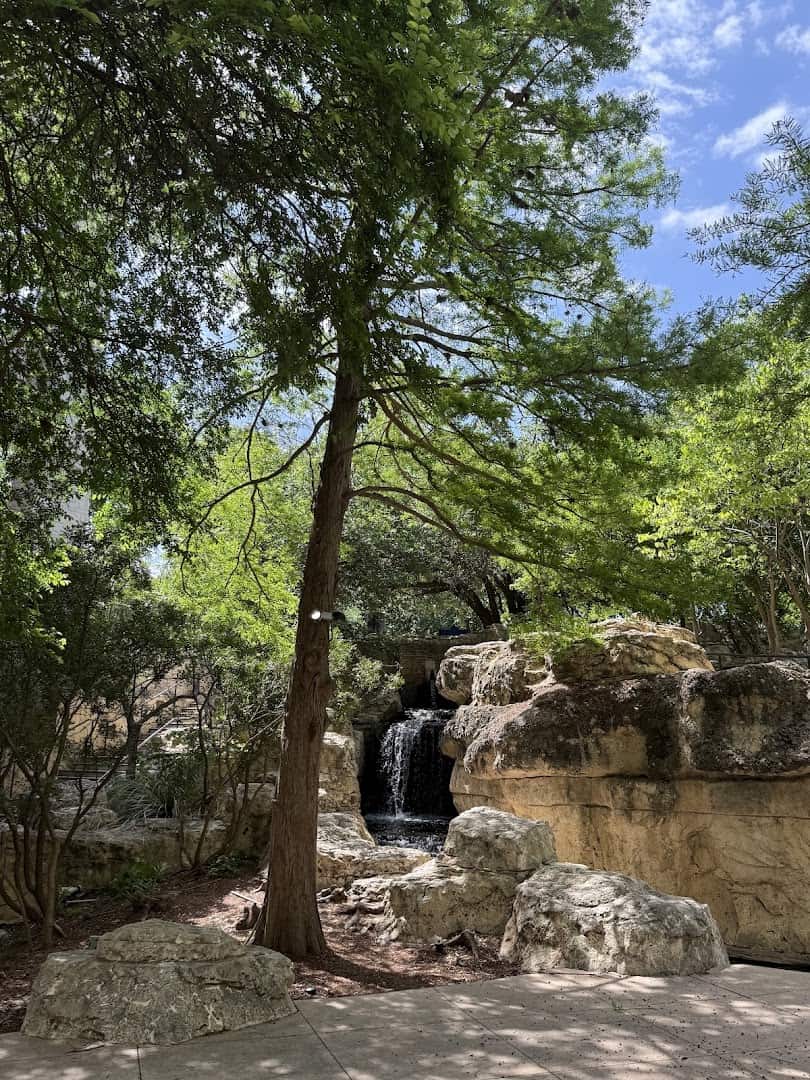
Rodriguez left his mark all over the country before he passed, and his faux bois pieces are prized enough that some sit on the National Register of Historic Places. Carrying that torch is not a small thing, and Cortés does it with obvious love.
The craft is slow, physical, and unforgiving. Cement sets on its own schedule, so an artist has a narrow window to carve each coat before it hardens, and a single face in the wall can take hours of patient work with a brush and a fingertip.
How You Build a Three-Story Cave
The Grotto is bigger than it first appears. The structure rises a full three stories, built around a steel armature engineered with the help of two firms so that a hand-sculpted cavern could safely hold benches, waterfalls, and visitors all at once.
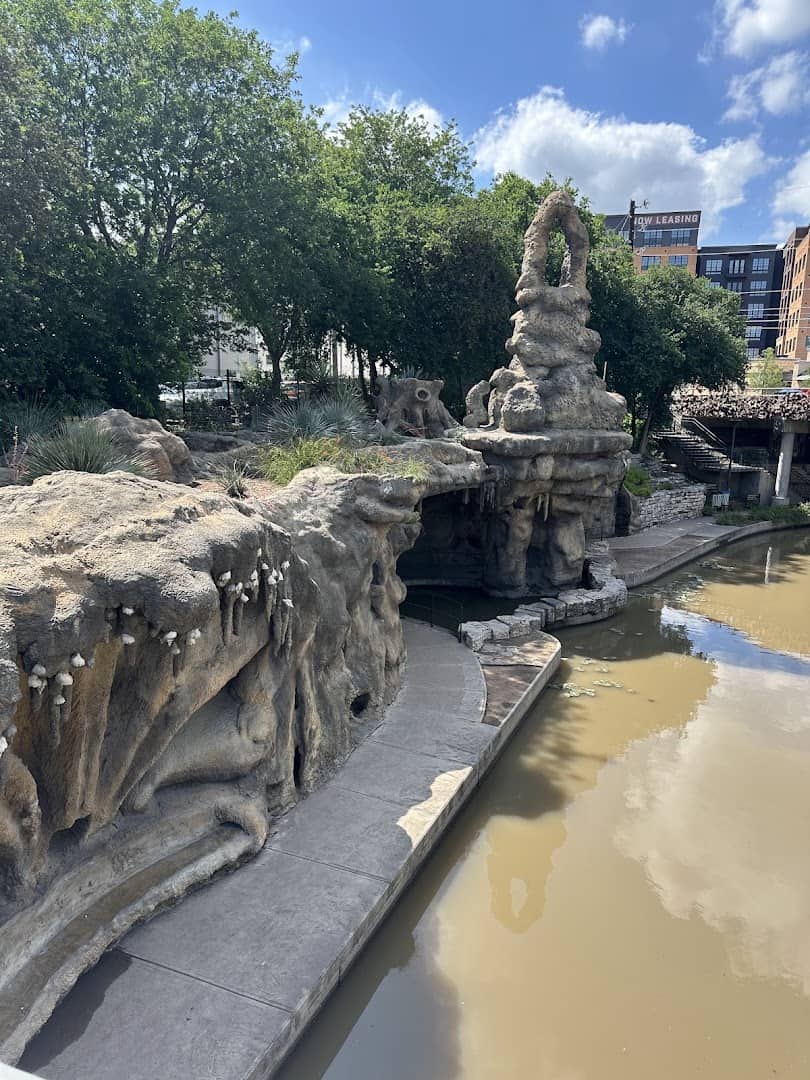
It was completed in 2009, commissioned and funded by the San Antonio River Foundation as part of the Museum Reach, the lush northern extension of the River Walk that opened that same year and stretches up toward the Pearl.
The Grotto did not arrive alone. It was one piece of the enormous San Antonio River Improvements Project, a roughly 384 million dollar effort to transform the river with public art, landscaping, and miles of new walkway.
Did you know? The art commissioned along the river was donated to the City of San Antonio’s public art collection, meaning this cave belongs to everyone, in perpetuity. You are not visiting a private attraction. You are visiting something the city literally owns and keeps.
Cross the River for the Rest of the Story
Do not stop at the grotto itself. Look across the water and you will find more of Cortés’s handiwork: a palapa, a thatched-style shade shelter, with benches carved to look like weathered logs waiting under it.
What makes that detail lovely is why it exists. Cortés added those pieces at no charge, in what he calls the tradition of the pilón, an old idea of giving a little something extra, a bonus thrown in out of generosity rather than obligation.
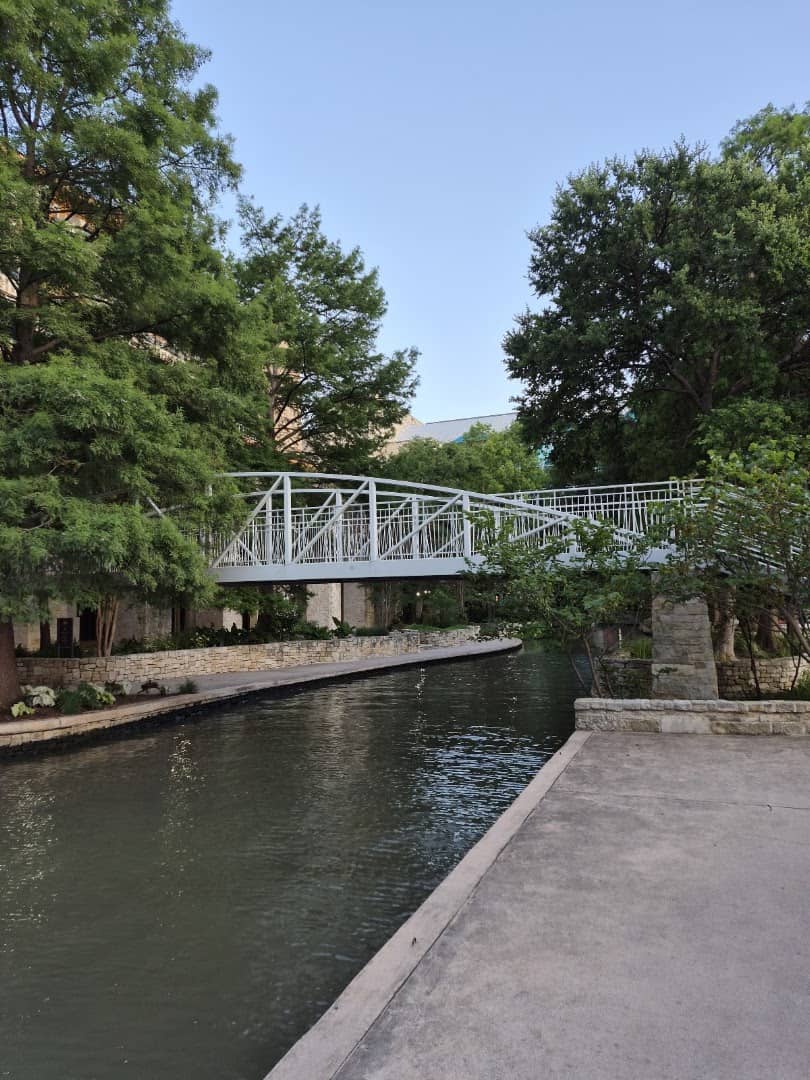
Several footbridges connect the two banks, so wander across and back. Each side offers a different angle on the cave, and each angle seems to reveal another face, another fossil, another small carved surprise you missed the first time.
If you fall for the style, you can spot Cortés’s work all over town. He built a brush arbor near the Tobin Center and the beloved H-E-B Treehouse at the Witte Museum, both proof that the family art is thriving well into its third generation.
When to Go and What to Expect
The best news first: the Grotto is completely free, and it is open around the clock. There is no gate, no ticket booth, and no gift shop, which is a large part of its charm.
For photos, come at sunrise, during blue hour, or in the soft light of late afternoon, when the low sun rakes across the carved walls and every ridge throws a shadow. Midday works too, but the texture is the whole point, and side light shows it off.
Give yourself time to slow down. The space is compact but cinematic, the kind of spot that looks like a quick stop and then keeps you twenty minutes longer than you planned while you hunt for one more hidden face.
It pairs beautifully with a bigger day out, too. The Pearl and its food hall sit just up the walk, and the San Antonio Museum of Art is a short stroll along the Museum Reach. River barges glide by as well, if you would rather ride part of the way.
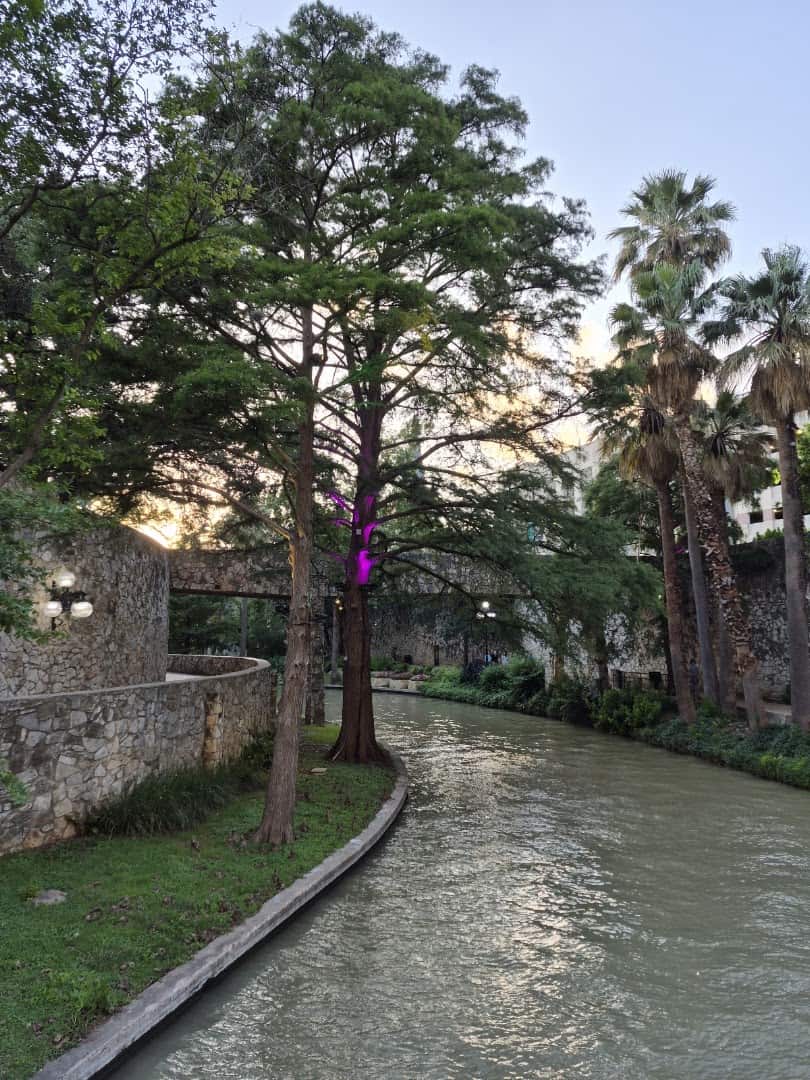
The whole Museum Reach works this way. It strings together food, art, and this little hand-carved cave, all far enough from the tourist crush that the northern walk feels like a local secret.
Wear comfortable shoes and watch your step on the uneven stone, especially near the water. The surfaces are meant to look like a wild cave, which means they are not billiard-table flat, and that is exactly how you want them.
It stays wonderfully peaceful, too. One visitor said they hoped “more visitors will venture this way and see the natural and peaceful aspects of the Riverwalk,” and that quiet is exactly what you get on this northern stretch.
How to Get There
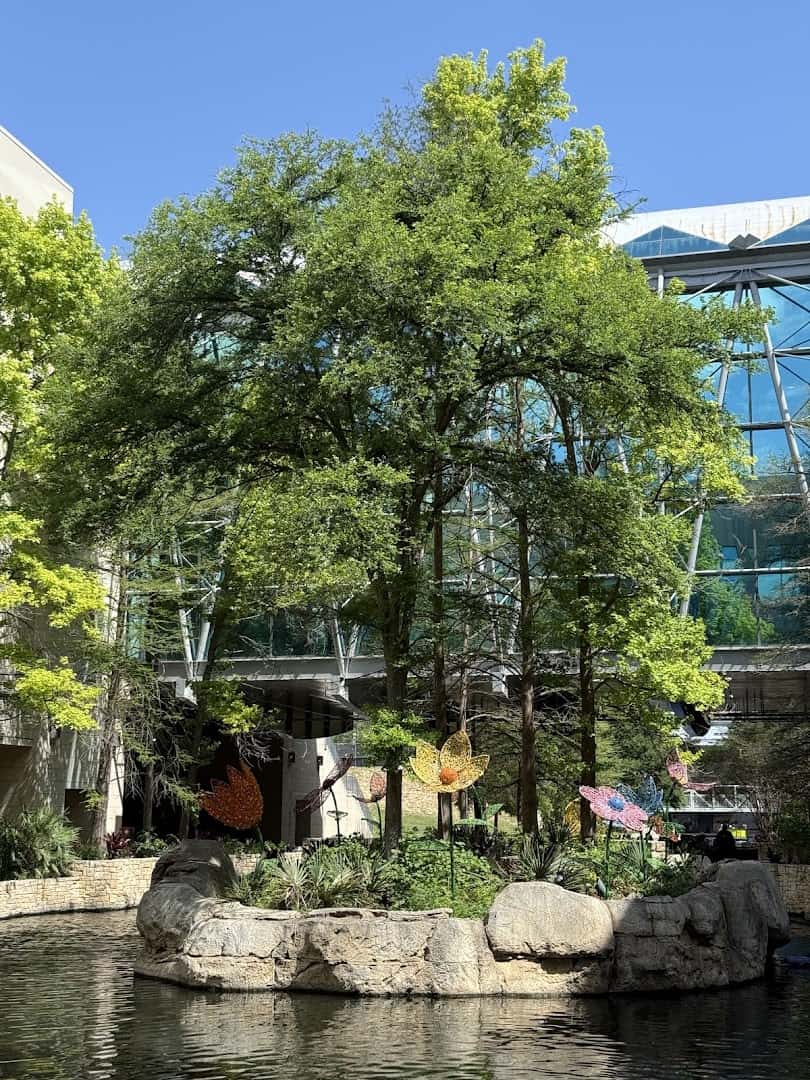
The Grotto sits on the Museum Reach of the River Walk, between the Camden and Newell Street bridges, an easy stroll south from the Pearl or north from downtown along the water.
Where: The Grotto, 1200 Camden St, San Antonio, TX 78215. Look for the jaguar-head entrance where Camden Street meets Newell Avenue, just under the Highway 281 and I-35 interchange.
Driving in is simple. There is parking along Camden Street beneath the interstate, only steps from the entrance, and several footbridges let you explore both banks once you are down at river level.
Go Find the Grotto
The River Walk is one of the most visited spots in Texas, and yet the vast majority of people never make it this far north to the cave with the faces in the walls. That is exactly why you should.
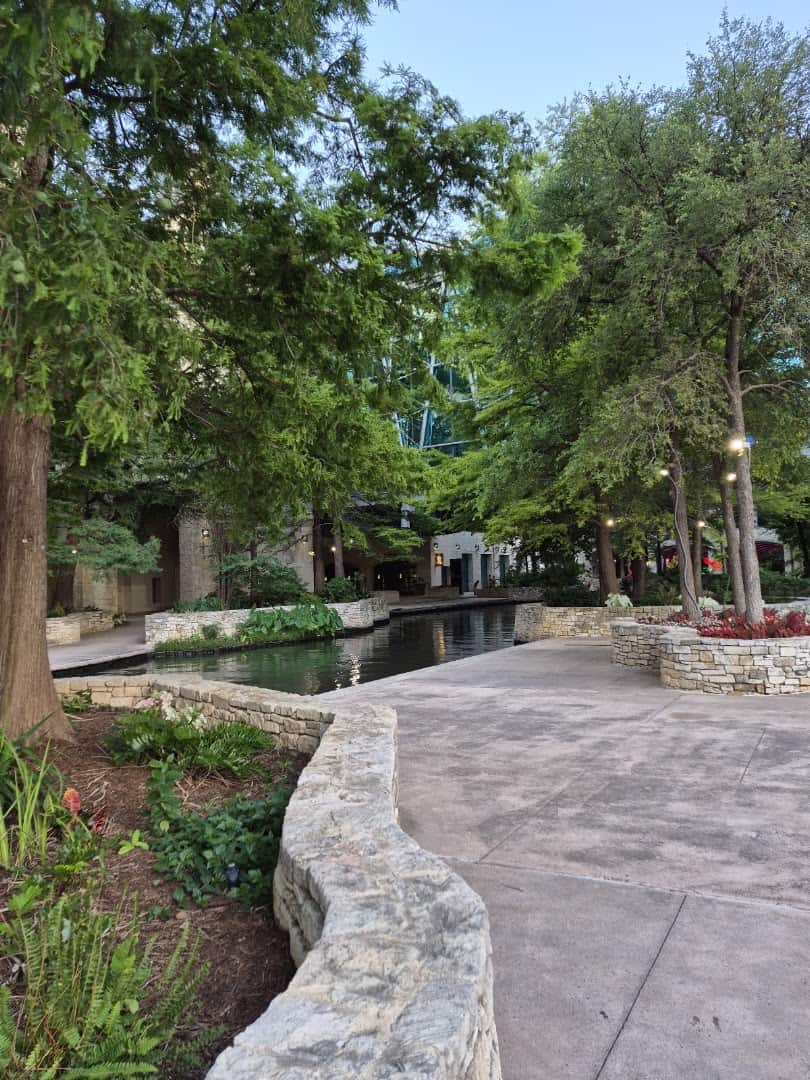
So next time you are in San Antonio, point yourself toward the Pearl, follow the water past the bridges, and go meet the jaguar. Slow down, count the faces, run your hand along a log-bench that is secretly stone, and enjoy having a fairy tale mostly to yourself.
Featured image: Amalia Villanueva via The Grotto

Stella Raines
Editor-in-Chief
Stella brings over a decade of storytelling experience to TX Headlines. With roots in West Texas and a love for road trips, she leads the editorial team with an eye for the hidden stories that make Texas unforgettable.
More Stories
This Serene Texas Garden Is Completely Free, Yet It Feels Like a Private Retreat

This Gorgeous Texas Library Hides a Byzantine Chapel Almost No One Knows About
This Cobblestone Texas Village Feels More Like Old Europe Than the Lone Star State

This Quiet Texas Park Hides a Legendary WWII Submarine That Sank a Japanese Carrier
Tags