This Hidden Texas Beach Has Caribbean-Blue Water and Almost No Crowds
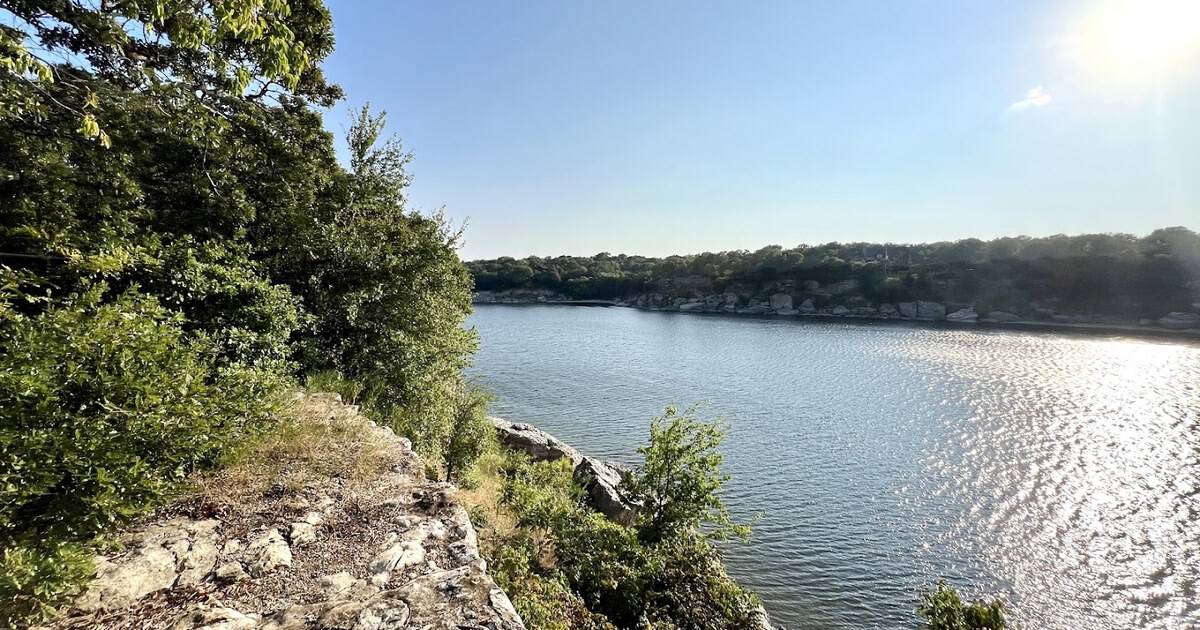
I have a weakness for water that doesn’t look like it belongs where you found it. The kind of blue that makes you stop, tilt your head, and quietly ask whether someone messed with the photo.
I have chased that color across postcards and screensavers for years, always assuming it lived somewhere with a passport stamp attached.
So it feels a little unfair that one of the most convincing versions of it sits in North Texas, about an hour and a half north of Dallas, on the rocky southern shore of a lake most people only think about when they talk fishing.
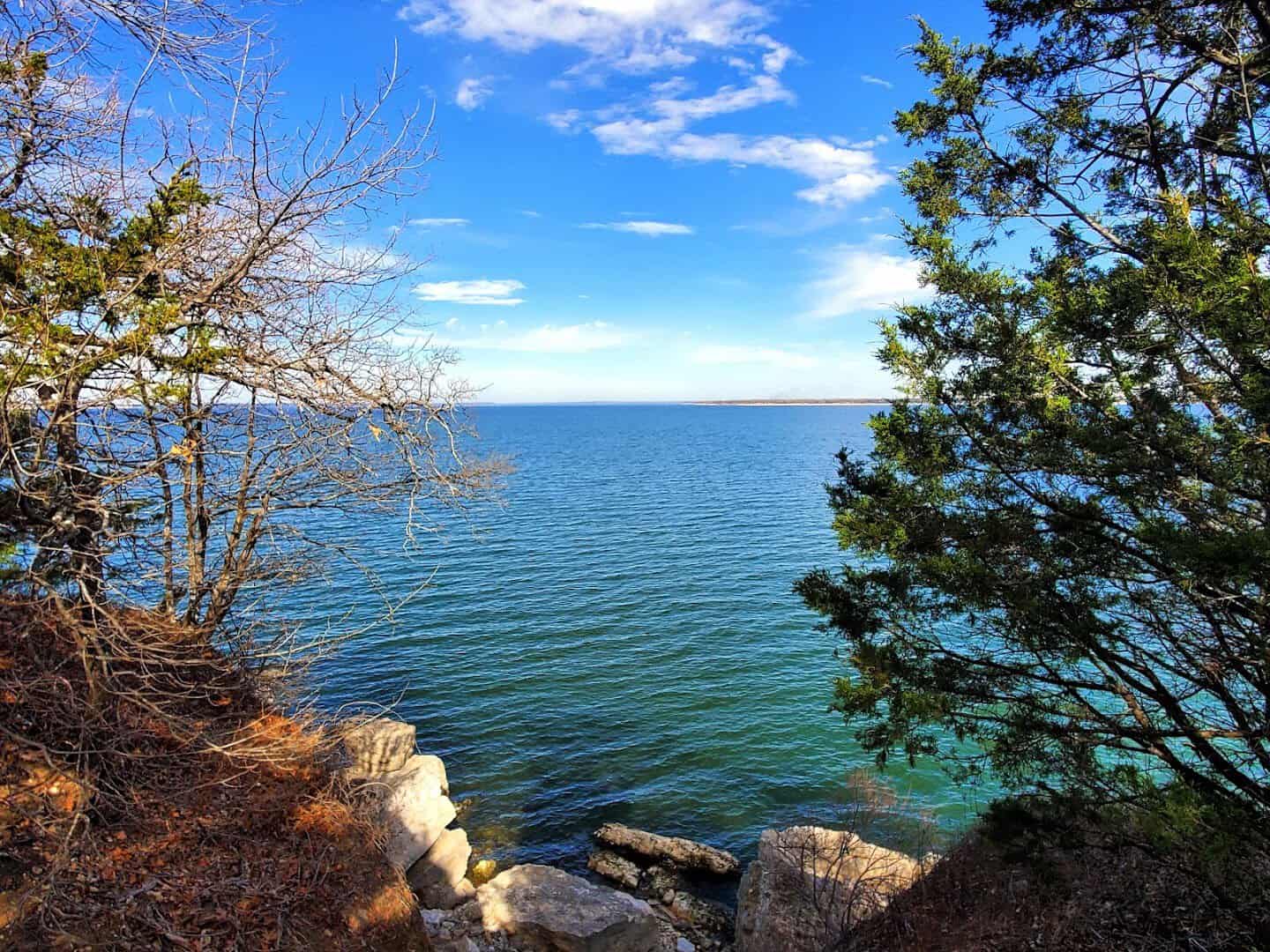
This is Elm Point beach, tucked inside Eisenhower State Park on the edge of Lake Texoma. On a clear afternoon its water turns that gemstone blue you only expect on a plane ticket.
Below, I will walk through what makes this little beach worth the drive, why the crowds stay thin, and how to build a day or a weekend around it.
The Water That Fools Everyone
The color is the whole reason people do a double take. On a bright day in late spring or early summer, the shallows off Elm Point go a vivid blue-green that genuinely reads as tropical.
People swap photos of it and get the same reaction every time: a surprised laugh, then a suspicious squint, then “wait, that’s really Texas?” More than one visitor has been accused of passing off a Gulf of Mexico snapshot as North Texas.
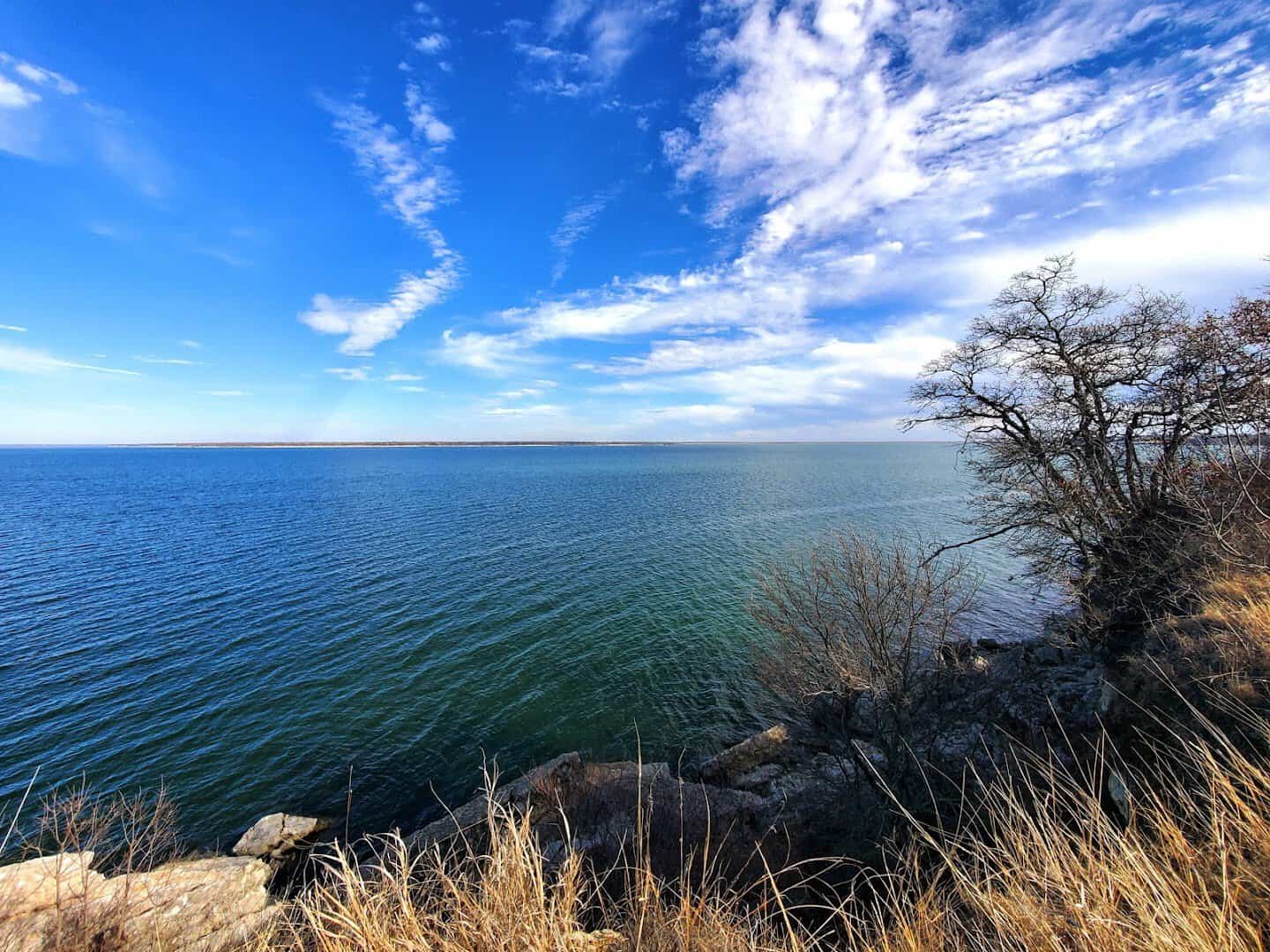
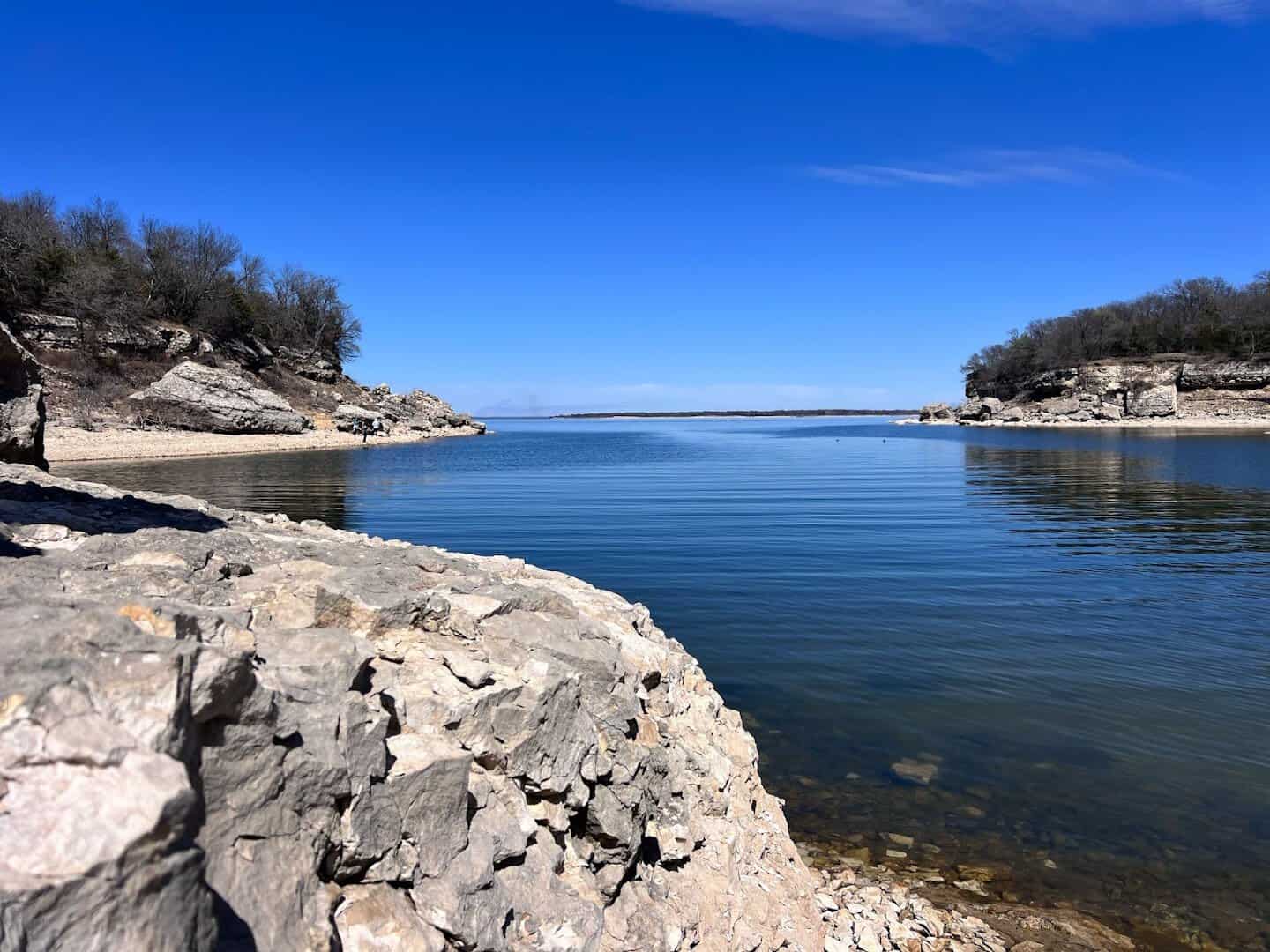
The magic is partly light and partly geology. Lake Texoma sits in a basin of pale limestone, and when the sun hits clear, calm water over that light bottom, the whole cove lights up like a swimming pool someone forgot to build walls around.
It is not blue every single day. After a big rain the Red River pushes in sediment and the water goes browner, the way any lake does. But hit it on a still, sunny afternoon and you get the version that ends up on everyone’s camera roll.
That inconsistency is honestly part of the charm. A beach that looks tropical only when the weather cooperates is a beach that rewards the people who pay attention, and it keeps the color feeling like a small gift rather than a guarantee.
A Beach You Have to Earn
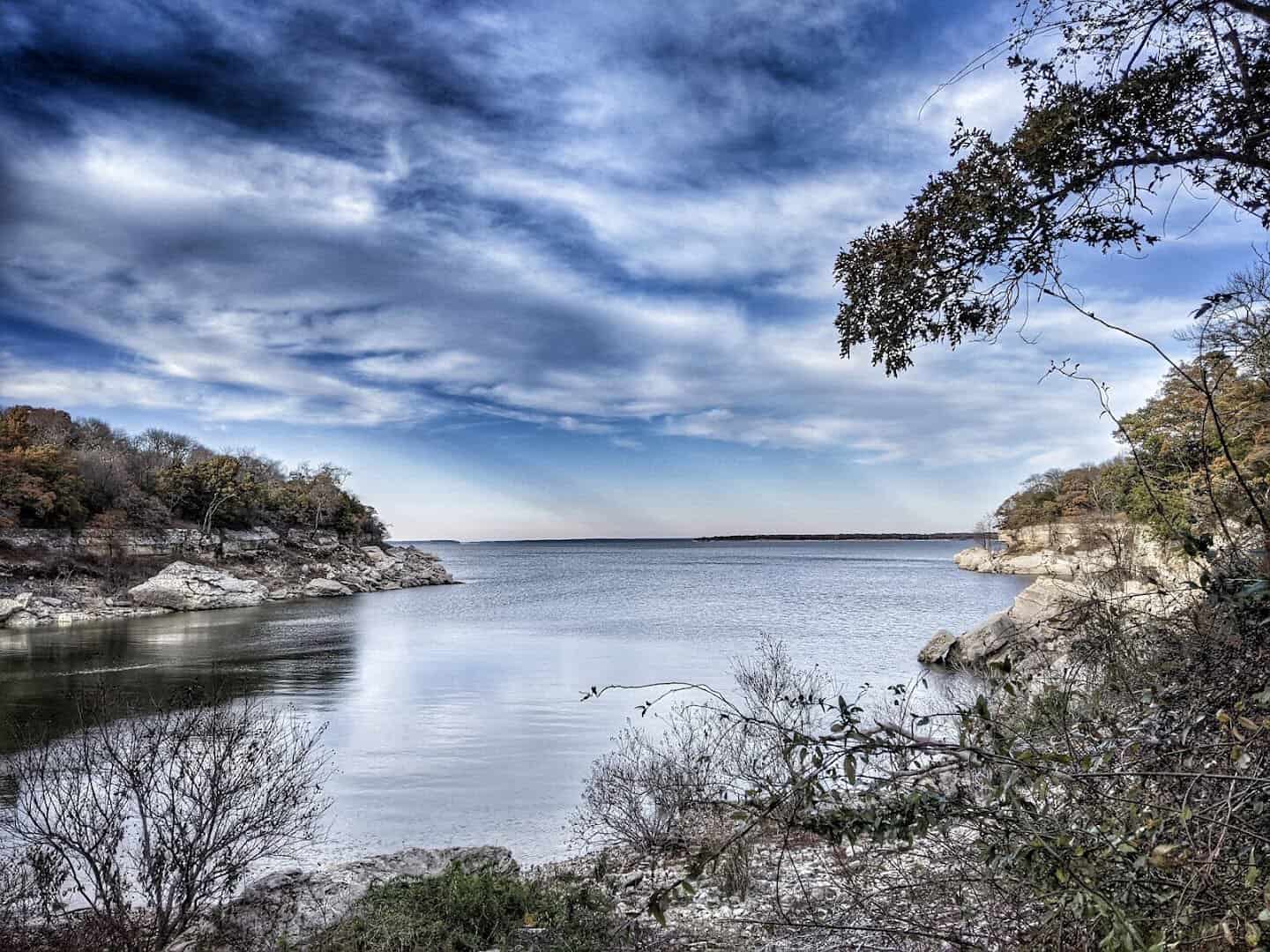
Here is the other reason Elm Point stays quiet: it makes you work for it, just a little. Most of Eisenhower State Park sits high above the water, on limestone bluffs that drop straight down to the lake. That is gorgeous to look at and useless for wading.
The swimming happens down at a sandy cove, and reaching the best stretch means a short walk and a set of stairs down from the bluff. Nothing brutal. But it is just enough friction to thin out the casual crowd that wants to park ten feet from the sand.
What you get in return is space. On a weekday morning you can often find a generous slice of shoreline mostly to yourself, which is a small miracle for a swimming beach this close to a major city.
The cove itself is the soft part of an otherwise rugged shoreline. Around the edges you will find rocks to scramble on, a little cave to poke into, and fossils tucked into the limestone if you look closely. It is a beach with a sense of adventure baked in.
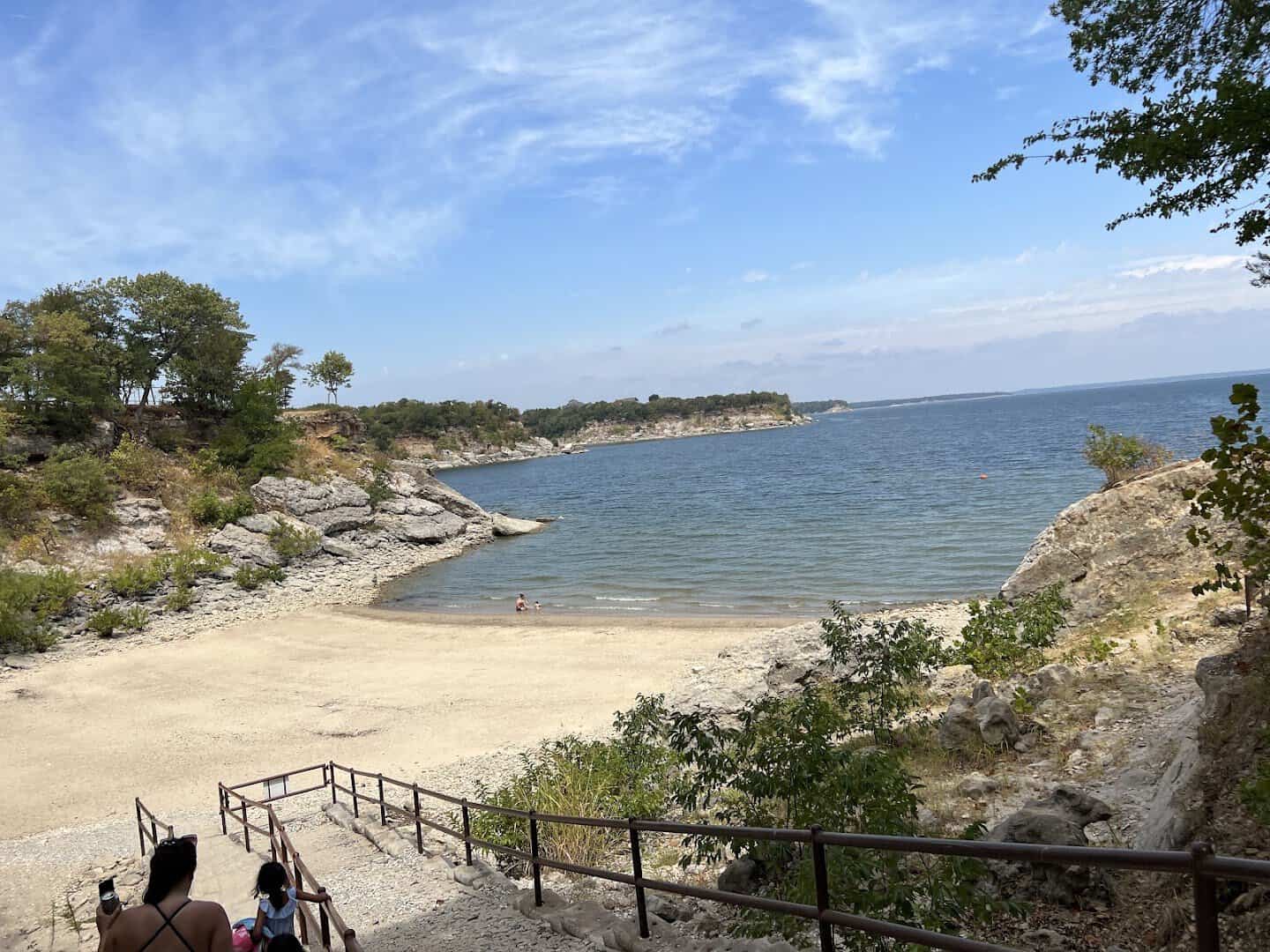
That mix of soft sand and hard rock is unusual for a Texas swimming spot. You are not just parking on flat sand and staring at flat water. You are picking your way down to a cove framed by cliffs, which makes the reveal at the bottom hit harder.
More Than a Swim
You could treat Elm Point as a pure swimming stop and go home happy. But the park around it is built for a full day, and the water is only the opening act.
Kayaks and canoes are the natural next move. Gliding along the base of those limestone cliffs, with the blue water underneath you and osprey overhead, is the closest thing North Texas offers to a sea-cave paddle. You can bring your own or rent on site.
Then there is the fishing, the reason a lot of people knew Lake Texoma long before they knew its color. This is the “Striper Capital of the World,” one of the few lakes in the country where striped bass reproduce on their own instead of being stocked.
The park makes it easy to get a line in. There are two fishing piers, one of them lighted for evening trips, plus a boat ramp and a fish cleaning station. A genuine Texas perk: you do not need a license to fish from shore inside a state park.
Prefer to stay dry? More than four miles of trails run along the high bluffs, roughly split between easy beginner loops and rockier intermediate stretches with real climbs. They are open to hikers and mountain bikers, and there is a separate off-road vehicle trail too.
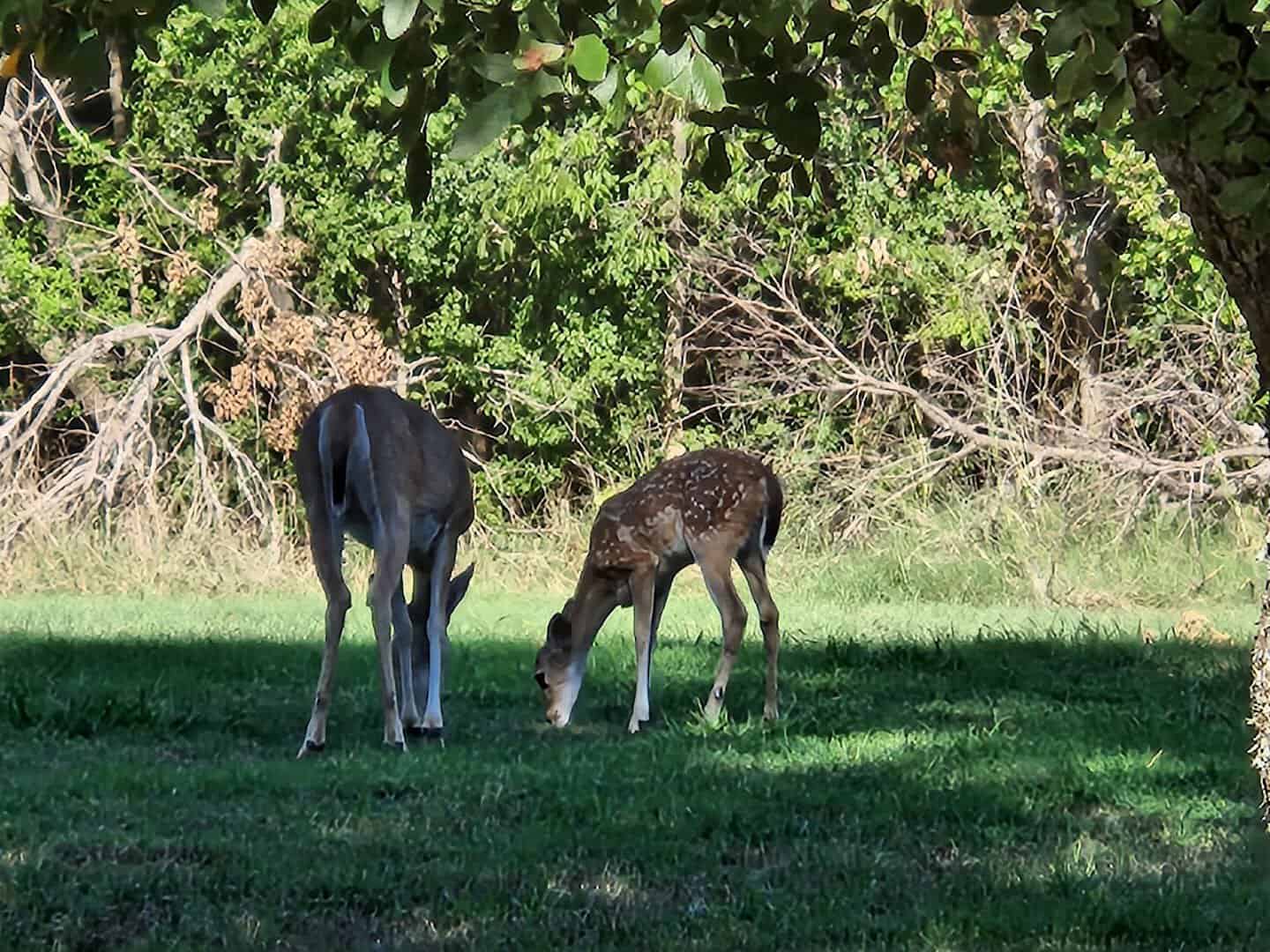
Bring your eyes up now and then, too. Herons stalk the shallows, osprey work the water, and bald eagles turn up over the lake in the cooler months. For a park you can reach on a lunch break from Dallas, the wildlife punches well above its weight.
A Quiet Corner of a Famous Lake
Part of what makes Elm Point feel like a secret is that it hides on a lake plenty of people already know. Lake Texoma is one of the largest reservoirs in the country, and on a summer weekend its open water hums with powerboats, sailboats, and water skiers.
The lake was born when the Red River from the west and the Washita River from the north were dammed into one sprawling body of water on the state line. The result is deep channels and long, folded shoreline, exactly the kind of geography that hides quiet coves.
Eisenhower State Park claims one of those quiet corners. While the marinas and busier beaches get the boat traffic, the park’s rocky, bluff-lined stretch stays comparatively hushed, and Elm Point sits at the calm end of it.
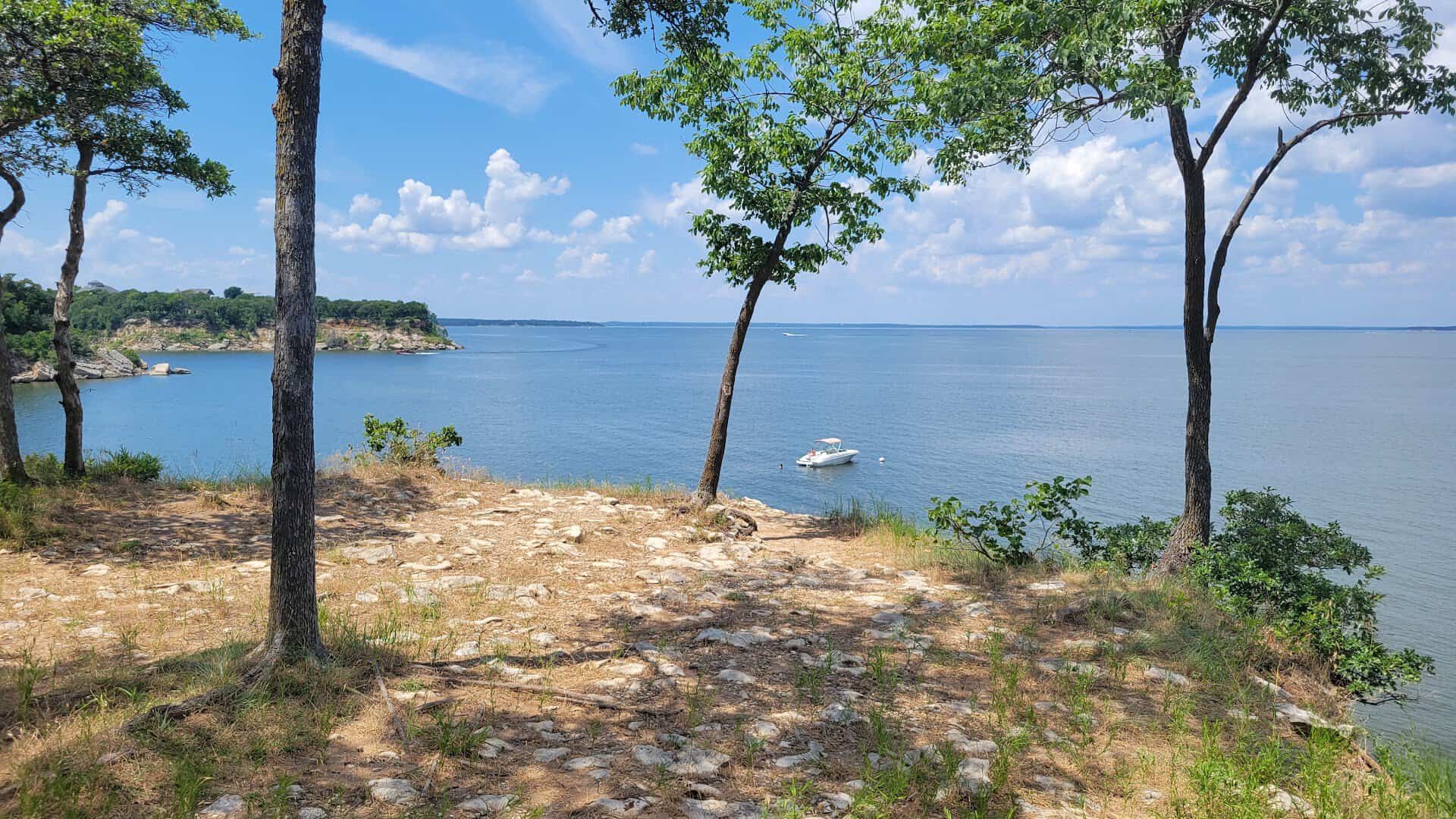
So you get the best of both: a lake big enough to have earned a real reputation, and a pocket of it that still feels like your own discovery. That contrast is the whole appeal.
The Park Named for a President
The name is not decoration. Denison, the town just down the road, is the birthplace of Dwight D. Eisenhower, the World War II commander who became the 34th president of the United States.
He was born there on October 14, 1890, in a modest frame house near the railroad tracks. That house is now a state historic site in Denison, so you can bookend a beach day with a stop at a president’s birthplace. Not a bad combination for one small Texas town.
Texas decided to honor that connection early. The state legislature voted back in 1947 to create a park in his name on the shore of the brand-new Lake Texoma, which had been formed by damming the Red River.
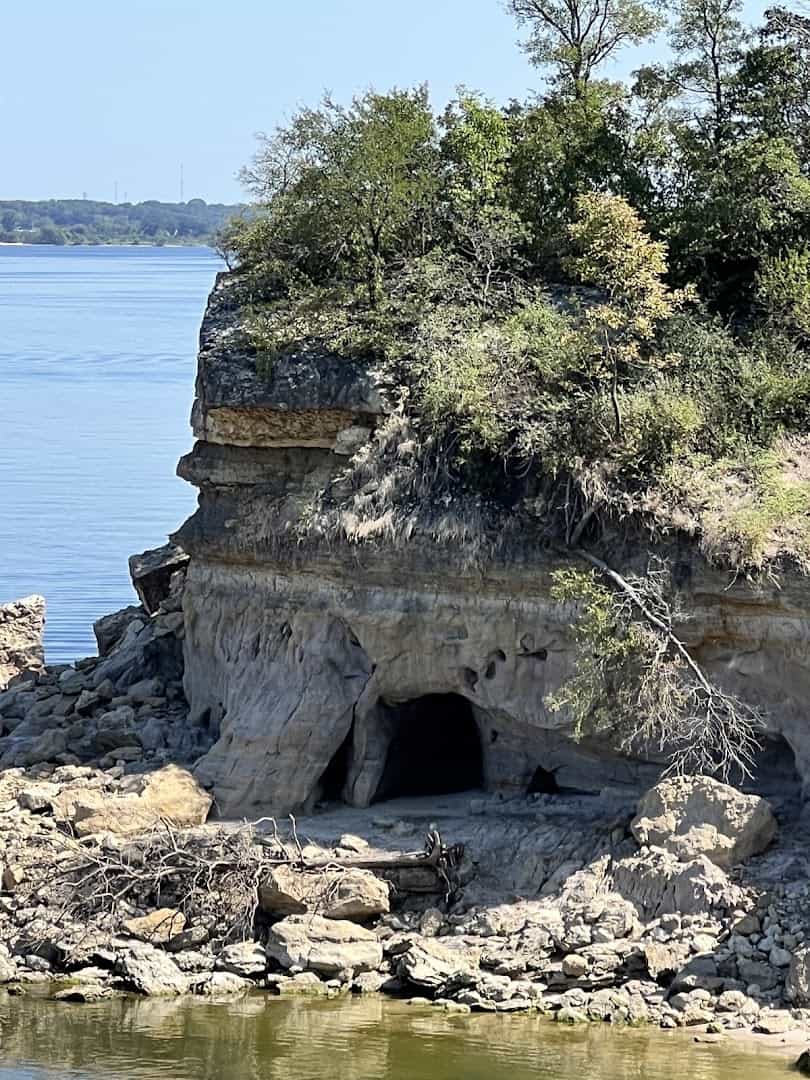
Things moved at government speed from there. It was not until 1954, with Eisenhower two years into his presidency, that the state leased the site from the U.S. Army Corps of Engineers and started building. The park finally opened to the public in 1958.
Today it covers a little over 423 acres of bluff, forest, and shoreline. That is not enormous by Texas standards, but the land does a lot with what it has, packing cliffs, coves, trails, and campsites into a compact, walkable stretch.
Did you know? Those striped bass Texoma is famous for were introduced back in 1965, and by 1974 biologists confirmed they were reproducing naturally, which is rare for the species and part of why anglers treat this lake like holy ground.
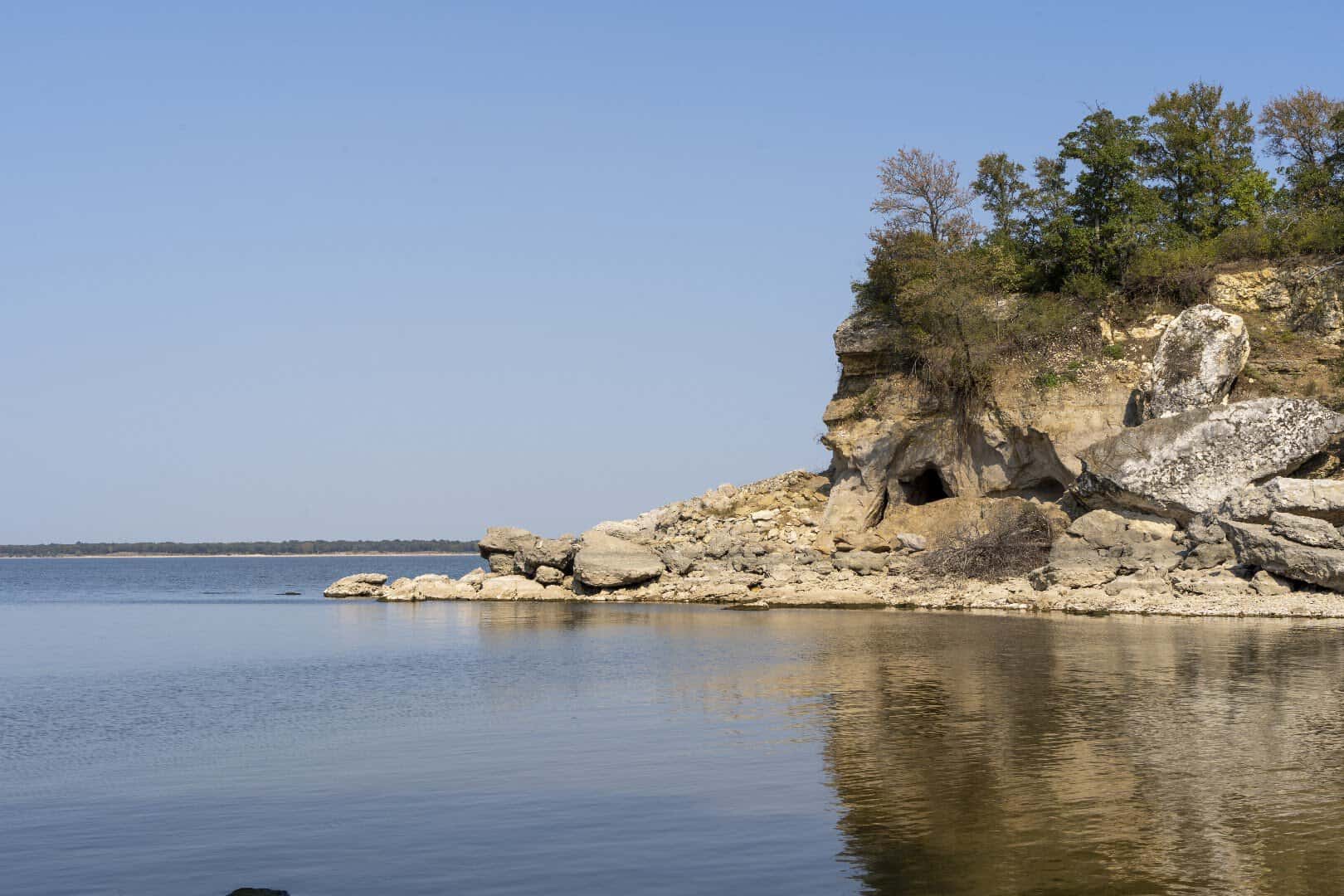
Wake Up on the Bluff
The beach is a great day trip, but the park really rewards the people who stay the night. Camping here means falling asleep to lake air and waking up with the water a short walk away.
There is a spread of options depending on how rugged you want to be. Basic tent sites sit tucked among the trees, pull-through sites handle RVs, and screened shelters give you walls and a roof without the full cabin commitment.
If you would rather not rough it at all, the park keeps a small lodging option called Ike’s Cabin, a nod to Eisenhower’s nickname. Many of the wooded sites are perfect for stringing up a hammock between two oaks and doing absolutely nothing productive.
A word to the wise: the campsites here fill up fast, especially on warm weekends when half of North Texas has the same idea. Reserve ahead rather than rolling in and hoping.
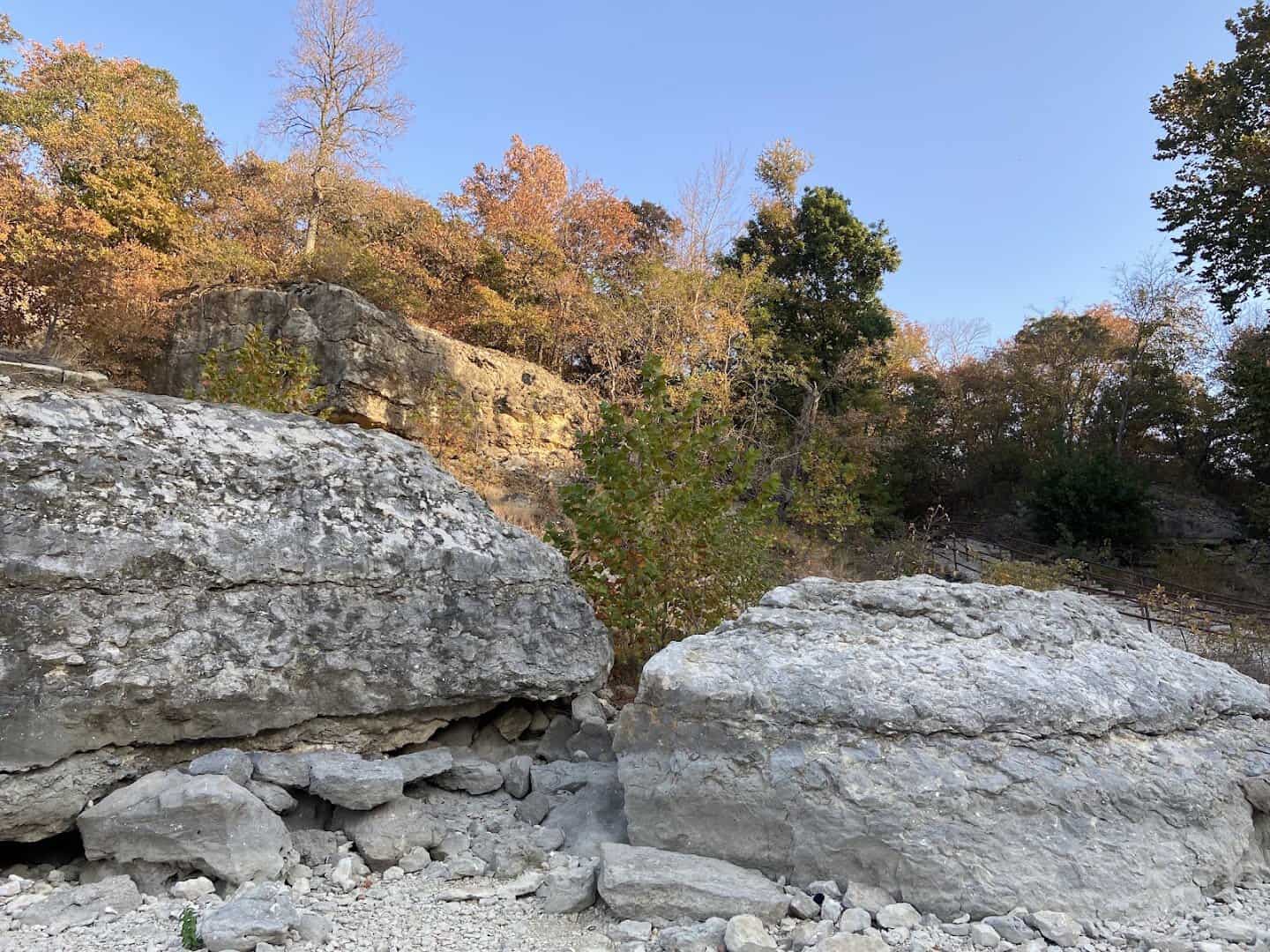
When to Go for the Bluest Water
Timing is everything with this place, because the color you came for is not on tap year-round. Late spring through early fall is the sweet spot for swimming, and the water tends to look its most tropical on clear, calm afternoons before summer storms stir things up.
Crowds follow a simple rule. Weekend afternoons in July are the busy end. Weekday mornings, even in peak season, are where the “barely any crowds” promise actually holds.
Pro tip: pack water shoes. The cove is sandy where you swim, but the shoreline around it is rocky, and the limestone can be sharp on bare feet. Throw in sunscreen and more water than you think you need, because shade is scarce right down on the sand.
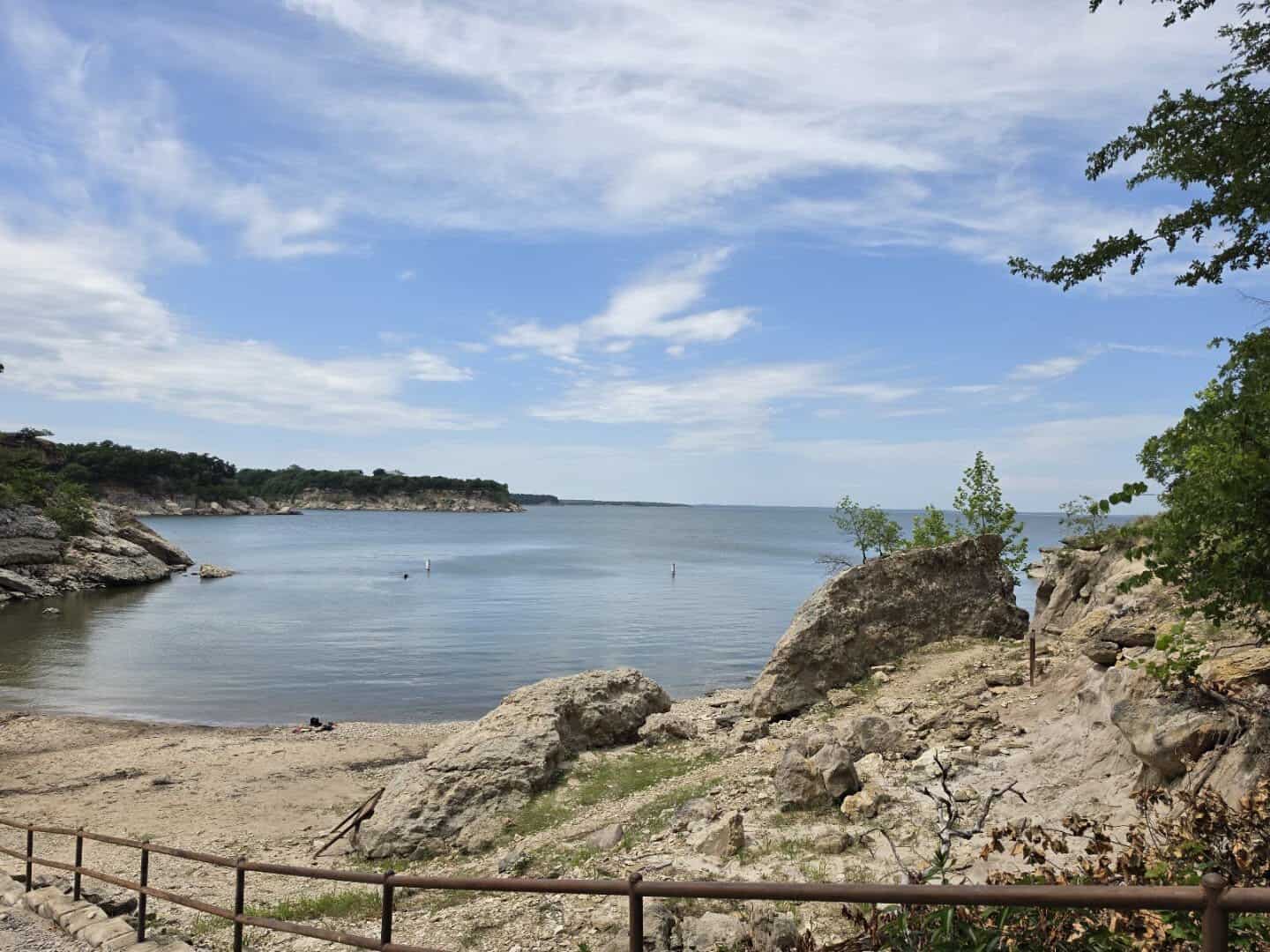
Come in the off-season and the swimming may be off the table, but the trails, the fishing, and the eagle-watching more than fill a crisp, quiet day. This is a park with a reason to visit in every season, not just when the water glows.
How to Get There
The park sits about five miles northwest of Denison, roughly an hour and a half north of Dallas, near the Texas-Oklahoma line. The drive up Highway 75 is straightforward, and the final stretch on the park roads is well signed.
Where: Eisenhower State Park, 50 Park Road 20, Denison, TX 75020. Entry runs about $5 for adults, and kids 12 and under get in free. The park is open daily, and the entrance station keeps regular daytime hours, so plan your arrival accordingly.
Plan the Trip Before the Secret Gets Out
A tropical-looking beach you can reach without a boarding pass is a rare thing, and one that still feels like your own discovery is rarer. Elm Point manages both at once.
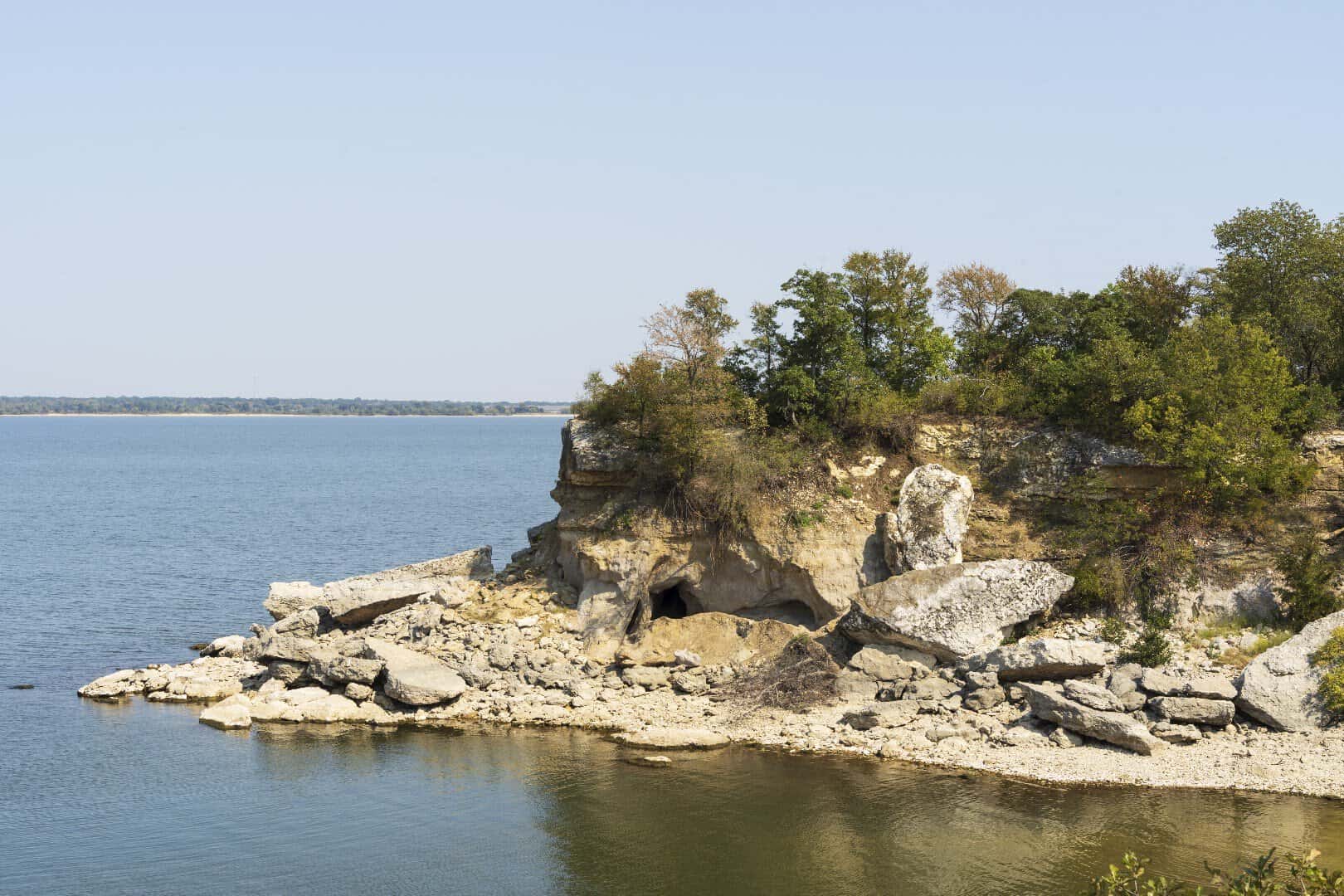
So pick a clear afternoon, grab your water shoes and a cheap kayak, and point the car north. Get there before word fully spreads, wade into water the color of a travel ad, and try to remember you are still in Texas.
Featured image: Janet Bliss via Eisenhower State Park

Stella Raines
Editor-in-Chief
Stella brings over a decade of storytelling experience to TX Headlines. With roots in West Texas and a love for road trips, she leads the editorial team with an eye for the hidden stories that make Texas unforgettable.
More Stories
This Wild Texas Beach Has 58 Miles of Sand and Locals Love How Empty It Stays

This Sprawling Texas Flea Market Hides Over 500 Vendors and Endless Fair Food

This Bewitching Texas Curiosity Shop Is Filled With Oddities That Make Every Shelf a Discovery

This Spotless Texas Resale Store Is Where $16 Completely Upgrades Your Wardrobe
Tags