This Enormous Texas Vintage Warehouse Is Home to 200 Dealers and a Secret Tea Room
My grandmother kept her sewing buttons in an empty coffee can, and on rainy afternoons she let me pour the whole thing out onto her kitchen table. Mother of pearl. Brass. One tiny rhinestone that I was certain had fallen off a movie star’s coat.
I have been chasing that sound ever since. The clatter of small old things looking for somebody new to love them.
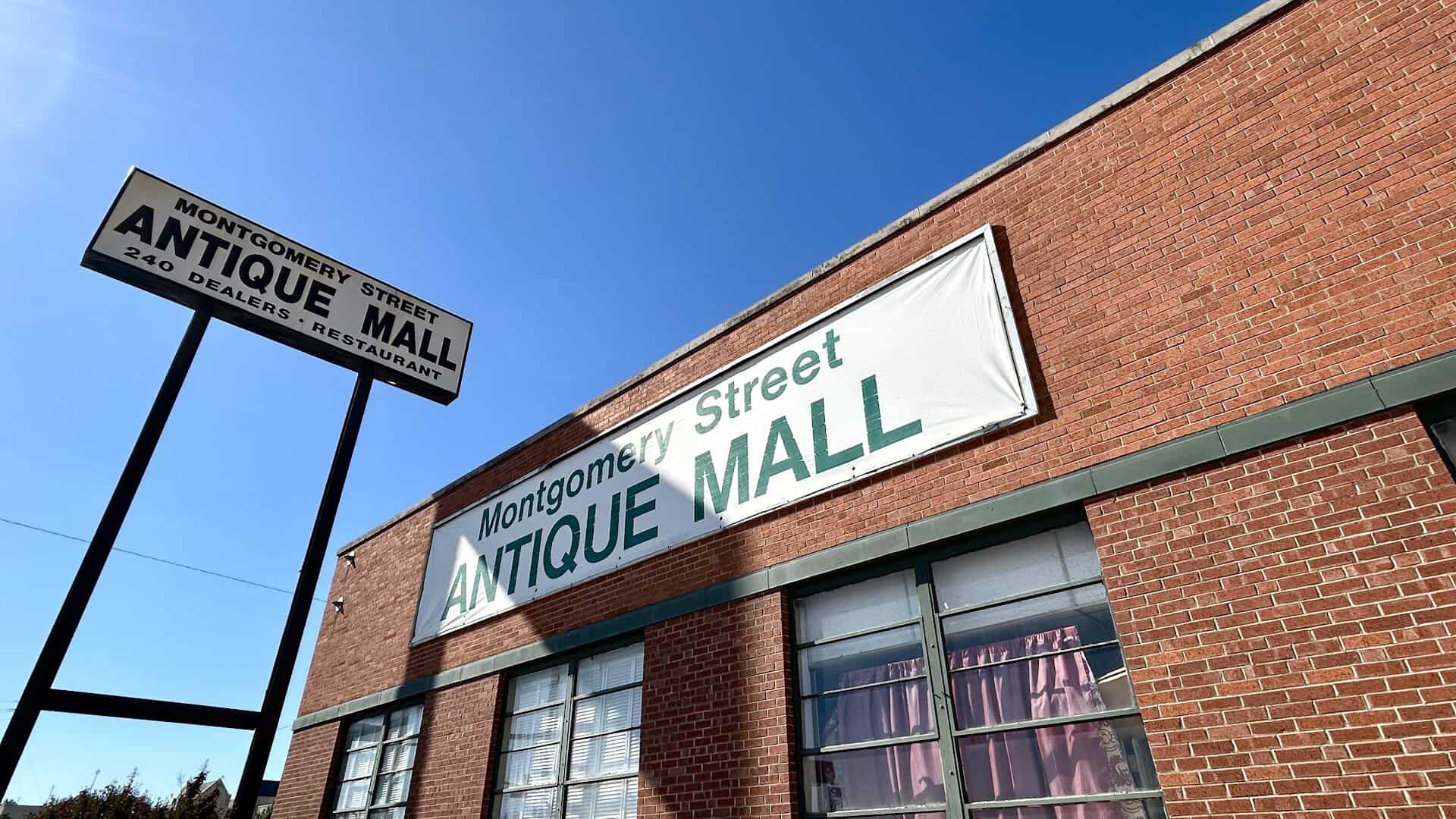
Which is how I lost an entire Saturday inside Montgomery Street Antique Mall in Fort Worth, 61,000 square feet of cedar-scented nostalgia tucked behind a plain warehouse front on the edge of the Cultural District.
Below, discover what waits in those aisles, who has been keeping the doors open since 1994, and why you should clear your whole afternoon before you turn the handle.
Sixty-One Thousand Square Feet, and You Will Still Miss Something
You smell the place before you see much of it. Old paper, furniture polish, and a faint sweetness that I think comes from decades of cedar chests standing open.
It smells like somebody’s attic, multiplied by two hundred.
Then your eyes adjust, and the aisles just keep going.
This is the largest antique mall in Fort Worth, and the number that matters is 200. That is roughly how many independent dealers rent booth space under this one roof, each one buying, pricing and arranging their own little corner.
I walked in at eleven in the morning telling myself I would be out by noon. I was still in there at three, and I had not seen the back third of the building.
That is not me being dramatic. Visitors say the same thing over and over: two hours in, you have covered maybe half. One shopper on Google put it plainly. “This place is HUGE and the prices are solid.”
The floors are concrete and the ceiling is high and industrial. Nothing about the shell of the building is working very hard to charm you, which makes what is inside land harder when you find it.
Two Hundred Booths, Two Hundred Different Tastes
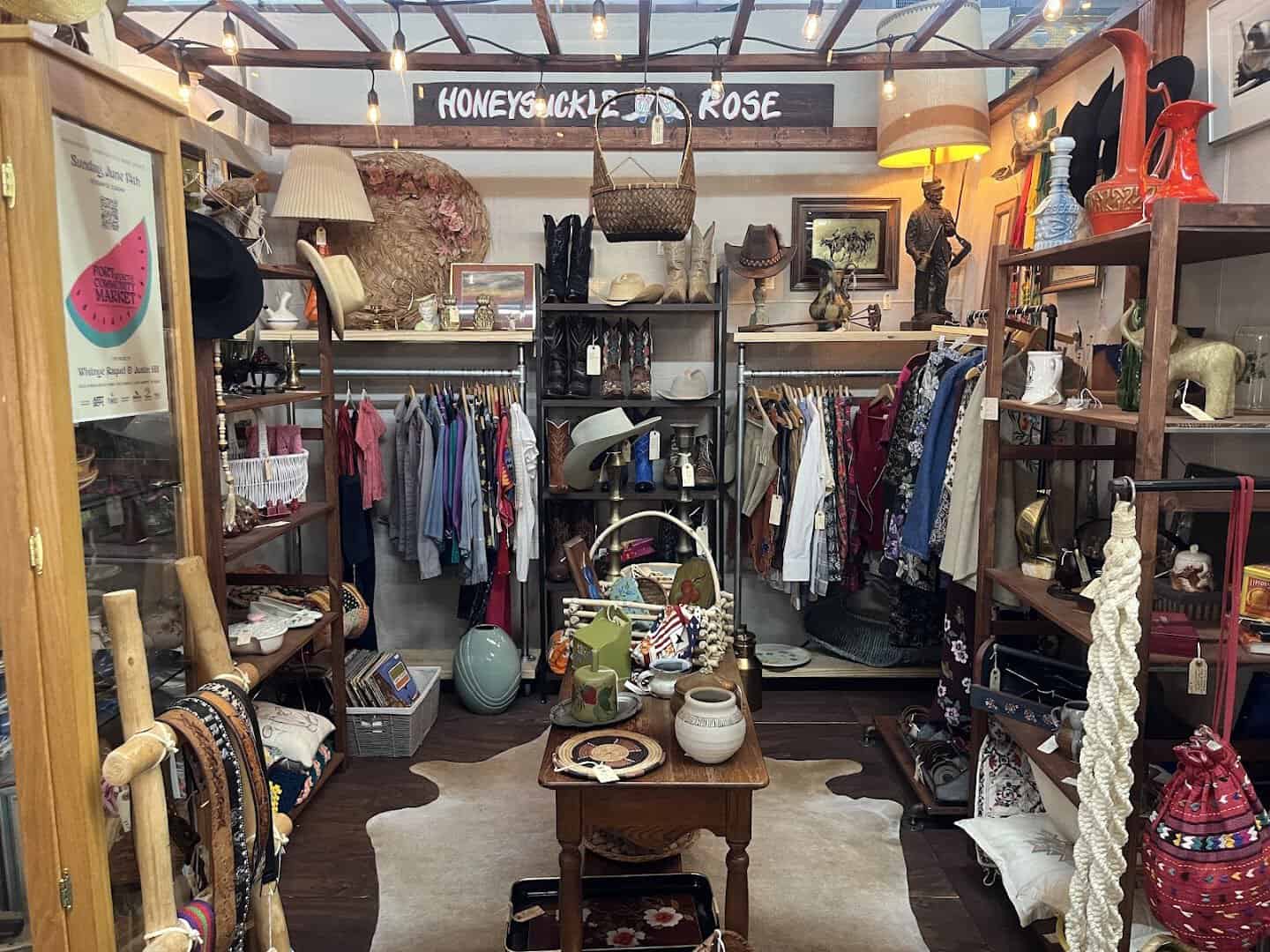
A dealer mall works differently from a single antique shop, and that is why I prefer one. You are not walking through one person’s taste. You are walking through two hundred of them.
One booth is arranged like a 1940s parlor, every surface waxed, price tags handwritten in fountain pen. Turn the corner and the next one is pure 1978, all orange Pyrex and macrame.
Reviewers often describe the booths as small living rooms, and that is exactly right. Many dealers stage them with rugs and lamps and a chair you half want to sit down in.
Some of these vendors have held the same spot for years. You start to recognize their handwriting on the tags, the way you recognize a friend’s.
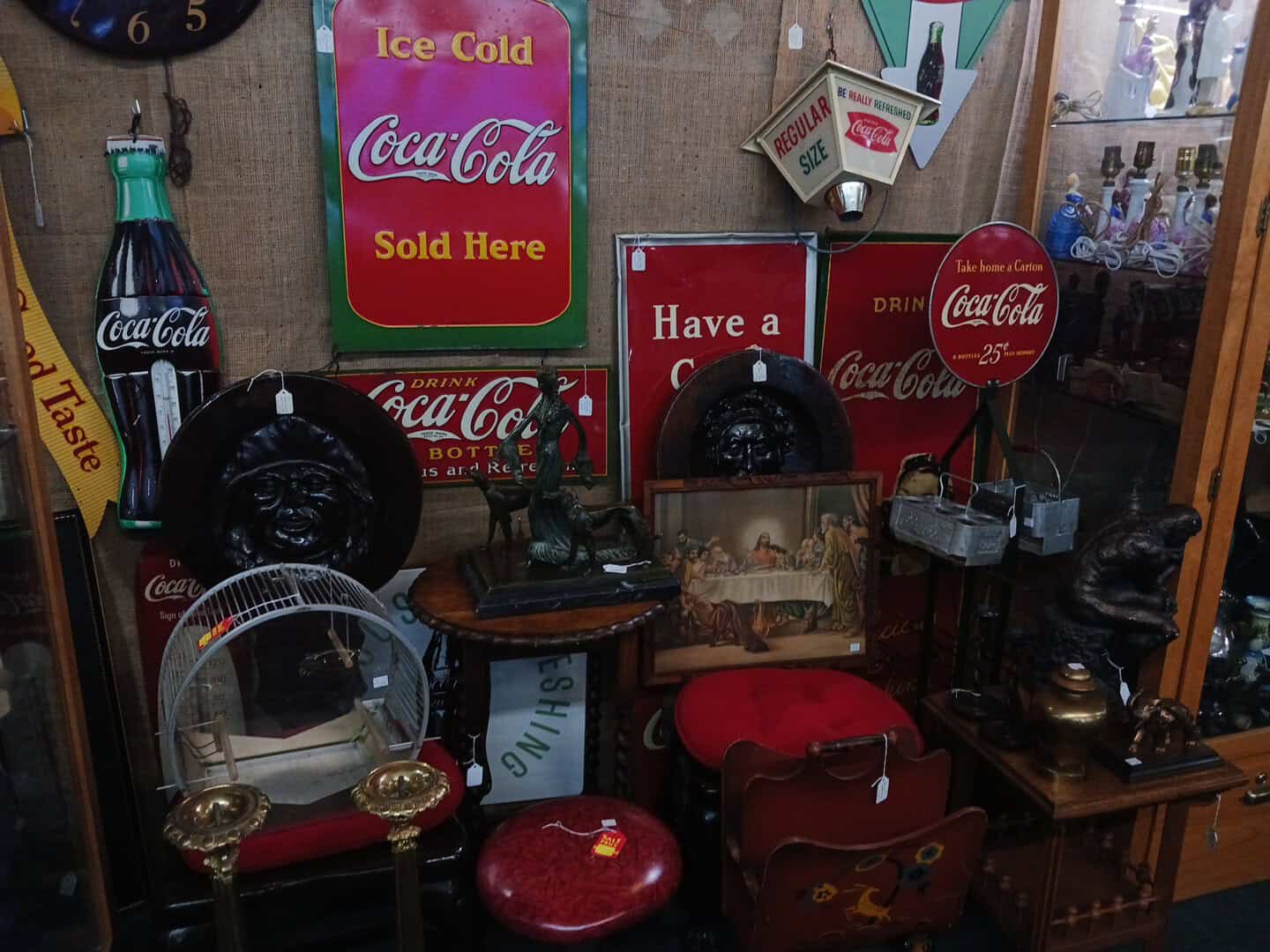
Because every dealer sets their own prices, the range inside one building is enormous. A $5 cake tin can be sitting one aisle over from a serious piece of Victorian walnut.
My personal method is to walk the whole loop once fast, note the three booths that made my heart jump, then go back and work them slowly. It has never once failed me.
Glassware, Vinyl, and the Occasional Piece of Glorious Weirdness
So what actually turns up in these aisles? Very nearly everything.
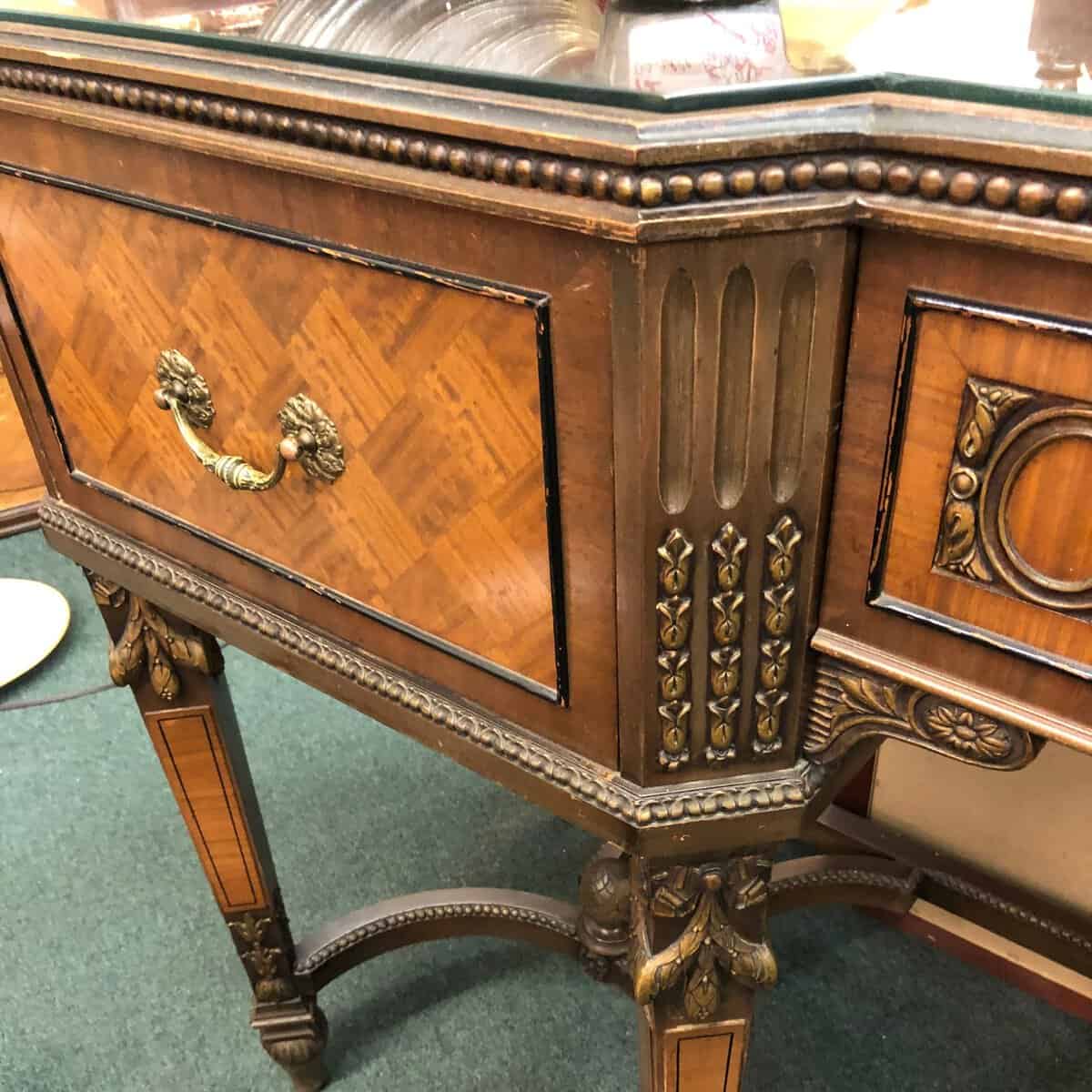
Furniture spans the eras: heavy Victorian sideboards, mid century dressers with those tapered legs everybody wants now, farmhouse tables that have clearly fed a hundred years of Sunday dinners.
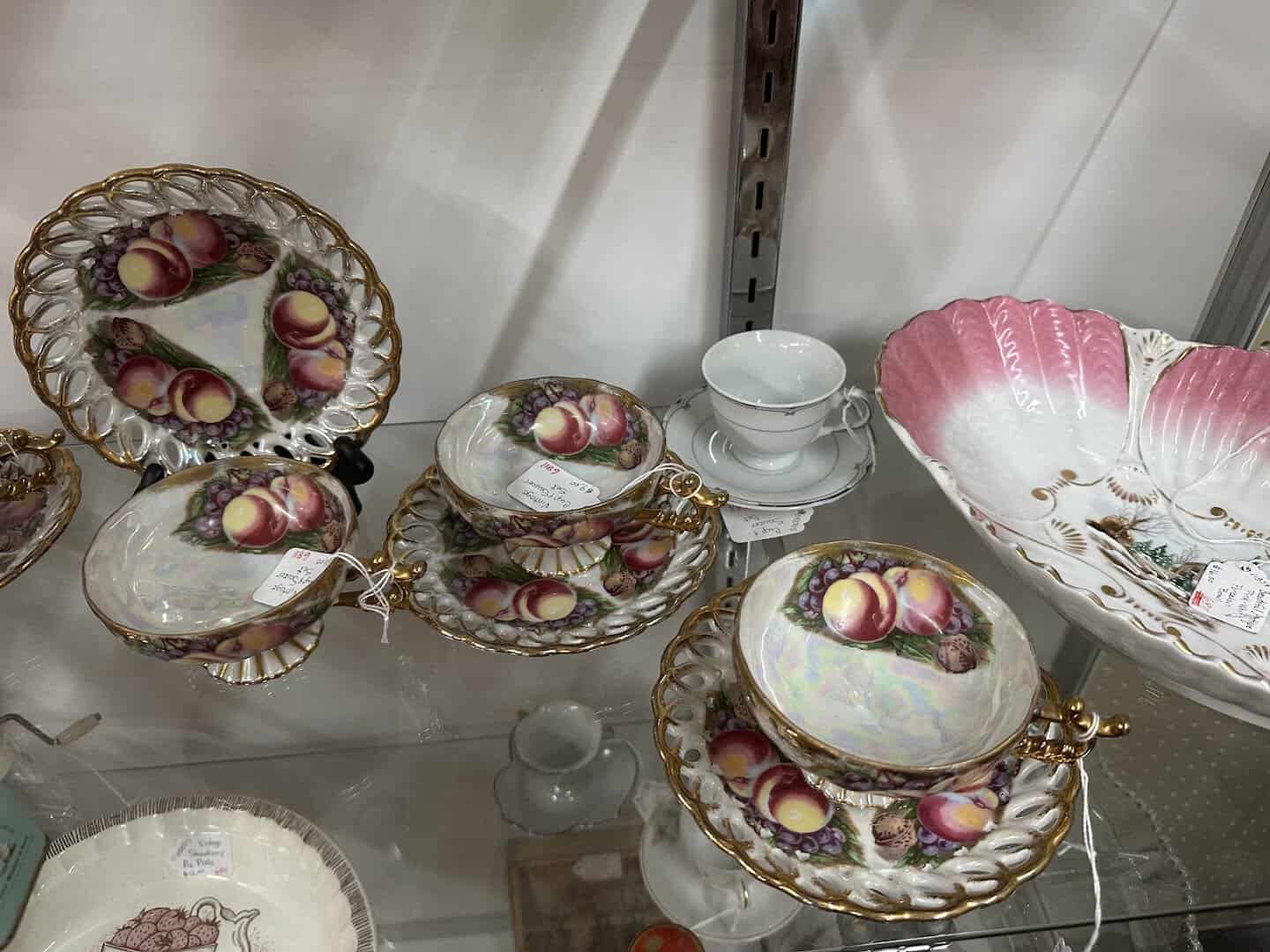
The glass alone could hold you for an hour. Depression era pink and green, cut crystal decanters, milk glass, whole sets of fine china that somebody’s family ate off of for fifty years.
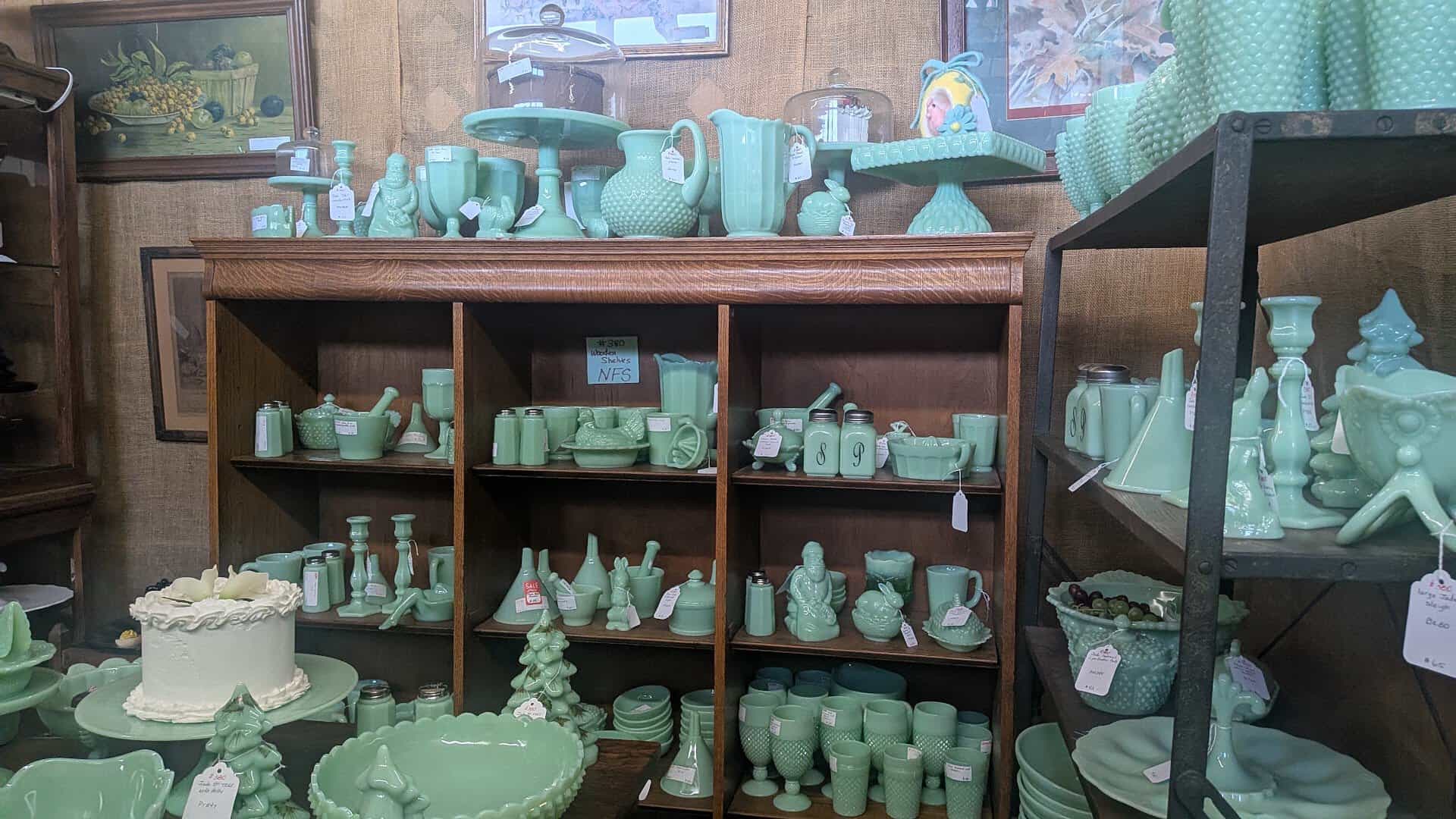
Then the small stuff, which is where I do most of my damage. Costume jewelry. Vintage cameras. Comic books. Cookbooks with somebody’s recipe corrections penciled in the margins.
There is vintage kitchenware in real quantity, the enamel and Pyrex and cast iron that keeps climbing in value. There is military memorabilia, a collecting field the mall’s own videos highlight. There are crates of vinyl to flip through.
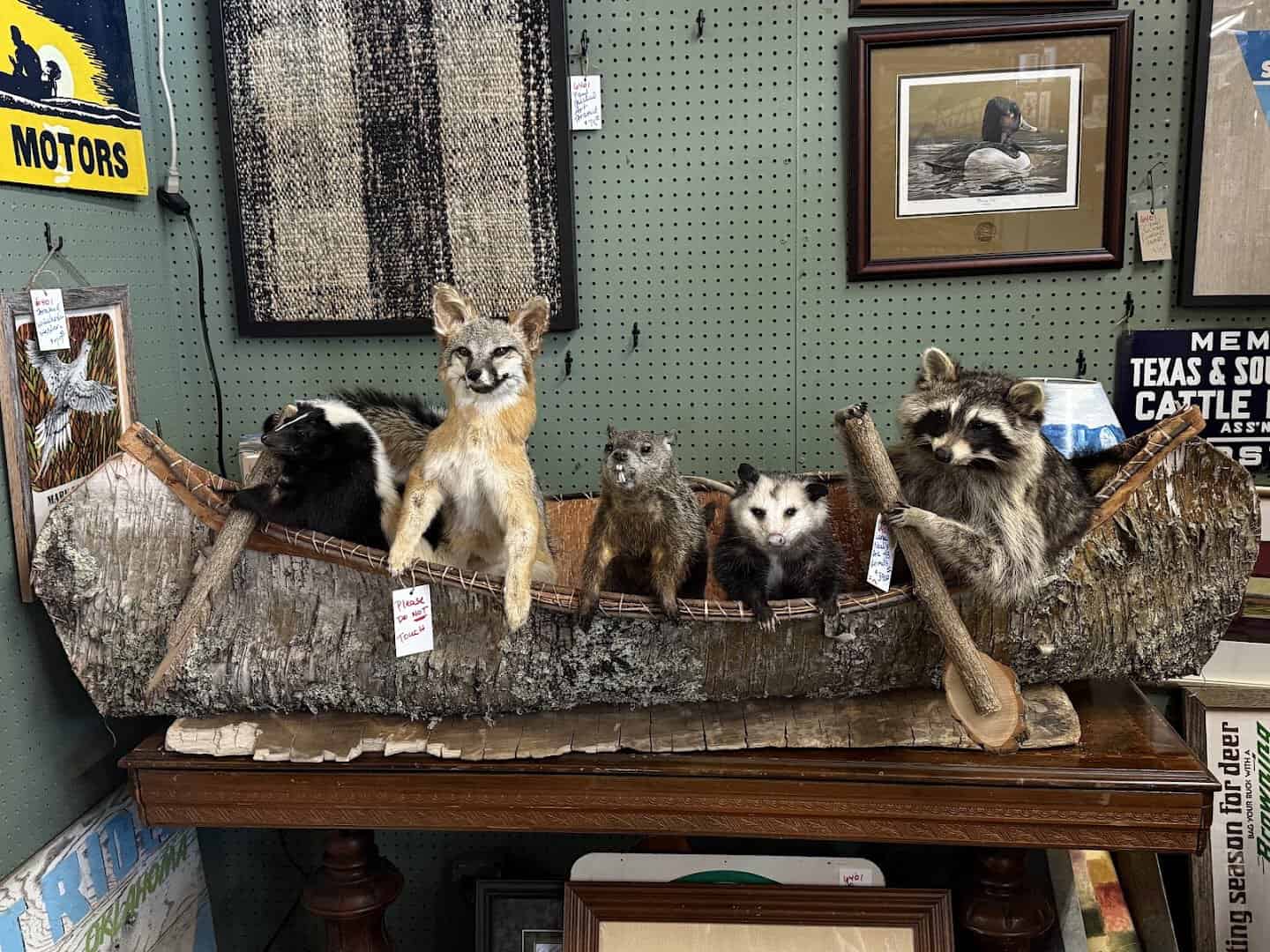
Then there is the strange stuff, and I mean that as a compliment. Taxidermy turns up regularly. One shopper reported finding a stuffed raccoon posed like a pole dancer, which tells you something about the imagination at work in these booths.
Lighting is a whole category on its own. Chandeliers, brass floor lamps, hobnail glass shades, the kind of fixtures that cost a fortune new and turn up here for a fraction.
Vintage clothing has its own following too, along with linens, quilts and the beaded evening bags that somebody’s grandmother carried exactly once.
I did not find the raccoon. I did find a hand painted ceramic rooster that I absolutely did not need, and he lives on my kitchen windowsill now.
Did you know? Handkerchiefs are one of the sleeper collectibles here. Embroidered, monogrammed, tatted around the edges, usually a couple of dollars, and they make the prettiest framed wall grouping you have ever seen.
Bring the Kids, Bring Your Mother, Bring Everybody
Antique malls have a reputation for being hushed places where children are politely not welcome. This one does not feel like that at all.
I watched a dad crouch down with his son in front of a case of pocket watches, explaining what a winding stem does. The boy was maybe seven and completely locked in.
For kids, the trick is to give them a hunt. Find something older than Grandma. Find something you cannot identify. Find the ugliest lamp in the building. Suddenly the whole place is a game.
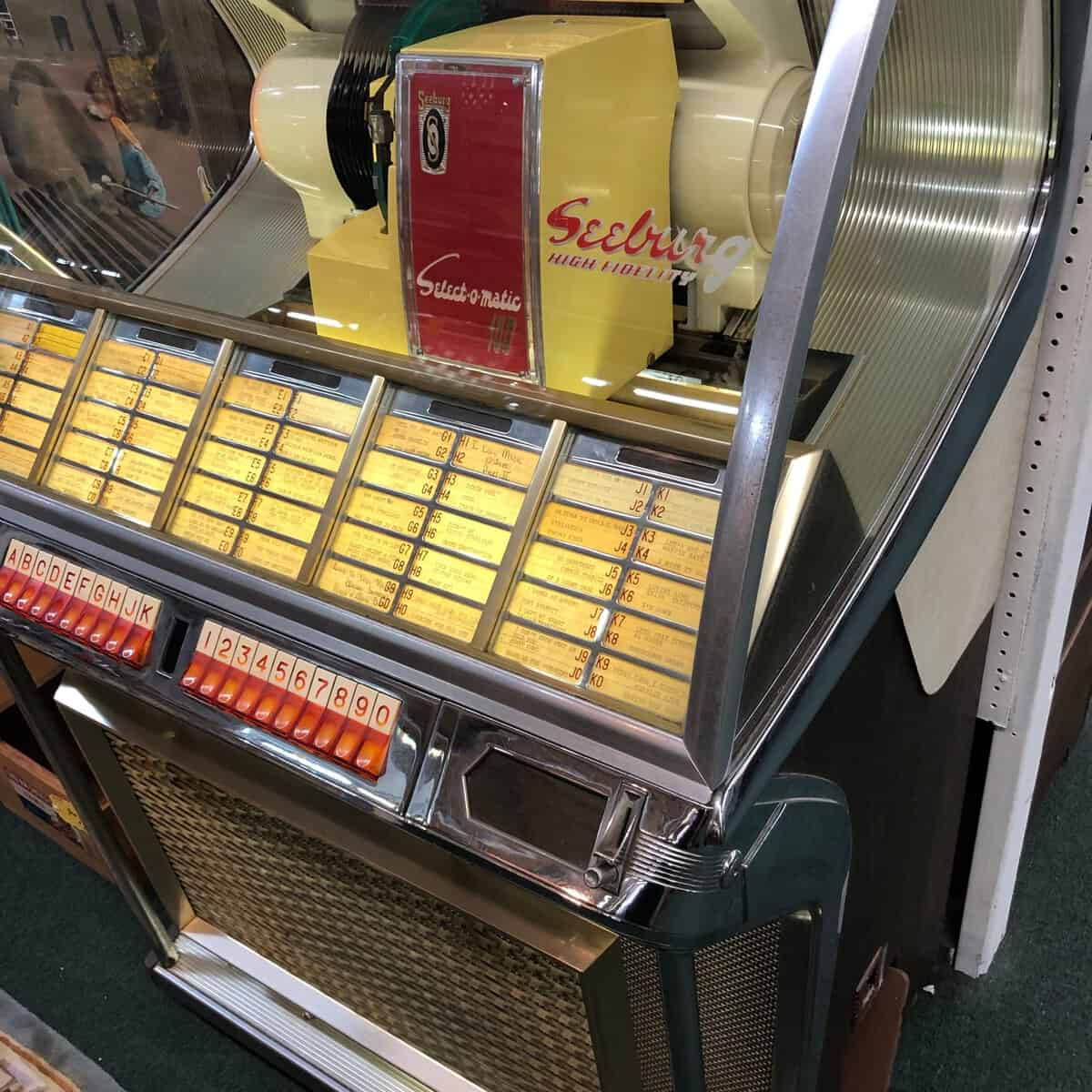
For teenagers it sells itself. Film cameras, band tees, records, Y2K era everything. The stuff their algorithm has been showing them all year is sitting right here in a milk crate.
And for anybody who grew up in Texas, half the fun is recognition. You will turn a corner and see your aunt’s exact Tupperware, or the school lunchbox you carried in fourth grade.
Whether you are a serious collector or you just like touching old things, nobody here is going to rush you along.
Tea and Scones Hiding in the Middle of It All
My favorite thing about this building is that it feeds you.
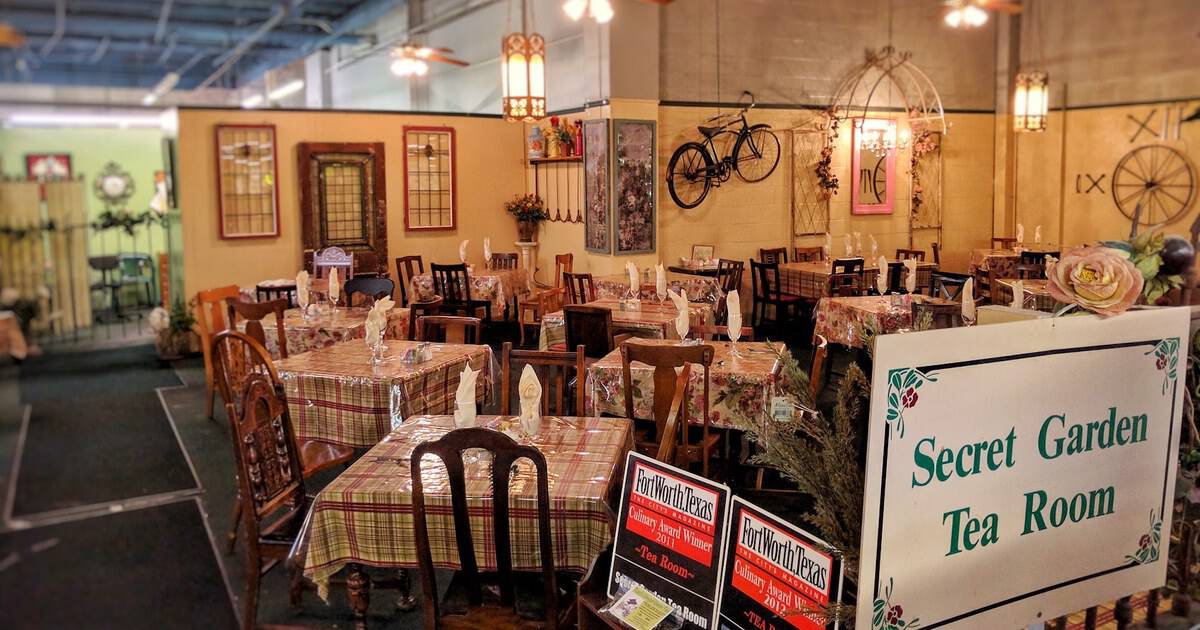
Somewhere in the middle of all that browsing you turn a corner and find a sit down tea room called the Secret Garden, which is a considerably better outcome than a vending machine.
It is one of the reasons a visit here stretches so long. You do not have to leave, lose your parking spot, and talk yourself into coming back.
The kitchen puts out freshly prepared lunch food: soups, salads, sandwiches, quiche, lasagna, and desserts that the regulars around me were clearly there specifically for.
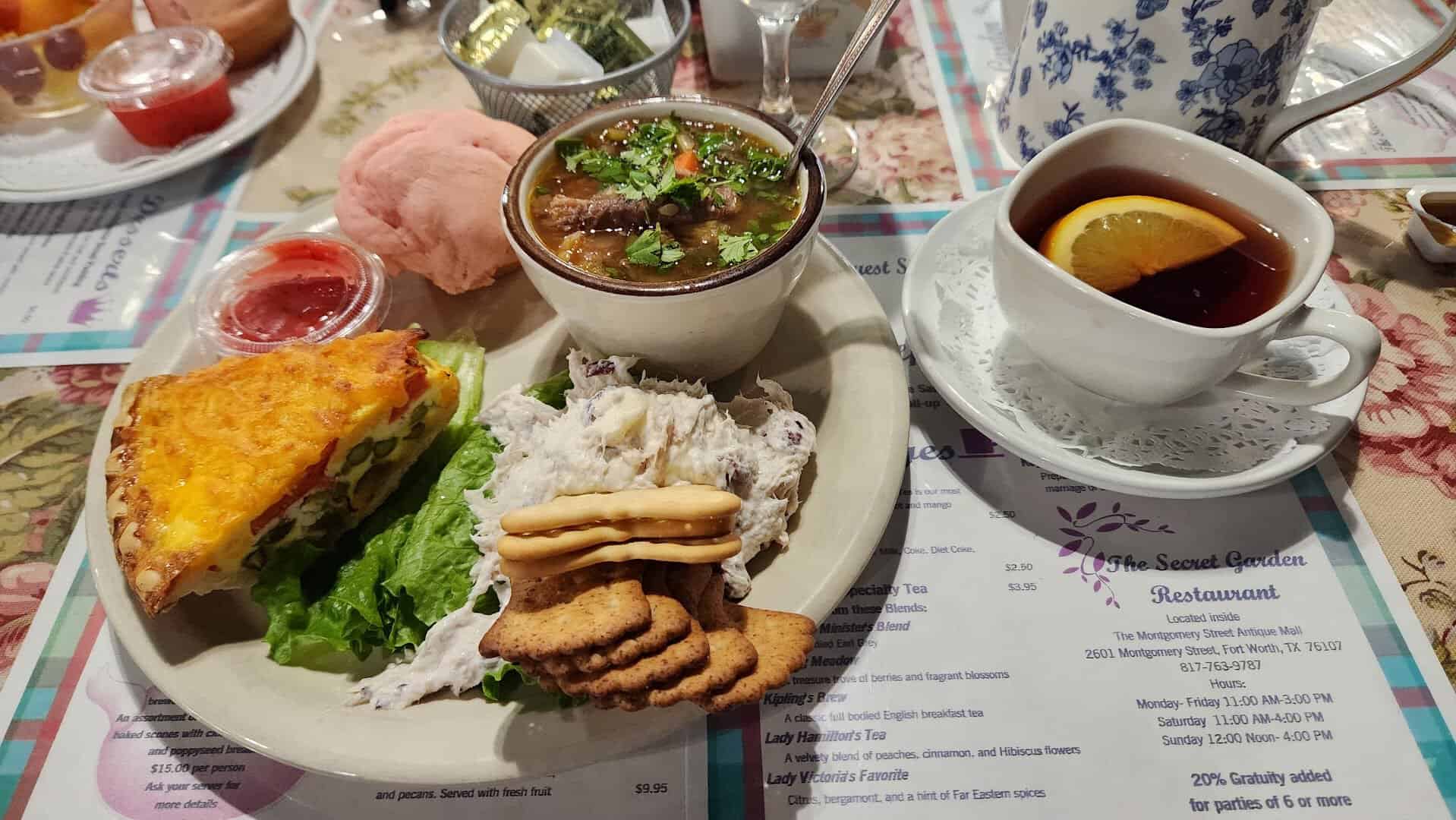
It has the trophies to back it up. Fort Worth, Texas magazine named the Secret Garden a Culinary Award winner in 2011 and again in 2012, and the plaques are still propped up by the hostess sign.
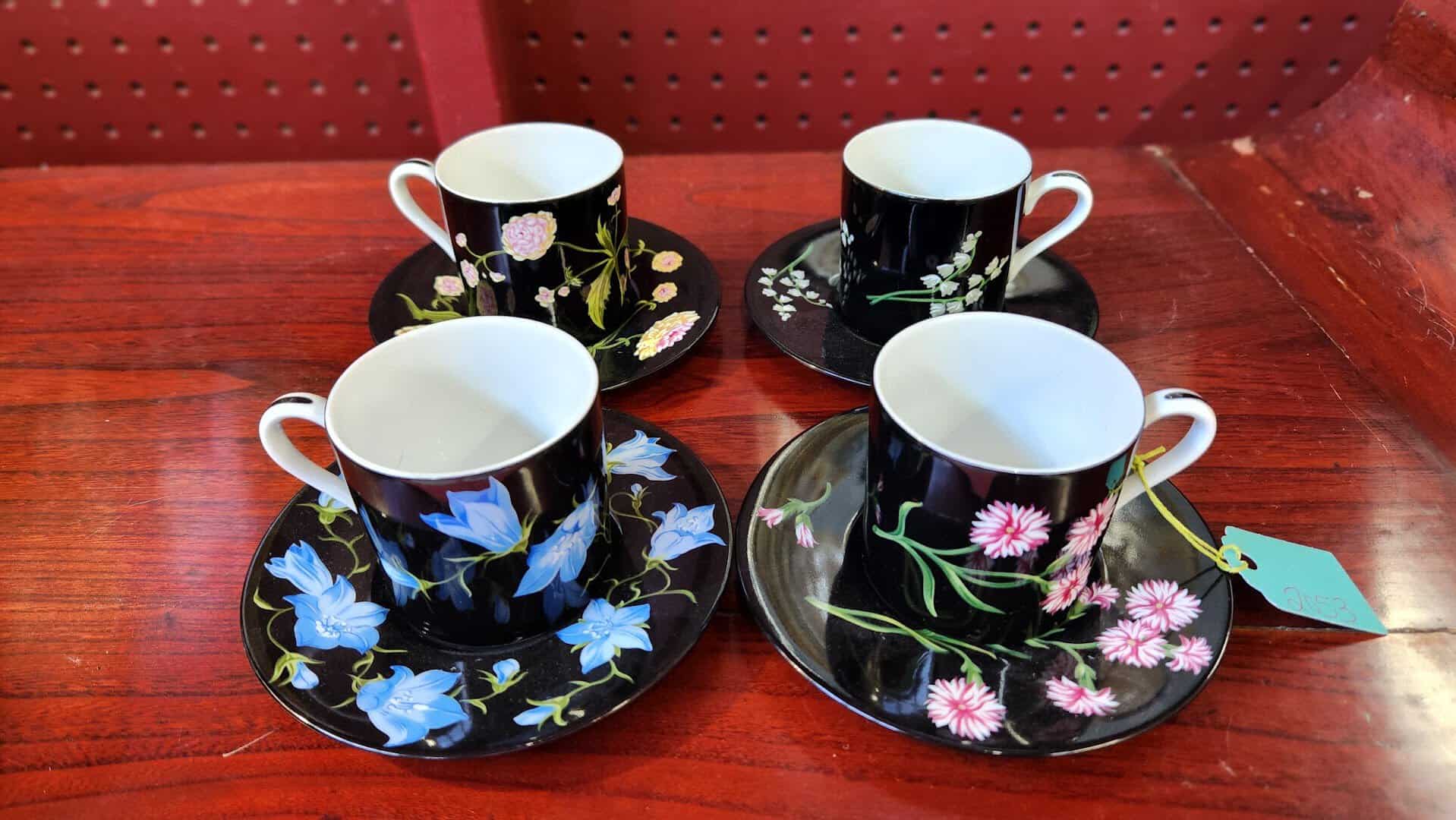
But the real event is tea. The Secret Garden pours six special house blends and bakes authentic English scones, and you can reserve a proper High Tea rather than just grabbing a cup.
I sat down with a pot and a scone at about the two hour mark, feet aching, tote bag already heavier than planned. It felt like the most civilized thing that had ever happened to me.
The tea room keeps its own hours, and they are shorter than the mall’s. It serves 11 a.m. to 3 p.m. Monday through Friday, 11 a.m. to 4 p.m. Saturday, and noon to 4 p.m. Sunday.
Pro tip: call ahead at 817.763.9787 if you want High Tea or you are bringing a group. Seating is limited and weekend lunch fills up fast.
From Empty Warehouse to Fort Worth Institution
This building was not always full of treasure. For a while it was not full of anything.
The warehouse sat at the northeast corner of Interstate 30 and Montgomery Street doing very little until 1994. That November an antique mall opened inside it, founded by Chris Sheidler, his wife Betsy, and a business partner.
They started smaller than what you see today. Over three decades the operation grew booth by booth until it filled 61,000 square feet and became the biggest antique mall in the city.
Fort Worth noticed. The mall has been voted Best Antiques in the Fort Worth Star-Telegram Readers’ Choice Awards again and again, which in a city this proud of its own taste is no small thing.
Thirty years is long enough to become part of a family’s routine. I met a woman near the jewelry cases who told me her mother used to bring her here as a girl, and now she brings her own daughter.
“We always find something,” she said, laughing. “Even when we swear we are only looking.”
Three decades of that adds up. Plenty of families here are on their second or third generation of Saturday mornings in these aisles.
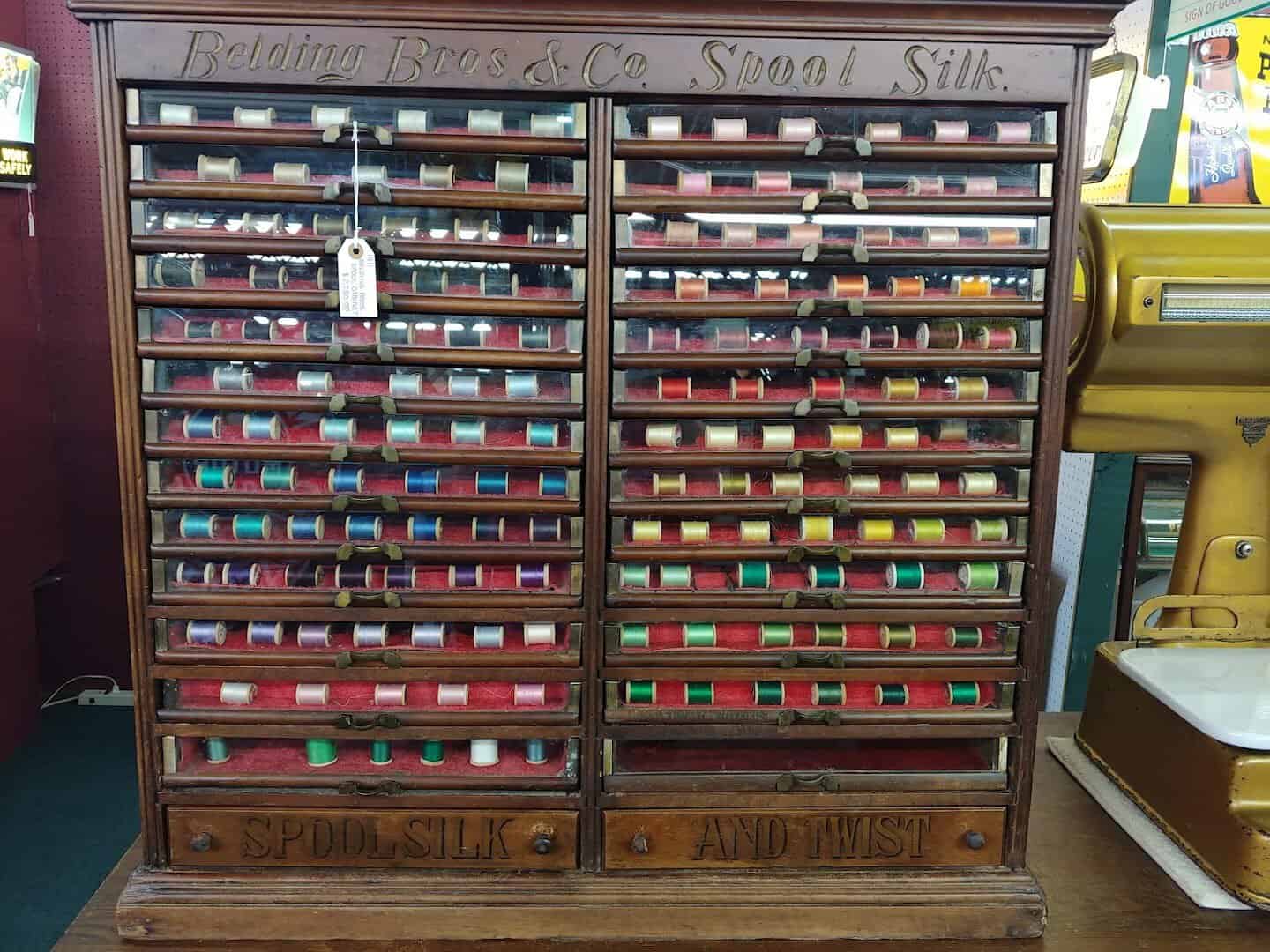
What keeps a place like this alive is the dealers. Two hundred people sourcing from estate sales, farm auctions and country attics across North Texas, then hauling it all back here to sell.
Every one of those booths is somebody’s small business. When you buy a lamp here, you are paying a Texan who drove to a barn in Parker County to find it.
Today the mall holds a 4.6 star rating across more than 1,500 Google reviews, which is a remarkable number for any business, let alone one where the merchandise changes every single week.
What It Costs and How Long to Budget
There is no admission fee. Walking through 61,000 square feet of Texas history costs you nothing but time.
What you spend after that is entirely your own business, and it can be very little. Plenty of shoppers walk out with a $3 postcard and a grin.
Budget the time honestly. Two hours is a taste. Three to four hours is a real visit. A full day is not unreasonable if you are hunting something specific.
The mall is open 10 a.m. to 6 p.m. Monday through Saturday, and noon to 6 p.m. on Sunday. Weekday mornings are the calmest, and the light through the front is lovely then.
Because dealers restock constantly, no two visits are the same. Locals treat it like a rotating exhibit and drop in every few weeks to see what has turned over.
What I Carried Out the Door
I went in with no plan, which is the correct way to do this.
I came out with the ceramic rooster, three embroidered handkerchiefs, a 1962 Texas road map soft as cloth at the folds, and a heavy little glass juicer the exact green of a lime.
The juicer is the one that got me. My mother had one just like it, and I had not thought about it in twenty years until it was sitting in my hand.
You do not really shop a building like this. You get handed back small pieces of a life you had stopped being able to picture clearly.
Total damage was under $40, which felt like theft, and I have used the juicer more times in six months than I ever expected to.
Pro Tips for Your First Treasure Hunt
A few things I wish somebody had told me before my first trip.
Wear real shoes. The floors are concrete and you are going to walk further than you think. This is not a sandals afternoon.
Bring your measurements. Doorway width, wall length, the gap beside your couch. Written on your phone, ready to check, because that sideboard will not wait while you drive home to measure.
Photograph anything you are unsure about, along with the booth number. In a building this size, finding your way back to a specific chair is genuinely hard.
Ask about the piece. Dealers here know their stock, and many are happy to tell you the maker, the era, or where a piece came from. That story is half of what you are buying.
Sales are final, so give a piece a proper look before it comes home with you. Open the drawers, turn the plate over, check the label. That is half the fun anyway.
Pro tip: bring a tote bag and a little bubble wrap in the car. Glassware travels much happier that way, and you will almost certainly buy glassware.
Make a Day of It in the Cultural District
The location does a lot of work for you. It sits minutes from the Will Rogers Memorial Center and Dickies Arena, and a short hop from Fort Worth’s museum row.
The Kimbell Art Museum, the Modern Art Museum of Fort Worth and the Amon Carter Museum of American Art all sit within a few minutes’ drive. Louis Kahn designed the Kimbell, so you can look at a masterpiece of modern architecture and then go buy a jelly mold.
Add the Fort Worth Stockyards for the afternoon and you have a full weekend without ever needing the interstate again.
One honest note worth knowing: the block has been approved for a future hotel and mixed use development, and no closing date has been announced. So if this has been on your list, this is a lovely year to finally go.
How to Get There
Where: Montgomery Street Antique Mall, 2601 Montgomery Street, Fort Worth, TX 76107
It sits just off Interstate 30 at the Montgomery Street exit, on the western edge of downtown Fort Worth. Parking is on site and free, and there is plenty of it.
Mall hours are 10 a.m. to 6 p.m. Monday through Saturday and noon to 6 p.m. Sunday. The phone number is 817.735.9685.
The Secret Garden restaurant inside keeps shorter hours and has its own line at 817.763.9787. Hours and events can shift, so a quick call before a long drive is never wasted.
Start Your Own Saturday Hunt
You do not need to be a collector to love a place like this. You just need to be a little bit curious about the lives that came before yours.
Somewhere in those two hundred booths is the exact thing you did not know you were looking for. A green glass pitcher. Your grandfather’s model of pocketknife. A cookbook with a stranger’s handwriting in it.
So park the car, eat a scone, and give yourself permission to wander for four hours. Just bring the bubble wrap. I promise you are going to need it.
Featured image: Russell Rogers via Montgomery Street Antique Mall

Stella Raines
Editor-in-Chief
Stella brings over a decade of storytelling experience to TX Headlines. With roots in West Texas and a love for road trips, she leads the editorial team with an eye for the hidden stories that make Texas unforgettable.
More Stories

These Affordable Texas Getaways Are the Coolest Places in the State, and Most Cost Under Ten Dollars

This Unassuming Texas Bridge Is Home to 1.5 Million Bats That Pour Into the Sky at Dusk
This Sprawling Texas Flea Market Is 44 Acres of Weekend Treasure Hunting

These Large and Small Texas Zoos Have Zookeeper for a Day Programs that Let You Get Your Hands Dirty
Tags