This Amish-Style Texas Cafe on a Working Farm Is Worth Driving Hours To Reach
I will happily drive past a dozen closer restaurants to reach one that grows its own food. Something shifts when the bread on your table was milled from wheat a short walk away, and the beef came from a pasture you could point to out the window.
About ten minutes north of Waco, tucked inside a plain farming community that looks like it wandered in from a slower century, sits Cafe Homestead. This is farm cooking with a just-picked freshness.
The flour, the cheese, and the meat mostly begin within sight of your plate. It is the kind of place where the phrase “farm-to-table” stops being a marketing line and starts being a literal description of the walk your dinner took.
The community that runs it, Homestead Heritage, is a craft-and-farming church settlement often compared to the Amish for its handwork and unhurried pace. You come for lunch and leave having toured a working farm.
Below, let me walk you through why this one is worth pointing the car toward, even from hours away.
A Farm You Can Actually Taste
Most restaurants that say “farm-to-table” mean a lettuce supplier two counties over. Here the phrase is almost literal. The vegetables come from the community gardens, the beef is pasture-raised on the property, and the cheese is made in a barn down the lane.
You feel it in the first bite. Reviewers keep circling back to the same word, fresh, and they mean it as a texture, not a slogan. One visitor summed up a whole meal in a line: the homemade bread, cheeses, and desserts “were exceptional.”
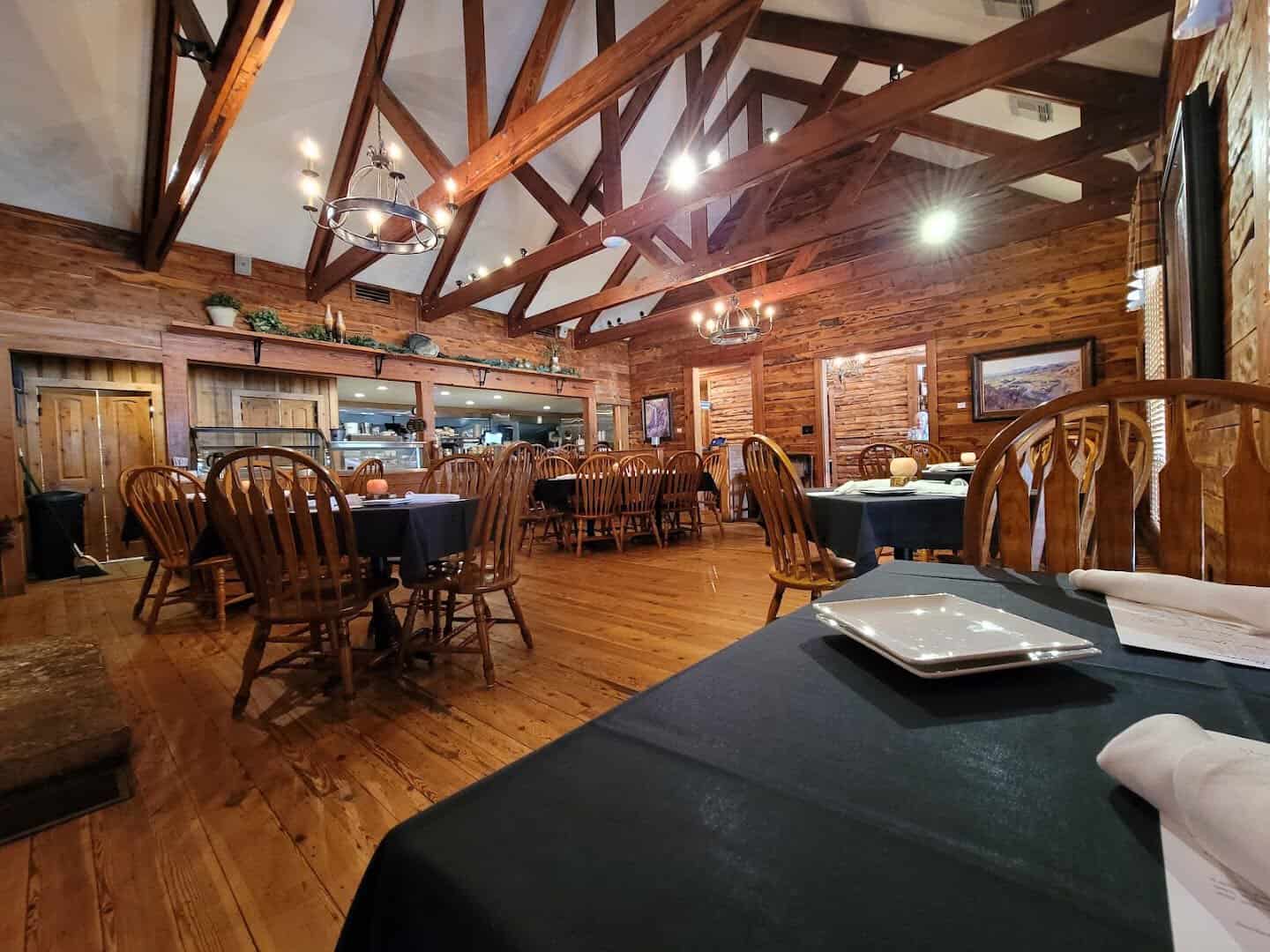
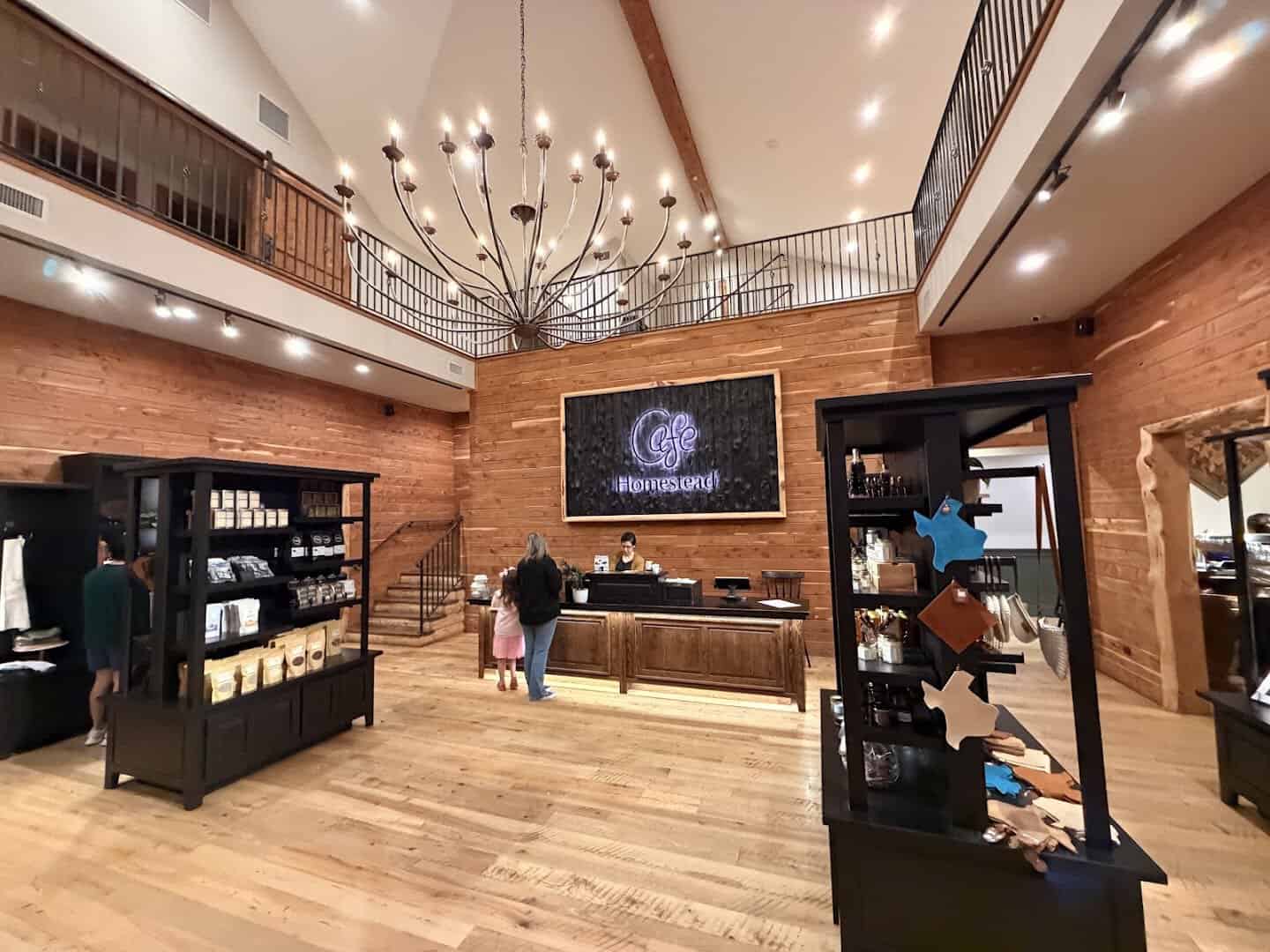
The setting matches the food. The dining rooms are full of handmade furniture built by the community’s own woodworkers, cloth-backed booths, iron fixtures hammered at the on-site forge, and timber framing salvaged from a two-hundred-year-old barn. Nothing here came from a restaurant-supply catalog.
It is calm in a way chain restaurants never manage. No televisions, no rush, just good food carried out of a kitchen that takes it seriously. The pace invites you to stay, order dessert, and let the afternoon stretch.
That unhurried feeling is the whole point of the drive. You are not grabbing a quick bite off the highway. You are sitting down in the middle of a working farm.
The people who raised and made most of what is on your plate are right outside, and the whole place seems to be telling you, gently, to take your time.
What to Order When You Get There
Start with the Southern corn fritters, $9 of sweet-and-savory served with a honey habanero sauce that regulars rave about. They are the table’s warm-up act and rarely last long.
If your group likes to share, the pimento cheese spread and the creamy spinach dip both run ten dollars or less and lean on that famous house cheese. They are a fine excuse to keep the bread basket coming while you decide on mains.
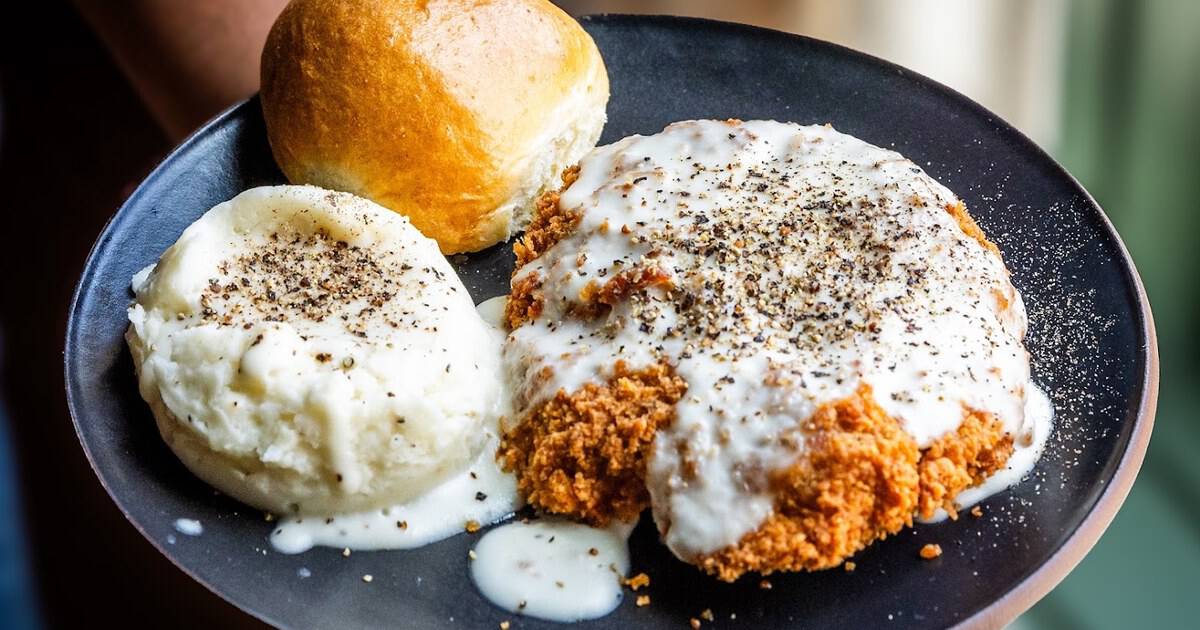
The chicken fried steak is the dish people cross the county for. At twenty dollars it arrives fork-tender under a blanket of cream gravy, and one reviewer called it “fork-tender, perfectly seasoned, and downright delicious.” Pair it with real mashed potatoes or the jalapeno cheese grits.
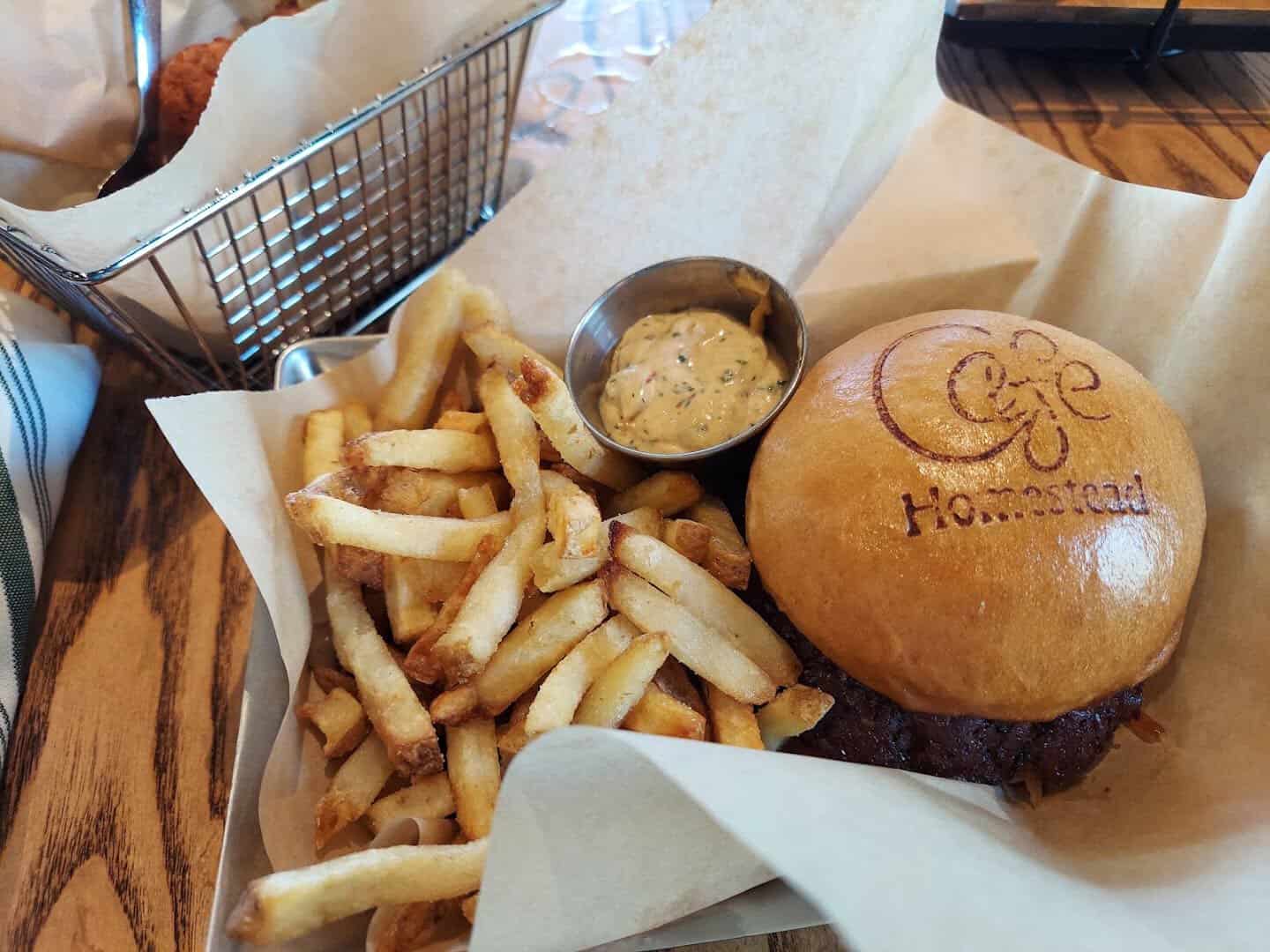
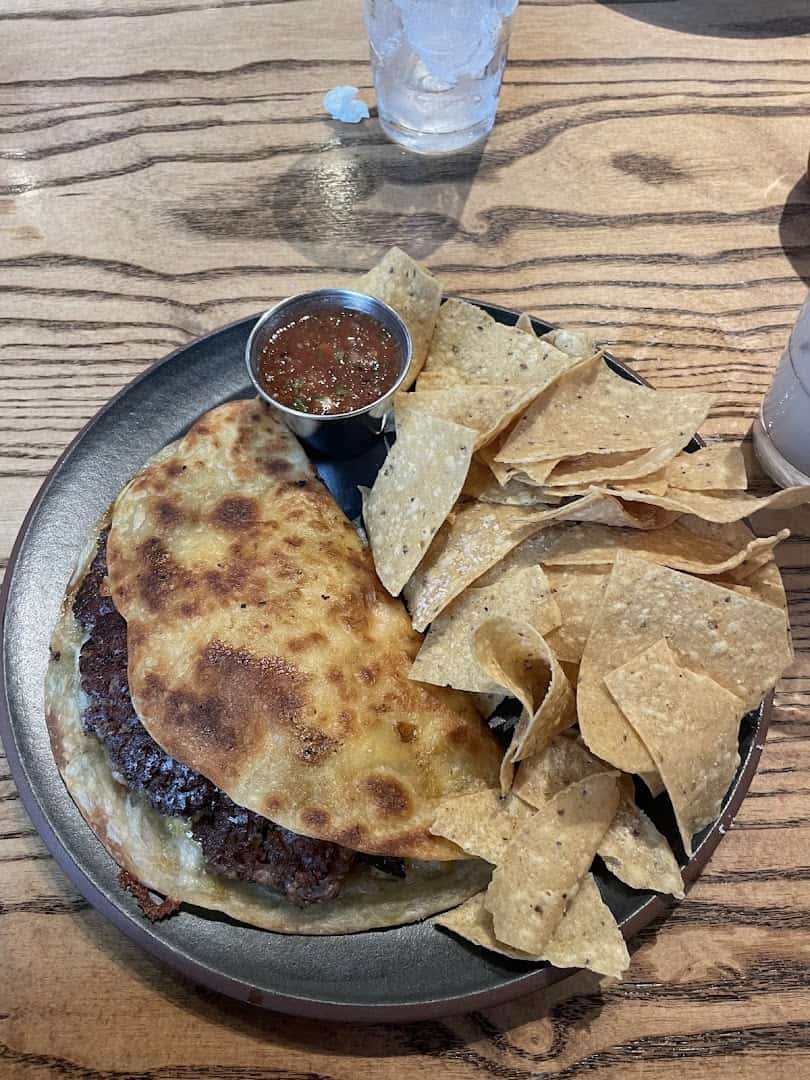
Beef is the house strength, so the pasture-raised steaks earn their place: a six-ounce filet mignon runs thirty-seven dollars, and a sixteen-ounce ribeye is forty-four. If you want the ranch flavor without the steakhouse price, the Cowboy Coffee Burger at eighteen dollars is a coffee-rubbed favorite.
There is range here too. The green chile brisket enchiladas and the Southern fried chicken and waffles both land at nineteen dollars, and a plate of chicken tenders keeps the youngest travelers happy at sixteen.
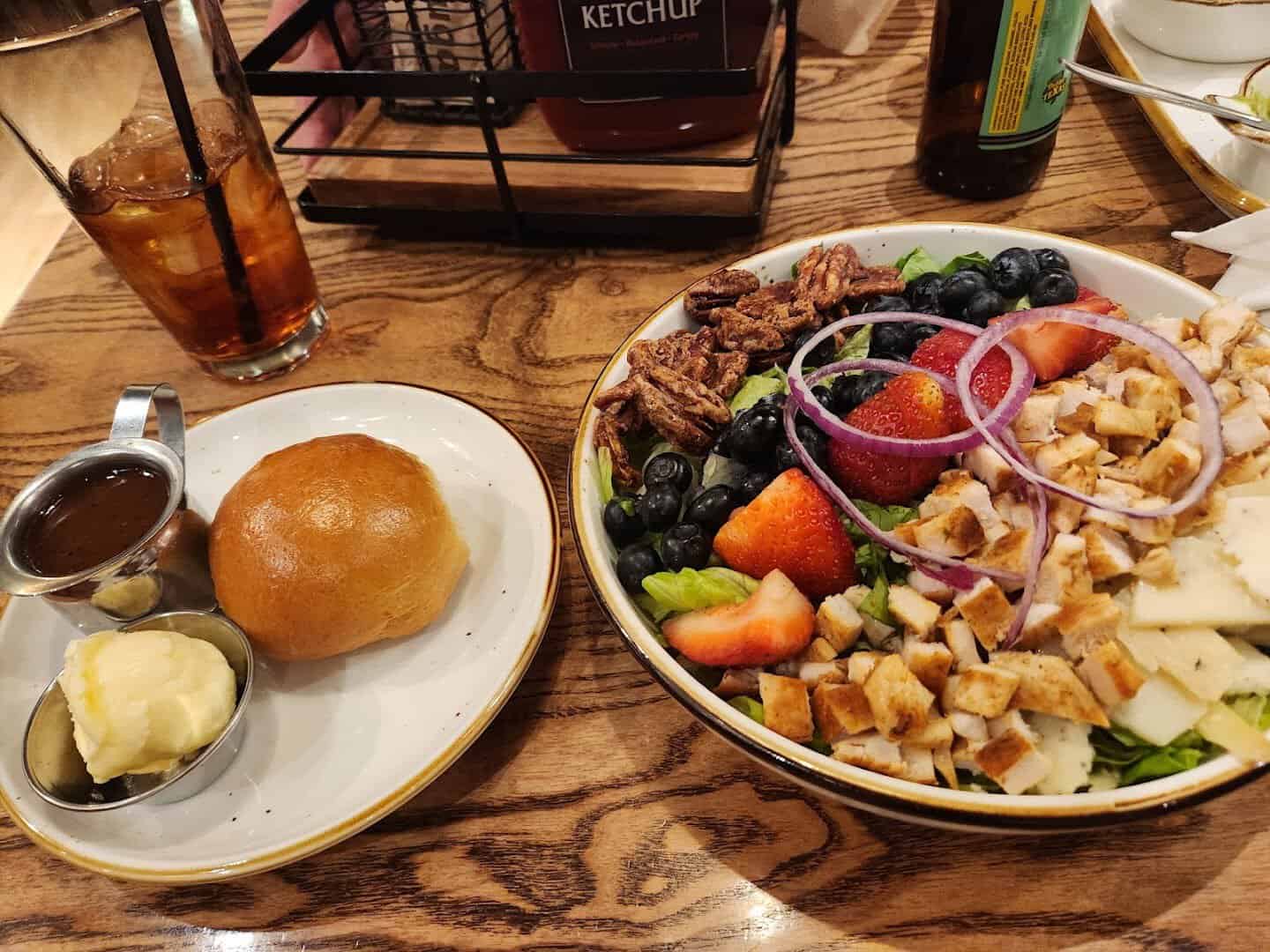
Not everyone comes for red meat, and the kitchen has answers. The crisped jalapeno tilapia at twenty-four dollars adds a little heat to a lighter plate, and the big Brazos Valley salad puts that garden produce and local cheese front and center for twenty.
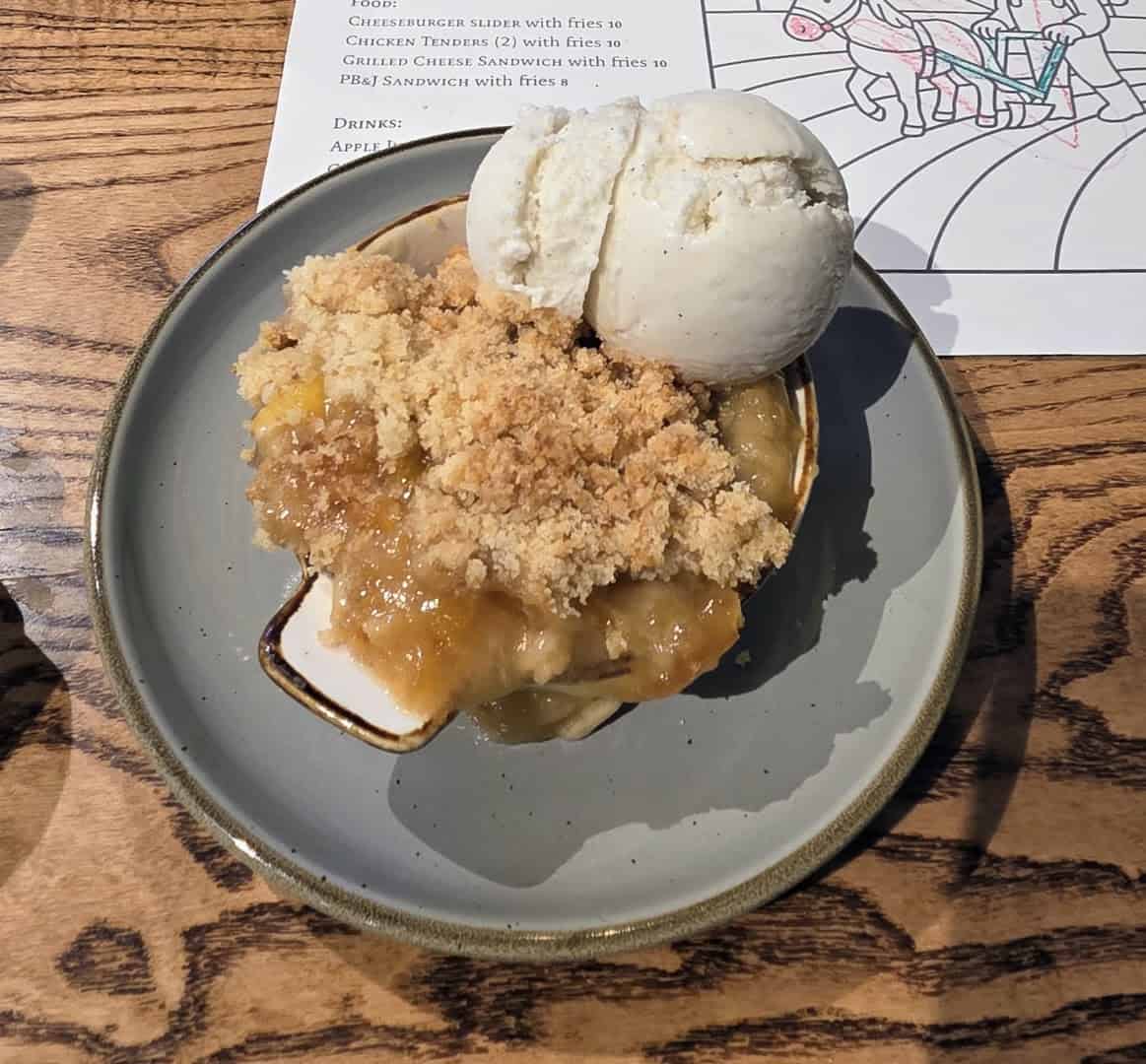
Save room. The desserts, all nine dollars, run to peach cobbler, baked banana pudding, and a coconut cream pie that arrives tall and cool. Pro tip: order the cobbler when you order your meal, because the kitchen and the crowd both move at a farm’s pace, not a fast-food one.
The Cheese They Age in a Cave
The cheese deserves its own paragraph, because it is quietly one of the best in Texas. It comes from Brazos Valley Cheese, made right here at Homestead Heritage from the raw milk of grass-fed Jersey and Brown Swiss cows grazing three dairies along the Brazos River.
The hard wheels are aged underground in a real cheese cave. The white cheddar is rubbed with shortening and wrapped in a cheesecloth bandage, the old English way, then left to deepen for months before anyone tastes it.
This is not a hobby. Back in 2011, the creamery’s fig-leaf-wrapped brie, called Eden, took first place at a national American Cheese Society competition in Montreal, with its plain brie and bandaged cheddar placing right behind it. That cheese ends up on your sandwich and your board here.
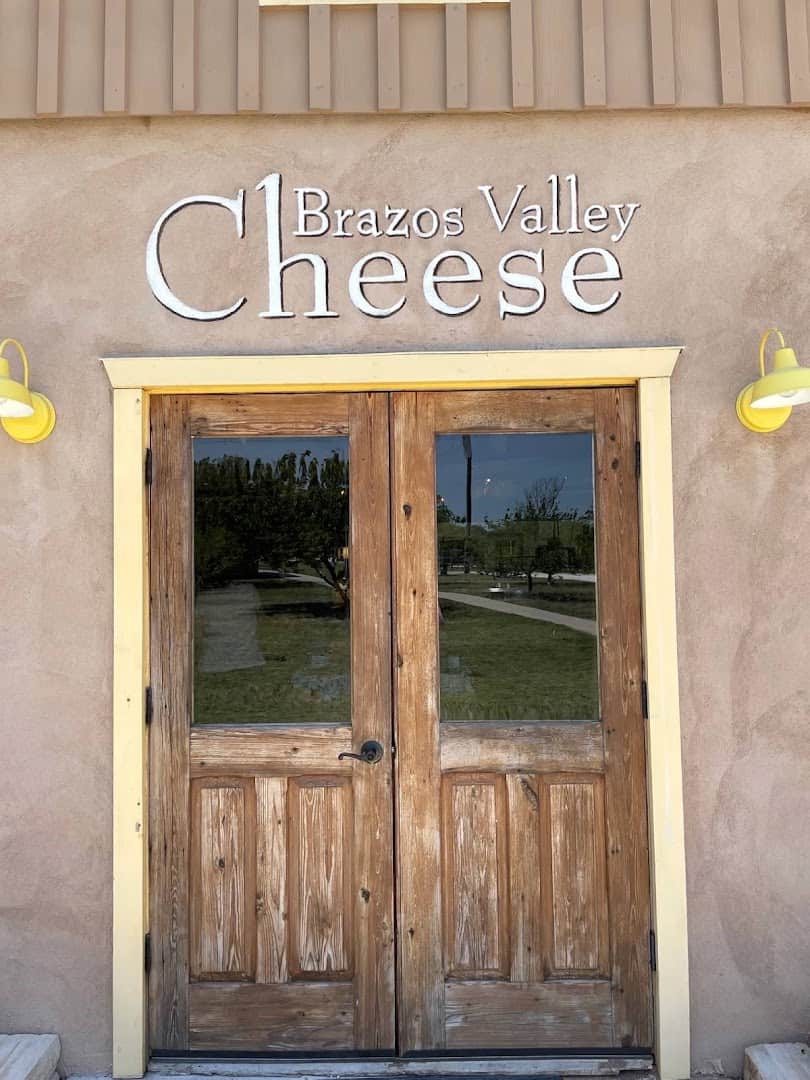
The Eden wheel is a small work of art, wrapped in a fig leaf with a thin line of vegetable ash running through its center. You do not have to know any of that to enjoy it.
You just taste a cheese that someone clearly fussed over, then order a little more to take home from the shop next door.
Bread From a 1760 Gristmill
Then there is the bread, and it may be the sleeper star of the whole meal. The community grinds its own flour at a restored 1760 gristmill on the property, a genuine waterwheel-powered mill that turns whole wheat and cornmeal fresh.
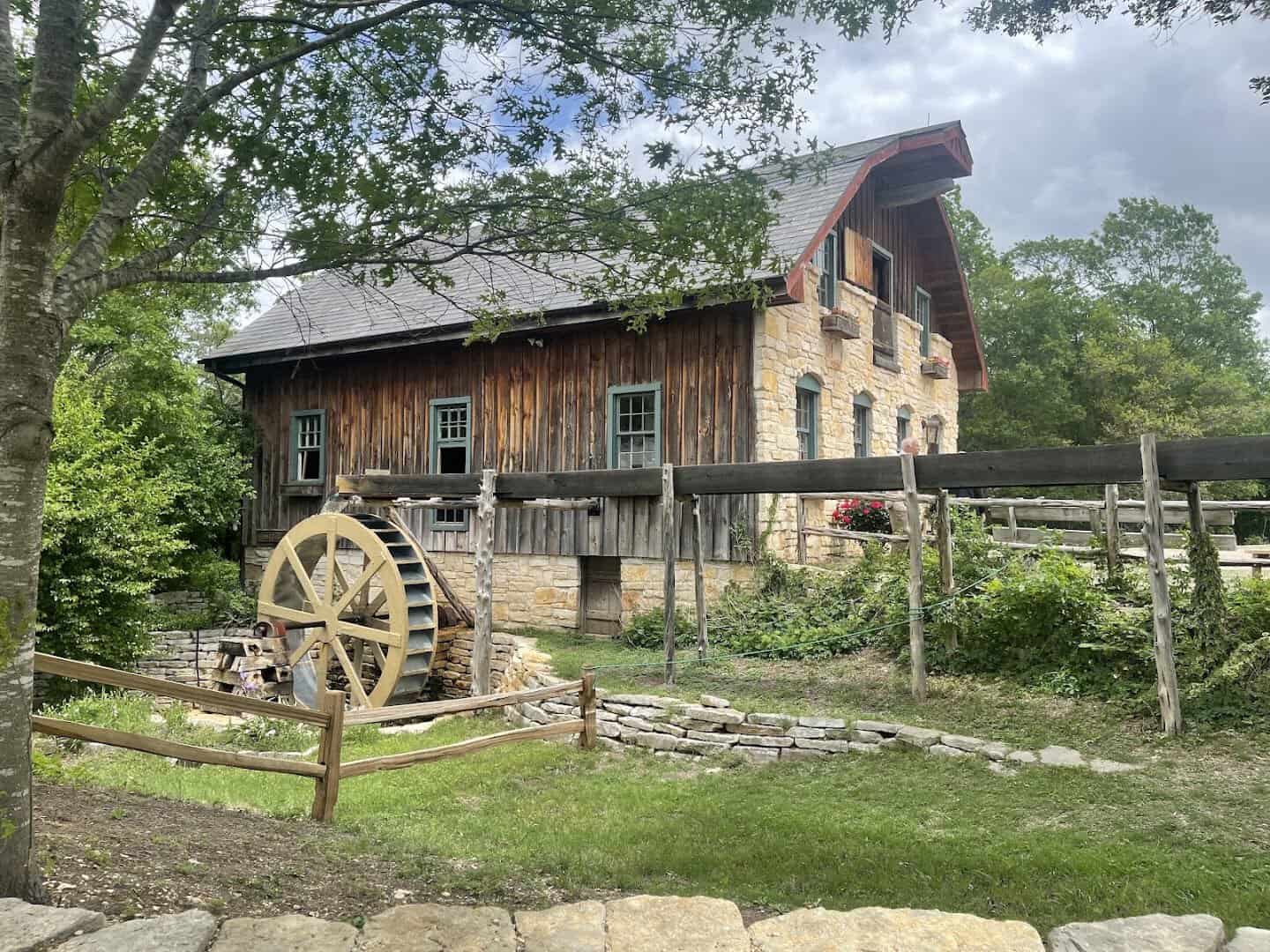
That flour becomes the loaves and rolls that reach your table still carrying a just-baked warmth. Even the chicken fried steak comes alongside a soft dinner roll worth the calories.
When the grain, the milling, and the baking all happen in one place, you taste the difference in a way that is hard to fake.
Did you know a working waterwheel still helps grind the grain here? It is the kind of detail that tells you these folks did not choose the slow way by accident. They chose it because it makes the food better.
From a Manhattan Chapel to a Texas Farm
The story behind the plate is as good as the food. Homestead Heritage traces its beginnings to 1973, when a small peace church was started by Blair Adams and his wife Regina on the Lower East Side of Manhattan, about as far from a Texas pasture as you can get.
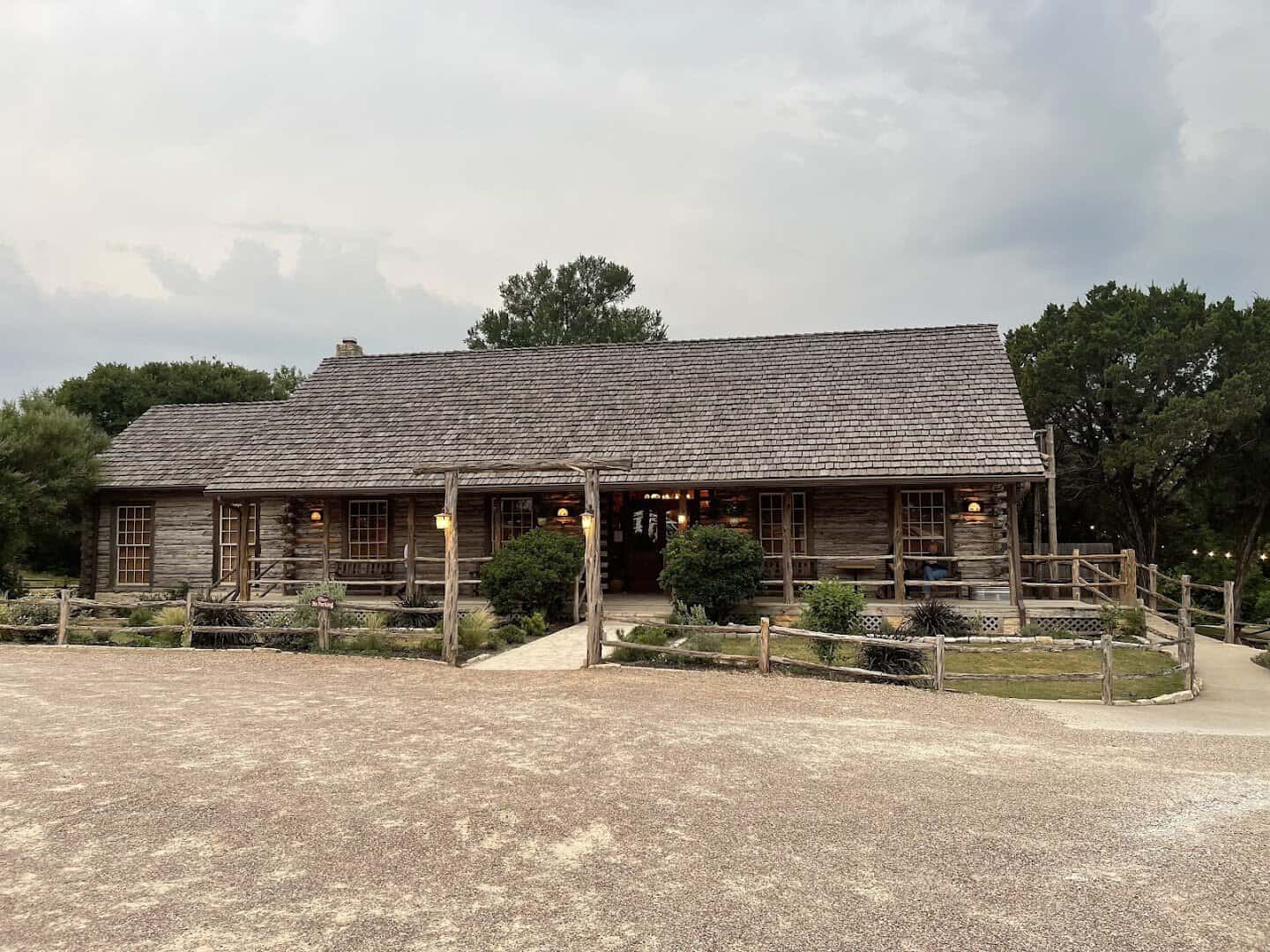
Over the next two decades the group grew into an agrarian Christian community built around traditional crafts and sustainable farming. In 1990 they bought land near Chalk Bluff, northeast of Waco, and settled permanently on hundreds of acres of Central Texas farmland.
Cafe Homestead opened in 1994 and has been feeding travelers ever since, growing into what locals now call the number-one restaurant in Waco.
Blair Adams, the founder who set the whole thing in motion, passed away in July 2021 at the age of seventy-seven. The community he built kept right on farming, baking, and cooking.
The crafts came right alongside the farming. Over the years the community became known for hand-built furniture, thrown pottery, forged ironwork, and woven fiber goods, all made the slow, traditional way.
The café is really the front porch of that whole enterprise, the place where visitors first taste what these families have spent fifty years perfecting.
Eighteen Weeks From a Pile of Ashes
The café you visit today is brand new, and there is a hard reason why. Two days before Christmas, on December 23, 2022, an overnight fire likely sparked in the chimney and burned the thirty-year-old restaurant to the ground.
What happened next is the most Homestead Heritage thing imaginable. Around 210 community members and local contractors picked up their tools and rebuilt the entire place by hand in just eighteen weeks. “Eighteen weeks from a pile of ashes to the restaurant,” is how general manager Andrew Taylor described it.
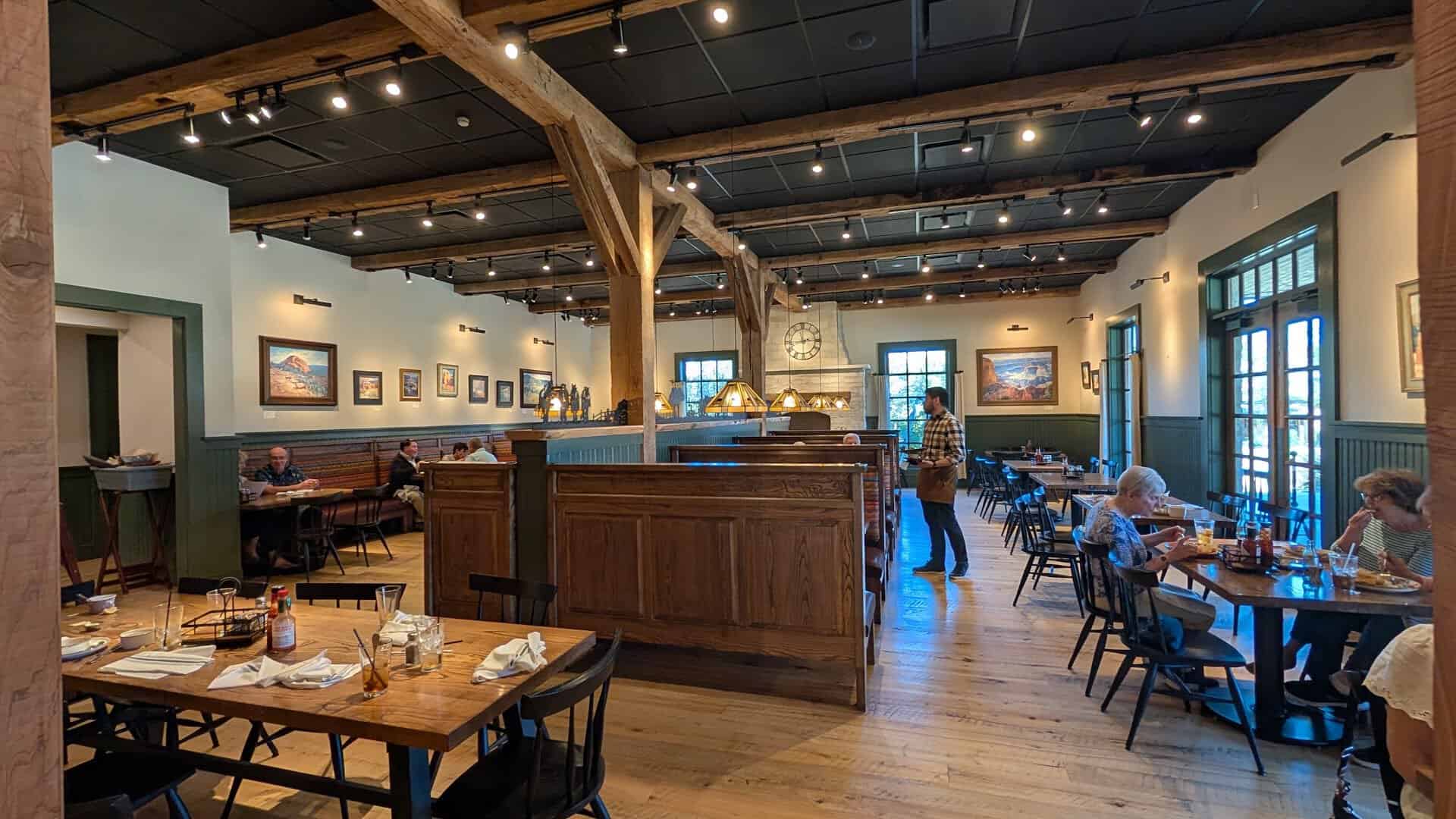
The rebuilt café reopened on June 12, 2023, bigger and warmer than before, with vaulted ceilings, two dining wings, and a gift shop.
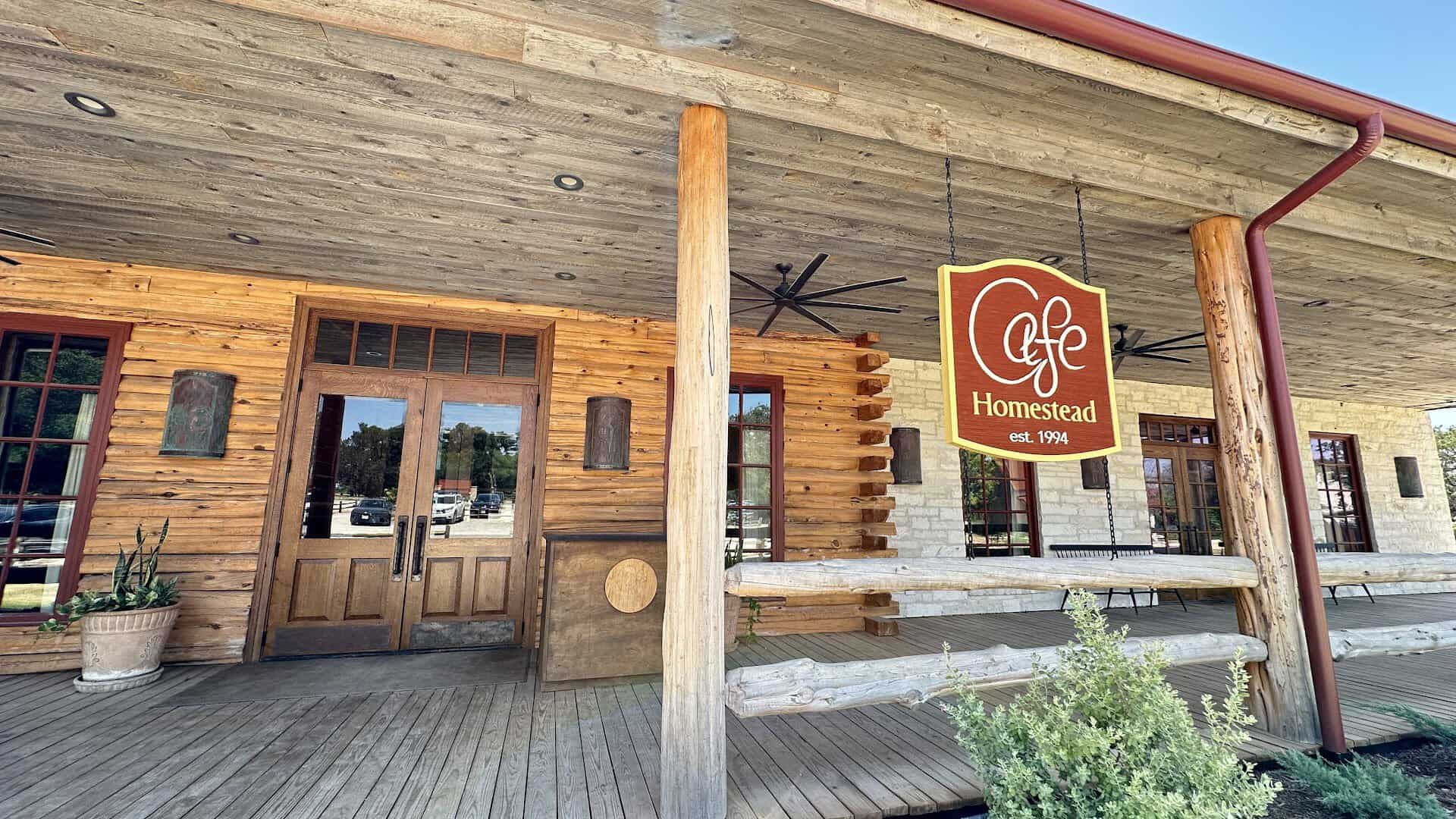
Look closely at the entrance and you will find charred logs from the fire built right into the new signage, and a drawing of the original café etched onto the chimney. They did not hide the loss. They framed it.
“There’s no way we could have made our crazy, impossible deadline without the community support,” Taylor said. Record lunch crowds showed up the week it reopened, and they have not really stopped coming since.
Make a Day of It at the Craft Village
Here is the part that turns lunch into a road trip worth the miles. The café sits inside the Homestead Craft Village, an eighteen-acre spread of working shops that is free to walk through, and easily worth an afternoon on its own.
You can watch potters throw stoneware at the Potter’s House, see furniture built with hand joinery in the woodworking shop, and hear iron ring under a hammer at the Heritage Forge.
Fiber artists spin and weave, and that same 1760 gristmill turns for anyone who wants to watch grain become flour.
Much of the village is built around history you can stand inside. There is a two-hundred-year-old barn, an herb garden, and demonstrations of everything from basket weaving to barn raising. Kids who think they will be bored end up mesmerized by a blacksmith bending glowing metal into a hook.
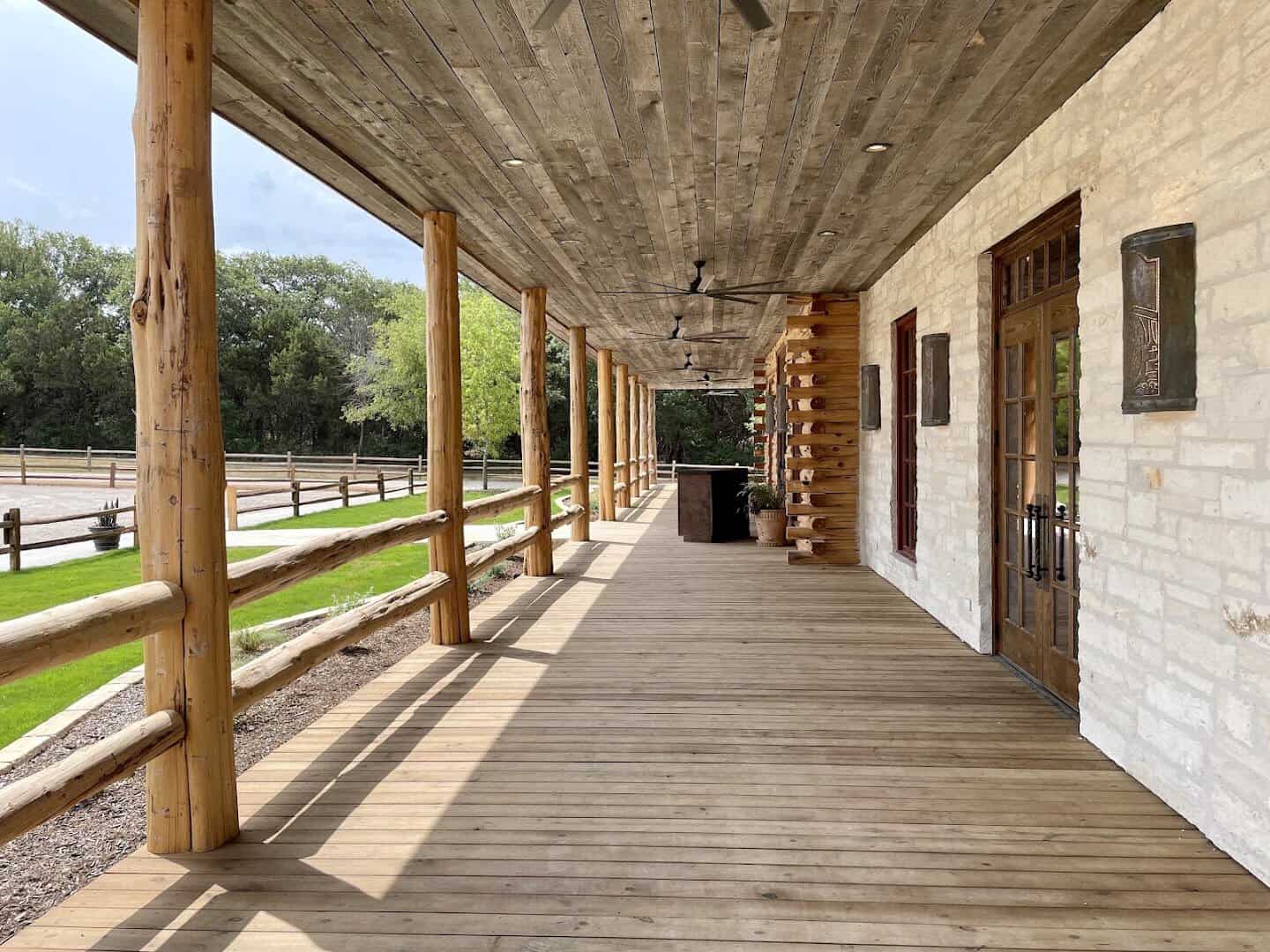
When you are ready to slow down further, book a horse-drawn hayride out to a scenic overlook of the Brazos River. It is wholesome, unhurried fun, the kind of outing that makes kids forget their phones and adults remember why they came.
How to Get There
The café sits just north of Waco, an easy detour off Interstate 35 and a genuinely pretty drive once you turn onto the farm roads. Come hungry, and give yourself time to wander the village afterward.
Where: Cafe Homestead, 608 Dry Creek Rd, Waco, TX 76705.
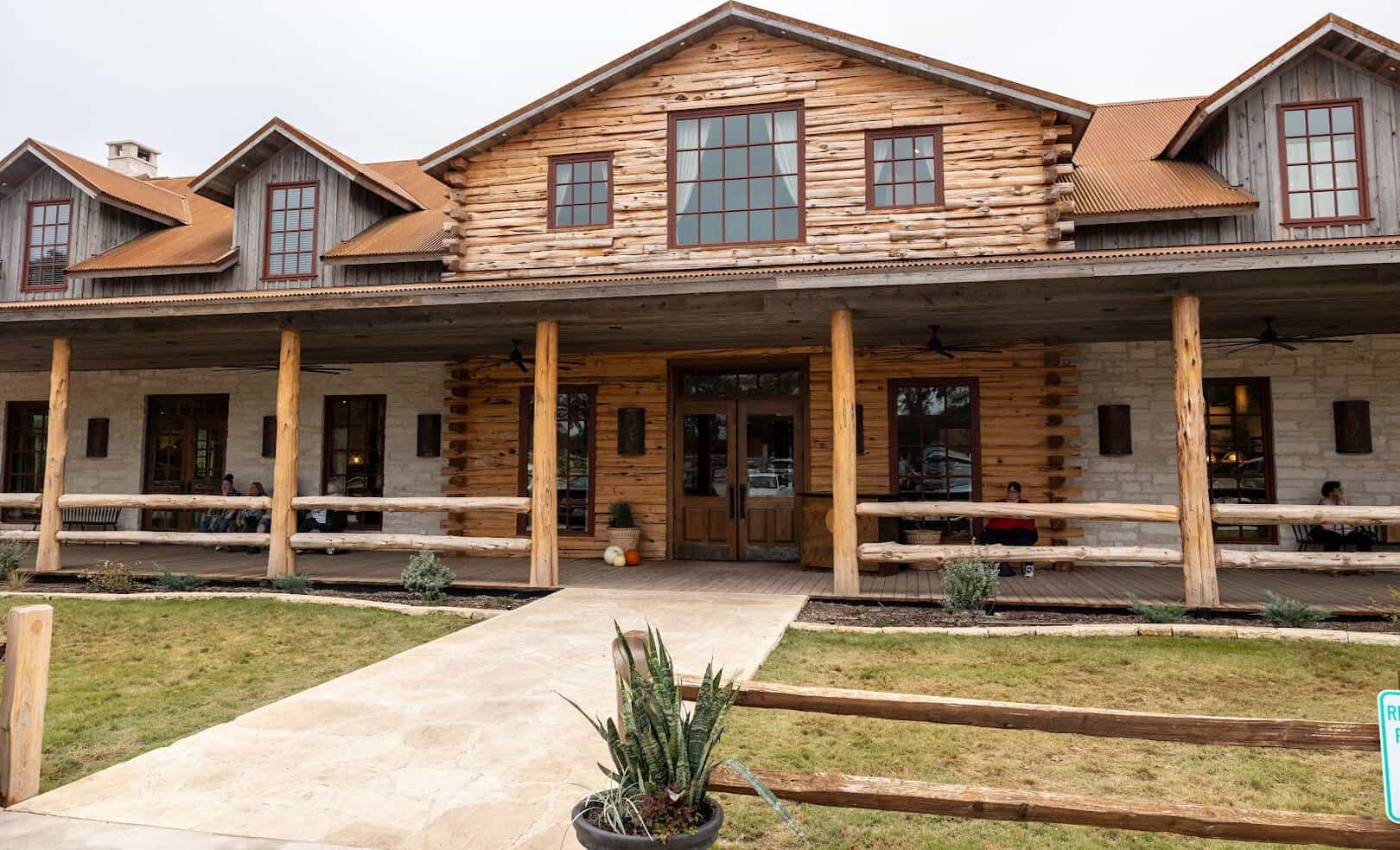
Hours run Monday through Saturday from 11 a.m. to 3 p.m., with dinner added Thursday through Saturday from 5 to 8 p.m. The café is closed on Sundays, so plan your drive for any other day of the week.
Plan the Drive Out to the Farm
Some meals are worth building a day around, and this is one of them. Point the car north, arrive hungry, and let the bread, the cheese, and the cobbler remind you what food tastes like when the people cooking it also grew it.
Then walk it off among the potters and the blacksmiths, catch that hayride to the river, and drive home already planning the next trip. Whether you live in Texas or you are just passing through, this is one detour you will be glad you made.
Featured image: @ Cafe Homestead

Stella Raines
Editor-in-Chief
Stella brings over a decade of storytelling experience to TX Headlines. With roots in West Texas and a love for road trips, she leads the editorial team with an eye for the hidden stories that make Texas unforgettable.
More Stories
This Modest Little Texas Seafood Counter Is Hiding Some of the Best Fried Catfish in the State
This Laid-Back Texas Beach Bar Has Bay Views That’ll Keep You for Hours
This Legendary Texas Smokehouse Earned a Michelin Star, and Its Peppery Brisket Is Exactly Why
This Old-School Texas Buffet Tastes Just Like Sunday Dinner at Grandma’s
Tags