The Unique Hike In Texas Where You Can Camp Right Along the Trail
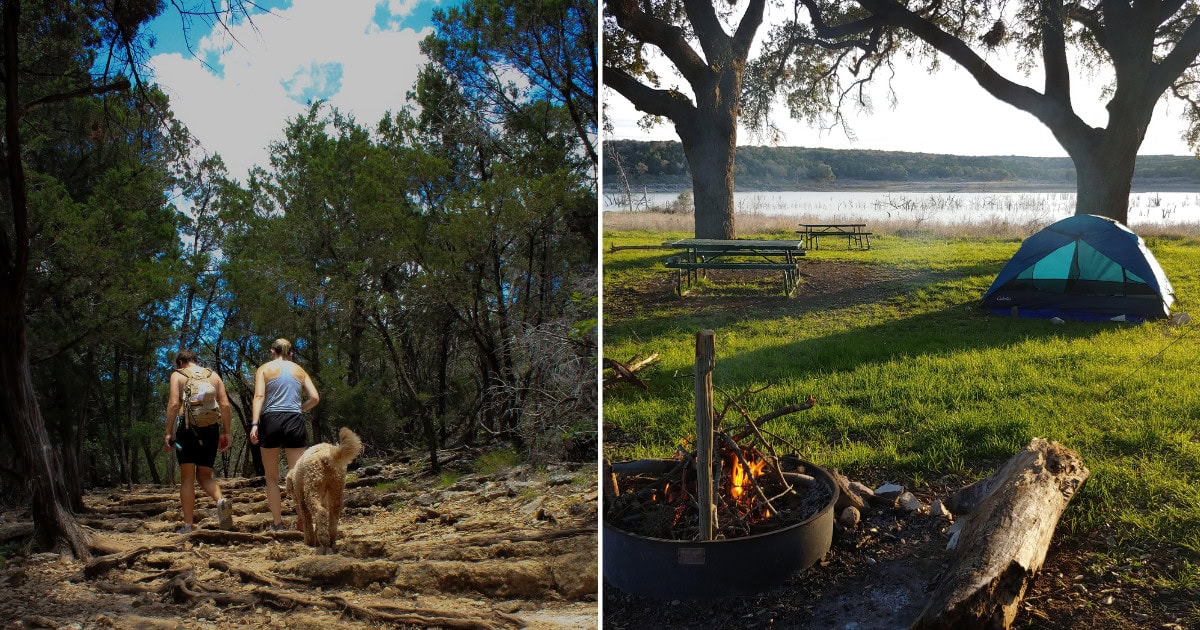
If you’ve ever dreamed of lacing up your boots, hitting the trail, and pitching your tent wherever the sunset catches you, you know that kind of freedom can be hard to come by in Texas.
Most trails require you to loop back to your car or secure a hard-to-get backcountry permit.
But there’s one gem of a trail just north of Austin where you can legally camp right along the route at designated primitive sites, no complicated permits required.
Welcome to the Good Water Loop, y’all, and trust us when we say it’s about to become your new favorite backpacking adventure.
Where the Good Water Loop Is Located
Lake Georgetown & Central Texas Setting
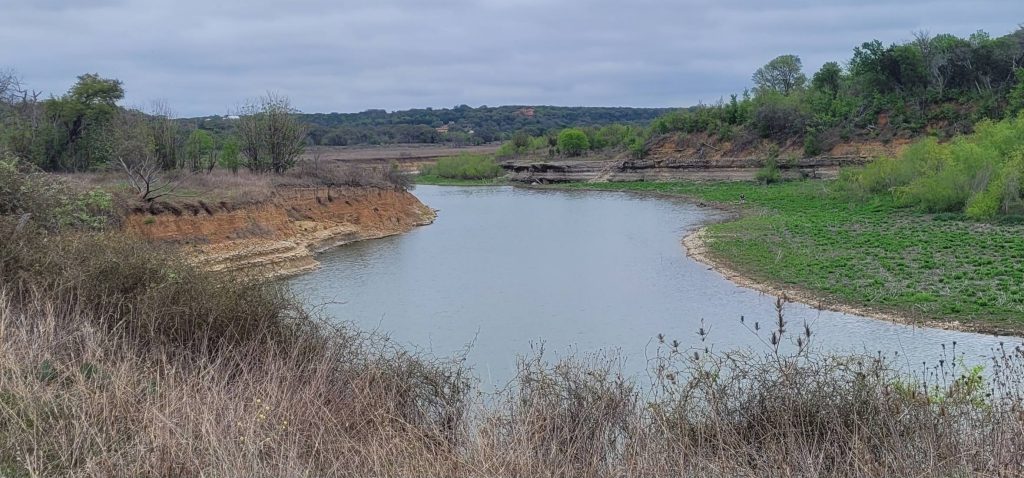
Tucked away in Williamson County, the Good Water Loop circles the beautiful Lake Georgetown, a reservoir created when the U.S. Army Corps of Engineers dammed the San Gabriel River back in 1979.
The full loop stretches approximately 26.5 miles, making it one of the longest single-trail distances you’ll find in Central Texas.
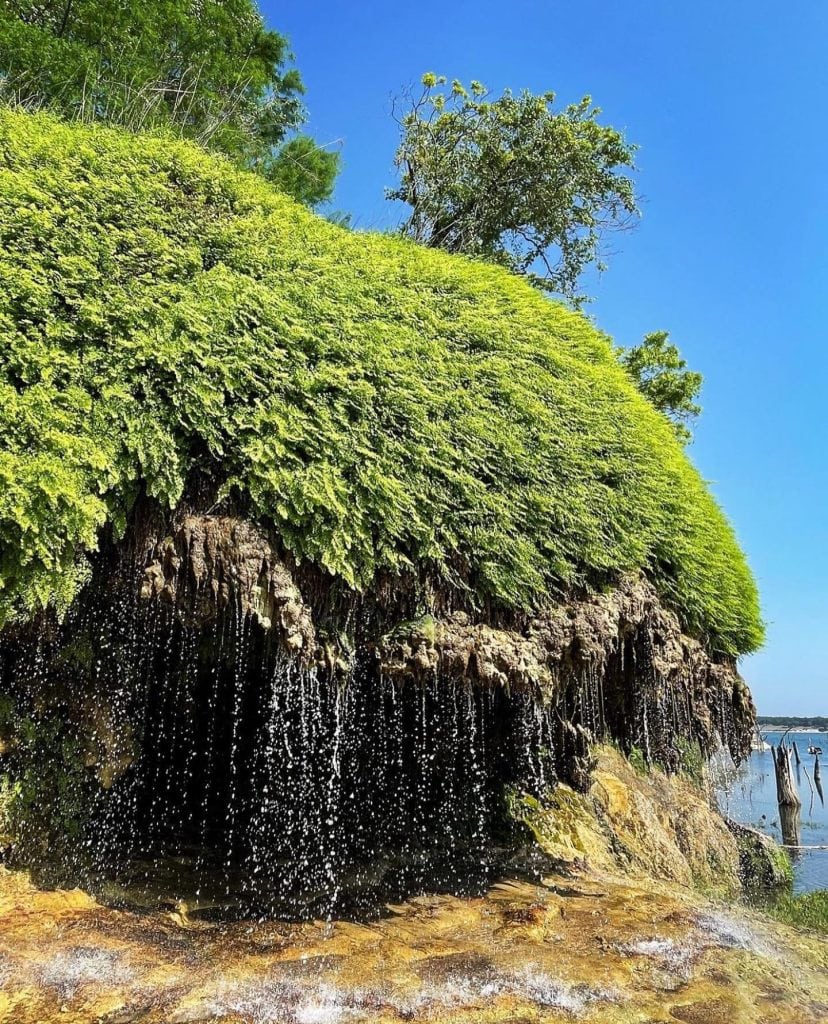
One of the best things about this loop is how accessible it is. You’ve got multiple trailheads scattered around the lake, so whether you want to tackle the whole thing or just bite off a section, you can customize your adventure.
Cedar Breaks Park on the southeast corner is the most popular starting point. Jim Hogg Park, Russell Park, and Tejas Park all offer additional entry points.
If you’re planning the full loop over a couple of days, starting at Tejas Park and hiking clockwise is a favorite strategy because it gets the rockiest sections out of the way early.
Camping Directly Along the Trail
Designated Hike-In Campsites
Here’s where the Good Water Loop really shines. The U.S. Army Corps of Engineers has established three primitive backcountry campsites accessible only by hiking or boat.
The camps are Cedar Hollow Camp (between mile markers 4 and 5), Sawyer Camp (between mile markers 6 and 7), and Walnut Springs Camp (between mile markers 15 and 16).
These are designated spots specifically for backpackers who want to turn this hike into a multi-day adventure.
The primitive campsites operate on a first-come, first-served basis, meaning no reservations are needed.
However, if you’d prefer a site with more amenities, the developed campgrounds at Cedar Breaks, Jim Hogg, Russell, and Tejas Parks do require reservations through Recreation.gov.
What Camping Is Like
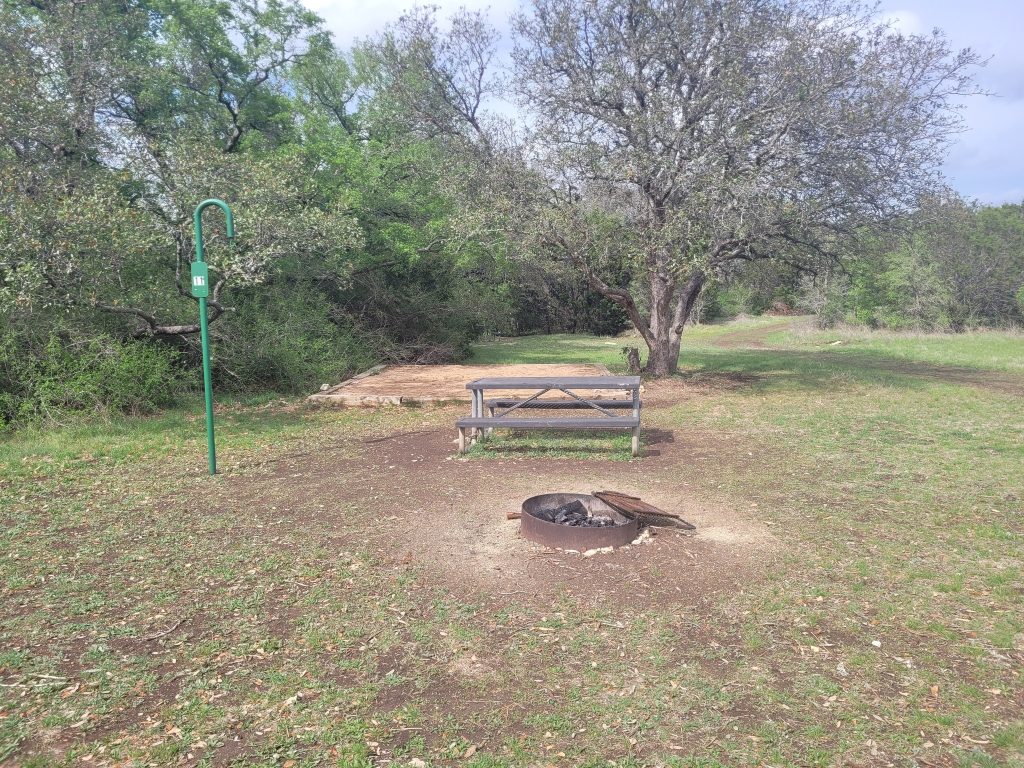
Let’s set some expectations.
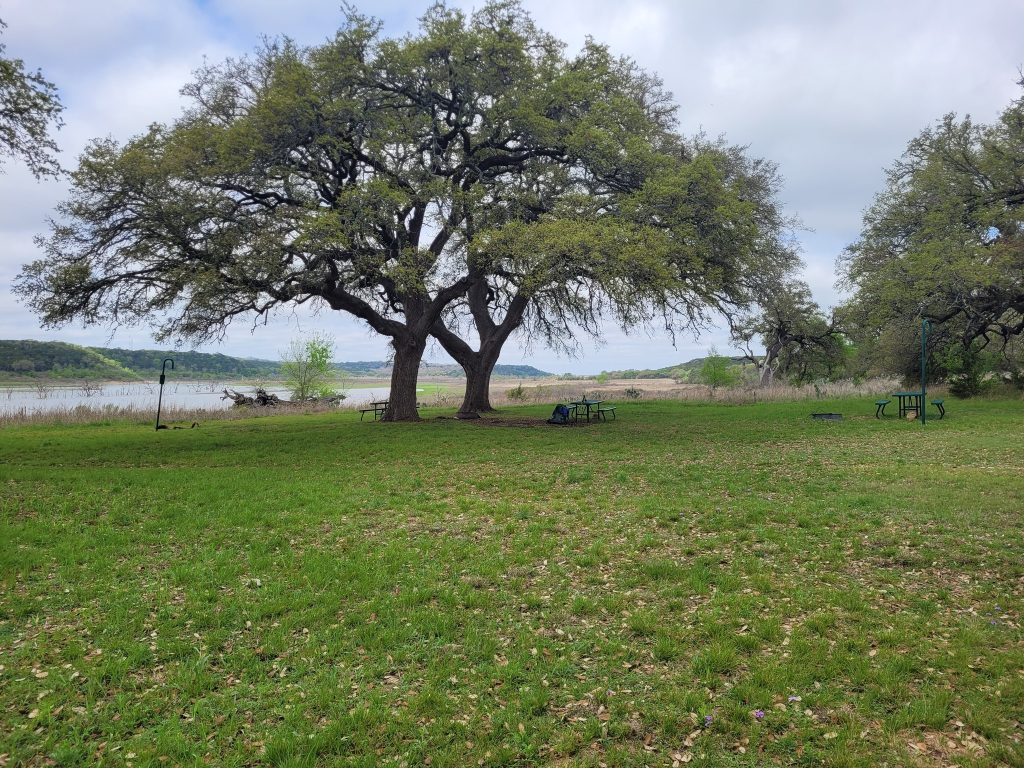
These are primitive campsites with basic amenities. Most sites are equipped with a picnic table, a ground fire ring, and a lantern stand. You’ll find vault toilets nearby, though the privies at some locations are pretty open-air.
The ground can be uneven at spots like Sawyer Camp, so hammock campers might have an easier time than tent campers.
Walnut Springs Camp sits in a large open field that slopes down toward the water, with some sites shaded by mature live oak trees.
Cedar Hollow offers lake access for a refreshing swim after a long day on the trail. Just remember that stealth camping is strictly prohibited.
You must stay at designated campsites or established campgrounds, so plan your mileage accordingly.
Planning Tips Before You Go
Best Time to Hike
Aim for fall through spring when temperatures are milder. Summer hiking is possible, but Texas heat is no joke, and sections of this trail are fully exposed.
That stretch of open prairie between Tejas Park and the north shore campsites can feel brutal when temperatures climb into the 90s.
If you tackle it during summer, start at dawn and plan your water stops carefully.
Water, Permits, and Rules
This is crucial: potable water is available at the developed campgrounds like Cedar Breaks, Russell Park, Tejas Park, and Jim Hogg Park, but you won’t find water sources between many trail sections.
Water access points can be 10 miles apart, so plan to carry plenty. Most experienced hikers recommend at least 4 liters per person between fill-ups, and bringing a water filter is smart if you want to pull from the lake as backup.
Dogs are welcome but must be kept on a leash no longer than six feet. There’s no fee just to hike the trail, though some parking lots may charge for entry.
One unexpected perk of hiking so close to civilization is that you’ll have cell service at almost every point along the route, which can be reassuring for first-time backpackers.
Lace Up and Hit the Trail, Y’all
The Good Water Loop truly stands out as one of the best beginner-friendly backpacking trails in Texas.
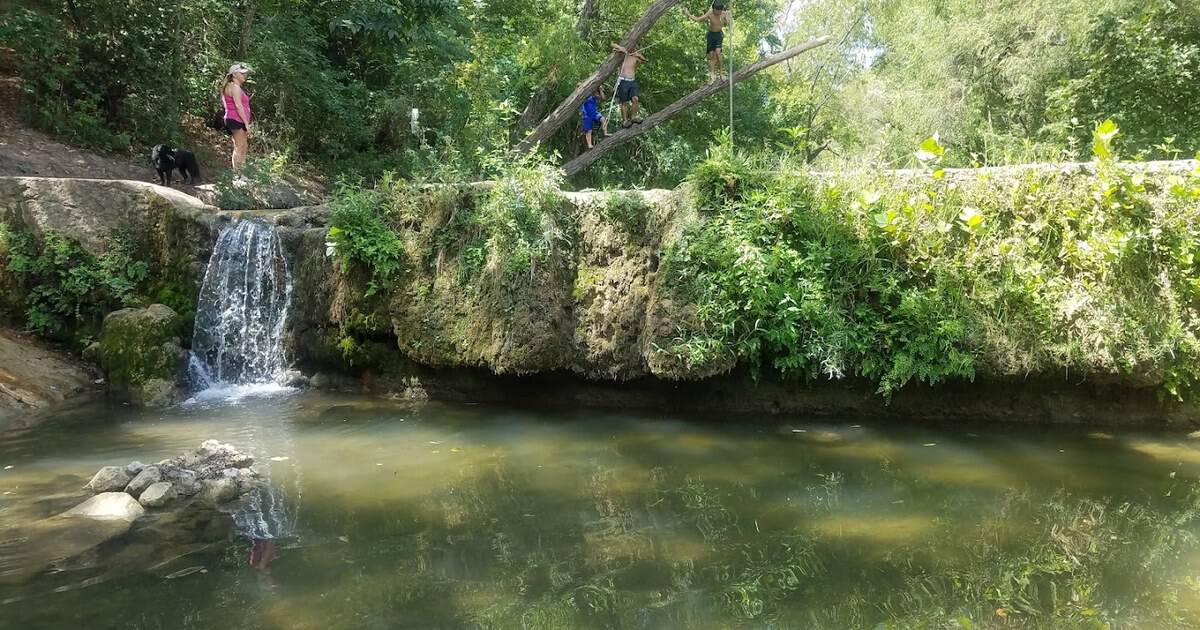
Where else can you find a nearly 27-mile loop with established primitive campsites, gorgeous lake views, and spring-fed waterfalls, all within an easy drive of Austin?
Grab your pack and discover why this hidden gem deserves a spot on every Texas hiker’s bucket list.
FB post credit: Mikey Gray

Stella Raines
Editor-in-Chief
Stella brings over a decade of storytelling experience to TX Headlines. With roots in West Texas and a love for road trips, she leads the editorial team with an eye for the hidden stories that make Texas unforgettable.
More Stories
6 Incredible Texas Waterfalls That Are Worth the Drive
This North Texas Bluebonnet Trail Winds 40 Miles Through Wildflower Country Each Spring
This Short Texas Trail Delivers Jaw-Dropping Canyon Scenery for Barely Any Effort
This Easygoing 2.7-Mile Texas Trail Ends at a Secret Waterfall and Hills Full of Wildflowers
Tags