This Texas Pool Has Been Open Since 1922 – Its History Goes Back 12,000 Years
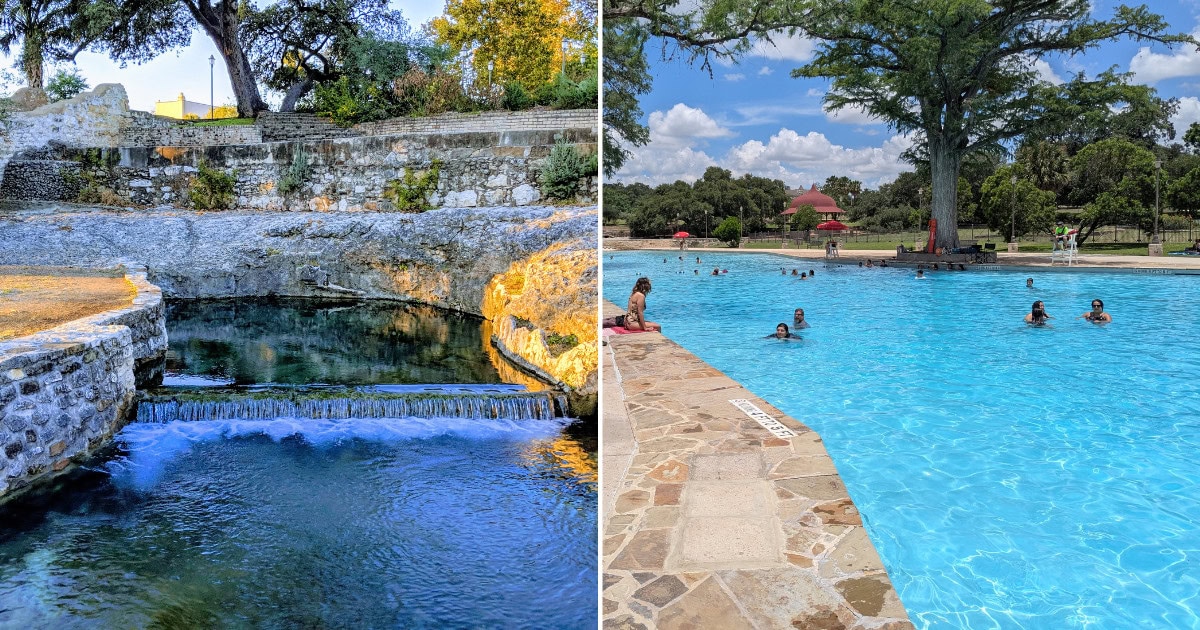
Ask any kid. Is there any better way to cool off on a hot Texas summer afternoon than doing cannonballs into a nice cool pool of sparkling water?
And during the season there is plenty of that happening at the San Pedro Springs Pool, located in San Pedro Springs Park north of downtown San Antonio.
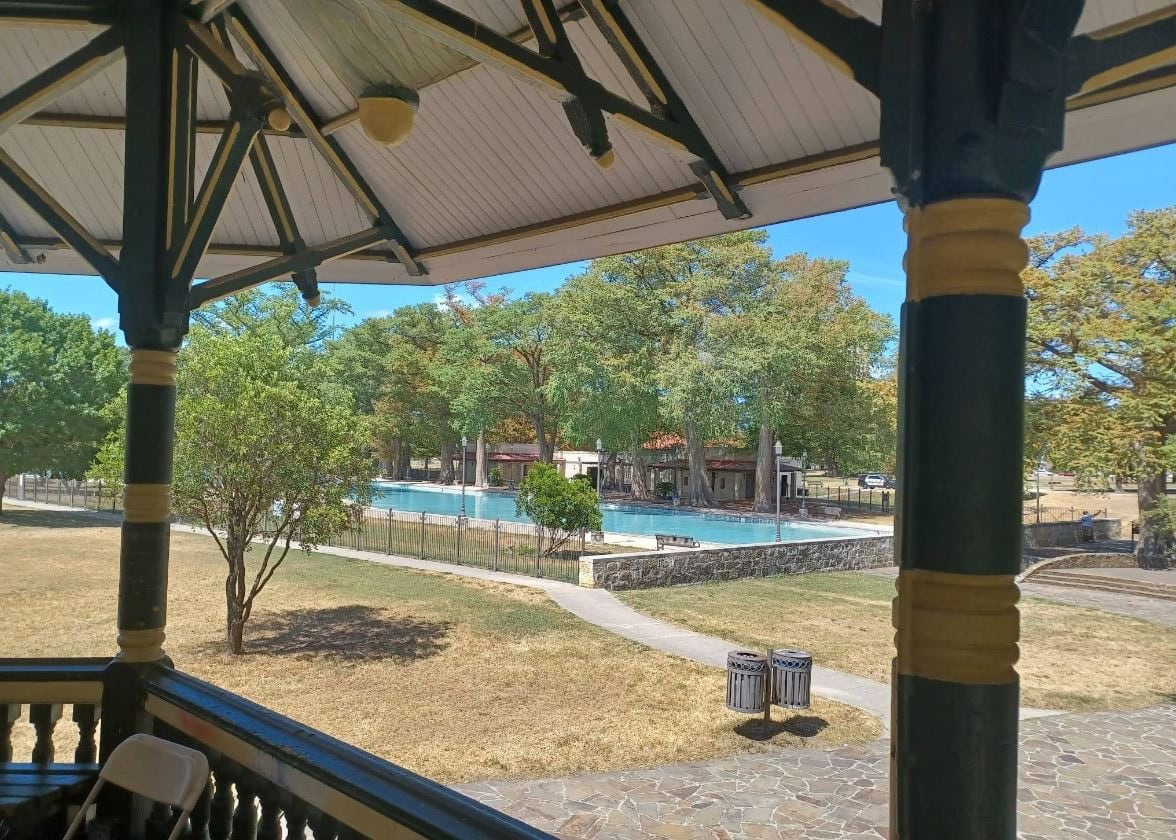
At first glance, it is the perfect summer scene. Under the hot Texas sun, kids of all ages jostle each other to jump in the pool, hesitating for the briefest of moments. They come up shrieking with laughter at the shock of the cold water.
Shivering and pushing their hair back from their foreheads, they pop out and do it all over again. Their bright colored swimsuits blur as they run and jump.
Parents are getting out the towels for the kids, spreading out blankets and settling down in lawn chairs under the shade of cypress trees, claiming their spot for the day.
It is not uncommon to see multi-generations of families enjoying each other and the shade, from grand babies to older folk.
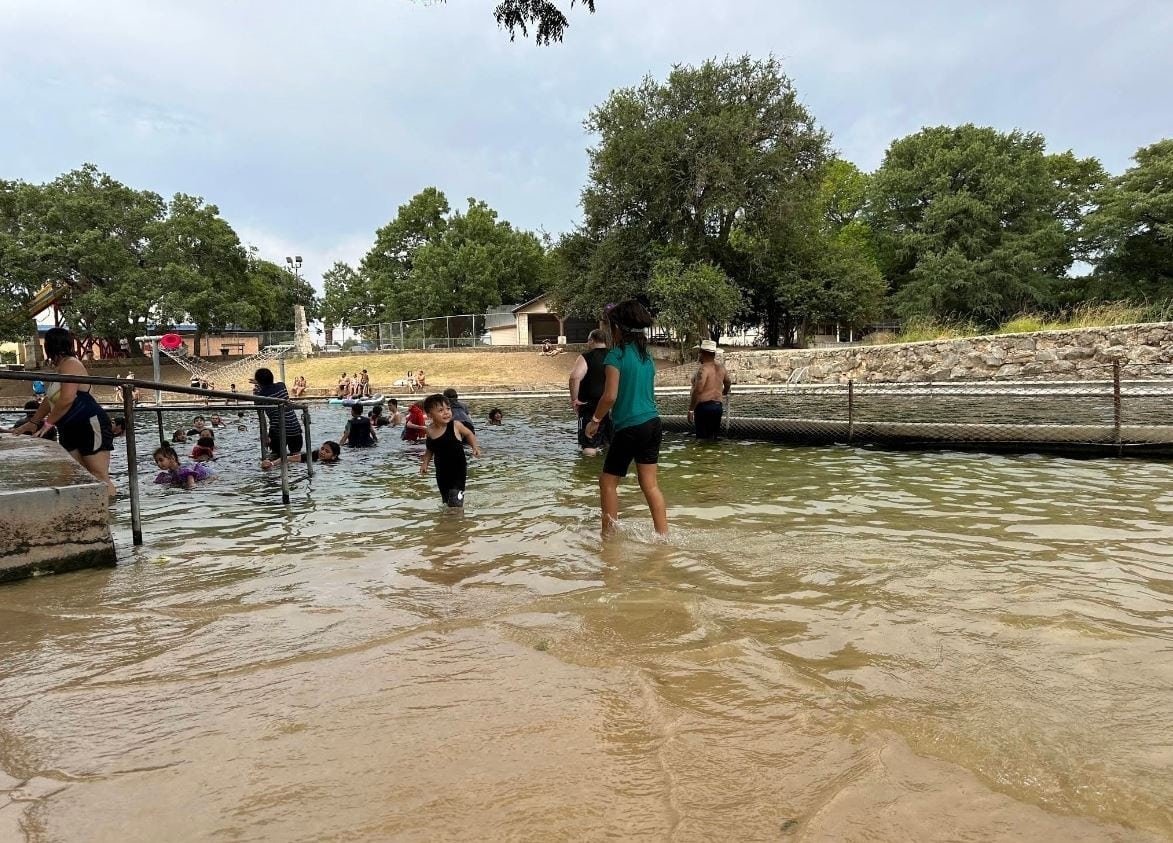
Some of the adults might be setting out a picnic from their coolers or firing up one of the park’s grills.
Wait, are those hamburgers I smell cooking?
Hanging in the air is that fantastic lazy summer haze of kids’ laughter, conversations fading in and out, and the happy drone of music. The smell of BBQ smoke and sunscreen scent the air.
Nobody is thinking about much of anything except the cold water or perhaps the Rangers or Astros score. Everyone is pretty much satisfied to be where they are right at that moment. But little do they know that right under their feet is some astonishing Texas history.
Long Before the Alamo
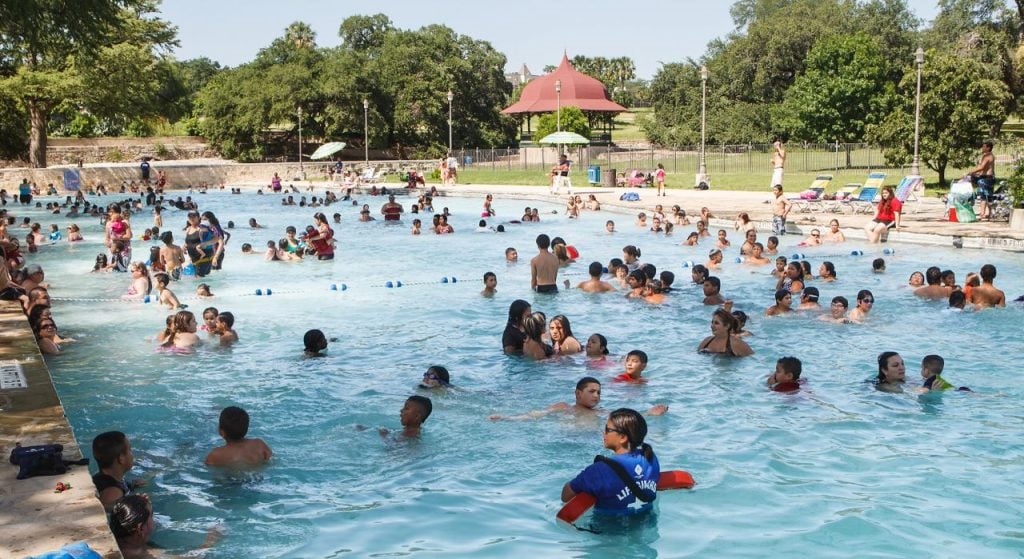
Behind the splashing water, the laughter, the smells of summer, is the fact that this very ground has been drawing people in for thousands of years.
Long before there were lawn chairs or lifeguards, this same spot was a place where people gathered for water, for survival, and for connection. And there is a deep link to modern Texas history. For instance, most Texans believe that San Antonio began at the Alamo. Well it is a bit more complicated than that.
On May 1, 1718, a Franciscan priest named Father Olivares stood at these springs, cut some brush and grapevines, said Mass, and named his little mission San Antonio de Valero. That mission was later moved twice. The second time, it landed on a spot by the San Antonio River where, 118 years later, 189 men died defending it. Yup, that’s The Alamo story we all know. Even the story of the water itself is remarkable.
Originally the pool was fed by springs bubbling up from the Edwards Aquifer, a vast underground reservoir beneath central Texas. The water naturally filters through cavernous cracks in the karst limestone bed, eventually emerging at over 600 feet in elevation.
It is this cycle that creates its clear, mineral-rich, and cool spring water that historically sustained indigenous groups and early settlers and fed the springs of San Pedro. The water is in fact so clean that San Antonio is the only major city in the world that does not treat its water before distribution. The aquifer does that work on its own. Let that sink in for a moment.
After heavy rains, the water returns to San Pedro shimmering aquamarine and emerald green. Artists have been trying to capture that remarkable color for generations.
In 1729, King Philip V of Spain declared the land around the springs public property, making it the oldest park in Texas and one of the oldest in the United States. Frederick Law Olmsted, the lauded landscape architect who designed Central Park, called it “a wooded spot of great beauty.”
From Natural Spring to City Pool
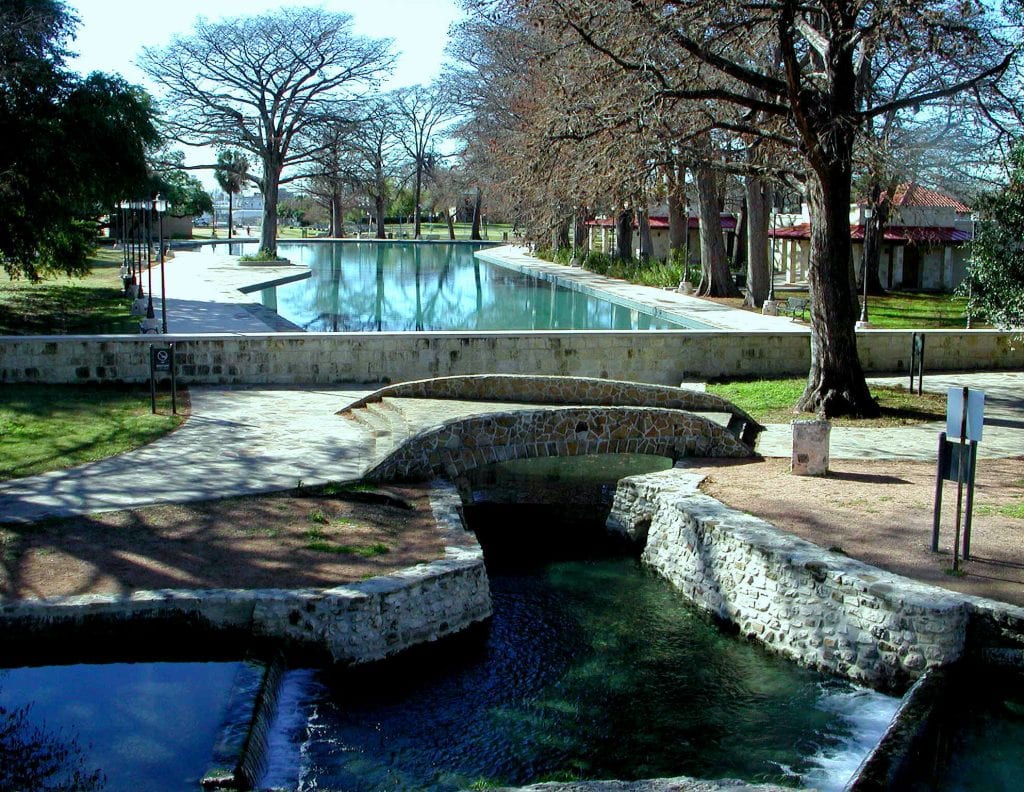
A municipal pool fed directly by the springs opened here in 1922. Families came all summer. The water was cold, clear, and free.
Sadly, aggressive pumping from the Edwards Aquifer had reduced spring flow enough that the pool closed in 1940. It sat empty for 14 years. A decaying eyesore in the middle of such natural beauty. Just a sad and fading memory. You could almost hear echoes of the past laughter.
In 1954, with funding from Howard E. Butt Sr., the man behind H-E-B, perhaps Texas’s most beloved grocery chain, the pool was rebuilt using city water. The pool is no longer fed directly by the natural spring that made this place famous, given the water demands of San Antonio. But it still is the largest pool in San Antonio at 805,000 gallons.
But that history still lingers in the layout, the stonework, and the way the space is designed to gather people around the water. The same ancient geology that drew people to the springs for 12,000 years is still directly underneath it. And families still flock here today.
Free admission makes enjoying the park achievable for families and offers a rare treat for urban dwellers. The park, and especially the pool, are a beloved piece of San Antonio. Lifeguards are on duty and the pool’s maximum depth is five feet, which makes it genuinely family-friendly.
The pool is seasonal and is typically open late spring through August. On weekends, the pool fills quickly, so arriving early is your best bet. It’s also worth checking the city’s Parks and Recreation site for any last-minute updates. Don’t forget, your gang can even bring softball equipment or bikes for some alternatives to spending the entire day poolside.
Before You Go
But when you do wrap up after a day of splashing around in the pool, you may be tempted to pack up the car and leave. But no trip to San Pedro Springs Park is complete without a visit to the grotto.
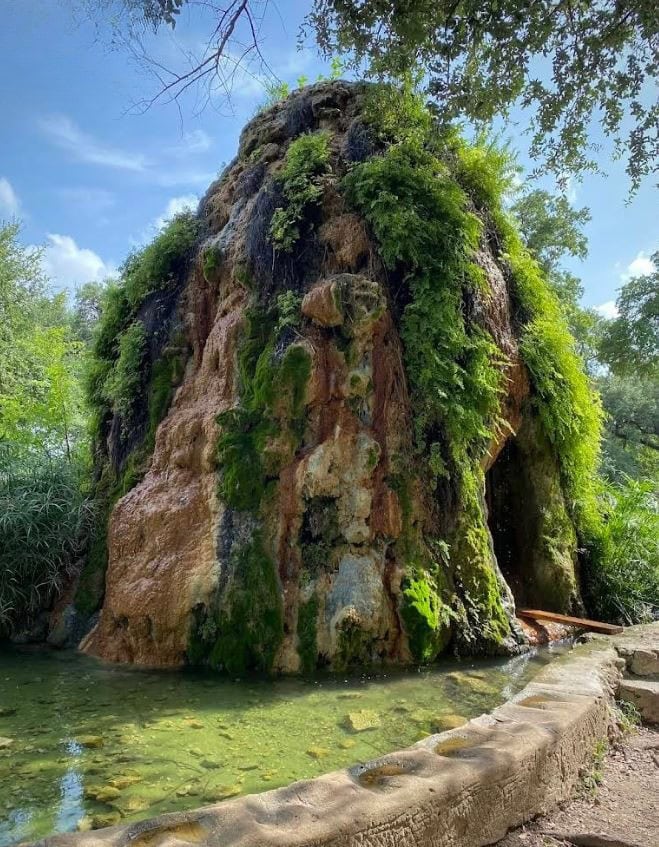
You’ll want to get your phone out for this. It’s a moss-covered structure of dark stone with arched openings, draped in creeping green vines. Most people assume it is something ancient and ceremonial. It isn’t.
Although rumors once suggested it housed a bear, the grotto was actually designed as a kind of refrigerator for park guests but purposefully built to look mysterious and intriguing.
You’d open the door up, set your lunch inside on the cool stones, go for a swim, and come back to it later. A pipe at the center fed spring water down the stone sides, keeping it cool and damp.
As you leave the grotto and walk on paths winding through the old-growth cypress and oak, you can still see the primary springs still bubbling from the limestone when the aquifer levels allow.
Within the park grounds, you’ll also find the San Pedro Playhouse, home to the Public Theater of San Antonio, and a tennis center with 22 lighted courts.

It’s almost shocking to realize that this peaceful space was once the setting for major moments in Texas history.
Texas Rangers and Comanche warriors, when they weren’t fighting, met at the springs for riding competitions that eyewitnesses described as something like a rodeo. Sam Houston gave his famous anti-secession speech here in 1860, knowing it would cost him the governorship. The U.S. Army even stabled its experimental Camel Corps at San Pedro. And yes, sightings of abandoned camels wandering Texas and the Southwest continued for decades.
Markers throughout the park trace its connection to the founding of San Antonio and the people who lived here 12,000 years ago. Long before San Antonio existed, the Payaya people lived around these springs. They called it “Yanaguana” which can be translated as “refreshing waters” or “spirit waters.
These words show that the spring was always more than just a water source. It was a gathering place, a center of daily life, and for thousands of years, people returned to it again and again. And in many ways, they still do.
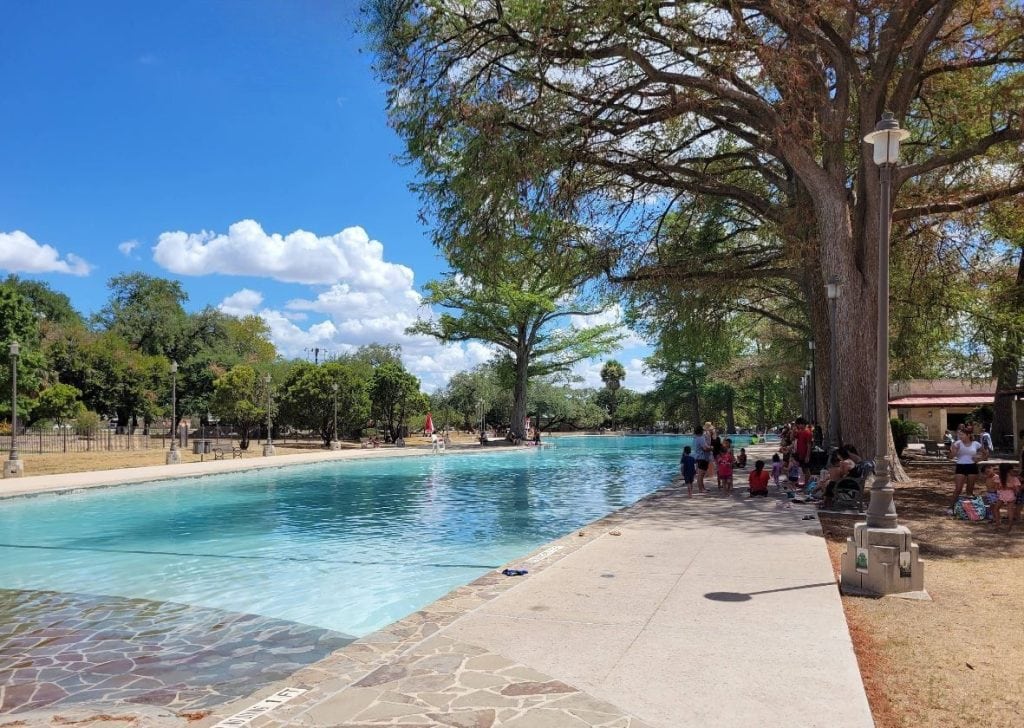
The pool may look different now. The water no longer flows the way it once did. But on any hot afternoon, you’ll still find people gathering here to cool off, spend time together, and refresh in the truest sense of the word.
Some places change and lose what made them special. San Pedro Springs Park isn’t one of them.

Kelly O’Brien
Travel Writer
I love traveling across the U.S. and discovering the kinds of places you don’t always hear about—the hidden gems, scenic drives, and towns with real character. I’m always chasing a mix of beauty, simplicity, and a bit of adventure, whether that’s out in nature or tracking down a great local spot to eat. It’s hard to say whether I’m more drawn to the mountains or the beach, so for now, I keep choosing both.
More Stories
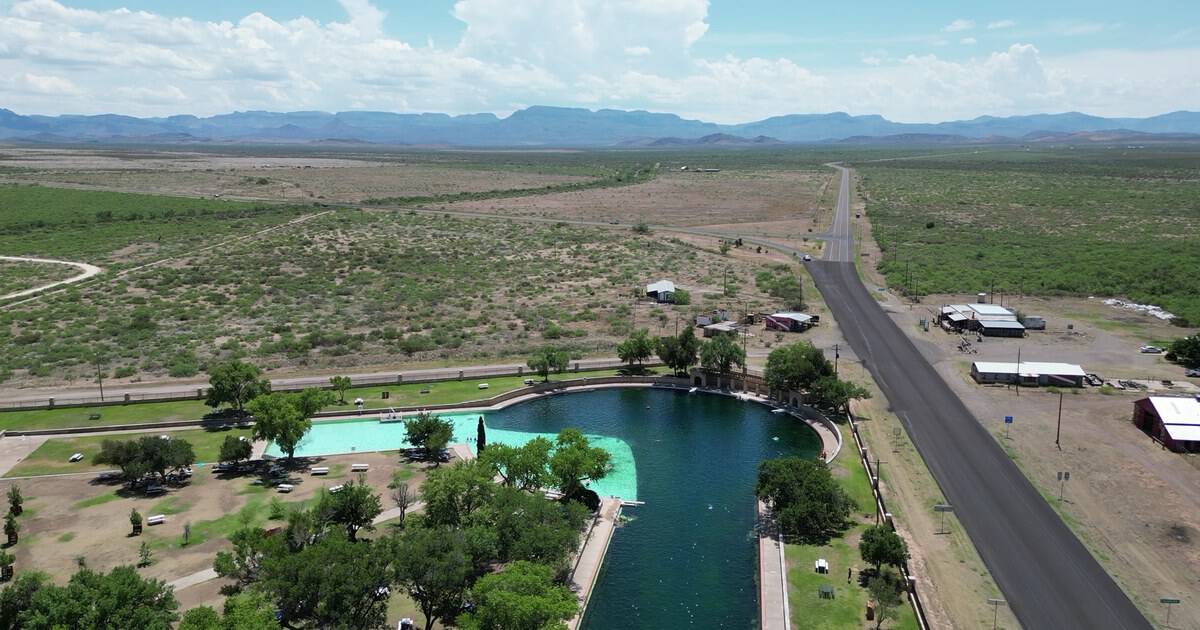
This Crystal-Clear West Texas Pool Is the World’s Largest Spring-Fed Swimming Hole, and It Stays 72 Degrees Year-Round
This Adventurous Texas Cavern Hides Glowing Blue Pools 180 Feet Underground
This Quiet North Texas Park Ends a Swaying Bridge at a 54-Foot Waterfall
This Crystal-Clear Texas Lake Is the Deepest in the State, and Its Water Is Clear Enough for 100-Foot Dives
Tags