The Hidden Underground Lake and Creek Texans Walk Right Past
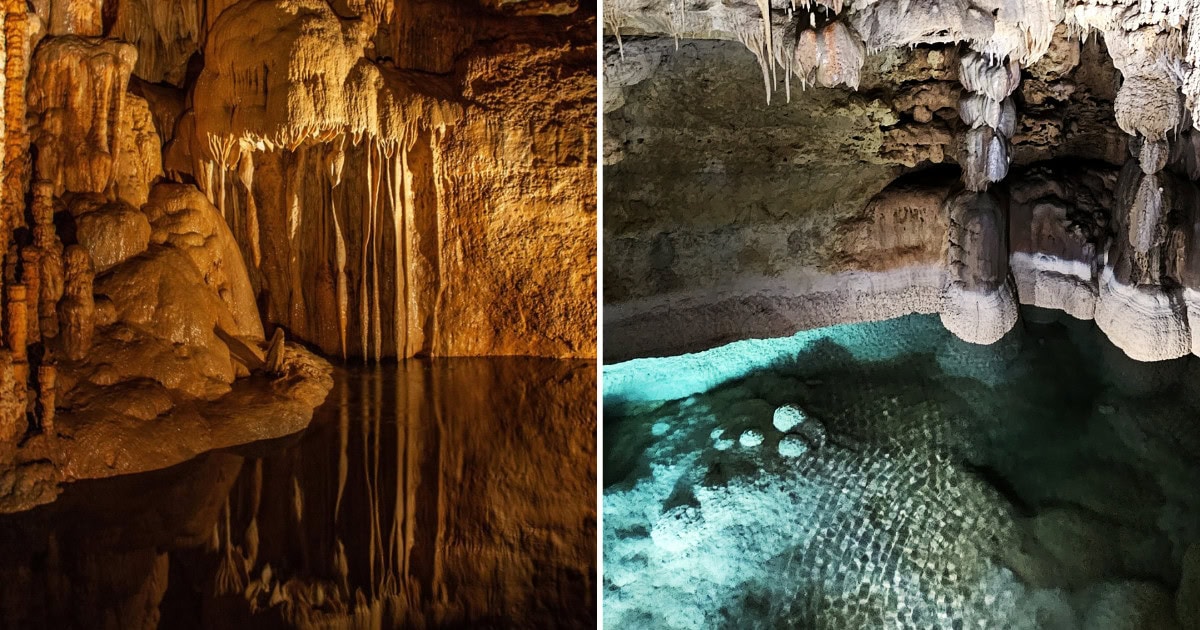
One hundred and eighty feet beneath the Texas Hill Country, in total darkness, an underground creek flows through ancient limestone chambers.
Nearby, a pool called Emerald Lake glows green under carefully placed lights, fed by water that has been dripping from the ceiling for thousands of years.
This is Natural Bridge Caverns, the largest commercial cave system in Texas, and most visitors have no idea these subterranean bodies of water even exist.
While the caverns are famous for their massive stalactites and towering stalagmites, the underground water features often get overlooked.
Yet it’s the water, constantly flowing and dripping through porous limestone, that created this underground wonder in the first place and keeps it growing today.
The Underground Water Features
Emerald Lake and Purgatory Creek
Natural Bridge Caverns is home to several underground bodies of water, remnants of the ancient processes that carved these passages over millions of years.
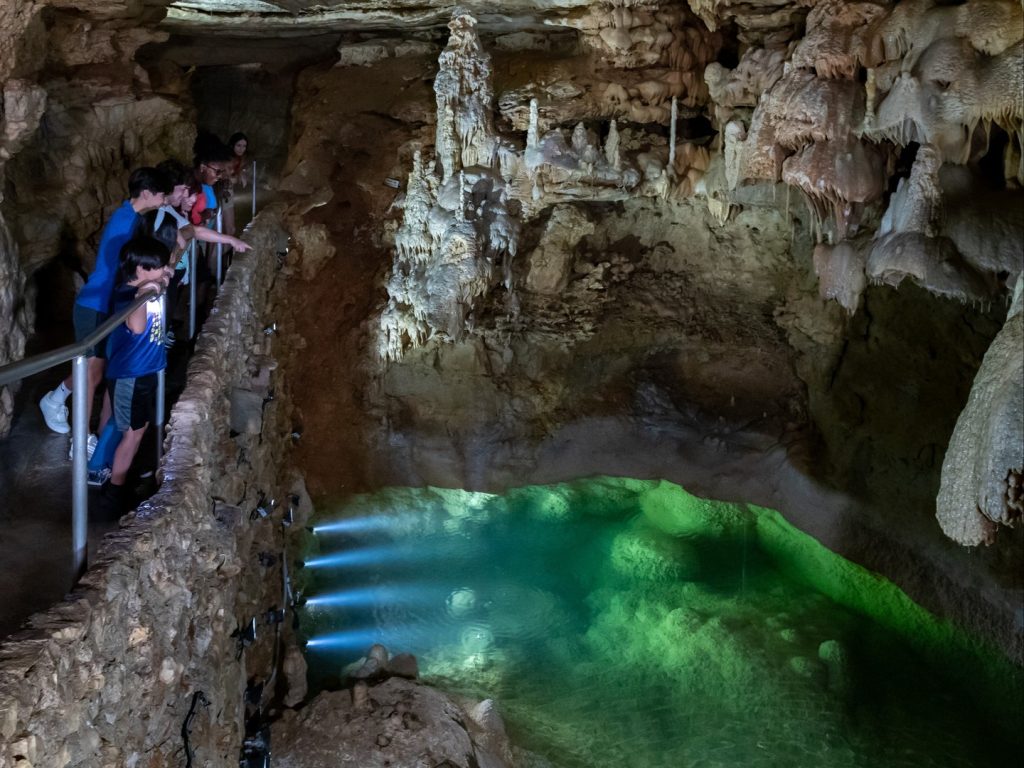
Emerald Lake is among the largest, a pool surrounded by flowstone formations that developed from the near-constant drip of water from above.
The pool gets its name from the striking green hue created by light refracting through the mineral-rich water.
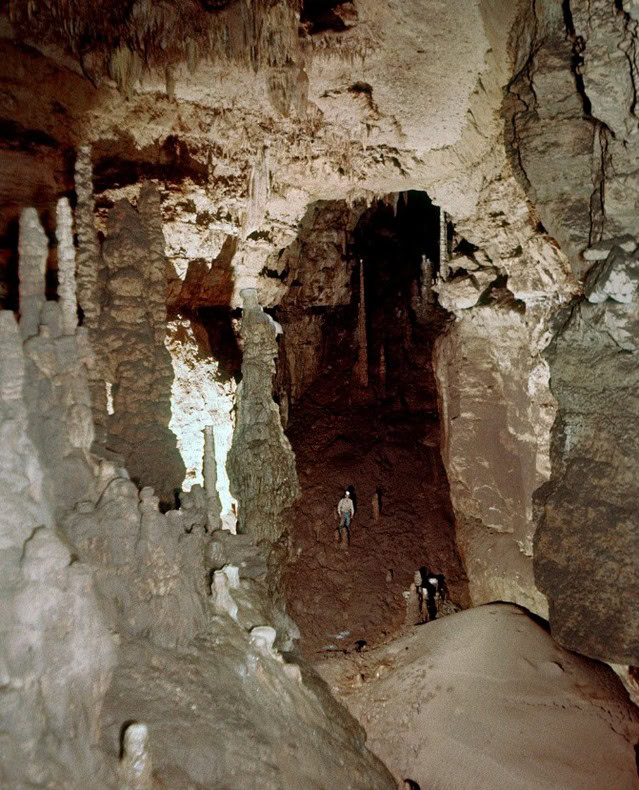
Purgatory Creek is another highlight, an actual underground creek that winds through the cave system.
Recently installed LED lighting illuminates the creek in ways that showcase its beauty. The creek flows fuller after rainstorms, so visiting shortly after wet weather offers the most dramatic views.
In 2019, cave explorers made an extraordinary discovery: new passages containing pristine travertine pools of flowing water stretching the length and width of the chambers.
One explorer described descending into a pit, hearing running water below, and finding his headlamp illuminating spectacular pools never before seen by human eyes.
Why the Cave Is Still Growing
Natural Bridge Caverns is what geologists call a “living” cave, meaning it’s still actively forming. The temperature inside holds steady at 70°F year-round, with humidity near 99 percent.
Rainwater percolates down through the porous limestone above, dissolving calcite along the way.
When the water enters the cave and releases carbon dioxide, it deposits that calcite, building the formations one drop at a time.
This constant water flow gives the formations a waxy luster rarely seen in other caves.
Under the right lighting, the stalactites and flowstones appear almost wet, gleaming as if recently polished. The water is the lifeblood of this underground world.
The Cave System
Texas’s Largest Commercial Cavern
Natural Bridge Caverns sits between San Antonio and New Braunfels, marked at the surface by a 60-foot natural limestone bridge near the entrance.
Four college students from St. Mary’s University in San Antonio discovered the main passages on March 27, 1960, becoming the first humans to see chambers that had remained sealed for millennia.
The caverns opened to the public in 1964 and became a National Natural Landmark in 1971.
Today, over two miles of passages have been mapped, though only a portion is open to visitors.
The largest room, the Hall of the Mountain Kings, stretches 350 feet long, 100 feet wide, and 100 feet high.
Formations like the 40-foot-tall Watchtower stalagmite and the massive Chandelier stalactite draw gasps from visitors.
Exploration continues to this day. Since 2019, teams have discovered over 1,600 feet of new passages, including chambers with unique black calcite formations never before seen in the caverns.
How to See It: Tour Options
Discovery Tour
The most popular option takes visitors through the cavern’s most spectacular rooms, descending 180 feet below the surface. You’ll see Emerald Lake, Purgatory Creek, and the famous formations along lit pathways. Tours last 70-75 minutes and depart frequently throughout the day.
Prices typically range from $20-30 for adults and $15-20 for children, though rates vary by day. Online booking often provides discounts.
Hidden Wonders Tour
Opened in 2023, this tour explores chambers that had never been accessible to the public.
The route features some of the cave’s most delicate formations, including six-foot-long soda straws and brilliant cave bacon.
The tour ends in an underground ballroom used for special events, followed by a sound and light show.
A unique feature: the B.A.T. (Belt Assisted Transport), the only conveyor system ride out of a cavern in the world. Tour depth reaches 160 feet, and duration is 70-75 minutes.
Adventure Tours
For those wanting a more rugged experience, the Adventure Tours take you off the paved paths into the muddy, natural world of caving.
Expect climbing, crawling, and rappelling. The most extreme version descends through a 22-inch mine shaft to reach depths of 230 feet.
These tours run $140+ per person, require advance booking, and have limited group sizes.
What Else to See
Cave Formations
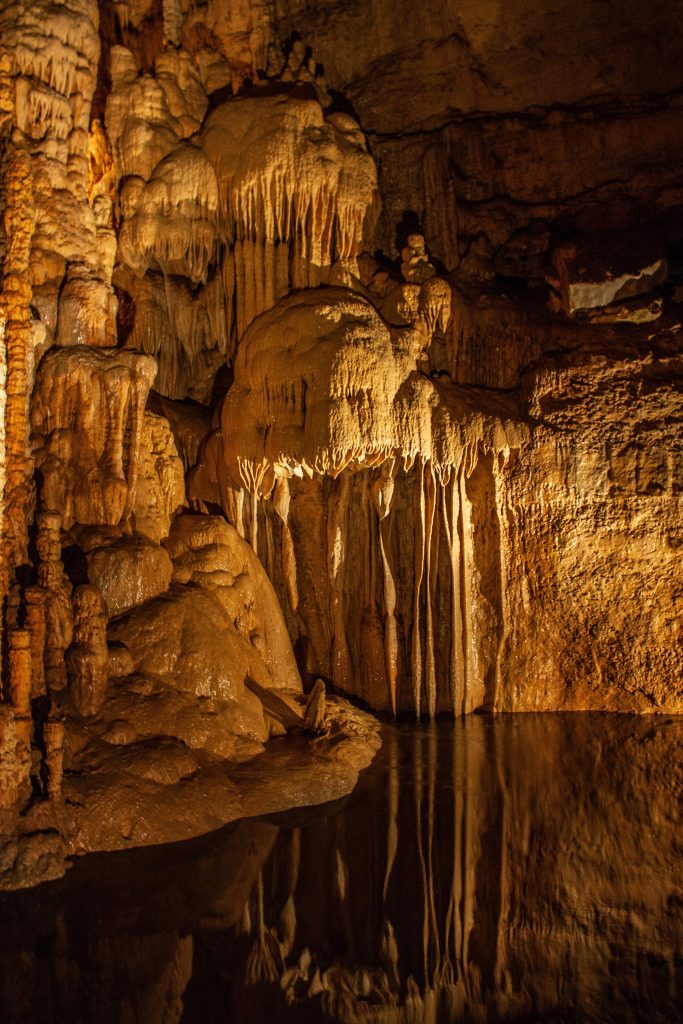
Beyond the water features, the formations themselves are extraordinary. The Castle of the White Giants contains ceiling-covering stalactites dubbed the Chandelier.
The Valley of the Fallen Lords features massive stone slabs. Flowstones, soda straws, and rare “fried egg” formations appear throughout.
A tiny cave fern grows impossibly deep underground near a path light, sprouting on its own in an environment that should not support plant life.
Above-Ground Attractions
Natural Bridge Caverns has expanded into a full-day destination with a six-story ropes course and zip line, a 5,000-square-foot outdoor maze, and a Mining Company where kids can pan for gems and fossils.
Your Next Underground Adventure Awaits
Natural Bridge Caverns offers something rare: a chance to witness geology in action, to see the underground world that water has been carving for millions of years.
While the formations get most of the attention, the hidden bodies of water, Emerald Lake, Purgatory Creek, and the newly discovered pristine pools, reveal the true nature of this living cave system.
Most visitors walk through focused on the stalactites overhead. Look closer. Listen for dripping water. That’s the sound of Texas’s largest cavern still growing, one drop at a time.

Stella Raines
Editor-in-Chief
Stella brings over a decade of storytelling experience to TX Headlines. With roots in West Texas and a love for road trips, she leads the editorial team with an eye for the hidden stories that make Texas unforgettable.
More Stories
6 Incredible Texas Waterfalls That Are Worth the Drive

This North Texas Bluebonnet Trail Winds 40 Miles Through Wildflower Country Each Spring
This Short Texas Trail Delivers Jaw-Dropping Canyon Scenery for Barely Any Effort
This Easygoing 2.7-Mile Texas Trail Ends at a Secret Waterfall and Hills Full of Wildflowers
Tags