History and Preservation Efforts in the Gruene District
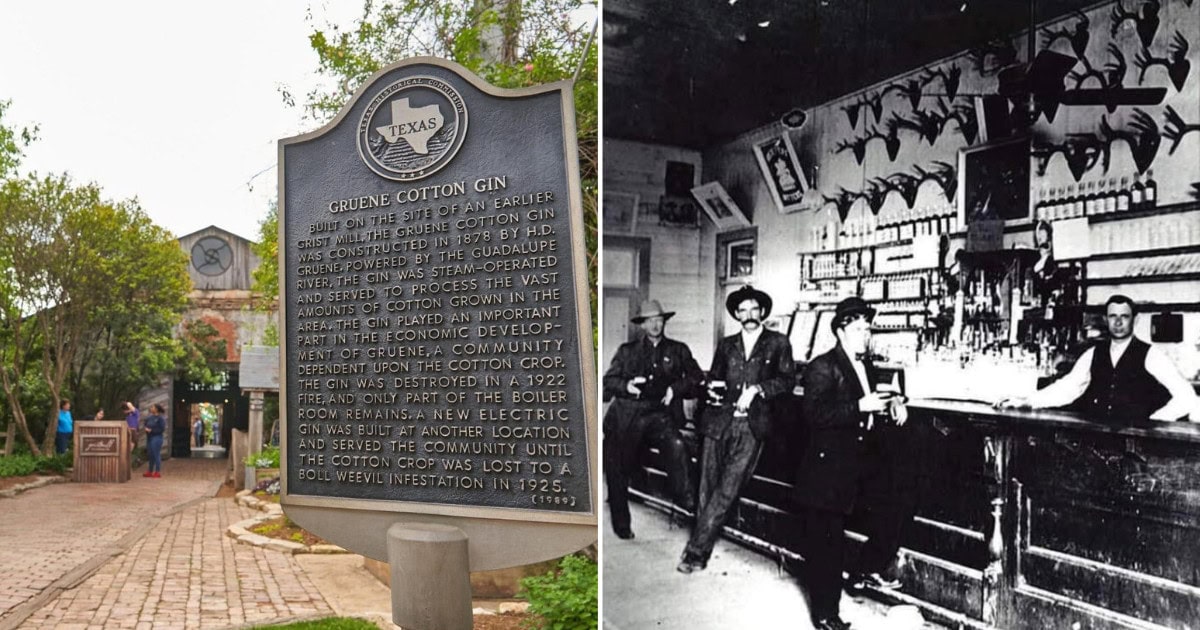
The Historic Gruene District exists as a preserved nineteenth-century Texas settlement within the broader New Braunfels city limits, maintaining a distinct identity and historical character that distinguish it from surrounding suburban development.
Today, the Gruene District is one of the most famous tourist destinations in New Braunfels, housing Gruene Hall, restaurants, specialty shops, and other must-visit places.
In this article, we’ll be tracing back the Gruene District’s history and looking into all the active efforts to preserve this iconic district.
Key Historical Highlights
Founding and Early Development
Heinrich D. Gruene arrived in Texas during the major German immigration wave of the 1840s, eventually purchasing land along the Guadalupe River in 1872.
The riverfront location offered fertile soil, irrigation potential, and transportation advantages, making it an ideal place to establish a thriving agricultural settlement between the already-growing town of New Braunfels and other nearby communities.
These natural and geographic benefits laid the foundation for Gruene’s development as both a farming hub and a service center for the surrounding region.
Cotton soon became the lifeblood of the community, generating enough prosperity in the late nineteenth century to support new businesses, infrastructure, and a growing labor force.
Gruene invested heavily in the equipment and commercial buildings required for cotton processing—such as gins, storage facilities, and transport connections—which, in turn, attracted additional settlers.
Farmers, laborers, merchants, and craftsmen all found opportunities within the cotton-driven economy, allowing Gruene to evolve from a small settlement into a fully functioning agricultural town.
The town’s identity was further shaped by its strong German-American culture. Settlers preserved their heritage through German-language church services, school instruction, singing societies, and social clubs.
All of these were designed to maintain traditions despite the surrounding Anglo-Texan influences.
Their architectural style also reflected this heritage—stone buildings, wide porches, and practical layouts adapted German design principles to the Texas climate.
Commercial structures clustered around the cotton gin, while homes spread outward, blending work proximity with space for gardens and livestock, creating a community that balanced cultural continuity with the practical needs of frontier life.
Historic Buildings
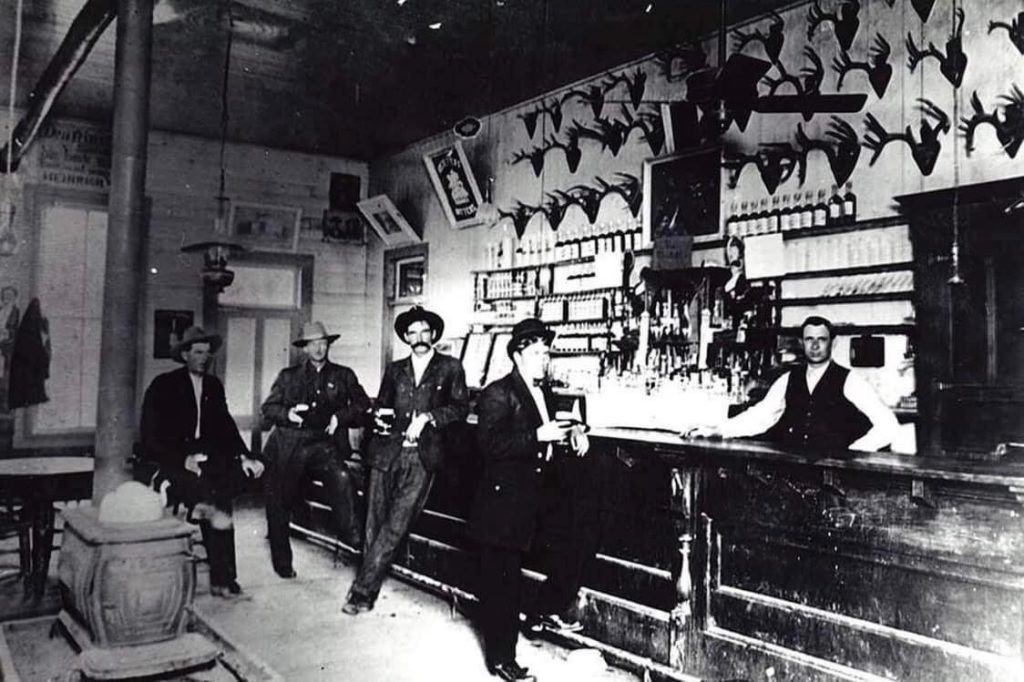
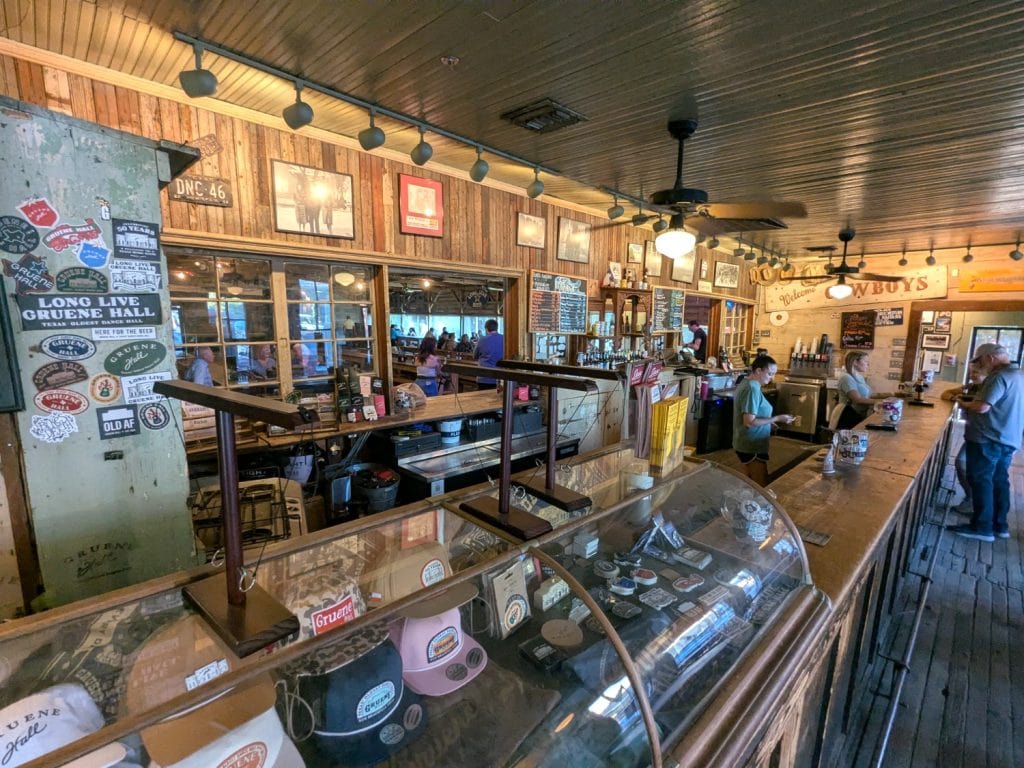
Gruene Hall, built in 1878, is the district’s most iconic landmark and is widely recognized as the oldest continually operating dance hall in Texas.
Originally constructed by Heinrich D. Gruene as a social hub for German immigrant families, its simple, open-air design provided space for dances, celebrations, and community gatherings.
Much of its original structure—including the long-leaf pine floors and weathered exterior—remains intact, giving the hall an authenticity that reflects nearly a century and a half of continuous use.
The nearby Gruene Cotton Gin, now home to the Gristmill River Restaurant & Bar, once served as the agricultural engine of the community.
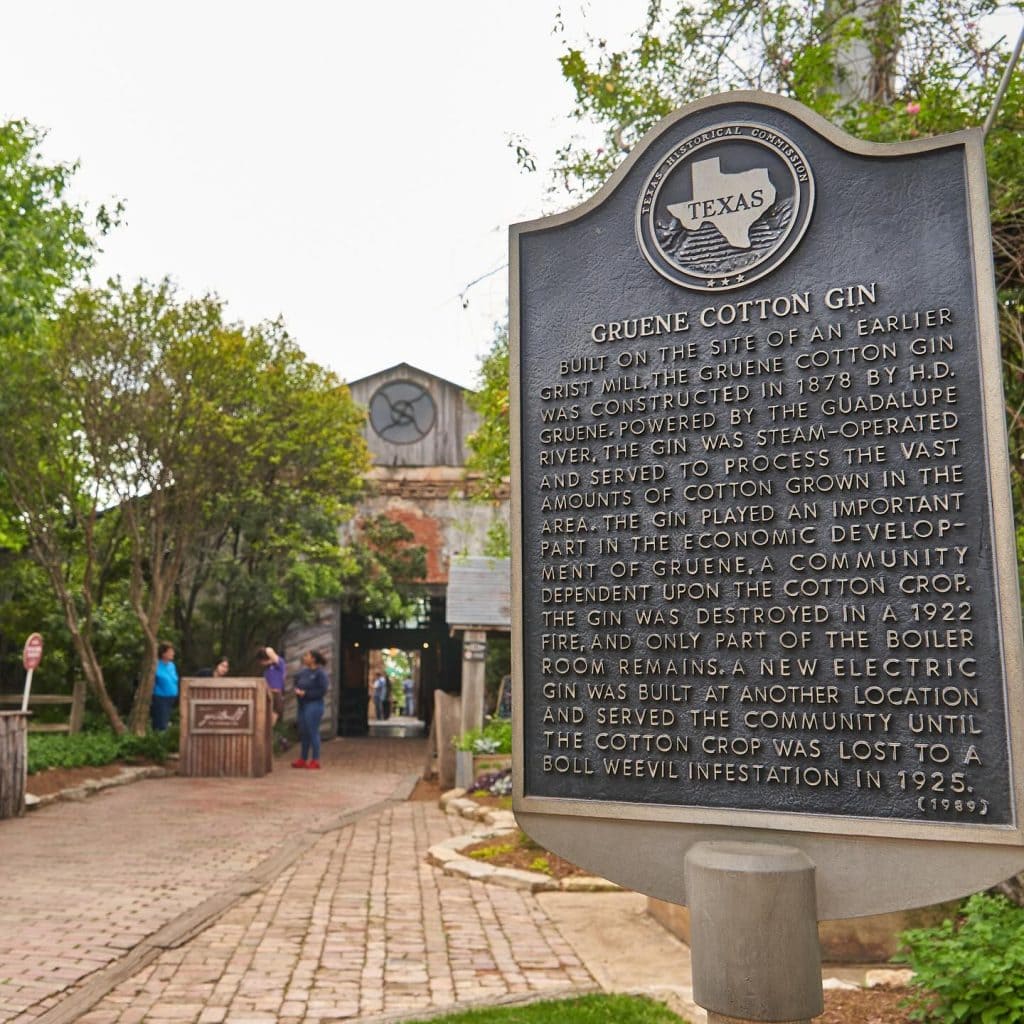
From the 1870s into the early 1900s, the gin processed cotton harvested from Gruene farmland and surrounding areas, using water- and later steam-powered machinery.
After cotton production declined, the gin sat vacant for decades until it was repurposed into a restaurant that preserved key structural elements, allowing guests to dine within a space that still hints at its industrial past.
Together with Gruene’s preserved homes, stores, churches, and small commercial buildings, these landmarks create a cohesive historic district rather than isolated relics.
Many structures retain their original architectural character while supporting modern businesses, offering visitors an immersive experience where history and contemporary life blend seamlessly.
Preservation Efforts
Preservation efforts in Gruene took shape in the 1970s, when new property owners recognized that the district’s historical character was not only culturally important but also economically valuable.
Early work focused on stabilizing deteriorating buildings, documenting their significance, and securing protective designations to prevent demolition.
These foundational steps set the stage for a long-term strategy that treated preservation as both a community responsibility and an engine for sustainable tourism.
State-level recognition soon followed, with Gruene added to the National Register of Historic Places in 1975.
Although the designation does not restrict private owners from modifying their buildings, it provides access to tax credits for historically sensitive renovations and elevates public awareness of Gruene’s heritage.
This recognition reinforced the narrative that Gruene’s story—rooted in German immigration, agriculture, and community life—holds statewide and national value.
A network of organizations now supports preservation within the district, including the New Braunfels Conservation Society, the Texas Historical Commission, and local New Braunfels advocacy groups.
Working together, they provide guidance on appropriate materials, exterior conservation, and ways to integrate modern commercial needs without compromising historical character.
These guidelines ensure that restaurants, shops, and venues can thrive within historic structures while preserving the architectural authenticity that makes Gruene so distinctive.
Cultural Significance
Gruene’s German heritage remains a defining influence on the district’s cultural identity, seen in music preferences, festivals, and community events that reflect German-Texan traditions.
Events like Wurstfest maintain connections to German origins, while contemporary residents participate in traditions even if German language and customs are no longer universally practiced.
This heritage shapes both the historical understanding of Gruene’s development and its modern authenticity as a cultural destination.
Gruene Hall plays a central role in preserving these traditions by maintaining live music and dance practices that German-American communities historically valued.
The hall continues to host social gatherings, allowing visitors and locals to experience music, dancing, and community bonding in ways similar to original German-American settlers.
Its function as a working music venue demonstrates that preservation can involve sustaining cultural practices, not just the physical buildings themselves.
Annual events like Wassailfest during the Christmas season and heritage celebrations throughout the year reinforce German-Texan culture while serving tourism and community functions.
From traditional dance nights to contemporary concerts, these activities preserve cultural practices across generations, keeping the district vibrant and rooted in its German-American origins.
Visitor Experience
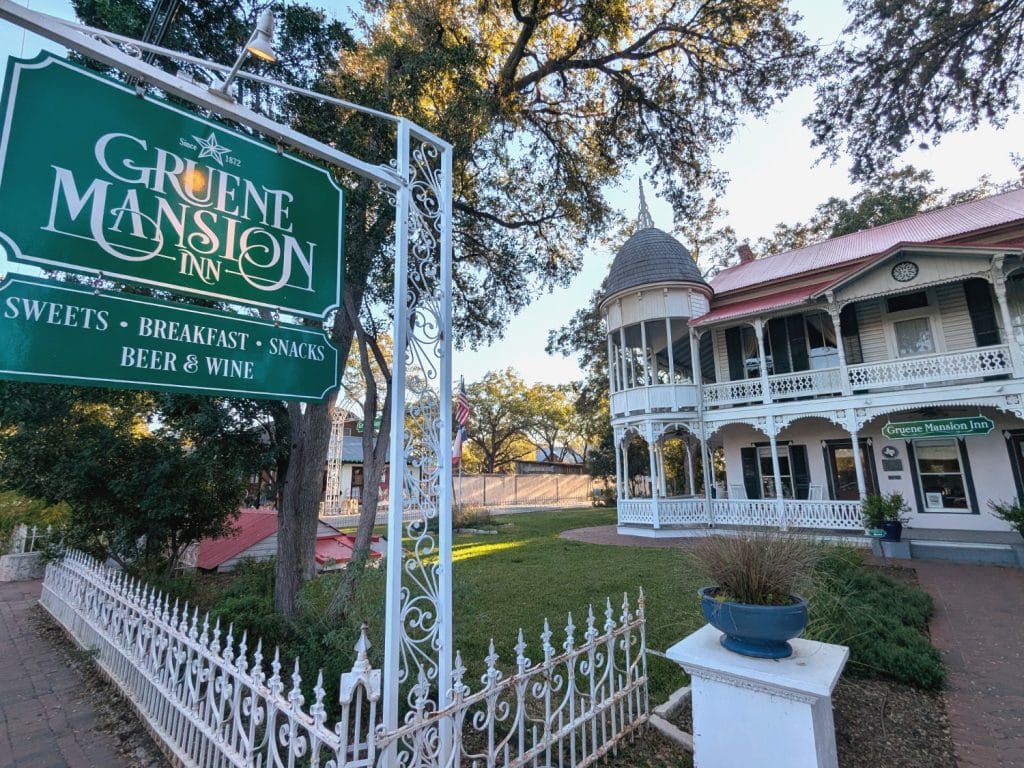
Self-guided walking tours and historic markers throughout Gruene provide accessible historical context as visitors explore shops, restaurants, and the riverfront.
Markers at key buildings explain construction dates, architectural features, and historical functions, offering casual education without requiring formal tours or extensive research.
This approach makes historical learning an integrated part of the visitor experience.
Formal museums or dedicated interpretive stops are limited in Gruene, reflecting the district’s small scale and its philosophy of maintaining living communities rather than museum-style exhibits.
Most historical education occurs through signs, staff knowledge, and architectural evidence in preserved buildings, allowing visitors to experience history organically while the district remains functional.
Dining, shopping, and attending shows also offer informal learning opportunities.
Meals at the Gristmill reveal the cotton gin’s agricultural history, shopping in preserved stores teaches about nineteenth-century retail, and Gruene Hall shows the social role of dance halls in immigrant communities.
Visitors are encouraged to respect historical structures, avoid climbing or removing elements, and understand that Gruene operates as a real community, not just a tourist attraction.
Preserving the Past for the Future
Gruene’s history and preservation efforts have created a unique destination where visitors experience authentic Texas heritage through buildings that witnessed and supported German immigrant community development.
The success of these preservation efforts demonstrates that historical buildings can remain economically viable through adaptive reuse.
Furthermore, it shows that tourism can support rather than destroy historical character when managed appropriately, and that authentic heritage attracts visitors more effectively than manufactured historical theming.
Understanding Gruene’s history enhances every activity within the district, transforming meals into dining in buildings that processed agricultural harvests and transforming shopping into browsing spaces that served frontier communities.