10 Famous Food Halls Across the USA
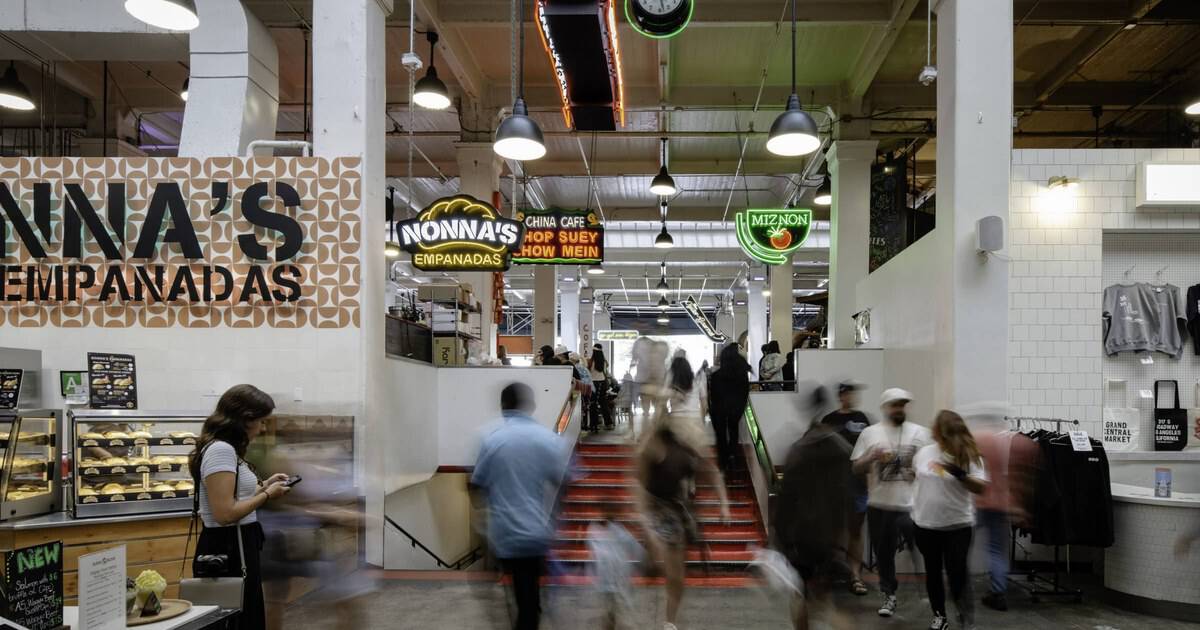
I judge a city by whether it has one great room where everybody eats. Not a restaurant, not a food court by the mall escalators, but a real hall with a hundred smells fighting for your attention and no wrong way to order lunch.
That is the magic of the American food hall, a place where hunger meets history. Old train sheds, cookie factories, and Sears warehouses have been reborn as the best tables in town, and the ten below are the ones worth planning a trip around.
Here is a coast-to-coast tour of the halls that turned grocery shopping into a day out. They run west to east and back again, packed with vendors who have fed their neighborhoods for generations, and there is a Texas favorite waiting at the end.
1. Chelsea Market, New York
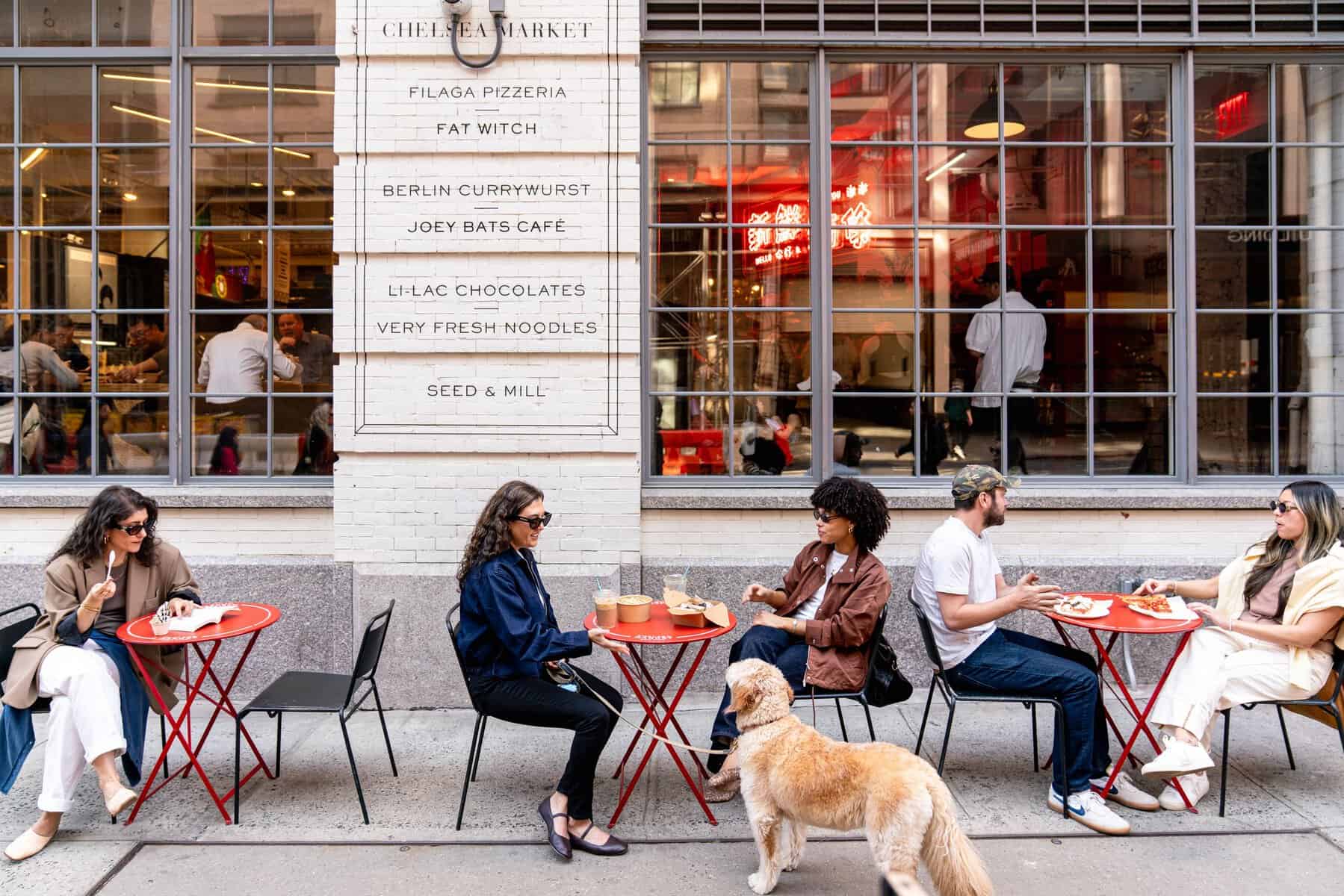
The building that feeds Manhattan once fed the whole country cookies. This full-block brick complex was the National Biscuit Company factory, and the Oreo was invented on these floors in 1912. The city named the adjacent stretch of Ninth Avenue “Oreo Way” in 2002 to prove it.
A former lawyer named Irwin Cohen bought the abandoned factory in 1993 and turned 1.2 million square feet of it into shops, offices, and one very famous concourse. Google and the Food Network work upstairs. The rest of us come to eat.
Follow the exposed pipes and worn brick past a who’s who of New York eating. Los Tacos No. 1 keeps a line all day, The Lobster Place stacks crushed ice with the morning catch, and a repurposed drill bit spouts water down a wall like an industrial fountain.
The High Line runs right overhead, so a stroll on the elevated park can drop you straight at the door. More than 30 vendors trade inside, from bakeries to a spice shop, which is enough to graze away a whole afternoon.
Where: 75 Ninth Avenue, New York, NY 10011.
2. Reading Terminal Market, Pennsylvania
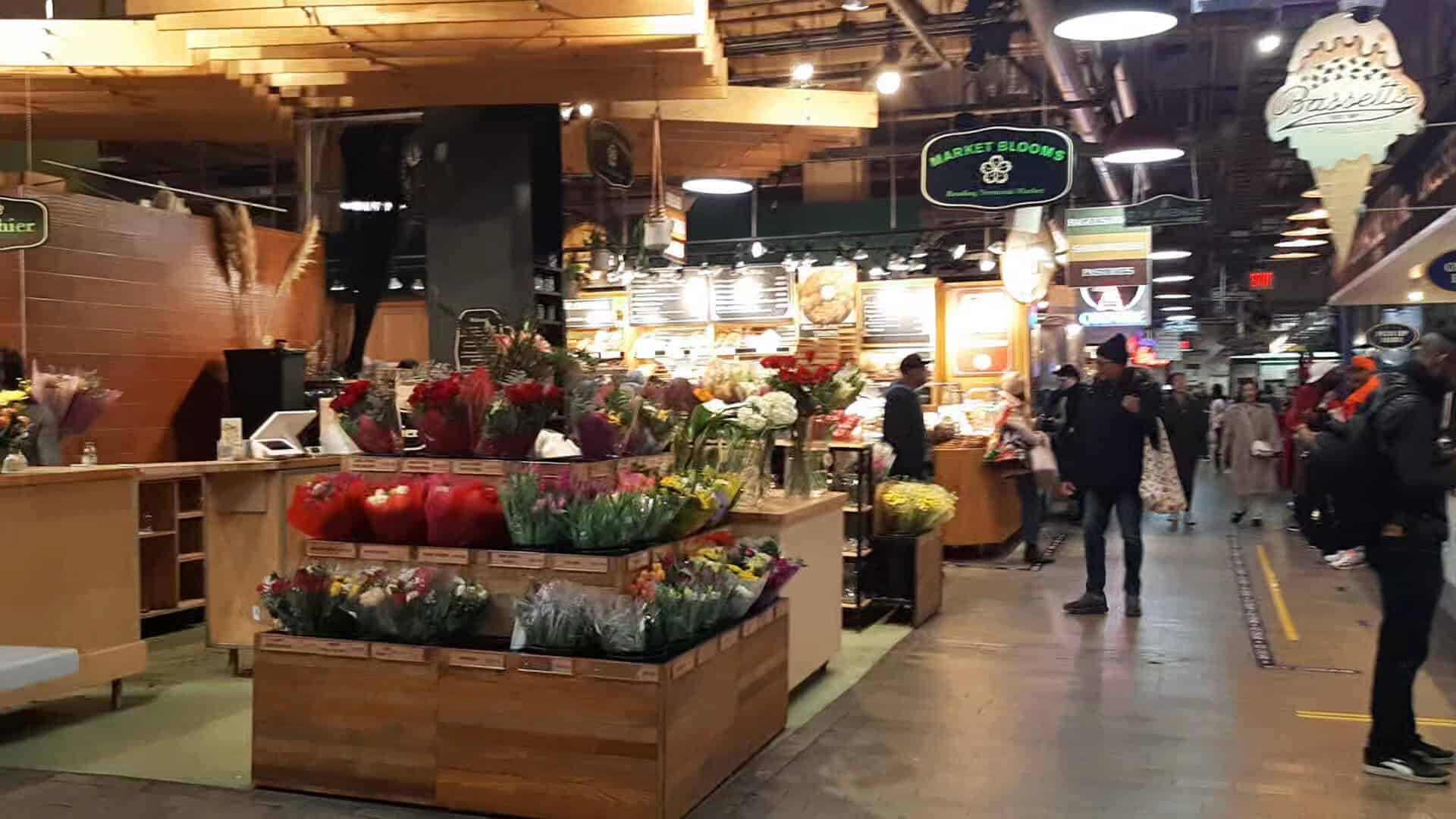
Tucked beneath a former train shed since 1893, this Philadelphia landmark is more than 130 years old and still packed shoulder to shoulder at noon. When the railroad wanted the block, the merchants refused to leave, so the market was simply built under the tracks.
By 1913 the place was booming with 250 food dealers and 100 farmers working six-foot stalls. That energy never really left. Roughly 80 vendors trade here now, and the aisles still run in the same tight grid the merchants laid out over a century ago.
Come hungry and follow the crowds. DiNic’s piles roast pork with broccoli rabe onto a soft roll, Bassetts has churned ice cream here since 1861, and Amish families from Lancaster County sell scrapple, soft pretzels, and shoofly pie a few stalls over.
Where: 51 North 12th Street, Philadelphia, PA 19107.
3. Ferry Building Marketplace, California
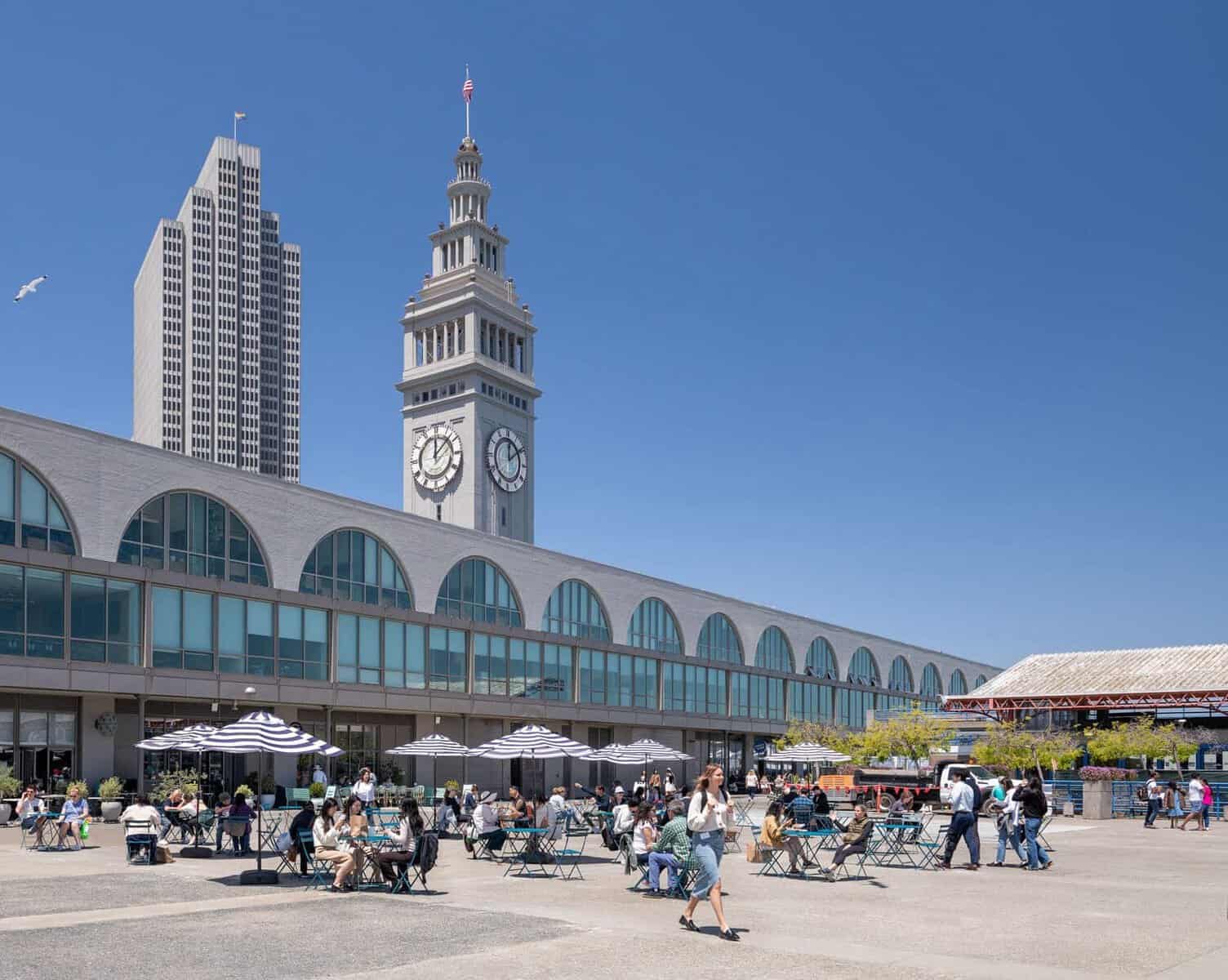
You feel this one before you taste it. The Ferry Building opened in 1898 as San Francisco’s great gateway, its 245-foot clock tower watching over the water while ferries poured commuters into the city by the thousands.
Bridges and cars nearly killed it. The building became dull office space in 1955, and a double-deck freeway threw it into shadow for 35 years until the 1989 earthquake brought the freeway down and reopened the waterfront to the light.
A four-year restoration reopened the Grand Hall in 2003 under a 660-foot skylight nave. Now you can slurp Hog Island oysters, pick up Cowgirl Creamery cheese, and on Saturdays browse one of the country’s finest farmers markets right out front.
The tenants lean local and proud of it, from Blue Bottle coffee to Bay Area bakers and chocolate makers. Grab a bench facing the water, watch a ferry pull in, and you get the view and the meal in one sitting.
Where: 1 Ferry Building, San Francisco, CA 94111.
4. Ponce City Market, Georgia
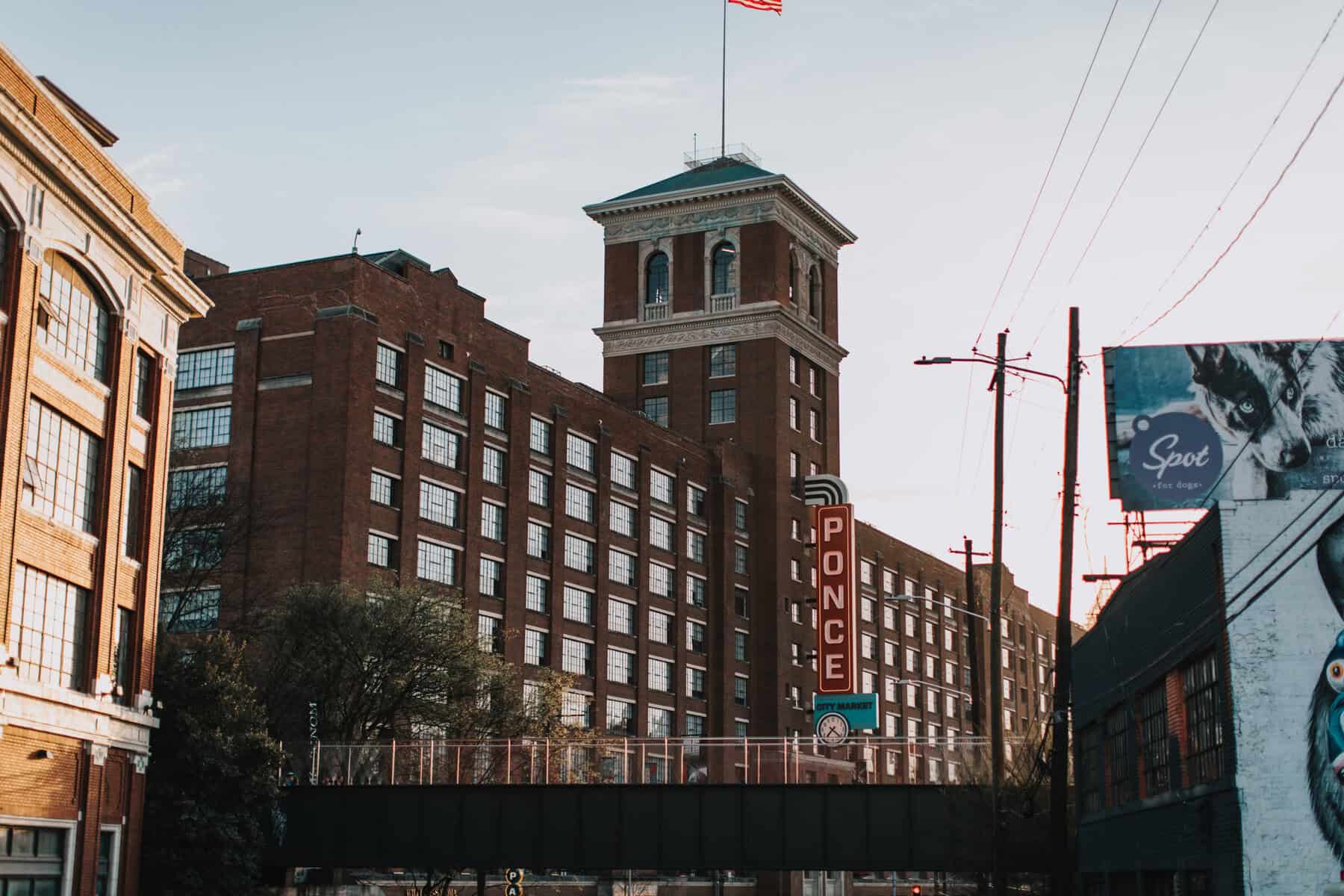
Thirty thousand Atlantans showed up when Sears opened this building in 1926, drawn by all 35,000 items in the famous catalog under one enormous roof. Workers raised the whole thing in a record six months.
Built in phases, the brick giant eventually swelled to two million square feet before Sears left in 1979. It sat quiet for years, then reopened in 2014 as the city’s hippest food hall, modeled on Chelsea Market up in New York.
The Central Food Hall anchors the ground floor with local favorites like H&F Burger, while a rooftop crowns the whole thing with carnival games and skyline views. Step outside and the Atlanta BeltLine trail rolls right past the door.
Where: 675 Ponce de Leon Avenue NE, Atlanta, GA 30308.
5. Grand Central Market, California
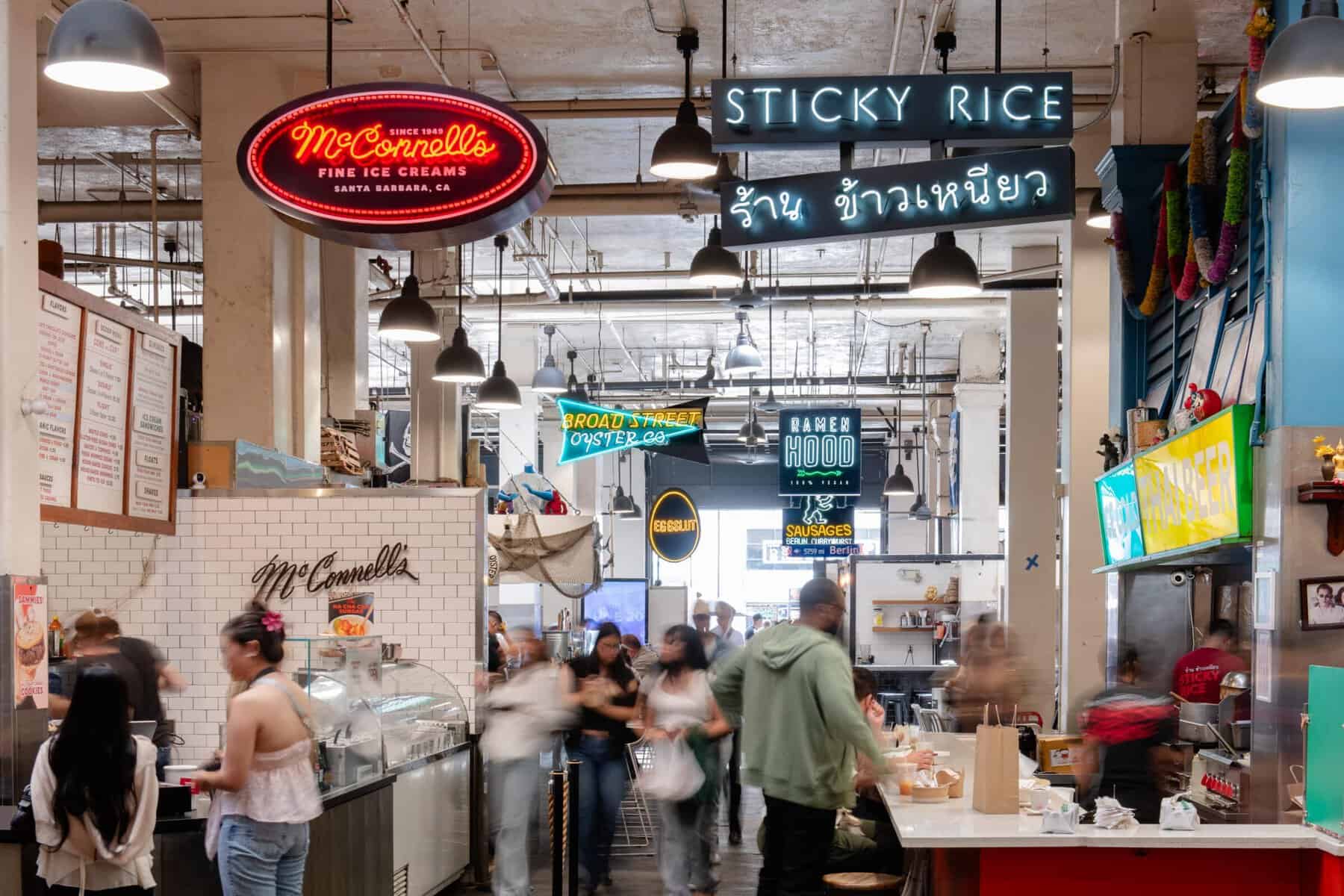
Some rooms simply refuse to quit. Grand Central Market has fed downtown Los Angeles without a single break since 1917, and its glowing neon signs have become as photographed as anything in the city.
It fills two adjacent buildings from 1897 and 1905, one of them the first reinforced-concrete building ever raised in Southern California. In the 1920s more than 90 stalls sold produce, meat, cheese, coffee, and flowers to a growing city.
The lineup still reads like an edible map of LA. At Tacos Tumbras a Tomas, one family has served Michoacan-style carnitas for over 50 years, moving more than 300 pounds a day, while a runny-yolk sandwich from Eggslut pulls a very different crowd.
More than 40 vendors trade under the vintage signage now, and directors love the place for exactly that look. Come for pupusas, stay for an egg sandwich, and you have basically eaten your way through a century of the city.
Where: 317 South Broadway, Los Angeles, CA 90013.
6. Time Out Market, Massachusetts
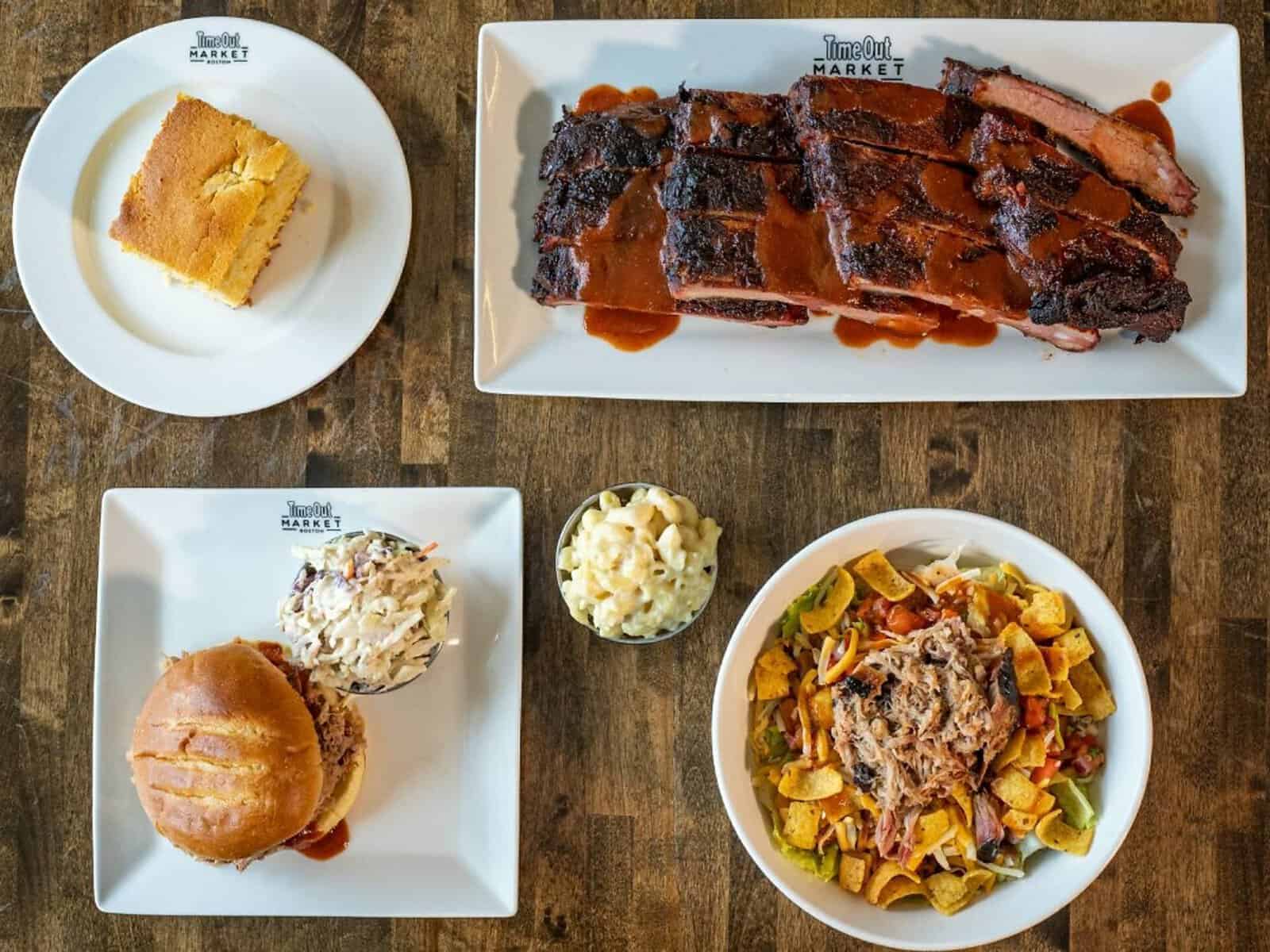
A food hall does not need a century of dust to feel special. Time Out Market opened in Boston’s Fenway in June 2019, three blocks from the ballpark, inside a 1929 Art Deco warehouse that Sears once used for storage.
The idea is refreshingly simple. Time Out’s Boston editors handpicked 15 of the city’s best chefs and set them loose across 25,000 square feet, so you can eat award-winning food from talent that usually books out weeks ahead.
Everything shares one big room. Two full bars, a demo kitchen, a retail shop, and long communal tables keep the place humming from morning coffee to a late craft cocktail, all under the original building’s handsome Art Deco bones.
Where: 401 Park Drive, Boston, MA 02215.
7. Pike Place Market, Washington
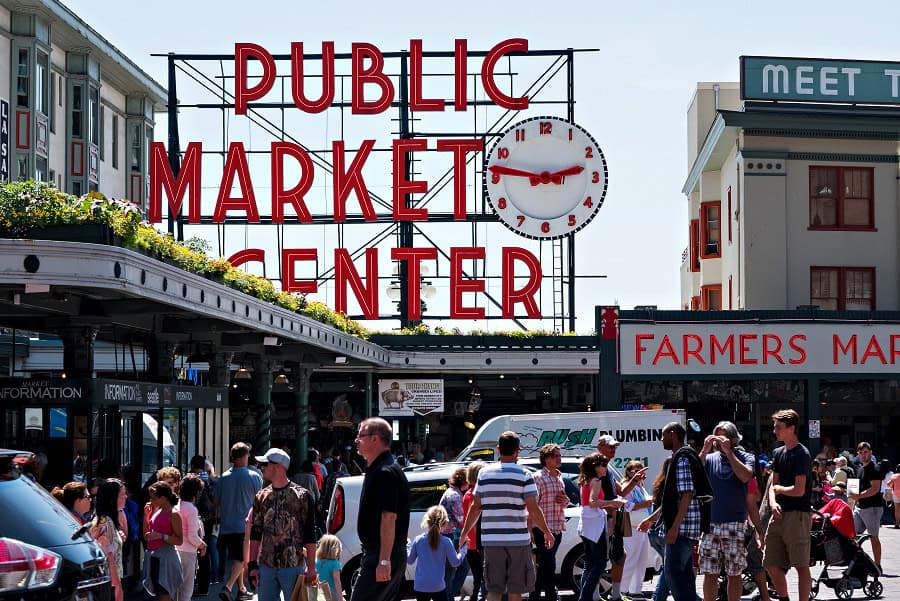
Ask anyone to picture a public market and they probably picture this one. Pike Place opened in 1907 so farmers could sell straight to shoppers, cutting out the price-gouging middlemen, and it is now one of the oldest continuously operating markets in the country.
The theater is half the fun. Fishmongers at Pike Place Fish have hurled salmon over the counter since the 1930s, when a customer’s clam order first went sailing through the air, and the crowd has been gathering to watch ever since.
There is far more than the toss. The very first Starbucks still pours a few steps away, Beecher’s pulls curds through its front window, and stalls overflow with flowers, produce, and freshly cracked Dungeness crab across nine sprawling acres.
A 2017 expansion added the MarketFront overlook, with fresh views of Elliott Bay and the ferries crossing it. Down below, Rachel the bronze piggy bank has greeted shoppers at the entrance for decades, and everyone still rubs her snout.
Where: 85 Pike Street, Seattle, WA 98101.
8. Findlay Market, Ohio
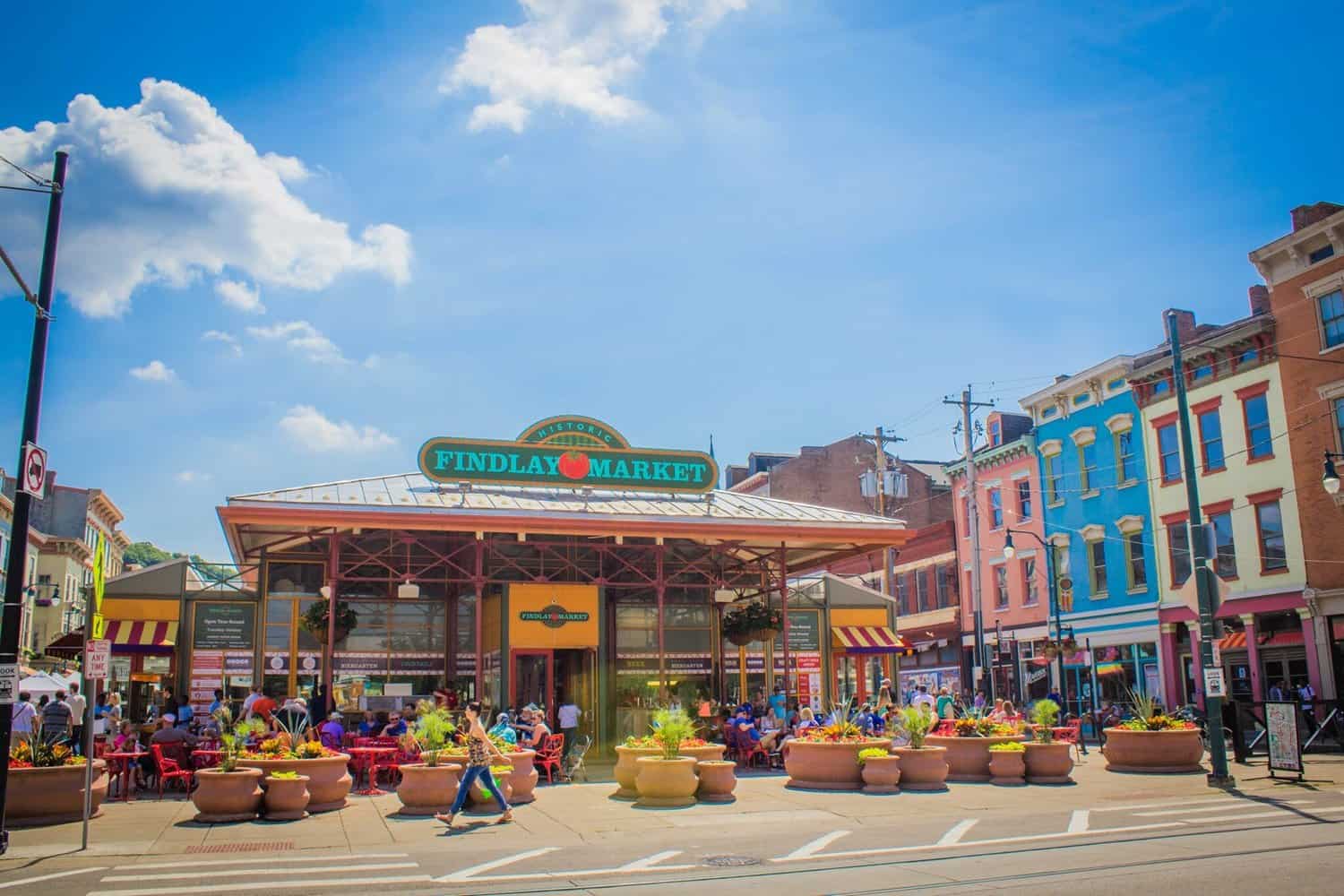
This is the elder statesman of the whole list. Findlay Market was built in 1852 on land donated by General James Findlay’s estate, though disputes with the contractors delayed its opening until 1855.
It stands today as Ohio’s oldest continuously operated public market, the last survivor of nine that once fed Cincinnati. Its iron framework was cutting-edge technology when it went up, and the neighborhood around it, historic Over-the-Rhine, is stacked with 19th-century architecture.
Weekends are when it really sings. Grab a plate of goetta, that local oats-and-pork specialty, browse the meat and cheese cases, then settle in at the biergarten while farmers sell produce from tables in the plaza outside.
Where: 1801 Race Street, Cincinnati, OH 45202.
9. St. Roch Market, Louisiana
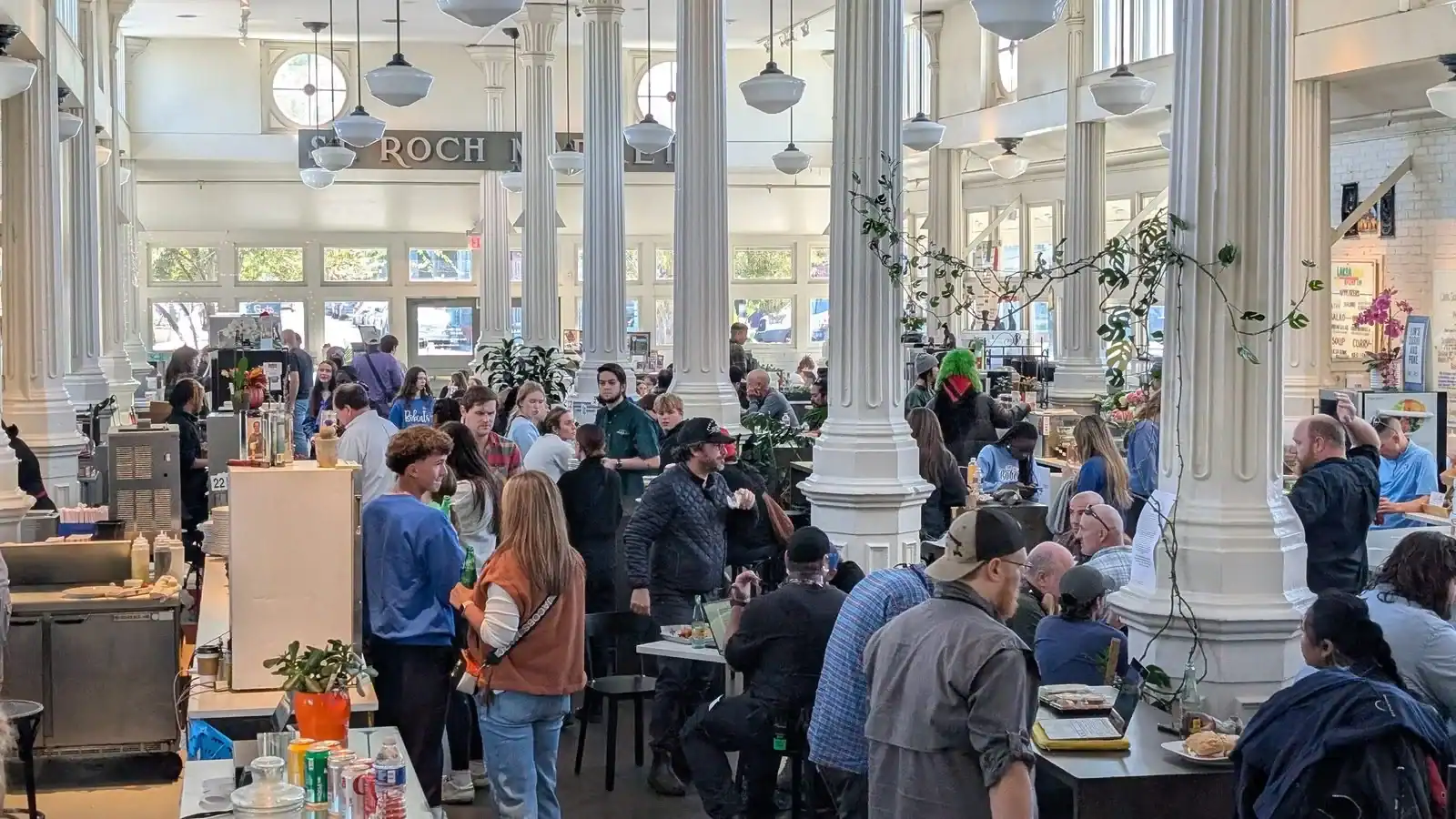
Few halls have earned their comeback like this one. A city market first opened on this spot in 1838, and the current St. Roch Market building went up in 1875 to serve the working neighborhood around it.
Then came harder years. The building sat gutted for a decade after Hurricane Katrina before a careful restoration, funded with $3.7 million in public money, brought it back to life. It reopened in 2015 as a bright, column-lined food hall.
It runs as an incubator for independent local cooks, so the menu board is a small world tour. Under one roof you can order Gulf oysters, Burmese laksa, hand-rolled sushi, and a proper Southern breakfast, then take a craft cocktail out to the patio.
Where: 2381 St. Claude Avenue, New Orleans, LA 70117.
10. Legacy Food Hall, Texas
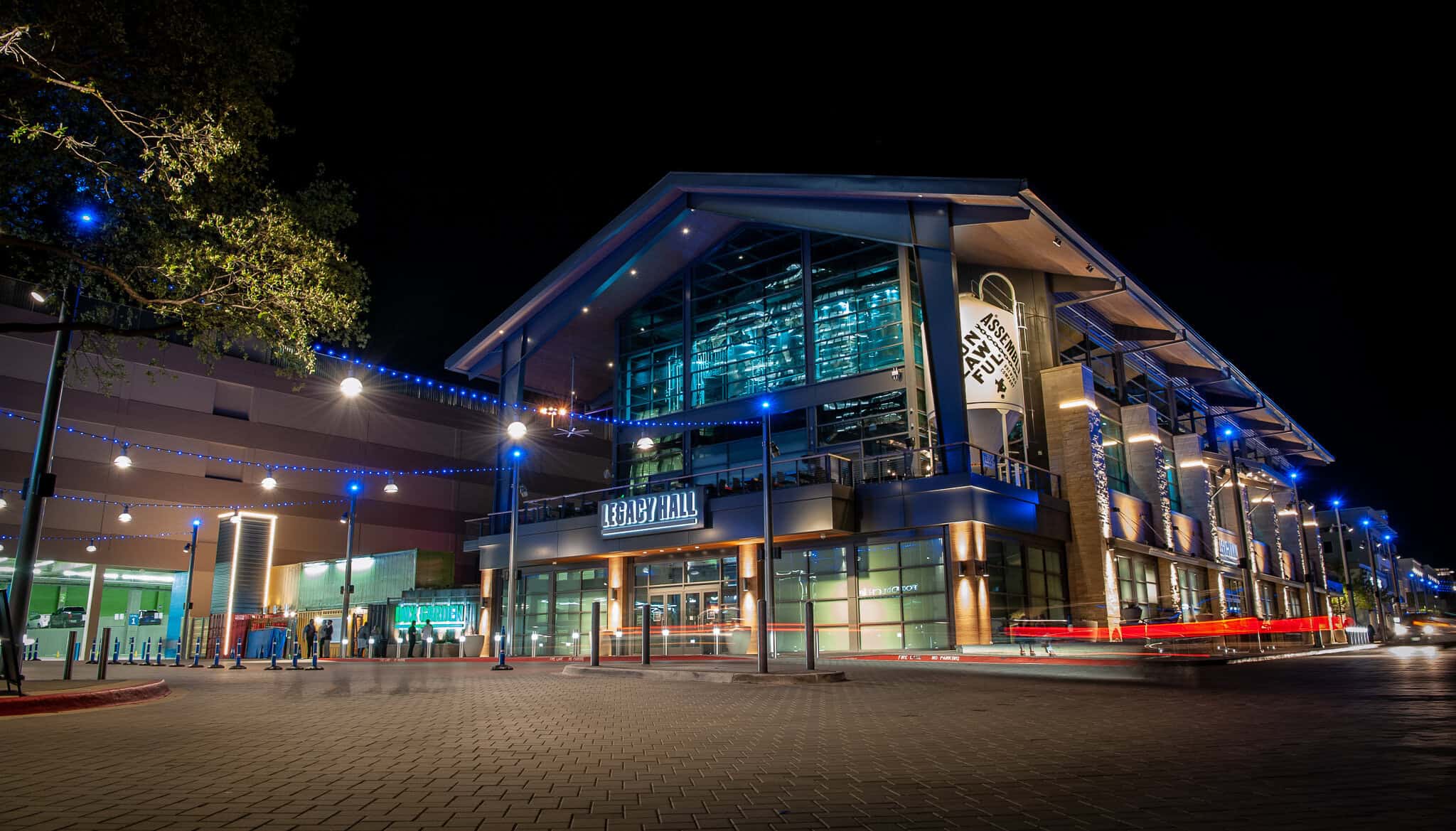
Everything really is bigger here, and the food hall is no exception. Legacy Food Hall opened in Plano in 2017 as a three-story giant, with more than 20 curated stalls, several bars, and its own craft brewery under one enormous roof.
It anchors the shiny Legacy West district north of Dallas, where corporate headquarters and shops crowd around a walkable center. Inside, you can wander three floors picking dumplings on one level and barbecue on another without ever leaving the building.
The real heartbeat is outside. The Box Garden stage keeps live music going next to a beer garden, so you can grab your plate, find a table under the string lights, and let a band carry the night. It is a Texas-sized outing on a single stop.
It is built for a crowd that cannot agree on anything. Families, first dates, and office happy hours all fan out across the floors, then meet back at the garden. That easy, everyone-welcome feel is why the place stays busy.
Where: 7800 Windrose Avenue, Plano, TX 75024.
Plan Your Next Great Meal
The beauty of a food hall is that you never have to agree on dinner. One person chases oysters, another wants tacos, a third holds out for ice cream, and everybody still sits at the same table with a full plate.
These rooms also carry their cities in a way a single restaurant never can. You taste the immigrants who opened the first stalls, the buildings that outlived their first purpose, and the cooks betting everything on one good counter.
So pick a city, bring your appetite, and go graze. Whether you are road-tripping the coast or just passing through, these ten halls will feed you well and hand you a story to tell before you have even finished your plate.
Featured image: @ Grand Central Market

Stella Raines
Editor-in-Chief
Stella brings over a decade of storytelling experience to TX Headlines. With roots in West Texas and a love for road trips, she leads the editorial team with an eye for the hidden stories that make Texas unforgettable.