Discover Texas’ Most Stunning Cave System, a True Hidden Gem
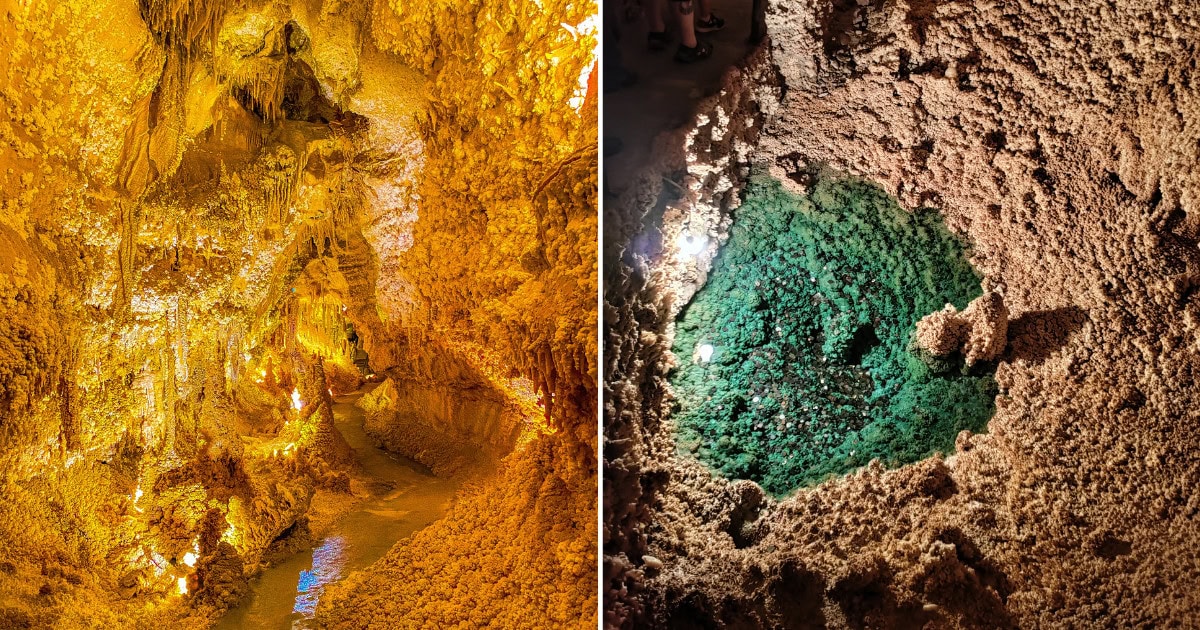
Somewhere beneath the dusty ranchland of Texas Hill Country, there exists a cave so densely packed with crystalline formations that the founder of the National Speleological Society called it “the most indescribably beautiful cave in the world.”
The Caverns of Sonora, located about 8 miles west of the small town of Sonora in Sutton County, has been quietly amazing visitors since it opened to the public in 1960.
More than 95% of the cave is still “alive,” with formations actively growing in the warm, humid darkness.
Designated a National Natural Landmark in 1965, Caverns of Sonora remains one of Texas’s best-kept geological secrets—a place where the underground world reveals itself in extraordinary detail.
Location and Geological Significance

Where the Caverns Are Located
The Caverns of Sonora sit about 15 miles southwest of Sonora, Texas, accessible via I-10 at Exit 392, then 7 miles south on Cavern Road (Ranch Road 1989).
The location marks roughly the halfway point between San Antonio (about 150 miles east) and Big Bend National Park (about 200 miles west), making it a natural stopping point for road trippers crossing West Texas.
The town of Sonora itself is a small ranching community—the seat of Sutton County—with limited services but genuine Hill Country character.
The drive from the interstate takes visitors through open ranch country where deer are common sights along the roadside.
Unique Cave Formations
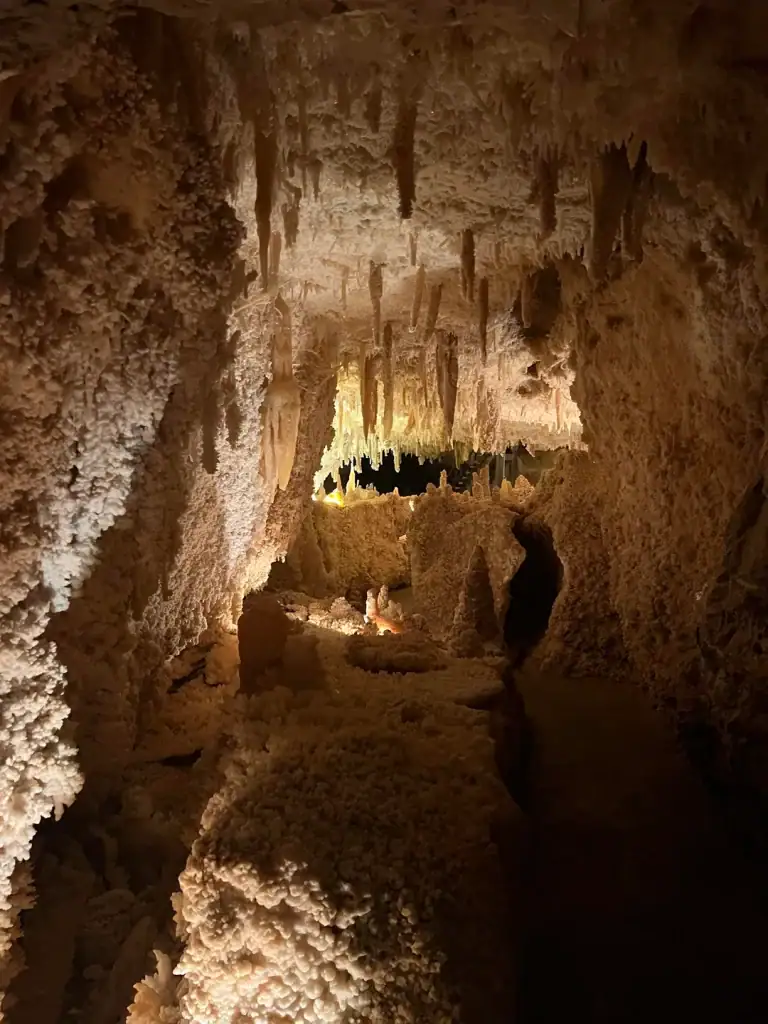
What makes Sonora different from other Texas caves starts with how it formed. This is a hypogenic cave, meaning it was created by water and gases rising from below rather than rainwater seeping down from the surface.
The cave developed in 100-million-year-old Segovia Limestone over roughly 1.5 to 5 million years, creating a system that now stretches more than 7 miles, with about 2 miles developed for tours.
The result is one of the most densely decorated caves on the planet. Helicites—delicate crystalline structures that seem to defy gravity, growing sideways, upward, and in spiraling curves—appear in extraordinary abundance.
The cave also features stalactites, stalagmites, flowstone, soda straws over three feet long, and the distinctively named “cave bacon,” “popcorn,” and “angel wings.”
The most famous formation was the Butterfly—two fishtail helictites sprouting from the same point to create a 5.5-inch wingspan, the only known formation of its kind.
In 2006, a vandal broke off about a third of the right wing. The incident helped spur Texas lawmakers to make cave vandalism a felony.
Cave Tours and Experiences
Standard Guided Cave Tour
All visits require a guided tour—no self-guided exploration is permitted.
The main offering is the Crystal Palace Tour, an intimate walking tour of 12 or fewer visitors through almost 2 miles of decorated passages.
The Crystal Palace Tour lasts approximately 1 hour and 45 minutes and descends 155 feet below the surface via roughly 360 stair steps.
Tours depart from the gift shop continuously, with wait times rarely exceeding 30 minutes. Guides share the geology, history, and ecology of the cave throughout.
A shorter Horseshoe Lake Tour covers about 1 hour and 15 minutes. For more adventurous visitors, the Discovery Challenge Tour includes rappelling 50 feet into the Devil’s Pit.
Physical Conditions Inside the Cave
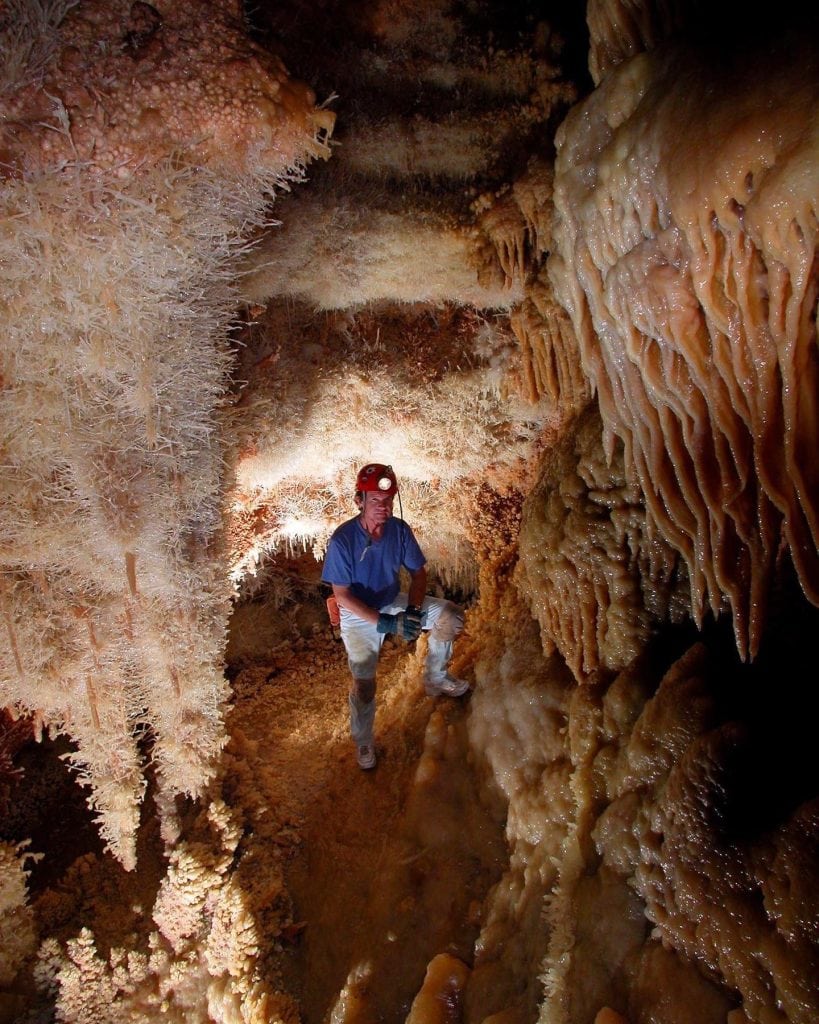
The cave maintains a constant temperature of 72°F with 98% humidity—a combination that feels closer to 85°F inside.
This is a warm cave. Jackets are not needed. Wear lightweight, breathable clothing and expect to sweat.
The trail features approximately 360 stair steps with significant elevation changes. Some passages are narrow, requiring single-file walking with formations close on either side.
Planning Your Visit
Hours and Tickets
The Caverns of Sonora are open daily year-round except Christmas Day. Summer hours typically run 8 am to 6 pm, with slightly shorter hours in winter. Tours depart continuously from the gift shop.
Ticket prices for the Crystal Palace Tour are approximately $28 for adults (12 and older), $22 for children (4-11), and free for children under 4.
Group rates, photography tours, and the Discovery Challenge tour require advance reservations and carry different pricing—contact the caverns directly for details.
What to Bring and Wear
Wear comfortable, closed-toe walking shoes with good traction—the cave floor can be slippery. Lightweight clothing works best given the warmth and humidity. Leave jackets in the car.
Cameras are allowed and encouraged—flash photography is permitted in most areas.
Camera bags must stay outside; plan to carry only your camera. The gift shop offers lockers for valuables.
The on-site gift shop sells snacks, homemade fudge, and souvenirs. An RV park and tent camping are available on the grounds, and the dark skies above are worth staying for.
A World Hidden Underfoot
The Caverns of Sonora were discovered by accident—a ranch dog chasing a raccoon into a 20-inch opening in 1905.
For 50 years, locals explored only the first 500 feet, stopping at a deep pit that seemed impassable. In 1955, a caver named Jack Prince crossed that ledge and discovered one of the most beautiful cave systems anyone had ever seen.
Today, visitors can follow trails through those same passages, past the Devil’s Pit, into rooms where crystals cover every surface, and water droplets cling to formations still actively growing.
Getting “kissed” by a drop of cave water is said to bring good luck.
Whether you’re a geology enthusiast, a photographer seeking unusual subjects, or simply someone who wants to see something genuinely extraordinary, the Caverns of Sonora deliver.
Everything that you’ll see and experience here makes the drive worthwhile.

Stella Raines
Editor-in-Chief
Stella brings over a decade of storytelling experience to TX Headlines. With roots in West Texas and a love for road trips, she leads the editorial team with an eye for the hidden stories that make Texas unforgettable.
More Stories
This Cobblestone Texas Village Feels More Like Old Europe Than the Lone Star State
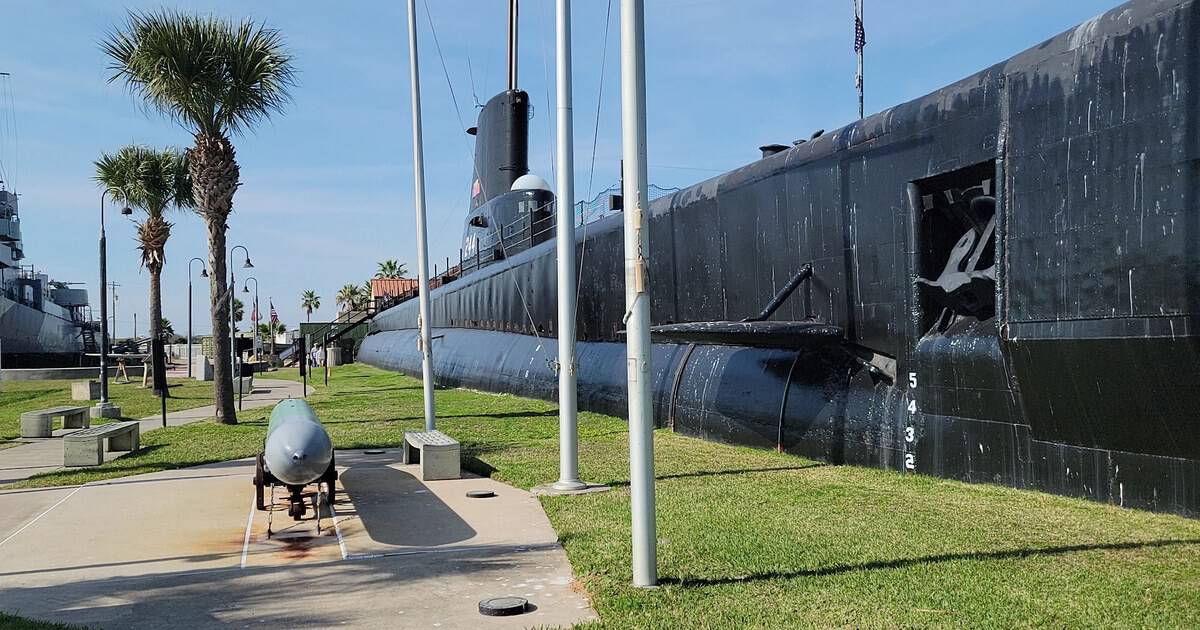
This Quiet Texas Park Hides a Legendary WWII Submarine That Sank a Japanese Carrier

This Underrated Texas State Park Gives You a Full Day of Swimming and Hiking for Just $5

This Small Texas Church Is Called the Queen of the Painted Churches, and Its Ceiling Will Stop You Cold
Tags