Would You Dare to Cross the Most Terrifying Bridge in Texas?
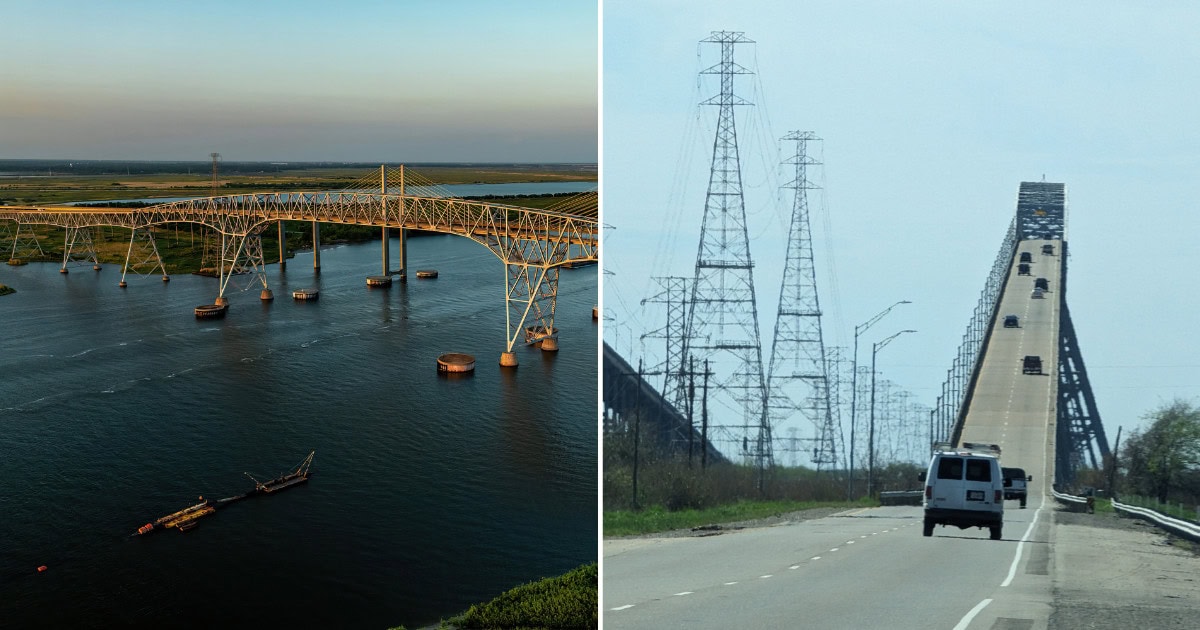
You can see it coming from a long way off, with a steep ascent and descent that rises frighteningly high over water—the Rainbow Bridge between Port Arthur and Bridge City offers the triple threat that gephyrophobics most dread.
With vertical clearance of 176 feet, the Rainbow Bridge became the tallest bridge in the southern United States and one of the tallest in the world upon its completion, towering 20 stories above the Neches River.
When it was completed in 1938, it was the second-tallest bridge in the U.S., second only to the Golden Gate Bridge.
Your stomach drops on the way down, first-timers often scream, and some people white-knuckle the steering wheel the entire crossing. Welcome to Texas’s scariest bridge.
What Makes It Terrifying
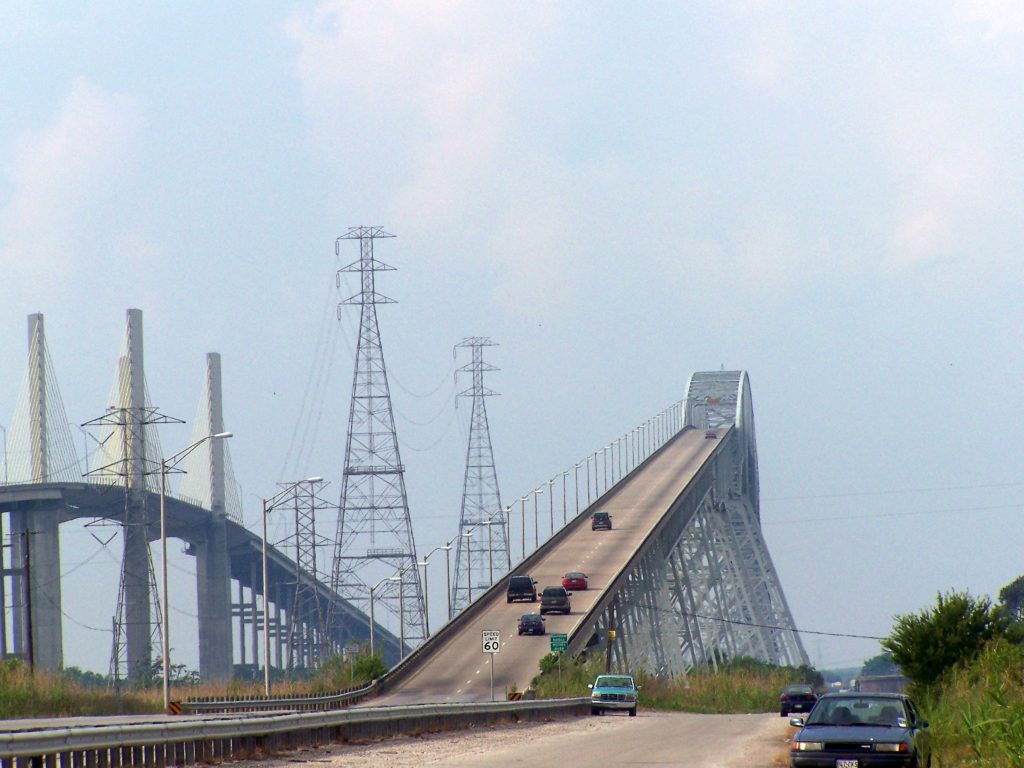
The Rainbow Bridge reaches a height of 176.9 feet above the water and is the steepest bridge in Texas.
The bridge has a 680-foot main span and an overall length of 7,752 feet—that’s nearly 1.5 miles.
Drivers had to put up with two narrow lanes carrying cars and loaded 18-wheelers in two directions before the Veterans Memorial Bridge opened in 1990, making the experience even more nerve-wracking.
The steep grade creates an optical illusion that makes the ascent feel like driving straight into the sky, with drivers unable to see what’s ahead until cresting the peak.
Then comes the immediate steep descent that feels like plunging off a cliff, creating that roller-coaster stomach-dropping sensation—except you’re in traffic, not strapped into a ride.
The History Behind the Height
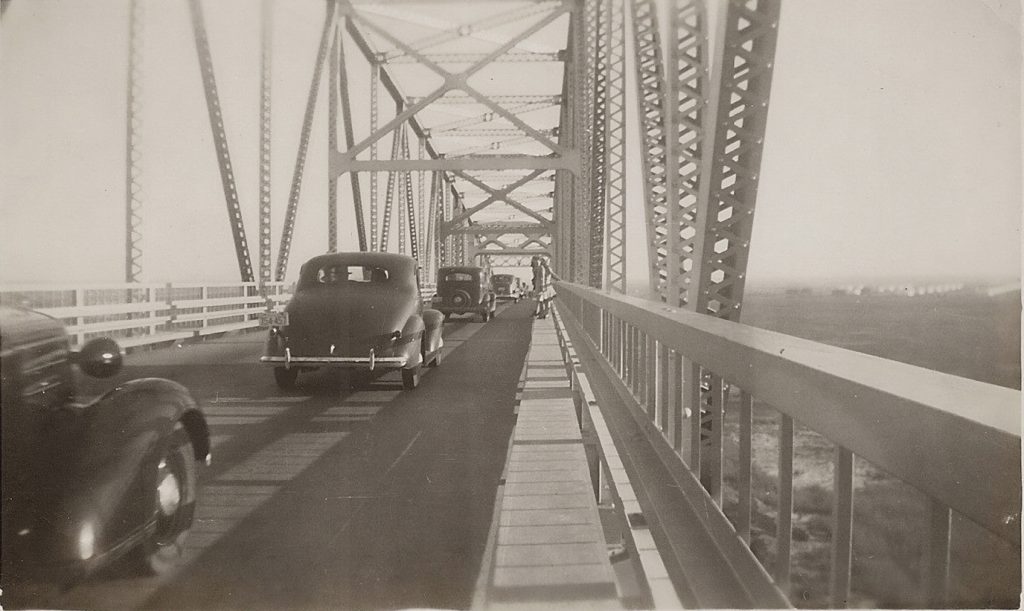
The bridge over the Neches River connecting Port Arthur and Orange County was dedicated on September 8, 1938, as the Port Arthur-Orange Bridge and replaced the Dryden Ferry.
Before construction, a dispute arose between Port Arthur and Beaumont, with Beaumont representatives offering to end the controversy if Port Arthur would approve a vertical clearance of 185 feet, finally reaching a compromise of 176 feet.
This height was to accommodate the tallest naval ship at that time, the USS Patoka, but such a vessel never sailed through this passage.
The engineering marvel required innovative construction methods not only because of its height but because it had to withstand hurricane-force winds.
In 1957, the North Port Arthur Lions Club held a naming contest, and 6-year-old Christy McClintock submitted the winning entry—Rainbow Bridge—saying it looked like a mechanical rainbow.
She got a $50 savings bond as her prize, which could have bought 200 Whataburgers in 1957.
If you’re there toward sunset and see it illuminated in pink hues, it does indeed resemble a steel rainbow arching across the sky.
The Current Situation
The Texas Department of Transportation closed the Rainbow Bridge on Friday, March 21, 2025, for an extensive 18-month maintenance project.
With all traffic detoured to the Veterans Memorial Bridge during the work, the project is expected to be completed by late 2026.
Southern Road and Bridge, LLC will oversee the project, which aims to reinforce the nearly 90-year-old bridge’s steel structure and upgrade its railings to improve safety.
This means drivers currently cannot experience the Rainbow Bridge’s terror—all traffic flows over the Veterans Memorial Bridge instead.
The Veterans Memorial Bridge, a cable-stayed bridge completed in 1990, runs parallel to the Rainbow Bridge with a vertical clearance of 143 feet and a 640-foot main span.
After the Rainbow Bridge reopened in 1997 following renovations, it became one-way, handling westbound traffic only, while the Veterans Memorial Bridge was reconfigured to serve eastbound traffic.
The newer bridge feels safer with its wider lanes and more modern design, though it still rises high enough to make sensitive drivers nervous.
Safety and Statistics
Is it actually dangerous?
The Rainbow Bridge is scary enough today with two lanes for one-way traffic southbound, but it used to be much worse when drivers had to put up with two narrow lanes carrying cars and loaded 18-wheelers in two directions.
Statistically, the bridge is safe, well-maintained, properly engineered, and has few accidents relative to traffic volume.
The fear is valid, but the actual risk is low.
Real hazards include high winds affecting trucks and RVs, rare ice or rain making the steep grade slippery, and distracted driving from gawking at the height or trying to take photos while driving.
Why Cross It Anyway
Necessity drives most crossings—the bridge allows State Highway 87 and State Highway 73 to connect Port Arthur in Jefferson County with Bridge City in Orange County, and it’s the only direct route between these communities.
Detours add 30-plus minutes, making the bridge unavoidable for daily commuters. Locals grow accustomed to it (mostly), though many admit it never stops being slightly unnerving.
Plus, the view is actually spectacular if you can enjoy it—industrial Port Arthur, the Neches River shipping channel, cargo ships passing below, and the Gulf Coast landscape stretching to the horizon. Just don’t look while driving.
The Verdict
The Rainbow Bridge is the scariest bridge in Texas, offering a triple threat: you can see it coming from a long way off, it has a steep ascent and descent, and it rises frighteningly high over water.
Will you scream? Probably.
Will you survive? Definitely.
Will you tell everyone about it? Absolutely.
It’s just a bridge—a very tall, very steep bridge over very deep water with big trucks and wind. You’ll be fine.
Drive it once when it reopens, live to tell the tale, and join the ranks of Texans who’ve conquered the Rainbow Bridge.

Stella Raines
Editor-in-Chief
Stella brings over a decade of storytelling experience to TX Headlines. With roots in West Texas and a love for road trips, she leads the editorial team with an eye for the hidden stories that make Texas unforgettable.
More Stories
This Beloved Texas Bakery Hides a Fairytale Fortress Straight Out of a Storybook

This High-Rise Texas Movie Theater Lets You Watch Films Under the Open Sky, Skyline and All
This Old-School Texas Movie Theater Still Draws Crowds Beneath the Night Sky
This Wild Texas Ranch Lets You Drive a 32-Ton WWII Tank and Fire Its Cannon
Tags