This Lush Texas Garden Hides Dinosaur Tracks and a Hand-Built Japanese Garden
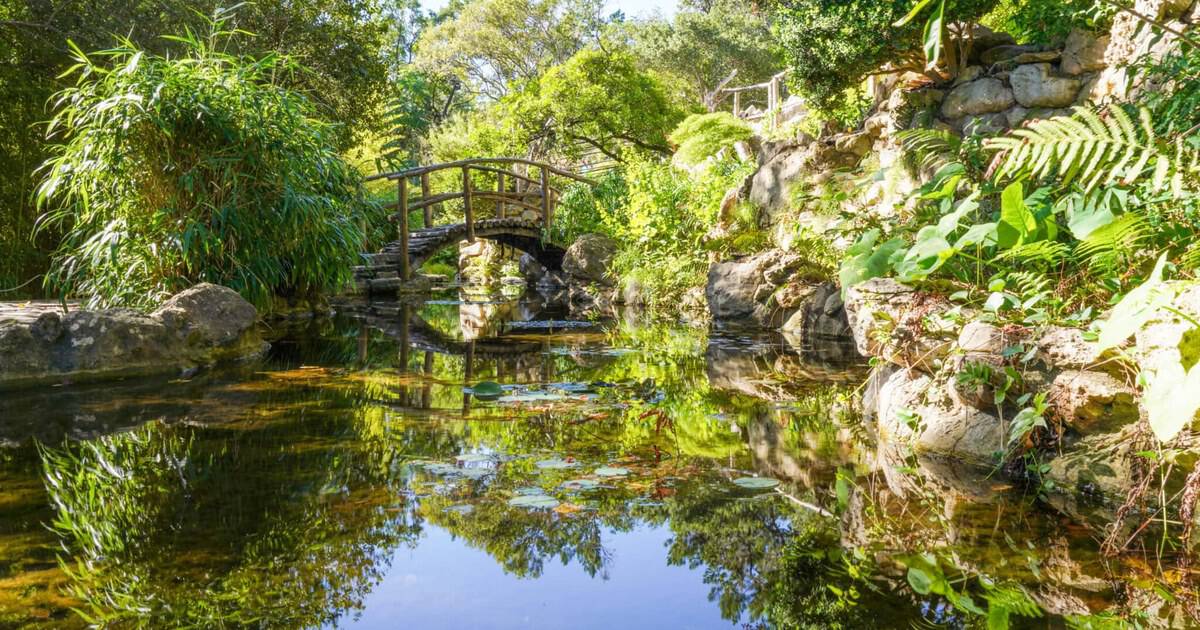
The first koi I ever fed lifted its whole head out of the water and looked at me like it had somewhere better to be. I was small, standing on a wooden bridge, dropping pellets one at a time.
Every time an orange body surged up to catch one, I laughed. I have never fully grown out of that. Show me a koi pond and I will find the nearest railing and stay a while.
I thought about that fish the morning I walked into Zilker Botanical Garden, because the koi here do the exact same thing. They gather under the little bridges, mouths open, waiting to see if you are worth their attention.
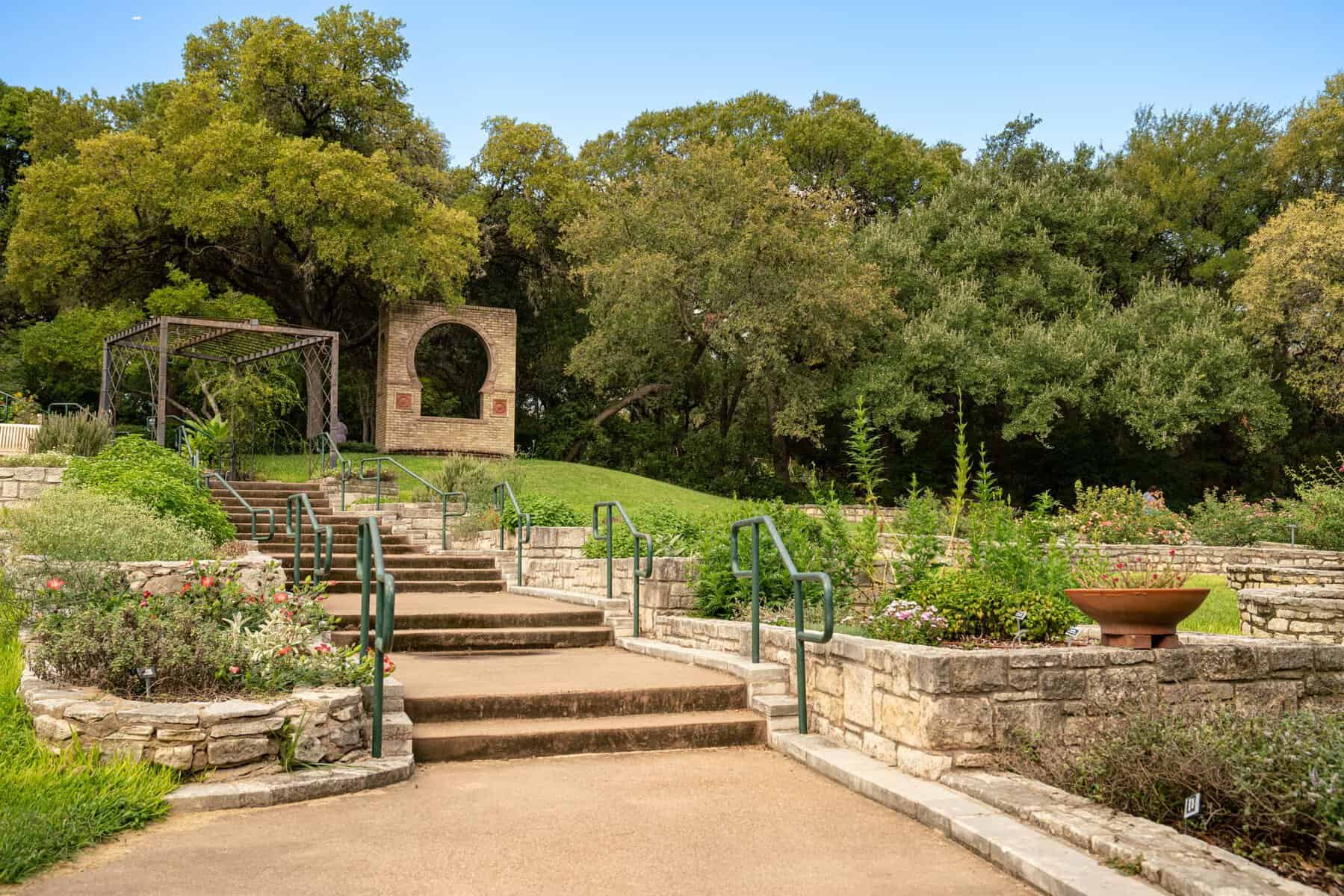
This is a place of green quiet. Twenty-six fenced acres of it, tucked into central Austin, where paths wind past waterfalls and rose beds and a garden that a 70-year-old man built by hand as a thank-you to the city.
Below, discover why locals treat this spot like a secret they are only half willing to share, and why the price of getting in might be the most surprising thing about it.
A Garden Built by Hand, One Stone at a Time
Walk uphill from the entrance and you reach the part everyone remembers: the Isamu Taniguchi Japanese Garden. Three acres of streams, koi ponds, and stone paths that curl around each other like a story told slowly.
The man who made it had every reason to be bitter and chose beauty instead. Isamu Taniguchi came to California from Japan in 1915 to farm. During World War II, he was held in an internment camp in Crystal City, Texas, one of thousands imprisoned for nothing they had done.
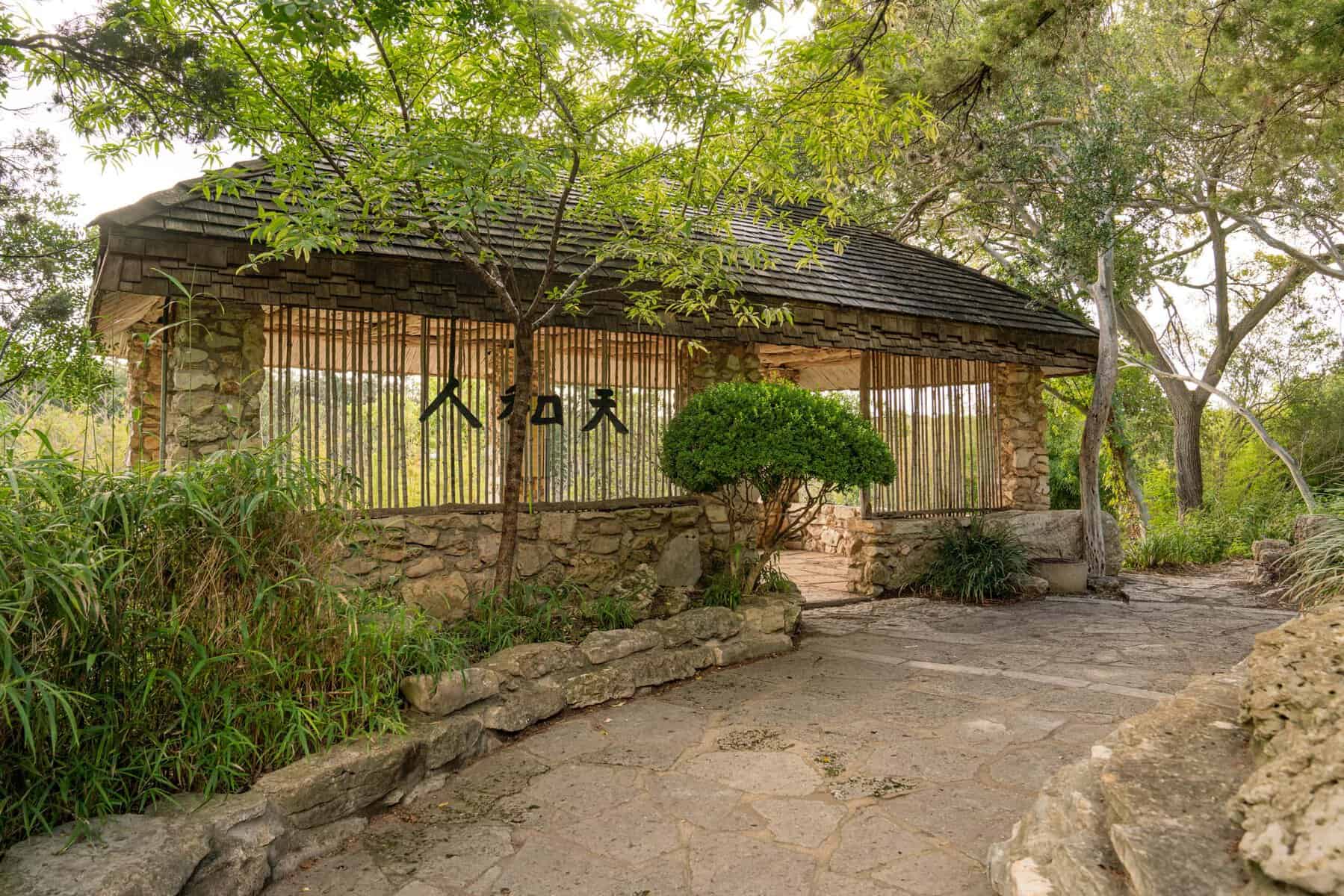
When it was over, he stayed in Texas and kept farming. In his retirement he offered Austin a gift. At 70 years old, with no salary and no contract, he spent 18 months turning three acres of rough caliche hillside into this garden.
He built it almost entirely by hand. And he left a quiet message in it: the ponds are shaped to spell out the word “Austin” when you trace them, a love letter to the place that had become home.
There is a tea house up among the maples, the kind of spot that makes people lower their voices without being asked. In spring the azaleas go off like fireworks, and in fall the Japanese maples turn the paths red and gold.
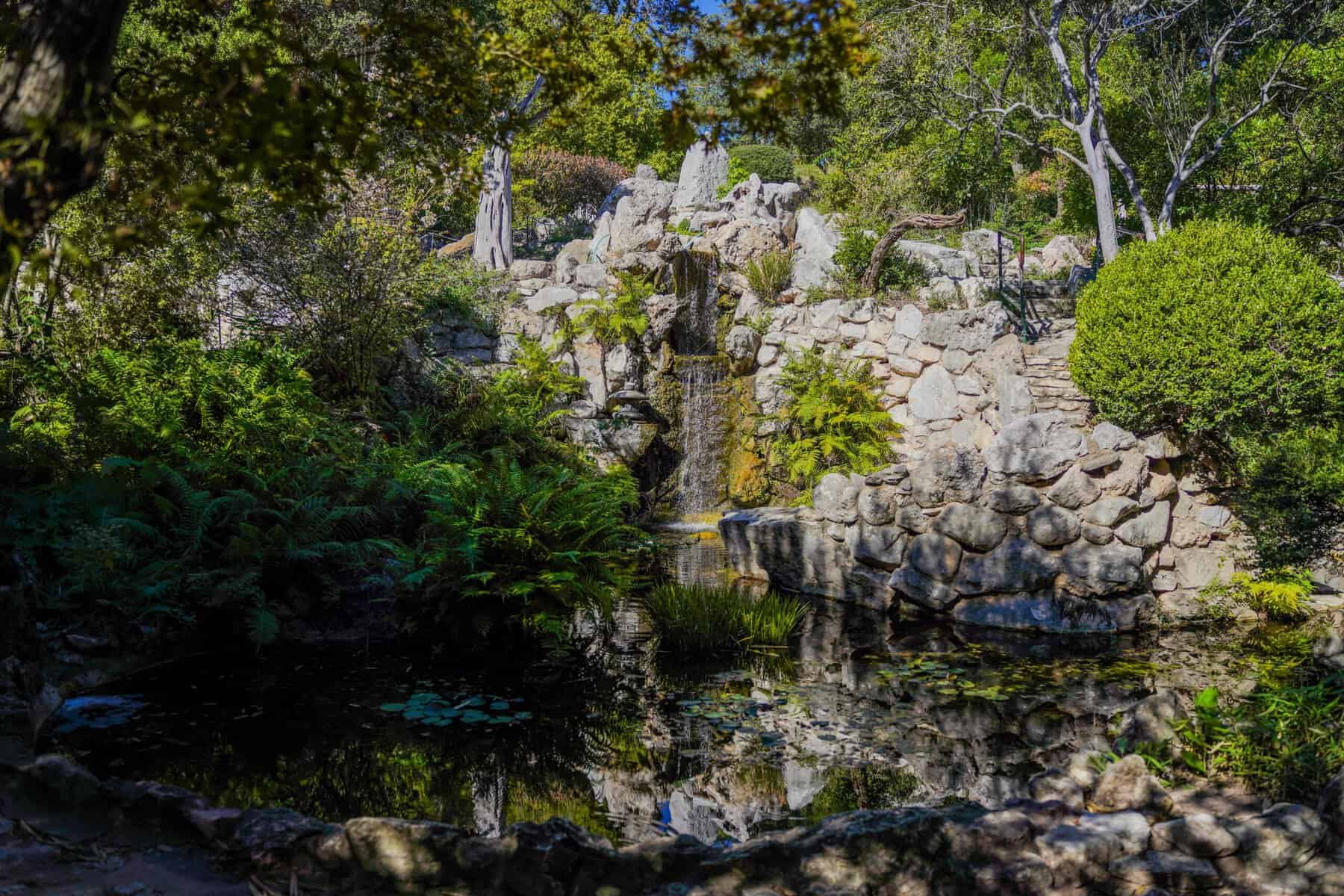
You feel it when you cross the little bridges. The water moves, the koi drift up, and the noise of the city seems to fall away behind the trees. One visitor called it simply “Zen like,” and that is exactly the register the whole place plays in.
Pro tip: come early on a weekday if you can. The garden opens at nine most of the year, and the first hour is when the light is soft and the paths are almost yours.
Where Dinosaurs Actually Walked
Just when the Japanese garden has slowed your pulse all the way down, the garden hands you something wild. Follow the path to the Hartman Prehistoric Garden and you are standing where dinosaurs once walked. Not a re-creation of somewhere else. Right here.
The story is almost too good. In January 1992, Karen and Dr. Mike Duffin were poking around an old limestone quarry on the grounds that had just been cleared for a butterfly garden. In the rock they found footprints.
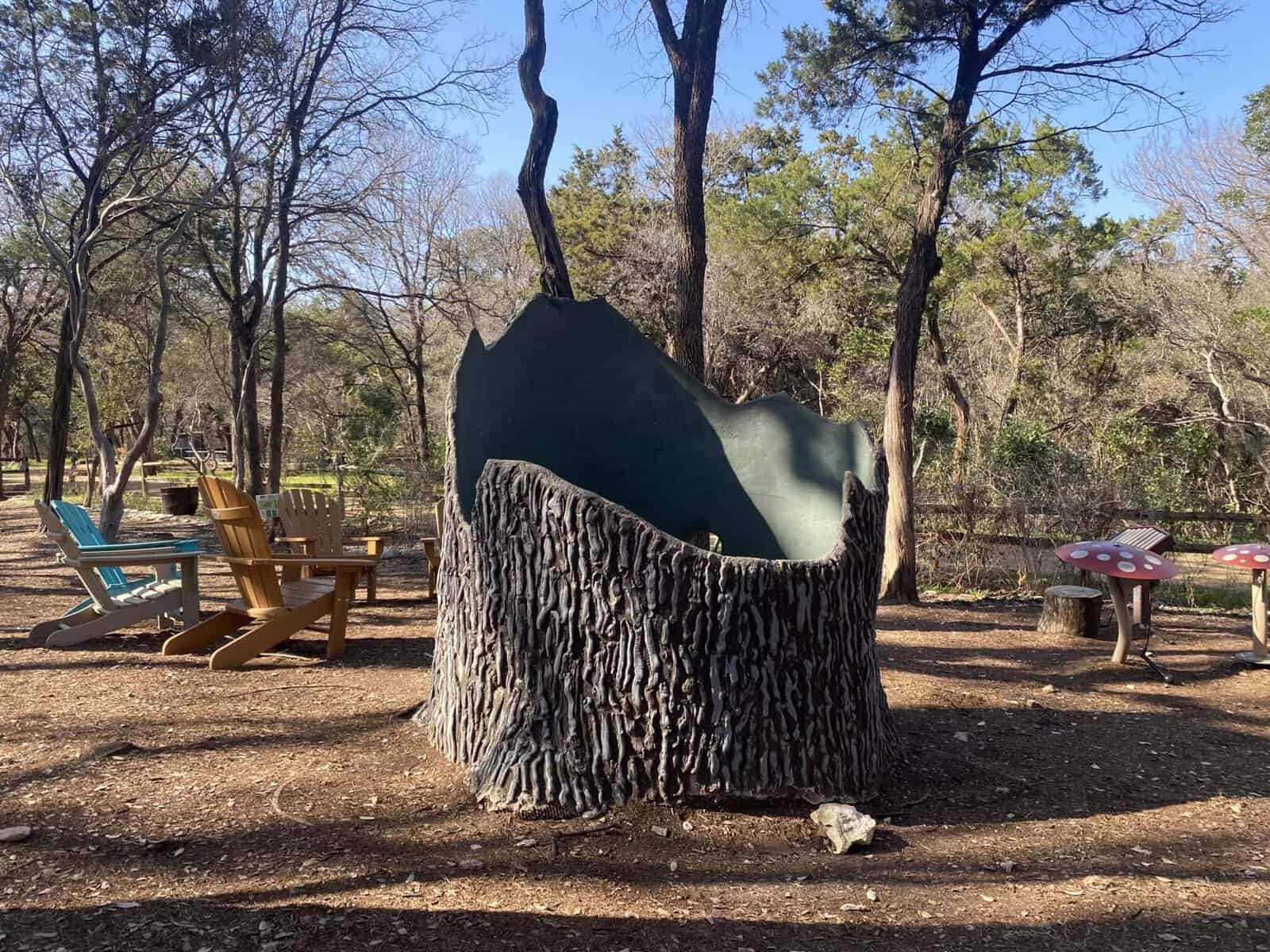
More than 100 preserved tracks, left by six or seven prehistoric reptiles, plus the bones of an ancient turtle. The tracks are around 100 million years old. A butterfly garden turned into a paleontology find, right in the middle of Austin.
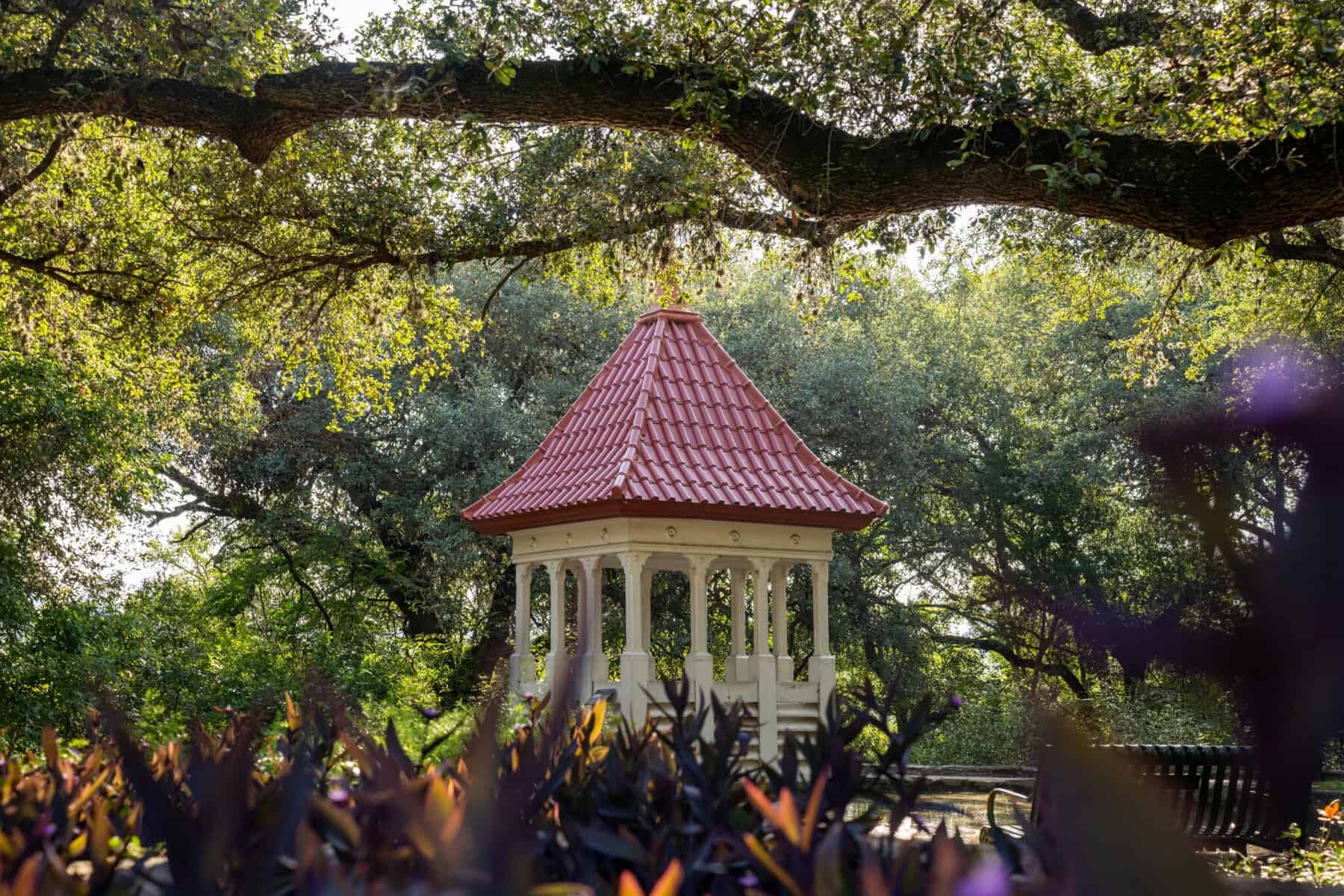
Today the two-acre garden re-creates the world those animals lived in. It is planted with the kinds of species that grew some 70 million years ago: ferns, horsetails, cycads, conifers, ginkgos, magnolias, and palms. More than 100 species, landscaped to feel like you stepped through time.
The plants came together under the eye of Dr. Craig Nazor, who landscaped the beds to feel like a window into the deep past. Walking it, you half expect something to move in the ferns. The whole corner has a hush to it, part garden, part time machine.
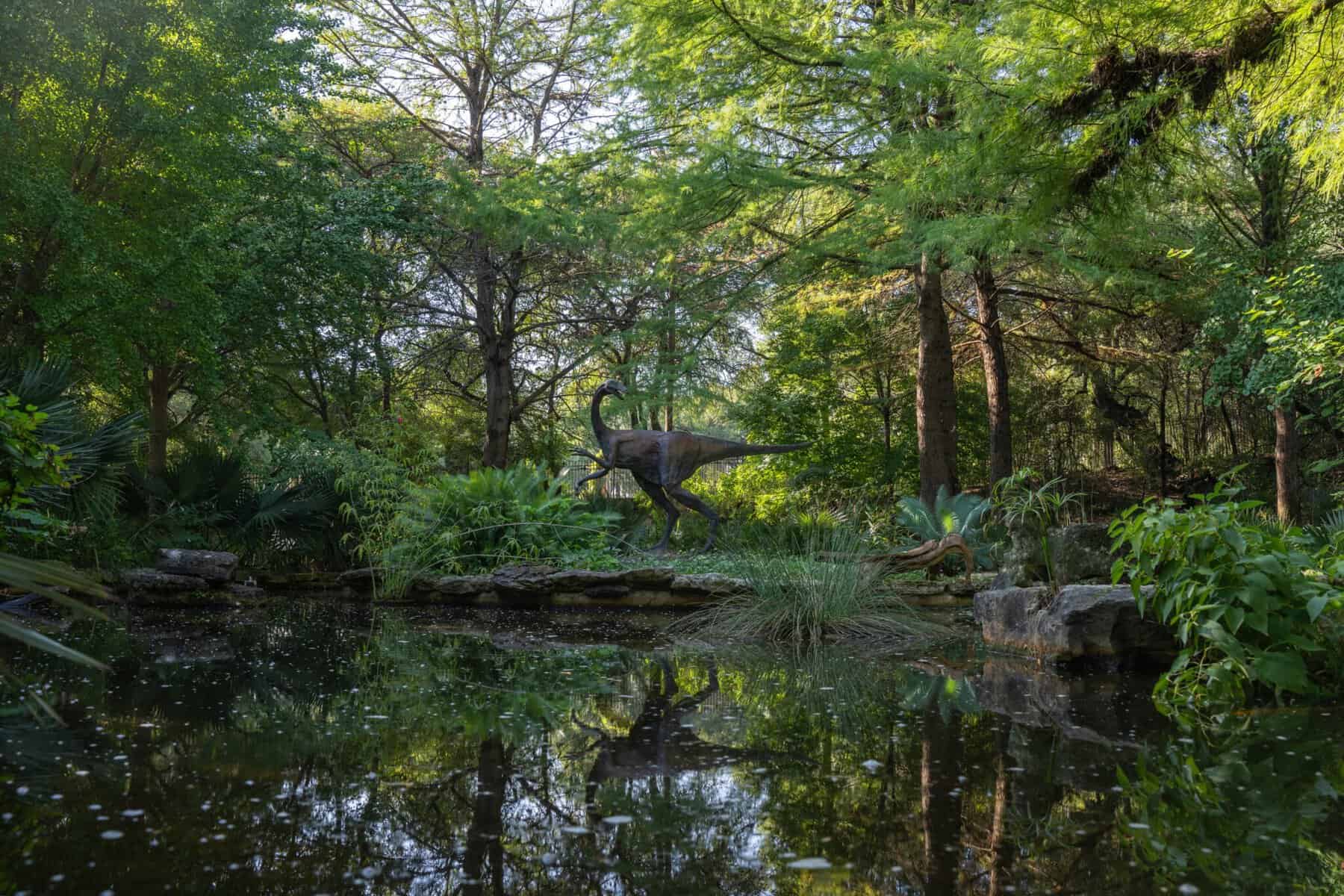
At the center of a pond stands a life-size bronze Ornithomimus, the ostrich-like dinosaur that likely left the tracks. It was sculpted by John Maisano and cast at the Deep in the Heart foundry in nearby Bastrop. Kids spot it and freeze, then run.
Did you know? The garden leans into this every year with an event called Dino Days, when the whole prehistoric corner fills up with young paleontologists hunting for clues. It is the kind of thing that turns a garden visit into a memory.
Roses, Herbs, and a Riot of Blooms
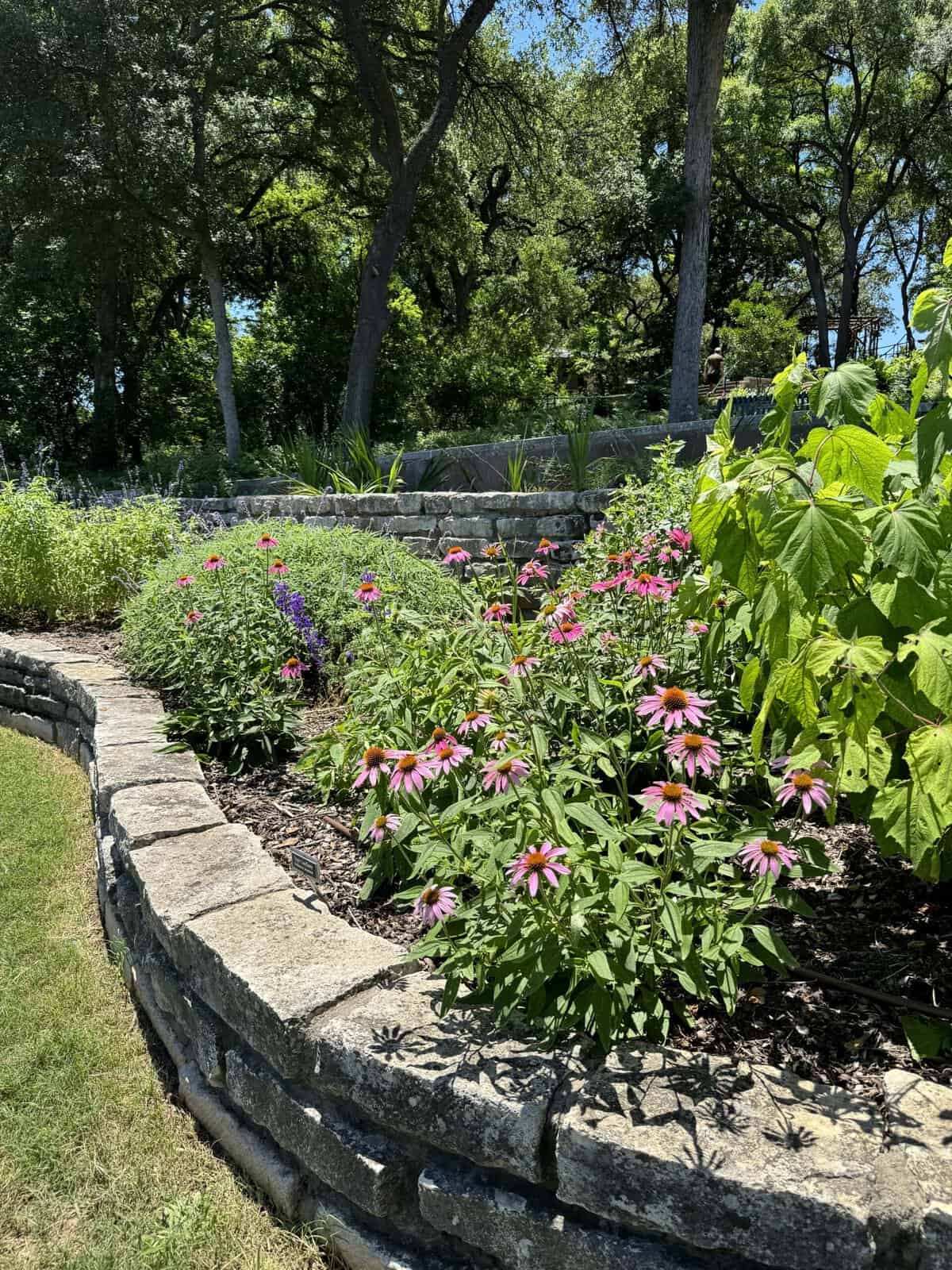
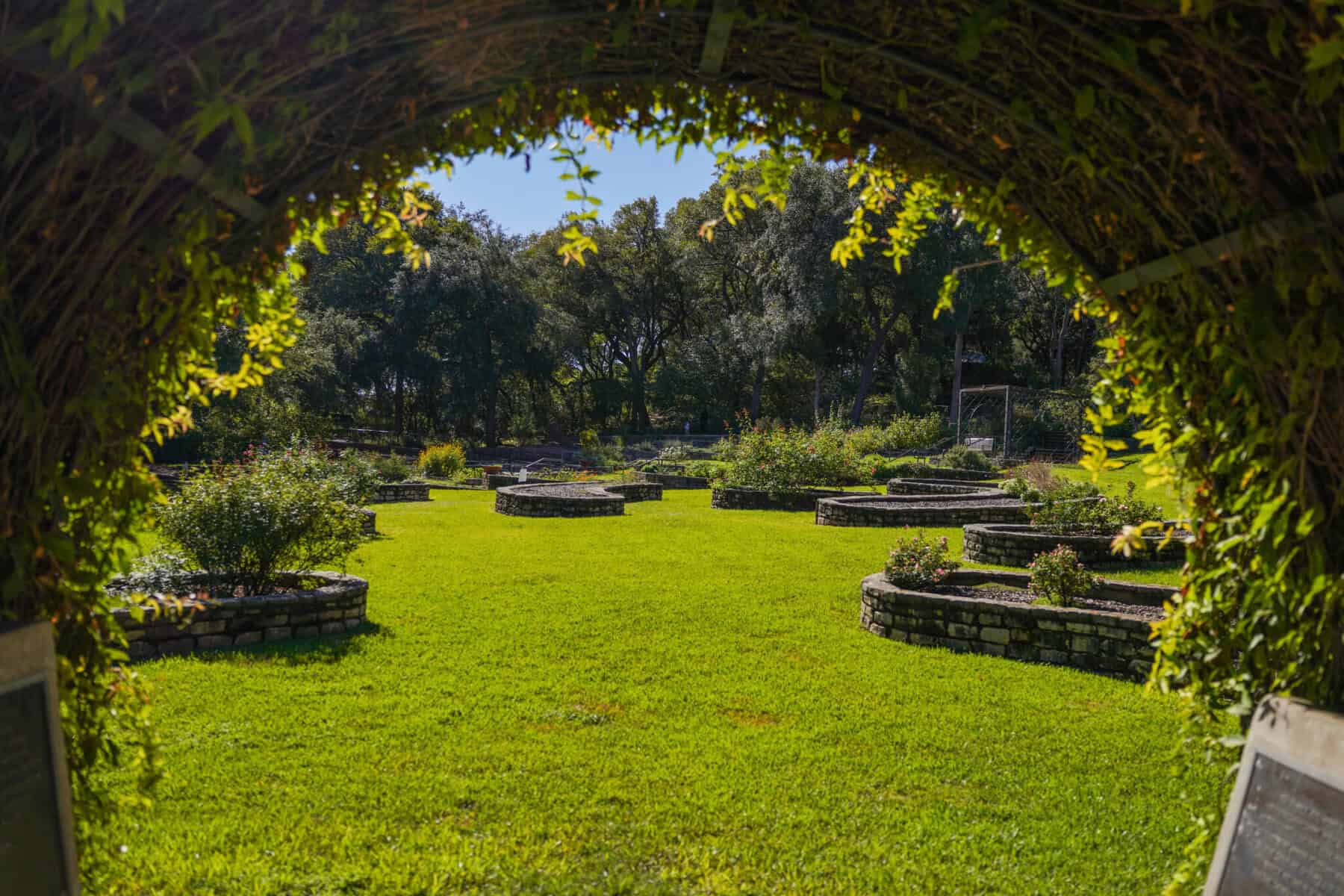
The theme gardens keep coming, and each one has its own mood. The Mabel Davis Rose Garden is the showoff, named for one of the women who helped start the whole place. In bloom it is rows of color and the kind of scent that stops you mid-step.
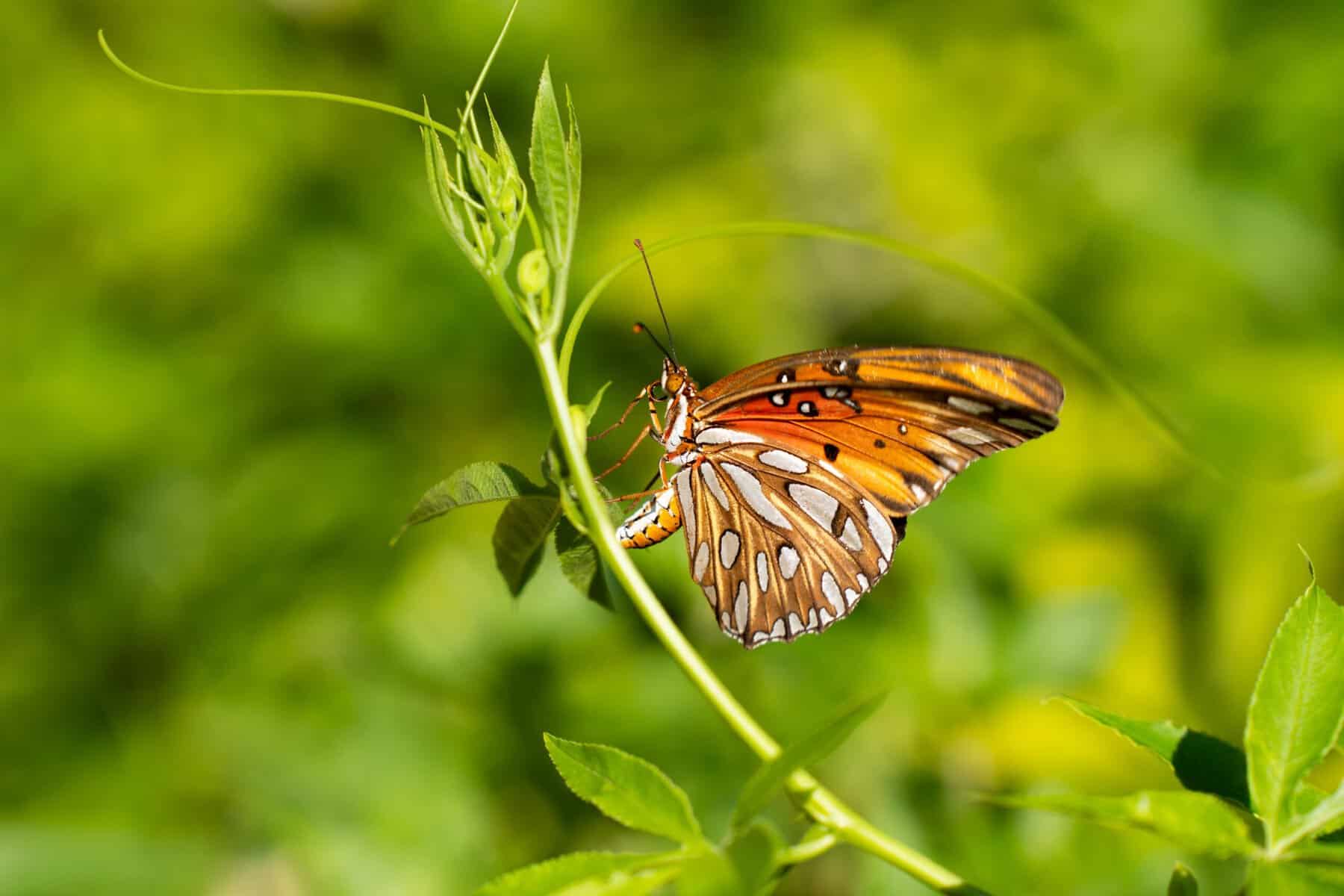
There is an herb garden that smells like a kitchen you want to cook in, a cactus and succulent collection for the West Texas at heart, and a riparian streambed where water threads between the beds. Butterflies drift through the plantings that first uncovered the dinosaurs.
Come in spring and the whole place is loud with color. Come in the heat of summer and it goes quieter and greener, all shade and water sounds. Every season here has its own version of the garden, which is a good reason to come back more than once.
What ties it together is water. Streams, waterfalls, and koi-filled ponds link the theme gardens to one another, so a walk here is a series of small water sounds and turning corners. You can see the whole thing in about an hour, or lose a lazy morning to it.
Benches turn up in exactly the right spots, tucked in the shade with a view of a koi pond or a butterfly bush. I sat on more than one and did nothing at all, which felt like the point.
The paths are mostly flat and paved, which matters. This is a garden you can share with a grandparent and a stroller at the same time and nobody gets left behind.
My favorite trick is to walk it twice. The first loop you rush, ticking off the roses and the dinosaur and the koi. The second loop you slow down, sit on a bench, and notice the small things you blew past the first time.
From Fifty Dollars to Twenty-Six Acres
The garden did not come from a big donor or a city budget. It came from a garden club with fifty dollars.
In 1946, the Violet Crown Garden Club set aside that fifty dollars toward a building project and a dream of a public garden. Mrs. W. Bradfield was the first to ask the city for a piece of public land to build on.

By 1954, six Austin garden clubs had joined forces under the leadership of Mrs. Alden Mabel Davis, the same Mabel Davis the rose garden now honors. They asked the city for permission to build a garden center in Zilker Park.
The group incorporated in the mid-1950s, and in 1964 the stone Austin Area Garden Center was finished and dedicated. The Taniguchi Japanese Garden opened in 1969, and the theme gardens grew from there, one club project and one gift at a time.
That origin still shows. This is not a corporate attraction with a slick gift shop bolted to the front. It was built by volunteers who loved plants, and it has kept that homemade, generous feeling for close to eighty years.
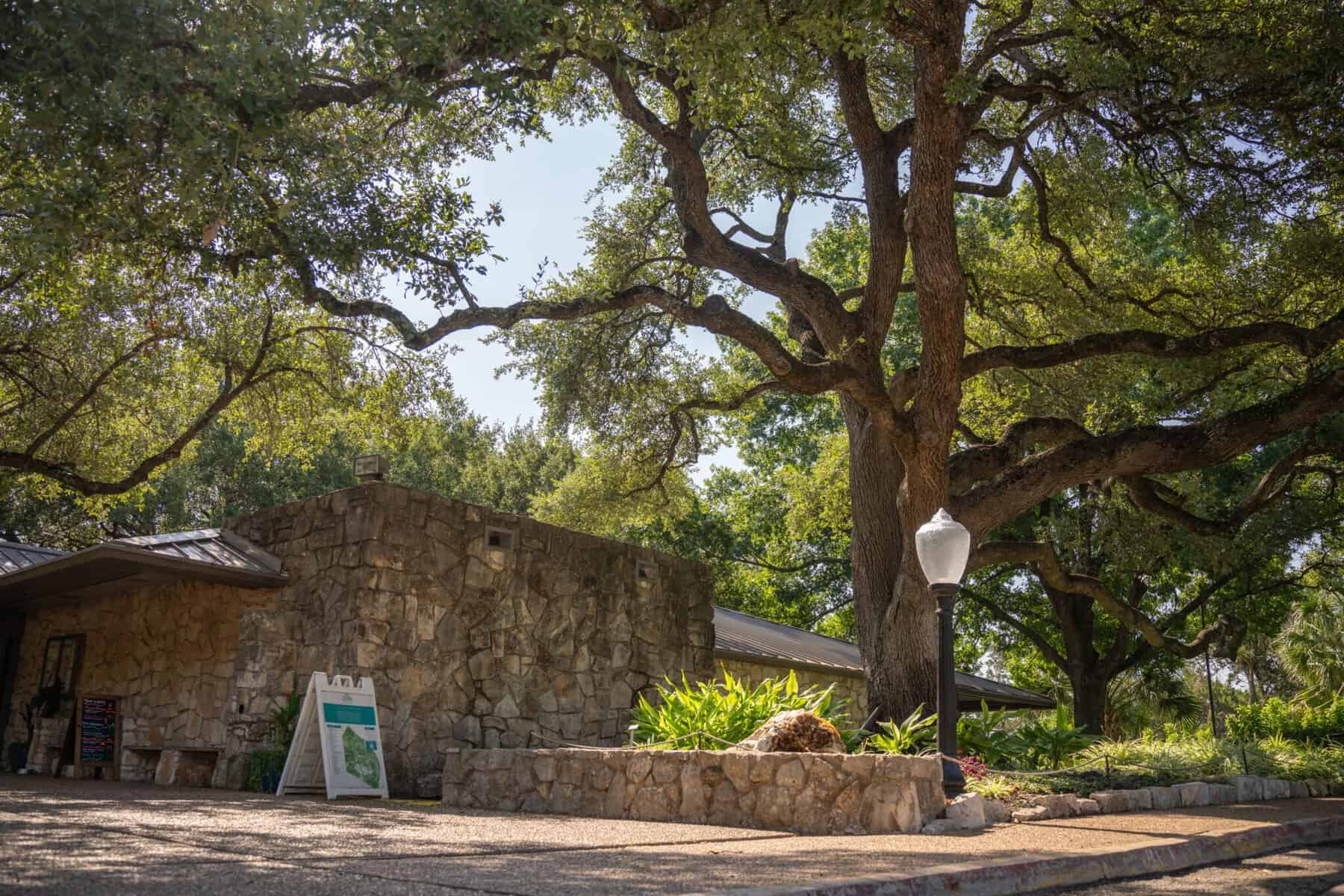
Today it runs as a partnership between the City of Austin Parks and Recreation Department and the Zilker Botanical Garden Conservancy. Nearly eighty years on, a fifty-dollar idea is a twenty-six-acre landmark.
The Five-Dollar Secret Seniors Love
Here is the part that surprises people: getting in barely costs anything. For an Austin-area resident aged 62 and up, admission is just $5. That is a full morning among koi ponds and dinosaur tracks for the price of a coffee.
The rest of the pricing is just as gentle. Austin residents pay six dollars for adults 18 to 61 and three dollars for youth ages 3 to 17. Children under 2 are always free.
If you live outside the Austin area, the numbers barely move. It is eight dollars for adults, seven for seniors, and four for youth. For a garden this size, in a city where most things cost real money, that is a genuine bargain.
There are ways in for free, too. The garden sets aside eight free days a year, on dates like Martin Luther King Jr. Day, Memorial Day, and Veterans Day. Through the Museums for All program, anyone with an EBT, WIC, Medicaid, or similar card gets in free.
A membership is the quiet winner if you plan to return. It covers unlimited visits here and reciprocal access to more than 330 gardens around the country, which turns one Austin garden into a nationwide pass.
Twice a month, master gardeners lead free guided walks for anyone who wants to learn the names of what they are looking at. It is a low-key, generous touch, and a good reason to time your visit.
How to Get There
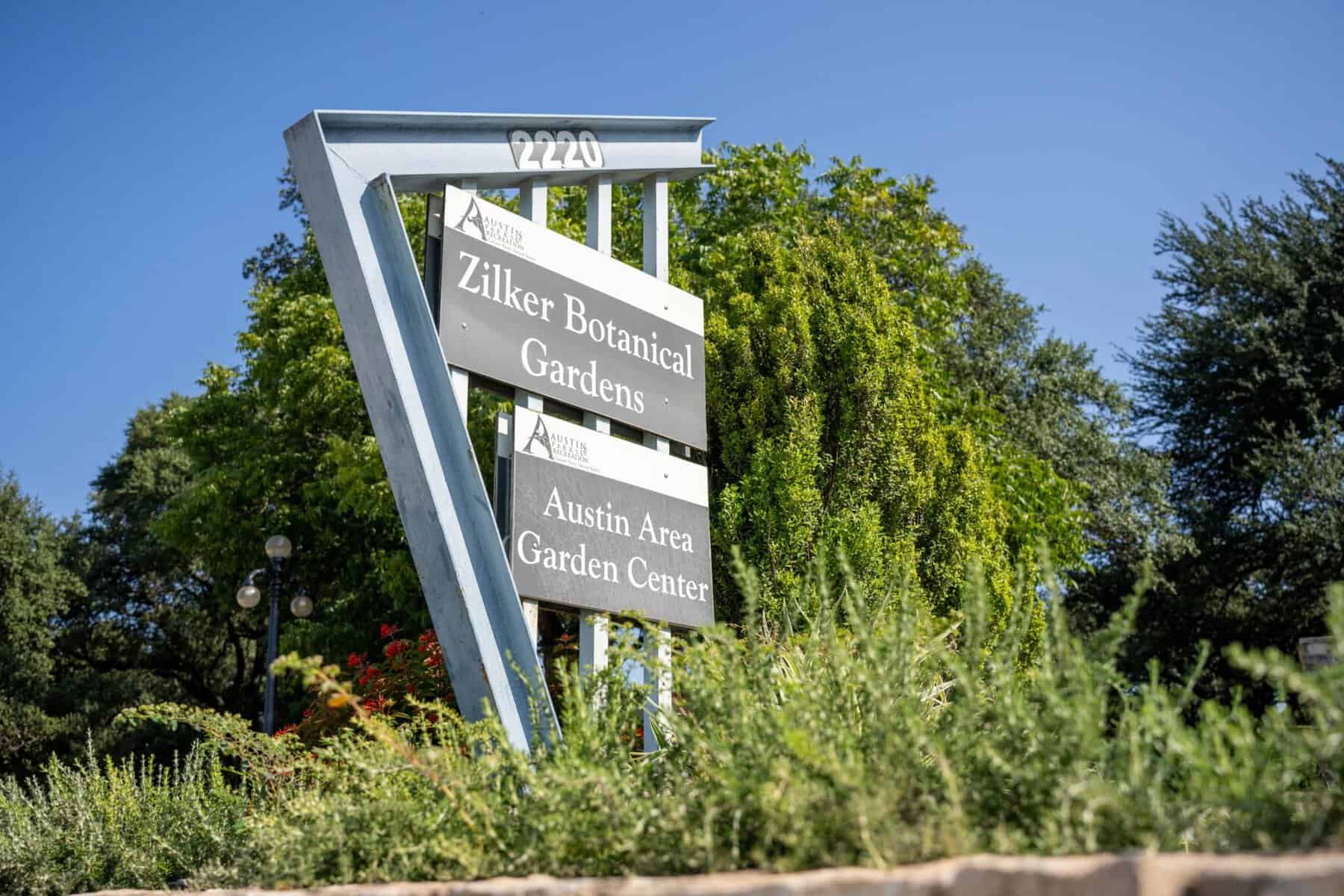
Where: Zilker Botanical Garden, 2220 Barton Springs Rd, Austin, TX 78746.
The garden sits inside Zilker Metropolitan Park, an easy trip from downtown Austin. Parking in the main lot is free and first-come, first-served. When it fills on a busy weekend, overflow parking is available nearby at 2300 Stratford Drive.
Hours shift with the season. From September through May, the garden is open 9 a.m. to 5 p.m., with last entry at 4:30. In the summer heat of June through August, it opens earlier and closes earlier, 8 a.m. to 4 p.m., with last entry at 3:30.
Tip: buy your ticket online before you go. It is quick, and it means you walk straight from the car to the koi instead of standing in a line.
Plan Your Austin Garden Escape
Some places shout for your attention. This one just waits, green and patient, a few minutes from downtown Austin, holding a hand-built Japanese garden and a set of real dinosaur tracks and rows of roses that were planted with fifty dollars and a lot of love.
Bring good walking shoes, a little pocket change, and someone you like talking to slowly. Feed the koi, find the dinosaur on its island, and let the city noise fall away behind the trees. You will understand why Austin has quietly loved this garden for almost eighty years.
Featured image: @ Zilker Botanical Garden

Stella Raines
Editor-in-Chief
Stella brings over a decade of storytelling experience to TX Headlines. With roots in West Texas and a love for road trips, she leads the editorial team with an eye for the hidden stories that make Texas unforgettable.
More Stories
This Quiet North Texas Park Ends a Swaying Bridge at a 54-Foot Waterfall
This Crystal-Clear Texas Lake Is the Deepest in the State, and Its Water Is Clear Enough for 100-Foot Dives
This Easy Texas Trail Leads to a 105-Degree Hot Spring Right on the Rio Grande
This Thousand-Year-Old Texas Live Oak Has Outlasted Pirates, Hurricanes, and a Civil War Battle
Tags