This Thousand-Year-Old Texas Live Oak Has Outlasted Pirates, Hurricanes, and a Civil War Battle
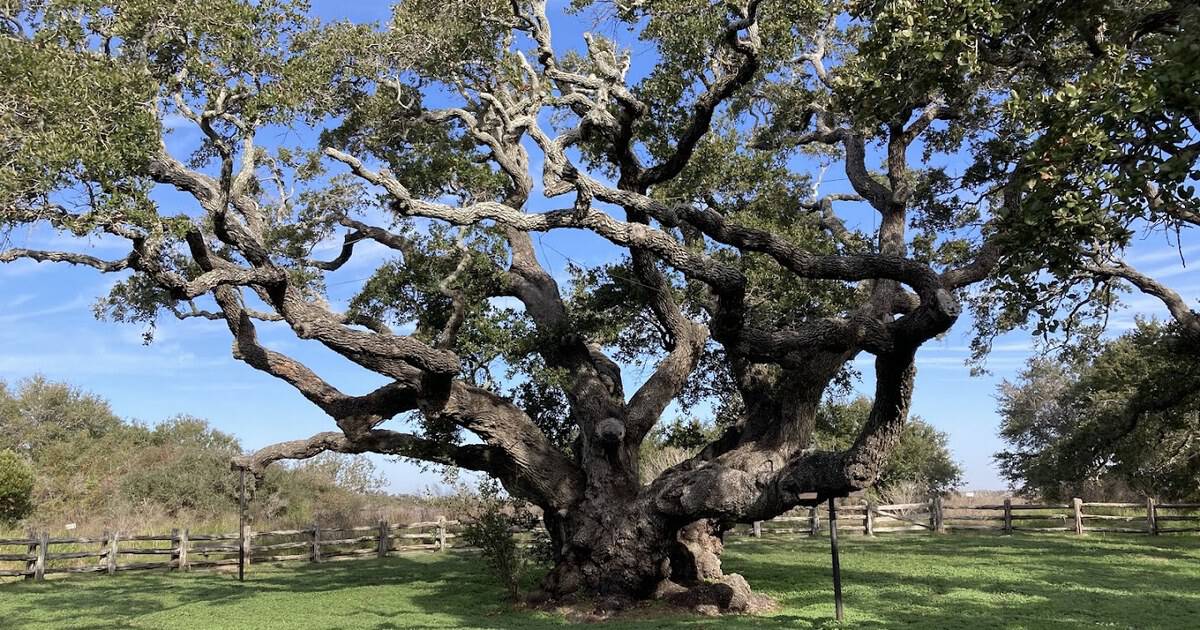
This live oak was already centuries old when Columbus set sail in 1492. It still stands on the Texas coast today, and I find that hard to believe. Most of what we build falls apart inside a lifetime. A great oak just keeps holding on, quietly, for hundreds of years.
On the Texas coast near Rockport there is one that has been standing for something like a thousand of them. It is called, with perfect Texas plainness, the Big Tree, and it is a piece of living history you can drive right up to and touch.
Below, I will walk you through how old it really is, the storms and battles it has outlived, and the wild little state park that grew up around it.
A Living Thing That Feels Older Than the Country
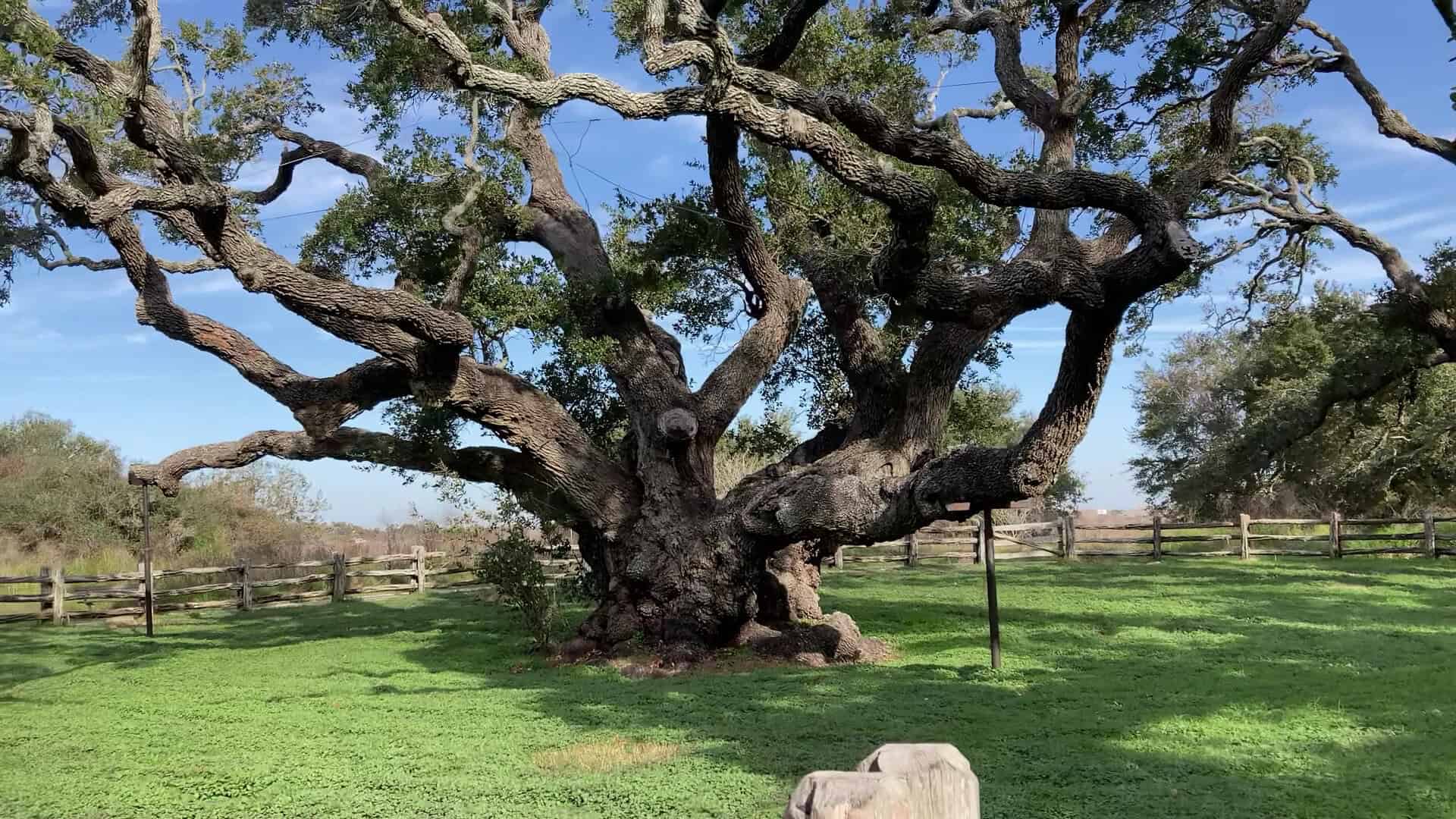
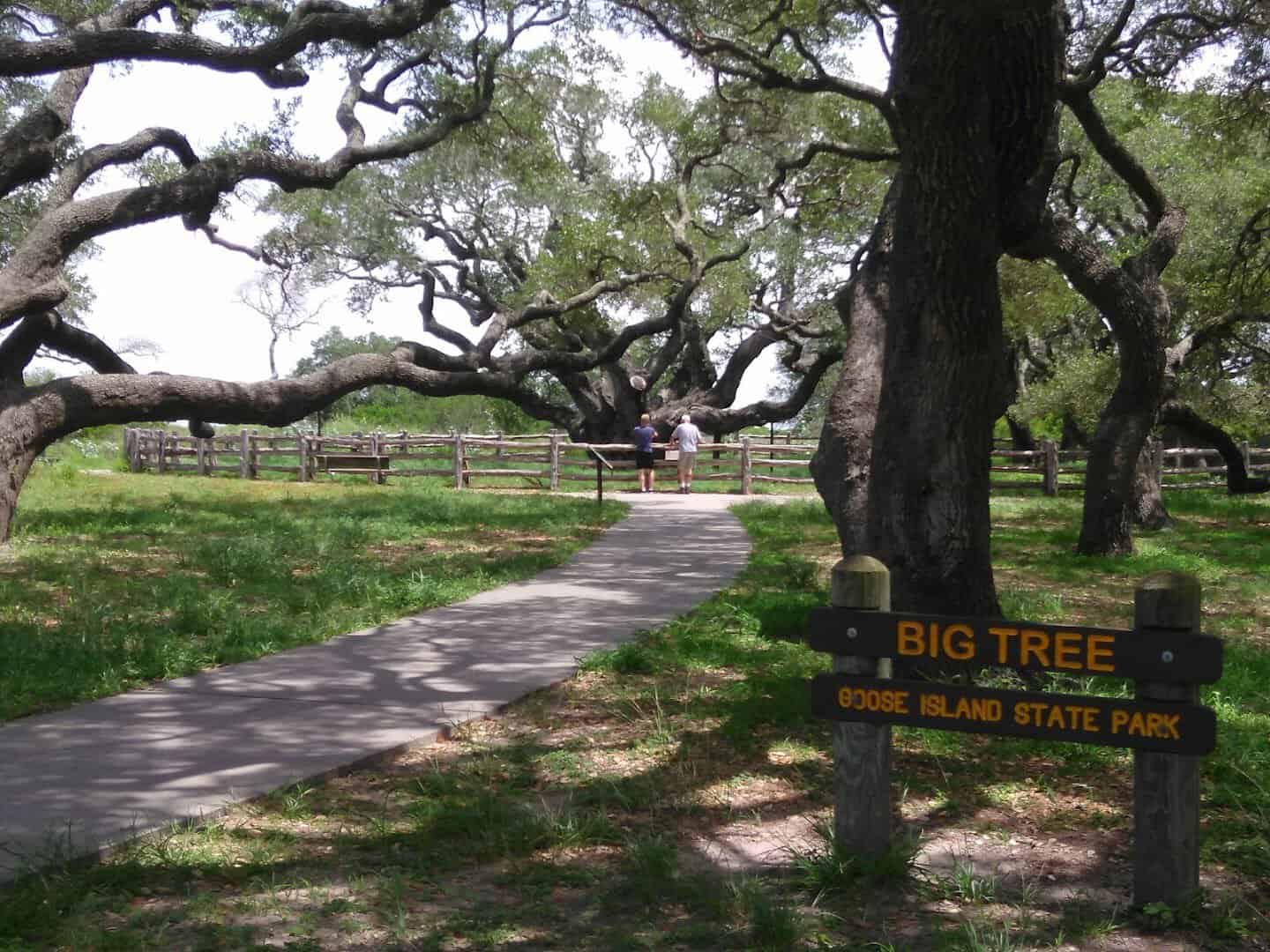
You reach the Big Tree by car, then you walk the last stretch, and the walk matters. The tree does not announce itself. One moment you are on an ordinary path, and the next you are looking at a trunk the width of a small room.
It is a live oak so old and so wide that the branches have grown down to the ground and back up again. It looks like the whole tree decided to lie down for a rest a few centuries ago and never fully got up.
The bark is grey and deeply grooved, worn soft in places where a hundred years of hands have touched it. The lowest limbs are so heavy they rest on the earth. Spanish moss hangs off the higher branches and moves when the bay breeze comes through.
Stand there long enough and the noise falls away. Parents lift their kids to touch the lowest branch, and someone always asks how old it is. Older than anything they can pin a number to, which turns out to be close enough to the truth.
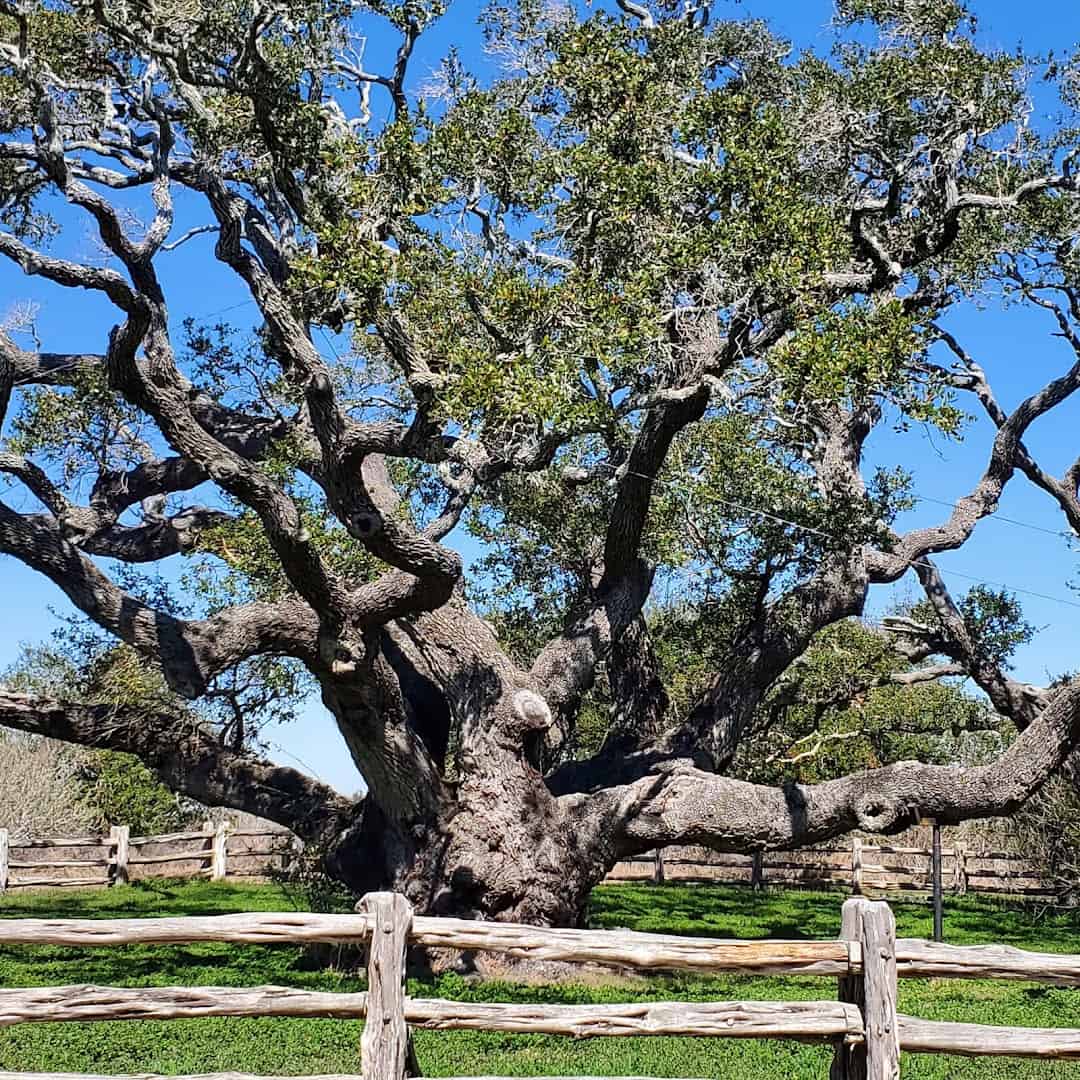
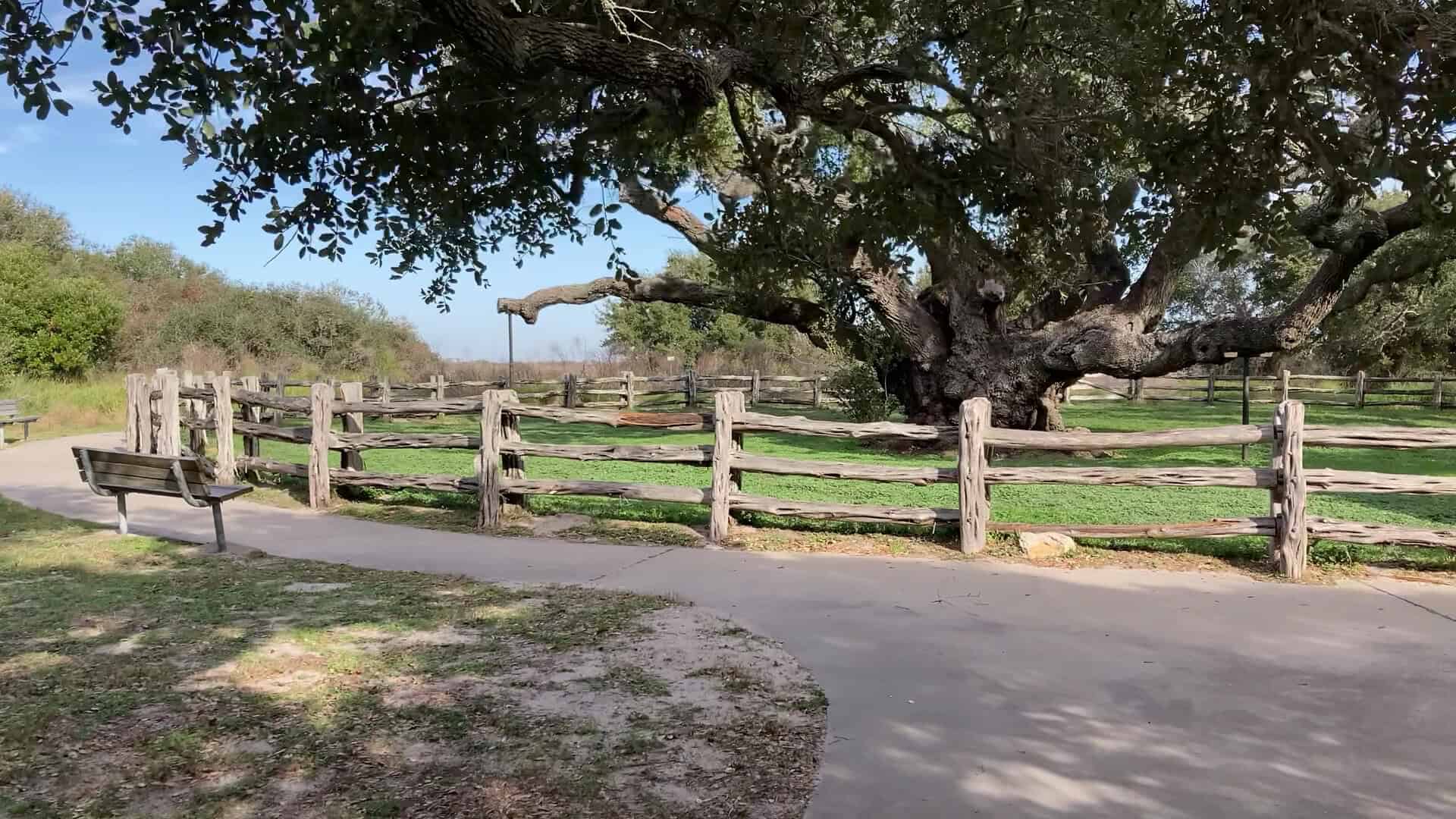
A low metal railing rings the trunk now, keeping feet off the roots, and I love that they guard it that way. This is not a tree you climb. It is a tree you circle slowly, reading the knots and hollows like a face.
I cannot look at a tree this old without doing the math. Which limb was already thick when Columbus set sail? Which one caught the wind of the very first hurricane it ever met? There is no way to know, and that is half the pleasure.
People have loved this tree the way you love a member of the family. The town of Rockport has looked after it for more than a hundred years, calling in tree experts to patch its cracks, trim its dead wood, and heal the fungus that any thousand-year-old body collects.
Just How Big Is the Big Tree?
The name is plain on purpose, because the numbers do the talking. The trunk measures about 35 feet around. To picture that, imagine six or seven adults joining hands in a circle and only just managing to close it.
The crown spreads nearly 90 feet from side to side, wide enough to shade a good chunk of a football field. The tree stands 44 feet tall, which sounds modest until you remember it spent its height growing outward instead of up, reaching for room rather than sky.
Those measurements earned it real titles. In 1966 it was crowned the National Champion live oak, the largest of its kind in the United States, an honor it held again in 1996. Texas named it the State Champion in 1969, and it stayed a champion for decades.
Did you know a tree can lose a crown? In 2003 the Big Tree passed its state title to another Texas oak, the San Bernard Oak. It did not seem to mind.
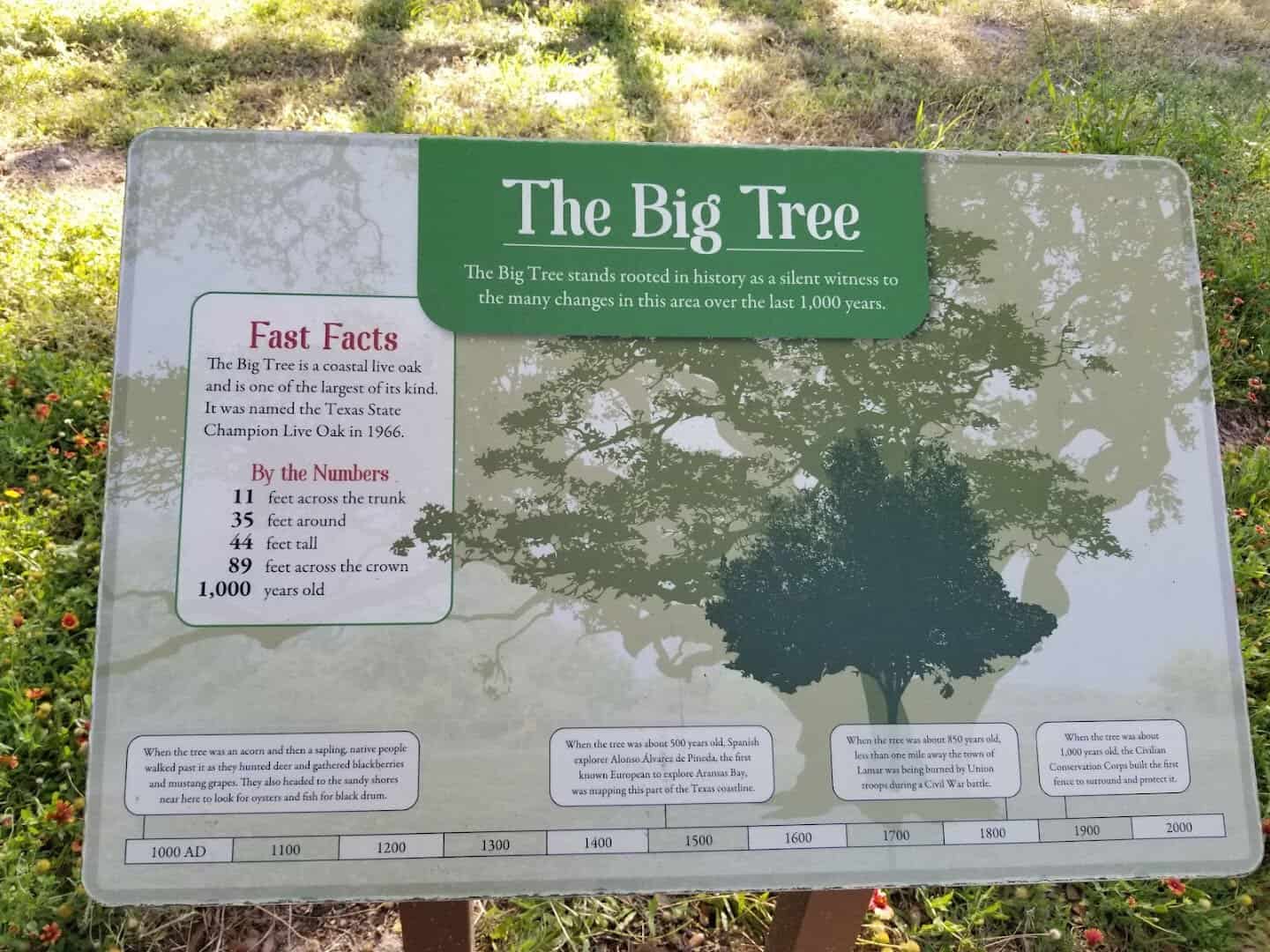
It has been famous far longer than any single ranking, and it even turned up in Ripley’s Believe It or Not.
Ranking or no ranking, it is still the largest living thing most visitors will ever stand next to. The people who make the drive are not counting inches. They come to be humbled by something that was already ancient when Texas was an idea nobody had thought of yet.
A Thousand Years of Standing Witness
Nobody has ever counted the rings, because you cannot without harming the tree, so its exact age stays a friendly argument. Careful estimates put it well past a thousand years, and some genetic research nudges that number higher still.
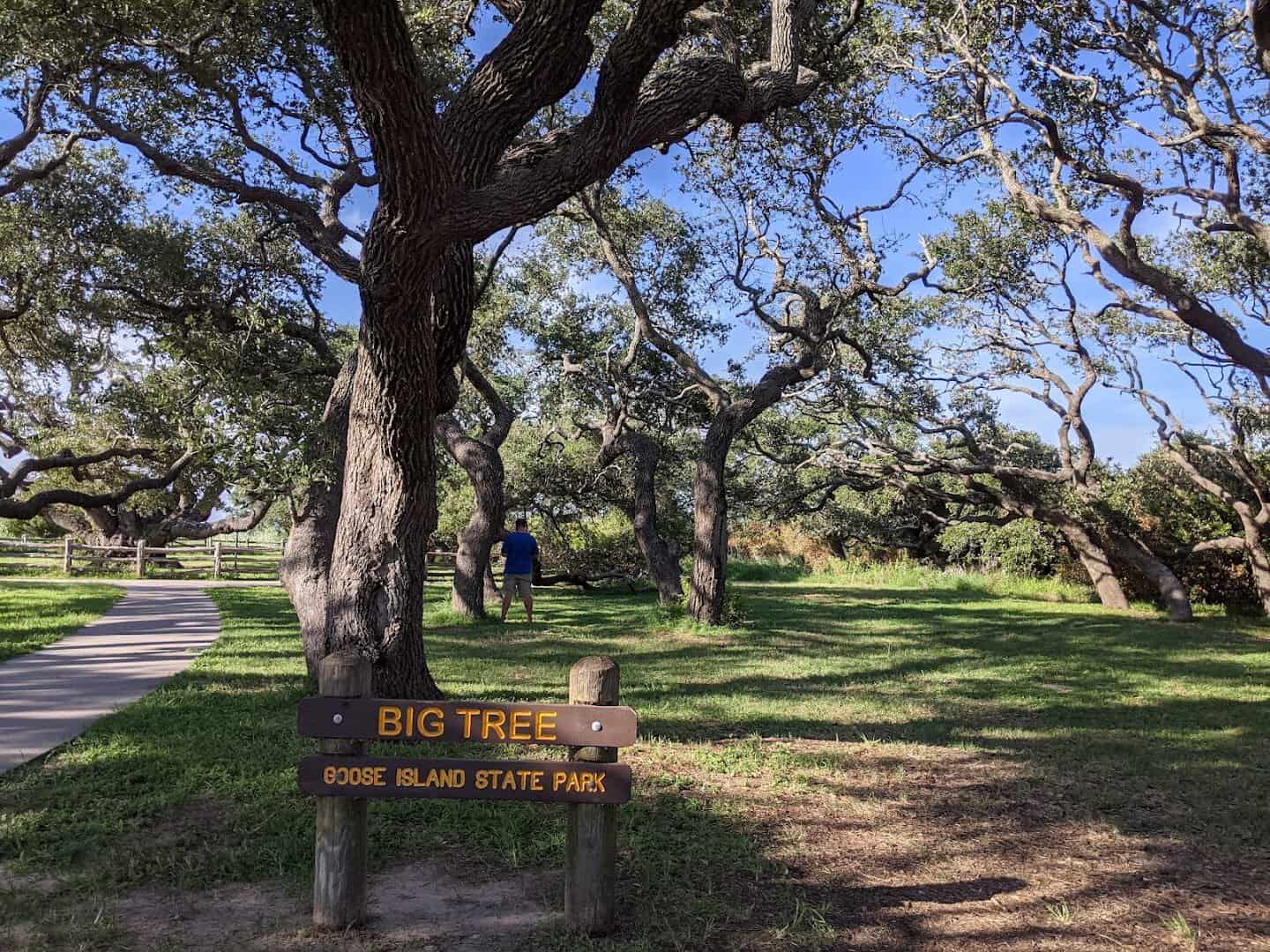
Think about what a thousand years means on this piece of coast. This is a southern live oak, a Quercus virginiana, and it was already a grown tree when the first sailing ships appeared on the horizon of Aransas Bay.
Local history says the Karankawa people, who lived along this coast for generations, gathered near the tree. Later, the stories go, pirates working the Gulf used its unmistakable shape as a landmark, and it watched over the small port town of Lamar as that town grew.
Then came 1864. During the Civil War, the Union Navy bombarded Lamar and left much of the town in ruins. The Big Tree was standing right there through the shelling, and when the smoke cleared, it was still standing. The town rebuilt around it.
That is the thing that gets me. A single living plant has quietly been present for Native ceremonies, pirate landings, a wartime bombardment, and every ordinary Sunday in between. It is a piece of history you can walk up to and touch.
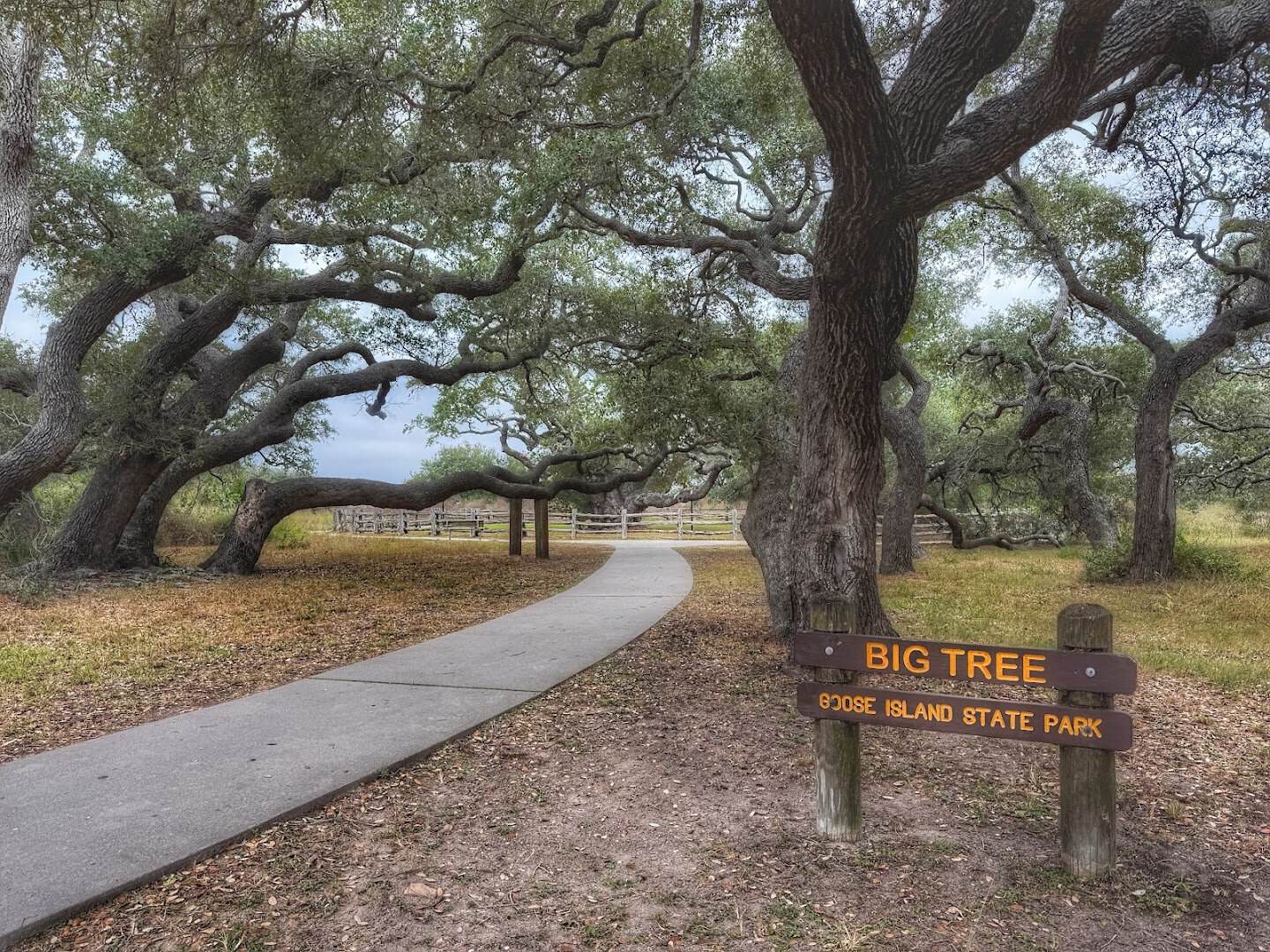
It has also earned the paperwork to prove its size. Foresters measure a champion tree by adding up its trunk, its height, and its spread. By that math the Big Tree ran the table for years.
In 1966 its trunk taped out at more than 421 inches around, a number that still makes arborists whistle. That is the width of a small cabin, grown one slow ring at a time.
The Tree That Would Not Fall
In its long life the Big Tree has weathered somewhere between 40 and 50 major hurricanes, along with droughts, floods, and wildfires. The Texas coast does not go easy on anything, and this oak has taken all of it.
Its most famous test came recently. On August 25, 2017, Hurricane Harvey came ashore near Rockport as a Category 4 storm and flattened much of the area. Younger trees all around snapped and fell. When crews reached the Big Tree, it stood almost untouched.
There is a line people around Rockport like to repeat about the old oak: you do not get to be that old by being weak. After a storm that broke so much, the sight of the tree still standing became a quiet symbol of the whole town’s stubborn recovery.
Part of the credit goes to people. Ahead of big threats, park staff and arborists have given the tree extra care, watering it through drought and protecting its wounds. A thousand years of luck helps, but so does a community that refuses to lose its most famous resident.
After Harvey, the low fence around the trunk took on a second job. Visitors drove in from all over the state to see for themselves that the old oak had made it. For a battered coast, a tree that would not fall was exactly the news everyone needed.
The Wild Little Park That Grew Around It
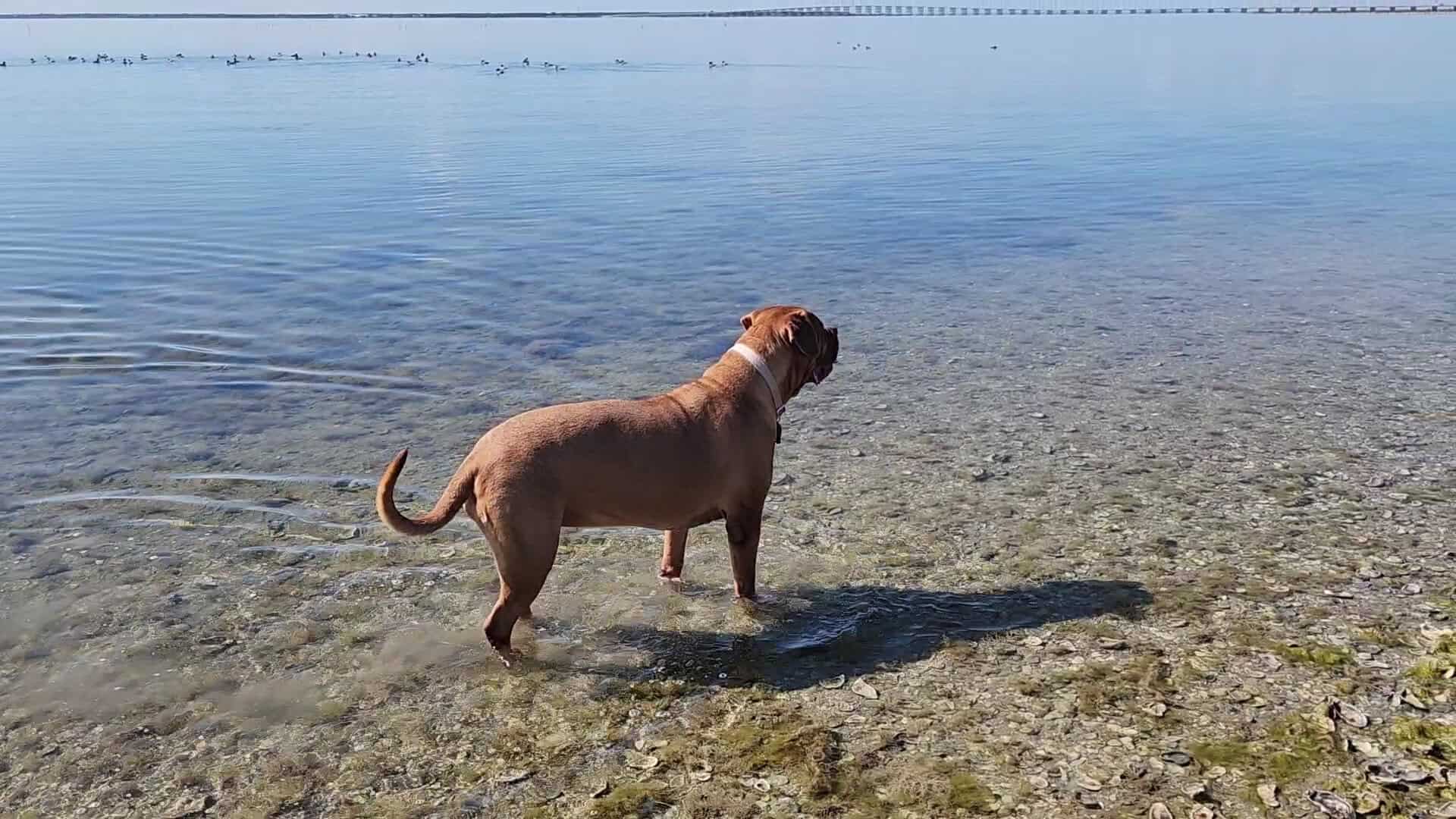
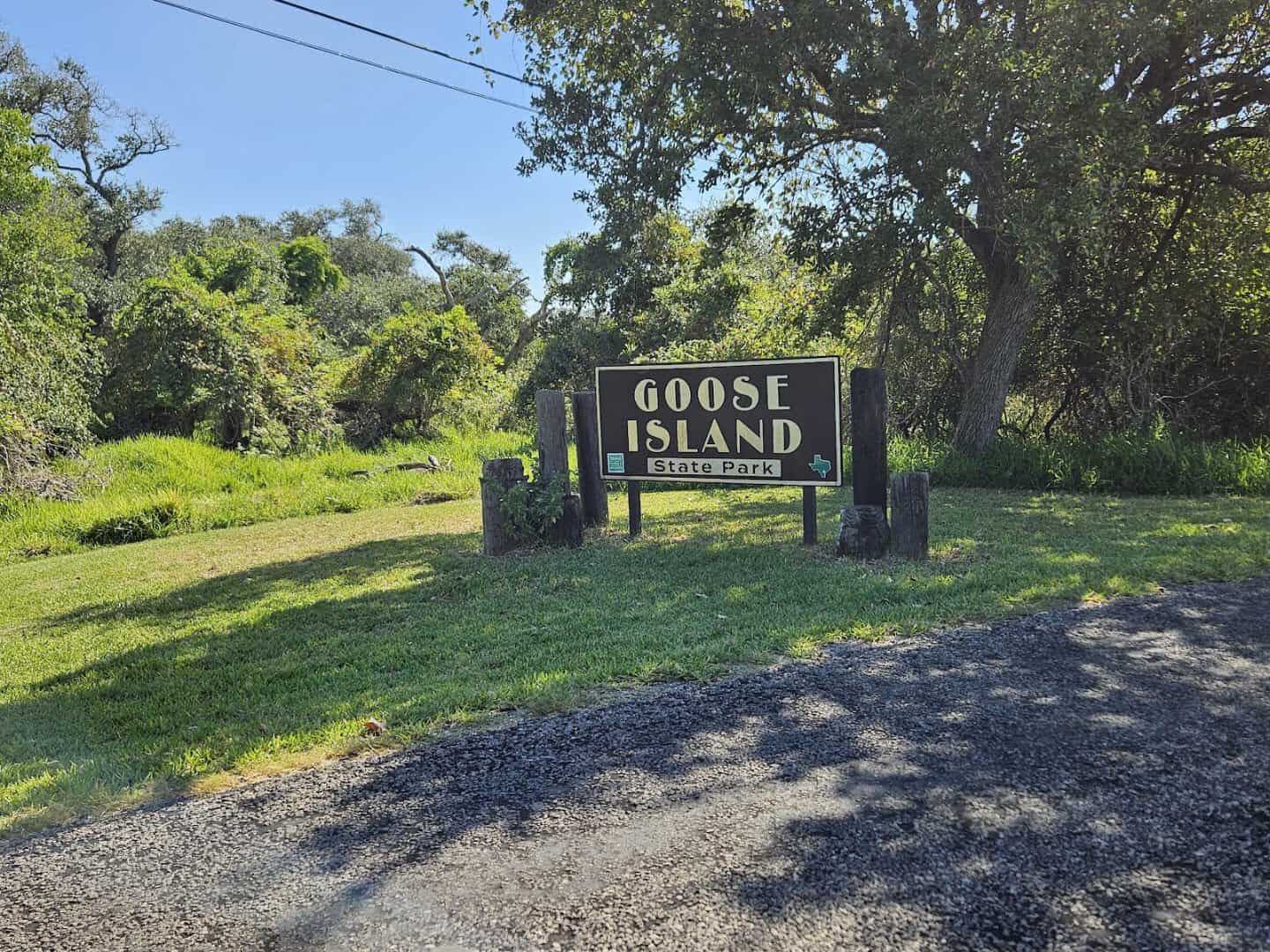
The Big Tree lives inside Goose Island State Park, a 321-acre pocket of coast where St. Charles and Aransas bays meet just north of Rockport. The park is older than most of its visitors realize, built up from land the state gathered between 1931 and 1935.
The Civilian Conservation Corps, the Depression-era work crews who shaped so many Texas parks, put in the first roads and facilities here in the 1930s. Their bones are still under the shady picnic grounds and the wind-sculpted oaks along the shore.
This stretch of coast is a birder’s dream. More than 300 kinds of birds pass through, from roseate spoonbills to herons stalking the shallows. In winter the star arrives: the endangered whooping crane, one of the rarest birds in North America, feeds in the marshes nearby.
The park runs guided “Whooper Walk” programs where a biologist helps you spot those tall white cranes and understand how close they came to vanishing. Seeing one in the wild, after learning how few are left, is the kind of thing you do not forget.
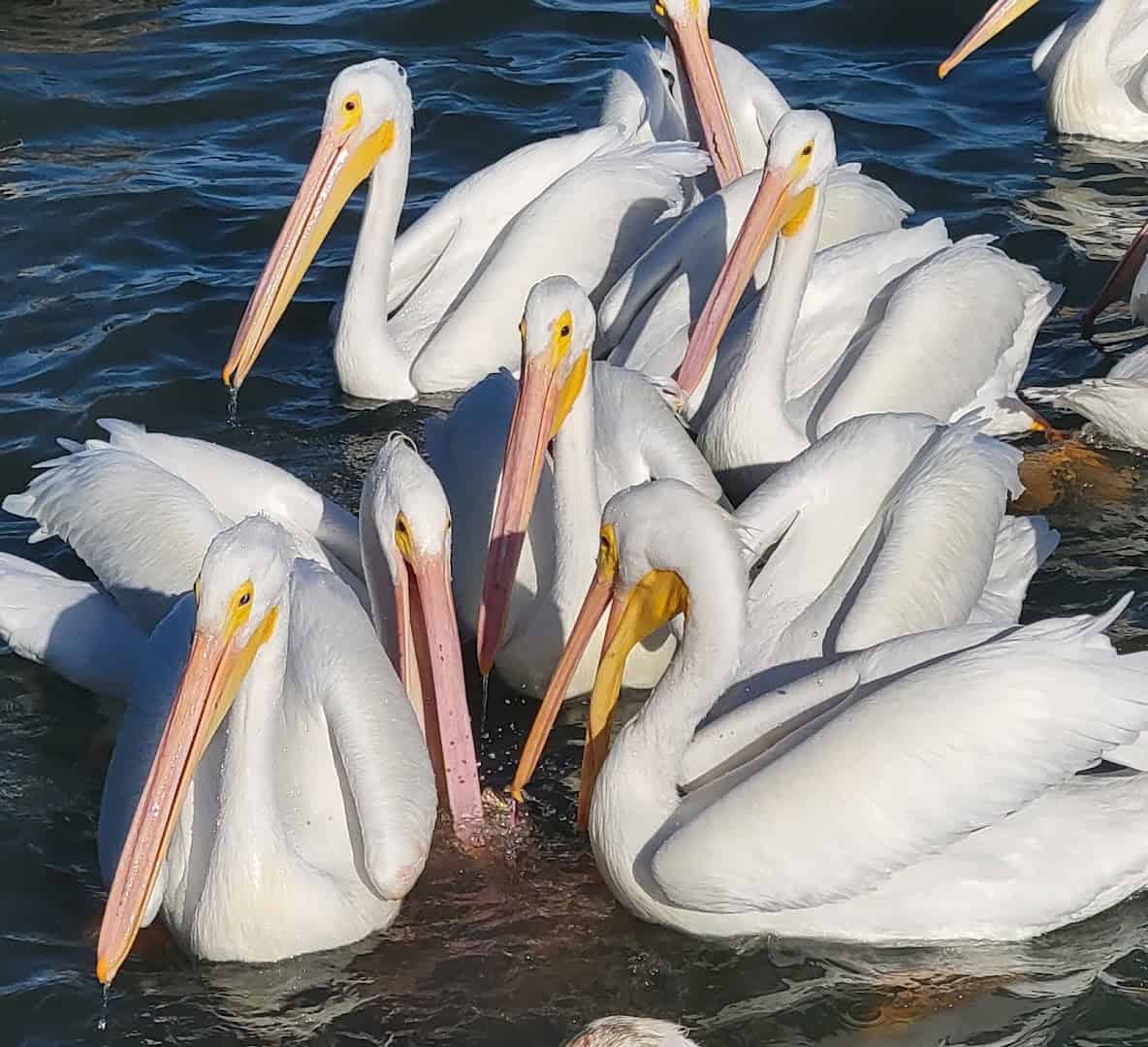
The cranes get the headlines, but they share the water with a big supporting cast. Great flocks of white pelicans raft up on the bay, roseate spoonbills wade the shallows in improbable pink, and herons stalk the tide line. Migration season turns the whole park into a flyway.
Between bird sightings you will meet the rest of the neighbors. White-tailed deer wander the campground at dusk, and armadillos, raccoons, foxes, and cottontail rabbits all call the oaks and marsh grass home. Bring binoculars and a slow pace, and the park keeps handing you something to look at.
Fishing, Camping, and a Very Long Pier
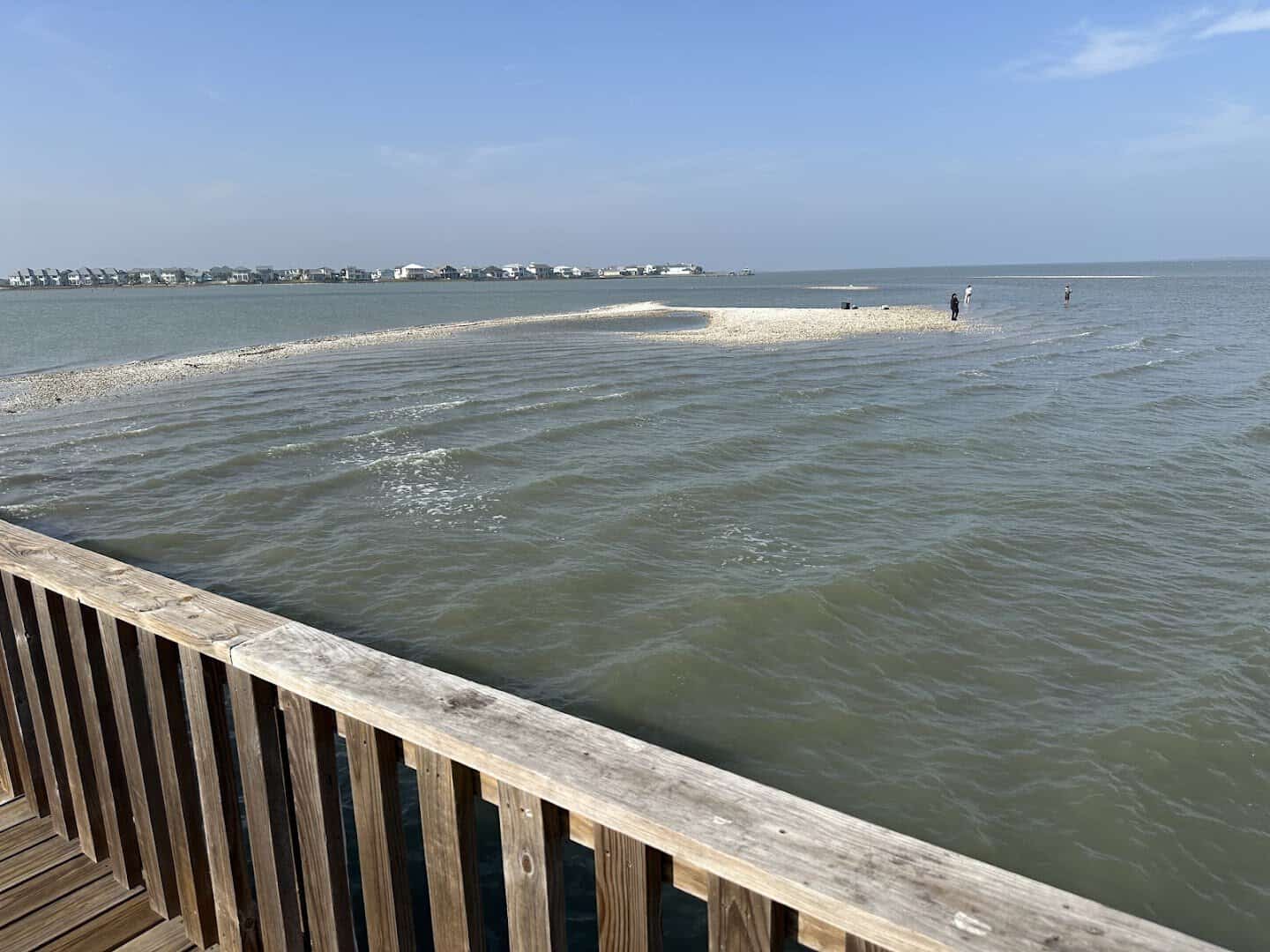
Anglers have their own reason to come. Goose Island reaches into some of the best inshore water on the middle coast, and its lighted fishing pier runs an astonishing 1,620 feet out over the bay. You can walk it at dawn and cast for redfish before the crowds wake up.
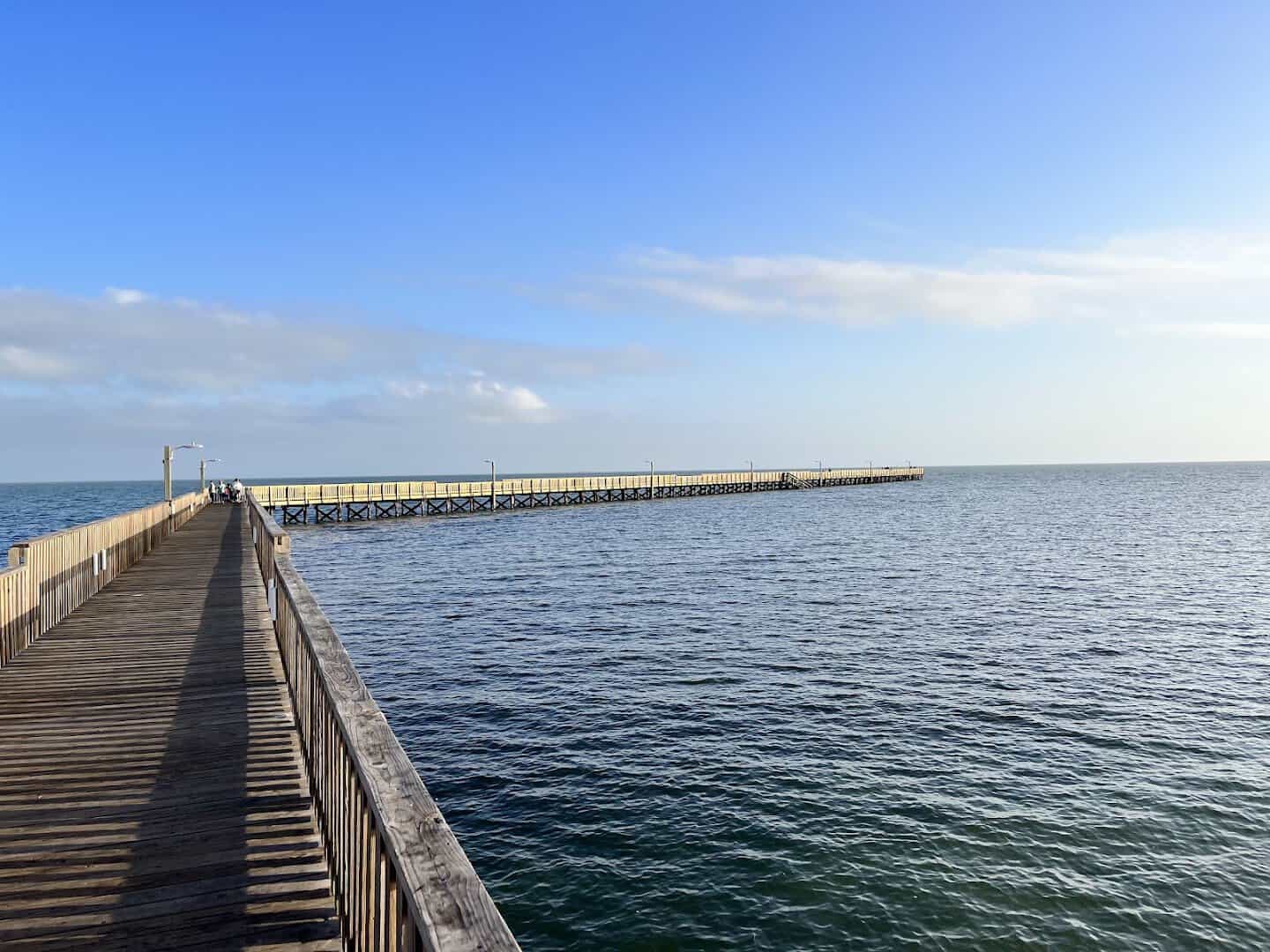
The bays give up spotted seatrout, red drum, black drum, southern flounder, and sheepshead, so bring a rod even if you came for the tree. Just know there is no swimming beach here; the shoreline is rocky, and this is a place for casting and paddling, not cannonballs.
Paddlers do well here too. The calm, protected water off the park is easy to launch a kayak into, and gliding along the shoreline at eye level with the herons is a different way to see the coast entirely. Rent a boat in Rockport or bring your own.
You can stay the night, too. The park draws more than 60,000 overnight campers a year, with sites tucked under the oaks and others right along the water where you fall asleep to the sound of the bay. Book ahead, because the waterfront spots go fast.
Pro tip: come early in the day for the Big Tree itself. The light is soft, the parking lot is empty, and you can have those ancient branches to yourself for a few minutes before anyone else arrives. It is worth setting an alarm for.
How to Get There
Where: Goose Island State Park, 202 South Palmetto Street, Rockport, TX 78382. The Big Tree sits a short drive north of the main park on the Lamar peninsula, and the park entrance is about a dozen miles up the coast from downtown Rockport.
The park is open year-round, and a small day-use fee gets you in. Standing at the Big Tree itself is free once you are inside, so the whole detour costs less than lunch.
Pair it with a slow afternoon in Rockport, a friendly Gulf Coast art town with a working harbor, galleries, and fresh shrimp off the boats. It is the kind of unhurried coastal quiet that makes you want to stay an extra night.
Go Stand Under a Thousand Years
We do not have many things that have been here for a thousand years and are still very much alive. This one is a short drive from the Texas coast, free to visit, and patient enough to wait for you.
So point the car toward the bay, pack a picnic and a fishing rod, and go put your hand on a tree that was already ancient when the first ships came. Then look up, and try to imagine everything it has seen. You will leave feeling wonderfully small.
Featured image: Rusty Shackleford via Goose Island State Park

Stella Raines
Editor-in-Chief
Stella brings over a decade of storytelling experience to TX Headlines. With roots in West Texas and a love for road trips, she leads the editorial team with an eye for the hidden stories that make Texas unforgettable.
More Stories

These 10 Texas Spots Bloom Into Seas of Bluebonnets Each Spring

This Enchanting Texas Nature Trail Feels Like Hiking Through a Fairytale Forest

This Underrated Texas State Park Gives You a Full Day of Swimming and Hiking for Just $5

This Easy Texas Hike Leads to a Swinging Suspension Bridge Hidden in the Pines
Tags