This Unassuming Texas Bridge Is Home to 1.5 Million Bats That Pour Into the Sky at Dusk
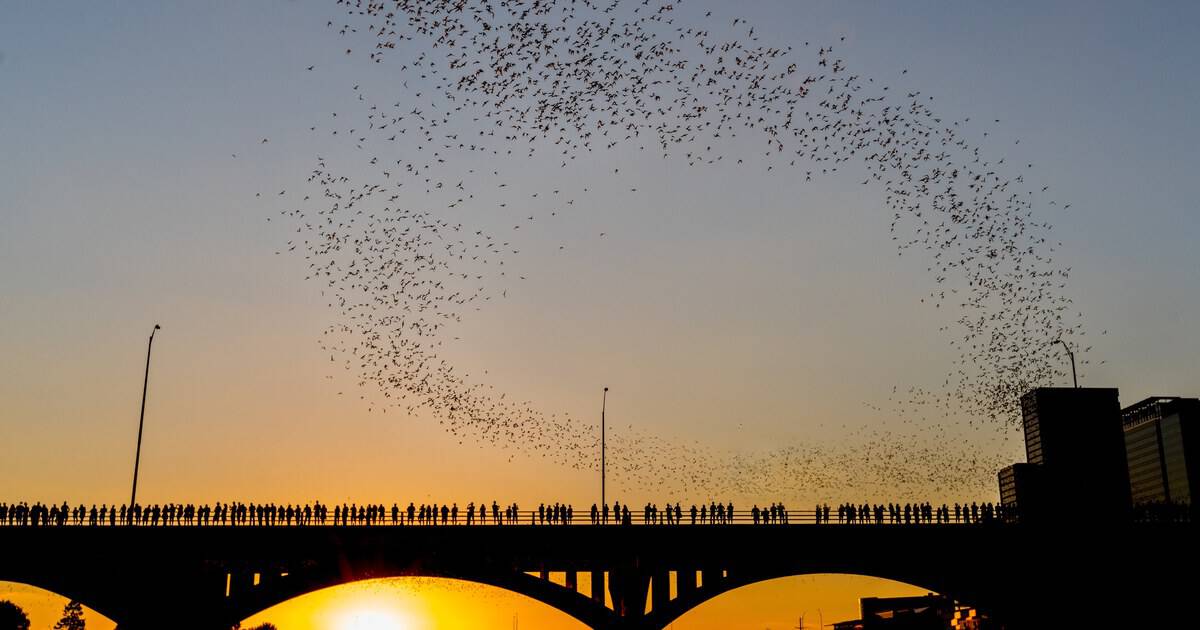
I was nine the first time somebody told me to look up and wait. We leaned on a warm concrete railing above a green Texas river, the sky over the water gone peach and gold, and my legs itched from the grass. Nothing happened for a long while.
Then a thin dark thread lifted out from somewhere under my feet, widened, and kept coming. That railing belonged to the Ann W. Richards Congress Avenue Bridge in downtown Austin, and the thread was made of bats. Roughly 1.5 million of them, all leaving for dinner at once.
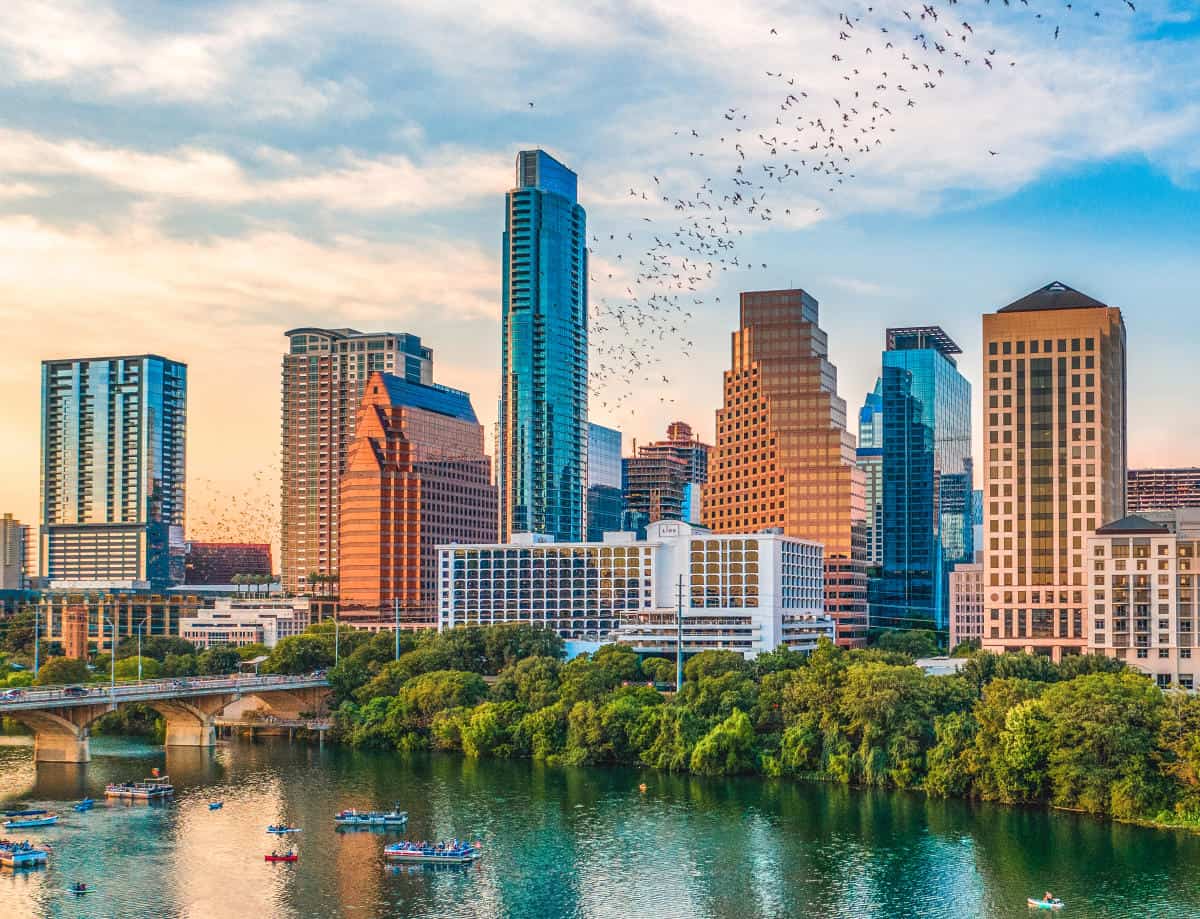
They are Mexican free-tailed bats, and the colony packed into the underside of that bridge is the largest urban bat colony in the world. Austinites have been calling the nightly emergence living smoke for decades. Watch it climb into a pink sky one time and the phrase makes perfect sense.
Below, discover how a routine highway rehab accidentally built the best free wildlife show in Texas, where to stand for it, and which weeks of the year bring the thickest flights.
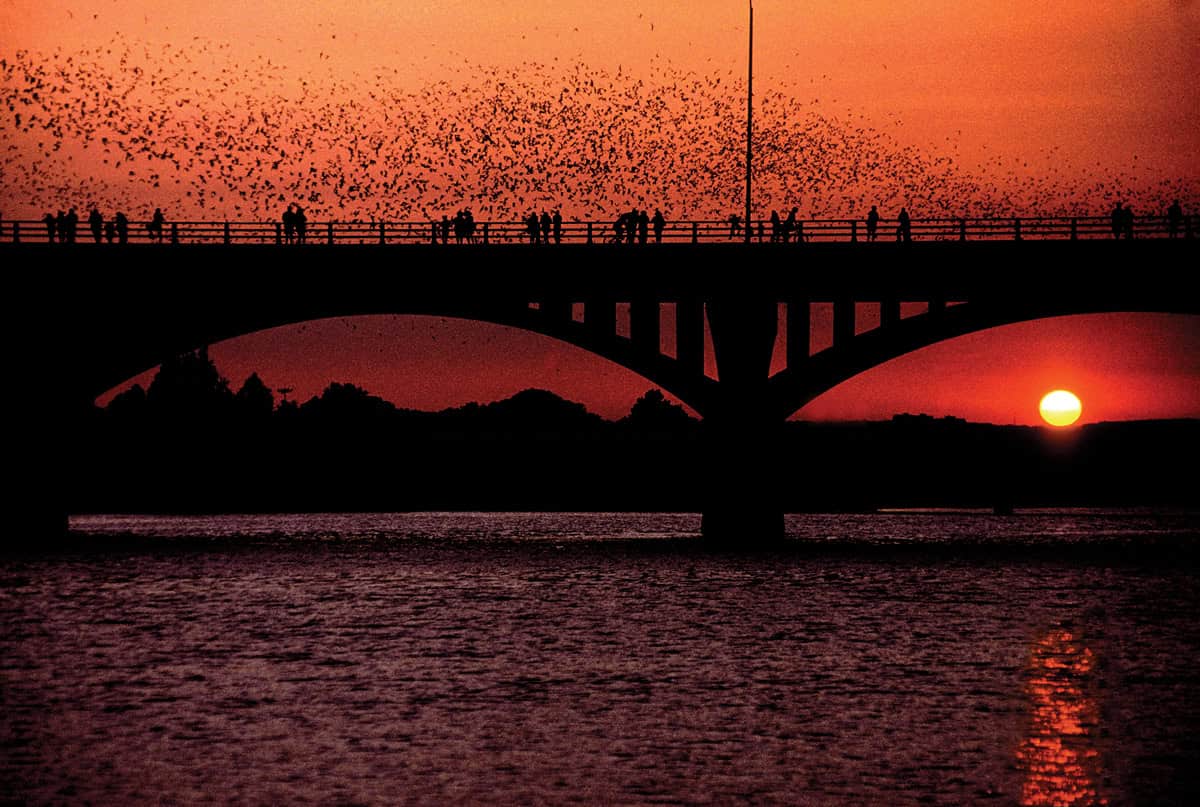
The Evening the Sky Starts Moving
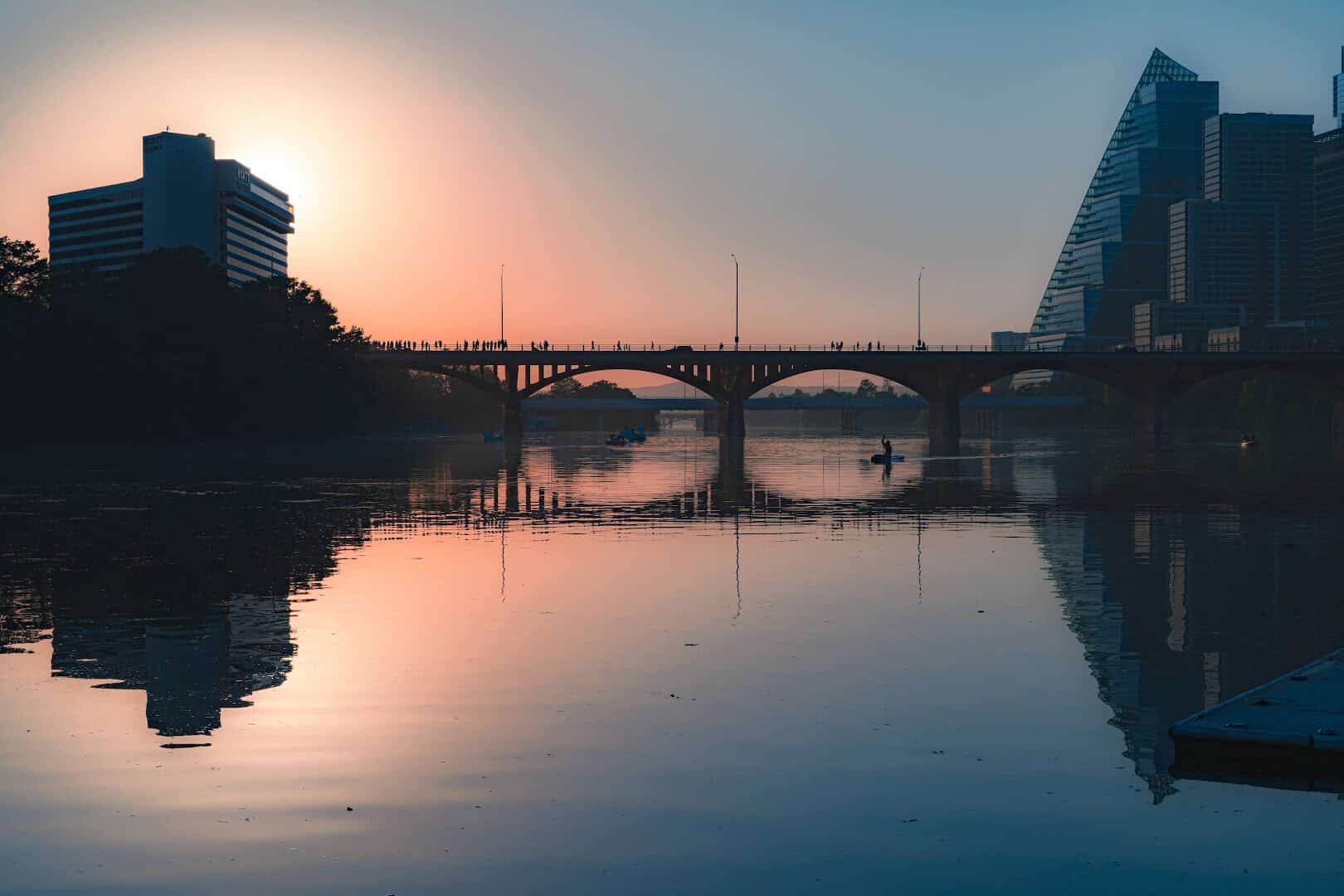
Arrive an hour before sunset and the sidewalks are already filling up. The lake below goes the color of weak tea. Paddleboards drift into position downstream. Everybody leans on the rail and stares hard at the same patch of nothing, waiting for a signal only the bats know.
The first sign is sound rather than sight. A dry chittering rises up through the concrete under your shoes, thin and busy, a little like rain on a tin roof played at half speed. Over ten minutes it gets steadily louder, until the whole structure seems to be making it.
Next comes the smell, warm and musky and faintly sweet, the way a hayloft smells in late August. I found it oddly comforting the first time, and I still do. It is simply the smell of a million and a half small mammals stretching and waking up together.
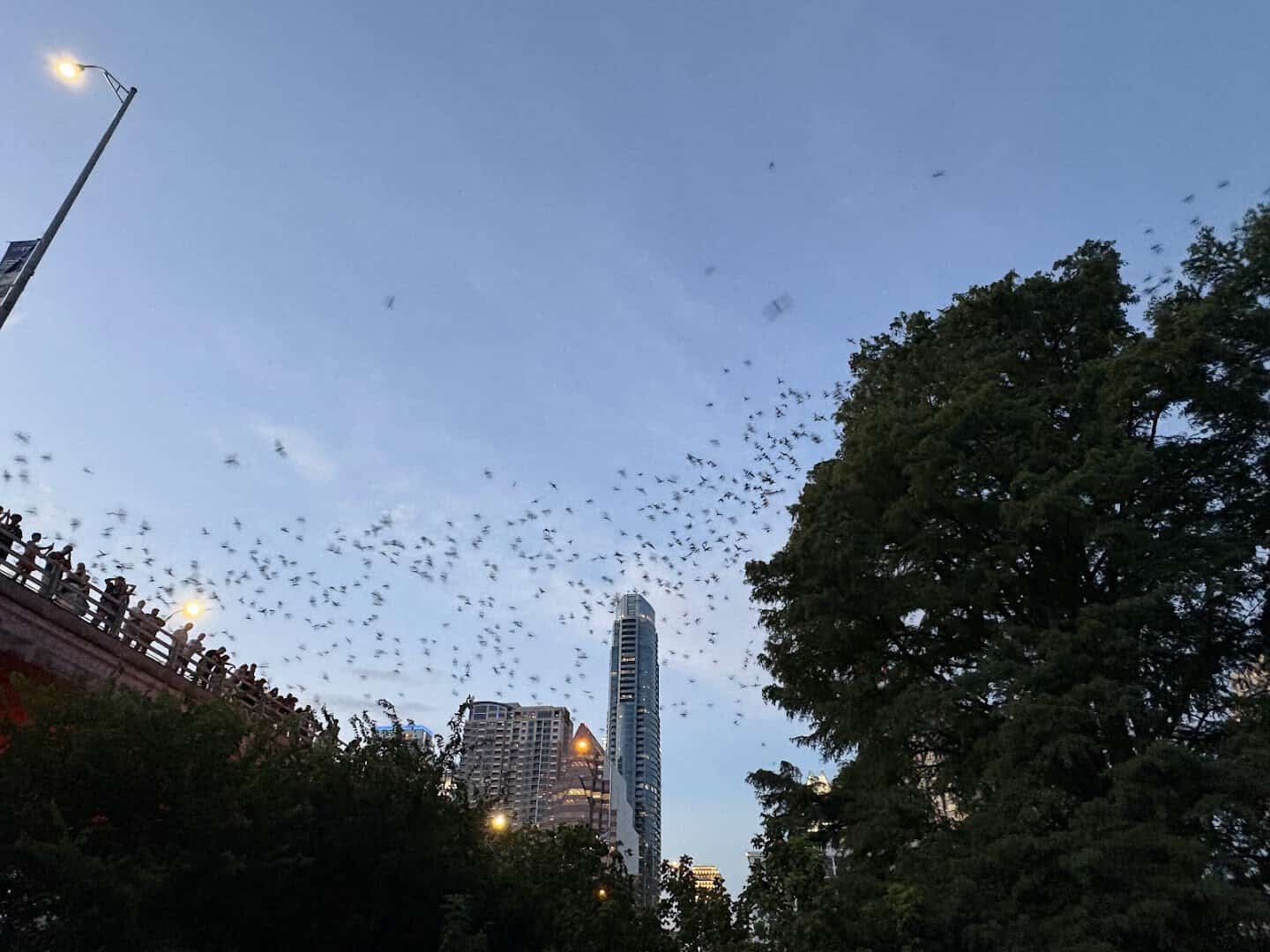
Then the first column slips out from the south side, flying low over the water before banking east. A second follows within a minute. A third. On a strong night those columns braid into one wide, rippling ribbon that runs out past the highway and keeps going.
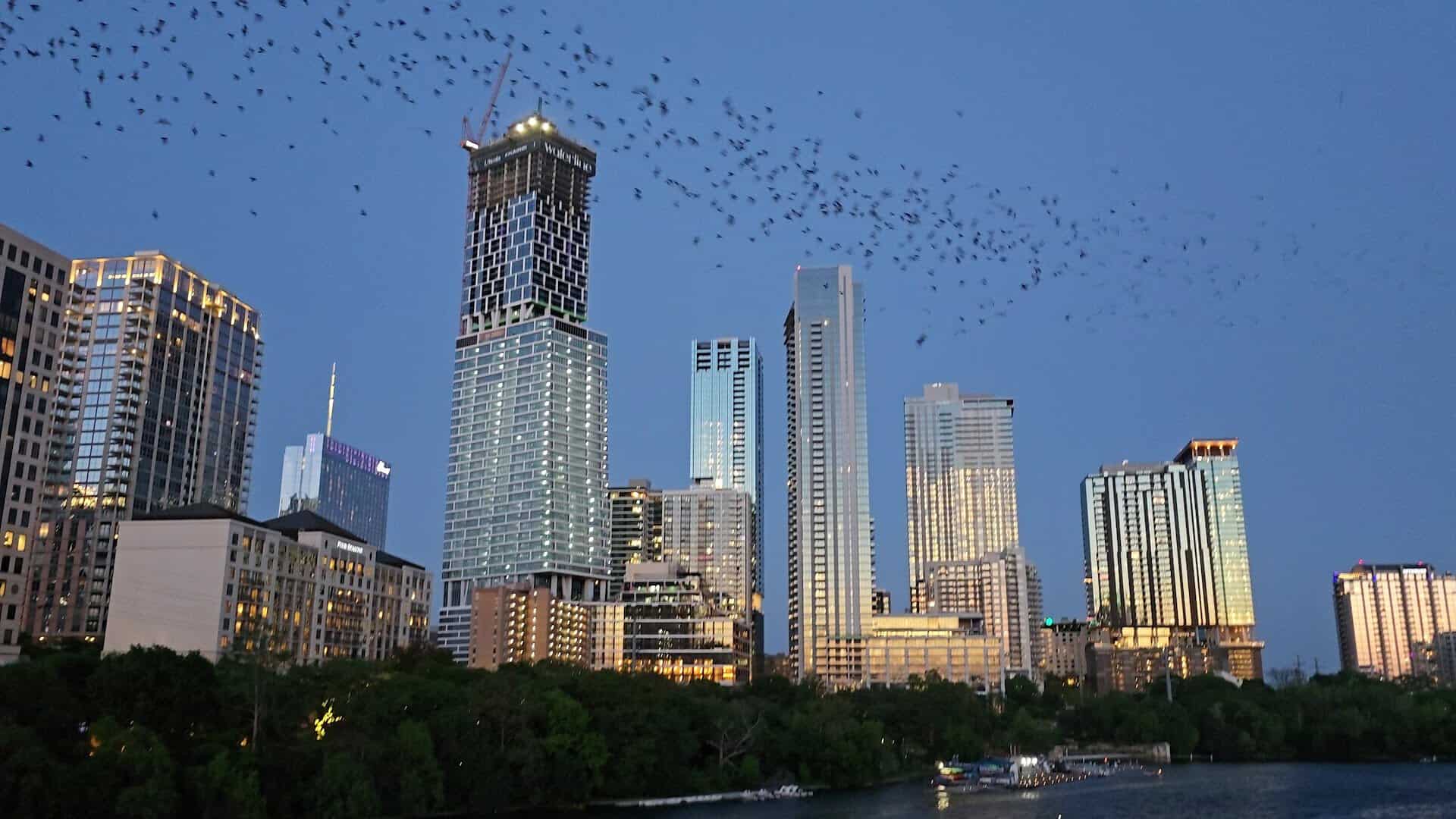
The whole emergence can take fifteen minutes or push past forty. I have stayed for every second of it more than once, neck aching, phone forgotten in my pocket, grinning like the nine year old I used to be on that railing.
Meet the Tiny Tenants Under the Deck
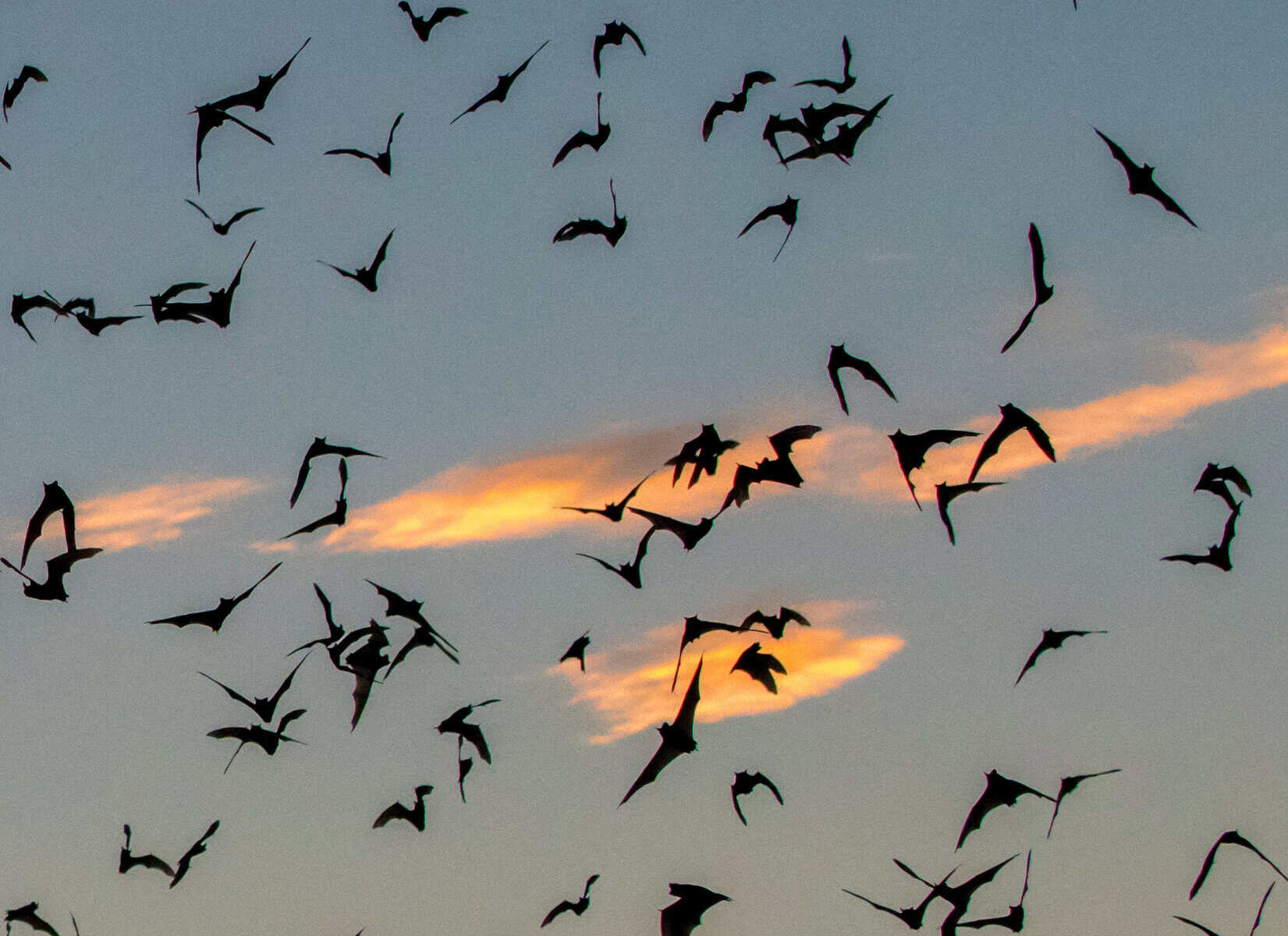
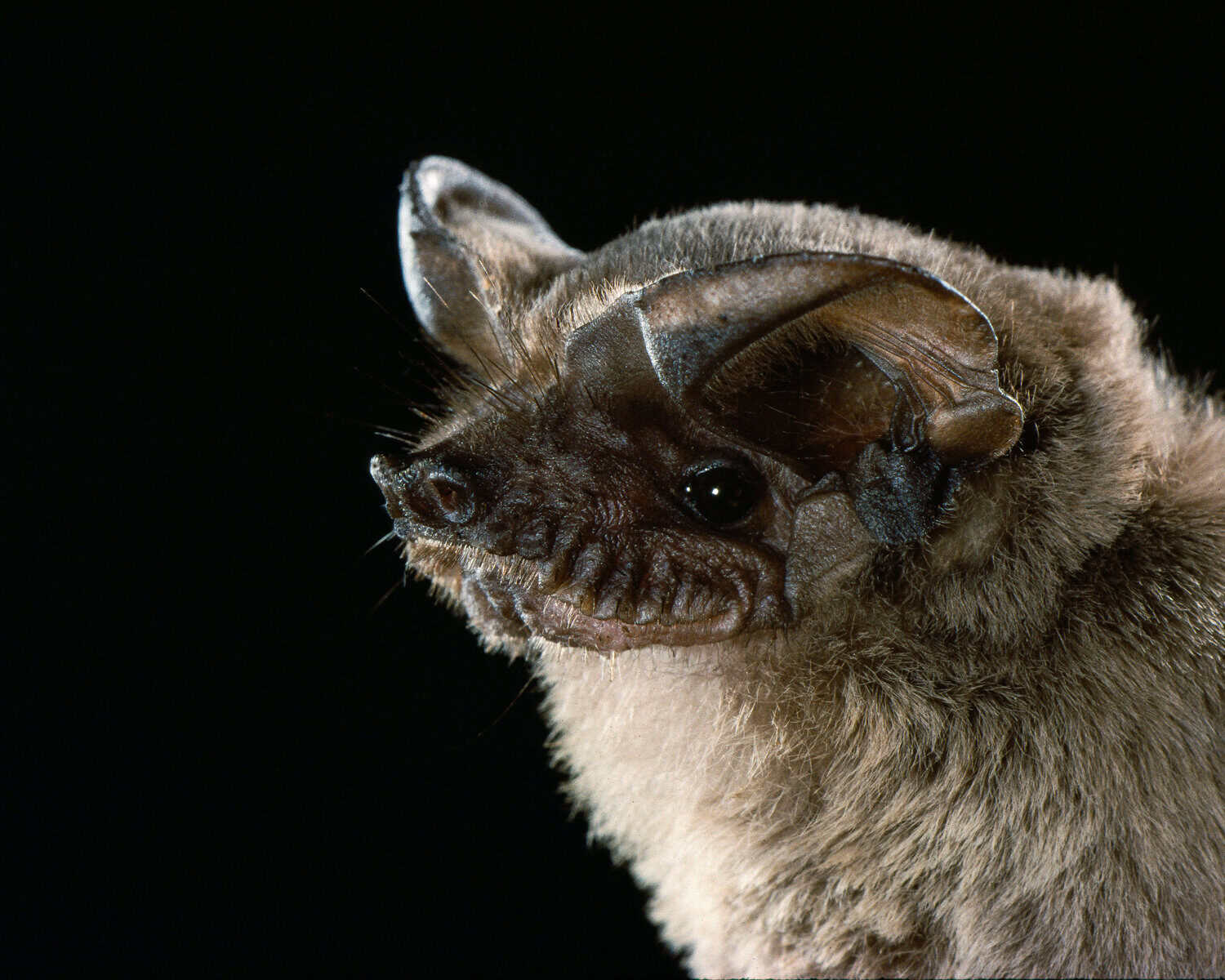
A Mexican free-tailed bat measures about three and a half inches long and weighs less than half an ounce. Put two quarters in your palm and you are holding roughly the weight of one bat. Now multiply that palmful by a million and a half.
Their wings are long and narrow, built for distance and speed rather than for fluttering around a porch light. That airframe makes them the quickest fliers ever recorded among bats, clocked in level flight at ground speeds that approach 100 miles per hour.
They also climb absurdly high. Researchers tracking free-tails have found them hunting moths at 10,000 feet and beyond, in air so thin that most other bats never bother going up to look. They also cover serious distance in a night, ranging far out over the farmland east of town.
The name comes from the tail, which pokes out well past the edge of the wing membrane instead of being wrapped up inside it. A free tail. Once somebody points it out to you, you will spot it in every photograph you ever see.
Did you know? This is the official flying mammal of Texas. Governor George W. Bush signed the resolution on May 25, 1995, which means the little residents of the bridge carry a state title along with their world record.
What Bats Are Really Like
Almost everything most of us absorbed about bats as kids came from cartoons. The real animal is far more interesting, and spending an evening with 1.5 million of them tends to rearrange your opinions in a hurry.
They are not blind. Free-tails see perfectly well, and they layer echolocation on top of that vision, firing rapid ultrasonic pulses and reading the echoes to build a picture of the dark. A moth in mid air stands very little chance.
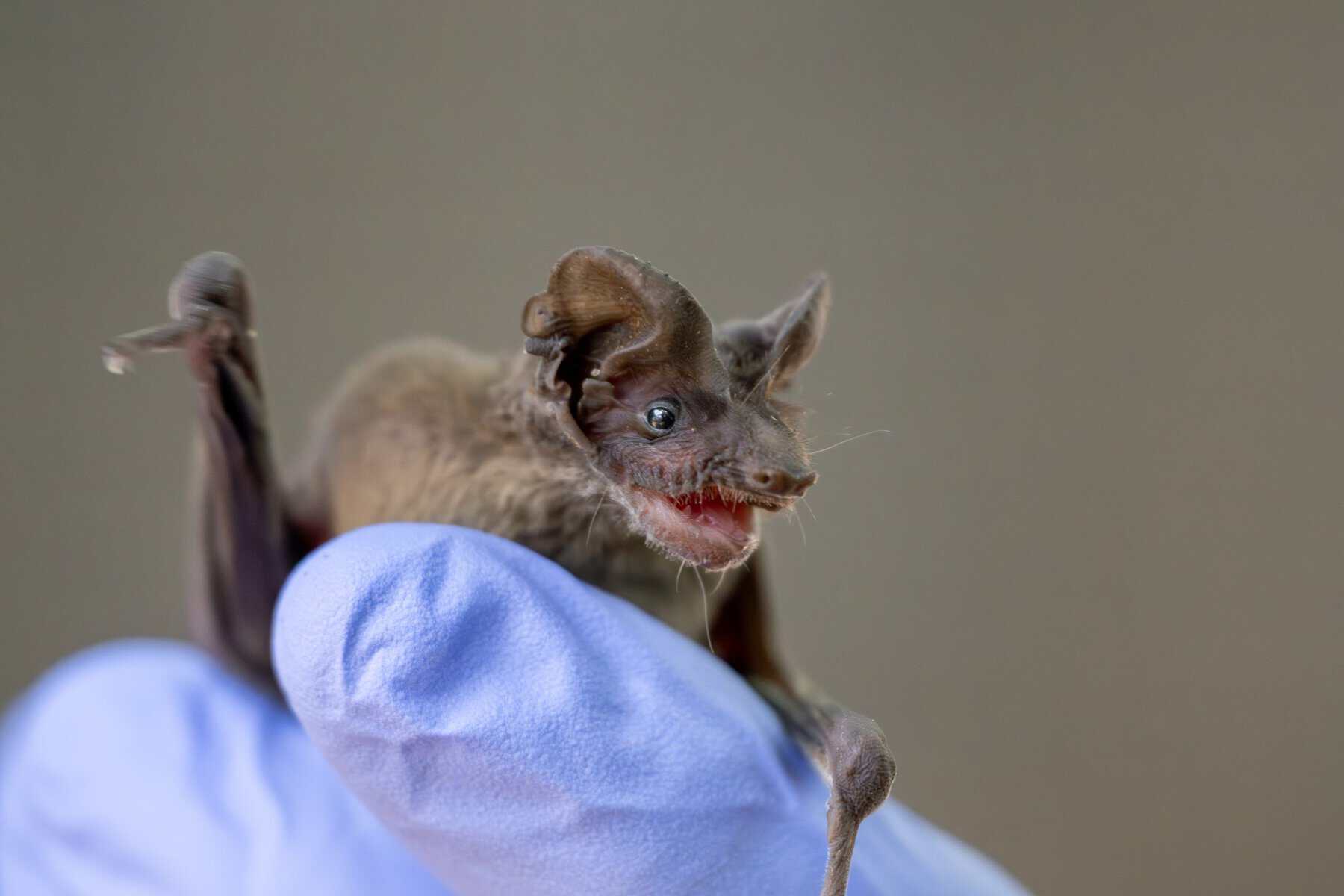
They are also fastidious. A roosting free-tail spends a good chunk of its day grooming, combing its fur with a hind claw the way a cat works over a paw. Clean fur means better flight, and better flight means dinner.
They live a long time for something so small. Wild Mexican free-tailed bats commonly reach eight to eighteen years, and the oldest banded individual on record made it past eighteen. Some of the mothers overhead have been making this same flight since before your last car.
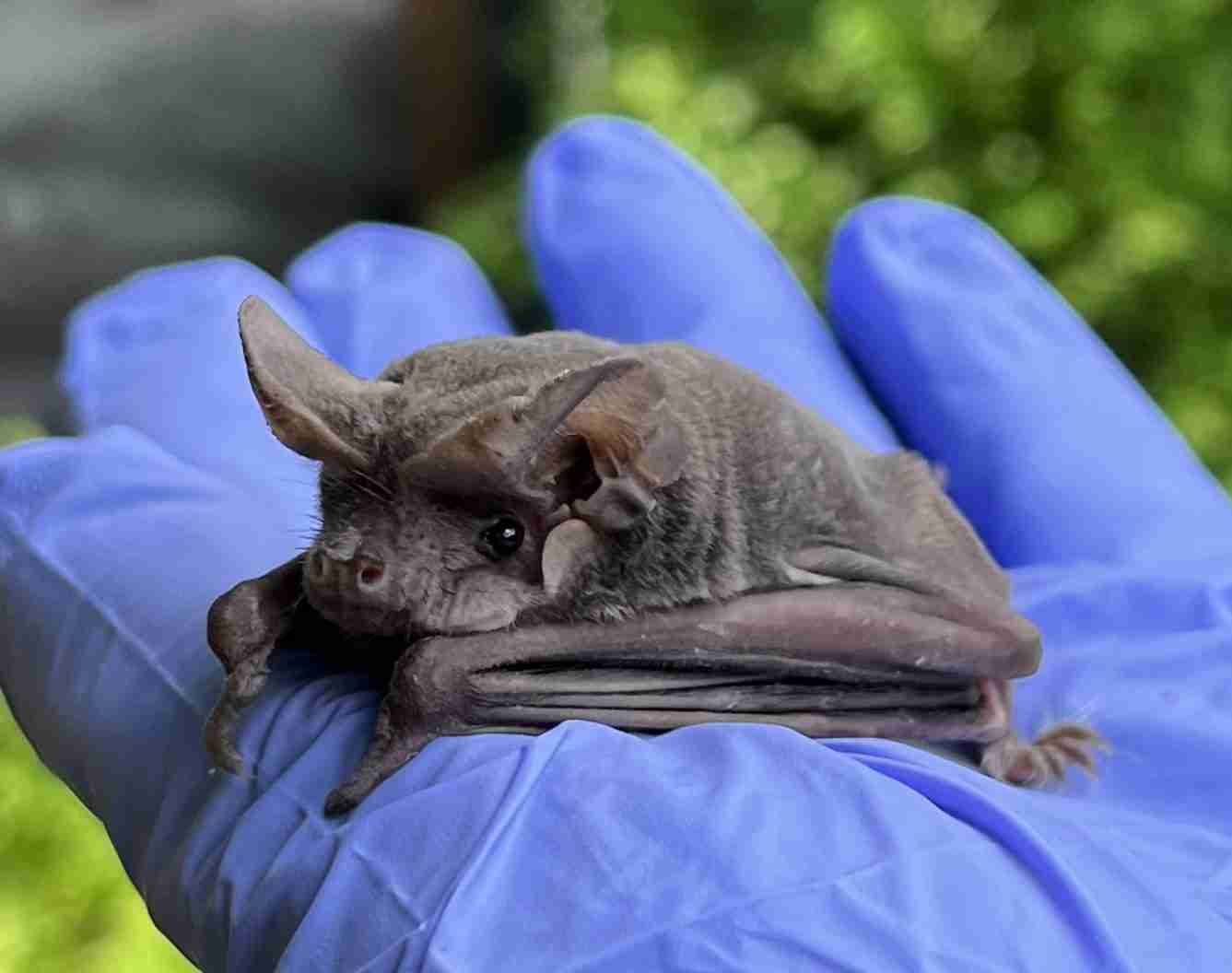
And they want nothing to do with you. A healthy bat’s entire evening plan involves moths, beetles and altitude. Watch from the rail, let them work, and you get the best seat in the house for free.
Why a Bridge? Blame the Beams
None of this was anybody’s plan. In 1980 the bridge was rehabilitated, and the new deck went up on long concrete box beams laid side by side across the span, the standard approach for a road bridge of that era.
Between those beams run narrow expansion crevices. They measure three quarters of an inch to an inch and a half wide, 16 to 18 inches deep, and they are capped along the top by the road surface itself.
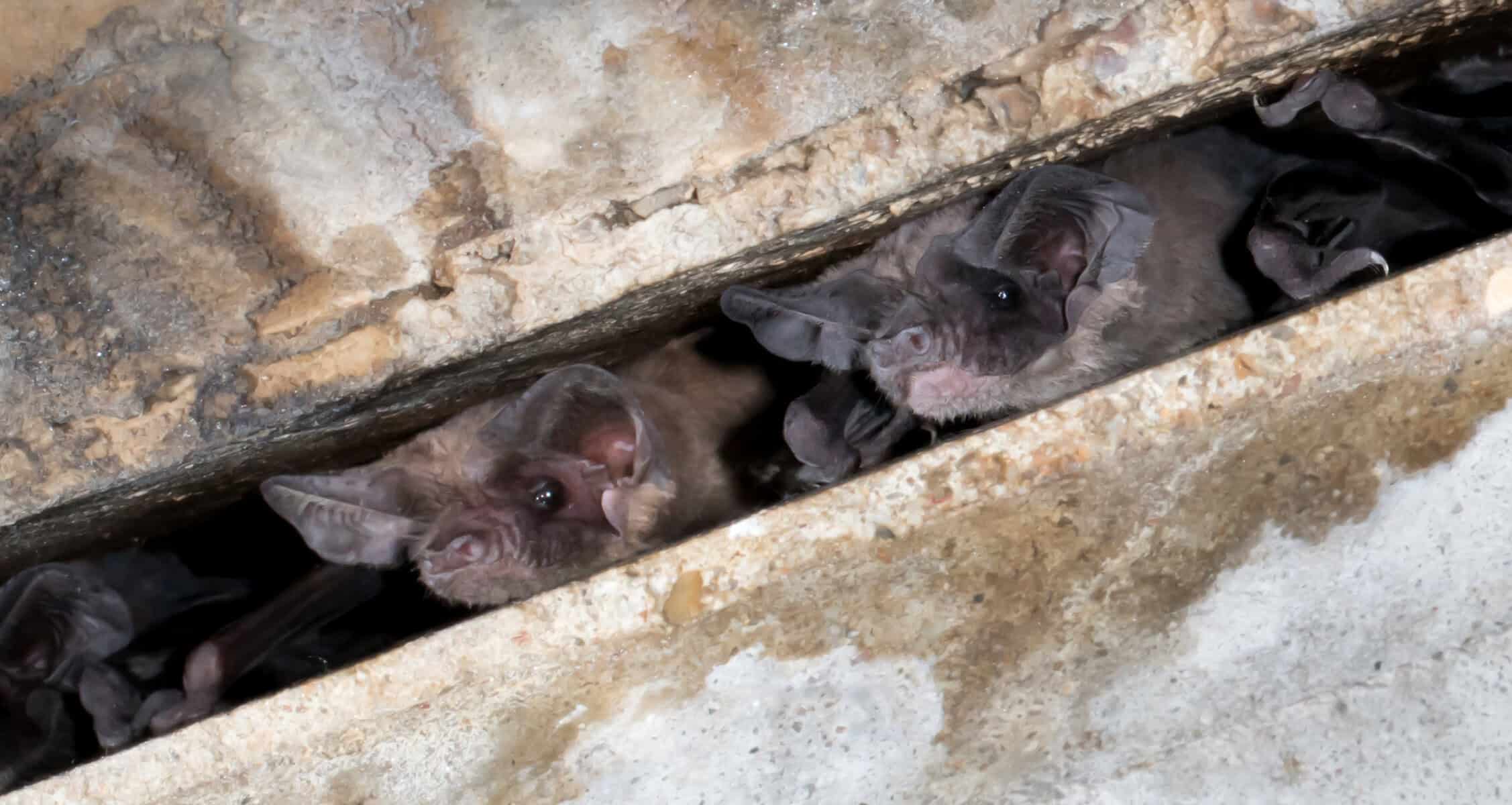
That geometry happens to be a perfect free-tailed bat apartment. The slot is far too tight for a hawk, an owl or a raccoon to reach into, which removes almost every predator a Texas bat has to think about.
Better still, the pavement absorbs Central Texas sun all afternoon and then radiates that heat down into the crevices through the evening. The result is a warm, dark, sealed nursery, which is exactly what a pregnant female bat spends her spring searching for.
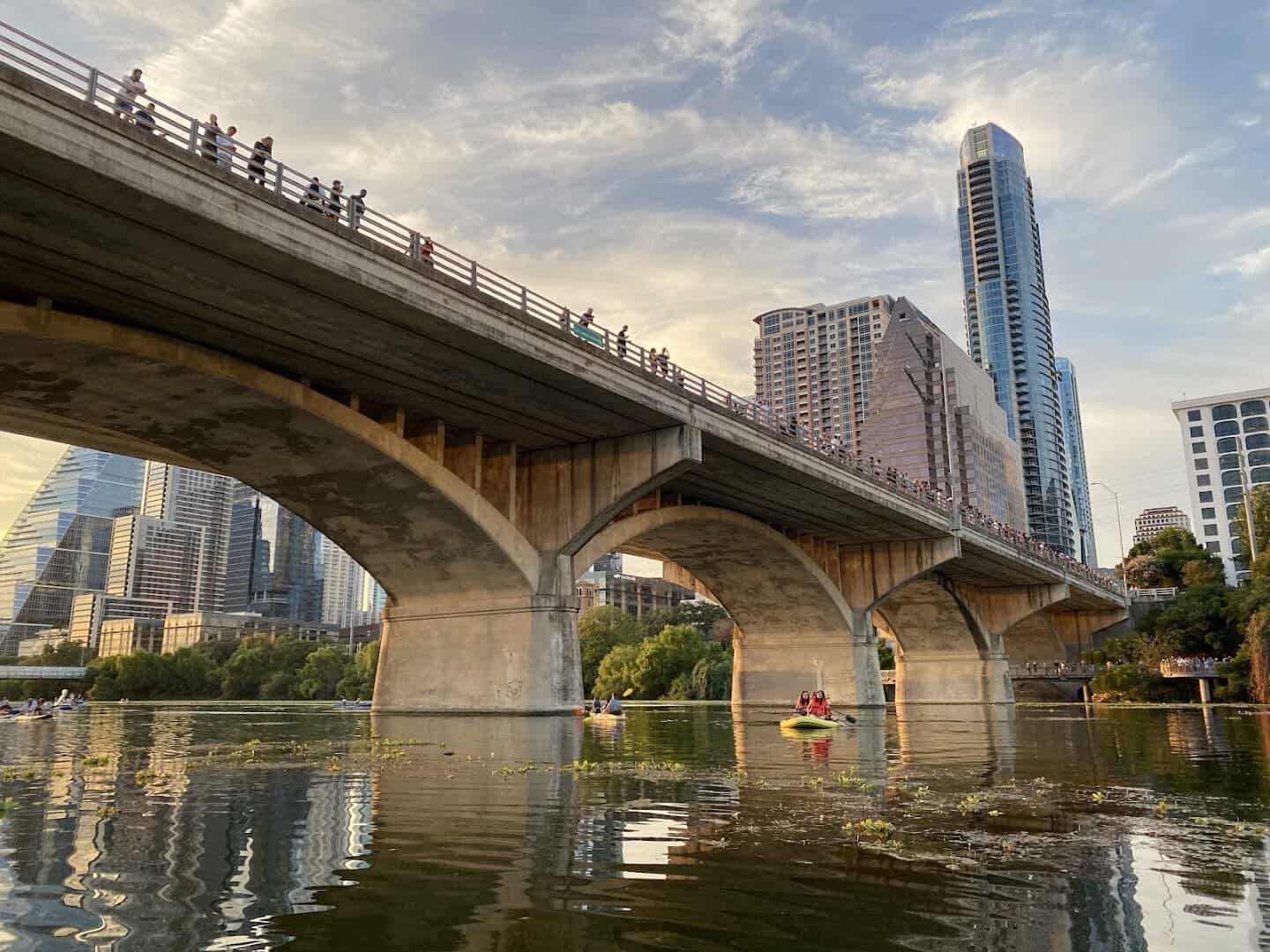
Mark Bloschock, the Texas Department of Transportation engineer who worked the project, has spent the decades since explaining that nobody set out to build a bat roost. His team built a bridge. The bats simply read the blueprints their own way.
From Panic to Pride: A Brief History
The bridge is seventy years older than its famous tenants. The current concrete arch span opened on April 4, 1910, put up by the King Bridge Company of Cleveland at a final cost of $208,950 and change, which was serious money at the time.
It replaced an iron bridge that had opened in January 1884 for about $74,000, and that one had replaced a wooden toll crossing. Congress Avenue has been carrying Texans over this stretch of the Colorado River for well over 150 years.
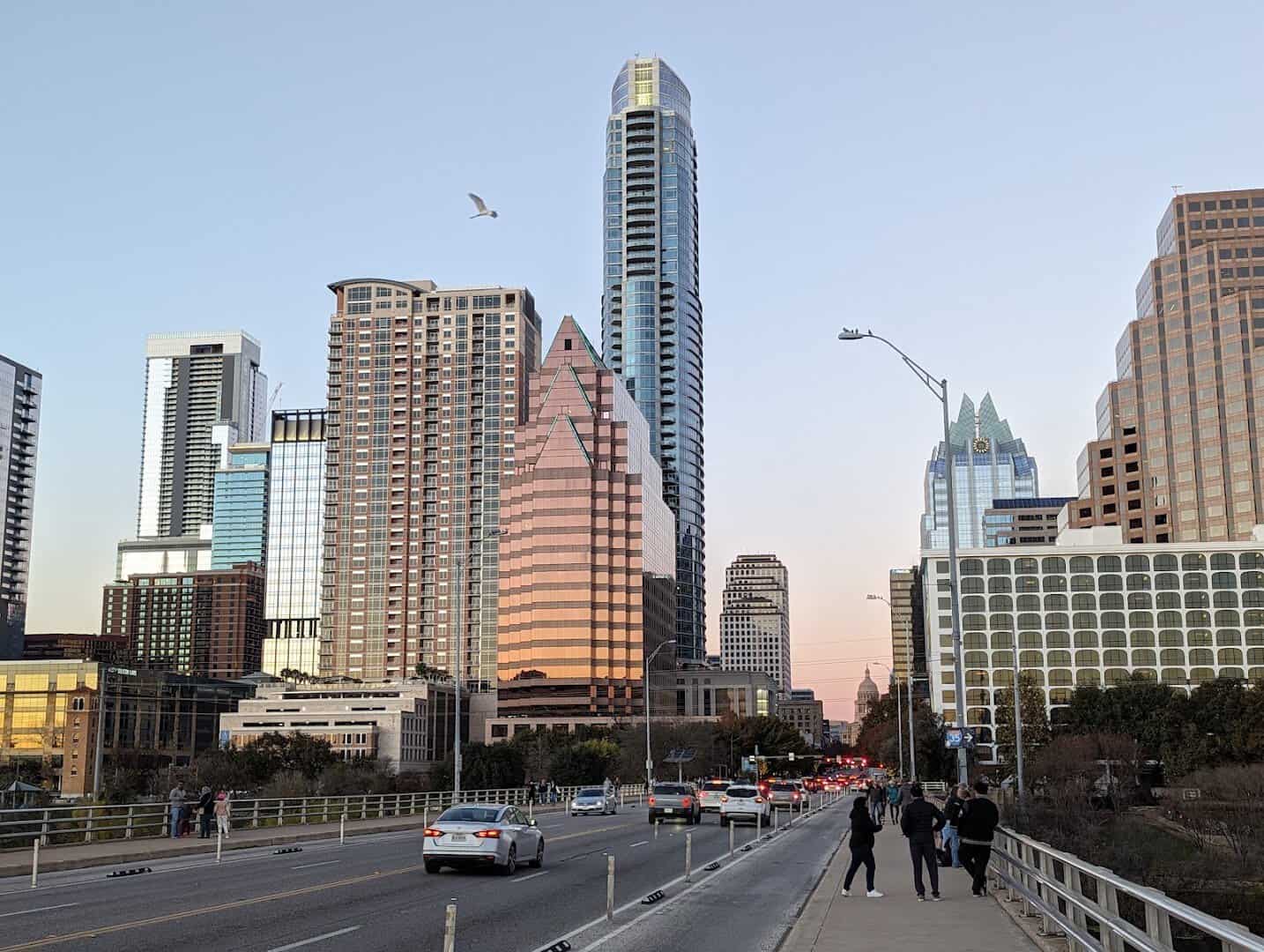
When the bats moved in after the 1980 rehab, Austin did not throw them a welcome party. Newspaper headlines described an invasion. Petitions went around. A great many residents wanted the whole colony removed as quickly as possible.
Then came Bat Conservation International, founded by Merlin Tuttle, which moved its headquarters to Austin in 1986. Tuttle chose the city on purpose, because it was the largest place in the country then caught up in bat hysteria, and therefore the best place to change minds.
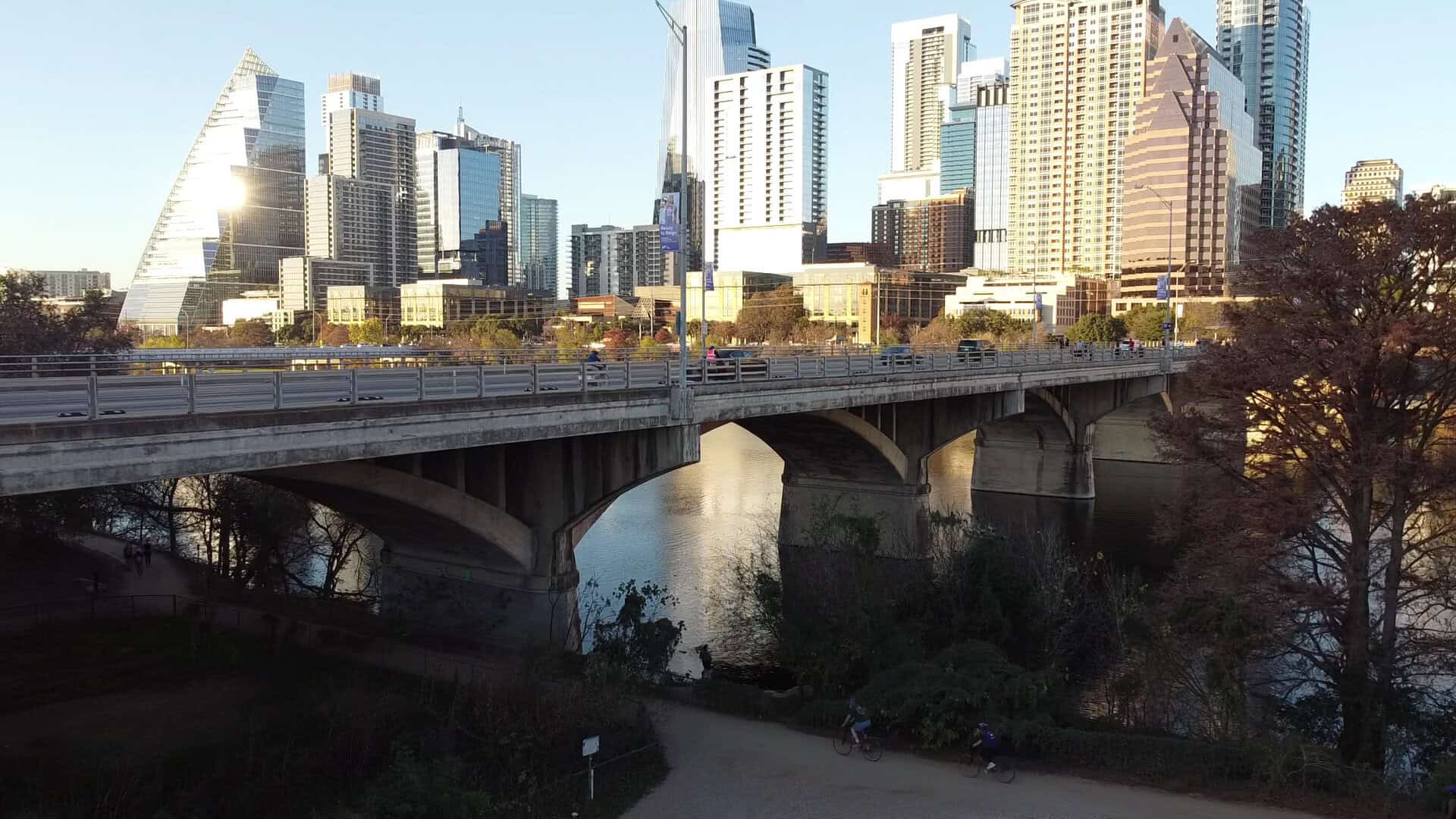
He spent years in front of reporters, council members, neighborhood associations and elementary school classes. The fear drained away and something like civic affection replaced it. In 2006 the council renamed the span for Governor Ann W. Richards, and Austin took up the nickname Bat Capital of America.
Four Free Places to Stand
There are four good vantage points, and every one of them is free. Choose based on how close you want to be to the sound, and how much company you feel like keeping while you wait.
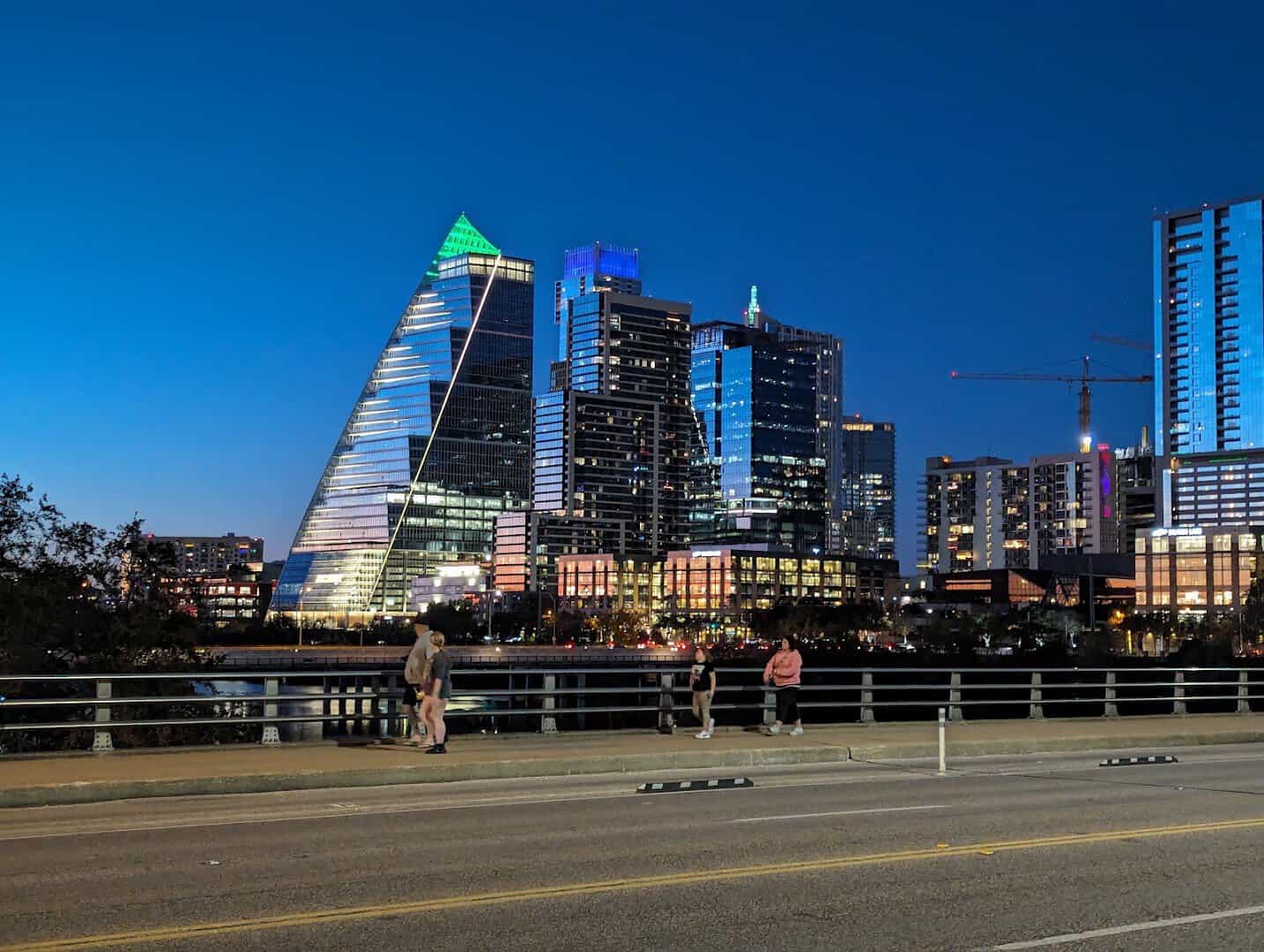
The bridge deck itself puts you directly over the colony. Merlin Tuttle’s own viewing guide suggests standing between the middle of the span and its northeast end, where several columns come into view at once without the railing cutting across your sightline.
The grassy hill on the southeast bank is the Statesman Bat Observation Center, a proper lawn with interpretive plaques and a wide open view of the sky. Spread a blanket, sit back, and let the ribbon pass overhead against the last light.
The Ann and Roy Butler Hike and Bike Trail runs underneath the bridge and continues east along the shoreline. Walk a few hundred feet downstream and the crowd thins out noticeably while the bats keep streaming right over your head.
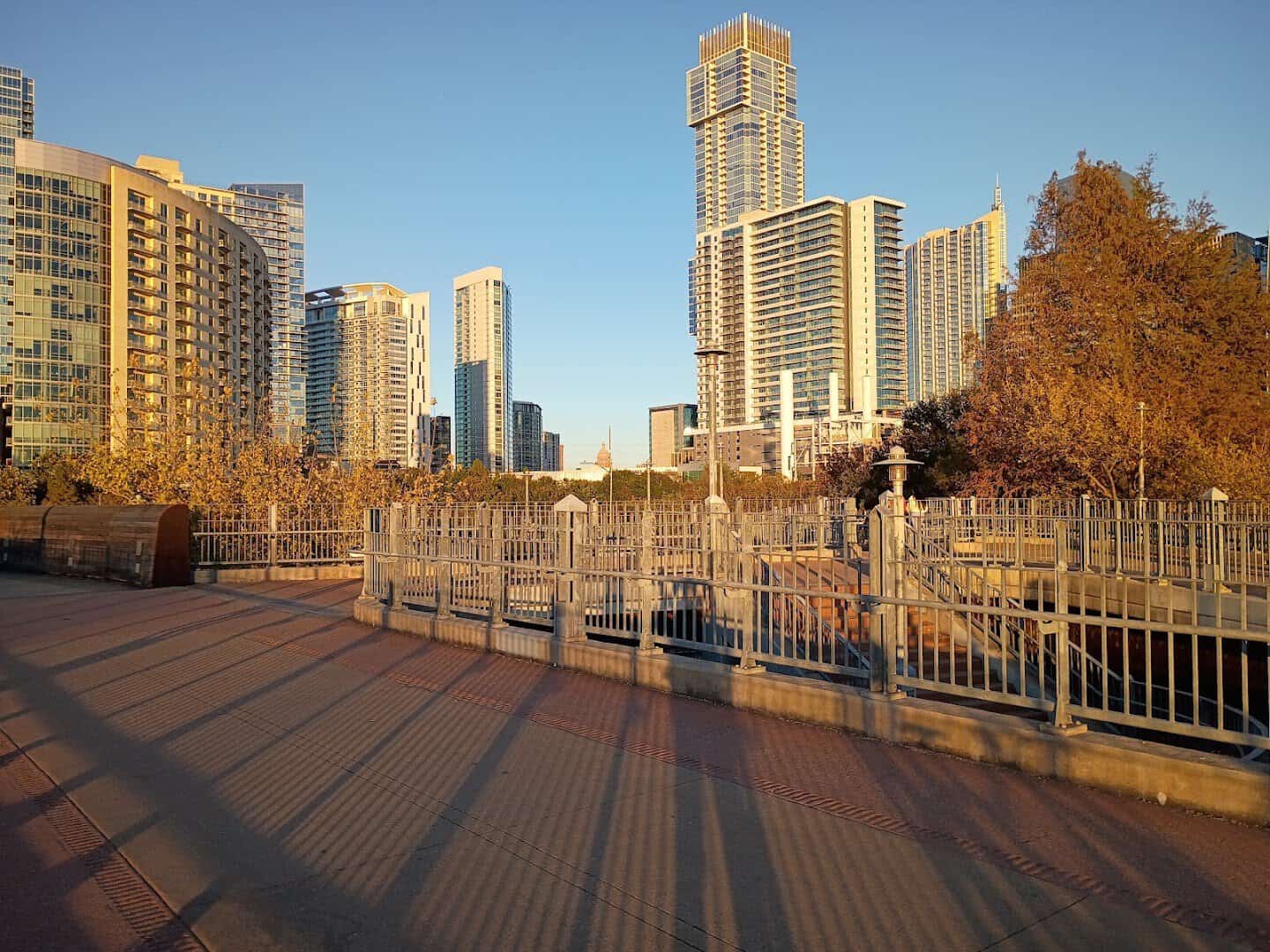
On weekend evenings from May through September, volunteer educators are frequently stationed near the observation area with answers to every question you can think of. My favorite thing about them is that they never tire of the same five.
Watching From the Water
The other way to see this is from underneath, out on the lake, looking straight up while the columns pour over the top of you. It is a completely different experience from the bridge, and worth doing at least once.
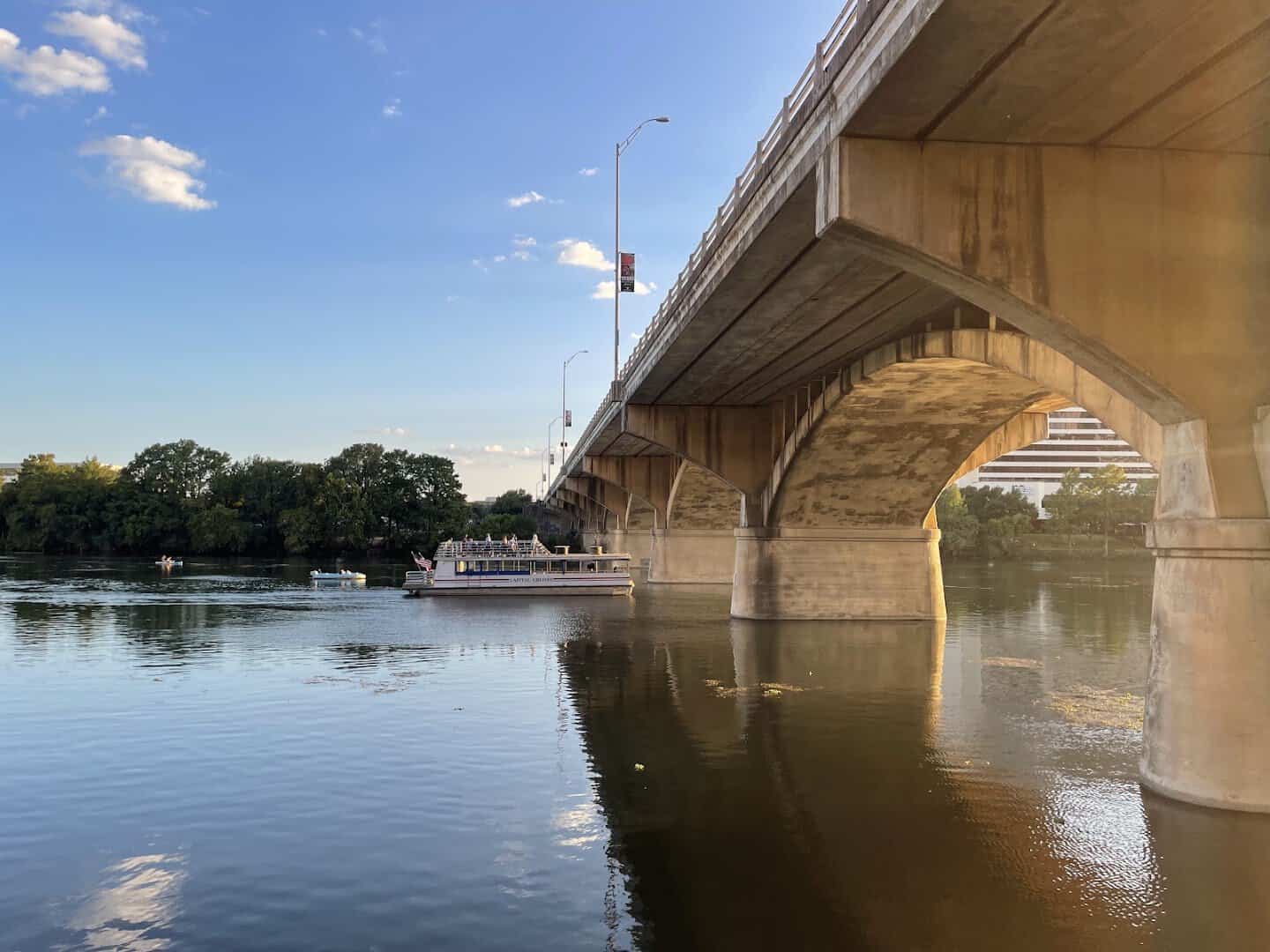
Lone Star Riverboat and Capital Cruises both run narrated bat cruises that cast off roughly half an hour before sunset, seven nights a week from March into November. Adult fares on the Lone Star sit around $14, with reduced rates for seniors and children.
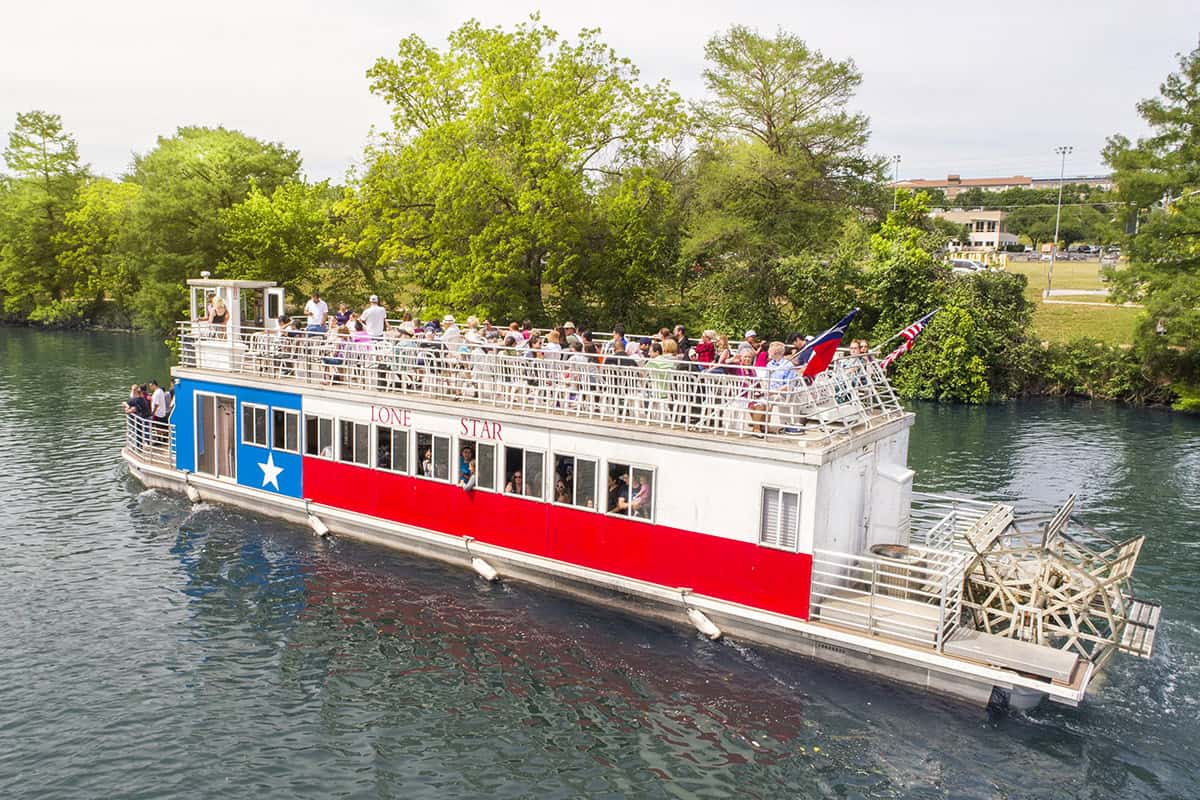
The narration is a real bonus. A good captain calls the emergence as it starts, points out which column came from which side of the span, and fills the waiting time with the kind of local history you cannot get from a plaque.
Kayak, canoe and paddleboard rentals sit along the same stretch of shoreline, and plenty of people paddle themselves into position. Floating in the quiet with the sky filling up above you is about as close as Texas gets to a private show.
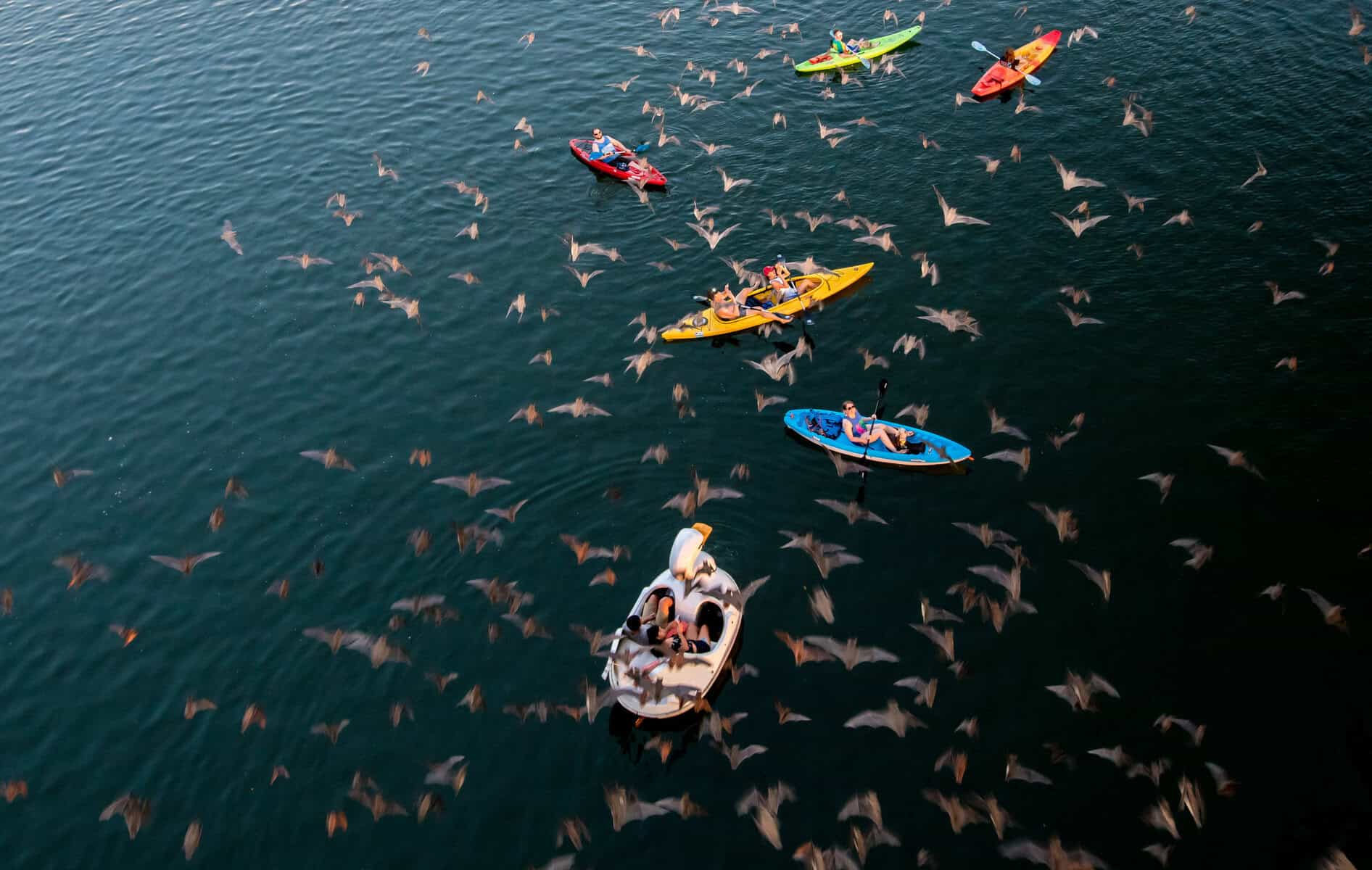
Book ahead in summer either way. The bat cruises sell out on warm weekends, and the rental docks run out of boats faster than you would expect on a Friday in July.
Timing the Flight Right
This colony is seasonal. The bats begin filtering back up from Mexico in late February and March, build through spring and summer, then head south again as the cold fronts start rolling through in October and early November.
Mid March into April is a strong window, with the returning migration arriving and clear evening skies overhead. Late July through mid September is the other great one, because that year’s pups have learned to fly and the columns thicken dramatically.
Late May to mid July runs quieter above the water. The mothers are nursing newborns and flying shorter shifts, so emergences are smaller and more staggered. The bridge is never empty in that stretch, just more modest about it.
Weather decides the rest of it. Hot, dry evenings with light wind bring early, dense flights, and the most spectacular emergences ever recorded here happened during hard drought summers. Cool fronts, rain and gusty wind push the flight later and spread it thin.
Pro tip: Austin Bat Refuge tracks well over a hundred data points every night and posts an emergence forecast. Check it in the afternoon and you will know before you leave the house whether tonight is the night to go.
Pups, Pounds, and Other Big Numbers
This is a maternity colony, which means nearly every adult tucked into those crevices during summer is a mother. The males mostly roost elsewhere. What hangs above Congress Avenue in July is well over a million mothers and babies, packed shoulder to shoulder in the dark.
Pups arrive in June, one per female, and they get parked on the crevice ceiling in dense clusters while the mothers go hunting. A returning mother locates her own pup among thousands of identical babies by its voice and its scent, and she gets it right.
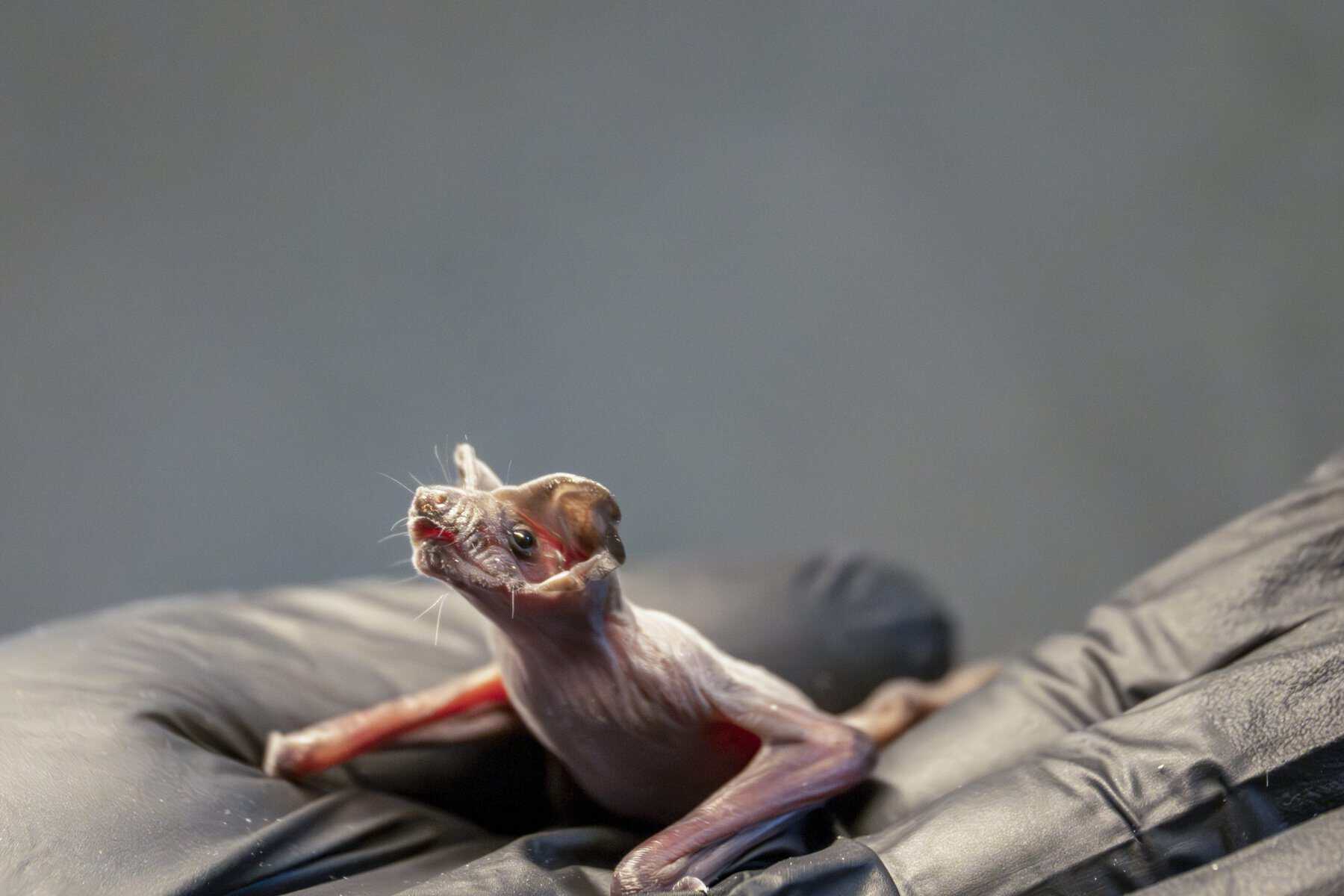
Texas Parks and Wildlife puts the annual pup crop at roughly 750,000. By August those youngsters are airborne and joining the nightly flight, which is precisely why late summer emergences look so enormous from the rail.
Feeding all of them takes serious tonnage. Estimates put the colony’s nightly haul at 10,000 to 30,000 pounds of insects, heavy on corn earworm moths and mosquitoes, gathered from farmland for miles in every direction east of the city.
Central Texas growers get free overnight pest control out of the arrangement, and that is the part of this story I like most. Merlin Tuttle summed the whole thing up in five words: “The bats are wonderful allies.”
Bat Manners 101
The colony puts up with a nightly audience remarkably well, and a handful of small courtesies from the humans on the rail keep the arrangement working for everybody.
Keep white lights and camera flashes off the emerging bats. Loud music and shouting belong at least a hundred feet away, and drones should stay well clear of the columns, since a rotor in a flight path helps nobody.
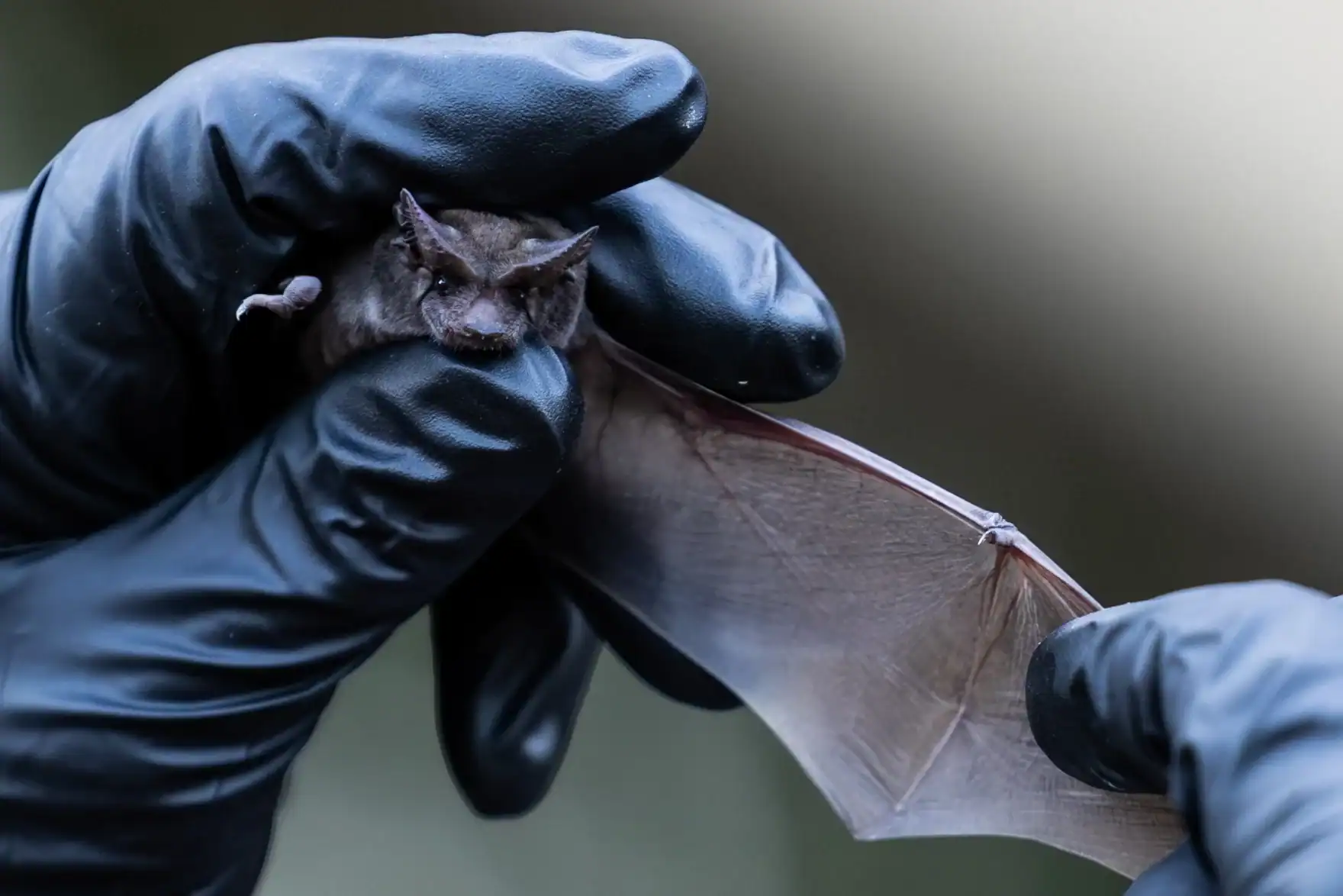
And if you ever come across a bat on the ground, leave it alone and call Austin Bat Refuge. A bat that allows a person to pick it up is almost always a bat that needs a trained rescuer rather than a good samaritan.
A Purple Bat and a Bridge Party
Austin wears this identity with real pleasure. At South Congress and Barton Springs Road, a purple aluminum sculpture called Nightwing turns slowly on its post, roughly 18 feet tall with a wingspan of about 20 feet, catching the late sun.
Dale Whistler made it and the Downtown Austin Alliance commissioned it in 1998. The piece came down for a full restoration in 2025 and went back up freshly repainted in the same glorious purple, right where everybody expects to find it.
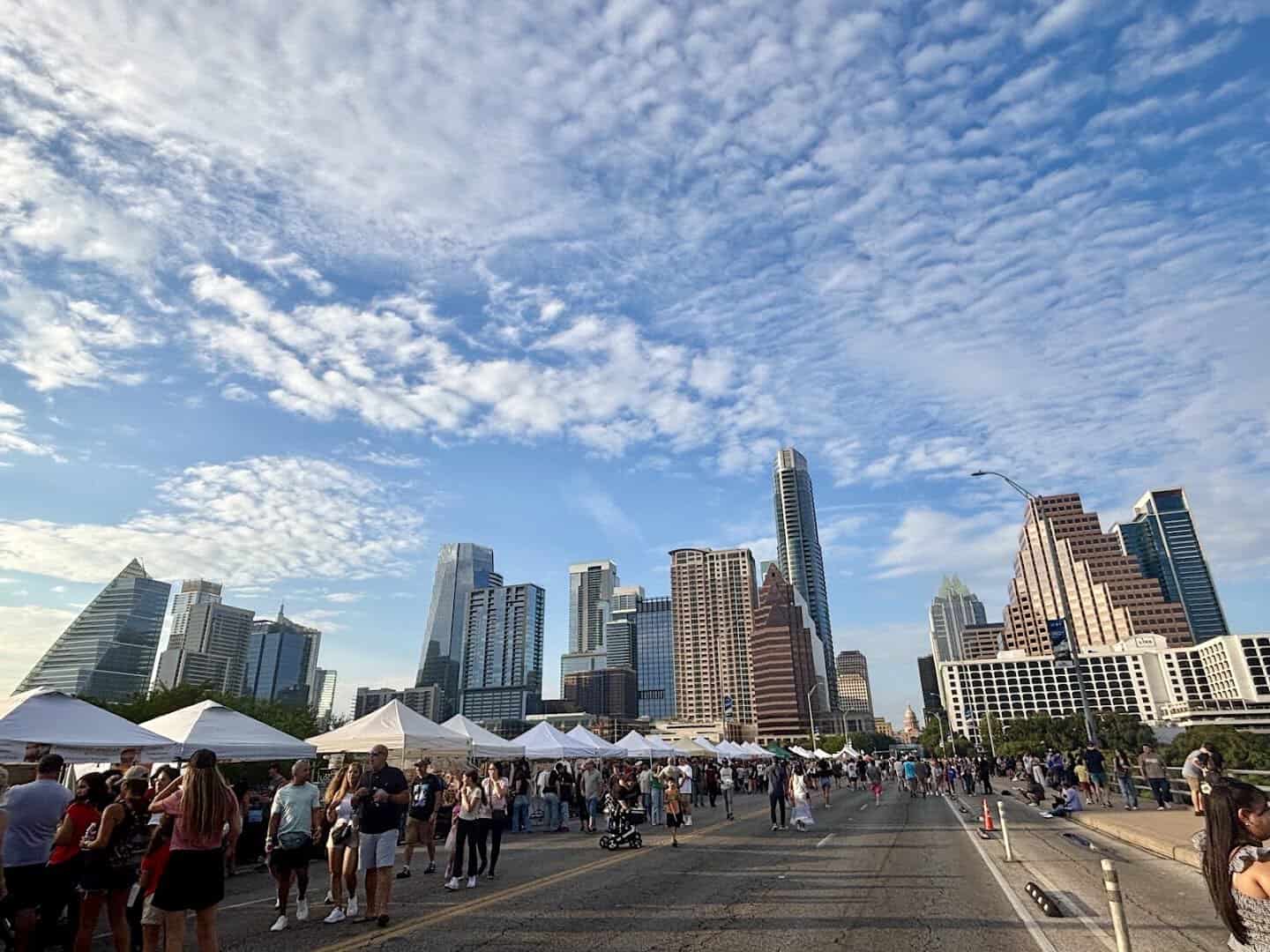
Once a year the city closes the bridge to traffic entirely for Bat Fest, an evening of live music, food stalls and a costume contest staged directly above the colony. The 2026 edition is set for September 5, with tickets in the $25 to $45 range.
Make an Evening of It
The bats do their part in under an hour, so build the rest of the night around them. South Congress runs uphill from the south end of the bridge and is packed with taco counters, ice cream windows and record shops that stay open late.
Come early instead and the hike and bike trail makes a beautiful loop around the water, roughly ten miles all the way around with shorter bridge-to-bridge options if you would rather not commit your whole afternoon to walking.
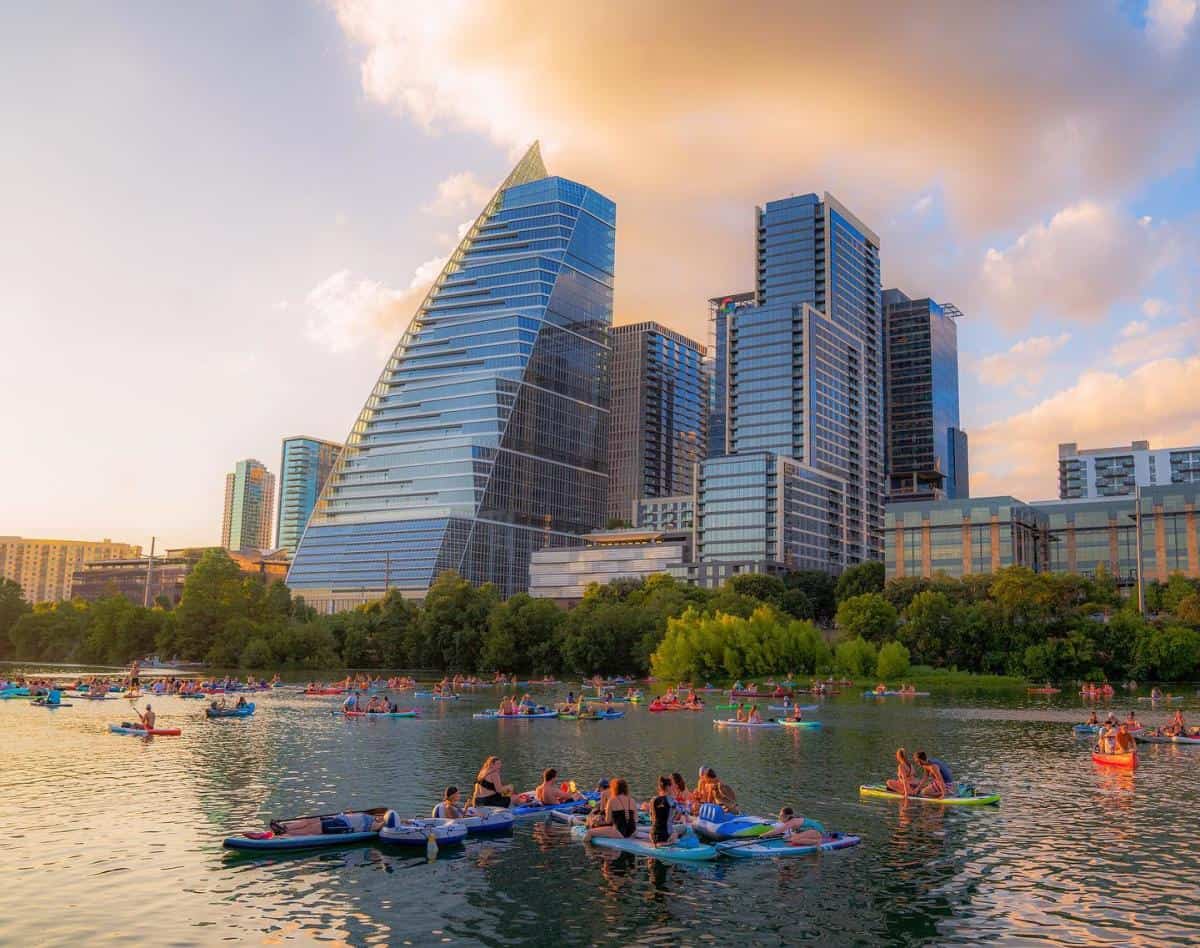
Families do well on the observation lawn, where kids can run off some energy while the light fades and nobody has to stay quiet or still. Bring snacks, claim your patch of grass early, and let the countdown build.
What to Pack in Your Pockets
Bug spray, first and always. You are standing next to a lake at dusk in Texas in the summertime, and the local mosquito population has firm opinions about visitors who arrive unprepared.
A blanket or a folding chair if you plan to take the hill. Water, because Austin evenings in August stay warm long after sunset. A light layer for spring and fall, when the breeze off the lake sharpens quickly once the sun drops.
Leave the tripod at home unless you genuinely like carrying one through a crowd. Phone cameras struggle badly in that light anyway, so take one photo for proof and then give yourself permission to simply stand there and watch.
How to Get There
The bridge carries South Congress Avenue over Lady Bird Lake at the southern edge of downtown. Coming from Interstate 35, take Riverside Drive west for about eight tenths of a mile, then turn north onto Congress and you are on the span.
Where: Statesman Bat Observation Center, 305 South Congress Avenue, Austin, TX 78704
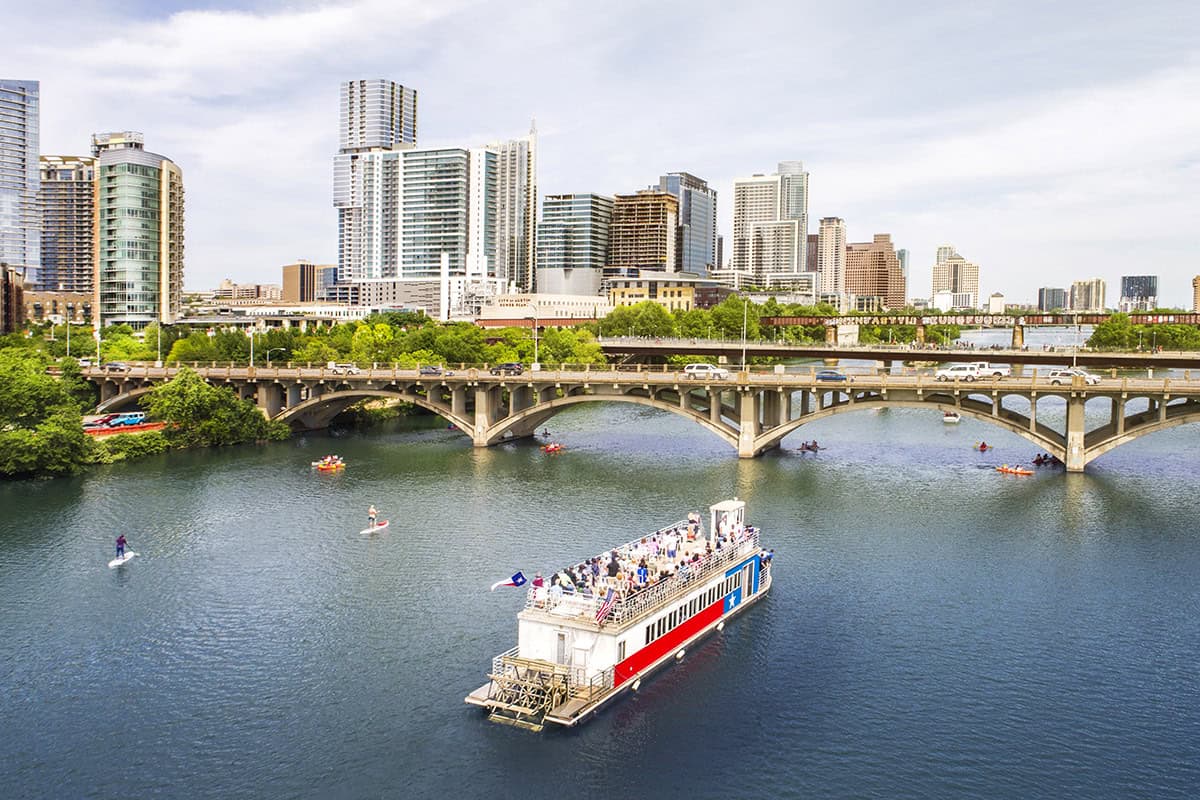
Parking deserves a plan. Nearby lots commonly run $10 to $35 on a busy summer evening, so a lot of regulars leave the car north of the river and walk south across the bridge instead, which is a rather lovely approach anyway.
Go Watch the Sky Empty Out
Texas has famous sights that ask for a long drive, an early alarm and a full tank. This one asks for a parking spot and thirty patient minutes at the right end of an ordinary afternoon.
You will hear it before you see it. You will smell it before you quite understand it. Then the first column lifts off the water and every single person on that bridge goes quiet at the same moment, which is my favorite part.
Pick a hot, dry evening in August, get yourself there before the sun touches the treeline, and give the sky your full attention for half an hour. You will drive home talking about it, and you will start planning when to bring somebody else.
Featured image: @ Congress Ave. Bridge Bats

Stella Raines
Editor-in-Chief
Stella brings over a decade of storytelling experience to TX Headlines. With roots in West Texas and a love for road trips, she leads the editorial team with an eye for the hidden stories that make Texas unforgettable.
More Stories

This Enormous Texas Vintage Warehouse Is Home to 200 Dealers and a Secret Tea Room
These Affordable Texas Getaways Are the Coolest Places in the State, and Most Cost Under Ten Dollars
This Sprawling Texas Flea Market Is 44 Acres of Weekend Treasure Hunting

These Large and Small Texas Zoos Have Zookeeper for a Day Programs that Let You Get Your Hands Dirty
Tags