This Sprawling Texas Flea Market Is 44 Acres of Weekend Treasure Hunting
I still think about the cast iron skillet. I was nineteen, walking a row of folding tables with a paper cup of coffee going cold in my hand, and the man selling it had its twin on a camp stove, frying eggs to prove the seasoning was real.
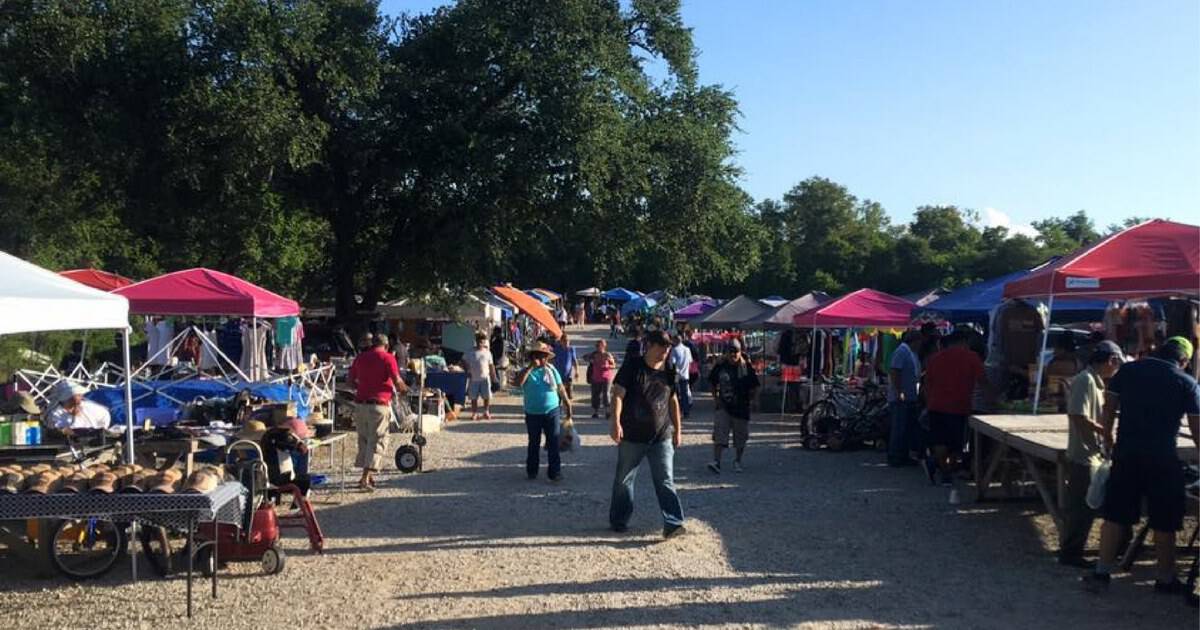
That is the feeling I go looking for every time I turn onto North Main in Pearland and follow the arrows into Cole’s Antique Village. The air over the outdoor rows smells like hot sugar and canvas.
The place is so big that the far fence line goes soft in the heat.
Below, discover what forty four acres of weekend market actually feels like on foot, what people carry out of here, and how to work the rows without running out of steam by ten in the morning.
Forty Four Acres and a Fence Line You Cannot See
Numbers do not usually make me want to go somewhere. These ones did.
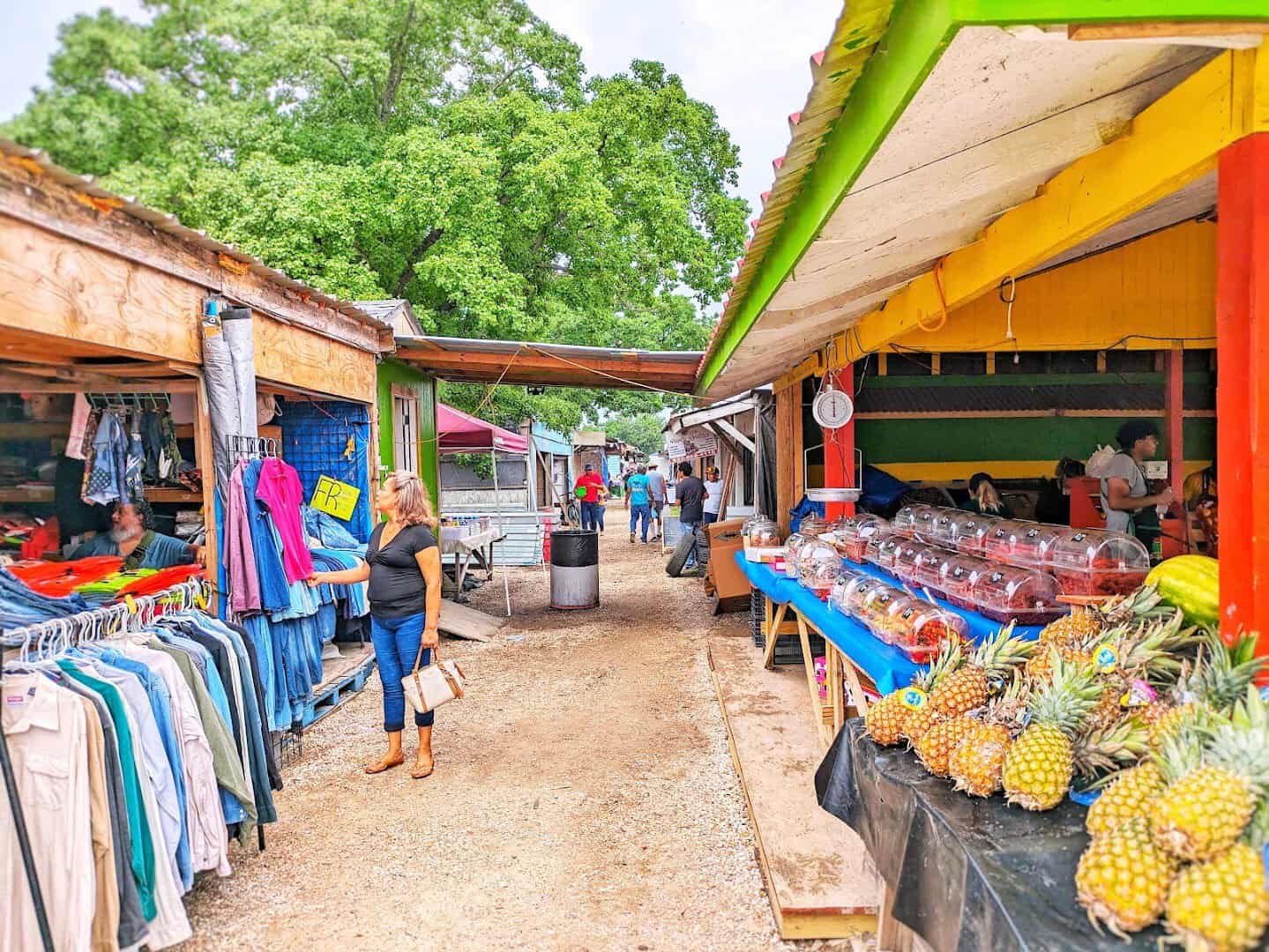
Cole’s covers more than forty four acres of indoor and outdoor shopping just south of Houston. On a good weekend, upwards of 1,300 vendor tables go up across that ground, and somewhere between 12,000 and 15,000 people walk through.
Stack those weekends and you get close to a million visitors a year. That is a mid sized Texas city passing through one property, fifty two weekends running.
They come in the sun and in the drizzle and in that heavy Gulf Coast humidity that makes a cold drink taste like a reward.
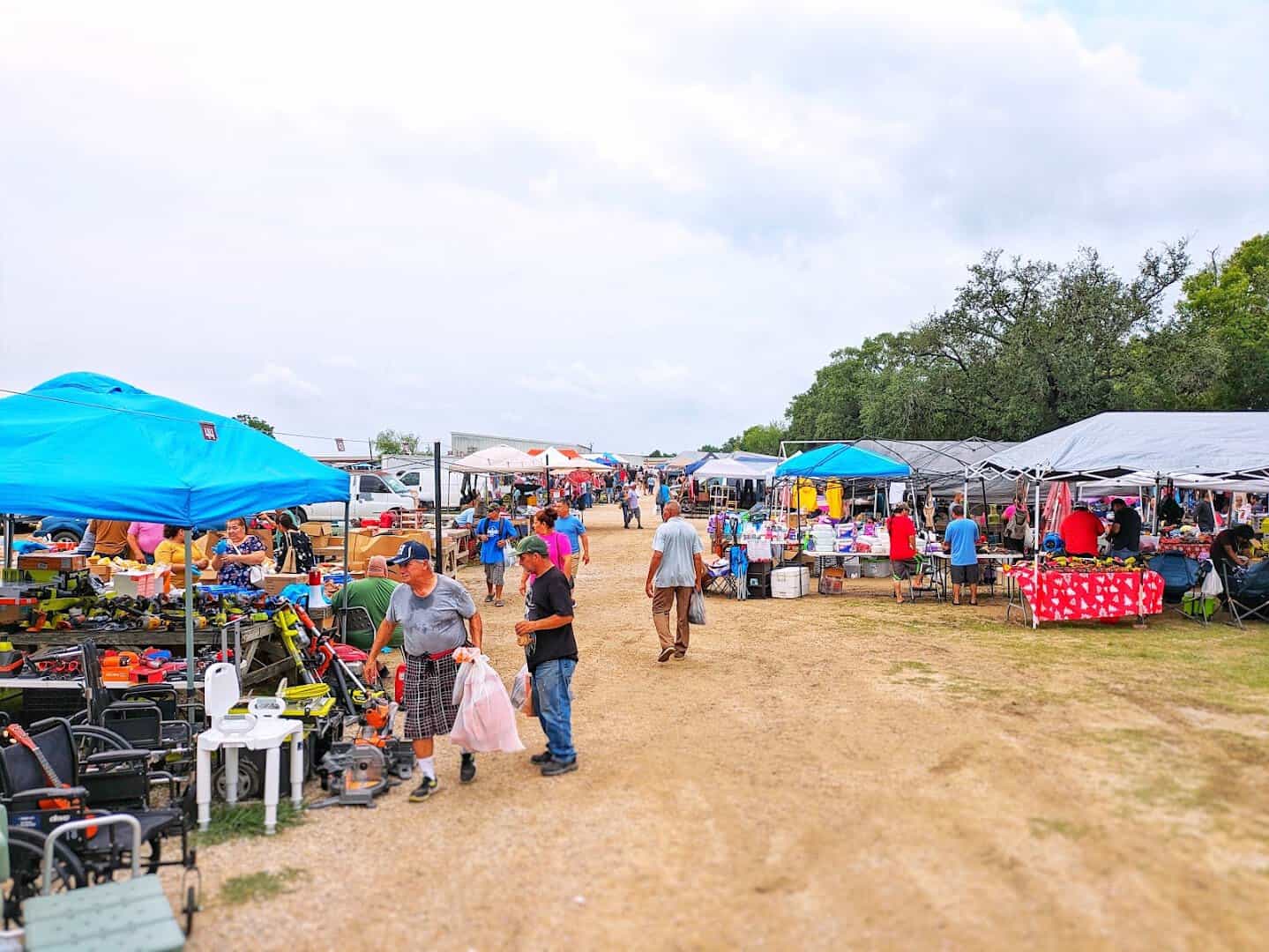
What the acreage really buys you is scale of a different kind. Variety. When 1,300 tables all open at once, the odds that one of them is holding the exact strange thing you have been hunting stop being a joke.
My rule here is simple. If I see it and I want it, I buy it, because I will never find that aisle again.
The Outdoor Rows Are Where the Hunt Lives
Start outside. The outdoor section is the part that shifts week to week, which is exactly why it rewards you.
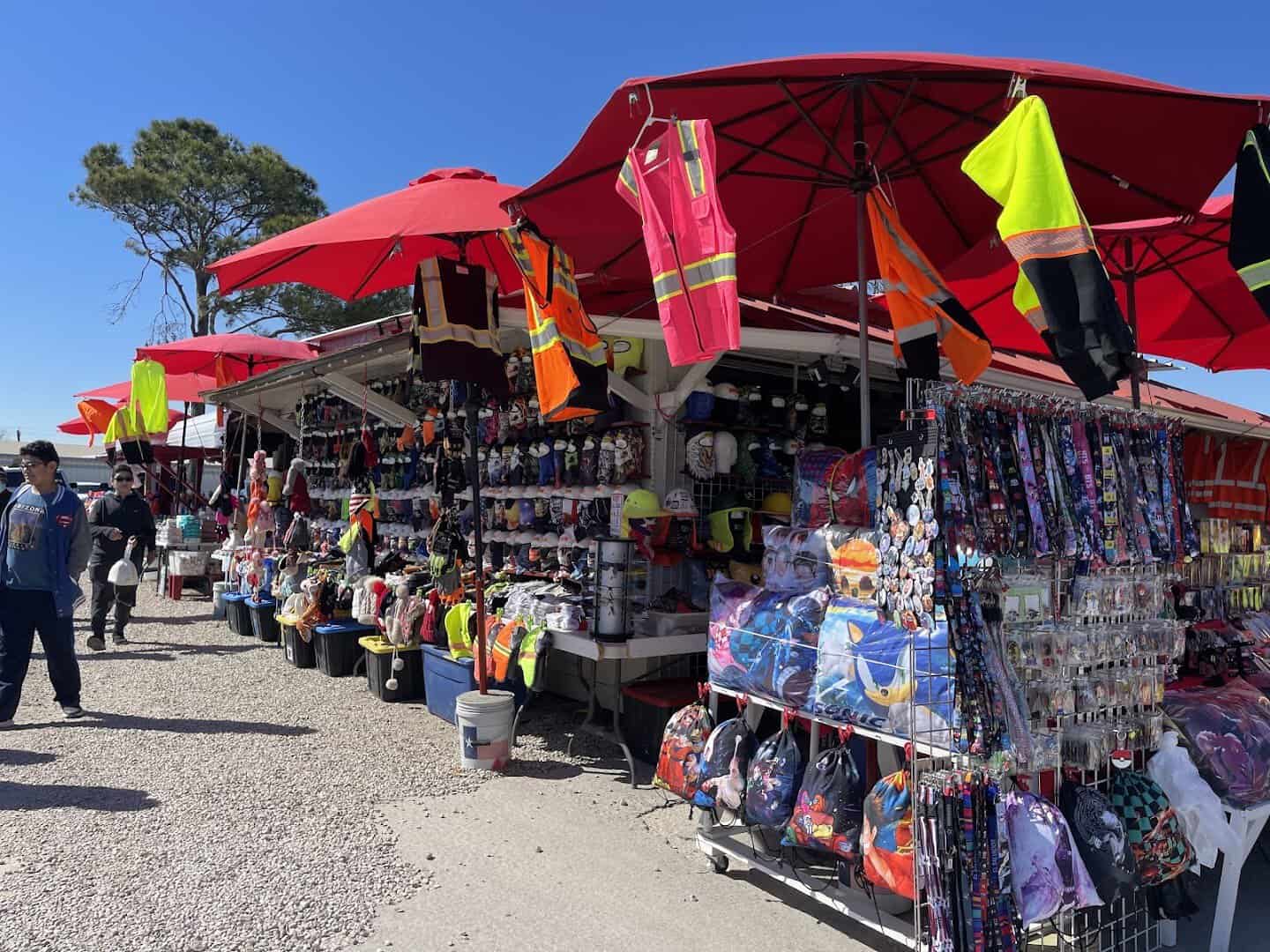
Tables sit under white canopies and metal sheds, laid out in long lanes wide enough for a wagon. Tools spread on tarps. Bins of drill bits and door knobs. Stacks of vintage license plates gone chalky in the sun.
There are plant rows too, and they are some of my favorite ground in the whole market. Ferns hanging at head height, fat succulents in terracotta, citrus saplings in five gallon buckets, all priced the way a neighbor prices things rather than the way a garden center does.
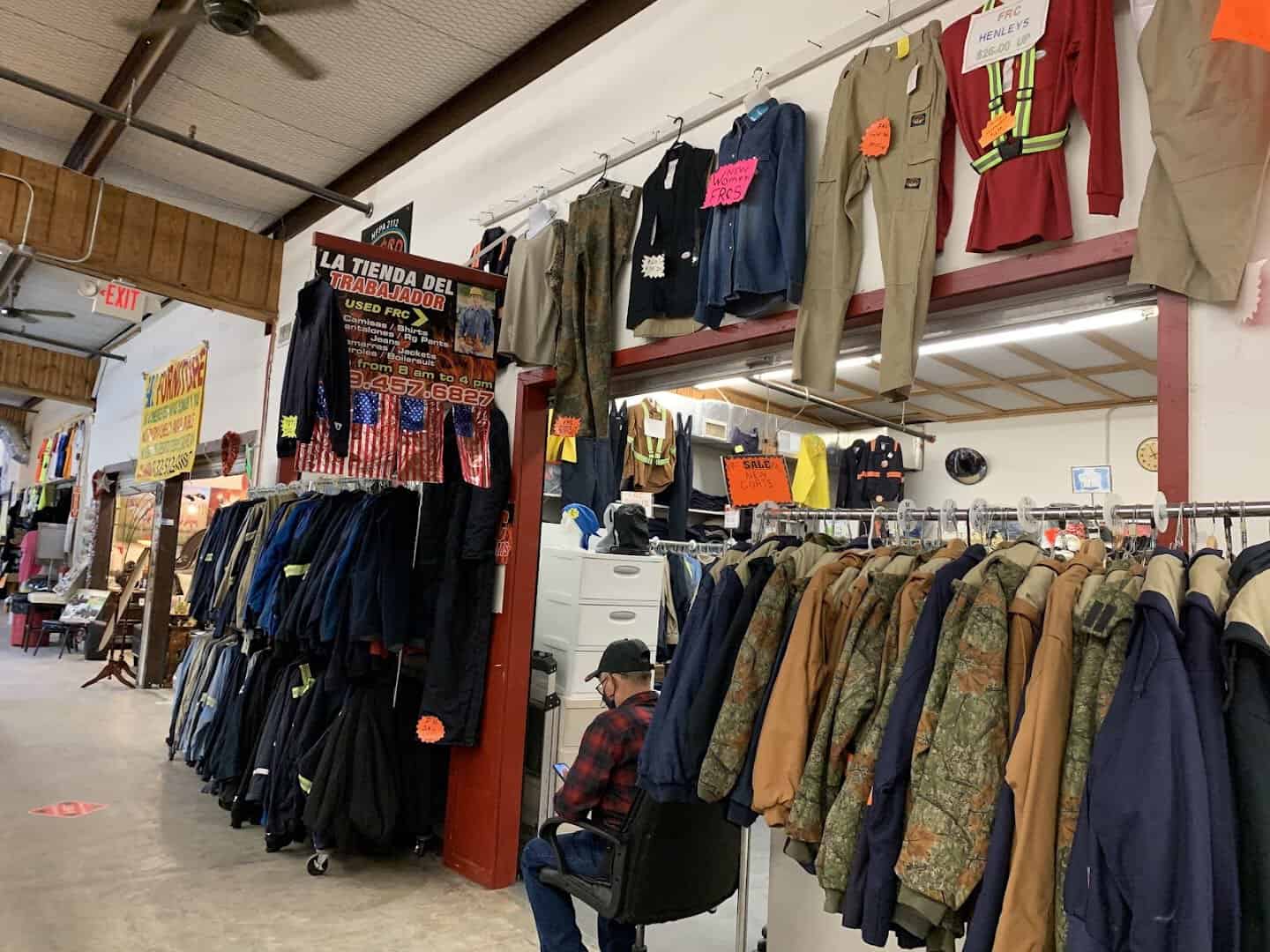
Then you hit the western corner. Tooled belts, boots lined up by size, saddle blankets, hat shapers, rodeo tack that still smells faintly of leather and neatsfoot oil.
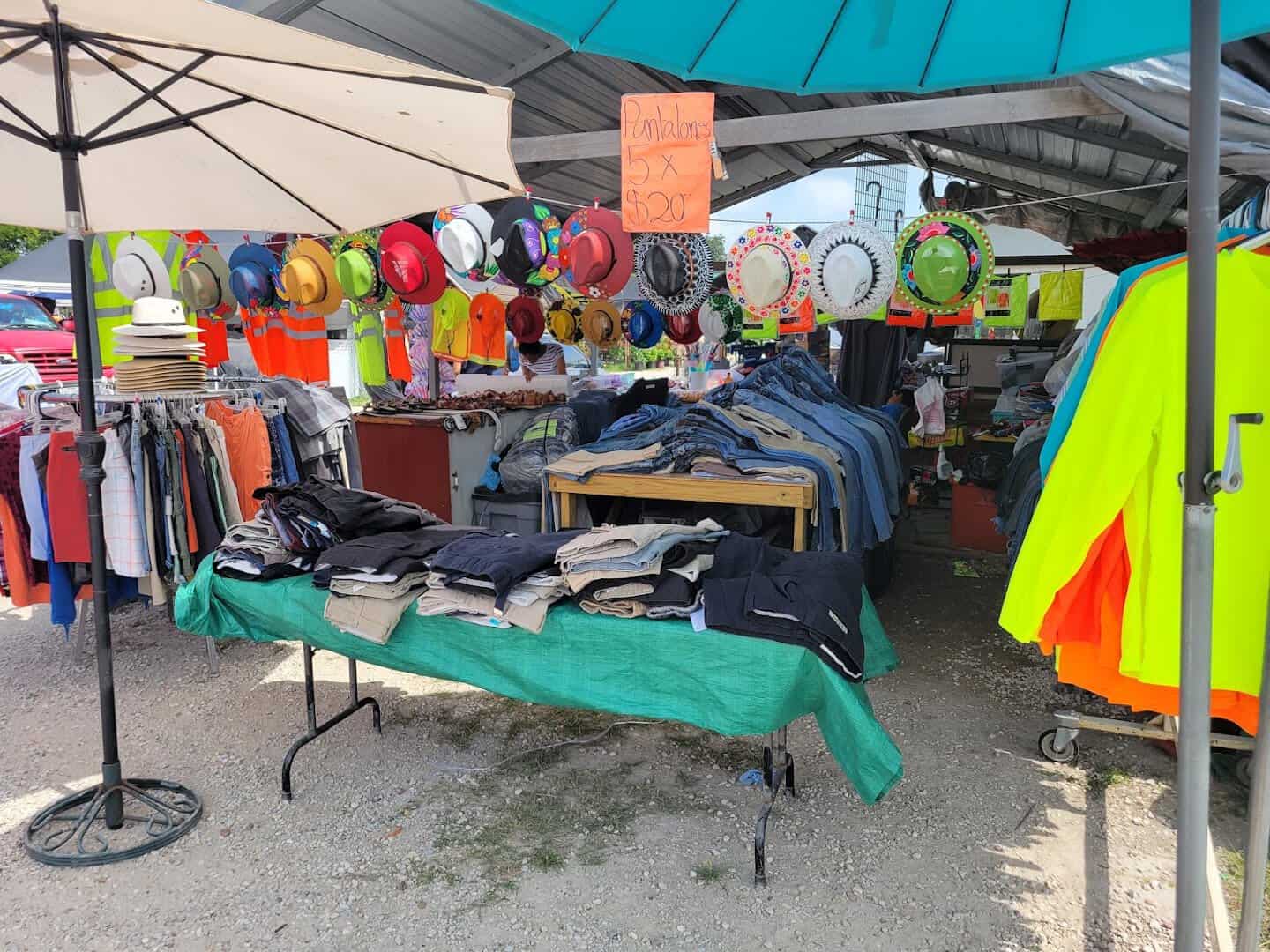
I once watched a woman spend twenty minutes turning a pair of ropers over in her hands before she looked up at the vendor.
“How much if I take both pairs?” she asked. He named a number. She took both pairs.
Step Indoors for the Cool Air and the Glass Cases
The indoor buildings are the other half of the personality, and on an August afternoon they are also mercy.
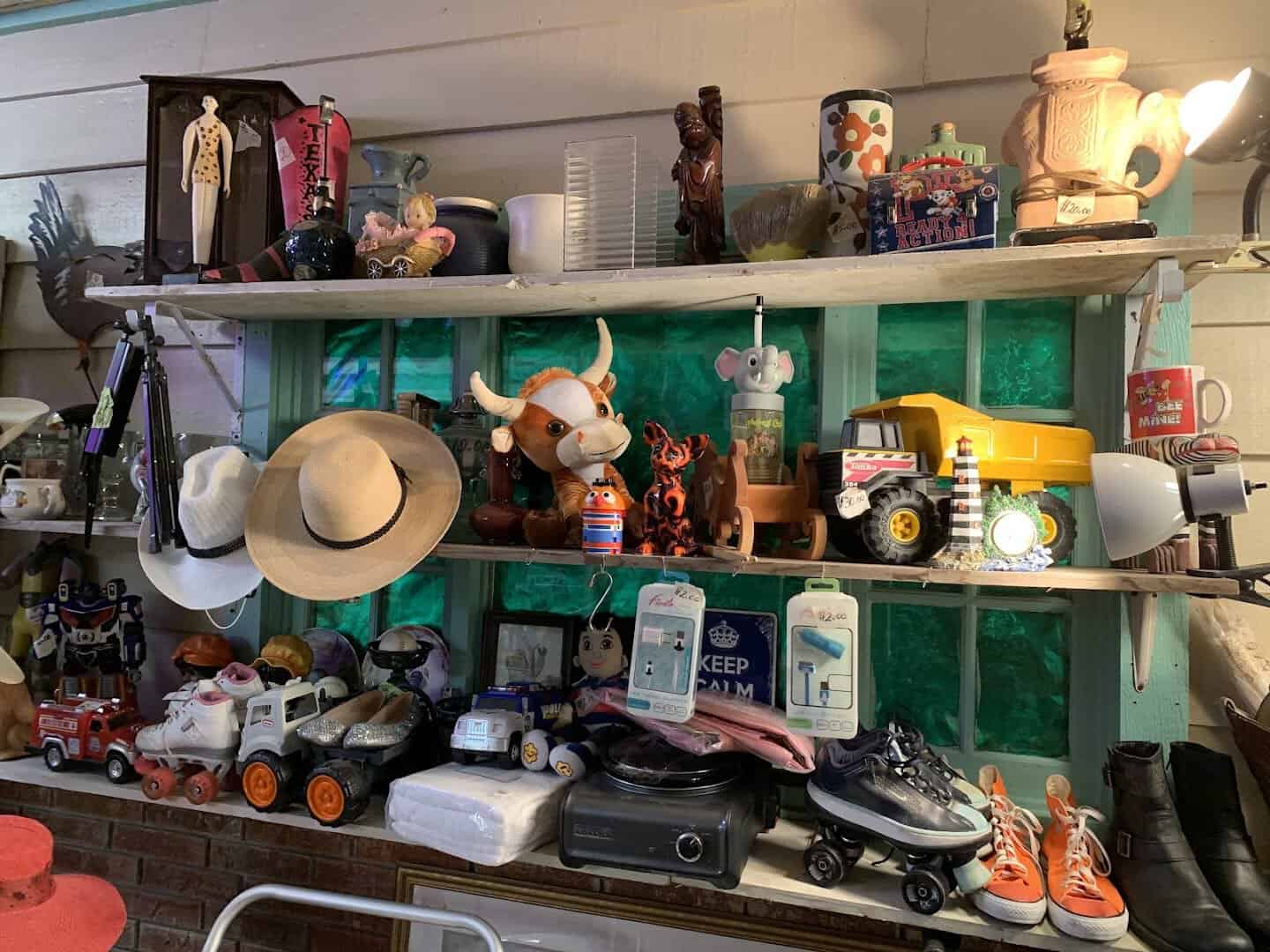
Inside, the pace changes. Booths here are semi permanent, which means the sellers have had time to arrange things. Glass cases with costume jewelry laid out on velvet. Shelves of Fiestaware sorted by color. Records in flip bins, spines out, alphabetized by someone who cares.
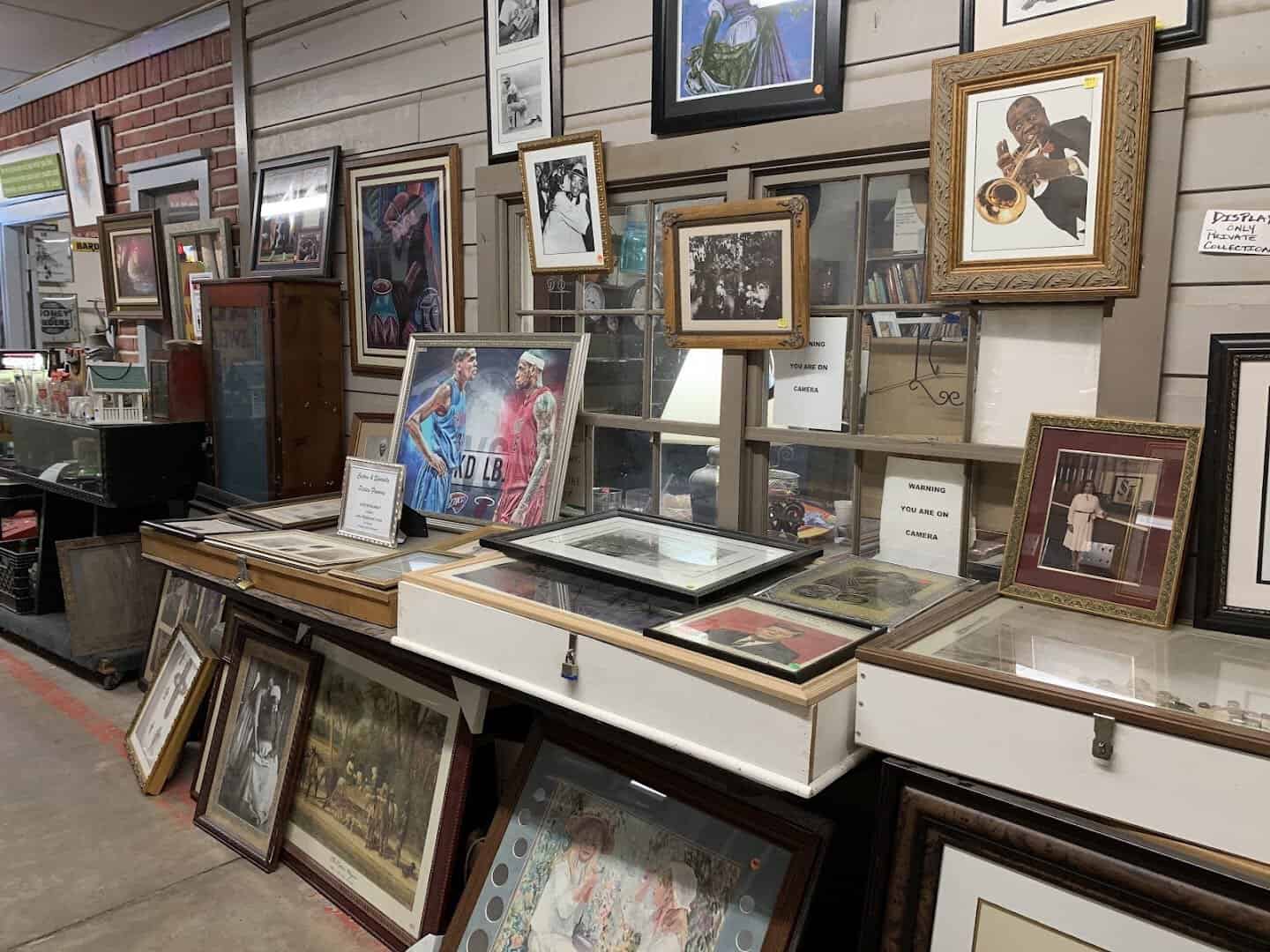
This is the antique village half of the name, and it earns it. Mid century side tables, oil lamps, cast iron banks, enamel signs, church pews, milk glass, and the kind of heavy oak furniture nobody builds anymore.
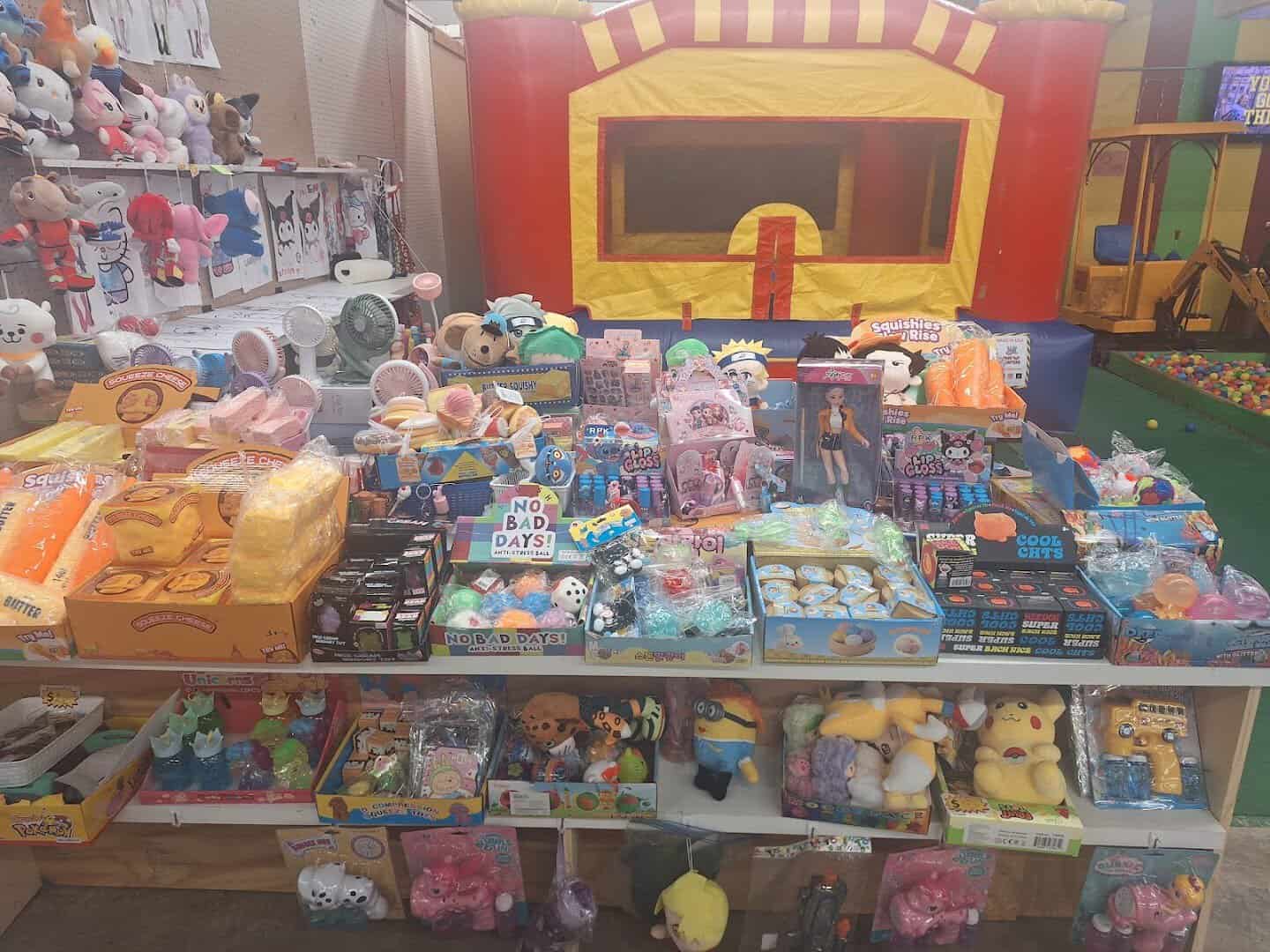
You will also find plenty that is brand new. Phone cases, socks, kitchen gadgets, kids’ toys, party supplies, cleaning products by the case.
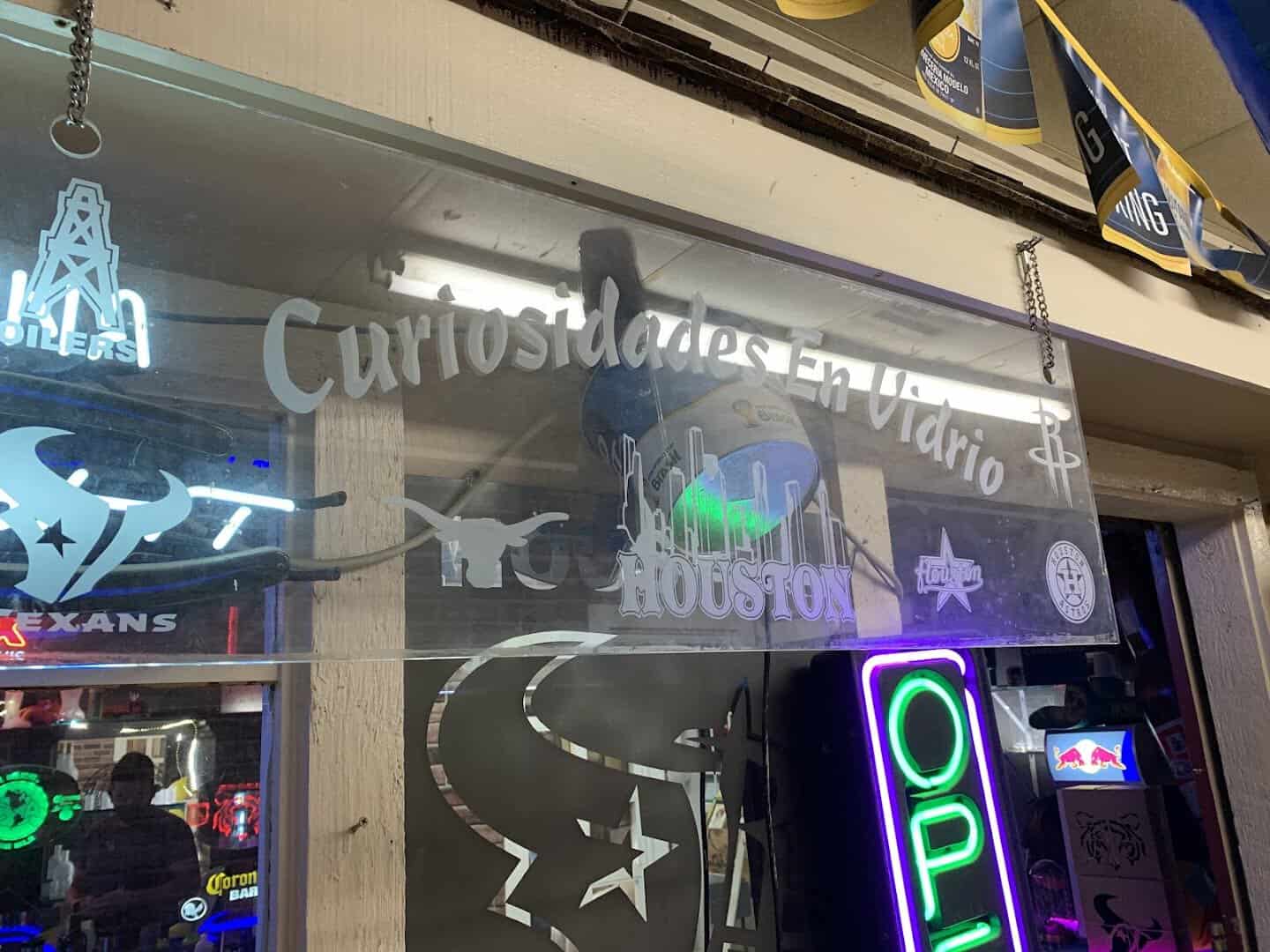
I have stopped being surprised by that mix. When a market gets this big it starts doing the job a general store used to do for the whole county, so the pressed glass shares a roof with the extension cords and nobody thinks twice.
What People Actually Carry Out of Here
Ask around the parking lot and the answers run wild.
Art and home decor. Apparel and boots. Toys, tools, electronics, sporting goods. Fresh produce from the farmers market side. Furniture that needs a weekend of sanding and furniture that needs nothing at all.
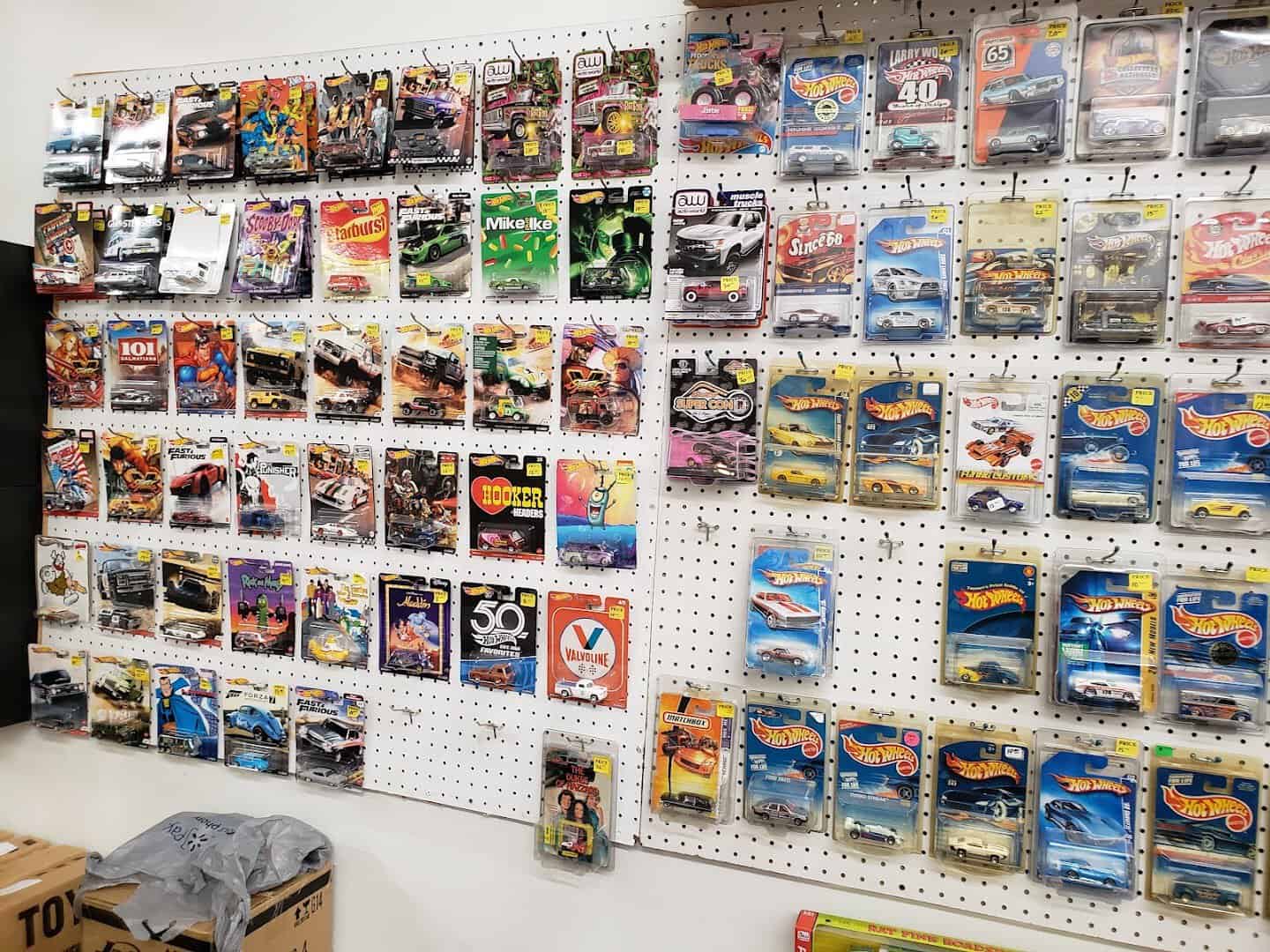
I have seen someone walk out with a working jukebox on a hand truck. I have seen a teenager carry a taxidermied jackalope like a bouquet.
Did you know? Plenty of resellers you follow online source right here. Watch the early crowd on a Saturday and you can pick them out by the collapsible wagons and the way they walk the rows fast, scanning rather than browsing.
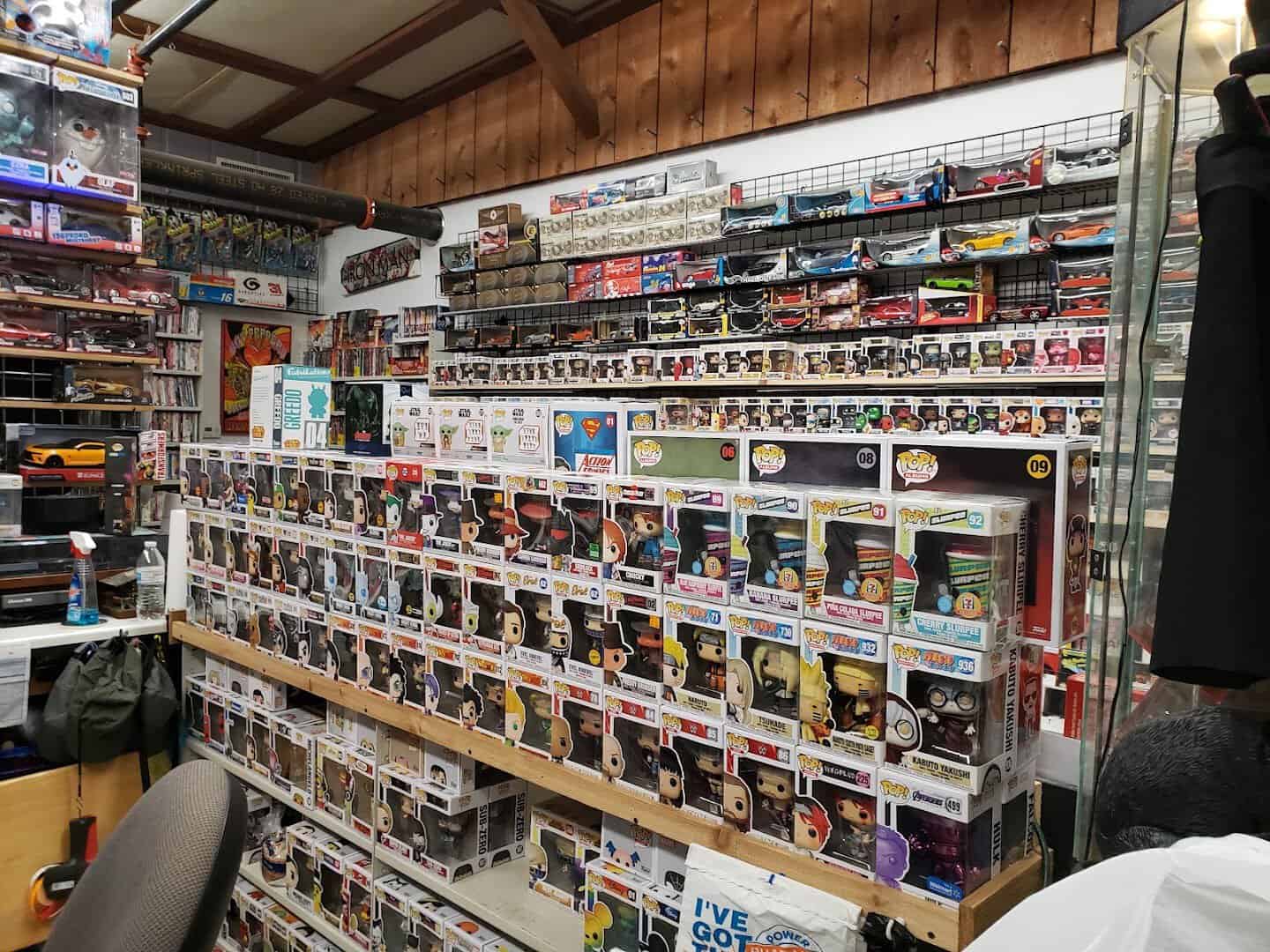
The trick to shopping well here is deciding in advance whether you are hunting or wandering. Hunting means arriving at eight with a list and a route. Wandering means arriving at eleven with an empty afternoon.
Both make for a good Saturday. You just have to pick one before you park, because trying to do both is how you end up eating a churro in the truck at two in the afternoon wondering where the morning went.
Turkey Legs, Churros, and a Food Truck Park of Its Own
You do not leave here hungry, and honestly, you should not try.
Around 26 food stands operate across the property. Barbecue, tacos, pizza, nachos, funnel cakes, loaded baked potatoes, donuts, ice cream, roasted corn, agua fresca, cold beer. Turkey legs the size of a forearm.
My order almost never changes. Corn in a cup, heavy on the lime and chile, eaten standing up in whatever shade I can find.
In May 2022, the market opened Comida Park on the property, a dedicated food truck park that runs seven days a week rather than only on market weekends. It has hosted well over twenty trucks at a time.
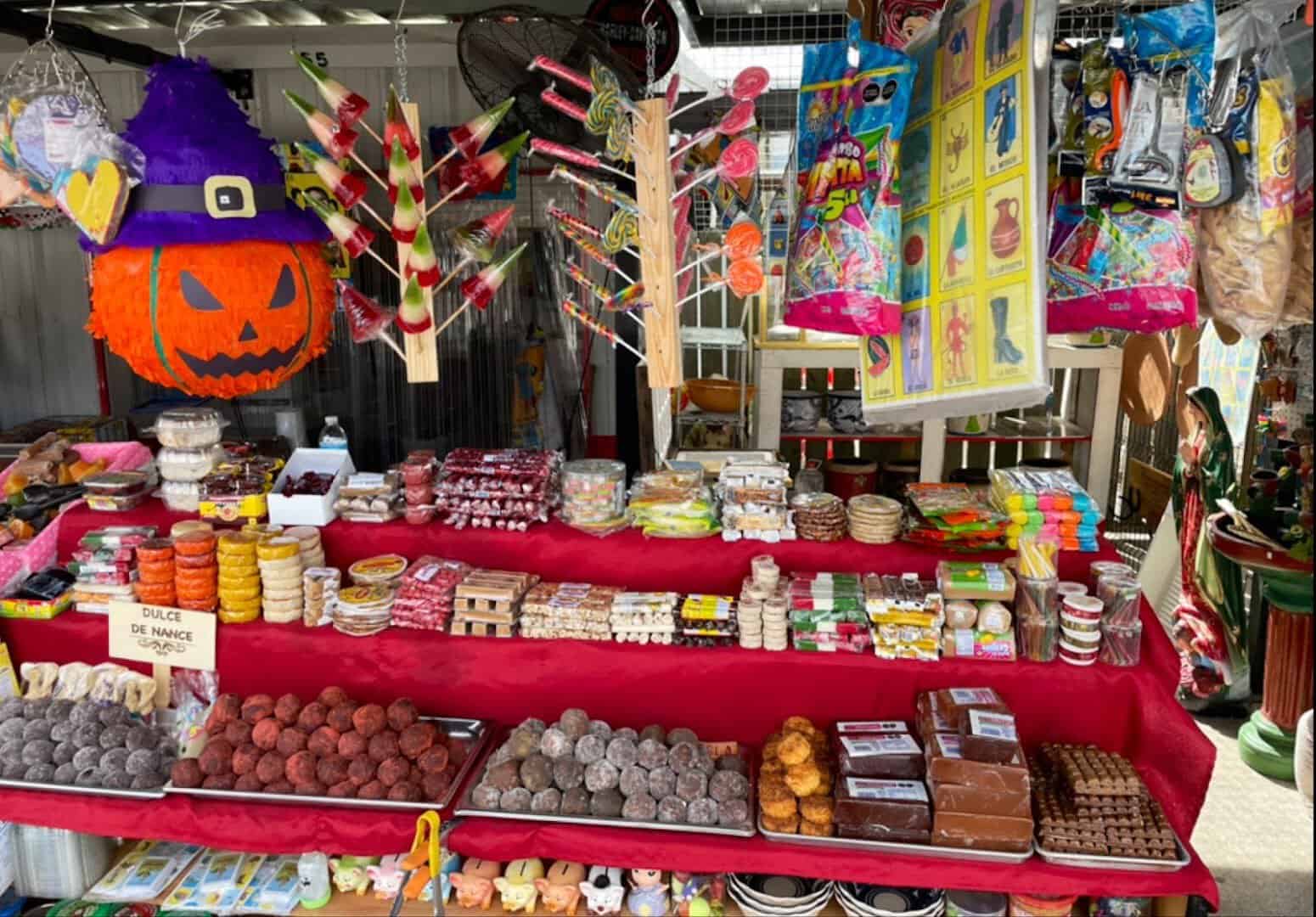
The lineup rotates, and it leans deliciously Gulf Coast Tex Mex. Henry’s Fajita Taco. Gorditas Dona Juana. Taqueria Mi Guanajuato. La Papa Taqueria and Refresher. Houston Made Burgers. Seven Seeds BBQ.
There is live music out there most weekends too, usually a local act playing to picnic tables and paper plates.
On a Friday evening, when the market rows are quiet and dark, the food park is the only lit corner of the property. It feels like a block party that happens to be surrounded by empty sheds.
A Brief History of a Market That Opened in 1968
Cole’s has been doing this since 1968, which makes it both the oldest and the largest flea market in its city.
Think about what Pearland was in 1968. Fewer than two thousand people. Rice fields and cattle and a two lane road running toward Houston. A weekend trading ground on forty four acres was an enormous idea for a town that size.
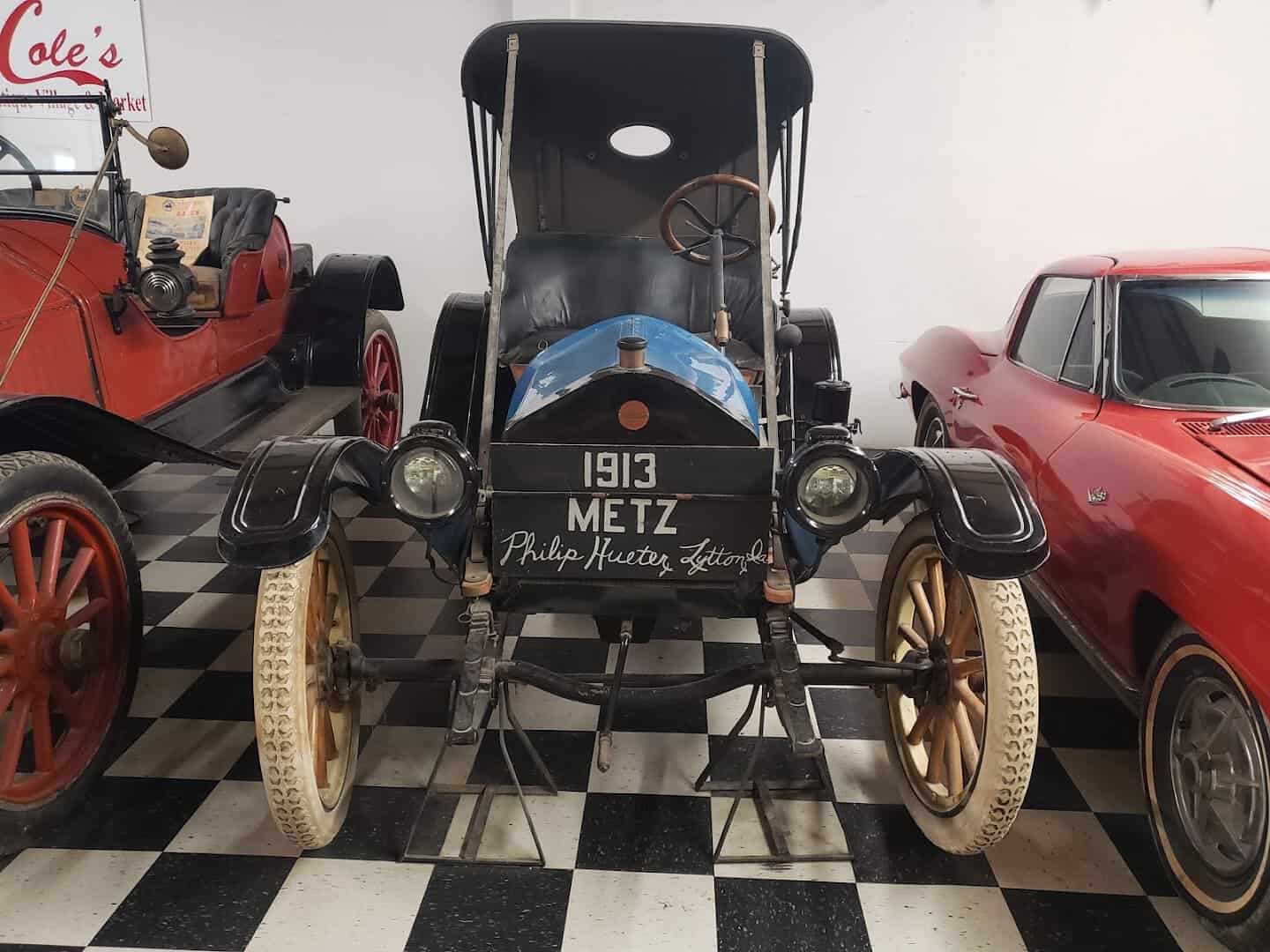
It stayed family run for decades, and the town grew up around it instead of the other way around. Houston sprawled south, subdivisions filled in the pasture, and the market kept its Saturdays.
On December 15, 2020, the property changed hands. United Flea Markets, a company run by Rob Sieban, took a controlling interest and made Cole’s its fifteenth market nationally and its first in Texas.
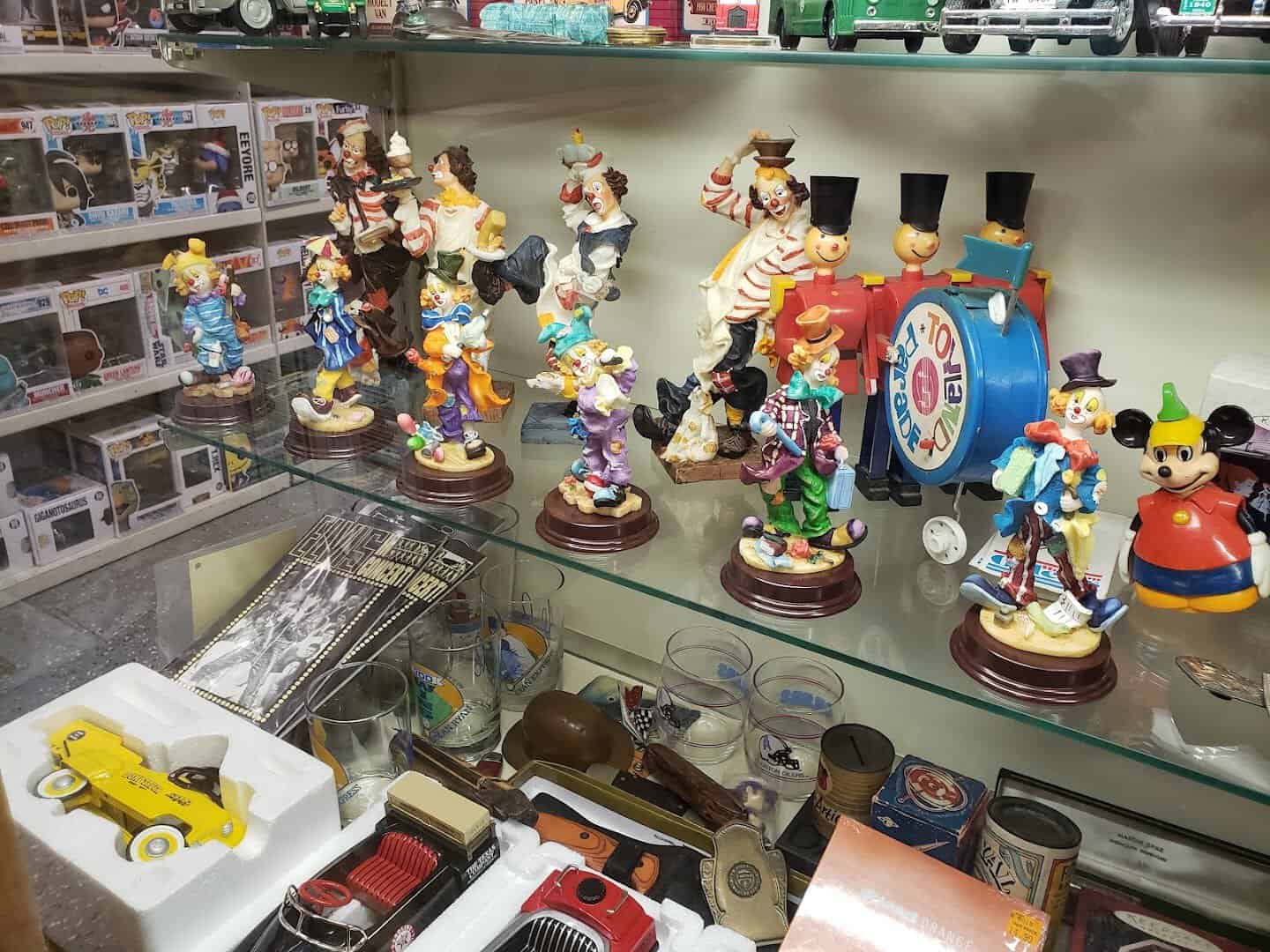
Sieban called it one of the largest indoor and outdoor flea markets in southern Houston. The seller, Scott Morrison, said he expected the new team to keep investing in the customer experience.
That is roughly what happened. Newer signage, better wifi, a booth booking system online, and the food truck park two years later.
More than five decades in, the format has barely changed. Somebody hauls in a table and somebody else walks up with cash in their pocket, which is how the whole thing worked in 1968 and how it worked the last Saturday I was there.
Why Is It Called Pearland?
Because there were pears. Thousands of them.
The community started as a siding switch on the Gulf, Colorado and Santa Fe Railway in 1882, and its first post office carried the name Mark Belt. Fruit trees were everywhere, and the name followed the orchards.
On September 24, 1894, a plat labeled Pear-Land was filed at the Brazoria County courthouse by Witold von Zychlinski, a Polish nobleman with a promoter’s eye. He named the east to west streets Walnut, Pear, Broadway, Jasmine, Plum, and Orange. Land companies sold the place as an agricultural Eden.
The 1900 Galveston hurricane took the fruit trees down. Growers came back with oranges and figs until a hard freeze in 1918 ended that chapter too.
The town held on anyway. Around 400 people in 1914. Fewer than 1,500 in the early 1960s. By the 2020 census, 125,990.
So the market you are walking is older than most of the city around it. Drive North Main and you will still find the street names Zychlinski wrote down in 1894.
The Produce Rows and the Seasons They Keep
There is a farmers market side to Cole’s, and what it sells depends entirely on the month you show up.
Spring brings the bedding plants and the tomato starts, tables of them, everything green and hopeful and cheaper than a nursery. Summer is peaches, melons, corn, and whatever the coastal growers have too much of that week.
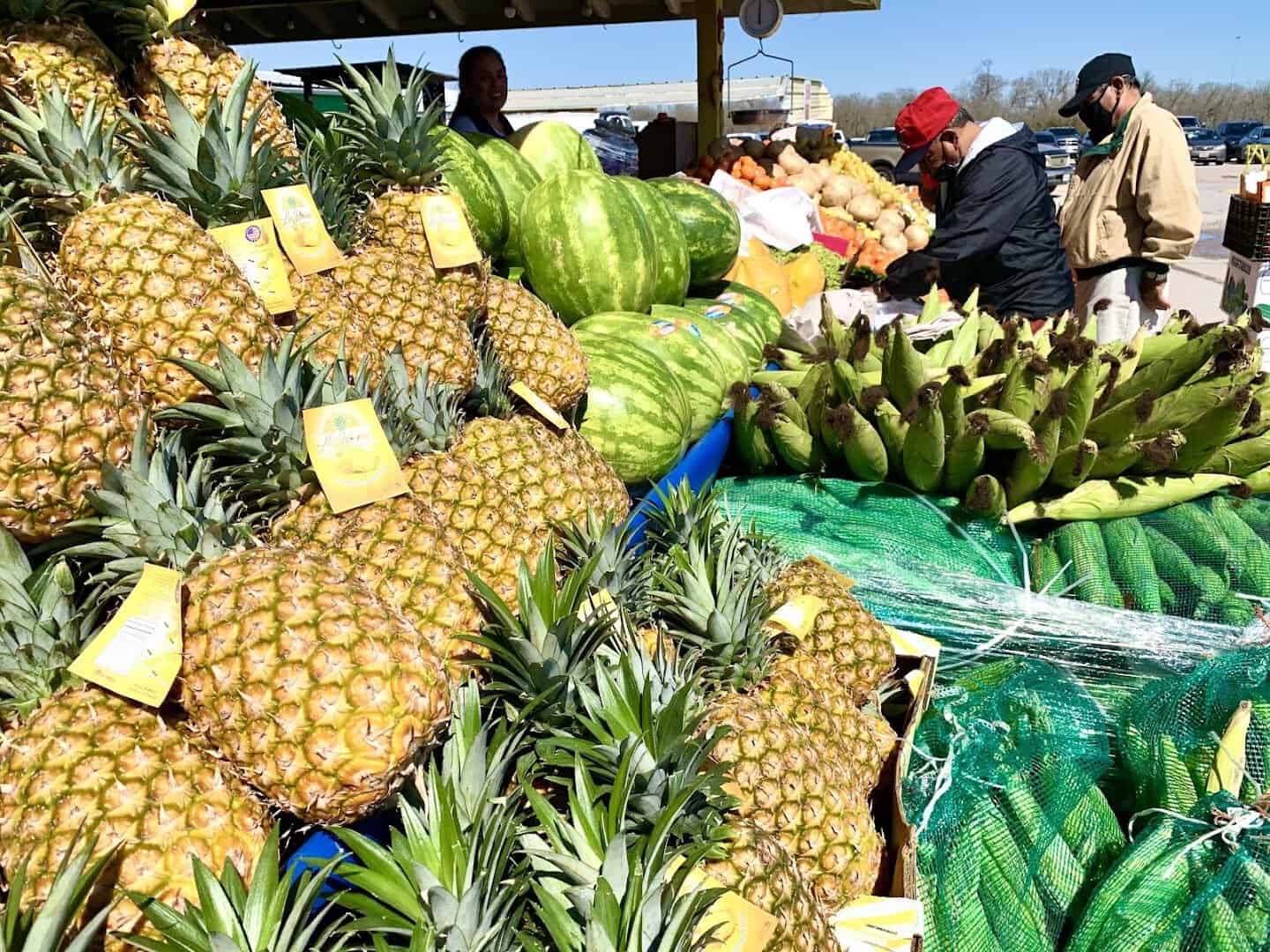
Fall is my favorite. Pumpkins stacked on hay bales, mums in every shade of rust, satsumas and Rio Star grapefruit coming up from the Valley in mesh bags.
Winter thins the outdoor rows a little, and that is when the indoor buildings shine. Fewer people, more room to actually look, and vendors who have time to tell you where a piece came from.
I have learned to ask. Half the objects in this place have a story attached, and most sellers are glad you wondered.
Bring the Kids, Bring the Dog, Bring Your Patience
This is an easy place to bring a family, which is not true of every antique hunt.
Kids do well here because there is always something loud, shiny, or edible within thirty feet. Toy tables, bubble vendors, a churro cart, puppies in a pen that you will absolutely have to have a conversation about on the drive home.
The lanes are wide and mostly flat, so strollers manage fine, and the indoor buildings give everybody a cool down lap when the sun gets serious.
Leashed dogs are a common sight in the outdoor sections, though the shade is thin in July and the pavement gets hot, so a morning visit suits them better than an afternoon one.
Set the expectation on the drive over, though, because you are not going to see all of it. I have been coming for years and I am fairly sure nobody has ever seen all of it.
Furniture With a Second Life
Tucked behind the SuperNova furniture store, over by the food trucks, there is a booth worth knowing about.
The Houston Furniture Bank sells mattresses and furniture at the market every Saturday and Sunday. Bedroom sets, living room pieces, dining tables, all discounted.
The proceeds fund their actual mission, which they put plainly: make empty houses homes. They furnish households that have nothing to sit on and nothing to sleep on.
So the bed frame you carry to your truck pays for a bed frame somebody else needed. I like a market where the bargain hunting quietly does some good.
Pro Tips for Your First Saturday
A few things I wish someone had told me before my first lap.
Pro tip: bring cash, and bring it in small bills. Plenty of vendors take cards now, and plenty do not, and nobody has ever lost a negotiation by having exact change.
Wear shoes you would hike in. Forty four acres is a real walk, and the outdoor lanes are gravel and packed dirt in places.
Give yourself three to four hours. I have never once done this market in under two, and I have never once regretted staying longer.
Come early for the best selection and late for the best prices. Vendors near closing time would genuinely rather sell a lamp than load it back into a van.
Bring a folding wagon if you own one. Sunscreen and a water bottle in summer, a jacket in January, because the outdoor rows are open sky.
Parking runs about $4 per car, which covers your entry, and the market operates Saturdays and Sundays year round with gates opening at eight in the morning. Hours shift occasionally, so a quick look at the official site before you drive is time well spent.
Thinking of Setting Up a Table Yourself?
Half the fun of a market this size is realizing you could join it.
Outdoor spaces have started around $30 for a Saturday, $34 for a Sunday, and roughly $64 for the full weekend. Indoor and monthly booths run higher depending on size and where they sit.
Reserve ahead and you can set up on Friday between eight and five, which beats hauling tables in the dark. Show up without a reservation and you can still get in at six on market morning.
Clean out the garage, price everything, bring a folding chair and a cooler. Some of the best conversations I have had in this state happened across somebody’s card table.
How to Get There
Where: Cole’s Antique Village and Flea Market, 1014 N Main St, Pearland, TX 77581
North Main is Highway 35, and the market sits right on it, which makes this one of the easier drives in the Houston metro. From downtown Houston it is a straight shot south, usually well under an hour.
Coming from Galveston or the bay towns, you cut inland and arrive from the east. Coming down from the airport side, take the Beltway and drop south. The phone number is (281) 485-2277 if you want to confirm anything before you load the family in.
Pair it with the rest of Pearland while you are down here. There are good taquerias on Main, and the trail system along Clear Creek is a nice place to walk off a turkey leg.
Start Early and Bring the Small Bills
I have a soft spot for places that do not put on airs, and this one has never tried. It is enormous and it is cheap to walk into and it belongs to whoever bothered to show up that morning.
You will not find the same thing twice, and I have decided that is a feature. The stock turns over every weekend because the sellers do, so the skillet or the enamel sign or the rocking chair you walk past at nine belongs to somebody else by noon.
So set an alarm you would rather not set. Put four singles in the cupholder, wear the comfortable shoes, and give yourself the whole morning.
Somewhere out in those rows, under a white canopy on a folding table, is a thing you did not know you wanted. Go find it.
Featured image: @ Cole’s Antique Village & Flea Market

Stella Raines
Editor-in-Chief
Stella brings over a decade of storytelling experience to TX Headlines. With roots in West Texas and a love for road trips, she leads the editorial team with an eye for the hidden stories that make Texas unforgettable.
More Stories
This Enormous Texas Vintage Warehouse Is Home to 200 Dealers and a Secret Tea Room
These Affordable Texas Getaways Are the Coolest Places in the State, and Most Cost Under Ten Dollars
This Unassuming Texas Bridge Is Home to 1.5 Million Bats That Pour Into the Sky at Dusk
These Large and Small Texas Zoos Have Zookeeper for a Day Programs that Let You Get Your Hands Dirty
Tags