This Nerve-Racking Texas Bridge Is a 20-Story Climb Straight Into the Sky
I get a little jittery on tall bridges. Not the polite kind of jittery, but the kind where my knuckles go pale on the wheel and I catch myself narrating my own breathing out loud like a nervous flight attendant.
There is even a word for it, gephyrophobia, the fear of crossing bridges, and I am at least a casual member of the club. So a bridge that people happily call one of the most nerve-racking drives in the state was always going to get my attention.
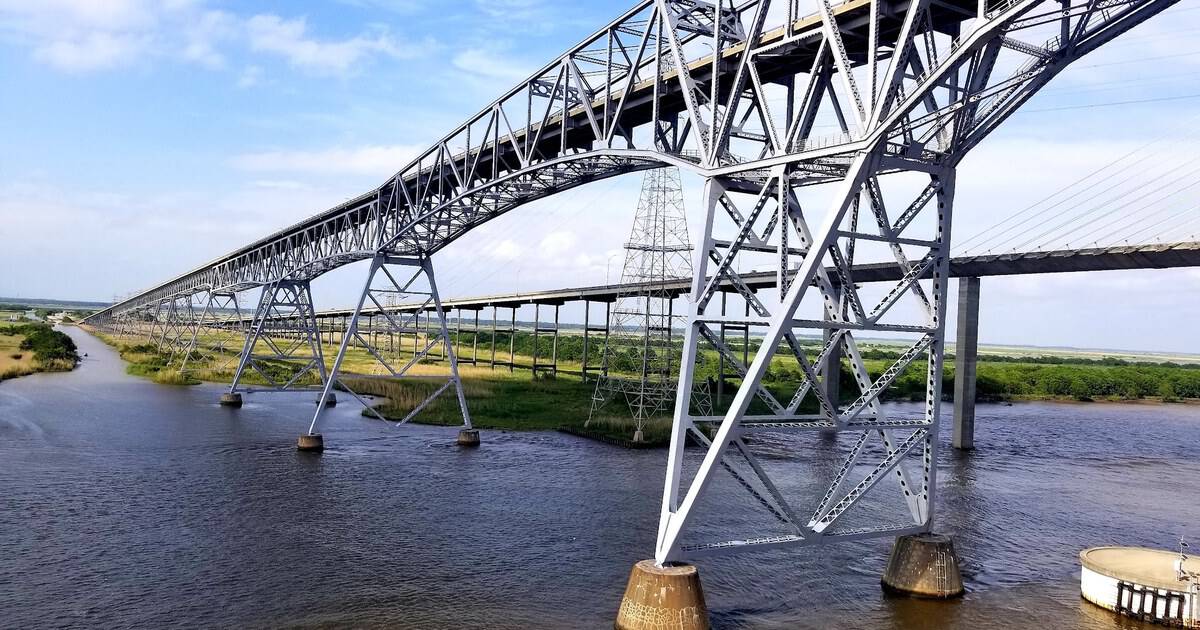
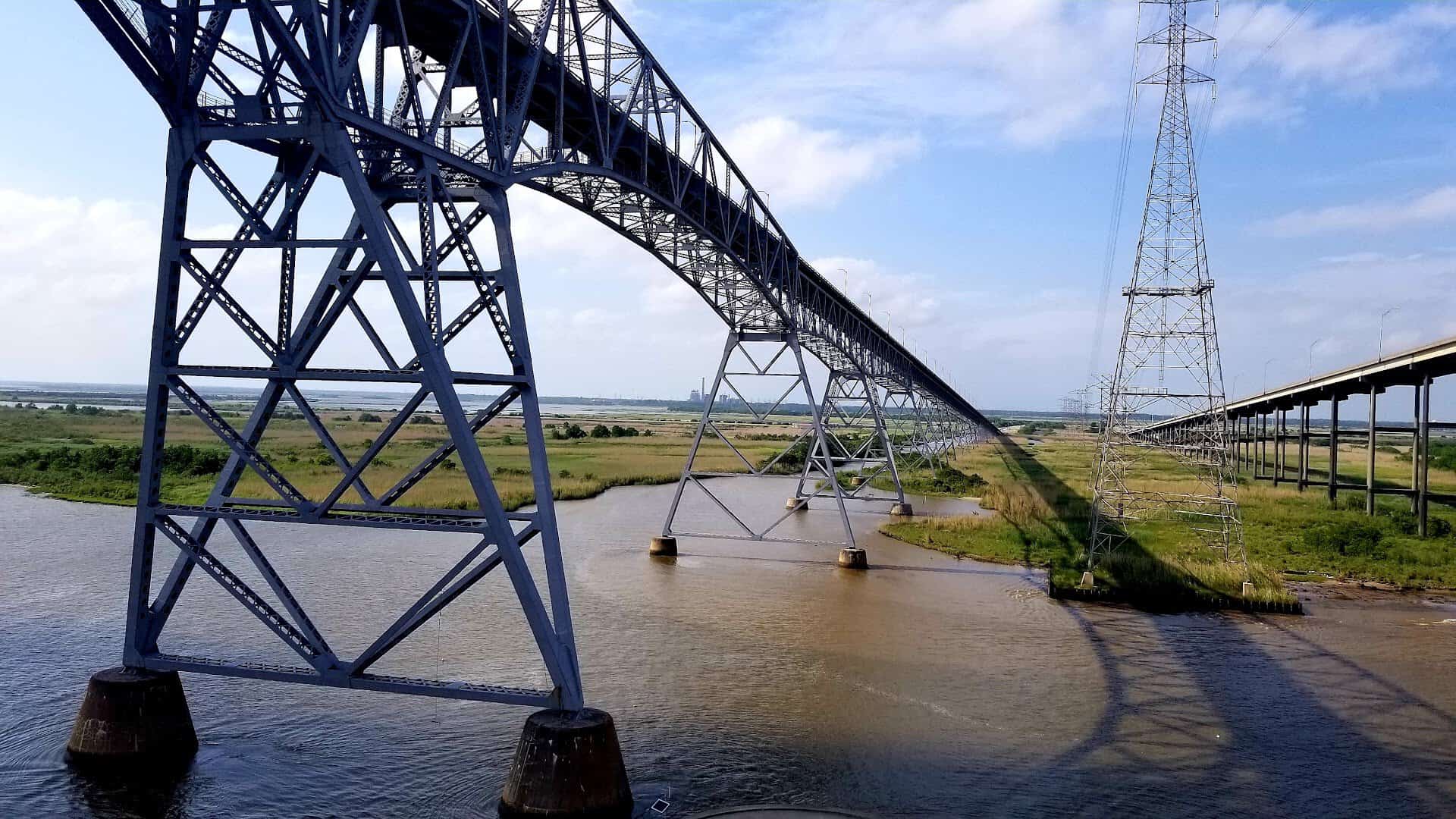
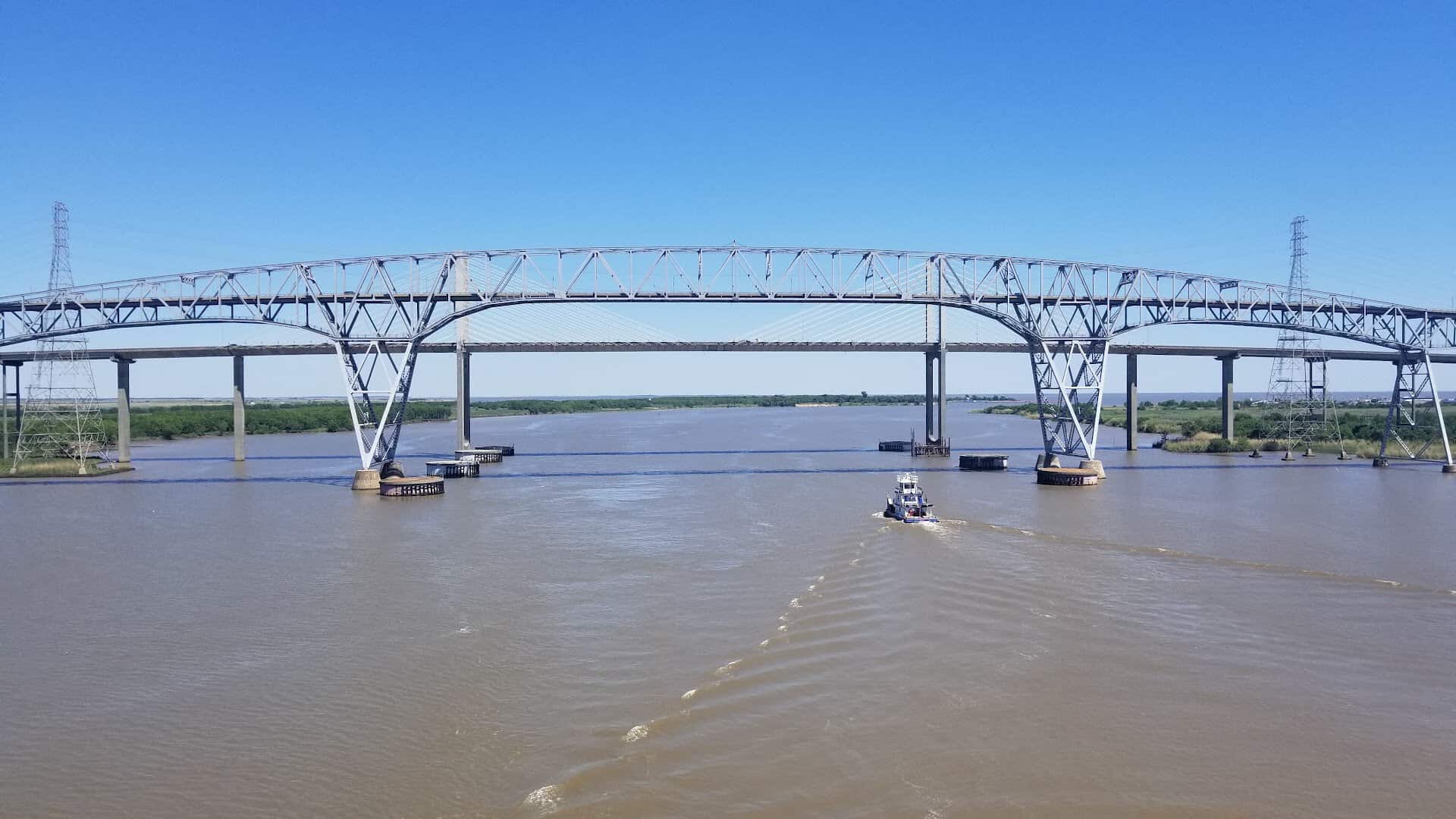
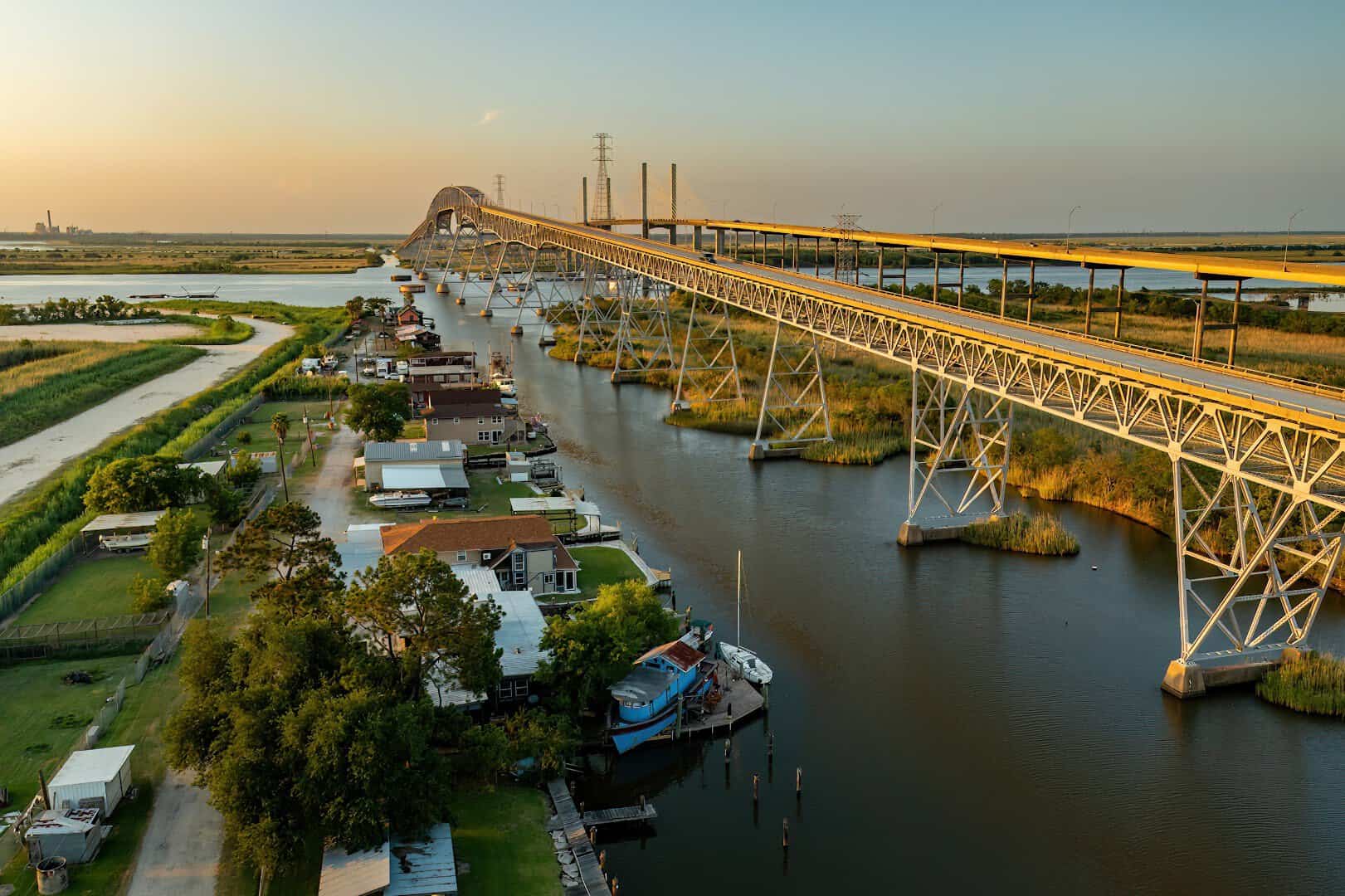
That drive is the Rainbow Bridge, a steel rainbow arcing over the Neches River in the Gulf Coast corner of Southeast Texas. It climbs so high and so fast that it earned a reputation.
Longtime locals still talk about the moment near the top when the road ahead simply vanishes and all you can see is sky.
Here is why this old giant is worth pointing the car toward, jittery hands and all, plus the history, the numbers, and the tips that turn a white-knuckle crossing into the best two minutes of your road trip.
The Climb Where the Road Runs Out of Ground
You feel the Rainbow Bridge before you understand it. The approach is flat marsh and refinery haze, and then the pavement tilts up and keeps tilting, and your engine changes its tune.
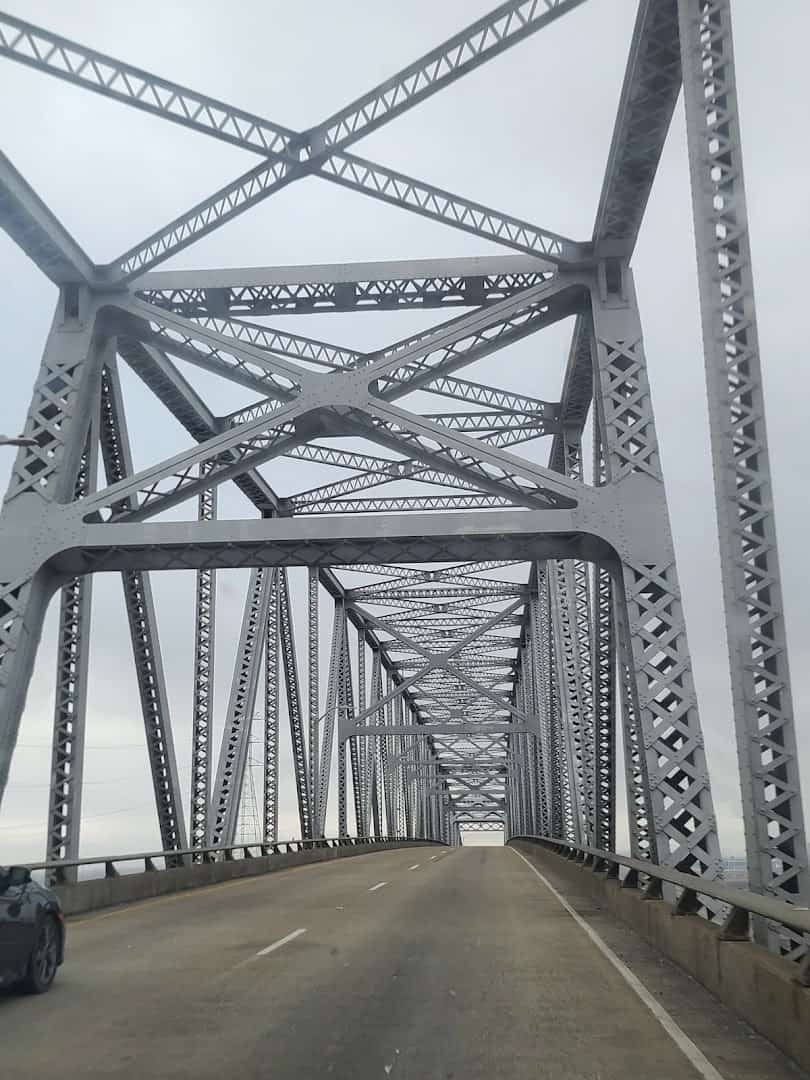
The bridge stands roughly twenty stories tall at its peak. That is a serious grade for a highway, and the genius of it is also the scary part: as you near the summit, the deck rises steeper than your sightline, so the road ahead drops out of view.
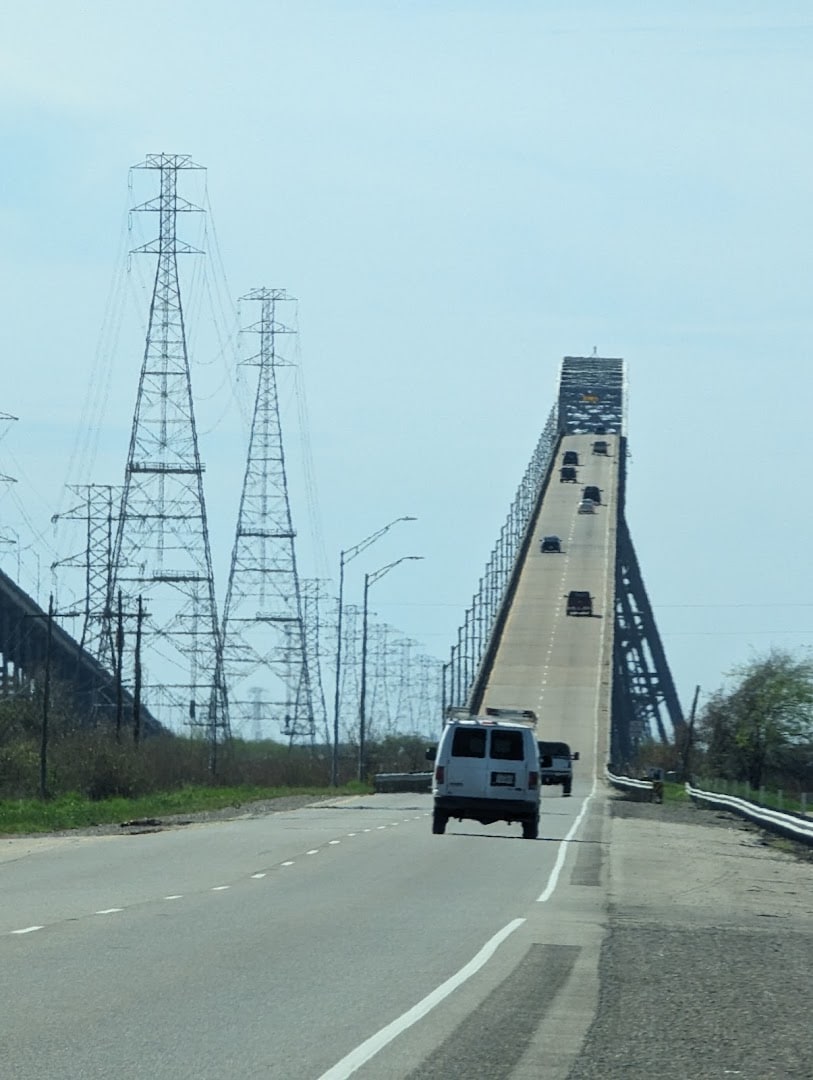
For a heartbeat there is no asphalt in the windshield at all. Just open blue in the daytime, or a scatter of stars at night.
Your brain insists you are about to launch off the edge of Texas, and then the crest arrives and the whole river valley pours into view.
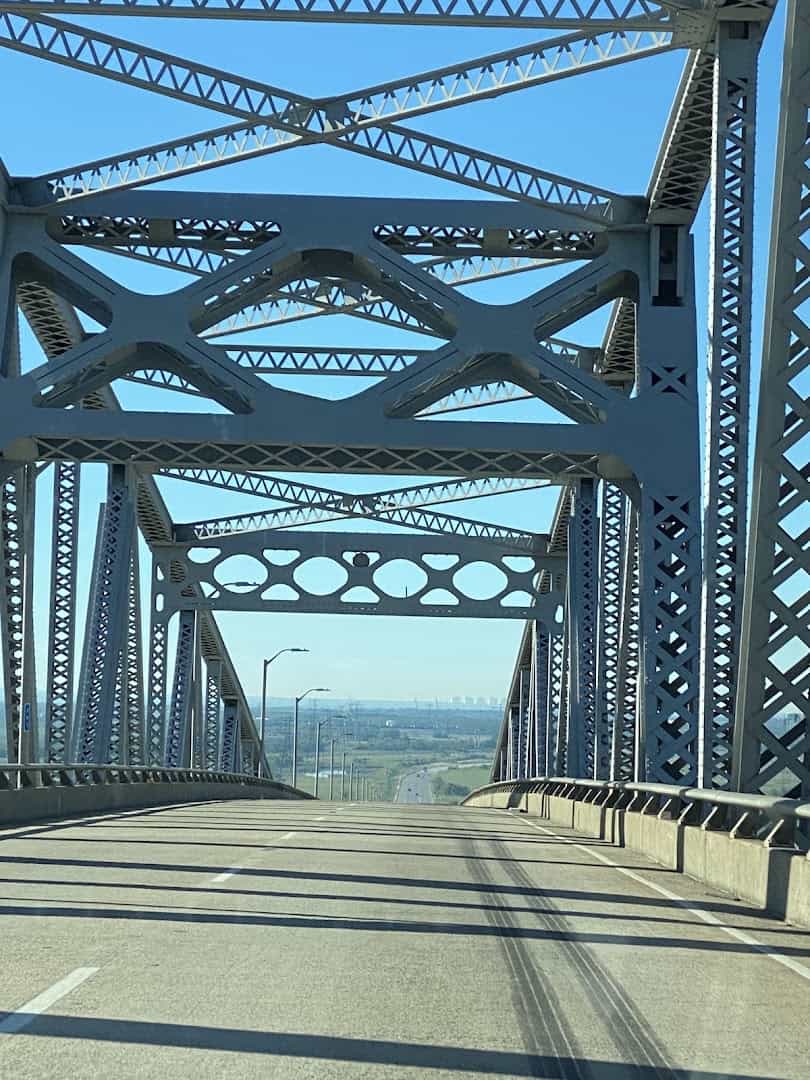
The original deck did not help the nerves. For decades this was a narrow two-lane crossing, so a loaded oil truck could be rumbling past your window with only a painted line and a low rail between you and open air.
People who grew up here trade stories about that feeling. Some loved it so much they crossed for fun on a Sunday.
Others were so unsettled that they drove thirty miles out of the way rather than face the summit, which tells you everything about the grip this bridge has on the local imagination.
The View That Makes the Nerves Worth It
Reach the top and the reward is immense. Below you the Neches River bends toward Sabine Lake, ships slide beneath your tires, and the flat green coast unrolls in every direction.
On a clear evening the light does something wonderful out here. The water goes molten, the refineries flicker on like a distant city, and for a few seconds you are the highest thing for miles with a front-row seat to the whole Golden Triangle.
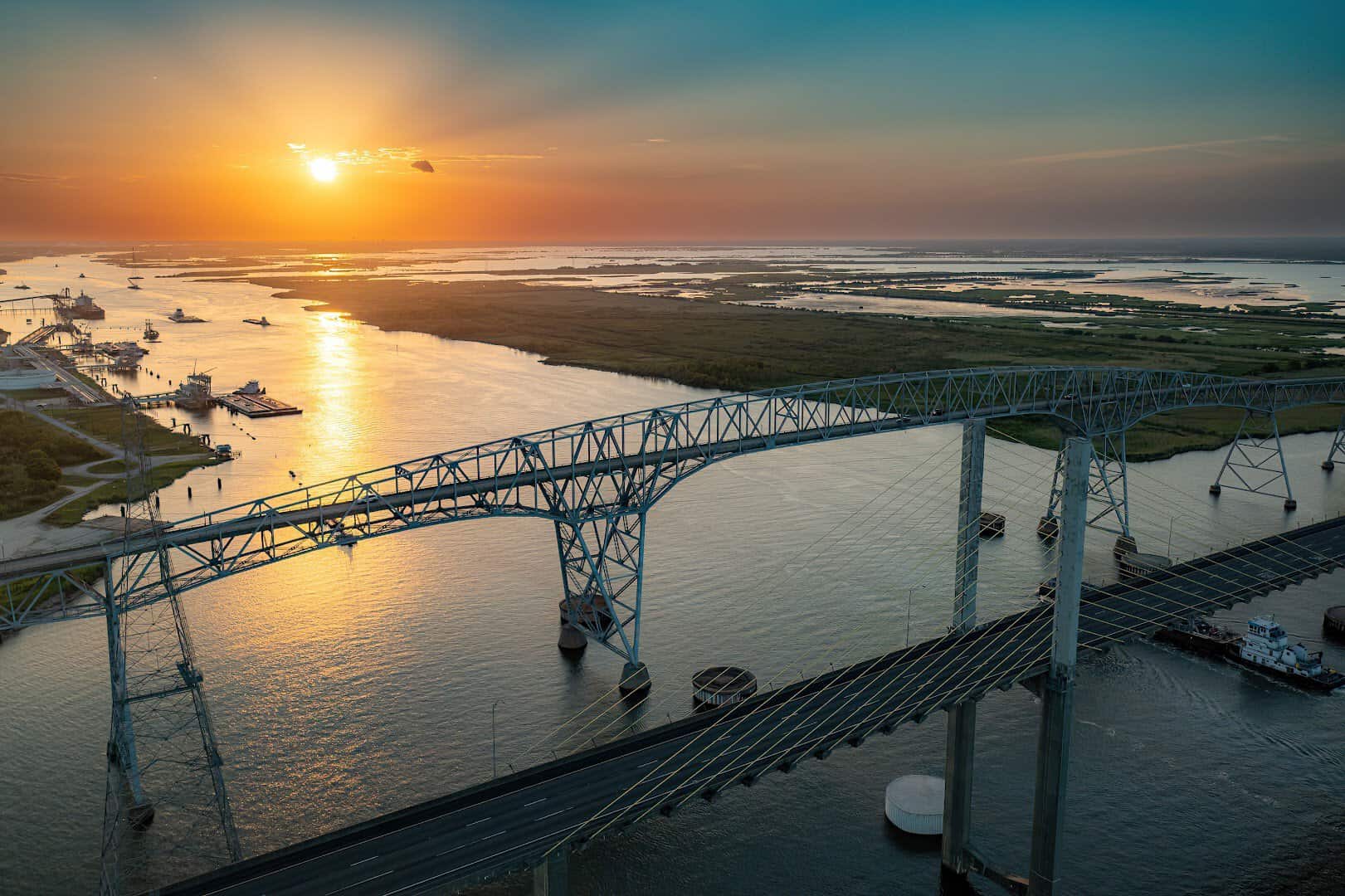
You will want to look. You will also be driving, so let a passenger be your eyes, or find a safe spot on the frontage roads below where photographers love to line up and catch the great arc against the sunset.
It is the kind of view that rearranges your fear into something closer to awe. The climb that scared you on the way up becomes the reason you find yourself grinning on the way down.
A Bridge Built for a Ship That Never Came
Here is the detail I love most. The Rainbow Bridge was built impossibly tall for one strange reason: a Navy airship.
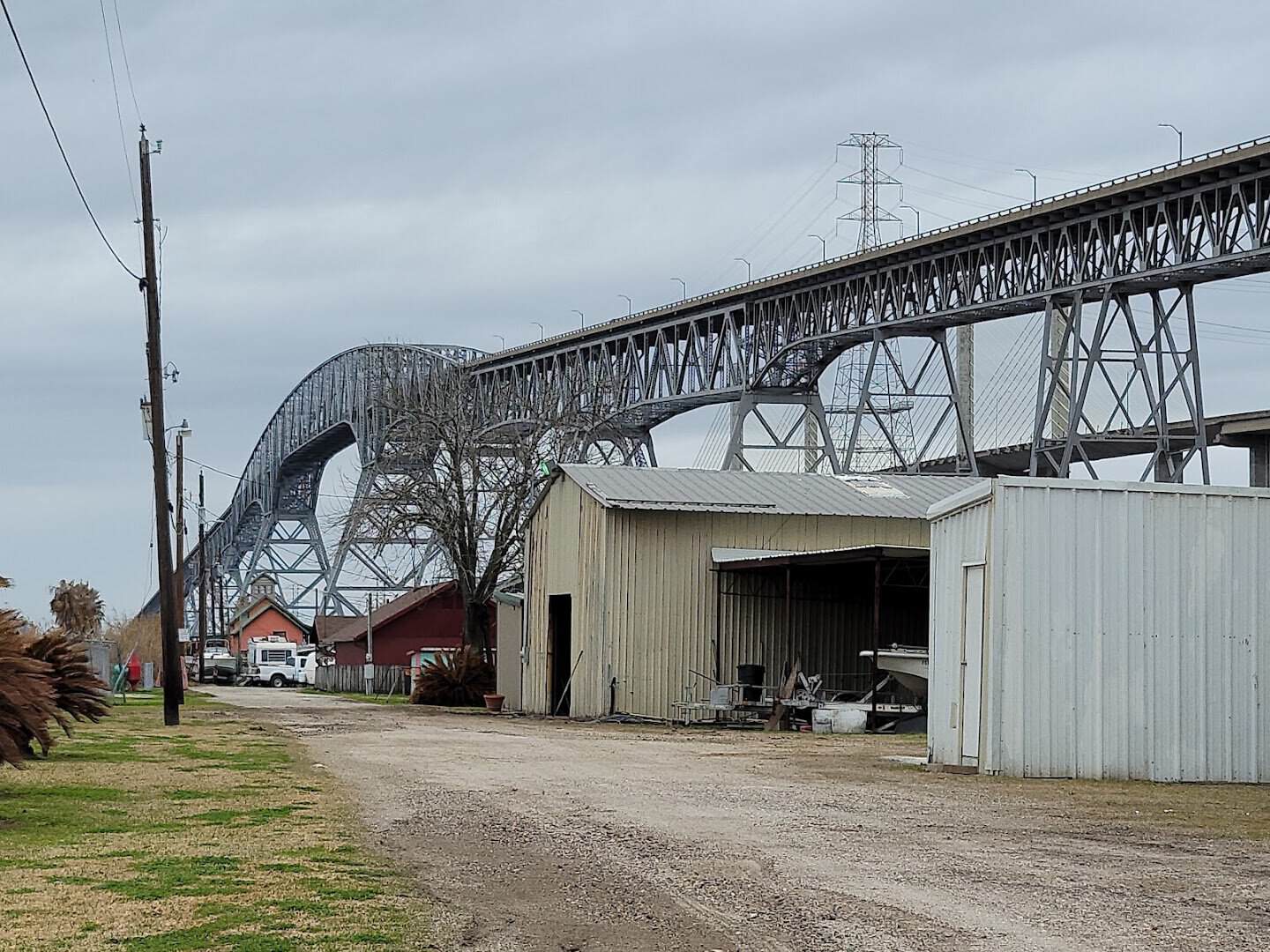
When engineers designed it in the 1930s, they set the vertical clearance at about 176 feet so the USS Patoka could pass underneath. The Patoka was a dirigible tender, a ship fitted with a towering mast for mooring blimps, and it stood roughly 177 feet from waterline to tip.
Texas being Texas, the state made sure its bridge could clear the tallest ship in the U.S. Navy. And then, in one of history’s great punchlines, the Patoka never once sailed beneath it. The bridge cleared its head for a guest who never showed.
Did you know that height once made this the second-tallest bridge in the entire country, behind only the Golden Gate? For a stretch it was billed as the most elevated highway bridge over tidal water anywhere in the world.
Roots Run Deep in the Neches Mud
The story starts in the marsh. For years, anyone heading between Port Arthur and Orange County had to rely on the Dryden Ferry to cross the Neches, which is a slow way to run a booming oil coast.
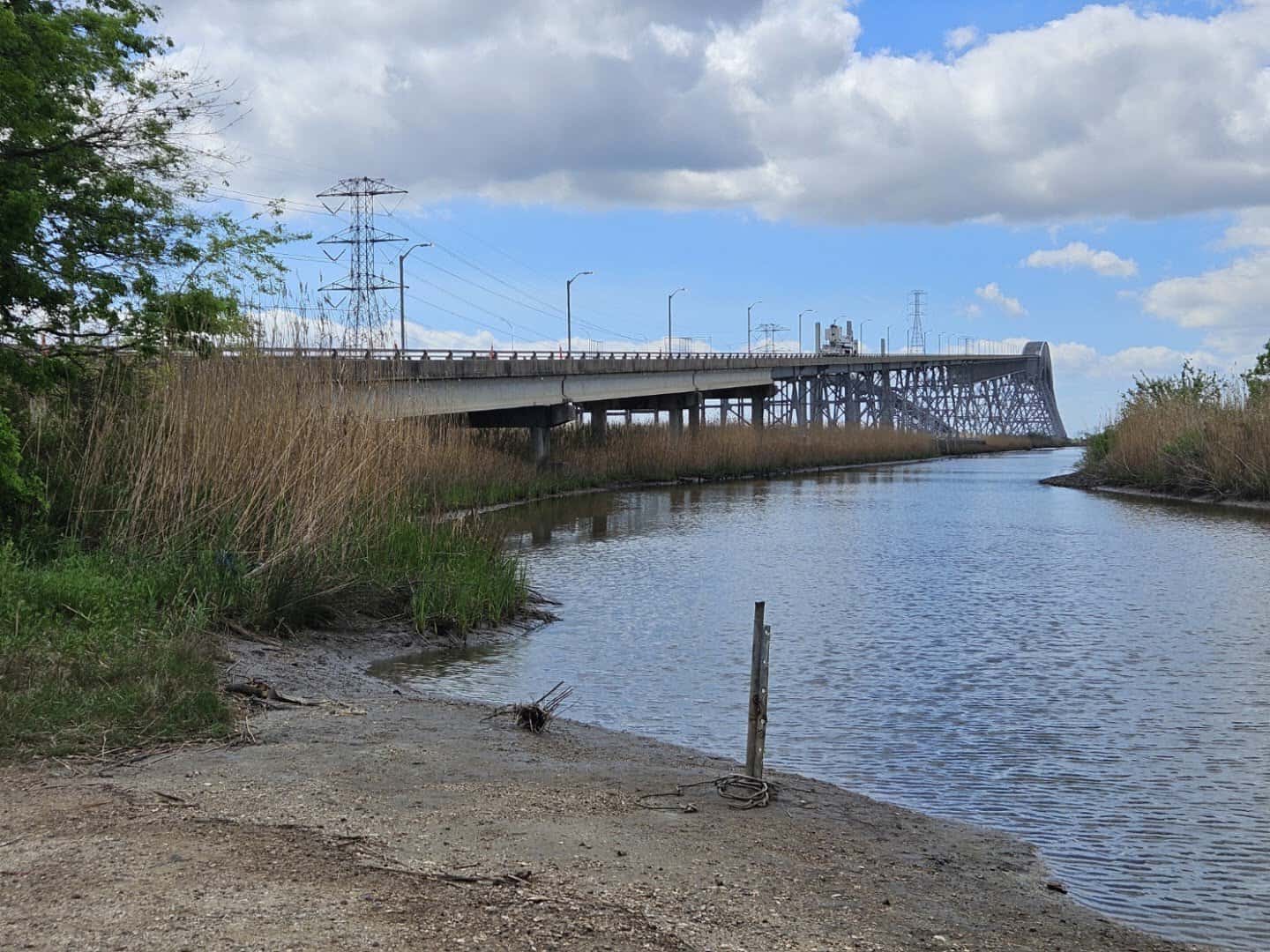
The region had argued and planned for years before a shovel ever moved. Building a bridge tall enough to leave the shipping lane wide open, over soft coastal ground, was an enormous ask for the 1930s.
Construction on a proper bridge began in May 1936, funded by a mix of county, state, and federal money through the Public Works Administration at a cost of around 2.75 million dollars. It was the largest bridge the Texas Highway Department had ever built.
On September 8, 1938, the span opened to traffic as the plain-sounding Port Arthur to Orange Bridge. It carried State Highway 87 up and over the water at last.
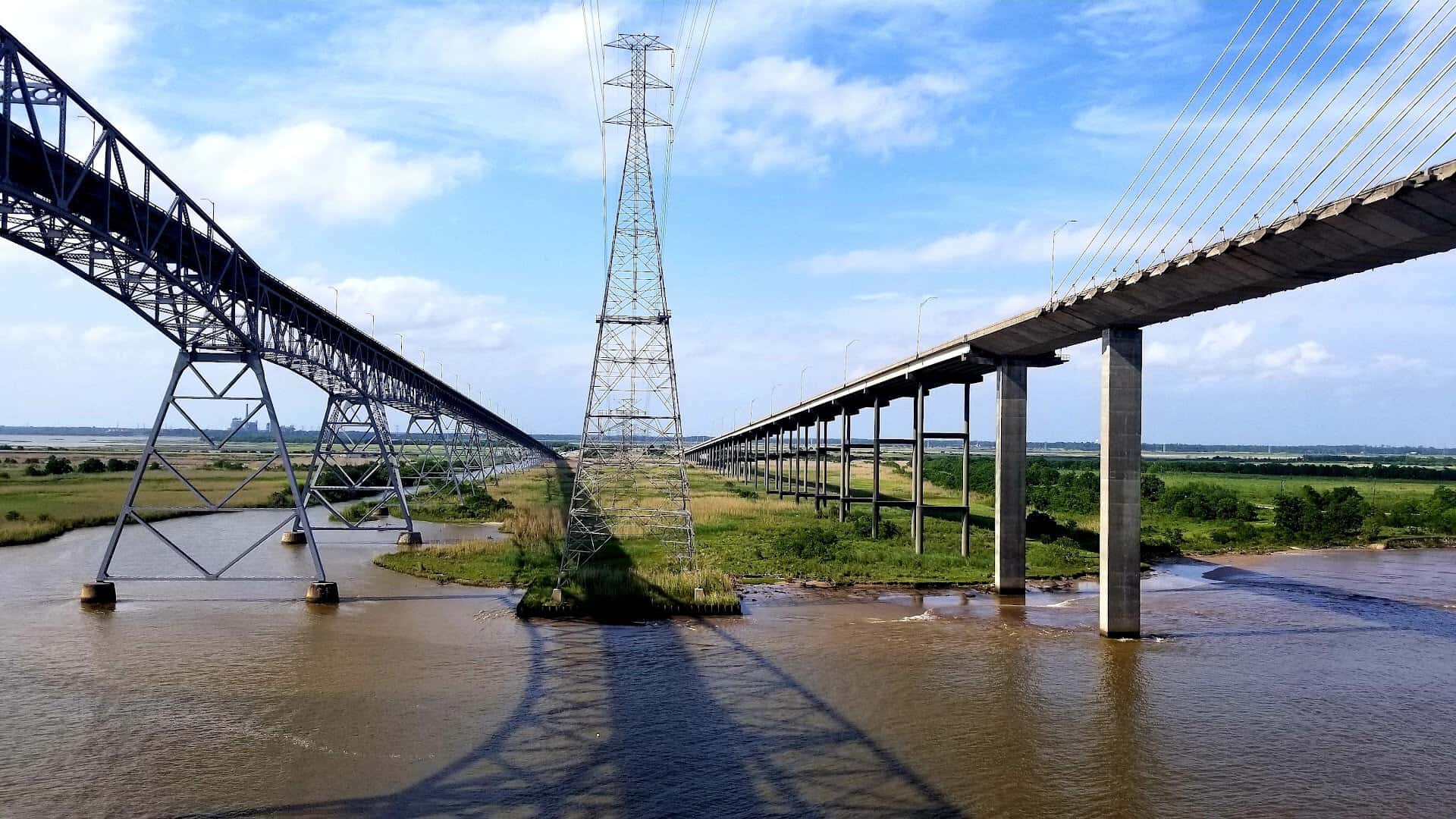
The numbers were staggering for the day: a central span of 680 feet, one of the longest in Texas at the time, and an overall length of more than 7,750 feet from end to end.
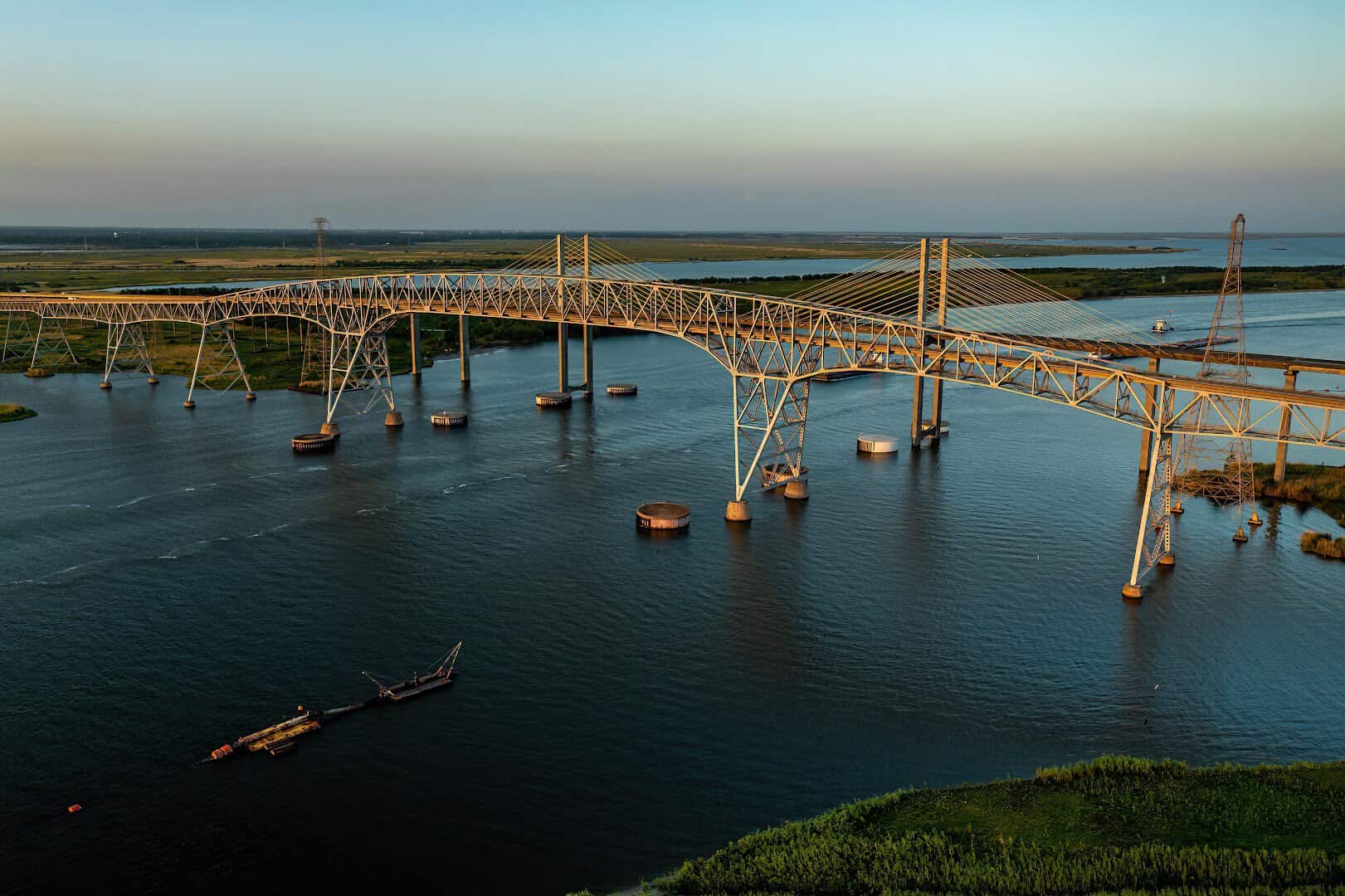
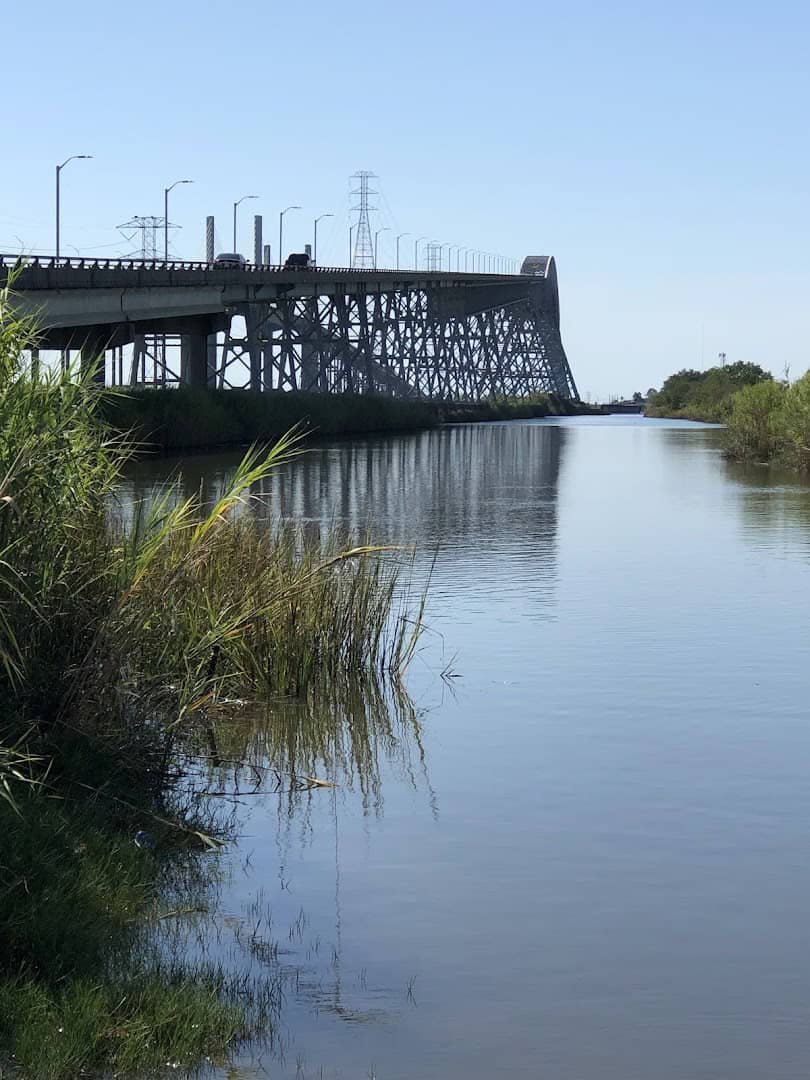
The design is a steel cantilever, the muscular kind of engineering where the structure reaches out from its piers to meet in the middle. That is why the profile looks less like a smooth suspension curve and more like a tall gray arc bolted together against the sky.
Nearly a century of Gulf Coast weather has washed over it since, and the old arc is still standing, still carrying cars, still making first-timers grip the wheel.
Why Do They Call It the Rainbow Bridge?
It did not always have such a friendly name. The rebrand came in 1957, when the North Port Arthur Lions Club ran a public contest to give the bridge something better than a pair of city names.
A six-year-old named Christy McClintock won it. Her entry was simple and perfect: she thought the high steel arc “looked like a mechanical rainbow.” The judges agreed, the name stuck, and she took home a fifty-dollar savings bond for the best two words anyone submitted.
I think about that a lot. A whole region’s most famous landmark, named forever by a first-grader who looked up at a hulk of gray steel and saw a rainbow. Kids are almost always right about this kind of thing.
The Local Legend on the Catwalks
Every great bridge collects a little folklore, and this one has a good one. Port Arthur is the hometown of Janis Joplin, and local lore says the young Janis once climbed up into the bridge’s catwalks as a teenager to sing out over the moonlit Neches.
Whether it happened exactly that way is the kind of thing a small town keeps half on purpose. It is too good a picture to fact-check into the ground.
Picture a restless girl with a giant voice, perched on a steel rainbow, practicing for a fame nobody in Port Arthur could yet imagine.
True or embellished, the tale fits the place. This is a bridge that seems to invite people to test their nerve on it, one way or another.
How You Actually Cross It Today
Good news for the nervous: crossing is more comfortable now than it was for your grandparents. For decades the Rainbow Bridge carried narrow two-way traffic, cars and loaded eighteen-wheelers squeezing past each other at the summit, which is exactly as thrilling as it sounds.
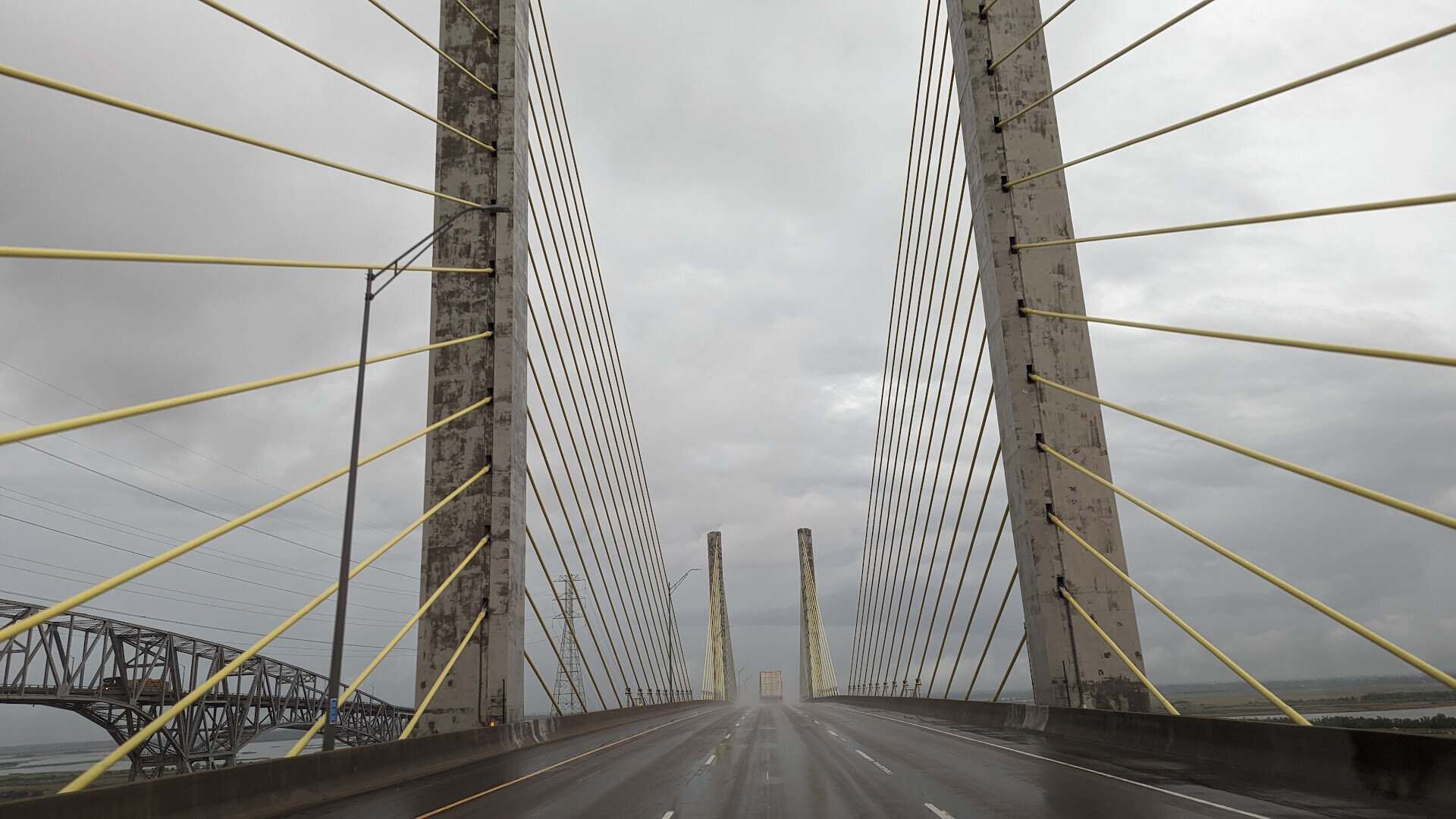
That changed when a sleek modern sister span, the cable-stayed Veterans Memorial Bridge, opened right beside it in 1990. After a 1997 reconfiguration, the two bridges split the load, with the historic Rainbow Bridge now carrying traffic in a single direction and its younger neighbor taking the other.
One thing has not changed: this is a drive, not a walk. The Rainbow Bridge has no pedestrian walkway, so the summit belongs to drivers and their passengers only. Cross it in the car, and leave the catwalks to legend.
Tips for a First Crossing
A little planning turns nerves into fun. Pick a calm, clear day for your first trip, because strong Gulf wind and rain make any tall span feel wilder than it needs to.
Keep a steady, moderate speed, stay in your lane, and let the car behind you worry about itself. The grade is steepest right before the crest, so ease off the gas as you climb and you will crest smoothly instead of lurching.
Pro tip: come at golden hour. The low sun turns the Neches to copper and the whole arc glows, and the frontage roads on the Bridge City side give photographers a clean, safe line on the bridge without stopping on the span itself.
If someone in the car is anxious, let them ride facing the water rather than the drop, give them a job like running the camera, and remind them the whole crossing lasts only a minute or two. It is over before the fear can really settle in.
Make a Day of It in the Golden Triangle
The bridge sits right in the Golden Triangle, the trio of Beaumont, Port Arthur, and Orange that grew rich on oil and rice and shrimp. There is a full day of Southeast Texas to build around your crossing.
Port Arthur, on the south bank, is proud of its music history and its Gulf seafood, and the marshes nearby draw serious birders who come for the herons, spoonbills, and migrating songbirds passing over the coast.
Bridge City, on the north bank, wears the bridge in its very name. Between the two you have Sabine Lake shimmering to the south and the wide Neches sliding underneath, which is a lot of water and sky for one short drive.
How to Get There
Where: Rainbow Bridge, State Highway 87 over the Neches River, between Port Arthur and Bridge City, TX 77611. It sits in the far southeast corner of the state, just north of Sabine Lake and a short drive from Beaumont and Port Arthur.
Pair it with a run through Port Arthur, birthplace of Janis Joplin, or a seafood lunch in Bridge City, and you have an easy half-day loop built around one glorious arc of steel.
Point the Car West and Look Up
Some Texas landmarks ask you to hike, or pay, or wait in line. This one just asks for a minute of your courage and a full tank of curiosity.
So plan the drive, roll down the windows, and let the road tilt up until the sky fills your windshield. Cross it once and I promise you will do exactly what generations of Texans have done at the top of the Rainbow Bridge: hold your breath, then laugh out loud.
Featured image: Oleksandr Protsenko via Rainbow Bridge

Stella Raines
Editor-in-Chief
Stella brings over a decade of storytelling experience to TX Headlines. With roots in West Texas and a love for road trips, she leads the editorial team with an eye for the hidden stories that make Texas unforgettable.
More Stories



Tags