This Sprawling Texas Antique Market Is So Big You’ll Need 8 Hours to See It All
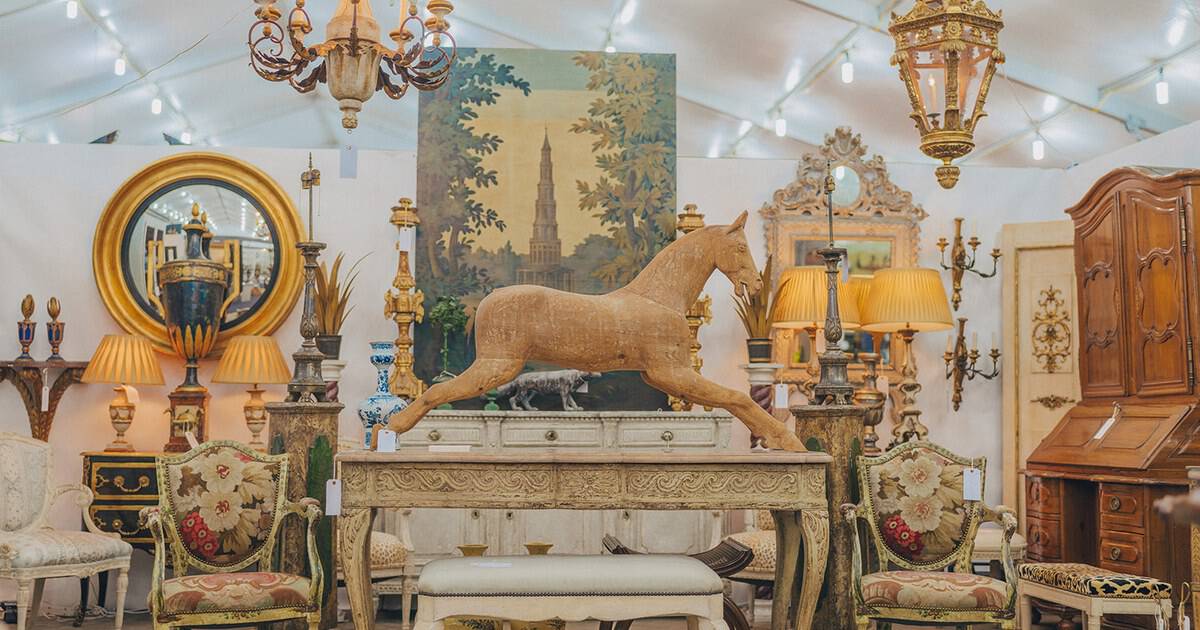
I have one hard rule for a Texas road trip: never fill the trunk on the way out. You never know when you will drive home with a butter churn from the 1860s, a Swedish chair, or a French farm table you cannot fit through your own front door.
That is the risk you run when you go antiquing where the pros go. You come for a fun afternoon and leave making room in your living room. And honestly, that is the best kind of trouble a weekend can get you into.
Twice a year, plus a quieter winter round, a stretch of rural Central Texas between Austin and Houston turns into the biggest treasure hunt in the country. At the heart of it sits the show that started the whole thing.
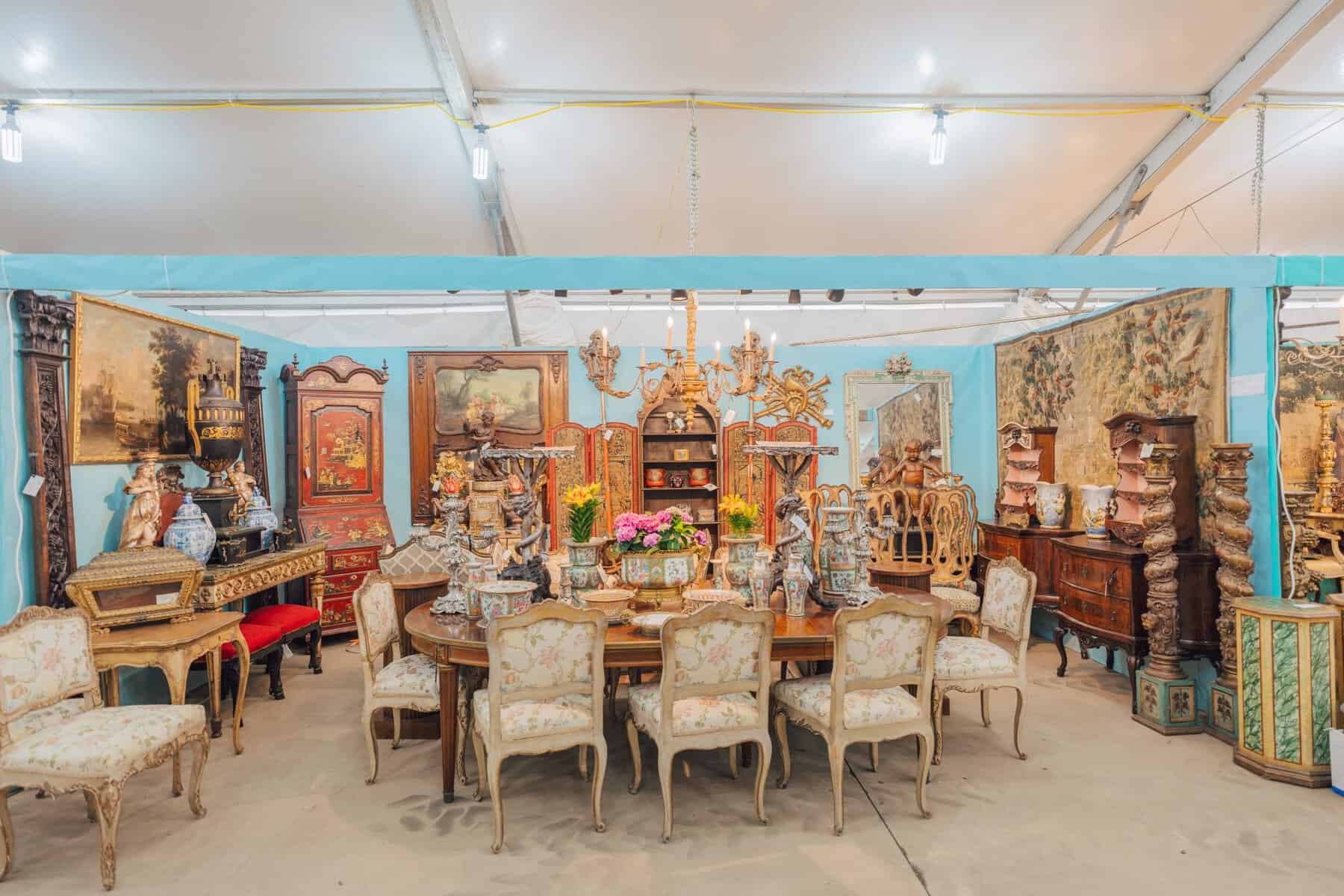
It earns its weathered-wood grandeur the moment you walk in. This is the Original Round Top Antiques Fair, and it is the reason the tiny town of Round Top became a household name for anyone who loves old, beautiful things.
Here is why one barn full of antiques has grown into a pilgrimage, and why serious collectors block off a full eight hours just for this one stop.
The Hunt Inside the Big Red Barn
The anchor of it all is the Big Red Barn, the 30,000-square-foot home of the Original Round Top Antiques Fair. It is climate controlled, which in a Texas October matters more than you would think.
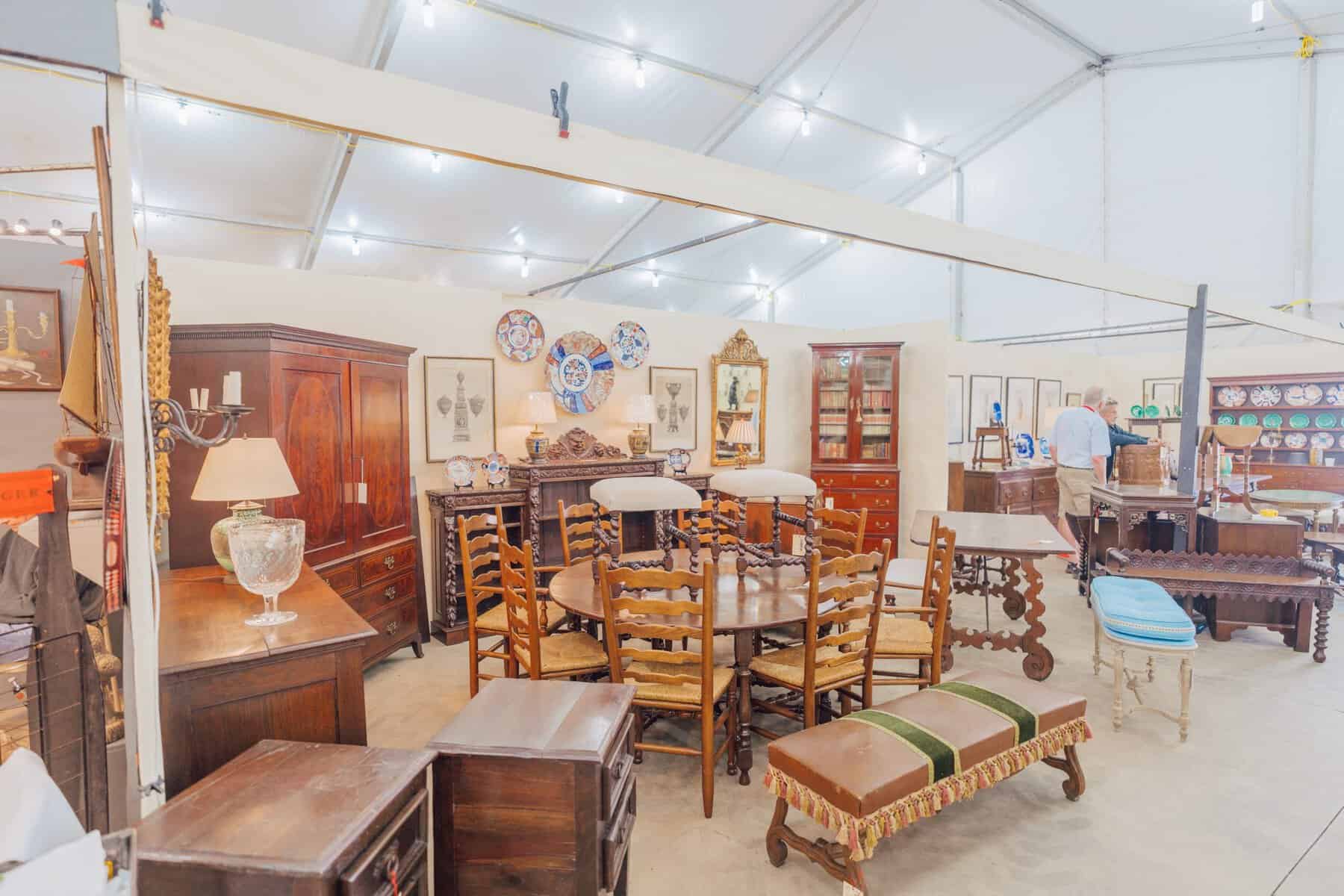
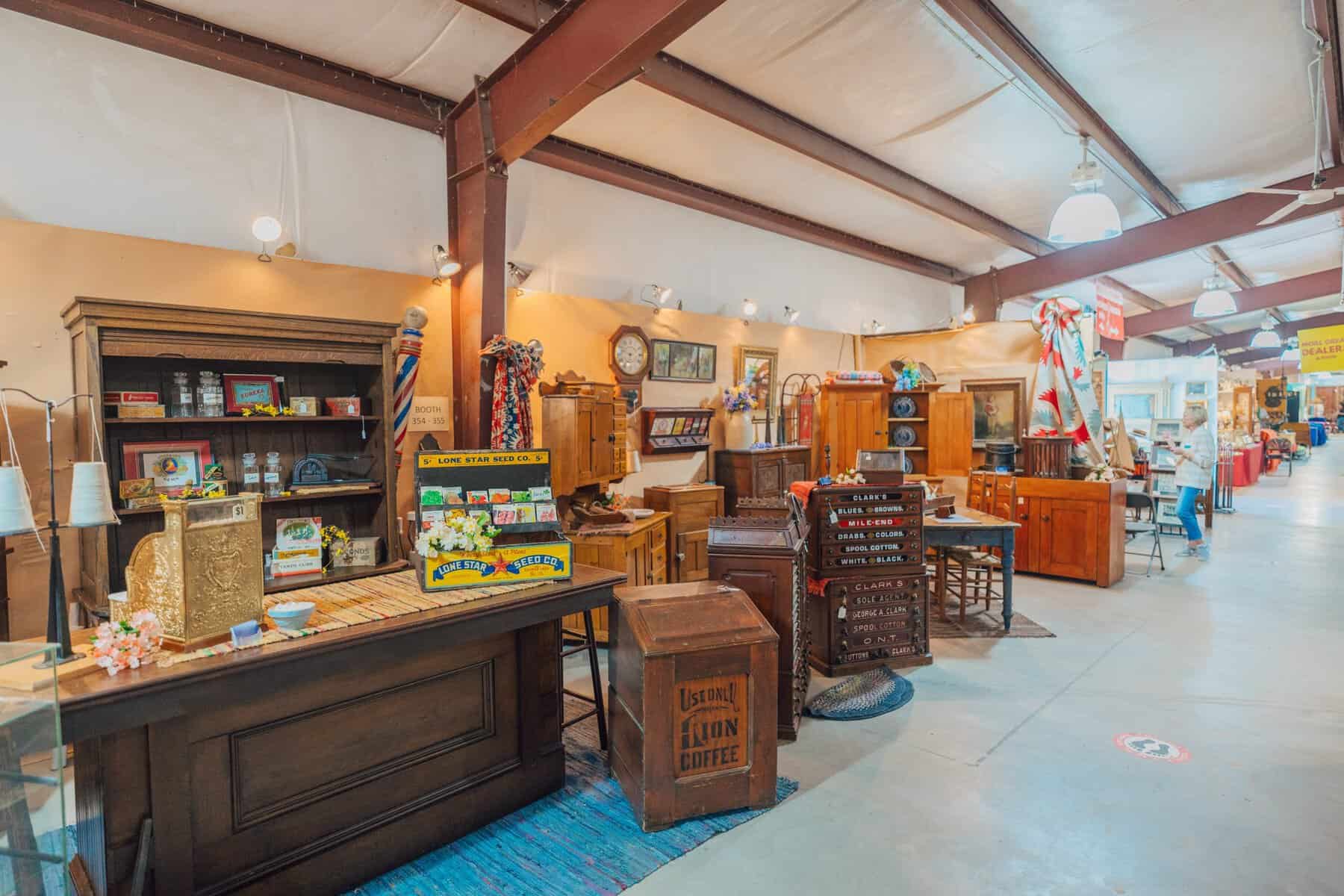
Step through the doors and the temperature drops, the light softens, and roughly 120 vetted dealers spread out in front of you in tidy, curated booths. This is not a folding-table flea market. It reads more like a museum where everything happens to have a price tag.
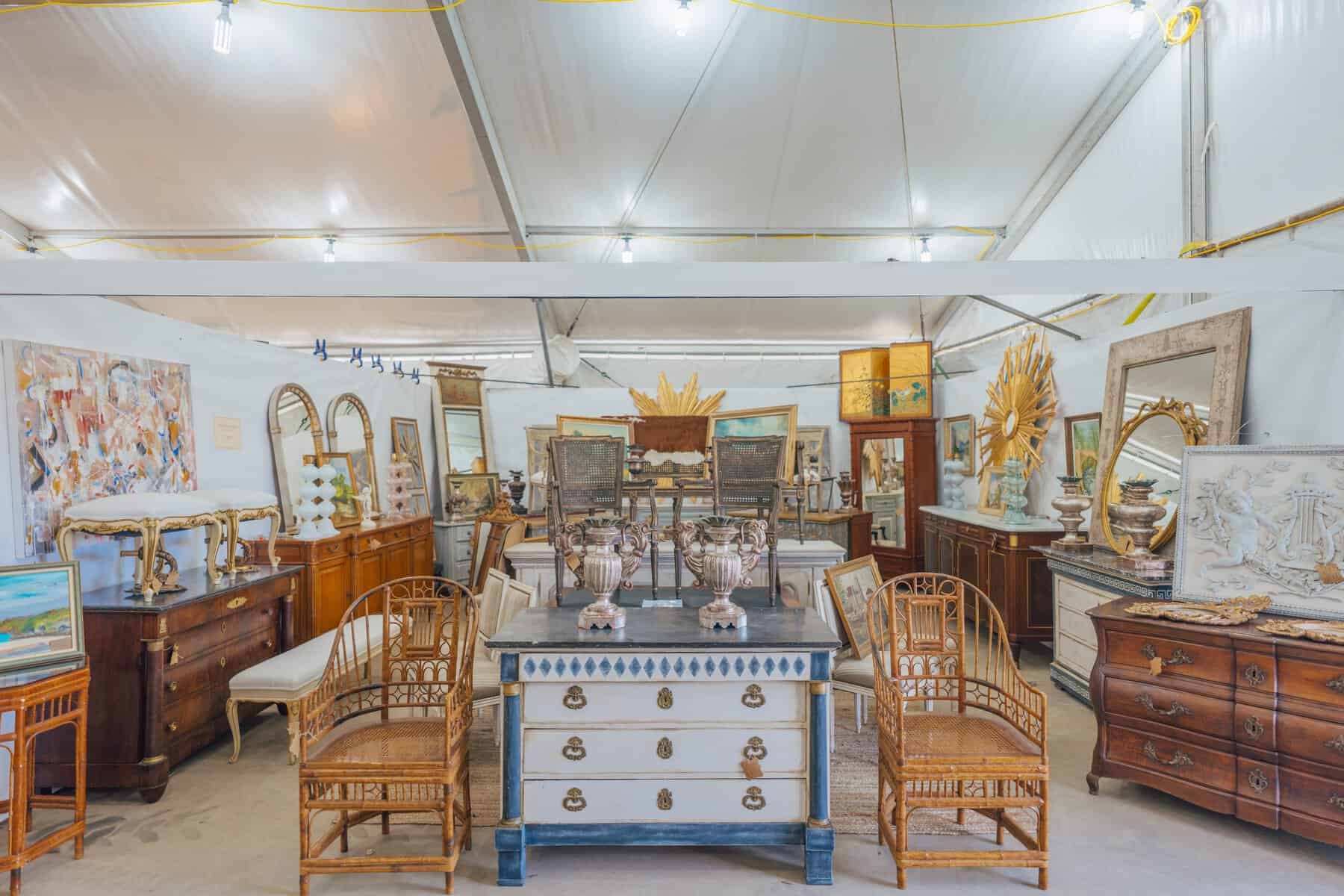
You will want a plan, because you cannot speed-walk this. Aisles branch into aisles. A cupboard you passed on the way in looks completely different on the way back, once you have trained your eye on what good really looks like.
My advice is to do one slow loop first without buying anything. Let yourself fall a little in love. Then do a second loop and actually commit, because the thing you hesitated on will not be there tomorrow.
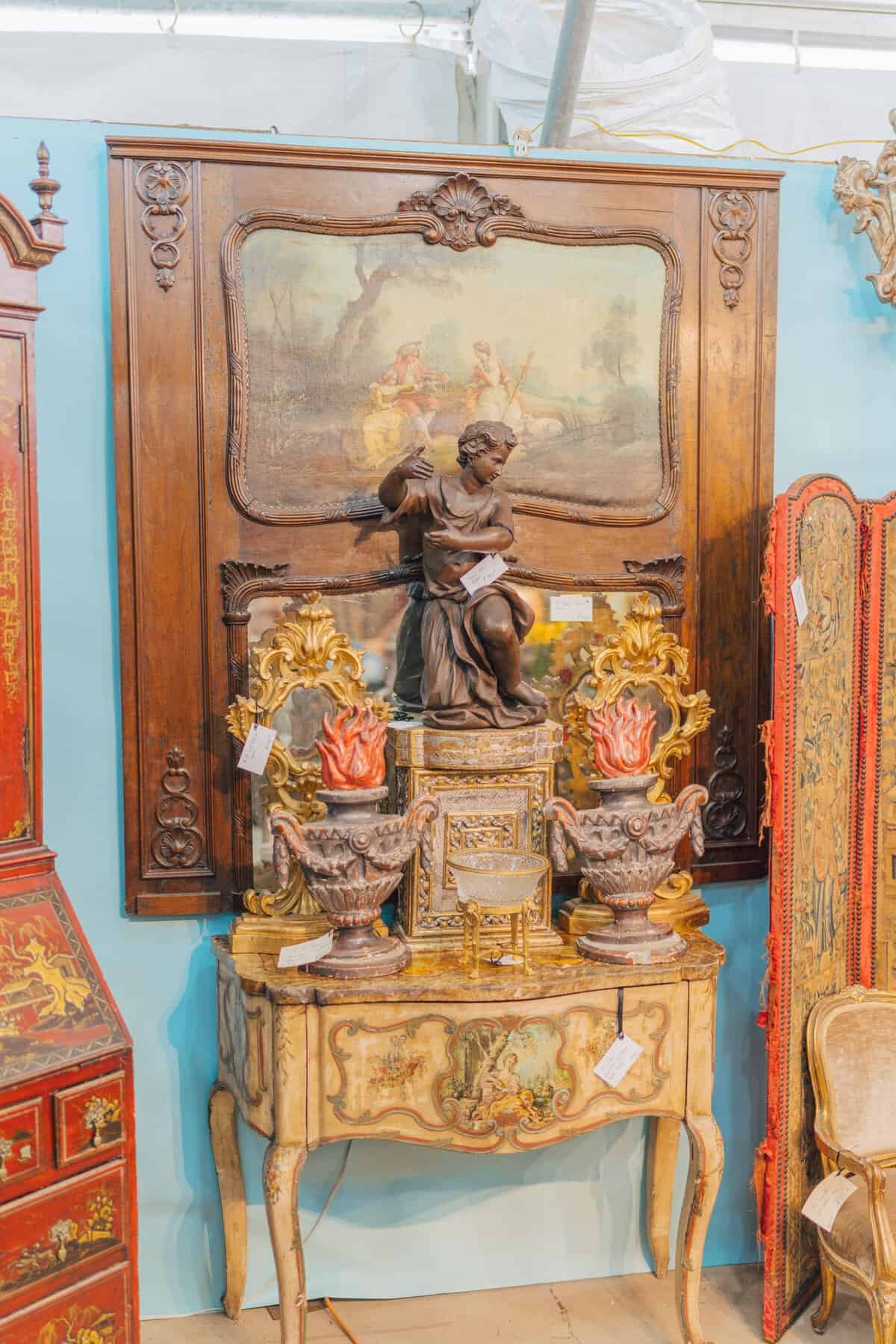
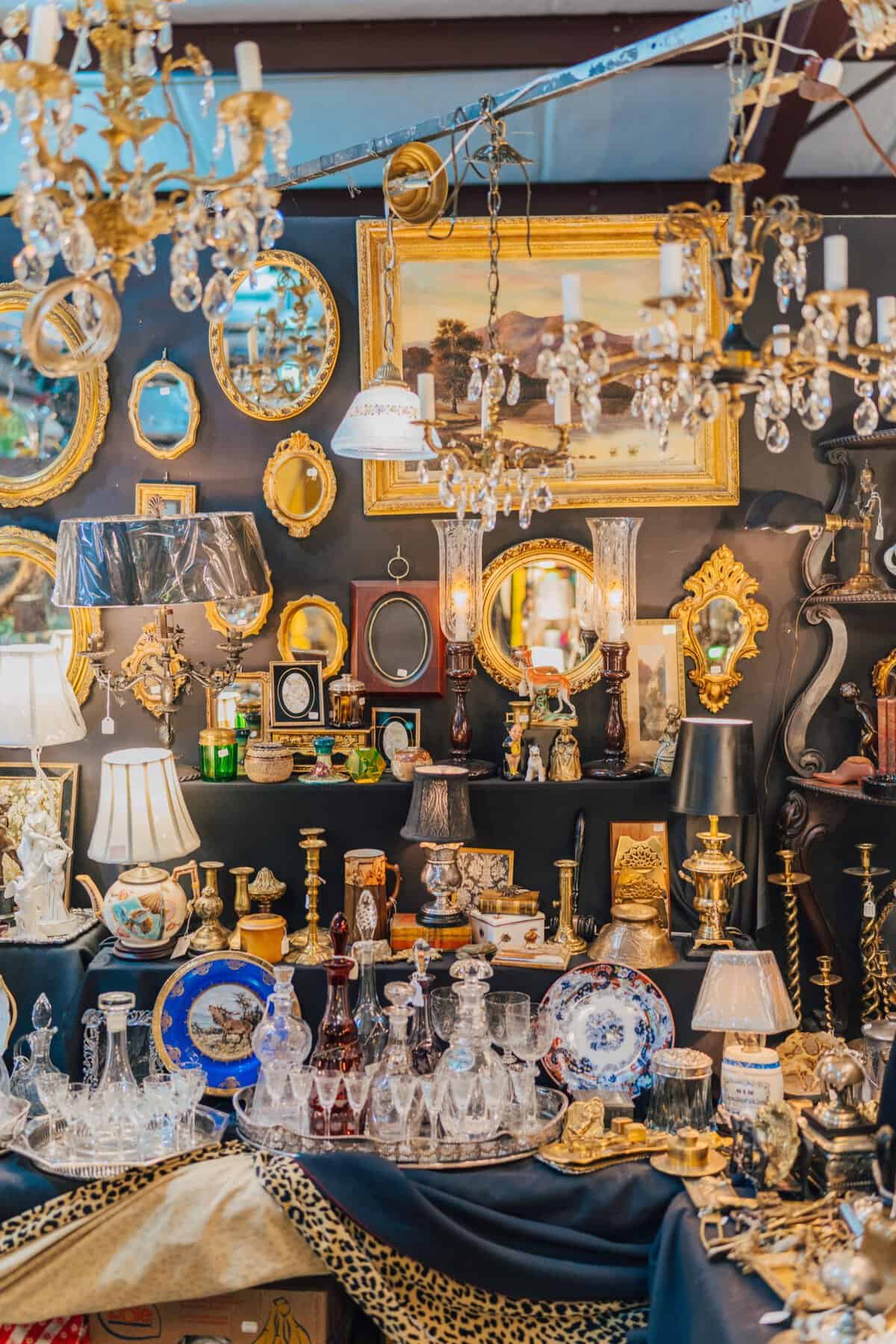
Part of the joy is how the booths are staged. Dealers arrange their spaces like little rooms, so a painted dresser sits under a landscape painting beside a lamp, and suddenly you can picture the whole thing in your own house.
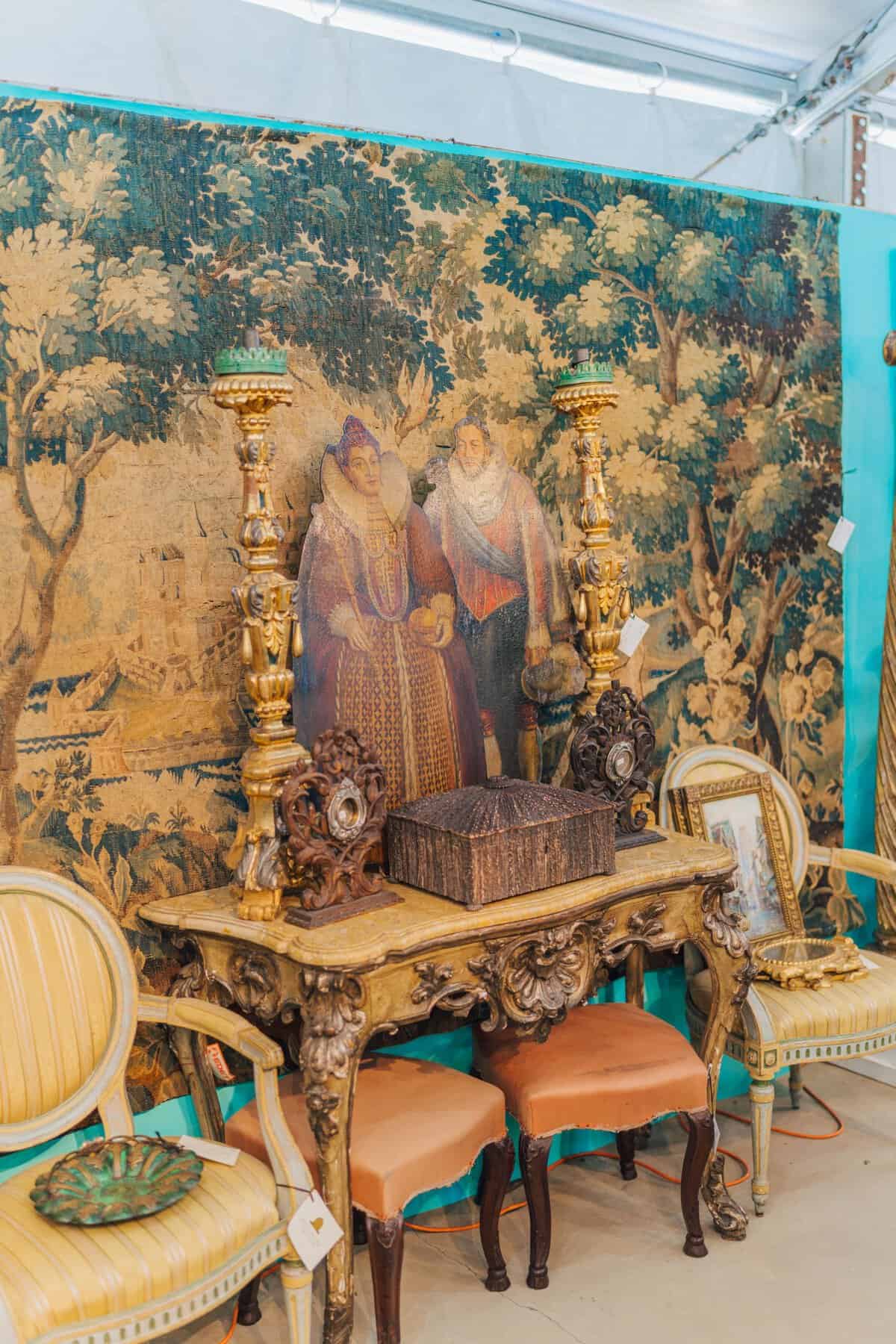
The people behind the tables are half the reason to come. Many have hunted these pieces for decades, and they will happily tell you how to date a chair by its joinery or why one piece of silver is worth ten times another that looks identical.
Farm Tables, Fine Crystal, and One-of-a-Kind Everything
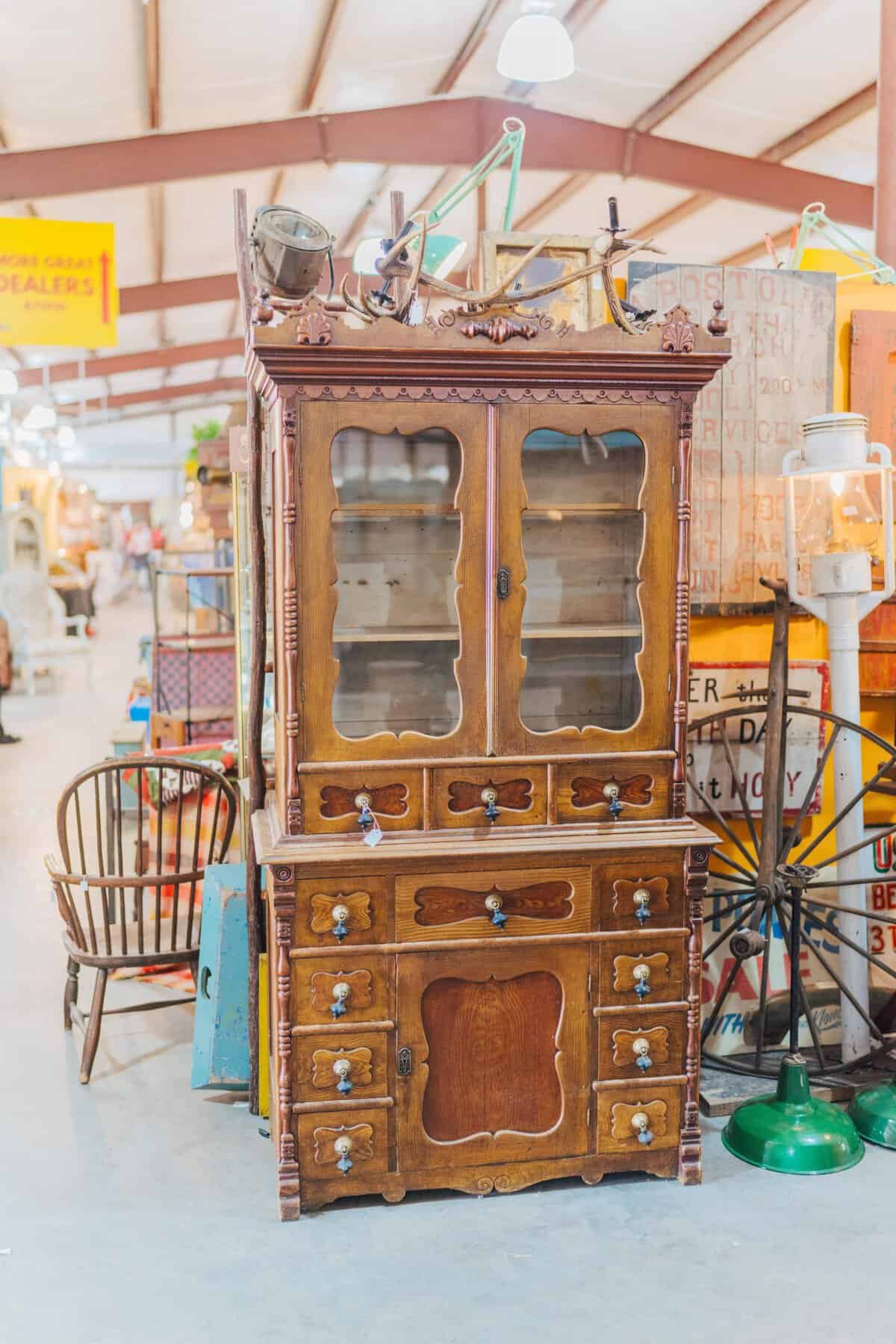
What lands in these booths runs from humble to jaw-dropping. On the country end you get early American pieces: painted cupboards, ironstone, transferware, folk art, and stacks of antique quilts that look like they were pulled from a great-grandmother’s cedar chest.
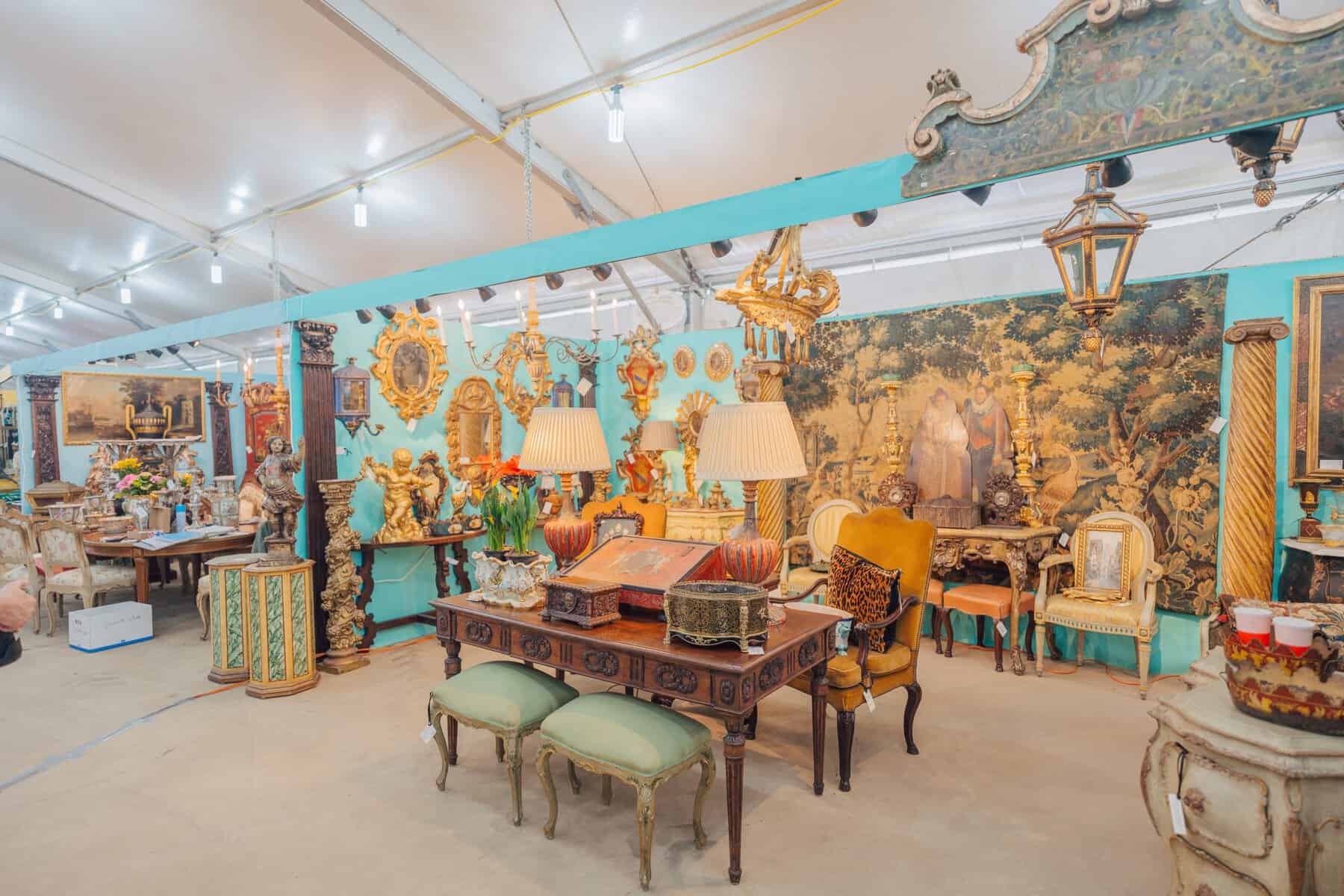
Then it climbs. French and Italian antiques, Continental furniture, Swedish Gustavian chairs, French farm tables long enough to seat a small wedding. Estate jewelry glints under the case lights. Vintage Hermes scarves hang like art.
Glass collectors lose their minds here. Dealers bring American brilliant crystal, the deeply cut glass made between 1876 and 1917, plus sterling silver, blown-glass ornaments, and mirrors that have reflected more than a century of rooms.
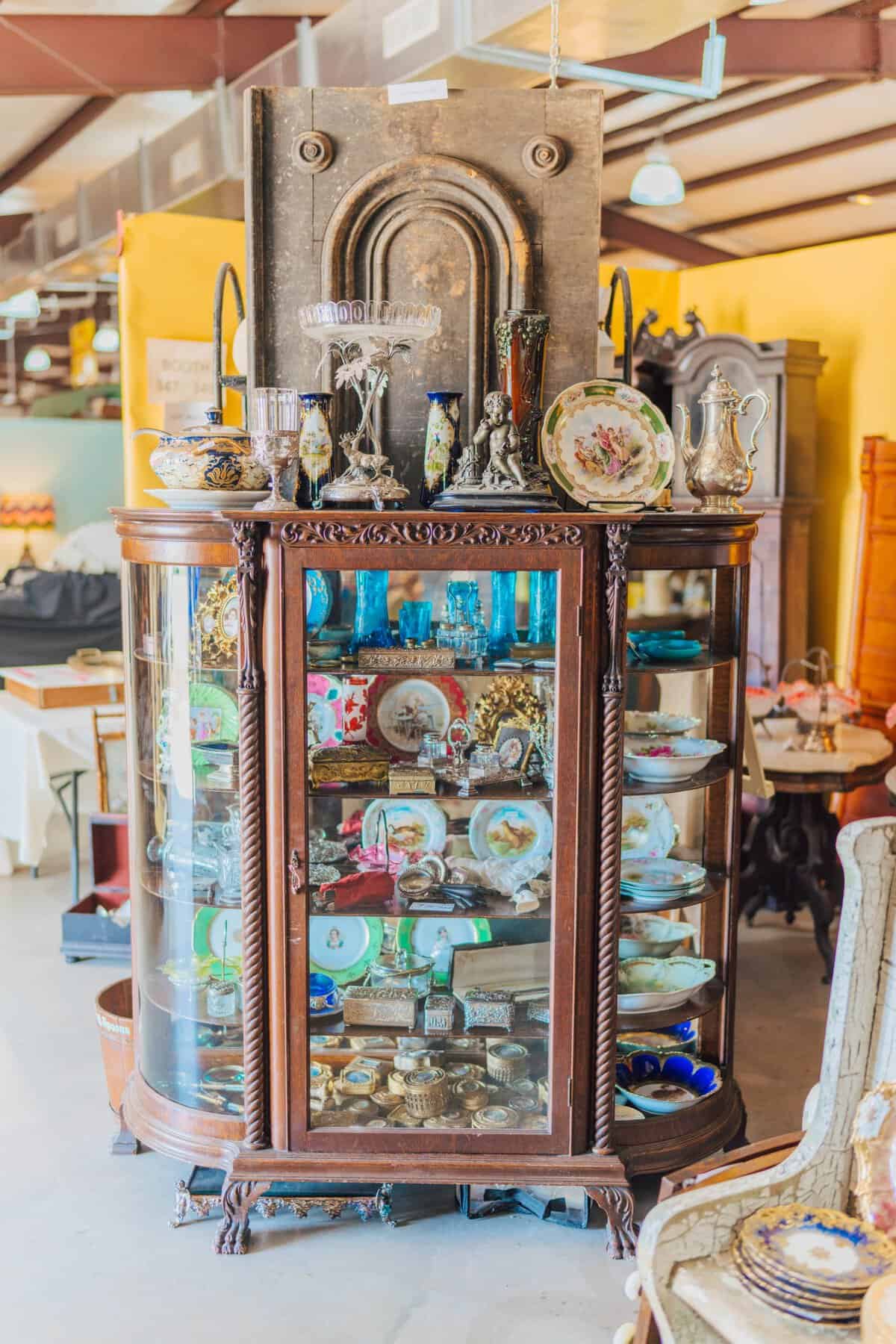
The prices tell you this is the real thing. An 1866 butter churn might run you around $2,000. A Chippendale cabinet can carry a tag near $180,000. Museum-quality Americana sits a few feet from something you could actually carry out under your arm.
Did you know? Many booths keep pieces well under a hundred dollars too, so you do not need a decorator’s budget to leave with something real. The range is the whole point.
You will also spot things you did not expect. Old toy trucks lined up like a tiny fleet, oil paintings in gilded frames, stacks of vintage textiles, and the occasional oddity that makes you stop and ask the dealer for the whole story.
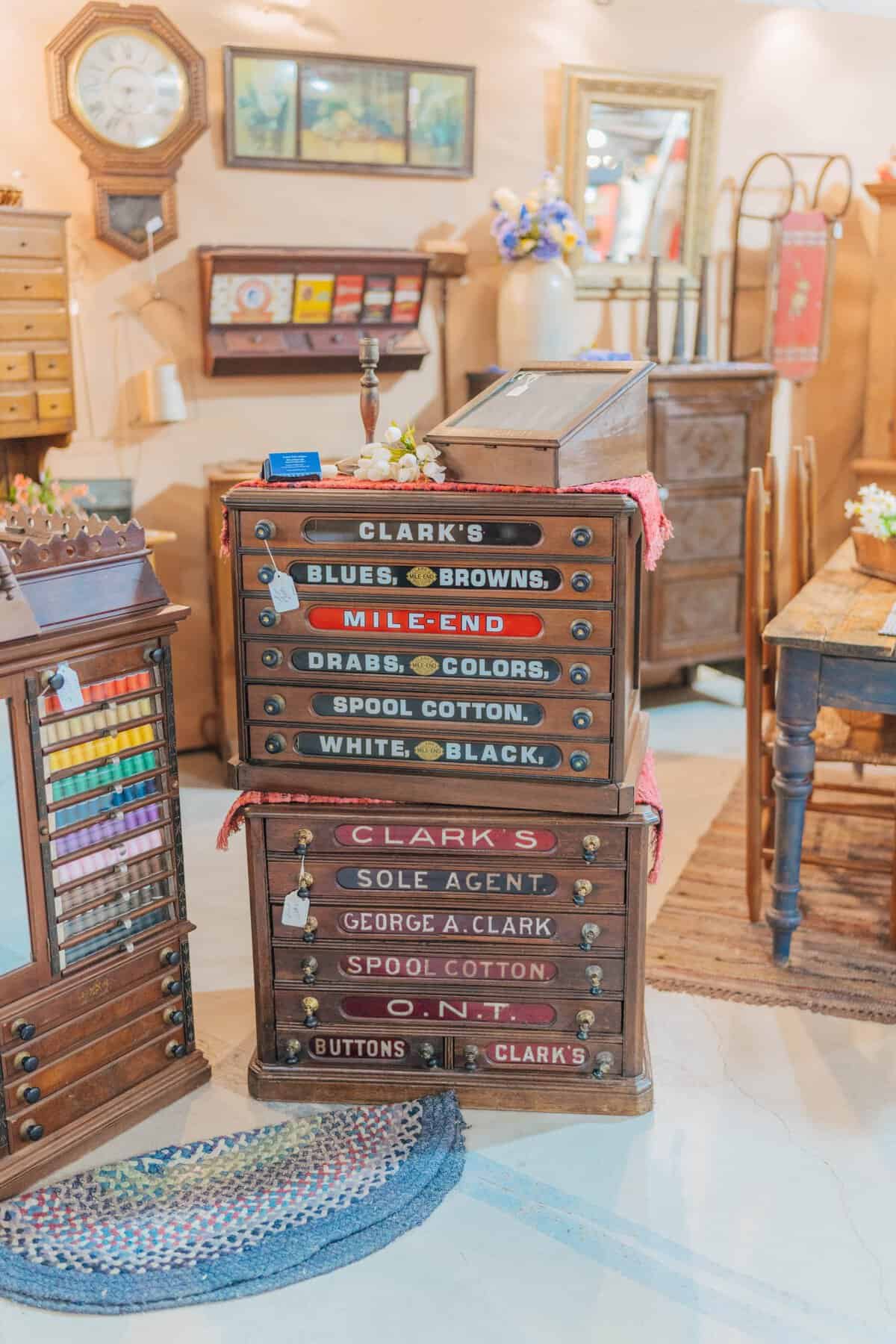
That mix is what keeps designers and decorators coming back season after season. They come to source for clients, but even the pros admit the barn still surprises them, which is a good sign for the rest of us.
Why It Really Does Take Eight Hours
People underestimate this part every time. The Big Red Barn alone can eat a morning, and it is only the beginning of what the current owners have built on the grounds.
The Layne family, the group behind the nearby Blue Hills transformation, took over the fair and added more than 40,000 square feet of shopping, including the newer Continental Barn. So the “one stop” is now several buildings, a tented section, and outdoor rows.
Zoom out further and the scale gets almost comical. The Round Top antiques corridor spans close to 50 separate venues and pulls in well over 100,000 visitors during each show. People fly in for this.
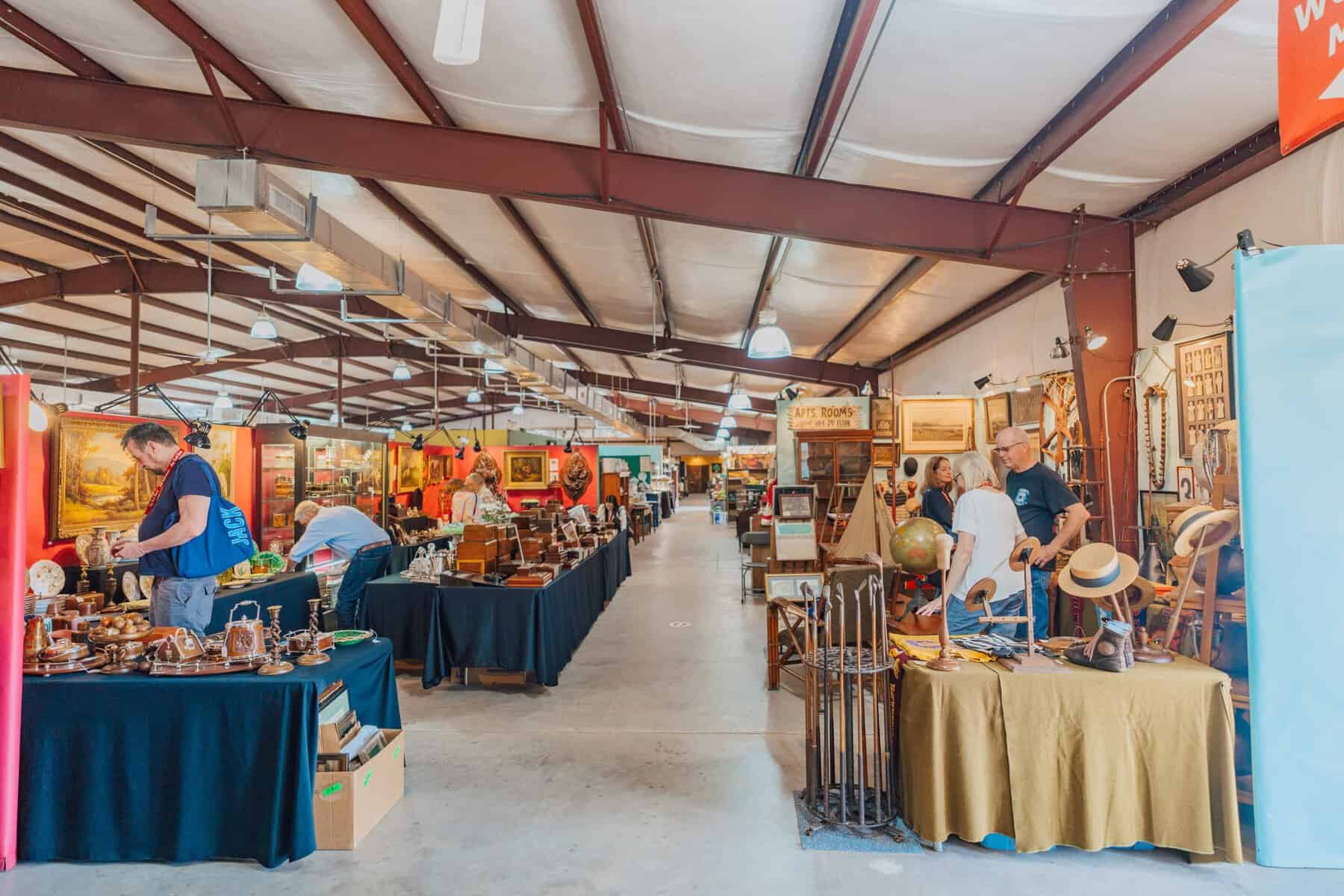
Eight hours is not a stunt. It is the honest amount of time it takes to move through the good stuff, talk to dealers, eat, and still leave feeling like you missed a wing. Pace yourself accordingly.
The corridor around the fair only adds to the temptation. Neighboring venues and shows stretch for miles up and down Highway 237, so the Big Red Barn becomes your anchor and everything else is a bonus if your feet hold out.
That is why regulars treat the fair like base camp. They start at the barn early, when the light is good and the coffee is hot, then decide how far their energy and their trunk space will carry them from there.
A Show That Started in a Rented Hall
None of this happened by accident. In the fall of 1968, a Houston businesswoman named Emma Lee Turney launched a small two-day country antiques show, alongside the late Faith Bybee, in a modest space called Rifle Hall in Round Top.
It was a handful of dealers and a big idea: that this quiet patch of Fayette County farmland could become a serious destination for serious antiques. Turney understood that people would drive a long way for quality mixed with a little social occasion.
She was right in a way few founders ever are. In 1995, she bought land near the junction of Spur 458 and Highway 237, about five miles north of the Round Top square, and built the Big Red Barn to give her growing show a permanent home.
Turney’s little show grew into what is now widely called the largest antiques fair in the United States. Ownership has changed hands over the years, but the standard she set, real antiques and vetted dealers, still runs the place.
Her instinct also reshaped the whole area. Once collectors learned that this corner of Texas meant quality, other shows and venues sprouted up around hers, until the single weekend became the sprawling, multi-venue season it is today.
It is a rare thing, a small-town idea that quietly turned into a national event without losing what made it special. The barn still feels personal, even with a hundred thousand people passing through the corridor each show.
Food Trucks, Live Music, and That Opening-Day Buzz
Antiquing this hard requires fuel, and the grounds deliver. Outside the barn you will find food trucks slinging Texas staples, coffee service for the early crowd, a full bar for later, and live music drifting over the whole scene.
It turns a shopping trip into something closer to a festival. You buy a cabinet, grab a taco, sit in the sun for a song, then go back in for round two. Nobody is rushing you out.
The energy on opening day is its own attraction. Dedicated shoppers line up as early as 7 a.m., an hour before the doors part at 9, coffee in hand, strategy already set. One longtime attendee described “a crackle and pop in the air that I’ve not experienced elsewhere.”
What surprises first-timers most is how friendly it all is. For a show this high-end, there is no snobbery. Reviewers keep saying the same thing, that the dealers are knowledgeable, kind, and never pushy, happy to explain a piece whether you buy it or not.
That welcome is a big part of why people return year after year. You leave knowing more than you came with, whether or not anything came home in the back seat, and that is a rare thing at any market.
Pro Tips Before You Go
A few things make the day smoother. Admission to the Big Red Barn runs about $10 per person, and parking is free, which for an event this size is a genuine kindness.
Wear your most forgiving shoes. You are going to log serious steps across concrete, gravel, and grass, and the people who dress cute over comfortable always regret it by noon.
Pro tip: do not talk yourself out of a big piece just because it will not fit in the car. The show has on-site porters and shippers who can crate that farm table and send it home for you, which quietly removes the main excuse people use to leave empty-handed.
Come with a rough idea of what you love, a tape measure in your bag, and a slightly higher budget than you planned, because the whole magic of this place is finding the thing you never knew you were looking for.
It helps to bring cash for the smaller booths, though most dealers happily take cards for the bigger buys. A tote bag or a rolling cart saves your arms once the little treasures start adding up.
How to Get There
The show sits between Austin and Houston, an easy day trip from either, though the pretty back roads of the Hill Country make the drive part of the fun.
Where: Original Round Top Antiques Fair, Big Red Barn Event Center, 475 State Highway 237 S, Carmine, TX 78932.
Check the current show dates before you commit, since the fair runs in spring, fall, and a shorter winter round rather than year round. Plan around opening weekend if you want first pick, or a weekday if you want elbow room.
Start Planning Your Texas Treasure Hunt
There is something wonderfully Texan about a place that decided a barn full of antiques should be the size of a small town and then made it so. It rewards the curious, the patient, and anyone who believes old things deserve a second life.
So clear your calendar, charge your phone for all the photos you will take, and give yourself the full eight hours. Bring the tape measure, bring an open mind, and try not to fall in love with anything you truly cannot fit through your front door.
Featured image: @ Original Round Top Antiques Fair

Stella Raines
Editor-in-Chief
Stella brings over a decade of storytelling experience to TX Headlines. With roots in West Texas and a love for road trips, she leads the editorial team with an eye for the hidden stories that make Texas unforgettable.
More Stories




Tags