This Peaceful Texas Town Comes Alive Every Spring in a Sea of Bluebonnets
Let me tell you about my favorite kind of Texas weekend. No crowds, no lines, no hundred-foot roadside statue demanding a photo. Just a small town, a slow lunch, and a whole lot of wildflowers.
That is exactly what you get in Chappell Hill, a quiet dot on the map in Washington County, about halfway between Houston and Austin. For most of the year it keeps to itself.
Then spring arrives, the back roads turn a sea of blue, and this sleepy place becomes one of the prettiest towns in the state.
Here is why the little town is worth building a spring weekend around, from the flower-lined country roads to a Main Street that has barely changed since the 1800s.
When the Whole County Turns Blue
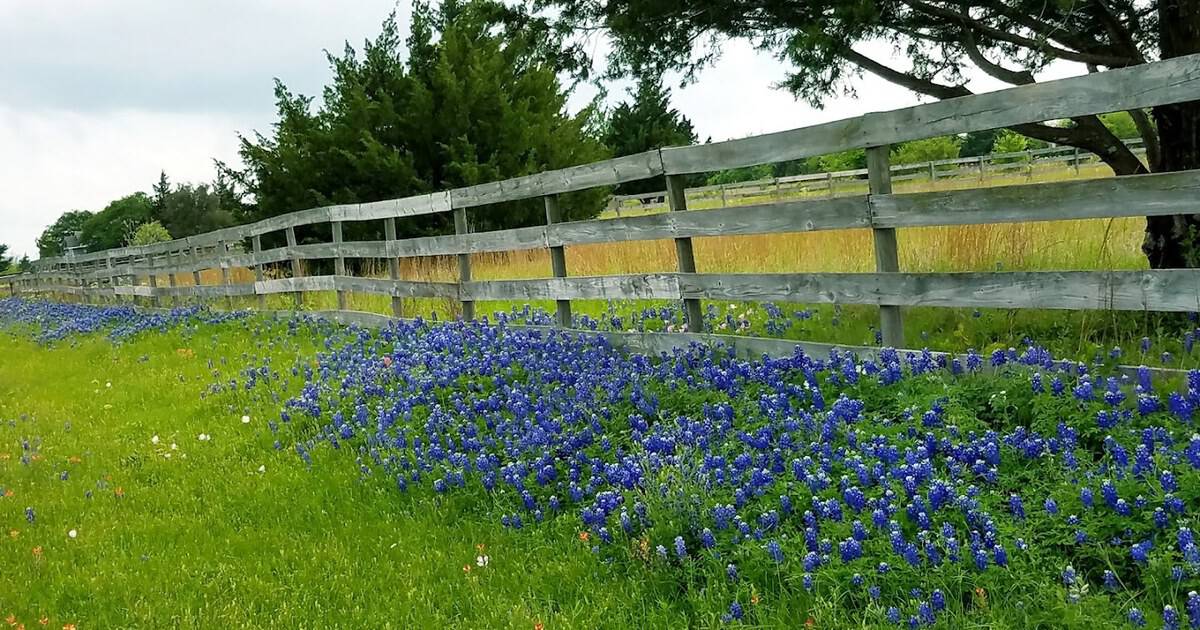
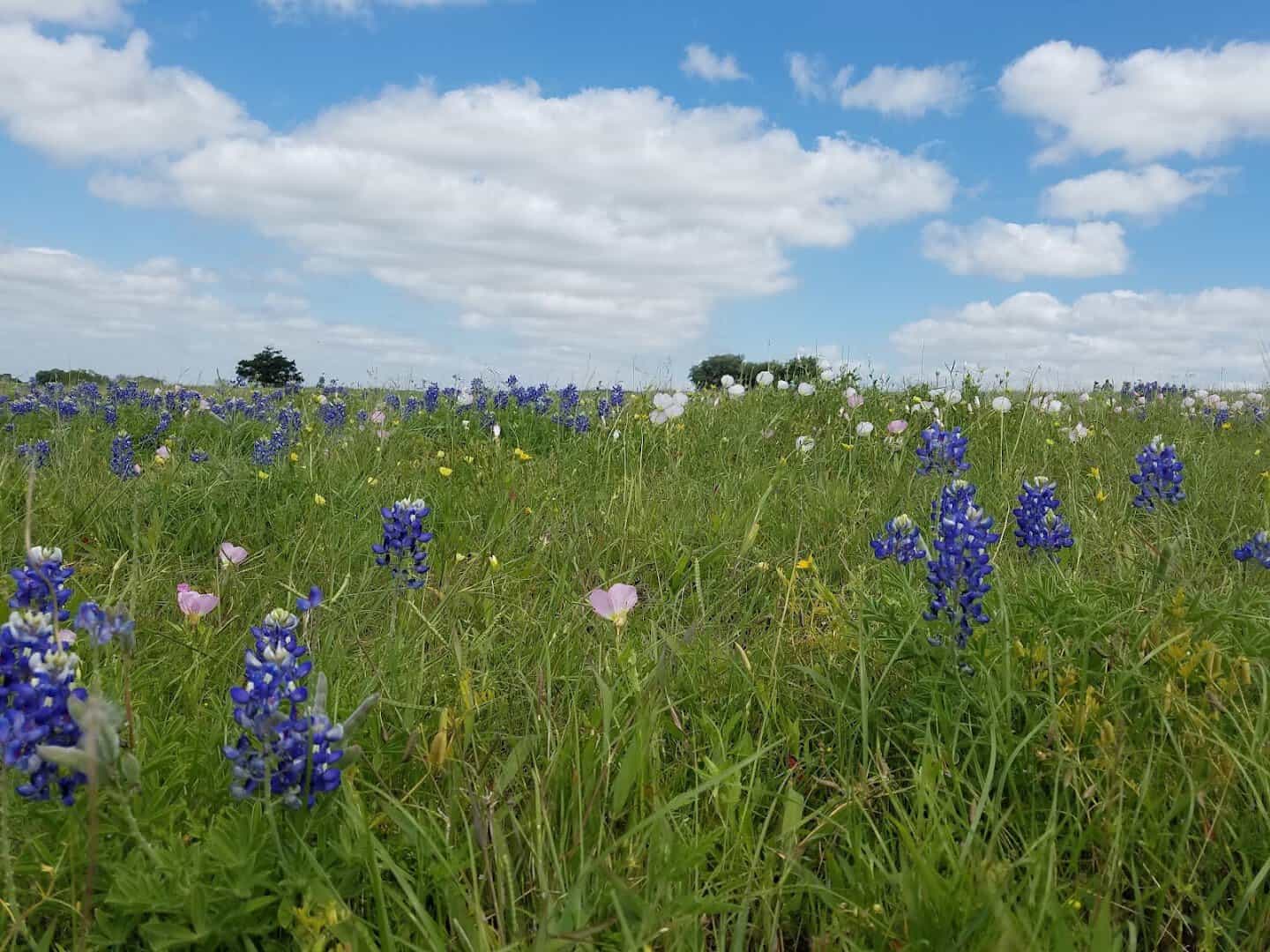
Washington County is bluebonnet country, and Chappell Hill sits right in the thick of it. From mid-March into April, the pastures fill with bluebonnets, Indian paintbrush, and buttercups until the roadsides look painted.
You do not have to hunt for them. Point the car down FM 1155 or FM 1371 and the fields come to you, curving under old oak canopies and past weathered barns framed in flowers.
FM 2447 and the stretches of US 290 around town are reliable too. Half the fun is just driving with the windows down and no particular place to be.
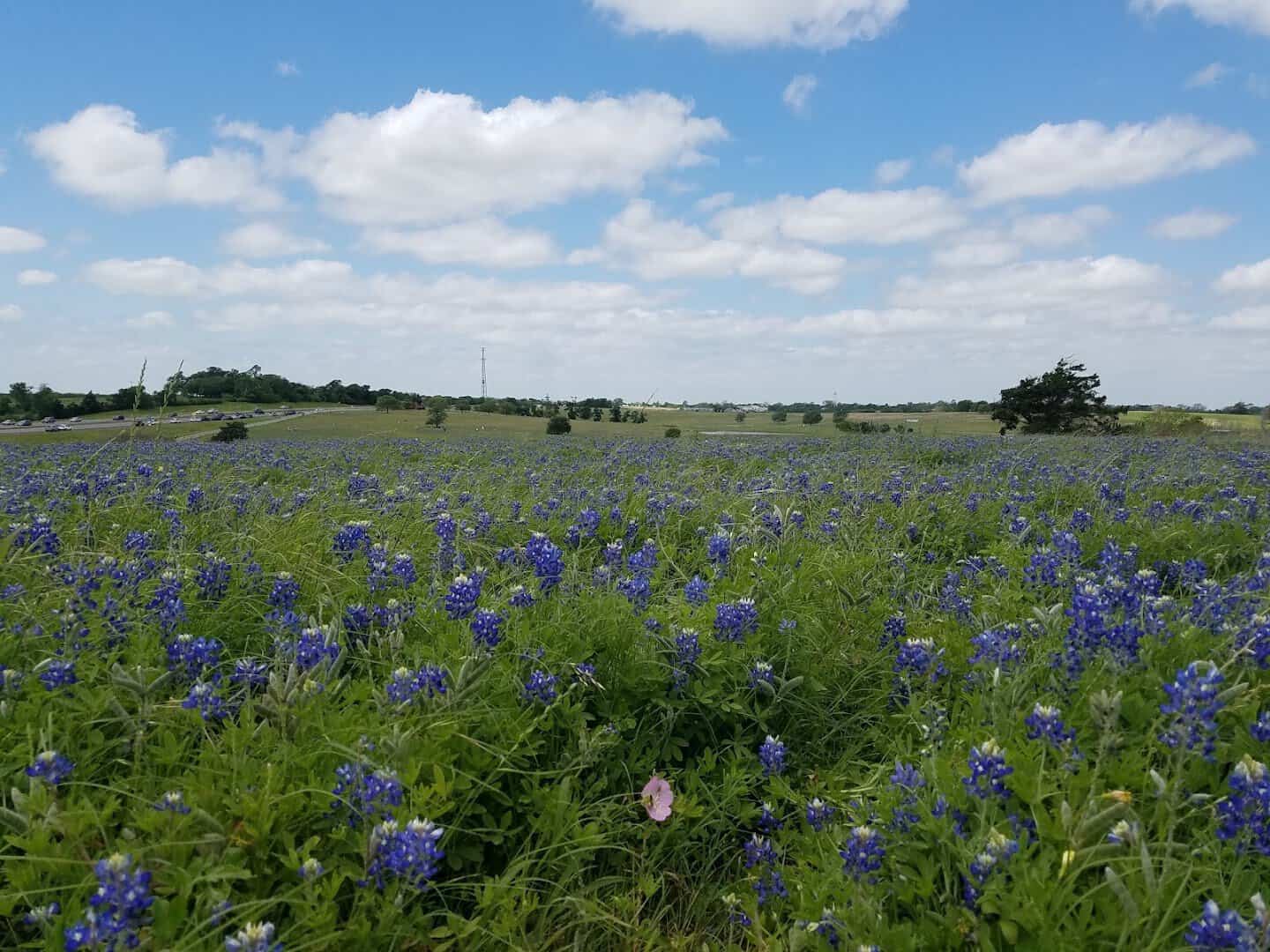
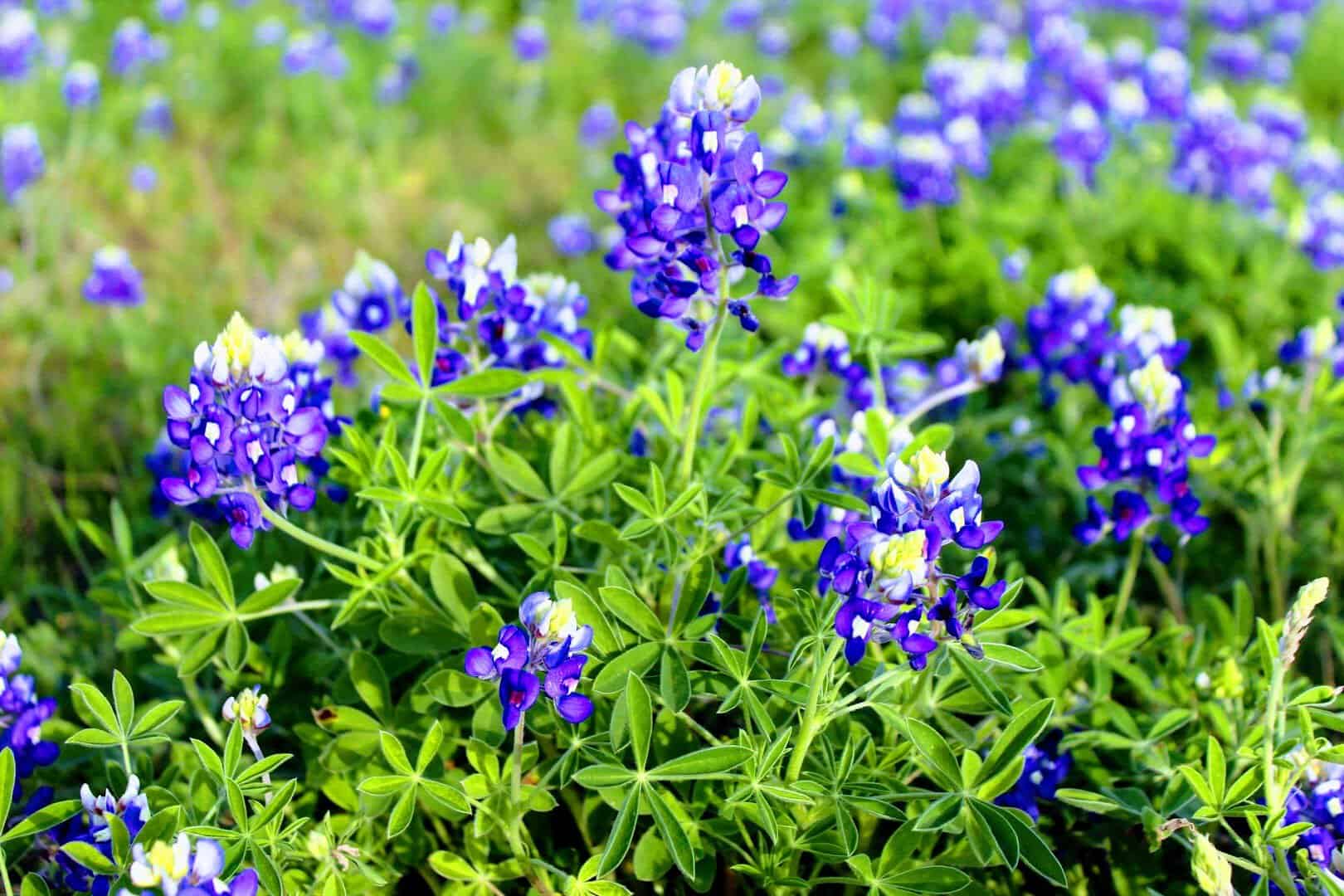
The bluebonnet has been the state flower of Texas since 1901, and Washington County grows some of the thickest spreads anywhere in it. Locals will happily argue that this stretch of country does bluebonnets better than the Hill Country does, and in a good year they have a strong case.
The most photographed spot of all is the Bluebonnet House, a lone weathered farmhouse that sits in a field which floods blue every spring. It has been the backdrop for more family photos and engagement shoots than anyone could count.
Pro tip: come on a weekday morning if you can. The light is soft, the crowds are thin, and you will have the flowers mostly to yourself.
One thing worth saying out loud, because Texas raised us all on it. Pull off the road safely, watch for snakes and fire ants, and do not trample a field to get the shot.
The flowers you leave standing are the ones the next family gets to enjoy. And no, it is not actually illegal to pick a bluebonnet, but a good Texan leaves them where they grow anyway.
A Main Street Frozen in the 1800s
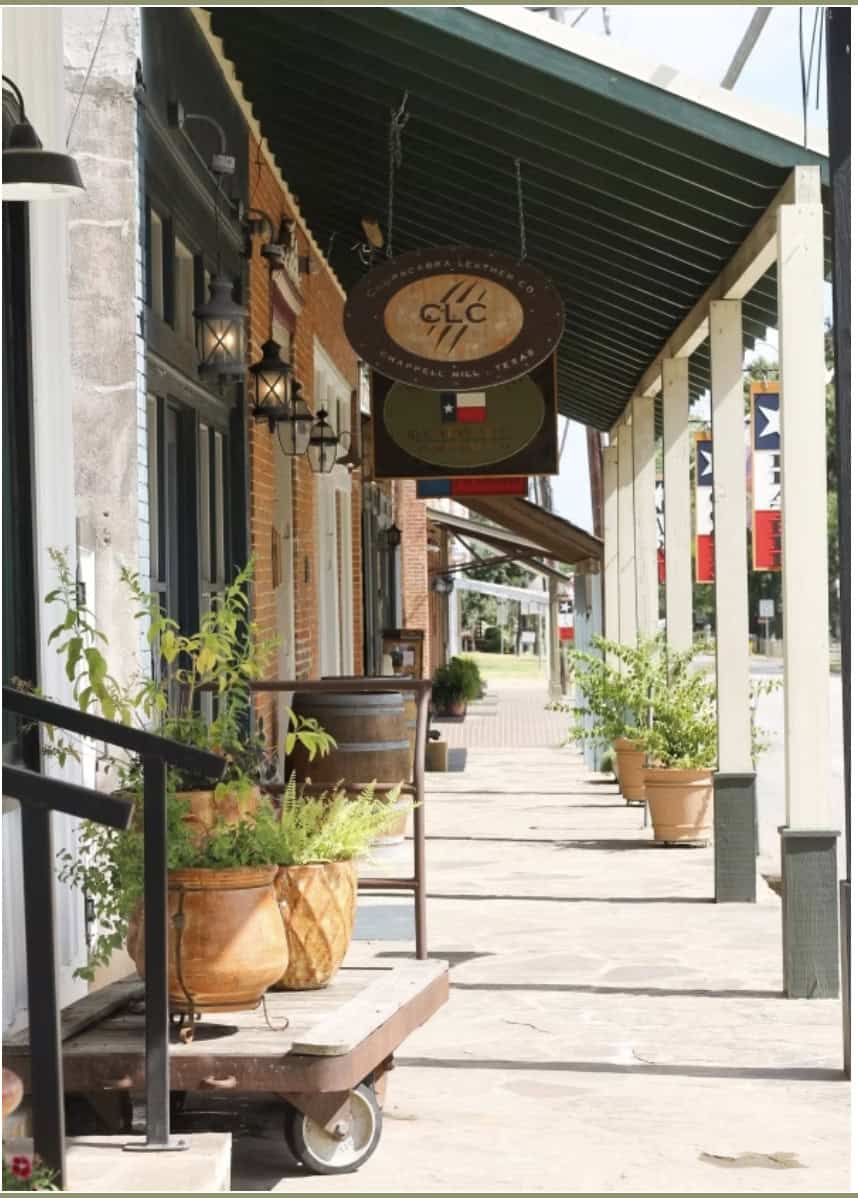
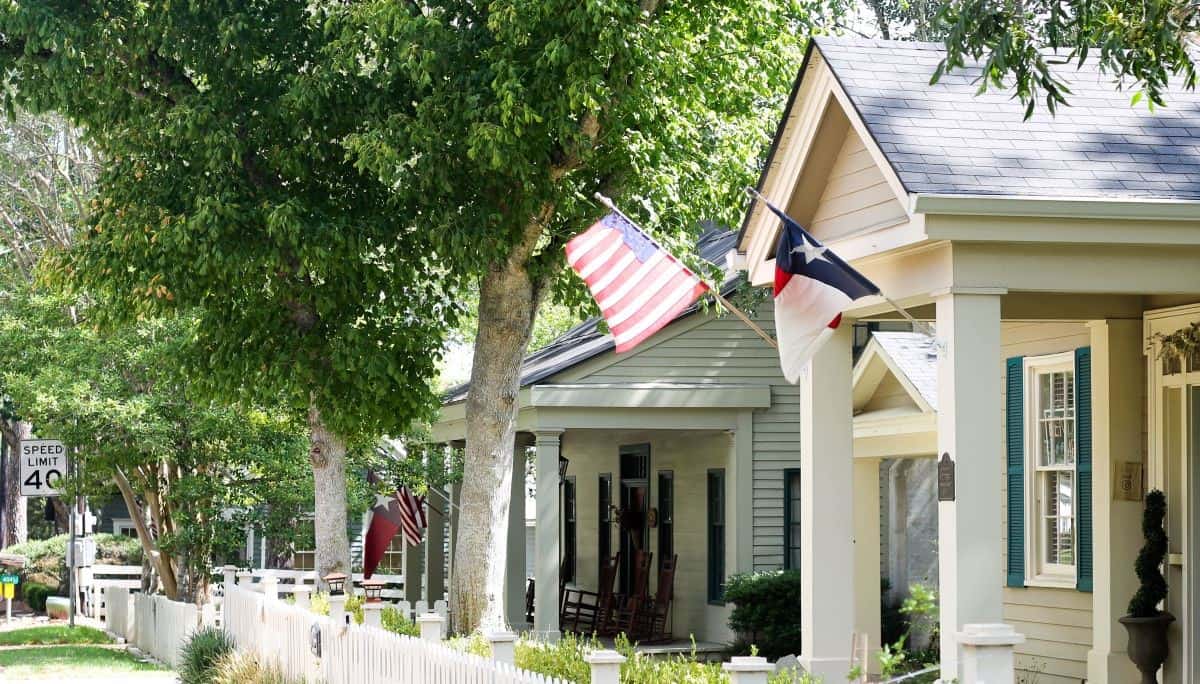
Chappell Hill’s Main Street is a National Register Historic District, and walking it feels like stepping back a century and a half. The buildings are the real thing, restored rather than rebuilt, and most of them have a story.
My favorite is the Chappell Hill Bank at 5060 Main Street. It dates to about 1897 and still uses its original teller stations and vault.
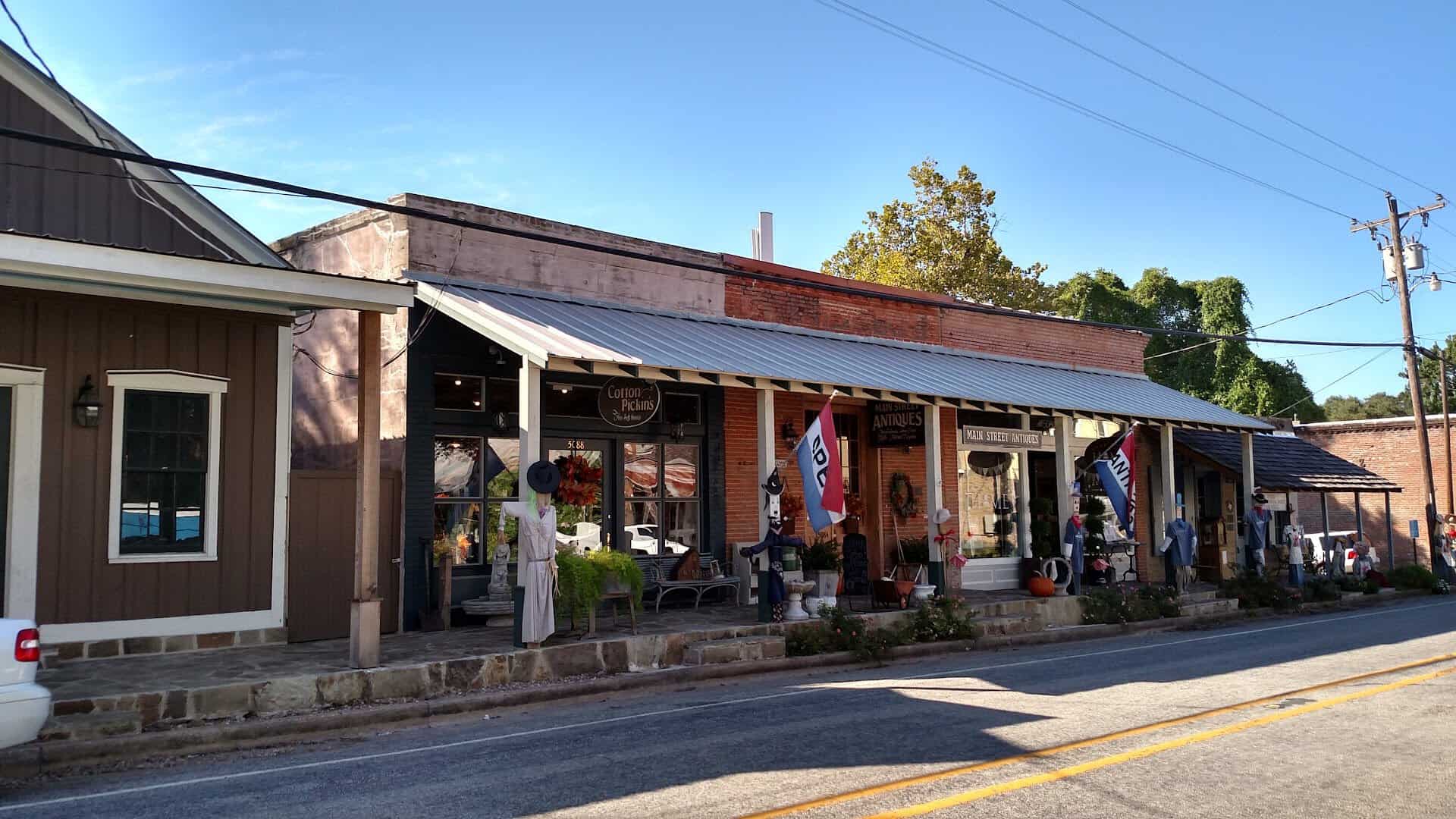
It is the oldest bank in Texas still operating at its original location, and it is said to be the oldest continuously operating bank in the country still standing in its first building. Not bad for a town this size.
A few doors down sits the Rock Store, built in 1869 from locally quarried sandstone and hand-hewn timber, back when it served the community as a general store.
Providence Baptist Church has stood since 1873, and the little Circulating Library still holds part of its original book collection from the 1850s. These are not replicas. They are the actual buildings, still doing their jobs.
For the full picture, stop at the Chappell Hill Historical Society Museum. The building went up in 1927 on the site of the old Chappell Hill Female College and served as the public school until 1965.
Inside you will find local exhibits and the Swearingen folk art collection, plus the kind of volunteers who actually want to tell you the story behind everything on the wall.
Did you know? The whole district earned its spot on the National Register of Historic Places on May 15, 1985, which is part of why so little of it has been paved over or torn down.
The Churches That Built the Town
Look closely and you notice how many of the town’s oldest landmarks are churches. That is no accident. Faith and immigration shaped Chappell Hill as much as cotton did.
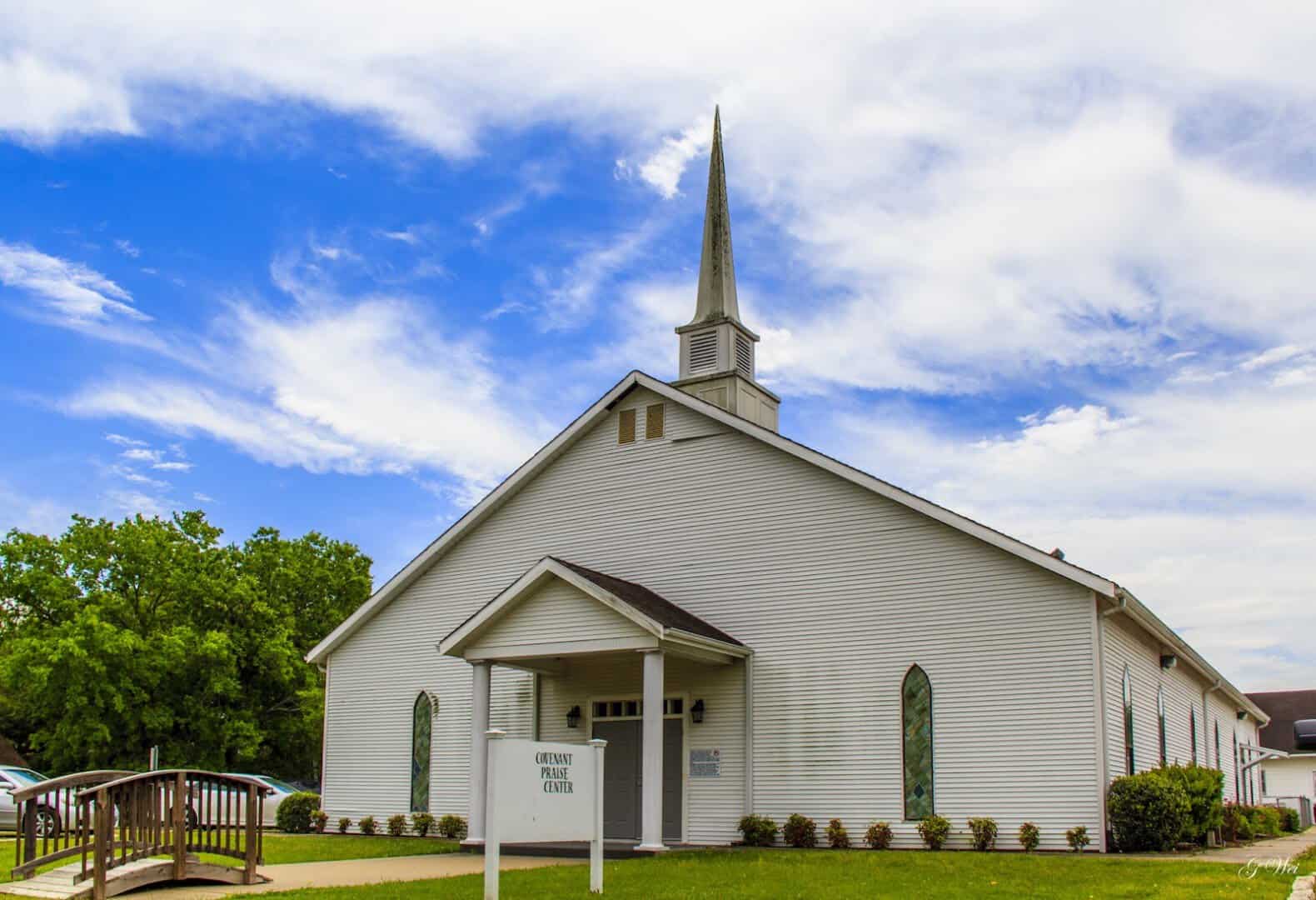
Missionary Robert Alexander organized the Methodist congregation here in 1847, the very year the town was founded. It was one of the first orders of business, before the streets even had names.
Later German immigrants brought their own traditions, and the German heritage still runs deep in this corner of Washington County. St. Paul Lutheran Church, built in the 19th century, served those immigrant families and remains a link to the settlers who helped build these hills.
You can hear that history in the local last names and taste it in the smoked sausage that made the town famous. German settlers across Washington County turned pork and beef into an art form, and Chappell Hill kept the tradition alive long after the cotton money left.
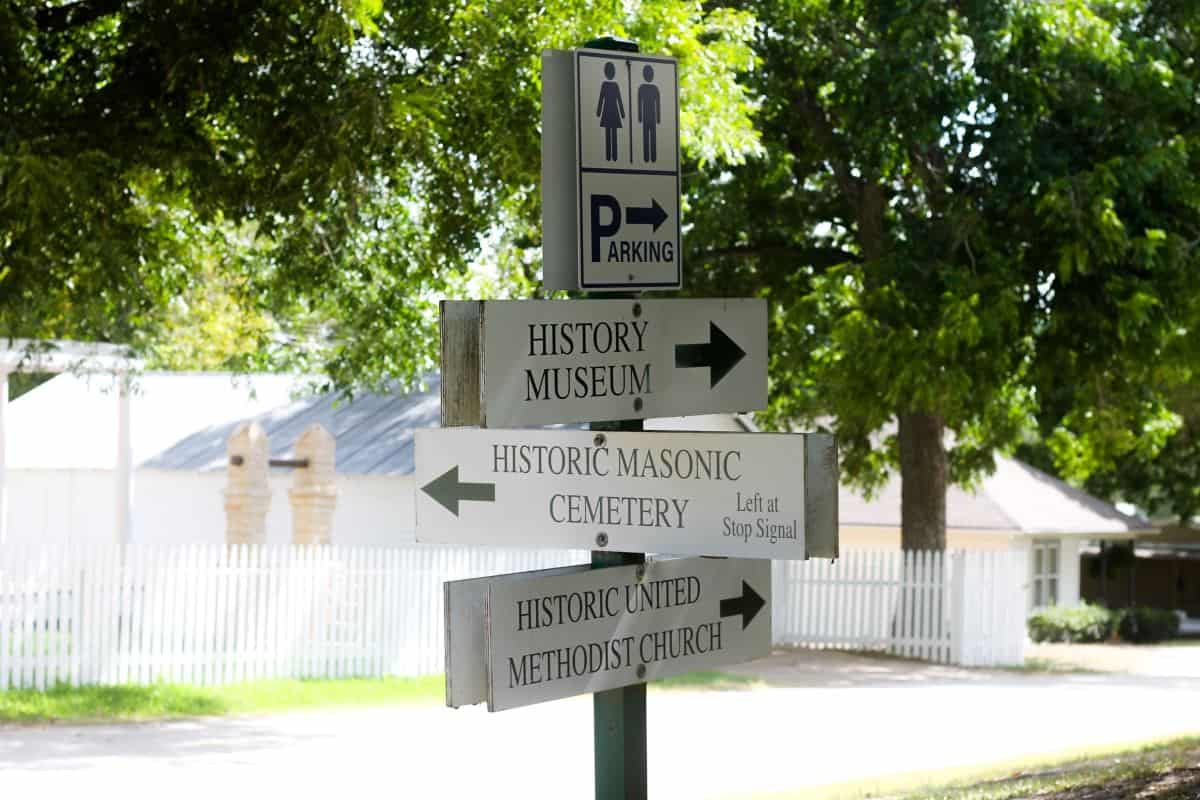
Wander the historic cemeteries and you will read that history in stone, with graves dating back to the earliest Anglo settlers and the Civil War era. It is a quiet, unhurried kind of sightseeing that suits the town.
The Festival That Runs the Show
If bluebonnet season has an official headquarters, this is it. Every April, Chappell Hill hosts the Official State of Texas Bluebonnet Festival, and in 2026 it hits its 62nd year.
The dates are April 11 and 12, 2026, Saturday from 9 a.m. to 6 p.m. and Sunday from 10 a.m. to 5 p.m., all through the historic downtown. The Chappell Hill Historical Society runs it, and the proceeds help keep the town’s history standing.
Expect more than 250 juried exhibitors selling home decor, art, jewelry, garden pieces, and crafts, plus food stalls, live music, and a festival buzz that fills the little downtown from end to end.
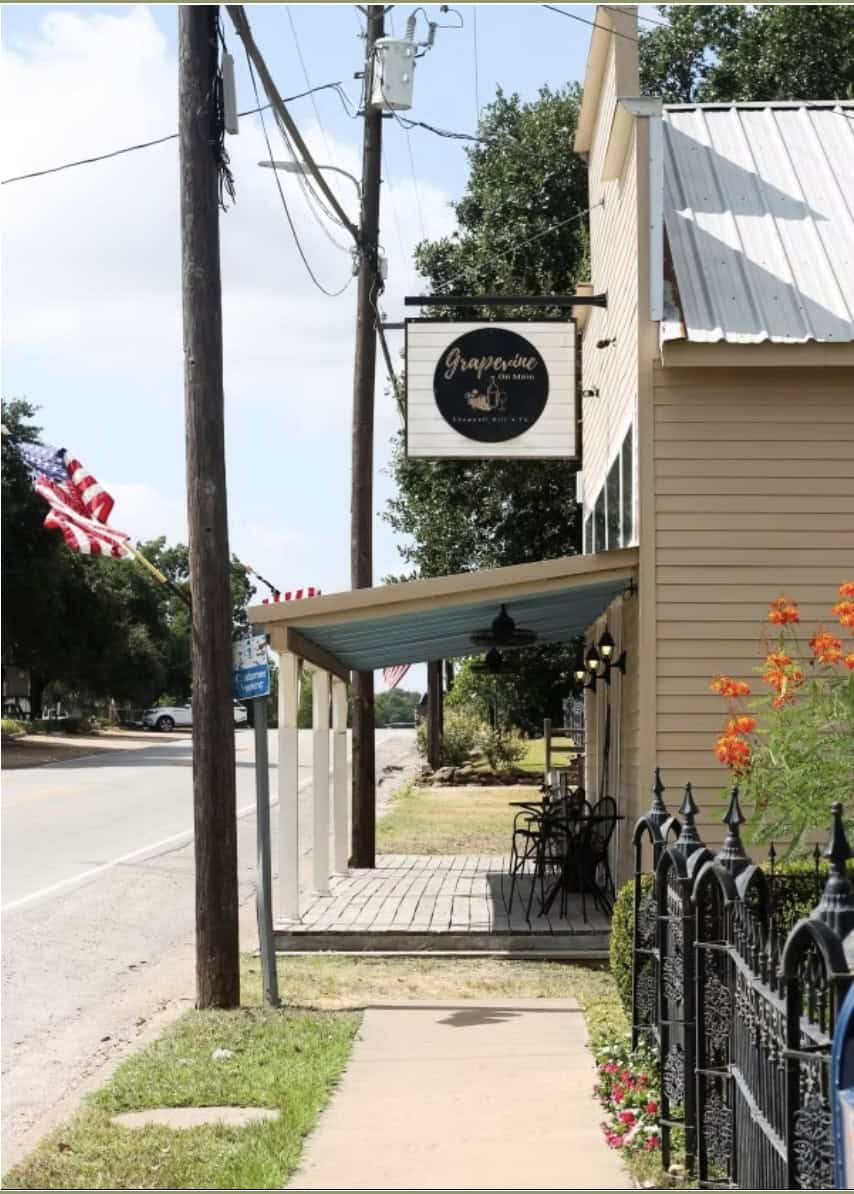
Admission is free. Parking runs about $10 per vehicle, which goes back into preservation, so it is money well spent.
It is the kind of small-town event where you come for the flowers and leave with a trunk full of things you did not know you needed. I have a weakness for a good juried craft fair, and 250 booths is a serious afternoon.
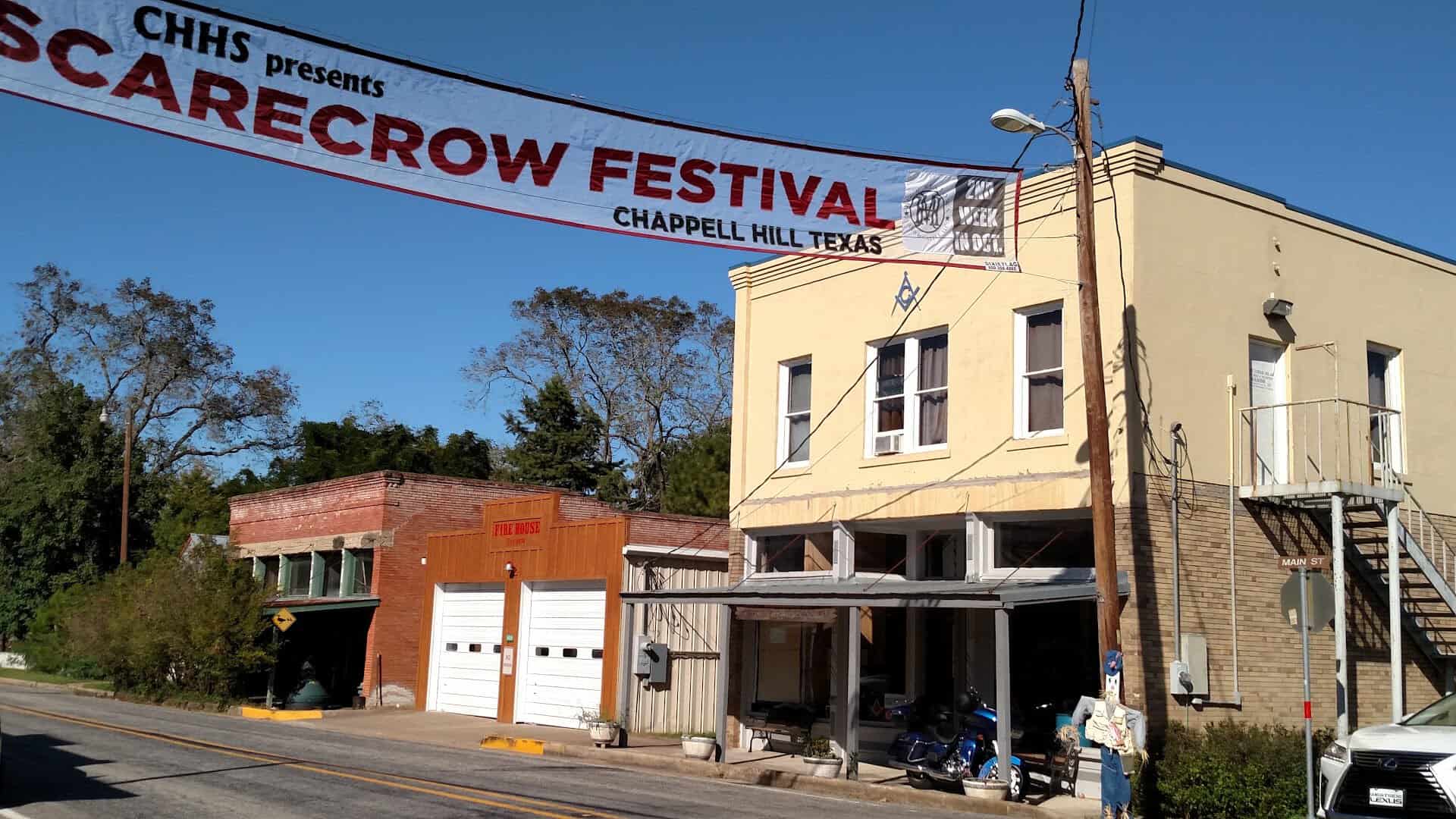
If you miss the spring window, the town throws a Scarecrow Festival in the fall too, so there is a second excuse to make the drive when the weather cools off.
Where the Locals Eat
A town this small punches well above its weight at the table. You will not go hungry, and you will not eat anything that came off a corporate menu.
Start with the Chappell Hill Sausage Company out on Sausage Lane, a smokehouse that has been making its own ring sausage for decades. The pork and beef rings are the signature.
The little restaurant serves sausage on a bun, brisket sandwiches, loaded fries, and fried okra to a steady crowd of regulars who clearly did not come for the salad.
For a sit-down meal, Bevers Kitchen and Gifts on Main Street is the one locals send you to. It is known for chicken-fried steak and a case full of homemade pies.
The gift shop half gives you something to browse while you wait for a table, and regulars will tell you to save room for the pie whether you think you have room or not.
If you are rolling through early or grabbing something for the road, the Chappell Hill Bakery and Deli on US 290 has its own butcher shop, barbecue, and a pastry case worth slowing down for.
Between the three, breakfast, lunch, and a sweet for later are all covered. My rule in a town like this is simple. Order the thing they are known for, not the thing you always order.
A Brief History of the Town That Almost Wasn’t
Chappell Hill owes its start to a woman with a plan. In 1847, Mary Hargrove Haller bought 100 acres for a townsite and named the place for her grandfather, Robert Wooding Chappell.
She opened a post office that same year and began selling town lots in 1849. That makes Chappell Hill one of the rare Texas towns you can trace to a single founder with a clear vision.
The location was no accident. The town sits near the center of Stephen F. Austin’s original colony, on the rich farmland of the Brazos River valley, and cotton money poured in fast.
By the 1850s Chappell Hill was a busy trading center with sawmills and a Masonic Lodge. The town was ambitious about learning, too, and built two schools of higher learning within a few years.
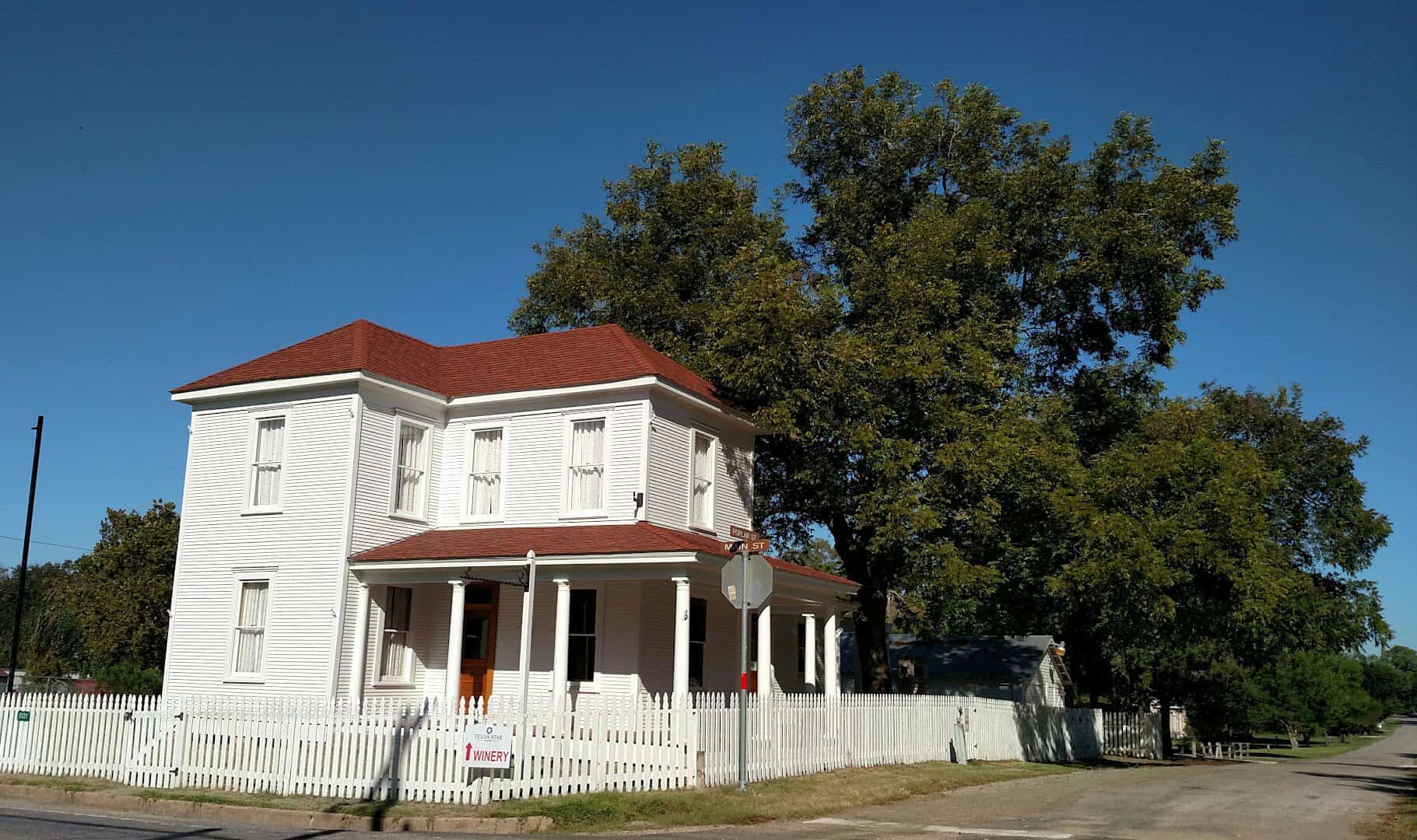
Those were the Chappell Hill Male and Female Institute in 1852 and Soule University in 1856. For a stretch, this little place had real momentum and a real shot at becoming a city.
Then a yellow fever epidemic swept through in 1867 and the growth stalled. The railroad routed the bigger business toward Brenham instead.
That quiet is exactly why the town still looks the way it does. It stopped growing before anyone could modernize away its 1800s bones, and today that is the whole draw.
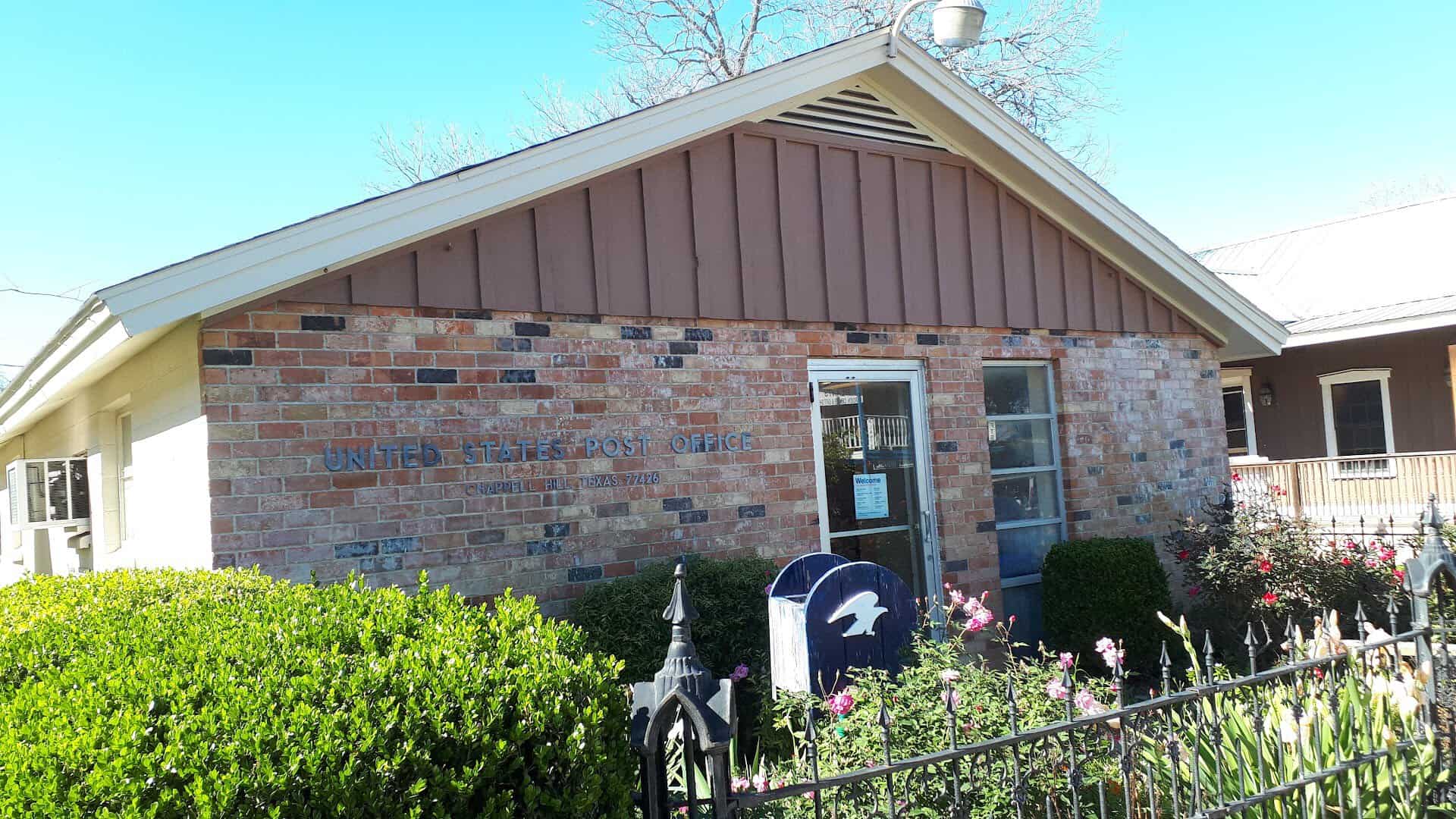
There is a bigger stage nearby, too. Washington County is called the Birthplace of Texas, because the Texas Declaration of Independence was signed just up the road at Washington-on-the-Brazos on March 2, 1836.
How to Get There
Chappell Hill sits right off US 290 in Washington County, an easy drive from Houston, Austin, or College Station. Spring weekends are the busy season, so an early start beats the afternoon traffic to the flowers.
If you want to slow the trip down, the town and the surrounding countryside are dotted with bed-and-breakfast inns, which turn a day trip into a proper weekend of porch sitting and back-road wandering.
Where: Historic Main Street, Chappell Hill, TX 77426. The Chappell Hill Historical Society Museum is at 9220 Poplar Street, the Bluebonnet House field is on FM 1155, and the Bluebonnet Festival takes over the downtown district each April.
Point the Car West This Spring
Chappell Hill is not trying to be a theme park, and that is the whole appeal. It is a town that got quiet at the right moment and never lost its face, wrapped every spring in the best wildflowers the state grows.
So pick a weekend in April, gas up the car, and go slow. Chase the bluebonnets down the back roads, wander a Main Street older than most Texas cities, and order the sausage and the pie.
Whether you live here or you are just passing through, this is the Texas that makes people fall in love with the place. Go see it while the flowers are up.
Featured image: Karen Runnels via Chappell Hill

Stella Raines
Editor-in-Chief
Stella brings over a decade of storytelling experience to TX Headlines. With roots in West Texas and a love for road trips, she leads the editorial team with an eye for the hidden stories that make Texas unforgettable.
More Stories

This Tiny-Town Texas Bakery Has Kept Old-World Baking Traditions Alive for Over 80 Years
This Tiny Texas Town Is Quietly Becoming the Hill Country’s Best Weekend Escape for Grown-Ups
This Pink-Granite Texas Courthouse Is So Beautiful People Drive In Just to See It
This Affordable Texas Town Lets a Modest Budget Cover Rent, Groceries, and Utilities
Tags