This Tiny Texas Town Is Quietly Becoming the Hill Country’s Best Weekend Escape for Grown-Ups
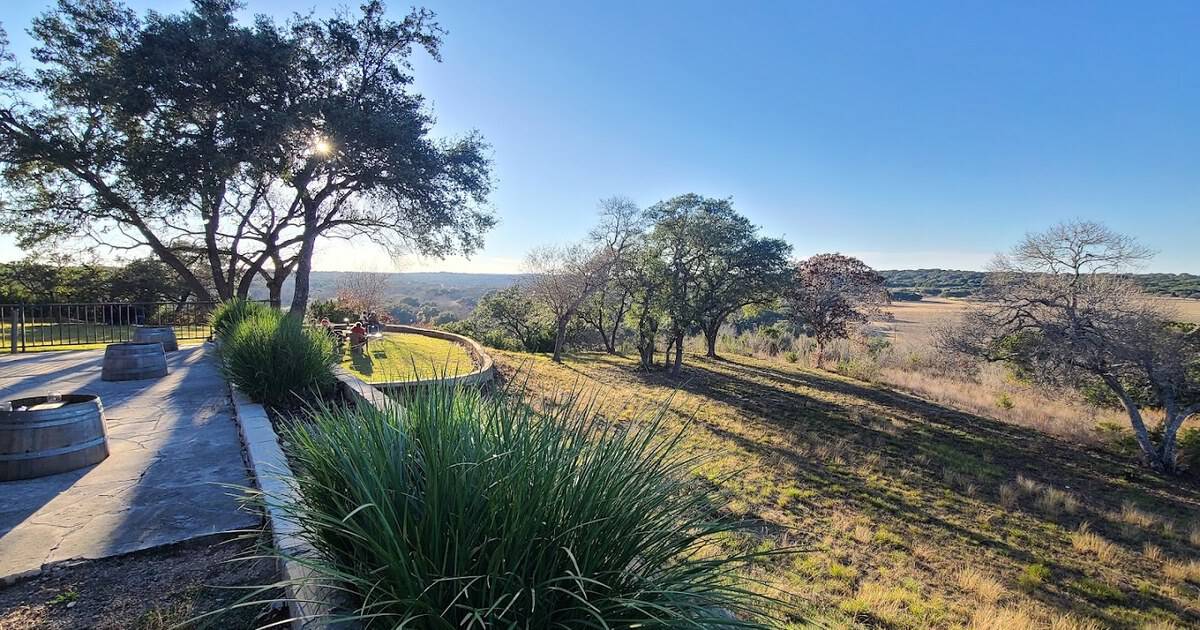
Here is a small confession about how I like to spend a weekend now that I am old enough to know better. I do not want a packed itinerary. I do not want a city that expects me to keep up.
What I want is a porch, a good glass of something, a plate of smoked meat I did not have to cook, and a hill to watch the light fall behind. That is the entire ask.
Somewhere north of Wimberley and about half an hour southwest of Austin, there is a speck of the Hill Country that has quietly turned into exactly that. It is a place built for slow golden evenings.
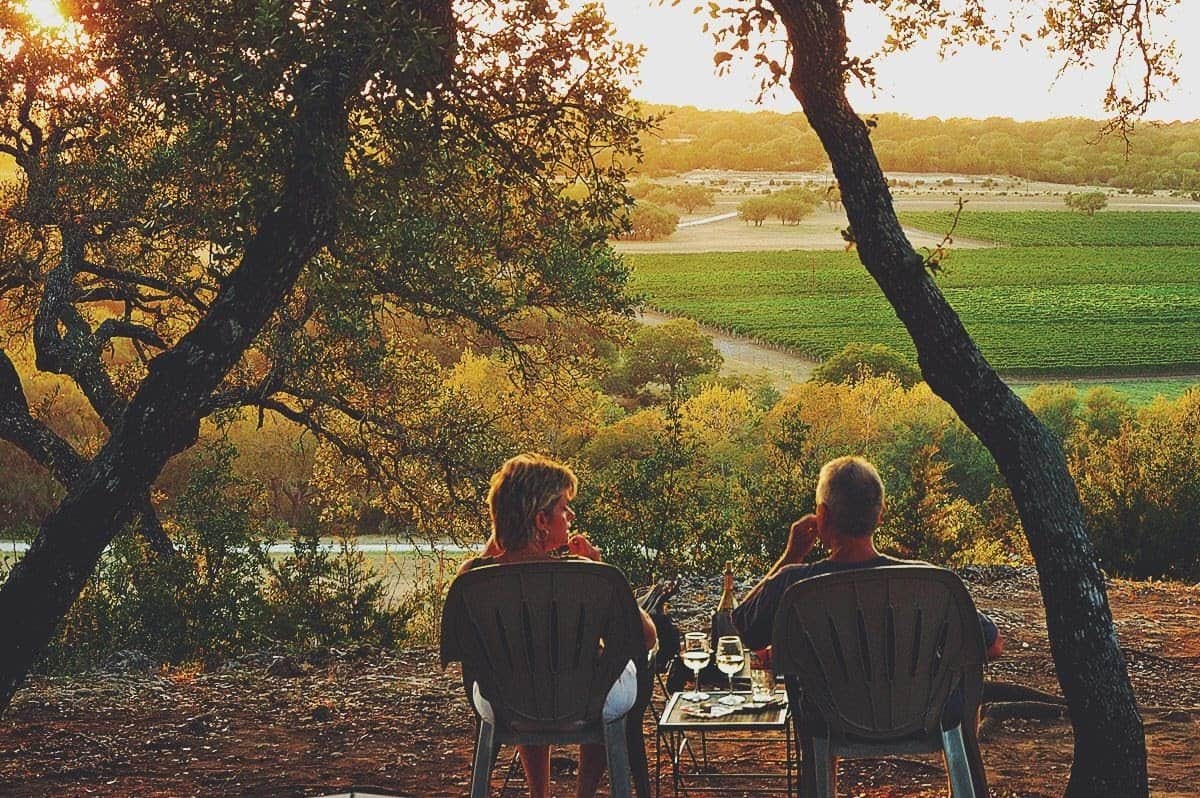
The town is Driftwood, and it is tiny in the way only a Texas census-designated place can be. The vineyards outnumber the traffic lights by roughly all of them to none, and that is the point of the place.
Below, I will walk you through why grown-ups keep pointing the car this way on a Friday afternoon: the wineries on the bluffs, the barbecue that started it all, the Italian kitchen hiding among the vines, and where to lay your head when the last glass is empty.
Wine on a Bluff, and the Best Seat for Sunset
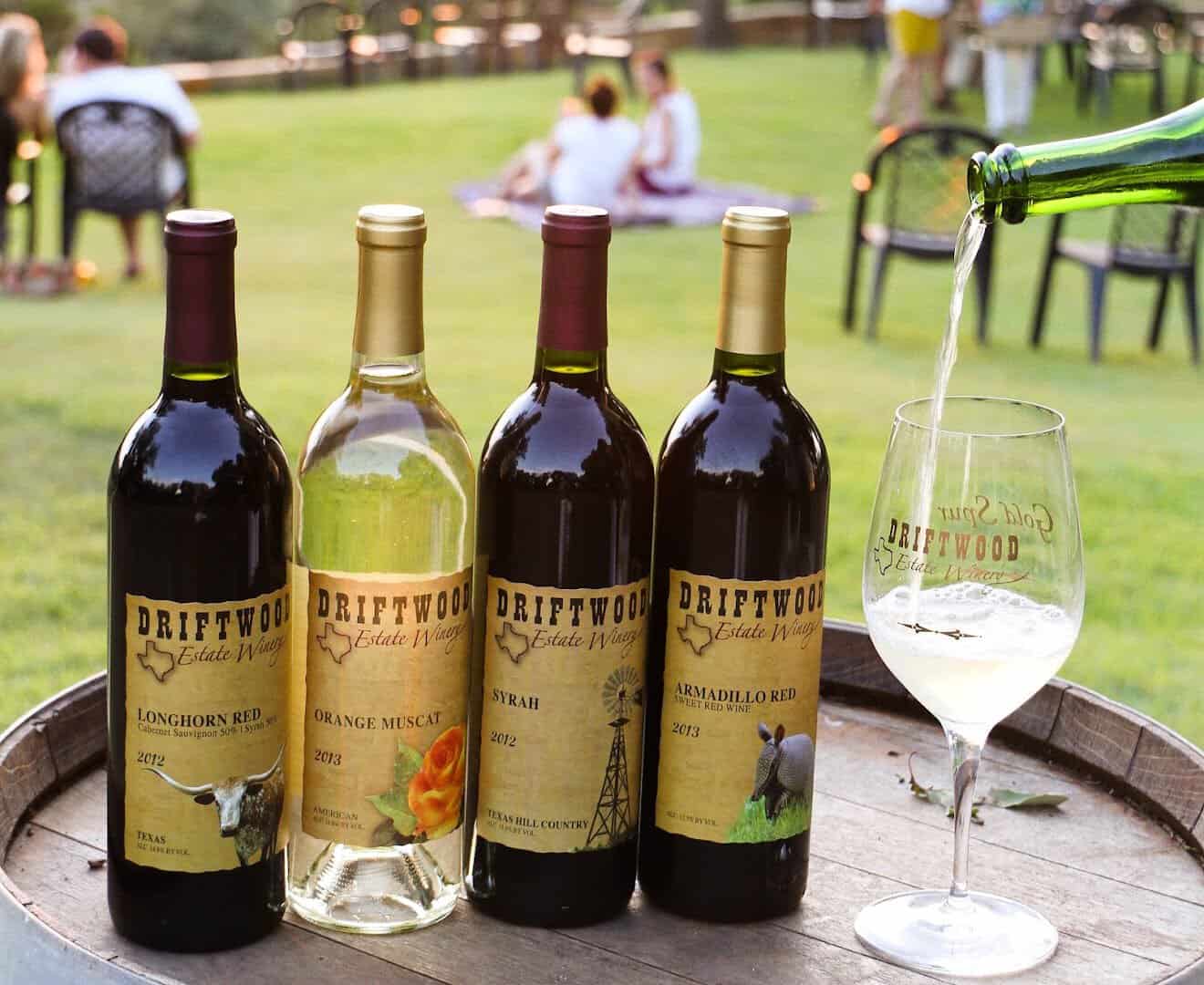
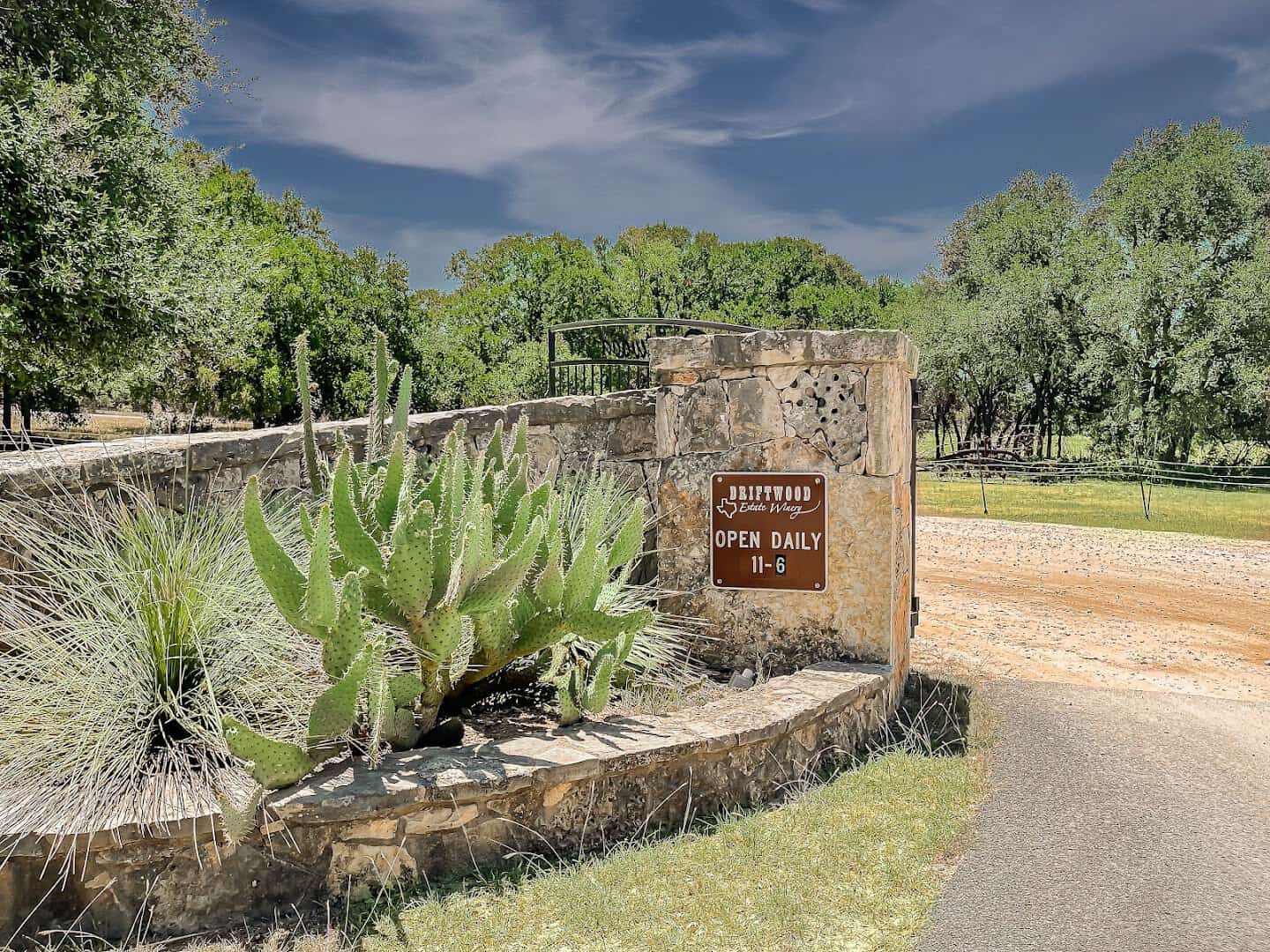
Start where the views are biggest. Driftwood Estate Winery sits on a bluff above its own vineyard, and the whole place is arranged around one idea: give people a reason to stay until the sun goes down.
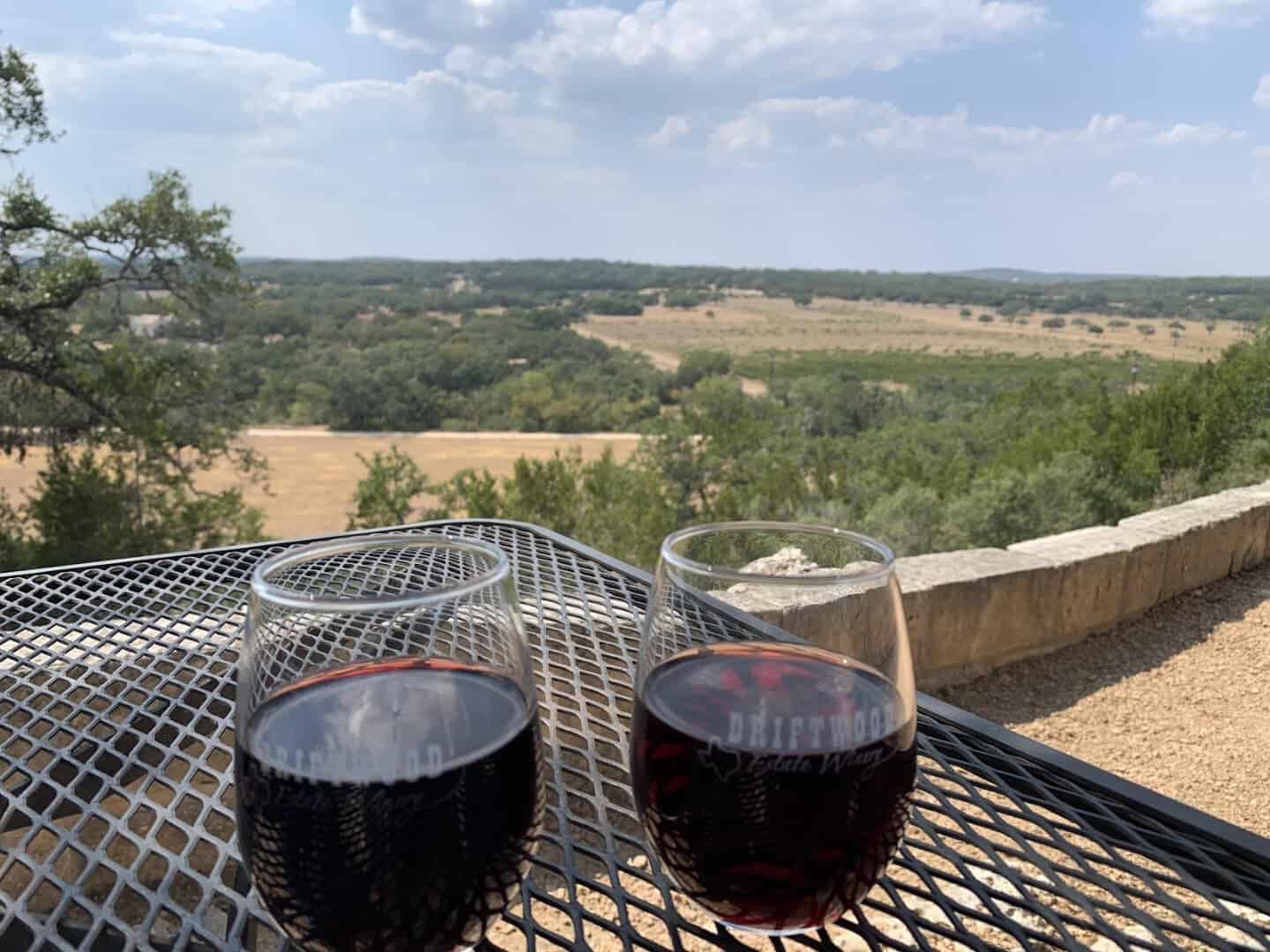
There is an 1,100 square foot deck that hangs out over the edge of the bluff, plus a shaded picnic area under the oaks and a pavilion by the tasting room. The winery bills the view as a “million dollar view,” and for once the marketing undersells it.
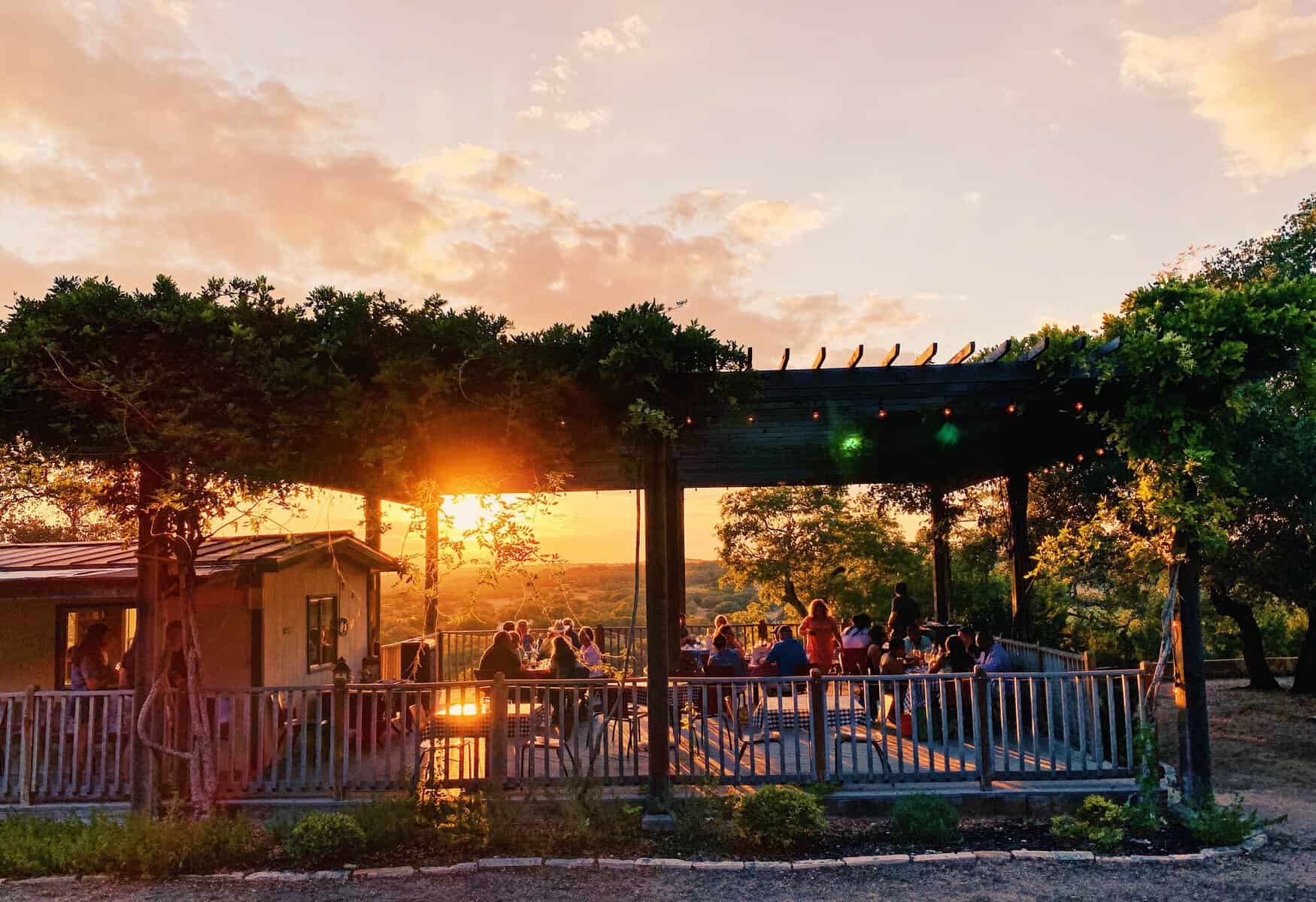
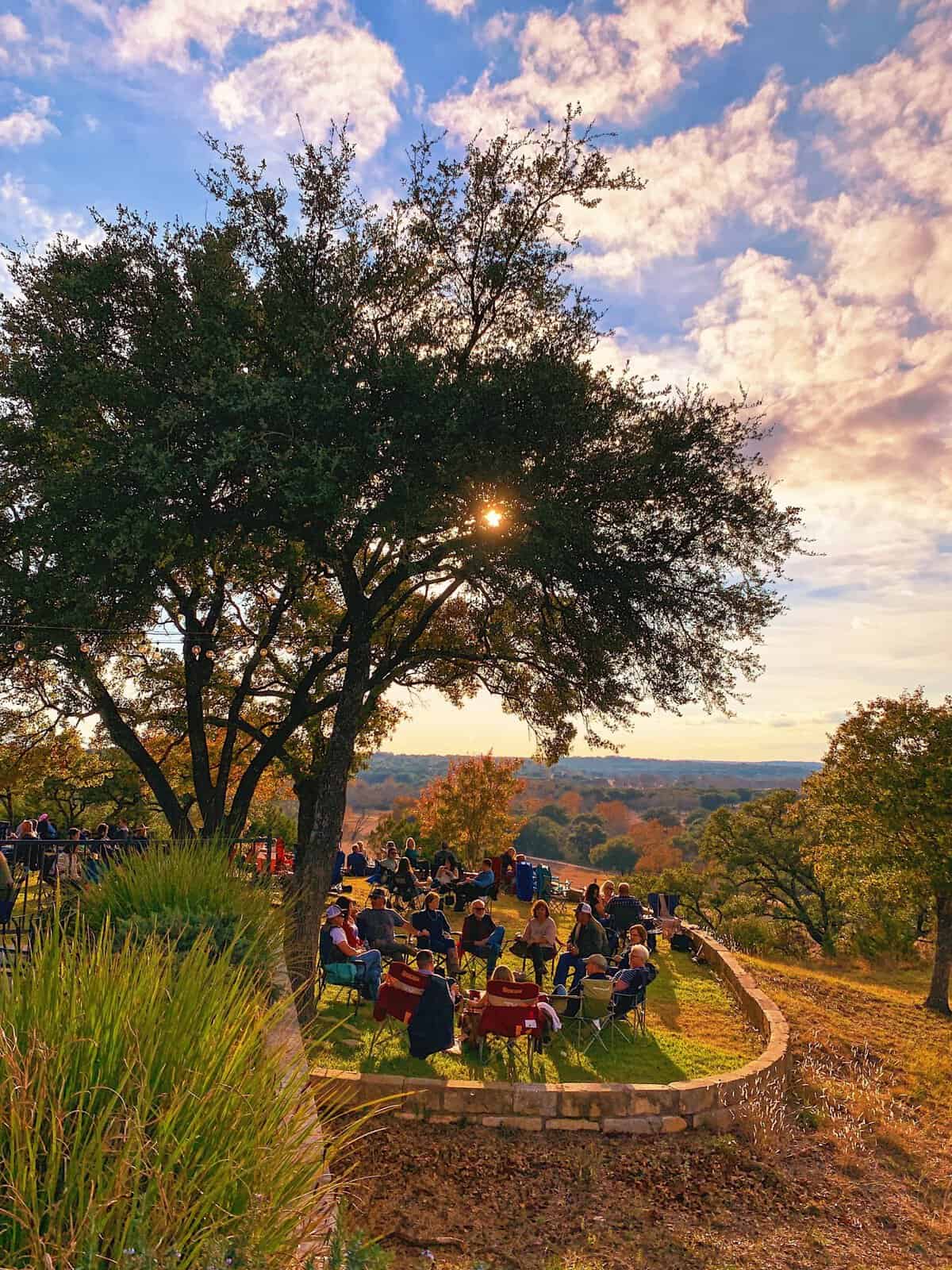
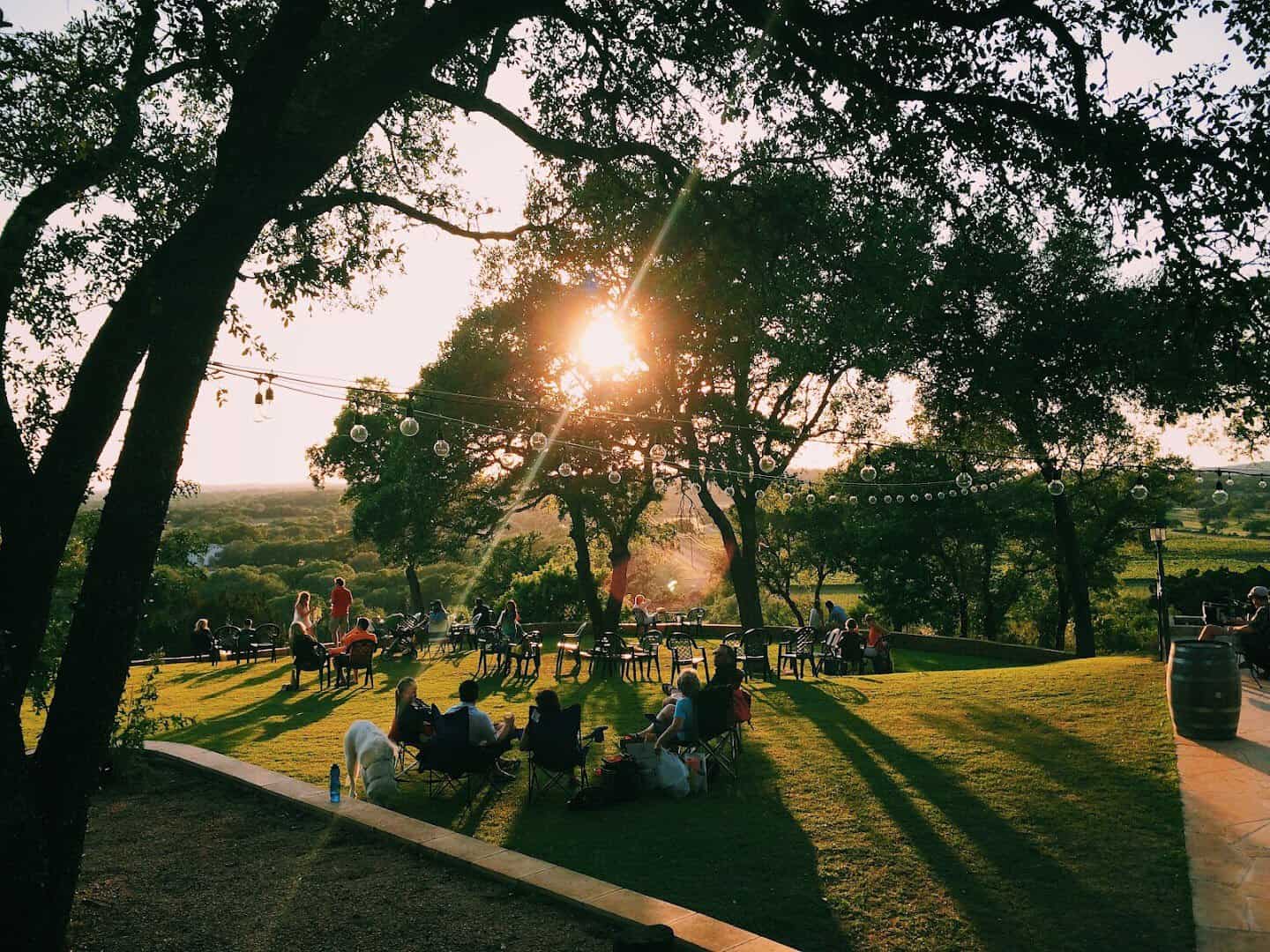
Every seat points at the same thing, rows of vines running downhill into the Hill Country haze. Come near dusk, when the limestone catches the last of the light and the whole valley goes gold and soft.
This is a grown-ups place on purpose. Driftwood Estate is 21 and over, no children and no minors, so the quiet you came for actually stays quiet. Pour a glass, claim a spot on the deck, and do not plan anything for the next hour.
The wine has real roots here. A California native and Army veteran named Gary Elliott planted the first vines in 1998, on family land that had been in the picture for more than seventy-five years.
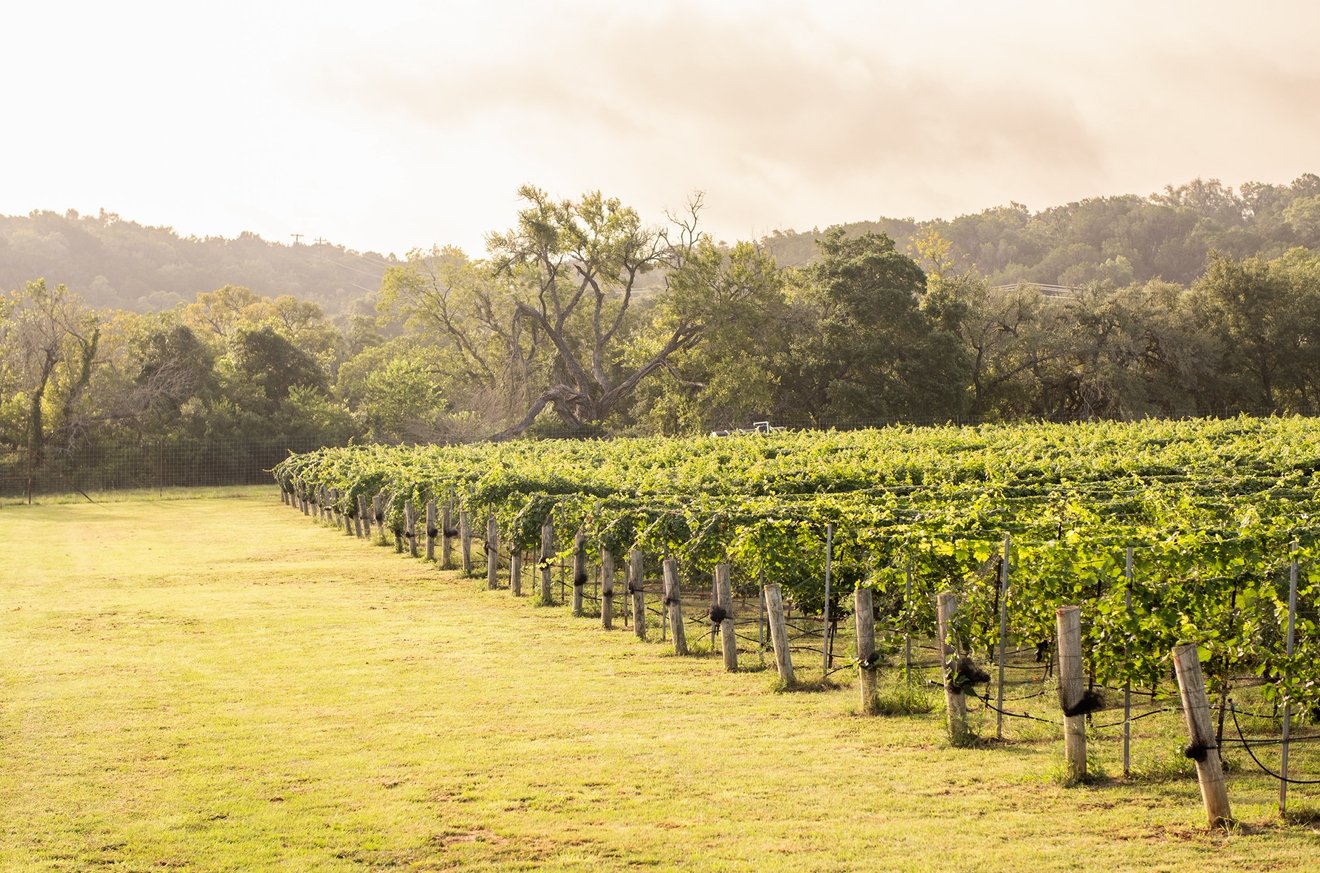
That made it the first commercial vineyard in Hays County. Gary and his wife Kathy built the winery in 2002 and opened the tasting room in the spring of 2003, and the place has been a Hill Country fixture ever since.
Today the estate farms eighteen acres of vines, everything from Cabernet Sauvignon and Syrah to Chenin Blanc and Viognier, and turns out around 10,000 cases a year. This is a real working vineyard, not a backdrop.
Order a flight and let the pourer talk you through it. The estate reds are the point of pride, but on a warm afternoon the Viognier and the Chenin Blanc drink like the Hill Country in a glass.
Pro tip: come on a weekend and there is a decent chance a local food truck has set up shop, so you can turn a tasting into a lazy, unhurried dinner without ever moving the car.
Italian Grapes That Found a Texas Home
A short drive down Ranch to Market 150 sits a completely different kind of daydream. Duchman Family Winery leans hard into Italian varietals, the kind of grapes most Texans have never heard of and most Italians would recognize on sight.
Think Vermentino, Montepulciano, Dolcetto and Sangiovese, all made from 100 percent Texas grapes. The limestone-heavy Hill Country soil and the long warm season suit these vines the way Tuscany does, which is the whole bet the founders made.
Those founders are Drs. Lisa and Stan Duchman, who started the winery in 2004. They loved Italian wine and noticed that Texas weather behaves a lot like the places those grapes come from, and winemaker Dave Reilly has been proving them right ever since.
The real secret weapon is the restaurant. Trattoria Lisina shares the grounds, a proper Italian kitchen surrounded by vineyard, so you can pair a glass of estate Sangiovese with house-made pasta.
When you step onto the grounds, the effect is immediate. Cypress-lined paths, a big fountain, a long stone building that would not look out of place across an ocean.
It is the single most European stretch of Driftwood, and it makes a wonderful anchor for a slow lunch. Give yourself the whole afternoon and let the plates and the pours arrive at their own pace.
The Barbecue That Put Driftwood on the Map
Before the wine, there was smoke. The Salt Lick has been feeding people in Driftwood since 1967, and the story behind it is older and better than most restaurants can dream of.
You smell it before you see it. Oak smoke drifts across the parking lot, and inside sits the huge open pit, a low fire crowded with brisket, sausage, and ribs turning slowly over the coals.
Thurman Roberts and his wife Hisako started it with a single pit alongside FM 1826, on land the Roberts family had settled back in the 1870s. In that first year, Thurman and his sons built the pit by hand, stone by stone.
The recipe reaches back further still. Thurman learned his craft from his great-grandmother, Bettie Howard, who slow-cooked meat over open coals on a wagon-train trip from Mississippi to Texas in the 1860s.
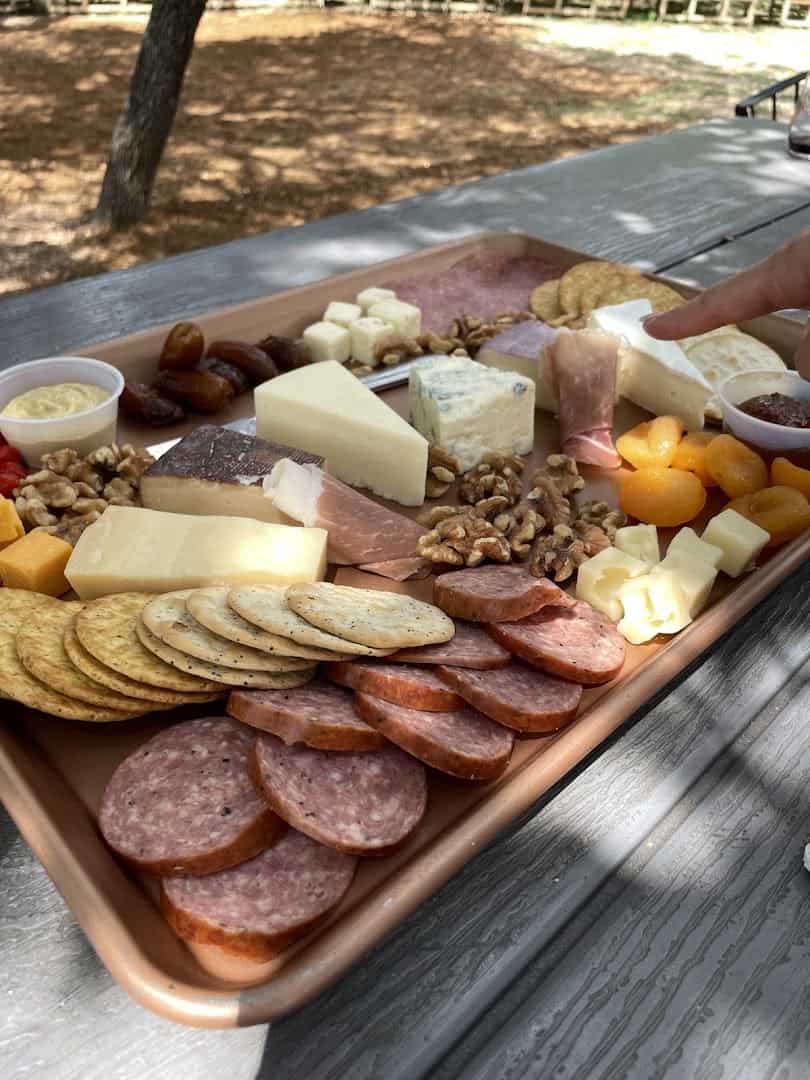
That is the flavor you are tasting, a technique passed down more than a century and a half. Order the family-style platter and let the brisket, sausage, and ribs keep coming until someone waves the white flag.
People used to eat off the hoods of their cars until the couple dragged a few picnic tables under the trees. That humble start is still visible in the big communal tables inside.
Thurman passed away in 1981, and Hisako ran the pit herself for years afterward. Their son Scott has since grown it into one of the most beloved barbecue operations in the state, with the Driftwood original still the heart of it.
Did you know the original Salt Lick is famously BYOB? For years that was the move, bring your own bottle to go with the brisket. These days you can leave the cooler at home, because they opened a wine garden of their own right next door.
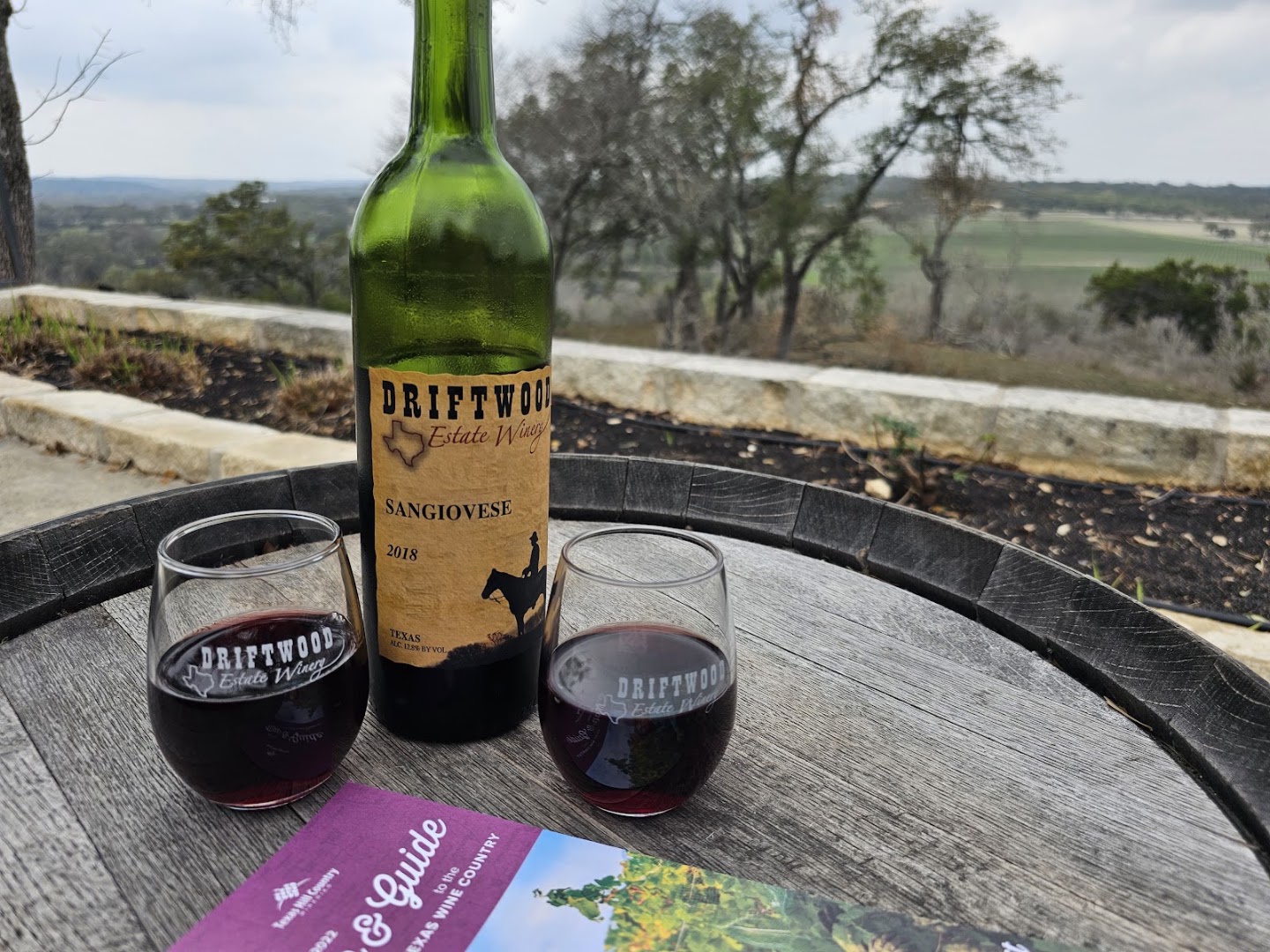
Salt Lick Cellars sits under a giant live oak beside the restaurant, pouring Tempranillo, Sangiovese, and their own playful BBQ Red and BBQ White. It is a shaded, easygoing place to let a heavy plate of barbecue settle before you decide where the evening goes.
Where to Sleep It Off in Style
Here is the thing that turns a day trip into a weekend: Driftwood is genuinely good at lodging, and none of it feels like a chain.
The rentals run from charming stone houses to cozy little condos to cabins tucked so far back you forget the highway exists. A lot of them come with the grown-up essentials, a private pool, a hot tub, and a wide Hill Country view to drink your morning coffee against.
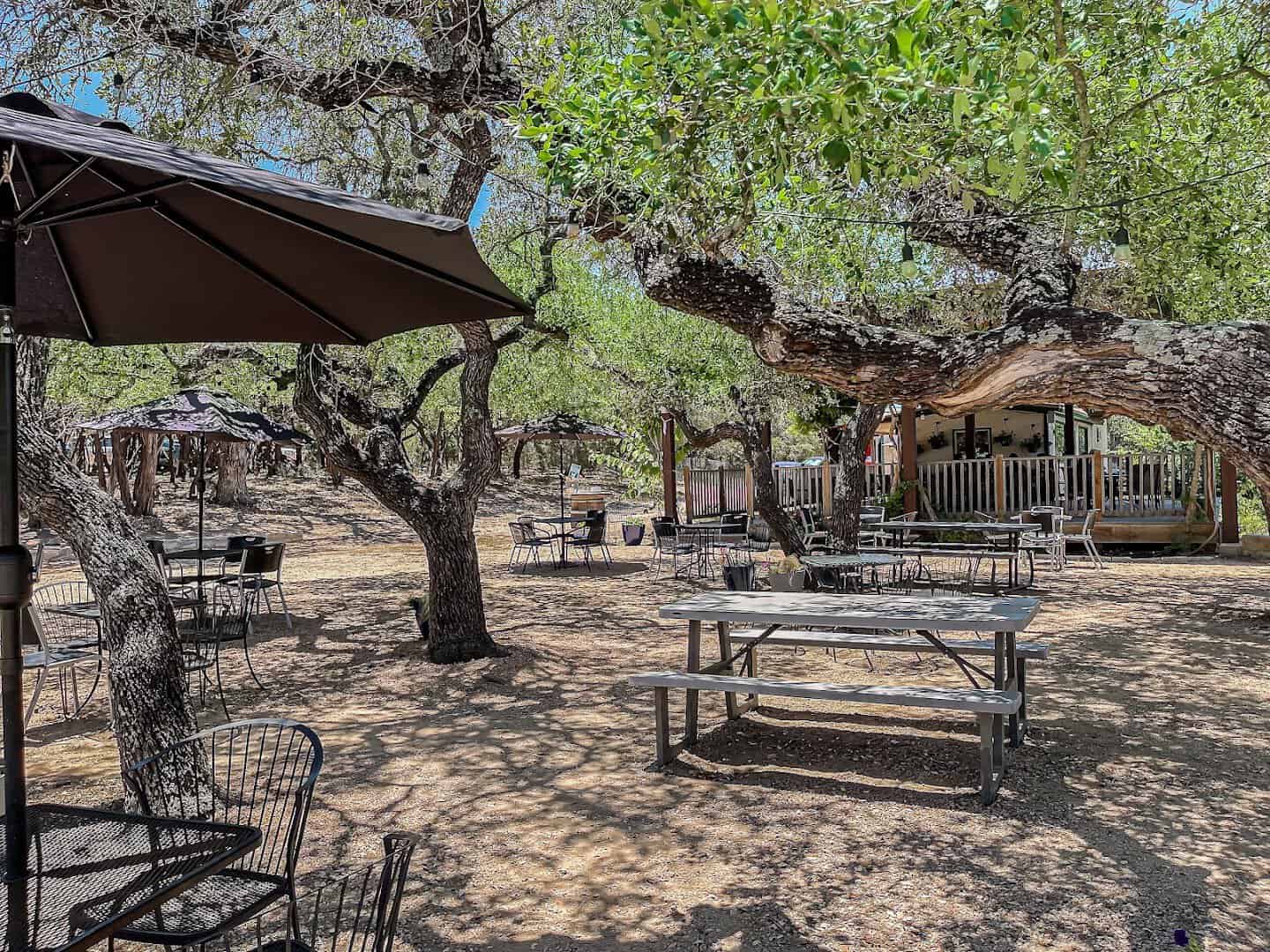
If you would rather someone else handle the details, Postcard Cabins keeps a Hill Country outpost near here. It is the kind of tidy, design-minded cabin escape built for exactly this sort of unplug-and-do-nothing weekend.
My honest advice is to book something with an outdoor space and treat it as the point, not the afterthought. The best hours in Driftwood happen outside, on a deck, with nowhere you have to be.
Spring and fall are the sweet spots, when the days are warm and the evenings cool off enough for a fire pit. Summer is lovely too, as long as you plan the wine for the shade and save the swimming holes for the heat of the day.
The Art of Doing Absolutely Nothing
You could fill every hour, but Driftwood rewards the opposite. This is a town that pays off when you slow down enough to notice it, and the locals will tell you the same.
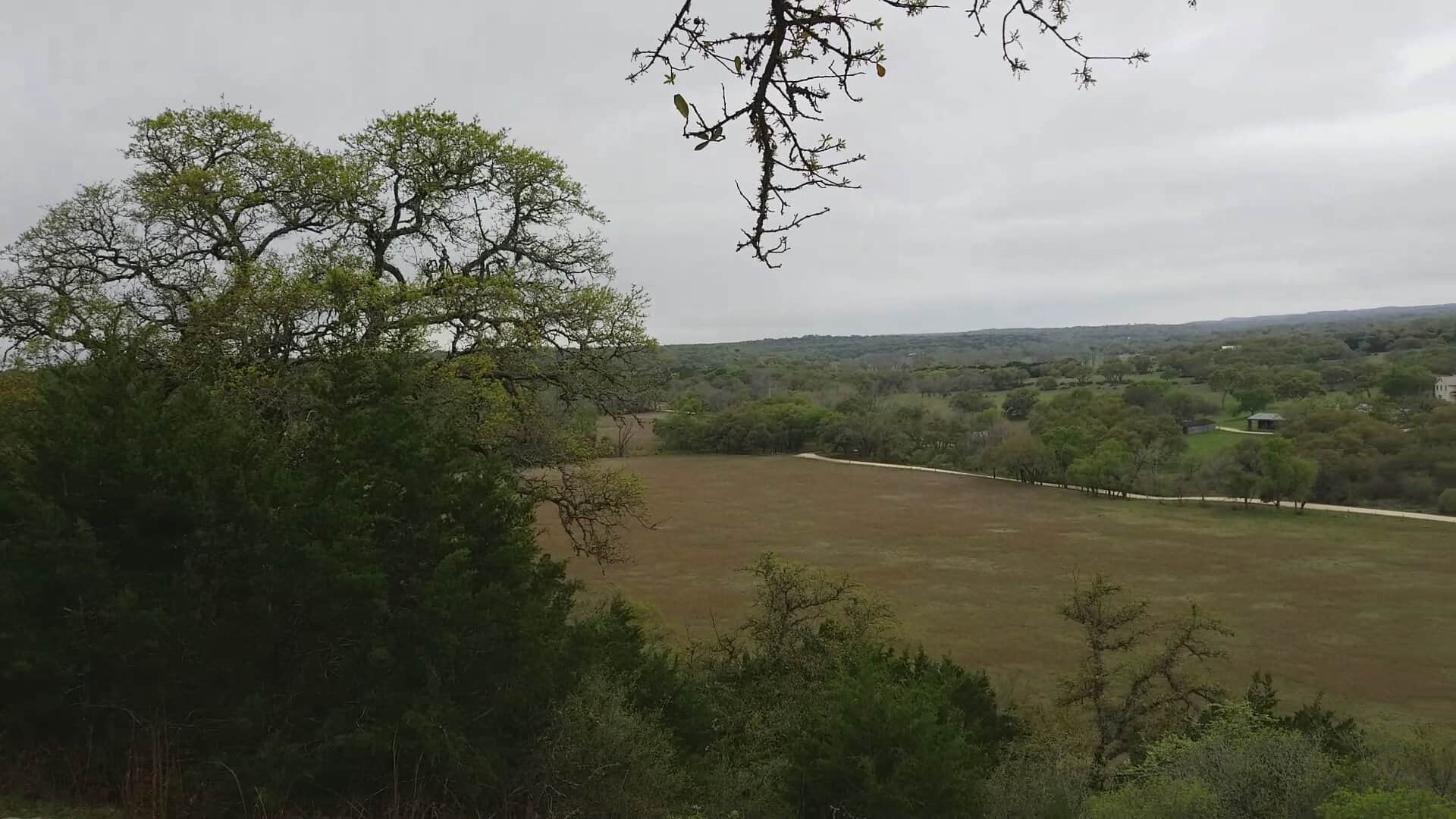
Charro Ranch Park gives you sixty-four acres of quiet to wander, donated to the public back in 2008. There are easy trails and enough open sky for stargazing once the light goes, and it is the kind of place you visit with no goal at all.
If you want a little more scenery, you are surrounded by it. Blue Hole in Wimberley is about twenty-five minutes off, and Pedernales Falls sits roughly thirty-five minutes west.
The famous Hamilton Pool and its fifty-foot waterfall is an easy drive too, for the mornings when you feel like earning your evening glass of wine before you settle back onto the deck.
A Brief History of a Town That Almost Wasn’t
Driftwood has been small for a very long time, which is a large part of its charm. Pioneers first settled the area around 1850, when it went by the name Liberty Hill, and most of the families arrived in the early 1880s.
By then the little community had grown up as a supply center for the surrounding ranches and farms. By 1890 Driftwood had earned a post office, a school, churches, a cotton gin, and a general store.
Then it did what a lot of tiny towns did and slowly emptied out. The population dipped to about ten souls in 1925, climbed back toward a hundred by mid-century, and slid under twenty-five by the 1970s.
The 2020 census counted just 106 people, which tells you how much elbow room you are getting. That long stretch of being overlooked is exactly why it feels the way it does now.
Nothing here was bulldozed to make room for growth, so the land, the oaks, and the old crossroads calm are all still standing for you to enjoy. The vineyards simply grew up around what was already here.
How to Get There
Driftwood sits in northern Hays County, unincorporated and proud of it, roughly thirty to forty-five minutes southwest of downtown Austin depending on traffic and how much of a hurry you are pretending to be in.
Where: Driftwood Estate Winery, 4001 Elder Hill Rd, Driftwood, TX 78619.
Where: Duchman Family Winery and Trattoria Lisina, 13308 FM 150 W, Driftwood, TX 78619.
Where: The Salt Lick BBQ and Salt Lick Cellars, 18300 FM 1826, Driftwood, TX 78619.
Start Planning Your Grown-Ups Getaway
Driftwood is not trying to impress you with size or speed, and that is the entire appeal. It hands you a bluff at sunset, a plate of smoked brisket, a glass of Texas wine that has earned its place, and permission to stop rushing.
So pick a weekend, split the driving with someone you like, and book the cabin with the hot tub. Give yourself two days to remember what unhurried actually feels like. The vineyards will still be there when you wake up, and so will the quiet.
Featured image: The Traveling Fork via Driftwood Estate Winery

Stella Raines
Editor-in-Chief
Stella brings over a decade of storytelling experience to TX Headlines. With roots in West Texas and a love for road trips, she leads the editorial team with an eye for the hidden stories that make Texas unforgettable.
More Stories
This Tiny-Town Texas Bakery Has Kept Old-World Baking Traditions Alive for Over 80 Years
This Peaceful Texas Town Comes Alive Every Spring in a Sea of Bluebonnets
This Pink-Granite Texas Courthouse Is So Beautiful People Drive In Just to See It
This Affordable Texas Town Lets a Modest Budget Cover Rent, Groceries, and Utilities
Tags