14 Iconic Highways That Are So Famous They Have Their Own Names
I keep a running list of roads I want to drive someday, and it is embarrassingly long. Not the routes that are just the distance between two places, but the ones that show up on posters, in car commercials, and in the daydreams you have during a dull Tuesday meeting.
The best of them share one thing: a name you already know. That is the funny part about America’s great drives. The finest earned proper names, the way a mountain or a river does, because the pavement itself became the reason to go.
Below are fourteen legendary routes where the road is the whole point, spread from a black-sand Hawaiian coast to the empty heart of Nevada. For each one, I have added exactly where to start, so you can drop a pin and go.
1. Route 66, Arizona
Any list of famous American roads has to start with the Mother Road. Route 66 opened in 1926 and ran roughly 2,400 miles from Chicago to Santa Monica, carrying dust-bowl families west and, later, every road-tripper chasing a certain kind of freedom.
It lost its official highway shield in 1985 as the interstates took over, but the old alignment refused to die. Arizona holds the best-preserved stretch, and the tiny town of Seligman helped inspire Radiator Springs in the movie “Cars.”
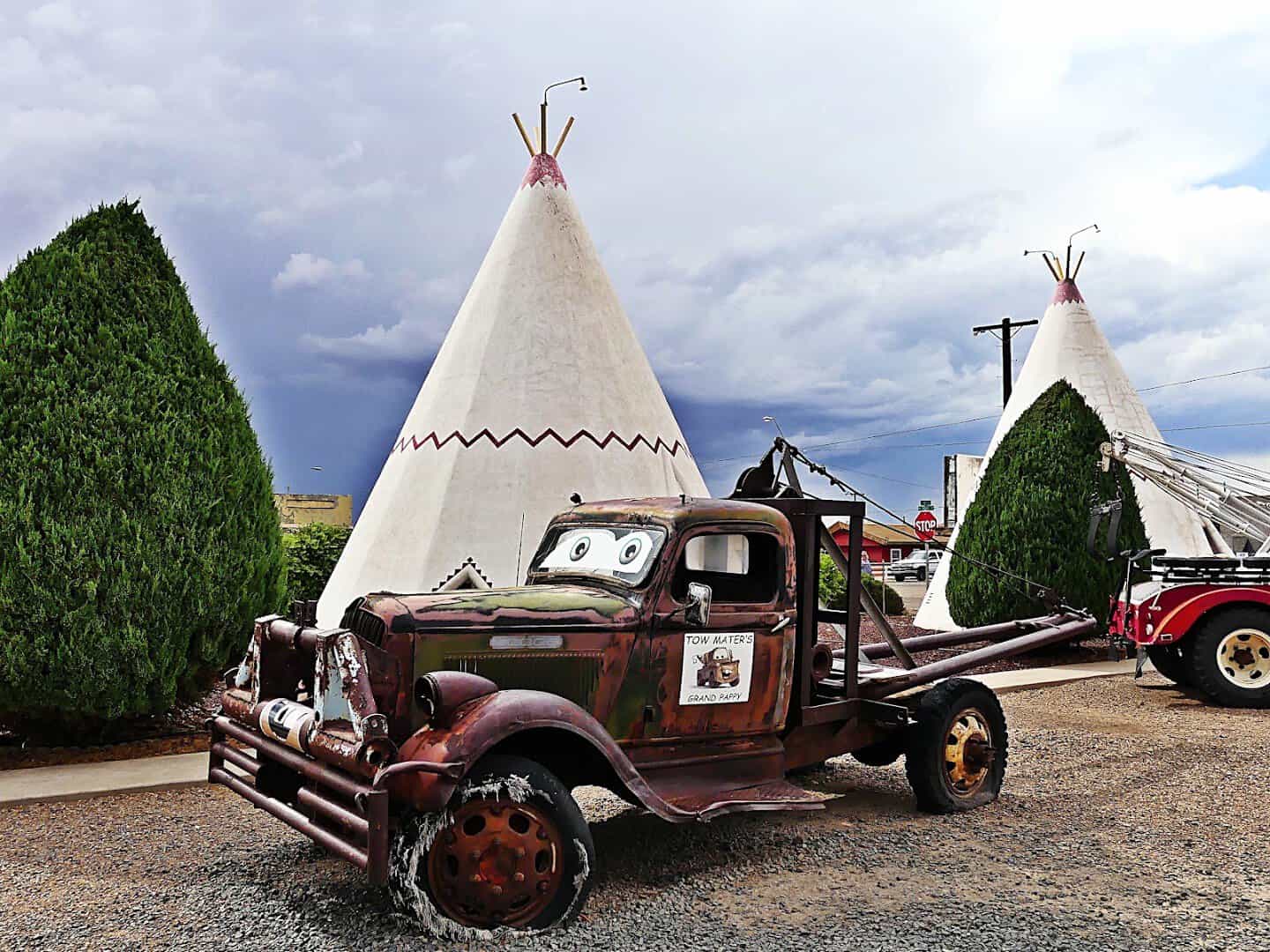
Come at dusk, when the vintage motor courts flip on their neon and the whole strip glows like a jukebox. Sleep in a concrete teepee, order a thick milkshake, and let the 1950s wash over you for a night.
Beyond Seligman, the Arizona stretch strings together old trading posts, painted murals, and roadside giants built to catch a driver’s eye. Give yourself a slow afternoon to chase them, because half the fun of the Mother Road is the stuff you never planned to stop for.
Where: Wigwam Motel, 811 W Hopi Dr, Holbrook, Arizona.
2. Pacific Coast Highway, California
Ask anyone to picture a dream drive and there is a good chance they land right here, top down, ocean on one side, cliffs on the other. California’s Highway 1 hugs the Big Sur coast where the mountains fall straight into the Pacific.
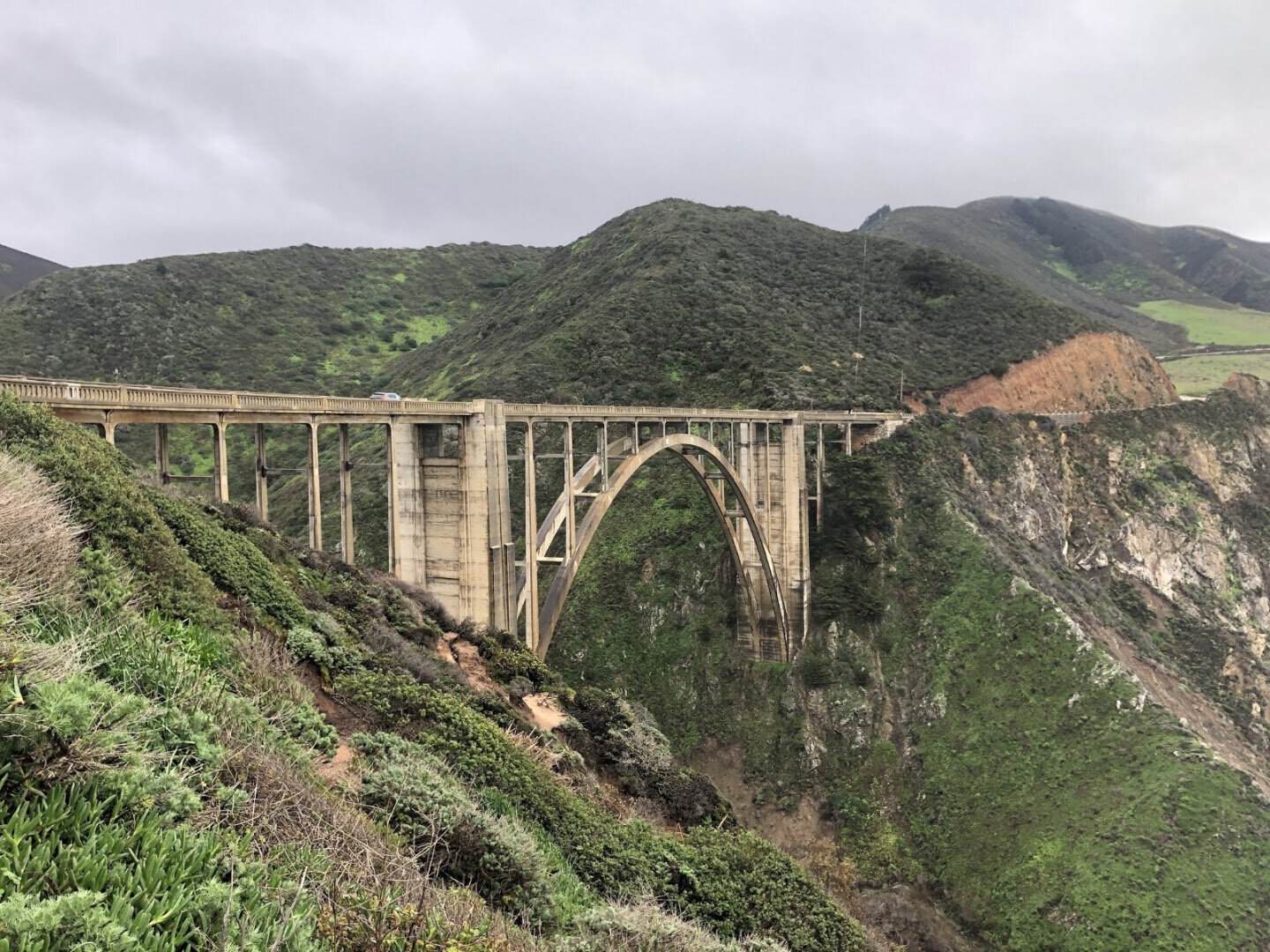
The star of the show is Bixby Creek Bridge, an open-spandrel arch finished in 1932 that soars about 280 feet above a rocky cove. It is one of the most photographed bridges in the country, and no picture quite prepares you for it.
Pro tip: drive it from north to south so you are on the ocean side of the road, with nothing between you and that big blue horizon. Time the run for late afternoon and let the light do the rest.
Build in extra time, because the pullouts are the whole reason to come. You will want to stop for sea otters bobbing in the kelp, for gray whales spouting offshore in winter, and for a fog bank rolling in like slow surf over the cliffs.
Where: Bixby Creek Bridge, Big Sur, California.
3. Overseas Highway, Florida
Here is a road that feels like it should not exist. The Overseas Highway carries US-1 for about 113 miles from the Florida mainland out to Key West, skipping across open water on a chain of bridges. On a clear day the sea glows turquoise on both sides at once.
It was built on the bones of Henry Flagler’s railroad, a wildly ambitious line that a brutal 1935 hurricane tore apart. Rather than rebuild the rails, the state paved the surviving spans into a highway that opened the Keys to everyone.
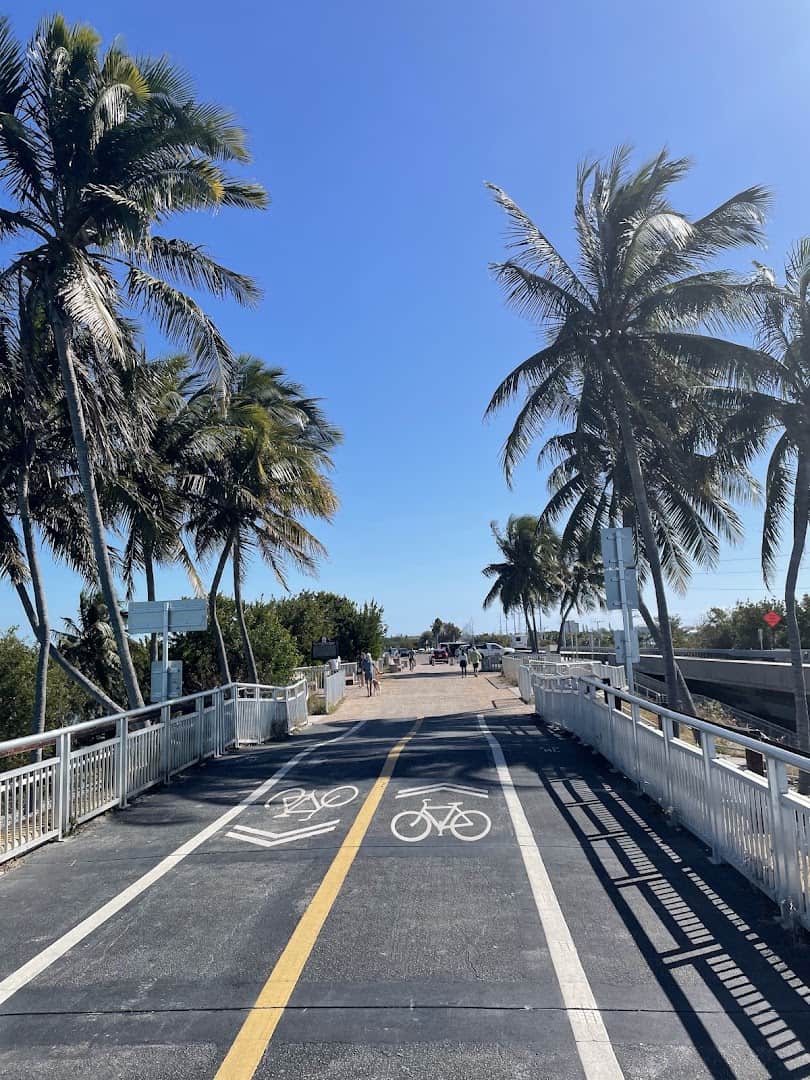
The old Seven Mile Bridge still runs alongside the newer one, now a walking and fishing path. Pull over, stroll a little way out over the water, and you get the whole postcard without even leaving the mainland chain.
Watch the green mile markers count down toward zero in Key West. They double as your progress bar and your favorite photo backdrop, and the drivers around you all seem to slow down and settle into island time together.
Where: Seven Mile Bridge, Marathon, Florida.
4. Blue Ridge Parkway, North Carolina and Virginia
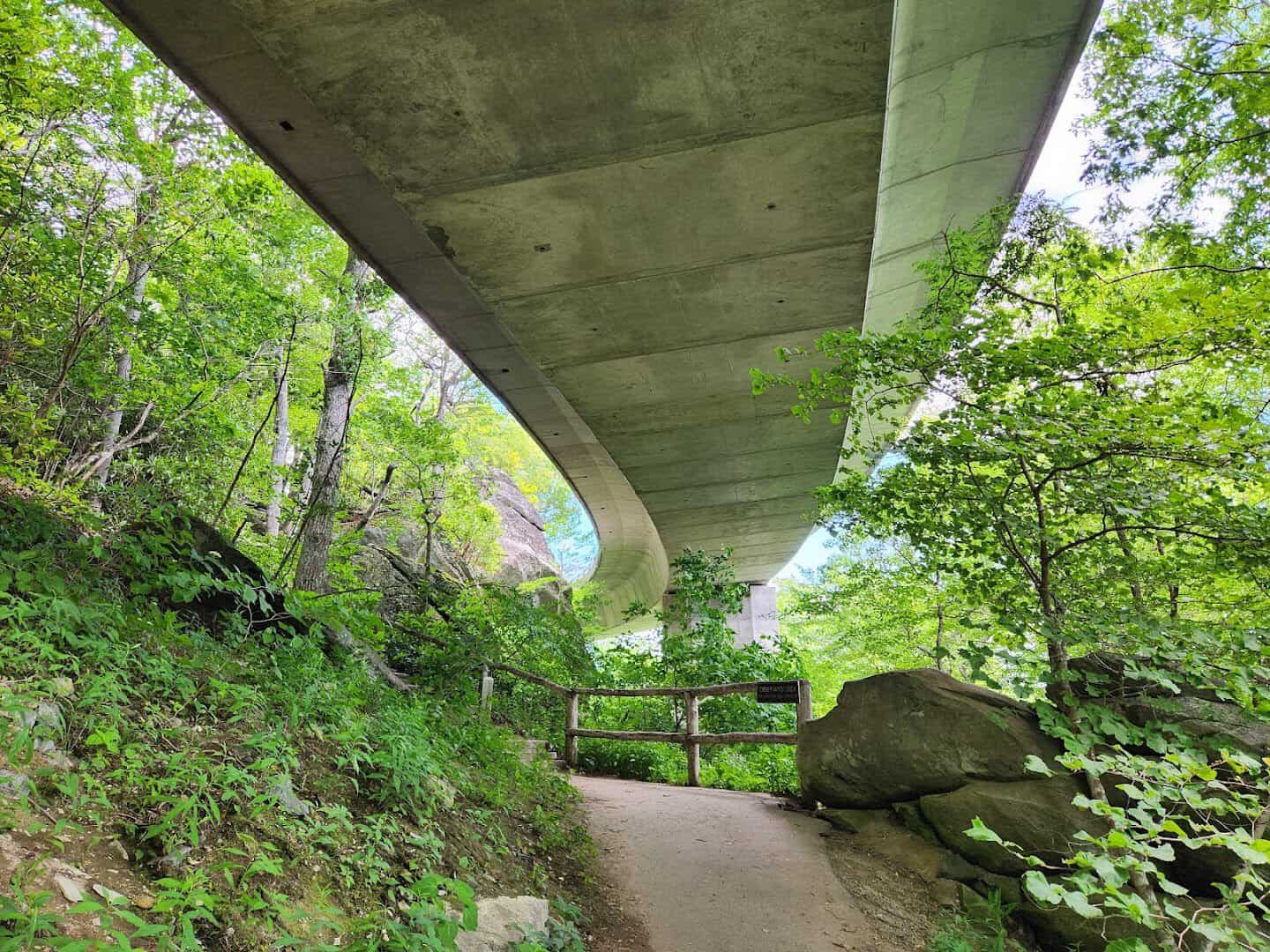
If Route 66 is about roadside kitsch, the Blue Ridge Parkway is about slowing all the way down. It runs 469 miles along the Appalachian crest with no billboards, no big trucks, and a speed limit that practically forces you to breathe.
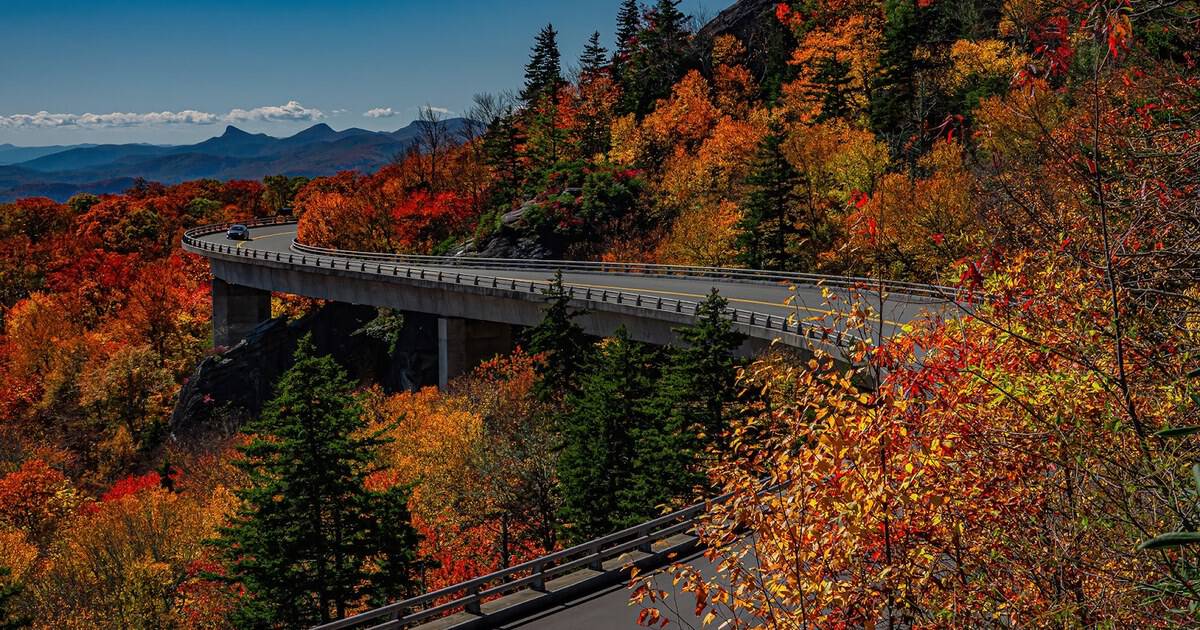
Construction began in 1935 as a Depression-era work project, and the final piece was not finished until 1987. That last link, the Linn Cove Viaduct, curls around the flank of Grandfather Mountain on slender concrete legs that seem to float.
Go in October, when the ridgeline turns gold and crimson and the overlooks fill with people who planned their whole autumn around this drive. Pack a picnic, because you will want to stop far more often than you expect.
The mileposts are your friends here. They count down the whole route, so you can plan lunch at a specific overlook or aim for a trailhead without a single wrong turn. Cell service is thin, which is honestly part of the charm.
Where: Linn Cove Viaduct, Blue Ridge Parkway Milepost 304, Linville, North Carolina.
5. Going-to-the-Sun Road, Montana
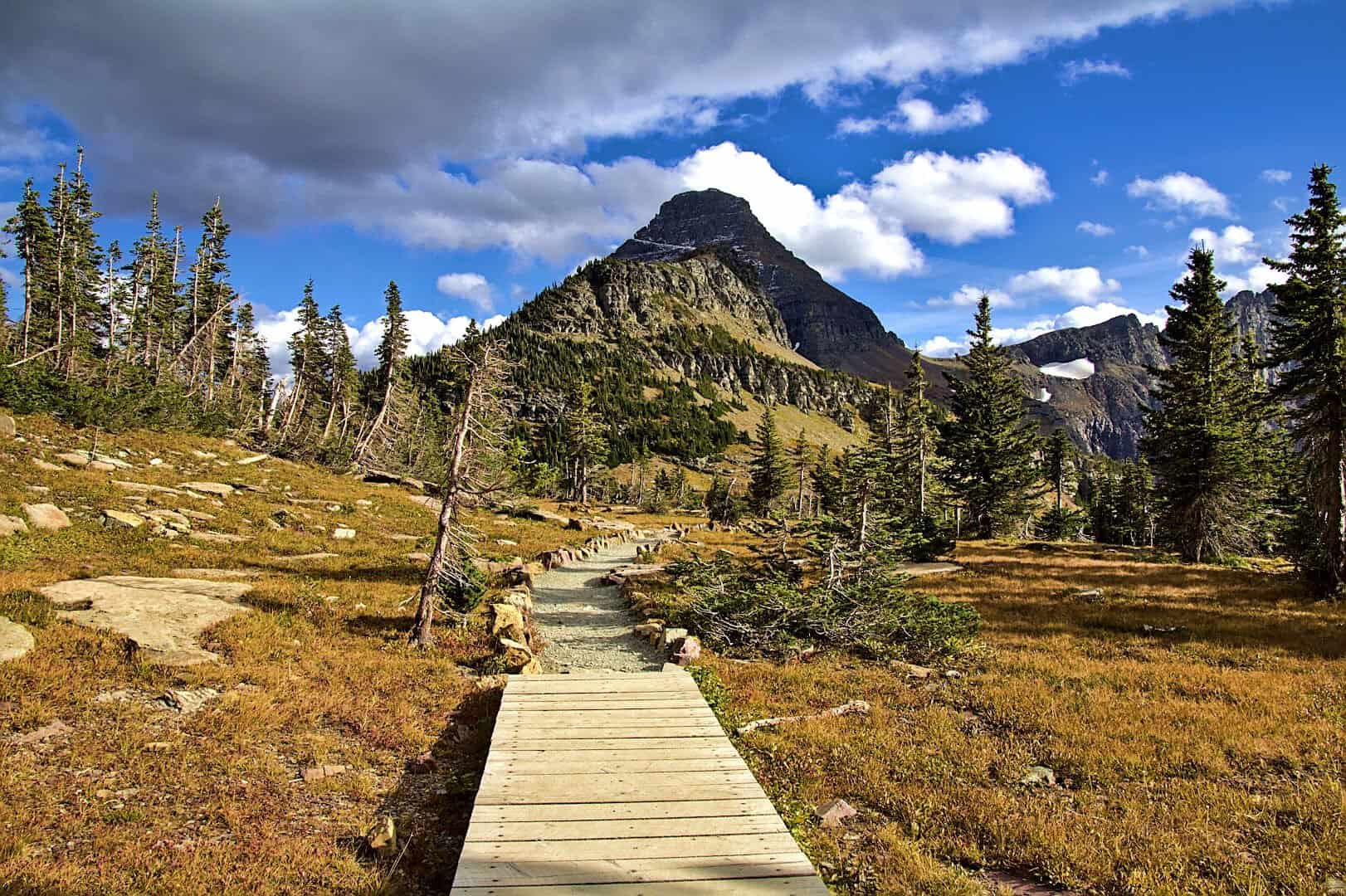
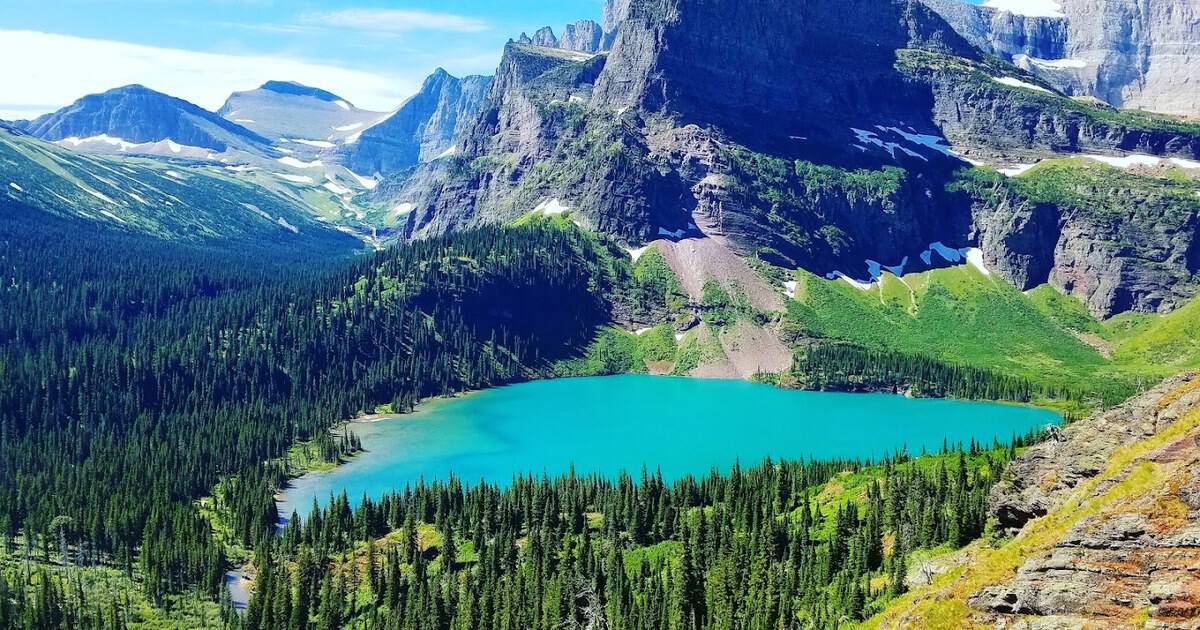
Fifty miles do not sound like much until those fifty miles climb straight over the spine of the Rockies. Going-to-the-Sun Road crosses Glacier National Park, topping out at Logan Pass at 6,646 feet, with waterfalls that spill right onto the pavement in early summer.
Finished in 1933, it was an engineering feat that stunned its era, carved into sheer cliffs by crews who worked hanging from ropes. The result threads meadows, hairpin turns, and glacier-carved valleys into one glorious ribbon of asphalt.
Did you know it is often buried under snow well into June? Plows need weeks each spring to punch through drifts near the top, so the full road usually opens only from about late June into September. Check before you go.
If the summit lot is full, and it often is by mid-morning, hop the park’s free shuttle instead and let someone else handle the hairpins. That frees you to watch for mountain goats on the rock ledges and marmots sunning themselves right beside the road.
Where: Logan Pass, Going-to-the-Sun Road, West Glacier, Montana.
6. Million Dollar Highway, Colorado
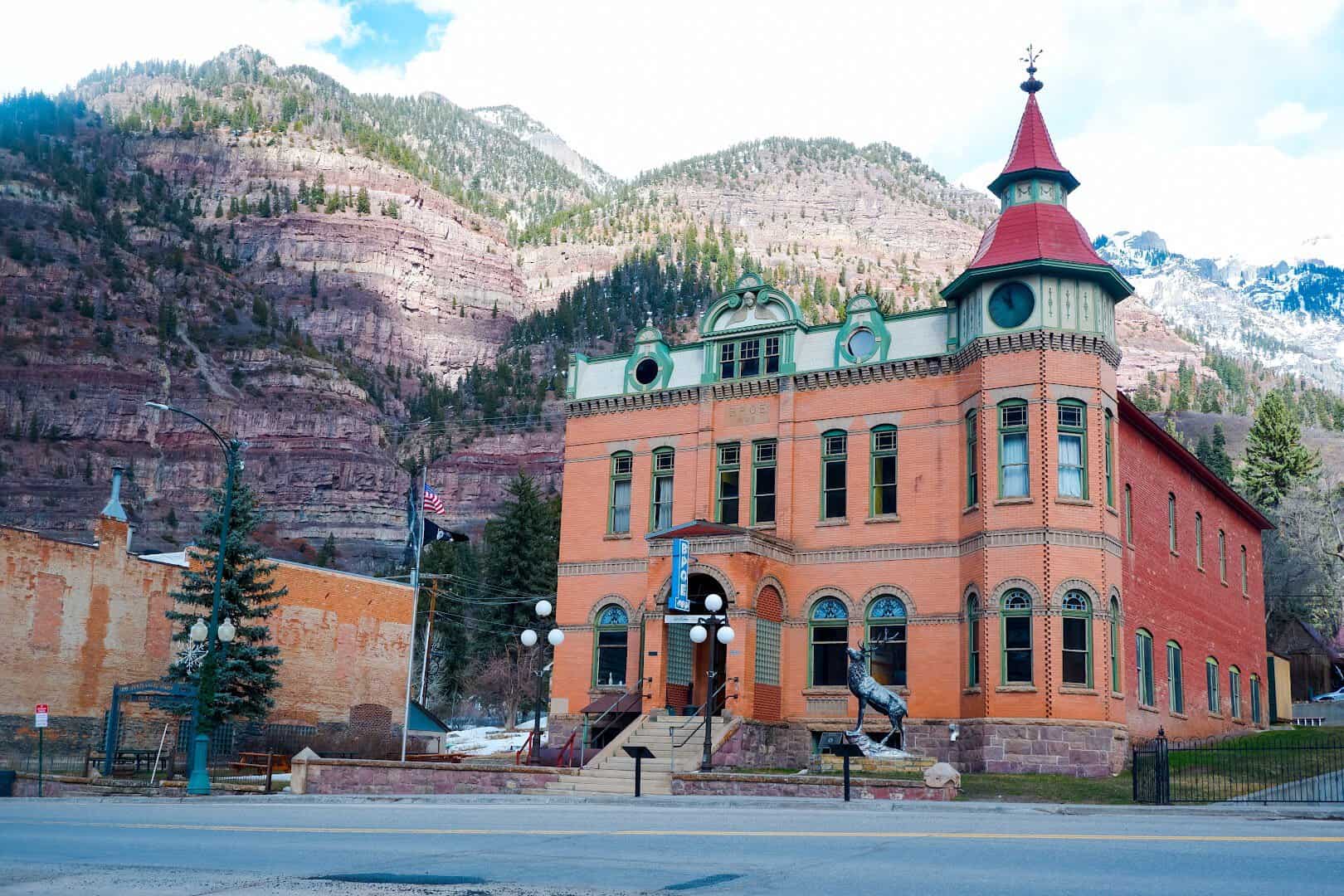
Colorado’s US-550 between Ouray and Silverton is barely 25 miles, yet drivers talk about it for years afterward. Nicknamed the Million Dollar Highway, it clings to cliff faces with sheer drops and, famously, almost no guardrails to hold your hand.
The story goes that the roadbed was laid with gravel worth a fortune in gold ore, though the name might just as easily fit the views. Either way, the switchbacks above Ouray deliver mountain scenery that feels almost too big to be real.
Ouray sits at the north end in a box canyon so steep that locals call it the Switzerland of America. Start there, top off the tank, and take the climb slowly, because every pullout frames another wall of peaks.
Where: Ouray, Colorado, at the north end of the Million Dollar Highway (US-550), about an hour south of Montrose.
7. Hana Highway, Hawaii
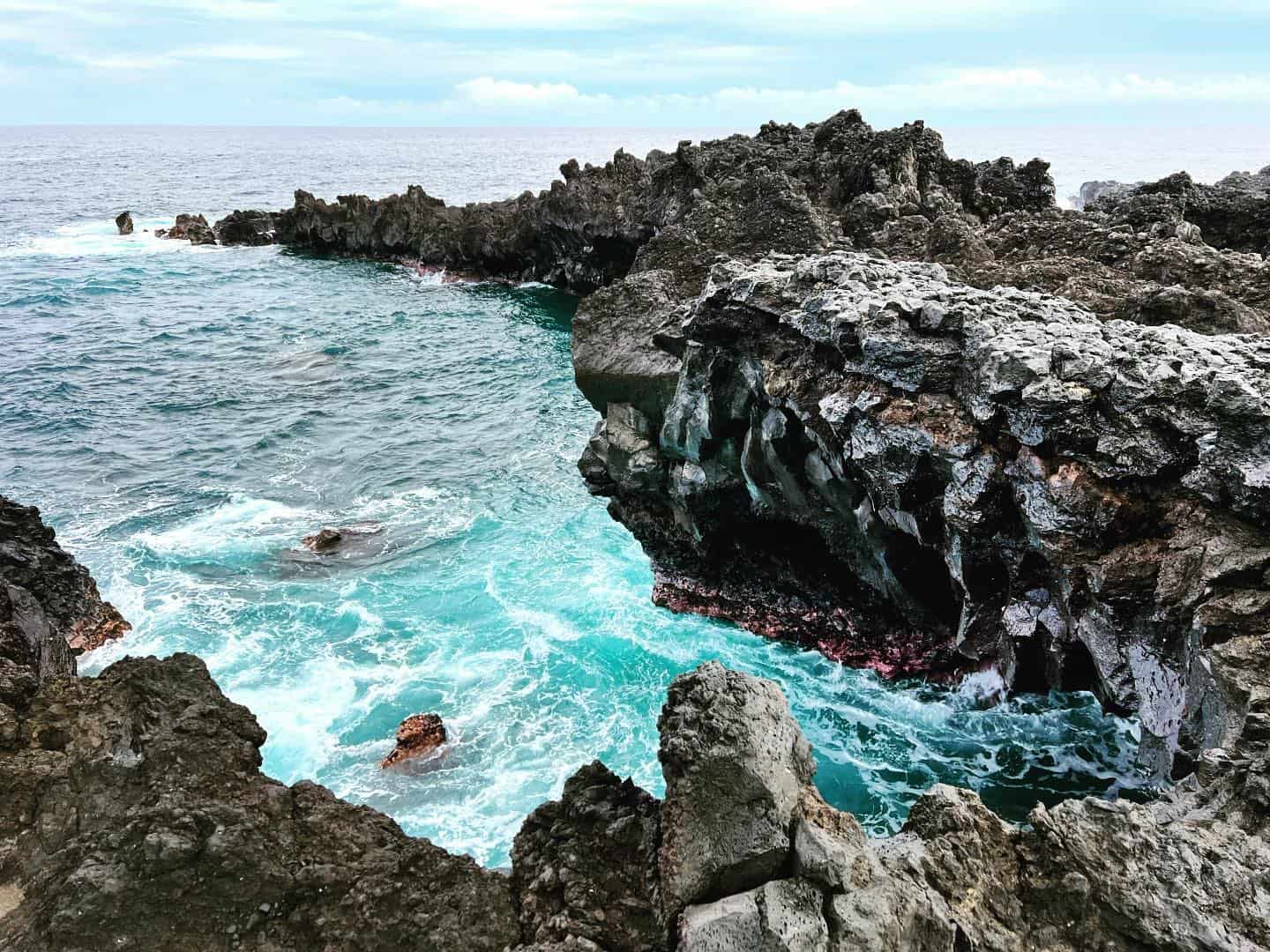
The Road to Hana turns a short distance into an all-day adventure, and that is exactly the point. This Maui route runs about 64 miles past rainforest, sea cliffs, and roadside stands selling banana bread still warm from the oven.
Count on roughly 620 curves and around 59 bridges, most of them just one lane wide, so you drive it slow and pull over often. Every bend seems to hide another waterfall, a bamboo forest, or a lookout over the crashing surf.
Waianapanapa State Park makes the whole crawl worth it, with a jet-black sand beach, lava sea caves, and blowholes that hiss with every wave. Start early, keep the gas tank full, and treat the driving as the destination.
A day-use reservation is required to enter the park, so book it before you leave your hotel. Grab a loaf of that famous banana bread at a roadside stand along the way, and you have the perfect Hana picnic sorted.
Where: Waianapanapa State Park, Hana, Hawaii.
8. Scenic Byway 12, Utah
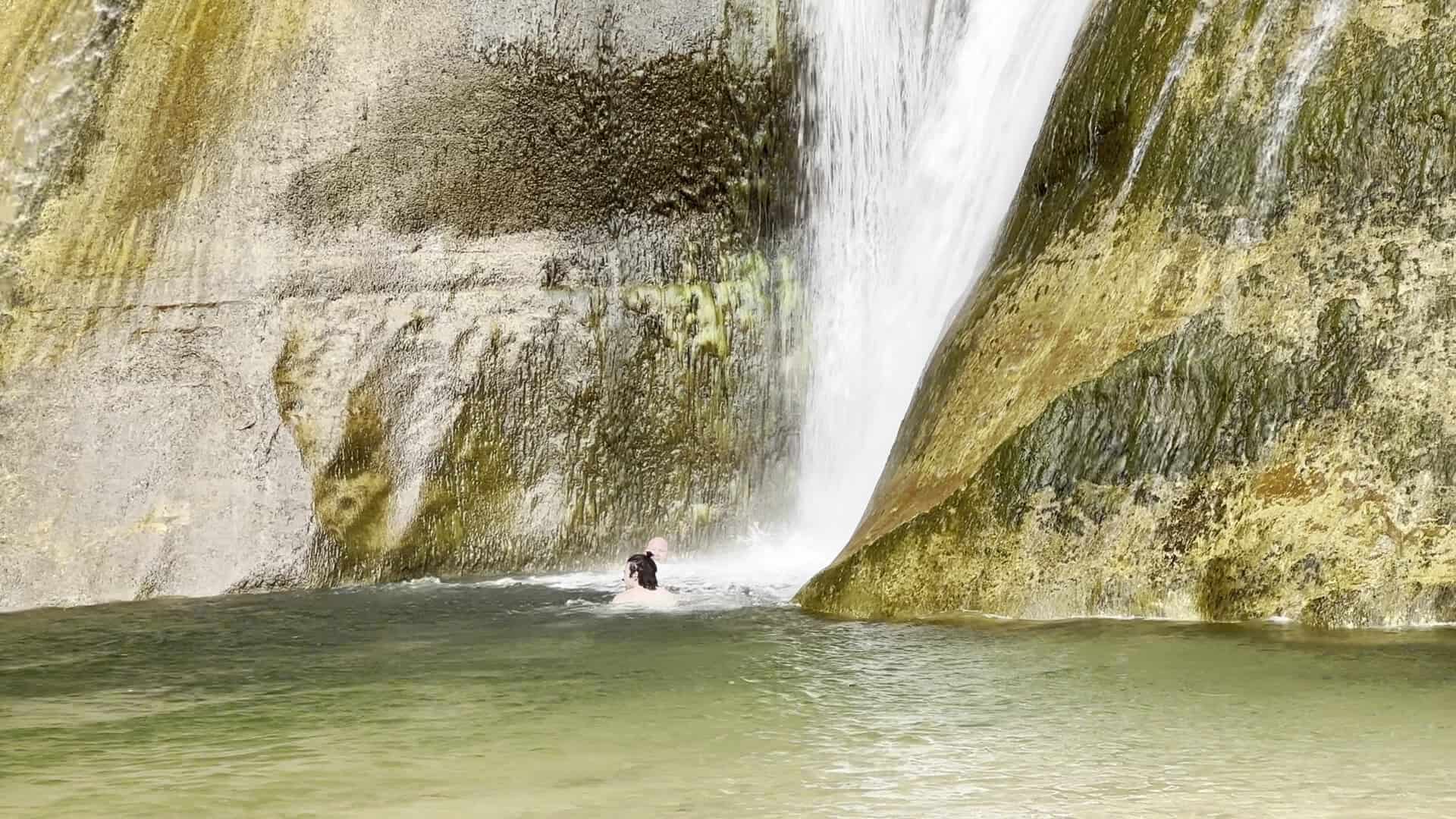
Utah’s Highway 12 is the drive locals send you on when they want to watch your jaw drop. Nicknamed “A Journey Through Time,” it threads about 124 miles of red-rock canyons and pale slickrock between Bryce Canyon and Capitol Reef.
The wildest stretch is the Hogback, a narrow ridge with the land falling away on both sides and no guardrail to argue with. It is a white-knuckle few minutes that ends in one of the best views in the Southwest.
Break up the drive near Escalante and hike down to Lower Calf Creek Falls, a 126-foot ribbon of water tucked into a sandstone amphitheater. The trail is sandy and sun-baked, so bring more water than you think you need.
Fuel and food are scarce between towns out here, so top off in Escalante or Boulder while you can. The upside of all that emptiness is the night sky, which puts on a show most city dwellers have never actually seen.
Where: Lower Calf Creek Falls, Escalante, Utah.
9. Beartooth Highway, Montana and Wyoming
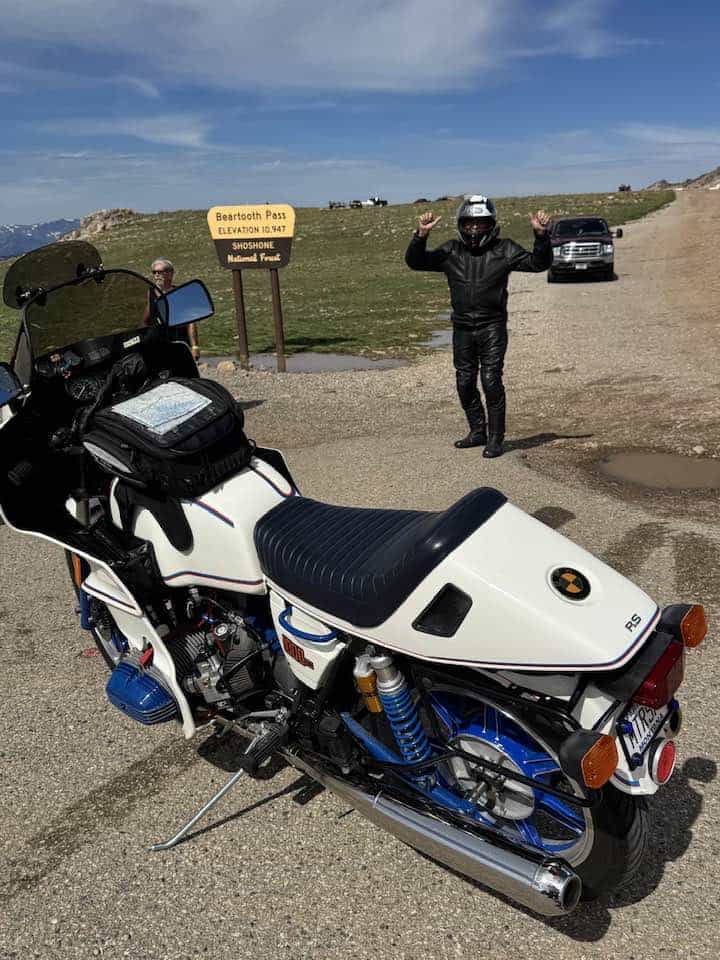
Charles Kuralt once called this the most beautiful drive in America, and it is hard to argue on the way up. The Beartooth Highway climbs US-212 to nearly 11,000 feet, switchbacking across an alpine world of tundra, snowfields, and glacial lakes.
It opened in 1936 and still feels like a dare, stacking hairpin after hairpin until the treeline drops away below you. Up top the air thins, the wildflowers bloom late, and marmots watch from the rocks like tiny toll collectors.
The road links Red Lodge, Montana, to the northeast gate of Yellowstone, so plenty of drivers pair the two. It usually opens only from late May into September, so check the forecast before you commit to the summit.
Where: Beartooth Pass, US-212, about 25 miles southwest of Red Lodge, Montana.
10. Great River Road, Wisconsin
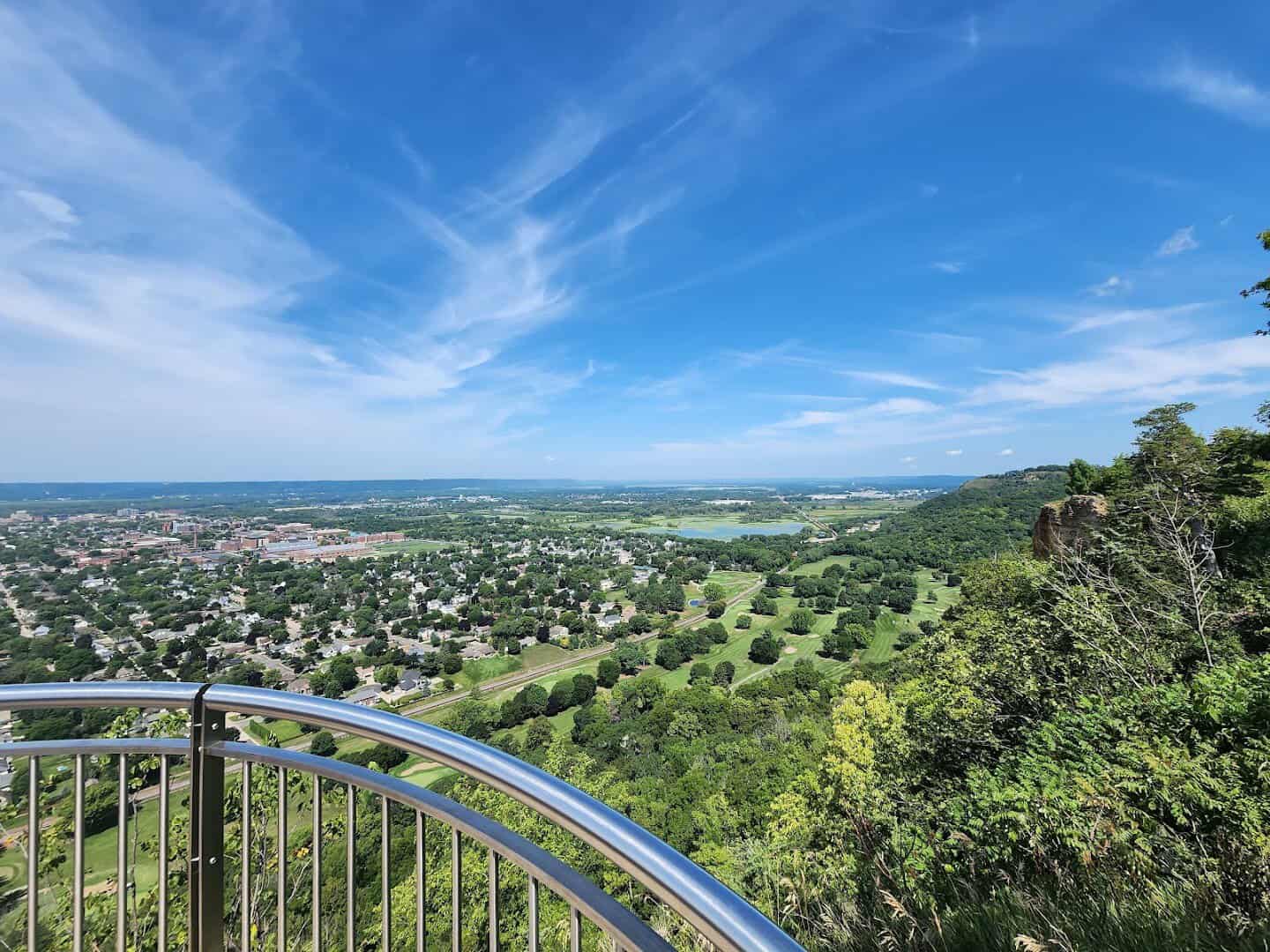
Not every legendary drive needs mountains or ocean. The Great River Road shadows the Mississippi for roughly 3,000 miles through ten states, and the Wisconsin stretch is quietly one of the loveliest, all limestone bluffs and sleepy river towns.
The route was pieced together starting in the 1930s to link the small communities strung along the water. Today it rolls past antique shops, supper clubs, and lock-and-dam overlooks where you can watch barges work their slow way upstream.
Climb to Grandad Bluff above La Crosse and the whole valley opens beneath you, the river braiding into islands with Wisconsin, Minnesota, and Iowa all in view. Come at sunset and the water turns to hammered copper.
Do not rush this one. The joy of the Great River Road is pulling into a riverside diner for pie, or catching a small-town festival you did not know existed. Follow the green pilot-wheel signs and let the current set your pace.
Where: Grandad Bluff, La Crosse, Wisconsin.
11. Needles Highway, South Dakota
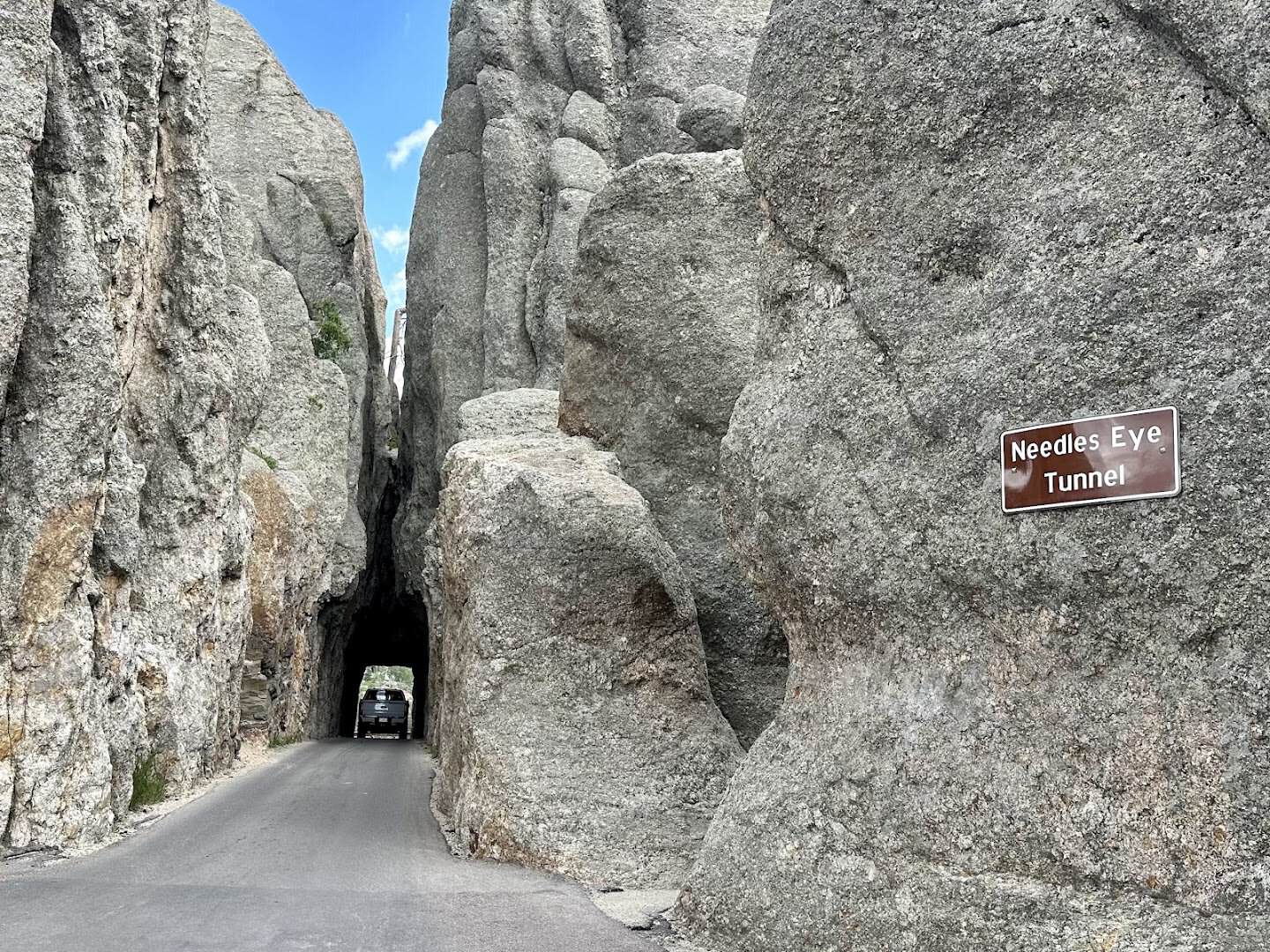
South Dakota’s Needles Highway looks less like a road and more like something threaded through the rock by hand. This 14-mile stretch of SD-87 winds through Custer State Park, past granite spires that rise like stone needles against the sky.
Governor Peter Norbeck laid out the route on horseback in the 1920s, and the story goes that people told him it could not be built. The tight tunnels prove the doubters wrong, one of them so narrow that side mirrors practically kiss the granite.
Squeeze through the Needles Eye Tunnel, then pull over for the spires themselves, long a favorite of rock climbers. Add the nearby wildlife loop and you might share the road with a bison herd before the afternoon is out.
Where: Needles Eye Tunnel, Needles Highway (SD-87), Custer State Park, South Dakota.
12. Loneliest Road, Nevada
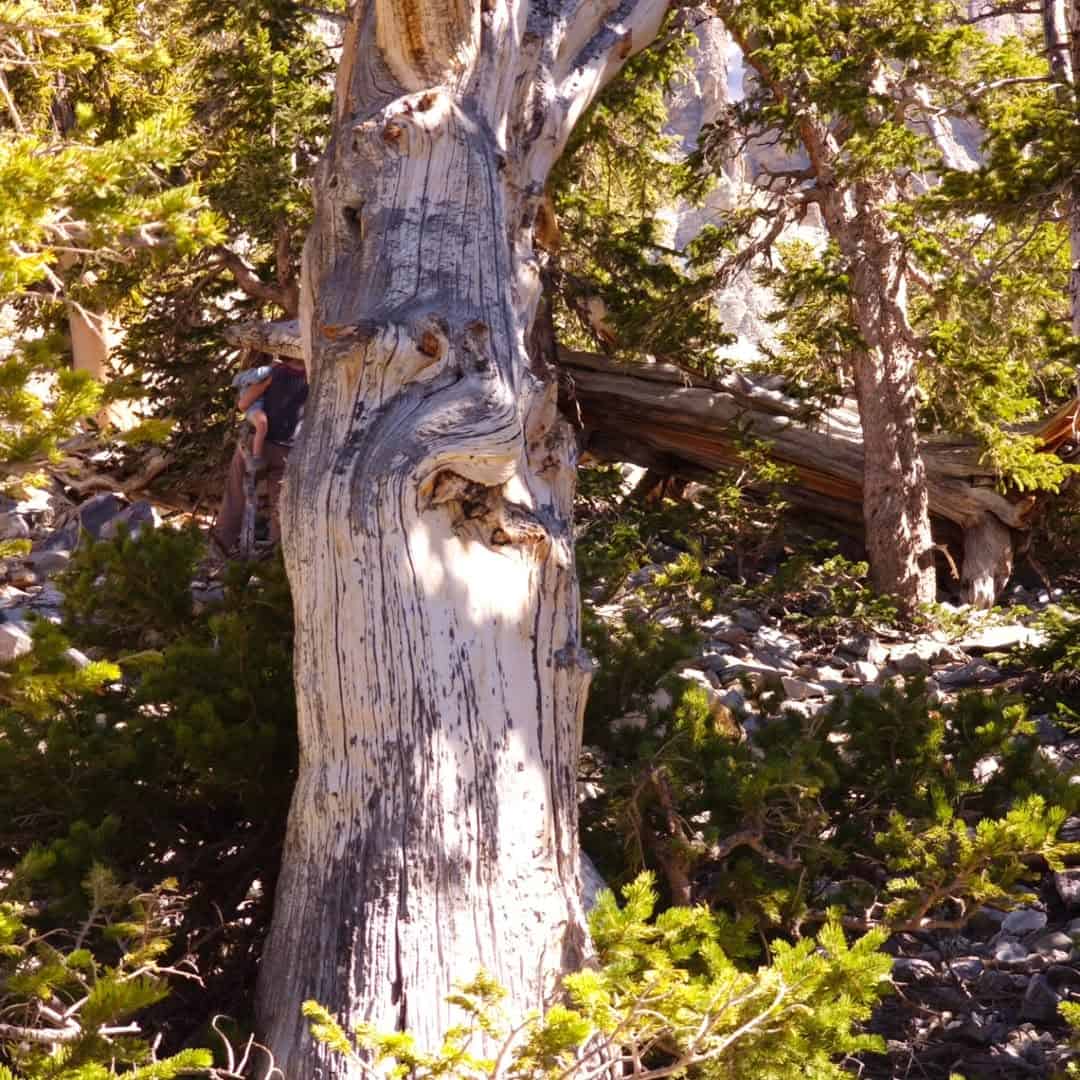
Back in 1986, a magazine writer called Nevada’s stretch of US-50 “the loneliest road in America” and meant it as a warning. The state cheerfully flipped the insult into a badge of honor, and now drivers chase that big, empty quiet on purpose.
For a hundred miles at a time you get sagebrush basins, lonesome mountain passes, and hardly another car in the mirror. Some towns hand out a survival guide you can get stamped, half joke and half souvenir of the solitude.
Near the eastern end, Great Basin National Park hides ancient bristlecone pines and a small glacier tucked beneath 13,065-foot Wheeler Peak. Fill the tank whenever you can, because services out here are genuinely far apart.
Break the drive in Ely, where the old Nevada Northern Railway still fires up its steam engines for visitors. Then push on at dusk, when the basins glow amber and the first stars appear over some of the darkest skies left in the country.
Where: Great Basin National Park, Baker, Nevada.
13. Cascade Loop, Washington
Washington’s Cascade Loop packs a whole state into one drive, and the variety is the draw. Over roughly 440 miles it strings together island beaches, a faux-Bavarian village, apple-orchard valleys, and the raw granite of the North Cascades.
The showpiece is the North Cascades Highway, a ribbon of SR-20 that only opens once the spring snow is cleared. Jagged peaks crowd the road, and turquoise Diablo Lake glows below like someone spilled paint into the valley.
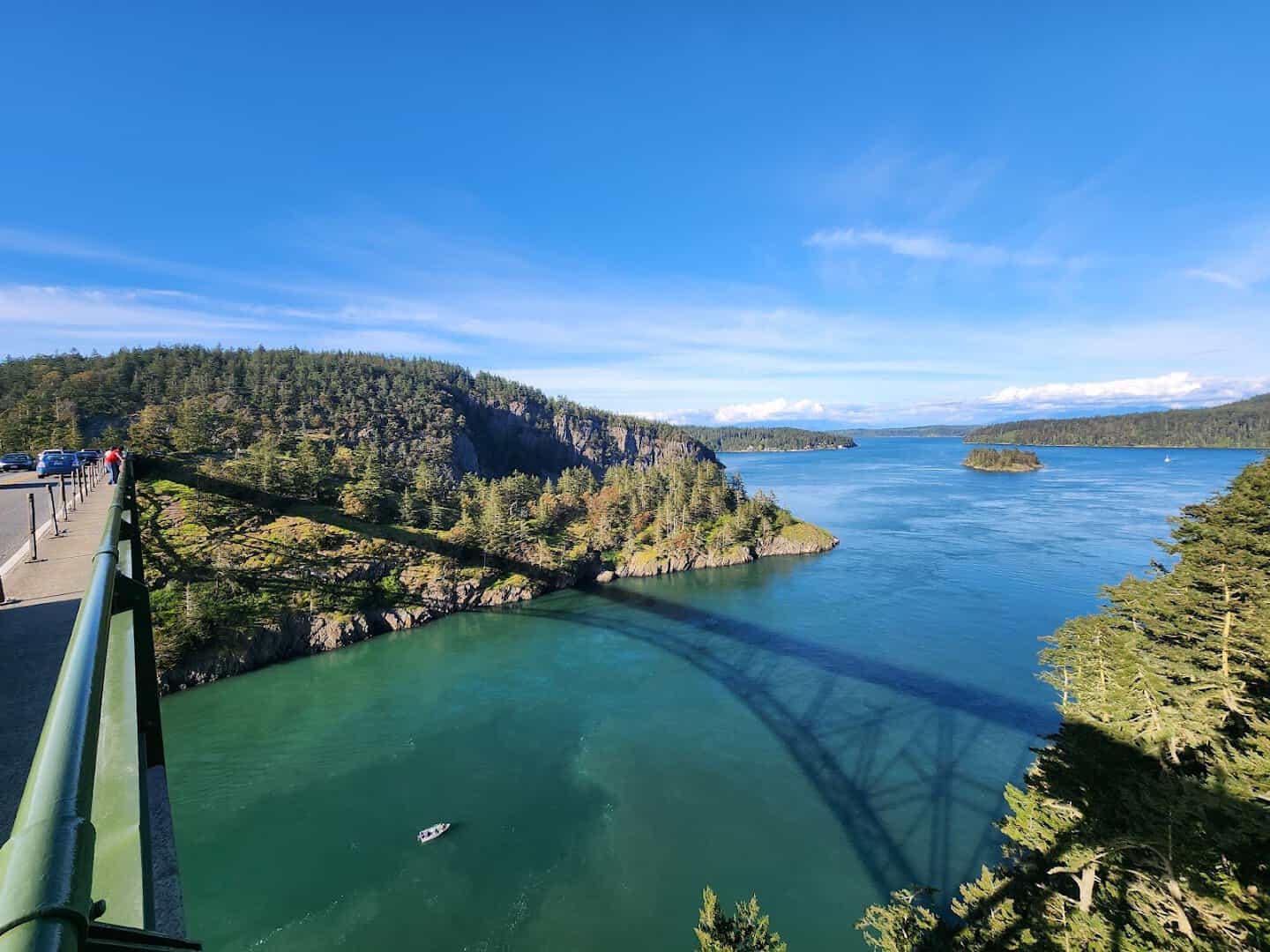
Cross Deception Pass Bridge on the western spur and you get the other side of Washington, all saltwater and forested cliffs. Give the loop a couple of days so you can stop for a cider in Leavenworth without rushing the mountains.
Where: Deception Pass Bridge, SR-20, Oak Harbor, Washington, on the western spur of the Cascade Loop.
14. Skyline Drive, Virginia
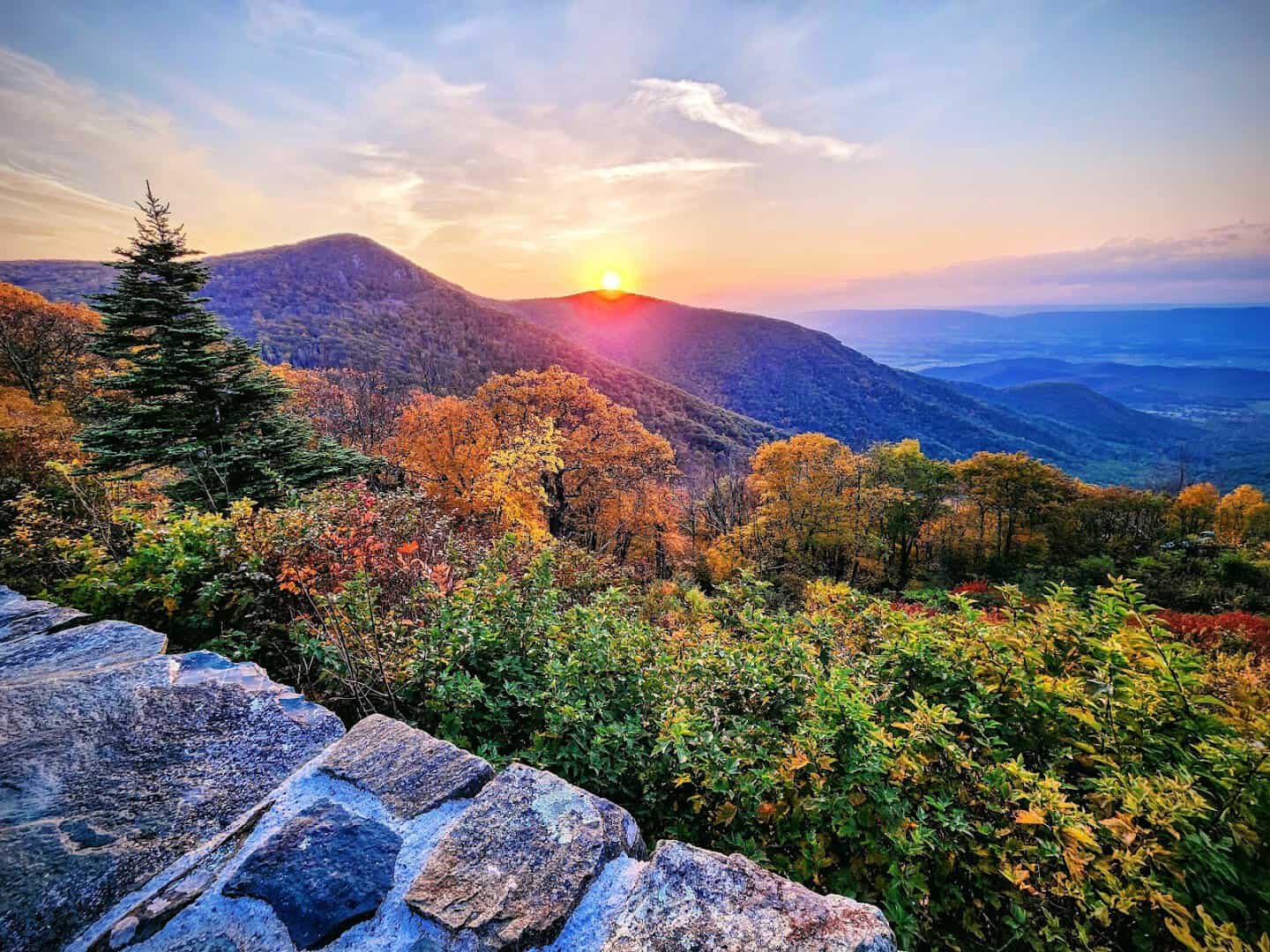
Some drives are about the destination; Skyline Drive is about the pause. It runs 105 miles down the spine of Shenandoah National Park, and its 75 overlooks practically beg you to stop and take in the rolling Blue Ridge below.
Built during the Depression by the Civilian Conservation Corps, it opened in the 1930s as a slow, deliberate kind of road. The 35-mile-per-hour limit is not a suggestion, and honestly you will not want to hurry past views like these.
Come in October and the whole ridge catches fire with color, though white-tailed deer graze the shoulders in any season. Enter at Front Royal, keep your camera handy, and let the overlooks set the rhythm of the day.
Where: Skyline Drive, Shenandoah National Park, entered at the Front Royal gate, about 90 minutes west of Washington, D.C.
Pick a Name and Point the Car
The beauty of a named road is that it comes with a promise built right into the sign. You already know these drives are worth it, because generations of travelers wore the names smooth telling you so.
Each one asks for something different, an early start on Maui, a full tank in Nevada, a jacket at Logan Pass, but they all pay you back in views you will be describing for years.
So pick the one that has been living in the back of your mind, clear a few days, and go let the road do the work. Roll the windows down, keep the camera close, and try not to plan every single stop, because the best ones tend to find you.
Featured image: QLan Huynh via Linn Cove Viaduct

Stella Raines
Editor-in-Chief
Stella brings over a decade of storytelling experience to TX Headlines. With roots in West Texas and a love for road trips, she leads the editorial team with an eye for the hidden stories that make Texas unforgettable.